2014 Reading Challenge: March

We continue to be blown away by the number of books being read each month by participants of our 2014 Latin@s in Kid Lit Challenge. Thank you to everyone for participating in the challenge and purposely selecting books by/about/for Latin@s. Remember, you can join the challenge any time during the year, and you’re not required to review–only read and enjoy! If you do post a review somewhere, we will link it to the book covers below. If you choose not to review, we will link the covers to Goodreads. This month, we’d like to stand up and applaud Elisabeth Ellison and Cecelia Cackley for their vigorous reading (13 books total!) And since April is National Poetry Month, we suggest you try some novels in verse this month!

A note to participants: As you complete books, please send us the information, so we can share what you’re reading each month.

13515320  6603032  15814459  5982454  10564957  18079822  15798660  11431896  1294347  14342632  13501282  1816693511438326  1016493  18938127 18318638  6098251  255189  9373385  1372657  1807231  18651917  15937128  6673243  1065256  1076237  18318005  8220585  652180  7095181  15818046  1028659  18249428

What We Talk About When We Talk About Diversity in YA

Or, what does that even mean?


By Zoraida Córdova

Brace yourselves. Here’s another blog post on the lack of diversity in YA. When we bring up these topics the common words I see are FEAR, UNCOMFORTABLE, GUILT.  If a white person brings up the subject then, “who are they to talk about it?” If a POC does it, we’ll be seen as a bunch of angry people. So, Catch 22. I get it. Writing these posts is HARD, but they should be written. Recently one of my favorite authors ever, Jenny Han, tweeted about diversity in YA. The thing is, we need to feel uncomfortable, and like Jenny said, “that’s the risk.”

Screenshot 2014-03-26 16.39.47

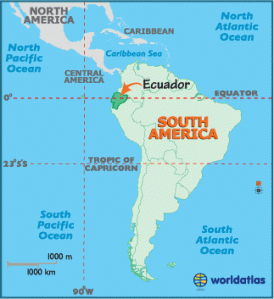
ecsaHere’s what you need to know about me. I was born in Ecuador. I moved to Queens, NY when I was 6. Being in America for 20 years makes me American. My public school experience is American. Yet, when people look at me and hear me speak, they are perplexed. Why? You got me.  The “Your English is so good!” “What are you?” “My friend is from Ecuador, do you know LUIS PABLO ESTEBAN SANTIAGO?” Spoiler alert: I don’t.

This difference wasn’t apparent to me from the beginning. Between grades 1-4, I was in bilingual classes. (My Little Mermaid Spanish didn’t get me to the top of the class right away.) All of my classmates had either emigrated from a Latin American country or had Latin American parents. Salvadorian, Peruvian, Puerto Rican, you name it. Guess what, we spoke English. We listened to the Spice Girls. We cut up our bangs like Lindsay Lohan in The Parent Trap. We watched TRL and taped the music videos. We learned the awesome moves to Christina Aguilera’s Genie in a Bottle (She’s half Ecuadorian, BTW). At home, sometimes I’d eat Chef Boyardi ravioli, sometimes I’d have rice and steak and beans.

So when I got to 5th grade, I was placed into the “regular” kids class. English only. Suddenly my friends also included Guyanese, Jamaican, African-American. Guess what, we still listened to shitty New photo 4 (1)Millennium pop and idolized Harriet the Spy.

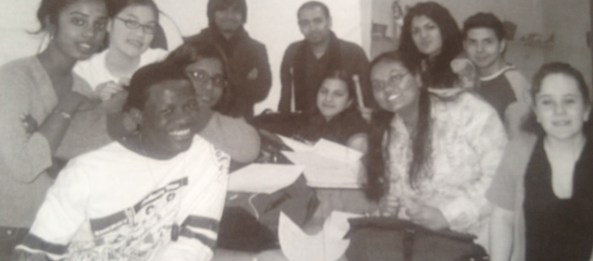
Junior high school and high school were also the same thing. Look at all the shades of brownness! Here are some pictures from my high school yearbook. Spoiler alert: I am still a nerd.

My experience growing up in neighborhoods that are already diverse gives me a different perspective. Could I have used more diverse characters in my current books? Yes. My trilogy centers around a white merman from Brooklyn. His love interest is mixed. His friends are mixed. Merpeople in my world come in all shades. But the answer is still yes. You can always add diverse characters into your books.
photo 3 (1)When people say they’re “afraid” they’re not going to give their “Other” character justice by writing from an experience other than an Anglo-American experience, I call bull. It is scary writing about an experience other than yours. However, unless your character has just moved to Kentucky from a remote town in Panama, then why are you afraid to write the experience of an otherwise straightforward character? Your character can still be named Danilo Cordova and the only research you have to do is “What does a teenage boy like?”

If your character is Nuyorican, then you’d have to do more research. Stereotypes need not apply. Because, here’s a little known secret, not all Latin experiences are the same. No matter where we were born, when we immigrated, where we were raised, we can’t be lumped into the same experience. This is not to say that every YA author should write a novel about how hard it is to grow up being brown, because I did it and my adolescence was pretty “average.”

If you’re writing a fantasy/sci-fi novel and there is not a single non-white person to be found, then my only question is “how come?” Here you have a chance to create a whole new world, where our carefully constructed American ideal of white-only beauty need not apply. When I read YA fantasy novels and the only time race is mentioned is when a new character comes in and has “chocolate” or “earth colored” skin, I just cringe. This mean everyone else I’ve been reading about is white. Not only is that lazy writing, it’s a limited way of thinking about a world that is supposed to be fantastical.

Screenshot 2014-03-26 17.01.57

So how do we fix this? Well, lets talk about it. Let’s be friends. Reach out to someone who has a different experience as you. READ. I  to this date have yet to read a YA about a teenage Ecuadorian girl. Not even a slice of life story about a girl who falls in love and there’s a nice cover of them at the beach, or lying down on a lawn. I am, however, excited about Diana Renn’s upcoming YA thriller Latitude ZeroThe book takes place in Boston and in Ecuador. Diana is not Ecuadorian, but she wrote an exciting novel with diverse characters. She reached out and did her research. latitudecover
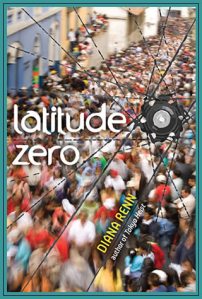
Here we go back to this FEAR concept. If you throw in a character named Chiquita Bonita in the middle of the scene, and she has hoop earrings and says “Ay, mami,” then you should be afraid because you’re propagating a stereotype. If you describe your Latina girl as “exotic,” “curvaceous,” “spicy,” or “saucy” then you are propagating a stereotype, or making gumbo IDK. If you’re like Britney Spears and equate a Latin male with “the bad boy type,” then you should be afraid because you’re propagating a stereotype. If you as an author can go on Google and research “how to kill someone and get away with it” because “your protagonist needs to know” then you can also try Googling about other American communities that are not your own.

There is a difference between being afraid to write about a culture that is not your own, and consciously creating a two dimensional stereotypical character.
Romeo and Juliet0001

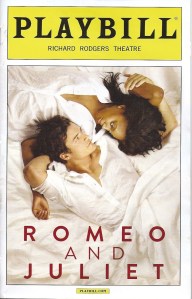
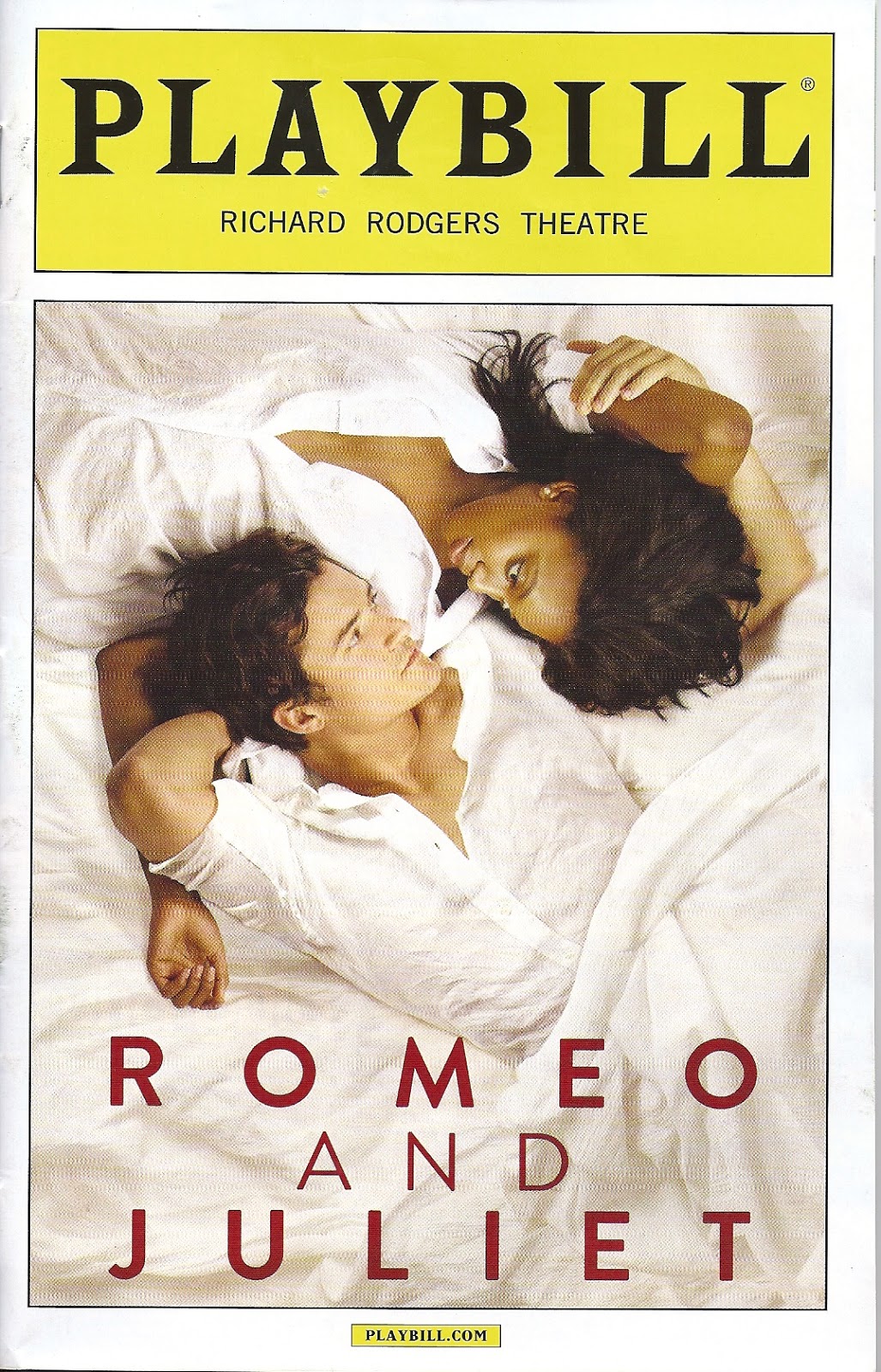
One of my favorite retellings of Romeo & Juliet is the most recent one on Broadway, partially because Orlando Bloom is shirtless but also because Juliet is black. They aren’t divided because of their skin color. This isn’t West Side Story. It’s not that one is brown and from the wrong side of the tracks, and the other one is nice and white, so they can’t be together. This is a story of feuding families that have been feuding so long they can’t even remember why or how it started. It’s that simple.

If you’re worried you’re still propagating a stereotype, then reach out. You’ll make a friend. You’ll learn something new. I am extremely lucky to have had diverse friends. I know that’s not the case for everyone and I know that if you’re not in a big city, chances are the POC in you neighborhood are marginalized. I’m not in Arizona where they’re trying to wipe out Mexican studies. I’m not in a tiny town in Ohio where there is one black kid in the class. I’m in NYC, which isn’t perfect and has a history of putting away their low income minorities to make room for gentrification. But my eyes are extremely open (and I got new glasses today) as to the future we need to create for Young Adult literature. It’s a team effort.

Maybe if we keep making it a point, when we talk about diverse characters in the coming years, it will be more than just a trend; it’ll be the new norm.


Edited: 3/31/14

*** Representation of Latin@s in media has been a personal focus for me.  This is not to say that “diversity” to me means only adding Latin@s to literature. The conversation extends to all marginalized people. Like I said, lets talk about it.

Diversity in Kid Lit was ‘On Fire’ at National Latino Children’s Literature Conference

My signed conference poster! The gorgeous artwork comes from Laura Lacamara's new book, Dalia's Wondrous Hair.

My signed conference poster! The gorgeous artwork comes from Laura Lacamara’s new book, Dalia’s Wondrous Hair.

By Lila Quintero Weaver

Let me float down to earth, grab a keyboard and pound out a report about the National Latino Children’s Literature Conference. That was my self-talk on March 15. The two-day conference, held at the University of Alabama and headed by mover-and-shaker Dr. Jamie Naidoo, had wrapped up at 4 pm the previous day.

Sixteen hours later, my whole being still felt tingly with the residual vibrations of what we’d experienced: great dialogue, stimulating talks, and warm connections with people passionate about the same thing, increasing diversity in children’s books. And it’s amazing how many presentations referenced last year’s incendiary New York Times article on minority characters in kid lit. The conference stirred my juices, but before I could touch my keyboard to write about it, Marianne Snow posted a great recap on her blog. There’s no way that I could improve on her account. 

That’s not the end of the story. Over the same weekend, The New York Times published a pair of essays from prize-winning YA author Walter Dean Myers and his son Christopher, an author-illustrator of note, on the scarcity of characters of color in children’s books. Spine tingling, timely, and powerful. Clearly, diversity in children’s books is a topic on fire!
And now, back to the conference. Since Marianne’s recap covers only the second day, here are select quotes and highlights from the first day:

NLCLC LogoLiterary agent Adriana Dominguez outlined some of the challenges facing Latin@ children’s literature: “Many editors think about Latino books as niche or institutional.” Neither of these spells the huge sales figures that the industry has become hungry for. She pointed to the Harry Potter phenomenon as a watershed moment in children’s publishing. Previously, marketing departments targeted libraries and schools, but the commercial success of Harry Potter and other blockbusters has shifted the dynamics.

Members of the audience asked how to best advocate for Latin@ children’s literature. Librarians can push these books, Dominguez said. She cited the late Rose Treviño as a personal mentor and a role model in the field of library services to children. Ms. Treviño was a beloved Houston public librarian who served the local Latin@ community and brought Latin@ books to the attention of a wider audience. Her passionate advocacy was captured in this extensive interview by Cynthia Leitich Smith.

Someone else asked, would more Latinos on the “inside” of publishing help to balance the equation? Yes, Dominguez said, because “you’re a stronger advocate for something you truly believe in.” She pointed out that graduate programs in publishing are recruiting zones for the “big five.”

In her keynote, recent Pura Belpré winner Meg Medina raised the topic of universal themes, those that address the experiences of all children, regardless of demographic labels. She reminded us that “Latino” is a uniquely American concept. Many Latin@ children grapple with the additional challenges of biculturalism. She shared that in her work, she strives to present a range of Latin@ characters, a “whole tapestry,” not merely those that the public has come to expect. (In her Monday post, Meg offered a terrific conference recap of her own.)

7789203Author-illustrator Laura Lacámara gave the day’s final keynote. Her journey into publishing has taken some interesting turns. She was first an illustrator of children’s books. Then came her debut as a writer, Floating on Mama’s Song, a story inspired by her mother’s devotion to opera. But Laura didn’t illustrate it; Yuyi Morales did. Now, hot off the presses is Laura’s newest book, her first to write and illustrate, the delightful Dalia’s Wondrous Hair (see the conference poster image, above). Count on a book talk in the near future!

The variety of breakout sessions boggled the mind. Thursday, I sat in on Lettycia Terrones’s illuminating talk on image-making in Latin@ children’s literature, followed by Araceli Esparza’s “Roots of Race in Chicano/Latino Picture Books,” another enriching experience. The next day, I heard an expert presentation by Catalina Lara on the Latin@ child and language.

Social media is an excellent tool, but let’s not forget the value of face-to-face meetings. They spark connections like nothing else. Next time you hear about a conference that addresses diversity or Latin@ children’s books, consider attending.

Writing Tips and Diversity Points at the SCBWI Winter Conference

By Cindy L. Rodriguez

The Winter Conference of the Society of Children’s Book Writers and Illustrators in New York is kind of like a massive family reunion, with all 1,000+ people having a love of children’s literature in their blood. It’s very cool for me to break away from my full-time day job as a middle school teacher and attend this annual gathering of creative people who all want to be published or work in some capacity with kid lit. While this love of children’s literature is the common denominator at the conference, the attendants are diverse people with myriad interests. Because of this, my ears naturally perk up when speakers address diversity in publishing.

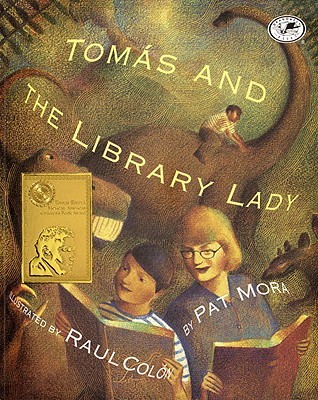
The SCBWI did not have a specific panel or break-out session dedicated to diversity in children’s publishing, but speakers included Raul Colón, Shadra Strickland, Jack Gantos, and Nikki Grimes. Also, the topic of diversity popped up throughout the conference as writers, illustrators, and editors offered great advice about craft.

During her Saturday session, Anica Rissi, an executive editor at Katherine Tegen Books, outlined seven essential things to remember about writing contemporary fiction.

  1. Just do it: write regularly. Make time for this in your life. Be fierce in protecting your writing time.
  2. Give the reader something to wonder about.
  3. Start with the story, not the back story. Throw us into the action.
  4. You need both external and internal tensions, a plot arc and an emotional arc. You need that emotional growth.
  5. Details should matter. Ask what is this book really about? Is every scene a part of that? When in doubt, take it out.
  6. You need to bring out relatable truths through your characters. Create timeless and timely essential relationships and show how the relationships change the character. During this part of her talk, she said, “Please don’t just write about white people and please don’t just write about straight people.” She added that diverse characters should not always be the “token best friend.” A writer should make every person in the novel “a real person,” she said.
  7. World building exists in contemporary fiction, too. Setting needs to be a character.

Later, Nancy Siscoe, a senior executive editor with Knopf Books for Young Readers, discussed seven essential things about writing the classic middle grade novel. They are:

  1. Audience: middle grade fiction is for readers 8-12 years old. It’s an age of independence, of becoming a person separate from your family. It’s an age of enthusiasm, optimism, and openness.
  2. Plot: Put your kid character in charge. Let them solve their own problems, keep them moving, keep the stakes high.
  3. Hope: You don’t need a happy ending, but you do have to have hope.
  4. Likeable characters: You want a main character your readers would want to be friends with, someone they will care about.
  5. Voice: Make it distinctive. It’s the quality that sets the tone and sets your book apart from others.
  6. Read it aloud: The writing should be smooth, clean, and clear. Middle grade books are often read aloud, so try it while writing.
  7. Heart: The quality that makes your own heart feel bigger and wiser and stronger for having taken the journey.
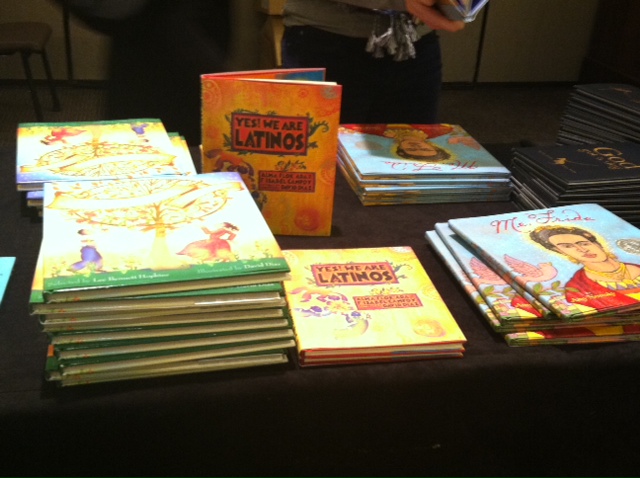
Some of the Latin@ titles at the book sale

Some of the Latin@ titles at the book sale

During her talk, Siscoe was asked about diversity. She responded by saying she is always on the lookout for diverse main characters. In fact, she said a “selling point” for the novel Unusual Chickens for the Exceptional Poultry Farmer, a middle grade debut by Kelly Jones set to release in 2015, was its Latina protagonist.

The final panel on Saturday was about book banning rather than craft. Susanna Reich, chair of the Children’s and Young Adult Book Committee for PEN American Center, floored me during this session. She said children’s and young adult books make up the vast majority of books on the ALA’s list of banned and challenged books. While I knew children’s books were often challenged, I didn’t realize that on the most recent list of the “Top 100 Banned/Challenged Books” from 2000-2009,” 72 of the top 100 are children’s and young adult books, with Harry Potter at the top of the list.

Reich also made the point that censorship isn’t only about removing books from shelves. Censorship also occurs when so few diverse titles make it onto the shelves. “It’s a form of censorship when the amount of multicultural kid lit published hasn’t increased in twenty years,” she said.

But what about those books that do make it onto the shelves? Well, it’s up to us to buy them. Reich quoted poet Alexis DeVeaux, who said, “Buying a book is a political act.” Reich challenged each of us to think about the books we choose to buy and read. Do we censor our book buying in any way? Do we make a conscious effort to read beyond our comfort zones? Do parents and teachers select books for their children and students that include diverse characters?

Multicultural books can speak to all kids, not only kids of color,” said Reich.

Hear, hear! More details from Reich’s talk can be found here on the SCBWI site.

At the end of an SCBWI conference, I am always exhausted in a good way, with a thousand things to consider as a reader, writer, parent, and teacher. This year, the speakers in the sessions I attended reinforced the idea that I can help to promote diversity in children’s literature in each of these roles. Not only can I broaden my own reading interests, but I can expand reading choices for my daughter and my students. By doing this, I will support diversity in kid lit and the members of my SCBWI familia who write, illustrate, edit, and publish books with diverse characters.

Book Review: Confetti Girl by Diana López

By Cindy L. Rodriguez

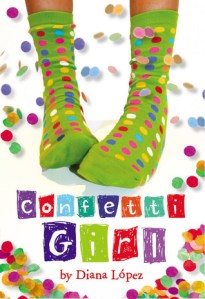
Confetti GirlDESCRIPTION FROM THE BOOK JACKET: Apolonia “Lina” Flores is a sock enthusiast, a volleyball player, a science lover, and a girl who is looking for answers. Even though her house is crammed full of her dad’s books, she’s having trouble figuring out some big questions, like why her father keeps retreating into his reading, why her best friend is changing their old rules, and, most of all, why her mother had to die last year. Like colors in cascarones, Lina’s life is a rainbow of people, interests, and unexpected changes.

MY TWO CENTS: In Confetti Girl, López masterfully blends serious middle school issues, like friendships and first kisses, with the even more serious issues middle schoolers face, such as the death of one parent and the paralyzing grief of the other. Apolonia “Lina” Flores is an easily lovable character with her crazy socks and desire to do well on the volleyball court and in the classroom. But everything starts to unravel as Lina’s dad gets lost in books and her best friend, Vanessa, gets lost in Carlos’s dreamy eyes. With her relationships already strained, Lina’s situation gets worse when she’s benched for failing grades.

What makes Confetti Girl not only an awesome middle grade read but also a great novel about Latin@s is how López seamlessly weaves in cultural details. She talks about how she decided to include certain details here. By using such things as cascarones and dichos throughout the novel, López introduces cultural specifics to readers without being preachy or teacher-like. In other words, I could see young readers responding with, “Cool, let’s make those,” or “Yup, my mom says things like that all the time,” instead of “Oh, that’s a Latin thing” (closes book). The Kirkus review of this novel put it this way: “An appealing coming-of-age novel set in a traditional Mexican-American town, in which Hispanic teachers, students and parents celebrate traditional American holidays such as Thanksgiving alongside such traditional Mexican observances as el Día de los Muertos and a Quinceañera.” Click here for the full review.

Confetti Girl, López’s first middle grade novel, was a winner of the William Allen White Award and named to New York Library’s “100 Titles for Reading and Sharing.” It was a commended title for the 2010 Américas Award for Children’s and Young Adult Literature, and Latinidad’s “Top Latino Book of the Year” for Middle Grade Category. It was also a Scholastic Book Club and Book Fair Selection.

TEACHING TIPS: Lots of great teaching tips, including discussion questions and activities, can be found on the author’s website. Click here for her “Teacher Resource” page and here for a PDF of a Teacher’s Guide for Confetti Girl.

Also, to align with the Common Core State Standards, teachers could easily mix this fictional novel with nonfiction articles that range from cascarones to the grieving process. Teachers could also bring in Watership Down by Richard Adams since it plays a significant role in Confetti Girl. Students could read Watership Down first and then read Confetti Girl to truly understand how the classic novel helps Lina to make sense of her own life.

LEXILE: 660

AUTHORDiana López is the author of the adult novella, Sofia’s Saints and the middle grade novels, Confetti Girl, Choke, and the recently released Ask My Mood Ring How I Feel. She is also featured in the anthologies Hecho en Tejas and You Don’t Have a Clue. She has been a guest on NPR’s Latino USA and is the winner of the 2004 Alfredo Cisneros del Moral Award. Diana teaches English and works with the organization, CentroVictoria, at the University of Houston Victoria.

For more information about Confetti Girl visit your local library or bookstore. Also check out GoodreadsIndieBound.orgWorldCat.orgLittle Brown Books for Young ReadersScholasticAmazon, and Barnes and Noble.

You can also click here for a book trailer of Confetti Girl featuring the author!

Diana can also be found on the site Read to Write Stories, where she blogs about how to create conflict with subtext.

The Kid Lit World Needs Gary Soto and Others Like Him

By Cindy L. Rodriguez

When Gary Soto’s book, the one attached to the Marisol Luna American Girl doll, was released in 2005, I was in my fourth year of teaching middle school and attending graduate courses. In other words, I was buried in essays–correcting them and writing them–and was clueless that Soto’s book about a 10-year-old Chicago girl had sparked negative national media attention, protests, and harassing phone calls to the author’s home. For more information on the original story, click here.

The 2005 book-and-doll release is old news, but only a few months ago, eight years later, Soto wrote this piece in the Huffington Post, explaining why he has has stopped writing children’s literature.

I’m not going to rehash the Pilsen vs. Des Plaines debate, and I’m not going to say it was right or wrong for Soto’s fictional family to decide they wanted to move because the neighborhood was too dangerous. Those debates were had in 2005.

This post is about Gary Soto, an award-winning, prolific Mexican-American writer, leaving a business that needs him and many others like him. Gary Soto has written picture books, chapter books, poetry, and novels for middle school, high school, and adults. In the often-referenced New York Times article about the lack of Latin@ books in classrooms, Gary Soto is listed as one of the exceptions.

“While there are exceptions, including books by Julia Alvarez, Pam Muñoz Ryan, Alma Flor Ada and Gary Soto, what is available is ‘not finding its way into classrooms,’” said Patricia Enciso, an associate professor at Ohio State University.

Do we need more Latin@ books, written by a variety of authors, in classrooms? Yes. But, Soto and the others are already there, on the shelves, in students’ hands. I’ve read his short stories with my students, and a colleague recently read Buried Onions with her eighth graders based on my recommendation. He is in anthologies and on school book lists. Soto, along with a handful of other Latin@ authors have paved the way, and now he has vowed not to write any more children’s literature.

This comes at a time when 53 million Hispanics live in the U.S., according to the 2012 census. Hispanics are the second largest race or ethnic group (behind non-Hispanic whites), representing about 17 percent of the total population. Meanwhile, a study by the Cooperative Children’s Book Center reported the number of children’s books with multicultural content has not increased in 18 years.

Soto’s retirement from the kid lit world saddens me, as a reader, writer, and supporter of Latin@s in kid lit. We have lost a giant in the business, and I worry that what happened to Soto could discourage writers from including Latin@ characters in their manuscripts. Writers have legitimate fears about “getting it right” and not offending readers, especially if they are crossing into territory–gender, race, religion, ethnicity, culture, sexuality–that they do not understand first-hand. Think about it, Soto, a member of the Latin@ community, was at odds with members of the Latin@ community, over a Latina doll and her story. What does this mean for other writers, especially non-Latin@s who want to write Latin@ characters? Should they not bother? Should they use made-up locations to avoid referencing a specific community? Are the subjects of poverty and crime off limits?

I hope writers aren’t scared away from including Latin@ characters, and I hope Gary Soto reconsiders his retirement from kid lit. Also, wherever we each stand on the Pilsen-Mattel issue, I hope we all can at least tip our hat to Soto for his contribution to Latin@ literature.

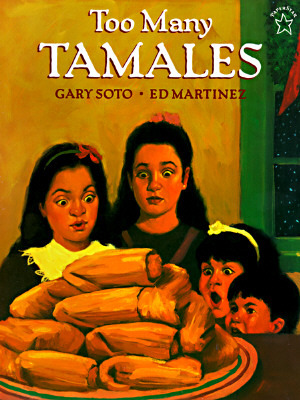
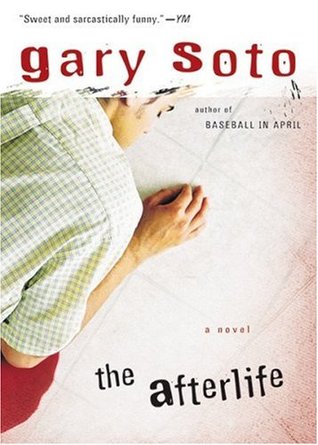
Too Many Tamales   Chato Goes Cruisin'   Baseball in April and Other Stories   Buried Onions   The Afterlife