Guest Post: Stephanie Diaz, YA Author of EXTRACTION , talks about diversity and her debut novel

This month, we are taking a look at Latin@s in science fiction and fantasy. Today, we have a guest post from Stephanie Diaz, debut author of Extraction, which releases July 22.

By Stephanie Diaz
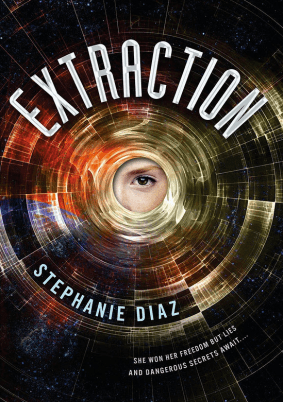
Extraction coverThanks so much to Latin@s in Kid Lit for having me here on the blog today! I wanted to share a few of my thoughts on diversity in science fiction, stemming from my experiences as a half-Latina writer of YA.

My father’s side of my family is Latino, primarily of Mexican and Spanish descent. My mother’s ancestors were white Europeans, mostly French and German. I grew up in an English-speaking household, in a Southern California town a state away from my dad’s side of the family. As such, I’ve never been hugely in touch with the Latina side of my roots, except during Christmas vacation, and for a long time it had no great influence on my writing.

My first book, which I wrote in middle school, was a story about a family in the Civil War era. My second book was a fantasy with demons and magical swords. The book I wrote in college and sold to a publisher, Extraction, was my first try at writing science fiction. It wasn’t until I was well into revising the novel that conversations about diversity in fiction grew more widespread and caught my attention. For the first time, I took a long, hard look at my characters and realized I’d made some of the supporting characters different races, but the main characters of the cast were pretty much all white. And my book was supposed to be set on a planet in a completely different galaxy! Here I’d had so much potential to diversify my made-up world, and I’d wasted it.

I plan on doing a better job in the future. I’m still working on the second and third books in the Extraction trilogy, making sure I pay attention and don’t automatically whitewash every new character I introduce to the cast. I’m also working on an unrelated YA sci-fi with a multi-racial/multi-species cast. The beauty of stories set in the future or in distant worlds is that there are so many ways for a writer to imagine how cultures will grow and influence one another over time. Science fiction allows me to imagine all sorts of possibilities that don’t exist in real life, but real life has to be an influence to make the story believable.

My goal is to tell stories that show life the way it is and the way it could evolve—and life is diverse. In physical characteristics, but also in a wealth of traditions. I’m learning that understanding the differences in all the world’s cultures is key to creating new ones, whether they be human or a made-up species.

My hope is that my own books and other books in this genre will grow more and more diverse in the coming years, drawing on little-known cultures to expand the worldview of all readers. I hope to be able to pay homage to my Latina heritage, as well as the other cultures in my blood, in future novels I write. But more than that, I hope to tell many stories about different kinds of people, not just the people I know best. After all, how can I grow as a writer—or a person—if I never venture out of my comfort zone?
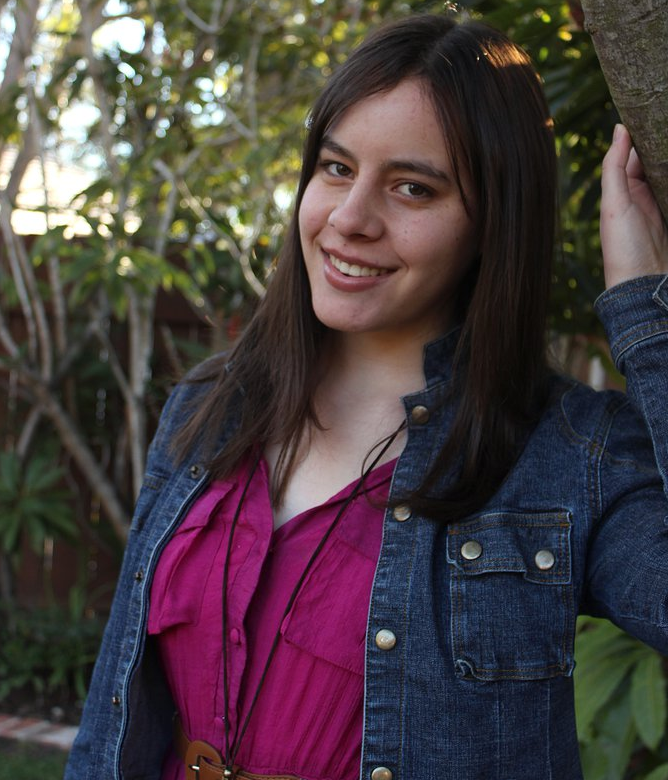

Stephanie Diaz author photoTwenty-one-year-old Stephanie Diaz wrote her debut novel, Extraction, when she should’ve been making short films and listening to class lectures at San Diego State University. When she isn’t lost in books, she can be found singing, marveling at the night sky, or fan-girling over TV shows. Visit her online at www.stephaniediazbooks.com.

Twitter​   *  Blogger  *  Facebook  *  Tumblr  *  Pinterest  * 

You can email her at: stephaniediazbooks@gmail.com

Extraction, published by St. Martin’s Press, releases July 22. Here is a description of Stephanie’s debut novel:

Clementine has spent her whole life preparing for her 16th birthday when she’ll be tested for Extraction, in the hopes of being sent from Kiel’s toxic Surface to the much safer Core, where people live without fear or starvation. When she proves promising enough to be “extracted,” she must leave without Logan, the boy she loves. Torn apart from her only sense of family, Clem promises to come back and save him from brutal Surface life. What she finds initially at the Core is a utopia compared to the Surface—it’s free of hard labor, gun-wielding officials, and the moon’s lethal acid—but life is anything but safe, and Clementine learns that the planet’s leaders are planning to exterminate Surface dwellers—and that means Logan, too. Trapped by the steel walls of the underground and the lies that keep her safe, Clementine must find a way to escape and rescue Logan and the rest of the planet. But the planet’s leaders don’t want her running—they want her subdued.
Diversity Needed Under the Sea: Not All Mermaids Have Blond Hair and Blue Eyes

By Cindy L. Rodriguez

This month, we’re taking a look at Latin@s in science fiction and fantasy. On Monday, Zoraida Córdova explained how instead of writing about her immigration experience, which seemed expected of her, she decided to write about what interested her most: merfolk.

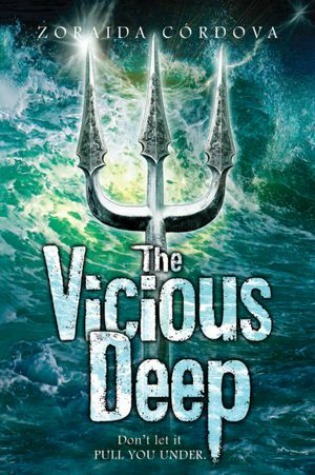
While there have been hundreds of children’s books published about mermaids, very very very few have featured mermaids or mermen who did not have blond or red hair and blue or green eyes. We asked via Twitter if anyone knew of a Latin@ YA author, other than Zoraida, who wrote about merpeople, or books, other than Zoraida’s The Vicious Deep series, that featured diverse characters. We didn’t get any responses. So, the world under the sea seems to be another area of kid lit that could use some diversifying.

If you have a mermaid story in you, waiting to be told, please consider this: every culture has its own mythology packed with gods and goddesses similar to those in Greek and Roman tales. I’m not saying you should ignore Poseidon or not create white merfolk with blond hair and blue eyes. But, think about it this way: Wouldn’t the sea god mingle with mermaids of color if he is responsible for all of the seas in the world? Knowing that merfolk exist in Mexican, Brazilian, Caribbean, and African mythology, to name a few, gives you the opportunity to diversify your mermaid community. And I know we’re talking about fantasy fiction here, so really you can do whatever you want, including making your mermaids purple, green, or any other color. But, if your writing is rooted in known mythological stories, then keep in mind that mythological stories exist beyond Greece and Rome, so your merfolk don’t all have to look the same.

Check these out:

A cool Tumblr dedicated to mermaids of color.

The City Gallery at Waterfront Park in Charleston, South Carolina, had an exhibit called Mermaids and Merwomen in Black Folklore.

The Smithsonian National Museum of African Art had an exhibit on Mami Wata (Mother Water), the water spirit of Africa.

Iemanja.JPG    

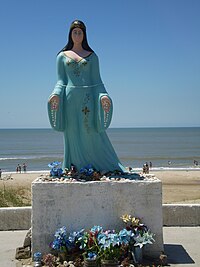
L to R: The first two images are of Iemanjá, Brazil’s goddess of the sea, who is sometimes portrayed as a mermaid. The image on the right is a bronze statue of Iara, a water queen. The statue is outisde the Alvorada Palace, the official presidential residence in Brasília.


On the left is a Loteria card, part of a Mexican game of chance, featuring La Sirena (the siren). On the right is a work of art by Jose Garcia Antonio of San Antonino Castillo Velasco, Oaxaca, Mexico seen at the Museo de Culturas Populares in Coyoacan, Mexico City.

confetti-cannon-oAnd now, we’d like to celebrate our own Zoraida Córdova, mermaid expert and writer extraordinaire. Why? Because she’s a Latina writer with a diverse cast of characters in the deep blue sea. And her final novel of The Vicious Deep trilogy, published by Sourcebooks Fire, released on July 1!

Here’s a run down of her series:

12246929For Tristan Hart, everything changes with one crashing wave. He was gone for three days. Sucked out to sea in a tidal wave and spit back ashore at Coney Island with no memory of what happened. Now his dreams are haunted by a terrifying silver mermaid with razor-sharp teeth. His best friend Layla is convinced something is wrong. But how can he explain he can sense emotion like never before? How can he explain he’s heir to a kingdom he never knew existed? That he’s suddenly a pawn in a battle as ancient as the gods. Something happened to him in those three days. He was claimed by the sea…and now it wants him back.

13092528A storm is coming…The ocean is a vicious place. Deeper and darker than Tristan could have imagined. Beneath its calm blue surface, an ancient battle is churning —and no one is safe. In the quest for the Sea Throne, Tristan has already watched one good friend die. Now he must lead the rest on a dangerous voyage in search of the trident that will make him king. But while Tristan chases his destiny, the dark forces racing against him are getting stronger, and the sea witch of his nightmares is getting closer. Battling sea dragons and savage creatures of the deep, Tristan needs his friends’ support. But they each have their secrets, and a betrayal will force Tristan to choose between his crown and his best friend Layla — the only girl he’s ever loved.

17933160

This epic clash of sand and sea will pit brother against brother–and there can only be one winner. In two days, the race for the Sea Court throne will be over-but all the rules have changed. The sea witch, Nieve, has kidnapped Layla and is raising an army of mutant sea creatures to overthrow the crown. Kurt, the one person Tristan could depend on in the battle for the Sea King’s throne, has betrayed him. Now Kurt wants the throne for himself. Tristan has the Scepter of the Earth, but it’s not enough. He’ll have to travel to the mysterious, lost Isle of Tears and unleash the magic that first created the king’s powerful scepter. It’s a brutal race to the finish, and there can only be one winner.

http://www.youtube.com/watch?v=XW2ePtEN7DM

Let’s All Make the #WeNeedDiverseBooks Campaign an Ongoing Movement

By Patrick Flores-Scott

#WeNeedDiverseBooks. The trending hashtag is a channel for conversation around the huge problem of a lack of diversity in children’s literature. The problem has been noted in many recent articles and so have the reasons we need more books by diverse authors and books with complex, real diverse characters.

For many years I was lucky to be a public school teacher in very diverse schools. At different points I was both a general education classroom teacher and a reading specialist. As a classroom teacher, I was able to seek and find the books I wanted my class to hear and read. More often than not, these books had main characters of color. I had the time, energy, resources, and relationships that helped me find great books that my students loved.

My students, however, especially my reluctant readers, were not going to work so hard to find a book that would reflect the cultural, racial, socio-economic realities of their community. They were going to pick the available book, the one closest to their hand when it was time to leave the library, or the trendy book that made them look like they were in the reading “know.”

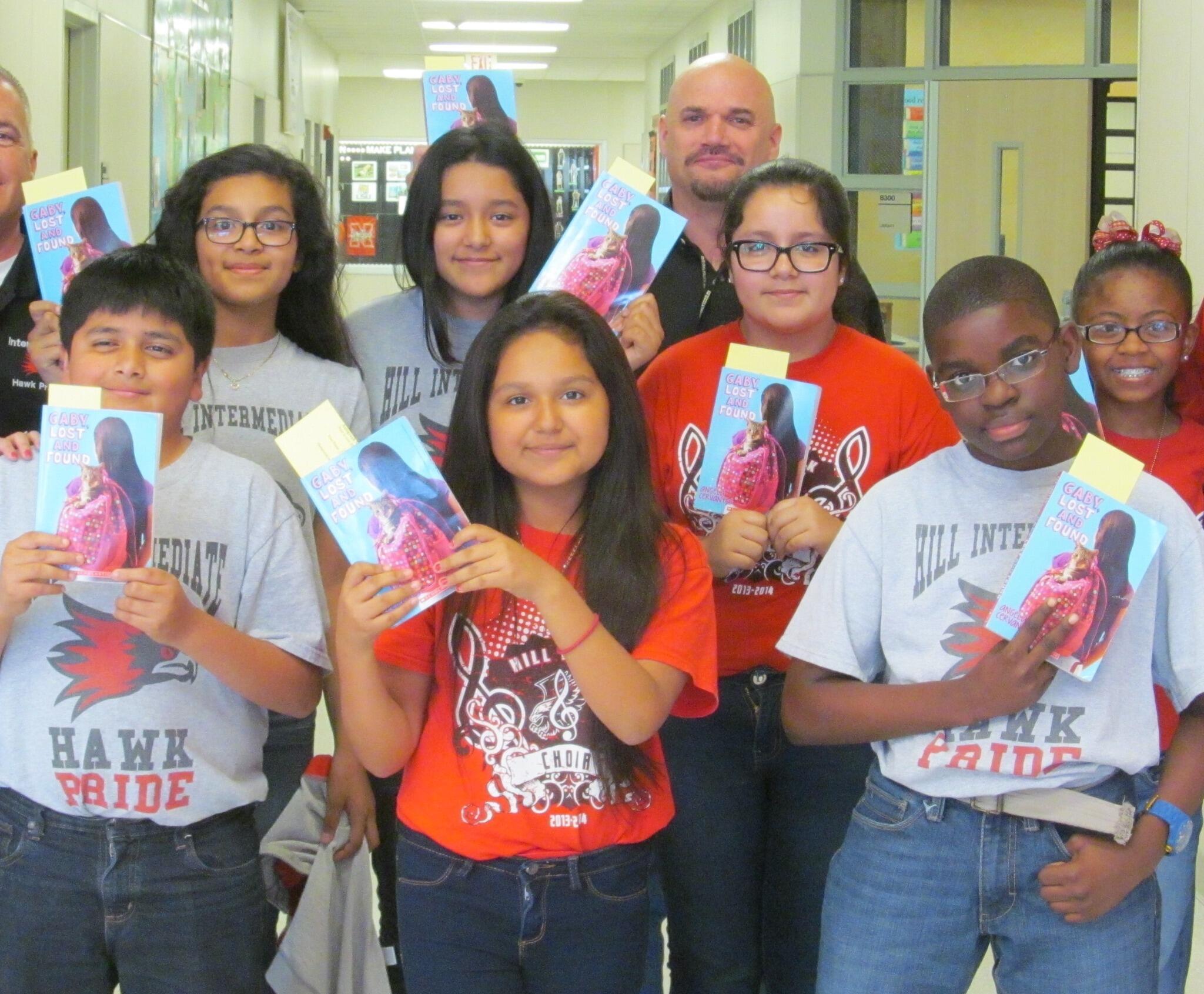
Embedded image permalink

Author Angela Cervantes posted this picture on Twitter during the #WeNeedDiverseBooks Campaign.

Students need to be able to accidentally stumble their way into a great book that reflects their own background or one that opens their eyes to new characters and communities. They shouldn’t have to work for it. They shouldn’t have to fight for it. Kids have enough on their plate. Yes, some students are going to research authors, seek out new books and reading experiences, challenge their school librarian and make demands. Most fifth graders, however, are just struggling to make it through the day. They end up with the default book… and given the math of the situation, they’re going to walk out with another book by a white author with a white main character. Is this a tragedy? In the moment, no. That default book might be a great one. But this scene takes place over and over each day in most schools in the country and that great book–if the student is lucky–may just be another in a long line of books that reinforces the notion that great books are written by white authors and that white kids are the ones worthy of books written about them.  This notion is a toxic one, regardless of a student’s background.

Children’s books are a piece of a larger pie. A lack of diversity in film and television reinforces the notion that white stories are more relevant than non-white stories. The make-up the Senate (97 out 0f 100 are white) reinforces the notion that non-whites do not have a role in the highest levels of politics. Yes, there is the President, but his cabinet is made up of 70% white males. Kids see this. They see thousands of African American college athletes and they know that, in the vast majority of cases, these athletes are led to battle by white coaches. They know that the percentages of Black and Latino men in prison are crazily out of proportion with the population of Black and Latino men. Kids see all this. They take it in. The perceptions become realities for them.

My wife and I are the proud, exhausted parents of two rambunctious little boys. Their grandparents are Mexican-American on their mom’s side. My parents are white. My dad is from the U.S., my mom a Spanish-speaking Latina from South America. We will raise our boys to be proud of all that they are and proud of all the Latino, Caucasian, African-American, Asian and mixes of the aforementioned that make up their diverse extended family. While we will do our best to teach that the content of one’s character, not the color of one’s skin (one’s gender, sexual orientation, physical ability) is what is important, television, our political and judicial systems, sports…. And even the make-up of CHILDREN’S BOOKS, will send messages that complicate, skew, and even deem our parental message well-meaning, but just wrong.

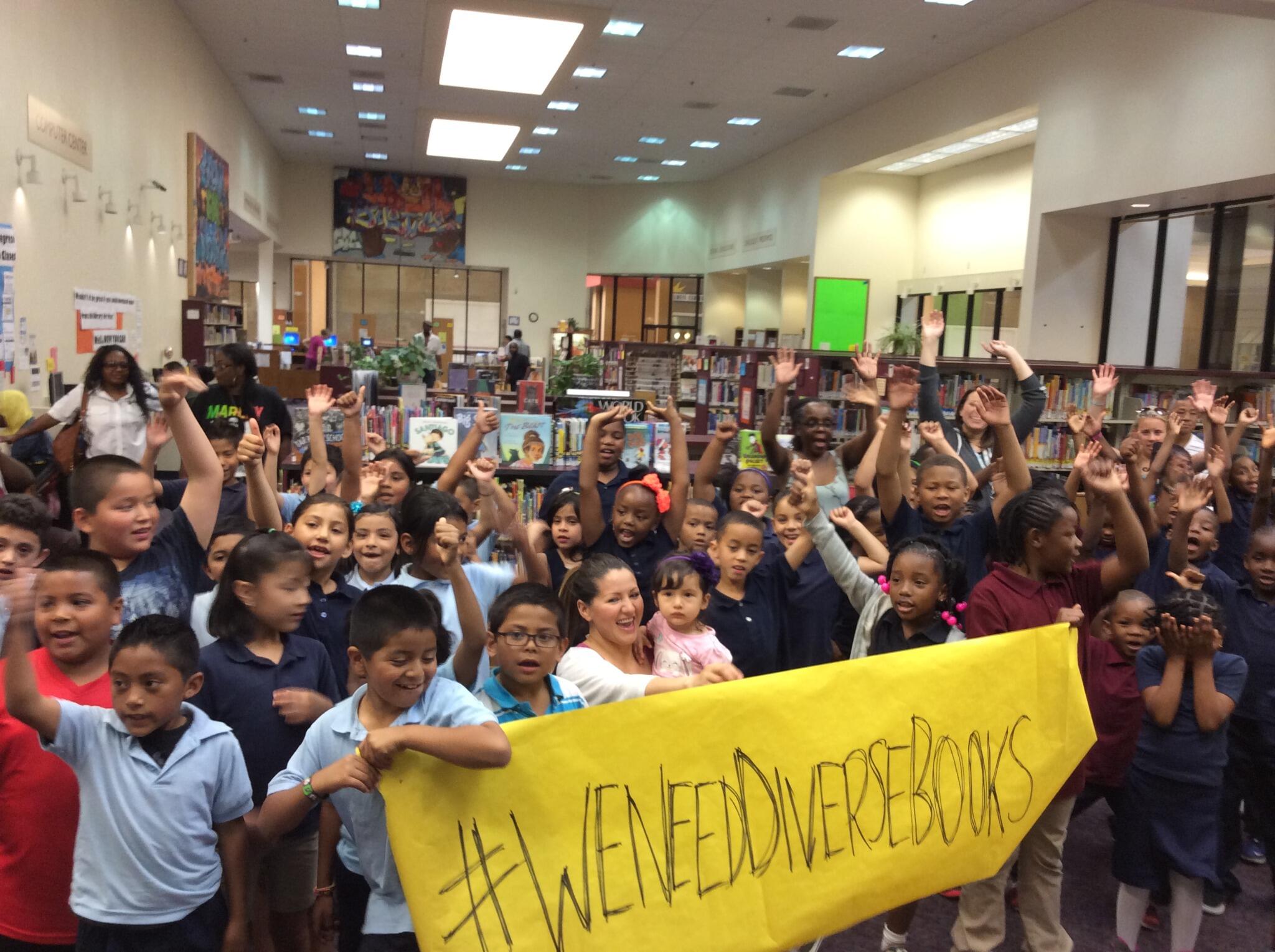
Embedded image permalink

The Oakland Public Library in California posted lots of great pictures like this one on Twitter during the #WeNeedDiverseBooks Campaign.

What do we do about it? The #WeNeedDiverseBooks Movement (Can it please be a movement? We need more movements around here.) is a potentially very important call for change in the children’s book world. Now, we need to push for intentionality. Gatekeepers need to have their feet held to the fire. The Movement (!) needs to push publishers to set goals that trend their books in a more realistically diverse direction. It needs to push the industry to hire editors from diverse backgrounds and to hire and support diverse interns and entry-level assistants who can have the power to move books off the pile and into editors’ hands. The Movement needs to hold publishers accountable.

Institutions which support writers and illustrators, like my beloved SCBWI, need to recruit underrepresented writers to their conferences. (And to check out the percentage of white male panelists and speakers compared to the percentage of white male attendees.) Groups like SCBWI need to be pushed to intentionally foster and mentor a more diverse writing community.

The movement needs to push us published authors of all colors and stripes, to mentor diverse up-and-comers, to include pro-bono school visits to underfunded schools, and to write real, complex, fallible diverse characters who live the entirety of the American experience.

Members of The Movement need to request diverse books at their bookstores and libraries. We need to post reviews on Amazon and Goodreads and library websites. Members of the Movement need to advise book bloggers and to follow and support blogs like this one. We need to give diverse books as birthday presents and to talk about our favorites on the bus, at work, in line at the bookstore…

Members of The Movement need to push our political leaders to support the health, education and welfare of our future readers and writers.

Publishers, agents, bookstore workers, librarians, teachers, authors… there are bunches these folks out there doing the positive stuff that will make change possible. The Movement needs to support them and it needs to push for intentionality in those who mean well, but have not yet made the move to change.

PatrickFS1Patrick Flores-Scott was, until recently, a long-time public school teacher in Seattle, Washington. He’s now a stay-at-home dad and early morning writer in Ann Arbor, Michigan. Patrick’s first novel, Jumped In, has been named to a YALSA 2014 Best Fiction for Young Adults book, an NCSS/CBC Notable Book for the Social Studies and a Bank Street College Best Book of 2014. He is currently working on his second book, American Road Trip.

Jumped In was featured in Libros Latin@s on Thursday. Click here to see the overview.


Guest Post: CAKE Literary on Writing Diversity, Finding Your Flavor

By Sona Charaipotra

Have you ever cried in class? I have. And no, I’m not talking about kindergarten. I’m in my 30s, and yes, I shed actual tears during a workshop during my writing for children creative writing MFA program at the New School two years ago.

No, it wasn’t a particularly harsh critique. I have to say, I have an incredibly thick skin. Most of the time.

But this particular workshop was a safe space. Taught by the stunningly smart and super-nurturing Andrea Davis Pinkney, this one focused on a topic too frequently neglected by both the academy and publishing: diversity. Specifically, we were talking about diversity in kidlit and YA, and addressing why it is important.

And though it’s been a long time since I was a kid or even a teenager, the wound was still fresh. Because we still haven’t gotten there.

Growing up as a little brown girl – one of the few, back then – in small-town, suburban central New Jersey, books were my escape. I caused a ruckus alongside little Anne in Avonlea; I mourned Beth along with her sisters in the harsh winter of Maine; I honed my grand ambitions like Kristy and her babysitters’ club; I even swooned alongside Elena over the brothers Salvatore when the Vampire Diaries was originally released. (Yes, I am that old.)

CAKE logo+2.7.12But if you’ll note: in all those books and the hundreds of others I devoured, I never really saw myself, or anyone remotely like me. The majority of characters in books for kids and teens in the ’80s and ’90s were white. And according to Christopher Myers in his recent New York Times piece, “The Apartheid of Children’s Literature,” the majority still are today, by quite a landslide.

Why is this worth discussing? Because it hurts. A lot. It’s a hit to a kid’s self-esteem to be told – silently, but oh so clearly – that their story is not worth telling, that their voice is not important.

As Myers notes in his piece, it leaves you with “a gap in the much-written-about sense of self-love that comes from recognizing oneself in a text, from the understanding that your life and lives of people like you are worthy of being told, thought about, discussed and even celebrated.”

Honestly, it’s a punch to the gut. It kills me that, 30 years later, kids are still feeling this way. That my daughter, all of four now and already shaping up to be a voracious reader, will still feel that pinch.

That’s why I cried that day in class. And that’s why, with my writing partner Dhonielle Clayton, whom I met on the first day of my MFA program, I co-founded CAKE Literary, a literary development company that focuses on high concept fiction with a strong commitment to diversity.

I know what you’re thinking: silly thing to bank a personal fortune (however small) on, right? We all know diversity doesn’t sell.

Well, Dhonielle and I would like to call bullshit on that. Done the right way, diversity can bring a richness and flavor to any manuscript. After all, so much about a great read is in the details – the scent and sizzle of freshly-fried samosas wafting up from her mama’s kitchen, the ferocious whip of the wind on an icy February morning, the ashy knees she keeps hidden under too-long skirts, the blush that climbs up her throat and to her cheeks when she flirts with her crush for the first time. The details give texture and color, a sense of time and place and, most importantly, character. The details define worldview and fill out voice.

But the main thing is the big picture – and what our company will do is focus on BIG pictures. Smart, sophisticated storytelling that’s full of flavor – books where the diversity is a major part of the character, but not the central focus of the character.

Case in point: our debut novel, Tiny Pretty Things, which is due next summer. Set in a cutthroat New York City ballet academy, the book centers on three characters, one white, one black, and one half-Korean. And while their backgrounds definitely inform the characters’ worldviews and experiences, the book is not about skin color. It has a plot – a juicy, riveting and ultimately relatable story that we’re hoping will leave readers wanting more.

That’s what we’ll do with each of our projects: tell a fun, delicious story that readers want to read, but incorporate real-life flavor – meaningful diversity – in a natural, relevant way. We’re all about keeping it real, so part of our mission will be to connect vibrant, authentic voices with the stories we’re crafting.

What exactly does CAKE do? We’re not an agency or publisher, but rather a book packager – a YA and middle grade think tank of sorts. We come up with sharp multimedia concepts that we then develop into a detailed outline. Once the idea is fleshed out, we hire a writer to work with us on several chapters or a complete manuscript, which we then package to take to publishers. Once the project sells, the writer stays on board to complete the project. Some book packagers get a bad rap for being notoriously stingy. But CAKE’s aim is to be very writer friendly, because, after all, we’re writers, too. So when we work with a writer on a project, they get paid a flat fee on signing, on delivery, and then, when the project sells, they get a cut of those proceeds as well. The other thing that sets CAKE apart is our commitment to diversity, which is an integral part of every CAKE project.

Dhonielle Clayton

Dhonielle Clayton

Sona Charaipotra

Sona Charaipotra

Interested in learning more? We’ll be looking to hire writers beginning this spring, so connect with us on CAKELiterary.com or via CakeLiterarySubmissions@gmail.com. You can also follow us on Twitter @CAKELiterary.


Book Review: Caminar by Skila Brown

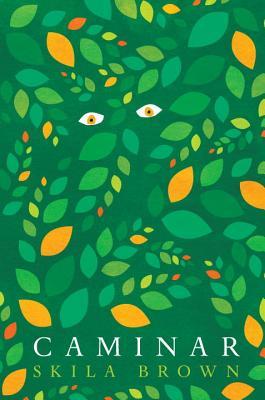
Caminar

By Cindy L. Rodriguez

On Monday, we interviewed first-time author Skila Brown about her novel in verse, Caminar. Check out the Q&A for information about her research and writing and her decision to tackle a subject outside her own racial/ethnic experience. Today, we celebrate her debut.

DESCRIPTION FROM THE BOOK JACKET: Carlos knows that when the soldiers arrive with warnings about the Communist rebels, it is time to be a man and defend the village, keep everyone safe. But Mama tells him not yet–he’s still her quiet moonfaced boy. The soldiers laugh at the villagers, and before they move on, a neighbor is found dangling from a tree, a sign on his neck: Communist.

Mama tells Carlos to run and hide, then try to find her…Numb and alone, he must join a band of guerillas as they trek to the top of the mountain where Carlos’s abuela lives. Will he be in time, and brave enough, to warn them about the soldiers? What will he do then? A novel in verse inspired by actual events during Guatemala’s civil war, Caminar is the moving story of a boy who loses nearly everything before discovering who he really is.

MY TWO CENTS: Skila Brown’s debut novel in verse tells the heartbreaking story of Carlos, who is forced from his devastated village and treks up a mountainside to save his grandmother and her neighbors from a similar fate.

One thing that struck me most was Brown’s ability to create a touching coming-of-age narrative set in such tragic events. The novel is not graphic, although the topic is brutal. And while it is a civil war, fueled by politics, Brown does not support or condemn any side. Instead, more than anything, it’s about the ability of the human spirit to survive and persevere even after an unexpected, horrific loss.

A moment that grabbed me by the heart was when Mama tells Carlos to go into the woods and then find her later. He does so, obediently, but we just know there won’t be a later, that this is her last protective act as his mother. Another was when the children wave at the passing helicopter, as children will do when they see something interesting, but they don’t grasp the imminent danger signaled by this flying machine’s presence. From the novel:

They flew

over our village many times, searching the mountains for

something. We didn’t care,

just reached our arms as high as we could, stretched

toward the sky, wanting

to be seen.

We did not know to be

afraid, did not know they were a storm

of death, searching

for a place to rain.

Brown brilliantly combines history, fiction, and poetry in this novel, which she dedicates to the “memory of the more than 200,000 people who were killed or disappeared in Guatemala between 1960 and 1996.” These numbers are staggering, and I often questioned while reading Caminar why I didn’t know more about this 36-year civil war. This is definitely a book I will have on my classroom shelf and recommend to my middle school social studies and language arts teacher-friends.

TEACHING TIPS: Caminar would fit perfectly into a middle school social studies or language arts curriculum. Students could read this in addition to nonfiction articles or essays about the war and its effects on Guatemalan villages. Students could then compare the nonfiction pieces to Caminar to determine what’s history in the novel and what’s fiction.

In a social studies class, this book could be used in a unit about the causes of war and its effects on a country. Students could read other, similar novels or essays and compare the experiences.

Any of the individual poems could be read closely multiple times to discuss word choice and the use of figurative language in poetry.

Students could write a short story in poems to learn first hand the difficulty involved with writing individual poems that also tell a story when read together.

LEXILE: N/A

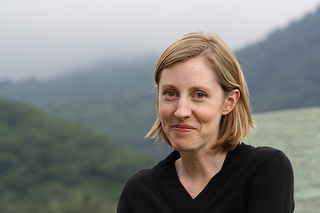
skilaAUTHOR: Skila Brown has an MFA in writing for children and young adults from Vermont College of Fine Arts. Caminar is her debut novel. She lives in Indiana with her husband and their three children.

FOR MORE INFORMATION about Caminar, visit your local library or book store. Also, check out Candlewick PressIndieBound.org,  GoodreadsAmazon.com, and Barnes and Noble.com.


We are giving away two copies of Caminar!! Go to a Rafflecopter giveaway to enter for free. You can enter once per day through this week. Two winners will be selected Saturday morning.

Debut Author Skila Brown’s Novel in Verse Centers on Guatemalan Civil War

By Cindy L. Rodriguez

CaminarI recently interviewed debut author Skila Brown for the Fearless Fifteeners site, which helps to highlight our debut author friends in the OneFour KidLit group. Most of the interview is reprinted here, but I added the final question in particular because of our audience and our mission. Skila is not Guatemalan, yet she wrote a moving narrative about a young Guatemalan boy in 1981 caught in civil war. The last question addresses the concern about writing with authenticity outside of one’s own ethnic/racial experiences.

First, a little about her novel, Caminar, which was released March 26.

Carlos knows that when the soldiers arrive with warnings about the Communist rebels, it is time to be a man and defend the village, keep everyone safe. But Mama tells him not yet—he’s still her quiet moonfaced boy. The soldiers laugh at the villagers, and before they move on, a neighbor is found dangling from a tree, a sign on his neck: Communist.

Mama tells Carlos to run and hide, then try to find her. . . . Numb and alone, he must join a band of guerillas as they trek to the top of the mountain where Carlos’s abuela lives. Will he be in time, and brave enough, to warn them about the soldiers? What will he do then? A novel in verse inspired by actual events during Guatemala’s civil war, Caminar is the moving story of a boy who loses nearly everything before discovering who he really is.

“Exquisitely crafted poems are the basis of an unusually fine verse novel…”

–Horn Book, starred review

“…a much-needed addition to Latin American-themed middle grade fiction.”

–School Library Journal, starred review

Me: Your bio says you lived in Guatemala for a bit. Did your experience there spark interest in this topic? Did anything else inspire you to write this particular story?

Skila: We moved to Guatemala after I’d finished the novel, though I revised it some while we were there. This novel actually came out, reluctantly and painfully, after I’d spent about a decade reading about Guatemala’s history, especially the history of the violence there that peaked in the early 80s. I had no intention of writing about it, but that’s what ended up happening. I certainly felt inspired by accounts of survival that I read, but also felt a real desire to make sure other people knew about what had happened there.

Me: How extensive was your research? Did you run into any roadblocks when seeking information?

Skila: My research started out very organically—I was reading for pleasure and interest, not with the intention of gathering facts to write a story. When the story began, I had some pointed research to do, specific questions about language and geography and other details that I hadn’t already absorbed. It was hard to track down first person accounts of rural Guatemala during this time.

Right away I faced a tough decision about language. Although Carlos would have spoken Spanish in school, it wouldn’t have been his first language; it’s not what he would have spoken at home with his mother. In an earlier draft I envisioned using an indigenous language in the text, as well as Spanish—which would have likely been the way that Carlos could have spoken to someone like Paco, for example—but I was worried about being able to maintain accuracy and authenticity if I wrote the story that culturally specific. I also felt that an English speaking reader might struggle with the mixture of over four different languages in the same story. Definitely trying to balance authenticity with a reader’s connection was a constant struggle.

Me: Is your protagonist Carlos linked to anyone you came across during your research or does he represent the young men who survived that time?

Skila: Carlos isn’t based on any one person. In fact, I had the story down before I had a character at all, but I knew early on the main character was a child, that this was really, at its core, a coming of age story. In violent conflicts all over the world, it’s not uncommon for a handful of people to survive an attack on a village such as this, having scattered away during the chaos. I’d read about children who survived and felt really drawn to that story—how scary it must for a child to be on his or her own, how resourceful that child would have to be.

Me: The physical layout of the poems adds to the narrative. I’m glad I read this one on paper instead of listening to it on audio. The visual really complements the content. Is that something you consider in the writing phase or is that developed in editing?

Skila: This was something I worked a lot on in revision. I wrote this story while I was a grad student and while I was working with poets Julie Larios and Sharon Darrow. Sharon, in particular, encouraged me to play around with shape and the placement of lines on a page. White space is a poet’s tool, and I liked thinking about how I could use it. Typically I draft a poem by hand and it has no shape or form in the beginning, I’m just thinking about the content and the words themselves. But as I revise that poem and before I’m ready to put it into the computer, I try to think about what shape would serve it best. It’s easy to play around with form and shape; it’s harder to use those both deliberately.

Me: Tell us about your publication journey. Some people get deals while still in grad school, while others query for years. What’s your story?

Skila: While I was in grad school, Candlewick was kind enough to offer me a scholarship award for a picture book text I wrote called Slickety Quick. It’s a non-fiction/poetry blend about sharks and it’s scheduled to be out with them in 2016. This really opened a door for me with them, as they also asked to see my novel. I think the key for writers is to submit away—but then put it out of your mind and dive into the next project. Good news comes faster when you’re looking the other way.

Me: Did you have any additional considerations while writing about something outside your racial/ethnic experience? Did you do anything in particular to “get it right” or did you approach it the same way you’d approach any other book project?

Skila: I was very concerned about this, Cindy. This concern kept the story in my head for two years, before I felt brave enough to put it on paper. This concern kept the finished manuscript on my computer for some time before I was ready to send it out to query. It’s something I’m concerned about still. Writing outside our cultures is a very risky thing for writers to do because it’s so easy to get it wrong.

However. Everyone this month is talking about The Study. And if only 6% of books published for kids in 2013 starred a character of color, then it’s past time for us to think about how to remedy that. If writers are going to play our part in addressing this problem, we need to look hard at how we can do this responsibly.

I approached this with a lot of research, a goal of authenticity, and a strong dose of humility. I had multiple people vet my story and offer suggestions. I thought hard about stereotypes and language and how best to portray the story with the most respect I could give it. I also tried to balance the “otherness” of Carlos with what will connect him to a reader today, what makes him the same as a twelve year old boy, reading this story in Chicago, for example. As adults we tend to notice the differences in characters and cultures, but kids are great about finding what’s the same and really connecting to the character. I hope they are able to do that with Carlos.

skilaSkila Brown holds an MFA from Vermont College of Fine Arts. She grew up in Kentucky and Tennessee, lived for a bit in Guatemala, and now resides with her family in Indiana.

Come back on Thursday, when we will spotlight Caminar in our Libros Latin@s section!

We are giving away two copies of Caminar!! Go to a Rafflecopter giveaway to enter for free. You can enter once per day through this week. Two winners will be selected Saturday morning.