A friendly reminder: we’re at the midway point of the Pitch Fiesta. Don’t wait much longer to submit your novel! Need a refresher on the rules and procedures? Go here.
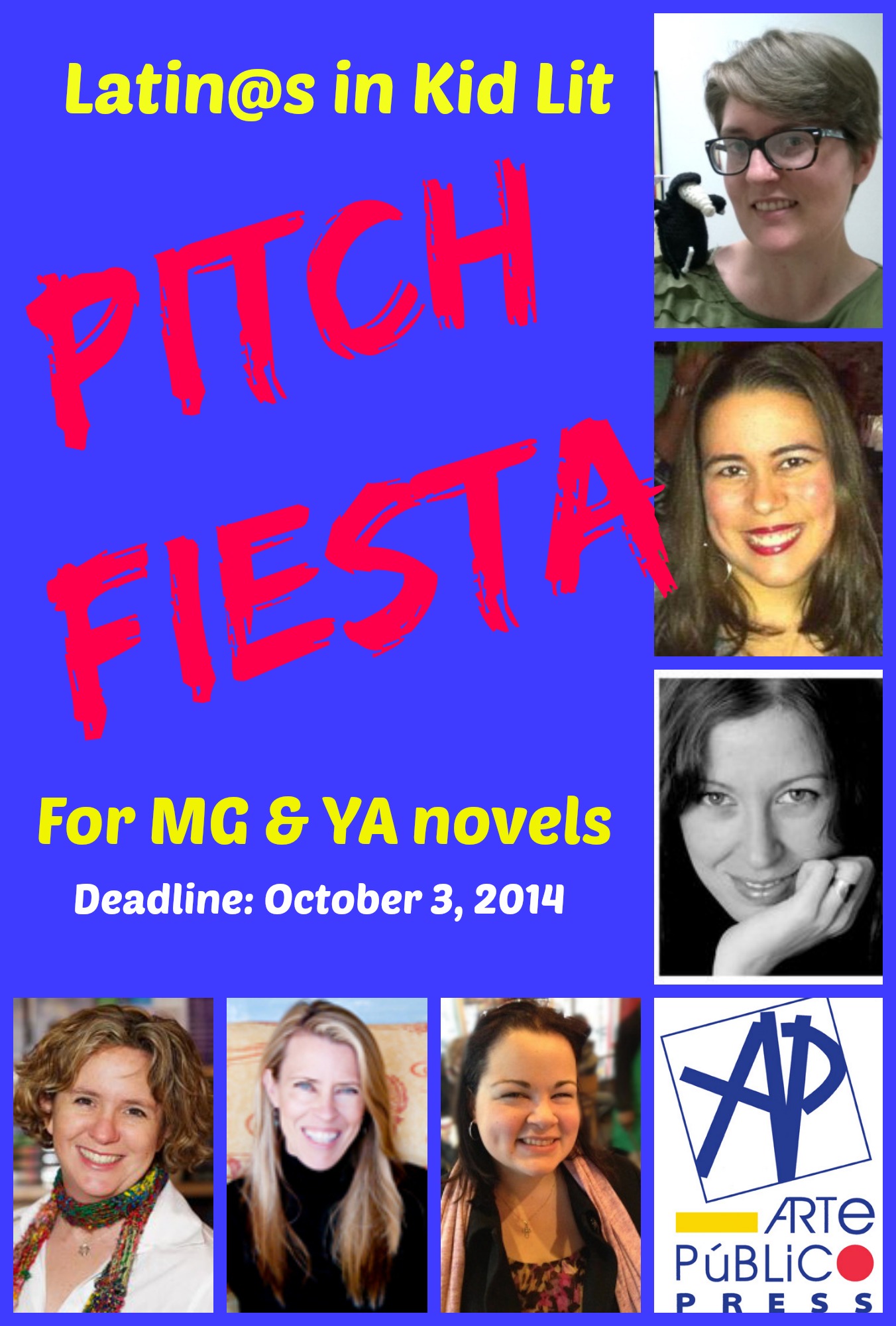

A friendly reminder: we’re at the midway point of the Pitch Fiesta. Don’t wait much longer to submit your novel! Need a refresher on the rules and procedures? Go here.
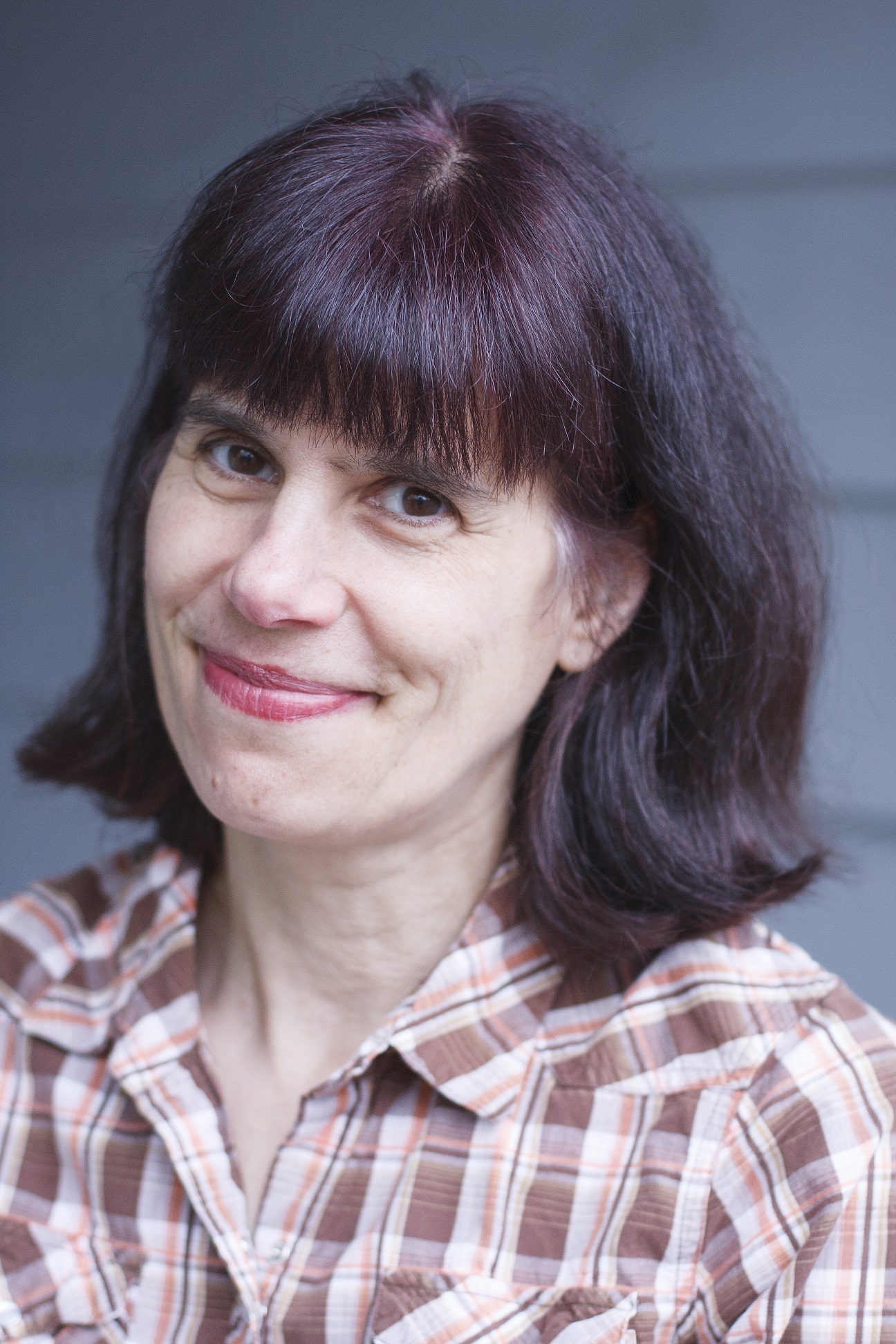 By Cathy Camper
Elirio Malaria (a mosquito), Flapjack Octopus and Lupe Impala work at a car dealership six days a week. Lupe’s the mechanic, Flapjack washes and buffs the cars, and Elirio details the cars with his beak. Their dream is to have a garage and a lowrider of their own:
They’d seen some cars blast by fast,
And others that could shift and drift,
But they wanted a car that would go low and slow.
Bajito y suavecito.
A universal car contest gives them that opportunity. But not until their car gets customized by outer space! Pinstripes from Saturn, pompom asteroids, and star-capped hubcaps make their car an interstellar phenomena!
That’s how I pitched my graphic novel Lowriders in Space at Pitchapalooza in Portland, Oregon. Back when the book was just a manuscript and a vision in my head, I’d exhausted the list of graphic novel agents, and so winning this contest was like a dream come true. The prize was the advice of The Book Doctors, a husband-wife team who connected my project with an agent and eventually, an editor and publisher.
I’m a writer, artist and a youth services outreach librarian. I wrote Lowriders in Space because as an Arab American, I was fed up with the inability of mainstream comics and books to represent the diversity of kids I see everyday, kids who like me, don’t see themselves in books. When I first sent the script to the book’s artist, Raúl III, who is Latino, he told me, “This is the book I wanted to read as a child,” and he was as excited as I was to create it, and for the same reasons. Our editor at Chronicle Books, Ginee Seo, is Korean American, and she gets it too—like us she wants to give kids a book that meets them where they are.
I’d been working on the book since 2006, and was thrilled when the #WeNeedDiverseBooks campaign launched in May 2014. We’re hoping that when Lowriders comes out this fall, it kicks a big hole in the wall of racism of kids’ books, welcoming kids of all backgrounds to read it. We hope it encourages publishers to create more books by new authors and illustrators of color, and to inspire kids via reading our book, to become creators, too.
By 2050, one third of the US will live in English-Spanish speaking households—that’s our audience! The book’s also aimed at boys, because the literacy rate of boys is dropping, and like Jon Scieszka (who sponsors the Guys Read website), we want boys to read. We also envision that kids struggling to read, for whatever reasons, might find our book inviting. And it looks like adults are loving it, too, from all the reviews that have been popping up online.
Since I’m not Latina, it was crucial to me that our book was culturally correct. I did tons of research, read books, watched films, went to the Lowrider Magazine’s car show, and interviewed people. I’m also fortunate and forever grateful to have the help of many Latino friends and library co-workers, who read the manuscript, offered suggestions, and helped fine-tune the Spanish. One of the cartoonists I admire most is cartoon journalist Joe Sacco. His ability to go into places of high conflict, like Palestine and the Bosnian war and create detailed drawn and written records out of chaos humbles me. When I heard him speak, he mentioned that one of the things he tries to do is set his ego aside, and put the stories of those he’s writing about, up front. When I wrote Lowriders, I tried my best to emulate this goal, and to fight for, as best I could, what would make the story culturally relevant.
This goal included having the right illustrations. Traditionally in children’s books, the writer doesn’t choose an illustrator for the manuscript (though this is different in comics creation). I was warned along the way, “Choosing your own illustrator may work against you.” However, I felt it was crucial that Raúl illustrate this book, not only because he’s a brilliant artist (and if we’re saying we need more diverse kids books, we also need more diverse creators), but because his art added just the right touch of both cultural relevancy and the retro-nuevo feel the text demanded. Raúl told me that much of the setting and landscape is based on his childhood in El Paso, Texas. When he started sketching Flapjack Octopus, he said he couldn’t help but think of him in his pail as El Chavo del Ocho, sitting in his barrel—and so we changed Flappy’s name and look to reflect that.
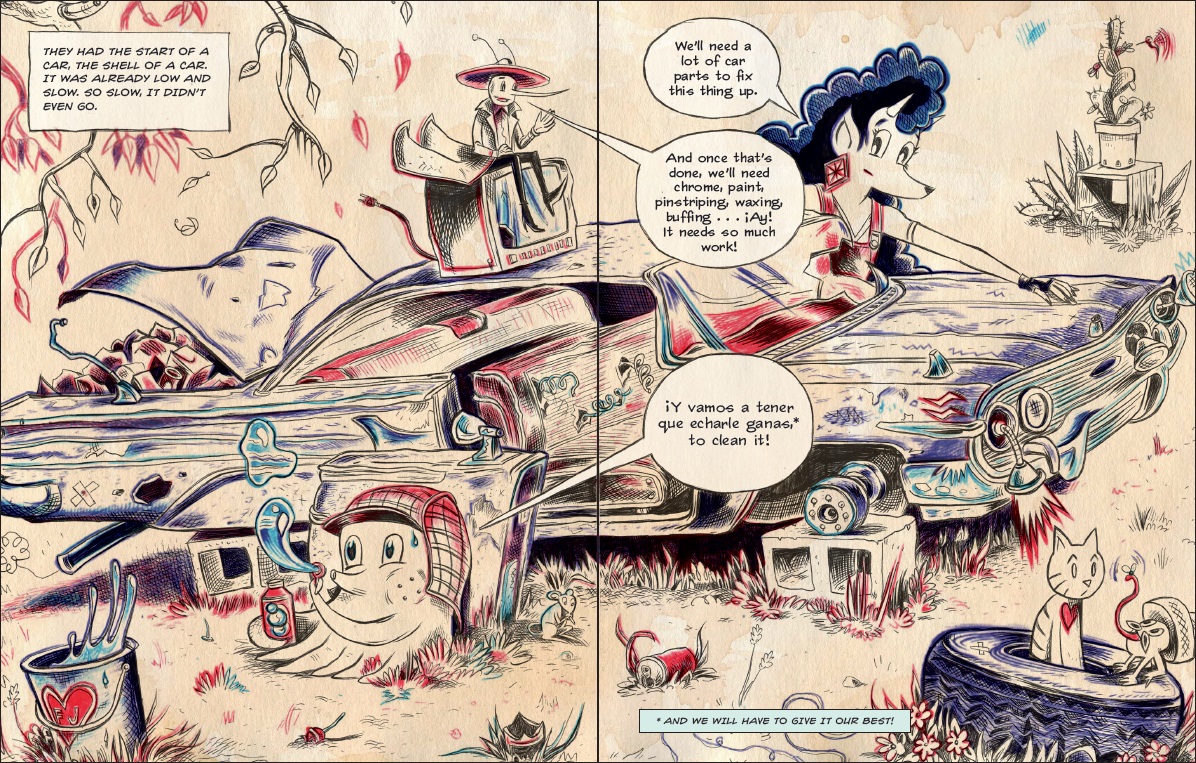
Just as Raúl was able to make contributions to the text, I sometimes added context to the drawings. For example, it was important to me that our lowriders’ car had the Big Dipper on it. For the lowrider diaspora of Latinos and African Americans whom the book celebrates, the Big Dipper represents the path north, and more broadly, the path to freedom. What better symbol to have on a flying car’s license plate? Our book celebrates the influence of older comics, art, pop culture and car references that Raúl and I both love and wanted to share, including George Herriman’s Krazy Kat, the Hernandez Brothers’ Love and Rockets, Mad Magazine and Big Daddy Roth’s cars.
And then there’s the science – I love science! My first book Bugs Before Time was about giant prehistoric insects – including a sea scorpion as big as your mom. Why wouldn’t our graphic novel include science, when there really are things as wondrous as flapjack octopuses and braided rings of Saturn? The technology of cars is part of science, too, whether it’s learning how cars are buffed and painted, how air compressors make lowriders hop, or what vulcanizing does to make rubber tires strong.
We think Lowriders is going to read like something brand new, because of the unique, aligned intent of author, illustrator, and publisher and because of the crazy mix of culture, comics, and science our combined imaginations dreamed up. We hope you love it and it makes you laugh, and that you share your excitement with all the kids out there that might love it, too. When Lowriders in Space blasts off this fall, our real destination isn’t the outer galaxies, it’s to land in the hands of kids who deserve to see themselves in what they read, and to be read by everyone else so they experience how rich a culture of color can be.
Cathy Camper is a librarian focusing on outreach to schools and children in grades K-12. She lives in Portland, Oregon. Follow the book’s Facebook page for more news.
Coming soon on Latin@s in Kid Lit: A book talk on Lowriders in Space with more story details and more peeks at interior pages!
By René Saldaña, Jr.
I’ve avoided writing this piece long enough. Number one reason is that politically I’m a conservative, and the last thing I want to do is to appear as though I’m playing the race card. Which I’m not, though it might look like it. Doing so’s a cheap and underhanded thing to do. So I don’t. Second reason: what I’m tossing out there can be dangerous to my career as a writer, I’ve been told, because of who I’m aiming it at: the very folks who buy my books, or won’t due to my brazenness: librarians and fellow educators, my bread and butter. (I trust in the educator, though, enough to know that if we are about anything we are about growth through honest self-reflection; it’s my hope that this piece will serve as a catalyst for such). Third reason: during my own reflection over the last couple of years, mulling over whether I should or shouldn’t put this observation to paper, one of the cons was that maybe it’s just sour grapes I’m dishing. Ultimately, it’s not. Not even just a little.
My sincere desire is to talk from the heart, to share this heavy load I’ve been carrying, and to reciprocate. I’ll do my part to take on the equally heavy burden librarians and educators have been carrying for far too long. To, arm in arm, move in a direction upward when we’re talking about race, in particular race in children’s and YA publishing, a hot topic to be sure.
 Let me tell you a story: I’m attending a librarians’ convention. I’ve been asked to sit on a panel or two, and at this point in my story I’ve met those obligations. Like happens at these functions, as a writer with a new book under my belt (best I can remember it’s A Good Long Way published by Piñata Books, an imprint of Arte Público Press), I’m also committed to sit for an hour at a table to sign copies of my latest. This is a very awkward thing for me to do. I really don’t like this part of my job. I mean, really, who am I? I’m not a top-tier author, and so I realize I won’t get the throngs of fans begging for my signature. (I found this out while sitting at another table, this one in D.C. at the National Book Festival in 2005, and I happened to be sitting next to Mary Pope Osborne, whose line was unimaginably long; I had to ask my wife, who was pushing our son in a stroller, and my sister-in-law to act as my line). Talk about eating humble pie. I get it. If a couple of teachers or librarians line up for my signature I count myself the most fortunate writer in the world. This time is no different from other times. I’m resolved to sit my time out, and if I get that librarian or two, I’ll make it a point to let them know how lucky I am to meet them.
I truly feel that way. My love for libraries and librarians goes back a long, long way. Back to when I was checking out the Hardy Boys, Nancy Drew, and Little House on the Prairie during my elementary school years, and later books on UFOs, lost treasures, and the book that kept me in the reading act, Piri Thomas’s Stories from El Barrio during middle school, and throughout high school and college, to this day even, visiting our public library with my children. Along with my parents and a small handful of teachers, I owe librarians the bulk of my reading life. This is why, in the end, I feel I need to write this essay: I owe librarians dearly.
So, back to the story: I’m sitting there with Arte Público’s representative, and I do get the one or two curious librarians who ask about my work. I could tell them that I’ve published three other books with Random House, that I’ve published several short stories in several anthologies edited by Gallo, Springer, and Scieszka, but I don’t. The only book that matters to me is the one I just published. It’s my favorite book. Not my favorite because it is my most recent. It’s really and truly my favorite of all the titles I’ve published to date. I love A Good Long Way for so many reasons, but that’s the stuff for another essay. These librarians are kind and buy a copy for their collections, are already thinking of which students will benefit from this book most (and it’s not just Latino kids they’re telling me about).
From the time I sat, I’ve taken notice of the author two tables down from me. I actually just presented with her. Undeniably a rock star in the field. The kind of author for whom I’d stand in line to get her autograph. I know her personally, too. She’s a genuinely awesome person. I’ve used her work in my graduate adolescent lit classes. My students love her. I understand why these librarians are in line to get her signature and for a chance at a word or two, maybe a picture if time allows.
What I don’t get, though, is that not a one of these librarians in this other author’s line chances to look up in my direction, not that I can tell from my time at the table, anyhow. Not a one notices that just two tables down is another writer, one of color, a conversation that has been pushed to the fore recently? The Myers’ father and son team each wrote brilliant editorials for the New York Times (in the middle of me writing and rewriting this piece, wouldn’t you know it? The world of children’s and YA writing is shaken to the foundation at the news of Walter Dean Myers’ death and among his last acts was to force us to have this difficult conversation, so thanks to him). Others like Monica Olivera have added to that conversation in a blogpost on NBC Latino, The folks over at Lee & Low have ably challenged us to consider the state of children’s and YA publishing regarding race. Lee & Low on Twitter, especially, has rocked that boat. But it was a discussion we were having back then, too. Albeit mostly amongst ourselves, we writers and publishers and teachers and librarians of color. So it’s been brewing a long enough time.
So, what I’ve heard librarians say over the last decade and a half on my visits is that there are so many Latino children, and how unfortunate that there are so few Latino authors publishing books for them. “Just look at how excited these kids get,” they tell me, “to find one of their own publishing books.” It’s true, they do get excited to meet writers of color; I’ve seen it with my own eyes, heard it with my own ears. As a side note: I’ve also seen kids jump for joy at meeting white authors.
Can you tell I’m purposely going off on rabbit trails? I’m avoiding getting to the point again.
But whatever. There’s an urgency. We need to get beyond this hurdle. We need to courageously speak about race. Confront it head on. We’re told this also by U.S. Attorney General Eric Holder in one of his early speeches at the outset of his work for the Obama administration. We must face our shortcomings if we are to get to that place Dr. King dared us to dream about alongside him.
Anyway, these librarians have told me that there is so little of this material, and what there is of it is so hard to find.
Okay, I’m jumping in, confronting, being courageous, mostly trusting my readers to know I’m out for all our best interests, and especially for those we serve, our students: so,
NO! this material is not hard to find.
Simply look up and two tables down from where you’re standing, there I am. At that point in my career I’ve got some six books to my name. There. I. Am.
And if you think I’m an idiot, especially now that I’m telling you this, then do this other thing and you’ll know I’m right: walk up and down those aisles that usually are nowhere near the major publishers, the ones relegated to the edges of the main floor. They’re the small, independent presses. The outliers, in so many ways. You’ll know them because they’re the ones who don’t give out ARCs or free copies of books. Not because they don’t want to but because it’s not in their budgets to do so. Take 20 minutes per stall, look through their catalogues, their titles. For goodness’ sakes, talk to the reps, who are usually the publishers and editors themselves (when it’s not both of them, it’s either Bobby or Lee Byrd of Cinco Puntos Press manning their booth), and these reps will explain clearly what they have for you and your readers. They’re eager, as eager as you and I, to help all children reach their reading potential. Next, buy from them directly. Come ready with cash, checks, or cards. They’ll take any method of payment.
I’m not saying that the Bigs don’t publish authors of color. They obviously do. Random House has me and several other Latinos on their list. So has Dial. Scholastic. Little, Brown. S&S. Etc. They publish Black writers, and Asian writers. The difference is, though, that the smaller presses focus all their attention on writers of color, so they are experts at it. Arte Público Press/Piñata Books is one. Another is Cinco Puntos Press out of El Paso (of Sammy and Juliana in Hollywood fame but before that a picture book titled The Story of Colors by Subcomandante Marcos with magnificent illustrations by Domitila Domínguez, a book I’ve yet to find shelved in the libraries I’ve visited, even in deep South Texas where the majority of the population is Latino, Mexican American, and Mexican to be exact). Lee & Low, that sometime ago acquired Children’s Book Press and that recently started Shen Books, a new imprint that “focuses on introducing young readers to the cultures of Asia,” is yet another. The list of them, admittedly short—nevertheless, these few presses publish nothing but books by and about people of color. For all readers, but in particular readers of color.
The books are there.
All you have to do is to look for them.
And when you think you’ve found them all, look again. Because we’re still writing the books, publishers big and small are still publishing them. All we need is for you to look and look and look again until you can’t look no more, which likely means you’ve retired and you’re no longer pushing books into kids hands formally. But a librarian is a librarian is a librarian. You’ll be giving books to kids any chance you get ’til the day you die.
This is why I know I can write a piece like this, harsh as it might seem: because you’re educators first and foremost. And you’ll forgive me my bluntness. But we are not the focal point of this conversation, our children are. So we are either proactive and talk and then do, or we stand in the way of the progress necessary. Let’s be the former.
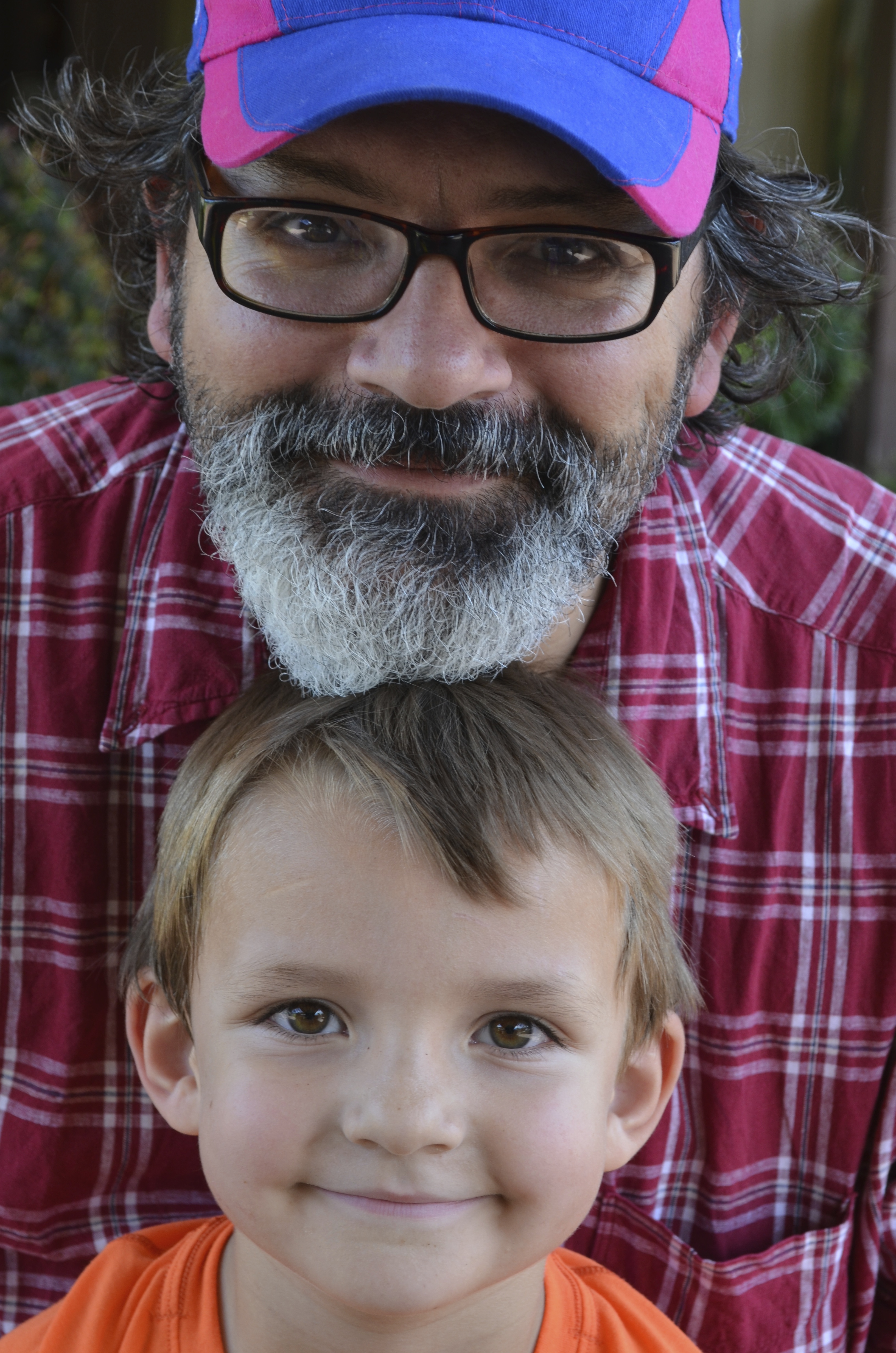
René Saldaña, Jr., is the author of the bilingual picture book Dale, dale, dale: Una fiesta de números/Hit It, Hit It, Hit It: A Fiesta of Numbers. He’s an associate professor of Language and Literature in the College of Education at Texas Tech University in West Texas. He’s also the author of several books for young readers, among them The Jumping Tree, Finding Our Way: Stories, The Whole Sky Full of Stars, A Good Long Way, and the bilingual Mickey Rangel detective series. He can be reached at rene.saldana@sbcglobal.net.
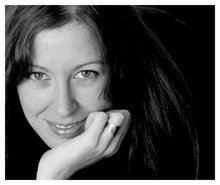 Adriana Dominguez, an agent at Full Circle Literary since 2009, has 15 years of experience in publishing, most recently as Executive Editor at HarperCollins Children’s Books, where she managed the children’s division of the Rayo imprint. She is a member of the Brooklyn Literary Council, which organizes the Brooklyn Book Festival, and one of the founders of the Comadres and Compadres Writers Conference in NYC. She is interested in middle grade novels and literary young adult novels. Adriana has a long trajectory of publishing underrepresented authors and illustrators, and welcomes submissions that offer diverse points of view.
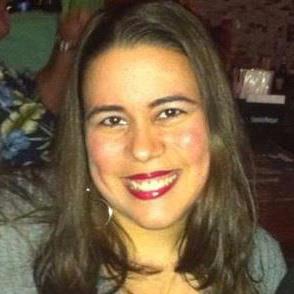
Adrienne Rosado is an agent at the Nancy Yost Literary Agency as well as the Foreign Rights Director. She is interested in literary and commercial fiction, especially YA, urban fantasy, multicultural fiction, women’s fiction, and new adult, all with strong voices and an authentic tone. She’s especially drawn to dark humor, innovative takes on classic literary themes, and Southern gothics. Adrienne is also on the lookout for quirky and smart narrative nonfiction, memoirs, pop science, and business books with a creative approach. Please no picture books, chapter books, poetry, or westerns.
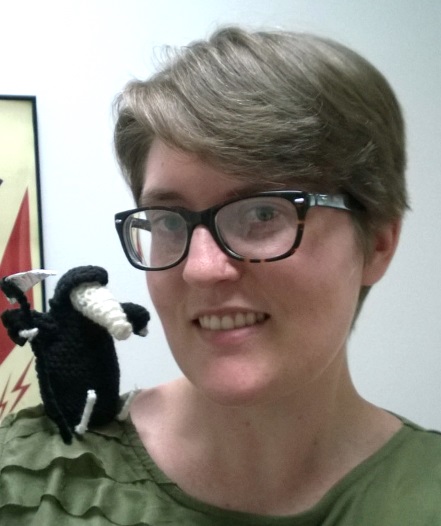
Amy Boggs is an agent at the Donald Maass Literary Agency. She is looking for all things fantasy and science fiction, especially high fantasy, urban fantasy, steampunk (and its variations), YA, MG, and alternate history. She is also looking for unique works of contemporary YA, historical fiction, Westerns, and works that challenge their genre are also welcome. She seeks and supports projects and authors diverse in any and all respects, such as (but not limited to) gender, race, ethnicity, disability, and sexuality. Please no: thrillers, women’s fiction, picture books, chapter books, poetry, screenplays, or any debut work under 30,000 words in length.
 Sara Megibow is an agent at the Nelson Literary Agency. Sara is looking for debut authors with a complete novel-length manuscript in any of these genres: middle grade, young adult, new adult, romance, erotica, science fiction or fantasy. Any sub-genre is accepted including paranormal, historical, contemporary, steampunk, fantasy, etc. In short – if you can write it, Sara will read it – as long as it’s 100% complete, novel-length, not previously published and in one of the above genres. Where does Diversity fit in? Sara is looking for manuscripts AND/OR authors representing diversity of religion, race, culture, socio-economic status, ability, age, gender and/or sexual orientation. Sara is on twitter @SaraMegibow and on Publishers Marketplace here: http://www.publishersmarketplace.com/members/SaraMegibow/
Kathleen Ortiz is the director of subsidiary rights and a literary agent for New Leaf Literary & Media, Inc. She is an active member of AAR and SCBWI. She’s always on the hunt for outstanding stories with strong characters whose voice and journey stay with her long after she finishes reading the story. She loves YAs set within other cultures and experiences across all genres (though she’s a bit full up on sci-fi and dystopian at the moment).

Laura Dail of the Laura Dail Literary Agency received her Master’s degree in Spanish Literature from Middlebury College (but would prefer to consider works in English). She’s most interested in realistic YA, and funny middle grade and chapter books. She represents fiction and nonfiction, but no picture books, poetry, or screenplays. See more here: http://ldlainc.com/kids-teen-ya/
 Arte Público Press, affiliated with the University of Houston, specializes in publishing contemporary novels, short stories, poetry, and drama based on U.S. Hispanic cultural issues and themes. Arte Público also is interested in reference works and non-fiction studies, especially of Hispanic civil rights, women’s issues and history. Manuscripts, queries, synopses, outlines, proposals, introductory chapters, etc. are accepted in either English or Spanish, although the majority of our publications are in English.
Piñata Books is Arte Público Press’ imprint for children’s and young adult literature. It seeks to authentically and realistically portray themes, characters, and customs unique to U.S. Hispanic culture. Submissions and manuscript formalities are the same as for Arte Público Press.
1. Writers who are Latin@ or writers of any ethnicity who have included Latin@ characters, settings, etc. in their manuscripts are eligible to apply.
2. You must have a complete manuscript at the time of the Pitch Fiesta. If an agent or editor is interested, you must have a complete manuscript ready to send. So, writers–get writing! Finish that manuscript!
3. Please read and consider what the agents are looking for. Please do not send us a query and first pages in a genre that does not mesh with their lists.
4. We will accept applications from September 2 through October 3. To apply, please send your query and the first 5-10 pages of your middle grade or young adult novel to our email: latinosinkidlit@gmail.com. In the subject line, please write: PITCH FIESTA ENTRY. Please post both the query and the first pages directly into the email. No attachments.
5. One of the Latin@s in Kid Lit members will read and respond to your email. During the month of October, we will help selected writers revise and polish queries and first pages to prepare for the Pitch Fiesta. Even though we will help you with your queries and first pages, please send us your best work. We have the right to reject any applications.
Exciting, right?
We hope writers will take advantage of this opportunity to present your work to publishing professionals who are actively seeking, and thereby supporting, diversity in kid lit!
By Lila Quintero Weaver
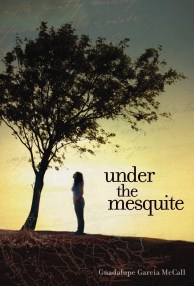 We’re excited to host a conversation with acclaimed author Guadalupe Garcia McCall. Her first book, Under the Mesquite, won the 2012 Pura Belpré Award and was a finalist for the William C. Morris Debut Award. Her newest work is Summer of the Mariposas, a rich work of fantasy fiction doubly inspired by Homer’s The Odyssey and the mythology of Mexico.
Lila: Guadalupe, congratulations on your wonderful writing career! Welcome to Latin@s in Kid Lit! Let’s get started with a question you’ve probably heard before:
Under the Mesquite is a powerfully intimate coming of age story told in verse. It’s a quiet book. On the other hand, Summer of the Mariposas is a high-energy road trip full of other-worldly characters and action scenes. Describe the paths that led to these diverse creative choices.
Guadalupe: Interestingly enough, both books were born out of my classroom experiences. Under the Mesquite came about because I was teaching my students how to write poetry. I wrote for them, as a way of modeling how easy and accessible poetry is if they focus on using their memories to write poems full of life’s experiences. After many years of teaching poetry (and collecting my little poems in my poetry unit folder), I realized that I had a good size collection of poems about my childhood which I could submit for publication. With the help of Emily Hazel, my editor at Lee & Low Books, that collection eventually evolved into Under the Mesquite.
After Under the Mesquite, I was bouncing around ideas for my next book, not really committed to anything, when one of my female students made the comment that all the books we read in class (we were studying Homer’s Odyssey) were about men—men having adventures, men defeating monsters, and men becoming heroes. This really upset my female students, and on her way out of my classroom, that same young lady told her friend, “It’s not fair. We need our own Odyssey!”
And that was it. That was my “light bulb” moment. Actually, it was more like a giant, blinding spotlight cast over a dark, neglected corner of our classroom that I couldn’t ignore as I drove home that afternoon. My girls were right. They needed to see themselves in literature. They needed their own stories to show the world that they are strong, and courageous, and smart. So I took out the sticky notes and started plotting out a Girl-Power adventure story using the Hero’s Journey just for them, for my “muchachas.” But as I worked on it, something else came to mind. Why use the same old Greek gods and monsters? Why not use our own mythology? We have just as many great characters to choose from in Mexican lore. And so it began, the frenzied scribbling and joyous giggling that comes when you first start plotting out a story—the discovery, the freedom, the breakthroughs—it’s all very intoxicating! I have to admit, I had a lot of fun writing Summer of the Mariposas because I knew my girls were hungry to read something like it.
Lila: Along with its supernatural elements, Summer of the Mariposas carries an understated but clear message of feminine strength and resilience. You force your characters to confront family challenges and heartbreaks. What do you hope to give young readers through this story?
 Guadalupe: When I started writing Summer of the Mariposas, I wanted to tell a fun female story. However, I also knew I wanted to showcase the strength and resilience that it takes for a young lady to come of age and embrace womanhood in our society. I wanted young girls to believe in themselves and trust that a female is just as equipped to take care of herself and her loved ones as her male counterpart. That they are lacking nothing—that all young ladies have the courage to take life by force and the wisdom to attain their goals.
Lila: I’m sure you’ve been attuned to the recent conversation on diversity in literature, especially in children’s and YA publishing, which has stirred up a lot of media attention. One article quoted Matt de la Peña as saying, “Where’s the African American Harry Potter or the Mexican Katniss?” As a Latina writer, you must have well-formed opinions on this topic. What are your concerns? And what are your dreams for diversity in kid lit?
Guadalupe: Matt and I must be on the same wavelength because I asked a similar question about a year and a half ago, and I posted it on Facebook in a conversation with my publisher about gaps in children’s literature. We were talking about genre-specific gaps, and I asked a question along the lines of “Where is the Mexican-American Johnny Tremain?” I think it is very important that we start answering these questions. Not with words, but through action.
Listen, this fence is about to crumble. It’s got so many holes in it. The change in the face of our nation (diversity in our classrooms) is not forthcoming. The Change is here. The Change is upon us. We “have” diverse classrooms—and our students are missing the sound of their voice in the narratives available to them. It’s too late to “think” about it or “research” it or “plan” for it. No. It’s time to take action. Publishers need to be addressing the fact that there are not enough diverse children’s and YA books to fill the huge gaps in children’s literature. They need to be actively seeking out new and existing talent and publishing the books that will fill those gaps.
Lila: In addition to authoring books with strong Latino themes, you’ve also taught middle school (and now high school) in Texas. What are your thoughts about turning young Latinos into readers and writers?
Guadalupe: There is this great attitude in South Texas, especially along the Rio Grande Valley, border area, and that is that books are amazing and that their creators, namely authors, are ROCK STARS! The teachers, administrators, district personnel, and especially the community have made it their mission to make books and their creators accessible to children. They seek out grants and special programs and make every concerted effort to continue to feature books and their authors in their schools. They see reading and writing as the greatest assets, the most important tools in their children’s toolbox. I really admire that. I wish that was the case with every teacher, every administrator, every district, and every community in the world. Life would be sweet if we were all about education. I know that I’m being very naive here (with all the other problems to be solved in the world), but I do truly believe in building life-long learners through reading and writing! Reading and writing make up the foundation of learning, and a good book can draw a child in as well as any electronic gadget if presented in the right light, with the right attitude, and with the same attention corporations give to marketing video games, apps, and cell phones. It would mean flipping a Goliath of a paradigm on its ear, and the willingness to take on the fight, but it can and should be done, for our children’s sake!
Lila: Let’s get practical. You work a full-time job and yet somehow manage to write complex novels. What are the habits that help you produce? Is there a piece of writing advice that a mentor gave you which still rings true? What have you discovered on your own that guides you in attacking a new project?
Guadalupe: My habits? Well, I sit down every day to tap at those keys. Sometimes I take a cup of coffee to the porch and write as the sun rises on the weekends. Sometimes, I write the minute I get home from work. And sometimes, I pull over on the side of the road and write in my vehicle on the way to the grocery store because I don’t want to lose that terrific line. Most often, though, I get up in the middle of the night and write in my jammies because that’s when my brain wants to create.
Whatever the case may be, it’s important for me to write every day, to “touch the work every single day!” I heard that somewhere, or maybe I read it. I’m not sure which, but it’s very true. I find that the longer I stay away from writing, the harder it is to get back in the groove of it. It’s like being an athlete. If you don’t keep working out, you lose muscle, and you won’t win any races or bring any trophies home if you don’t work out every day. So this is the advice I pass on to my students,” Work out those writing muscles every day. Read. Write. Read. Write. Read. Write. Oh, and don’t be afraid to catch the latest movie or keep up with your favorite TV show. It’s good research! ”
Lila: Speaking of new projects, you must be working on something. What can you share about it?
Guadalupe: I am working on a YA historical set in Texas during the Mexican Revolution, after the discovery of the Plan de San Diego and all the strife and conflicts of that time period on this side of the border. It’s something that is very close to my heart because I think it’s an important time in “our history” that hasn’t been explored or talked about much in our classrooms. The maltreatment and persecution of Mexican Americans in South Texas during that time is either ignored or glossed over in our textbooks and there is literally little to nothing in YA fiction that touches on the struggles Hispanics experienced during that devastating time period in American history. I really can’t share too much of the plot except to say that it is my attempt at filling in a gap and answering the questions, “Where is the Mexican-American Johnny Tremain? Where is our historical perspective, our ancestral Mexican-American voice?”
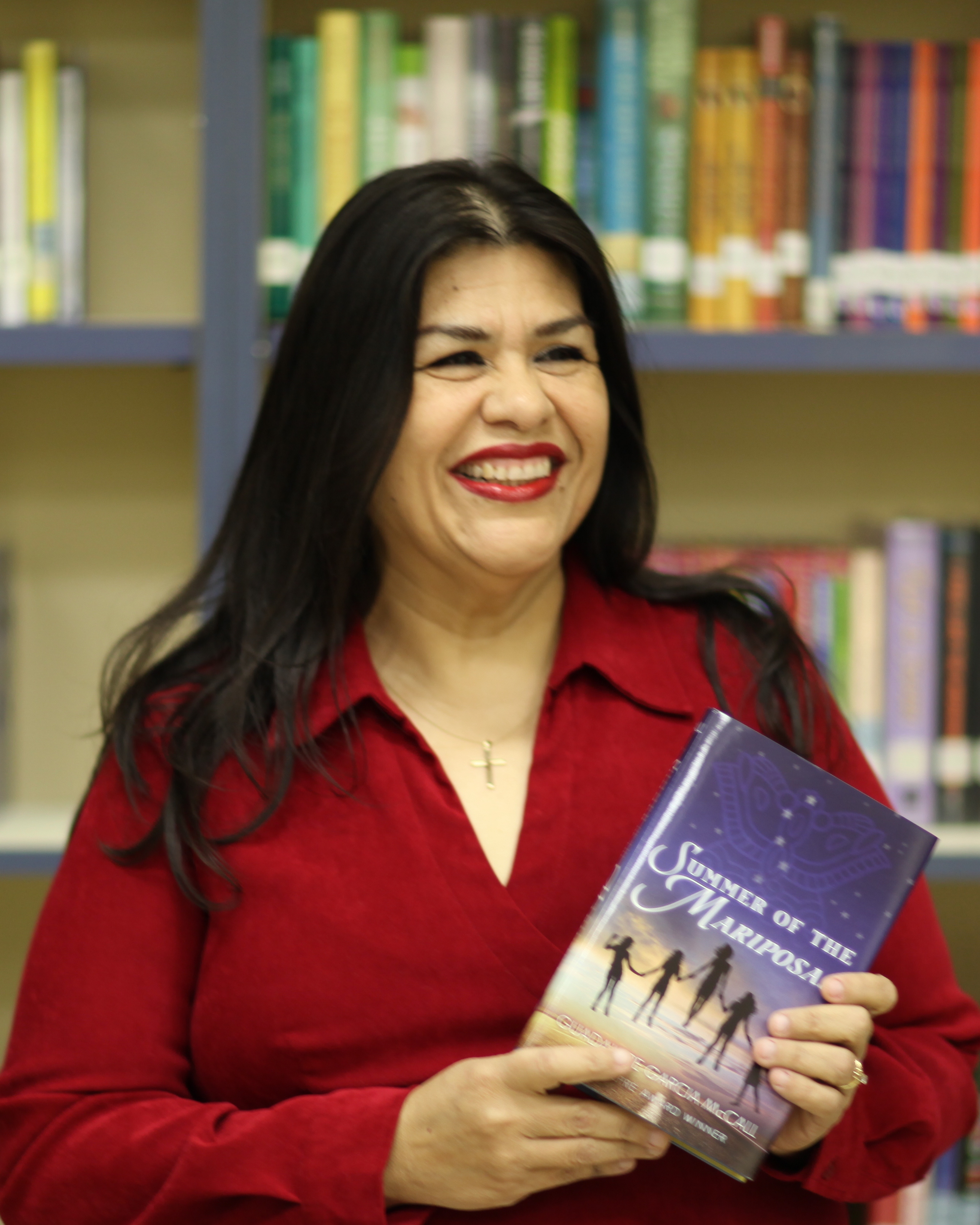 Guadalupe Garcia McCall is the author of Under the Mesquite (Lee & Low Books), a novel in verse. Under the Mesquite received the prestigious Pura Belpre Author Award, was a William C. Morris Finalist and received the Ellen Hopkins Promising Poet Award, the Tomas Rivera Children’s Book Award, and was included in Kirkus Reviews’ Best Teen Books of 2011 among many other honors and accolades. Her second novel, Summer of the Mariposas (Tu Books, an imprint of Lee & Low Books), won a Westchester Young Adult Fiction Award, was an Andre Norton Award for Young Adult Science Fiction and Fantasy Finalist, and was included in the 2013 Amelia Bloomer Project List, the Texas Lone Star Reading List, and the 2012 School Library Journal’s Best Books of the Year.
Her poems for adults have appeared in more than twenty literary journals across the country and abroad, and her poems for children are included in The Poetry Friday Anthology, The Poetry Friday Anthology for Middle School, and The Poetry Friday Anthology for Science. Ms. Garcia McCall was born in Piedras Negras, Coahuila, Mexico. She immigrated with her family to the United States when she was six years old and grew up in Eagle Pass, Texas (the setting of both her novels and most of her poems). She is currently a high school English teacher in the San Antonio area and lives in Somerset with her husband, Jim, 2 dogs (Baxter and Blanca), 1 cat (Luna), and her two (of three) college age sons, Steven and Jason.
 By Cindy L. Rodriguez
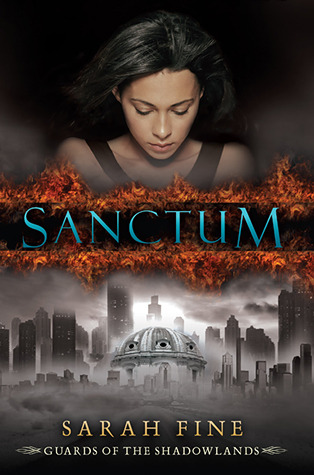
This month, we are taking a look at Latin@s in science fiction and fantasy. Today, we have a Q&A with Sarah Fine, author of Sanctum and Fracture. (Book three is in the works.) Here is a partial description of Sanctum, which features Lela Santos, a Latina main character, a foster child from Rhode Island who has experienced abandonment, neglect, and sexual abuse:
A week ago, seventeen-year-old Lela Santos’s best friend, Nadia, killed herself. Today, thanks to a farewell ritual gone awry, Lela is standing in paradise, looking upon a vast gated city in the distance—hell. No one willingly walks through the Suicide Gates, into a place smothered in darkness and infested with depraved creatures. But Lela isn’t just anyone—she’s determined to save her best friend’s soul, even if it means sacrificing her eternal afterlife.
Cindy: First, let me say that I loved Sanctum. The only part that frustrated me was how long it took for Lela and Malachi to kiss :.)
Sarah: I’m so glad you enjoyed it, and I hope the kiss was worth the wait!
Cindy: The premise of Lela going into hell to retrieve Nadia is similar to the Greek myth Orpheus and Eurydice, but obviously this is not a retelling. How influenced were you by that myth or mythology in general?
Sarah: I actually didn’t think about that particular myth at all as I was generating the idea for this book. When I read that comparison in a review, I was like … you know, that’s actually quite apt! I was a little more influenced by Jewish and Mesopotamian mythology. The Mazikin are mentioned in the Talmud as evil spirits or demons, and the inhuman Guards are very loosely based off protective deities called the lamassu in Mesopotamian myths, where they’re described as half-man, half-bull.
Cindy: Your setting is an interesting kind of hell, with the buildings being alive and able to feed off its inhabitants. How did you create and develop this idea? What kind of research do you do for fantasy world creation?
Sarah: This idea was inspired by the way C.S. Lewis wrote about his version of hell/purgatory in The Great Divorce. The “grey town” is this massive, depressing city where it’s always raining, always twilight—and here’s the part that really got me: people could have whatever they wanted, but it was of low quality. That Grey Town at the very beginning of that book completely inspired the dark city in Sanctum. Obviously, I changed it a lot, including the idea that the city is really one living, breathing entity that grows off the depression of the people residing within, but I give Lewis the credit for the basic idea (and he was clearly influenced by Dante in that work, so he deserves credit as well.)
 Cindy: Do you continue to work as a child psychologist? Did your work experiences help you to portray the emotional recovery Lela and the others have to go through in order to heal from trauma?
Sarah: I do, but in a different capacity than I have in the past, when I did a lot of home-based evaluations and therapy. Now I direct programs and supervise clinicians who provide those services to children and adolescents who are at risk for out-of-home placement in psychiatric hospitals or residential treatment facilities. Our goal is to work with families to keep these kids at home and in their communities, where research clearly shows they do best.
My work definitely influences how I see the complexity of trauma and what it takes to heal. A huge percentage of our clients have experienced some type of trauma, and usually not what we think of as single event, “simple” trauma. Though that can be devastating, it’s actually easier to treat than the complex developmental trauma we often see, where the trauma is more chronic and ongoing. This is actually the type of trauma Lela’s experienced—multiple disruptions in attachments, several instances of abuse or neglect. As I show her fragile but growing relationship with Diane, her foster mom, that’s always on my mind. I definitely explore more of that in book three.
Cindy: In addition to the great action scenes, this story focused on the characters’ battles with their personal demons. Thinking about author choices here…because of the issues the characters face, this story could have been developed as a YA contemporary. What led you to decide to develop the story as fantasy instead?
Sarah: I guess it’s a preference thing. There are some brilliant, brilliant authors who have explored these issues with contemporary YA (Nina LaCour, for example), but I wanted to place these characters in an environment where the depression was a tangible, living thing. This fantasy world gave me the chance to explore a lot of philosophical issues, like what is heaven, really, and how could it possibly be the same for everyone? What if you’re not emotionally ready to be there and accept what it offers? To me, that’s not a religious question, but a more concrete way of exploring something very emotional–Can you have some version of that goodness in your life, no matter where you are? What would you have to understand and embrace to receive that?
Cindy: Again with author choices….Obviously you could have created characters of any race, ethnicity, etc. What made you decide to create a Latina MC?
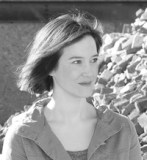
Sarah Fine
Sarah: Lela Santos really just materialized to me in that form. However, I will tell you that the majority of the school children in the urban core of Rhode Island, where Lela’s from, are Latino/a. Also, in general, children of color are overrepresented in terms of involvement in the juvenile justice system in this country (with harsher sentences as well—we’ve had court workers outright say that they’re harder on these kids because of the racism they face within society, which is a totally twisted logic that over-penalizes those children and in my opinion perpetuates that racism). Once I considered those facts, it seemed wrong to consider making her anything other than what she was from the beginning.
Cindy: Your secondary characters have interesting back stories as well, which suggests to me that including diversity in your writing is important to you. Some authors shy away from including diverse characters for fear of “getting it wrong.” Did you have any concerns about creating diverse characters? What advice, if any, would you give to fantasy writers about diversity in the genre?
Sarah: This story takes place in the afterlife, and the idea that the only people residing there would be Anglo-American, or any kind of American, is pretty laughable. The world is a BIG place—and the afterlife would be the same, minus the country divisions. Everyone would be there together, right? The dark city where most of Sanctum takes place is where everyone in the world who committed suicide has gone (with some exceptions, I think, but that’s a different interview!). I felt very strongly that having Lela coincidentally meet up with people who were American would just be false and icky.
I did have concerns, of course, because I really wanted these characters to have an impact, and to feel like real people. I did quite a bit of research. I also focused on writing from the inside out, trying to focus on each of those characters as human beings who loved and hoped and despaired in their own ways. I don’t think I’m some kind of expert on this. I’m certain I’ve made mistakes. But I’m curious and always wanting to learn about people who are different from me. And I started from the premise that all those diverse characters—Lela, Malachi, Ana, Takeshi—were on their own profoundly personal journeys, armed only with their intelligence, resilience, perseverance, and the capacity to risk their lives and hearts for a chance at peace. The rest flowed from that.
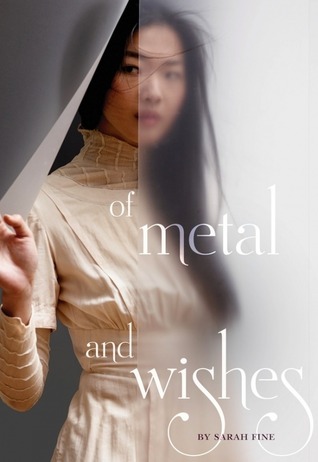
Check out these other works by Sarah Fine:


 Latinxs in Kid Lit