
Review by Elena Foulis
 DESCRIPTION OF THE BOOK: It is 1957 in Marianao, a suburb on the outskirts of Havana. Adela Santiago is thirteen years old and lives in a small blue house with her mother, father, brother, and grandfather. And yet something is amiss. Her neighbors are disappearing. Not only that, but her parents’ marriage seems to be disintegrating and her cousin is involved with a bombing at the Hotel Nacional. Welcome to a world where the sight of police officers shooting citizens in broad daylight is a normalcy, where every day there is a higher body count than the day before, where in the cramped pews of churches, in the creaking wood of backwards Havana alleys, a revolution is brewing. Welcome to Cuba.
MY TWO CENTS: Viviana Prado-Nuñez’s first novel, The Art of White Roses, is a beautifully told story of a young girl growing up in Batista’s Cuba. Adela, the protagonist, tells the story of her neighborhood, family, and friends as she tries to make sense of how disappearances, violence, and affairs affect her and the people she loves. The story looks deeply into family life, such as sibling interactions, her parents’ sweet but complicated relationship, and Adela’s abuelo. Despite the political conditions of the time—including repression, police brutality, and desaparecidos—Adela is most impacted by her family dynamics. As she tries to make sense of cruelty, mysteries, and her own disappointments, Adela is both observant and conversant about the possible deaths of universitarios whom they all knew and who were possible revolucionarios. She witnesses the death of Luis, a neighbor and troubled-young man who also might have been part of an uprising against the police, and her own family drama of her father’s affair. One of my favorite chapters is, “The night they met,” because Prado-Nuñez’s weaves happy memories of when Adela’s parents met and the present reality of their strained marriage. The author’s narrative choice, at once nostalgic, funny, and tragic, centers around Adela’s perspective with the backdrop of the revolution.
The novel is not always told chronologically, rather, each of the chapters tells the story of an event, family member, or place. The stories help the reader see the protagonist’s development, but it is not a typical coming-of-age story, meaning, there is no event that suddenly helps her find her voice. Instead, Adela’s understanding of herself is directly tied to her place and community, including the oppressive political circumstances that, in the end, force her family to move. Her future is uncertain—including her educational future—because of circumstances that have to do with her father’s affair first, and her Batista’s regime second. Prado-Nuñez’s detailed descriptions of places and people add to Adela’s understanding of the world around her, and the reader enjoys the author’s carefully crafted narrative. This is best exemplified by her discussion of the book’s title, connected to José Martí’s poem and personal story of choosing to love and forgive, in the face of pain, as Adela’s father explains, “white roses are hard times,” and later says, “white roses are hard for me, too.”
TEACHING TIPS: Taking advantage of today’s digital tools, a google earth exploration of Marianao, its surrounding neighborhoods, and its proximity to Havana, can help understand the setting and how that might determine the experiences of Adela and her family. Research on Hotel Nacional, a historical site, will add to discussion of time and place of the novel. There is a lot to explore visually via photography about Cuba, especially since it seems suspended in time. These already available resources, can lead to digital projects such as storymaps, digital storytelling and digital archival projects about neighborhoods and historical sites. While the historical background of Bastista and Castro is important, it would be also helpful to study American influence in the country and how this might have affected Cubans during this time and how this has informed U.S.-Cuba relations today.
 ABOUT THE AUTHOR: Viviana Prado-Núñez was born in San Juan, Puerto Rico in a hospital with a 4.0 Google review rating and a view of the ocean. Previous publications include The Best Teen Writing of 2014, 4×4 Magazine, Columbia Spectator, and Quarto Magazine. She is also the 2017 winner of the Burt Award for Caribbean Young Adult Literature for her novel, The Art of White Roses.
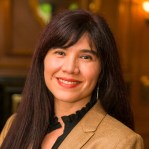 ABOUT THE REVIEWER: Elena Foulis has a Ph.D. in Comparative Literature and Cultural Studies from the University of Arkansas. Her research and teaching interests include U.S. Latina/o literature, and Digital Oral History. Dr. Foulis is currently working on a digital oral history project about Latin@s in Ohio, which is being archived at the Center for Folklore Studies’ internet collection. Some of these narratives can be found in her iBook titled, Latin@ Stories Across Ohio.
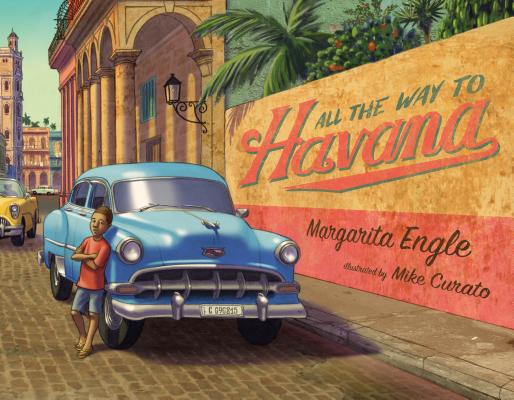

 ABOUT THE ILLUSTRATOR: Mike Curato loves drawing and writing almost as much as he loves cupcakes and ice cream (and that’s a LOT!). He is the author and illustrator of everyone’s favorite polka-dotted elephant, Little Elliot. His debut title,
  ABOUT THE REVIEWER: Cecilia Cackley is a performing artist and children’s bookseller based in Washington, DC, where she creates puppet theater for adults and teaches playwriting and creative drama to children. Her bilingual children’s plays have been produced by GALA Hispanic Theatre and her interests in bilingual education, literacy, and immigrant advocacy all tend to find their way into her theatrical work. You can find more of her work at
 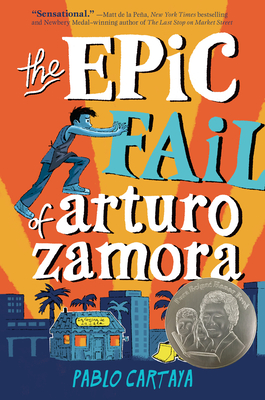 DESCRIPTION OF THE BOOK: Save the restaurant. Save the town. Get the girl. Make Abuela proud. Can thirteen-year-old Arturo Zamora do it all or is he in for a BIG, EPIC FAIL? For Arturo, summertime in Miami means playing basketball until dark, sipping mango smoothies, and keeping cool under banyan trees. And maybe a few shifts as junior lunchtime dishwasher at Abuela’s restaurant. Maybe. But this summer also includes Carmen, a poetry enthusiast who moves into Arturo’s apartment complex and turns his stomach into a deep fryer. He almost doesn’t notice the smarmy land developer who rolls into town and threatens to change it. Arturo refuses to let his family and community go down without a fight, and as he schemes with Carmen, Arturo discovers the power of poetry and protest through untold family stories and the work of José Martí.
 ABOUT THE AUTHOR: Pablo Cartaya is the author of the acclaimed middle-grade novel,
 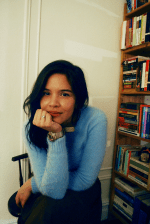 ABOUT THE REVIEWER: Jessica Agudelo is a Children’s Librarian at the New York Public Library. She has served on NYPL’s selection committee for its annual Best Books for Kids list, and is currently a co-chair for the 2018 list. She contributes reviews of English and Spanish language books for School Library Journal and is a proud member of the Association of Library Services to Children and REFORMA (the National Association to Promote Library and Information Services to Latinos and Spanish Speakers). Jessica is Colombian-American and was born and raised in Queens, NY.
 Q. Who or what inspired you to become a writer?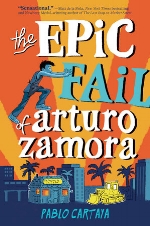
 Cindy L. Rodriguez
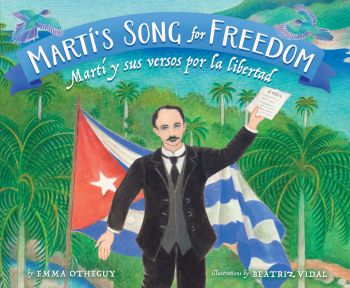 DESCRIPTION OF THE BOOK: As a young boy, Jose Martí traveled to the countryside of Cuba and fell in love with the natural beauty of the land. During this trip he also witnessed the cruelties of slavery on sugar plantations. From that moment, Martí began to fight for the abolishment of slavery and for Cuban independence from Spain through his writing. By age seventeen, he was declared an enemy of Spain and was forced to leave his beloved island. Martí traveled the world and eventually settled in New York City. But the longer he stayed away from his homeland, the sicker and weaker he became. On doctor’s orders he traveled to the Catskill Mountains, where nature inspired him once again to fight for freedom. Here is a beautiful tribute to Jose Martí, written in verse with excerpts from his seminal work, Versos sencillos. He will always be remembered as a courageous fighter for freedom and peace among all men and women.
 ABOUT THE AUTHOR: Emma Otheguy is a children’s book author and a historian of Spain and colonial Latin America. She is a member of the Bank Street Writers Lab, and her short story “Fairies in Town” was awarded a Magazine Merit Honor by the Society of Children’s Book Writers and Illustrators (SCBWI). Otheguy lives with her husband in New York City. Martí’s Song for Freedom/Martí y sus versos por la libertad is her picture book debut. You can find her online at
  ABOUT THE ILLUSTRATOR: Beatriz Vidal was born in Argentina and attended the Faculty of Philosophy and Humanities of Cordoba University. In New York, she studied painting and design with Ilonka Karasz for several years. During that time, her career as an illustrator began with designs for Unicef cards and record covers. She has illustrated many children’s books, including The Legend of El Dorado, A Library for Juana, Federico and the Magi’s Gift, and A Gift of Gracias. She divides her time between Buenos Aires and New York City.
 ABOUT THE REVIEWER: Chantel Acevedo’s novels include
 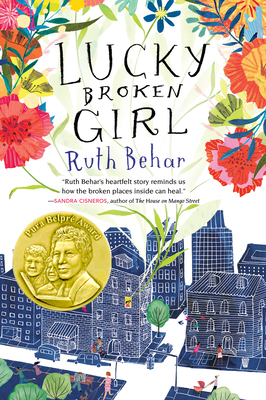 DESCRIPTION FROM THE PUBLISHERS: Ruthie Mizrahi and her family recently emigrated from Castro’s Cuba to New York City. Just when she’s finally beginning to gain confidence in her mastery of English—and enjoying her reign as her neighborhood’s hopscotch queen—a horrific car accident leaves her in a body cast and confined her to her bed for a long recovery. As Ruthie’s world shrinks because of her inability to move, her powers of observation and her heart grow larger and she comes to understand how fragile life is, how vulnerable we all are as human beings, and how friends, neighbors, and the power of the arts can sweeten even the worst of times.
 ABOUT THE AUTHOR (
 ABOUT THE REVIEWER: Maria Ramos-Chertok is a writer who lives in Mill Valley, CA. She is the founder and facilitator of The Butterfly Series, a writing and creative arts workshop for women who want to explore what’s next in their life journey. Her work, most recently, has appeared in San Francisco’s 2016 Listen to Your Mother show (www.listentoyourmothershow.com) and in the Apogee Journal of Colombia University. Her piece Meet me by the River will be published in Deborah Santana’s anthology All the Women in my Family Sing (2017) and she will be reading in San Francisco’s LitCrawl in October 2016. For more information please visit
  Latinxs in Kid Lit