Spotlight on Latinx Illustrators: Sharon Sordo, Tatiana Gardel, Luciana Navarro Powell

.

By Cecilia Cackley

This is the twelfth in a series of posts spotlighting Latinx illustrators of picture books. Some of these artists have been creating children’s books for many years, while others will have their first book out soon. They come from many different cultural backgrounds, but all are passionate about connecting with readers through art and story. Please look for their books at bookstores and libraries!
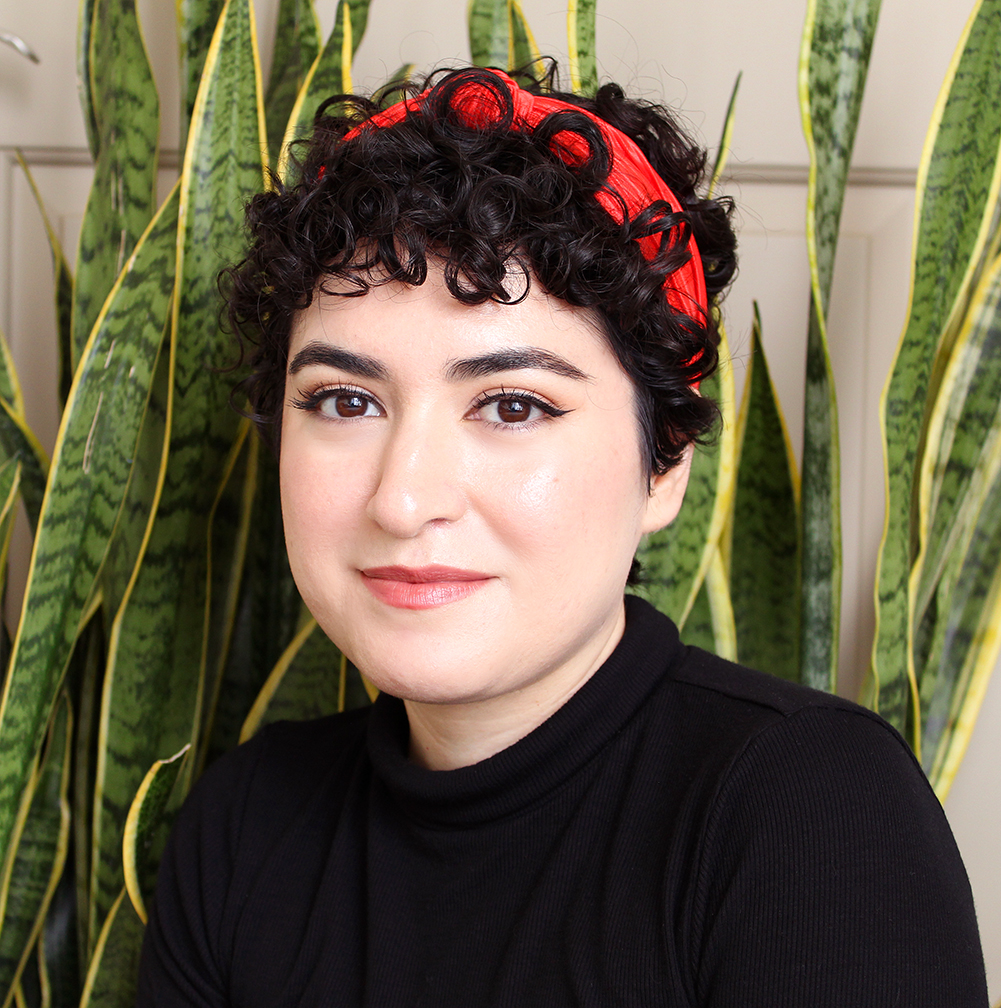
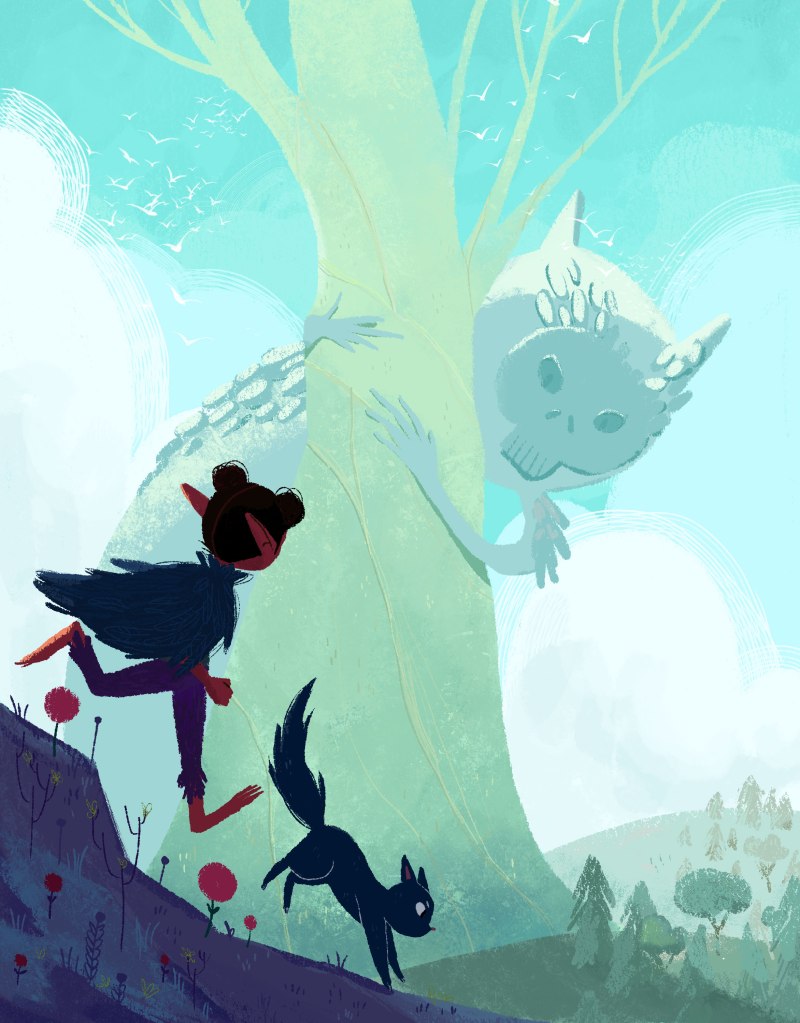
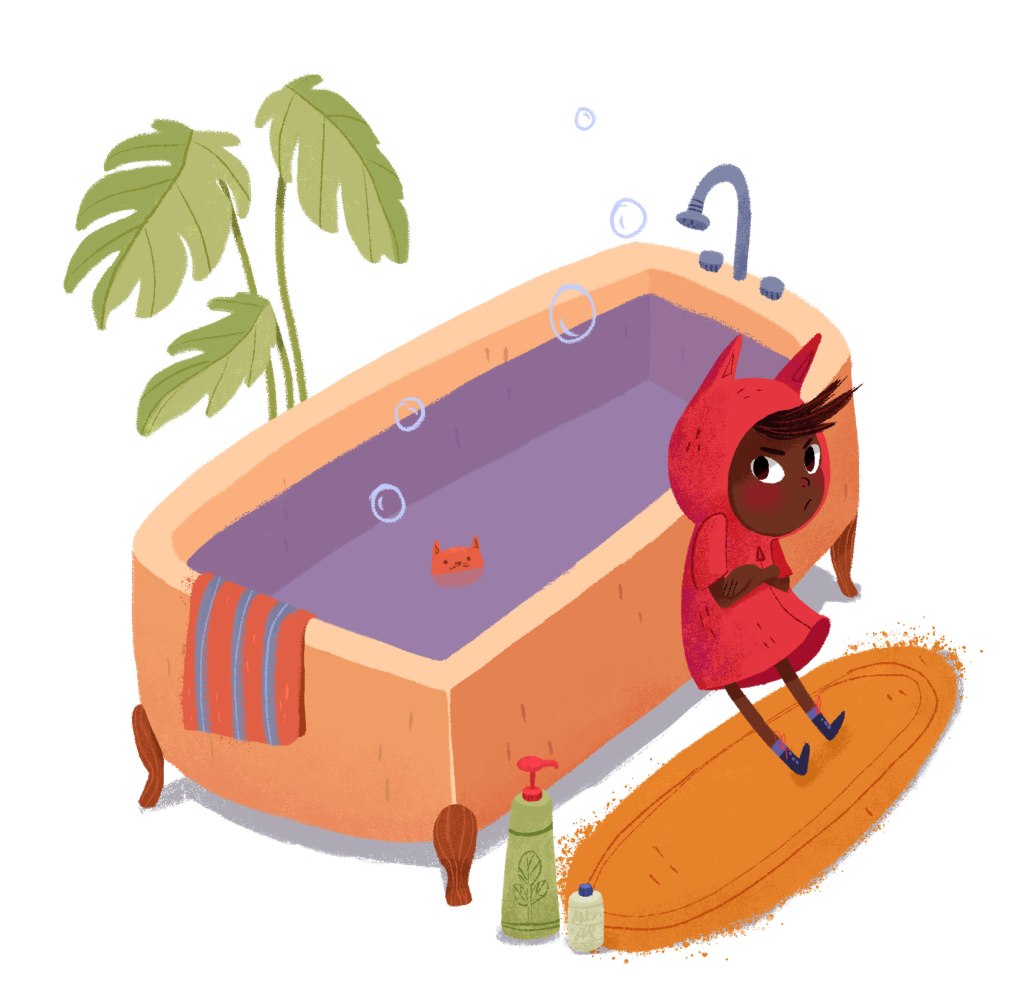
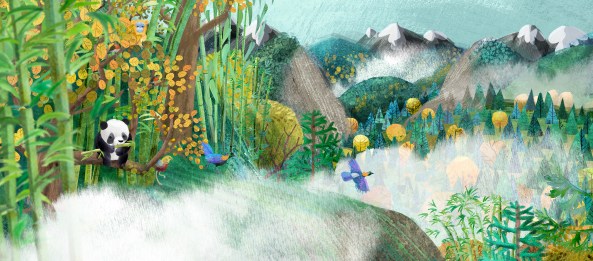
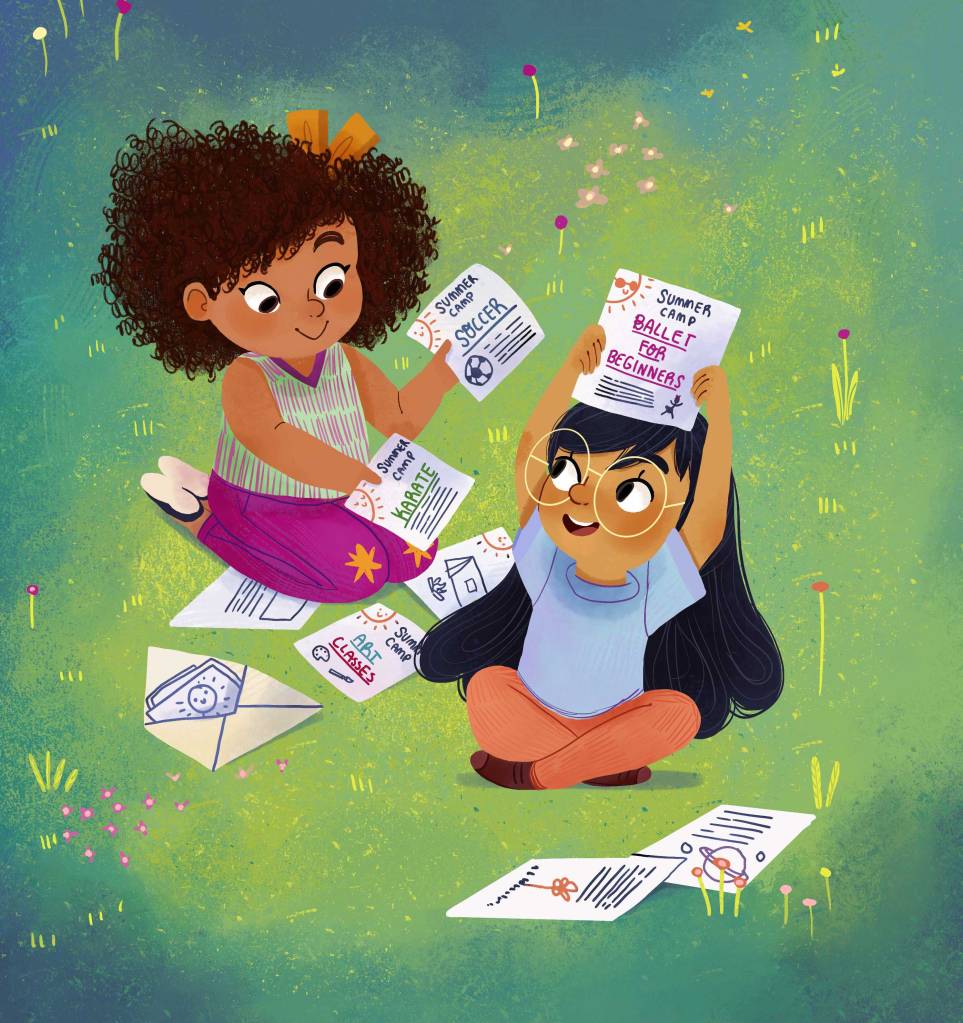
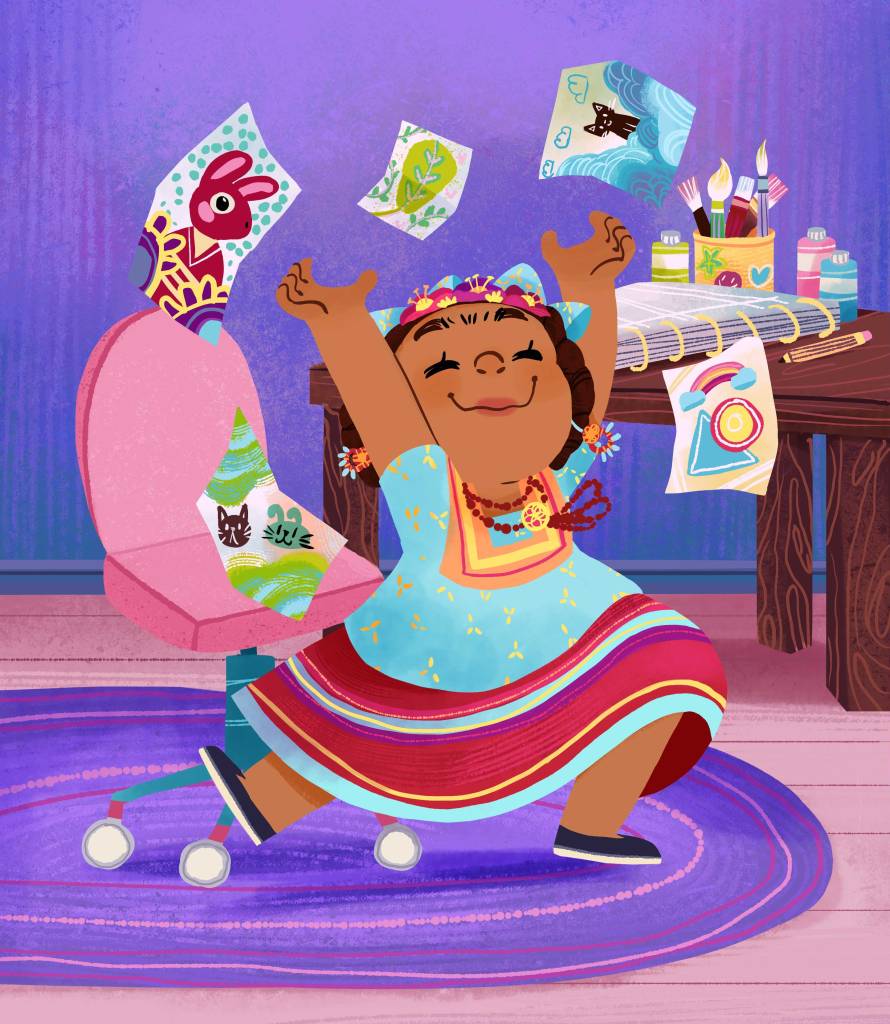
Sharon Sordo is an illustrator, cat hugger, and expert soup maker. As a Mexican girl growing up in the United States, Sharon found it difficult to relate to the many characters in children’s books that were available. Since then, she strives to represent different cultural backgrounds through her art. She lives in San Diego, California with her husband and cat.

Q: What or who inspired you to become an artist?

A: The magical way a story book can transport you into a new world through colorful illustrations captured my imagination as a young child. This is what inspired me to become an artist. Sharing my own stories and drawings with the people I love and igniting a sense of wonder in them, this is what will inspire me to do it forever. 

Q: Tell us something about your favorite artistic medium–why you like it, when you first learned it, etc. 

A: Through digital art, I have all of the traditional mediums at my disposal without the clean up and I can erase with ease. I don’t need a huge studio to store canvases and stinky oil paints, my pigments will never dry up, and sharing my art with the world and clients is amazingly simple. Drawing and painting in Adobe Photoshop along with my Wacom Cintiq, has made art more fun and stress free. One minute, I can try pastels, layer some watercolor on top, and finish it off with ink, never worrying about how these mediums will interact. I was introduced to digital art in college. It was there that I learned the basics. I’ve since continued to learn about different softwares for producing art and eventually landed on Adobe Photoshop as the most versatile and user friendly. I still dabble in traditional art, mainly ink and colored pencil, but I don’t think I will be illustrating children’s books this way anytime soon!

Q: Please finish this sentence: “Picture books are important because…”

A: Picture books are important because they allow children to escape into different worlds and adults to keep our inner children alive and happy. We can learn great lessons from the stories we read and share. Also, we all get to own a piece of unique and original art.
.

.
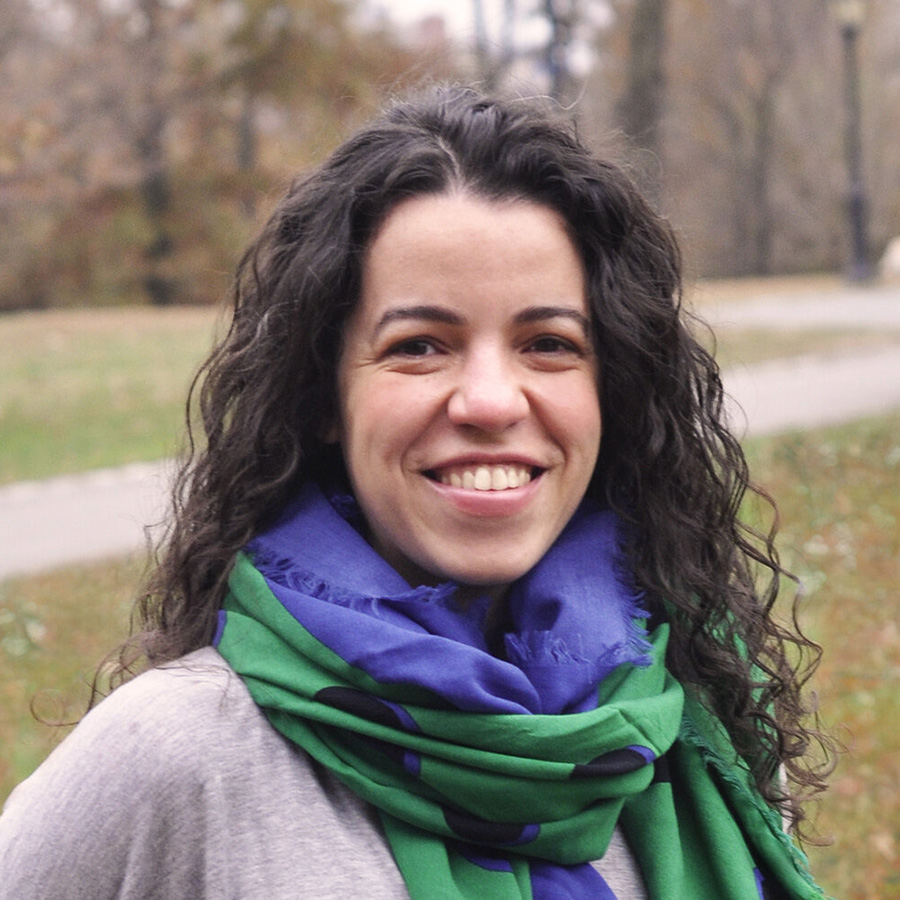
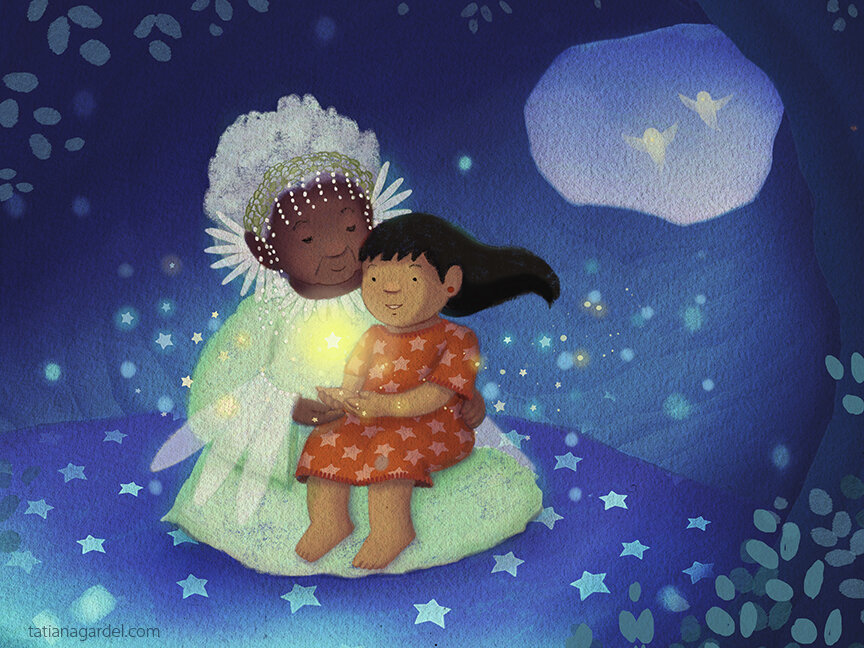
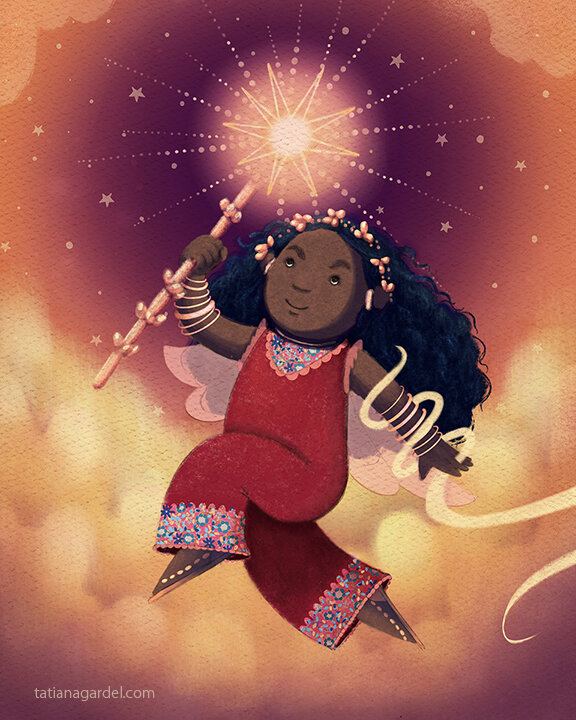
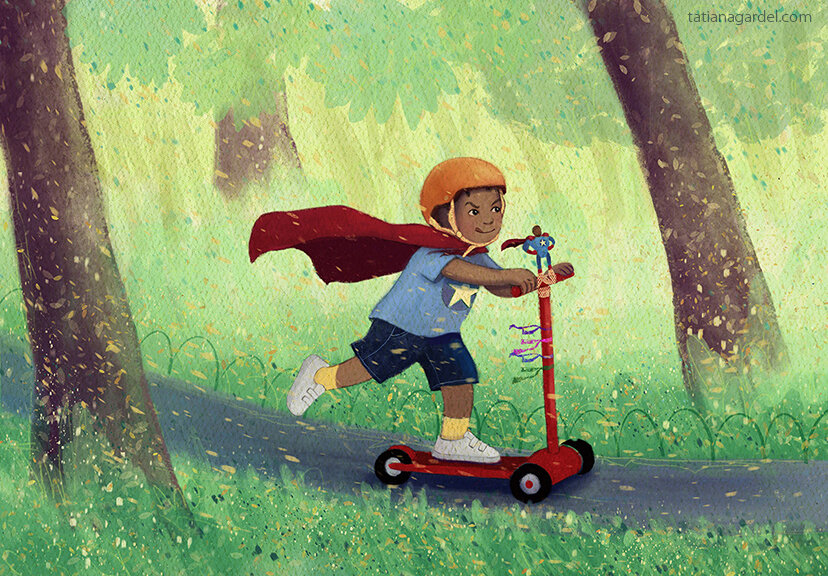
Tatiana Gardel is a Brazilian illustrator and teaching artist based in New York City. She started her career in fine art, and while exploring other ways to express her creativity, she found a passion for storytelling and illustration. Tatiana co-founded #LatinxPitch and is a member of the Black Creators in KidLit. Her work has been recognized by the Society of Illustrators in New York and American Illustration.

She is the illustrator of the upcoming books Xavier’s Voice, written by Ashley Franklin (Innovation Press, 2023) and Painting the Sky with Love, written by Mary Baca Haque (Feiwel and Friends, 2023).

Q: What or who inspired you to become an artist?

 A: My grandfather had a passion for drawing and was the one to encourage me to draw when I was a child. I also grew up watching lots of cartoons, animes, reading comics, mangas, and playing video games. All of that sparked my interest in creating art and imagining stories. But it wasn’t until I was much older that I learned I could have a career as a professional artist.  

Q: Tell us something about your favorite artistic medium–why you like it, when you first learned it, etc. 

 A: I’m a traditional artist who transitioned to making digital art. In the past 2 years, I went from scanning and adjusting images to mixing up techniques to working fully digitally. This was an organic process and my goal was to mimic my traditional pieces. I really enjoy the freedom of working with this medium, how you can combine and explore possibilities without having to recreate the whole image. My portfolio is a blend of traditional, mixed media, and digital artwork.  

Q: Please finish this sentence: “Picture books are important because…”

 A: Picture books are important because they are a gateway to imagination, knowledge, empathy and connection.
.

.
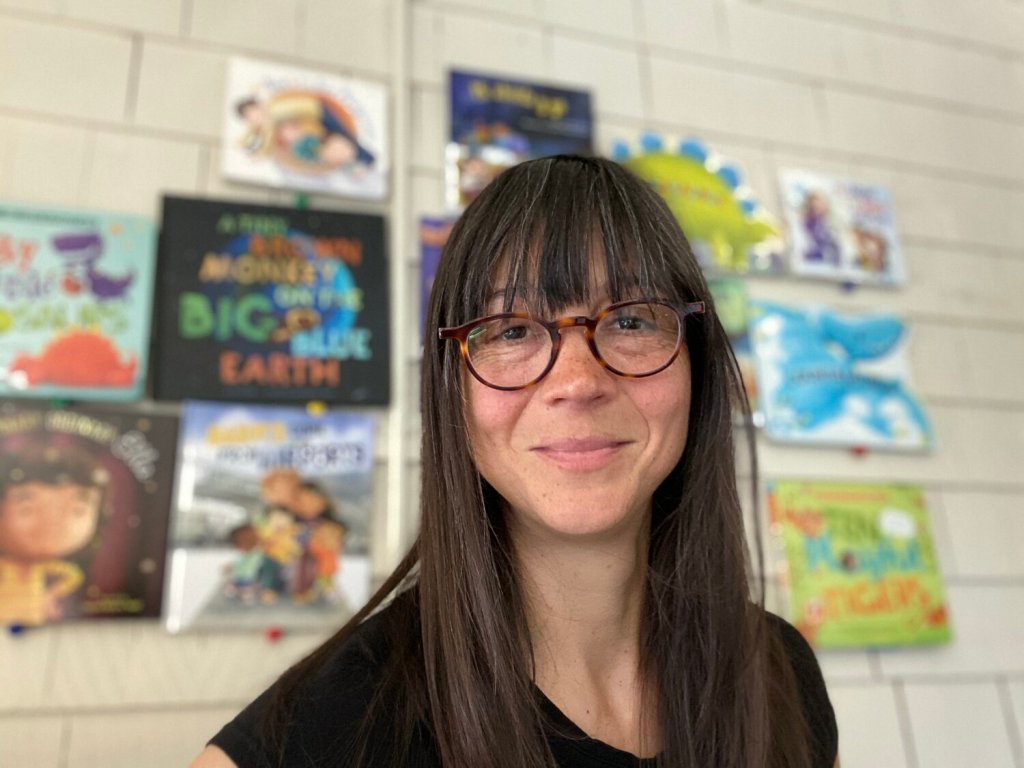
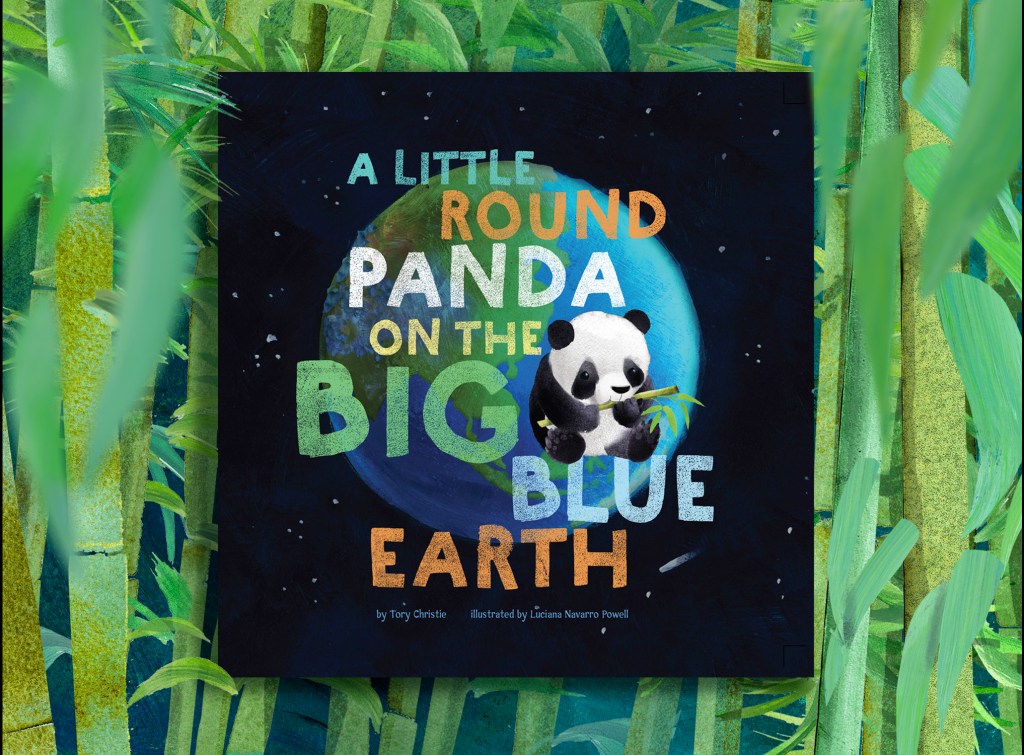
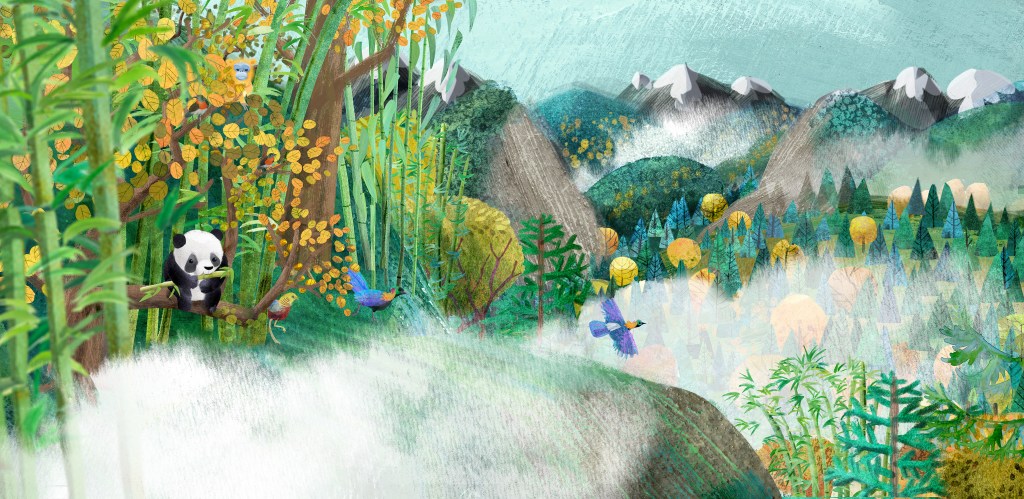
Luciana Navarro Powell is an artist living in San Diego, California, with her husband and two children. She has illustrated many children’s books over the years and has now started writing them as well. Her first two as both author and illustrator are My Dad Is the Best Playground and My Mom Is the Best Circus.

Q: What or who inspired you to become an artist?

A: There was not a single event or artist in particular that inspired me. Ever since I can remember myself as a child I was always drawing and reading, so storytelling through drawing evolved in an organic way. My father is an architect and I remember watching him sketching and marveling over beautiful architectural renderings, so I am sure that played a part as well. When it was time for me to go to college, there wasn’t a school that offered an Illustration major where I lived. I graduated with a degree in Industrial Design, which I enjoyed a lot and it had some classes that offered a good foundation for Illustration. I worked as a designer for a few years while I freelanced doing illustration projects. Eventually I circled back to become a full-time illustrator.

Q: Tell us something about your favorite artistic medium–why you like it, when you first learned it, etc.

A: I worked in a variety of analog media in the beginning of my career – acrylics, color pencils, printmaking;  but most often watercolor and pen and ink for black and white illustrations. When Photoshop came into the picture for me, it was a perfect way to integrate traditional media and digital art. My favorite artistic medium is mixed media, I used analog painted bits mixed with digital brushes. If I work on a book, the final art phase will usually last for about 3 months – when I finish it I usually take a few days off the computer by doing some analog-only projects on the side. Lately I have also enjoyed immensely doing sidewalk chalk art around my neighborhood and also plein-air painting with watercolor whenever I travel. You can check all these side projects at my Instagram account, @lucianaillustration !

Q: Please finish this sentence: “Picture books are important because…”

A: …they offer a merger of imagery and language that will be an essential building block for a child life-long love of reading!
.

.

.

cecilia-02-original

Cecilia Cackley is a Mexican-American playwright and puppeteer based in Washington, DC. A longtime bookseller, she is currently the Children’s/YA buyer and event coordinator for East City Bookshop on Capitol Hill. Find out more about her art at www.ceciliacackley.com or follow her on Twitter @citymousedc
February 2022 Latinx Releases!

.

We are an affiliate with Indiebound and Bookshop. If If you make a purchase through these links, at no additional cost to you, we will earn a small commission.

In addition to listing 2022 titles by/for/about Latinx on our master list, we will remind readers of what’s releasing each month.

CONGRATULATIONS to these Latinx creators. Let’s celebrate these February book babies!

.

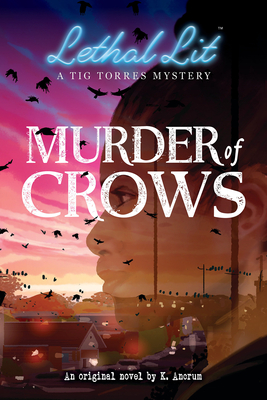
Cover for Murder of Crows (Lethal Lit, Novel #1)

MURDER OF CROWS (Lethal Lit Novel #1) by K. Ancrum (Scholastic Inc., February 1, 2022). Young Adult. Lethal Lit follows Tig Torres, a Cuban American teen detective, in her hometown of Hollow Falls. In season one of the hit podcast, Tig used her smarts and fearlessness to track down the infamous “Lit Killer,” a serial killer who staged his murders after death scenes from famous books. But there’s no rest for courageous, mystery-solving teens in a place like Hollow Falls, and though the Lit Killer is now behind bars, his protégé, Tig’s classmate and crush Oly, has disappeared!
And that’s not the only game afoot. Tig has caught the attention of the town’s local armchair detective group, the Murder of Crows. They’re obsessed with Hollow Falls’ dark past and fixated on a dangerous search for the missing body of the town’s founder. There are rumors about what’s buried with the body that could be life-changing for whoever finds it, and with a mission like that underway, it’s not long before a member of the Murder of Crows turns up dead.

Tig, along with her friends Max and Wyn, steps in to help, but the stakes are getting higher and the hunt more deadly. Someone’s willing to kill to keep the town’s secrets buried, and if Tig’s not careful, she’ll be the Murder of Crows’ next victim.

.

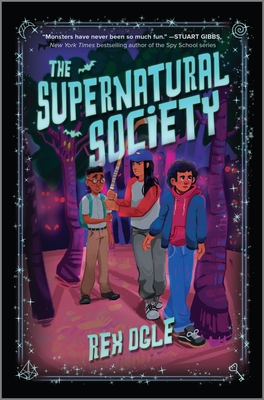
Cover for The Supernatural Society

THE SUPERNATURAL SOCIETY by Rex Ogle. (Inkyard Press, February 1, 2022). Middle Grade. Will Hunter thought his life couldn’t get any worse: His parents just got divorced, his best (and only) friend now is his dog, Fitz, and his mom moved them from New York City to the middle-of-nowhere town called East Emerson.

But Will was wrong–things are about to get way worse. Because East Emerson is filled with a whole lot of monsters, and he’s the only person who can see them.

When all the town pets (including Fitz) go missing, Will suspects there’s something sinister going on. So he joins forces with outcast Ivy and super-smart Linus to uncover the ancient secrets of East Emerson. Besides, nothing bad could happen when three sixth graders team up against monsters, magic, myths, and mad science . . . right?

.

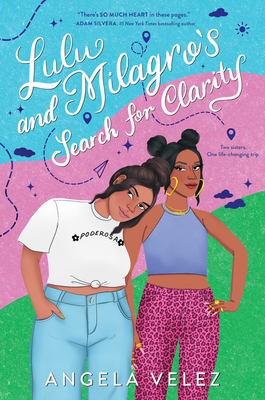
Cover for Lulu and Milagro's Search for Clarity

LULU & MILAGROS SEARCH FOR CLARITY by Angela Velez (Balzer + Bray, February 8, 2022). Young Adult. Overachiever Luz “Lulu” Zavala has straight As, perfect attendance, and a solid ten-year plan. First up: nail her interview for a dream internship at Stanford, the last stop on her school’s cross-country college road trip. The only flaw in her plan is Clara, her oldest sister, who went off to college and sparked a massive fight with their overprotective Peruvian mom, who is now convinced that out-of-state-college will destroy their family. If Lulu can’t fix whatever went wrong between them, the whole trip—and her future—will be a waste.

Middle sister Milagro wants nothing to do with college or a nerdy class field trip. Then a spot opens up on the trip just as her own spring break plans (Operation Don’t Die a Virgin) are thwarted, and she hops on the bus with her glittery lipsticks, more concerned about getting back at her ex than she is about schools or any family drama. But the trip opens her eyes about possibilities she’d never imagined for herself. Maybe she is more than the boy-crazy girl everyone seems to think she is.

On a journey from Baltimore all the way to San Francisco, Lulu and Milagro will become begrudging partners as they unpack weighty family expectations, uncover Clara’s secrets, and maybe even discover the true meaning of sisterhood.

.

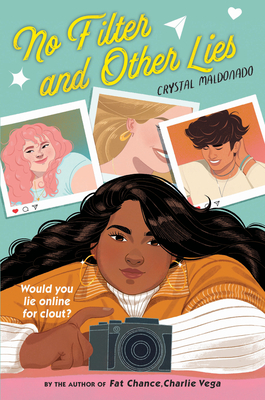
Cover for No Filter and Other Lies

NO FILTER AND OTHER LIES by Crystal Maldonado. (Holiday House, February 8, 2022). Young Adult. Twenty one-year-old Max Monroe has it all: beauty, friends, and a glittering life filled with adventure. With tons of followers on Instagram, her picture-perfect existence seems eminently enviable.

Except it’s all fake.

Max is actually 16-year-old Kat Sanchez, a quiet and sarcastic teenager living in drab Bakersfield, California. Nothing glamorous in her existence—just sprawl, bad house parties, a crap school year, and the awkwardness of dealing with her best friend Hari’s unrequited love.

But while Kat’s life is far from perfect, she thrives as Max: doling out advice, sharing beautiful photos, networking with famous influencers, even making a real friend in a follower named Elena. The closer Elena and “Max” get—texting, Snapping, and even calling—the more Kat feels she has to keep up the façade.

But when one of Max’s posts goes ultra-viral and gets back to the very person she’s been stealing photos from, her entire world – real and fake — comes crashing down around her. She has to figure out a way to get herself out of the huge web of lies she’s created without hurting the people she loves.

But it might already be too late.

.

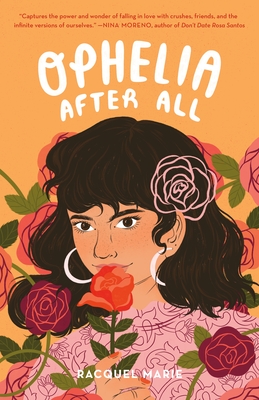
Cover for Ophelia After All

OPHELIA AFTER ALL by Racquel Marie (Feiwel & Friends, February 8, 2022). Young Adult. Ophelia Rojas knows what she likes: her best friends, Cuban food, rose-gardening, and boys – way too many boys. Her friends and parents make fun of her endless stream of crushes, but Ophelia is a romantic at heart. She couldn’t change, even if she wanted to.

So when she finds herself thinking more about cute, quiet Talia Sanchez than the loss of a perfect prom with her ex-boyfriend, seeds of doubt take root in Ophelia’s firm image of herself. Add to that the impending end of high school and the fracturing of her once-solid friend group, and things are spiraling a little out of control. But the course of love—and sexuality—never did run smooth. As her secrets begin to unravel, Ophelia must make a choice between clinging to the fantasy version of herself she’s always imagined or upending everyone’s expectations to rediscover who she really is, after all.

.

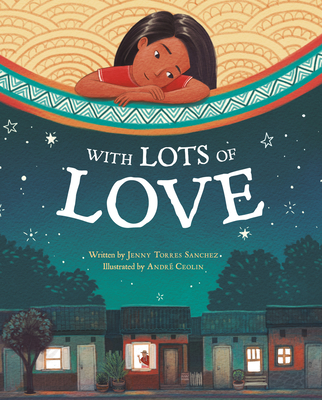
Cover for With Lots of Love

WITH LOTS OF LOVE by Jenny Torres Sanchez, illustrated by Andre Ceolin. (Viking Books for Young Readers, February 8, 2022). Picture Book. Rocio has grown up in Central America, but now she and her family are moving to the United States. Rocio does her best to adjust to a new way of living, but there are many things she misses from her old life—Abuela’s cooking, Abuela’s piñata creations, Abuela’s warm hugs, and of course, Abuela herself most of all. But Abuela finds a way to send Rocio something special just in time for her birthday—a gift wrapped with lots of love—and that fills Rocio to the brim.

.

.

.

.

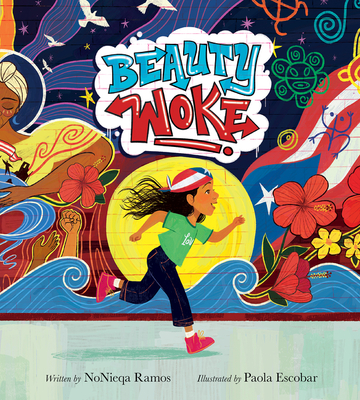
Cover for Beauty Woke

BEAUTY WOKE by NoNieqa Ramos, illustrated by Paola Escobar (Versify, February 15, 2022). Picture Book. Beauty is a Puerto Rican girl loved and admired by her family and community. At first, she’s awake to their beauty, and her own—a proud Boricua of Taíno and African descent. But as she grows older, she sees how people who look like her are treated badly, and she forgets what makes her special. So her community bands together to help remind her of her beautiful heritage.

.

.

.

.

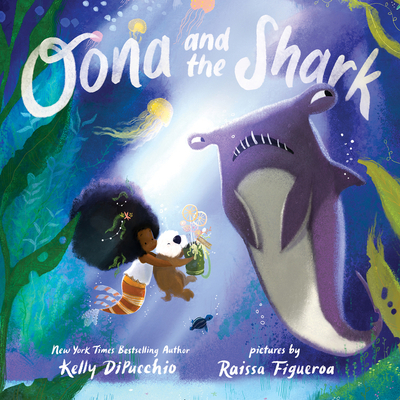
Cover for Oona and the Shark

OONA AND THE SHARK by Kelly DiPucchio, illustrated by Raissa Figueroa (Katherine Tegen Books, February 15, 2022). Picture Book. Oona loves to share her inventions with her friends. They’re big and bold and LOUD—just like her! But there’s one underwater creature who doesn’t seem to enjoy Oona’s company, or her creations.

Stanley the shark! He doesn’t care for her squeaky unicorn. And he’s far too busy for the Sea Horse Carousel. And oh GOODNESS! Oona’s latest hopping, chopping, and popping inventions just make him angry.

Oona may not know what Stanley likes, but she does know what he doesn’t. And maybe that’s a good place to start. Because mermaids never stop trying…not when there’s a friend out there to make.

.

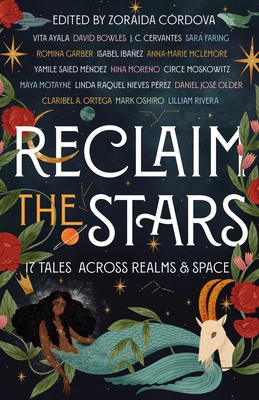
Cover for Reclaim the Stars

RECLAIM THE STARS: 17 Tales Across Realms & Space Edited by Zoraida Córdova (Wednesday Books, February 15, 2022). Young Adult Anthology. From stories that take you to the stars, to stories that span into other times and realms, to stories set in the magical now, RECLAIM THE STARS takes the Latin American diaspora to places fantastical and out of this world.

Follow princesses warring in space, haunting ghost stories in Argentina, mermaids off the coast of the Caribbean, swamps that whisper secrets, and many more realms explored and unexplored, this stunning collection of seventeen short stories breaks borders and realms to prove that stories are truly universal.

Reclaim the Stars features both bestselling and acclaimed authors as well as two new voices in the genres: Vita Ayala, David Bowles, J.C. Cervantes, Zoraida Córdova, Sara Faring, Romina Garber, Isabel Ibañez, Anna-Marie McLemore, Yamile Saied Méndez, Nina Moreno, Circe Moskowitz, Maya Motayne, Linda Raquel Nieves Pérez, Daniel José Older, Claribel A. Ortega, Mark Oshiro and Lilliam Rivera.

.

Cover for Rima's Rebellion

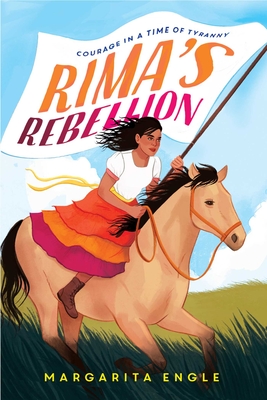
RIMA’S REBELLION: Courage in a Time of Tyranny by Margarita Engle (Atheneum Books for Young Readers, February 15, 2022). Young Adult. Rima loves to ride horses alongside her abuela and Las Mambisas, the fierce women veterans who fought during Cuba’s wars for independence. Feminists from many backgrounds have gathered in voting clubs to demand suffrage and equality for women, but not everybody wants equality for all—especially not for someone like Rima. In 1920s Cuba, illegitimate children like her are bullied and shunned.

Rima dreams of a day when she is free from fear and shame, the way she feels when she’s riding with Las Mambisas. As she seeks her way, Rima forges unexpected friendships with others who long for freedom, especially a handsome young artist named Maceo. Through turbulent times, hope soars, and with it…love.

.

.

Cover for Climb On!

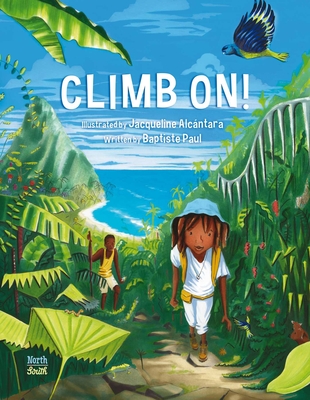
CLIMB ON! by Baptiste Paul, illustrated by Jacqueline Alcántara (NorthSouth Books, February 22, 2022). Picture Book. When a young child reminds her dad about the hike they planned, her father is hesitant —To the tippy top? It’s a great day to watch futbol (soccer). But as the two climb on, her enthusiasm is contagious. Filled with setbacks, surprises, and stunning views, this warm and humorous story highlights in vivid colors the bonding power of a shared experience. A list of creatures at the end prompts a second look for keen-eyed readers to make discoveries of their own.

.

.

.

.

Cover for I'll Always Come Back to You

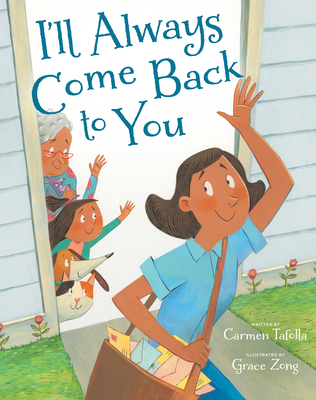
I’LL ALWAYS COME BACK TO YOU by Carmen Tafolla, illustrated by Grace Zong (Eerdmans Books for Young Readers, February 22, 2022). Picture Book. What happens when someone you love heads out the door? A mother goes out to deliver letters around the world, and her daughter stays behind. Mom might have to cross mountains, fight bears, or scare away pirates before she comes back. Her daughter might have to wait with Gramma or a friend at home. But whether their time apart has been long or short, boring or exciting, the family will soon be together again.

.

.

.

.

Cover for Pauli Murray

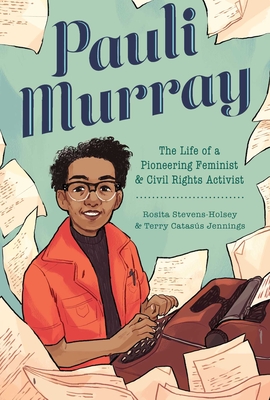
PAULI MURRAY: The Life of Pioneering Feminist & Civil Rights Activist by Terry Catasús JenningsRosita Stevens-Holsey (Yellow Jacket, February 22, 2022). Nonfiction biography for middle grade. Pauli Murray was a thorn in the side of white America demanding justice and equal treatment for all. She was a queer civil rights and women’s rights activist before any movement advocated for either–the brilliant mind that, in 1944, conceptualized the arguments that would win Brown v. Board of Education of Topeka; and in 1964, the arguments that won women equality in the workplace.

Throughout her life, she fought for the oppressed, not only through changing laws, but by using her powerful prose to influence those who could affect change. She lived by her convictions and challenged authority to demand fairness and justice regardless of the personal consequences. Without seeking acknowledgment, glory, or financial gain for what she did, Pauli Murray fought in the trenches for many of the rights we take for granted. Her goal was human rights and the dignity of life for all.

.

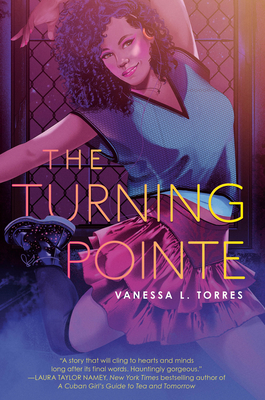
Cover for The Turning Pointe

THE TURNING POINTE by Vanessa L. Torres (Knopf Books for Young Readers, February 22, 2022). Young Adult. When sixteen-year-old Rosa Dominguez pirouettes, she is poetry in pointe shoes. And as the daughter of a tyrant ballet Master, Rosa seems destined to become the star principal dancer of her studio. But Rosa would do anything for one hour in the dance studio upstairs where Prince, the Purple One himself, is in the house.

After her father announces their upcoming auditions for a concert with Prince, Rosa is more determined than ever to succeed. Then Nikki–the cross-dressing, funky boy who works in the dance shop–leaps into her life. Weighed down by family expectations, Rosa is at a crossroads, desperate to escape so she can show everyone what she can do when freed of her pointe shoes. Now is her chance to break away from a life in tulle, grooving to that unmistakable Minneapolis sound reverberating through every bone in her body.

.

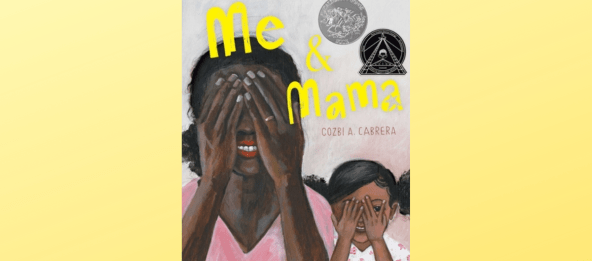
Book Talk: Me & Mama by Cozbi A. Cabrera

.

We are an affiliate with Indiebound and Bookshop. If If you make a purchase through these links, at no additional cost to you, we will earn a small commission.

.

Welcome to another Book Talk, which can be found on our new YouTube channel!

.

ABOUT THE BOOK: On a rainy day when the house smells like cinnamon and Papa and Luca are still asleep, when the clouds are wearing shadows and the wind paints the window with beads of water, I want to be everywhere Mama is.

With lyrical prose and a tender touch, the Caldecott and Coretta Scott King Honor Book Mama and Me is an ode to the strength of the bond between a mother and a daughter as they spend a rainy day together.

.

.

.

.

This image has an empty alt attribute; its file name is sarodriguez_headshot.jpg

Sonia Alejandra Rodriguez, PhD is an Associate Professor of English at LaGuardia Community College (CUNY) where she teaches composition, literature, and creative writing. Her academic research focuses on decolonial healing in Latinx children’s and young adult literature. Sonia is a Mellon Emerging Faculty Leader.

.

.

.

.

img_0160

Dora Guzmán is a bilingual reading specialist for grades K-5 and also teaches college courses in Children’s Literature and Teaching Beginning Literacy. She is currently a doctoral student with a major in Reading, Language, and Literacy. When she is not sharing her love of reading with her students, you can find her in the nearest library, bookstore, or online, finding more great reads to add to her never-ending “to read” pile!

.

¡Felicidades! to the 2022 ALA Youth Media Award Winners and Honor Books

.

Congratulations Graduates - West Chester University

Congratulations to the authors and illustrators who were honored at the American Library Association’s Midwinter conference! Here are the honored tiles by Latinx creators. Click on each book for more information from Indiebound.

.

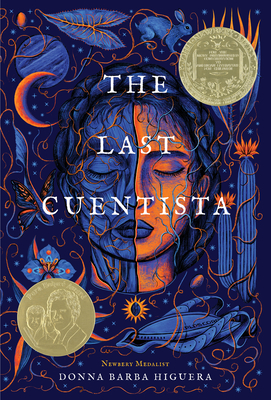
John Newbery Medal for the most outstanding contribution to children’s literature:

Winner

Cover for The Last Cuentista

.

The Pura Belpré Awards honor Latinx writers and illustrators whose children’s books best portray, affirm and celebrate the Latino cultural experience.

The Pura Belpré Illustrator Award Winner:

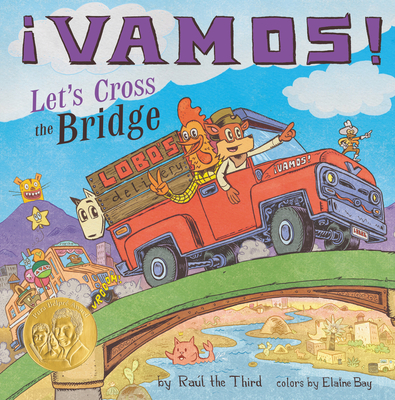
Cover for ¡vamos! Let's Cross The Bridge (World of ¡Vamos!)

Honor Books:

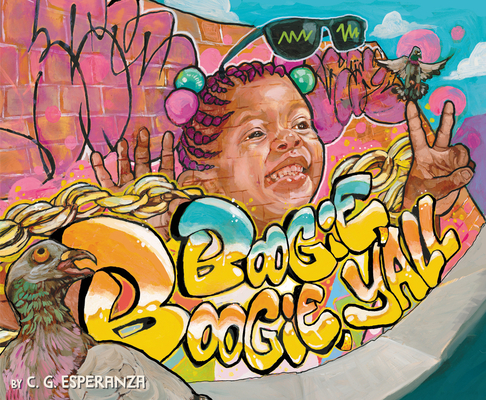
Cover for Boogie Boogie, Y’all
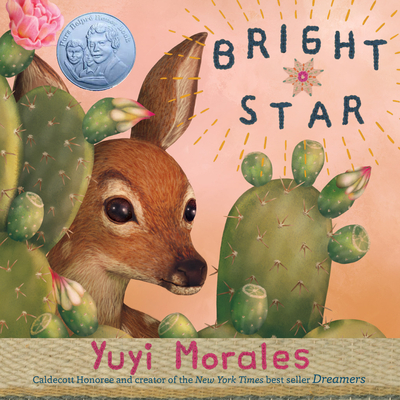
Cover for Bright Star
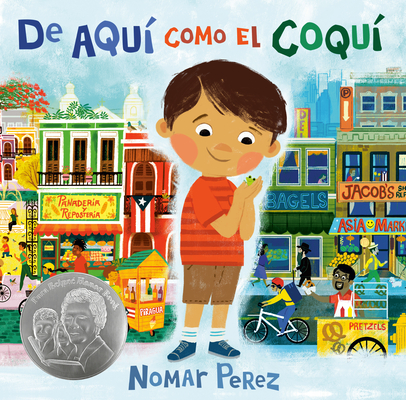
Cover for De aquí como el coquí
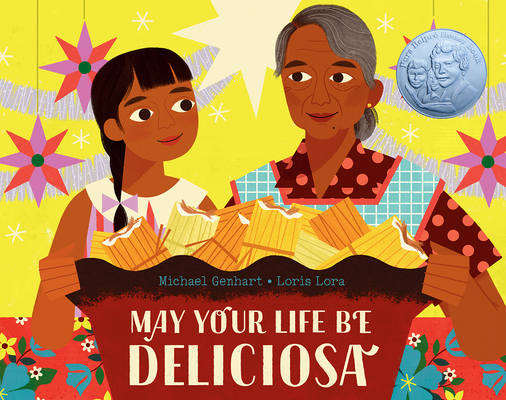
Cover for May Your Life Be Deliciosa

.

The Pura Belpré Children’s Author Award Winner:

Cover for The Last Cuentista

Honor Books:

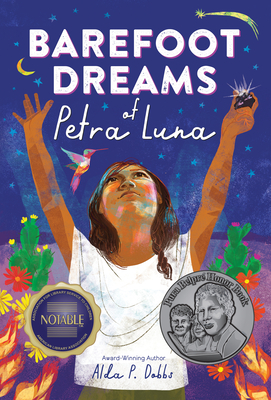
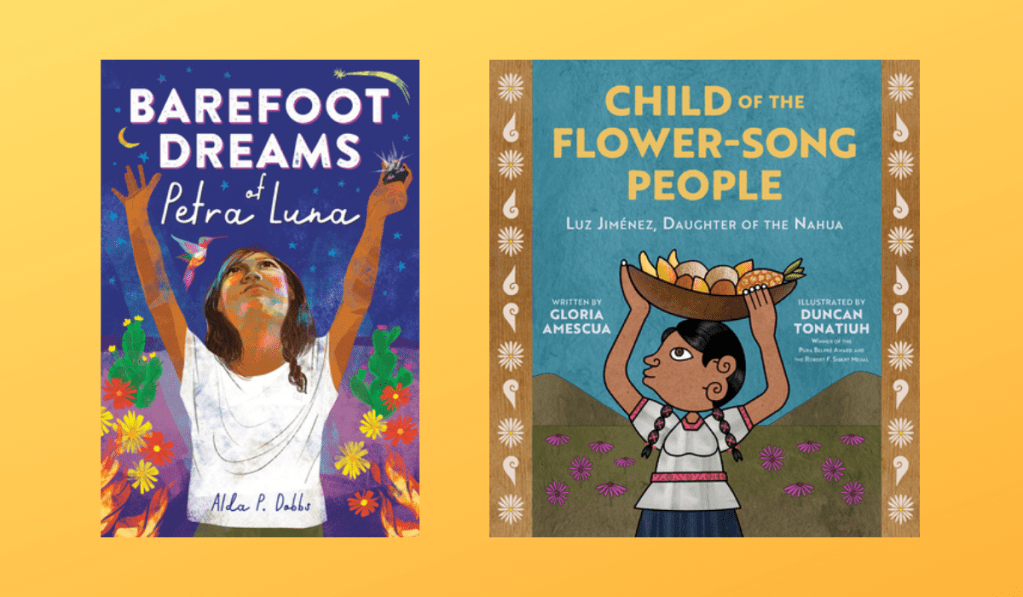
Cover for Barefoot Dreams of Petra Luna
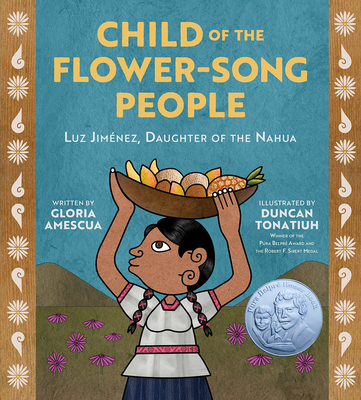
Cover for Child of the Flower-Song People: Luz Jiménez, Daughter of the Nahua
Cover for De aquí como el coquí

.

The Pura Belpré Young Adult Author Award Winner:

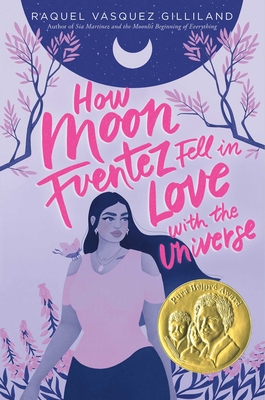
Cover for How Moon Fuentez Fell in Love with the Universe

Honor Books:

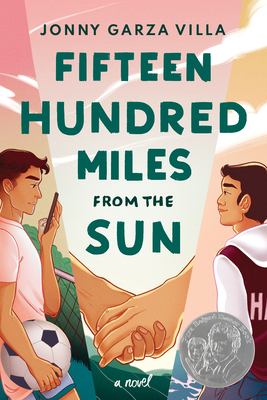
Cover for Fifteen Hundred Miles from the Sun
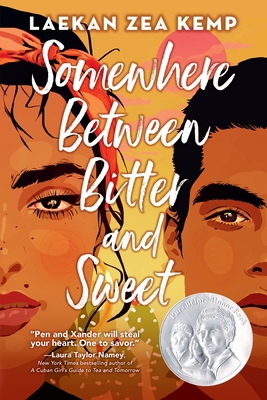
Cover for Somewhere Between Bitter and Sweet
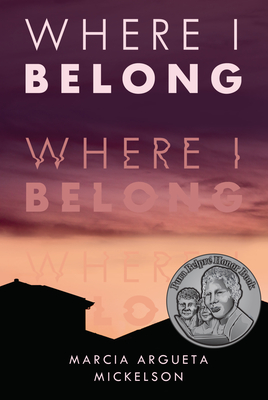
Cover for Where I Belong

.

The Coretta Scott King Awards recognize African American authors and illustrators of outstanding books for children and young adults.

(Author) Honor Book:

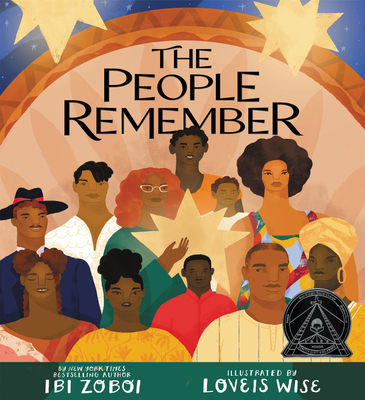
Cover for The People Remember

(Illustrator) Honor Books:

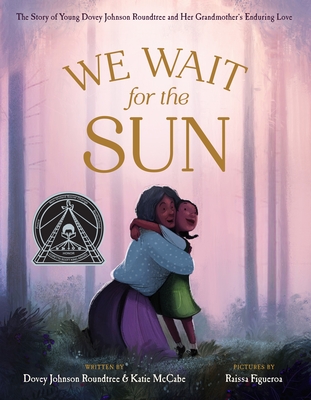
Cover for We Wait for the Sun
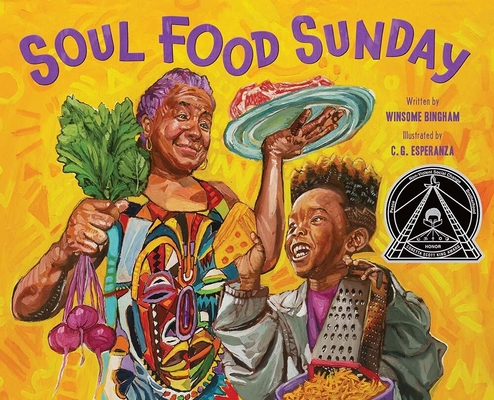
Cover for Soul Food Sunday

.

The Schneider Family Book Award for books that embody an artistic expression of the disability experience:

Honor Book (middle grades):

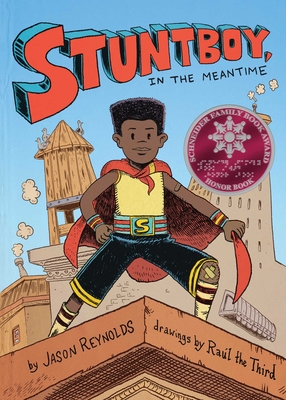
Cover for Stuntboy, in the Meantime

.

The Mildred L. Batchelder Award for an outstanding book originally published in a language other than English in a country other than the United States, and subsequently translated into English for publication in the United States:

Honor Book:

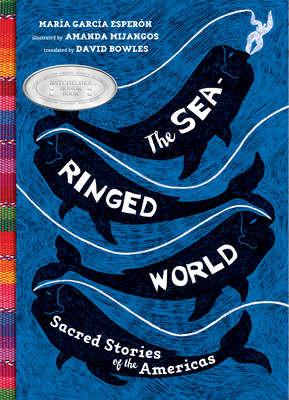
Cover for The Sea-Ringed World

.

The Odyssey Award for the best audiobooks produced for children and young adults, available in English in the United States:

Winner:

Cover for Boogie Boogie, Y’all

Honor Audiobook:

.

The Theodor Seuss Geisel Award for the most distinguished beginning reader book:

Honor Book:

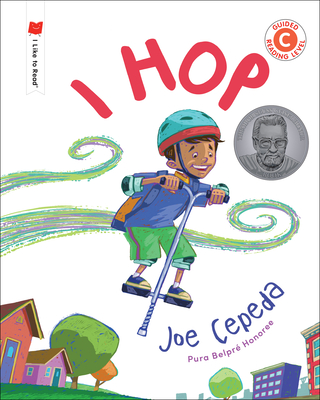
Cover for I Hop (I Like to Read)

.

Researching and Writing Historical Fiction with Gloria Amescua and Alda P. Dobbs

.

.

Interview by Romy Natalia Goldberg

This past fall brought the publication of two fascinating books set during the Mexican Revolution (1910-1920), BAREFOOT DREAMS OF PETRA LUNA, a historical middle grade novel by Alda P. Dobbs (Sourcebooks Young Readers, September, 2021) and CHILD OF THE FLOWER-SONG PEOPLE: LUZ JIMÉNEZ, DAUGHTER OF THE NAHUA, a picture book biography written by Gloria Amescua and illustrated by award winning illustrator, Duncan Tonatiuh (Abrams Books for Young Readers, August, 2021). Both Texas-based authors took the time out of their busy debut schedules to talk to us about their processes for researching and writing children’s books based on historic events and real people. 

Romy Natalia Goldberg: Both your main characters, Petra and Luz, learn of their indigenous ancestor’s beliefs through their grandparents, who, in turn, learned from their own grandparents. Can you talk a little about researching beliefs and traditions, especially those that were predominantly passed down orally?

Alda P. Dobbs: First, I’d like to thank you, Natalia, for interviewing me. It’s an honor! A lot of the beliefs and traditions in the story were handed down orally by elders in my family. Others, I had to research. I found myself reading many books on curanderismo and stories that were recorded by Spanish priests who interviewed indigenous people during colonial times. Everything was so fascinating it was hard to choose what to include in the book while not bogging down the story.

Gloria Amescua: Thankfully, one of the important contributions Luz Jiménez made was to listen to and remember the mythologies and other stories that were passed down orally. The book Life and Death in Milpa Alta: A Nahuatl Chronicle of Diaz and Zapata (translated and edited by Fernando Horcasitas, from the Nahuatl Recollections of Doña Luz Jiménez) was one of my most important resources. Luz told Horcasitas what is in this book over time in Nahuatl. It included not only her childhood and things that she and the Nahua people of Milpa Alta experienced, their traditions and daily life, but also the stories that had been passed down orally. Horcasitas wrote it down phonetically. Milpa Alta hosted the First Aztec Congress, which mainly determined what written Nahuatl should look like in 1940.

What advice can you give for researching historical events? Anything you wish you’d known at the start of this process? 

Alda P. Dobbs: This is a great one! I wished I hadn’t been so shy and had asked librarians for help. I spent a lot of time trying to do the research on my own, which wasn’t bad, but I probably reinvented the wheel a couple of times. Having a physics and engineering background, I approached historical research as I would science, and I’ve learned that there’s a better and more efficient way. I would have saved myself time and frustration had I approached a librarian sooner.

Gloria Amescua: I wish I’d been more organized about gathering my information. My main advice is to make sure you get your sources down for everything. You may or may not use what you have read or taken notes on, but be sure to document everything. I keep meaning to learn about one of the several online organizers, but I haven’t yet. My advice is do better than I did. It will keep you from going back to find sources.

.

Sanborn Map Company. San Antonio 1911 Vol 1, map, 1911; New York. (https://texashistory.unt.edu/ark:/67531/metapth549759/: accessed October 15, 2021), University of North Texas Libraries, The Portal to Texas History, https://texashistory.unt.edu; crediting The Dolph Briscoe Center for American History.

.

Alda, I’ve heard you mention the importance of maps in your research before. Can you talk a little more about your source for maps and how they figured into your writing process? 

Maps were essential in my research. I used Sanborn maps, which are old insurance maps made in the 19th and 20th centuries that detail the types of buildings, their structure and use. I crossed referenced these maps with modern Google “street view” maps that allow me to see where the building once stood, or if I’m lucky enough, I could still see the same old building standing. I also used vintage photographs that allowed me to dig deeper into the research and find out where the photograph was taken. All these resources allow me to recreate a map that shows where my character lives, works, goes to school, shops, etc. I used Sanborn maps to recreate an old map of San Antonio, Texas that took up my entire office wall but gave me a sense of my character’s life there in 1913. 

What is your system for keeping information organized, easy to access, and backed up? 

Alda P. Dobbs: For my research, I kept both electronic files and physical divider tabs that were labeled with the following titles: photographs, maps, newspaper articles, academic papers, books, and of course, miscellaneous. I also kept a journal where I’d write everything down from research notes, to notes I’d take when speaking to librarians or historians. In my journal, I also jotted down ideas for scenes or dialogue or just plain brainstorming. I always backed up all my electronic files using a SSD hard drive.

Gloria Amescua: I wish I had a great system to tell you about. What I did was to create computer files that made sense to me. For instance, I have folders for my revisions by year. Other folders are for the language Nahuatl and images in which Luz appears with lists of all the artwork information and links. I copied articles from the internet as well as their links. Early on, I learned the hard way, since I had a certain link I had a difficult time finding again to an exposition featuring Luz in Mexico City. I used colored flags in my books.

.

Alda shared a series of photos that inspired and informed PETRA LUNA on her social media platforms

.

The internet has made research infinitely easier, but examining physical documents and visiting locations firsthand is still a part of the research process. I’m curious which parts of your research happened online and which was more useful or necessary “in real life.”

Alda P. Dobbs: I’d say both online research and “in-person” visits were essential for me. Almost every setting in my book took place in a location I had visited before, so I knew the way the terrain looked, the way it smelled and sounded. The old photographs, which many of them I found online, were essential in adding details to settings or constructing characters. 

Gloria Amescua: I didn’t get to visit any places in my book in real life. I would love to visit Milpa Alta and go back to Mexico City to see the murals I saw long ago that included Luz before I knew about her. Of course, without finding a pamphlet at the University of Texas in Austin that was about Luz Jiménez, I wouldn’t have known about her amazing life. The internet was definitely important because I found articles and images for Luz. I also wouldn’t have found my real resources, the books I used, including the one with Luz’s actual words. Through the internet, I also found Dr. Kelly McDonough, Professor of Native American and Indigenous studies at UT, who shared resources. She also introduced me to Luz’s grandson, Jesús Villanueva. Although we have yet to meet in person, Jesús and I corresponded through email. He was invaluable to me as he answered questions and shared booklets he was involved with writing about his grandmother and was part of my book launch!

.

Jesús Villanueva, grandson of Luz Jiménez, participating in Gloria Amescua’s virtual book launch via The Writing Barn

.

Gloria, Writing about real people, especially when there are living relatives involved, seems like an intimidating part of the biography process. Can you tell us a little about what it was like to approach and work with Luz’s grandson?  

Gloria Amescua: It was somewhat intimidating at first since it was my first book. I told him my qualifications as a poet, teacher, and studies in children’s literature, so he would know I was serious. Dr. Kelly McDonough, who volunteered to introduce us, is Jesús’ friend. They have worked together on projects, and I’m thankful for that gift of an introduction. Jesús Villanueva was as gracious as he could be and shared resources with me. He has few recollections of his grandmother since she passed away when he was very young, so his dedication has been to learn as much as he could. He has promoted her legacy through writing and presentations. He shared these with me. If I were to do it again, I would have kept in touch with him more frequently about the progress or lack of progress in the publishing journey since it took almost eight years.

Is there any one instance when you thought “Thank goodness for the internet!” or “Thank goodness I saw this in person!”? How did that experience improve your story and writing process?

Alda P. Dobbs: Yes, to both! My husband often traveled for work, and it was during the times when my kids napped or slept at night when I found myself doing most of my online searches. I’m also grateful to have met Mr. Tim Blevins, a librarian at the Pikes Peak Library system. He’s the one who introduced me to many wonderful research tools just when I was about to give up!   

Gloria Amescua: I’m sure it would have been next to impossible for me to write this story without the internet. I was able to find many of the images of Luz in art that I included in the text as part of what Luz learned as a child, weaving, twisting yarn with her toes, grinding corn, etc. It helped me weave details in the story early on that are echoed in the images of her as a model for artists as an adult. I love that it comes full circle.

.

Double spread illustrated by Duncan Tonatiuh for CHILD OF THE FLOWER-SONG PEOPLE: LUZ JIMÉNEZ, DAUGHTER OF THE NAHUA

.

The Mexican Revolution brings chaos and fear to the lives of your main characters. Featuring trauma in a children’s book is a delicate matter, made even more challenging when you’re dealing with real events. How did you choose to address the topic and why? What do you hope readers will take away from seeing Petra and Luz navigate the challenges they face? 

Alda P. Dobbs: I chose to write about the Mexican Revolution because it’s a topic that’s close to me and it’s also one I’d never seen presented in children’s literature. The conflict itself is very complicated and in it, women and children played many different roles. It was a difficult subject to write about for young readers but thankfully, there are many brilliant, wonderful books who tackle trauma masterfully, like Lois Lowry’s Number the Stars and Avi’s Crispin, to name a few. 

Gloria Amescua: The Mexican Revolution changed Luz Jiménez’s life drastically. Her father and the other men were killed, their village destroyed, her education ended so that Luz and her remaining family had to find a way to survive in a new environment. I had to tell about it and not dwell on the hardships but move on quickly to how Luz overcame her struggles, how she found a new way of being herself, proud of being Nahua. The revolution created a powerful change in artists and how they wanted to honor the indigenous people and make art available to everyone in murals as well as paintings, photographs, statues. I hope readers will see how Luz’s strength was believing in herself despite the hardships she had to overcome. She realized her dream of being a teacher in a way she never expected. 

What books served as mentor texts for you? Along the same line, are there any authors or illustrators whose methods you found inspiring? 

Alda P. Dobbs: I named a couple of books in the previous answer, but other books that helped with structure, pacing, and dialogue were Suzanne Collin’s Hunger Games book series and Kate Dicamillo’s Because of Winn Dixie

Gloria Amescua: I read many, many picture book biographies. I examined every aspect of each of them. A few include Bethany Hegedus and Arun Ghandhi’s Grandfather Ghandi and Be the Change, Melissa Sweet’s Balloons Over Broadway, Duncan Tonatiuh’s Separate is Never Equal and Monica Brown’s Pablo Neruda and Waiting for the Biblioburro. I returned to these over and over as well as many others. They inspired me as I worked on mine, as I worked on structure, language, organization, etc. I especially loved the illustrations and the emotions expressed in the Ghandi books, the Mixtec style in Separate is Never Equal, and Pablo Neruda, where the illustrations include a river of words in trees, leaves, everywhere in English and Spanish. I wanted my book to be as beautiful and important as these books. 

Can you talk a little about what learning to read and write symbolizes to your characters, and by extension, what writing and sharing their stories means to you?

Gloria Amescua: Luz wanted to learn to read and teach future generations of “professors, priests, lawyers.” It was a way she could not only improve her life but also that of others. I am honored to share Luz Jiménez’s story because she brought to light the intelligence, beauty, and strength of the Nahua. I admire her resilience and pride in her culture. My writing this book means now many more people will know her and her contributions, her legacy. I hope it will lead readers to learn about other indigenous people as well.   

Alda P. Dobbs: Wow, what a great question! During the decade of the Mexican Revolution, in the 1910’s, only 20% of the Mexican population could read and write. My ancestors were part of the 80% who were illiterate. My grandmother, however, was determined to learn to read and write, and despite never having stepped inside a school, she taught herself how to read and write by the time she was twelve. I wanted to create a character with the same courage and determination my grandmother displayed throughout her life.

.

ABOUT THE AUTHORS: 

Gloria Amescua (Ah MES qua) has been a writer since she was a child, writing poems and stories throughout her life. She loves books that reach a young person’s heart, head, or funny bone and strives to do just that in her writing. She is an educator, poet, and children’s book writer. Abrams Books for Young Readers published her picture book biography in verse, Child of the Flower-Song People: Luz Jiménez, Daughter of the Nahua, August 17, 2021. Duncan Tonatiuh is the illustrator. An earlier version won the 2016 Lee and Low New Voices Honor Award. A variety of literary journals and anthologies have published Gloria’s poetry. Houghton Mifflin Harcourt published one of her poems in their national textbook literature series.  Gloria received both her B. A. and M. Ed. degrees from the University of Texas at Austin.  The grandmother of two amazing granddaughters, Gloria believes in children, pets, and possibilities.

.

Alda P. Dobbs is the author of the novel Barefoot Dreams of Petra Luna. She was born in a small town in northern Mexico but moved to San Antonio, Texas as a child. Alda studied physics and worked as an engineer before pursuing her love of storytelling. She’s as passionate about connecting children to their past, their communities, different cultures and nature as she is about writing. Alda lives with her husband and two children outside Houston, Texas.

.

.

.

.

Image of Romy Natalia Goldberg

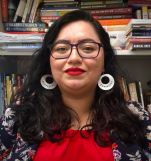
Romy Natalia Goldberg is a Paraguayan-American travel and kid lit author with a love for stories about culture and communication. Her guidebook to Paraguay, Other Places Travel Guide to Paraguay, was published in 2012 and 2017 and led to work with “Anthony Bourdain: Parts Unknown,” and The Guardian. She is an active SCBWI member and co-runs Kidlit Latinx, a Facebook support group for Latinx children’s book authors and illustrators.

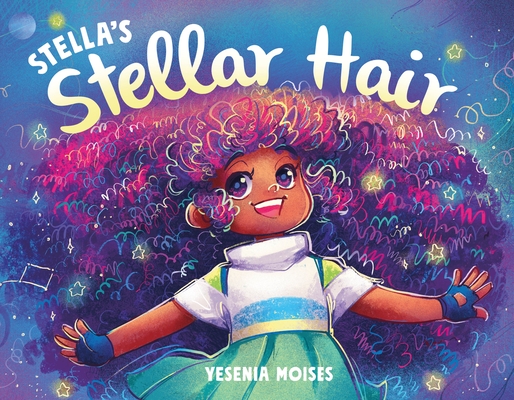
Book Talk: Stella’s Stellar Hair by Yesenia Moises

.

We are an affiliate with Indiebound and Bookshop. If If you make a purchase through these links, at no additional cost to you, we will earn a small commission.

.

Welcome to another Book Talk, which can be found on our new YouTube channel!

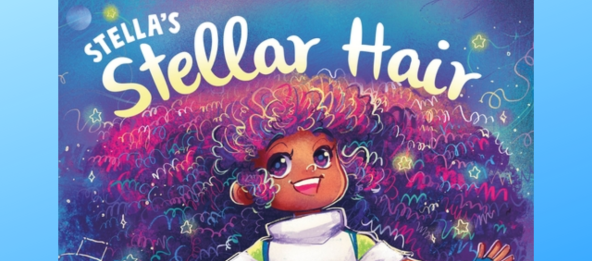
Here, Dr. Sonia Rodriguez and Dora M. Guzmán talk about STELLA’S STELLAR HAIR by Yesenia Moises.

ABOUT THE BOOK: It’s the day of the Big Star Little Gala, and Stella’s hair just isn’t acting right! What’s a girl to do?

Simple! Just hop on her hoverboard, visit each of her fabulous aunties across the solar system, and find the perfect hairdo along the way.

Stella’s Stellar Hair celebrates the joy of self-empowerment, shows off our solar system, and beautifully illustrates a variety of hairstyles from the African diaspora. Backmatter provides more information about each style and each planet.

Click here to learn more about the author-illustrator: https://latinosinkidlit.wordpress.com/2018/12/06/spotlight-on-latina-illustrators-lulu-delacre-cecilia-ruiz-yesenia-moises/

.

.

.

Sonia Alejandra Rodriguez, PhD is an Associate Professor of English at LaGuardia Community College (CUNY) where she teaches composition, literature, and creative writing. Her academic research focuses on decolonial healing in Latinx children’s and young adult literature. Sonia is a Mellon Emerging Faculty Leader.

.

.

.

img_0160

Dora M. Guzmán is a bilingual reading specialist for grades K-5 and also teaches college courses in Children’s Literature and Teaching Beginning Literacy. She is currently a doctoral student with a major in Reading, Language, and Literacy. When she is not sharing her love of reading with her students, you can find her in the nearest library, bookstore, or online, finding more great reads to add to her never-ending “to read” pile!