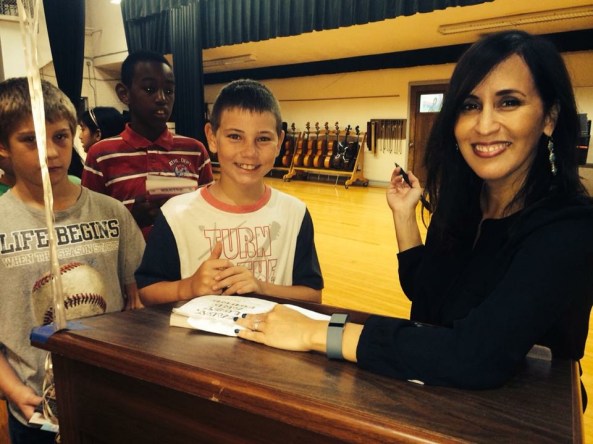
Guest Post by Angela Cervantes: Piñata Busters and Trailblazers

IMG_0149We’ve all met piñata busters and trailblazers. These are the extraordinary people who take on immense challenges to pave the way for others to succeed. These folks are determined, ready-to-bust-through-obstacle-types who put the “P” in perseverance and the “G” in ganas.

In my second middle grade novel, Allie, First At Last (3/29/16; Scholastic Inc.) ten-year old Alyssa Velasco wants desperately to make her mark and be a trailblazer like the rest of her family—a highly motivated group of trophy-winners and “first-evers.” However, in her determination to win something, she steamrolls through anyone she believes is trying to compete with her, including her ex-best friend, Sara, and new buddy, Victor Garcia.
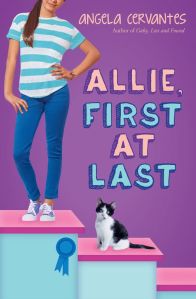
Allie, First At Last (1)In short, Allie has no clue what it means to be a true trailblazer or piñata buster, but by the end of the book, she finds out the hard way.

I was inspired to write this book because I grew up in a close-knit, proud, Mexican-American community where we celebrated the accomplishments of people like Ellen Ochoa, the first Hispanic woman to go to space (1993 Discovery mission); Henry Cisneros, the first Mexican-American mayor of San Antonio (Yay, Texas!); Tom Flores, the first Hispanic NFL head coach to win the Super Bowl (Go Raiders!).

Being raised in this community, I have always been inspired by the stories of individuals who, regardless of the obstacles before them, like racism, sexism, and poverty, could deliver a strong smack to the status quo and negative stereotypes.

As I wrote Allie, First At Last, I relished researching other Hispanic and non- Hispanic “piñata busters.” I couldn’t feature all of the piñata busters I wanted in my novel, but here are just a few I mention:

  • Katie Jurado – First Mexican actress to be nominated for an Academy Award in an acting category (1954)
  • Sonia Sotomayor- First Latina Supreme Court Justice (2009)
  • Gwendolyn Brooks –  The first African-American person to win a Pulitzer prize (1950)
  • Junko Tabei- First woman to reach the summit of Mount Everest (1975)
  • Billy Mills – First American to win the 10,000m at the Olympics (1964)

The thing about piñata busters/trailblazers is that sometimes we look for them in Hollywood films, Wikipedia, or our history books, but the truth is we don’t have to look that far. They’re all around us.

In Allie, First At Last, Allie’s new friend, Victor Garcia, is a true trailblazer. He is not concerned about a trophy shelf or being famous; he is simply trying to be the first in his family to graduate from high school and go to college someday. The obstacles in front of him are clear: his family is poor, and he will depend on scholarships to afford college. He is a child of immigrants and will be navigating the path to college by himself.

Regardless of the hurdles, Victor enters the game willingly and with one sole purpose: to gash a hole in the obstacles (the piñata) so that his younger siblings and entire family get the sweet rewards.

How many of us have been in Victor’s shoes or know of someone who has been the first in his/her family to go to college? Graduate from college? Start a business? Become a teacher? Publish a children’s book?

For me, Allie, First at Last, is a story celebrating generations of piñata busters and trailblazers.

I wrote it because I couldn’t get Allie Velasco out of my head. She had something to say, so I wrote it for her and for all the kids out there dealing with competition and finding their place in the world. I hope Allie’s story inspires children to explore trailblazers in their own families who have opened a path for them to reach their dreams. I hope they, just like Allie, decide that in their young lives, they won’t close doors behind them, but leave them wide open for others to enter, too.  And I hope, like Allie, they understand that, “true trailblazers are motivated not by glory, but by love for friends, family, and country.”

angela at libraryAngela Cervantes is a native of Kansas. Her achievements are manifold and include earning an MBA, co-founding an all-female poets group, teaching high school, and writing two middle-grade novels, Gaby, Lost and Found, and Allie, First at Last. To learn more, visit her website here.


WE ARE GIVING AWAY A HARDCOVER OF ALLIE, FIRST AT LAST BY ANGELA CERVANTES, WHICH OFFICIALLY RELEASES 3/29/16.

CLICK HERE TO LINK TO THE RAFFLECOPTER GIVEAWAY!
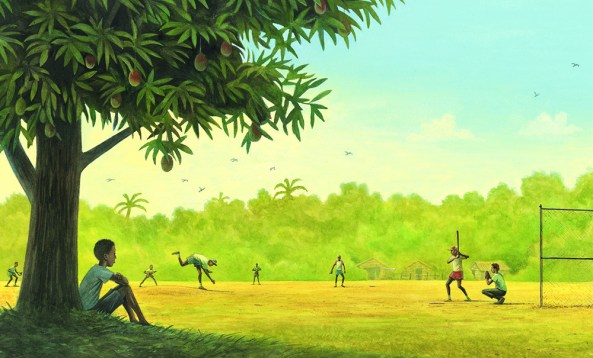
 

A Conversation with Author-Illustrator Matt Tavares

GROWING UP PEDRO. Text and Illustrations copyright 2015 Matt Tavares. Reproduced by permission of the publisher, Candlewick Press, Inc., Somerville, MA.

GROWING UP PEDRO. Text and Illustrations copyright 2015 Matt Tavares. Reproduced by permission of the publisher, Candlewick Press, Inc., Somerville, MA.

By Lila Quintero Weaver

When author-illustrator Matt Tavares turns his focus on a children’s book topic, beautiful things happen. We love what he did with Growing Up Pedro: How the Martinez Brothers Made It  from the Dominican Republic All the Way to the Major Leagues, a stirring picture book biography of the Dominican baseball great Pedro Martinez and his highly influential brother Ramón. Now we’re turning our focus on Matt himself, a prolific producer of books for kids, who agreed to answer a few of our burning questions.

Latin@s in Kid Lit: Wow, your paintings are magnificent! They’re highly realistic yet deliver much more than faithful representation, in terms of their emotive power and aesthetics. Please tell us about your journey to professional illustration.

Matt: Wow, thank you! That’s certainly what I always try to do, so it’s very nice to hear my pictures described that way. Even if I’m painting a realistic scene, there is always something I can do to heighten it, to go beyond what a photograph might show.

Matt's been drawing since childhood.

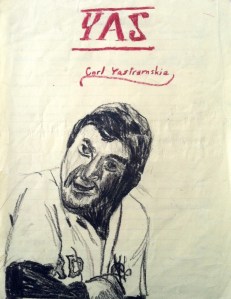
Matt’s been drawing baseball figures since childhood.

I’ve always loved to draw. Even when I was 4 or 5 years old, I thought of myself as an artist. I drew all the time, and knew I wanted to be some kind of artist when I grew up. It wasn’t until I was a junior at Bates College that I decided I wanted to illustrate picture books. I wrote and illustrated a picture book as my senior thesis. I spent my whole senior year working on it. After that, things happened pretty quickly- I found an agent who liked it, and she shopped it around to publishers, and found Candlewick Press. They basically asked me to do the whole thing over again with the guidance of an editor and art director, which I happily did. Then in 2000, Zachary’s Ball was published, my first book.

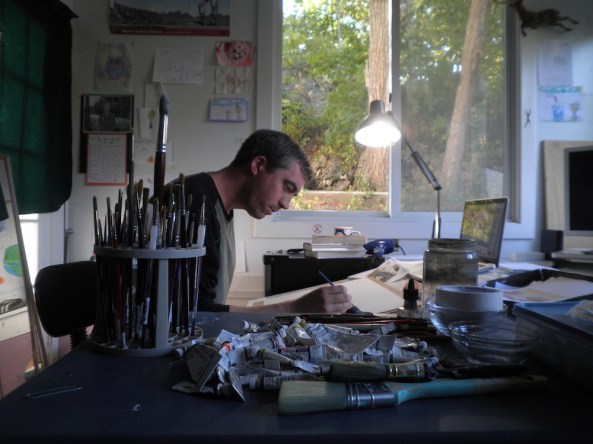
Matt hard at work in his studio

Matt hard at work in his studio

LiKL: You’re not only an illustrator—you also write. Can you walk us through the process of creating a picture book, starting from the idea phase and ending with publication?

Matt: Sure. The beginning part is pretty messy, where I just have all kinds of ideas floating around and I write everything down in my notebook. From there, most of the ideas just wither away, but every now and then one of them grows into something I think I might actually be able to work with.

I always write the words first, then once I figure out how to divide it up into pages, I do rough sketches. And there is always a lot of back and forth between the words and pictures. In a picture book, part of the story will be told with words and part of the story will be told with pictures. Once I start figuring out what the pictures are going to be, I realize I don’t need some of the words.

Once all my sketches are approved by my art director (after a couple rounds of revisions, usually), I start working on the final illustrations. That part usually takes 4 to 6 months. The whole process, from start to finish, can take 9 months to a year, depending on the book. Then once all the illustrations are done, it’s about a year until it comes out in stores.

LiKL: By my count, seven of your published children’s books center on baseball stories, including Growing Up Pedro, your picture-book bio of Dominican major league star Pedro Martinez, which we reviewed in November. What’s your connection to the sport?

Matt: Baseball is just something I’ve always loved. I grew up near Boston and have great memories of going to Fenway Park to watch the Red Sox play. When I was a kid, I was really into collecting baseball cards, watching baseball, playing baseball and wiffle ball. It’s one of the few things that has been a constant in my life from the very beginning. So when I started writing books for kids, baseball was a natural subject. Honestly, I wasn’t a big reader when I was a kid, but I would read anything if it was about baseball. I know there are still kids like that, and I hope they find my books!

LiKL: Speaking of Growing Up Pedro, you must have done a great deal of research on Pedro Martinez’s life and career, not to mention baseball in general and Dominican life. Fill us in.

Matt: This was my fourth baseball biography, but it was the first about a player I actually got to watch play. So this book was very personal for me. I read a lot of interviews and articles, but I also relied on my own memories of being at Fenway when Pedro was pitching. When he was on the mound, Fenway Park transformed into a different place. There was this electricity that surrounded him. I was excited to try to capture that in a book.

DR1

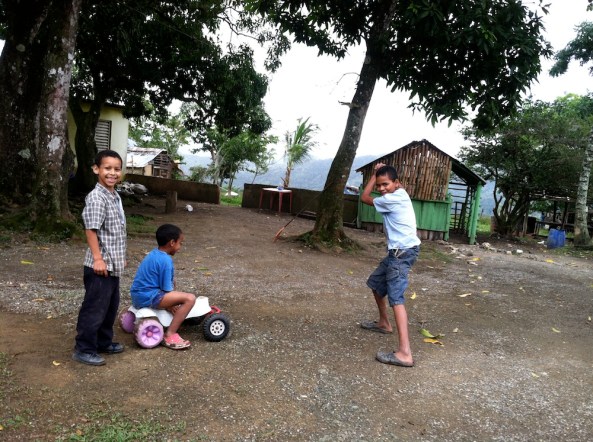
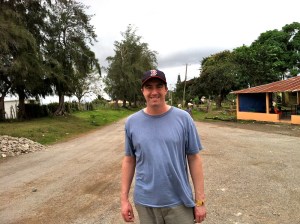
In the Dominican Republic, local children were happy to pose for photos Matt would use in illustrating Growing Up Pedro.

I also traveled to the Dominican Republic when I was working on Growing Up Pedro, which was amazing. Instead of just finding pictures online, I actually got to go to places that still look how they did when Pedro was a kid. I took tons of pictures. It was incredible to be able to go home after that trip and use all these experiences that were fresh in my mind and put them right into my book. It really helped me feel personally connected to the whole story.

LiKL: On this blog, we highlight excellent kid lit that focuses on Latino/a characters, something you pulled off beautifully in Growing Up Pedro. As far as you can tell, has this picture book expanded your reach into the Latino community?

tavares1

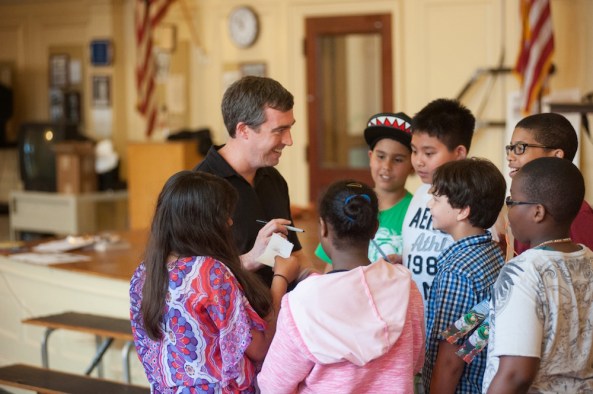
Meeting young fans at book events

Matt: Absolutely, and that’s been really great. I was thrilled when I found out Candlewick was going to do a Spanish edition of the book, because I know that Pedro is a hero to millions of Spanish-speaking people. I love knowing that kids can read Pedro’s story in English or Spanish.

It’s such a powerful thing when a kid can see a bit of themselves in a character, and I think a lot of people have made that connection with Pedro. For some kids it’s because he grew up poor, or even just that he was skinny and small. But I think the fact Pedro is Latino definitely helps a lot of Latino/a readers feel more connected to the story.

GROWING UP PEDRO. Text and Illustrations copyright 2015 Matt Tavares. Reproduced by permission of the publisher, Candlewick Press, Inc., Somerville, MA.

GROWING UP PEDRO. Text and Illustrations copyright 2015 Matt Tavares. Reproduced by permission of the publisher, Candlewick Press, Inc., Somerville, MA.

LiKL: Suppose you could hang around the studios of any three illustrators—living or dead—for the purpose of asking questions and observing technique. Who would those illustrators be and why?

Matt: Tough to pick three… I’ll say Chris Van Allsburg, because he’s one of my all-time favorite illustrators, and I would love to watch him work. I would probably just take pictures of all his art supplies then go to the art store and buy all the same stuff. Maurice Sendak, because he was a genius and was always so fascinating in interviews. I never got to meet him. And Jerry Pinkney. I did a book signing with him once, and he was so nice and humble and approachable. He’s been making books for so long, and has had so much success. I’d love to spend some time with him and maybe pick up some good habits.

LiKL: Naturally, we’re curious to know what’s next from Matt Tavares. If you’re free to share, tell us about books already in production, or a project still shiny with wet paint.

Matt: My next book is Crossing Niagara, which is a picture book about The Great Blondin, the first person to walk across Niagara Falls on a tightrope. That comes out in April. Then I have another picture book biography that I illustrated with Candlewick that comes out in Spring 2017, about the first woman pilot. And right now I’m just starting final art for a book I wrote that comes out in Fall 2017. This one is going to be a very new direction for me- it’s fiction, and the main characters are birds. I’m very excited to try something new.

DR2Writer, illustrator, baseball lover! Learn more about Matt Tavares and his books at his official website.

Talking Diversity & Book Awards

Last week I had the privilege of hosting a conversation on the intersections between diversity and the selection of books for awards and best-of lists. I got to pick the brains of Jason Low, Debbie Reese, Marilisa Jiménez García, Pat Enciso, and Daniel Kraus. Now you can enjoy their insights, which have just been published in this post for the Booklist Reader.

Our conversation brings to the fore a number of issues that impact both what books get considered for special recognition and how discussions of those books proceed. As the participants show, we’re finally deconstructing the notion that “diversity” and “quality” are in competition. Instead, how diversity shapes our understanding of what “quality” is.

Nowhere is this work more important than in the meeting room where book awards and other distinctions are deliberated. And, as we discuss, how books are reviewed also shapes which books get noticed. In our conversation, Jason Low points out the importance of “diverse reviewers… who can serve as a cultural sounding board when issues like nuance, perspective, and authenticity issues are in question.”  School Library Journal has been actively educating its reviewers and recruiting reviewers from diverse backgrounds. Booklist is working on this, too. In fact, just as we were wrapping up our conversation last week, Booklist issued this call:

Booklist is actively seeking book reviewers of diverse background, whether that background is cultural, racial, gender, or another. We are also looking for reviewers fluent in Spanish. Candidates with critical acumen and knowledge of a public-library audience should email writing samples (preferably published work) and reviewing preferences (fiction, nonfiction, adult, YA, picture books, graphic novels, audio, etc.) to one of the following:

Daniel Kraus, Books for Youth (dkraus@ala.org)

Donna Seaman, Adult Books (dseaman@ala.org)

Sarah Hunter, Graphic Novels (shunter@ala.org)

Joyce Saricks, Audio Books (jsaricks@ala.org)

If you fit the Booklist criteria, we encourage you to get your review on! At Latin@s in Kid Lit, we put excellent books on readers’ radars and highlight issues that relate to writing, publishing, promoting, and recognizing kid lit by, for, and about Latinas and Latinos. We’re eager to have more allies!

Reviewing not your thing? You can still draw others into the conversation around diversity in publishing and literature. Do you have a colleague who may not be plugged into these issues? Invite them to check out the resources we offer here at LKL. The Booklist Reader conversation includes a list of excellent websites that offer vetted book recommendations.

I hope the Booklist Reader piece prompts you to reconsider what diversity has to do with excellence as well as how you can advance diversity in your own reading and work. As Marilisa Jiménez García puts it in our conversation, “We need more than books. We need to cultivate a system of children’s and YA literature— reviewers, librarians, educators, professors, publishers—that holistically integrates people of color. We need bridges.”

So, how about it? What bridges can we build today?

Book Review: Roller Girl by Victoria Jamieson

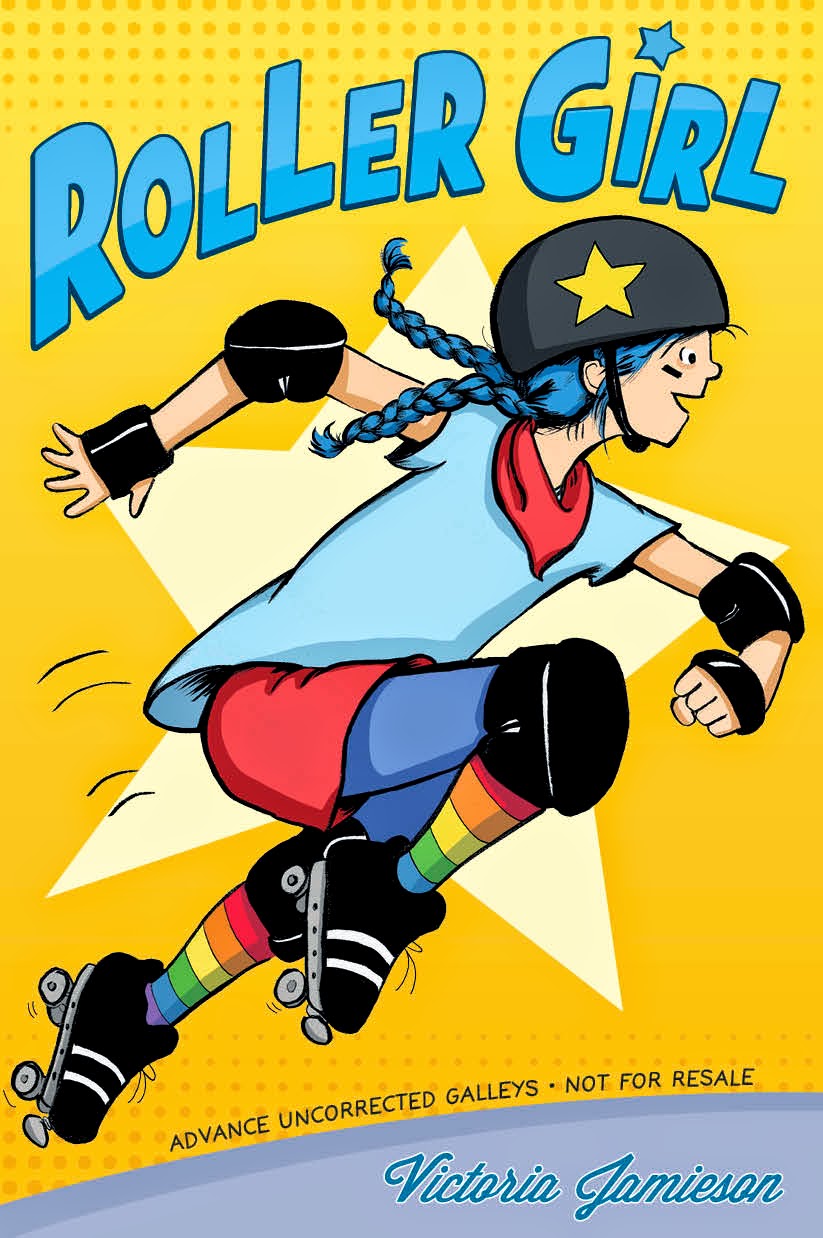
RollerGirlCVR

Reviewed by Lila Quintero Weaver

Roller Girl is a recipient of a 2016 Newbery Honor!

FROM THE NEWBERY MEDAL HOME PAGE: Astrid falls in love with roller derby and learns how to be tougher, stronger and fearless. Jamieson perfectly captures the highs and lows of growing up in this dynamic graphic novel.

MY TWO CENTS:  Victoria Jamieson’s Roller Girl captivated me right off and only grew sweeter on a second reading. In addition to the immersive power of graphic novels, the story of Roller Girl delivers a solid punch: 12-year-old Astrid Vasquez gets hooked on roller derby and devotes herself to the sport while navigating the ups and downs of middle-school friendships.

Astrid’s passion for roller derby ignites when Ms. Vasquez takes Astrid and her best friend, Nicole, to their first derby bout. Afterward, Astrid can talk of nothing but the derby and fails to notice that Nicole doesn’t share her excitement. Come on, how could she not? Check out the theater of it all: the players’ costumes and wild hair colors, the electricity of the crowd, and the take-no-prisoners energy that drives the sport. Astrid even discovers an idol in Rainbow Bite, a star jammer for the Rose City Rollers, who exemplifies roller derby’s ferocity and skill. Astrid loves the fact that there’s nothing girlie or restrained about roller-derby culture, and when she hears about summer camp for junior players, she’s chomping at the bit to sign up. Best friends do everything together, right? This assumption crumbles when Nicole reveals that she’s planning to attend dance camp instead, along with Rachel, Astrid’s one true nemesis from their early elementary days.

With Nicole’s “desertion,” Astrid has to face the first day at derby camp alone. From there, complications abound. Ms. Vasquez is under the impression that Nicole’s mom will give Astrid a ride home at the end of each day’s session. Astrid is afraid to tell her mom that Nicole isn’t participating, as this would lead to all sorts of questions Astrid wants to avoid. As a result, the lies she must tell and the long walks home she must endure only add to the drama of those first grueling weeks at the rink. Did I mention that Astrid discovers she’s a lousy skater?

Despite aching muscles and botched skill drills, Astrid persists and finds new motivations as she enters more deeply into the world of her chosen sport. The camp coaches balance demanding practices with timely pep talks, and Astrid strikes up a friendship with Zoey, a camper her age. Another boost comes in the form of a correspondence with Rainbow Bite that starts when Astrid discovers the star jammer’s locker and begins leaving notes for her. (Rainbow proves a generous celebrity and writes back with inspiring tips.)

None of these triumphs mean that Astrid transforms into a roller derby standout; what matters are the personal victories that she achieves over the course of the summer, including earning the respect of her teammates and figuring out some important things about who she is and what sort of friend she wants to be.

Roller Girl succeeds on multiple levels. Through a lively narrative and a rich visual landscape, it draws readers into the fascinating world of roller derby, often explaining the rules and strategies of a sport unfamiliar to many through clever diagrams and dramatized scenes. Through these invitations to explore the sport, it portrays women and girls as highly capable both physically and intellectually. Readers get a clear sense that women can—and should—take on tough challenges.

In addition, Roller Girl gives us a Latina character comfortable with her ethnic identity and shows us Anglo characters who are equally accepting. Astrid’s Latina background doesn’t even emerge until page 54, and only much later do we learn that the family is Puerto Rican. This information comes across casually, as just another cool detail about the main character. At least this is how Astrid’s new friend Zoey takes the information when Astrid reveals it during a scene in which West Side Story plays in the background.

Astrid says to Zoey, “I’ve seen this movie! My mom made me watch this for an evening of Puerto Rican cultural heritage. Or something.” (At first blush, the idea that an adult puertorriqueña would push this movie as representative of her culture struck me as improbable. I associate West Side Story with racial stereotypes, discriminatory casting—white actors playing the Puerto Rican leads—and the problematic practice of filming lighter-skinned Latino actors in brown-face. But after asking around, I learned that not all Latinos recoil at the legacy of West Side Story, and many view Rita Moreno’s dynamic, Oscar-winning performance as a cause for celebration.)

In general, my sense is that ethnicity may not be central to the story, yet it gives readers additional exposure to a positively framed diverse character who faces the same challenges most 12-year-olds face. In fact, one of the biggest ways that Roller Girl succeeds is in its depiction of Astrid’s emotional journey. It delivers an honest and satisfying ride through many of the complex social and internal upheavals of middle-school life. I particularly like the author’s portrayal of mixed emotions. On one page, a central panel depicts a kindergarten poster of cartoon faces bearing unambiguous expressions. The caption reads: “The feelings were all simple ones, like ‘happy’ and ‘sad.’ They didn’t tell you about feelings that got mixed together like a smoothie.” In the next panel, Astrid contemplates exactly such “mixed together” feelings, the result of running into Nicole after weeks of separation. Astrid is happy to see her former best friend yet sad about the emotional distance that stands between them now. Out of this, she coins a new word, “shad,” a distillation of those contradictory feelings—happy and sad. This moment of acceptance that emotions are complex seems to me a marker that a character is coming of age.
As happens with the best of sports stories, Roller Girl follows a character’s trajectory through brutal training challenges, inevitable setbacks, as well as moments of triumph–and elevates these into something beyond athletic achievement. At twelve, Astrid is finding her way in the world. Some of her falls are literal and happen on the skating rink. Some are relational and emotional, and arrive without the benefit of coaches to teach her how to land injury-free. The important thing is that after each fall, Astrid is learning how to dust herself off and get back into the game.

TEACHING TIPS AND RESOURCES: A major theme of Roller Girl is the troubled landscape of middle-school friendships. Try this exercise with young readers. Assign a “treasure hunt” for episodes in the story that demonstrate the ebb and flow of friendships. Ask students to identify relational missteps that Astrid and other characters make, i.e., jumping to conclusions, not listening, passing judgments, not speaking up; ask them to do a similar search for positive practices that build friendships.

For visual help on grasping the rules of roller derby, check out the video on this page.

One of Astrid’s challenges is figuring out a good derby name. There are rules and traditions that must be observed, as outlined in this guide.

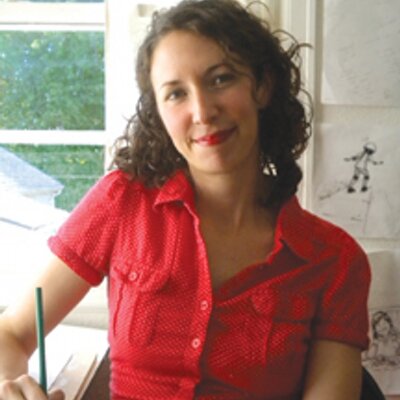
AuthorPhoto_VictoriaJamieson_LoRes_400x400ABOUT THE AUTHOR/ILLUSTRATOR: Pennsylvania native Victoria Jamieson attended the Rhode Island School of Design. Her work history includes a stint as book designer for HarperCollins Children’s Books. She now writes, illustrates, and teaches illustration at Pacific Northwest College of Art in Portland, Oregon, where she also skates in the Rose City Rollers roller-derby league.


Newbie skaters like Astrid could probably use the tips from this video.


IMG_1291Lila Quintero Weaver is the author-illustrator of Darkroom: A Memoir in Black & White. She was born in Buenos Aires, Argentina. Darkroom recounts her family’s immigrant experience in small-town Alabama during the tumultuous 1960s. It is her first major publication. Lila is a graduate of the University of Alabama. She and her husband, Paul, are the parents of three grown children. She can also be found on her own websiteFacebookTwitter and Goodreads.

Margarita Engle: Books in Spanish Enhance Latino Family Literacy

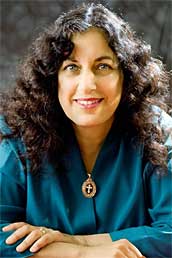
Margarita

By Margarita Engle

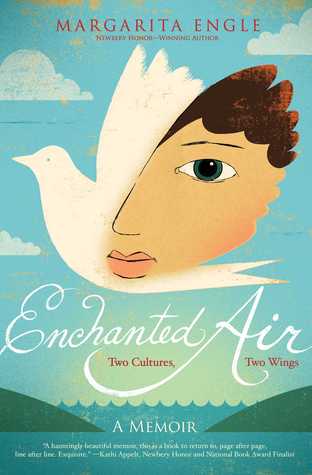
A few months ago, I received a set of wonderful letters from a grandmother and her 10-year-old granddaughter. They were reading Enchanted Air together, discussing it, and using it as a way for the grandma to share her own childhood experiences during the Cold War.

It occurred to me that many Latino families can’t do this, simply because most books by U.S. Latino authors are not available in Spanish. With a few wonderful exceptions such as the works of Pam Muñoz Ryan and Alma Flor Ada, in general only bestsellers by non-Latinos, and a few specialized small press books by Latinos, ever get translated.

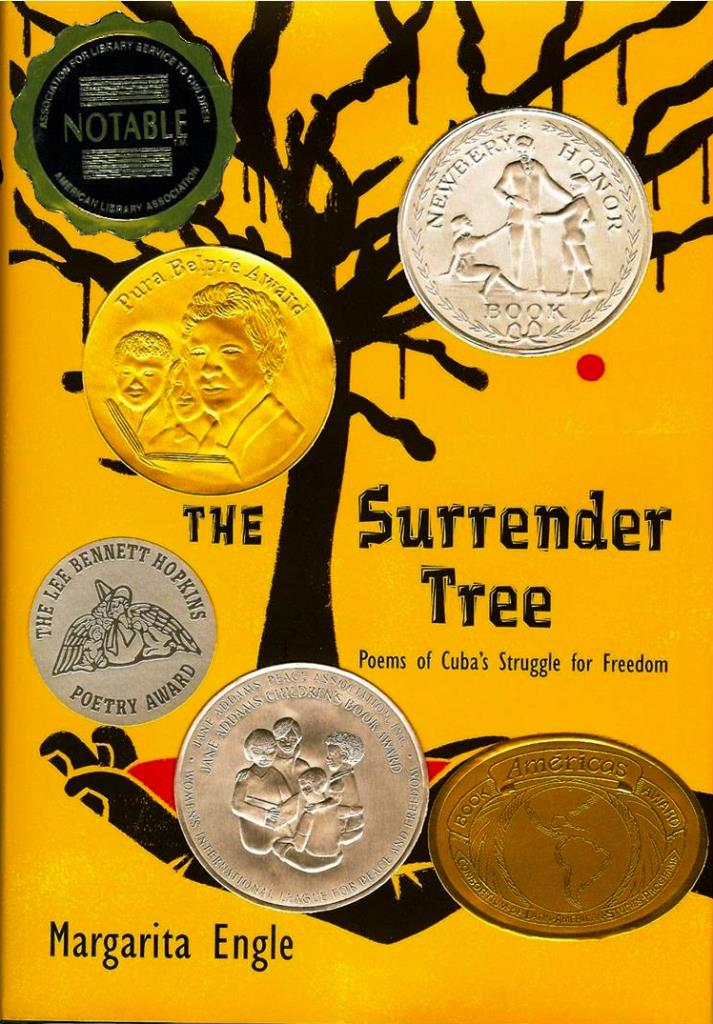
Soon after those heartwarming grandma-granddaughter letters arrived, I visited a Washington, D.C. eighth-grade class where Latino students asked me for books in Spanish. All I had to offer was one of my oldest books, The Surrender Tree/El Arbol de la Rendición, a dual language paperback that resulted from this title’s status as a Newbery Honor winner.

Surrende Tree NotableMy next school visit was to a rural sixth-grade class in California’s agricultural Central Valley. The students were all Latino, and most spoke English, but teachers informed me that many of the parents and grandparents were not bilingual. The only way those families could participate in their children’s education was in Spanish. Fortunately, the school had a grant to provide a signed copy of The Surrender Tree/El Arbol de la Rendición to each student. Those books will go home and be available to the whole family. That’s no guarantee that parents will read and discuss them, but at least it is a possibility.

The need for bilingual books for older children has been on my mind so much that when I served on a diversity panel at a national teachers’ conference, I answered the question, “What are your wishes for the publishing industry?” with the statement, “I wish for translations.”

I pointed out that fifty million people in the U.S. speak Spanish, and that just because the publishing industry has never figured out how to reach this vast “market,” that doesn’t mean it will never be reached. We can’t give up. Until there are more translations, family literacy in this country will never be complete.

Fortunately, I will soon have another bilingual book. A new and innovative small press called HBE Publishing has set a fall 2016 release date for a middle grade historical verse novel that I wrote in the style of magic realism. There will be both English-only and bilingual options, so that schools or individuals can order their preferred format. I won’t receive any advance, but the royalty will be much higher than the usual 10%, a trade-off I’m happy to make, in exchange for a beautiful bilingual edition that children can share with their abuelitos. Perhaps innovation is what it will take to resolve the problem of too few translations.


Margarita Engle is a prolific author of books for young readers, most recently of Enchanted Air and Drum Dream Girl. She has won countless awards for her work, including the Pura Belpré and the Newbery Honor. Her guest posts on this blog are favorites with readers. Check out her essay on researching and writing the stories of historical heroes. For more information on Margarita’s writing, please visit her official author website.

The same day that this guest post published, Margarita received the 2016 Pura Belpré Author Award for Enchanted Air: Two Cultures, Two Wings. Congratulations, Margarita! 


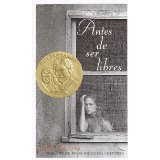
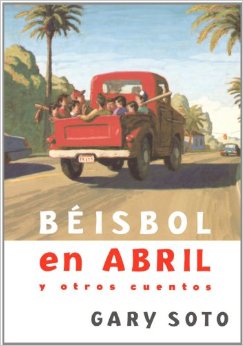
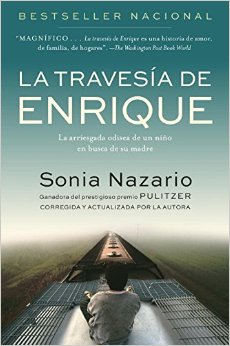
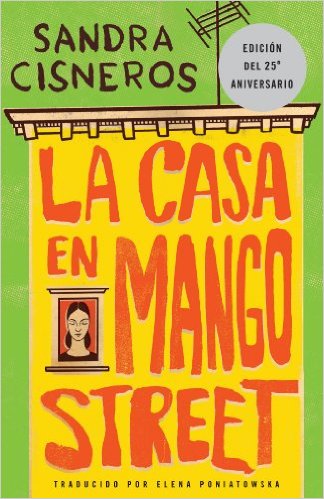
Margarita’s experiences point to the shortage of Latin@-authored Spanish editions for middle-grade readers. When we researched available titles, we came up with the following modest sampler. Help us expand it! In the comments, please tell us about good bilingual MGs or fully Spanish editions that you’ve run across. Remember, we’re not looking for translations of mega bestsellers like the Harry Potter or Diary of a Wimpy Kid series. We’d like to identify books that center on Latin@ characters and themes. Thanks in advance for your suggestions!

Note: Some of the bilingual book covers shown below don’t include their Spanish title. 

Si, Somos LatinosEsperanza Renace  Antes de ser libres  Beisbol en abril  Yo Naomi Leon  La travesia de Enrique La Casa en Mango Street  El Color de mis palabras   Cajas de carton  Cool Salsa    Alla Donde Florecen  Upside-Down-and-Backwards-350x550  Una momia en su mochila  Tomando partido  Tia Lola Terminó  Nacer bailando  Lemon-Tree-Caper-The-350x550  Gabi Esta Aqui  El Monstruo  El Caso de la Pluma Perdida  Cuentos Sazon  con-carino-amalia-love-amalia  Cartas del cielo  Cuentos para chicos y grandes  Cuentos de Apolo

Take Two!: SLJ’s Shelley Diaz Predicts 2016 Pura Belpré Award Winners


By Shelley M. Diaz 

While I didn’t correctly predict the top winners in last year’s Pura Belpré Awards, many of the titles mentioned received recognition at the American Library Association’s 2015 Youth Media Awards. I wonder how close I will get this year! We’ll see on January 11 as the children’s literary world waits with baited breath for the announcements of the recipients of the top kid lit awards presented by librarians in the United States.

Results of Mock Newbery, Caldecott, Printz, Coretta Scott King, and Geisel lists have been tallied on the Association for Library Service to Children (ALSC) blog. An Oregon chapter of REFORMA (National Association to Promote Library and Information Services to Latinos and the Spanish-Speaking) even posted their own Mock Pura Belpré. And the “Latinas 4 Latino Lit” blog posted their top picks in late November.

Before I get to my predictions, let’s recap the criteria for the Pura Belpré Medals:

First, here’s a short overview of the criteria that librarians on the committee (members of REFORMA and ALSC) will consider when naming the recipients of the 2015 awards (found in the Pura Belpré Award Manual).

  1. Two medals shall be awarded annually at the Annual Conference of the American Library Association, one to a Latino author of an outstanding children’s book and one to a Latino illustrator for creating an outstanding children’s picture book. Each of these must be an original work that portrays, affirms, and celebrates the Latino cultural experience.
  2. The award-winning books must be published in the United States or Puerto Rico during the preceding year.
  3. Recipients of the Pura Belpré medal must be residents or citizens of the United States or Puerto Rico.
  4. Fiction and nonfiction books for children published in Spanish, English, or bilingual formats are eligible.

More specifics:

  1. A “children’s book” shall be a book for which children are a potential audience. The book must display respect for children’s understandings, abilities, and appreciations. Children are defined as persons of ages up to and including fourteen, and books for this entire age range are to be considered.
  2. Particular attention will be paid to cultural authenticity.
  3. “Resident” specifies that author has established and maintained residence in the United States, or Puerto Rico, as distinct from being a casual or occasional visitor.

So without further ado, here are my picks for this year’s winners. If you click on the cover images or the title links, you will be taken to IndieBound for more information:


Pura Belpré 2016 Author Award

23309551Enchanted Air: Two Cultures, Two Wings by Margarita Engle. illus. by Edel Rodriguez. S. & S./Atheneum.

Reasons why I think it will win: Already a YALSA Nonfiction Finalist, an SLJ Top Latino Book, and the recipient of multiple starred reviews, the latest work by the first Latina to receive a Newbery Honor is truly a tour de force. A memoir in verse detailing her struggles as young person caught between two worlds—Cuba and the U.S.—this title is as compelling and well-written as Engle’s previous Pura Belpré recognized titles. Plus, the Oregon Mock Pura chose this as its winner—and I’m in full agreement.

Honors:

22295304Shadowshaper by Daniel José Older. Scholastic/Arthur A. Levine Bks

Probably one of the most celebrated YA titles this year, this urban fantasy with an unapologetic but totally real Afro-Latina is a joy to read and heeds the call for diversity within the sci-fi/fantasy genres. Plus, the celebration of Latino culture is strong in this title, offering an often ignored aspect of our culture—anti-Blackness.

SLJ Q&A: Urban Fantasy Counter-Narrative: Daniel José Older on “Shadowshaper”


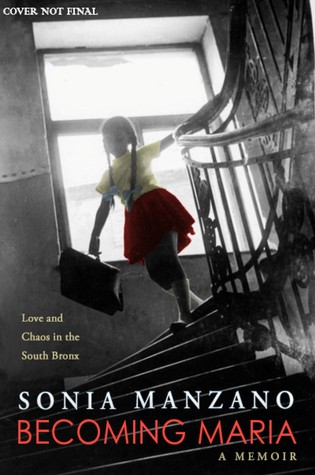
24612544Becoming Maria: Love and Chaos in the South Bronx by Sonia Manzano. Scholastic.

Manzano is no stranger to the Pura Belpré Awards. Her Revolution of Evelyn Serrano took an Honor in 2013. And it’s no secret how much I enjoyed this memoir about her path to Sesame Street, where she played the iconic “Maria.” The lyrical text evokes both the childhood trauma and resilience that made her the role model and award-winning writer and actress she is today. Just try to keep a dry eye. Manzano’s holiday-themed picture book Miracle on 133rd Street could also take a medal this year. The Oregon Mock certainly thinks so.

SLJ Video: Daniel José Older Talks to Sonia Manzano, Sesame Street’s ‘Maria,’ About Her Memoir


24795948Funny Bones: Posada and His Day of the Dead Calaveras by Duncan Tonatiuh. illus. by author. Abrams.

I don’t think it’s possible to have a year in which Tonatiuh doesn’t win a Pura recognition. It’s written in the bylaws, I think. (Just kidding. Sort of.)


Other possible contenders:

Echo by Pam Muñoz Ryan. Scholastic. Though only one section of past Author Medalist’s ambitious novel directly celebrates Latino culture, this book has lots of fans in the library world. It might get a nod on January 11.

Mango, Abuela and Me. Candlewick by past Author winner Meg Medina. There’s a parrot and an adorable abuela bridging cultural and linguistic divides. Sounds like a recipe for a winner to me.

Drum Dream Girl by Margarita Engle. illus. by Rafael López. HMH. Wouldn’t it be amazing if Engle takes both the Award and an Honor? This picture book inspired by an Afro-Chinese-Cuban female musician who broke gender barriers is a true gem.

Salsa: Un Poema Para Cocinar/A Cooking Poem. by Jorge Argueta. Illus. by Duncan Tonatiuh. Groundwood. This bilingual text, part of the “Cooking Poem” series is as delectable as the previous entries. Definitely a contender!

Since the committees tend to stay away from upper-end YA, I don’t know if Adam Silvera’s More Happy Than Not (SohoTeen) or Ashley Hope Pérez’s Out of Darkness (Lerner) will be recognized, but wouldn’t that be nice?


Pura Belpré 2016 Illustrator Award

22749711Winner: Drum Dream Girl by Margarita Engle. illus. by Rafael López. HMH.

Reasons why I think it will win: Have you seen this book? It just screams “Caress Me!” The illustrations are majestic and vibrant and López isn’t a stranger to the Pura Belpré either. Once again, no surprise on how much I love it here. But, I’m not the only one! Already on several Best lists, it’s also been garnering some possible Caldecott buzz. The art elevates the already excellent text by incorporating the protagonists’ multicultural background, showcasing the diversity within the Latino people.


Honors:


24795948Funny Bones: Posada and His Day of the Dead Calaveras by Duncan Tonatiuh. illus. by author. Abrams. A New York Times Best Illustrated book of 2015, this informational book about the artist whose calaveras have become synonymous with Día de los muertos is as gorgeous as it is informative. Tonatiuh doesn’t disappoint—and I’m sure he won’t be disappointed on January 11.


23282198The Great and Mighty Nikko by Xavier Garza, Cinco Puntos. While Garza was honored in 2012 for narrative, he might just garner some recognition this time around for his fabulous art in this concept book. Riffing off a similar Lucha Libre theme as his past books, this counting tale is just so eye-catching that it might surprise us.


Other contenders:

Little Chanclas by José Lozano. illus. by author. Cinco Puntos. The stylized illustrations reminiscent of street art and the infectious and expressive heroine and her penchant for sandals just might charm the committee enough to win some praise.

Mango, Abuela and Me by Meg Medina. Illus. by Angela Dominguez. Candlewick. Dominguez received a nod for her irresistible art in 2014 Maria Had a Little Llama / María Tenía una Llamita and she’s certainly been busy this year with her contribution to the “Lola Levine” chapter books and her own Knight Together. This could certainly be her year!


So, those are my picks! What say you? Did I leave anything out?