Celebrating Pura Belpré Winners: Spotlight on Doña Flor, illustrated by Raul Colón

PuraBelpreAwardThe Pura Belpré Awards turns 20 this year! The milestone will be marked on Sunday, June 26, from 1:00-3:00 p.m. during the 2016 ALA Annual Conference in Orlando, FL. According to the award’s site, the celebration will feature speeches by the 2016 Pura Belpré award-winning authors and illustrators, book signings, light snacks, and entertainment. The event will also feature a silent auction of original artwork by Belpré award-winning illustrators, sales of the new commemorative book The Pura Belpré Award: Twenty Years of Outstanding Latino Children’s Literature, and a presentation by keynote speaker Carmen Agra Deedy

Leading up to the event, we will be highlighting the winners of the narrative and illustration awards. Today’s spotlight is on Raul Colón, the winner of the 2006 Pura Belpré Illustration Award for Doña Flor: A Tall Tale About a Giant Woman with a Great Big Heart. Colón also received Pura Belpré Illustration Honors for Portraits of Hispanic American Heroes and My Name is Gabito: The Life of Gabriel García Márquez/Me llamo Gabito: la vida de Gabriel García Márquez.

Review by Sonia Alejandra Rodriguez
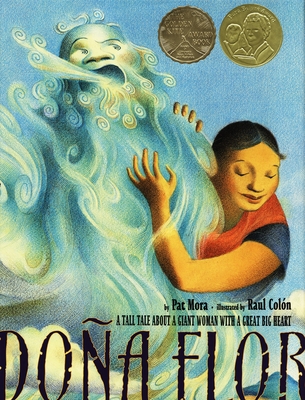
DESCRIPTION FROM THE PUBLISHER: Doña Flor is a giant lady who lives in a tiny village in the American Southwest. Popular with her neighbors, she lets the children use her flowers as trumpets and her leftover tortillas as rafts. Flor loves to read, too, and she can often be found reading aloud to the children.

One day, all the villagers hear a terrifying noise: it sounds like a huge animal bellowing just outside their village. Everyone is afraid, but not Flor. She wants to protect her beloved neighbors, so with the help of her animal friends, she sets off for the highest mesa to find the creature. Soon enough, though, the joke is on Flor and her friends, who come to rescue her, as she discovers the small secret behind that great big noise.

The creators of Tomás and the Library Lady, Pat Mora and Raul Colón, have once again joined together. This time they present a heartwarming and humorous original tall tale—peppered with Spanish words and phrases—about a giant lady with a great big heart.

MY TWO CENTS: Doña Flor, written by Pat Mora and illustrated by Raul Colón, tells the story of a giant woman that sleeps on clouds and makes piles of big tortillas. She protects her village from harm and she must do just that when the villagers inform her that a giant mountain lion threatens their safety. The biography of Raul Colón included on the dust jacket describes his illustrations as “an intriguing combination of watercolor washes, etching, and colored and litho pencils.”

When I look at Colón’s illustrations, the etchings remind me of fingerprints. The loops, the arches, the whorls, and all the lines that we might associate with fingerprints are visible in Colón’s illustrations. I am not familiar with techniques or the technicalities of etching and in saying that the illustrations remind me of fingerprints I do not mean to devalue the art in any way. My favorite illustration in this story is of Doña Flor using her thumb to carve out a riverbed in the village. Doña Flor is in a squatting position with her white skirt covering her thighs, and she has used her thumb to make a squiggly path for the water while the villagers look on. The riverbed has the details I associated with the fingerprints which, in this case, could be Doña Flor’s own prints.

Colón’s illustrations are beautiful, colorful, and magical. That I saw fingerprints when I looked closely at his illustrations speaks to the uniqueness of his art. While Doña Flor wears a blue shirt in most of the illustrations sometimes the shirt looks like it is embroidered and sometimes it looks like a plain T-shirt. The clouds on one page look round and fluffy and in the illustration where she’s made her bed of clouds it appears like she’s left her own fingerprints on the clouds she has gathered. Despite the uniqueness I see in his illustrations, there is certainly a sense of cohesion throughout the story. I’ve decided to focus on the etchings, the lines, and how much they appear like fingerprints because as I examined his illustrations, I also got the thought that our stories are as unique as our fingerprints. Colón’s illustrations in Doña Flor affirmed that for me. I couldn’t help but connect the details I saw in his art to the significance of the Pura Belpré award and the necessity for more Latinx children’s and young adult literature by and for Latinx.

TEACHING TIPS:

  • For younger readers: Ask younger readers to pick their favorite illustration and to pick a part of the image they’d like to recreate. For example, in the illustration with Doña Flor making the river, students can attempt to recreate the river, the clouds, the trees and hills, etc. Ask students to outline their chosen part and to fill it in by dabbing their fingerprints. This will recreate the etching effect they see in the illustrations.
  • For middle grade readers: Discuss with students the effect and affect of etching. Does the etching force the reader to focus in a certain direction or a certain part of the page? How do the illustrations make you feel? For example, in the illustration where Doña Flor hugs the wind the lines of the etchings point in the same direction, making it appear like she is floating away with the wind.
  • For young adult readers: By the end of the story Doña Flor learns that the loud roaring frightening the village is coming from a small puma roaring into a hollow log. Discuss with students the importance of perceptions and misconceptions. How might we connect the villagers’ fear and the puma’s amplified roars to racial/ethnic stereotypes?
 

FullSizeRender (1)Dr. Sonia Alejandra Rodriguez’s research focuses on the various roles that healing plays in Latinx children’s and young adult literature. She currently teaches composition and literature at a community college in Chicago. She also teaches poetry to 6th graders and drama to 2nd graders as a teaching artist through a local arts organization. She is working on her middle grade book. Follow Sonia on Instagram @latinxkidlit
Celebrating Pura Belpré Winners: Spotlight on Under the Royal Palms by Alma Flor Ada

PuraBelpreAward

The Pura Belpré Awards turns 20 this year! The milestone will be marked on Sunday, June 26, from 1:00-3:00 p.m. during the 2016 ALA Annual Conference in Orlando, FL. According to the award’s site, the celebration will feature speeches by the 2016 Pura Belpré award-winning authors and illustrators, book signings, light snacks, and entertainment. The event will also feature a silent auction of original artwork by Belpré award-winning illustrators, sales of the new commemorative book The Pura Belpré Award: Twenty Years of Outstanding Latino Children’s Literature, and a presentation by keynote speaker Carmen Agra Deedy.

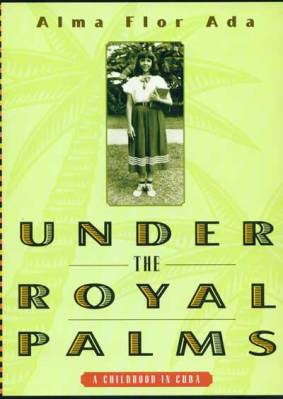
Leading up to the event, we will be highlighting the winners of the narrative and illustration awards. Today’s spotlight is on Alma Flor Ada, the winner of the 2000 Pura Belpré Narrative Award for Under the Royal Palms.

Under the Royal Palms coverReview by Lila Quintero Weaver

DESCRIPTION FROM THE PUBLISHER: In this companion volume to Alma Flor Ada’s Where the Flame Trees Bloom, the author offers young readers another inspiring collection of stories and reminiscences drawn from her childhood on the island of Cuba. Through those stories we see how the many events and relationships she enjoyed helped shape who she is today.

Heartwarming, poignant, and often humorous, this collection encourages children to discover the stories in their our own lives — stories that can help inform their own values and celebrate the joys and struggles we all share no matter where or when we grew up.

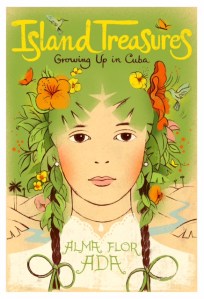
MY TWO CENTSUnder the Royal Palms: A Childhood in Cuba, by Alma Flor Ada, is the second of two memoirs covering the author’s childhood. Where the Flame Trees Bloom was published in 1994. Both books are now available in a single volume entitled Island Treasures: Growing Up in Cuba, which also contains a new, shorter section called “Days at La Quinta Simoni.” This review is Island Treasures FINAL ARTbased on the Island Treasures edition.

Under the Royal Palms was also published in Spanish, as Bajo las palmas reales.

Written in clear prose charged with poetic flavor, Under the Royal Palms is a lovely collection of autobiographical stories that paint a rich picture of life for a 20th-century child in the riverside city of Camagüey, Cuba. Located in the interior of the island nation, Camagüey is an ancient city of narrow, winding streets, paved in stone. Most of the stories are set in the large, multi-generational family home of Alma Flor Ada’s childhood, known as La Quinta Simoni.

Often humorous or joyful, occasionally sobering, each story in this collection captivates the eye and ear through sharp characterizations of place, time, and emotion. By bringing to life feelings ranging from deep loss to transcendent joy, the author succeeds in reaching across cultural and generational gaps to connect to the heart of young readers today.

In “Explorers,” we meet cousins Jorge and Virginita. As the oldest of these three children, Jorge wears a mantle of authority that his two younger cousins, Virginita and Alma Flor, honor to a fault. Part of Jorge’s reputation comes from the fact that he “read the adventure stories that we all later reenacted. We trusted his words completely and followed him without hesitation.” One day, the girls blithely follow Jorge into a marabú field. Marabú are prolifically spreading trees, which form a dense and thorny thicket. Jorge somehow manages to nimbly scramble his way through the nearly impenetrable network of branches that cover the vast marabú field, but his cousins lose sight of him and are forced to crawl along at inchworm pace, snagging their hair and dresses on the thorns. When Jorge arrives back at La Quinta Simoni without the girls, and hours later they have still failed to appear, the adults imagine the worst and begin to search high and low for them. The girls finally emerge from the marabú field, with “clothes in tatters and our faces covered with muddy tears.”

Other stories reveal the web of family relationships and the interplay of competing interests. “Broken Wings” is a stunning account of an uncle’s passion for aeronautic flight and the dear price that he and his loved ones pay for it. Uncle Medardito is the only brother of Alma Flor’s mother and maternal aunts. His dynamic personality charms everyone that knows him. So do his exploits. When the Río Tínima floods, Uncle Medardito braves the rushing waters to save a drowning person. His flair for daring is not limited to emergencies; at times, he walks like a tightrope artist along the railing of a high bridge, purely for the adventure. Then he is bitten by the flying bug and purchases a lightweight wood-and-canvas plane, powered by a single motor. Family members worry for his safety and dread the days when he goes flying, “rising above the red tile roofs and the winding streets that had so restricted his world, gliding like the mighty auras, the Cuban buzzards, over the plains where the royal palms stood majestically.” Of all the family, Alma Flor alone, a young girl at the time, does not try to dissuade her uncle from taking his plane up. She identifies with his longing to soar and secretly hopes he will not bend to the fearful misgivings of the others.

On a particular Sunday, Alma Flor is in the bathtub, with her hair in a “white cloud of shampoo,” when a ruckus draws her attention. Looking out the window, she sees hundreds of people rushing toward the river, shouting. Without rinsing off, she jumps into her clothes and dashes outside, joining the throng. A plane is approaching. Instead of the usual healthy sound of a working engine, there’s an ominous sputter. Running at full speed in the same direction as the descending plane, Alma Flor is the first to reach it after its “deafening impact” with the ground. Up to this point, the story has unfolded in such a way that Uncle Medardito’s fate is never in question. But what happens next, in young Alma Flor’s response to the crash, took me by surprise and provides an unforgettable, emotional climax.

Under the Royal Palms is a treasure chest of similar accounts, one that should be dusted off and introduced to a new generation of readers, many of whom have yet to discover the horizon-expanding possibilities of memoir.

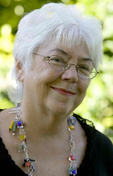
Alma Flor AdaABOUT THE AUTHOR: Alma Flor Ada is renown for her work as an educator, speaker, poet, and author of many children’s books as well as professional books for educators. In addition to the Pura Belpré Medal, her major awards include the 2012 Virginia Hamilton Award, the Christopher Medal, and the Marta Salotti Gold Medal. One of her great passions is social justice advocacy. Learn more about Alma’s dazzling career in children’s literature at her website, and read more about her journey in this lovely guest post, “Always Cuban.”


TEACHING TIPS:

  • Under the Royal Palms is ideal for reading aloud in the classroom. Most of the stories can be enjoyed as stand-alone narratives sure to capture the attention of late elementary and middle school kids.
  • Use selected stories as starting points for an exploration of Cuban culture and history. Complement the text with craft projects, such as making miniature clay tinajones, the earthen pots that Camagüey is known for and which are mentioned in the stories. Prepare a variety of Cuban foods for students to sample. Enrich the stories with virtual travel. A tours agency originating in Spain offers a beautiful array of photographs, maps, and videos of Camagüey and nearby beaches on its website, which is in Spanish.
  • Visit a botanical garden where palms grow and learn more about this amazing family of plants that includes over 2,500 species and differs from broadleaf and coniferous trees in many interesting ways, also supplying food products for people around the world.
  • The stories from Under the Royal Palms serve as excellent models for writing about personal experience. Lessons can include when to summarize events, when to inject dialogue and description, and how to weave in a narrator’s emotional responses.
  • Spanish-language learners can benefit from comparing the text of the English and Spanish versions.


Lila Quintero Weaver is the author-illustrator of Darkroom: A Memoir in Black & White. She was born in Buenos Aires, Argentina. Darkroom recounts her family’s immigrant experience in small-town Alabama during the tumultuous 1960s. It is her first major publication. Lila is a graduate of the University of Alabama. She and her husband, Paul, are the parents of three grown children. She can also be found on her own websiteFacebookTwitter and Goodreads.

Found in Translation: A Guest Chat by Author Laura Shovan & Translator Patricia Bejarano Fisher

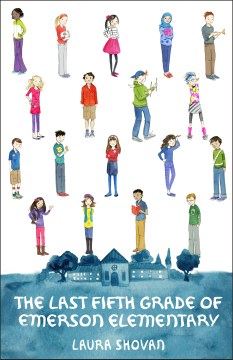
Today we bring you insights from a pair of guest bloggers, Laura Shovan, the author of a new middle-grade novel in verse, The Last Fifth Grade of Emerson Elementary, and Patricia Bejarano Fisher, the translator who helped bring authenticity to one of the novel’s Spanish-speaking characters. In the future, we hope to present more of the angles involved in publishing translated or bilingual books. 


Last Fifth Grade cover (2)By Laura Shovan and Patricia Bejarano Fisher
Laura introduces the story: My new middle grade novel in verse, The Last Fifth Grade of Emerson Elementary, is set in where Pat and I both live — Howard County, Maryland, right between Washington, DC and Baltimore. People, including immigrants to the U.S., are drawn here by community resources and the strong reputation of public schools. Often, when I’m guest teaching at a local school, there will be several ESL students, speaking a variety of home languages, in each class.

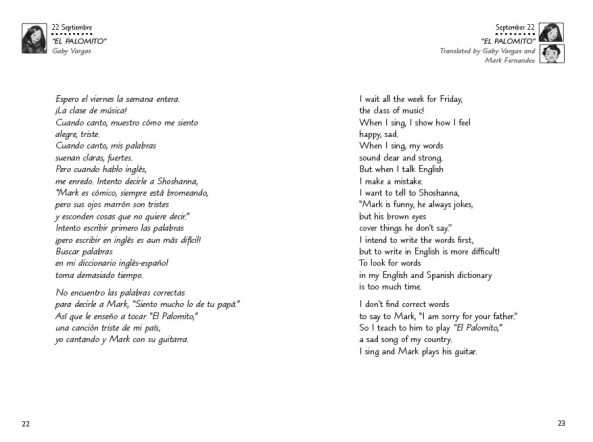
Two of the eighteen students in Ms. Hill’s fictional fifth grade are Spanish speakers. One of those characters, Gaby Vargas, writes her poems in Spanish and then works with her friend to translate them into English. In order to get Gaby’s voice right, I asked Pat to translate the character’s poems from my English into Spanish, but that wasn’t the end of the collaboration.

Laura to Pat: One of my favorite parts of this process was when we collaborated on back-translating Gaby’s poems from Spanish to English. Could you describe what that was like?

Pat: I also enjoyed this part of the translation process. I had your original English poems. I was to be the voice of Gaby, a young native speaker of Spanish who is beginning to develop her English language skills. She has learned quite a bit but is not yet able to express herself fully in English. She still has to look up words in the dictionary, which she finds frustrating.

My first task was to translate the poems into Spanish, taking care to not make it my own Spanish. It had to be the Spanish of an elementary school girl who is learning English. Gaby’s Spanish is clear and direct. It is also colloquial in places, as it usually is in children that age. The second task was for us to work together from a literal reading of the Spanish poems and translate them back into English. The goal was to introduce a couple of lexical or structural inaccuracies, and unidiomatic phrases here and there that would reflect an intermediate stage of fluency where there is some transfer between the two languages. We took special care to respect the children and to avoid stereotyping them.

Laura: I visited an Emerson Elementary in Albuquerque recently. There was a 4/5th grade bilingual class. When I spoke, children in the audience were translating my English to Spanish for their classmates. And we had a chance to read Gaby’s poems in both languages. That was wonderful. You’re an accomplished poet and translator. How was the experience of working on a children’s novel in verse different from other translation work you’ve done?

Pat: My experience translating Gaby’s poems was new and refreshing, and really a lot of fun. I had finished revising some translations into Spanish I had been working on for some time, so I found the idea of translating a few poems for a book about children very appealing, especially since my youngest grandson had been born a few weeks before.  Children were once again my joy and my focus at that time, so I felt this translation effort would be a special treat for me.

It would also be very different: one of the poetry collections I co-translated tells a personal story of familial love, resentment, and forgiveness; another speaks of the dehumanizing effects of absolute power; yet another recalls vivid memories of war, loss, and hope. All are reflections of adult feelings and experiences turned into beautiful, moving poems.

Gaby’s poems expressed just as much feeling with the clarity and spontaneity with which children communicate. I could just see her struggling to express her thoughts and her feelings in her new language, trying to find the right words and then deciding to use the universal language of music instead. And then, to witness the miracle that only children can perform: becoming a proficient speaker of the new language in a short time and later attaining native proficiency at record speed. Gaby brought memories of my own challenges with English when I first came to the U.S.

Laura: I’d shared Gaby’s poems — in English — with a few Spanish-speakers, but wanted an experienced translator to prepare them for publication. What does a translator bring to a poem that a native speaker might not?

Pat: To me, reading and translation go hand in hand, and the better one understands a text through a close reading, the better the chances are of producing a translation that reflects the intent and the meaning of the original. By “understanding” a text, whether prose or poem, I mean “getting it” at the textual level in its own social and cultural context, as well as at the interpreting level in the context of both the source and the target cultures. In my experience, fluency in a language is necessary but not sufficient to achieve a full understanding of all the linguistic, social, cultural, figurative and other elements present in a text [and then] transfer them effectively into the receiving language. In poetry, the sounds, the rhythms, the syllable counts, the rhymes, the images have to be felt and understood in the original and reflected in the translation.

Pat to Laura: The 18 children who appear in your book come from different backgrounds and have different life stories. How did you choose your characters and how did you develop their relationships? I’m interested in how kids choose their friends and role models.

Laura: My first draft had 30 students and 30 poems, one in each voice. As the book grew from a collection of poems into a novel, some characters were cut and others grew in depth. I made a seating chart for them, so I could see what their classroom relationships might be like. It’s a mystery, sometimes, how children choose their friends. In the development of the book, some friendships didn’t appear until very late in the process. Gaby’s relationship with Mark Fernandez is an example of that. The two of them connect through language.

Fifth-Grade spread

The Last Fifth Grade is set in Columbia, Maryland, where you live and where I often teach. How do you think the book reflects our community in particular and today’s schools in general?

Pat: The children in the book are like the kids I see walking to school in the morning or waiting at the bus stop here in Columbia. We take pride in being an inclusive community where diversity is respected and welcome. Access to education for all has always been a guiding principle. My daughters went to school here some years ago. The events in the life of the school and of the children in The Last Fifth Grade could have taken place in any elementary school in Columbia or Howard County. I really felt I knew Gaby, Edgar Lee Jones, George Furst, Norah Hassan, and their classmates. I felt sad about their school… Any such loss is hard; it feels like someone is taking way the heart of the community.

——————

PatPatricia Bejarano Fisher was born in Bogotá, Colombia. A language and linguistics graduate of the University of Pittsburgh and S.U.N.Y. at Buffalo, she has lived in Columbia, MD for 33 years. She has worked as a Spanish teacher, translator and language-learning materials developer for many years but she now focuses exclusively on poetry translation. Her work includes South Pole/Polo Sur (Settlement House, 2012) and From the Diary of Mme Mao (publisher TBD), both poem collections by Venezuelan poet Maria Teresa Ogliastri, which she co-translated with Yvette Neisser Moreno. She’s an avid reader of Spanish, French, Italian, and Portuguese literatures and of all languages in translation. More poems translated by Pat can be found here.

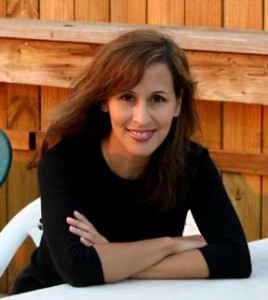
DSC_5914Laura Shovan is former editor of Little Patuxent Review and editor of two poetry anthologies. Her chapbook, Mountain, Log, Salt and Stone, won the inaugural Harriss Poetry Prize. Laura works with children as a poet-in-the-schools and was Howard County Poetry and Literary Society’s 2015-2016 Writer in Residence. The Last Fifth Grade of Emerson Elementary is her debut novel-in-verse for children (Wendy Lamb Books/Random House). Learn more at Laura’s website.


Celebrate Earth Day By Reading Kid Lit Books As An Ecocritic

By Marianne Snow Campbell

Earth Day is here again!  It’s a time to honor the natural world that surrounds us, consider how we can take better care of the environment, and take action keep our planet healthy and beautiful. In schools, many teachers and students will join together to read and discuss books with environmentalist lessons – The Lorax, The Great Kapok Tree, a variety of picture books about recycling and picking up litter. Last year, Lila Quintero Weaver shared a beautiful post about books celebrating “Latin@ Heroes of the Planet” and other “Earth Day-friendly books with Latin@ connections.” I love the strong messages that these texts carry and believe that they should play a prominent role in educating children about conservation and ecology.

However, reading literature with overt lessons about the earth isn’t the only method for learning about environmentalism. There’s another, somewhat subtler, approach – ecocriticism. Ecocriticism is a form of literary analysis that investigates how literature depicts nature and, ideally, inspires readers to take action to keep the natural environment healthy. But it’s not just for literature scholars – kids of all ages can be ecocritics, too!

To start an ecocritical analysis, choose a book that depicts nature but isn’t about ecological themes like conservation, recycling, and saving the earth.  For example, I like to use Maya Christina González’s Call Me Tree / Llámame árbol, a poetic, bilingual picture book that celebrates the strength and beauty of trees, as well as humans’ connections with these majestic plants.

Throughout the book, the narrator, a child, embodies nature by pretending to be a tree. They begin as a seed nestled in the earth. Slowly, they sprout from the earth and stretch toward the sky, just like a young sapling. As the child/tree grows, they are joined by other children, who also identify as diverse, strong, leafy forest residents:

“Trees!

More and more trees

Trees and trees

Just like me!


¡Árboles!

Más y más árboles

Árboles y árboles

¡Iguales a mí!”

To explore a book like Call Me Tree / Llámame árbol with an ecocritical lens, young readers can ponder questions (adapted from Dobie, 2011) that facilitate thinking about nature and readers’ relationship with the earth:

  • How do the author and illustrator depict nature in this text?
  • What is/are the relationship/s between humans and nature in this text?
  • What does this text tell you about nature?
  • Do you agree with this text’s representation of nature?  Why or why not?
  • Does this text make you want to do something to help the environment?  Why or why not? What do you want to do, and how can you accomplish these goals?

Let’s apply those questions to Call Me Tree / Llámame árbol. When I consider these questions in relation to this book, I’m filled with awe and gratitude for the trees that surround me. I love how González depicts trees and humans as equals. In both the text and the illustrations, she presents children and trees as one and the same; people are trees, and trees are people. Nature isn’t a commodity for us to consume. This representation makes me rethink my responsibility for the environment and how I should treat nature as I want to be treated. Trees care for me by cleaning the air, providing shade, and sharing their beauty, so shouldn’t I do more to care for trees? Even though Call Me Tree isn’t about conservation, it certainly makes me want to do my part to respect and sustain the natural world.

Doing ecocriticism can benefit kids in a variety of ways. By analyzing and evaluating representations of nature in texts, they’ll flex their critical thinking muscles. Moreover, ecocriticism’s blending of environmental science and literary studies can help science lovers get more into literature (and vice versa). Also, readers who enjoy expressing themselves creatively can take ecocritical analysis a step further by creating their own nature poetry, art, music, and drama.

 The best news? There are tons of literature by Latinx and Latin American authors that kids can explore with an ecocritical lens. Below are some great books for readers of all ages that feature various types of nature motifs. (Special thanks to Lila Quintero Weaver, Sonia Alejandra Rodriguez, Cindy L. Rodriguez, and Cecilia Cackley for their rich contributions to this list of suggested books!)

Picture Books

It’s Our Garden (George Ancona)

Kids get their hands dirty and grow food for their community in this nonfiction tale about a school garden.


Prietita and the Ghost Woman / PRIETITA Y LA LLORONA
(Gloria Anzaldúa, Maya Christina Gonzalez)

Prietita wanders the South Texas woods seeking a medicinal plant for her ailing mother.  What will happen when she meets la Llorona?

Domitila y el mar (Nina Basich, Teresa Martínez)

After receiving a postcard from her uncle, who’s vacationing at the beach, Domitila can’t get the sea out of her head. (Text in Spanish.)

Domitila

I Know the River Loves Me / Yo sé que el río me ama (Maya Christina Gonzalez)

Can a child and a river be best friends?  Of course!

Talking with Mother Earth / Hablando con Madre Tierra (Jorge Argueta, Lucía Angela Pérez)

In this sumptuous collection of poetry, Argueta explores his childhood connections with the earth.

Chavela and the Magic Bubble (Monica Brown, Magaly Morales)

Magical bubble gum takes Chavela back in time to visit a grove of sapodilla trees and the people who harvest their chicle in Playa del Carmen, Mexico.

Middle Grades Books

Silver People: VOICES OF THE PANAMA CANAL (Margarita Engle)

This collection of poems about the construction of the Panama Canal is narrated not only by humans, but also by animals and plants.

The Dreamer (Pam Muñoz Ryan)

As an adult, Chilean poet Pablo Neruda often incorporated nature into his work.  This account follows the young Neruda (born Ricardo Eliécer Neftalí Reyes Basoalto) and his encounters with the natural world.

Esperanza Rising (Pam Muñoz Ryan)

Forced off of their wealthy ranch in Mexico, Esperanza and her mother immigrate to California to work the land.

Where the Flame Trees Bloom (Alma Flor Ada)

Natural imagery permeates Alma Flor Ada’s stories of her childhood in Cuba.

My Ocean: A Novel of Cuba (Enrique Pérez Díaz)

Struggling to understand why friends and family are leaving Cuba for the United States, Enrique seeks solace and comfort in the ocean.

3364012

Young Adult Books

Under the Mesquite (Guadalupe García McCall)

Wrestling with her mother’s cancer diagnosis and the responsibility of caring for her siblings, Lupita seeks refuge and resilience in the shade of a tree.

The Vicious Deep (Zoraida Córdova)

Nature meets fantasy!  Tristan has always loved the water – a love that begins to make sense when he discovers that he’s heir to an underwater kingdom.

Out of Darkness (Ashley Hope Pérez)

The East Texas woods are a place of safety for Naomi and Wash as they cope with violence and racism.

.

.

MarianneMarianne Snow Campbell is a doctoral student at The University of Georgia, where she researches nonfiction children’s books about Latin@ and Latin American topics and teaches an undergraduate course on children’s literature. Before graduate school, she taught pre-K and Kindergarten in Texas, her home state. She misses teaching, loves critters, and can also be found on Twitter and Facebook.


Book Review: Nothing Up My Sleeve by Diana López


Reviewed by Marianne Snow Campbell

DESCRIPTION FROM THE PUBLISHER: Sixth graders Dominic, Loop, and Z stumble upon a new magic shop in town and can’t wait to spend their summer mastering cool tricks to gain access to the Vault, a key holders-only back room bound to hold all kinds of secrets. And once they get in, they set their sights even higher: a huge competition at the end of the summer. They work on their card tricks, sleights, and vanishing acts, trying to come up with the most awesome routines possible….Problem is, the trip is expensive, and it’s money that each guy’s family just doesn’t have.
To make things worse, the shop-owners’ daughter, Ariel (who just so happens to be last year’s competition winner), will do anything to make sure the boys don’t come out on top. Even pit them against one another. Will they make it to the competition? And if so, at what cost?

Diana López, author of Confetti Girl and Ask My Mood Ring How I Feel, offers a story that’s just the right mix of heart, high jinks, and a bit of magic.

MY TWO CENTS: There’s a reason that magic trick kits sell so well at toy stores. Lots of kids love the thrill of stage magic – practicing illusions until they’re just right, creating mystery with visual puzzles, and tricking others with sleights of hand. Performing magic can help build kids’ confidence and give them a sense of agency when they might otherwise feel powerless. That’s certainly the case for Dominic, Loop, and Z, three friends who venture into the world of illusion at Conjuring Cats, the new magic store in Victoria, Texas. Each of the boys is facing a quandary that makes him feel powerless. Dominic’s parents are divorced and refuse to speak to each other, which frustrates him to no end. Meanwhile, Loop just found out that his father is actually his stepfather, and Z, the youngest child in a large family, always feels invisible. Their new magical hobby, however, leads to a summer of discovery that none of the friends expect.

One of the most valuable lessons I took away from Nothing Up My Sleeve is that hobbies are important. Once Dominic, Loop, and Z get involved in magic, they blossom. Sure, they encounter struggles along the way – jealousy, in-fighting, money troubles, family drama – but these difficulties only cause the boys to grow cognitively, socially, and emotionally. The teacher in me loves how practicing magic stimulates their critical thinking skills as they write patter (“what a magician says while performing a trick,” p. 134) for their routines and synthesize new tricks by putting their own personal spins on classic illusions. Really smart stuff! As the friends puzzle through magic, you can see how clever each boy is in his own way. This is the beauty of hobbies – kids expressing their intelligence and creativity through fun, personally meaningful activities.

OK, enough with the nerdy teacher musings. Another quality that I love about Diana López’s books is their attention to character development, and Nothing Up My Sleeve doesn’t disappoint. With magic as the backdrop, she conjures three well-rounded, realistic characters who face struggles and earn triumphs just like any real kid might. López creates a strong balance between the boys’ magical endeavors and their personal and home lives that gives this book the perfect blend of excitement and real world relevance.

Furthermore, I have to stress how much it means to me that López sets this book (and her other books) in South Texas. Catching references to places I know – Victoria, Refugio, Corpus Christi, and Houston – made me smile. Like me, a lot of young readers appreciate it when stories are set near their homes. A familiar setting can create a comfortable feeling, which, in turn, can make a book even more personally meaningful and engaging. With so many books, movies, and TV shows set in well known locales like New York and Los Angeles, it’s refreshing to find home in the pages of a book. Thank you, Ms. López for an enjoyable, relatable read!

TEACHING TIPS: As I read through Nothing Up My Sleeve, I couldn’t help thinking what a wonderful summer reading book it would be. Dominic, Loop, and Z’s adventures take place during the summer, and I can easily imagine kids soaking up this book on languid afternoons in June, July, and August. If you teach upper elementary or middle grades, consider putting it on your summer reading list.

Nothing Up My Sleeve is also an excellent book for classroom use. López fills her writing with various literary elements, which makes the book a solid model for student writing. Two particular elements that she focuses on in this book are metaphor – drawing comparisons between magic tricks and problems the boys face – and alternate perspectives. Each chapter assumes a different point, making the story richer and more complex. Unpacking these literary devices with students and encouraging them to incorporate the devices into their own pieces can really help them hone their creative writing skills.

Photo credit: Todd Yates

Photo credit: Todd Yates

ABOUT THE AUTHOR: A former middle school teacher, Diana López has written several books for children, young adults, and adults, including Confetti Girl, Ask My Mood Ring How I Feel, Choke, and Sofia’s Saints. Her writing has also been featured in the anthologies Hecho en Tejas and You Don’t Have a Clue: Latino Mystery Stories for Teens. In 2004, she received a writing fellowship from the Texas Commission for the Arts and the Alfredo Cisneros del Moral Foundation, and Emporia State University honored Confetti Girl with the William Allen White Award in 2012. She teaches literature and creative writing at the University of Houston—Victoria and serves as managing director for Centro Victoria, an organization that celebrates Mexican-American literature and culture. To learn more about her work, you can visit her website or check out her Twitter.


MarianneMarianne Snow Campbell is a doctoral student at The University of Georgia, where she researches nonfiction children’s books about Latin@ and Latin American topics and teaches an undergraduate course on children’s literature. Before graduate school, she taught pre-K and Kindergarten in Texas, her home state. She misses teaching, loves critters, and can also be found on Twitter and Facebook.

Book Review: Allie, First At Last by Angela Cervantes


Allie, First At Last (1)Reviewed by Marianne Snow Campbell

FROM ANGELA CERVANTES’S WEBSITE: Allie Velasco wants to be a trailblazer. A trendsetter. A winner. No better feeling exists in the world than stepping to the top of a winner’s podium and hoisting a trophy high in the air. At least, that’s what Allie thinks…. she’s never actually won anything before. Everyone in her family is special in some way—her younger sister is a rising TV star; her brother is a soccer prodigy; her great-grandfather is a Congressional Medal of Honor winner. With a family like this, Allie knows she has to make her mark or risk being left behind.  She’s determined to add a shiny medal, blue ribbon, or beautiful trophy to her family’s award shelf. When a prestigious school contest is announced, Allie has the perfect opportunity to take first —at last. There’s just one small snag… her biggest competition is also her ex–best friend, Sara. Can Allie take top prize and win back a friend — or is she destined to lose it all?

MY TWO CENTS: Fifth grade can be a tough year – it certainly was for me.  As kids approach and enter adolescence, many begin to grapple with who they are and who they want to be. Meanwhile, they may fall out with longtime friends who are going through the same transitions. While experiencing these growing pains and periods of uncertainty, kids can find comfort in books. Reading about characters who are undergoing the same journeys and struggles can help young readers see that they’re not alone – it’s normal to feel out of place and unsure of oneself.

Allie Velasco is a fifth-grader trying her best to discover her identity and make her mark on the world around her. For Allie, that means being the best at something – not that she’s sure what that something is. While her siblings excel at acting, soccer, and community service, her mother has been voted Best News Anchor of the Year, and her great-grandfather is a war hero, Allie is keenly seeking out her niche and putting a lot of pressure on herself to “succeed.”

Frankly, I wish Allie, First at Last had existed when I was in fifth grade. Although it’s been a couple of decades since I experienced my own tween tribulations, it was almost therapeutic to revisit that stage of my life through Allie. And I’m certain there are plenty of young readers out there today who will relate to her as well. This book is sure to appeal to kids who are “finding themselves,” having friend problems, or feeling eclipsed by siblings.

But don’t go thinking that this book is all sadness and doubt! Angela Cervantes fills the pages with humor that’s sharp with hints of snark and sarcasm, but never mean. For example, Allie and her best friend write a song about her cat called “It’s Not Easy Being Fluffy.” I approve. Also, although Allie faces challenges and insecurities, she still demonstrates strength and self confidence by assertively confronting rude kids in her class, nurturing a loving relationship with her sister and bisabuelo, and demonstrating a deep, natural appreciation for her Mexican-American roots. A great role model indeed.

TEACHING TIPS AND RESOURCES:  Allie, First at Last would be a perfect choice for a middle-grade classroom book club. Teachers can provide students with a list of books (including this one), and students can then choose which book they’d like to read, form small groups with classmates who chose the same book, enjoy, and discuss. With its highly relevant themes and humor, Allie is certain to be a hit, and kids can make it their own as they connect it to their lives and respond collaboratively. Educators should be sure to stock this volume in their classroom libraries and media centers for self-selected reading time. There’s nothing like a fun, engrossing book for motivating kids to read!

Also, be sure to check out Angela Cervantes’s teacher resources, available on her website. She’s created printer-friendly activity sheets with writing prompts for both Allie, First at Last and her previous novel, Gaby, Lost and Found.  The prompts present great ideas for journaling, in-class discussions, and even research projects.  Enjoy!

Angela CervantesABOUT THE AUTHOR: Angela was born and raised in Kansas. Most of her childhood was spent in Topeka, Kansas living in the Mexican-American community of Oakland. Her family also spent a lot of time in El Dorado and Wichita visiting a slew of aunts, uncles and cousins on weekends.

Angela graduated from the University of Kansas (Go Jayhawks!) with a degree in English. After KU, she moved to Brownsville, Texas. In Brownsville, Angela was introduced to the music of Selena, ceviche, and learned to two-step. After Brownsville, Angela moved to Guadalajara, Mexico, where for two years she taught High School English and literature. In 2003, Angela returned to Kansas City, completed an MBA, co-founded Las Poetas, an all-female poetry group, and began working at an international children’s organization.

In 2005, Angela’s short story, “Pork Chop Sandwiches” was published in Chicken Soup for the Latino Soul. In 2007, she won third place for Creative Nonfiction in the Missouri Review’s audio competition for her story “House of Women” and Kansas City Voices’ Best of Prose Award (Whispering Prairie Press) for her short story, “Ten Hail Marys”. In 2008, she was recognized as one of Kansas City’s Emerging Writers by the Kansas City Star Magazine. In 2014, she was named one of the Top Ten New Latino Authors to Watch by LatinoStories.Com.

Angela’s first novel, Gaby, Lost and Found [Scholastic Press; 2013], won Best Youth Chapter Fiction Book in the International Latino Book Awards. Angela’s second middle-grade novel, Allie, First At Last, will be released Spring 2016. See FAQs about the author.

WE ARE GIVING AWAY A HARDCOVER OF ALLIE, FIRST AT LAST BY ANGELA CERVANTES, WHICH OFFICIALLY RELEASES 3/29/16.

CLICK HERE TO LINK TO THE RAFFLECOPTER GIVEAWAY!


MarianneMarianne Snow Campbell is a doctoral student at The University of Georgia, where she researches nonfiction children’s books about Latin@ and Latin American topics and teaches an undergraduate course on children’s literature. Before graduate school, she taught pre-K and Kindergarten in Texas, her home state. She misses teaching, loves critters, and can also be found on Twitter and Facebook.