Latin@s in Kid Lit at the Library: Interview with Crystal Brunelle

By Sujei Lugo

The Latin@s in Kid Lit at the Library series focuses on interviews with children’s librarians, youth services librarians, and school librarians, where they share their experiences, knowledge, and challenges using Latino children’s literature in their libraries. In this second entry of this series, I interview Crystal Brunelle.

Crystal is a library media specialist from Wisconsin. In times when schools and their libraries are impacted by budget cuts, closings, and lack of institutional and government support, there are still school librarians and media specialists striving to support their students, teachers and community.

crystalinterview
Crystal Brunelle
Library Media Specialist, Northern Hills Elementary School, Onalaska, Wisconsin
Blogger for richincolor.com (co-founder) and readingtl.blogspot.com (personal blog)

Tell us a little bit about yourself, your identity, and your library.
I am a white mid-westerner with German ancestors. My family moved many times, so my childhood years were spent in various cities in both Texas and California. I was an elementary school teacher and a certified ESL teacher for eleven years before coming to live in the Midwest.

I started working in libraries when we moved to Wisconsin and have loved making that transition. When we came here, it was clear that some of my students had a rather limited view of the world and though our library had some diverse titles, there weren’t nearly enough. I want our students to have plenty of books available so they can see other ways of living, and I want to make sure that all of our students have books that are mirrors reflecting their lives. 12-15% of our student population is Hmong, so the first author visit was with a woman who had written a book featuring a Hmong family and was written in English but also had Hmong text alongside. As I prepared the classes for her visit, what surprised me was that the word bilingual was virtually unknown for most of my students. That’s when I also started acquiring more bilingual materials in a variety of languages. I shared about that experience in more detail at the Nerdybookclub blog.

What process does your library take to select and acquire Latino children’s books for the collection? Do you have any input in this process?
As the Library Media Specialist, I have the responsibility of choosing all of the materials in the collection. Before Latin@s in Kid Lit came on the scene, I relied on the Pura Belpré Award, The Tomás Rivera Award, and The Américas Award for titles. More recently, I’ve been participating in the Latin@s in Kid Lit Reading Challenge which has provided me with a lot of more book titles. I’ve also had the opportunity to review several books published by Piñata Books for Children, a division of Arte Público Press.

What type of children and youth programming does your library offer using Latino children’s literature? How frequently?
I focus on Latino children’s literature during Hispanic American Heritage Month and in the past two years, I have also added El Día de los Niños to our activities. Beyond these two major events, I have many lessons that center around Latino works. A few examples are our first grade author study of Yuyi Morales, our second grade biography lesson using the book Tito Puente, Mambo King/Rey Del Mambo by Monica Brown and Rafael López, and a poetry lesson in fifth grade that includes poetry from Francisco X. Alarcón. I generally try to infuse Latino lit throughout many lessons and activities, though, so we see it all year long. An example of this is when we have a lesson about giving thanks and I share Pat Mora’s Gracias/Thanks along with Giving Thanks: A Native American Good Morning Message and Thanking the Moon: Celebrating the Mid-Autumn Moon Festival.

In terms of promoting events and community outreach, what does your library do?
This is an area that I am working on and have begun to make some progress. I oversee the fifth grade students as they create video announcements for the school. They’re posted on our school YouTube channel for parents and the community to view. This past summer was exciting because I asked for and received funding to have the library open during the summer. I only had two hours every other week, but it meant that students in walking distance (we are a neighborhood school) could come get library materials all summer. It wasn’t as well attended as I had hoped, but it was a start and something that I will publicize more in the future.

What is the reaction of kids, teens, and families regarding Latino children’s books and programming? And the reaction of your co-workers and library staff?
I have had very positive reactions to the inclusion of more Latino children’s materials. One of the families that came in during the summer library times (they speak Spanish at home) checked out a pile of books and were happy to even find a wonderful bilingual board book, Global Babies. The mother said she was happy to have that one (Global Babies) because that way the father could read to the baby in Spanish.

I know our English Language teacher has also been very happy to have the materials available. We don’t have many students with Spanish as their first language, but it helps so much with the few that are here and especially when we have a newcomer in the district. I love seeing the eyes of my Latino students light up when they hear or see Latino materials being featured in class. In addition, students who only know English enjoy experiencing other languages. They also seem to like seeing me working a little harder when I read aloud a book that includes Spanish text.

Any challenges regarding the acquisition of Latino children’s books or your programming? What would you like to do in terms of programming that you haven’t been able to?
There is nothing preventing me from buying more except budget limitations. I would like to expand our El Día de los Niños celebration beyond the school day with a family event. We’re going through a major building renovation so that isn’t a reasonable task for this coming spring due to space constraints, but it is something I will strive for in the future.

Do you address issues of prejudice and oppression in your library through and in children’s books?
Yes, this is something I address specifically in the fourth and fifth grade classes, but at a more subtle level in the younger grades. In line with the common core standards, I’m working to help students learn to read critically and to ask questions such as: who is telling the story, what is their perspective, is there a voice or perspective that is missing, and do we see evidence of bias or stereotypes? I could just tell them which books have issues, but I won’t always be with them and I want them to be able to spot problems on their own.

Any advice for other librarians/educators who would like to use and incorporate Latino children’s literature into their programming?
There is a lot of fantastic Latino children’s literature out there (see this SLJ post about that) and it isn’t just for Latino children. Even if your demographic doesn’t include many Latino patrons/students, these books can be a wonderful addition to your library. We have to move away from the idea that Latino literature is only created for Latinos. Latino literature can and should be present in book displays throughout the year and featured in story times or lessons across all kinds of topics. We have a small number of Latino students at our school, but I don’t just purchase Latino children’s materials for them – they’re beneficial to all staff and students.

Which are the most popular Latino children’s books at your library?
The most popular Latino books in my library are Niño Wrestles the World, Just a Minute, Gracias, Mi Familia Calaca, Dalia’s Wondrous Hair, Dora the Explorer books, Maximillian & the Mystery of the Guardian Angel, and in non-fiction, the series Superstars of Soccer: Mexico.

15953630  1660305  7123496

16057383  18654384  11538645

And finally, which Latino children’s books do you recommend?
To increase the amount of books I can recommend, I’m listing authors. If I only listed my recommendations from Yuyi Morales, the list would already be lengthy.

Picture Books by: Francisco X. Alarcón (poetry), George Ancona (non-fiction), Monica Brown, Laura Lacámara, Yuyi Morales, Pat Mora, Gary Soto, and Duncan Tonatiuh

Middle Grade by: Alma Flor Ada, Julia Álvarez, Margarita Engle, Jack Gantos, Xavier Garza, Meg Medina

Young Adult by: Patrick Flores-Scott, Sonia Manzano, Guadalupe Garcia McCall, Meg Medina, Benjamin Alire Sáenz, Alex Sánchez, and Francisco X. Stork.
Enhancing Children’s ABCs and Vocabulary Through 9 Alphabet Books

By Sujei Lugo

ABC… We must not forget how important the introduction of the alphabet is to children, from the shape and name of each letter, to their different sounds and functions in the construction of words. The alphabet is one of the first things you see on a classroom wall during thoY para Yacs (ABC de Puerto Rico)se early years of our school life, usually above the chalkboard. The alphabet comes in different sizes, is printed on flash cards, banners, pop-up books, felt books, board books, and even as plastic toys.
The alphabet is so basic that we might think any book can help us teach it to our young ones, but there are some qualities we should be looking for when choosing a good alphabet book. It should present an easily recognizable version of each letter; it should use illustrations and images to increase the understanding of the alphabet; words chosen to represent each letter should enhance children’s vocabulary and literacy skills; and the presentation of the alphabet in the context of a story or theme should contribute to critical thinking and story comprehension. Other issues to keep in mind: If there is a story, is it inclusive and diverse? Is the story easy to comprehend? Is the material suitable for read-alouds or early readers? Are alliteration and rhymes used effectively or are they distracting?

I want to recommend some diverse and useful alphabet books that fulfill the basic needs of this kind of text and give us the opportunity to teach something else. They carry good links between letters and sounds and depict a strong connection between words and images of everyday life and multicultural communities. This list looks at titles that represent Latino or Latin American communities, portray themes relevant to these communities and are written or illustrated by Latinos/as. They are mostly bilingual books (Spanish/English), but I also included English titles that incorporate words in Spanish, and books completely written in Spanish. These books can serve to transmit and recognize our culture, language, and history, as well as our struggles and similarities to other communities. Different communities should see that no matter our differences, the alphabet is something we hold in common. It gives us the power to construct words and to use language as a tool to name, describe, connect, and challenge, and it forms the building blocks of communication.

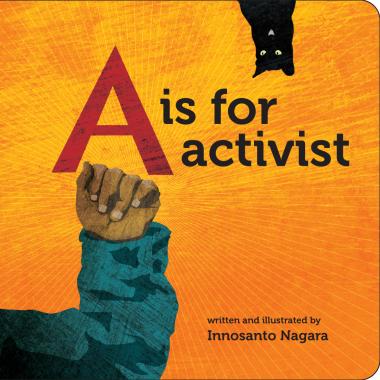
A is for Activist by Innosanto Nagara

A is for Activist

“A is for Activist” to “Z is for Zapatista of course”

This is a vibrant and powerful boardbook that introduces kids to social justice issues. The book includes alliteration, rhymes, and words such as ally, grassroots, indigenous, organize, and youth. Adults should read this book along with children, and provide assistance and context for words that are unfamiliar to them. A highlight in A is for Activist is its imagery of kids from different ethnic and racial backgrounds being active and advocating for their rights and their communities. The book is in English and includes some words in Spanish, but a Spanish edition comes out in October 2014.

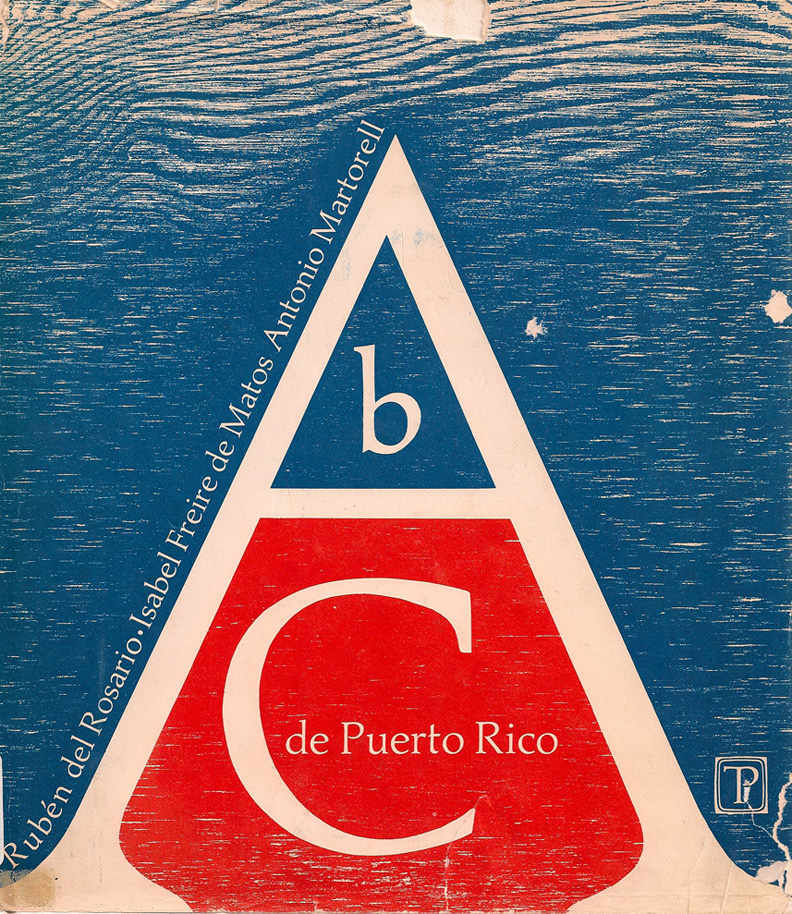
ABC de Puerto Rico by Rubén del Rosario, Isabel Freire de Matos and Antonio Martorell

ABC de Puerto Rico

“Agua, acerola, alcapurria, alelaila, ardilla, atrecho” to “zapatero, zafacón, zigzag, zumbador”

The first published Puerto Rican alphabet book, ABC de Puerto Rico includes Spanish language words and Anglicisms characteristic of Puerto Rican vocabulary and poems celebrating our heritage and culture. Each page is covered with wonderful woodcut illustrations. Children are introduced to words such as alcapurria, boricua, mofongo, ñoco, and vegigante, words that are not traditionally found in alphabet books. This book was banned by the Puerto Rican government in 1968, due to its “anti-American” and “subversive” content and the use of images like the machete and the color red.

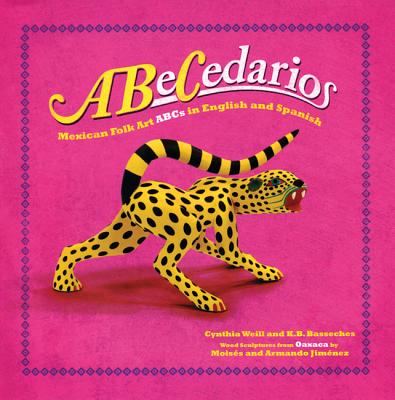
ABeCedarios: Mexican Folk Art ABCs in English and Spanish by Cynthia Weill, K. B. Basseches and Moisés and Armando Jiménez

ABeCedarios

“the Armadillo/el Armadillo” to “the Zedonk/el Zedonk”

This bilingual alphabet book focuses on animal names. Through its minimalistic design, each page includes an animal name that starts with one of the letters of the alphabet. Photographs of colorful wood sculptures accompany each name. The images will inspire children to create their own version of the folk art pieces. The book includes the letters Ch, Ll and Rr, and explains that although they are no longer letters in the Spanish language alphabet, the sounds are still in use.

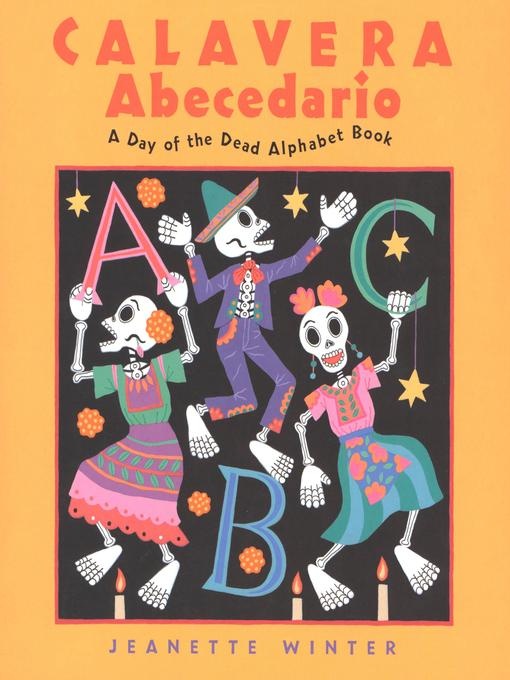
Calavera Abecedario: A Day of the Dead Alphabet Book by Jeanette Winter

Calavera Abecedario

“A – Ángel” to “Z – Zapatero”

It starts off like a regular picture book, with a story (in English) about a Mexican family and how they are preparing to celebrate Día de los Muertos. Then the book shifts to a traditional alphabet book format, which illustrates each letter with a Spanish language word and an image of a skeleton. Each skeleton resembles a character such as a bruja or unicornio, or occupations such as doctor, ilustradora, químico, and xilofonista. The illustrations are wonderful and vibrant in color, resulting in pages that resemble trading cards or lotería cards.

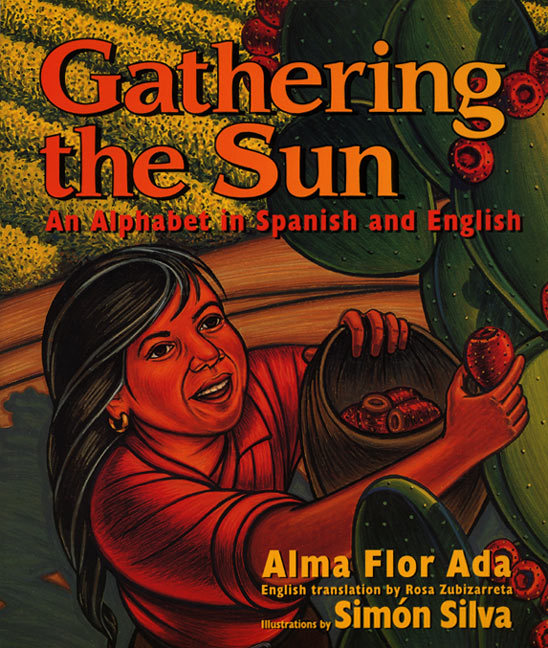
Gathering the Sun: An Alphabet in Spanish and English by Alma Flor Ada and Simón Silva (English translation by Rosa Zubizarreta)

Gathering the Sun

“Árboles” to “Zanahoria”

A 1998 Pura Belpré Illustrator Honor book, Gathering the Sun is an alphabet book that tells a story–the story of migrant workers. While introducing children to the letters of the alphabet, the book talks about ancestors and the pride and honor of cultural heritage. Each word includes a poem in Spanish and an English translation, although the first letter of the translation is not the same as the original Spanish language version. The earthy and rich illustrations are a great complement to the short, rhyming poetry.

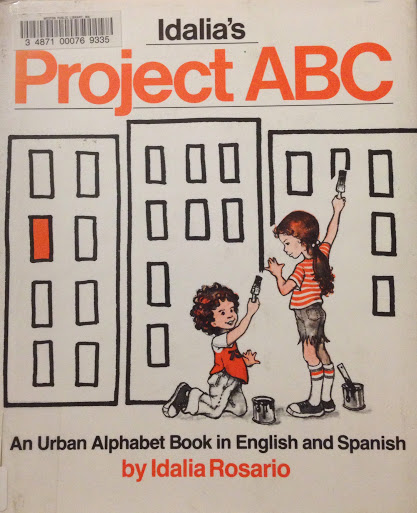
Idalia’s Project ABC: An Urban Alphabet Book in English and Spanish by Idalia Rosario

Idalia's Project ABC

“Aa is for asking. Asking Papo’s mother if he could come out to play” to “Zz is for zoo. Now I’d like to read about the zoo. Me too!”

This bilingual book centers around two friends who uses the alphabet to introduce us to their neighborhood and life in the city. Here is another example of an alphabet book in a context of a story that situates children in active roles in their community. The translation is not literal, and the author uses the opportunity to incorporate colloquial Spanish and anglicisms to reflect the vocabulary used by the characters, as well as issues that affect urban neighborhoods.

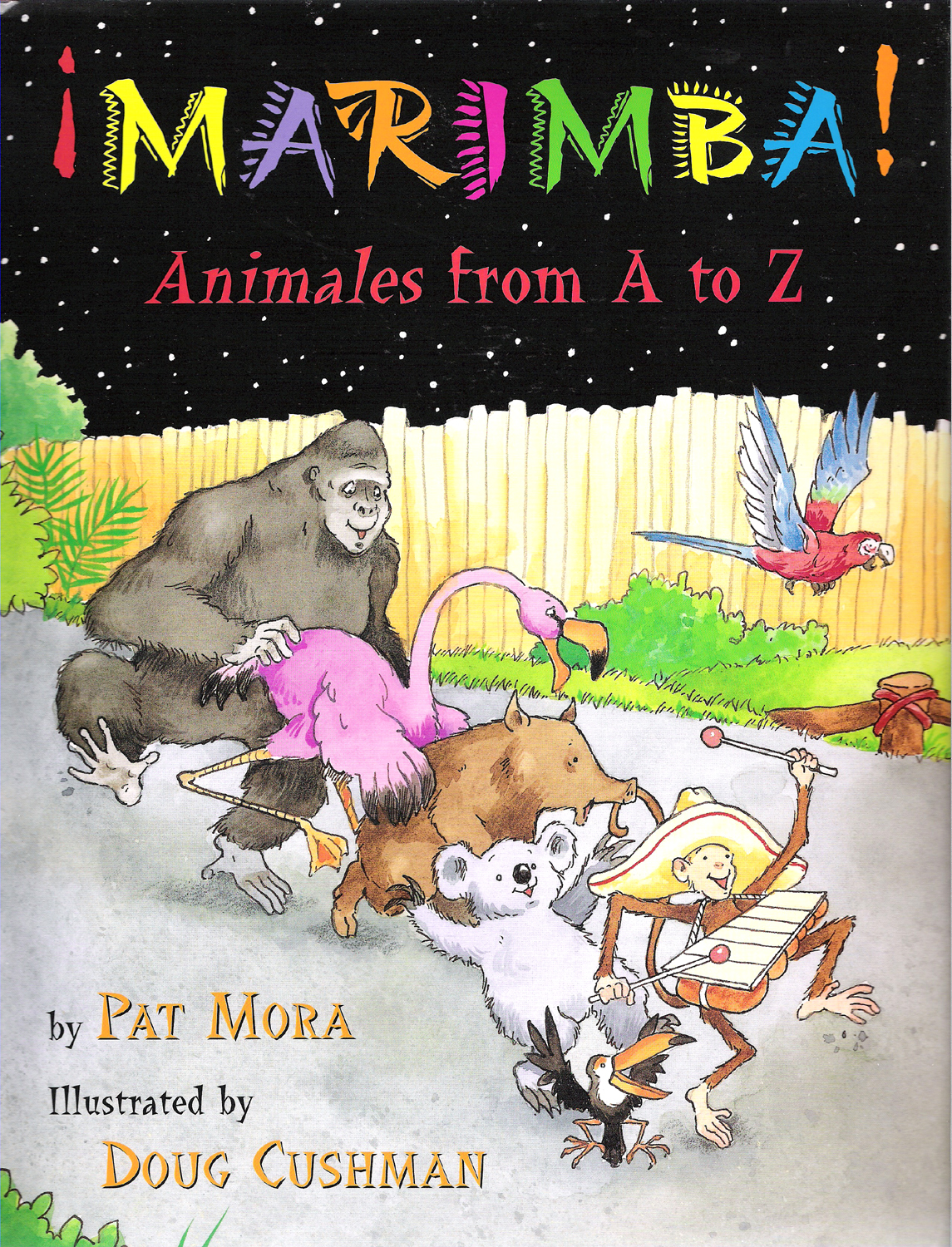
¡Marimba! Animales from A to Z by Pat Mora and Doug Cushman

¡Marimba!

“A Then the ting-tong of the marimba wakes all animales on cue” to “Z zigzagging through zebras and zebúes, zany keepers call, “Yoo-hoooooooo”

This is a playful and colorful alphabet book that sets its story around one night at a zoo. The story is in English and incorporates animal names in Spanish. Through movement and rhythm, the story mentions words related to instruments (marimba), dances (samba, salsa) and food (flan, enchiladas) of Latin American and Afro-Caribbean origin. It includes an author’s note and a translation and pronunciation guide at the end of the book.

P is for Piñata: A Mexico Alphabet by Tony Johnston and John Parra

P is for Piñata

“A is for Adobe” to “Z is for zero”

With the support of John Parra’s wonderful and characteristic illustrations, P is for Piñata is an A to Z journey through Mexico’s history. The book introduces the alphabet via short and rich poems with a historical and socio-cultural context. Extra information about the background of the word chosen to represent letters enriches  their meaning. The layout and colorful images bring this alphabet book to life.

Welcome to My Neighborhood! A Barrio ABC by Quiara Alegría Hudes and Shino Arihara

Welcome to my Neighborhood

“A is for abuela. And abandoned car” to “Z street’s loud with zooming cars.”

This one feels like an updated version of Idalia’s Project ABC alphabet book (it was published in 1981), since we have two friends who are also introducing us to the alphabet while walking around their neighborhood. Children will not only learn new words, but also more about life in a big city, including the sense of community. The book is written in English and incorporates some words in Spanish such as abuela, jíbaros and muralistas. One of the sentences that caught my attention was: “S for all the Spanish words I somehow still forget!”, an issue that some second and third generation Latino/as and Chicano/as will relate to.

ADDENDUM:

Just as I was finishing this list a new and notable alphabet book was announced. I didn’t include it officially on the list because I haven’t had the opportunity to read it. The book comes out in April 2015. It’s called Rad American Women A-Z by Kate Schatz and Miriam Klein Stahl, and it focuses on important women across U.S. America who have contributed to politics, science, activism and popular culture. Preview: D is for Dolores Huerta. Really looking forward to this children’s book!

2014 Reading Challenge: June

Participants in our 2014 Latin@s in Kid Lit Reading Challenge are out of control in the best possible way! Take a look at the variety of books that were read in June, which happens to be the half-way point of the challenge. Now would be a great time to join us or renew your commitment to the challenge, which is to read one book a month that is written by a Latin@ author (any subject) or a book written by anyone that has Latin@ characters, themes, settings, etc. You’re not required to review–only read and enjoy and let us know what you have read! If you do post a review somewhere, we will link it to the book covers below. If you choose not to review, we will link the covers to Goodreads. For July, you may want to consider some of the new winners of the International Latino Book Awards.

6413788 16043528 13436375 9757257 18166935 13482750 8585924  17286899 18048909 15814459 11387515 862908 8811369 6789056  14740980 240298 465967  13610203  2282907  6084038  4080320  15953630  17171578  8455432  16057383  18654377  10351733  18654384  1861037  52390 1139921  18148193  321133  3308853  15791044  11129790  12921673313233169587  688161  1807231  424182  640476  15893258  2429455

The 2014 International Latino Book Awards Winners!!

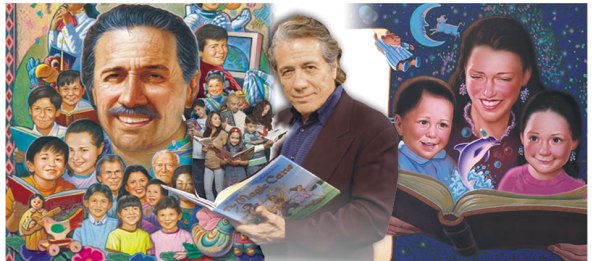
Below are the first place winners of the 16th Annual International Latino Book Awards in the children’s, youth, and young adult categories. If you click on the images, you will be taken to Goodreads, Barnes and Noble, or Amazon for more information. The Awards are produced by Latino Literacy Now, an organization co-founded by Edward James Olmos and Kirk Whisler, and co-presented by Las Comadres para las Americas and Reforma, the National Association to Promote Library and Information Services to Latinos. The Awards were announced this past weekend, on June 28, in Las Vegas as part of the ALA Conference. For the complete list, which includes adult fiction, nonfiction, and second place and honorable mention winners, click hereCONGRATULATIONS TO ALL OF THE WINNERS!!

Best Latino Focused Children’s Picture Book: English

18296043

Best Latino Focused Children’s Book: Spanish or Bilingual

17265250  19483940

Best Children’s Fiction Book: English

Best Children’s Fiction Picture Book: Bilingual

17940785

Best Children’s Fiction Picture Book: Spanish

17802285

Best Children’s Nonfiction Picture Book

13610203

Best Educational Children’s Picture Book: English

15791044

Best Educational Children’s Picture Book: Spanish or Bilingual

Hola! Gracias! Adios!

Most Inspirational Children’s Picture Book: English

18371476

Most Inspirational Children’s Picture Book: Spanish or Bilingual

Pink Firetrucks

Best Youth Latino Focused Chapter Book

10436183  16670129

Best Youth Chapter Fiction Book: English

17166339

Best Youth Chapter Fiction Book: Spanish or Bilingual

Best Youth Chapter Nonfiction Book

Most Inspirational Chapter Book

The Adventures of Chubby Cheeks: The Pro Quest

Best Young Adult Latino Focused Book: English

15769992

Best Young Adult Latino Focused Book: Spanish or Bilingual

Los Pájaros No Tienen Fronteras by Edna Iturralde

Best Young Adult Fiction Book: English

15798660

Best Young Adult Fiction Book: Spanish or Bilingual

La Guarida de las Lechuzas by Antonio Ramos Revillas

Best Young Adult Nonfiction Book

Best Educational Young Adult Book

Most Inspirational Young Adult Book

15769992

Best Book Written by a Youth: English

15020431

Best Book Written by a Youth: Spanish or Bilingual

  Serendipity, Poems About Love in High School

Best Children’s Picture Book Translation: Spanish to English

17465058

Best Children’s Picture Book Translation: English to Spanish

Best Chapter/Young Adult Book Translation: English to Spanish

El Gusano de Tequila

Best First Book: Children’s and Youth


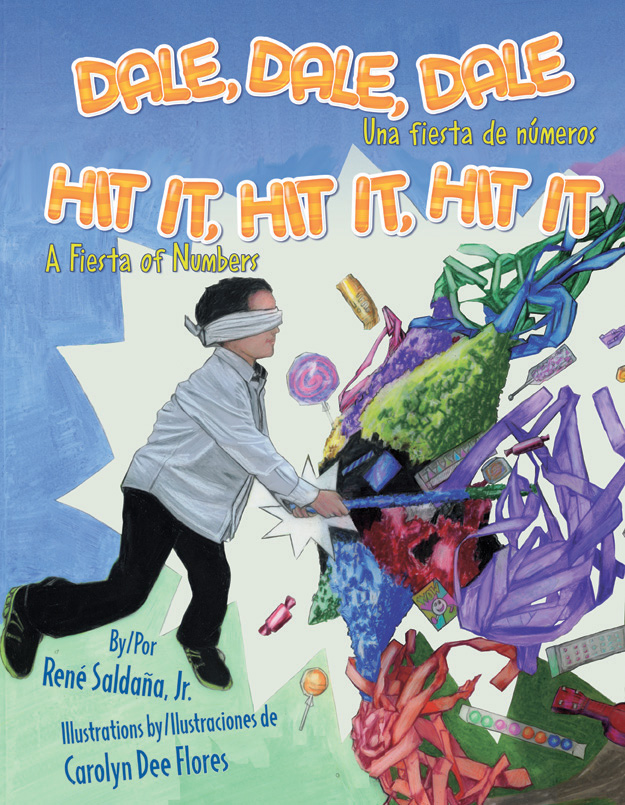
Book Review: Dale, Dale, Dale: Una fiesta de números/Hit it, Hit it, Hit it: A fiesta of numbers by René Saldaña, Jr.

By Sujei Lugo

DaleDaleDaleCoverDESCRIPTION FROM THE BOOK (provided by publisher): In this bilingual counting picture book, a young boy counts to twelve in anticipation of his birthday party: one piñata filled with candy; two hours until the party; three tables set for all the guests, etc.

MY TWO CENTS: Using simple text interwoven with a birthday party theme, René Saldaña, Jr. creates a fun bilingual counting book that makes us want to join the party. Carolyn Dee Flores’s illustrations are filled with photorealism and vibrant colors, supporting Saldaña’s words, and they successfully capture the excitement of children’s birthday parties. In what is definitely a welcomed surprise, Dale, Dale, Dale/ Hit it, Hit it, Hit it not only illustrates an adequate counting story, but decides to tell a good tale about sharing and enjoying a special day with your loved ones.

Our young protagonist is Mateo, a boy who anxiously awaits his birthday party and who uses this opportunity to practice counting throughout his special day. From “one piñata filled with candy” to “twelve children ready to swing at the piñata,” readers can count along with Mateo in Spanish and English. The items that the boy chooses to count include party supplies, colorful toys, lucha libre masks, musical instruments, and his own cousins. The picture book doesn’t limit readers to count only Mateo’s choices, but places other elements that can be counted throughout each page.

This bilingual book provides simple sentences in Spanish and English, which early readers, whether in one language or both, can easily follow. Although the translation of some words is problematic for language learners, for example, niños/guests, it isn’t a limitation to learn and practice words in two different languages.

As a picture book, the photorealistic illustrations can be seen by some as a weakness at the moment to capture children’s attention. But Flores plays well with vibrant colors to encourage young readers to focus on the story and stimulate them, not only to count, but also to identify different colors displayed on every page. The educational content of the book will inspire children to count everything around them and will motivate them to be even more excited to have their own birthday party.

TEACHING TIPS: As early readers or as a read aloud, this bilingual picture book works well for children ages 4-6. Parents, caregivers, and librarians can read in Spanish, English, or both, while encouraging young ones to practice their counting skills and color identification. Children can also point out what they like about birthday parties and collaborate to plan their next one. A song is included in the story, which can be useful if you include a piñata in your party.

Teachers can plan learning activities to combine math and language arts. Students can learn new vocabulary words, numbers, colors, and Spanish-English language meaning. Activities that develop memory and concentration can be done with second graders, including sequence of events and pairing numbers with items mentioned in the book.

AUTHOR & ILLUSTRATOR: René Saldaña, Jr. is a Latino young adult and children’s books writer and Language and Literacy professor at Texas Tech University. He holds a B.A. from Bob Jones University, a M.A. from Clemson University, and a Ph.D. in English and Creative Writing from Georgia State University.

He is the author of several books, including his semi-autobiographical novel The Jumping Tree (2001), Finding Our Way: Stories (2003), the Junior Library Guild selection The Whole Sky Full of Stars (2007),  A Good Long Way (2010), the collection of short stories Dancing with the Devil and Other Tales from Beyond/Bailando con el Diablo y otros cuentos del más allá (2012), and the bilingual Mickey Rangel mystery series.

Carolyn Dee Flores, a former computer analyst, is a writer, illustrator, musician, and composer. She attended the International School of Bangkok, Thailand and Naha, Okinawa, Japan, and Trinity University, where she studied Engineering, Philosophy and Art. Flores began her painting career as a muralist and oil painter, before switching over to children’s books illustration.

She has illustrated several other children’s books, including Canta, Rana, Canta/Sing, Froggie, Sing (2013), Peggy Caravantes’s Daughter of Two Nations (2013).

For more information about Dale, Dale, Dale: Una fiesta de números/Hit it, Hit it, Hit it: A fiesta of numbers (2014), visit your local library or bookstore. Also check out worldcat.org, goodreads.com, indiebound.org, and Arte Público Press.


Book Review: Dalia’s Wondrous Hair/El Cabello Maravilloso de Dalia by Laura Lacámara

By Sujei Lugo

18654384DESCRIPTION FROM THE BOOK: A Cuban girl transforms her long and unruly hair into a garden.

MY TWO CENTS: In this bilingual picture book, with a Spanish translation by Gabriela Baeza Ventura, Laura Lacámara brings us a whimsical Caribbean tale of a young Cuban girl and her luxuriant hair. Lacámara’s colorful illustrations express the joyful spirit of the main character and transport us to the sunny, tropical Caribbean.

The story introduces us to Dalia, a young girl who one day wakes up and finds out that her hair has grown straight up and as tall as a Cuban royal palm tree. Many children would panic with such news, but Dalia can’t hold the excitement of her new wondrous hair. She then embarks on a journey to add to her hair different natural elements of a Caribbean tropical island, such as wild tamarind, coontie plant, and violet leaves. Her purpose is to show her mother the different types of “trees” she can recreate using her hair, ending with a beautiful and unique one.

What stands out in this picture book is Lacámara’s ability to portray through her paintings the endearing relationship between Dalia and her mother and their lives in harmony with nature. The expressions on their faces capture the happiness and warmth of a loving mother and daughter bond. Other characters in the book, Señora Dominguez, Señora Soledad and Soledad’s daughters, all play supporting roles to Dalia’s “hairy” journey and to their connection to the natural world. Through this all-women set of characters, we see a growing sense of community and a sympathetic portrayal of peculiar characters we can encounter in a rural neighborhood.

By situating their home in rural Cuba, the author incorporates the Caribbean’s particular flora and fauna into the story. Through beautiful landscapes that fill the book with a graphical sense of the fresh air and natural environment of this tropical island, the book introduces young readers to different components of the natural world: royal palms, sugar cane fields, wild tamarinds, moonflowers, coontie plants, wild violets, caterpillars, birds, fireflies, ponds, and the ocean. Even the characters’ clothing are filled with flowers and leaf patterns, giving us powerful images that convey a reverence to the natural world.

According to a statement on the first page, the publication of Dalia’s Wondrous Hair/El Cabello Maravilloso de Dalia was funded by a grant from the city of Houston through the Houston Arts Alliance and published by Piñata Books, the children’s literature imprint of Arte Público Press. We should acknowledge their efforts, along with other great publishers,  to continuously provide a space for the publication of Latino/a authors and illustrators.

TEACHING TIPS: This bilingual picture book is recommended for children ages 4-7. It works well as a read aloud and for early readers. At home or at the library, librarians, parents, grandparents, family members or guardians can read with their young ones in English, Spanish or both, while teaching new words and identifying different colors, animals, and plants. The author provides a guide to create your own butterfly garden at home, a fun activity for everyone to enjoy.

Language Arts, Science, and Art teachers can create different activities where students can learn new words, identify adjectives mentioned throughout the story, and learn about different types of plants, trees, and animals. The book includes notes of Cuban natural world references (in English and Spanish) that are part of their stories, with a description. Art teachers can use this book to incorporate science to their classrooms. Students can draw, paint, or use different materials to create their own version of Dalia’s hair, using as reference words learned and natural elements of the story. 

AUTHOR: Laura Lacámara is a Cuban-born children’s books author and illustrator. Lacámara holds a Bachelor of Fine Arts in Drawing and Painting from California State University, Long Beach and studied printmaking at Self Help Graphics in East Los Angeles. Her love for writing and illustrating children’s books grew when she signed up for a children’s book illustration class at Otis College of Art and Design in Los Angeles, California.

She is the author of Floating on Mama’s Song/Flotando en la Canción de Mamá (Junior Library Guild Selection, Fall 2010 & Tejas Star Book Award finalist 2011-12) and illustrator of The Runaway Piggy/El Cochinito Fugitivo (winner of 2012 Tejas Star Book Award) and Alicia’s Fruity Drinks/Las Aguas Frescas de Alicia.

Laura Lacámara is an active member of the Society of Children’s Book Writers and Illustrators (SCBWI) and frequently serves as a presenter at conferences, book festivals, and schools. She currently lives in Southern California.

FOR MORE INFORMATION ABOUT Dalia’s Wondrous Hair/El Cabello Maravilloso de Dalia, visit your local library or bookstore. Also check out worldcat.org, indiebound.orggoodreads.comamazon.com, and barnesandnoble.com.