Celebrating Pura Belpré Winners: Spotlight on Grandma’s Gift by Eric Velasquez

PuraBelpreAward

The Pura Belpré Awards turns 20 this year! The milestone will be marked on Sunday, June 26, from 1:00-3:00 p.m. during the 2016 ALA Annual Conference in Orlando, FL. According to the award’s site, the celebration will feature speeches by the 2016 Pura Belpré award-winning authors and illustrators, book signings, light snacks, and entertainment. The event will also feature a silent auction of original artwork by Belpré award-winning illustrators, sales of the new commemorative book The Pura Belpré Award: Twenty Years of Outstanding Latino Children’s Literature, and a presentation by keynote speaker Carmen Agra Deedy.

Leading up to the event, we will be highlighting the winners of the narrative and illustration awards. Today’s spotlight is on Eric Velasquez, the winner of the 2011 Pura Belpré Illustrator Award for Grandma’s Gift.


Review by Lila Quintero Weaver
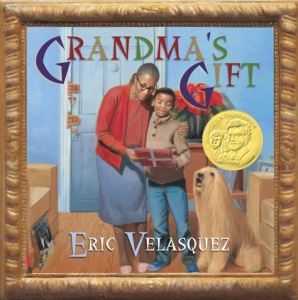
Grandma's GiftDESCRIPTION FROM THE BOOK JACKET: Every year, Eric spends his winter break with his grandmother in El Barrio while his parents are at work. There’s much to do to prepare for Christmas, including buying all the ingredients for Grandma’s famous pasteles, a special Puerto Rican holiday dish.

But Eric also has an assignment for school that requires a trip to the Metropolitan Museum of Art to see a new painting. Grandma and Eric are nervous about leaving El Barrio but are amazed by the museum and what they see in the painting—a familiar face in a work of art by the great painter Diego Velázquez. That day Eric’s world opens wider, and Grandma knows the perfect gift to start him on his new journey.

In this prequel to Grandma’s Records, Eric Velasquez brings readers back to a special day spent with his grandmother that would change his life forever.

MY TWO CENTS: Eric Velasquez is the award-winning illustrator of more than 25 children’s books, including three that he wrote. In Grandma’s Gift and Grandma’s Records, reviewed here, Eric brings to life childhood moments that illuminate the warm and meaningful relationship he enjoyed with his grandmother, a native of Puerto Rico and resident of El Barrio, a predominantly Puerto Rican neighborhood in East Harlem.

In a category where such books are woefully rare, both of Velasquez’s Grandma stories represent positive images of Afro-Latinx children and their families.

Although the story in Grandma’s Gift takes place inside a few square miles of contemporary New York City, it also casts a spotlight on a long-ago historical figure. Juan de Pareja was an enslaved man of African descent who worked in the studio of 17th-century Spanish master Diego Velázquez and who became a painter in his own right. When Eric was a boy, Velázquez’s luminous portrait of de Pareja was acquired by the Metropolitan Museum of Art for a price exceeding $5 million.

Grandma’s Gift contains two additional distinguishing aspects: elements of Puerto Rican culture preserved and passed down by the boy’s grandmother, and contrasting views between two physically proximate but culturally distant worlds, represented by El Barrio and the Metropolitan Museum of Art.
Used by permission from Bloomsbury Publishing, Inc.

Used by permission from Bloomsbury Publishing, Inc.

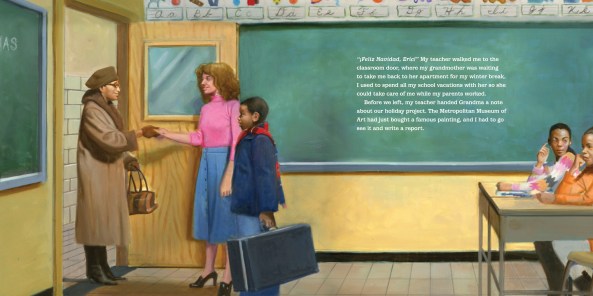
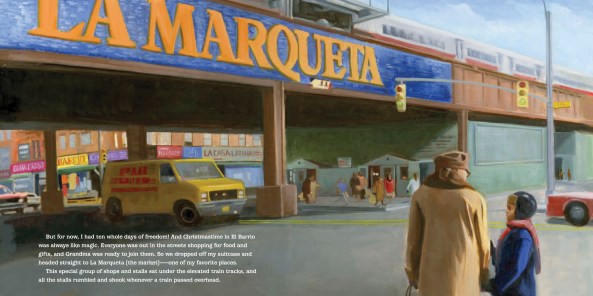
At the story’s beginning, Eric is leaving school for Christmas break, in the company of his grandmother. His school assignment, to be completed during the holidays, is a visit to the Velázquez exhibit. But first, grandmother and grandson go shopping at La Marqueta, once a central feature of El Barrio, composed of bustling shops tucked under a railroad trestle. At La Marqueta, it’s evident that Eric’s grandmother is a respected and beloved member of the community. Not only do butchers and greengrocers call her by title and name—Doña Carmen—they are also familiar with the high standards she expects from every cut of meat and vegetable she purchases. When the shopping is done, Eric and his grandmother return to her apartment, where she launches an elaborate preparation of traditional Puerto Rican holiday dishes. Here, she is clearly in her element, deftly handling each step of the cooking, filling, and rolling of the pasteles, much to the admiration of young Eric.
Used by permission from Bloomsbury Publishing, Inc.

Used by permission from Bloomsbury Publishing, Inc.

Nearly all of Doña Carmen’s dialogue is parenthetically translated into English, immediately behind her Spanish words. While this solution is not particularly elegant, it reflects the challenge that authors and publishers face in including authentic representations of a Spanish-speaking environment within an English text. The story translates greetings in Spanish by shopkeepers, words of wisdom spoken by the grandmother, and details relevant to the story, such as the names of the root vegetables used in making pasteles: calabaz, yautía, plátanos verdes, guineos verdes, papas.

El Barrio is a place that Eric’s grandmother comfortably navigates day after day. Here, her native tongue predominates, and everyone is a shade of brown. But when she and Eric head for the museum, a short bus ride away, they leave behind that familiar environment and land before the facade of the Metropolitan, cloaked in cultural status and imposing architecture. As Eric notes, there’s no one “from Puerto Rico on the streets and no one was speaking in Spanish.” At this point, Eric becomes her guide in this English-speaking world, translating the signs and captions that they encounter, stepping into a role that second- or third-generation immigrant children often play in their elders’ lives.
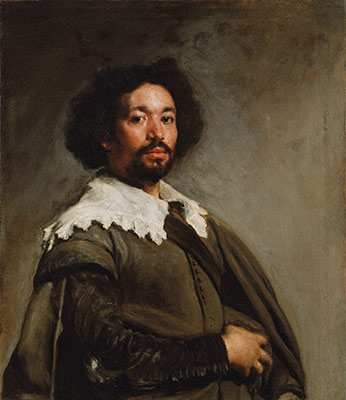
Juan de Pareja, by Diego Velázquez

Juan de Pareja, by Diego Velázquez

The highlight of the story arrives when Eric comes face to face with the portrait of Juan de Pareja, hanging in its gilded frame in one of the august exhibition halls of the museum. As a young person of color in the 1970s, he has never seen a member of his own people elevated to such a status: “He seemed so real—much like someone we might see walking around El Barrio. I couldn’t believe that this was a painting in a museum.” Eric is amazed and proud to learn that Juan de Pareja eventually achieved freedom and became a painter in his own right. For Eric, this discovery is a revelation that sparks artistic fire. On Christmas Eve, after everyone enjoys a traditional holiday dinner, Eric sits under the Christmas tree and opens his grandmother’s gift. It’s a sketchbook and a set of colored pencils. He immediately begins to draw a self-portrait. Through this gift, Eric’s grandmother expresses a clear vote of confidence in her grandson’s dreams, underscoring that he, too—a child of El Barrio, an Afro Latino—can follow in the footsteps of Juan de Pareja.
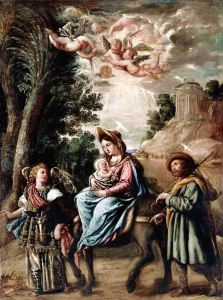
Flight into Egypt, by Juan de Pareja

Flight into Egypt, by Juan de Pareja

This touching, autobiographical story is richly illustrated in Velasquez’s photorealistic style, which authentically depicts settings and brings dimension to each character. Eric imbues his subjects with individually distinct physical characteristics, lending to each an air of nobility. He lovingly paints his grandmother as a lady of dignified bearing and warmth, usually dressed in subdued colors. But he often lavishes this humanizing treatment even on background characters, such as fellow passengers on the train and a nameless guard at the museum. In most of the illustrations, Eric employs a wide and vivid range of hues, but like Diego Velázquez, he sometimes falls back on a deliberately limited palette. When the boy and his grandmother stand before the portrait of Juan de Pareja, the rich browns of the ancient oil painting harmoniously come together with the rich browns of the grandmother’s clothing, as well as the skin tones of all three figures. He puts this deft touch with a monochromatic palette to great effect in the story’s electric moment of revelation, as the child Eric looks on the portrait of Juan de Pareja and grasps a new possibility for his future.
Eric VelasquezABOUT THE AUTHOR-ILLUSTRATOR: Eric Velasquez is an Afro-Puerto Rican illustrator born in Spanish Harlem. He attended the High School of Art and Design, the School of Visual Arts, and the famous Art Students League in New York City. As a children’s book illustrator, Velasquez has collaborated with many writers, receiving a nomination for the 1999 NAACP Image Award in Children’s Literature and the 1999 Coretta Scott King/John Steptoe Award for New Talent for The Piano Man. For more information, and to view a gallery of his beautiful book covers, visit his official website.


ADDITIONAL RESOURCES:

Learn more about El Barrio from the definitive museum that bears the same name.

After decades of decline, La Marqueta is attempting a comeback. (This article is in Spanish.)

Here, a resident of El Barrio relates her memories of La Marqueta during its heyday.

See the official page for the Juan de Pareja portrait on The Met’s website.


Lila Quintero Weaver is the author-illustrator of Darkroom: A Memoir in Black & White. She was born in Buenos Aires, Argentina. Darkroom recounts her family’s immigrant experience in small-town Alabama during the tumultuous 1960s. It is her first major publication. Lila is a graduate of the University of Alabama. She and her husband, Paul, are the parents of three grown children. She can also be found on her own websiteFacebookTwitter and Goodreads.


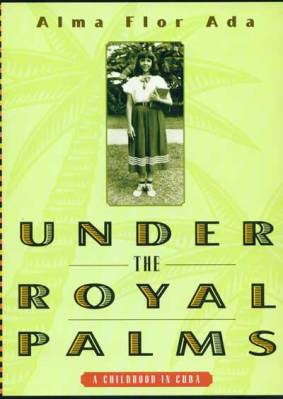
Celebrating Pura Belpré Winners: Spotlight on Under the Royal Palms by Alma Flor Ada

PuraBelpreAward

The Pura Belpré Awards turns 20 this year! The milestone will be marked on Sunday, June 26, from 1:00-3:00 p.m. during the 2016 ALA Annual Conference in Orlando, FL. According to the award’s site, the celebration will feature speeches by the 2016 Pura Belpré award-winning authors and illustrators, book signings, light snacks, and entertainment. The event will also feature a silent auction of original artwork by Belpré award-winning illustrators, sales of the new commemorative book The Pura Belpré Award: Twenty Years of Outstanding Latino Children’s Literature, and a presentation by keynote speaker Carmen Agra Deedy.

Leading up to the event, we will be highlighting the winners of the narrative and illustration awards. Today’s spotlight is on Alma Flor Ada, the winner of the 2000 Pura Belpré Narrative Award for Under the Royal Palms.

Under the Royal Palms coverReview by Lila Quintero Weaver

DESCRIPTION FROM THE PUBLISHER: In this companion volume to Alma Flor Ada’s Where the Flame Trees Bloom, the author offers young readers another inspiring collection of stories and reminiscences drawn from her childhood on the island of Cuba. Through those stories we see how the many events and relationships she enjoyed helped shape who she is today.

Heartwarming, poignant, and often humorous, this collection encourages children to discover the stories in their our own lives — stories that can help inform their own values and celebrate the joys and struggles we all share no matter where or when we grew up.

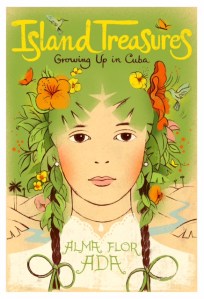
MY TWO CENTSUnder the Royal Palms: A Childhood in Cuba, by Alma Flor Ada, is the second of two memoirs covering the author’s childhood. Where the Flame Trees Bloom was published in 1994. Both books are now available in a single volume entitled Island Treasures: Growing Up in Cuba, which also contains a new, shorter section called “Days at La Quinta Simoni.” This review is Island Treasures FINAL ARTbased on the Island Treasures edition.

Under the Royal Palms was also published in Spanish, as Bajo las palmas reales.

Written in clear prose charged with poetic flavor, Under the Royal Palms is a lovely collection of autobiographical stories that paint a rich picture of life for a 20th-century child in the riverside city of Camagüey, Cuba. Located in the interior of the island nation, Camagüey is an ancient city of narrow, winding streets, paved in stone. Most of the stories are set in the large, multi-generational family home of Alma Flor Ada’s childhood, known as La Quinta Simoni.

Often humorous or joyful, occasionally sobering, each story in this collection captivates the eye and ear through sharp characterizations of place, time, and emotion. By bringing to life feelings ranging from deep loss to transcendent joy, the author succeeds in reaching across cultural and generational gaps to connect to the heart of young readers today.

In “Explorers,” we meet cousins Jorge and Virginita. As the oldest of these three children, Jorge wears a mantle of authority that his two younger cousins, Virginita and Alma Flor, honor to a fault. Part of Jorge’s reputation comes from the fact that he “read the adventure stories that we all later reenacted. We trusted his words completely and followed him without hesitation.” One day, the girls blithely follow Jorge into a marabú field. Marabú are prolifically spreading trees, which form a dense and thorny thicket. Jorge somehow manages to nimbly scramble his way through the nearly impenetrable network of branches that cover the vast marabú field, but his cousins lose sight of him and are forced to crawl along at inchworm pace, snagging their hair and dresses on the thorns. When Jorge arrives back at La Quinta Simoni without the girls, and hours later they have still failed to appear, the adults imagine the worst and begin to search high and low for them. The girls finally emerge from the marabú field, with “clothes in tatters and our faces covered with muddy tears.”

Other stories reveal the web of family relationships and the interplay of competing interests. “Broken Wings” is a stunning account of an uncle’s passion for aeronautic flight and the dear price that he and his loved ones pay for it. Uncle Medardito is the only brother of Alma Flor’s mother and maternal aunts. His dynamic personality charms everyone that knows him. So do his exploits. When the Río Tínima floods, Uncle Medardito braves the rushing waters to save a drowning person. His flair for daring is not limited to emergencies; at times, he walks like a tightrope artist along the railing of a high bridge, purely for the adventure. Then he is bitten by the flying bug and purchases a lightweight wood-and-canvas plane, powered by a single motor. Family members worry for his safety and dread the days when he goes flying, “rising above the red tile roofs and the winding streets that had so restricted his world, gliding like the mighty auras, the Cuban buzzards, over the plains where the royal palms stood majestically.” Of all the family, Alma Flor alone, a young girl at the time, does not try to dissuade her uncle from taking his plane up. She identifies with his longing to soar and secretly hopes he will not bend to the fearful misgivings of the others.

On a particular Sunday, Alma Flor is in the bathtub, with her hair in a “white cloud of shampoo,” when a ruckus draws her attention. Looking out the window, she sees hundreds of people rushing toward the river, shouting. Without rinsing off, she jumps into her clothes and dashes outside, joining the throng. A plane is approaching. Instead of the usual healthy sound of a working engine, there’s an ominous sputter. Running at full speed in the same direction as the descending plane, Alma Flor is the first to reach it after its “deafening impact” with the ground. Up to this point, the story has unfolded in such a way that Uncle Medardito’s fate is never in question. But what happens next, in young Alma Flor’s response to the crash, took me by surprise and provides an unforgettable, emotional climax.

Under the Royal Palms is a treasure chest of similar accounts, one that should be dusted off and introduced to a new generation of readers, many of whom have yet to discover the horizon-expanding possibilities of memoir.

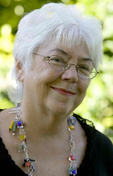
Alma Flor AdaABOUT THE AUTHOR: Alma Flor Ada is renown for her work as an educator, speaker, poet, and author of many children’s books as well as professional books for educators. In addition to the Pura Belpré Medal, her major awards include the 2012 Virginia Hamilton Award, the Christopher Medal, and the Marta Salotti Gold Medal. One of her great passions is social justice advocacy. Learn more about Alma’s dazzling career in children’s literature at her website, and read more about her journey in this lovely guest post, “Always Cuban.”


TEACHING TIPS:

  • Under the Royal Palms is ideal for reading aloud in the classroom. Most of the stories can be enjoyed as stand-alone narratives sure to capture the attention of late elementary and middle school kids.
  • Use selected stories as starting points for an exploration of Cuban culture and history. Complement the text with craft projects, such as making miniature clay tinajones, the earthen pots that Camagüey is known for and which are mentioned in the stories. Prepare a variety of Cuban foods for students to sample. Enrich the stories with virtual travel. A tours agency originating in Spain offers a beautiful array of photographs, maps, and videos of Camagüey and nearby beaches on its website, which is in Spanish.
  • Visit a botanical garden where palms grow and learn more about this amazing family of plants that includes over 2,500 species and differs from broadleaf and coniferous trees in many interesting ways, also supplying food products for people around the world.
  • The stories from Under the Royal Palms serve as excellent models for writing about personal experience. Lessons can include when to summarize events, when to inject dialogue and description, and how to weave in a narrator’s emotional responses.
  • Spanish-language learners can benefit from comparing the text of the English and Spanish versions.


Lila Quintero Weaver is the author-illustrator of Darkroom: A Memoir in Black & White. She was born in Buenos Aires, Argentina. Darkroom recounts her family’s immigrant experience in small-town Alabama during the tumultuous 1960s. It is her first major publication. Lila is a graduate of the University of Alabama. She and her husband, Paul, are the parents of three grown children. She can also be found on her own websiteFacebookTwitter and Goodreads.

Found in Translation: A Guest Chat by Author Laura Shovan & Translator Patricia Bejarano Fisher

Today we bring you insights from a pair of guest bloggers, Laura Shovan, the author of a new middle-grade novel in verse, The Last Fifth Grade of Emerson Elementary, and Patricia Bejarano Fisher, the translator who helped bring authenticity to one of the novel’s Spanish-speaking characters. In the future, we hope to present more of the angles involved in publishing translated or bilingual books. 


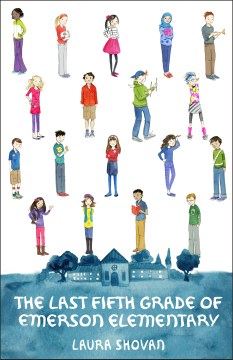
Last Fifth Grade cover (2)By Laura Shovan and Patricia Bejarano Fisher
Laura introduces the story: My new middle grade novel in verse, The Last Fifth Grade of Emerson Elementary, is set in where Pat and I both live — Howard County, Maryland, right between Washington, DC and Baltimore. People, including immigrants to the U.S., are drawn here by community resources and the strong reputation of public schools. Often, when I’m guest teaching at a local school, there will be several ESL students, speaking a variety of home languages, in each class.

Two of the eighteen students in Ms. Hill’s fictional fifth grade are Spanish speakers. One of those characters, Gaby Vargas, writes her poems in Spanish and then works with her friend to translate them into English. In order to get Gaby’s voice right, I asked Pat to translate the character’s poems from my English into Spanish, but that wasn’t the end of the collaboration.

Laura to Pat: One of my favorite parts of this process was when we collaborated on back-translating Gaby’s poems from Spanish to English. Could you describe what that was like?

Pat: I also enjoyed this part of the translation process. I had your original English poems. I was to be the voice of Gaby, a young native speaker of Spanish who is beginning to develop her English language skills. She has learned quite a bit but is not yet able to express herself fully in English. She still has to look up words in the dictionary, which she finds frustrating.

My first task was to translate the poems into Spanish, taking care to not make it my own Spanish. It had to be the Spanish of an elementary school girl who is learning English. Gaby’s Spanish is clear and direct. It is also colloquial in places, as it usually is in children that age. The second task was for us to work together from a literal reading of the Spanish poems and translate them back into English. The goal was to introduce a couple of lexical or structural inaccuracies, and unidiomatic phrases here and there that would reflect an intermediate stage of fluency where there is some transfer between the two languages. We took special care to respect the children and to avoid stereotyping them.

Laura: I visited an Emerson Elementary in Albuquerque recently. There was a 4/5th grade bilingual class. When I spoke, children in the audience were translating my English to Spanish for their classmates. And we had a chance to read Gaby’s poems in both languages. That was wonderful. You’re an accomplished poet and translator. How was the experience of working on a children’s novel in verse different from other translation work you’ve done?

Pat: My experience translating Gaby’s poems was new and refreshing, and really a lot of fun. I had finished revising some translations into Spanish I had been working on for some time, so I found the idea of translating a few poems for a book about children very appealing, especially since my youngest grandson had been born a few weeks before.  Children were once again my joy and my focus at that time, so I felt this translation effort would be a special treat for me.

It would also be very different: one of the poetry collections I co-translated tells a personal story of familial love, resentment, and forgiveness; another speaks of the dehumanizing effects of absolute power; yet another recalls vivid memories of war, loss, and hope. All are reflections of adult feelings and experiences turned into beautiful, moving poems.

Gaby’s poems expressed just as much feeling with the clarity and spontaneity with which children communicate. I could just see her struggling to express her thoughts and her feelings in her new language, trying to find the right words and then deciding to use the universal language of music instead. And then, to witness the miracle that only children can perform: becoming a proficient speaker of the new language in a short time and later attaining native proficiency at record speed. Gaby brought memories of my own challenges with English when I first came to the U.S.

Laura: I’d shared Gaby’s poems — in English — with a few Spanish-speakers, but wanted an experienced translator to prepare them for publication. What does a translator bring to a poem that a native speaker might not?

Pat: To me, reading and translation go hand in hand, and the better one understands a text through a close reading, the better the chances are of producing a translation that reflects the intent and the meaning of the original. By “understanding” a text, whether prose or poem, I mean “getting it” at the textual level in its own social and cultural context, as well as at the interpreting level in the context of both the source and the target cultures. In my experience, fluency in a language is necessary but not sufficient to achieve a full understanding of all the linguistic, social, cultural, figurative and other elements present in a text [and then] transfer them effectively into the receiving language. In poetry, the sounds, the rhythms, the syllable counts, the rhymes, the images have to be felt and understood in the original and reflected in the translation.

Pat to Laura: The 18 children who appear in your book come from different backgrounds and have different life stories. How did you choose your characters and how did you develop their relationships? I’m interested in how kids choose their friends and role models.

Laura: My first draft had 30 students and 30 poems, one in each voice. As the book grew from a collection of poems into a novel, some characters were cut and others grew in depth. I made a seating chart for them, so I could see what their classroom relationships might be like. It’s a mystery, sometimes, how children choose their friends. In the development of the book, some friendships didn’t appear until very late in the process. Gaby’s relationship with Mark Fernandez is an example of that. The two of them connect through language.

Fifth-Grade spread

The Last Fifth Grade is set in Columbia, Maryland, where you live and where I often teach. How do you think the book reflects our community in particular and today’s schools in general?

Pat: The children in the book are like the kids I see walking to school in the morning or waiting at the bus stop here in Columbia. We take pride in being an inclusive community where diversity is respected and welcome. Access to education for all has always been a guiding principle. My daughters went to school here some years ago. The events in the life of the school and of the children in The Last Fifth Grade could have taken place in any elementary school in Columbia or Howard County. I really felt I knew Gaby, Edgar Lee Jones, George Furst, Norah Hassan, and their classmates. I felt sad about their school… Any such loss is hard; it feels like someone is taking way the heart of the community.

——————

PatPatricia Bejarano Fisher was born in Bogotá, Colombia. A language and linguistics graduate of the University of Pittsburgh and S.U.N.Y. at Buffalo, she has lived in Columbia, MD for 33 years. She has worked as a Spanish teacher, translator and language-learning materials developer for many years but she now focuses exclusively on poetry translation. Her work includes South Pole/Polo Sur (Settlement House, 2012) and From the Diary of Mme Mao (publisher TBD), both poem collections by Venezuelan poet Maria Teresa Ogliastri, which she co-translated with Yvette Neisser Moreno. She’s an avid reader of Spanish, French, Italian, and Portuguese literatures and of all languages in translation. More poems translated by Pat can be found here.

DSC_5914Laura Shovan is former editor of Little Patuxent Review and editor of two poetry anthologies. Her chapbook, Mountain, Log, Salt and Stone, won the inaugural Harriss Poetry Prize. Laura works with children as a poet-in-the-schools and was Howard County Poetry and Literary Society’s 2015-2016 Writer in Residence. The Last Fifth Grade of Emerson Elementary is her debut novel-in-verse for children (Wendy Lamb Books/Random House). Learn more at Laura’s website.


Maybe Something Beautiful: Día Art Bilingual Story Time


By Sujei Lugo

This year marks the 20th anniversary of Día de los Niños, Día de los Libros, a celebration of children, books, cultures, languages, and community. Throughout the United States and Puerto Rico, various public libraries, school libraries, academic libraries, schools, universities, and community centers planned and held different programs to share the celebration and “bookjoy” with children, families, and community members. Once again, I decided to join the “Día Turns 20” party and held three programs at my public library: a frame art workshop using as inspiration Frida Kahlo’s “El Marco” (1938) self-portrait, a “Rhythms Heard Around the World” drumming and storytelling program, and an art bilingual story time.

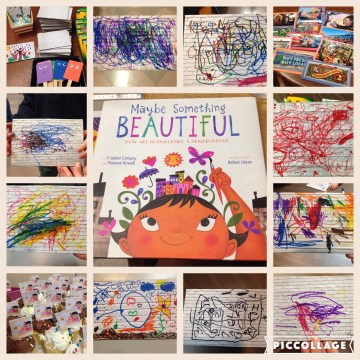
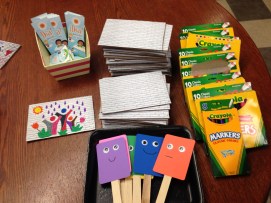
Mini-murals, markers, story time props, and Día bookmarks.

Mini-murals, markers, story time props, and Día bookmarks

I want to focus this post on the art bilingual story time, as a way to bring attention to how to incorporate your community and neighborhood into your program while bringing a picture book to life. Last year I did a musical bilingual story time where I read Tito Puente, Mambo King/Tito Puente, Rey del Mambo written by Monica Brown and illustrated by Rafael López, used guajiras, rumbas, and mambos songs, and each child made and decorated small timbales made out of tuna cans. So which Latinx picture book published in the last 12 months would inspire me to offer a great bilingual story time, along with activities and a craft inspired by it t? At the American Library Association Midwinter Conference held at the beginning of the year, I saw and read a display copy of the picture book Maybe Something Beautiful: How Art Transformed A Neighborhood written by F. Isabel Campoy and Theresa Howell, and illustrated by Rafael López, and, right there and then, I knew I had found the perfect match.  

Through an inspiring tale and vibrant illustrations, Maybe Something Beautiful introduces readers to Mira, a girl who lives “in the heart of a gray city” and who enjoys doodling, drawing, coloring, and painting. She considered herself an artist and liked to gift her illustrations to people from her neighborhood. She even taped and “gifted” one of her paints to a dark wall around her block. One day she meets a muralist, and learns the magic of painting murals, and the power of bringing together the whole community to create something beautiful. The book is based on a true story about an initiative by Rafael López, the illustrator of the book, and his wife Candice López, a graphic designer and community leader, as a way to bring people together and transform their neighborhood into a vibrant one.

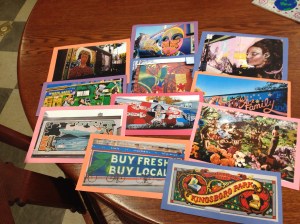
Photos of the murals found around my neighborhood

Photos of the murals located near my library and neighborhood.

After reading the book, I immediately thought of the different murals around my neighborhood and how they are reflective of its people: different generations of Latinx communities, artists and activists, local businesses, streets, and heterogeneity. But also a community facing gentrification, fighting for housing, economic, and racial justice. A neighborhood with a sense of community, like the one I saw in Maybe Something Beautiful and one I wanted to show to my toddlers at story time. 

I started the Día Art Bilingual Story Time by welcoming everyone, giving Día stickers to each child, and explaining how this was a special bilingual story time because we were celebrating the 20th Anniversary of Día. I explained what Día was, how it started, and how we were joining a nationwide celebration. I introduced my special guest, a local artist and art teacher, who was going to read with me and who was going to serve as the art facilitator. As a warm-up I sang a couple of songs: Buenos Días, ¿Cómo Estás?; Wake Up [different body parts]; and If You Are Wearing [insert color] Today, Say Hooray! Then we started with Book Fiesta! Celebrate Children’s Day/Book Day; Celebremos El Día De Los Niños/Día de Los Libros written by Pat Mora and illustrated by Rafael López, where I read the Spanish text and the special guest the English one. I followed with more songs: Everyone Can March; Colors, Colors Everywhere; and Where is [insert color name in Spanish]? Once we finished singing and everyone got back to their spot, I read Maybe Something Beautiful while the art facilitator was setting up the tables for the craft.

After reading the book, I talked a little bit about our neighborhood and murals and did a guessing game with them. I printed out pictures I took of the different murals around our neighborhood and children and adults (adults were really into this) started guessing where the murals were located. Some of them were tricky, but with others, children were excited to shout where they were. I always like to leave the craft as a sort of final surprise and ask them what they think we are going to do. The craft was a mini-mural made out of 4” x 8” cardboard with a brick or wood wall pattern to simulate a real wall they will paint on. At first, I thought of giving them watercolors or tempera, but finally opted for markers because they are less messy for the 0-4 crowd. Children had fun painting their mini-murals and proudly showed their creation to everyone in the room.IMG_7856

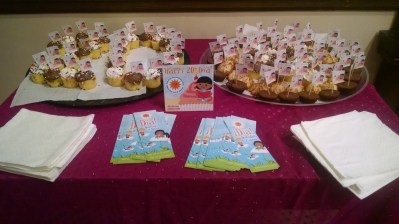
We ended the program sharing mini cupcakes, brownies, and coconut macaroons (with vegan, gluten-free, sugar-free options) and all of them had mini flags with the “Día Turns 20” Logo. They all gathered together to enjoy the special treats, to chat with one another, and show each other their mini-murals. Some parents and caregivers reached out to me and expressed how much fun they and their child had. Others used the opportunity to tell me how their child likes to draw on their wall at home, and others told me how now they were worried their child would get inspired to draw and paint on their walls. Rest assured, the kids and adults got together to recognize the power of community and how paintings on the walls do bind us together in a communal experience of recognition. In that sense, any drawing on the house wall is a potential future of community building. Be it a mess or something more detailed, the drawings on the wall are definitely something beautiful.

Día Turns 20!

Día Turns 20!


SujeiLugoSujei Lugo was born in New Jersey and raised in her parents’ rural hometown in Puerto Rico. She earned her Master’s in Library and Information Science degree from the Graduate School of Information Sciences and Technologies at the University of Puerto Rico and is a doctoral candidate in Library and Information Science at Simmons College, focusing her research on Latino librarianship and identity. She has worked as a librarian at the Puerto Rican Collection at the University of Puerto Rico, the Nilita Vientós Gastón House-Library in San Juan, Puerto Rico, and the University of Puerto Rico Elementary School Library. Sujei currently works as a children’s librarian at the Boston Public Library. She is a member ofREFORMA (The National Association to Promote Library Services to Latinos and the Spanish-speaking), American Library Association, and Association of Library Service to Children. She is the editor of Litwin Books/Library Juice Press series on Critical Race Studies and Multiculturalism in LIS. Sujei can also be found on Twitter, Letterboxd and Goodreads.

Poetry in the Lives of Children and Young Adults


By Dr. Sonia Alejandra Rodriguez

“Before you go further,/ let me tell you what a poem brings,/ first, you must know the secret,/ there is no poem/ to speak of, it is a way to attain/ a life without boundaries”

— from “Let Me Tell You What a Poem Brings by Juan Felipe Herrera

I have been teaching creative writing to middle school and high school students in and outside of traditional classroom spaces for about five years now. For the most part, I have found that despite the need for these creative spaces, they are too hard to come by. My purpose in each teaching space is to create a safe space where youth can use their lived experiences, their communities, and their imagination as inspiration to find their voices—alongside teaching them a skill or two about creative writing. My favorite part of teaching creative writing is the opportunity to listen to youth tell their stories. When I start my classes, I always let youth know that I was undocumented when I was their age, and with high school students, I might reveal that I grew up around domestic violence. I don’t share these personal facts for any shock factor but because there’s still a dangerous misconception that people like me—and like my students—are not writers. The lack of representation and diversity in books available in K-12 classrooms impacts whether children and young adults understand their experiences as valuable and whether they can see themselves as agents of their own stories. In other words, not seeing ourselves represented in what we read while in school influences the value we give to our personal experiences and whether we consider ourselves worthy enough to write our own stories. Most of the work that I do in each teaching space is about undoing the fallacies of who can be a writer and what stories can be told.

I enjoy teaching poetry most of all because, at first, youth are very hesitant about reading and writing poetry because it’s “too hard” to understand or there are “too many rules” to follow, but they are then surprised and even excited when we read poems by the likes of Francisco X. Alarcon, Pat Mora,  or Juan Felipe Herrera. I’m sure what surprises them is that these poems are about tortillas, abuelas, or about barrios like the ones in which they live. The idea here is not to essentialize their Latinx experiences, or their experiences as children of color for that matter, but stories about cultural foods, grandmas, immigration, class, and the like still resonate with children and young adults of color for a reason. Even if they are exposed to writers of color in their classrooms, students and teachers alike are constantly battling the negative messages youth receive about their cultural, ethnic, and class background. Because of this, it’s refreshing and empowering for youth to hear stories they can relate to in hopes that they do will want to share their own stories.

Poetry usually becomes the favorite outlet for many of my students, especially after I tell them that they can write poetry without needing to follow any rules. Poetry has become a safe way for my students to unleash their dreams, their pain, and their imaginations without necessarily revealing the truth about any of the above. Imagery, metaphors, similes, and symbols are very powerful tools for youth to process their experiences without needing to name their afflictions if they don’t want to. On the other hand, poetry is the perfect vessel for them to say what they want with little stress from conventional English grammar rules. Believe it or not, complete sentences, subject-verb agreement, and punctuation can be real bummers. I have had the most hesitant of 6th grade boys write poems about video games, boogers, balls, or about how stupid 6th grade is. And I encourage those types of poems because those, too, are important stories. There are certainly other students that can relate to poetry about video games and the dreadfulness that is 6th grade. In the same vein, I have had students reveal that they struggle with depression, that they don’t like the color of their skin, that they are embarrassed by their parent’s broken English, that they or a family member are undocumented or have been deported. I don’t ever ask students to write about their deepest, darkest secrets. I often give them the option to make something up if they don’t want to write about themselves. But more often than not, students share these personal stories without prompting because they need to. In my poetry sessions[i], I try to give students the opportunity to say what they can’t say aloud in hopes that they may “attain a life without boundaries.”

How to Use Poetry in Latinx Children’s Literature to Encourage Children and Youth to Read/Write Poetry

For elementary and middle school students, I often start off with Francisco X. Alarcón’s poetry for children because they are fun, culturally relevant, and bilingual (English/Spanish). Alarcón has many wonderful books of poetry for children but I use the “The Magical Cycle of the Seasons Series,” which includes Iguanas in the Snow: And Other Winter Poems, Laughing Tomatoes: And Other Spring Poems, From the Bellybutton of the Moon: And other Summer Poems, Angels Ride Bikes: And Other Fall Poems, because it allows me to use the five senses to describe how each season manifest itself in a student’s community.


For example, Alarcón’s poem “Dream,” in Laughing Tomatoes: And Other Summer Poems, is about gardens everywhere and everyone helping to plant gardens. When teaching this poem, I first ask the youth to read the poem aloud. I like to ask different students to read the same poem several times so that we can hear different intonations and discuss if emphasizing different words in the poem changes its meaning. I do the same with the Spanish version of the poem. I then talk about which of the five senses the poem uses to tell the story. I ask students to point to specific lines in the poem to support their arguments. We then move into a group discussion about gardens, their purposes, where we might see them, and if they have one of their own. Depending on the group, I might ask them to write in free verse about the gardens in their homes/communities or to imagine their own garden. If the youth or group needs more structure, I might ask them to write an acrostic or cinquain poem about gardens or a garden related subjects. To close out the session, I often ask students to share their poems, or we might try to mime or sing the poem. When there’s not enough time to go into that much detail with the poem, I read the poem with the youth, ask them what they think the poem is about, and ask them to write their own poem about their garden, a garden they’ve seen, or why there should or shouldn’t be more gardens in their communities. Maya Christina Gonzalez’s beautiful illustrations also present an opportunity for students to create additional garden paintings, drawings, or an entirely new poem based on the illustrations.

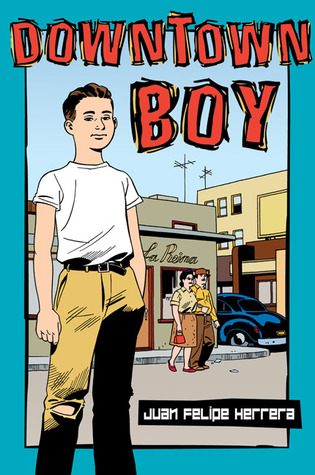
For older students I often refer to Juan Felipe Herrera’s novel in verse Downtown Boy. More often than not, we focus on the young main character Juanito to discuss issues such as discrimination in school, immigration, gender roles, masculinity and femininity, diabetes, family, and more. If I have an opportunity to teach the entire novel, then I often create poetry portfolios with my students where we pick a broader theme like identity, culture, and/or community that will thread throughout all their poems.  If I don’t have enough time to cover the entire novel, then I usually pick the poems that will best represent the student population or the poem with which they can connect to the most.
For example, Downtown Boy opens with Juanito’s cousin trying to coerce him into boxing Sweet Pea Price. Juanito is new to San Francisco and wants to make friends but his father has advised him against fighting. Juanito will need to decide if he will fight or not. When teaching this poem, I ask students to read this poem aloud; we then discuss Juanito’s character traits and the overall voice of the poem. I brainstorm with my students about times they might have been in a similar predicament. Because this poem uses dialogue, I encourage my students to include two different voices. If the youth have finished their poems, I might ask them to share their work. With older students, I like to encourage revisions and workshopping each other’s poems in order to improve our writing and to learn from one another.

Poetry in Action

The following poems were written by young poets in my creative writing classes. Kimberly Alvarez is currently a sophomore in high school in Riverside, California. Naomi Lara is currently a 6th grader in an elementary in Chicago, Illinois. Jennifer Alvarez is currently a senior in high school in Riverside, California. I’m grateful for their words and for their permission to share them here.

Dream[ii].

by Kimberly Alvarez

At Night,

I look up at the ceiling.

Bare.

NO DREAMS

Anywhere.

At midnight,

I’m sound asleep

In Paradise

Floating.

Free. Away.

I don’t want to wake up.

Until my eyes just…

Open,

Like a curtain beside me

When the wind comes through

At 5:00 a.m…

I hear my dad getting ready for

Work.

I can tell he didn’t choose that

Job or this life for himself

Or my family.

I see through him

Through his eyes,

To his soul.

It may seem…

COLD

but in reality

I can feel,

Feel the warmth

When I look into his eyes,

To his soul.

They change color. His eyes.

With him. His mood.

¿Porque? Why?

Can’t he be as warm as his soul is..

Dream.

I always do

Of him,

Of my family,

Finally happy together.

Put back together

Like a puzzle.

I always wonder

What my family would

Be like without

Dreams.

At morning,

When I get up

It all flows down

Goes down like a giant wave

Drowning my dreams

And pulling them down

At night,

I look up at the ceiling

All of my dreams,

Are floating

Up, wandering

On the ceiling

Waiting for the rest

Of my dreams to

Join them

And

Soon…

They will

Become

One BIG dream.

Un Gran Sueño.


It All Changed

By Noemi Lara

Happy girl, good friends

Big house

She should have cherished those moments

For they would be gone too soon

She looked up at the moon

Little did she know everything was about to change

Her mom and dad were acting strange

They told her they needed to arrange a meeting to see new houses.

Their new house has mouses

The neighborhood was foul

She couldn’t help but growl

She grew older

And things got colder

Her friends were bolder

Her parents would fight

It gave her a fright

She fought with all her might

But all she would see was the night

Oh how it all changed


My California[iii]

By Jennifer Alvarez

My California is fun times at Lake Perris.

Running into the water but jumping back when you feel the ice

cold water.

In those rare but amazing visits to see my “best cousin forever”

in Fontana.

Laughing, fighting, hugging, and talking until the next three

months when we reunites.

It is those two times going to Big Bear.

Snowman on the roof of my dad’s car, attempting to bring it back

home to show it to my friends.

It is the  multiple times driving to Moreno Valeey to Walmart with my sister.

Music blaring, singing along with smiles on our faces.

It is the sisterly bonding we had going to the Moreno Valley

Mall.

But mostly, my California are memories with the people I love.


[i] Currently I teach poetry as a Teaching Artist with ElevArte Community Studio, an arts organization in Chicago. “Word Up,” is a pilot program funded by ElevArte and the Poetry Foundation to create a safe space for underrepresented youth to learn about and write poetry. I visit a local elementary school once a week to teach, read, and write poetry with two 6th grade classes. I have worked closely with their awesome teacher, Ms. Delta Cervantes, to create a poetry curriculum that also meets common core standards. The 6th graders are presently working on spoken word projects.

[ii] Dream was first published in 2012 in a youth anthology, R’side of the Story, out of the Youth Opportunity Center in Riverside, California

[iii] My California was published in 2013 in R’side of the Story


FullSizeRender (1)Dr. Sonia Alejandra Rodriguez’s research focuses on the various roles that healing plays in Latinx children’s and young adult literature. She currently teaches composition and literature at a community college in Chicago. She also teaches poetry to 6th graders and drama to 2nd graders as a teaching artist through a local arts organization. She is working on her middle grade book. Follow Sonia on Instagram @latinxkidlit
Margarita Engle: Books in Spanish Enhance Latino Family Literacy

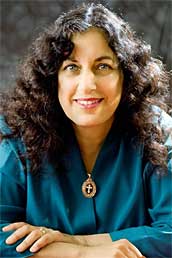
Margarita

By Margarita Engle

A few months ago, I received a set of wonderful letters from a grandmother and her 10-year-old granddaughter. They were reading Enchanted Air together, discussing it, and using it as a way for the grandma to share her own childhood experiences during the Cold War.

It occurred to me that many Latino families can’t do this, simply because most books by U.S. Latino authors are not available in Spanish. With a few wonderful exceptions such as the works of Pam Muñoz Ryan and Alma Flor Ada, in general only bestsellers by non-Latinos, and a few specialized small press books by Latinos, ever get translated.

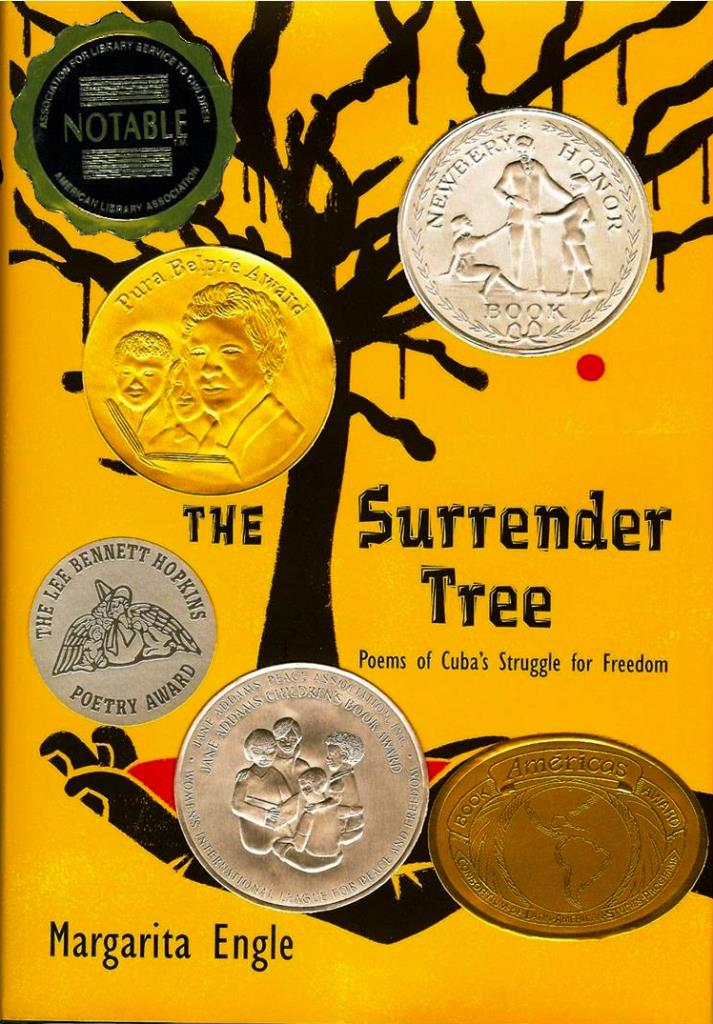
Soon after those heartwarming grandma-granddaughter letters arrived, I visited a Washington, D.C. eighth-grade class where Latino students asked me for books in Spanish. All I had to offer was one of my oldest books, The Surrender Tree/El Arbol de la Rendición, a dual language paperback that resulted from this title’s status as a Newbery Honor winner.

Surrende Tree NotableMy next school visit was to a rural sixth-grade class in California’s agricultural Central Valley. The students were all Latino, and most spoke English, but teachers informed me that many of the parents and grandparents were not bilingual. The only way those families could participate in their children’s education was in Spanish. Fortunately, the school had a grant to provide a signed copy of The Surrender Tree/El Arbol de la Rendición to each student. Those books will go home and be available to the whole family. That’s no guarantee that parents will read and discuss them, but at least it is a possibility.

The need for bilingual books for older children has been on my mind so much that when I served on a diversity panel at a national teachers’ conference, I answered the question, “What are your wishes for the publishing industry?” with the statement, “I wish for translations.”

I pointed out that fifty million people in the U.S. speak Spanish, and that just because the publishing industry has never figured out how to reach this vast “market,” that doesn’t mean it will never be reached. We can’t give up. Until there are more translations, family literacy in this country will never be complete.

Fortunately, I will soon have another bilingual book. A new and innovative small press called HBE Publishing has set a fall 2016 release date for a middle grade historical verse novel that I wrote in the style of magic realism. There will be both English-only and bilingual options, so that schools or individuals can order their preferred format. I won’t receive any advance, but the royalty will be much higher than the usual 10%, a trade-off I’m happy to make, in exchange for a beautiful bilingual edition that children can share with their abuelitos. Perhaps innovation is what it will take to resolve the problem of too few translations.


Margarita Engle is a prolific author of books for young readers, most recently of Enchanted Air and Drum Dream Girl. She has won countless awards for her work, including the Pura Belpré and the Newbery Honor. Her guest posts on this blog are favorites with readers. Check out her essay on researching and writing the stories of historical heroes. For more information on Margarita’s writing, please visit her official author website.

The same day that this guest post published, Margarita received the 2016 Pura Belpré Author Award for Enchanted Air: Two Cultures, Two Wings. Congratulations, Margarita! 


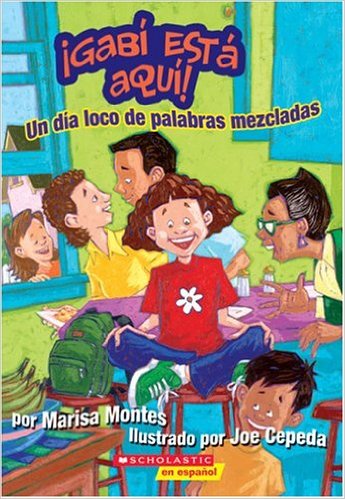
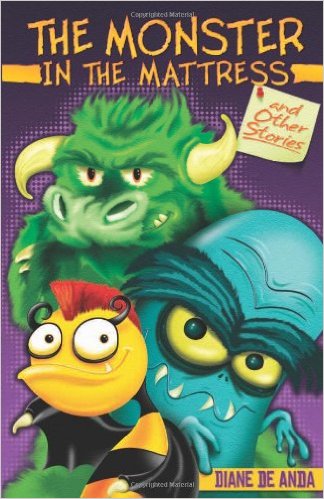
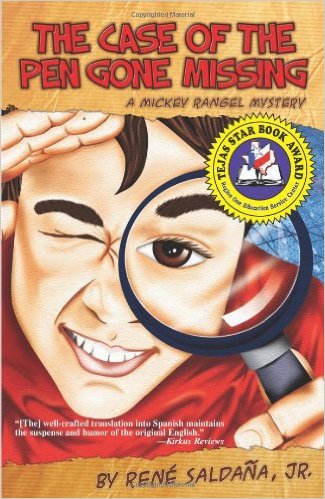
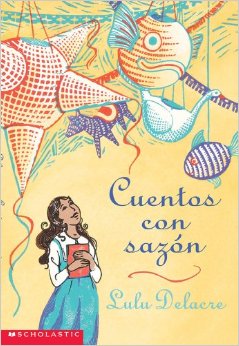
Margarita’s experiences point to the shortage of Latin@-authored Spanish editions for middle-grade readers. When we researched available titles, we came up with the following modest sampler. Help us expand it! In the comments, please tell us about good bilingual MGs or fully Spanish editions that you’ve run across. Remember, we’re not looking for translations of mega bestsellers like the Harry Potter or Diary of a Wimpy Kid series. We’d like to identify books that center on Latin@ characters and themes. Thanks in advance for your suggestions!

Note: Some of the bilingual book covers shown below don’t include their Spanish title. 

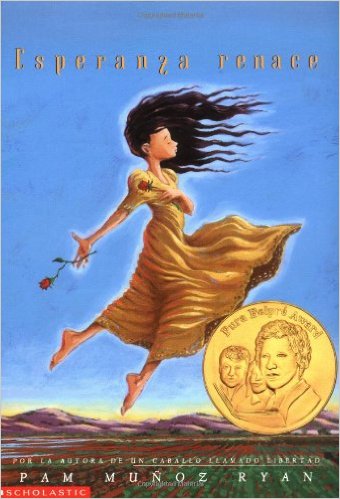
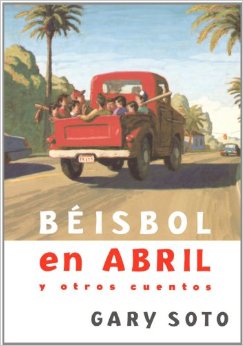
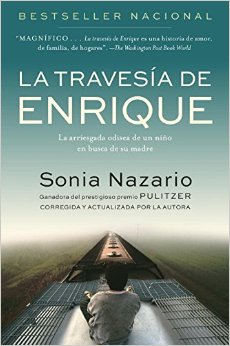
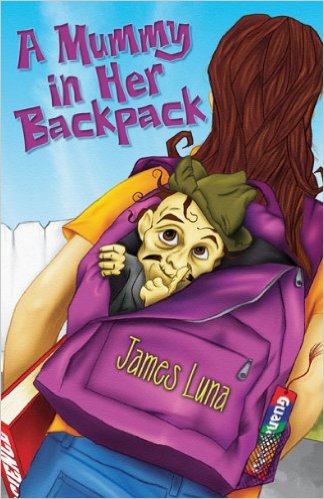
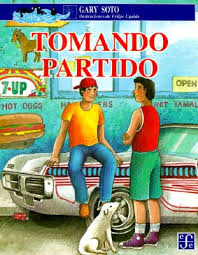
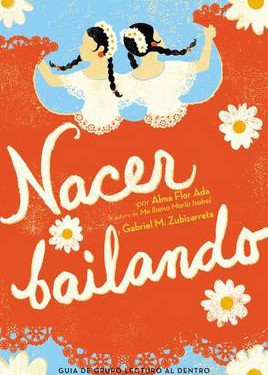
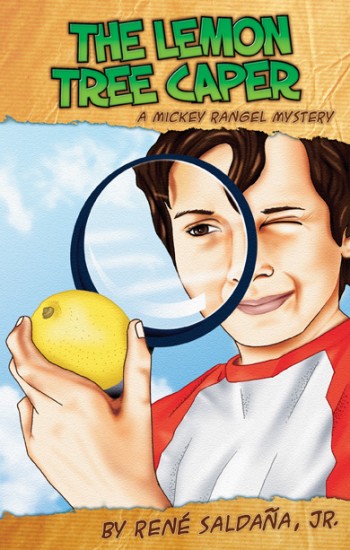
Si, Somos LatinosEsperanza Renace  Antes de ser libres  Beisbol en abril  Yo Naomi Leon  La travesia de Enrique La Casa en Mango Street  El Color de mis palabras   Cajas de carton  Cool Salsa    Alla Donde Florecen  Upside-Down-and-Backwards-350x550  Una momia en su mochila  Tomando partido  Tia Lola Terminó  Nacer bailando  Lemon-Tree-Caper-The-350x550  Gabi Esta Aqui  El Monstruo  El Caso de la Pluma Perdida  Cuentos Sazon  con-carino-amalia-love-amalia  Cartas del cielo  Cuentos para chicos y grandes  Cuentos de Apolo