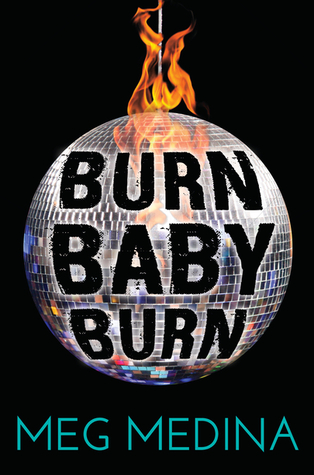
Book Review: Burn Baby Burn by Meg Medina


25982606Review by Cecilia Cackley

DESCRIPTION OF THE BOOK (from Goodreads): Nora Lopez is seventeen during the infamous New York summer of 1977, when the city is besieged by arson, a massive blackout, and a serial killer named Son of Sam who shoots young women on the streets. Nora’s family life isn’t going so well either: her bullying brother, Hector, is growing more threatening by the day, her mother is helpless and falling behind on the rent, and her father calls only on holidays. All Nora wants is to turn eighteen and be on her own. And while there is a cute new guy who started working with her at the deli, is dating even worth the risk when the killer likes picking off couples who stay out too late? Award-winning author Meg Medina transports us to a time when New York seemed balanced on a knife-edge, with tempers and temperatures running high, to share the story of a young woman who discovers that the greatest dangers are often closer than we like to admit — and the hardest to accept. Burn Baby Burn releases March 8 from Candlewick Press. It has been named a Junior Library Guild Selection and has received a starred review from Kirkus.

MY TWO CENTS: Meg Medina follows up her Pura Belpré winner Yaqui Delgado Wants to Kick Your Ass with another story of a girl in Queens just trying to survive high school and family drama. Burn Baby Burn takes place in the summer of 1977, and the larger struggles of New York City grappling with a serial killer, power outages, and arson parallel the way the protagonist Nora is trying to cope with a threatening older brother, an absent father, and a traditional mother who protects family and men at the cost of everything else.  Medina perfectly captures the stifling atmosphere that drives Nora to hide her struggles from her best friend and love interest. I just wanted to give Nora a hug and say please, tell someone about what’s going on at home, but I also understood how her pride and shame drove her decision making. Medina carefully builds the suspense, never taking the easy way out of resolving a conflict. You will be holding your breath by the end of the book, hoping desperately that Nora will triumph.

TEACHING TIPS: The historical setting makes this a good fit for a history or sociology class. Classes studying serial killers, cities in transition, or class and racial tension will find this a compelling read. Medina’s incorporation of the feminist movement and in particular her nod to how it left out women of color is a great place for a class to start a discussion.

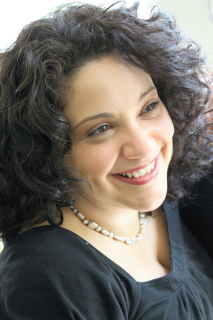
photographer, Steve Casanova

photographer, Steve Casanova

ABOUT THE AUTHOR: Meg Medina is an award-winning Cuban American author who writes picture books, middle grade, and YA fiction. She is the 2014 recipient of the Pura Belpré medal and the 2013 CYBILS Fiction winner for her young adult novel, YAQUI DELGADO WANTS TO KICK YOUR ASS. She is also the 2012 Ezra Jack Keats New Writers medal winner for her picture book TIA ISA WANTS A CAR.

Her most recent picture book, MANGO, ABUELA AND ME, a Junior Library Guild Selection, has earned starred reviews in Booklist and Publishers Weekly, and  is included in the 2015 American Booksellers Association’s Best Books for Young Readers Catalog.

Meg’s other books are THE GIRL WHO COULD SILENCE THE WIND, a 2012 Bank Street Best Book and CBI Recommended Read in the UK; and MILAGROS: GIRL FROM AWAY.

Meg’s work examines how cultures intersect through the eyes of young people, and she brings to audiences stories that speak to both what is unique in Latino culture and to the qualities that are universal. Her favorite protagonists are strong girls. In March 2014, she was recognized as one of the CNN 10 Visionary Women in America. In November 2014, she was named one of Latino Stories Top Ten Latino Authors to Watch. 

When she is not writing, Meg works on community projects that support girls, Latino youth and/or literacy. She lives with her family in Richmond, Virginia.

FOR MORE INFORMATION about Burn Baby Burn, check your local public library, your local bookstore or IndieBound. Also, check out GoodreadsAmazon, and Barnes & Noble.

Here is the official book trailer for Burn Baby Burn:
https://youtu.be/jsmZqNvlCd8


Cackley_headshotCecilia Cackley is a performing artist and children’s bookseller based in Washington DC where she creates puppet theater for adults and teaches playwriting and creative drama to children. Her bilingual children’s plays have been produced by GALA Hispanic Theatre and her interests in bilingual education, literacy, and immigrant advocacy all tend to find their way into her theatrical work. You can find more of her work at www.witsendpuppets.com.

Book Review: This Is Where It Ends by Marieke Nijkamp

24529123

Reviewed by Cindy L. Rodriguez

DESCRIPTION OF THE BOOK:

10:00 a.m.
The principal of Opportunity, Alabama’s high school finishes her speech, welcoming the entire student body to a new semester and encouraging them to excel and achieve.

10:02 a.m.
The students get up to leave the auditorium for their next class.

10:03
The auditorium doors won’t open.

10:05
Someone starts shooting.

Told over the span of 54 harrowing minutes from four different perspectives, terror reigns as one student’s calculated revenge turns into the ultimate game of survival.

MY TWO CENTS: As a parent and teacher, both at a middle school and community college, the possibility of an on-campus tragedy is my worst nightmare that proves to be a school’s horrific reality on a too-regular basis. Author Marieke Nijkamp’s debut novel chronicles a heart-wrenching 54 minutes of terror by dropout Tyler Browne, who returns to Opportunity High School the first day of a new semester to take revenge on the classmates he blames for his feelings of loss and abandonment. The story is told from four first-person perspectives: Claire, Tomás, Sylvia, and Autumn.

Claire, Tyler’s ex-girlfriend, is outside the school when the shooting begins. She’s a track star and JROTC member who runs for help with her best friend, Chris. Claire’s brother, Matt, is inside the auditorium. Claire agonizes over what she could have done to stop Tyler. Did she see any signs? Did she know this would happen? She also feels helpless being on the outside and wants to do something, anything, to help.

Tomás and Sylvia are fraternal twins and unspecified Latin@s. Tomás and his friend, Fareed, who is Afghan, is inside the school but not among those trapped in the auditorium. Before today, they were most known for pranks and picking on Tyler, but now they call for help and plan a way to free those inside the auditorium, all the while worried about loved ones inside and whether their efforts will help or cause more harm.

Autumn is a ballerina, Tyler’s sister, and Sylvia’s girlfriend. Autumn and Sylvia are locked inside the auditorium and targeted by Tyler. Autumn’s complex relationship with her brother and their abusive father in the wake of their mother’s death is revealed trough flashbacks. Tyler blames his loneliness on Autumn’s ambitious dance goals and her relationship with Sylvia.

The reader will get a fragmented picture of Tyler’s good and bad sides: protective brother, comforting boyfriend, rapist, killer. When something like this happens, we often ask why and hope to get answers, but the reasons are never enough. Nijkamp explains in our Q&A that she made the decision to have this story not be about the shooter, but about the victims, which is why we never get his first-person point of view.

For me, not really knowing Tyler added to the story’s intensity, leaving me feeling the kind of hurt, confusion, and uncertainty experienced by the fictional victims.

And since we’re a site dedicated to Latin@ Literature, let’s focus on Sylvia and Tomás for a moment. The two are loyal to friends, family, and each other, while having a typical sibling relationship that is sometimes loving, sometimes contentious. Sylvia is a Latin@ lesbian and a main character, which makes her one of the very few in the YA world. She is also accepted by her family when she comes out, as told in a flashback, which is refreshing because this counters the Latin@ families who reject a LGBTQIA+ member because of conservative religious or cultural beliefs. Coming out continues to be devastating for many LGBTQIA+ youth, unfortunately, but I appreciate that Nijkamp portrayed an accepting Latin@ family to show another possibility/reality.

This is Where it Ends, a gripping, heartbreaking thriller, released with Sourcebooks Fire on January 5, 2016. Click here for a discussion guide.

FOR MORE INFORMATION, check your local public library, your local bookstore or IndieBound. Also, check out GoodreadsAmazon, and Barnes & Noble.

Marieke landscapeABOUT THE AUTHORMarieke Nijkamp was born and raised in the Netherlands. A lifelong student of stories, language, and ideas, she is more or less proficient in about a dozen languages and holds degrees in philosophy, history, and medieval studies. She is a storyteller, dreamer, globe-trotter, geek. Her debut young adult novel This Is Where It Ends, a contemporary story that follows four teens over the course of the fifty-four minutes of a school shooting, will be published by Sourcebooks Fire in January 2016. She is the founder of DiversifYA and a senior VP of We Need Diverse Books. Find her on Twitter.


photo by Saryna A. Jones

Cindy L. Rodriguez is a former journalist turned public school teacher and fiction writer. She was born in Chicago; her father is from Puerto Rico and her mother is from Brazil. She has degrees from UConn and CCSU and has worked as a reporter at The Hartford Courant and researcher at The Boston Globe. She and her daughter live in Connecticut, where she teaches middle school reading and college-level composition. Her debut contemporary YA novel, When Reason Breaks, released with Bloomsbury Children’s Books on 2/10/2015. She can also be found on FacebookTwitter, and Goodreads.

Q&A with Debut Author Marieke Nijkamp about This Is Where It Ends

24529123

By Cindy L. Rodriguez

This Is Where It Ends, Marieke Nijkamp’s debut novel, captures 54 harrowing minutes of a high school shooting through the perspectives of four students who have personal connections to the shooter. They are alternately hurt, betrayed, confused, and guilt-ridden about their possible roles in the tragedy and what they could have done to stop it. Two of the main characters are Tomás and Sylvia, unspecified Latin@ twins. Sylvia is trapped in the auditorium with the shooter, while Tomás is among those outside and trying to help. Author Marieke Nijkamp joins us today to answer a few questions about her intense debut.

CINDY: What inspired you to write about a U.S.-based school shooting? What kind of research did you do to capture the intensity of this kind of tragedy?

MARIEKE: A lot of it—from before I started drafting through final edits. I read firsthand accounts of shootings, I listened to 911 calls, I plowed through hundreds of pages of investigative reports, I talked to people, I kept up with news and social media feeds as active shooter situations emerged, I familiarized myself with the psychology of being held at gunpoint. As much as possible, I immersed myself in what we know about school shootings (which is both a lot and not a lot at all). And I tried to translate that to the book.

Even now, when shootings happen, my first instinct is to drop whatever I’m doing and absorb what is happening, listen to people as they share their experiences.

CINDY: Using present tense and limiting the time frame to 54 minutes puts the reader in the moment. As a writer, what made you decide to tell this story as it unfolds?

MARIEKE: When I set out to tell this story, I wanted to tell the story of a school shooting. Not the lead up, not the aftershocks, but the shooting itself. So I knew early on I wanted that limited timeframe, because I wanted, as much as possible, to recreate the experience and the feeling that, from one moment to the next, your entire life can be upended.

It presented some challenges while writing – not just because of the timeframe, but also because most of the action takes place in the same building and even the same room. But I’m a plotter at heart. And I spreadsheeted to my heart’s content.

CINDY: The novel alternates first-person perspectives, but the one person we don’t hear from directly is Tyler. He causes the tragedy, and we find out about him through the other characters, but we never get inside his head. As a reader, I found this powerful because whenever something like this happens, we want the shooter to explain why, but no answer to that question is ever enough. For me, seeing the story through everyone else reinforced this idea, but I’m curious about why you chose not to give Tyler one of the first-person POVs?

MARIEKE: For me, that was actually one of the main reasons to not include Tyler’s point of view. Because, like you say, we are all looking for answers, and they’re never enough. Besides which, we don’t have a singular profile of a shooter, beyond some general elements (most shooters are white, male, and often though not always dealing with loss, grief, resentment). I didn’t want to recreate a profile based on one interpretation, because it’s always going to be exactly that: one interpretation.

Beyond that though, for all that Tyler is a central character in this story, it’s not his. It’s Tomás and Fareed’s story. It’s Sylvia and Autumn’s story. It’s Claire story. To me, the story always belong to them, to the victims and the survivors.

CINDY: Because of your work with DiversifYA and We Need Diverse Books, I wasn’t surprised by your novel’s diverse cast of characters, including an interracial/ethnic lesbian couple (sooooo few depictions of such couples, so *applause*). Although, since it’s set in a small, fictional Alabama town, you could have resorted to creating a less diverse cast of characters. Why was it important to include so much diversity? 

MARIEKE: You know, I never get asked why Claire is straight, white, non-disabled. And that is as much a choice as all the others are.

The thing is, when I set out to write THIS IS WHERE IT ENDS, I wanted to be as respectful and as true to life as possible. When I did take poetic license, I did so by keeping in mind the adage I talked about with many other WNDB team members: first, do no harm.

To me, that didn’t just mean doing the academic research; it meant reflecting life as I know it and as so many friends and so many of my teen readers do. School shootings do not just affect non-marginalized, affluent teens. And even if Opportunity were 95% white and straight, that doesn’t erase the other 5%. Why should they not be the heart of the story?

CINDY: As you begin your debut year, do you have any advice for pre-published writers?

MARIEKE: I’ve come to learn that no advice fits all, but to aspiring authors, I’d say: tell your stories, the stories your most passionate about, in your own way. To pre-published writers anticipating their debut: be  grateful to be on this journey, and be mindful to enjoy it. It’s a wild ride and it’s a wonderful one, too. And it’s so, so worth it.


Marieke landscapeABOUT THE AUTHORMarieke Nijkamp was born and raised in the Netherlands. A lifelong student of stories, language, and ideas, she is more or less proficient in about a dozen languages and holds degrees in philosophy, history, and medieval studies. She is a storyteller, dreamer, globe-trotter, geek. Her debut young adult novel This Is Where It Ends, a contemporary story that follows four teens over the course of the fifty-four minutes of a school shooting, will be published by Sourcebooks Fire in January 2016. She is the founder of DiversifYA and a senior VP of We Need Diverse Books. Find her on Twitter.

Book Review: The Head of the Saint by Socorro Acioli


Reviewed by Cecilia Cackley

DESCRIPTION OF THE BOOK (from Goodreads): After walking for days across the harsh Brazilian landscape only to be rejected by his last living relative, Samuel finds his options for survival are dwindling fast – until he comes to the hollow head of a statue, perfect for a boy to crawl into and hide…

Whilst sheltering, Samuel realizes that he can hear the villagers’ whispered prayers to Saint Anthony – confessing lost loves, hopes and fears – and he begins to wonder if he ought to help them out a little. When Samuel’s advice hits the mark, he becomes famous, and people flock to the town to hear about their future loves. But with all the fame comes some problems, and soon Samuel has more than just the lovelorn to deal with.

MY TWO CENTS: This was a great read with a little bit of everything—mystery, romance, long-lost relatives, miracles, good guys, and villains. Although it is a relatively short book, it packs a lot into the 179 pages. The village of Candeia has a presence that almost makes it another character, and certainly it goes through as many changes over the course of the story as anyone else. Readers will root for Samuel as he struggles first to simply survive, and then to understand and control his visions and power. With themes of faith, power, and destiny, this is a book to read, share and discuss for both teens and adults.

TEACHING TIPS: Acioli began this book as part of a workshop with the great South American writer Gabriel García Márquez, and it would be an interesting exercise for students to compare Candeia and its residents with other insular towns in Latin American fiction. The multiple points of view in the novel are a good discussion starter and give teachers the opportunity to have students write from the point of view of different characters. The development of Candeia and the fate of the statue are a good jumping off point for discussing the changing landscape of Brazil, especially as developers and the government pour money into high profile projects and events like the World Cup and the Olympics.

Socorro Acioli ABOUT THE AUTHOR: Socorro Acioli was born in Fortaleza, Ceará in 1975. She is a journalist, has a master’s degree in Brazilian literature and is currently studying for a PhD in Literary Studies at the Universidade Federal Fluminense, Rio de Janeiro. She started her writing career in 2001 and since then has published books of various genres, such as children’s short stories and YA novels. In 2006, she was selected to take part in a workshop called ‘How to tell a tale’, conducted by the Nobel Prize Winner Gabriel García Márquez at the San Antonio de Los Banõs International Film and Television School, Cuba. The author was selected by García Márquez himself based on the synopsis for The Head of the Saint. In 2007, she was a visiting researcher at the International Youth Library in Munich, Germany, and she has also lectured in several other countries such as Portugal, Bolivia and Cape Verde. Socorro is also a translator, essayist and literary theory teacher, and you can follow her at www.socorroacioli.wordpress.com or on Twitter: @AcioliSocorro

Links:

https://www.youtube.com/watch?v=fRNJAIYNbCc

http://artofsavingalife.com/artists/socorro-acioli/

FOR MORE INFORMATION about The Head of the Saint, check your local public library, your local bookstore or IndieBound. Also, check out GoodreadsAmazon, and Barnes & Noble.


Cackley_headshotCecilia Cackley is a performing artist and children’s bookseller based in Washington DC where she creates puppet theater for adults and teaches playwriting and creative drama to children. Her bilingual children’s plays have been produced by GALA Hispanic Theatre and her interests in bilingual education, literacy, and immigrant advocacy all tend to find their way into her theatrical work. You can find more of her work at www.witsendpuppets.com.