
By Marianne Snow Campbell
Today we’re very pleased to host a dialogue with Diana López in honor of her newest middle grades novel, Nothing Up My Sleeve, which released on April 19. This book follows three friends – Dominic, Loop, and Z – as they discover the exciting world of stage magic one summer. It’s equal parts humor, character study, and magic lessons – a fun and fascinating read. After finishing Nothing Up My Sleeve (click here for our book review), I was definitely curious about Diana’s creative process, so I’m very grateful that she was able to answer these questions for me. Enjoy!
I love the backdrop of stage magic in Nothing Up My Sleeve. What inspired you to explore this topic?
 My husband, Gene, inspired me. I wouldn’t know the first thing about magic if it weren’t for him. He’s an aficionado with a great collection of magic books, props, and videos. Over the years, I’ve been a tagalong at magic lectures and conventions, including the TAOM convention that I write about. Magicians are so creative, and if you think about a magic performance, you’ll realize that it’s just another form of storytelling. How could I resist? I had to write this book! And I had so much fun finding magic tricks that resonated with the characters’ personal lives. This is what stories do—give us tools for coping and for celebrating life.
Another important source of inspiration comes from my nephews who turn absolutely everything into a competition. Think about it. Competitions are wonderful for writers because they have a built-in sense of conflict—you’re “fighting” against others but you’re also fighting against yourself as you work to problem-solve or overcome insecurities. In a sense, a competition is a form of story, too.
Also, could you describe your process in creating this book?
I carry a little notebook around and jot down bits of dialogue or names of interesting things. I sometimes take pictures, too. Anything that feels like a good detail for a story. The magic shop, Conjuring Cats, is completely inspired by JCR Magic in San Antonio, for example.
Eventually, I realized that I wanted to write about three boys at a magic competition. But who were they? What kind of magic did they do? What else were they dealing with? To find out, I had to do a lot of exploratory writing, stuff that never gets into the final novel. It’s my way of searching for voices. And with three boys, I needed three voices that were distinct.
Once I had the voice and general sense of where the book was going, I started drafting. I’m not an outliner. I prefer to write, rewrite, rewrite, and rewrite. Stuff gets moved around, deleted, added, and the story eventually works itself out. I know it’s not the most efficient way to write, but for me, it’s the most enjoyable.
What made you decide to use three narratives? How did you go about developing Dominic, Loop and Z?
My previous books follow one character, so using three narratives was a new experience for me. From the beginning, however, it felt like the best approach for this novel. I love competitions—sports, board games, reality shows like Survivor or Amazing Race. It’s fun to root for someone, but often, I find myself rooting for more than one person. Something similar happened when writing this book. I found myself rooting for all three boys, so I wanted to give each of them time on the stage.
Using three perspectives also gave me a chance to explore how different people learn a new skill and perform in front of audiences. I love the unique set of abilities and insecurities that accompany each character. One of my favorite experiences with this book was taking a classic sleight, like the French drop, and seeing how the boys used their personalities to create different versions of this one move.
As for developing the characters, Dominic, Loop, and Z are very loosely based on three of my nephews. I love to eavesdrop on their conversations, and I’ve had plenty of chances to witness how they fight and how they show affection. Writers harvest ideas and voices from their environment, and that’s exactly what I did. I even called my nephews when I was looking for creative insults like “Fungus Foot, Toilet Clogger, Slobber Boy, and Stink Bomb.” Yup, they get total credit for that.
What do you want readers to carry away from Nothing Up My Sleeve and your other middle-grades books, Confetti Girl, Ask My Mood Ring How I Feel, and Choke?
I want them to enjoy the books. Just have fun. It breaks my heart to hear young people (or anyone) complain that books are boring. If I can make people laugh or nod because they recognize a bit of themselves in the story, then I have done my job.
For readers who like to dig a little deeper, I’ve posted some discussion guides on my website. You can find them on the “classroom” page http://www.dianalopezbooks.com/classroom.php . Find a friend and have a book chat. Published books don’t belong to the authors anymore. They belong to the readers.


As an author and creative writing professor, you clearly know a thing or two about writing. What kind of advice would you like to give to aspiring young writers out there – especially writers who want to publish books that celebrate diverse experiences and perspectives?
Aspiring writers are probably tired of hearing this, but it bears repeating because it’s so true. The best way to improve your writing is to read, read, read. And if you’re interested in celebrating diverse perspectives, then buy those titles. Do a little research to discover writers from your community, and then support them. We need to let publishers know that there’s a real interest in these books.
The second bit of advice is to pay attention to the world around you. Just read the signs, watch the people at parks or malls, browse the aisles at grocery stores. Examine familiar places as if seeing them for the first time. The diversity is built-in, and these are the details you want to capture in your books.
Since you published your first book, have you seen a change in the quality/quantity of diverse books published?
Yes, there’s an enthusiastic call for diverse books right now. I’m thinking of the We Need Diverse Books Campaign, and I’m seeing more diversity in our award-winners. This makes me very happy.
But, we still have a long way to go. I grew up in a working class, Mexican American family, a group that is still underrepresented. Here is a population statistic from “A Demographic Portrait of Mexican-Origin Hispanics in the United States” by Ana Gonzalez-Barrera and Mark Hugo Lopez: “Mexicans are by far the largest Hispanic-origin population in the U.S., accounting for nearly two-thirds (64%) of the U.S. Hispanic population in 2012.” Two-thirds of the Hispanic population in this country! I haven’t done the research, but I’m curious. If you took all the books published by Latinos in this country, what percentage will be by Mexican Americans?
So, moving in the right direction? Yes. But are we there yet? No. That’s why it’s an exciting time to be a writer and an advocate for diverse books.
Do you have any new book projects in the works? Can you share anything about these projects?
Right now, I’m working hard to spread the news about NOTHING UP MY SLEEVE. I like to write short stories, too, so I’m using the time between book projects to finish and polish some shorter pieces I’ve been working on.
I was so excited to find out about CentroVictoria! Tell us about your work there.
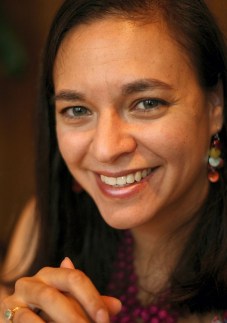
Photo credit: Todd Yates
CentroVictoria is supported by the University of Houston-Victoria, where I work. Its founding director is Dagoberto Gilb, author of BEFORE THE END, AFTER THE BEGINNING. Our goal is to promote Mexican American literature and art. Right now, we’re doing this in two ways. One is the publication of an annual magazine called HUIZACHE. It’s a beautiful magazine, and I highly recommend it for people interested in Latino literature. Please visit our website http://huizachemag.org/ to learn more. The second way we promote the literature is to help educators. Dagoberto and his son, Ricardo Gilb, edited a textbook that was just released by Bedford St. Martin’s. It’s called MEXICAN AMERICAN LITERATURE: A PORTABLE ANTHOLOGY, a great resource for those who want a taste of important works and a sense of how the literature has changed. Dagoberto and Ricardo did a phenomenal job. For my part, I wrote an instructor’s manual full of discussion questions. It’s available as a downloadable pdf file.
To learn more about me, my books, and my work with CentroVictoria, please visit my website at www.dianalopezbooks.com
 Marianne Snow Campbell is a doctoral student at The University of Georgia, where she researches nonfiction children’s books about Latin@ and Latin American topics and teaches an undergraduate course on children’s literature. Before graduate school, she taught pre-K and Kindergarten in Texas, her home state. She misses teaching, loves critters, and can also be found on Twitter and Facebook.
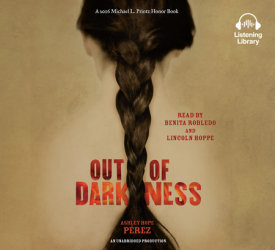 I have been listening to audiobooks for nearly three decades, so it was something of a dream come true to see Out of Darkness go into production shortly after it received a Printz Honor. Before production began, though, I found myself wondering if my strong opinions about narration, pronunciation, and the like would get in the way—or set me up for disappointment. What if the narrator’s voice didn’t match the texture or tone I’d imagined in writing?

 Drum Dream Girl: How One Girl’s Courage Changed Music by Margarita Engle and Rafael López. This is the inspiring true story of Millo Castro Zaldarriaga, a Chinese Afro Cuban girl enamored with drums. Because tradition in 1930s Cuba prohibits girls from taking up drumming, what Millo achieves by breaking this taboo is even greater than the music she makes. Through their combined art, Engle and López enchantingly encapsulate Millo’s dreams. For our full review, click
 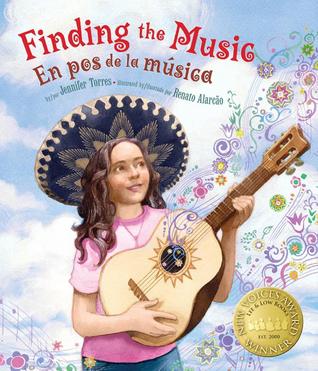 Finding the Music/En Pos de la Música by Jennifer Torres & Renato Alarcão. Before Reyna was born, her abuelito played in a mariachi band. His specialty was the vihuela, a small guitar-like instrument that has since fallen into disrepair. Reyna takes up the quest to get the repairs made. The vihuela becomes a powerful artifact that jump-starts the memory of the past, the important history of the community that tends to be invisible but is so essential to understanding the present. Here’s
  Funny Bones: Posada and His Day of the Dead Calaveras by Duncan Tonatiuh. Nineteenth-century Mexican artist José Guadalupe Posada created now-famous engravings of calaveras, skeletons engaged in everyday activities that have become synonymous with the Day of the Dead. In this picture book, author-illustrator Tonatiuh presents Posada’s life story, complete with background information on contextual events, such as the Mexican Revolution. Read our full
  Growing Up Pedro: How the Martinez Brothers Made It From the Dominican Republic All the Way to the Major Leagues by Matt Tavares. Dominican baseball star Pedro Martinez, who helped lead the Boston Red Sox to a World Series win, got his start with plenty of help from his big brother Ramón. This is a story of brotherhood and of dreaming big and achieving bigger, powerfully illustrated by the author. Here’s
 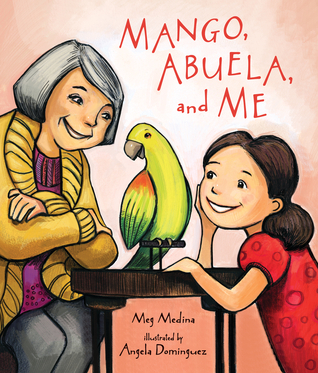 Mango, Abuela, and Me by Meg Medina & Angela Dominguez. Can a grandmother and granddaughter develop a close relationship when one speaks Spanish and the other speaks English? Of course! In Meg Medina’s warm tale of love, patience, and language, Mia and her abuela – along with a parrot named Mango – teach each other more than just words. Angela Dominguez’s rich, clean illustrations amplify this beautiful book. Check out
  Salsa: Un Poema Para Cocinar/A Cooking Poem by Jorge Argueta, Duncan Tonatiuh & Elisa Amado. Argueta has created several bilingual poetry books that celebrate traditional Latin American dishes–including Guacamole, Sopa de frijoles / Bean Soup, and Arroz con leche / Rice Pudding – and Salsa is just as mouth-watering. This story poem creates playful connections between salsa’s vegetable ingredients and the musical instruments that they resemble. Tonatiuh’s signature illustrations bring extra flavor to the mix. Don’t miss
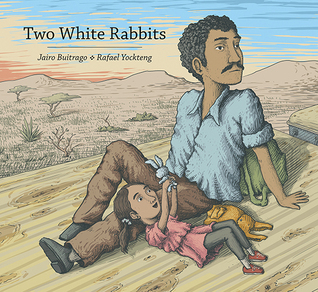 Two White Rabbits by Jairo Buitrago & Rafael Yockteng. A timely and moving picture book, originally published in Spanish, about a father and daughter traveling north towards the U.S. border. From counting what’s around her to meeting people and a “coyote”, this story, told from the child’s point of view, portrays migrant refugees journeys with deep empathy. Check out

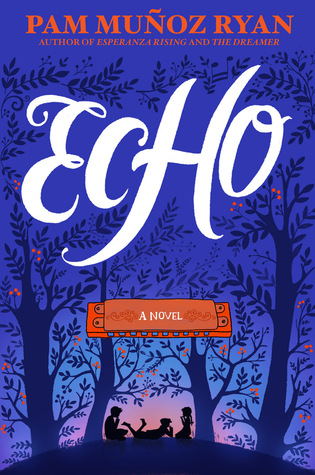 Echo by Pam Muñoz Ryan. Breaking from traditional narrative, this novel traces the connected stories behind a magical harmonica. Using diverse characters that live in far-flung geographical locations, the story introduces less familiar aspects of well-known historical events: laws regarding children with birth ‘defects’ in 1930’s Germany, conditions for orphans during the Depression in the US, and the segregation of schools in California for children of Mexican descent during World War II. Here’s
  Moving Target by Christina Diaz Gonzalez is a middle-grade fantasy thriller starring Cassie Arroyo, a Cuban-American expatriate living in Italy. After Cassie’s father is struck by a hail of bullets, whisked off to surgery, and then vanishes, she discovers that she, not her father, is the main target of the assassins. She then teams up with Asher and Simone to recapture the Spear of Destiny, a medieval artifact mysteriously linked to Cassie’s family line and the reason that her formerly blasé life at a private school is shattered overnight. Here’s
 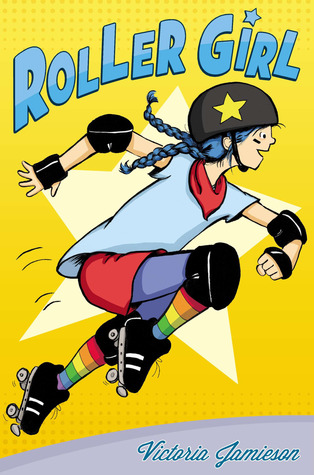 Roller Girl by Victoria Jamieson. In this highly engaging graphic novel, 12-year-old Astrid Vasquez finds her calling on a roller-derby track. Never mind that she brings no skating abilities to her first day of practice, or that her best friend would rather be at ballet camp. With the help of a savvy coach and teammates, and inspiration from a star jammer on the Rose City Rollers pro team, Astrid locates her derby groove. Check out
 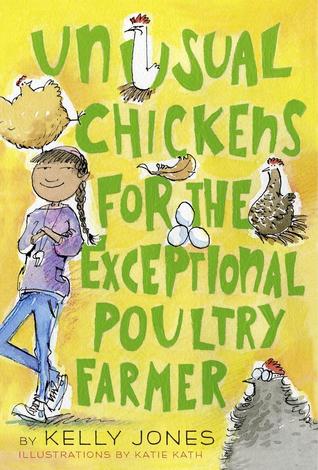 Unusual Chickens for the Exceptional Poultry Farmer by Kelly Jones. Moving from Los Angeles to a farm, Sophie gets quite a surprise when she encounters a cranky chicken with supernatural abilities. It’s easy to love Sophie, the half-Latina main character in this middle grade novel that upgrades the “new girl in town” idea by adding cool, magical chickens and letters from the beyond. Yes, we
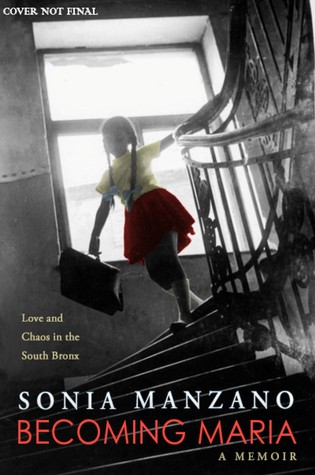 Becoming Maria: Love and Chaos in the South Bronx by Sonia Manzano. Sonia Manzano is an actor widely recognized for her role as Maria on Sesame Street. This memoir provides generations of readers with an opportunity to experience Sonia’s evolution from a young Latina, a puertorriqueña, in the Bronx into a promising performer. She powerfully reveals struggles to reconcile the love and abuse she witnessed in her family life. Don’t miss
 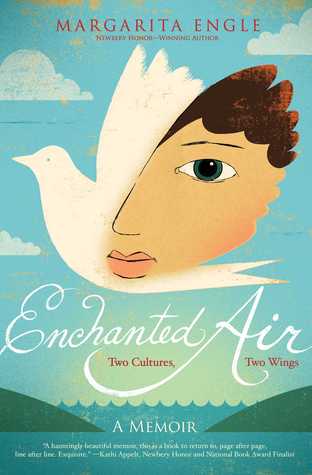 Enchanted Air: Two Cultures, Two Wings: A Memoir, by Margarita Engle. In this personal and deep mirror of her childhood, Engle showcases historical and emotional stories of life between two countries and two cultures. A memoir-in-verse that softly intertwines a love letter to Cuba and life, family, and memories attached to the island. Young readers will get a solid coming-of-age tale of growing up bicultural and the joys and pains found through that journey. Check out
 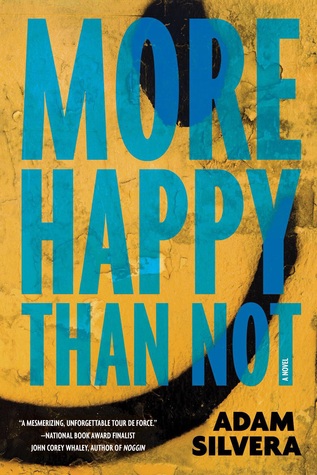 More Happy Than Not by Adam Silvera. Growing up in the Bronx with rough memories of his father’s suicide, Aaron Soto gets by with the help of a supportive girlfriend and a hardworking mom. But the promise of relief from the memories lures him into considering a radical procedure, and there are other self-discoveries to come. This debut novel offers a unique confrontation of race, class and sexuality. The main character is easy to root for in this ever-so-slightly sci-fi story. Read our full review
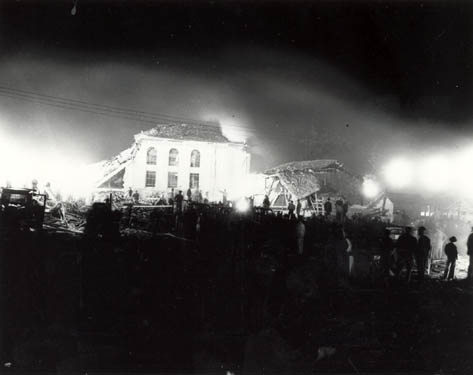
  Out of Darkness by Ashley Hope Pérez. The 1937 New London, Texas, school explosion—the worst school disaster in American history—serves as the backdrop for this riveting novel about segregation, love, family, and destructive forces beyond the control of its teen characters. The novel opens with the explosion, and then flashes back to show how the characters’ lives intersect before the event. Check out our
 Shadowshaper by Daniel José Older. Sierra Santiago’s expectations of a normal fun summer in Brooklyn flip upside down when supernatural events intrude: zombies, weeping graffiti murals, Caribbean magic. But Sierra is the kind of heroine who makes plans and follows through, is clear-eyed about the shortcomings of people she loves, and takes charge with attitude. Read more of
  Show and Prove by Sofia Quintero. The year is 1983. Blend together teenagers, hip-hop, urban plight, and racial tension; mix in summer camp trips and hanging out with friends, and you arrive at Show and Prove. This is a book about negotiating feelings and mistakes and tragedy. It’s a political book, examining identity and racism and bias in a way that never feels forced. For our full review, go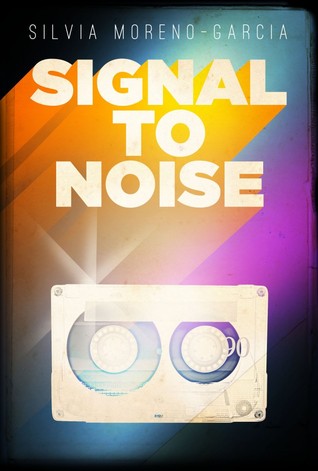
 Surviving Santiago by Lyn Miller-Lachman is the continuing story of the Aguilar family from Miller-Lachman’s novel Gringolandia. In this novel, Tina returns to Chile, which continues to be ruled by the Pinochet dictatorship in 1989. Tina falls in love with a local boy named Frankie, who has dangerous political connections and is a threat to her and her father, Marcelo, an important, targeted voice in the democracy movement. Here’s
 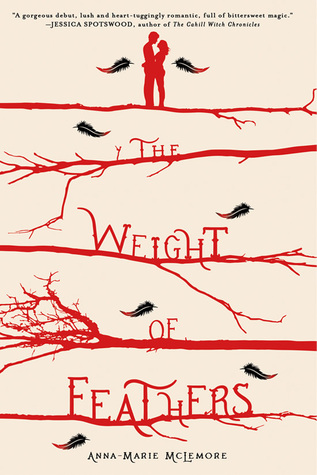 The Weight of Feathers by Anna-Marie McLemore is a 2016 William C. Morris Award finalist for good reason. McLemore’s lyrical prose centers on two traveling performance families, the Corbeaus and Palomas, hated rivals for generations who violently clash whenever they perform in the same town. A dangerous, forbidden romance develops between Lace Paloma and Cluck Corbeau that leads to family secrets revealed and a stunning climax filled with gorgeous magical realism. We will be reviewing the book in February and Anna-Marie will be writing a guest post for us. Check back then! In the meantime, check out
  When Reason Breaks by Cindy L. Rodriguez. On the surface, Emily and Elizabeth share little in common besides 10th-grade lit class and the study of Emily Dickinson’s poetry. But they’re both hovering on the edge of an emotional precipice and one of them will attempt suicide. Set in New England, this captivating novel delivers a strong portrayal of Latin@s and a cast of satisfyingly complex characters from diverse backgrounds. Check out our full review

 By Marilisa Jiménez García, Ph.D.
 Marilisa Jiménez García is a research associate at the Center for Puerto Rican Studies, Hunter College, CUNY. She works at the intersections of Latino/a Studies and childhood and children’s literature studies. She attended a performing arts middle school for theater and is currently working on a book manuscript on the history of Latino/a children’s and young adult literature and an essay on the Latino/a “YA” tradition. One of the chapters in her manuscripts is about Sonia Manzano’s work. She is also conducting a

 Latinxs in Kid Lit