Three Reasons Why I Use Spanish Phrases in My Writing

By Noemi Gamel

 “Motherf—s will read a book that’s one third Elvish, but put two sentences in Spanish and they [white people] think we’re taking over.”
 — Junot Diaz, Professor of Writing at MIT

Junot speaks plainly. This quote was the MIT professor’s response when asked why he used Spanish phrases in his writing. As a Mexican-American writer, whose first language was Spanish but was educated entirely in English, this topic strikes a raw chord with me.

I write in English, even the dialogue that is spoken by primarily Spanish-speaking characters, but I often interject Spanish phrases in my prose. From a strictly technical perspective, I do this because my cognition is in English and my Spanish writing level is poor. To remind the reader that the character speaks Spanish, I interject occasional phrases in Spanish that serve as electric literary language shocks. From a social and emotional perspective, there are three more complex and profound reasons for my use of Spanish phrases in my writing.

1. Because I must.

There is no greater agony than bearing an untold story inside you.
— Maya Angelou, Author and Poet

I blend Spanish with English because the language is an indelible part of me. It was my first language. I also use Spanish phrases to reflect the reality of the marriage of both languages in characters that grew up along the Texas-Mexican border, as I did. I may think in English. I may write better in English. Heck, I think I even speak English better than I do Spanish (but please don’t tell my parents!). In spite of the effects of American assimilation, Spanish is the untold story I bear inside of me. The Spanish words flow out of my hands just like carbon dioxide flows out with my breath. It is effortless, inevitable, and life-sustaining.

2. To teach children that speaking a second language is a gift.

“We need to help students and parents cherish and preserve the ethnic and cultural diversity that nourishes and strengthens this community – and this nation.”
— Cesar Chavez, Mexican-American farm worker and activist

I attended an elementary school in the south side of McAllen, Texas. McAllen is a small city less than 10 miles from the border with Mexico. There were maybe two children in my grade level whose parents spoke English at home. Most of the teachers at the school were of Mexican descent. Yet, we were not allowed to speak Spanish at school. The Spanish language was treated as a blemish that had to be obliterated.

Fast forward two decades (OK, maybe three) later, and I am astonished to see how many Texas public schools have dual language programs. My children attended a private Montessori school that included Spanish in the curriculum. Private Spanish immersion schools are popping up everywhere. Finally, the Texas education system has received a clue from the words of Cesar Chavez. The power and value of speaking two languages is fully recognized. Most importantly, educators no longer treat Spanish as a shameful entity. Latino children are given the freedom to be proud of their native language.

I interject Spanish phrases into my writing to reinforce that sentiment. I want Latino children to feel the same pride I felt when I first heard Madonna’s “La Isla Bonita” on the radio. The more these children see their native language in the media, whether it is books, television, or movies, the more that sense of pride and belonging is reinforced. Speaking a language in addition to English is not something to be swept under the rug. They should display it with pride.

3. To share the beauty of the Latino culture.

“A lot of different flowers make a bouquet.”
–Muslim Proverb

Growing up as the daughter of immigrants and living as an expatriate in Costa Rica as an adult has taught me about the intrinsic importance of language in cultural adaptation and acceptance. I use Spanish phrases in my writing to share the beauty of my culture with others. Spanish is just one of the flowers that make up the bouquet of diversity in America that adds to the natural beauty of the people that make up its population.

Spanish is a rhythmic, flowery language filled with metaphors. I often can capture an emotion better with a Spanish term or phrase than I can in English. I hope that when I do that, the reader, especially if they are not Latino, catches a glimpse into the colorful Latino culture.

In the recent months, the lack of diversity in children’s literature has taken the spotlight in part as a result of the formidable efforts of the #WeNeedDiverseBooks team. As a writer, I have felt validated by this group regarding my use of Spanish words and phrases in my writing. I hope other writers follow suit. As a reader, I am excited to think that I may now encounter other languages in the books that I read. There is no reason to be afraid.
NoemiNoemi Gamel was born and raised in south Texas along the Mexican border. She practiced as a physician for eight years before putting her career on hold to write diverse children’s fantasy books and to travel the world with her partner, Chris, and their two children. She wrote The Black Rose and Other Scary Stories That Happened To Me! as an homage to the Mexican folktales of her childhood. The Iris of Issoria, a children’s fantasy novel, will be available October 7, 2014. For more information, visit her at www.NoemiGamel.com or follow her on Twitter at @NoemiGamel.

Shine a Bright Spotlight on Unsold Diverse Books: An Idea Inspired by Hollywood’s Black List

By Patrick Flores-Scott

I’m happy to have the opportunity to be blogging here at Latin@s in Kid Lit!

Once again, I’ve got the We Need Diverse Books movement on my mind.

If you’re reading this post, I’m sure you’re very aware that children’s literature does not reflect the true diversity of this land. And you’re very likely to agree that it must.  And you can explain the myriad reasons why it must. And you’ve most likely asked yourself, How do we fix this? And I bet you’ve got ideas.

It’s going to take many ideas from myriad sources and a lot of people working together in every phase of the publishing industry to make change happen.

I’d like to use this post to throw one possible idea into that mix. For many reasons, I’m not the guy to put this one into action, but I think it’s an idea worthy of consideration, and it would be very cool if someone ran with it.

The idea is stolen from Hollywood. It’s called the Black List. I’m not referring to the mid-last-century process of blacklisting supposed Hollywood communists and those who refused to name names, in an effort to keep them from ever working in this town again. And I’m not referring to NBC’s TV show, The Blacklist. I’m referring to the Black List, which is a list of the best unsold scripts for each calendar year. Simple as that.

The List was started by Franklin Leonard in an effort to bring attention to scripts that otherwise, may never have seen the light of day, and in an attempt to create a path to success for yet-to-be-produced screenwriters.

Check out this link to an interview with Franklin Leonard. It’s is a great introduction to the Black List.

In the interview, Franklin Leonard states that:

“…the more that we can do to shine a very bright spotlight on people doing ambitious and very high quality work, the more likely it is that those scripts get made. I think the role we play is to shine that bright spotlight and say, “Here’s a bunch of stuff that maybe you overlooked, that maybe you loved but you didn’t pull the trigger on for whatever reason; it might be worth taking a second look.”

He goes on to say that’s exactly what happens when the list comes out each year. There are meetings all over Hollywood where executives go over the list and reconsider scripts they’d previously passed on, or they find new scripts that they then request from writers and agents.

Since 2005, over two-hundred films that made it onto a Black List have been produced. Some of them include Argo, American Hustle, The Descendants, Juno, The Wolf of Wall Street, Slumdog Millionaire, The Social Network, and The Wrestler.

In an attempt to start a dialogue, here are some ideas about how the Black List could work in the world of kid lit:

The Kid List (or whatever it’s going to be called) committee would solicit manuscripts from writers from underrepresented backgrounds, or manuscripts with underrepresented main characters, regardless of the writer’s background.

The purpose of The Kid List would be to connect publishers with manuscripts that an esteemed committee would deem worthy of publication. It would also be a vehicle for connecting unrepresented writers with agents. Furthermore, the list could be used as a form of mentorship for writers of promising manuscripts that do not make the list. These writers would be given quality feedback and the opportunity to resubmit to the list the following year.

The manuscripts could be sent from agents or from individuals who do not yet have representation. I picture manuscripts coming from unpublished writers, but I think it’d also be appropriate for a published author to submit a manuscript that has gone through the traditional editorial submission process without garnering a deal.

At the end of the year, the committee would create a list made up of  (whatever number) of manuscripts that they feel are worthy of publication. I picture the list being unveiled by the committee during one of the major book conventions.

The make-up of the selection committee would be crucial to the success of The Kid List. In order to shine that spotlight that Franklin Leonard talks about, the folks on the committee would need to be bright lights in their own right. They should be influential librarians, well-regarded booksellers and big-name authors. It would be a major time commitment—maybe like being a member of the BFYA committee—but I think there are enough big-time players out there who value diversity in children’s literature and who would like to play a role in making that diversity happen.

Recruiting a selection committee, creating its rules and structures… all that, would be a big challenge for some dynamic, driven passionate individuals. Are you one of them?

My big fear would be that the list would come out… and nothing would happen. Editors and agents would greet it with a big whatever. I just don’t think that’d be the case. I truly believe that, for the most part, editors would like to publish more “diverse books.” But change is hard. People need a nudge. They need help. They need to be educated and they need someone they respect telling them it’s okay to go for it. But more than all that, The Kid List would create marketing buzz for books before they’re even sold. What publisher wouldn’t want a piece of that?

I could picture the first Kid List coming out and one book being published off that list. It might not seem like much, but editors and agents would know that a cool book from an unknown author was sold, at least in part, because of The Kid List. They’d check it out a little closer the next year and maybe then a few more books would be published because of The List. From there, it’s not hard seeing a time and place where The Kid List has done for diversity in kid lit what the Black List has done for Hollywood.

And it’s not hard to picture young writers from diverse backgrounds, inspired by the idea that there’s a path that I can take to get a book published. And the characters in that book can look like I do.

There it is. One idea. Let me know what you think. Or don’t, and just go for it.

PatrickFS1Patrick Flores-Scott was, until recently, a long-time public school teacher in Seattle, Washington. He’s now a stay-at-home dad and early morning writer in Ann Arbor, Michigan. Patrick’s first novel, Jumped In, has been named to a YALSA 2014 Best Fiction for Young Adults book, an NCSS/CBC Notable Book for the Social Studies and a Bank Street College Best Book of 2014. He is currently working on his second book, American Road Trip.

Book Review: The Color of My Words by Lynn Joseph

By Kimberly Mach

334442DESCRIPTION: Twelve-year old Ana Rosa is a blossoming writer growing up in the Dominican Republic, a country where words are feared. Yet there is so much inspiration all around her – watching her brother search for a future, learning to dance and to love, and finding out what it means to be part of a community – that Ana Rosa must write it all down. As she struggles to find her own voice and a way to make it heard, Ana Rosa realizes the power of her words to transform the world around her – and to transcend the most unthinkable of tragedies.
MY TWO CENTS: The message here is understanding free speech and the power of words. Even though this is the key to the whole story, I found myself loving the book for other reasons, too.

The Color of My Words, by Lynn Joseph, is told through poetry and prose. The start of each chapter is a poem written by Ana Rosa, with the final poem, The Color of My Words, lending itself to the title.

It was a surprising read for me because I got more than I expected. Reading the novel allowed me a window into Dominican culture in a way that films and textbooks have not. Perhaps it’s that the story is about the lives of one family and their neighbors in one village. Their traditions, their laughter, and their struggles were tangible to me because Lynn Joseph brought those characters to life. When I closed the book the colors and rhythm of the culture stayed with me as much as the message.

Joseph shows us that there is poverty in the DR, but the people here are not poor. These are, in fact, two different things. For the majority of Dominicans, economic struggle is part of life. It is real and ever-present. In the opening of the story, Ana Rosa says she can’t have a notebook of her own because the cost is equal to “two whole dinners” for her family. Despite this, it’s the richness of life with family and friends that abounds. At the end of every two weeks, on pay day, there is a celebration, a fiesta.  “On fiesta days, people forgot their roofs that leaked rain, and the jobs that were closing down, and the tourists that didn’t come this year, and how much they missed husbands and brothers who worked hard in Nueva York and sent money home by Western Union. On fiesta days, there were no problemas!”

One of the most memorable moments of the book for me is when Ana Rosa shares with us what it is like to dance the merengue on these fiesta days. She describes the music that flows through the limbs of her Papi, straight into the ground, and how one seems to pull the beat from the other. It is a unique point of view because Ana Rosa cannot dance. When others dance at fiesta Ana Rosa serves food and takes care of the babies. It is her father, her Papi, who finally teaches her how to feel the music, a music that is a constant rhythm in the lives of her family and neighbors. In a moving scene that takes the reader from the back porch to the beach near their home, Papi teaches Ana Rosa to feel the world around her, to listen to the sea and find the rhythms there.

This strength and new courage give Ana Rosa the confidence to use her words and write an article about the rights of the village being infringed on by the government. This action terrifies Mami because people who speak against the government in their country often pay a steep price. This is where the powerful message comes in. Lynn Joseph constructs this story in a way that will grab students and help them to understand both the power of words and the sacred freedom of speech. After reading The Color of My Words, they will be less likely to take that right for granted.

TEACHING TIPS: The social studies connections abound, but they go beyond culture and geography. The real connection when students finish this book will be made in civics and government. What citizens of the United States enjoy as the first amendment, the freedom of speech, religion, and assembly, is not consistent throughout the world. In some countries, citizens cannot speak their own mind. The penalties are stiff ranging from fines to imprisonment and even death. For students to read about characters who risk so much to speak their minds, in voice or print, will be humbling and allow them to gain a new understanding and appreciation for the right to free speech. Students will come away from this book understanding that no system is perfect, but those that protect and honor a citizen’s right to speak, allow debate and political discourse, are respectful of our human dignity.

In Language Arts, the novel may be used in several ways, including a study in poetry. Ana Rosa’s poetry uses several different rhyme schemes throughout the book and her topics are varied. She writes about wash day with Mami, her desire to record her thoughts on paper, and the colors in an election year. After students have read the book, they may reexamine these poems and read them in a new light. There are multiple passages in which a study of figurative language can be used. Among my top picks here would be the scenes where Papi teaches Ana Rosa to dance, where Ana Rosa shares with us the feelings of her first crush, and the scenes where she is writing and the freedom she feels in being able to put words to paper. Chapters may be used in isolation as well, but I would make sure to have a copy of the book nearby because students will want to read it once they get the experience of one chapter!

AUTHOR: Lynn Joseph has a wealth of experiences that she brings to her writing. Lynn was fortunate to spend time in both Trinidad and the United States when she was younger. According to her website, she loves to travel and meet people in new places. This is undoubtedly where her stories come from. When she goes to a new place she experiences it fully, and fortunately for her readers, she chooses to share it through the power of story. She is the author of several picture books and Flowers in the Sky, a young adult novel. The Color of My Words was a Notable Book for a Global Society, an ALA Notable Children’s Book, and won the Américas Award for Children’s and Young Adult Literature. For more information, please visit her website which contains a full interview and tips for student writers.

FOR MORE INFORMATION ABOUT The Color of My Words, visit your local library or bookstore. Also check out worldcat.orgindiebound.orggoodreads.comamazon.com, and barnesandnoble.com.

Kimberly Mach (2)Kimberly Mach has been teaching for sixteen years and holds two teaching certificates in elementary and secondary education. Her teaching experience ranges from grades five to twelve, but she currently teaches Language Arts to middle school students. It is a job she loves. The opportunity to share good books with students is one that every teacher should have. She feels privileged to be able to share them on a daily basis.

Book Review: Freddie Ramos Stomps the Snow by Jacqueline Jules

By Ashley Hope Pérez

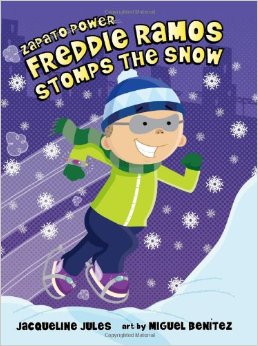
FreddieRamosDESCRIPTION FROM THE BOOK JACKET: The snow’s no match for zapato power! A blizzard in March? It’s happening in Starwood Park! Luckily there’s a snow day at school because Freddie’s helping Mr. Vaslov clear the sidewalks with his latest invention—zapatos made just for the snow!
The weather can’t stop a thief from causing trouble in the neighborhood, though. Freddie wants to catch the culprit, and he can’t do it alone! But will the meanest kid in Starwood Park be Freddie’s crime-fighting partner?

MY TWO CENTS: Written by Jacqueline Jules and illustrated by Miguel Benítez, Freddie Ramos Stomps the Snow is the fifth of the Zapato Power books. This sweet, playful tale centers on the special experiences around a school snow day, as experienced by the protagonist of the series, Freddie Ramos. Freddie has super zapatos thanks to a special neighbor, who helps him transform his usual sneakers into super snowshoes to help his neighbors. What sets Freddie Ramos apart is how the story strikes a positive note while accurately reflecting the experiences of kids from a range of backgrounds.

The setting for Freddie Ramos opens up possibilities for subtly engaging with experiences that are relatively neglected in the sunny tales targeted at the primary grades. Despite the fact that many students live in apartments and know some financial hardships, the vast majority of books for children feature middle-class families living in single-family homes. It is refreshing, then, to follow the escapades of Freddie Ramos and his friends at the Starwood Park apartment community.

Financial concerns are a reality for Freddie and his friends, but Freddie Ramos also suggests that even young kids can take positive actions in response to difficult circumstances. Freddie worries about not having snow boots, and we learn that most of his shoes and clothes are hand-me-downs from a friend’s older brother. Importantly, Freddie frames this fact in a way that shows a focus on the positive in his community: “At Starwood Park, people shared.” Attentiveness to the needs of others is prominent in the book, and later, we see how Freddie enacts generosity. In addition to his work cleaning paths for neighbors, when he notices that most of the kids don’t have a sled, he proposes a strategy for sharing that allows all the kids in the complex to have a turn going down the big hill. The Starwood bully, Erika, appears in a more vulnerable light when her grandmother’s purse is stolen with their rent money inside.

Yet these more serious elements do not weigh down the buoyant narrative. My son (age 4) loved the special zapatos and the watch that Freddie uses to turn them on. I enjoyed the casual, untranslated incorporation of Spanish. (For why I think it’s so important that books not gloss these phrases, see this post.)

Jacqueline Jules also deftly handles the social terrain of elementary school. Like many sweet kids, Freddie finds it easier to protect his friends from bullies than to help the bully herself. But his character stretches, ultimately rising to the challenge of being kind to an unlovable classmate. Readers see that Freddie’s greatest superpower is the generosity and kindness he has learned from his community.

TEACHING TIPS: Geared toward readers in grades 1-3, the Zapato Power series would be at home on a bookshelf next to the Flat Stanley and Captain Underpants books and is a great read-alike option for students who have enjoyed these. If used for reading groups or as a class read-aloud title, Freddie Ramos Stomps the Snow offers some great opportunities for reading-writing connections. Offering a range of prompts is a great way to differentiate for students with varied writing proficiencies and interests. Try some of the following prompts with students. Younger children may be asked to draw a picture that responds to a similar prompt.

  • What would you do on a snow day?
  • Mr. Vladek is always designing new inventions for Freddie Ramos to try out. If you could turn one piece of clothing into a superhero tool, what would it be and how would it work?
  • Write a diary entry from Erika’s perspective to show how she feels about Freddie Ramos after the purse thief is caught.
  • We don’t find out much about the purse thief. Write his confession. Why does he commit these crimes?

JJ2Additional Zapato Power activities are available on Jacqueline Jules’s website here. And check out the trailer below for a closer look at Miguel Benítez’s adorable drawings.

Jacqueline Jules is the award-winning author of more than twenty children’s books, many of which were inspired by her work as a teacher and librarian. She is also an accomplished poet. When not reading, writing, or teaching, Jacqueline enjoys taking long walks, attending the theater, and spending time with her family. She lives in Northern Virginia.

The Comadres y Compadres Writers Conference Offers Great Panels & Intimate Setting

By Cindy L. Rodriguez

image (1)

Bestselling author Esmeralda Santiago

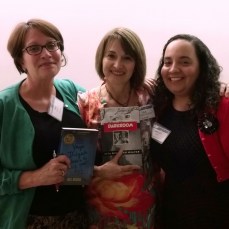
Once, I attended a large conference for educators, and when I approached the keynote speaker to ask a question, handlers surrounded her and ushered her away. I bring this up because the Comadres y Compadres Writers Conference was the opposite experience. The conference, held at Medgar Evers College in Brooklyn on September 27, was an intimate affair, meaning the well-known agents, editors, and authors were *right there* and accessible. Bestselling author Esmeralda Santiago posed for pictures. Meg Medina paused in the hallway to sign books. Conference-goers lunched at small tables with Stacy Whitman from Tu Books and Adriana Dominguez from Full Circle Literary. How cool, right?

The conference, in its third year, was developed by Dominguez, Marcela Landres, and Nora de Hoyos Comstock, the founder of Las Comadres para las Americas to “provide unpublished Latino writers with access to published Latino authors as well as agents and editors who have a proven track record of publishing Latino books.” The one-day event offered panels, one-on-one critiques, a pitch slam, and a lunch-time speech by keynote speaker Esmeralda Santiago, who told her own publishing story and emphasized the discipline needed to be a professional writer. Books of all the presenters were also available from La Casa Azul, a New York City bookstore that specializes in Latino Literature.

image (2)

Author Meg Medina

Here were some of the highlights:

Author Meg Medina, winner of the Pura Belpré Award for Yaqui Delgado Wants to Kick Your Ass, emphasized the importance of diversity in children’s literature. “We’re looking at a diverse set of kids in the (school) seats, so we need a diverse set of books.” She added that Latin@ books are not only for Latin@s: “Our books matter to all kids of all cultures.”

In terms of craft, Medina told writers to put their efforts into creating great work, not a great platform. The writing comes first. She also said she is not a methodical planner. Instead, she follows her character–she lets the characters speak to her–as she is writing and often asks, “What are you really afraid of? What’s really the problem?” When creating an antagonist, writers should “create a worthy opponent, a layered opponent. Don’t create a stereotype, especially for the bad guy.”

Medina spoke at a later panel with our own Lila Quintero Weaver, author of Darkroom: A Memoir in Black and White. During that session, moderated by Shelley Diaz, Senior Editor of School Library Journal’s reviews, Lila spoke about her non-traditional publishing route that led her to become an accidental author. Her graphic novel was originally a college project that eventually landed on the desk of the University of Alabama Press editors. Lila said she couldn’t think of a single disappointment in publishing so far and encouraged writers to see the process as an opportunity to grow, not just get published.

image

Meg Medina, Lila Quintero Weaver, and Shelley Diaz

Here are Lila’s thoughts after the conference:

“One of the exceptional values of conferences like Comadres is what they offer over social media alone. You can share a table at lunch, laugh together, chat about life beyond writing, and listen to the same speaker in the same moment. It’s the magic of synergy, which in the case of Latin@s comes with extra simpatico in the sauce! I returned home with a pocketful of business cards, and my Twitter feed lit up with Latin@ conversations on multiple topics. Let’s not forget the opportunity to discover new writers. My Goodreads update will soon reflect that fact. I wasn’t seeking representation or editorial feedback, but those opportunities were present at the conference too, another BIG reason for attending. So yes, my experience boils down to making great connections with Latin@ writers, the kind that endure if you work on them.”

For those seeking representation and editorial feedback, we have good news. Agents and editors said they want more diverse titles, but they said they’ve seen too many memoirs and depressing stories cross their desks. They would, however, like to see more young adult manuscripts with Latin@ protagonists. Nancy Mercado, editorial director at Scholastic said she’d love a Latino Cheaper by the Dozen, and Johanna Castillo, vice president and senior editor at Atria/Simon & Schuster, said she’s hoping to see rich stories about immigrant children raised without their families in the U.S.

Organizers said attendance at this year’s conference doubled from last year, a great sign that the event will be around for years to come.

Click here for another report on the conference, and click here for more  information about Las Comadres.

La Casa Azul: El Barrio’s Independent Bookstore

By: Zoraida Córdova


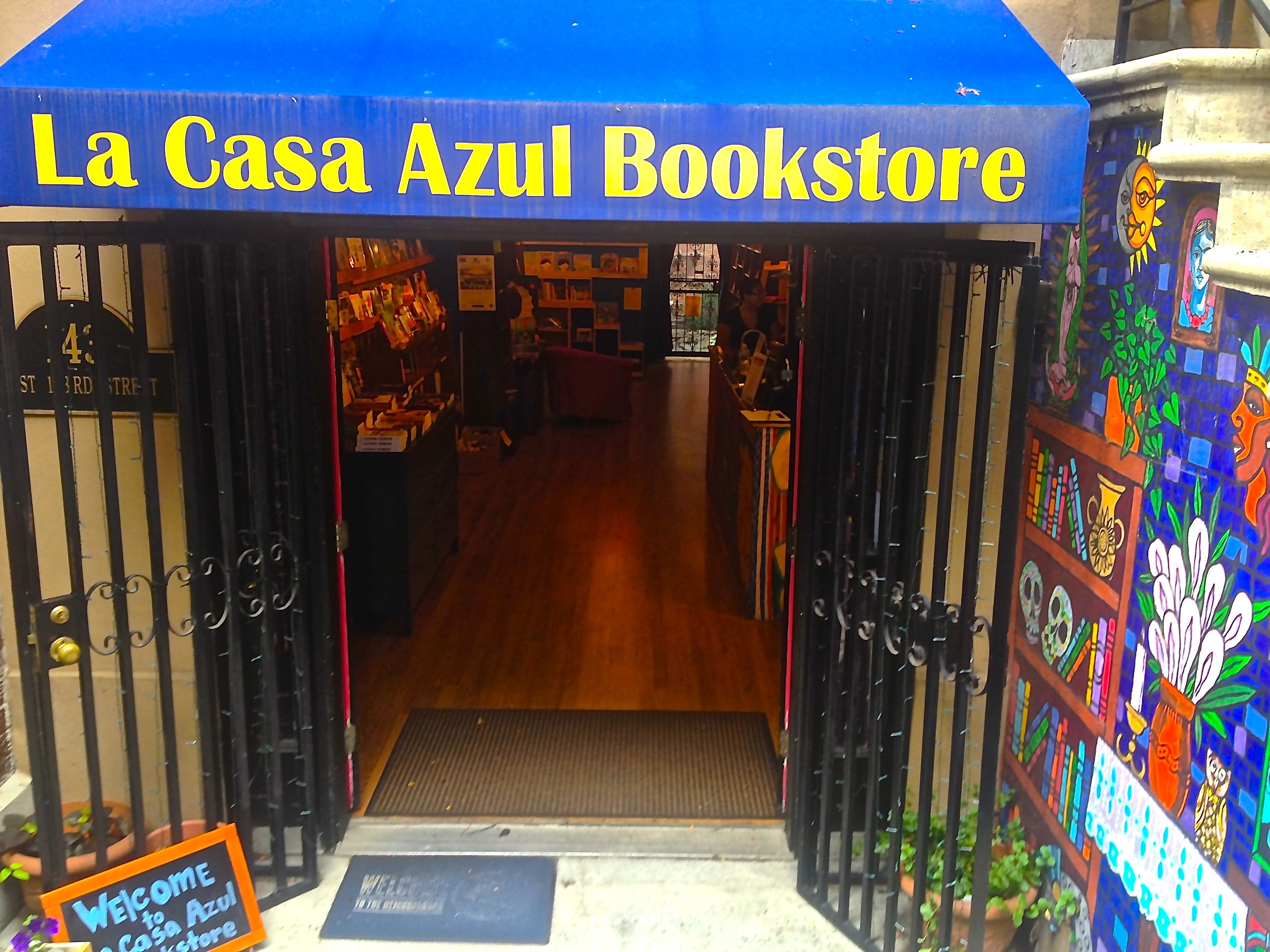
La Casa Azul 4

Entrance. Photo by Z.C.


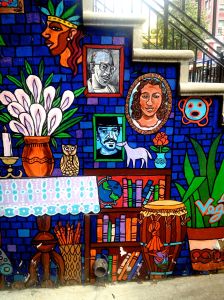
La Casa Azul Vega

Manny Vega’s mural. Photo Z.C.

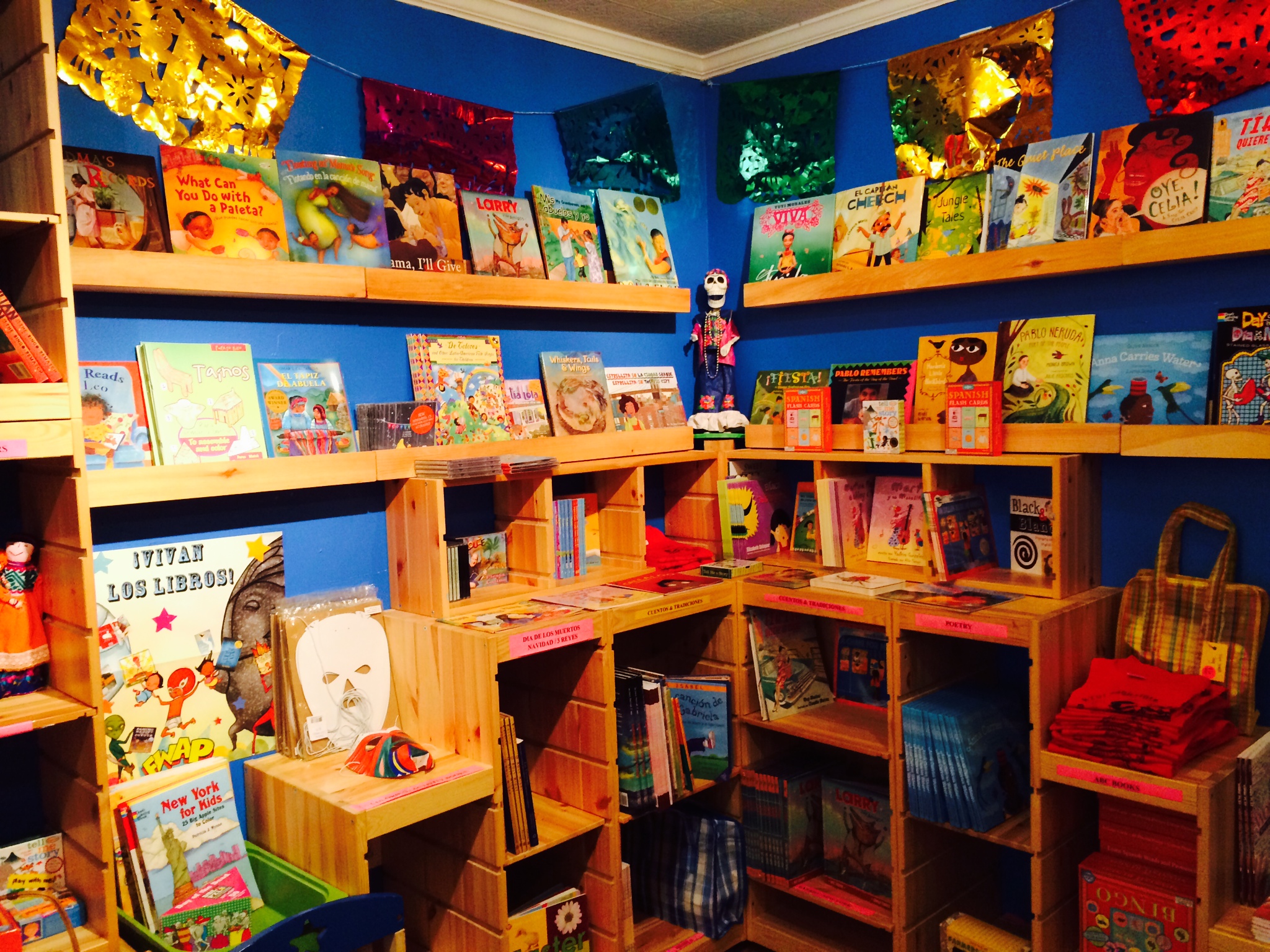
El Barrio, or East Harlem, is home to La Casa Azul, named after Frida Khalo’s home-turned-museum. Raising “40k in 40 days” through a crowd-funded campaign, Aurora Anaya-Cerda was able to open the doors to the store in June of 2012. It’s encouraging to see that the public is willing to contribute to bring these projects to life. I remember keeping up with the bookstore’s progress on Lucha Libros. From painting to building shelves, it was exciting to know that this kind of indie was coming to a neighborhood that otherwise doesn’t have access to a wide range of Libros Latinos. In a city that is 28.6% Latino, there is a huge need for access to these books.

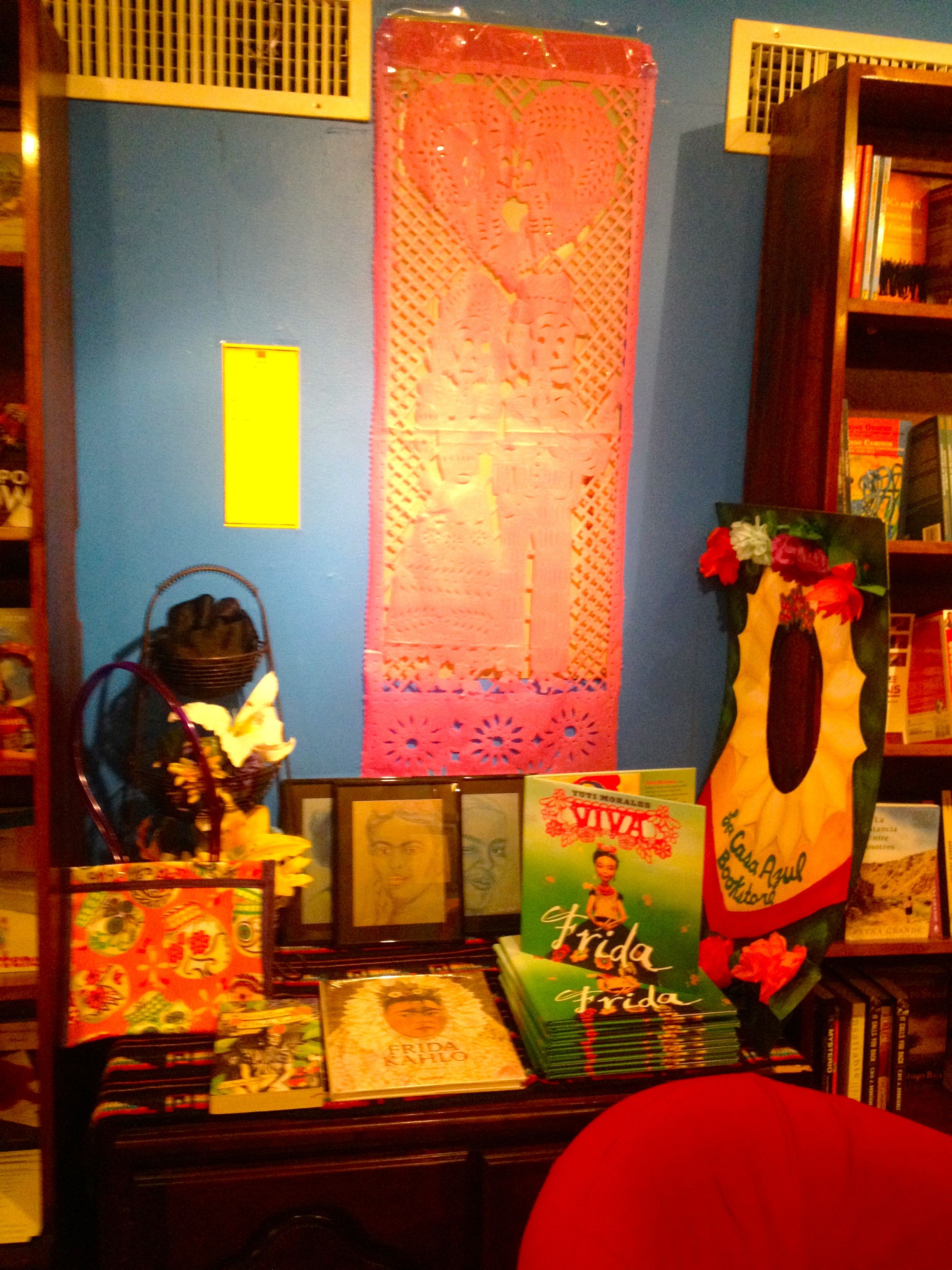
La Casa Azul 1

All things Frida Khalo. Photo Z.C.

So, how do you visit? To get to La Casa Azul, take the 6 train to 103rd street in Manhattan. This lets you off onto an area lined with bars, restaurants, bodegas, a botanica, and schoolyards. The neighborhood is also home to El Museo Del Barrio, if you’re in the mood for more art. But first, go to La Casa Azul. Make a left on Lex and a right at a bright blue awning. Down the steps you’re greeted by a gorgeous art installation by Manny Vega. You can see the process of his work here.

Once inside, the bookstore is warm and inviting. Aurora Anaya-Cerda is there with another employee stacking books. Named and inspired by Frida Khalo’s home, La Casa Azul has many references to her that range from paintings, to art books, to art installations. LCA even has its own exhibit/gallery. Their current showcase is called “A Ribbon Around a Bomb,” by Suhaly Bautista, The Earth Warrior. I’m excited to see what the next art display will be.

La Casa Azul 2

Shelves. Photo Z.C.

The great thing that you can see about La Casa Azul, is that it’s not just about the book events, but about community. Take a look at the events calendar for a wide selection of family-friendly music events, book readings and signings, literary conferences, volunteer outreach, and even BYOB paint parties.  They recently held a book drive for young immigrant children in New York. In addition to these events, La Casa Azul is available for space rental. Because of all of these things, La Casa Azul is important. I’d like to think that the independent bookstore is making a comeback, despite the threat of the digital age. Sure, you can get a book on your smart device or tablet, but there’s something special about being able to congregate in a safe space that embraces Latino culture.

The next time you’re uptown, stop by and pick up a couple of books.

photo

Kid Lit section. Photo by L.L.