Latin@s in Kid Lit at the Library: Interview with Patricia Toney

By Sujei Lugo

Long overdue is the need of a myriad of children’s books that embody the diversity of our communities and society. Children and adults of all backgrounds should have the opportunity to be exposed to historically untold and misrepresented stories in children’s literature. For years, educators, authors, librarians, illustrators, scholars, parents, and other community members have challenged and critiqued the gaps and invisibility of diverse populations, as well as stereotypes and inaccuracies present in children’s books. Although there have been several efforts to expand the availability of diverse children’s literature (The We Need Diverse Books campaign comes to mind as a recent example), the percentage of diverse titles still doesn’t reflect the world around us in terms of numbers and cultural experiences. But despite these problems, flourishing from this serious gap (and misrepresentation) inside the children’s literature world, we have encountered great titles that portray the Latino experience and Latinos/as in the United States.

Organizations like REFORMA (The National Association to Promote Library & Information Services to Latinos and the Spanish Speaking) and initiatives like Día de los Niños/Día de los Libros and the National Latino Children’s Literature Conference are constantly advocating and promoting the incorporation of Latino children’s literature in library collections and programming. Several awards such as the Pura Belpré Award, Tomás Rivera Mexican American Children’s Book Award, International Latino Book Awards, and Américas Awards, also play a role in acknowledging Latino children’s literature. All these initiatives help in raising a much-needed awareness of the existence of Latino children’s books, but, in addition to celebrating and promoting them, an urgent need exists to incorporate and use  these books in our classrooms and libraries.

We need to keep in mind that two pivotal places where children constantly interact with books and stories are schools and libraries. How are librarians bringing Latino children’s books to children? How are they incorporating them into their collections, school curriculum, and programming? In a bid to try to answer these questions I decided to develop a series of interviews with children’s librarians, youth services librarians, and school librarians, where they can  share their experiences, knowledge, and challenges dealing with Latino children’s literature. Although there are great resources and literature that can serve as guides to Latino children’s librarianship (Celebrating cuentos: promoting Latino children’s literature and literacy in classrooms and libraries, 25 Latino craft projects, Programming with Latino children’s materials: a how-to-do-it manual for librarians, and Serving Latino communities: a how-to-do-it manual for librarians), the communities that libraries serve are different and constantly evolving. Librarians are met with the ongoing challenge to stay up-to-date and relevant to their needs.

In this first post of our Latin@s in Kid Lit at the Library series, I’m honored to interview Patricia Toney, a fellow librarian and REFORMA member and great advocate of diversity in children’s librarianship.
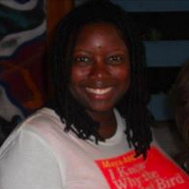
Pat Toney Librarian

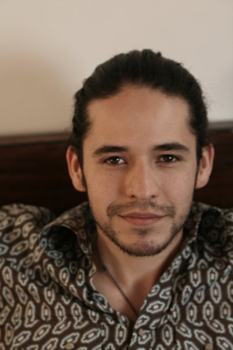
Patricia Toney, Bilingual Children’s Services Librarian
San Francisco Public Library

Tell us a little bit about yourself, your identity, and your library.
As the offspring of parents who immigrated from Guyana and Costa Rica, I identify as Afribbean. I’m a native of Southern California who grew up in a working class Spanish speaking community, and who later moved to the San Francisco Bay Area to attend University of California, Berkeley. I have a master’s in Counseling Psychology and a second master’s in Library Science. I started my professional career in International Student Services, then I worked in Student Counseling, and now I’m in my third career as a librarian.

I’ve been working at San Francisco Public Library (SFPL) for three years; moving up from temporary, to part-time, and finally, to full-time a year ago. SFPL serves a linguistically diverse community. I work at the Main Library and I’m in charge of providing Spanish language children’s services to families in Tenderloin, San Francisco, an economically challenged and densely populated part of the city.

What process does your library take to select and acquire Latino children’s books for the collection? Do you have any input in this process?
We have a dedicated Spanish language collection development committee and individual selectors for specific genres. My position as a Bilingual Children’s Services Librarian holds a provisional seat on the Spanish language selection committee, so my input on children’s material selection is welcomed.  Committee members regularly attend book fairs such as FIL (Guadalajara International Book Fair) and I annually attend the Bibliotecas Para La Gente Book Fair.

What type of children and youth programming does your library offer using Latino children’s literature?
I conduct a weekly bilingual family storytime and system wide we host five Spanish and Bilingual (English-Spanish) storytimes a week. We also have a ¡Viva! Latino Heritage Month Celebration, which includes music, dance, crafts, food, and films. This year, I hosted a Zumba program at my location and a Día de los Muertos altar. Also, at the end of our summer reading program, I hosted an afternoon of Lotería.

In terms of promoting events and community outreach, what does your library do?
In addition to word of mouth, social media, and printed announcements, we have four bookmobiles which traverse the city. The library recently took part in Sunday Streets-San Francisco (open street event), the Friday Night Market and Litquake (San Francisco Literary Festival). The San Francisco Public Library, Mission Branch (located in a historically Spanish speaking neighborhood) hosted a memorial reading in honor of Gabriel García Márquez during Litquake.

What is the reaction of kids, teens and families regarding Latino children’s books and programming? And the reaction of the library staff?
Children spark up when they hear or see something that is familiar to them. Parents appreciate the opportunity to share their home language with others in the community.  Colleagues and library staff are generally supportive of diversity in action. One of the library’s strategic priorities is to have “collections, services and programs that reflect diversity and inclusion.

What would you like to do in terms of programming that you haven’t been able to?
I would ideally like to hold monthly evening programs for Spanish speaking families. Tenderloin, San Francisco is a socially-oriented rich community, so there’s a lot of competition for evening programming. So not a lot of families come to the San Francisco urban civic center area for evening programs.

Do you address issues of prejudice and oppression in your library through and in Latino children’s books?
As a member of the Association of Children’s Librarians of Northern California, these issues are always addressed. SFPL has a commitment to diversity and the book selection committee takes racism and oppression into consideration before buying a book. With the population I serve, I tend to address sexism and ableism more than racism. I am always open to discussing these issues when children ask and point out opposing viewpoints and when I hear biased language. I like to give patrons the option to think for themselves.

Any advice for other librarians who would like to use and incorporate Latino children’s literature into their programming?
Latino children’s literature isn’t just for Latinos. One can incorporate Latino children’s books into book displays, class visits, and recommended reading lists.

Which are the most popular Latino children’s books at your library?
I have to say that most of our popular titles are the Spanish language translations.

And finally, which Latino children’s books do you recommend?
Anything written by Monica Brown, Yuyi Morales, or Gary Soto; Anything illustrated by Rafael López or Jose Ramírez; Esperanza Rising by Pam Muñoz Ryan; The Revolution of Evelyn Serrano by Sonia Manzano and I’m currently reading Aristotle and Dante Discover the Secrets of the Universe by Benjamin Alire Sáenz.
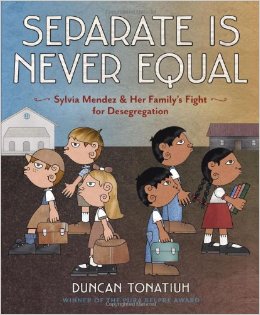
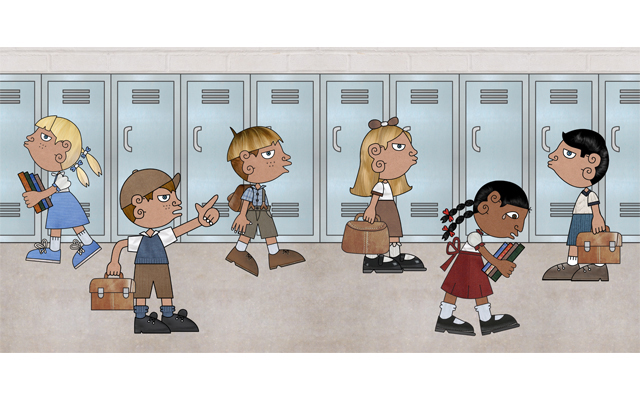
Book Review: Separate is Never Equal: Sylvia Mendez and Her Family’s Fight for Desegregation by Duncan Tonatiuh

Reviewed by Lila Quintero Weaver

Separate is Never Equal 2

DESCRIPTION OF THE BOOK: When her family moved to the town of Westminster, California, young Sylvia Mendez was excited about enrolling in her neighborhood school. But she and her brothers were turned away and told they had to attend the Mexican school instead. Sylvia could not understand why—she was an American citizen who spoke perfect English. Why were the children of Mexican families forced to attend a separate school? Unable to get a satisfactory answer from the school board, the Mendez family decided to take matters into their own hands and organize a lawsuit.

In the end, the Mendez family’s efforts helped bring an end to segregated schooling in California in 1947, seven years before the landmark Supreme Court ruling in Brown v. Board of Education ended segregation in schools across America.

Using his signature illustration style and incorporating his interviews with Sylvia Mendez, as well as information from court files and news accounts, Duncan Tonatiuh tells the inspiring story of the Mendez family’s fight for justice and equality.

MY TWO CENTS: Kudos to Duncan Tonatiuh for shining a bright spotlight on a consequential, but often overlooked chapter of American civil rights, and bringing this true story of Latinos fighting for racial justice to young readers. The book features Tonatiuh’s trademark, award-winning illustration and his retelling of the facts.

In the mid-1940s, when the action takes place, Sylvia Mendez is nine years old. She’s the daughter of Gonzalo Mendez, a Mexican-born, naturalized citizen of the United States, and his wife, Felicitas, from Puerto Rico. When the Mendez family moves from Santa Ana, California, to a farming community in Orange County, Sylvia and her brothers are not permitted to enroll in the neighborhood school and are instead sent to a school designated for Mexicans, which is farther from home. Unlike the white children’s school, it’s dirty, crowded and lacks a playground. The students eat lunch outdoors next to a fly-infested cow pasture. To top it off, the teachers seem indifferent, as if Mexican children weren’t worth the bother.

The Mendez family launches a campaign to demand equal education for their children. Sylvia’s father first pursues answers from officials all the way up the line to the board of education, but no one offers a credible explanation. The common refrain is “that is how it is done.” Mr. Mendez organizes members of the Mexican community and hires a lawyer to challenge the discriminatory practices in court. Young Sylvia is in the courtroom during the proceedings, where she hears statements by a school official about the supposedly lice-ridden, inferior nature of Mexicans. It takes two court cases to settle the outcome. The judge’s final ruling states that “public education must be open to all children by unified school association regardless of lineage.”

After Sylvia’s parents successfully face down California’s version of Jim Crow laws, she enrolls in the neighborhood school, shattering longstanding color barriers. In the corresponding page spread, a white boy tells Sylvia, “You don’t belong here,” and Sylvia is shown with a bowed head and a tear sliding down her cheek. Reminded by her mother of the long fight they undertook to win her right to equal schooling, Sylvia perseveres, proving herself as steely as her parents. In the closing pages, she and other brown-skinned children are shown side-by-side with white classmates in the school playground.

Separate is Never Equal spread

Tonatiuh’s account highlights the exemplary character of Mr. and Mrs. Mendez. Every movement for justice has its heroes and pioneers, and the Mendez family richly deserves that level of recognition. Taking up the fight involved considerable personal risk. They used their life savings to kickstart the legal fund. Eventually, they received wider support. Leading the charge took Mr. Mendez away from the farm for long stretches, leaving Mrs. Mendez to perform farming tasks that her husband normally would have handled. As the story shows, many Mexican families in the community declined to join the lawsuit, for fear of economic retribution. “No queremos problemas,” they said.

The California campaign for educational equality, spearheaded by the Mendez case, ultimately led to the 1954 ruling on Brown v. Board of Education. The victory illuminated by Separate is Never Equal belongs in a clear line of prominent milestones of American civil rights. How fortunate that someone with Tonatiuh’s skill has brought it out of the shadows.

TEACHING RESOURCES: Beyond the importance of the story, Tonatiuh’s groundbreaking illustrations deserve readers’ attention. His drawings marry childlike innocence with characteristics of ancient Mixtec art. (See my review of Pancho Rabbit and the Coyote: A Migrant’s Tale for a fuller discussion of his style.) In Separate is Never Equal, the illustrations take on the added dimension of historical details from the 20th century. Teachers may want to provide students with photographs from the era to demonstrate how carefully Tonatiuh researched and reproduced clothing, hairstyles, automobile models, and other authenticating markers of the 1940s.

As is generally the case with nonfiction picture books, younger readers will likely need adult guidance to understand sections of the story that deal with legal proceedings and other points of the Mendez’s battle.

This book presents powerful opportunities for teaching empathy and strengthening awareness of the pain that racism inflicts. One scene shows a public swimming pool with a sign stating, “No Dogs or Mexicans Allowed.” Mexican children look longingly through the fence at the white children frolicking in the pool. Teachers can pose discussion questions such as, “Imagine yourself on both sides of the fence. How would you feel in either situation?” Consider comparing Sylvia Mendez’s experiences with those of Ruby Bridges, the young African American girl who integrated New Orleans schools in 1960.

A section in the back of the book includes an author’s note, a glossary, a bibliography and explanatory details about methodology. Much of Tonatiuh’s research came from court documents and extensive interviews with Sylvia Mendez. Glossary entries include a handful of Spanish phrases used in the book and historical terms that round out the context. One example is the origin of “separate but equal,” a phrase plucked from the 1896 ruling by the U.S. Supreme Court in the Plessy v. Ferguson case, which laid the foundation for decades of Jim Crow laws.

In 2010, Sylvia Mendez received the Presidential Medal of Freedom. She is interviewed on this video, which highlights points of the story told in the book and shows photographs of her as a child and of the schools in question.

Duncan Tonatiuh

Duncan Tonatiuh  was born and raised in Mexico. He studied art in the United States. His picture book Pancho Rabbit and The Coyote: A Migrant’s Tale won the 2014 Tomás Rivera Mexican American children’s book award, and two honors for text and illustration from the Pura Belpré Award. Read more about Duncan on his official website.

2014 Reading Challenge: September & October Update

We’re nearing the end of our 2014 Reading Challenge, which is hard to believe, and titles continue to pour in from readers dedicated to diversifying their reading habits. Join us these last two months and consider buying some books by or about Latin@s as holiday gifts! Here are the guidelines: read one book a month that is written by a Latin@ author (any subject) or a book written by anyone that has Latin@ characters, themes, settings, etc. You’re not required to review–only read and enjoy and let us know what you have read! If you do post a review somewhere, we will link it to the book covers below. If you choose not to review, we will link the covers to Goodreads. Explore our book lists, past book talks (Libros Latin@s), and titles read by readers in the challenge for suggestions. Below are the books read by challenge participants in September and October.

865496  1067346  Tequila Worm - low bright-high contrast        899114  865485  7789203  16000381  17166339  1260343  1292832  14432542  865499  734193  18528311  106281  16667896  642728  522000  111396  1293605  32957  2236319  1464340  Enrique's Journey  13453104  20702546  Violet  334442  FreddieRamos  Lowriders in Space_FC_HiRes  Evelyn over  7175992  416068  1660305  13435270

Guest Post: ¡Qué Vivan los Niños Luchadores!

Todos

All images from Niño Wrestles the World come courtesy of Macmillan Children’s Publishing Group.

By Lettycia Terrones

On a bright, 108º F. Las Vegas afternoon, inside the cavernous decadence of Caesars Palace, audience members attending the 2014 Pura Belpré Award Celebración were treated to a gem of a speech by this year’s Pura Belpré Illustrator Award winner, Yuyi Morales. Recognized for her outstanding book, Niño Wrestles the World, Yuyi’s acceptance speech affirmed the resilient strength of children and their power of imagination. Her words served as a reminder to all educators of the important charge we have to provide our children with stories that accurately portray their worlds and strengths.

Since 1996, the Pura Belpré Award has annually recognized Latin@ writers and illustrators for excellence in children’s literature that “best portrays, affirms, and celebrates the Latino cultural experience.” This year’s winner for illustration, Niño Wrestles the World, does just this by capturing –through story, rhythm, and images— the intangible ingredients that come together to form a uniquely Chicano-Latino flavor that any child growing up in East Los Angeles or El Paso will immediately recognize.

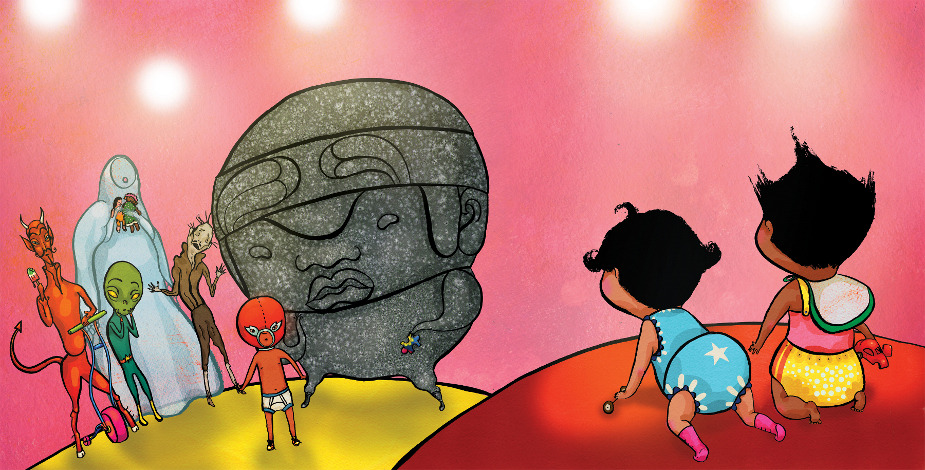
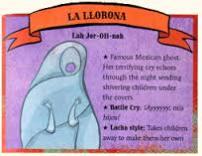
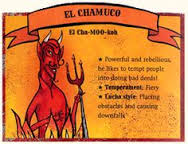
LloronaCardChamucoCardWhat are these ingredients? La Llorna. El Chamuco. El Extraterrestre. La Cabeza Olmeca. Las Momias. These are the protagonists that star in countless cuentos told and re-told in Mexican and Chicano families. Yuyi presents a dynamic cuento of a boy-hero in a wrestling mask, un niño luchador, who through wit, humor, ganas, and family teamwork, outsmarts these terrifying figures of Mexican and Chicano cultural mythology. As Yuyi reminded us in her acceptance speech, children’s imaginative capacity is an empowering tool that enables them to confront life situations with positive resilience. In addition to her prepared remarks, Yuyi described her own imaginative process as a child, where she was able to transform the often scary and mysterious cultural myths of La Llorona and El Chamuco into figures she could contend with and, perhaps most importantly, learn to play with.
This transformative power demonstrates the enormous agency children have to make meaning in the world. It depicts what Dr. Tara Yosso points to in her seminal work on cultural wealth and social capital, which she calls Community Cultural Wealth. Community Cultural Wealth lists specific assets practiced and nurtured in communities of color, which serve as forms of resistance to the myriad social oppressions marginalized people contended with daily. Emerging from the cultural knowledge passed down in families and communities, these assets include “aspirational, navigational, social, linguistic, familial and resistant capital.”

NinoVChamuco
Yuyi’s book exemplifies Community Cultural Wealth at work. Its text and illustration display the wealth of linguistic storytelling traditions of cuentos handed down in our families. It also serves as a meta-narrative of resistance through its prominent use of Mexican and Chicano cultural images. Yuyi’s narrative and illustration authentically capture how, for instance, the myth of La Llorona is in continuous transformation as she is imagined by our children today. Instead of becoming clichéd tropes of Mexican and Chicano culture, El Chamuco, El Extraterrestre, La Cabeza Olmeca, and Las Momias, are represented authentically as living and changing stories. This truly is a marker of Yuyi’s outstanding mastery of the picture book. She brings to the world of children’s literature works that defy cultural stereotypes, and that champion children as creative, imaginative meaning-makers.

Photo by Lettycia Terrones, 2014

Photo by Lettycia Terrones, 2014

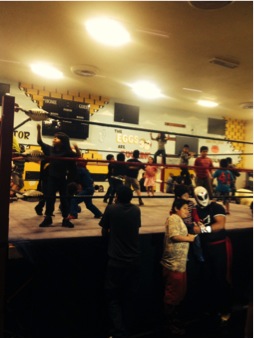
I thought a lot about the impact of Yuyi’s Niño Wrestles the World when I attended a Lucha Libre Night at the East Los Angeles Community Youth Center last spring. The family-run event brought in masked luchadores from Tijuana and Los Angeles to battle it out in the recreation center’s well-worn boxing ring. At the halftime marker, the ring became open for the many kids in attendance to frolic with abandon and take photos with the night’s Lucha Libre heroes. I thought about how for many children living in underserved communities, Yuyi’s story of the boy-hero, the niño luchador, is an actual and accurate depiction of their lives. I wondered how many of the kids in attendance that night had been exposed to Niño Wrestles the World in their classroom or public library. I wondered how this exposure would strengthen their sense of belonging and reflect back to them their self-efficacy.

Educators should remember the characters brought to life in Yuyi’s picture book are still very much alive today in the imaginations of Latino children. They are stories that form an essential cultural fabric of what it means to be Mexican and/or Chicano. Whether we call our people first-generation, second-generation, or if we are from generations that preceded the Treaty of Guadalupe, or are present-day refugee generations embarking on perilous journeys, climbing atop trains and traversing deserts, to seek our families and a promise of a better future in the United States. These stories are ours. They form an American story.

References

Pura Belpré Award

http://www.ala.org/alsc/awardsgrants/bookmedia/belpremedal

Yosso*, T. J. (2005). Whose culture has capital? A critical race theory discussion of community cultural wealth. Race Ethnicity and Education, 8(1), 69-91.

Yuyi Morales, Illustrator Award Acceptance Speech, page 4 http://www.ala.org/alsc/sites/ala.org.alsc/files/content/awardsgrants/bookmedia/belpre-14.pdf

let2

Lettycia Terrones, M.L.I.S., serves as the Education Librarian at the Pollak Library at California State University, Fullerton. Her research interests are in Chicana/o children’s literature and critical literacy. Lettycia is an American Library Association Spectrum Scholar and a member of REFORMA: The National Association to Promote Library & Information Services to Latinos and the Spanish Speaking.

Scholastic Highlights Books that Celebrate The Day of the Dead! / ¡El Dia de los Muertos!

By Concetta Gleason and Roany Molina
of the Editorial and Creative teams for Club Leo

While Hispanic Heritage Month has come to an end, it’s now time for the Day of the Dead! / ¡El Dia de los Muertos!, a significant holiday in Latin America, but most primarily celebrated in Mexico. The holiday is gaining popularity in North America and takes place over two days (November 1 and 2). It is seen as a time when the veils between the worlds of the living and dead diminish as families and friends celebrate their memories of the dearly departed.

Below are some books that explore this holiday’s unique traditions and beliefs: 

El Libro de la Vida (The Book of Life Movie Novelization) and La Travesía del Héroe (A Hero’s Journey) are fun new twists  on El Dia de los Muertos that help children learn about and celebrate the holiday. Both books are based on the upcoming movie The Book of Life, which follows the adventures of the fearless Manolo. The movie is set during the two-day celebration for the Day of the Dead. The holiday is a time to not only honor those who have passed but also appreciate the importance of life. Many people believe that during this celebration their loved ones return to visit. Families even set out offerings such as food, flowers, and games that the dead enjoyed when they were living. The Book of Life novelization and picture book allow readers to get a better understanding of the culture and tradition in an entertaining way. These books are also available in English.


La difunta Familia Díaz (The Dead Family Díaz) is a playful and humorous tale that explores the friendship of two young boys—
one living and one dead—that  changes both their (un)dead lives…and leads to some great pranks on their older siblings! The illustrations are bold and beautiful representations of ancient traditions merging with the modern, living world. La difunta Familia Díaz (The Dead Family Díaz) is also available in the Colección Herencia Hispana / Hispanic Heritage Collection.


El festival de las calaveras / The Festival of Bones expresses the joy and enthusiasm of this holiday. Gorgeous graphic illustrations of the skeletons actually dancing highlight the bilingual text, and the book includes a history of the holiday and fun activities for children.


Usborne: Motivos mexicanos para colorear (Usborne: Mexican Patterns to Color) is an activity book that explores the rich artistic history of Mexican culture with fun facts and appealing figurines to color. Special attention is paid to the Day of the Dead’s sugar skulls and costumes.


You can find all of these books online now!

Club Leo en Español supports your classroom with fun and affordable books that connect children’s home language and learning. Our books include amazing series, original titles, and winners of the Pura Belpré Award, which celebrates the remarkable contributions of artists who give voice to the Latino community through children’s literature.

Club Leo en Español apoya tu salón de clases con libros divertidos y asequibles que conectan la lengua materna y el aprendizaje de los niños. Nuestra colección incluye increíbles series, títulos originales y ganadores del Premio Pura Belpré, que celebra los extraordinarios aportes de artistas que dan voz a la comunidad latina a través de la literatura infantil.

Book Review: Enrique’s Journey by Sonia Nazario

By Lila Quintero Weaver

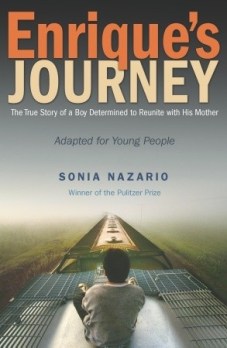
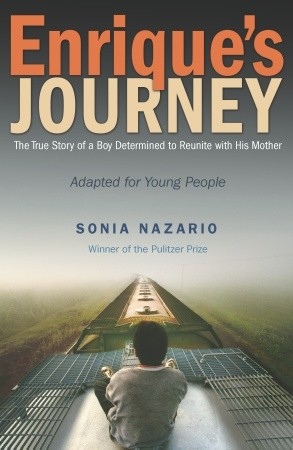
Enrique's JourneyPUBLISHER’S DESCRIPTION: Based on the Los Angeles Times newspaper series that won two Pulitzer Prizes, this astonishing story puts a human face on the ongoing debate about immigration reform in the United States. Now a beloved classic, this page-turner about the power of family is a popular text in classrooms and a touchstone for communities across the country to engage in meaningful discussions about this essential American subject.
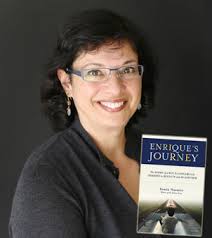
Enrique’s Journey recounts the unforgettable quest of a Honduran boy looking for his mother, eleven years after she is forced to leave her starving family to find work in the United States. Braving unimaginable peril, often clinging to the sides and tops of freight trains, Enrique travels through hostile worlds full of thugs, bandits, and corrupt cops. But he pushes forward, relying on his wit, courage, hope, and the kindness of strangers.

MY TWO CENTS: The best creative non-fiction takes you straight down into the messy, contradictory, gut-wrenching heart of a subject, and awakens your appreciation for its complexity. By every measure, Enrique’s Journey is such a book. It’s the riveting epic of a Honduran teenager driven to escape intolerable conditions and fueled by the hope of crossing the border into the United States. The original version was published in 2007 as adult nonfiction. This edition, adapted for readers as young as the seventh grade, was released in 2013. It also updates the story. (Young-reader adaptations are a growing trend in nonfiction publishing.)

As Enrique launches his eighth attempt to reach the United States by means of train hopping, the risks are clearer than ever to him: death, dismemberment, robbery, extortion, and sexual victimization. But the way he sees it, staying in Honduras presents its own bleak and terrifying future. Gangs and violence are rampant, poverty is entrenched, and opportunities for work and self-betterment are virtually nonexistent. Worst of all, Enrique’s mother, Lourdes, has been absent from his life for an achingly long time. A single mother with no dependable means of support, she left for the United States when Enrique was five, entrusting her two children into the care of relatives. Enrique’s sister has weathered the eleven-year separation reasonably well, but it takes a heavy toll on the young boy. During his teen years in Honduras, he spirals down into serious drug use and antisocial behavior. As his life grows ever more troubled, Enrique imagines that reuniting with his mother will repair the hole in his heart.

In this vivid and comprehensive account, Sonia Nazario retraces Enrique’s eighth attempt, following his 1,800-mile route through the heart of Mexico, an odyssey lasting 47 days. She expands the picture to cover conditions facing others on a similar migratory path. The chapters are embedded with fascinating micro stories of places and people who assist, deter, or exploit the thousands of Central Americans flowing northward through Mexico on train roofs and other modes of transportation. The narrative captures the flavor of distinct geographic zones. The most notorious stretch is Chiapas, in extreme southern Mexico. Chiapas is dense with gangs, bandits, immigration patrols, and unsympathetic residents who look down on the migrants as the “stinking undocumented.” In this region, migrants are easy targets of crime, since as a rule, they’re too fearful to report it, and in many cases, the police collude with the criminals. At one point, gang members chase Enrique along the top of a moving train. After they catch and beat him, he jumps off the train and sustains a serious injury.

Migrants like Enrique also encounter good-hearted people, who are typically quite poor themselves. Some of them make it a regular practice to toss food and water to migrants clinging to the roofs of passing trains. Some even open their homes to strangers with nowhere to shelter between train departures. There are agencies and churches that offer assistance, including a few that give the severely injured a place to heal. These accounts of compassion touched me to the core. I was also moved by the camaraderie that develops among train riders, who often sacrificially share with strangers whatever small comfort they can—blankets, food, water. Although they pool resources, exchange information, and organize lookout duty so others can sleep, individual migrants often find themselves in terrifying circumstances beyond the reach of kind, but equally vulnerable, strangers.

When Enrique arrives at the border with Texas, he’s finally able to call his mother, yet his ordeal is far from over. After many complications and long delays, Enrique makes a perilous crossing. There is no fairy-tale reunion. His anger over the heartbreaking separation spills out in words and self-destructive actions. Gradually, things get better as Enrique matures, finds work, and begins to seek legal status.

For kids who like dystopian stories, here’s a true-to-life dystopia to check against those from fantasy. This book is not light reading, nor is it meant to be. Most young readers will endure the gritty parts if only to find out what happens to Enrique, who, like teens everywhere, holds a mix of dreams and demons. Some readers may have a hard time getting past the controversies that swirl around undocumented immigrants, but the slant of this book is not toward proposing policy or resolving debates. By concentrating on the story of one boy from a broken society—a boy whose resilience and courage seem at times superhuman in the face of nearly insurmountable odds—Sonia Nazario brings deep human dimension to a thorny issue of our times.

ADDITIONAL RESOURCES: In the official website for Enrique’s Journey, under the tab Educator Resources, teachers can locate extensive lesson plans and activities across the disciplines, along with a list of recommended movies and documentaries. The publisher has also released a Spanish edition, La Travesía de Enrique, and the site includes lessons geared toward students of Spanish.

Sonia Nazario has been a frequent guest on television and radio shows, including On Point, with Tom Ashbrook. Her views were featured in an op-ed piece in the New York Times.

Enrique’s Journey is being used as a text across America. This report focuses on the book’s impact in college classrooms.

Which Way Home is one of the movies on the publisher’s recommended list. Here is a radio piece about it.

In 2014 the number of unaccompanied children and youth attempting to cross our southern border reached crisis proportions, demonstrating the need to understand what drives Enrique and thousands more like him to make the journey.

Sonia NazarioSONIA NAZARIO is an award-winning journalist with more than 20 years in the industry. Enrique’s Journey is her first book-length project. Her official bio can be read here.