A huge CONGRATULATIONS to the Latin@ authors and books that were recognized at this year’s ALA Youth Media Awards.
Here are the winners and honor books:
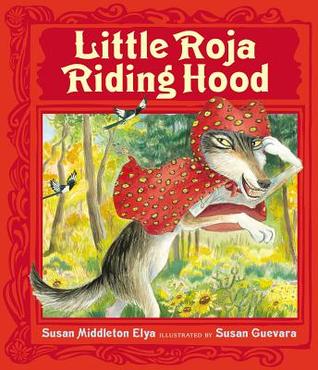
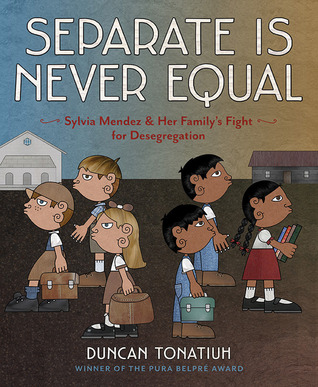
Pura Belpré Award (Illustrator) honoring a Latino writer and illustrator whose children’s books best portray, affirm, and celebrate the Latino cultural experience.
Winner:
Honor Books:
Pura Belpré Award (Author) honoring Latino authors whose work best portrays, affirms, and celebrates the Latino cultural experience:
Honor Book:
William C. Morris Award for a debut book published by a first-time author writing for teens:
Randolph Caldecott Medal for the most distinguished American picture book for children. The Caldecott Honor Books included:
Robert F. Sibert Informational Book Award for most distinguished informational book for children. The Sibert Honor Books included:
2016 May Hill Arbuthnot Honor Lecture Award recognizing an author, critic, librarian, historian or teacher of children’s literature, who then presents a lecture at a winning host site.
Winner: Pat Mora: “Pioneering author and literacy advocate Pat Mora has written more than three dozen books for young people that represent the Mexican American experience.”
When I was 23 years old, I left Connecticut for Boston for what should have been an amazing experience. I had been recently hired to be a researcher for the Boston Globe’s award-winning investigative team, a dream come true for a young journalist. Over the next two years, however, depression slowly ruined me, although many people close to me never knew. I wrote about it for the Courant years later, when my mind was clear enough to make sense of it. Here’s an excerpt from that article:
“It was a rainy February night in 1997 when it became apparent that the depression was no longer a temporary emotion, but a disease that had invaded every part of my life. I had gotten into my car after work and cried all the way home. I can’t remember why. But I remember feeling like I was choking, like every nerve in my body was numb, like someone was squeezing my heart and everything good inside of me had been twisted around. I remember feeling hopeless.
“I knew then that this thing eating away at me would not just go away. For a long time, I was convinced it would. I believed that the admirable traits I inherited from those before me, like frankness and humor, would overpower this flaw.
“But days and months had blurred into more than a year. Fatigue had seeped into my bones and smiling became an effort — a false statement. I was tired all day and couldn’t sleep at night. I called into work sick with a flu I didn’t have. I pried myself off the sheets to make it in other days. My memory was deteriorating. I could listen to someone talk at length and not absorb a single word. I have no detailed recollection of certain events.
“Still, I thought the depression was situational. I was having a rough time at work, feeling beat-up emotionally and unappreciated. With my career being such a significant part of my identity, I felt shaken and unsure of my talents and abilities. Still, something inside of me was fighting back. I thought I could pull myself out of it.
“That February night, it was my mom who convinced me that this was bigger. That it was something that didn’t just belong to me — that I had inherited it. That it belonged to her and my grandmother before her. This was out of my control. ‘You are definitely depressed,’ she said. ‘Promise me you will see someone.’
“Six days later, I sat in a psychiatrist’s office, unsure of what to do exactly. Isn’t this a luxury for wealthy people? Or a necessity for people with real problems, like battered women? It was hard to justify needing this, being an otherwise perfectly healthy and successful 25-year-old. Yet, when I opened my mouth, a load of hurt poured out and the hour flew by.”
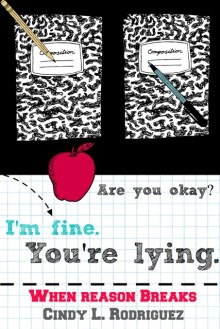
Ten years later, I was planning and drafting what would become When Reason Breaks, my debut novel about depression, attempted suicide, and the life and work of Emily Dickinson that releases February 10. While writing, I knew some readers would wonder why either of the two main characters–Emily Delgado and Elizabeth Davis–would want to kill herself. Nothing tragic happened to either of them. To some readers, none of their problems will be seen as good enough reasons to attempt suicide. They’ll want a big reveal moment: “Oh, she was (fill in the blank with a horrible experience). No wonder she’s depressed and suicidal. That’s a legitimate reason.”
When I was depressed, I didn’t think I had a right to be because, like my characters, nothing tragic had happened to me. I wanted to have a significant event, something I could point to and say, “Ah-ha, that’s the reason. If I address this one, obvious, horrible thing that happened to me, then I’ll be okay.” But I didn’t have that thing. Many depressed people don’t. And with the absence of something obviously wrong in my life, I pushed through the days for far too long, thinking what some people might think about my characters: my problems weren’t significant enough.
This kind of thinking can lead to tragedy because the depression goes untreated, which I’ve discovered happens often in the Latin@ community.
National health organizations report that Latin@s are at higher risk for depression than other minorities. Women experience major depression more often than men, and of students in grades 9-12, significantly more Latinas attempted suicide than their non-Latina peers. Yet, most Latin@s with mental health problems go untreated. A lack of access to affordable services and the stigma attached to mental illnesses are cited as barriers to treatment. Untreated depression can lead to suicide, which is the third leading cause of death for all people aged 15-24.
These statistics got me thinking about depression in young adult fiction, and I realized that in the books I’ve read, white characters are more likely to land on a psychiatrist’s couch. Most of the Latin@ characters in novels I’ve read fight through mild to severe depression without medical help, or they are somehow detained, in a treatment facility or group home, and the therapy is required. In When Reason Breaks, one of the main characters visits a doctor and gets medication, but doesn’t take it. She finally accepts real help after her suicide attempt.
As the Latin@ population continues to grow, I hope barriers are removed so that more Latin@s seek treatment for mental illnesses. I also hope more YA writers tackle the variety of mental illnesses and show characters of color getting help at some point instead of suffering through their pain. Maybe more teens will see themselves in these books and understand that their problems are significant enough, that they don’t need a “real reason” to feel the way they do, because in reality, depression is the real reason.
National Suicide Prevention Lifeline: 1-800-273-8255
National Hopeline Network: 1-800-442-4673
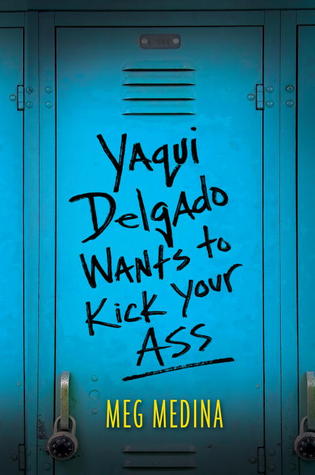
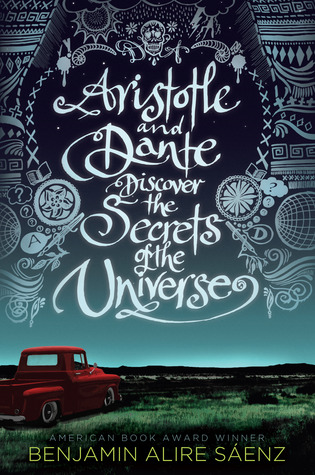
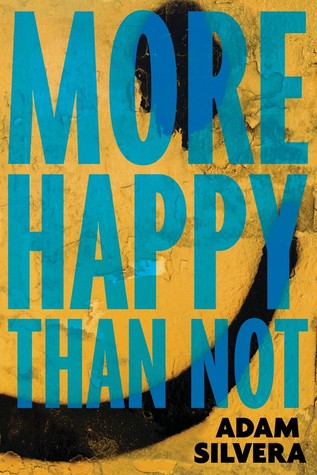
Suggested by book lovers online, here are some titles with Latin@ characters who struggle with different levels of depression.
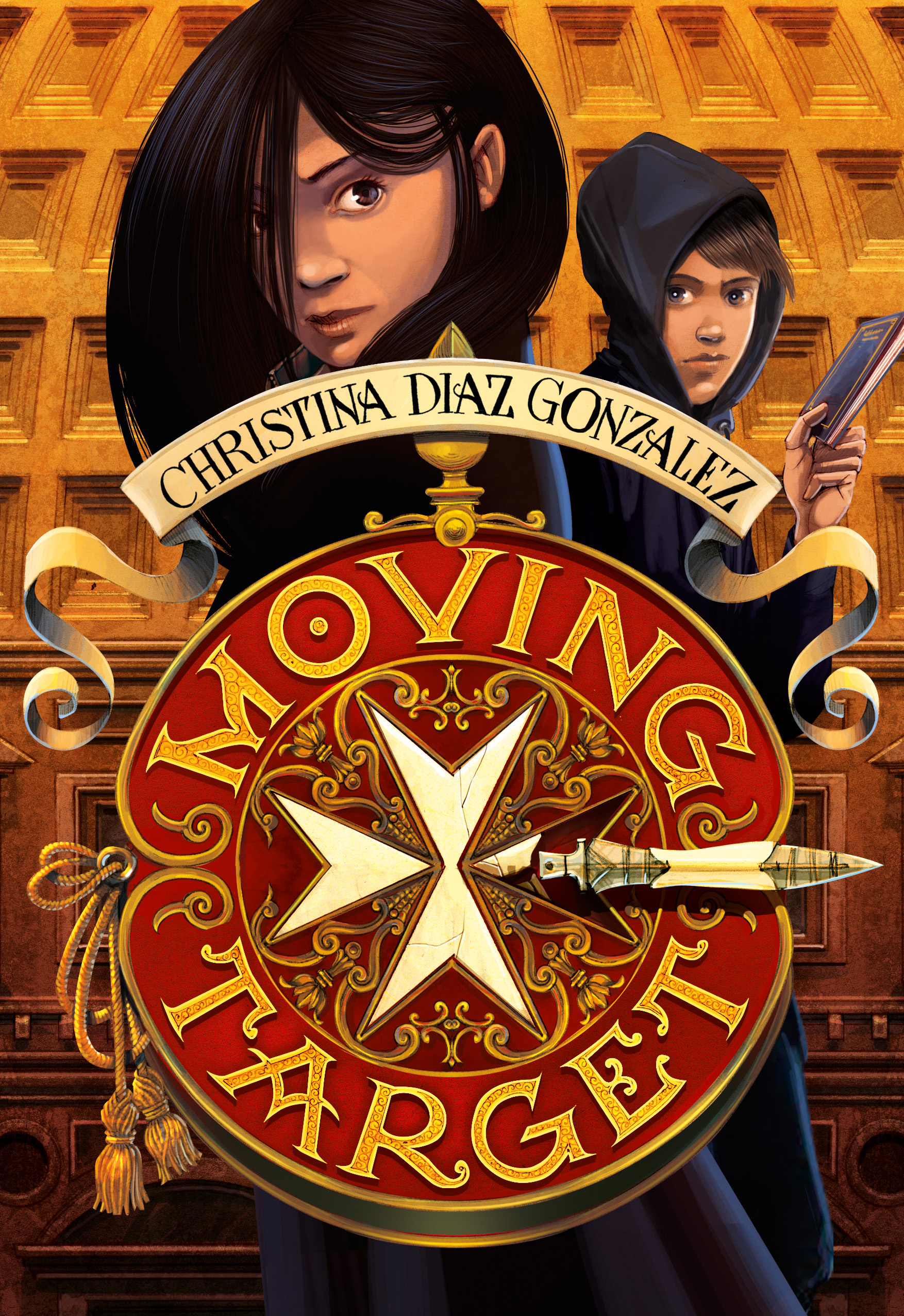
We’re really excited to reveal the cover for Christina Diaz Gonzalez’s latest middle grade novel, Moving Target, which will be out with Scholastic in September.
Here’s the description:
Cassie Arroyo, an American studying in Rome, has her world ripped apart when someone tries to kill her father, an art history professor at an Italian university. Is she their next target?
Cassie sets out to uncover what is happening, only to learn that she is a member of an ancient bloodline that enables her to use the Spear of Destiny–a legendary object that can alter the future. Now running from a secret organization intent on killing those from her bloodline, Cassie must—with the help of some friends—decipher the clues that will lead her to the Spear because her life, and the fate of the world, depend on it.
Christina Diaz Gonzalez has created a fast-paced thrill-ride of a book, rich with riddles and myth, that young readers will not want to put down.
Sounds awesome, right?
Before we get to the big reveal, here’s some information about the author, who has two other wonderful middle grade novels.
About the author:
Christina Diaz Gonzalez is the award-winning author of two historical fiction novels, THE RED UMBRELLA and A THUNDEROUS WHISPER. Her upcoming book, MOVING TARGET (to be released by Scholastic in September 2015) is a high-stakes, action/adventure story featuring a strong, twelve year-old, Latina girl who discovers she is part of ancient bloodline that can control destiny. Christina’s books have received numerous honors and recognitions including the American Library Association’s Best Fiction for Young Adults, the Florida Book Award, the Nebraska Book Award, a Notable Social Studies Book and the International Reading Association’s Teacher’s Choice Award. Reviewers from publications such as Publisher’s Weekly, The Miami Herald, School Library Journal and The Washington Post have called her novels engrossing, compelling and inspirational.
Christina’s reaction to the cover:
When I first saw the cover for Moving Target, I was simply floored as to how perfect it was for the book. I seriously love it! The incredibly talented Iacopo Bruno has captured the look and feel of my characters in the best possible way. I am so excited to finally show it off to the world!
Are you ready?
*
*
*
*
*
Here’s the cover!
*
*
*
*
*
*
GORGEOUS! We’ll be talking with Christina more about her new novel as it gets closer to release. So, stay tuned…
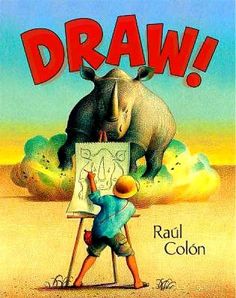
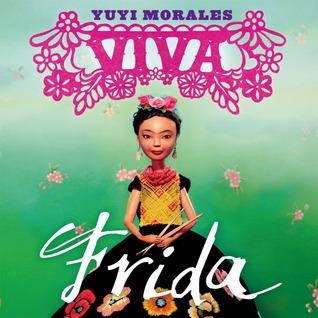
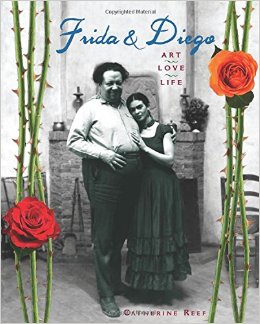
The year 2014 brought us three outstanding Latino children’s books celebrating art. Each book represents a distinct format: Draw! by Raúl Colón, is a wordless picture book; Viva Frida, by Yuyi Morales, is a poetic tribute to a beloved artist of worldwide importance; and Frida & Diego: Art, Love, Life, by Catherine Reef, is a work of non-fiction geared toward upper-level grades. These releases came in a year already brimming with strong Latino titles in children’s publishing, along with the We Need Diverse Books campaign, which challenges publishers and others in the book industry to question their views and roles regarding literature by and about people of color.
And guess what? Latin@s create art, too, so why shouldn’t they be celebrated in art-related books?
Children’s books that extol visual art serve to influence readers in significant ways. Through them, children can learn to appreciate art’s life-enriching power. They can also begin to see themselves as potential creators of art. Up to a certain age, most children freely produce drawings, collages, finger paintings, and other forms of artistic expression. But as kids reach the middle elementary years, inhibition seems to set in. Often, these kids stop making art because they have begun to see themselves as incapable. In fact, many great artists owe their success to a rediscovery of childlike abandon, to a time when the internal critic wasn’t peering over their shoulder. Also, Latin@ children are exposed to fewer artistic role models from within the community. What if good art books transmitted the opposite message–that anyone, from any culture, can create art? Great Latin@ artists already exist and kids need to become familiar with them. The following books make an ideal way to start delivering that message.
Draw! by Raúl Colón
In this lovely picture book based on Colón’s childhood, readers are transported through a flight of fancy to golden views of the African savanna, where an adventurous drawing session takes place. Initially, we see a boy drawing in his bedroom. His focus is on animals of the African grasslands. Three pages later, the boy is on the ground, somewhere on the African continent, among his subjects, observing them at close range, and capturing their likenesses with deft pencil strokes. Colón achieves this flight of imagination without the aid of words. The paintings in this book display a tender vintage feel in keeping with much of Colón’s acclaimed work in illustration. In every sense, Colón demonstrates a masterful command. His compositions are striking. He nails the anatomy of both human and wild animal subjects, as well as a wide array of studio techniques. These include the use of expressive, swirling textures and a tawny palette of hues, fitting for the story’s era and setting. This gem of a book landed on quite a few “best of” lists for 2014, including:
Viva Frida is Yuyi Morales’s love letter to Frida Kahlo. The depth of Morales’s admiration for the groundbreaking Mexican surrealist painter comes through in every expertly prepared page spread. Morales incorporates acrylic painting, stop-motion puppetry and other three-dimensional elements into a series of dioramas, photographed by her collaborator, Tim O’Meara. The result is eye-popping. Each spread bursts with jewel-like colors and captivating details, including Mexican textiles, bits of jewelry and animal fur. Clay figures representing Frida, her husband, Diego, and their animal friends are central to each diorama. Readers familiar with Kahlo’s work will recognize iconic elements in the injured fawn, the monkey, Frida’s famous eyebrows, her hand-shaped earrings and much more. A simple and brief poetic text in Spanish and English complements each page’s visual design. Viva Frida is a stunner that understandably caught the attention of important list-makers.
Frida & Diego: Art, Love, Life, by Catherine Reef, is a complex and satisfying portrayal of two giants of twentieth-century art and the development of their storied careers. The book relies on primary sources and seldom-seen photographs to describe the individual lives and work of each artist, as well as their combined lives. Reef weaves into this dual biography fascinating views of the political and social history of Mexico. Readers learn about Frida Kahlo’s medical odyssey. A childhood diagnosis of polio left her with an atrophied leg. As a young woman, she also suffered a debilitating accident that resulted in many surgeries and long periods of painful convalescence. Reef includes details of the couple’s complicated and often troubled marital life. These are not gratuitous digressions, however, since Frida’s body of work is in many ways a reflection of her physical and emotional suffering. Diego Rivera’s work as a muralist captures the era of upheaval that he lived in and reveals much about his devotion to socialist causes. The book includes behind-the-scenes stories of murals he painted in U.S. cities, which often became entangled in political controversy and resulted in conflict between Rivera and his patrons.
These three books come from different perspectives, but their approaches overlap as they magnify works of art and what it takes to produce them. In his picture book, Raúl Colón uses imagination to portray the skills of a budding artist. Yuyi Morales’s tribute to Kahlo reflects the inner world of a powerfully emotional artist. Catherine Reef’s biography informs the reader of the complexity and suffering that composed Khalo’s internal make-up and that of her marital partner.
TEACHING TIPS
Draw! by Raúl Colón
Picture book, K-4
This picture book can be integrated into art and language-arts curricula. Teachers and librarians can use this book to encourage children to compose or tell their own illustrated stories. Art teachers will find a useful example of sound artistic practice in how Colón closely observes his subjects.
Viva Frida by Yuyi Morales
Picture book, K-3
Bilingual and ESL instructors can incorporate this book into their classroom to teach new vocabulary in English and Spanish. The text is brief and focuses on verbs. Teachers of language arts can employ the book’s model of short poetic sentences to suggest a story. In the art classroom, Viva Frida can inspire the creation of dioramas, costumed puppets and other three-dimensional works.
Frida & Diego: Art, Love, Life by Catherine Reef
Non-fiction, grades 9-12
This book holds rich possibilities as a classroom text for Mexican American studies, art history, and social studies. One of the key lessons is the importance in an artist’s life of historical context. Students of social studies can create a timeline of historical events, paralleled by notable developments in Frida’s and Diego’s life. The book includes a brief selection of reproductions for each artist and a list of resources for further study, which teachers can use as a basis for assignments. Art history classes may want to explore the work of other muralists and female painters of the twentieth century or of Mexican artists throughout the ages.
For further information on the creators, see the following:
Today, we’re happy to help debut author Stacey Trombley reveal the cover for her novel, NAKED, which went live yesterday. The novel releases July 7, 2015, with Entangled Teen and features a main character who is half Puerto Rican.
Here’s the description from Goodreads:
A teenage prostitute looking for redemption must face her secrets before they destroy her…
When tough teenager Anna ran away to New York, she never knew how bad things would get. After surviving as a prostitute, a terrifying incident leaves her damaged inside and out, and she returns home to the parents she was sure wouldn’t want her anymore.
Now she has a chance to be normal again. Back in school, she meets a boy who seems too good to be true. Cute, kind, trusting. But what will he do when he finds out the truth about her past? And when a dark figure from New York comes looking for Anna, she realizes she must face her secrets…before they destroy her.
Here’s a brief excerpt from the novel:
The best place to hide is in a lie…
I could never fit in to the life my parents demanded. By the time I was thirteen, it was too much. I ran away to New York City…and found a nightmare that lasted three years. A nightmare that began and ended with a pimp named Luis. Now I am Dirty Anna. Broken, like everything inside me has gone bad.
Except that for the first time, I have a chance to start over. Not just with my parents but at school. Still, the rumors follow me everywhere. Down the hall. In classes. And the only hope I can see is in the wide, brightly lit smile of Jackson, the boy next door. So I lie to him. I lie to protect him from my past. I lie so that I don’t have to be The Girl Who Went Bad.
The only problem is that someone in my school knows about New York.
Someone knows who I really am.
And it’s just a matter of time before the real Anna is exposed…
Here’s some information about the author:
Stacey Trombley lives in Ohio with her husband and the sweetest Rottweiler you’ll ever meet. She thinks people are fascinating and any chance she has, she’s off doing or learning something new. She went on her first mission trip to Haiti at age twelve and is still dying to go back. Her “places to travel” list is almost as long as her “books to read” list.
She wants to bring something new to the world through her writing, but just giving a little piece of herself is more than enough.
With the launch of the #weneeddiversebooks campaign last spring, the idea of diversity in children’s writing is everywhere these days. As the diverse books movement moves forward, all writers of kid lit should consider how to create diversity in their work.
Creating characters outside your race and ethnicity can sound daunting. It doesn’t have to be this way. My characters often represent cultures and races outside my own. In Traders of Incense, my protagonist is an Arab boy, based on my time spent in Yemen. In Pen and Quin and the Mystery of the Painted Book, Pen and Quin are Mexican American twins. My motivation behind creating these protagonists stems from my desire to connect with readers and view the world through the eyes of others.
Here are some suggestions on how to create authentic, diverse characters.
1) Mine your own background and experience.
I’ve had the chance to travel to some spectacular places, from Yemen to Peru. The people I’ve met and the cultures I’ve experienced changed the way I view the world.
Where have you traveled? It doesn’t have to be as dramatic as the Middle East. Perhaps you grew up in the South and now live in the Northeast, or vice versa. Or you came from a predominantly majority town and now work with people from different backgrounds.
Use these experiences as launching points for characters and settings in your work.
2) Consider your relationships.
Who do you hang out with? Are your friends, colleagues, and mentors different from you ethnically, economically, or culturally? If not, now is the time to examine those relationships and diversify! It’s difficult to write diverse characters when your own life doesn’t reflect diversity.
If you want to create characters outside your own experience and do so in an authentic way, you must reach out to people different from yourself with an open mind and heart. Be open with your intentions as a writer, but be authentic in your desire to develop the relationship. People love to talk about their families and traditions if you let them. My friends from other cultures and backgrounds have been great sources for me to draw on when creating my characters. Enjoy making new friends and learning new things!
3) Cultivate familiarity.
As you create your diverse characters, you must be familiar with the background and family you’ve chosen for them. Cultivating familiarity means putting yourself in a position to really know what it’s like to be your character.
It could mean studying a new language, traveling to a new city, or finding those places in your own city where your character would live, work, and play. Get familiar with it until it feels natural to you. Until that happens, your characters won’t feel authentic.
4) Do your research – and not just on Google.
Let me say that Google Earth is an amazing invention. I have used it countless times in my own work. A 360-degree street view? Yes! However, the internet cannot provide all the information you need to create your characters.
Doing your research should include finding places and people like your characters and talking to them, participating in events, and reading stories similar to your own, especially when those stories reflect the types of characters you’re creating.
5) Authenticate through readers.
This one is huge for writers creating characters outside their own backgrounds. If possible, I always include beta readers with ethnicities or backgrounds similar to my characters and ask them to read the story with an eye toward that aspect of the work.
For my story that includes Mexican-American protagonists, I asked friends who are Mexican and American, and now raising their Mexican American sons, to read the story. Listen carefully to the response of your readers, and be willing to tweak the story according to their response.
6) Be prepared for kickbacks.
As hard as you try, you won’t fully be able to escape criticism. There will always be people who question your ability to write a story about a Latina girl if you aren’t Latina, or who claim you can’t speak for a Muslim boy if you’re not Muslim.
The author with a Yemeni friend
Certainly you want to avoid stereotyping as much as possible, but if you use your experiences, relationships, research and authentic readers well, you’ll be able to weed out many of the difficulties of writing across diverse backgrounds.
7) Love your characters and your story. Let them speak for themselves.
As writers, we get to choose the types of characters we create. We can’t let the fear of stepping outside of ourselves dictate our choices. The alternative would be simply staying within the comfort of your own race, background, gender, ethnicity, social status and nationality.
And I, for one, refuse to do that. The children we write for deserve better.
Kimberly Mitchell loves journeys, real or imagined. She has traveled to five continents and speaks four languages. Kimberly is represented by Marlene Stringer of the Stringer Literary Agency and hopes to find publishers for her middle-grade novels soon. She lives in Northwest Arkansas with her husband and the best souvenir she ever found, a Yemeni cat.






 When I was 23 years old, I left Connecticut for Boston for what should have been an amazing experience. I had been recently hired to be a researcher for the Boston Globe’s award-winning investigative team, a dream come true for a young journalist. Over the next two years, however, depression slowly ruined me, although many people close to me never knew. I wrote about it for the Courant years later, when my mind was clear enough to make sense of it. Here’s an excerpt from that article:











 Latinxs in Kid Lit