Author Ava Jae on Not Writing Latinx Characters


By Ava Jae

With both of my maternal grandparents born in Cuba, and both of my paternal grandparents born in Mexico, I am, indisputably, a third generation Latina. I learned Spanish before I learned English, celebrated Three Kings Day for the first decade of my life, and looked forward to my Cuban grandma’s incredible Christmas dinners—carne asada, frijoles negros con arroz, platanos maduros, y flan. I listened to my grandma’s stories in Spanish about growing up as the eldest of thirteen in Cuba, saw pictures of relatives I would probably never meet because they lived in a country Americans weren’t permitted to go to, and relished the warm, aromatic smell of café con leche in the morning.

And yet, by the time I’d finished my tenth manuscript—the one that would become my debut, Beyond the RedI still hadn’t written about a single Latinx character.

Looking back, there were a lot of reasons why that happened.

Firstly, I don’t fit the mold the media insists Latinx people fit into. I’m short—painfully so—and have dark eyes, sure, but that’s where the similarities end. Though I tan well when I spend time in the sun, I’m pale 99.9% of the time. My hair is brown, not black. I’m thin, not curvy. Though my pronunciation is native and I can understand it well enough, I’ve forgotten most of my Spanish. I’m not a flirty, exotic beauty who moves her hips like she was born dancing; I’m a tomboy, and awkward, and an introvert. My legal last name isn’t one of the common Mexican last names that’s easily recognizable as Latinx. When people look at me, they don’t see a Latinx person; they see a white kid.

And for a long time while I was writing, I started to see myself as a white kid, too.

I guess, in a sense, it was inevitable—no one in my immediate family looks like a stereotypical Latinx person; we are light-skinned (yes, even the Mexican side of the family), and my grandma is the one of the few of her many siblings who doesn’t have green or blue eyes (hers are hazel). My biological father doesn’t fit any of the Mexican stereotypes I’d learned; he burns instead of tans, he doesn’t like spicy food, and while he’s not super tall, he’s not exactly noticeably short, either.

I looked at my family, I looked at myself, and I internalized the shocked expressions I got every time I revealed I was, in fact, of the Latinx community. I learned it wasn’t in my favor to reveal my ethnicity when applying for a job, I was reminded time and time again with Mexican jokes, with talk about those illegals, with the stereotype of the working class Latinx person stuck doing the dishes, or cleaning homes, or taking the jobs that no one else wanted, that there were really no advantages to saying, “Yes, I’m Latina.”

So I stopped saying it. I justified it a day at a time, with “I can’t even speak Spanish,” with “I don’t even look Latina,” with “I wasn’t raised in a vibrant, Latinx community.” I hesitated on surveys that asked me to check “Caucasian” or “Hispanic.” I started believing I didn’t count.

So maybe it’s not a surprise that I wrote ten manuscripts without once considering writing a Latinx character. Maybe it’s inevitable that I didn’t feel it was my place to write a Latinx character. Maybe the fact that I never saw a character like me—Latinx, but light-skinned and unable to speak fluent Spanish—only reinforced this belief that I didn’t count. That I didn’t belong.

But slowly, things are starting to change. Adam Silvera wrote More Happy Than Not, and, for the first time, I read about a Latino boy who couldn’t speak Spanish. My friends online have spoken about being white-passing, about why this privilege so often hurts, about how people like me who feel stuck between two cultures without fitting completely into either exist. Slowly, I’ve begun reclaiming my identity. I’ve given myself permission to write characters like me.

And after I finished Beyond the Red and realized some of my experience had seeped through—in my male protagonist caught between two cultures, and in some of the pronunciation of the language my female protagonist speaks—I couldn’t help but smile.

Because even when I didn’t see it, being Latinx is, and has always been, a part of me. And I’m not going to hide it anymore.


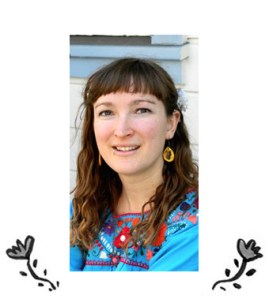
Ava Author Photo_smallJPGAva Jae is a writer, an Assistant Editor at Entangled Publishing, and is represented by Louise Fury of The Bent Agency. Her YA Sci-Fi debut, BEYOND THE RED, released March 1, 2016 from Sky Pony Press. When she’s not writing about kissing, superpowers, explosions, and aliens, you can find her with her nose buried in a book, nerding out over the latest X-Men news, or hanging out on her blogTwitterFacebooktumblr, Goodreads, Instagram, or YouTube channel.
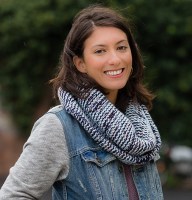
Spotlight on Latina Illustrators Part 1: Angela Dominguez, Juana Medina, and Ana Aranda

By Cecilia Cackley

This is the first in a series of posts spotlighting Latina illustrators of picture books. Some of these artists have been creating children’s books for many years, while others will have their first book out this year. Some of them live in the US, while others live overseas. They come from many different cultural backgrounds, but are all passionate about connecting with readers through art and story. Please look for their books at bookstores and libraries!

Angela Dominguez

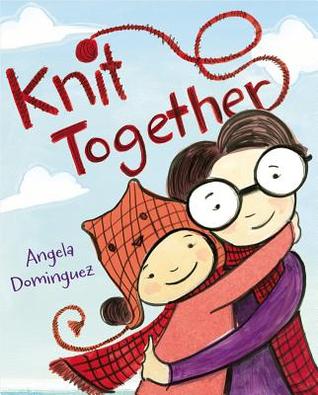
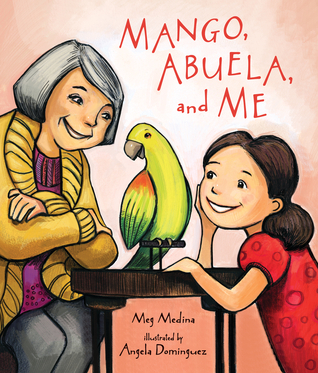
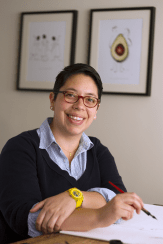
Angela DominguezAngela Dominguez was born in Mexico City, grew up in the great state of Texas, and lived in San Francisco. She’s the author and illustrator of picture books such as Let’s Go Hugo!, Santiago Stays, Knit Together, and Maria Had a Little Llama, which received the American Library Association Pura Belpré Illustration Honor. Recently, she received her second Pura Belpré Honor for her illustrations in Mango, Abuela, and Me written by Meg Medina. Her new books How do you Say?/Como se Dice?  and Marta, Big and Small (by Jen Arena), will both be published later this year. To see more of Angela’s work, visit her website, blog or twitter.

Q: What inspired you to become an artist?

A: Like many of my artist friends, I’ve always liked to draw. Growing up, I was obsessed with books and art in general. I’d spend evenings watching VHS tapes and drawing all night (if I wasn’t doing homework). Still, I didn’t really consider art something I could do professionally until high school. Fortunately, my high school really had a great art program and teachers who were supportive. Then I received a partial scholarship to Savannah College of Art and Design based on my skills and academics. That sort of sealed my fate as a professional artist.

Q: Tell us about your favorite artistic medium.

A: I still love drawing with pencil. It feels so good in my hand. I even love the way a freshly sharpened pencil smells. I also enjoy working with ink especially with a dip pen and brush. I just like how there is less control. It forces you to work boldly and confidently. My last favorite medium is tissue paper. I just really enjoy collage and the texture it produces. It’s really fun to work with all three at the same time. In graduate school when I saw that Evaline Ness worked that way, I was inspired to do it even more!

Q: Please finish the sentence “Picture books are important because…”

A: Picture books are important because they can speak universal truths to people of all ages. They can make you cry and laugh all in the same little book. (Also there are pictures!)

14933584  17245526  22504706  15937128  23153010  25066557  24727082  25688982


Juana Medina

Photo by Silvia Baptiste

Photo by Silvia Baptiste

Juana Medina was born in Bogotá, Colombia, where she grew up, getting in a lot of trouble for drawing cartoons of her teachers.

Eventually, all that drawing (and trouble) paid off. Juana studied at the Rhode Island School of Design – RISD (where she has also taught). She has done illustration & animation work for clients in the U.S., Latin America, & Europe.

She now lives in Washington, DC. where she teaches at George Washington University. Juana draws and writes stories from a big and old drafting table, in an even older -but not much bigger- apartment.  Juana is the illustrator of the picture book Smick! by Doreen Cronin. Her new books 1 Big Salad: A Delicious Counting Book and Juana and Lucas will be published later this year. You can find out more about Juana on her website and blog.

Q: What inspired you to become an artist?

A: I grew up in a family where pretty much everyone had some kind of artistic outlet; my grandfather was a great draftsman, my grandma was a fantastic carpenter, my aunt a potter… everyone found a way to use arts as a way to express themselves, so it took me a while to realize not everyone in the world did this! Moreover, I went to a school that valued arts very much. So for the longest time, I thought art was just one more fabulous aspect of being human. I didn’t think of art or my ability to draw as super powers; they were simply an added feature, almost as a bonus language. Now that I recognize not everyone draws, I have dedicated a lot of time to using this ability as best as possible, to tell stories.

Q: Tell us about your favorite artistic medium.

A:  Ink is one of my favorite mediums, because I find it very expressive. I enjoy the high contrast between the stark white paper and the very dark black ink; it makes it very exciting to see lines and traces -almost magically- appear on the page.

Q: Please finish the sentence “Picture books are important because…”

A:  Picture books are important because they don’t require more than visuals -and a handful of words- to understand a story. And understanding a story can lead to a shared experience with those who have also read the book. This not only serves for entertainment purposes, but allows us to learn about other people’s feelings, struggles, and dreams. Picture books also allow us to see the world through a different point of view and they tend to teach us things we perhaps didn’t know about, like how people live in villages we’ve never visited, or what dinosaurs used to eat, or how giant squids live in the darkest, deepest waters in the ocean, all valuable lessons to be learned.

22522295


Ana Aranda

Ana ArandaAna Aranda was born and raised in Mexico City, where she studied design. From there, she moved to France, where she lived for three years while doing her undergraduate studies in illustration. Ana now lives in San Francisco thanks to a grant from the Mexican Fund for Culture and Arts (FONCA). Her biggest inspirations are her childhood memories, the vibrant colors of Mexico, and music. Her work focuses on transforming the every day into fantastical situations, and often includes images from nature and whimsical creatures. Ana’s work has been featured in different galleries and museums in the United States, France, Mexico and Italy. In San Francisco, she has painted murals in the Mission District, for the Consulate General of Mexico, and for the prestigious de Young Museum. Ana’s illustrations can be found in picture books published in France and Italy. Some of her forthcoming titles include “J’ai Mal à Mon Écorce” (Éditions du Jasmin, France, 2015). She also illustrated ¡Celebracion! by Susan Middleton Elya, coming in 2016 and The Chupacabra ate the Candleabra by Marc Tyler Nobleman, coming in 2017.

Q:  What inspired you to become an artist?

A: When I was a little girl, I lived in a colorful city in Mexico called Cuernavaca, also known as the “City of Eternal Springtime”. My childhood memories in this city full of flowers always inspire me to create colorful and joyful pieces for children of all ages.

I have also been very inspired by my family, teachers, Mexican muralists and printmakers, growing up learning about women artists such as Remedios Vario and Leonora Carrington.

Q: Tell us about your favorite artistic medium.

A: I first learned to use acrylics when I was around 14 years old and fell in love with it! Since then I’ve been playing with bright colors and mixing that technique with others such as pigments, scratchboards, etc. I’m in love with color and finding how every color can be part of an emotional experience.

Q: Please finish this sentence: “Picture books are important because…”

Ana Aranda Cover


A: Picture books are important because they help you travel to different worlds!


Books to Check Out:

Dominguez, Angela. Lets Go Hugo

Dominguez, Angela. Maria Had a Little Llama

Dominguez, Angela. Santiago Stays

Dominguez, Angela. Knit Together

Medina, Meg. Mango, Abuela and Me

Brown, Monica. Lola Levine is NOT Mean!

Elya, Susan Middleton. ¡Celebracion!  (coming Fall 2016)

Cronin, Doreen. Smick!

Medina, Juana. 1 Big Salad: A Delicious Counting Book (coming Summer 2016)

Author David Bowles on his Garza Twins Series and the Pura Belpré Honor


By David Bowles

When my three kids were younger, we had a tradition of reading YA fantasy and sci-fi series together. Harry Potter was a big deal for many years, followed by His Dark Materials, Percy Jackson, Hunger Games, and so on. I even read the Twilight series with my oldest daughter, if you can believe it.

This shared reading was fantastic. We shed tears, laughed aloud, and had many deep conversations. One thing we kept coming back to—as Mexican-American fans of speculative fiction—was the lack of people of color in most of the books we read (beyond secondary, less important roles). Typically these series boasted a team of what amounted to Anglo young people facing off against European or Western legendary beings, gods, or dilemmas.

“Wouldn’t it be nice,” we often mused, “to open one of these books and find a Chicana facing off against Aztec deities or Mexican monsters?”

Venting this frustration to writer friends of mine, I was answered by an idea that should have been obvious from the beginning:

“You’re a writer, David. This matters to you. Why not develop such a series yourself?”

It was a no-brainer, clearly. Tan obvio. The trick now was to hit on the right story. I was hasta el cuello en research into Aztec and Maya literature at the time, and it occurred to me that a journey through the nine levels of Mictlan/Xibalba (the Mesoamerican Underworld) would make for a great hero quest. I cast about for the right characters for a while, until I started paying close attention to the fantastic friendship between my youngest son and middle daughter. With a few tweaks to age and interests, they became templates for the Garza twins.

But who were the Garza twins? What was special about them? Why would they travel through the Underworld? The answers became clear to me one morning when I stepped outside to find a dead jackrabbit in my backyard. An image suddenly overlaid the scene in my head: my daughter, asleep in the grass, the jackrabbit between her hands. I knew in that instant that the twins were naguales, shapeshifters, and the rest fell into place.

Once the book was written, it was rejected by many agents and publishers before finding a nice home with the Australian press IFWG Publishing, who treated the project with a good deal of love, even agreeing to allow one of my very talented daughters to design the cover. Reviewers and young readers alike responded positively to The Smoking Mirror, and I was delighted to have added to the body of diverse YA literature.

When the request came for us to submit copies to the Pura Belpré Award, I was floored, truly overwhelmed at the idea that these incredible advocates for Latino books would be reading my novel. Then, months later, I got the call from the committee—they’d selected The Smoking Mirror as one of two Pura Belpré Author Honor Books.

Very seldom am I at a loss for words—ni en inglés ni en español—but I found it hard to catch my breath and thank them profusely. It’s a humbling yet fulfilling sensation, seeing a project you believe so strongly in get this level of recognition, and I am eternally indebted to all the people who believed in Garza Twins at every stage of its development.

28484604Of course, this is only the beginning for me and the twins. Book two, A Kingdom Beneath the Waves, will be out in late April. This time, Johnny and Carol Garza find themselves plunging deeply into the Pacific Ocean to stop a renegade prince of the merfolk and his allies—among them the water elementals the Aztecs called tlaloqueh—from recovering the Shadow Stone, a device that can flood the planet.

Garza Twins will last for five volumes, and Kingdom ratchets up the tension and stakes, introducing cool new characters and laying the foundation for future conflicts. As with The Smoking Mirror, the normal life of the Garza family is explored; the twins grapple with problems facing many modern Latino teens, and the courage and compassion with which they resolve those issues bleed into their supernatural encounters as well. But, as with me in my writing endeavors, they can’t triumph alone. Family and friends are vital to the success of their mission.

You see, I think the biggest myth in our culture, and perhaps the most dangerous, is that of the lone hero. Each of us is part of a greater community, a web of support and lore without which we could not survive. If there is a message at the heart of Garza Twins, I think that’s it.

Unidos podemos. Together, we can.


me 6-3-14A product of an ethnically diverse family with Latino roots, David Bowles has lived most of his life in the Río Grande Valley of south Texas. Recipient of awards from the American Library Association, the Texas Institute of Letters, and the Texas Associated Press, he has written several books, most notably the Pura Belpré Honoree The Smoking Mirror. His work has also been published in venues such as BorderSenses, Strange Horizons, Apex Magazine, Stupefying Stories, Asymptote, Translation Review, Huizache, Metamorphoses and Rattle.
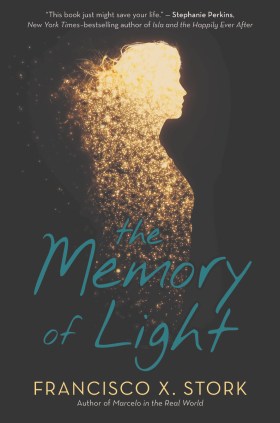
Book Review: The Memory of Light by Francisco X. Stork

image

Reviewed by Lila Quintero Weaver

This book talk is based on an uncorrected advance copy.

FROM THE PUBLISHER: School: failure. Romance: failure. Family: failure. Suicide: failure. There’s only one thing left to try: living.

When Vicky Cruz wakes up in the Lakeview Hospital psychiatric ward, she knows one thing: She can’t even commit suicide right. But there she meets Mona, the live wire; Gabriel, the saint; E.M., always angry; and Dr. Desai, a quiet force. With stories and honesty, kindness and hard work, they push her to reconsider her life before Lakeview, and offer her acceptance she’s never had.

Yet Vicky’s newfound peace is as fragile as the roses that grow around the hospital. And when a crisis forces the group to split up—sending her back to the life that drove her to suicide—Vicky must find her own courage and strength. She may not have any. She doesn’t know.

Inspired in part by the author’s own experiences with depression, The Memory of Light is the rare young adult novel that focuses not on the events leading up to a suicide attempt, but the recovery from one—about living when life doesn’t seem worth it, and how we go on anyway.

MY TWO CENTS: Another fifteen minutes and the pills would’ve done their work, extinguishing all the bright, unrealized promise of 16-year-old Vicky Cruz’s life. Luckily, someone finds her in time. When she wakes up in the psychiatric unit of Lakeview Hospital, in Austin, Texas, her stomach has been pumped, and the first voice she hears belongs to Dr. Desai, a therapist whose guidance and fierce advocacy serve to pull Vicky away from the brink.

At Lakeview, Dr. Desai oversees the treatment of teens hospitalized with serious mental-health issues. Vicky becomes intimately acquainted with three fellow patients, who play integral roles in her healing journey and offer compelling stories of their own:

E.M. came to Lakeview after one of his violent outbursts resulted in court-mandated treatment.

Mona wrestles with bipolar disorder, which was recently compounded by trauma at home. Child Protective Services removed her little sister from the custody of their mom and stepdad.

Gabriel is a young mystic who initially withholds the exact nature of his mental illness from the others in the group. In Vicky’s eyes, he’s a tender soul who moves in and out of functionality.

Lakeview is the primary setting for much of the novel, but some scenes unfold during off-site excursions, including a stay at Dr. Desai’s working ranch, where the patients perform minor farm chores, and go on a wild-river adventure that nearly leads to tragedy but ultimately opens new avenues for transformation. And there are more wild rides as two of the characters plunge into distressing setbacks. Despite her own shaky condition, Vicky responds to others with empathy, leading her to find greater definition in her own life’s purpose.

Vicky’s road to recovery is far from smooth. Shortly after surviving “the deed,” as she calls her suicide attempt, she’s hard pressed to pinpoint what’s so unbearable about her life. But she’s certain she’ll try to escape it again. Strong clues lie in the hollowness of her family relationships. Her mother died of cancer six years before, and less than one year later, her father remarried. Throughout her mother’s illness and even after her passing, Vicky’s father and her older sister, Becca, detached themselves from the trauma. By contrast, Vicky was the sensitive and attentive child who felt her mother’s absence keenly. Afterwards, it was Juanita, the family housekeeper, who served as Vicky’s truest human connection. Unfortunately, Juanita’s arthritis is too disabling for her to continue working and she plans to return to her native Mexico.

Once Vicky leaves the chilly environment of home and enters the warmer climate of the treatment unit, she begins to entertain the idea that life may be worth living. After consulting with an outside therapist, Vicky’s father and stepmother try to convince her to return home and resume normal activities, including school—the general idea being to jump back on the horse after a fall. Vicky’s instinct tells her this won’t work. For one thing, “our house is not a good place to figure things out,” she realizes. Bit by bit, through flashbacks and in conversations in Dr. Desai’s office and with her new friends, we see that Vicky’s family may be well off, but it isn’t well. For example, whether born obtuse or blinded by unresolved grief, Mr. Cruz uses words as bludgeons, and for Vicky, these words and the attitudes behind them strip her of the sense that she is lovable.

Francisco Stork brilliantly depicts the intangibles of interior life, an ability that he ably demonstrated in his 2009 YA novel, Marcelo in the Real World. In The Memory of Light, Stork summons these powers to communicate the nature of depression. Here’s how Vicky tries to explain its mysterious operations to herself: “I imagine a whole bunch of little minerlike elves who live and work inside the dark tunnels of my brain. They wear flashlight hats of different colors and push clanging carts full of words on steel rails from one corner of my mind to another.”

Vicky experiences small, but important epiphanies during her hospital stay. In a particularly shining scene, Dr. Desai shares approaches to unlocking the vicious circle of obsessive thoughts. One of the nuggets from this conversation is a fable from Dr. Desai’s native India that illuminates the self-defeating nature of holding on to such thoughts.

All of the teen characters and many of the adults in this novel are Latin@s, representing a full range of personalities, social and economic classes, and occupations. The Cruz family belongs to the wealthy sector of Austin. Vicky, who attends an exclusive private school, is markedly aware of her privileged status—and of the fact that it doesn’t shield her from mental illness. Her exposure to the less-privileged lives of her new friends alerts her to her father’s snobbish attitude toward working-class Latin@s. She sees the hypocrisy, too. His own grandfather arrived in the United States from Mexico without a penny.

The Memory of Light is a compelling view of teens in crisis. It points the way toward life beyond depression, yet steers clear of romanticizing serious mental illness. Although it’s primarily Vicky Cruz’s story of dealing with suicidal depression and the agony of living in a family broken by loss and dysfunction, the intertwining narratives of the other young characters charge the novel with extra vitality and shed light on the many faces of mental illness.

TEACHING RESOURCES: Don’t miss Cindy L. Rodriguez’s timely reflections on how depression is viewed in the Latino community. Her article includes a list of YA novels featuring Latin@ characters wrestling with mental illness.

On his website, Francisco Stork features two blog posts related to the topic of depression and the writing of The Memory of Light. See them here and here.

In this article, a school psychologist offers tips for teachers on classroom strategies to help depressed students.

francisco_storkABOUT THE AUTHOR: Francisco X. Stork is a Mexican-born author of six novels for young people. Among these is the multiple award-winner Marcelo in the Real World. A graduate of Harvard University and Columbia Law School, he spent much of his law career working in the field of affordable housing. Learn more about Francisco and his books at his official author site.


IMG_1291Lila Quintero Weaver is the author-illustrator of Darkroom: A Memoir in Black & White. She was born in Buenos Aires, Argentina. Darkroom recounts her family’s immigrant experience in small-town Alabama during the tumultuous 1960s. It is her first major publication. Lila is a graduate of the University of Alabama. She and her husband, Paul, are the parents of three grown children. She can also be found on her own websiteFacebookTwitter and Goodreads.
Talking Diversity & Book Awards

Last week I had the privilege of hosting a conversation on the intersections between diversity and the selection of books for awards and best-of lists. I got to pick the brains of Jason Low, Debbie Reese, Marilisa Jiménez García, Pat Enciso, and Daniel Kraus. Now you can enjoy their insights, which have just been published in this post for the Booklist Reader.

Our conversation brings to the fore a number of issues that impact both what books get considered for special recognition and how discussions of those books proceed. As the participants show, we’re finally deconstructing the notion that “diversity” and “quality” are in competition. Instead, how diversity shapes our understanding of what “quality” is.

Nowhere is this work more important than in the meeting room where book awards and other distinctions are deliberated. And, as we discuss, how books are reviewed also shapes which books get noticed. In our conversation, Jason Low points out the importance of “diverse reviewers… who can serve as a cultural sounding board when issues like nuance, perspective, and authenticity issues are in question.”  School Library Journal has been actively educating its reviewers and recruiting reviewers from diverse backgrounds. Booklist is working on this, too. In fact, just as we were wrapping up our conversation last week, Booklist issued this call:

Booklist is actively seeking book reviewers of diverse background, whether that background is cultural, racial, gender, or another. We are also looking for reviewers fluent in Spanish. Candidates with critical acumen and knowledge of a public-library audience should email writing samples (preferably published work) and reviewing preferences (fiction, nonfiction, adult, YA, picture books, graphic novels, audio, etc.) to one of the following:

Daniel Kraus, Books for Youth (dkraus@ala.org)

Donna Seaman, Adult Books (dseaman@ala.org)

Sarah Hunter, Graphic Novels (shunter@ala.org)

Joyce Saricks, Audio Books (jsaricks@ala.org)

If you fit the Booklist criteria, we encourage you to get your review on! At Latin@s in Kid Lit, we put excellent books on readers’ radars and highlight issues that relate to writing, publishing, promoting, and recognizing kid lit by, for, and about Latinas and Latinos. We’re eager to have more allies!

Reviewing not your thing? You can still draw others into the conversation around diversity in publishing and literature. Do you have a colleague who may not be plugged into these issues? Invite them to check out the resources we offer here at LKL. The Booklist Reader conversation includes a list of excellent websites that offer vetted book recommendations.

I hope the Booklist Reader piece prompts you to reconsider what diversity has to do with excellence as well as how you can advance diversity in your own reading and work. As Marilisa Jiménez García puts it in our conversation, “We need more than books. We need to cultivate a system of children’s and YA literature— reviewers, librarians, educators, professors, publishers—that holistically integrates people of color. We need bridges.”

So, how about it? What bridges can we build today?

#LargeFears Chat: Where are the Afro-Latinxs in American History?


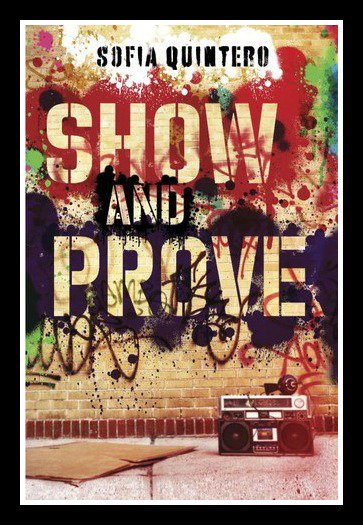
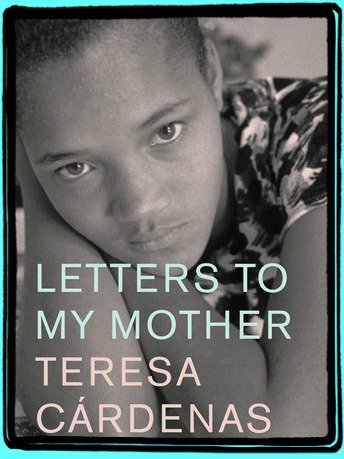
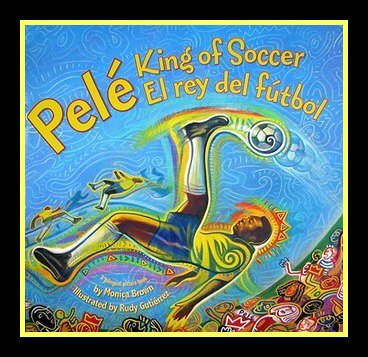
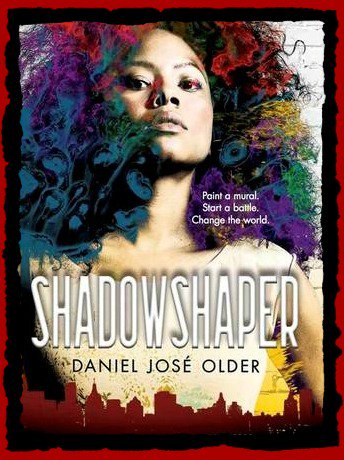
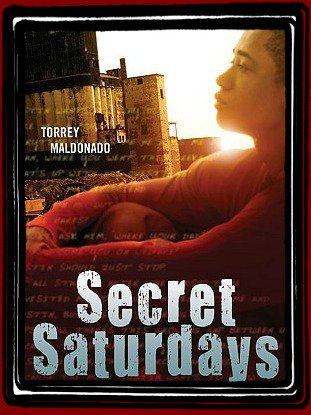
On Tuesday, Edith Campbell, Sujei Lugo, and Guinevere and Libertad Thomas, the sisters behind the Twinja Book Reviews, hosted the most recent #LargeFears Twitter chat. This month’s theme was: “Where are the Afro-Latinxs in American History?” Special guests included Torrey Maldonado, author of Secret Saturdays, Sofia Quintero, author of Show and Prove and Efrain’s Secret, and Robert Liu-Trujillo, a visual artist. The #LargeFears chats started as a continuation of support of diverse books after the publication of Large Fears, a self-published title by Myles E. Johnson and Kendrick Daye, funded through Kickstarter, about a queer black boy facing his greatest fears.

Below is the link to the Storify for the chat and covers of books by/about Afro-Latinxs in honor of Black History Month. Although, these titles should be supported every month of the year, and we vow to do our part by reading and reviewing more of them here.

https://storify.com/Dos_Twinjas/where-are-the-afro-latinx-in-american-history


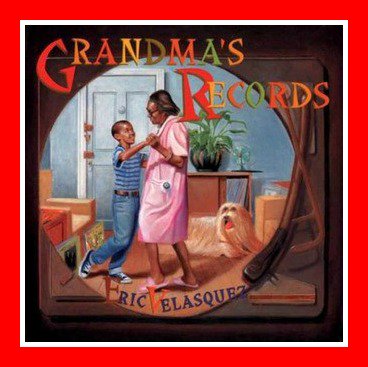
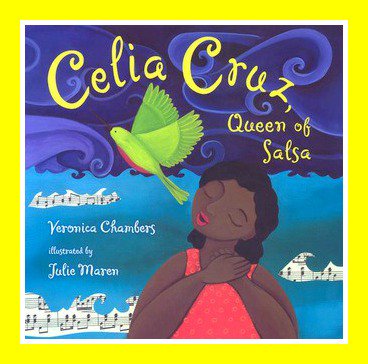
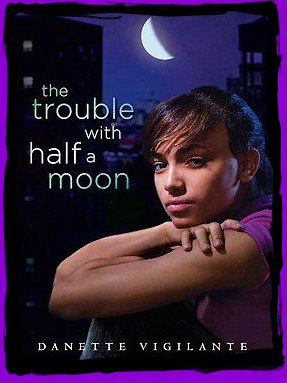
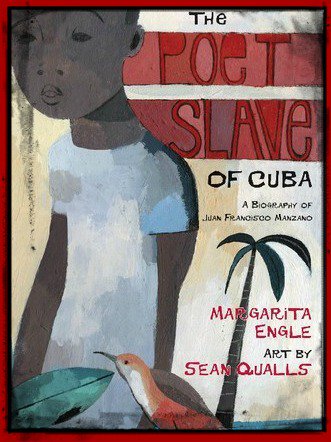
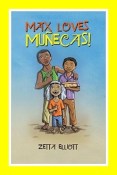
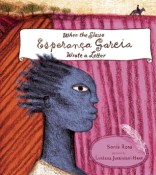
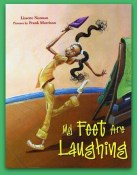
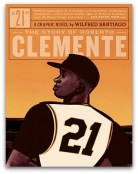
         AfroLatinx1 AfroLatinx4 AfroLatinx8 AfroLatinx11 AfroLatinx23AfroLatinx13 AfroLatinx14 AfroLatinx15 AfroLatinx16 AfroLatinx17 AfroLatinx18 AfroLatinx19 AfroLatinx20 AfroLatinx21 AfroLatinx22