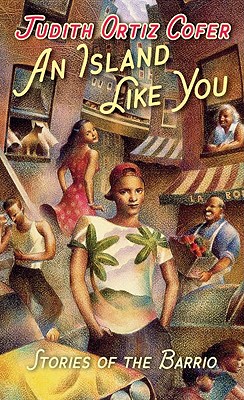
Celebrating Pura Belpré Award Winners: Spotlight on An Island Like You: Stories of the Barrio by Judith Ortiz Cofer


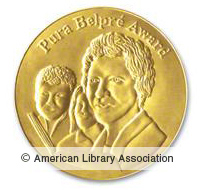
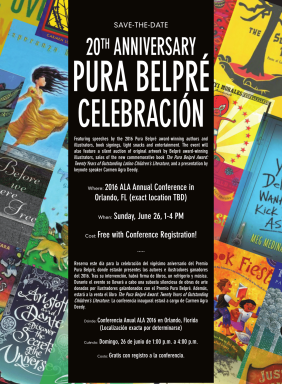
PuraBelpreAwardThe Pura Belpré Awards turns 20 this year! The milestone will be marked on Sunday, June 26, from 1:00-3:00 p.m. during the 2016 ALA Annual Conference in Orlando, FL. According to the award’s site, the celebration will feature speeches by the 2016 Pura Belpré award-winning authors and illustrators, book signings, light snacks, and entertainment. The event will also feature a silent auction of original artwork by Belpré award-winning illustrators, sales of the new commemorative book The Pura Belpré Award: Twenty Years of Outstanding Latino Children’s Literature, and a presentation by keynote speaker Carmen Agra Deedy

Leading up to the event, we will be highlighting the winners of the narrative and illustration awards. Today’s spotlight is on Judith Ortiz Cofer, the winner of the 1996 Pura Belpré Narrative Award for An Island Like You: Stories of the Barrio.

Review by Marianne Snow Campbell

DESCRIPTION FROM THE PUBLISHER: Rita is exiled to Puerto Rico for a summer with her grandparents after her parents catch her with a boy. Luis sits atop a six-foot mountain of hubcaps in his father’s junkyard, working off a sentence for breaking and entering. Sandra tries to reconcile her looks to the conventional Latino notion of beauty. And Arturo, different from his macho classmates, fantasizes about escaping his community. They are the teenagers of the barrio – and this is their world.

MY TWO CENTS: Winner of the very first Pura Belpré medal for narrative in 1996, An Island Like You: Stories of the Barrio consists of twelve short stories, each describing episodes in the lives of Stateside Puerto Rican teenagers living in Paterson, New Jersey. The prose is spare and straightforward, yet wonderfully descriptive in its simplicity, and Judith Ortiz Cofer captures the rawness and honesty of the characters’ feelings as she describes their deeds and inner thoughts or lets them narrate for themselves. Their voices seize the humor of teenage awkwardness; clashes with family members who, as the younger generation see it, are mentally “stuck” in Puerto Rico; the anger, confusion, and despair that lead to unwise or even dangerous behaviors. Although readers can certainly learn lessons from the characters’ actions, An Island Like You is never didactic. Rather, these stories are simply about life as it really happens – people make choices and face consequences.

What I enjoy most about this book are its explorations of identity. What can it mean to be a young person living in El Barrio in Paterson? The variety of stories and narrators presents readers with multiple perspectives, showing them that, although all of the book’s characters share an environment and a heritage, their experiences are hardly monolithic. Arturo, who loves poetry and wants nothing to do with his peers, feels trapped in El Barrio. Connie is annoyed that she has to look after her grandmother, who’s visiting from Puerto Rico. Anita gets involved with an older man. These multifaceted characters, all facing different conflicts, illustrate the panorama of identities that can exist in one community.

Moreover, some characters appear in more than one story, narrating their own episode first and then playing a supporting role in someone else’s tale. For example, “The One Who Watches” depicts Doris’s dealings with her friend Yolanda, who has started skipping school and shoplifting. While Doris is horrified by Yolanda’s behavior, she’s equally scared of losing her friend and must decide whether she wants to keep “following Yolanda into trouble” (117). Later, we meet Yolanda again, this time as the narrator of her own story, “Don José de la Mancha.” Two years after her father’s death, her mother has started seeing another man, and Yolanda must reconcile her lingering grief with her mother’s new-found happiness.

Seeing Yolanda through two sets of eyes – Doris’s and her own – demonstrates the complexity of her character. These dual snapshots of her experience show us that we never know what’s really going on in someone’s head or their life. If we had only seen Yolanda through Doris’s eyes, we might judge her for her reckless behavior, but witnessing her struggle to get over her father’s death helps us understand that pain and conflict that might be guiding her. By considering these different perspectives, young readers can enhance their powers of empathy. Engaging with these stories can allow them to enter others’ heads, to understand why they think and act the way they do. Judith Ortiz Cofer sums up this act exquisitely in a poem, “Day in the Barrio,” which acts as a foreword to this book:

At the day’s end,

you scale the seven flights to an oasis on the roof,

high above the city noise, where you can think

to the rhythms of your own band. Discordant notes rise

with the traffic at five, mellow to a bolero at sundown.

Keeping company with the pigeons, you watch the people below,

flowing in currents on the street where you live,

each one alone in a crowd,

each one an island like you.

 TEACHING TIPS: An Island Like You lends itself beautifully to a jigsaw-style literary discussion. Instead of immediately requiring students to read the whole book, have each student read a different short story and analyze the main character of that story. What are her/his feelings about living in El Barrio? What kinds of struggles does s/he face? Does s/he overcome them? If so, how, or if not, why not? Do you relate to her/him? After getting to know her/his character, each student can then pair up with a classmate and compare/contrast characters to get an initial feel for the diversity of experiences represented in these stories. Discussing the characters aloud instead of in writing might make this analysis more authentic and natural, like students are talking about their peers rather than imaginary beings.

RESOURCES:

Judith Ortiz Cofer’s website

Interview with Judith Ortiz Cofer from Heinemann Publishing

Feature on Judith Ortiz Cofer at Vamos a Leer

Review of An Island Like You at All Brown All Around

Judith Ortiz CoferABOUT THE AUTHOR: Judith Ortiz Cofer was born in Hormigueros, Puerto Rico and grew up in Paterson, New Jersey, two locations that have inspired her work. She has written for all ages – children’s and young adult books including ¡A bailar! / Let’s Dance! (2011), The Poet Upstairs (2012), Animal Jamboree (2012), Call Me Maria (2006), and If I Could Fly (2011), and books of poetry and prose for adults, including The Meaning of Consuelo (2003) and the Pulitzer Prize-nominated The Latin Deli (1993). Her work has won various prizes and honors, such as the Pushcart Prize and the O. Henry Prize and has appeared in several literary anthologies. Moreover, she has received fellowships at Oxford University and the Bread Loaf Writers’ Conference. Currently, she lives in Georgia and is the Regents’ and Franklin Professor of English and Creative Writing, Emerita.


MarianneMarianne Snow Campbell is a doctoral student at The University of Georgia, where she researches nonfiction children’s books about Latinx and Latin American topics and teaches an undergraduate course on children’s literature. Before graduate school, she taught pre-K and Kindergarten in Texas, her home state. She misses teaching, loves critters, and can also be found on Twitter and Facebook.

Found in Translation: A Guest Chat by Author Laura Shovan & Translator Patricia Bejarano Fisher

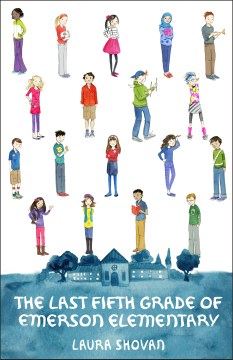
Today we bring you insights from a pair of guest bloggers, Laura Shovan, the author of a new middle-grade novel in verse, The Last Fifth Grade of Emerson Elementary, and Patricia Bejarano Fisher, the translator who helped bring authenticity to one of the novel’s Spanish-speaking characters. In the future, we hope to present more of the angles involved in publishing translated or bilingual books. 


Last Fifth Grade cover (2)By Laura Shovan and Patricia Bejarano Fisher

Laura introduces the story: My new middle grade novel in verse, The Last Fifth Grade of Emerson Elementary, is set in where Pat and I both live — Howard County, Maryland, right between Washington, DC and Baltimore. People, including immigrants to the U.S., are drawn here by community resources and the strong reputation of public schools. Often, when I’m guest teaching at a local school, there will be several ESL students, speaking a variety of home languages, in each class.

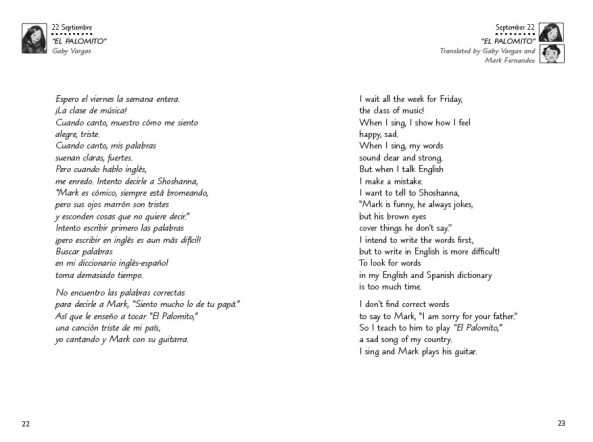
Two of the eighteen students in Ms. Hill’s fictional fifth grade are Spanish speakers. One of those characters, Gaby Vargas, writes her poems in Spanish and then works with her friend to translate them into English. In order to get Gaby’s voice right, I asked Pat to translate the character’s poems from my English into Spanish, but that wasn’t the end of the collaboration.

Laura to Pat: One of my favorite parts of this process was when we collaborated on back-translating Gaby’s poems from Spanish to English. Could you describe what that was like?

Pat: I also enjoyed this part of the translation process. I had your original English poems. I was to be the voice of Gaby, a young native speaker of Spanish who is beginning to develop her English language skills. She has learned quite a bit but is not yet able to express herself fully in English. She still has to look up words in the dictionary, which she finds frustrating.

My first task was to translate the poems into Spanish, taking care to not make it my own Spanish. It had to be the Spanish of an elementary school girl who is learning English. Gaby’s Spanish is clear and direct. It is also colloquial in places, as it usually is in children that age. The second task was for us to work together from a literal reading of the Spanish poems and translate them back into English. The goal was to introduce a couple of lexical or structural inaccuracies, and unidiomatic phrases here and there that would reflect an intermediate stage of fluency where there is some transfer between the two languages. We took special care to respect the children and to avoid stereotyping them.

Laura: I visited an Emerson Elementary in Albuquerque recently. There was a 4/5th grade bilingual class. When I spoke, children in the audience were translating my English to Spanish for their classmates. And we had a chance to read Gaby’s poems in both languages. That was wonderful. You’re an accomplished poet and translator. How was the experience of working on a children’s novel in verse different from other translation work you’ve done?

Pat: My experience translating Gaby’s poems was new and refreshing, and really a lot of fun. I had finished revising some translations into Spanish I had been working on for some time, so I found the idea of translating a few poems for a book about children very appealing, especially since my youngest grandson had been born a few weeks before.  Children were once again my joy and my focus at that time, so I felt this translation effort would be a special treat for me.

It would also be very different: one of the poetry collections I co-translated tells a personal story of familial love, resentment, and forgiveness; another speaks of the dehumanizing effects of absolute power; yet another recalls vivid memories of war, loss, and hope. All are reflections of adult feelings and experiences turned into beautiful, moving poems.

Gaby’s poems expressed just as much feeling with the clarity and spontaneity with which children communicate. I could just see her struggling to express her thoughts and her feelings in her new language, trying to find the right words and then deciding to use the universal language of music instead. And then, to witness the miracle that only children can perform: becoming a proficient speaker of the new language in a short time and later attaining native proficiency at record speed. Gaby brought memories of my own challenges with English when I first came to the U.S.

Laura: I’d shared Gaby’s poems — in English — with a few Spanish-speakers, but wanted an experienced translator to prepare them for publication. What does a translator bring to a poem that a native speaker might not?

Pat: To me, reading and translation go hand in hand, and the better one understands a text through a close reading, the better the chances are of producing a translation that reflects the intent and the meaning of the original. By “understanding” a text, whether prose or poem, I mean “getting it” at the textual level in its own social and cultural context, as well as at the interpreting level in the context of both the source and the target cultures. In my experience, fluency in a language is necessary but not sufficient to achieve a full understanding of all the linguistic, social, cultural, figurative and other elements present in a text [and then] transfer them effectively into the receiving language. In poetry, the sounds, the rhythms, the syllable counts, the rhymes, the images have to be felt and understood in the original and reflected in the translation.

Pat to Laura: The 18 children who appear in your book come from different backgrounds and have different life stories. How did you choose your characters and how did you develop their relationships? I’m interested in how kids choose their friends and role models.

Laura: My first draft had 30 students and 30 poems, one in each voice. As the book grew from a collection of poems into a novel, some characters were cut and others grew in depth. I made a seating chart for them, so I could see what their classroom relationships might be like. It’s a mystery, sometimes, how children choose their friends. In the development of the book, some friendships didn’t appear until very late in the process. Gaby’s relationship with Mark Fernandez is an example of that. The two of them connect through language.

Fifth-Grade spread

The Last Fifth Grade is set in Columbia, Maryland, where you live and where I often teach. How do you think the book reflects our community in particular and today’s schools in general?

Pat: The children in the book are like the kids I see walking to school in the morning or waiting at the bus stop here in Columbia. We take pride in being an inclusive community where diversity is respected and welcome. Access to education for all has always been a guiding principle. My daughters went to school here some years ago. The events in the life of the school and of the children in The Last Fifth Grade could have taken place in any elementary school in Columbia or Howard County. I really felt I knew Gaby, Edgar Lee Jones, George Furst, Norah Hassan, and their classmates. I felt sad about their school… Any such loss is hard; it feels like someone is taking way the heart of the community.

——————

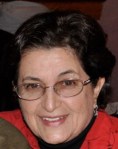
PatPatricia Bejarano Fisher was born in Bogotá, Colombia. A language and linguistics graduate of the University of Pittsburgh and S.U.N.Y. at Buffalo, she has lived in Columbia, MD for 33 years. She has worked as a Spanish teacher, translator and language-learning materials developer for many years but she now focuses exclusively on poetry translation. Her work includes South Pole/Polo Sur (Settlement House, 2012) and From the Diary of Mme Mao (publisher TBD), both poem collections by Venezuelan poet Maria Teresa Ogliastri, which she co-translated with Yvette Neisser Moreno. She’s an avid reader of Spanish, French, Italian, and Portuguese literatures and of all languages in translation. More poems translated by Pat can be found here.

DSC_5914Laura Shovan is former editor of Little Patuxent Review and editor of two poetry anthologies. Her chapbook, Mountain, Log, Salt and Stone, won the inaugural Harriss Poetry Prize. Laura works with children as a poet-in-the-schools and was Howard County Poetry and Literary Society’s 2015-2016 Writer in Residence. The Last Fifth Grade of Emerson Elementary is her debut novel-in-verse for children (Wendy Lamb Books/Random House). Learn more at Laura’s website.


The Pura Belpré Award: Continuing Belpré’s Legacy of Lighting the Storyteller’s Candle–Part 2


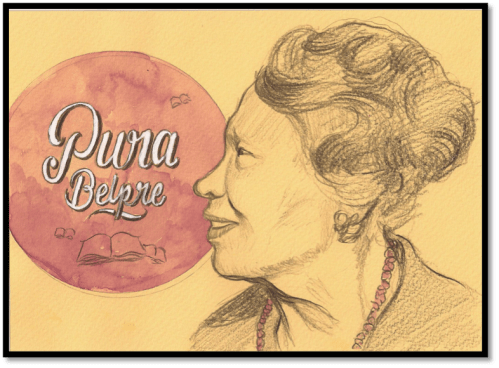
Portrait by Robert Liu-Trujillo. Read more about the portrait and his projects at http://investigateconversateillustrate.blogspot.com Permission to post given by artist.

Portrait by Robert Liu-Trujillo. Read more about the portrait and his projects at http://investigateconversateillustrate.blogspot.com Permission to post given by artist.


By Sujei Lugo & Dr. Sonia Alejandra Rodríguez

Yesterday, we provided a history of Pura Belpré’s work and the start of the Pura Belpré Award. Today, we continue the post with interviews with Oralia Garza de Cortés, Sandra Ríos Balderrama, and Celia C. Pérez, co-founders of the award and former award committee members.

Oralia Garza de Cortés, Co-founder of the Pura Belpré Award
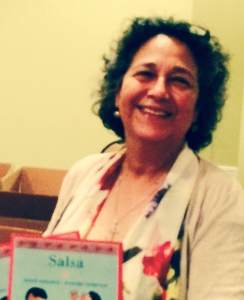
Oralia Garza de Cortés

Oralia Garza de Cortés

How did you first learn about Pura Belpré and her work? 

As a young mom, I embarked upon a quest to find all those books for children related to my cultural heritage that I could introduce my young daughter to. I discovered that the most knowledgeable children’s librarian who could help me was at the newly renovated (at the time) Carnegie Branch of the Houston Public Library. It was Louise Yarain Zwick who first introduced me to Pura Belpré and her wonderful stories in the early eighties. Years later, while doing research one day at the University of Texas while I was in a library school, I discovered a recording of Pura Belpré telling her stories to the children. I heard the deep, rich inflection in her voice as she mimicked the characters to her classic Pérez y Martina: A Puerto Rican Folktale (F. Warne, 1932) I was mesmerized by her storytelling. Then on a visit to Brownsville one hot summer day, I visited the college library where I happened upon a copy of Libros en Español: An Annotated List of Books in Spanish that she edited with Mary Conwell (New York Public Library, 1971). My quest grew into a passion fueled by the artifacts she had left behind, stories and documents left like clues for me to study closely in an effort to re-weave this rich literary tapestry.

Why did you want to co-found the Pura Belpré award?

There is no denying the power that comes from recognition. Certainly the impact of awards such as the Caldecott and Newbery is undeniable. But the twenty-fifth anniversary awards program of the Coretta Scott King Awards moved me beyond words. As we struggled to establish the Belpré Award through the ALA bureaucratic process, that ceremony sparked my imagination for the potential and the possibilities and served as the impetus for getting the Belpré Award through to the home stretch. We established a set of guidelines that re-defined quality in children’s literature so that the cultural content of the writing and the depictions of Latinos in illustration was as equally important a factor as the other criteria for quality children’s literature. This was critical, as we felt strongly that Latino children needed more positive images of themselves other than the “Speedy González” and “frito bandito” stereotype images that continued to prevail in the media and in the kids’ cartoon networks.

Why named it after her?  

When we started talking concretely about an award, we brainstormed and soul-searched names. Many names were suggested, discussed and argued over. But as names were tossed out, the key question became: What is their contribution to children vis-a-vis literature and libraries? It was our dear colleague and REFORMISTA Toni Bissessar who brought up Pura Belpré’s name. It became pretty clear pretty quickly that if there was any one person with a significant track record of library service for children, it was this amazing pioneering librarian and storyteller, Pura Belpré who also demonstrated the value and importance of outreach as a first step to bringing the children to the public library.

What is the significance or impact of giving this book award to Latino/a children’s books authors and illustrators?

Given the publishing industry’s dismal track record of publishing Latino authors and illustrators, the Belpré Award serves a very useful purpose in leveling that very uneven playing field. Increasingly, we are seeing Latino children’s authors and/or illustrators who have gone on to receive Newbery, Caldecott, and Printz Awards or honors as a result of the visibility and recognition they first received through the Belpré Award. Winning the award immediately identifies these authors and illustrators to publishers who want to produce materials on the Latino experience but who may not want to take a chance on new, first-time authors or illustrators. The down side of this, of course, is that publishers tend to play it “safe” and so we may see the same authors and illustrators, oftentimes to the delay of new, innovate talent they could take a chance on. The Belpré Award also serves as a very useful selection tools for schools and libraries needing to beef up their Latino collections. But even more importantly, the Belpré identifies authors and illustrators who children and their parents need to see coming to their schools and in their communities and at book fairs like the Los Angeles Times Festival of Books or the Texas Festival of Books. They are exemplary role models for Latino children to know and emulate. It’s part of how we’re going to grow the future generation of Latino writers and illustrators of books for children, and how other children will get to know about Latinos and their vast culture.

Any future plans with the awards?

The period immediately following the 20th Anniversary Celebración will be a good time to reflect upon the last twenty years and is sure to spark some ideas about the direction and future of the award. This is surely a discussion topic for both sponsors of the Belpré Award to discuss and plan as we continue to work together collaboratively in order to insure its continued success.

As we move on to celebrating the 20th anniversary of the Pura Belpré award, can you talk a little bit about the Celebración at ALA Annual? 

The Celebración is quite a unique ceremony that happens every year during the annual meeting of the American Library Association. The Celebración is at once a joyful, colorful, festive, and quite moving and invigorating event. It is a gathering space for the familia of librarians and publishers that come together annually to pay homage to the honorees. The two winning medalists give acceptance speeches, which in many instances move more than a few audience members to tears to hear these authors and illustrators speak from their heart about what the honor really means to them. Children in colorful costumes dance and audience members line up for a chance to get their book signed. It is REFORMA’s way of honoring these honors we consider literary heroes who are creators of a growing sector of a the body of work we call American children’s literature.

What would you like to see in the next 20 years in terms of Latino children’s literature?

Certainly the slim production of titles about the Latino experience is reason enough to insist that we do better by the growing population of Latino children who deserve so many more stories in all genres and formats that mirror their realities. It always amazes me that given what we know today about the well-established precept of books as ‘windows and mirrors’ as necessary for children to learn, we still find librarians and bookstores oblivious to award winning books such as the Belpré and are reticent to buy these books and add them to their library collections or sell them in their stores. But we also need the publishing industry to better understand the necessity and the need for titles with culturally relevant content and the critical role these books can play in the education of readers who may not be familiar with the nuances of Latino culture. With an increasingly segregated America, how else will we learn about the ‘other’ if not through books with main character like Esperanza or Manny Hernandez? These protagonists for young people are the perfect anecdote that serves to counter-balance the omissions notably missing in history books and in the media at large. Finally, publishers would do well to recognize that Spanish is the second most spoken language in the world. If they are really serious about the future of reading, they would do well to steep themselves into culture and move beyond merely translating the popular books that they are familiar with. Imagine more Spanish children’s book with culturally relevant content! Now that would be change!
Any favorite or memorable moment during these last 20 years of the award?

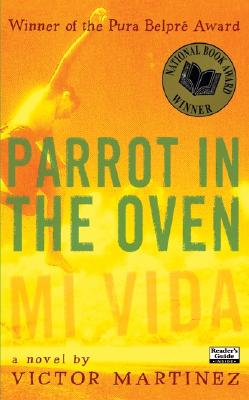
I distinctly remember Victor Martinez’s parents at the 1998 Belpré Celebration when he won the Belpré for Parrot in the Oven: Mi Vida. It was heartwarming for me as I realized that I had come full circle when I discovered that Victor’s parents were originally from the Rio Grande Valley in South Texas, where I’m from originally. But then seeing the joy and tears and the expression in their faces as their son received the Belpré Medal was all the affirmation I needed, the very reason REFORMA insisted that we have a Celebración as a way to honor and recognize our winning authors and illustrators, welcome their families, and further develop that comunidad necessary for the development of readers to take root.

Any advice for future Latino children’s books authors and illustrators?

Trust your instincts, learn from the past, and impress us with your talent!


Sandra Ríos Balderrama, Co-Founder of the Pura Belpré Award

Sandra Rios Balderrama

Sandra Rios Balderrama

How did you first learn about Pura Belpré and her work?

I learned about Pura Belpré from Toni Bissessar one night on the balcony of a New Orleans restaurant. Toni, Oralia, and I were having dinner after a long day of ALA conference and we began to brainstorm names for our future award. “Vivan los niños!” was one. Naming it after César Chávez was another possibility. The napkin that we were writing the names on had a long list. (I wish we still had that napkin! An archival piece!). Then, Toni asked if we had ever heard of Pura Belpré and she began to explain who she was. We knew, then and there, at that moment, as Toni was telling the story of Belpré, that we found our name. It was a perfect fit.

Why did you want to co-found the Pura Belpré award, and why named it after her?

I met Oralia in 1986 or 1987. I was a children’s librarian in California and she was one in Texas. We met at an ALA conference and this is when the spark that we both held in our hearts and souls, took flame. We shared our frustration of not having the tools to do our work i.e. providing collections that our families wanted and finding storybooks that reflected affirming story and imagery for our story hours. The roots of the award began with valuing effective library service to our communities. As we kept talking, we realized the role of publishers, reviewers of children’s literature, and the perceived lack of Latinx writers and illustrators. We spoke highly of the Coretta Scott King Award books and began to wonder what it would be like to have an award for Latinx authors & illustrators for books that would provide the diverse Latinx experience of/for children in the USA and that would get beyond the stereotypical images and characters. To meet Oralia was serendipitous and our work was synchronous and synergetic! The decision to create an award sprung from those passionate and insightful conversations at the many tables we shared during those years way before 1996.

After learning that Pura was a librarian and that she established bilingual story hours and services at the NYPL, AND that she was the first Latina librarian that we know of, to serve in this capacity – we decided that the vision of the award was aligned with her work. The vision for the award was based on affirming Latinx children, authors, illustrators, books, and storytelling. Her work was about inclusion, and “naming” native languages, culture, heritage, thus, giving her bilingual and bicultural communities the service they deserved. This is also what the award is about – the spirit of service aligned with the richness and inclusion of Latinx in the narrative and illustration of the United States’ experience.

What is the significance or impact of giving this book award to Latino/a children’s books authors and illustrators?

The significance is that we’ve come closer to achieving justice, equity, inclusion, and celebration of a more realistic, genuine, world. We still have a ways to go in the ongoing effort to see that our books are published, however this award, like others, gives a boost of acknowledgement and value. Value. The award affirms the potential and power of Latinx to tell our stories, in our way, in our voice and with our brush. The selections are made by librarians with experience in working with Latinx communities so they have insights into the needs and interests of their patrons. The illustrators and authors, themselves become positive imagery for future authors and illustrators i.e. children who may be artists, poets, and storytellers. I always say that invitation is not inclusion. This award is a table that was sculpted by many people, for the authors and illustrators to sit at with pride, knowing that we value their work and their contributions to the world of books, libraries, classrooms, and living rooms.

What would you like to see in the next 20 years in terms of Latino children’s literature?

We are a dynamic people. We treasure our components of culture and heritage and at the same time evolve within our settings and the times we live in. We are not static in how we define ourselves and how we write /paint/digitize/imagine our stories. I hope the next 20 years brings Latinx children’s literature beyond my wildest dreams! And lots more of it! The important elements to retain are diversity, dynamism, and dreaming.

Any favorite or memorable moment during these last 20 years of the award?

The Celebraciones I have attended always make me tear up when I hear the authors and illustrators speak. For me they embody, bring to this lifetime and this earthly plane, a beautiful dream of my Comadre Oralia and myself, as well as all of the people that helped, struggled, and worked on behalf of justice and inclusion, along the way Without the Pura Belpré authors and illustrators we cannot preserve, disseminate or evolve. Without them, we as librarians and libraries remain irrelevant. We can not say we are global institutions, without these authors and illustrators. I feel proud, that the illustrators and authors represent the diversity of Latinx culture and experience, in the way they tell, write, speak, paint, digitize, collage, craft, create, imagine, and uncover the many stories that, once published, and once in the hands of all children, help to make our world more genuine, true, and complete.

Any advice for future Latino children’s books authors and illustrators?

Peruse the Pura Belpré titles. Enjoy them. Give attention to the story, stories and the questions about a possible story to be uncovered, that pound in your heart and won’t let you rest. Listen to the call of the paintbrush and the easel. We are multilingual and “magic realism” for others is our daily life. Your story and imagery are of great worth. Don’t give up. We are fighting for you in the backrooms of libraries, publishing houses, and selection committees. Aho. Ashé, Adelante!


Celia C. Pérez, Past Pura Belpré Award Committee Member

How did you first learn about Pura Belpré and her work?

I feel like I have known about Pura Belpré forever because the award has been such a significant part of my life in the last few years, but reaching back into my memory, it really hasn’t been that long. I’m not a children’s librarian by training, so I don’t think the award or the woman it was named for were on my radar until recent years. I certainly didn’t learn about the award, much less the woman, when I took a class in children’s materials while in library school! I’ve always been interested in children’s books but it took a while for me to enter that world on a professional level, beyond my own reading for pleasure. In 2010, I enrolled in a post-graduate program with a focus on youth services, and it was during this time that I turned my focus to children’s books by and about Latinos. It was probably around that time that I discovered who Pura Belpré was and her significance in the world of children’s librarianship and literature.

What is the significance or impact of giving the Pura Belpré book award to Latino/a children’s books authors and illustrators?

You know we often think about awards in terms of recognizing the authors or illustrators. While this is, of course, the case with the Belpré, its significance is bigger than that as well. It’s not just recognition of the creators but of a group of people, of the presence of Latinos in the U.S. and of our varied cultures, histories, and experiences. The award puts a spotlight on our stories as created by our people. In awarding it specifically to Latino authors and illustrators the Belpré serves to really highlight the work of authors and illustrators that are often otherwise not especially well-represented or recognized in the worlds of publishing and libraries. It also puts a spotlight on Latino literature for young people in general. It doesn’t just highlight the best of, but also in a sense, can give a picture of what is missing and what the state of publishing is for these types of books.

As a past award committee member, could you talk a little bit about your experience? Criteria people should keep in mind when evaluating Latino children’s books?

My time on the Pura Belpré committee was one of my most rewarding professional experiences. As with all of ALA’s awards, members serving on committees are not able to divulge details of the deliberation process and discussions. However, I can tell you that the committee members I worked with took on the responsibility of selecting the award winners with a deep reverence and thoughtfulness for the process, for the artists and authors, and for the award and its namesake. The Belpré adds a twist to the standard requirement of excellence in that it also requires that the selection be made with even more refined criteria in mind–work that best represents the “Latino experience.” That can be the tricky part because I think it’s important to be able to view that concept, “the Latino experience,” in many ways. It requires familiarity with Latino cultures in an intimate sense, but it also requires that you think about Latinos as we are situated in larger society. What is a Latino? Where do Latinos fit in American society and culture? What are the historical and current experiences of Latinos in the U.S? And how does one accurately depict that experience? Of course, we can’t forget that the term “Latino” includes so much diversity within, so it really is a challenge.

As we move on to celebrating the 20th anniversary of the Pura Belpré award, can you talk a little bit about the Celebración at ALA Annual?

The 20th Celebración is going to be fantastic! All Belpré celebraciones are, of course, but this will be a time to celebrate the current winners as well as honor the history of the award and all who have come through in the past twenty years. In addition to speeches by this year’s winners, and I should mention that all the winners and honors for a given year are invited to speak at the Belpré celebración, there will be music and a youth dance ensemble, a book signing by winning authors and illustrators, and an auction of original art by winning illustrators. There will also be a commemorative book that’s being published by Rosen and will include essays by past winners.

What would you like to see in the next 20 years in terms of Latino children’s literature?

I would really love to see the concept of the “Latino experience” broaden in terms of how it’s written and illustrated, as well as how publishers, editors and librarians think of it. We are more than just historical figures and holidays. It’s great to embrace the idea of “diversity,” but we need to evolve in how we think about diversity as well. It’s not enough to say publishing is becoming more diverse if the books that are being published are about the same topics, often placing Latinos and other underrepresented groups in a historical context and not as people you see in your everyday world. I also think there’s a need for more middle grade and YA with Latino protagonists, so let’s up the representation!

Any favorite or memorable moment during these last 20 years of the award?

Every ceremony I’ve attended has been special. I don’t think I ever leave without shedding a few tears and feeling super inspired. It’s festive and joyful and you really get a feeling of being connected to people. My favorite ceremony was the one I was a part of as a committee member in 2014 (shout out to my committee homies and our winners!), but all the ceremonies are unique and wonderful. It’s always free and open to anyone who wishes to attend so I invite everyone to experience it for themselves. I guarantee it will be one of the most fun things you do at the annual conference! Since we’re talking about memorable, I should also note that my favorite speech to date has probably been the one Benjamin Alire Sáenz gave when he won for Aristotle and Dante Discover the Secrets of the Universe. Crying like a baby, I was.

Any advice for future Latino children’s books authors and illustrators?

My advice would be the same as it would be for any writer. It’s important to write what comes naturally. I dislike the idea of feeling boxed into expectations of what a Latino author or illustrator should create. Latinidad comes in all forms. Our differences in cultures, upbringings and life experiences can make for a varied and robust body of work, and that’s a great thing!


SujeiLugoSujei Lugo was born in New Jersey and raised in her parents’ rural hometown in Puerto Rico. She earned her Master’s in Library and Information Science degree from the Graduate School of Information Sciences and Technologies at the University of Puerto Rico and is a doctoral candidate in Library and Information Science at Simmons College, focusing her research on Latino librarianship and identity. She has worked as a librarian at the Puerto Rican Collection at the University of Puerto Rico, the Nilita Vientós Gastón House-Library in San Juan, Puerto Rico, and the University of Puerto Rico Elementary School Library. Sujei currently works as a children’s librarian at the Boston Public Library. She is a member of REFORMA (The National Association to Promote Library Services to Latinos and the Spanish-speaking), American Library Association, and Association of Library Service to Children. She is the editor of Litwin Books/Library Juice Press series on Critical Race Studies and Multiculturalism in LIS. Sujei can also be found on Twitter, Letterboxd and Goodreads.


FullSizeRender (1)Dr. Sonia Alejandra Rodríguez’s research focuses on the various roles that healing plays in Latinx children’s and young adult literature. She currently teaches composition and literature at a community college in Chicago. She also teaches poetry to 6th graders and drama to 2nd graders as a teaching artist through a local arts organization. She is working on her middle grade book. Follow Sonia on Instagram @latinxkidlit

The Pura Belpré Award: Continuing Belpré’s Legacy of Lighting the Storyteller’s Candle–Part 1


Portrait by Robert Liu-Trujillo. Read more about the portrait and his projects at http://investigateconversateillustrate.blogspot.com Permission to post given by artist.

Portrait by Robert Liu-Trujillo. Read more about the portrait and his projects at http://investigateconversateillustrate.blogspot.com Permission to post given by artist.


By Sujei Lugo & Dr. Sonia Alejandra Rodríguez

By now, we are all familiar with the various conversations about the need for children of color and Native children to see themselves represented in the stories they read. However, not many know that these discussions, as they pertain to Latinx children, have been taking place since the early 1920s when Pura Belpré became the first Puerto Rican librarian in the New York Public Library system. Clearly, the context for dialogues around diversity were different because it was a different time; however, the urgency surrounding issues of representation, advocacy, and empowerment as they relate to Latinx children have many similarities.

Unfortunately, Belpré’s legacy is not one that is well known. Robert Liu-Trujillo, illustrator of the beautiful Belpré portrait on this post, says “I didn’t hear anything about Ms. Belpré until I was in my 30s. Once I realized that there was a really interesting person behind the award, I was really surprised that I’d never heard of her before. From what I’ve read about her and seen through my research, she was a revolutionary figure in children’s education and storytelling.” Trujillo is right to call Belpré a “revolutionary figure” because she indeed was.

Her innovative use of Puerto Rican folklore to reach predominantly Spanish-speaking Puerto Rican children in New York City revolutionized the role of public libraries in the life of these children. Through her storytimes, her puppeteering, and her written works, Belpré set a high standard for how libraries should tailor their programs and services for the communities and peoples in which they’re located. Her commitment and advocacy to bridge her Puerto Rican community to the library, and vice versa, showcases the roots of critical children’s librarianship and inclusion, and not assimilation, of marginalized voices into the field. Much work still needs to be done to bring Belpré’s legacy to the front and highlight the many ways she’s revolutionized storytelling, librarianship, and children’s books for Latinx children.

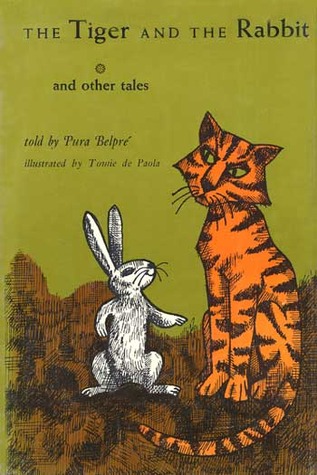
The Tiger and the Rabbit and Other Tales    Juan Bobo and the Queen's Necklace: A Puerto Rican Folk Tale    7380556

In “Pura Belpré Lights the Storyteller’s Candle: Reframing the Legacy of a Legend and What it Means for the Fields of Latina/o Studies and Children’s Literature,” Marilisa Jiménez-García discusses the various roles Belpré inhabited and the ways her contributions as a librarian and a writer, for example, can be read as subversive political acts. Jiménez-García says of Belpré as a storyteller, “she occupied as a kind of weaver of history, [she] encouraged children to defy assimilation along with the textual and national boundaries created by the dominant culture” (Jimenez-Garcia 113). In other words, through her use of Puerto Rican folklore, Belpré was teaching young Puerto Rican children to embrace their cultural identity and to challenge dominant narratives that depicted them as less than.

Jiménez-García further argues that “Belpré’s interventions within U.S. children’s literature constitute an attempt at cultural preservation, and even further, as an attempt to establish historical memory within the U.S. for Puerto Rican children” (115). In this way, Belpré used her writing to bring to the forefront a Puerto Rican heritage necessary for the identity construction of Puerto Rican children in the U.S. In The Stories I Read to the Children: The Life and Writing of Pura Belpré, the Legendary Storyteller, Children’s Author, and the New York Pubic Librarian (2013) Lisa Sánchez González writes, “In all of her work—including her work as a public librarian–she aimed to ensure that working-class bilingual and bicultural children had rightful access to what is still too often a privilege: Literacy, and with it, free and public access to good books” (17).

Jiménez-García’s and Sánchez González’s research inform us that Belpré was telling, writing, and performing stories that centered Puerto Rican culture and folklore, that she created a space at the NYPL and made Puerto Rican children the center of it, and that she was committed to making books available to children. In this way, Belpré led her own revolution.

Belpré’s legacy is incomparable, and 2016 marks the 20th anniversary of the children’s literary award named after her–the Pura Belpré Award. The award was established in 1996 by co-founders Oralia Garza de Cortés and Sandra Rios Balderrama. According to the award website, the Pura Belpré Award is “presented to a Latino/Latina writer and illustrator whose work best portrays, affirms, and celebrates the Latino cultural experience in an outstanding work of literature for children and youth.” By establishing an award that highlights Latina/o writers and illustrators creating works about Latina/o experiences, Garza de Cortés and Rios Balderrama carved a space dedicated to the empowerment and the future of Latinx children. Belpré’s legacy as a librarian, a writer, and a puppeteer demonstrate the importance of storytelling as a means of resisting and challenging oppressive dominant narratives. The Pura Belpré Award allows us to continue this revolution and give Latinx children and youth an opportunity to transform the world around them.

REFORMA (The National Association to Promote Library and Information Services to Latinos and the Spanish Speaking) along with the Association for Library Service to Children (ALSC) are joining efforts to hold a special celebration for the Pura Belpré 20th Anniversary Celebración at this year, ALA (American Library Association) Annual Conference in Orlando, Florida. The event will feature speeches by the 2016 Pura Belpré Award medal and honor winning authors and illustrators, David Bowles, Antonio Castro L., Angela Dominguez, Margarita Engle, Rafael López, Meg Medina, and Duncan Tonatiuh. It will also include book signing, a silent auction of original art by Latinx children’s illustrators, a new commemorative book for sale, The Pura Belpré Award: Twenty Years of Outstanding Latino Children’s Literature, and a keynote by author and storyteller, Carmen Agra Deedy.

Final Save the Date-1

The event promises to be a well-rounded celebración to recognize the award that lay ground to the recognition of Latinx children’s books creators within the youth literature field and the trajectory of the award, its past winners and honors, and the constant supporters of Latinx children’s literature.

For Part 2 of this post, which will run tomorrow, we spoke to members of the Pura Belpré Award Committee to get their insight on the momentous occasion that is the 20th anniversary of the Pura Belpré Award. Their interviews provide us with an insight to their motivations for creating the award, to the need of an award dedicated to Latinx children’s books written and illustrated by Latinx, the future of the award, and a look back at favorite award moments from the last 20 years. Tomorrow, read extensive interviews with Co-founder Oralia Garza de Cortés, Co-founder Sandra Rios Balderrama, and past committee member Celia C. Pérez.


SujeiLugoSujei Lugo was born in New Jersey and raised in her parents’ rural hometown in Puerto Rico. She earned her Master’s in Library and Information Science degree from the Graduate School of Information Sciences and Technologies at the University of Puerto Rico and is a doctoral candidate in Library and Information Science at Simmons College, focusing her research on Latino librarianship and identity. She has worked as a librarian at the Puerto Rican Collection at the University of Puerto Rico, the Nilita Vientós Gastón House-Library in San Juan, Puerto Rico, and the University of Puerto Rico Elementary School Library. Sujei currently works as a children’s librarian at the Boston Public Library. She is a member ofREFORMA (The National Association to Promote Library Services to Latinos and the Spanish-speaking), American Library Association, and Association of Library Service to Children. She is the editor of Litwin Books/Library Juice Press series on Critical Race Studies and Multiculturalism in LIS. Sujei can also be found on Twitter, Letterboxd and Goodreads.

FullSizeRender (1)Dr. Sonia Alejandra Rodríguez’s research focuses on the various roles that healing plays in Latinx children’s and young adult literature. She currently teaches composition and literature at a community college in Chicago. She also teaches poetry to 6th graders and drama to 2nd graders as a teaching artist through a local arts organization. She is working on her middle grade book. Follow Sonia on Instagram @latinxkidlit

Celebrating Pura Belpré Winners: Spotlight on Illustrator Susan Guevara

PuraBelpreAward

The Pura Belpré Awards turns 20 this year! The milestone will be marked on Sunday, June 26, from 1:00-3:00 p.m. during the 2016 ALA Annual Conference in Orlando, FL. According to the award’s site, the celebration will feature speeches by the 2016 Pura Belpré award-winning authors and illustrators, book signings, light snacks, and entertainment. The event will also feature a silent auction of original artwork by Belpré award-winning illustrators, sales of the new commemorative book The Pura Belpré Award: Twenty Years of Outstanding Latino Children’s Literature, and a presentation by keynote speaker Carmen Agra Deedy
Leading up to the event, we will be highlighting the winners of the narrative and illustration awards. Today’s spotlight is on Susan Guevara, the winner of the 1996 Pura Belpré Illustration Award for Chato’s Kitchen and the 2001 Pura Belpré Illustration Award for Chato and the Party Animals.

Review by Sonia Alejandra Rodriguez

DESCRIPTION FROM THE PUBLISHER:

Chato’s Kitchen: Chato can’t believe his luck. Not only is he the coolest low-riding cat in East L.A., but his brand-new neighbors are the plumpest, juciest, tastiest-looking family of mice to move into the barrio in a long time. So Chato and his best friend, Novio Boy, get out the pots and pans, the tortillas and the beans–everything you’d need for a welcoming feast, except for the main dish, and the guests of honor. Of course, in Chato’s mind they are one and the same thing. But the mice are bringing a surprise guest of their own, who may be more than a cool cat can swallow.

Chato and the Party Animals: Chato, the coolest cat in el barrio, loves to party–but not his best buddy, Novio Boy. Birthday parties always make him blue. “I’m from the pound,” he tells Chato. “I don’t know when I was born. I never knew my mami. I never even had a birthday party, or nothing.”So Chato plans the coolest surprise party for Novio Boy, inviting all of el barrio, and cooking up a storm. But he forgets the most important thing–inviting Novio Boy! Luckily, just as everyone starts remembering all the things they used to love about their long-lost friend, the birthday boy arrives with his own surprise–himself! In a starred review, Publishers Weekly called Chato’s Kitchen “Wickedly funny…Guevara’s cats are delicious send-ups of barrio characters, and Soto’s words glisten with wit. Salud to this magical pairing of talents.”

Chato's Kitchen   854821

MY TWO CENTS: Susan Guevara won the Pura Belpré award for illustration in 1996 and 2001 for her work with Gary Soto in Chato’s Kitchen (1995) and Chato and the Party Animals (2000). Soto introduces readers to the coolest cat in the East Los barrio. In Chato’s Kitchen, Chato plans an elaborate scheme to get some delicious ratoncitos to come over for dinner and serve as the main course. Chato’s plan is foiled when his invited guests bring their friend Chorizo, a low-riding dog, to dinner with them. In Chato and the Party Animals, Chato throws an amazing birthday bash for his best cat friend Novio Boy, who has never had a birthday party of his own because he doesn’t know his date of birth since he’s from the pound. Through her illustrations, Guevara gives life to Soto’s sueve characters.

Guevara’s illustrations depict Chato as the cool cat Soto created him to be. Guevara draws Chato with a green baseball hat worn to the back, a single gold hoop earring, a gold tooth, a thin mustache, and a goatee. Guevara also creates a barrio full of hip vatos, carnales, and homeboys. Novio Boy wears a red wrapped bandana around his head with a seemingly plaid shirt only buttoned at the first button with a white plain shirt underneath. Papá ratoncito wears what appears to be a guayabera and Mamá ratoncito wears a traditional white rebozo with rose appliques. These seemingly minute details give the story a genuine East Los Angeles feel that might resonate with many barrios across the country.

Guevara’s personification of Chato and his friends make it easy for readers to connect with the characters specifically because these characters’ traits resemble that which we might see in our own relatives and neighbors. Pachuco, Chicano, and cholo histories are significant cultural aspects of Mexican/Mexican-Americans in Los Angeles. This is evident in the aesthetics, like fashion, language, and mannerisms, which have been passed on from generation to generation that are characteristic of Mexican/Mexican-American/Chicano culture. That is, Guevara’s illustrations signal an extensive history of Mexican/Mexican-American/Chicano identity in East Los Angeles through the characters’ fashion and gestures. Furthermore, Guevara’s artistic choices to illustrate the characters wearing clothing that have been represented by society as having cultural attributes, that have also been read as criminal, also indicates a history of resistance evident through fashion.

Scholar Catherine Ramirez calls this resistance “style politics[1]” as a way to demonstrate that fashion can serve as tool to challenge oppressive systems. In other words, while the backwards hat, piercings, bandanas, baggy pants, pompadours, etc. have cultural and historical significance and attachment to Mexican/Mexican-American/Chicano people, in this case, these same fashion choices have also been maligned by dominant society to represent criminality, deviancy, and otherness. The prevalence of these fashion statements today despite their negative associations and Soto and Guevara’s representations of these markers in their stories are indicators of resistance against dominant narratives.

Resistance is an evident theme in Guevara’s illustrations. While this resistance may be subtle for readers quickly glancing through the illustrations, they have a great impact once we realize that these moments are there. For example, in Chato’s Kitchen there’s a scene where Chato is illustrated kissing his fruits and vegetables as he prepares dinner for his guests. Guevara makes the bowl holding the food the center of this illustration with Chato on the side. The banana has a sticker that reads “Sangre de Honduras.” Stickers on bananas normally promote the brand or company associated with it. Through this detail on the banana, Guevara points out the violent role the US has played in Central America as made evident by the introduction of banana republics and banana wars.

Another example of resistance in the illustrations is seen in Chato and the Party Animals during the scene when Chato and his friends are looking for Novio Boy to take him to his surprise birthday party. Guevara gives us a bird’s-eye view of a Chato’s barrio and with careful attention the reader can see that there are murals on some of the buildings. One of the buildings has a mural of Che Guevara with the quote “We are not a minority” next to it, a quote that appears in the next scene as Chorizo howls and the quote is seen throughout the sky. Another wall depicts a cat with a cap and gown with the words “Si Se Puede.” There is also a mural of la Virgen de Guadalupe. The tiny murals represented in these books serve as a source of empowerment because they challenge dominant narratives that seek to oppress barrios similar to Chato’s.

Guevara’s illustrations in the Chato books have several layers that might be missed during the first read of the story that are definitely worth returning to and taking the time to notice all the important details. A reader can get lost just looking at Guevara’s illustrations, and that’s certainly a sign of a great artist.

TEACHING TIPS:

  • For younger readers: After having read the story, ask younger readers to choose their favorite illustration. Have them look at the illustration and make a list of all the items and characters they see on the page. This can be done individually, in small groups, or as a class. Have them share their reason for choosing their illustration and their list of items they found. See if anyone notices the ninja turtles in the mercado or if they notice that Baby ratoncito’s stuffed animal is a black cat.
  • For middle grade readers: Ask middle grade readers to choose an illustration and create a new story based on what they see. Encourage them to change the character’s name and his purpose. In illustrations with more than one character, encourage them to create a dialogue or exchange of sorts. Have a discussion with students about the significance of illustration in children’s picture books. Ask them to consider the benefits and challenges of reading stories, like children’s illustrated books, that offer both written and visual perspectives.
  • For young adult readers: Ask young adult readers to discuss Chato and his friend’s fashion sense. Deconstruct stereotypes associated with clothing like the zoot suit, baggy clothes, hoodies, etc. Ask them to contemplate their fashion choices as a form of resistance. Ask them to consider if what they wear or what they post online is a form of resistance. If it is, what are they resisting and how? If it is not, then why? What does resistance look like? Consider asking them if selfies, for example, can be a form of resistance.

[1] Ramirez explores the concept  of “style politics” in her book The Woman in the Zoot Suit: Gender, Nationalism, and the Cultural Politics of Memory (2009) and while she analyzes this form of resistance as it relates to women donning the traditional Pachuco Zoot suit in the 1940s and 1950s, it also has relevance in Soto’s and Guevara’s representation of Chato.

Photo by Norman Mauskopf

Photo by Norman Mauskopf

ABOUT THE ILLUSTRATOR (from her website): Susan Guevara is a visual storyteller. She tells her tales with illustrations, paintings, drawings and sculptures. For 27 years her work as a children’s picture book illustrator has been recognized many times, often for its contribution to literature set in Latino culture. Her recognition includes a 2005 New York Times Ten Best Illustrated books of the Year recipient, a two time Pura Belpré Illustrator Award winner, the first Tomás Rivera Award winner and most recently, a Pura Belpré Honor Award winner for her last book, “Little Roja Riding Hood” by Susan Middleton Elya. Her illustrations for “Chato’s Kitchen” by Gary Soto contributed to the book being recognized as one of the Best 100 Books of the Last 100 Years by the New York Public Library.


FullSizeRender (1)Dr. Sonia Alejandra Rodriguez’s research focuses on the various roles that healing plays in Latinx children’s and young adult literature. She currently teaches composition and literature at a community college in Chicago. She also teaches poetry to 6th graders and drama to 2nd graders as a teaching artist through a local arts organization. She is working on her middle grade book. Follow Sonia on Instagram @latinxkidlit
Maybe Something Beautiful: Día Art Bilingual Story Time


By Sujei Lugo

This year marks the 20th anniversary of Día de los Niños, Día de los Libros, a celebration of children, books, cultures, languages, and community. Throughout the United States and Puerto Rico, various public libraries, school libraries, academic libraries, schools, universities, and community centers planned and held different programs to share the celebration and “bookjoy” with children, families, and community members. Once again, I decided to join the “Día Turns 20” party and held three programs at my public library: a frame art workshop using as inspiration Frida Kahlo’s “El Marco” (1938) self-portrait, a “Rhythms Heard Around the World” drumming and storytelling program, and an art bilingual story time.

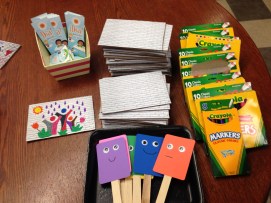
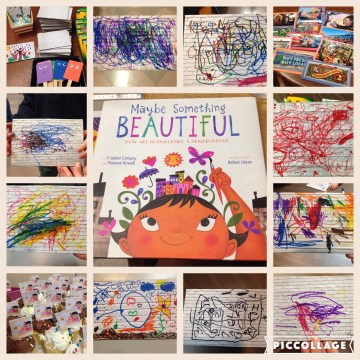
Mini-murals, markers, story time props, and Día bookmarks.

Mini-murals, markers, story time props, and Día bookmarks

I want to focus this post on the art bilingual story time, as a way to bring attention to how to incorporate your community and neighborhood into your program while bringing a picture book to life. Last year I did a musical bilingual story time where I read Tito Puente, Mambo King/Tito Puente, Rey del Mambo written by Monica Brown and illustrated by Rafael López, used guajiras, rumbas, and mambos songs, and each child made and decorated small timbales made out of tuna cans. So which Latinx picture book published in the last 12 months would inspire me to offer a great bilingual story time, along with activities and a craft inspired by it t? At the American Library Association Midwinter Conference held at the beginning of the year, I saw and read a display copy of the picture book Maybe Something Beautiful: How Art Transformed A Neighborhood written by F. Isabel Campoy and Theresa Howell, and illustrated by Rafael López, and, right there and then, I knew I had found the perfect match.  

Through an inspiring tale and vibrant illustrations, Maybe Something Beautiful introduces readers to Mira, a girl who lives “in the heart of a gray city” and who enjoys doodling, drawing, coloring, and painting. She considered herself an artist and liked to gift her illustrations to people from her neighborhood. She even taped and “gifted” one of her paints to a dark wall around her block. One day she meets a muralist, and learns the magic of painting murals, and the power of bringing together the whole community to create something beautiful. The book is based on a true story about an initiative by Rafael López, the illustrator of the book, and his wife Candice López, a graphic designer and community leader, as a way to bring people together and transform their neighborhood into a vibrant one.

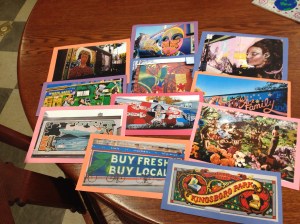
Photos of the murals found around my neighborhood

Photos of the murals located near my library and neighborhood.

After reading the book, I immediately thought of the different murals around my neighborhood and how they are reflective of its people: different generations of Latinx communities, artists and activists, local businesses, streets, and heterogeneity. But also a community facing gentrification, fighting for housing, economic, and racial justice. A neighborhood with a sense of community, like the one I saw in Maybe Something Beautiful and one I wanted to show to my toddlers at story time. 

I started the Día Art Bilingual Story Time by welcoming everyone, giving Día stickers to each child, and explaining how this was a special bilingual story time because we were celebrating the 20th Anniversary of Día. I explained what Día was, how it started, and how we were joining a nationwide celebration. I introduced my special guest, a local artist and art teacher, who was going to read with me and who was going to serve as the art facilitator. As a warm-up I sang a couple of songs: Buenos Días, ¿Cómo Estás?; Wake Up [different body parts]; and If You Are Wearing [insert color] Today, Say Hooray! Then we started with Book Fiesta! Celebrate Children’s Day/Book Day; Celebremos El Día De Los Niños/Día de Los Libros written by Pat Mora and illustrated by Rafael López, where I read the Spanish text and the special guest the English one. I followed with more songs: Everyone Can March; Colors, Colors Everywhere; and Where is [insert color name in Spanish]? Once we finished singing and everyone got back to their spot, I read Maybe Something Beautiful while the art facilitator was setting up the tables for the craft.

After reading the book, I talked a little bit about our neighborhood and murals and did a guessing game with them. I printed out pictures I took of the different murals around our neighborhood and children and adults (adults were really into this) started guessing where the murals were located. Some of them were tricky, but with others, children were excited to shout where they were. I always like to leave the craft as a sort of final surprise and ask them what they think we are going to do. The craft was a mini-mural made out of 4” x 8” cardboard with a brick or wood wall pattern to simulate a real wall they will paint on. At first, I thought of giving them watercolors or tempera, but finally opted for markers because they are less messy for the 0-4 crowd. Children had fun painting their mini-murals and proudly showed their creation to everyone in the room.IMG_7856

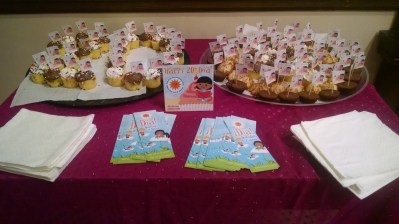
We ended the program sharing mini cupcakes, brownies, and coconut macaroons (with vegan, gluten-free, sugar-free options) and all of them had mini flags with the “Día Turns 20” Logo. They all gathered together to enjoy the special treats, to chat with one another, and show each other their mini-murals. Some parents and caregivers reached out to me and expressed how much fun they and their child had. Others used the opportunity to tell me how their child likes to draw on their wall at home, and others told me how now they were worried their child would get inspired to draw and paint on their walls. Rest assured, the kids and adults got together to recognize the power of community and how paintings on the walls do bind us together in a communal experience of recognition. In that sense, any drawing on the house wall is a potential future of community building. Be it a mess or something more detailed, the drawings on the wall are definitely something beautiful.

Día Turns 20!

Día Turns 20!


SujeiLugoSujei Lugo was born in New Jersey and raised in her parents’ rural hometown in Puerto Rico. She earned her Master’s in Library and Information Science degree from the Graduate School of Information Sciences and Technologies at the University of Puerto Rico and is a doctoral candidate in Library and Information Science at Simmons College, focusing her research on Latino librarianship and identity. She has worked as a librarian at the Puerto Rican Collection at the University of Puerto Rico, the Nilita Vientós Gastón House-Library in San Juan, Puerto Rico, and the University of Puerto Rico Elementary School Library. Sujei currently works as a children’s librarian at the Boston Public Library. She is a member ofREFORMA (The National Association to Promote Library Services to Latinos and the Spanish-speaking), American Library Association, and Association of Library Service to Children. She is the editor of Litwin Books/Library Juice Press series on Critical Race Studies and Multiculturalism in LIS. Sujei can also be found on Twitter, Letterboxd and Goodreads.