Celebrating Pura Belpré Winners: Spotlight on Author-Illustrator Carmen Lomas Garza

PuraBelpreAwardThe Pura Belpré Awards turns 20 this year! The milestone will be marked on Sunday, June 26, from 1:00-3:00 p.m. during the 2016 ALA Annual Conference in Orlando, FL. According to the award’s site, the celebration will feature speeches by the 2016 Pura Belpré award-winning authors and illustrators, book signings, light snacks, and entertainment. The event will also feature a silent auction of original artwork by Belpré award-winning illustrators, sales of the new commemorative book The Pura Belpré Award: Twenty Years of Outstanding Latino Children’s Literature, and a presentation by keynote speaker Carmen Agra Deedy.

Leading up to the event, we will be highlighting the winners of the narrative and illustration awards. Today’s spotlight is on Carmen Lomas Garza, the winner of the 2000 Pura Belpré Illustration Medal for Magic Windows / Ventanas mágicas and Pura Belpré Honors for Illustration for Family Pictures / Cuadros de familia in 1996 and In My Family / En mi familia in 1998.

Review by Marianne Snow Campbell

DESCRIPTIONS FROM THE PUBLISHERS:
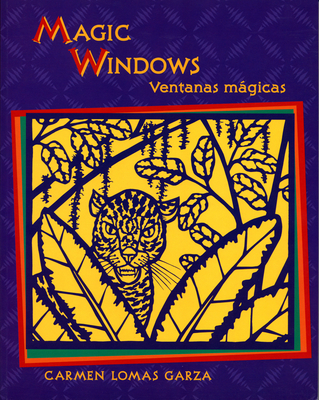
Magic Windows CoverMagic Windows: Through the magic windows of her cut-paper art, Carmen shows us her family, her life as an artist, and the legends of her Aztec past. We look into Carmen’s studio and see her paint a Mexican jarabe tapatío dancer; we glimpse the hummingbirds that cross the US-Mexico border to taste the sweet nectar of the cactus flowers; and we watch Carmen teach her nieces and nephews how to make their own magic windows. Magic Windows is a continuing tribute to family and community as well as a way for Carmen to connect future generations to their ancestors by teaching and sharing with them this traditional folk art.

Check out the book discussion and activity guide created by Lindsay Harris and Haley Rugger with Dr. Jamie Campbell Naidoo, provided by the University of Alabama School of Library and Informational Studies.


Family Pictures is the story of Carmen Lomas Garza’s girlhood in Kingsville, Texas: celebrating birthdays, making tamales, picking cactus, and confiding to her sister her dreams of becoming an artist. These day-to-day experiences are told through fifteen paintings and stories, each focusing on a different aspect of Carmen’s traditional Mexican American culture growing up. The paintings and stories reflect the author’s strong sense of family and community and demonstrate how her mother’s love and hard work helped Carmen achieve her dream. For the hundreds of thousands of Mexican Americans, Carmen Lomas Garza offers a book that reflects their lives and cultural traditions. For others, this beautiful work will offer insights into a fascinating life and a rich community. Sandra Cisneros provided the introduction and Pat Mora the afterword for this touchstone of Latino children’s literature. This book is bilingual (English and Spanish).
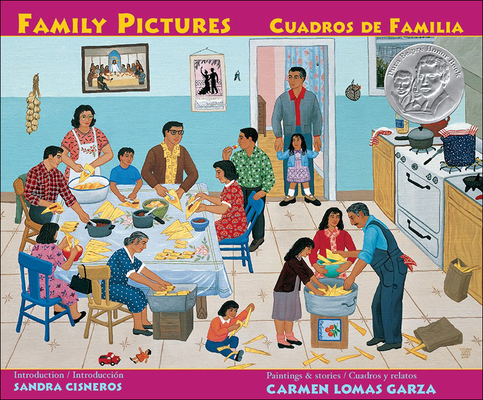
Family Pictures/Cuadros de Familia Cover


In My Family / En mi familia: In her eagerly-awaited second book for children, In My Family / En mi familia, internationally-renowned artist Carmen Lomas Garza takes us once again to her hometown of Kingsville, Texas, near the border with Mexico. Through vibrant paintings and warm personal stories, Carmen brings to life more loving memories of growing up in a traditional Mexican American community: eating empanadas, witnessing the blessing on her cousin’s wedding day, and dancing to the conjunto band at the neighborhood restaurant. In My Family / En mi familia is Carmen Lomas Garza’s second book of family pictures, a continuing tribute to the loving family and community that shaped her childhood—and her life.

For effective strategies on incorporating students’ linguistic and cultural backgrounds into social studies curricula, check out the article “Developing Literacy through Culturally Relevant Texts” by Dr. Iliana Alanís in Social Studies and the Young Learner (2007) from the National Council for the Social Studies.  Pair In My Family with the author study guide Carmen Lomas Garza: Chicana Author and Illustrator by Deborah J. Francis, part of The Alma Project, a cultural infusion model by Denver Public Schools.
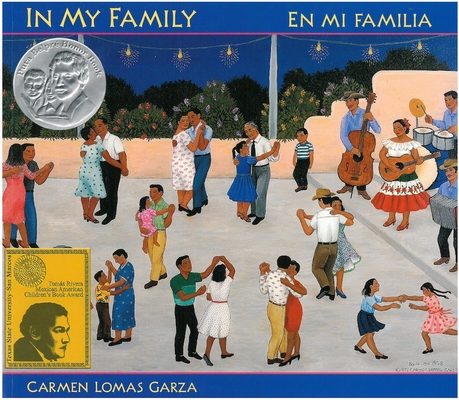
In My Family Cover


MY TWO CENTS: “At the age of thirteen I decided to become a visual artist and pursue every opportunity to advance my knowledge of art in institutions of higher education. The Chicano Movement of the late 1960s inspired the dedication of my creativity to the depiction of special and everyday events in the lives of Mexican Americans based on my memories and experiences in South Texas. I saw the need to create images that would elicit recognition and appreciation among Mexican Americans, both adults and children, while at the same time serve as a source of education for others not familiar with our culture.”

With this artist’s statement, Carmen Lomas Garza sums up everything I appreciate about her autobiographical children’s books. They’re real. They’re confident. They’re hopeful. In all three of her Pura Belpré award winners – Magic Windows / Ventanas mágicas, Family Pictures / Cuadros de familia, and In My Family / En mi familia – Garza uses traditional media alongside her own words to represent her memories and celebrate common Mexican American cultural practices. While engaging with these exquisite images and clear, simple (and bilingual!) captions, readers of any cultural background can learn something about life in 1950s Kingsville, Texas and compare and contrast their own experiences with the artist’s.

Magic Windows / Ventanas mágicas, which won the Belpré Award in 2000, provides readers with an intricate introduction to the art of papel picado, the traditional Mexican art of paper cutting that began with Mexico’s indigenous communities.
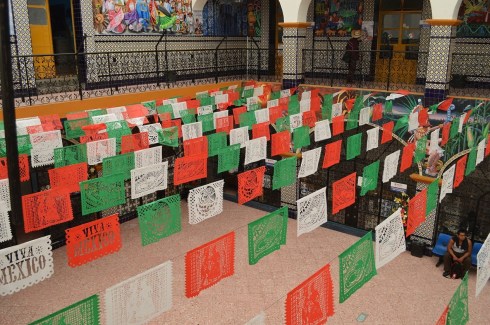
Papel picado decorations for Mexican Independence Day celebrations, Atlixco, Puebla, Mexico. Photo by Alejandro Linares Garcia.

Papel picado decorations for Mexican Independence Day celebrations, Atlixco, Puebla, Mexico. Photo by Alejandro Linares Garcia.


While traditional papel picado pieces often feature geometric and/or symbolic designs, Garza’s paper cutouts represent moments from her life: making paper flowers with her family, catching horned frogs, helping her grandfather water his garden.
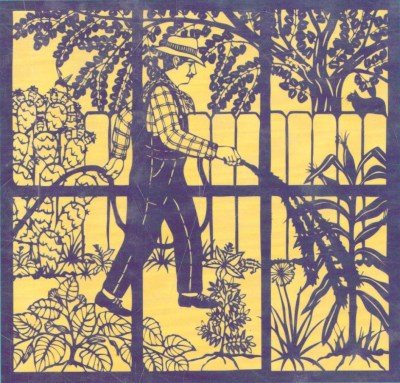
Detail from Offering for Antonio Lomas / Ofrenda para Antonio Lomas on the back cover of Magic Windows / Ventanas mágicas.

Detail from Offering for Antonio Lomas / Ofrenda para Antonio Lomas on the back cover of Magic Windows / Ventanas mágicas.

According to Magic Windows’ introduction, Garza learned how to craft traditional papel picado with scissors from her mother and then, after decades of practice, began fashioning the larger, more representational pieces found in this book with a craft knife. I just can’t believe she cut all of these detailed, elaborate works by with her own two hands. Can you imagine the love, patience, and dedication it took to complete them? “These pieces are like magic windows,” she states. “When you look through them, you can see into another world.” What I see is a deep love for her family rendered with absolute care and skill. You can’t get much more magical than that.

In Family Pictures / Cuadros de familia and In My Family / En mi familia, Garza’s Belpré honor winners, we can see that same care and love channeled through a very different artistic medium – painting. Both of these books contain several paintings of the artist’s childhood memories coupled once again with bilingual captions that explain the significance of each work. Page after page treats readers to sumptuous, folk-art-style snapshots of family gatherings, tender moments, and humorous scenes.
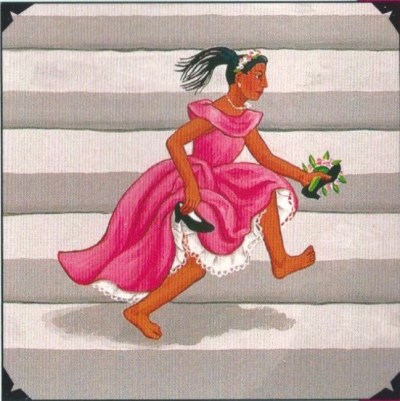
Detail from Quinceañera on the back cover of Family Pictures / Cuadros de familia.

Detail from Quinceañera on the back cover of Family Pictures / Cuadros de familia.

I’m just going to put it out there – Carmen Lomas Garza’s books for children are my absolute favorites. 100%, no joke. Their simplicity, honesty, and artistry make them the perfect package for me, and I know there are plenty of kids out there who will appreciate her straightforward, positive, oftentimes funny depictions of her experiences as well. The universal themes of love and family that appear in each magnificent yet humble work of art can hook any child that picks up these books. As Sandra Cisneros says in her introduction to Family Pictures, enjoying Garza’s art is like “pressing our face against the window screens and peeking inside our house. These are family pictures. And it doesn’t matter if your family is from Kingsville or Cairo, Sarajevo or Katmandu. They are your family’s pictures too. Tell me, which one is you?”
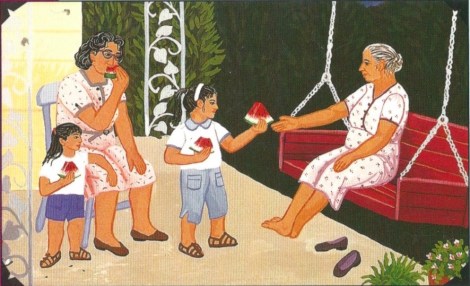
Detail from Watermelon / Sandía on the back cover of Family Pictures / Cuadros de familia.

Detail from Watermelon / Sandía on the back cover of Family Pictures / Cuadros de familia.


TEACHING TIPS:

  • Carmen Lomas Garza’s books are excellent models for autobiographical writing and art. After reading any of these award-winning books, let students create their own artistic representation of a personal memory (using their choice of medium, if possible) and write an autobiographical story to accompany the art.
  • Explore the rich history and modern practice of creating papel picado with students. Making Magic Windows, Garza’s companion book to Magic Windows, provides plenty of information about this alluring art form as well as step-by-step instructions for young artists. If possible, invite a papel picado artist to your school to share their craft.
  • Do you live in or near Chicago, Austin, El Paso, San Francisco, or Oakland? If so, consider taking your students to an art museum or library collection that features Carmen Lomas Garza’s artwork. You can find her paintings at the National Museum of Mexican Art (Chicago), the University of Texas’s Benson Latin American Collection (Austin), the El Paso Museum of Art, the Mexican Museum (San Francisco), and the Oakland Museum of California. Viewing a full-size, in-person version of a painting from one of Garza’s books can be a powerful experience, and many kids will love connecting their museum visit to books they’ve read. I’ll never forget stumbling upon Las Posadas at the Museum of Mexican Art – it was definitely a highlight of my trip to Chicago.
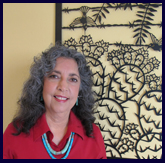
 

Carmen Lomas GarzaABOUT THE AUTHOR-ILLUSTRATOR (from her website): Carmen Lomas Garza was born in Kingsville, Texas, in 1948. Inspired by her parent’s activism with the American G.I. Forum, Lomas Garza joined the Chicano Movement of the 1960s and 1970s. She is a graduate of the Texas Arts & Industry University, Juarez-Lincoln/Antioch Graduate School, and San Francisco State University where she earned her M.A. in 1981. Lomas Garza is a recipient of numerous awards and has exhibited her work in galleries and museums across the United States.


ADDITIONAL RESOURCES:


MarianneMarianne Snow Campbell is a doctoral student at The University of Georgia, where she researches nonfiction children’s books about Latinx and Latin American topics and teaches an undergraduate course on children’s literature. Before graduate school, she taught pre-K and Kindergarten in Texas, her home state. She misses teaching, loves critters, and can also be found on Twitter and Facebook.
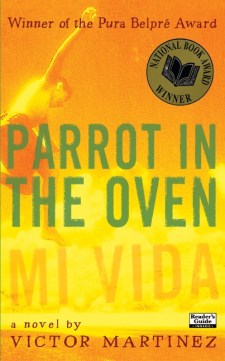
Celebrating Pura Belpré Winners: Spotlight on Parrot in the Oven by Victor Martinez

PuraBelpreAward

The Pura Belpré Awards turns 20 this year! The milestone will be marked on Sunday, June 26, from 1:00-3:00 p.m. during the 2016 ALA Annual Conference in Orlando, FL. According to the award’s site, the celebration will feature speeches by the 2016 Pura Belpré award-winning authors and illustrators, book signings, light snacks, and entertainment. The event will also feature a silent auction of original artwork by Belpré award-winning illustrators, sales of the new commemorative book The Pura Belpré Award: Twenty Years of Outstanding Latino Children’s Literature, and a presentation by keynote speaker Carmen Agra Deedy.

Leading up to the event, we will be highlighting the winners of the narrative and illustration awards. Today’s spotlight is on Victor Martinez’s Parrot in the Oven: Mi Vida, winner in the narrative category in 1998.


Review by Cecilia Cackley

Parrot in the OvenDESCRIPTION (from GoodReads): Dad believed people were like money. You could be a thousand-dollar person or a hundred-dollar person even a ten-, five-, or one-dollar person. Below that, everybody was just nickels and dimes. To my dad, we were pennies.
 Fourteen-year old Manny Hernandez wants to be more than just a penny. He wants to be a vato firme, the kind of guy people respect. But that’s not easy when your father is abusive, your brother can’t hold a job, and your mother scrubs the house as if she can wash her troubles away.

In Manny’s neighborhood, the way to get respect is to be in a gang. But Manny’s not sure that joining a gang is the solution. Because, after all, it’s his life – and he wants to be the one to decide what happens to it.

MY TWO CENTS: The subtitle of this book translates as ‘my life’ and that’s exactly what it is. Narrator Manny Hernandez tells the reader the details of his life without leaving out any of the tough, ugly parts—and it’s the truth in everything that gives the book its poetry. Manny is an honest character, confessing his struggles and fears to us and not apologizing for anything. Manny guides the reader through his family, neighborhood, and school, detailing everyone’s struggles, disappointments and moments of peace. This is not a book where there are always clear sides of good and evil, or winners and losers. Manny joins a gang and goes through a violent initiation, but almost immediately afterward, when he sees a fellow gang member rob someone, he realizes that he is not a person who hurts others like that and returns home to his family. Like most teenagers, Manny is just trying to survive and figure out his life and the truth of that is what makes his story so compelling.

Parrot in the Oven was published in 1996 (It won the Pura Belpré Medal in 1998 and the National Book Award in 1996). Although several of the Newbery honor titles that year touched on difficult subjects such as abuse, drugs and historical violence, it would be four more years before the Michael L. Printz award was established to specifically honor literature for teens. Since then, YA literature has received a lot more recognition and the debate about what is appropriate for teens to read and what we should be honoring with awards has become much more heated. Victor Martinez knew what was important: for teens to have books that told them the truth and let them know that whatever they were struggling with in their lives, they would figure it out and they were not alone. Parrot in the Oven is one of those books and we are lucky to be able to share it with readers today.

TEACHING TIPS: Parrot in the Oven provides lots of opportunity for discussion, making it an ideal book to read as a class. Because the book is organized into chapters that each tell about a different place, person, or experience, it serves as a good example text for students doing writing projects. Just as Manny writes about his grandmother’s garden, a boxing match, his sister’s miscarriage, you can encourage students to pick a place or experience of their own and try to describe it in detail, the way Manny does his own life.

Relationships are also central to Manny. Students could work in small groups to discuss Manny’s relationship with his different family members, teachers, and people in the neighborhood, and search the text to find evidence for how he feels about these people and interacts with them.

The ending of Parrot in the Oven is satisfying but not entirely definitive. Manny has seemingly made a choice about his future, but we don’t see any results of that choice. This provides an opportunity for students to imagine what Manny might be doing in a year or three years, and write a short piece showing how his choices have changed or not changed his life.

*****

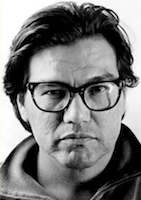
Victor MartinezVictor Martinez was born and raised in Fresno, California, the fourth in a family of twelve children. He attended California State University at Fresno and Stanford University, and has worked as a field laborer, welder, truck driver, firefighter, teacher, and office clerk. His poems, short stories, and essays have appeared in journals and anthologies. Mr. Martinez was awarded the 1996 National Book Award for Young People’s Literature for Parrot in the Oven, his first novel. Mr. Martinez lived in San Francisco, California, where he helped to found the poetry collective Humanizarte. He passed away in 2011.

 

ADDITIONAL RESOURCES:

Click here for a review from Teaching Latin America Through Literature.

Here’s a printable lesson plan from HarperCollins.

For book guides and lesson plans from Teaching Books, click here.


Cackley_headshotCecilia Cackley is a performing artist and children’s bookseller based in Washington DC where she creates puppet theater for adults and teaches playwriting and creative drama to children. Her bilingual children’s plays have been produced by GALA Hispanic Theatre and her interests in bilingual education, literacy, and immigrant advocacy all tend to find their way into her theatrical work. You can find more of her work at www.witsendpuppets.com.
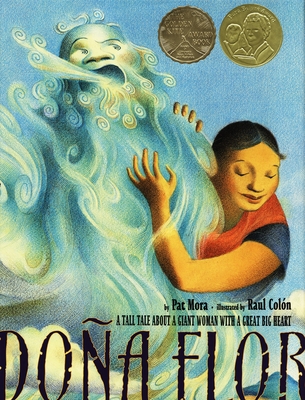
Celebrating Pura Belpré Winners: Spotlight on Doña Flor, illustrated by Raul Colón

PuraBelpreAwardThe Pura Belpré Awards turns 20 this year! The milestone will be marked on Sunday, June 26, from 1:00-3:00 p.m. during the 2016 ALA Annual Conference in Orlando, FL. According to the award’s site, the celebration will feature speeches by the 2016 Pura Belpré award-winning authors and illustrators, book signings, light snacks, and entertainment. The event will also feature a silent auction of original artwork by Belpré award-winning illustrators, sales of the new commemorative book The Pura Belpré Award: Twenty Years of Outstanding Latino Children’s Literature, and a presentation by keynote speaker Carmen Agra Deedy

Leading up to the event, we will be highlighting the winners of the narrative and illustration awards. Today’s spotlight is on Raul Colón, the winner of the 2006 Pura Belpré Illustration Award for Doña Flor: A Tall Tale About a Giant Woman with a Great Big Heart. Colón also received Pura Belpré Illustration Honors for Portraits of Hispanic American Heroes and My Name is Gabito: The Life of Gabriel García Márquez/Me llamo Gabito: la vida de Gabriel García Márquez.

Review by Sonia Alejandra Rodriguez

DESCRIPTION FROM THE PUBLISHER: Doña Flor is a giant lady who lives in a tiny village in the American Southwest. Popular with her neighbors, she lets the children use her flowers as trumpets and her leftover tortillas as rafts. Flor loves to read, too, and she can often be found reading aloud to the children.
One day, all the villagers hear a terrifying noise: it sounds like a huge animal bellowing just outside their village. Everyone is afraid, but not Flor. She wants to protect her beloved neighbors, so with the help of her animal friends, she sets off for the highest mesa to find the creature. Soon enough, though, the joke is on Flor and her friends, who come to rescue her, as she discovers the small secret behind that great big noise.

The creators of Tomás and the Library Lady, Pat Mora and Raul Colón, have once again joined together. This time they present a heartwarming and humorous original tall tale—peppered with Spanish words and phrases—about a giant lady with a great big heart.

MY TWO CENTS: Doña Flor, written by Pat Mora and illustrated by Raul Colón, tells the story of a giant woman that sleeps on clouds and makes piles of big tortillas. She protects her village from harm and she must do just that when the villagers inform her that a giant mountain lion threatens their safety. The biography of Raul Colón included on the dust jacket describes his illustrations as “an intriguing combination of watercolor washes, etching, and colored and litho pencils.”

When I look at Colón’s illustrations, the etchings remind me of fingerprints. The loops, the arches, the whorls, and all the lines that we might associate with fingerprints are visible in Colón’s illustrations. I am not familiar with techniques or the technicalities of etching and in saying that the illustrations remind me of fingerprints I do not mean to devalue the art in any way. My favorite illustration in this story is of Doña Flor using her thumb to carve out a riverbed in the village. Doña Flor is in a squatting position with her white skirt covering her thighs, and she has used her thumb to make a squiggly path for the water while the villagers look on. The riverbed has the details I associated with the fingerprints which, in this case, could be Doña Flor’s own prints.

Colón’s illustrations are beautiful, colorful, and magical. That I saw fingerprints when I looked closely at his illustrations speaks to the uniqueness of his art. While Doña Flor wears a blue shirt in most of the illustrations sometimes the shirt looks like it is embroidered and sometimes it looks like a plain T-shirt. The clouds on one page look round and fluffy and in the illustration where she’s made her bed of clouds it appears like she’s left her own fingerprints on the clouds she has gathered. Despite the uniqueness I see in his illustrations, there is certainly a sense of cohesion throughout the story. I’ve decided to focus on the etchings, the lines, and how much they appear like fingerprints because as I examined his illustrations, I also got the thought that our stories are as unique as our fingerprints. Colón’s illustrations in Doña Flor affirmed that for me. I couldn’t help but connect the details I saw in his art to the significance of the Pura Belpré award and the necessity for more Latinx children’s and young adult literature by and for Latinx.

TEACHING TIPS:

  • For younger readers: Ask younger readers to pick their favorite illustration and to pick a part of the image they’d like to recreate. For example, in the illustration with Doña Flor making the river, students can attempt to recreate the river, the clouds, the trees and hills, etc. Ask students to outline their chosen part and to fill it in by dabbing their fingerprints. This will recreate the etching effect they see in the illustrations.
  • For middle grade readers: Discuss with students the effect and affect of etching. Does the etching force the reader to focus in a certain direction or a certain part of the page? How do the illustrations make you feel? For example, in the illustration where Doña Flor hugs the wind the lines of the etchings point in the same direction, making it appear like she is floating away with the wind.
  • For young adult readers: By the end of the story Doña Flor learns that the loud roaring frightening the village is coming from a small puma roaring into a hollow log. Discuss with students the importance of perceptions and misconceptions. How might we connect the villagers’ fear and the puma’s amplified roars to racial/ethnic stereotypes?


FullSizeRender (1)Dr. Sonia Alejandra Rodriguez’s research focuses on the various roles that healing plays in Latinx children’s and young adult literature. She currently teaches composition and literature at a community college in Chicago. She also teaches poetry to 6th graders and drama to 2nd graders as a teaching artist through a local arts organization. She is working on her middle grade book. Follow Sonia on Instagram @latinxkidlit
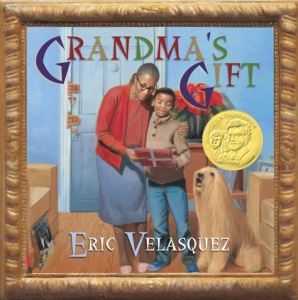
Celebrating Pura Belpré Winners: Spotlight on Grandma’s Gift by Eric Velasquez

PuraBelpreAward

The Pura Belpré Awards turns 20 this year! The milestone will be marked on Sunday, June 26, from 1:00-3:00 p.m. during the 2016 ALA Annual Conference in Orlando, FL. According to the award’s site, the celebration will feature speeches by the 2016 Pura Belpré award-winning authors and illustrators, book signings, light snacks, and entertainment. The event will also feature a silent auction of original artwork by Belpré award-winning illustrators, sales of the new commemorative book The Pura Belpré Award: Twenty Years of Outstanding Latino Children’s Literature, and a presentation by keynote speaker Carmen Agra Deedy.

Leading up to the event, we will be highlighting the winners of the narrative and illustration awards. Today’s spotlight is on Eric Velasquez, the winner of the 2011 Pura Belpré Illustrator Award for Grandma’s Gift.


Review by Lila Quintero Weaver

Grandma's GiftDESCRIPTION FROM THE BOOK JACKET: Every year, Eric spends his winter break with his grandmother in El Barrio while his parents are at work. There’s much to do to prepare for Christmas, including buying all the ingredients for Grandma’s famous pasteles, a special Puerto Rican holiday dish.
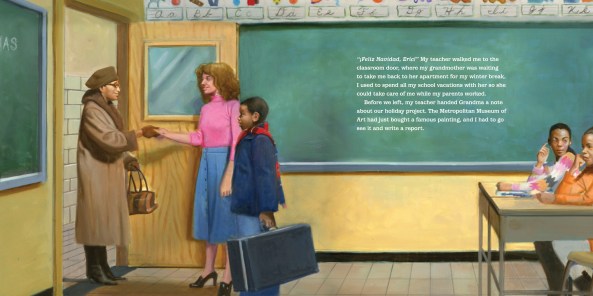
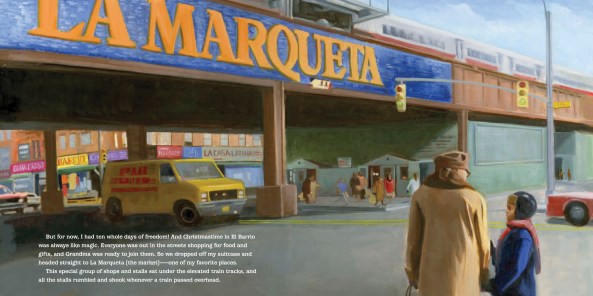
But Eric also has an assignment for school that requires a trip to the Metropolitan Museum of Art to see a new painting. Grandma and Eric are nervous about leaving El Barrio but are amazed by the museum and what they see in the painting—a familiar face in a work of art by the great painter Diego Velázquez. That day Eric’s world opens wider, and Grandma knows the perfect gift to start him on his new journey.

In this prequel to Grandma’s Records, Eric Velasquez brings readers back to a special day spent with his grandmother that would change his life forever.

MY TWO CENTS: Eric Velasquez is the award-winning illustrator of more than 25 children’s books, including three that he wrote. In Grandma’s Gift and Grandma’s Records, reviewed here, Eric brings to life childhood moments that illuminate the warm and meaningful relationship he enjoyed with his grandmother, a native of Puerto Rico and resident of El Barrio, a predominantly Puerto Rican neighborhood in East Harlem.

In a category where such books are woefully rare, both of Velasquez’s Grandma stories represent positive images of Afro-Latinx children and their families.

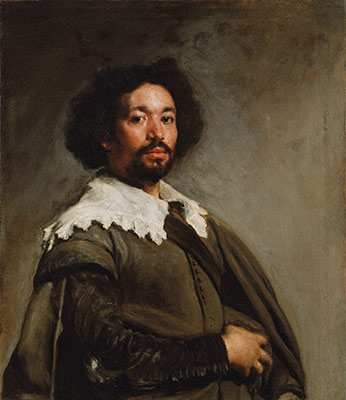
Although the story in Grandma’s Gift takes place inside a few square miles of contemporary New York City, it also casts a spotlight on a long-ago historical figure. Juan de Pareja was an enslaved man of African descent who worked in the studio of 17th-century Spanish master Diego Velázquez and who became a painter in his own right. When Eric was a boy, Velázquez’s luminous portrait of de Pareja was acquired by the Metropolitan Museum of Art for a price exceeding $5 million.

Grandma’s Gift contains two additional distinguishing aspects: elements of Puerto Rican culture preserved and passed down by the boy’s grandmother, and contrasting views between two physically proximate but culturally distant worlds, represented by El Barrio and the Metropolitan Museum of Art.

Used by permission from Bloomsbury Publishing, Inc.

Used by permission from Bloomsbury Publishing, Inc.

At the story’s beginning, Eric is leaving school for Christmas break, in the company of his grandmother. His school assignment, to be completed during the holidays, is a visit to the Velázquez exhibit. But first, grandmother and grandson go shopping at La Marqueta, once a central feature of El Barrio, composed of bustling shops tucked under a railroad trestle. At La Marqueta, it’s evident that Eric’s grandmother is a respected and beloved member of the community. Not only do butchers and greengrocers call her by title and name—Doña Carmen—they are also familiar with the high standards she expects from every cut of meat and vegetable she purchases. When the shopping is done, Eric and his grandmother return to her apartment, where she launches an elaborate preparation of traditional Puerto Rican holiday dishes. Here, she is clearly in her element, deftly handling each step of the cooking, filling, and rolling of the pasteles, much to the admiration of young Eric.

Used by permission from Bloomsbury Publishing, Inc.

Used by permission from Bloomsbury Publishing, Inc.

Nearly all of Doña Carmen’s dialogue is parenthetically translated into English, immediately behind her Spanish words. While this solution is not particularly elegant, it reflects the challenge that authors and publishers face in including authentic representations of a Spanish-speaking environment within an English text. The story translates greetings in Spanish by shopkeepers, words of wisdom spoken by the grandmother, and details relevant to the story, such as the names of the root vegetables used in making pasteles: calabaz, yautía, plátanos verdes, guineos verdes, papas.

El Barrio is a place that Eric’s grandmother comfortably navigates day after day. Here, her native tongue predominates, and everyone is a shade of brown. But when she and Eric head for the museum, a short bus ride away, they leave behind that familiar environment and land before the facade of the Metropolitan, cloaked in cultural status and imposing architecture. As Eric notes, there’s no one “from Puerto Rico on the streets and no one was speaking in Spanish.” At this point, Eric becomes her guide in this English-speaking world, translating the signs and captions that they encounter, stepping into a role that second- or third-generation immigrant children often play in their elders’ lives.

Juan de Pareja, by Diego Velázquez

Juan de Pareja, by Diego Velázquez

The highlight of the story arrives when Eric comes face to face with the portrait of Juan de Pareja, hanging in its gilded frame in one of the august exhibition halls of the museum. As a young person of color in the 1970s, he has never seen a member of his own people elevated to such a status: “He seemed so real—much like someone we might see walking around El Barrio. I couldn’t believe that this was a painting in a museum.” Eric is amazed and proud to learn that Juan de Pareja eventually achieved freedom and became a painter in his own right. For Eric, this discovery is a revelation that sparks artistic fire. On Christmas Eve, after everyone enjoys a traditional holiday dinner, Eric sits under the Christmas tree and opens his grandmother’s gift. It’s a sketchbook and a set of colored pencils. He immediately begins to draw a self-portrait. Through this gift, Eric’s grandmother expresses a clear vote of confidence in her grandson’s dreams, underscoring that he, too—a child of El Barrio, an Afro Latino—can follow in the footsteps of Juan de Pareja.

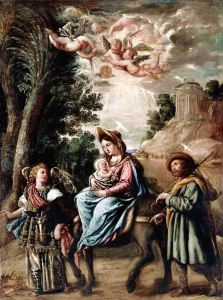
Flight into Egypt, by Juan de Pareja

Flight into Egypt, by Juan de Pareja

This touching, autobiographical story is richly illustrated in Velasquez’s photorealistic style, which authentically depicts settings and brings dimension to each character. Eric imbues his subjects with individually distinct physical characteristics, lending to each an air of nobility. He lovingly paints his grandmother as a lady of dignified bearing and warmth, usually dressed in subdued colors. But he often lavishes this humanizing treatment even on background characters, such as fellow passengers on the train and a nameless guard at the museum. In most of the illustrations, Eric employs a wide and vivid range of hues, but like Diego Velázquez, he sometimes falls back on a deliberately limited palette. When the boy and his grandmother stand before the portrait of Juan de Pareja, the rich browns of the ancient oil painting harmoniously come together with the rich browns of the grandmother’s clothing, as well as the skin tones of all three figures. He puts this deft touch with a monochromatic palette to great effect in the story’s electric moment of revelation, as the child Eric looks on the portrait of Juan de Pareja and grasps a new possibility for his future.

Eric VelasquezABOUT THE AUTHOR-ILLUSTRATOR: Eric Velasquez is an Afro-Puerto Rican illustrator born in Spanish Harlem. He attended the High School of Art and Design, the School of Visual Arts, and the famous Art Students League in New York City. As a children’s book illustrator, Velasquez has collaborated with many writers, receiving a nomination for the 1999 NAACP Image Award in Children’s Literature and the 1999 Coretta Scott King/John Steptoe Award for New Talent for The Piano Man. For more information, and to view a gallery of his beautiful book covers, visit his official website.


ADDITIONAL RESOURCES:

Learn more about El Barrio from the definitive museum that bears the same name.

After decades of decline, La Marqueta is attempting a comeback. (This article is in Spanish.)

Here, a resident of El Barrio relates her memories of La Marqueta during its heyday.

See the official page for the Juan de Pareja portrait on The Met’s website.


Lila Quintero Weaver is the author-illustrator of Darkroom: A Memoir in Black & White. She was born in Buenos Aires, Argentina. Darkroom recounts her family’s immigrant experience in small-town Alabama during the tumultuous 1960s. It is her first major publication. Lila is a graduate of the University of Alabama. She and her husband, Paul, are the parents of three grown children. She can also be found on her own websiteFacebookTwitter and Goodreads.


Celebrating Pura Belpré Winners: Spotlight on Under the Royal Palms by Alma Flor Ada

PuraBelpreAward

The Pura Belpré Awards turns 20 this year! The milestone will be marked on Sunday, June 26, from 1:00-3:00 p.m. during the 2016 ALA Annual Conference in Orlando, FL. According to the award’s site, the celebration will feature speeches by the 2016 Pura Belpré award-winning authors and illustrators, book signings, light snacks, and entertainment. The event will also feature a silent auction of original artwork by Belpré award-winning illustrators, sales of the new commemorative book The Pura Belpré Award: Twenty Years of Outstanding Latino Children’s Literature, and a presentation by keynote speaker Carmen Agra Deedy.

Leading up to the event, we will be highlighting the winners of the narrative and illustration awards. Today’s spotlight is on Alma Flor Ada, the winner of the 2000 Pura Belpré Narrative Award for Under the Royal Palms.

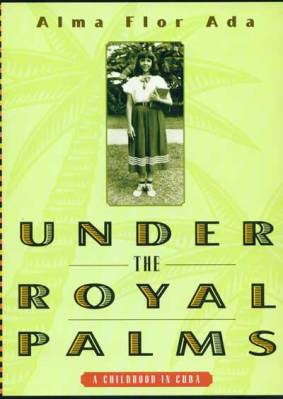
Under the Royal Palms coverReview by Lila Quintero Weaver

DESCRIPTION FROM THE PUBLISHER: In this companion volume to Alma Flor Ada’s Where the Flame Trees Bloom, the author offers young readers another inspiring collection of stories and reminiscences drawn from her childhood on the island of Cuba. Through those stories we see how the many events and relationships she enjoyed helped shape who she is today.

Heartwarming, poignant, and often humorous, this collection encourages children to discover the stories in their our own lives — stories that can help inform their own values and celebrate the joys and struggles we all share no matter where or when we grew up.

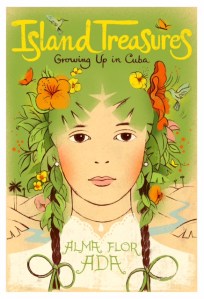
MY TWO CENTSUnder the Royal Palms: A Childhood in Cuba, by Alma Flor Ada, is the second of two memoirs covering the author’s childhood. Where the Flame Trees Bloom was published in 1994. Both books are now available in a single volume entitled Island Treasures: Growing Up in Cuba, which also contains a new, shorter section called “Days at La Quinta Simoni.” This review is Island Treasures FINAL ARTbased on the Island Treasures edition.

Under the Royal Palms was also published in Spanish, as Bajo las palmas reales.

Written in clear prose charged with poetic flavor, Under the Royal Palms is a lovely collection of autobiographical stories that paint a rich picture of life for a 20th-century child in the riverside city of Camagüey, Cuba. Located in the interior of the island nation, Camagüey is an ancient city of narrow, winding streets, paved in stone. Most of the stories are set in the large, multi-generational family home of Alma Flor Ada’s childhood, known as La Quinta Simoni.

Often humorous or joyful, occasionally sobering, each story in this collection captivates the eye and ear through sharp characterizations of place, time, and emotion. By bringing to life feelings ranging from deep loss to transcendent joy, the author succeeds in reaching across cultural and generational gaps to connect to the heart of young readers today.

In “Explorers,” we meet cousins Jorge and Virginita. As the oldest of these three children, Jorge wears a mantle of authority that his two younger cousins, Virginita and Alma Flor, honor to a fault. Part of Jorge’s reputation comes from the fact that he “read the adventure stories that we all later reenacted. We trusted his words completely and followed him without hesitation.” One day, the girls blithely follow Jorge into a marabú field. Marabú are prolifically spreading trees, which form a dense and thorny thicket. Jorge somehow manages to nimbly scramble his way through the nearly impenetrable network of branches that cover the vast marabú field, but his cousins lose sight of him and are forced to crawl along at inchworm pace, snagging their hair and dresses on the thorns. When Jorge arrives back at La Quinta Simoni without the girls, and hours later they have still failed to appear, the adults imagine the worst and begin to search high and low for them. The girls finally emerge from the marabú field, with “clothes in tatters and our faces covered with muddy tears.”

Other stories reveal the web of family relationships and the interplay of competing interests. “Broken Wings” is a stunning account of an uncle’s passion for aeronautic flight and the dear price that he and his loved ones pay for it. Uncle Medardito is the only brother of Alma Flor’s mother and maternal aunts. His dynamic personality charms everyone that knows him. So do his exploits. When the Río Tínima floods, Uncle Medardito braves the rushing waters to save a drowning person. His flair for daring is not limited to emergencies; at times, he walks like a tightrope artist along the railing of a high bridge, purely for the adventure. Then he is bitten by the flying bug and purchases a lightweight wood-and-canvas plane, powered by a single motor. Family members worry for his safety and dread the days when he goes flying, “rising above the red tile roofs and the winding streets that had so restricted his world, gliding like the mighty auras, the Cuban buzzards, over the plains where the royal palms stood majestically.” Of all the family, Alma Flor alone, a young girl at the time, does not try to dissuade her uncle from taking his plane up. She identifies with his longing to soar and secretly hopes he will not bend to the fearful misgivings of the others.

On a particular Sunday, Alma Flor is in the bathtub, with her hair in a “white cloud of shampoo,” when a ruckus draws her attention. Looking out the window, she sees hundreds of people rushing toward the river, shouting. Without rinsing off, she jumps into her clothes and dashes outside, joining the throng. A plane is approaching. Instead of the usual healthy sound of a working engine, there’s an ominous sputter. Running at full speed in the same direction as the descending plane, Alma Flor is the first to reach it after its “deafening impact” with the ground. Up to this point, the story has unfolded in such a way that Uncle Medardito’s fate is never in question. But what happens next, in young Alma Flor’s response to the crash, took me by surprise and provides an unforgettable, emotional climax.

Under the Royal Palms is a treasure chest of similar accounts, one that should be dusted off and introduced to a new generation of readers, many of whom have yet to discover the horizon-expanding possibilities of memoir.

Alma Flor AdaABOUT THE AUTHOR: Alma Flor Ada is renown for her work as an educator, speaker, poet, and author of many children’s books as well as professional books for educators. In addition to the Pura Belpré Medal, her major awards include the 2012 Virginia Hamilton Award, the Christopher Medal, and the Marta Salotti Gold Medal. One of her great passions is social justice advocacy. Learn more about Alma’s dazzling career in children’s literature at her website, and read more about her journey in this lovely guest post, “Always Cuban.”


TEACHING TIPS:

  • Under the Royal Palms is ideal for reading aloud in the classroom. Most of the stories can be enjoyed as stand-alone narratives sure to capture the attention of late elementary and middle school kids.
  • Use selected stories as starting points for an exploration of Cuban culture and history. Complement the text with craft projects, such as making miniature clay tinajones, the earthen pots that Camagüey is known for and which are mentioned in the stories. Prepare a variety of Cuban foods for students to sample. Enrich the stories with virtual travel. A tours agency originating in Spain offers a beautiful array of photographs, maps, and videos of Camagüey and nearby beaches on its website, which is in Spanish.
  • Visit a botanical garden where palms grow and learn more about this amazing family of plants that includes over 2,500 species and differs from broadleaf and coniferous trees in many interesting ways, also supplying food products for people around the world.
  • The stories from Under the Royal Palms serve as excellent models for writing about personal experience. Lessons can include when to summarize events, when to inject dialogue and description, and how to weave in a narrator’s emotional responses.
  • Spanish-language learners can benefit from comparing the text of the English and Spanish versions.


Lila Quintero Weaver is the author-illustrator of Darkroom: A Memoir in Black & White. She was born in Buenos Aires, Argentina. Darkroom recounts her family’s immigrant experience in small-town Alabama during the tumultuous 1960s. It is her first major publication. Lila is a graduate of the University of Alabama. She and her husband, Paul, are the parents of three grown children. She can also be found on her own websiteFacebookTwitter and Goodreads.

A Writer Belongs Everywhere: Stories from a Writing Workshop for Middle School Girls


By Tracey Flores

“A woman who writes has power, and a woman with power is feared.” ~Gloria Anzaldúa

On an overcast and windy day in May, ten young girls and women–daughters, sisters, mothers and teachers–gathered in Mrs. Gonzalez’s 7th grade classroom for an afternoon of sharing, writing and storytelling. Nibbling on pepperoni pizza and pink frosted cookies, desks arranged in a small circle in the front of the room, we sat with folders, notebook paper, and pencils, writing a letter to our sisters or mothers. This letter was the culminating writing of an afternoon of drawing self portraits and writing how we see ourselves and how we see our sisters and mothers.

As the the pencils stopped and everyone came to their closing thoughts, I invited everyone to turn to their sister or mother and read the letter they had just written to them. As I walked around the room to lean in and listen, with permission, I noticed that these handwritten letters were filled with words of advice, encouragement, and promises. They were filled with the words that many times we are too shy or afraid to share for fear of ridicule or embarrassment.

Alexandria read, “Dear Mom, An advice I want to share with you is ‘Live life to the fullest.’”

Dede read to her older sister, “…I believe in you whatever you do.”

Estefania read to her daughter, “…my sweet little miss…just know everything you do big or small I am proud of you everyday.”

IMG_3447 IMG_3448


This vignette of an after-school writing workshop for middle school girls and their families illustrates the transformative power of creating space with and for our students and their families that honors their lived experiences and ways of knowing. For two weeks, we gathered in Mrs. Gonzalez’s room to engage in discussion, reflection, and storytelling on topics such as creating positive self-definitions, family, and education. Although our time together was brief, we created a supportive community of writers.

As a classroom teacher, and now as a PhD candidate, I have the privilege of working with families in after-school bilingual writing workshops, like the one in the vignette. In these writing workshops, students, their siblings and grandparents work side-by-side to tell, draw, write and share stories from their lived experiences. It is an opportunity for families to enter the classroom as experts and draw upon their cultural and linguistic resources to reflect on their lived experience through storytelling, drawing, and writing.

These bilingual family writing workshops are designed within a writing workshop framework, with a mini-lesson, writing time, sharing time, and a closing reflection. Each workshop begins with the reading and discussion of a bilingual picture book, poem, or short memoir. This text is carefully selected and serves multiple purposes. First, it is selected to introduce families to the theme of the workshop. Second, the topic of the text is considered in how families may relate to it or connect it to their own experiences, if the book is culturally relevant or rather recreates negative stereotypes. Lastly, the topics, writing, text structure, and organization are considered in how they might provide families with a powerful mentor text (Fletcher, 2011) for their own writing.

After the opening text is shared and discussed, I model my own writing by talking through what I am doing and thinking as I put drawing and writing on chart paper. Sometimes I model my brainstorm and other times I just draw and write. Then, I invite families to draw and write their own stories or poems. This is my favorite part, watching students and their families write and share their stories, many times for the first time with one another.

Over the years, in these workshops, families shared stories of celebrating Las Posadas with their family and community, stories of ranchos that stretched over acres in rural parts of México where they learned to tend the animals and to cherish all the resources of the tierra, and stories of special abuelitas who embraced them and loved them in that special way only an abuelita loves you.

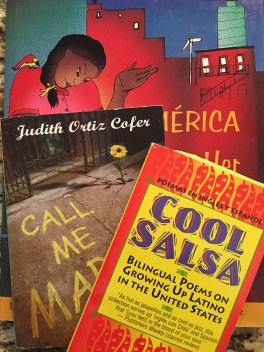
As I wrote earlier in this post, in preparation for working with families in workshops, I always gather several texts in a variety of genres to use as mentor texts. Below is a short list that I have used as mentor texts in bilingual writing workshops with Latinx families in schools and community centers across Phoenix and Glendale in Arizona.

IMG_3446Alarcón, F. (2005). Poems to Dream Together/Poemas para sonar juntos. Illustrations by Paula Barragán. Lee & Low Books.
Carlson, L.M. (2013). Cool Salsa: Bilingual Poems on Growing Up Latino in the United States. Square Fish.

Cisneros, S. (1994). Hairs/Pelitos: A Story in English and Spanish from The House on Mango Street. Dragonfly Books.

Cisneros, S. (1994). La Casa en Mango Street. Translated by Elena Poniatowska. Vintage Books.

Cisneros, S. (1991). The House on Mango Street. Vintage Books

Costales, A. (2007). Abuelita full of life/Abuelita llena de vida. Illustrations by Martha Aviles. Cooper Square Publishing.

Fanelli, Sara. (1995). My Map Book. HarperCollins.

Garza, C.L. (2005). Family Pictures/Cuadros de familia. Children’s Book Press.

Garza, C.L. (1996). In My Family/En mi familia. Children’s Book Press.

González, L. (2008). The Storyteller’s Candle/La velita de los cuentos. Illustrations by Lulu Delacre. Children’s Book Press.

Herrera, J.F. (1998). Laughing Out Loud, I Fly: Poems in English and Spanish. HarperCollins.

Lyon, G.E. (1999). Where I’m From: Where Poems Come From. Absey & Co.

Medina, J. (2004). The Dream on Blanca’s Wall: Poems in English and Spanish/ El sueño pegado en la pared de Blanca: Poemas en ingles y español. Illustrations by Robert Casilla. Wordsong/Boyds Mills Press.

Ortiz Cofer, J. (2004). Call Me María. Scholastic Inc

Ortiz, A. (2015). Rant. Chant. Chisme. Wings Press.

Rodríguez, L. (1998). América is her name. Illustrations by Carlos Vasquez. Curbstone Books.

Soto, G. (2005). Neighborhood Odes. Harcourt.

Note: This summer, I will be collaborating with three teachers to facilitate a second series of bilingual writing workshops for Latina middle school students and their mothers. Stay tuned for an upcoming blog post with stories and learnings from these writing workshops


321988_10101177230382771_455531340_o-1Tracey Flores is a former English Language Development (ELD) and Language Arts teacher who worked in elementary classrooms for eight years. She currently serves as the director of El Día de los Niños, El Día de los Libros and is a teacher consultant with the Central Arizona Writing Project (CAWP) at Arizona State University (ASU). Currently, Tracey is a PhD Candidate in English Education in the Department of English at ASU. Her research focuses on adolescent Latina girls and mothers’ language and literacy practices and on using family literacy as a springboard for advocacy, empowerment, and transformation for students, families, and teachers. In her free time she enjoys writing, reading Young Adult (YA) literature, drinking coffee, running, practicing yoga and spending time with her 8 month old daughter.