
Review by Cris Rhodes
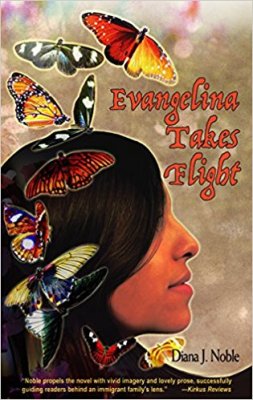 DESCRIPTION FROM THE BOOK JACKET: It’s the summer of 1911 in northern Mexico, and thirteen-year-old Evangelina and her family have learned that the rumors of soldiers in the region are true. Her father decides they must leave their home to avoid the violence of the revolution. The trip north to a small town on the U.S. side of the border is filled with fear and anxiety for the family as they worry about loved ones left behind and the uncertain future ahead.
Life in Texas is confusing, though the signs in shop windows that say “No Mexicans” and some people’s reactions to them are all-too clear. At school, she encounters the same puzzling resentment. The teacher wants to give the Mexican children lessons on basic hygiene! And one girl in particular delights in taunting the foreign-born students. Why can’t people understand that—even though she’s only starting to learn English—she’s just like them?
With the help and encouragement of the town’s doctor and the attentions of a handsome boy, Evangelina begins to imagine a new future for herself. But will the locals who resent her and the other new immigrants allow her to reach for and follow her dreams?
MY TWO CENTS: Diana J. Noble’s Evangelina Takes Flight is timely to a startling degree. As a work of historical fiction, Noble’s portrayal of upheaval in Mexico caused by the Mexican Revolution and Pancho Villa’s raids on farming villages remains relevant to this day. In confronting the racism and xenophobia rampant at the border, where shops display signs declaring “’No Dogs! No Negroes! No Mexicans! No Perros! No Negros! No Mexicanos!’,” Evangelina’s story parallels contemporary struggles for racial equality (92). As racial tensions build both in the text and in real life, Evangelina’s stand to keep her school desegregated feels remarkably current, and in its demonstration of child activism, Evangelina Takes Flight holds up a powerful example.
Though Noble doesn’t spend much time explaining the political situation of Mexico during the early twentieth century, the book doesn’t suffer from this lack of context. Indeed, told from the first-person point of view of Evangelina, the text should not offer details outside of her awareness. The book begins mere days after Porfirio Díaz was ousted as president of Mexico, an event that certainly would not have reached the secluded rancho where Evangelina lives, let alone Evangelina herself. Yet, as we journey along with the tenacious and imaginative Evangelina from her fictional Mexican town of Mariposa to the United States to escape the violence wrought by Villa, Noble invites the reader to watch Evangelina grow and mature. She might not be able to foment resistance in her native Mexico, but she certainly can in the United States, and eventually does when called upon to stand up for her right to an education.
Though Evangelina is still a child, at least by modern conceptions of childhood (she turns fourteen during the course of the book), she is entrusted with great responsibility, much of it in the field of medicine—leading her to dream of one day becoming a nurse or even a doctor. While this dream defies the limitations put upon her by her race and her gender, Evangelina does cling to some, perhaps stereotypical, tenets of Mexican femininity. She’s excited for her upcoming quinceañera, and she longs for the attention of boys—one boy, in particular: Selim. Evangelina’s blossoming relationship with Selim is doubly interesting because he is Lebanese—a fact that would likely cause some waves among her traditional Mexican family. Though Noble keeps their relationship chaste, the potential of an interracial relationship adds intrigue, and I wish there was more to it. Understandably, however, Evangelina and Selim’s feelings for each other are overshadowed by an upcoming town hall meeting, which will decide if foreign-born students will be allowed to attend school with their white peers.
Though Evangelina Takes Flight confronts historical (and contemporary) racism with aplomb, it still contains some troubling tropes about marginalized peoples, namely the White Savior figure. Evangelina has multiple encounters with the local doctor, Russell Taylor, whose compassion transcends race. Unlike his neighbors, Dr. Taylor is more than willing to help the Mexicans and goes out of his way to treat Evangelina’s Aunt Cristina when she gives birth to twin sons, one of whom is stillborn. Because of his position as the town doctor, Dr. Taylor holds sway with those who seek to segregate the school. He attempts to act as a mediator between the Mexican families and white townspeople, who are led by the mean-spirited Frank Silver. But Dr. Taylor’s intercession strays into White Savior territory when he is the one who discovers a secret that discredits Silver. After revealing Silver’s secret, Dr. Taylor parades Evangelina in front of the crowd at the town hall meeting, ostensibly to demonstrate her intelligence and humanity; but in a moment such as this, she actually becomes less of a humanized figure and more of a token. Additionally, it is not her own words that sway the townspeople to keep the school unified, but her ability to quote from the Bible, in English, that persuades them. While it is possible to read Evangelina as a key activist figure in spite of Dr. Taylor’s intervention, his role in this scene is a little disappointing, coming as it does in a text that otherwise offers so much in regards to racial equality.
Regardless, this book resonated with me on multiple levels. Evangelina’s struggle for independence, respect, and acquiring her own voice is something that many young Latinas, myself included, face today. Noble’s poetic yet accessible prose allows the reader to slip into Evangelina’s world and understand that problems can be overcome with perseverance and bravery. Though the book is at times slow moving and the plot is occasionally sparse, I would argue that such components allow the industrious reader to dive deep and think critically about Evangelina’s circumstances. However, these characteristics may also make this book difficult for reluctant readers. As a result, though this book is marketed as a middle grade novel, it may be more appropriate for experienced or older readers. Even if some parts were troublesome, I still found Evangelina an intriguing and captivating read,. Ultimately, for those looking for a book that faces contemporary issues through the lens of historical fiction, Evangelina Takes Flight certainly fits the bill.
TEACHING TIPS: Evangelina Takes Flight would pair well with other books about school de/segregation or child activists, such as Duncan Tonatiuh’s Separate is Never Equal: Sylvia Méndez & Her Family’s Fight for Desegregation or Innosanto Nagara’s A is for Activist. In addition, because of its historical setting, Evangelina would also be useful in teaching about the Mexican Revolution, the history of Texas, or historical race relations in the United States.
Evangelina Takes Flight offers lessons on metaphor and imagery, especially in its use of the butterfly as a symbol of resilience. When Evangelina’s grandfather tells her the story of the migratory butterflies for which her hometown of Mariposa is named, she starts to see the butterfly as an image of strength. Students could be guided to find passages where butterflies are mentioned to see how Noble constructs this extended metaphor. Students may also be encouraged to deconstruct the representations of butterflies on the cover of the book in a discussion about visual rhetoric.
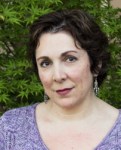 ABOUT THE AUTHOR: Diana J. Noble was born in Laredo, Texas, and grew up immersed in both Mexican and American cultures. Her young adult novel, Evangelina Takes Flight, is based loosely on her paternal grandmother’s life, but has stories of other relatives and memories from her own childhood woven into every page. It’s received high praise from Kirkus Reviews, Forward Reviews (5 stars), Booklist Online and was recently named a Junior Library Guild selection. [Condensed bio is from the author’s website.]
 ABOUT THE REVIEWER: Cris Rhodes is a doctoral student at Texas A&M University – Commerce. She received a M.A. in English with an emphasis in borderlands literature and culture from Texas A&M – Corpus Christi, and a B.A. in English with a minor in children’s literature from Longwood University in her home state of Virginia. Cris recently completed a Master’s thesis project on the construction of identity in Chicana young adult literature.
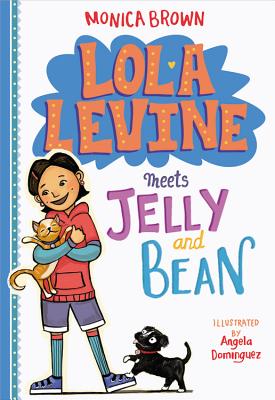 DESCRIPTION OF THE BOOK: The Levines are finally getting a pet–a furry one that is. They are excited about adopting a kitty they name Jelly, but they don’t get very far in the process when Ben starts sneezing. Oh no, he’s allergic! Lola is devastated and sets out to find Jelly a good home. Luckily, Lola is rewarded with a very happy (and still furry) ending. With Lola’s trademark humor, we can expect a few mishaps, many funny moments, and a cute new pet all wrapped in one adorable book.
 ABOUT THE AUTHOR:
 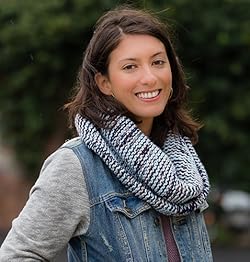 ABOUT THE ILLUSTRATOR:
 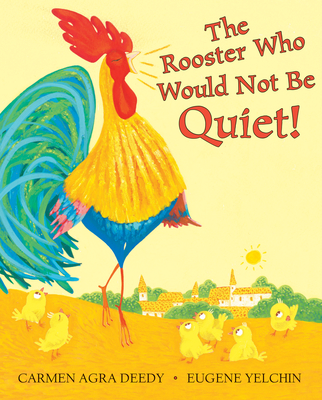 DESCRIPTION OF THE BOOK: La Paz is a happy, but noisy village. A little peace and quiet would make it just right. So the villagers elect the bossy Don Pepe as their mayor. Before long, singing of any kind is outlawed. Even the teakettle is afraid to whistle
 ABOUT THE AUTHOR:
  ABOUT THE ILLUSTRATOR: Russian-born artist Eugene Yelchin graduated from the Leningrad Institute of Theater Arts. During his studies, he designed sets and costumes for dramas, comedies and ballets. He also co-founded a children’s theatre in Siberia. Despite obstacles, Eugene traveled to the United States to share his expertise and talent as an artist. His work has appeared in magazines and newspapers and advertising campaigns, TV commercials, and animated films. His novel
  ABOUT THE REVIEWER: Dora is a bilingual reading specialist for grades K-3 and also teaches an undergraduate college course in Children’s Literature. When she is not sharing her love of reading with her students, you can find her in the nearest library, bookstore, or online, finding more great reads to add to her never ending “to read” pile!
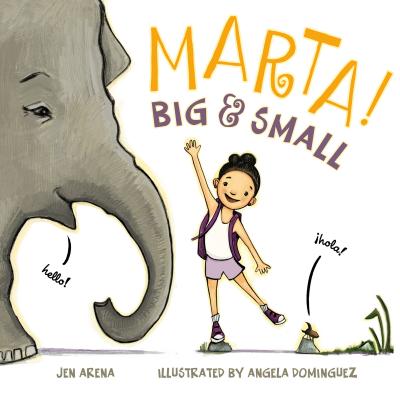 DESCRIPTION OF THE BOOK: Marta is
 ABOUT THE AUTHOR:
 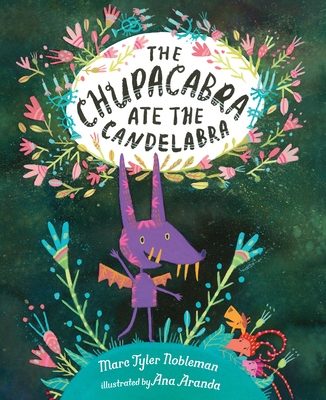 DESCRIPTION OF THE BOOK: Like most goats, Jayna, Bumsie, and Pep’s greatest fear is being eaten for dinner by the legendary chupacabra. (It’s common knowledge that goats are a chupacabra’s favorite food!) One night, tired of living in fear, the impetuous goats whip out their trusty candelabra and head off to find the beast and scare it away before it can find them. Little do they know that candelabras are the chupacabra’s third-favorite food . . . and he isn’t about to stop there. This chupacabra has quite the appetite, and the goats are in for a big surprise!
 ABOUT THE AUTHOR:
 ABOUT THE REVIEWER: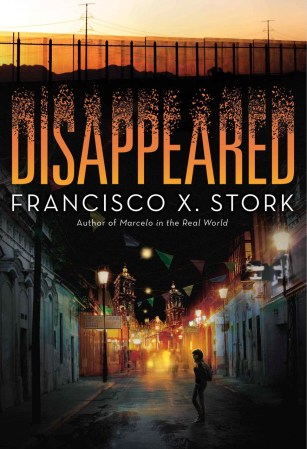

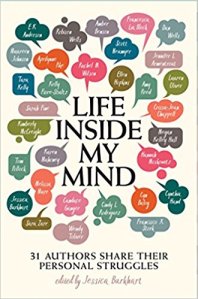 a creator stay focused on your projects, all the while managing the challenges of depression?
 FXS: Finding Cheryl Klein was either a blessing or very fortunate depending on your world view. Writing is both solitary and communal and on the communal side my writing got exactly what it needed when it got Cheryl. Her editorial genius complemented all my writing lacks while allowing me to remain true to my writing voice and my writing vision (and reminding me of that voice and vision when I strayed). Yes, there were many times when the editing process was very hard and even at times discouraging but I never lost faith that Cheryl wanted what was best for the book and for the future reader and that kept me going. What I would like to convey to young writers is that they do all they can to enjoy the actual process of writing, of being alone with the work, and have patience with regards to the results they hope to attain. Those results may or may not come, but the process of creating a work that is beautiful and true is still worth the effort. Most of all, find a way to tell your story that is unique to you. Finding that uniqueness takes a lot of honesty and it takes a lot of practice and all the mistakes and rejections that you get will only make you a better writer and a better person if you see writing not as the publication of a book or the recognition that comes with it but as a way of life you are called to live.
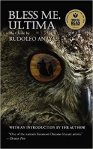 FXS: I’m re-reading Rudolfo Anaya’s Bless me, Ultima. Rudolfo Anaya is in many ways the father of Mexican-American literature and there is so much to learn from him about the presentation of the Mexican-American experience in a novel. One of my favorite books I always recommend to YA writers is The Book Thief by Markus Zusak because, well, there’s an author who found a way to tell an interesting story about a serious situation in a unique way. But I would also encourage YA writers to read all kinds of books, not just YA. Read fiction and non-fiction works that have nothing to do with what you are writing and you will be surprised by how they ultimately do. Read especially those books where the author’s soul touches yours.
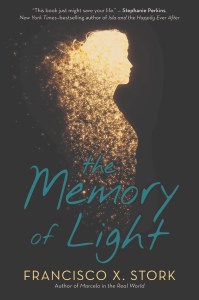
 Francisco X. Stork is the author of Marcelo in the Real World, winner of the Schneider Family Book Award for Teens and the Once Upon a World Award; The Last Summer of the Death Warriors, which was named to the YALSA Best Fiction for Teens list and won the Amelia Elizabeth Walden Award; Irises; and The Memory of Light, which received four starred reviews. He lives near Boston with his wife. You can find him online at
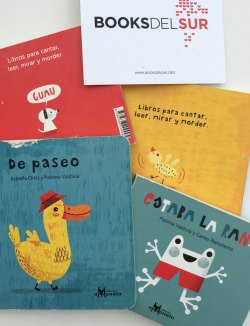 Books del Sur is a one-woman extravaganza of a book company out of Illinois. The owner, Heather Robertson-Devine, is a dual language teacher who saw the need for high-quality, authentic Spanish literature in schools and homes, and began importing titles from Chile. From there, her collection has continued to grow, and now includes the Anti-Princess collection so beloved by author Junot Díaz. We love her Baby Book Bundle. My younger daughter often totes De Paseo around the house in her shopping cart, and both my daughters love to read the entire collection on our daily morning walk. To read more about Books del Sur, click
 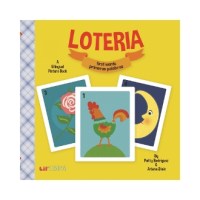 I had first read about Lil’ Libros and their incredible story in Latina magazine, but I hadn’t
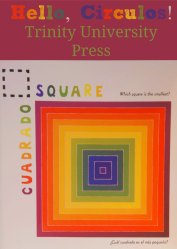 When my younger daughter turned one, we asked for bilingual books. An artist friend of mine came across the Trinity University Press children’s books at the Denver Art Museum, and Hello Círculos is part of our daily reading routine. The book has reproductions of famous art prints and sculptures surrounded by bilingual prompts that spark academic discussion about numbers, shapes, colors – and of course about all of the art. I love that the appendix includes all of the information about the works on each page. The book is board-book style, but would be great for readers even in the high school Spanish classroom as they study works of art and Latin American artists. This book collection from Trinity University Press should be a staple in every bilingual household. To purchase books from the collection, click
 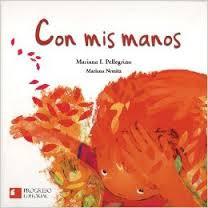 We recently went to our local Denver Public Library branch to check out audiobooks in Spanish. We brought home the 10 that they had, and some were definitely better than others. The best book was Con mis manos, part of a series about the five senses. The book was beautifully illustrated, and read in a manner that was easy for my three year old to follow along. The page chimes were consistent and easy to follow, and the story kept her engaged. Lorito books is another woman-owned business that started with a dream and became reality out of the owner’s house. I’m excited to acquire more Lorito books for my kids. Check out more books
  Christa Jiménez left the bilingual classroom after 15 years and is now the founder of Pura Vida Moms – a website dedicated to bilingual parenting, family travel, recipes, and bicultural and expat living. She’s married to a Costa Rican, and together they have two young bilingual daughters. When she’s not blogging, traveling, parenting, or reading she co-hosts the BilingualWe weekly vlog, applying the latest bilingual education research to the best practices for everyday bilingual parenting. You can find her at
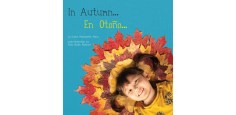
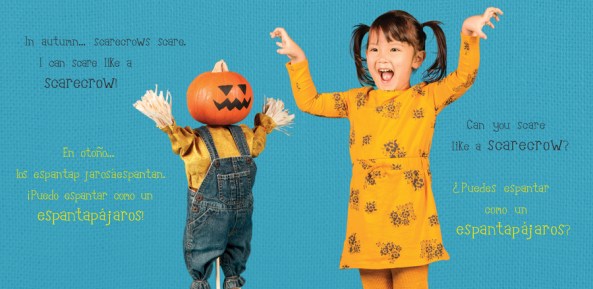
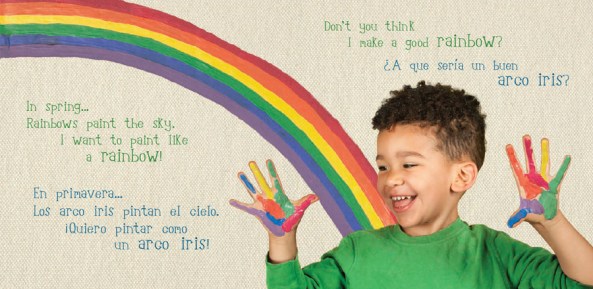
 ABOUT THE AUTHOR: Susana Madinabeitia Manso is a Spanish teacher and translator. She received her Masters of Arts at West Virginia University and now teaches Spanish at Miami University.
 ABOUT THE PHOTOGRAPHER: Emily Hanako Momohara is an artist and academic in photography and video arts. She received her Masters in Fine Arts at the University of Kansas and now teaches at the Art Academy of Cincinnati as an Associate Professor.
 ABOUT THE REVIEWER:
  Latinxs in Kid Lit