Book Review: North of Happy by Adi Alsaid


Reviewed by Cecilia Cackley
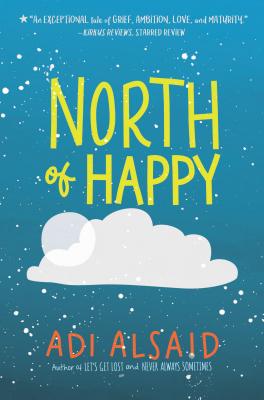
North of Happy CoverDESCRIPTION OF THE BOOK: Carlos Portillo has always led a privileged and sheltered life. A dual citizen of Mexico and the US, he lives in Mexico City with his wealthy family, where he attends an elite international school. Always a rule follower and a parent pleaser, Carlos is more than happy to tread the well-worn path in front of him. He has always loved food and cooking, but his parents see it as just a hobby.

When his older brother, Felix—who has dropped out of college to live a life of travel—is tragically killed, Carlos begins hearing his brother’s voice, giving him advice and pushing him to rebel against his father’s plan for him. Worrying about his mental health, but knowing the voice is right, Carlos runs away to the United States and manages to secure a job with his favorite celebrity chef. As he works to improve his skills in the kitchen and pursue his dream, he begins to fall for his boss’s daughter—a fact that could end his career before it begins. Finally living for himself, Carlos must decide what’s most important to him and where his true path really lies.

MY TWO CENTS: I thought this was a very balanced book—the romance is sweet, while Carlos’ grief and struggle to assert himself adds depth, and the setting of the restaurant is fresh and engaging. It was also refreshing to read a book about a Mexican character that isn’t about immigration, drug wars, or poverty. My favorite parts of the book were the descriptions of Carlos cooking and his thought process as he selects ingredients or puts together a dish. Some readers may find this too detailed or dense, but (perhaps because I don’t spend a lot of time cooking in my life) I was fascinated. Emma’s character occasionally slid toward Manic Pixie Dream Girl territory, but I thought the decision she makes toward the end of the book was good and believable. The side characters were entertaining, and I liked the fact that there was no manufactured drama among the kitchen staff. Envy and hazing happened, but it wasn’t over the top.

The element of the book most likely to divide opinions is probably the character of Felix and what, exactly, he is doing there. Is he a hallucination, and should the book be talking more candidly about mental illness? Is he a ghost or a spirit, guiding Carlos toward a better life? I lean toward the spirit answer, perhaps because it brings the book a little closer to the genre of magical realism, which I enjoy. Although there are a few moments when Carlos considers the idea that the things he hears Felix say “…might just be grief doing strange things to my head,” he accepts the idea that his brother is sticking with him in ghost form pretty easily. Their relationship provides a lot of comedy, as Felix makes smart remarks, and pushes Carlos out of his comfort zone. For me, this points to the character being a supernatural or spiritual element, rather than a hallucination.

I enjoyed the way Spanish was incorporated into the book, not just spoken by Carlos but also various people he meets, and that it was left unitalicized. Altogether, this was a fun read, and it’s guaranteed to make you hungry so have a snack ready.

TEACHING TIPS: I think this would be a good book to read as part of a survey course, because it’s a good example of the variety found in the YA category. It’s a good choice for a teen book club, with lots to discuss and debate. This would be a great book to read for a potluck book club or as an addition to a middle or high school cooking club.

WHERE TO GET IT: To find North of Happy, check your local public library, your local bookstore, or IndieBound. Also, check out GoodreadsAmazon, and Barnes & Noble.

Image resultABOUT THE AUTHOR: Adi Alsaid was born and raised in Mexico City. He attended college at the University of Nevada, Las Vegas. After graduating, he packed up his car and escaped to the California coastline to become a writer. He’s now back in his hometown, where he writes, coaches high school and elementary basketball, and makes every dish he eats as spicy as possible. In addition to Mexico, he’s lived in Tel Aviv, Las Vegas and Monterey, California. He is the author of Let’s Get Lost, Never Always Sometimes, and North of Happy.



ABOUT THE REVIEWER: Cecilia Cackley is a performing artist and children’s bookseller based in Washington, DC, where she creates puppet theater for adults and teaches playwriting and creative drama to children. Her bilingual children’s plays have been produced by GALA Hispanic Theatre and her interests in bilingual education, literacy, and immigrant advocacy all tend to find their way into her theatrical work. You can find more of her work at www.witsendpuppets.com.
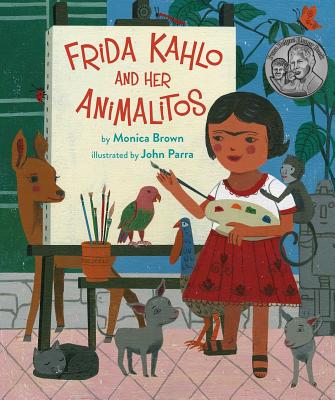
Book Review: Frida Kahlo and Her Animalitos by Monica Brown, illus. by John Parra

Review by Maria Ramos Chertok

DESCRIPTION OF THE BOOK: Frida Kahlo and Her Animalitos, written by Monica Brown and illustrated by John Parra, is based on the life of one of the world’s most influential painters, Frida Kahlo, and the animals that inspired her art and life. The fascinating Mexican artist Frida Kahlo is remembered for her self-portraits, her dramatic works featuring bold and vibrant colors. Her work brought attention to Mexican and indigenous culture, and she is also renowned for her works celebrating the female form. Brown’s story recounts Frida’s beloved pets–two monkeys, a parrot, three dogs, two turkeys, an eagle, a black cat, and a fawn–and playfully considers how Frida embodied many wonderful characteristics of each animal.

MY TWO CENTS: Any story for children that involves a positive relationship with animals is captivating, and this story certainly is. It shows how animals played a supportive and nurturing role in Frieda’s life and also how they became her artistic muse. I enjoyed learning the names of her animals and about how she responded to the stresses of having to be bedridden at two separate times in her life by using imagination, creativity, and art to liberate her mind, find enjoyment, and express herself.

This book was published in both English and Spanish. Given that I like to read to my children in both languages, I often prefer having both languages accessible in one book. And, I can see the value in marketing to distinct audiences.  I experienced the Spanish language version as more layered and nuanced and that may be because Spanish is my second language, so I had to work harder and focus more to read it and, therefore, got more out of it.

The earth-toned illustrations by John Parra are a great accompaniment to the text and drew me into the story with ease, bringing the animals and characters to life.

At the end of the book, there is an Author’s Note that provides background information on Frieda and more information about her paintings and career as an artist. The book references Frieda’s close relationship with her father, who is described in the Author’s Note as German Hungarian. Throughout her life, Frieda described her father as Jewish, but neither the book, nor the Author’s Note mention this, which piqued my curiosity since, as a Latina Jew, that had been one of the things that drew me to Frieda Kahlo. In doing a small bit of research, it appears that a 2005 book traced her paternal lineage and concluded that she was from Lutheran stock. Yet, it wasn’t completely clear to me if that included a thorough examination of her paternal grandmother, Henriette Kaufman’s lineage. Regardless, it remains curious as to why Frieda talked about her father as Jewish. Various commentators have opinions on this issue. I did learn that she changed the spelling of her name to include the “e” during World War II, so that the spelling would more closely resemble frieden which is the German word for peace.

TEACHING TIPS: The first thing that came to mind when I read this book was the image of all young readers demanding that their parents buy them a monkey! From a teaching perspective, this presents a wonderful opportunity to discuss the history of animal rights, the distinction between domesticated and wild animals, and the importance of animals being in a habitat that promotes their long-term survival. While Frieda loved all her animals, her “domestication” of a fawn and a pair of monkeys should be stressed as something unique and not to be emulated, especially because any naturally wild animal that becomes domesticated is typically not able to return to the wild successfully.

I see a second opportunity to engage in a classroom discussion about support animals (Emotional Support Dogs/ESDs, Mental Health/Psychiatric Service Dogs, Therapy Dogs, Guide Dogs for the visually impaired/blind) and how animals are used in various ways to help people.

In the U.S., it is estimated that 44% of all households have a dog and 35% have a cat. This statistic could be used to launch a conversation about why people have pets and what role pets play in our lives. For older children, this discussion can lead to the role that zoos play in society and a debate about the pros and cons of zoos.

Some 2017 resources include the film A Dog’s Purpose (for children/teens). For teachers, reading the book The Zookeeper’s Wife or seeing the 2017 movie adds an interesting angle to zoos. The new release The Dogs of Avalon (August 2017) expands the conversation about animal rights and justice.

Another route to explore is Mexican art and the role that both Frieda Kahlo and Diego Rivera (who is referenced in the book) played in shaping the field through their contributions as painters. As a creative activity, it might be fun for children to do self-portraits with pets they have and/or with animals they like (the latter for children who don’t have pets).

WHERE TO GET IT: To find Frida and Her Animalitos, check your local public library, your local bookstore, or IndieBound. Also, check out GoodreadsAmazon, and Barnes & Noble.

Click here for a Coloring Activity Sheet.

Click here for a Discussion Guide.

Click on the image below to see the book trailer!


monica6ABOUT THE AUTHOR: Monica Brown, Ph.D., is the award-winning author of Waiting for the Biblioburro/Esperando al Biblioburro, Marisol McDonald Doesn’t Match/no combina, and the Lola Levine chapter book series, including Lola Levine is Not Mean, Lola Levine, Drama Queen, and Lola Levine and the Ballet Scheme. Her books have garnered starred reviews, the Americas Award, two Pura Belpré Author Honors, and the prestigious Rockefeller Fellowship on Chicano Cultural Literacy. She lives in Arizona with her family and teaches at Northern Arizona University. Find out more at www.monicabrown.net.


Parra paintbrushABOUT THE ILLUSTRATOR: John Parra is an award-winning illustrator, designer, teacher, and fine art painter. His children’s books have earned many awards including, the SCBWI Golden Kite Award, ALA’s Pura Belpré Honors, The Christopher’s Award, the International Latino Book Award, and many more. In 2015, John was invited by the Metropolitan Museum of Art in New York to present a special event about his work and career in art and illustration and in 2017 John’s art will be seen on six new Forever Postal Stamps from USPS titled: Delicioso. He currently lives with his wife Maria in Queens, New York. John graduated from Art Center College of Design in Pasadena, California. Visit him on the web http: //www.johnparraart.com/home.htm, or follow him on twitter @johnparraart.


ABOUT THE REVIEWER: Maria is a writer, workshop leader and coach who facilitates The Butterfly Series, a writing and creative arts workshop for women who want to explore what’s next in their life journey.  In December 2016, she won 1st place in the 2016 Intergenerational Story Contest for her piece, Family Recipes Should Never be Lost.  Her work has appeared in the Apogee Journal, Entropy Magazine, and A Quiet Courage.   Her piece Meet me by the River will be published in Deborah Santana’s forthcoming anthology All the Women in my Family Sing (Jan 2018) http://nothingbutthetruth.com/all-the-women-in-my-family-sing/.  She is a trainer with Rockwood Leadership Institute www.rockwoodleadership.org and a member of the Bay Area chapter of Write on Mamas.  For more information, visit her website at www.mariaramoschertok.com
 

CLICK HERE TO ENTER OUR GIVEAWAY. YOU COULD WIN FRIDA AND HER ANIMALITOS IN ENGLISH OR SPANISH! 


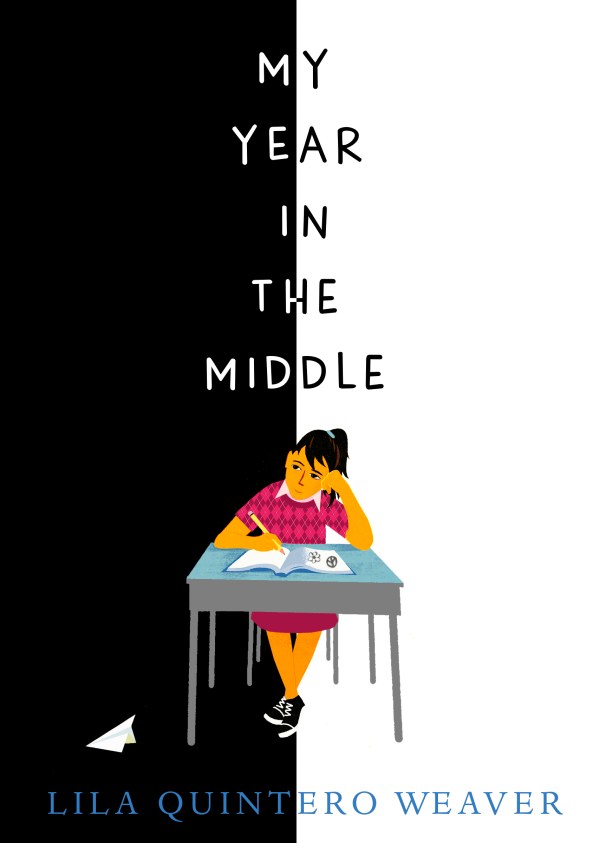
Cover Reveal: My Year in the Middle, an MG by Lila Quintero Weaver


Dear friends: Today I’m excited to offer a sneak peak at my forthcoming middle-grade novel. This story comes straight out of my heart, and I can’t wait to share it with you! The release date is July 10, 2018.

Here is how my publisher, Candlewick Press, describes it:

Inspired by the author’s own story of growing up as an Argentinian immigrant in Alabama, My Year in the Middle introduces a sixth-grade girl with a newfound gift for running track—and a growing sense of racial injustice.

Lu Olivera just wants to keep her head down and get along with everyone in her class. Trouble is, Lu’s old friends have been changing lately—acting boy crazy and making snide remarks about Lu’s talent for running. Lu’s secret hope for a new friend is fellow runner Belinda Gresham, but in 1970 in Red Grove, Alabama, blacks and whites don’t mix. As segregationist ex-governor George Wallace ramps up his campaign against the current governor, Albert Brewer, growing tensions in the state—and the classroom—mean that Lu can’t stay neutral about the racial divide at school. Will Lu find the gumption to stand up for what’s right and to choose friends who do the same?

Three wonderful Latina authors took time out of their incredibly busy lives and wrote the following blurbs. I cannot thank them enough!

My Year in the Middle is both powerful and sensitive, offering a unique view of important historical events through the eyes of an immigrant girl who longs for social justice, friendship, and romance.” —Margarita Engle, Young People’s Poet Laureate and Newbery Honor-winning author of The Surrender Tree

“A timely and powerful story, My Year in the Middle conjures an era of American racism and shows how a strong immigrant girl can make a difference in her community. This is a book that will resonate for young readers in these fraught times.” —Ruth Behar,  author of Lucky Broken Girl

“Wonderful! A heart-touching story with a spunky heroine who shows her grit and determination during troubling times. I was cheering for Lu from beginning to end!” —Christina Diaz Gonzalez, award-winning author of The Red Umbrella and the Moving Target series

Now that you’ve gotten a glimpse of the story, I invite you to scroll down to see the cover. Its creator is Matt Roeser, art director and designer extraordinaire!


*


*


Keep scrolling!


*


*


Almost there!


*


Behold!


My favorite thing about it: Matt captured the essence of a girl caught in the middle of two seemingly irreconcilable worlds.

Huge thanks to Latinxs in Kid Lit for hosting this reveal! Please share this news with someone you know who digs kid lit!

Lila Quintero Weaver is the author-illustrator of Darkroom: A Memoir in Black & White. She was born in Buenos Aires, Argentina. Darkroom recounts her family’s immigrant experience in small-town Alabama during the tumultuous 1960s. It is her first major publication and will be available in Spanish in January 2018. Her next book is My Year in the Middle, a middle-grade novel scheduled for release in July 2018 (Candlewick). Lila is a regular contributor to this blog and one of its founding members. She and her husband, Paul, are the parents of three grown children. For news on events and publications, see her website, or follow her on Facebook, or Twitter .


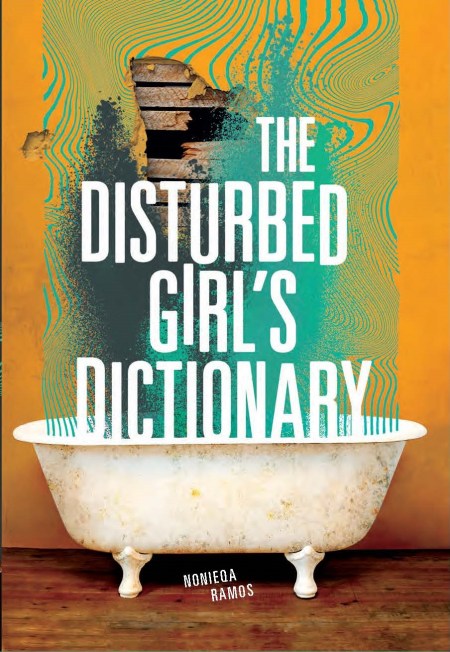
COVER REVEAL! The Disturbed Girl’s Dictionary by NoNieqa Ramos


Today, we’re excited to host the cover reveal for The Disturbed Girl’s Dictionary, a debut young adult novel by NoNieqa Ramos that has already gotten a starred review from Booklist and a glowing response from Kirkus.

What’s it about? Here’s the official description:

Macy’s school officially classifies her as “disturbed,” but Macy isn’t interested in how others define her. She’s got more pressing problems: her mom can’t move off the couch, her dad’s in prison, her brother’s been kidnapped by Child Protective Services, and now her best friend isn’t speaking to her. Writing in a dictionary format, Macy explains the world in her own terms complete with gritty characters and outrageous endeavors. With an honesty that’s both hilarious and fearsome, slowly Macy reveals why she acts out, why she can’t tell her incarcerated father that her mom’s cheating on him, and why her best friend needs protection . . . the kind of protection that involves Macy’s machete.

How could anyone resist a description that involves both dictionaries and machetes? What?!

Before we get to the cover, the author tells us how she responded to getting her Advance Reader Copies and viewing the cover for the first time.

I have to admit I didn’t open up my ARCs for two weeks. I hugged them. I #bookstagrammed them. I clutched them while flashbacking to all the work that led up to this moment. But what did opening the book mean? I had nightmares that opening my ARC would be like opening Pandora’s box. Because writing a book is like standing outside naked and not expecting anyone to comment on the fact that you have no space between your thighs. But then my soul mate made a comment. Apparently on the inside of the book, lay the real cover, the cover my protagonista Macy Cashmere made for her dictionary, and I thought, that sounds amazing. SOUNDS amazing. Time to crack it open. I peered inside the cover like you’d stare through a keyhole. I could almost feel Macy’s reaction as I did the unthinkable. Read the dictionary “By Macy Cashmere… FOR Macy Cashmere” without her permission.

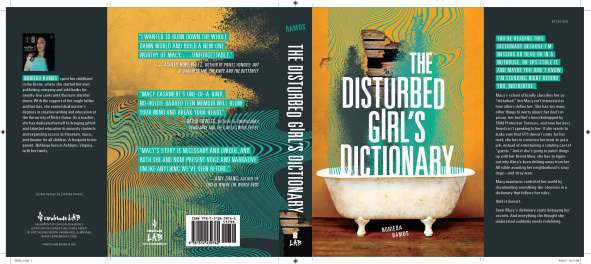
The cover design by Lindsay Owens and Danielle Carnito is PSYCHEdelic; disturbing and hypnotic just like my Macy. A conduit for Macy’s rage, the imagery surges from page to page until the harrowing end. Thank you Carolrhoda Lab. Thank you, Lindsay and Danielle. Macy would approve.

Now for the cover reveal!


Scroll down!

*

*

*

*

*

*

*

*

Keep scrolling!

*

*

*

*

*

*

*

*

Almost there!

*

*

*

*

*

*

*

*

TA-DA!


The Disturbed Girl’s Dictionary releases February 1, 2018 (Carolrhoda Lab). You can pre-order it at Indiebound, Amazon, and Barnes & Noble, among other places. You also have a chance to win a copy by entering this GoodReads Giveaway!


ABOUT THE AUTHOR: NoNieqa Ramos spent her childhood in the Bronx, where she started her own publishing company and sold books for twenty-five cents until the nuns shut her down. With the support of her single father and her tias, she earned dual master’s degrees in creative writing and education at the University of Notre Dame. As a teacher, she has dedicated herself to bringing gifted-and-talented education to minority students and expanding access to literature, music, and theater for all children. A frequent foster parent, NoNieqa lives in Ashburn, Virginia, with her family. She can be found on Twitter at @NoNiLRamos.
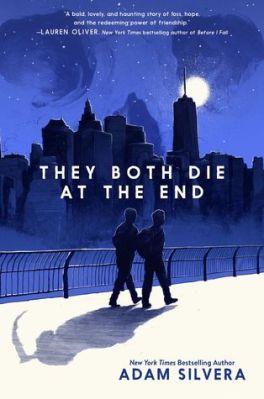
Book Review: They Both Die at the End by Adam Silvera


Reviewed by Lila Quintero Weaver

This review is based on an advance reader’s edition.

FROM THE BOOK JACKET: In the tradition of Before I Fall and If I Stay, this tour de force from acclaimed author Adam Silvera, whose debut the New York Times called “profound,” reminds us that there’s no life without death, no love without loss—and that it’s possible to change your whole world in a day.

Mateo Torrez and Rufus Emeterio are going to die today. The two boys are total strangers, but, for different reasons, they’re both looking to make a new friend on their End Day. There is some good news: There’s an app for that. It’s called Last Friend, and through it, Rufus and Mateo are about to meet up for one last great adventure—to live a lifetime in a single day.

MY TWO CENTS: The release date for They Both Die at the End was September 5, 2017. It’s no coincidence that the novel also takes place on that date, with chapters time-stamped to reflect the passing hours. This is no ordinary day for Mateo Torrez, 18, and Rufus Emeterio, 17, both of New York City. An unfailingly accurate notification service known as Death-Cast delivers the news that it is their last day on earth. Sadly, both boys have lost loved ones whose deaths were predicted in the same, bone-chilling fashion.

They Both Die at the End sends readers on a spellbinding adventure, following the two main characters as they squeeze in one more day of living. The story hits the ground running at 12:22 a.m., when Mateo’s phone sounds the eerie Death-Cast alert. Rufus receives his alert not long after that. Yet for all the tension of the ticking countdown, this novel narrates a surprisingly tender friendship that springs up between the two strangers. They connect through the app Last Friend, one of numerous social, cultural, and commercial spin-off products resulting from the launch of Death-Cast, which has been in existence for six years.

By the time Rufus and Mateo’s last day arrives, society has accepted the reliability of the Death-Cast predictions, and has developed norms in response to the ubiquitous presence of so-called Deckers, people who’ve received the last-day warning. This is made evident in a scene where subway passengers realize that a Decker and her Last Friend are among them. A stranger offers sympathy. “Sorry to lose you,” she says to the Decker, and commends them both for spending the final hours together. The Death-Cast phenomenon has changed the landscape of everyday life in other ways. Restaurants offer discounts to Deckers, and at a special amusement park called Make a Memory, Deckers and their companions indulge in simulated extreme sports. Social media has summoned a flurry of responses, too, including CountDowners, a blog devoted to the postings and live-feeds of Deckers, who share real-time accounts of their final hours on earth. Silvera weaves these fictitious cultural creations seamlessly into an otherwise recognizable version of contemporary city life.

How Death-Cast knows when a person will expire is anyone’s guess, but because his mom died in childbirth, Mateo has been death-haunted all his life. Paranoia about dying has kept him from making friends and participating in childhood activities, such as going on sleepovers and roller-skating in the park. Now, with the bitter reality of death squarely before him, Mateo is engulfed in the pain of wasted opportunities. When the End Day news comes, he is home alone. His father, who is hospitalized in intensive care, has been in a coma for weeks, and Mateo’s only other significant connections are with a close friend, Lidia, and her one-year-old daughter.

While Mateo is a loner, who from the safe confines of his apartment has engaged primarily with the digital universe of blogs, games, and apps— Rufus is more of a here-and-now guy: confident, socially connected, and comfortable jumping into new experiences in a way that Mateo never has been. When readers meet Rufus, he’s giving his ex-girlfriend’s new guy a beat-down. Then the Death-Cast ringtone goes off and everybody freezes. Although foster brothers Malcolm and Tagoe are on hand to provide Rufus with backup during the fight, for reasons that aren’t immediately revealed, they can’t help him once the police get involved. So Rufus takes flight alone, into the darkened streets of the city. He needs a friend.

The novel follows Mateo and Rufus from their separate, but equally jarring Death-Cast notices until they connect through the Last Friend app. During the course of their hours together, they bridge the initial awkwardness, and in cementing a friendship, defy the opposing pull of their personalities and lifestyles. Rufus gently goads Mateo to push aside long-held fears, and Mateo responds by embracing new experiences, from small to significant. By the time they land at Clint’s Graveyard—a dance and karaoke club that exists to give Deckers an unforgettable send-off—Mateo is more alive, more himself than ever, and the boys’ friendship turns romantic.

In his debut, More Happy Than Not, Adam Silvera demonstrated a fluid command of speculative fiction. In They Both Die at the End, he repeats that impressive feat, crafting a futuristic world that lands credibly in all its disquieting aspects, yet never forgets that telling a specific story is the most important order of business. Silvera’s ability to weave the strange and disturbing world of Death-Cast into a powerful character-driven narrative keeps readers on the edge to the last page, and drives a keen level of anticipation for the next offering from this gifted writer.

WHERE TO GET IT: To find They Both Die at the End, check your local public library, your local bookstore, or IndieBound. Also, check out GoodreadsAmazon, and Barnes & Noble.

ABOUT THE AUTHOR: Adam Silvera was born and raised in the Bronx. He has worked in the publishing industry as a children’s bookseller, marketing assistant at a literary development company, and book reviewer of children’s and young adult novels. His debut novel, More Happy Than Not, received multiple starred reviews and is a New York Times bestseller. Visit his author site for more information.


ABOUT THE REVIEWER: Lila Quintero Weaver is the author-illustrator of Darkroom: A Memoir in Black & White. She was born in Buenos Aires, Argentina. Darkroom recounts her family’s immigrant experience in small-town Alabama during the tumultuous 1960s. It is her first major publication and will be available in Spanish in January 2018. Her next book is a middle-grade novel scheduled for release in July 2018 (Candlewick). Lila is a graduate of the University of Alabama. She and her husband, Paul, are the parents of three grown children. She can also be found on her own websiteFacebookTwitter and Goodreads.


October 2017 Latinx Book Deals


By Cecilia Cackley

I’m hoping that there were Latinx authors who got book deals this month and just didn’t end up in Publisher’s Weekly, otherwise this is a sad-looking report! Only two book deals, both at the very beginning of the month for YA books. Is it too much to hope that the world self-corrects in November and we get dozens?

This is a monthly series keeping track of the book deals announced by Latinx writers and illustrators. The purpose of this series is to celebrate book deals by authors and illustrators in our community and to advocate for more of them. If you are an agent and you have a Latinx client who just announced a deal, you can let me know on Twitter, @citymousedc. If you are a Latinx author or illustrator writing for children or young adults, and you just got a book deal, send me a message and we will celebrate with you! Here’s to many more wonderful books in the years to come.

October 31

Jill Santopolo and Beverly Horowitz at Penguin Random House´s Philomel and Delacorte imprints have acquired world rights to three books for young readers by U.S. Supreme Court Justice Sonia Sotomayor. Philomel will publish the picture book autobiography Turning Pages: My Life Story, illustrated by Lulu Delacre, in which Justice Sotomayor follows the path of her life as it relates to the books she read along the way. Delacorte will publish The Beloved World of Sonia Sotomayor, a middle grade adaptation of her bestselling memoir, My Beloved World. Both books will be released in fall 2018; a second picture book about childhood differences will follow from Philomel in 2019, illustrated by Rafael López. Both Philomel and Delacorte editions will also be published in Spanish, with the picture books releasing simultaneously with the English editions, and the middle grade title releasing in 2019. Amy Bernstein and Peter Bernstein of Bernstein Literary Agency represented Sotomayor, Delacre is unagented, and Adriana Domínguez and Stefanie von Borstel of Full Circle Literary represented López.

October 26

None

October 24

None

October 19

None

October 17

None

October 12

None

October 5

None

October 3

Kristin Daly Rens at HarperCollins/Balzer + Bray has acquired, in a five-way auction, A Forgery of Magic, first in a debut YA fantasy trilogy by 24-year-old former Random House Children’s editorial assistant Maya Motayne. Set in a Latin-American inspired kingdom based in part on the author’s Dominican heritage, the first book follows a face-changing thief and a grief-stricken prince as they race to vanquish a dark magic they have accidentally unleashed. The first book will publish in summer 2019. Author agent: Alexandra Machinist and Hillary Jacobson at ICM Partners.
Annie Berger at Sourcebooks Fire has bought Laura Pohl‘s The Last 8, a YA sci-fi duology about a young Latina pilot who finds herself grounded and alone after a devastating alien attack, but finds hope in an unlikely group of survivors who aren’t what they seem. Publication for the first book is scheduled for 2019, with the sequel due in 2020. Author Agent: Sarah LaPolla at Bradford Literary Agency.


Cecilia Cackley is a performing artist and children’s bookseller based in Washington, DC, where she creates puppet theater for adults and teaches playwriting and creative drama to children. Her bilingual children’s plays have been produced by GALA Hispanic Theatre and her interests in bilingual education, literacy, and immigrant advocacy all tend to find their way into her theatrical work. You can find more of her work at www.witsendpuppets.com.