Book Review: The Go-Between by Veronica Chambers


Review by Araceli Méndez Hintermeister
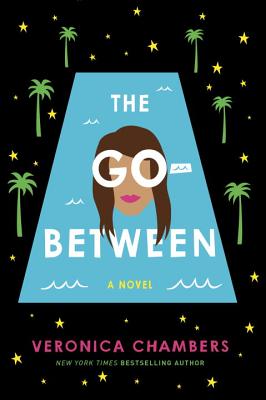
DESCRIPTION OF THE BOOK: She is the envy of every teenage girl in Mexico City. Her mother is a glamorous telenovela actress. Her father is the go-to voiceover talent for blockbuster films. Hers is a world of private planes, chauffeurs, paparazzi and gossip columnists. Meet Camilla del Valle, or Cammi to those who know her best.

When Cammi’s mom gets cast in an American television show and the family moves to LA, things change, and quickly. Her mom’s first role is playing a not-so-glamorous maid in a sitcom. Her dad tries to find work, but dreams about returning to Mexico. And at the posh, private Polestar Academy, Cammi’s new friends assume she is a scholarship kid, the daughter of a domestic.

At first Cammi thinks that playing along with the stereotypes will teach her new friends a lesson. But the more she lies, the more she wonders: Is she only fooling herself?

MY TWO CENTS: Like many immigrants, Cammi came to her new home in Los Angeles by plane. But unlike most immigrants, her mother’s job security as a telenovela star and her family’s wealth made her transition much smoother. Cammi does share in the immigrant story and her experiences begin to overlap with those of many other Mexican immigrants. Unfortunately, it is the stereotyping and xenophobia that she encounters the most. She is judged by her wealthy classmates at her new private school, immediately labeled as a scholarship kid who is low-income with parents in low-paying and stereotypical jobs and in need of handouts.

For Cammi, this is a great departure from what she usually has to deal with. No one is vying to know her to get closer to her famous mother. Instead, her mother is not the center of attention and she leaves her paparazzi world behind. However, in search of an escape, Cammi begins to promote the stereotypes that are often perpetuated about Mexicans. So in looking out for herself, Cammi forgets about her community and her roots.

It takes long for Cammi to learn her lesson. If it wasn’t for other Mexican immigrants and Mexican-Americans who have to fight regularly to defeat the stereotypes and get others to see beyond them, she may not have known how her actions perpetuated racism. Albeit slowly, Cammi learns to understand her role not only as a Mexican, but as an immigrant and compatriota to her community.

TEACHING TIPS: Cammi brings into perspective that not all immigrants come into this country in the same manner or with the same opportunities. Some immigrants come with established work or educational opportunities, while others may have left those exact opportunities behind to immigrate to the United States. While Cammi is perhaps not the best role model for the majority of the book, she does allow us to question a diversity of immigrants and their experiences. In a time when our political discord says that immigrants from Mexico are the worst of the pack, what is Cammi bringing to light? Cammi’s story is merely one of many.

RECOMMENDED READING:


TransientABOUT THE AUTHOR: Veronica Chambers is a prolific author, best known for her critically acclaimed memoir, Mama’s Girl which has been a course adopted by hundreds of high schools and colleges throughout the country. The New Yorker called Mama’s Girl, “a troubling testament to grit and mother love… one of the finest and most evenhanded in the genre in recent years.” Born in Panama and raised in Brooklyn, her work often reflects her Afro-Latina heritage.

She coauthored the award-winning memoir Yes Chef with chef Marcus Samuelsson as well as Samuelsson’s young adult memoir Make It Messy, and has collaborated on four New York Times bestsellers, most recently 32 Yolks, which she cowrote with chef Eric Ripert. She has been a senior editor at the New York Times Magazine, Newsweek, and Glamour. Born in Panama and raised in Brooklyn, she writes often about her Afro-Latina heritage. She speaks, reads, and writes Spanish, but she is truly fluent in Spanglish. She is currently a JSK Knight fellow at Stanford University.



ABOUT THE REVIEWER: Araceli Méndez Hintermeister is a librarian and archivist with a background in public, academic, and culinary libraries.She has an MA in history and MLIS from Simmons College where she focused her studies on the role of libraries and archives in the cultural preservation of the U.S.-Mexican border. Additionally, she holds a BA in Ethnic Studies from Brown University.  Her research is greatly influenced by her hometown of Laredo, TX which has led her to work in serving immigrants and underrepresented communities. Her current work involves exploring cultural identity through oral history in her project, Third Culture. You can find Araceli on Instagram. 
Book Review: Pitch Dark by Courtney Alameda


Review by Mark Oshiro

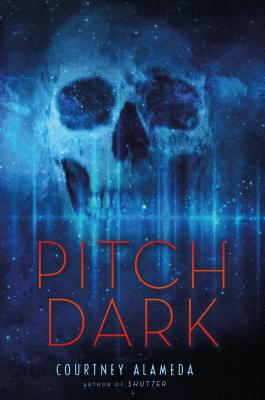
DESCRIPTION OF THE BOOK: Set against a future of marauding space scavengers and deadly aliens who kill with sound, here is a frightening, fast-paced YA adventure from the author of the acclaimed horror novel, Shutter.

Tuck has been in stasis on the USS John Muir, a ship that houses Earth’s most valued artifacts—its natural resources. Parks and mountains are preserved in space.

Laura belongs to a shipraiding family, who are funded by a group used to getting what they want. And they want what’s on the Muir.

Tuck and Laura didn’t bargain on working together, or battling mutant aliens who use sound to kill. But their plan is the only hope for their crews, their families, and themselves.

In space, nobody can hear you scream . . . but on the John Muir, the screams are the last thing you’ll hear.

MY TWO CENTS: I read Shutter years ago and was blown away by the seemingly effortless nature of Courtney Alameda’s genre-bending craft. She managed to craft a world that made an unquestionable amount of sense, and it combined disparate elements you don’t often see in the same story. Pitch Dark is no exception. Somehow, Alameda has been able to borrow the visceral, gory, and heart-stopping brilliance of a film like Alien and mix it with the adventure of Tomb Raider or Uncharted. Oh, and there’s also a generation ship. (Sort of.) And horrific monsters. And burgeoning love. And commentary on subjugation, imperialism, and racism.

AND THIS IS ALL IN THE SAME BOOK.

Pitch Dark wastes no time, and while there’s a bit of a steep learning curve at the beginning—the book has alternating first-person narratives that don’t seem connected at all—the worldbuilding pays off just past thirty pages into the book. We are introduced to the shipraiding universe of Laura Cruz, who is exuberant about her love for what her family does. (It’s a neat twist on the trope of kids hating the family business.) She thrives when she gets to dig deep into the history of humanity… which is a big deal within Pitch Dark, set over four hundred years in the future. Humanity is haphazardly spread about the galaxy after a terrorist attack forced them to abandon Earth, so the Cruz family mission is an integral part of the story.

Then there’s Tuck, the nerdy, reference-happy member of the John Muir, one of the ships that left Earth nearly four hundred years prior. He awakes from stasis to find out he’s been unconscious far longer than he was supposed to be. Even worse, something contaminated the stasis machines, and his fellow humans have…well, let’s just say they’ve evolved since then.

Of the two, I preferred Laura’s narration more than Tuck’s, though Tuck grew on me over time. In Laura Cruz, Alameda has crafted a memorable and awe-inspiring character, one I hope is the focus of other books in the future. (Pitch Dark is a standalone, but this could easily be a multi-book series.) Laura’s Spanglish is comforting to read, since I grew up with it in Southern California, and the Cruz family is an eternal delight. If you’re looking for a book with a loving Latinx family, look no further than Pitch Dark.

And if you want an addictive, insightful page-turner, get Pitch Dark for that reason, too. This book is downright horrifying, and when you learn what the Muir crew became, it becomes a significant source of tension and terror within the novel. The two storylines intersect (literally so!) in a shocking way, and seeing each character deal with the world of the other character’s ship is satisfying and exciting. It helps that Alameda manages to imbue all of this with an inventive social commentary about the nature of imperialism and control, most of which appears in Laura’s POV. Who controls a story? What version gets told? And how do you resist a narrative that purports to make you a villain to everyone else?

Above all: I had a blast reading this book, which I devoured in just two sittings. I’ve been itching for more YA horror, and Alameda absolutely delivers. The pacing is incredibly quick, the dialogue is snappy and contains an in-universe context for all the pop culture references, and there are a few sequences in here that made me want to crawl under the covers and never come out. Bravo, Courtney Alameda.

TEACHING TIPS: I imagine that most teachers might shy away from a horror novel, and admittedly, Pitch Dark is very, very violent and gory. But the visceral story is part of the extended metaphor for the environment of current day politics. Alameda crafts a subplot between Laura Cruz and the Smithson family that touches on issues of consent, sexual assault, and colonialism, particularly since the Smithson family is horrifically desperate to do whatever they can to center anthropology on themselves and their own power. There’s a lot of potential for discussion in the interactions between the Cruz family and Tuck, which touch on racism, stereotypes, and white savior tropes.

Courtney Author Photos2013_117.jpgABOUT THE AUTHOR: A veteran bookseller and librarian, Courtney Alameda now spends her days writing thriller and horror novels. Her debut novel, Shutter, was nominated for a Bram Stoker Award and hailed as a “standout in the genre” by School Library Journal. Her forthcoming novels include the science fiction/horror mashup, Pitch Dark (Macmillan/Feiwel & Friends 2018), and Seven Deadly Shadows, an urban fantasy set in Japan. (Co-authored with Valynne Maetani. HarperTeen 2018). Courtney holds a degree in English literature with an emphasis in creative writing. She is represented by John M. Cusick of Folio Literary. A northern California native, she now resides in Utah with her husband, a legion of books, and a tiny five-pound cat with a giant personality. Member HWA, SFWA, SCBWI; and SDCC Creative Professional.

WHERE TO GET IT: Pitch Dark releases February 20! To find it, check your local public library, your local bookstore, or IndieBound. Also, check out GoodreadsAmazon, and Barnes & Noble.


Oshiro_Mark.jpgABOUT THE REVIEWER: Mark Oshiro is the Hugo-nominated writer of the online Mark Does Stuff universe (Mark Reads and Mark Watches), where he analyzes book and television series unspoiled. He was the nonfiction editor of Queers Destroy Science Fiction! and the co-editor of Speculative Fiction 2015. He is the President of the Con or Bust Board of Directors and is usually busy trying to fulfill his lifelong goal to pet every dog in the world. His YA Contemporary debut, Anger is a Gift, is out May 22, 2018 with Tor Teen.
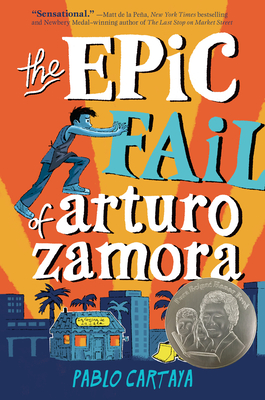
 

Book Review: The Epic Fail of Arturo Zamora by Pablo Cartaya


Review by Jessica Agudelo

DESCRIPTION OF THE BOOK: Save the restaurant. Save the town. Get the girl. Make Abuela proud. Can thirteen-year-old Arturo Zamora do it all or is he in for a BIG, EPIC FAIL? For Arturo, summertime in Miami means playing basketball until dark, sipping mango smoothies, and keeping cool under banyan trees. And maybe a few shifts as junior lunchtime dishwasher at Abuela’s restaurant. Maybe. But this summer also includes Carmen, a poetry enthusiast who moves into Arturo’s apartment complex and turns his stomach into a deep fryer. He almost doesn’t notice the smarmy land developer who rolls into town and threatens to change it. Arturo refuses to let his family and community go down without a fight, and as he schemes with Carmen, Arturo discovers the power of poetry and protest through untold family stories and the work of José Martí.

MY TWO CENTS: Much to my delight, there were a number of titles released in 2017 that filled me with pride and transported me back to my days as a middle school book worm. The Epic Fail of Arturo Zamora was among them. Arturo’s story possesses familiar hallmarks of coming of age tales, a first crush, a crummy summer job as a dishwasher (albeit at his family’s beloved restaurant, La Cocina de la Isla), and self-discovery. With equal measures of humor and heart, Pablo Cartaya’s middle grade debut is sure to leave readers anxious for an invite to the Zamora family Sunday dinners. What truly makes The Epic Fail special, though, is how Cartaya burnishes deeper themes like family, community, gentrification, and cultural identity with nuance and irresistible charm.

When Wilfrido Pipo, a villainous real estate developer, saunters into Canal Grove looking to build a luxurious high rise, Arturo and his family fear the move will drastically alter their Miami neighborhood. Pipo intends to buy the city-owned lot next to La Cocina, which the Zamoras also planned to bid on, hoping to expand their restaurant. In order to convince community members to back his development plan, Pipo throws fancy events and raffles off all-expenses-paid trips. Arturo senses Pipo’s duplicitous nature and is spurred into action by Vanessa, his activist cousin, and Carmen, his new crush. Together, they hatch plans, one involving a Hulk disguise, to further investigate Pipo’s shady background and resist his ambitions. Gentrification and activism are timely topics, but their weightiness can feel overwhelming and disheartening, especially in light of news about Dreamers, to name one example. Cartaya does his best to impart readers with some hope. Arturo and his family picket and attend public forums at city hall, actions which, whatever the ultimate result, display a sense of agency, a power Arturo realizes he possesses.

At one protest, Vanessa holds a picket sign reading “Family is Community-Community is Family,” a succinct summation of two overarching themes. For Cartaya, family is not just those related by blood, but those with whom you choose to spend time, and sometimes, inadvertently share space. We readily throw longtime friends under the family umbrella, but Cartaya implores readers to consider neighbors, even the most eccentric among them, as members of our extended families. La Cocina itself is an extension of the family’s dining room, where an array of regulars eat, local businesses build partnerships (the restaurant buys its meat and greens from area vendors), and everyone is welcome.

Cartaya’s portrayal of an ample list of secondary characters is one of his greatest successes. He depicts a variety of personalities using distinct and vivid details, bringing the community of Canal Grove to life. Whether it is Arturo’s best friend Bren, a hopeless dork perpetually trying to look and sound like Pitbull, or Aunt Tuti, who has a penchant for dramatics, but is a fierce defender of her family, readers will surely recognize at least one, if not many, of Cartaya’s characters. Arturo may be the hero of the story, but it is the people around him who inspire his actions and give his mission purpose. His fight to save the family restaurant is also a fight for the preservation of his hometown, a love he shares with the people of his community, who, in turn, make that community a place worth loving. In one passage, Arturo wonders where Pipo’s own family might be, “All that success and I never heard him talk about anyone who he cared about.” Arturo’s realization reminded me of Harry Potter’s own assessment of Voldemort in Order of the Phoenix, whom he pities for being equally rootless. A poignant message about community that traverses Hogwarts and Canal Grove.

As Arturo’s Abuela’s health declines, she gives Arturo a box of photos and letters from his Abuelo, which reference the poet José Martí. The poet is a link to his grandfather and his Cuban heritage. Arturo is pulled in by Martí, a figure emblematic of embracing multiple cultures and causes. Growing up in the U.S. has resulted in Arturo’s imperfect Spanish, and yet, he “sometimes used Spanish words when English words couldn’t fully explain what I needed to say.” Although awkward in many aspects of his life, Arturo moves through his multitudes with spectacular ease. The narrative of struggling to balance cultural identities has shifted. Of course, stories about cultural struggle are necessary, but it was wonderful to see Arturo just be himself. It allowed me to let out a deep breath I didn’t realize I was holding in.

I could go on and on about The Epic Fail of Arturo Zamora. How touched I was by the depictions of Abuela’s tenderness, his mom’s quiet struggle becoming matriarch of the family, Arturo’s admiration for Carmen’s colorful braces, and of course, the food (recipes included as backmatter). This novel was a true joy to read from beginning to end. A rare feat, even in children’s literature.

ABOUT THE AUTHOR: Pablo Cartaya is the author of the acclaimed middle-grade novel, The Epic Fail of Arturo Zamora (Viking, 2017); Marcus Vega Doesn’t Speak Spanish (Viking, 2018); and two forthcoming titles in 2019 and 2020 also to be published by Viking. He is a Publisher’s Weekly “Flying Start” and has received starred reviews from Kirkus, Booklist, and Publisher’s Weekly. For his performance recording the audiobook of his novel, Pablo received an Earphone Award from Audiofile Magazine and a Publisher’s Weekly Audiobooks starred review. He is the co-author of the picture book, Tina Cocolina: Queen of the Cupcakes (Random House, 2010), a contributor to the literary magazine, Miami Rail; the Spanish language editorial, Suburbano Ediciones; and a translator for the poetry chapbook, Cinco Poemas/Five Poems based on the work of poet Hyam Plutzik. Pablo visits schools and universities throughout the US and currently serves as faculty at Sierra Nevada College’s MFA in Creative Writing. http://www.pablocartaya.com / Twitter: @phcartaya

 

J_AgudeloABOUT THE REVIEWER: Jessica Agudelo is a Children’s Librarian at the New York Public Library. She has served on NYPL’s selection committee for its annual Best Books for Kids list, and is currently a co-chair for the 2018 list. She contributes reviews of English and Spanish language books for School Library Journal and is a proud member of the Association of Library Services to Children and REFORMA (the National Association to Promote Library and Information Services to Latinos and Spanish Speakers). Jessica is Colombian-American and was born and raised in Queens, NY.


Spotlight on Middle Grade Authors Part 4: Pablo Cartaya


By Cindy L. Rodriguez

This is the fourth in an occasional series about middle grade Latinx authors. We decided to shine a spotlight on middle grade writers and their novels because, often, they are “stuck in the middle”–sandwiched between and overlooked for picture books and young adult novels. The middle grades are a crucial time in child development socially, emotionally, and academically. The books that speak to these young readers tend to have lots of heart and great voices that capture all that is awkward and brilliant about that time.

Today, we highlight Pablo Cartaya.

Pablo Cartaya is the author of the acclaimed middle-grade novel, The Epic Fail of Arturo Zamora (Viking, 2017); Marcus Vega Doesn’t Speak Spanish (Viking, 2018); and two forthcoming titles in 2019 and 2020 also to be published by VikingHe is a Publisher’s Weekly “Flying Start” and has received starred reviews from Kirkus, Booklist, and Publisher’s Weekly. For his performance recording the audiobook of his novel, Pablo received an Earphone Award from Audiofile Magazine and a Publisher’s Weekly Audiobooks starred review. He is the co-author of the picture book, Tina Cocolina: Queen of the Cupcakes (Random House, 2010), a contributor to the literary magazine, Miami Rail; the Spanish language editorial, Suburbano Ediciones; and a translator for the poetry chapbook, Cinco Poemas/Five Poems based on the work of poet Hyam Plutzik. Pablo visits schools and universities throughout the US and currently serves as faculty at Sierra Nevada College’s MFA in Creative Writing. www.pablocartaya.com / Twitter: @phcartaya

Pablo Cartaya

Q. Who or what inspired you to become a writer?

A. I’ve been a storyteller since I was a little kid performing originally written shows in my living room every time my parents had someone over for dinner. During cena I would quietly (sometimes not so quietly) go over story ideas that would lead to epic performances en la sala while the guests and my parents ate dessert and sipped cafécito on the sofa. My parents always encouraged that creative spirit. In many ways, Mami and Papi were my first inspirations. Since those early days I’ve always had stories swirling around my imagination. These stories have taken many forms over the years: writing plays, teleplays, telenovelas, picture books, nonfiction, poetry (sometimes really bad poetry), and then one fateful day in graduate school, the voice of a fourteen year old Cuban American kid named Arturo made his way into my consciousness. It was the first time I let the character in the story do the talking. What I found was a kid who was like me and who had dared to dream himself into the narrative. The process of discovering Arturo’s world has been one of the great joys of my creative life. In a way, The Epic Fail of Arturo Zamora is a lifetime in the making of becoming the writer I am today.

Q. Why do you choose to write middle grade novels?

A. I don’t actually choose to write middle grade novels. It’s more like a bunch of thirteen and fourteen year olds make the loudest noise in my sub consciousness. I believe writing is an act of submission to the fictive state. Allowing a story or a character to take hold and dictate the terms of what, when, where, and how the narrative will go. As the writer I give in and let the character tell me what he or she wants to talk about. It’s frightening at times but there is something about that act of discovery that is exciting and enlightening. A character usually pops into my head and a scene plays out. For example, in my next novel, Marcus Vega Doesn’t Speak Spanish, I imagined this really tall, brooding fourteen year old trying to convince his little brother who has Down syndrome to take a bath. From there, I started asking these characters questions and they revealed parts of their lives they wanted to tell. After that it’s all about revising, revising, and more revising to get to the heart of the character’s story.

Q. What are some of your favorite middle grade novels?

A. Ah! This question is always the hardest! How do you pick a favorite child? You can’t do it! Okay I’ll name some but they are by no means a final list! We’ll just call it a fluid favorite, okay? As a kid I devoured everything Jules Verne – Twenty Thousand Leagues Under the Sea is one of my all time favorites although I don’t know if it qualifies as distinctly middle grade. I also think it’s important to recognize the great work contemporary middle grade authors are writing. Jason Reynolds is doing some pretty incredible work. I just finished Patina and it’s awesome. Celía Perez has a kick butt middle grade out called The First Rule of Punk, Rita Williams Garcia’s Clayton Bird Goes Underground is fantastic. I happen to adore R.J. Palacio because Wonder was the first novel my daughter read from beginning to end and it made her a lover of books. There are so many! Make me stop! Make me stop! I see a great mix of characters and stories out there and I’m excited for what’s to come from these and many other brilliant authors in the field.

Q. If you could give your middle-grade self some advice, what would it be?

A. Don’t be afraid to fail. You are not perfect nor should you try to be. Find your voice and hold onto it for dear life. Is that too much advice? Would my thirteen-year-old self just ignore me? Probably.

Q. Please finish this sentence: “Middle grade novels are important because…”

A. They are sneaky deep. It’s the time where wonder, adventure, occasional failure, and the possibilities of happiness coexist to create a sense of hope for the future. It’s also a place where kids get to be kids and goof off from time to time. I like that mix.


epicfail.jpeg


photo by Saryna A. JonesCindy L. Rodriguez was a newspaper reporter for The Hartford Courant and researcher at The Boston Globe before becoming a public school teacher. She is now a reading specialist at a Connecticut middle school. Cindy is a U.S.-born Latina of Puerto Rican and Brazilian descent. She has degrees from UConn and CCSU. Her debut contemporary YA novel, When Reason Breaks, released with Bloomsbury Children’s Books (2015). She will have an essay in Life Inside My Mind, which releases 4/10/2018 with Simon Pulse. She can also be found on FacebookTwitter, and Goodreads.

Book Review: The Disturbed Girl’s Dictionary by NoNieqa Ramos


Review by Mark Oshiro

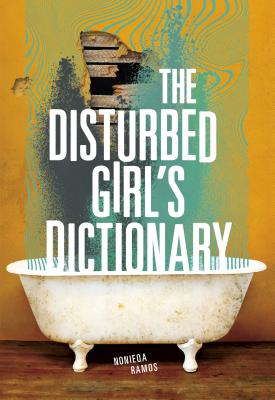
The Disturbed Girl's Dictionary CoverDESCRIPTION OF THE BOOK: Macy’s school officially classifies her as “disturbed,” but Macy isn’t interested in how others define her. She’s got more pressing problems: her mom can’t move off the couch, her dad’s in prison, her brother’s been kidnapped by Child Protective Services, and now her best friend isn’t speaking to her. Writing in a dictionary format, Macy explains the world in her own terms—complete with gritty characters and outrageous endeavors. With an honesty that’s both hilarious and fearsome, slowly Macy reveals why she acts out, why she can’t tell her incarcerated father that her mom’s cheating on him, and why her best friend needs protection . . . the kind of protection that involves Macy’s machete.

MY TWO CENTS: The Disturbed Girl’s Dictionary is unlike any YA I’ve read in 2017. A raw, unflinching, and surprisingly hilarious book, it’s organized as a series of definitions, like a dictionary, but with vignettes instead of sentence-long explanations. This is an ambitious book with a concept that is effortlessly pulled off, and it has one of the most compelling and authentic voices I’ve come across in a long time. The entire book is presented as the writings of Macy Cashmere MYOFB in real time, and I never once questioned it; that’s just how good this story is. Macy is self-aware of her challenging predicaments—a mother who seems to care more about the men who visit her than her own daughter, a brother stuck in another family’s home due to a CPS intervention, a father in prison—but the book is vibrant in discussing such weighty issues. As dark as this book gets at times (I flat-out bawled the final thirty pages or so), Nonieqa Ramos never lets this book fall into despair. No, Macy is unbelievably alive, and the energy conveyed through Ramos’s immersive writing is one of many things that makes this a compelling, electrifying read. There’s a chapter here where Ramos manages to reference a machete, Fabuloso, and Agüeybaná in the span of a few pages, and not once does it come across inauthentic.

There’s no mistaking how vulgar and gritty the text feels at times, but it’s all part of the convincing, believable world that Ramos builds. These people feel so real, so completely fleshed out that you begin to ache for them before you’re halfway through The Disturbed Girl’s Dictionary. And the bulk of that sympathy lands on Macy. While Ramos doesn’t shy away from portraying the full experience of a young girl with ADHD, compulsive behavior, and who has been deemed “emotionally disturbed,” I can only imagine the sheer power this must give to people like Macy who have never seen themselves in a book, let alone as the protagonist. Simply put, this book feels larger-than-life, the kind of endeavor you’d expect from someone who had been publishing novels for years. Somehow, this is Ramos’s debut, which makes me eager to see what they’ve got up their sleeves.

For now, though, this is a book that is easy to devour, but will haunt you long after you finish it. It is unique, shocking, and heartbreaking; it is also the kind of novel I want kids everywhere to read. It is certain to be one of my top recommended novels for 2018.

TEACHING TIPS: There are a number of issues that Ramos speaks on through Macy that are ripe for a moderated class discussion: drug use, sex work, mental illness (and the stigmas that come with having a mental illness), foster care, misogyny, and racism. The book is populated with a diverse cast—many of these people are not common in YA in general!—and the language/slang is modern and convincing, so I expect students will find themselves captivated by Macy’s unique voice. Because of the way that the book is broken up, it will be easy to assign writing prompts or topics based solely on one of the definitions. I would recommend discussions about “CLANG,” “DOLPHIN,” “FEED,” and “GOOD-BYE.”

ABOUT THE AUTHOR: NoNieqa Ramos spent her childhood in the Bronx, where she started her own publishing company and sold books for twenty-five cents until the nuns shut her down. With the support of her single father and her tias, she earned dual master’s degrees in creative writing and education at the University of Notre Dame. As a teacher, she has dedicated herself to bringing gifted-and-talented education to minority students and expanding access to literature, music, and theater for all children. A frequent foster parent, NoNieqa lives in Ashburn, Virginia, with her family.
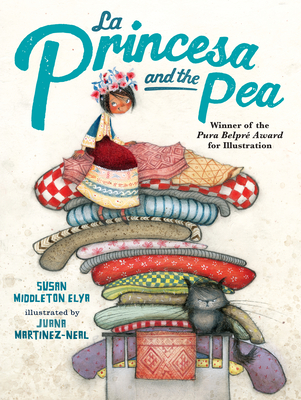
WHERE TO GET IT: The Disturbed Girl’s Dictionary releases a week from today! To find it, check your local public library, your local bookstore, or IndieBound. Also, check out GoodreadsAmazon, and Barnes & Noble.


Oshiro_Mark.jpgABOUT THE REVIEWER: Mark Oshiro is the Hugo-nominated writer of the online Mark Does Stuff universe (Mark Reads and Mark Watches), where he analyzes book and television series unspoiled. He was the nonfiction editor of Queers Destroy Science Fiction! and the co-editor of Speculative Fiction 2015. He is the President of the Con or Bust Board of Directors and is usually busy trying to fulfill his lifelong goal to pet every dog in the world. His YA Contemporary debut, Anger is a Gift, is out May 22, 2018 with Tor Teen.


Book Review: La Princesa and the Pea by Susan Middleton Elya, illus. by Juana Martinez-Neal


Review by Dora M. Guzmán

DESCRIPTION OF THE BOOK: The Princess and the Pea gets a fresh twist in this charming bilingual retelling. El principe knows this girl is the one for him, but, as usual, his mother doesn’t agree. The queen has a secret test in mind to see if this girl is really a princesa. But the prince might just have a sneaky plan, too. Readers will be enchanted by this Latino twist on the classic story, and captivated by the vibrant art inspired by the culture of Peru.
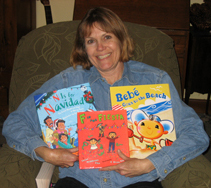
MY TWO CENTS: In this beautifully illustrated book filled with rustic textures and warm colors comes a popular tale filled with humor and reminiscing of Latinx mother-son relationships. Readers are invited to join the quest as the queen and the prince (but mostly the queen) try to find his future wife. The queen’s love for the prince is obvious, as she expects nothing but perfection for her son. The distinct comparison between the queen and her cat’s facial expressions are priceless and bring to the reader’s attention what else they have in common–cattiness and dominance. And rightly so; that’s her hijito lindo. Then comes a fair maiden, ready to prove her love for the prince, as he also awaits her success in the queen’s test. However, nobody is aware of this test besides the queen. The true test is if she feels the pea under twenty mattresses, then she’s the one. Yes, TWENTY. VEINTE.

Will the maiden pass this impossible challenge? Will the prince be able to be with his one true love? Will the queen finally give her blessings to her son and his future wife?

If you grew up with a brother, you can totally relate to this mother-son relationship. The bond between mother and son is like no other, however this story will force you to reminisce about the times that your mom said, “Ay, mijito, let me warm your dinner” to your brother but then expected you to warm up your own dinner. Jealous? Maybe. As an adult reader, I couldn’t help but chuckle at the realistic dialogue between the Queen and her Prince, as well as the perfectly paired facial expressions between the queen and her cat, which added to the character’s moods. You can feel the prince’s desire for love, but, at the same time, he wants to respect his mother’s opinion.

This picture book’s story line will keep you laughing, as it creatively tells the story of an unbreakable mother and son bond. I absolutely appreciate a picture book that can naturally weave in the Spanish language in dialogue and its narrative text without making it awkward for the reader. The Spanish vocabulary was also highlighted in a different text, to accent its beauty throughout the story. The words fit in a natural way of storytelling.

The illustrations were stunning. Upon reading the illustrator’s note by Juana Martinez-Neal, readers discover that the illustrations are inspired by an indigenous group in Peru. The textiles and the culture’s tradition of weaving and embroidery were inspirations for the illustrations and use of color. Martinez-Neal’s attention to detail and inspiration for her illustrations are remarkable and admirable.

TEACHING TIPS: Teachers of all grade levels can use this picture book as a reading mentor text to highlight various character traits and motives, with a focus on the queen. Also, for our younger readers, this text can be used during a phonemic awareness lesson on rhyming words in English.

The inspiration behind the illustrator’s choice of texture and color can also be used in an art lesson about artists and how cultures and traditions inspire their work.

WHERE TO GET IT: To find La Princesa and the Pea, check your local public library, your local bookstore, or IndieBound. Also, check out GoodreadsAmazon, and Barnes & Noble.

ABOUT THE AUTHOR: Susan Middleton Elya is a popular children’s author with over 22 picture books. Her series Say Hola to Spanish and Eight Animals are distinct in how they introduce the Spanish language to all age groups. Susan’s journey as an author started at a young age with a passion for writing. Her love of language led her to study Spanish and incorporate the Spanish language and her teacher experiences within her children’s books.


JuanaABOUT THE ILLUSTRATOR: Juana Martinez Neal is an award winning illustrator and artist. Her passion for art started as a child and led her to study at one of the best schools in fine arts in Peru. Her journey as an illustrator led her to the United States, where she continues to illustrate a variety of children’s books. Alma and How She Got Her Name, her debut picture book as an author illustrator, will be published in both English and Spanish by Candlewick Press on April 10, 2018.


img_0160ABOUT THE REVIEWER: Dora M. Guzmán is a bilingual reading specialist for grades K-5 and also teaches college courses in Children’s Literature and Teaching Beginning Literacy. She is currently a doctoral student with a major in Reading and Language. When she is not sharing her love of reading with her students, you can find her in the nearest library, bookstore, or online, finding more great reads to add to her never ending “to read” pile!