Book Review: Silver People: Voices From the Panama Canal by Margarita Engle

By Zoraida Córdova

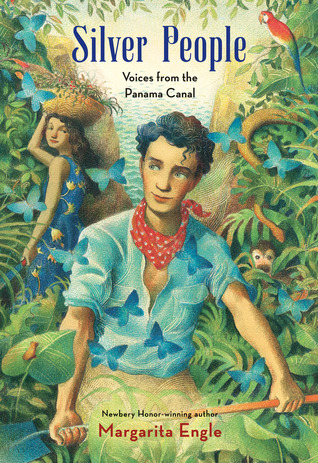
Silver People

DESCRIPTION FROM THE BOOK JACKET: One hundred years ago, the world celebrated the opening of the Panama Canal, which connected the world’s two largest oceans and signaled America’s emergence as a global superpower. It was a miracle, this path of water where a mountain had stood—and creating a miracle is no easy thing. Thousands lost their lives, and those who survived worked under the harshest conditions for only a few silver coins a day.

From the young “silver people” whose back-breaking labor built the Canal to the denizens of the endangered rain forest itself, this is the story of one of the largest and most difficult engineering projects ever undertaken, as only Newbery Honor-winning author Margarita Engle could tell it.

MY TWO CENTS: Silver People is a historical novel written in verse. Told in alternating perspectives over eight years, each poem is vibrant, unique, and many times heartbreaking. The story starts with Mateo, a fourteen year old boy from Cuba who lies about his ethnicity in order to get passage to and work in Panama. He’s mixed, and even though this takes place over 100 years ago, the feeling of not fully belonging to one part of yourself or culture is still relevant. His dark skin and green eyes allow him to “pass.” Like many of the men who flocked to Panama during this time, Mateo wants to work. But with a new world and new people come many challenges. First, there’s the hunger for food. Second, there’s a hunger for home. Third, there’s a fear of survival.

Through his careful observations, we are given a scope of surviving the working life on the canal. A structure of segregation is placed: “Americans, Frenchmen, and Dutch./ Spaniards, Greeks, Italians./ Jamaicans, Barbadians, Haitians” leaving Mateo wondering how any of them will be able to work together. Although all of the men are doing backbreaking and soul crushing work each day, the white men get paid in gold, the dark Europeans in silver, and the islanders in half the silver as other men. During the night, the monkeys howl and insects bite; Mateo ends up wondering “How can I miss the place/ I was so desperate to leave?” When I read that I thought to myself that even now, that’s the immigrant struggle. You long for a place that might give you a better life, a place that could be better, but also a place to belong to. At the end of the day, no matter where the working men came from, whether they wanted home, refuge, gold, silver, they were still joined in one thing: surviving the rain forest.

Although physical survival isn’t the only thing that bonds them. Henry, a Jamaican worker who watches as the medium-dark Spaniards get to sit for their meals while he has to stand, finds an unlikely friend in Mateo. They find commonality in sickness, mudslides, bitterness, pain, fighting, and a longing for home.

Other narratives include that of Anita “La Yerbera” who becomes a close ally of Mateo’s. Also an orphan, Anita was abandoned in the forest and taken in by an old Cuban woman. Her voice is unique and offers a different perspective to life in Panama. Unlike Mateo and other newcomers who are there to blow up the trees and remove entire landmasses, Anita feels she belongs to the forest itself. It’s her home, and we watch with her home is destroyed right before her eyes.

I love that in this story of the struggle of humans versus nature, Margarita Engle gives nature a voice. “The Forest” gets its own sections, detailing the point of views of the animals as they watch and howl at the intruders.

Okay, so I know this book is told in poems. Don’t let this shy you away. After all, it’s Poetry Month! What I love about this book is that each poem pulls you to the next. You can’t read just one poem; you have to read just one more. This blog post could be 10 pages long because each poem packs such a punch and makes you stop and think about what Mateo, Anita, and Henry are going through. It makes you wonder just how much is different today. I laughed out loud at one of Anita’s poems during Teddy Roosevelt’s visit to the canal, and the sludge of tourists that “…all they want/is hats–white hats like the American president’s,/ hats woven in Ecuador, hats that tourists/ insist on calling Panama hats. Don’t they/understand that Latin America/ has many countries?” It’s not a “laugh out loud” thing, but 100 years later, still relevant.

I wish Silver People had been around when I was in school. From our text books, all we learned about the Panama Canal was that “America built it.” I wish I’d known about the Silver People. But when you’re little, how do you go about describing the injustices of the world in a way that a child will understand? This is just the book for that. Margarita Engle weaves questions about identity, struggle, and discrimination, all through beautiful poetry.

The truth about most of these men is that they didn’t go home. Some didn’t make it out of the forest alive. But the white Americans, the Italians, the Jamaicans, the Cubans who “passed,” some of them stayed in Panama and became locals. Some spread out across the continent. This books reminded me that the history of the world should always be told through many perspectives, and that when pushed together we keep creating new cultures.

TEACHING TIPS: This book is a great read on it’s own, but would also be fun when learning about Panama, the Panama Canal, Teddy Roosevelt’s presidency, rain forest depletion, Latin@ studies, or because it’s National Poetry Month.

Margarita Engle has a section for teachers on her website! –> click.

AUTHOR: Margarita Engle is the Cuban-American winner of the first Newbery Honor ever awarded to a Latino. Her award winning young adult novels in verse include The Surrender TreeThe Poet Slave of CubaTropical Secrets, and The Firefly Letters.

Engle’s most recent books are The Lightning Dreamer and When You Wander.

Her new middle grade chapter book, Mountain Dog, was published in August 2013. Margarita’s latest book, Silver People, Voices From the Panama Canal is out now.

She lives in central California, where she enjoys helping her husband with his volunteer work for wilderness search and rescue dog training programs.

Scholastic Book Club Celebrates Cesar Chavez Day With “Harvesting Hope”

Latin@s in Kid Lit is excited to have the opportunity to cross-post with Scholastic’s Club Leo en Español, the largest Spanish school book club in the country offering Spanish, English, and bilingual books and educational materials to children in grades Pre K-8.

On Monday, May 31, the Scholastic site celebrated Cesar Chavez Day by highlighting Pura Belpré Honoree Harvesting Hope! Click here to see the original post, which has been reblogged below.

By Concetta Gleason
editorial assistant/admin coordinator for Club Leo

“Kindness and compassion towards all living things is a mark of a civilized society.…Only when we have become nonviolent towards all life will we have learned to live well ourselves.”

—Cesar Chavez, co-founder of United Farm Workers

Today is Cesar Chavez Day, and to celebrate we are revisiting Harvesting Hope by Kathleen Krull and Yuyi Morales. Harvesting Hope chronicles Chavez’s life as an advocate for the rights of migrant farm workers and laborers.

Cesar Chavez was born on March 31, 1927, in Yuma, Arizona. His parents, who were Mexican immigrants, prospered as business owners and farmers. However, the Great Depression crushed the family’s financial prospects, as it did to so many Americans. In 1937, Chavez’s family moved to California to find employment as migrant workers. Chavez was only ten years old when he experienced the inhumane conditions migrant workers were forced to endure as they worked long hours in the fields for meager pay. From this difficult experience Chavez learned the enduring importance of human dignity and compassion, which would fundamentally inform his leadership as an adult.

In Harvesting Hope, Krull maintains the delicate balance between showing and telling, providing significant historical background while taking the reader on a journey from Chavez’s idyllic childhood in Arizona to his hard-won victory over a corporate giant to ensure the legal rights of farm workers. Morales’s illustrations imbue the book with a dreamlike quality. Her figures command the page with grace and her use of colors shows the richness of Cesar’s emotional life and the depth of his plight as a migrant worker. This book is a worthy tribute to such a noble historical figure, and in 2004 it won the Pura Belpré Illustrator Honor.

As a leader, Chavez refused to engage in bullying tactics that dehumanized others and he is revered for being a catalyst of social change. Cesar Chavez Day is an official state holiday in California, Colorado, and Texas that is dedicated to acts of community service. Join us as we celebrate Cesar Chavez’s life works and some excellent Latino children’s literature!

Author’s Note: Club Leo en Español supports your classroom with fun and affordable books that connect children’s home language and learning. Our books include amazing series, original titles, and winners of the Pura Belpré Award, which celebrates the remarkable contributions of artists who give voice to the Latino community through children’s literature.

Club Leo en Español apoya tu salón de clases con libros divertidos y asequibles que conectan la lengua materna y el aprendizaje de los niños. Nuestra colección incluye increíbles series, títulos originales y ganadores del Premio Pura Belpré, que celebra los extraordinarios aportes de artistas que dan voz a la comunidad latina a través de la literatura infantil.

What We Talk About When We Talk About Diversity in YA

Or, what does that even mean?


By Zoraida Córdova

Brace yourselves. Here’s another blog post on the lack of diversity in YA. When we bring up these topics the common words I see are FEAR, UNCOMFORTABLE, GUILT.  If a white person brings up the subject then, “who are they to talk about it?” If a POC does it, we’ll be seen as a bunch of angry people. So, Catch 22. I get it. Writing these posts is HARD, but they should be written. Recently one of my favorite authors ever, Jenny Han, tweeted about diversity in YA. The thing is, we need to feel uncomfortable, and like Jenny said, “that’s the risk.”

Screenshot 2014-03-26 16.39.47

ecsaHere’s what you need to know about me. I was born in Ecuador. I moved to Queens, NY when I was 6. Being in America for 20 years makes me American. My public school experience is American. Yet, when people look at me and hear me speak, they are perplexed. Why? You got me.  The “Your English is so good!” “What are you?” “My friend is from Ecuador, do you know LUIS PABLO ESTEBAN SANTIAGO?” Spoiler alert: I don’t.

This difference wasn’t apparent to me from the beginning. Between grades 1-4, I was in bilingual classes. (My Little Mermaid Spanish didn’t get me to the top of the class right away.) All of my classmates had either emigrated from a Latin American country or had Latin American parents. Salvadorian, Peruvian, Puerto Rican, you name it. Guess what, we spoke English. We listened to the Spice Girls. We cut up our bangs like Lindsay Lohan in The Parent Trap. We watched TRL and taped the music videos. We learned the awesome moves to Christina Aguilera’s Genie in a Bottle (She’s half Ecuadorian, BTW). At home, sometimes I’d eat Chef Boyardi ravioli, sometimes I’d have rice and steak and beans.

So when I got to 5th grade, I was placed into the “regular” kids class. English only. Suddenly my friends also included Guyanese, Jamaican, African-American. Guess what, we still listened to shitty New photo 4 (1)Millennium pop and idolized Harriet the Spy.
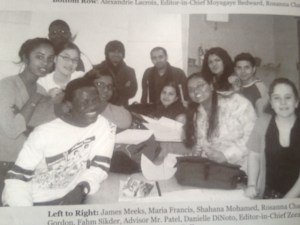
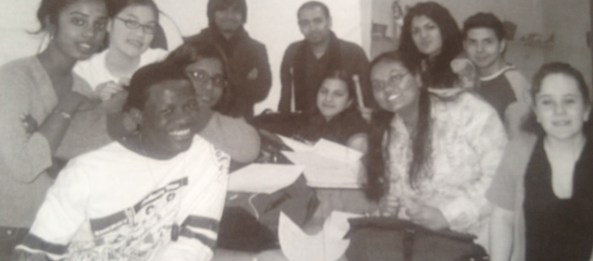
Junior high school and high school were also the same thing. Look at all the shades of brownness! Here are some pictures from my high school yearbook. Spoiler alert: I am still a nerd.

My experience growing up in neighborhoods that are already diverse gives me a different perspective. Could I have used more diverse characters in my current books? Yes. My trilogy centers around a white merman from Brooklyn. His love interest is mixed. His friends are mixed. Merpeople in my world come in all shades. But the answer is still yes. You can always add diverse characters into your books.

photo 3 (1)When people say they’re “afraid” they’re not going to give their “Other” character justice by writing from an experience other than an Anglo-American experience, I call bull. It is scary writing about an experience other than yours. However, unless your character has just moved to Kentucky from a remote town in Panama, then why are you afraid to write the experience of an otherwise straightforward character? Your character can still be named Danilo Cordova and the only research you have to do is “What does a teenage boy like?”

If your character is Nuyorican, then you’d have to do more research. Stereotypes need not apply. Because, here’s a little known secret, not all Latin experiences are the same. No matter where we were born, when we immigrated, where we were raised, we can’t be lumped into the same experience. This is not to say that every YA author should write a novel about how hard it is to grow up being brown, because I did it and my adolescence was pretty “average.”

If you’re writing a fantasy/sci-fi novel and there is not a single non-white person to be found, then my only question is “how come?” Here you have a chance to create a whole new world, where our carefully constructed American ideal of white-only beauty need not apply. When I read YA fantasy novels and the only time race is mentioned is when a new character comes in and has “chocolate” or “earth colored” skin, I just cringe. This mean everyone else I’ve been reading about is white. Not only is that lazy writing, it’s a limited way of thinking about a world that is supposed to be fantastical.

Screenshot 2014-03-26 17.01.57

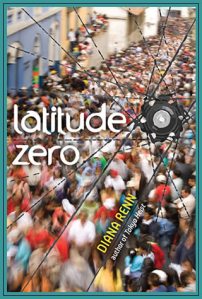
So how do we fix this? Well, lets talk about it. Let’s be friends. Reach out to someone who has a different experience as you. READ. I  to this date have yet to read a YA about a teenage Ecuadorian girl. Not even a slice of life story about a girl who falls in love and there’s a nice cover of them at the beach, or lying down on a lawn. I am, however, excited about Diana Renn’s upcoming YA thriller Latitude ZeroThe book takes place in Boston and in Ecuador. Diana is not Ecuadorian, but she wrote an exciting novel with diverse characters. She reached out and did her research. latitudecover

Here we go back to this FEAR concept. If you throw in a character named Chiquita Bonita in the middle of the scene, and she has hoop earrings and says “Ay, mami,” then you should be afraid because you’re propagating a stereotype. If you describe your Latina girl as “exotic,” “curvaceous,” “spicy,” or “saucy” then you are propagating a stereotype, or making gumbo IDK. If you’re like Britney Spears and equate a Latin male with “the bad boy type,” then you should be afraid because you’re propagating a stereotype. If you as an author can go on Google and research “how to kill someone and get away with it” because “your protagonist needs to know” then you can also try Googling about other American communities that are not your own.

There is a difference between being afraid to write about a culture that is not your own, and consciously creating a two dimensional stereotypical character.

Romeo and Juliet0001

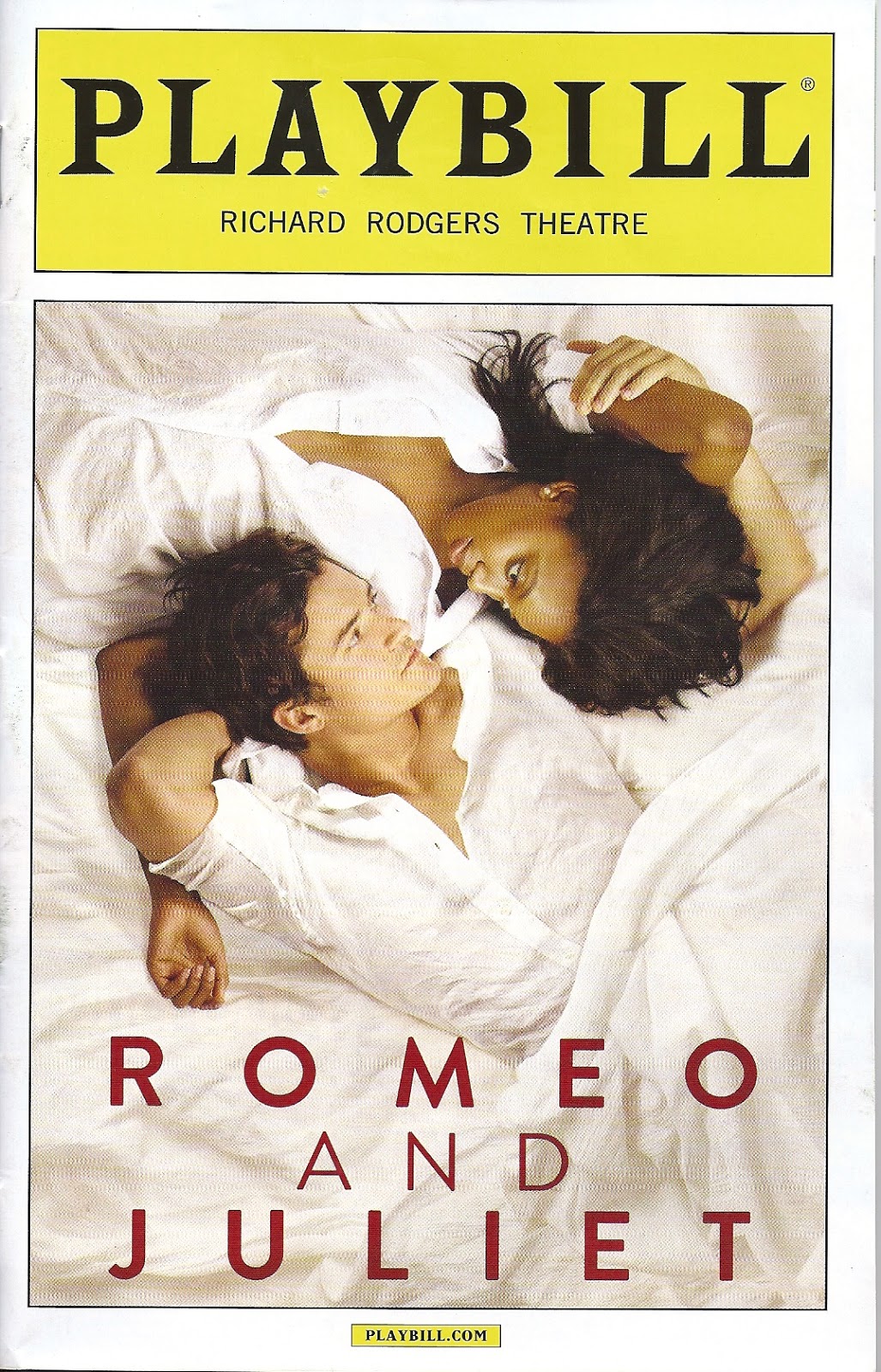
One of my favorite retellings of Romeo & Juliet is the most recent one on Broadway, partially because Orlando Bloom is shirtless but also because Juliet is black. They aren’t divided because of their skin color. This isn’t West Side Story. It’s not that one is brown and from the wrong side of the tracks, and the other one is nice and white, so they can’t be together. This is a story of feuding families that have been feuding so long they can’t even remember why or how it started. It’s that simple.

If you’re worried you’re still propagating a stereotype, then reach out. You’ll make a friend. You’ll learn something new. I am extremely lucky to have had diverse friends. I know that’s not the case for everyone and I know that if you’re not in a big city, chances are the POC in you neighborhood are marginalized. I’m not in Arizona where they’re trying to wipe out Mexican studies. I’m not in a tiny town in Ohio where there is one black kid in the class. I’m in NYC, which isn’t perfect and has a history of putting away their low income minorities to make room for gentrification. But my eyes are extremely open (and I got new glasses today) as to the future we need to create for Young Adult literature. It’s a team effort.

Maybe if we keep making it a point, when we talk about diverse characters in the coming years, it will be more than just a trend; it’ll be the new norm.


Edited: 3/31/14

*** Representation of Latin@s in media has been a personal focus for me.  This is not to say that “diversity” to me means only adding Latin@s to literature. The conversation extends to all marginalized people. Like I said, lets talk about it.

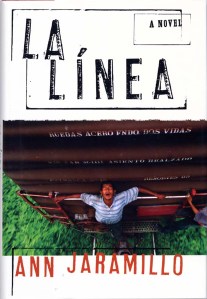
Book Review: La Línea by Ann Jaramillo

La Linea imageBy Lila Quintero Weaver

DESCRIPTION FROM THE BOOK JACKET: When fifteen-year-old Miguel leaves his rancho deep in Mexico to migrate to California across la línea, the border, his life is about to begin. Or so he thinks.

MY TWO CENTS“It’s been six years, eleven months and twelve days since I left to go north across la línea. It’s time for you to come.” So reads the note that Miguel receives from his father on his fifteenth birthday. During the long separation (his mother has also emigrated), Miguel, his grandmother, and sister, Elena, 13, eke out a meager existence in drought-stricken San Jacinto, Mexico. Surely life holds more than this! In the note, Papá instructs Miguel to pay a visit to Don Clemente, the wealthy patrón of the area. Years back, Papá rescued Don Clemente from a house fire. Now the old man repays that debt by funding Miguel’s flight to El Norte.

The arduous journey across la línea involves several modes of travel: by bus, riding the roof of a freight train, and crossing the desert on foot. Miguel encounters a wide array of obstacles en route, including the unwelcome surprise that Elena is along for the journey, too. Despite a series of setbacks, the siblings and a helpful new acquaintance named Javier press on toward their dream. At one point, bandits decimate their resources. At another, Mexican officials send them packing south— all the way to the Guatemalan border, in fact. Next, the trio sneaks a ride north by clambering on the roof of a freight train. The risks involved can’t be overstated. Nicknamed mata gente (people killer), such trains are responsible for dismemberments and deaths, not to mention exposure to cold, heat, and roving bands of ruthless gangs. I won’t even begin to list the perils they encounter in the next leg of the journey, the desert.

I respect the authoritative voice behind this novel. Ann Jaramillo is an ESL instructor with many years’ exposure to the true, and often harrowing, stories of border crossings by Mexicans and Central Americans. Her depiction of the mechanics involved is well informed. She describes life before and during the flight to the United States effectively, and highlights the poverty and bleak opportunities on the Mexican side with convincing detail, within age-appropriate limits.

Readers will encounter frequent terms and phrases in Spanish, not always translated, but whose meanings are usually discernible through context.

TEACHING TIPSTeaching Books offers a detailed curriculum guide for La Línea.

Miguel and Elena’s immigrant journey reflects recent and ongoing sociopolitical conditions. More importantly, they add faces and human emotions to related current events. Students can use this novel as a jumping-off point for the investigation of true immigration stories. They can achieve better understanding of what motivates people to emigrate/immigrate by researching their own family histories, or by comparing the characters’ experiences with that of other Latino and non-Latino settlers of the Americas.

This is a good text for enhancing Spanish vocabulary. It can also be used to increase awareness of rural Mexican customs.

LEXILE: 650

AUTHOR: Ann Jaramillo lives in Salinas, California. La Línea is her first novel. Ms. Jaramillo’s intimate knowledge of the Mexican-American immigrant journey comes through her work as an instructor of English as a Second Language, and her marriage of many years to Luis Jaramillo, a lawyer of Mexican-American heritage who has served migrant farmworkers for decades. In the author’s note, she explains that the inspiration for writing La Línea came from accounts of perilous crossings that her middle-grade students shared with her.

For more information about La Línea visit your local library or bookstore. Also check out WorldCat.orgIndiebound.orgGoodreadsAmazon and Barnes and Noble.

A Note For Authors on Jumping Genres

By Stephanie Guerra

Writing in a new genre after successfully publishing a book (or books) can be intimidating; why change what works? Some agents and publishers actively discourage genre-hopping, while others are interested in quality rather than consistency or brand-building.

TORNI debuted in 2012 as a YA author of realistic fiction (Torn) and followed up in 2013 with a 90-degree turn to humorous, heavily-illustrated middle grade: Billy the Kid is Not Crazy. I have two more YA coming out next year and I’m finishing a picture book.

If you’re a writer drawn to similar genre shifts, I encourage you to follow your gut. The process can be both freeing and useful in developing range. You may have to rebuild your audience from scratch, which is intimidating. But you’ll end up with a broader audience, a reward in itself.

Billy the KidYou’ll also need to adjust your voice and mentality for your new audience. Transitioning from YA to MG, I had to get in touch with my booger-fart-joke side (it wasn’t that hard) and cut all edge out of my writing (a touch harder). Again, the work builds its own reward: increased range.

But I want to focus a spotlight on the positives, which I believe are the real essence of shifting genres. It’s a form of creative stretching, a way to access a different age or voice inside you, and a way to reengage with the “play” of writing. A YA author may discover a new sense of fun in MG or picture books. An MG author may find freedom in exploring the romance or more mature content possible in YA. A picture book author used to practicing economy with words may relish stretching out into a luxurious novel.

Consider one of the most beloved Latin@ authors of our times, Gary Soto. He’s produced excellent picture books, poetry, middle grade and YA novels, short stories, and adult works. Pam Muñoz Ryan, another Latin@ star, has ranged from picture books to award-winning YA. Jack Gantos, my personal hero, has created picture books, delightful middle-grade (Joey Pigza!), adult novels, and urban memoir.

Some other marvelous children’s authors who’ve changed genres: Madeleine L’Engle, Mark Twain, Roald Dahl, and Laurie Halse Anderson. Literary superheroes like E. B. White jumped from Charlotte’s Web to One Man’s Meat. Roald Dahl dabbled in memoir, adult short stories, suspense, erotica, and of course, children’s fiction. And C. S. Lewis wrote everything short of picture books. What better models could we have?

I like to view jumping genres, too, as an act of defiance to The Market. Conventional wisdom has it that it’s savvy to develop a brand and stick with it, to build an audience and churn out book-clones at the rate of one per year. Many authors do this very successfully, and there’s nothing wrong with it, if it’s fulfilling to the artist in question. But I’m unsettled by branding as a lens for the arts and as a concept imposed on authors by publishers. Branding seems to compete with the essence of what art is or should be. So I advocate stretching the brand. Or better yet, losing the term altogether.

I’d like to share a short (30 second) video of a really articulate 11-year-old reviewing my MG. Thank you, Garrison. Your review gives me confidence that jumping genres was the right choice.

The 2014 International Latino Book Awards Finalists!

Below are the 2014 finalists for the 16th Annual International Latino Book Awards in the children’s, youth, and young adult categories. If you click on the images, you will be taken to Goodreads, Barnes and Noble, or Amazon for more information. The Awards are produced by Latino Literacy Now, an organization co-founded by Edward James Olmos and Kirk Whisler, and co-presented by Las Comadres para las Americas and Reforma, the National Association to Promote Library and Information Services to Latinos. The Awards themselves will be June 28 in Las Vegas as part of the ALA Conference. For the complete list, which includes adult fiction and nonfiction, check out the Latina Book Club site. Congratulations and good luck to all of the finalists!

Best Latino Focused Children’s Picture Book: English

18296043  15791044

Best Latino Focused Children’s Book: Spanish or Bilingual

17265250  19483940  An Honest Boy Un hombre sincero

Best Children’s Fiction Book: English

18492598  15842628  The Box of Holes  

Best Children’s Fiction Picture Book: Bilingual

17267265  17940785  15938471  16000381

Best Children’s Fiction Picture Book: Spanish

20948920  17802285  16457293  18406769  20454675

Best Children’s Nonfiction Picture Book

13610203  An Honest Boy Un hombre sincero  The Dog That Became a Lion

Best Educational Children’s Picture Book: English

17465058  18296043  15791044

Best Educational Children’s Picture Book: Spanish or Bilingual

  19483940  Hola! Gracias! Adios!  18126680  Embedded image permalink

Most inspirational Children’s Picture Book: English

18371476

Most inspirational Children’s Picture Book: Spanish or Bilingual

18198024  9542372  Embedded image permalink  Pink Firetrucks  18406693

Best Youth Latino Focused Chapter Book

10436183  16670129  Front Cover

Best Youth Chapter Fiction Book: English

16131067  17166339  16059385

Best Youth Chapter Fiction Book: Spanish or Bilingual

10162585    

Best Youth Chapter Nonfiction Book

Most inspirational Chapter Book

Front Cover  The Adventures of Chubby Cheeks: The Pro Quest

Best Young Adult Latino Focused Book: English

Insurgency: 1968 Aztec Walkout by Victor Gonzalez

17274543  15769992  Stars of the Savanna

Best Young Adult Latino Focused Book: Spanish or Bilingual

Los Pájaros No Tienen Fronteras by Edna Iturralde

18208087

Best Young Adult Fiction Book: English

17184137  12154323  15814459  15798660  A Girl Named Nina

Best Young Adult Fiction Book: Spanish or Bilingual

La Guarida de las Lechuzas by Antonio Ramos Revillas

Best Young Adult Nonfiction Book


Best Educational Young Adult Book

18462053  Stars of the Savanna  

Most Inspirational Young Adult Book

15769992  12352685  Stars of the Savanna

Best Book Written by a Youth: English

15020431  15874623

Best Book Written by a Youth: Spanish or Bilingual

  Serendipity, Poems About Love in High School

Best Children’s Picture Book Translation: Spanish to English

Avian Kingdom Feathered Tales: Birds Of A Feather  Avian Kingdom Feathered Tales: Pelican Sky  Avian Kingdom Feathered Tales: Two Hoots and a Holler  17465058

Best Children’s Picture Book Translation: English to Spanish

El Día Maravilloso de Hacer Tamales que Tuvo Sofia by Albert Monreal Quihuis; translator: Veronica Lamanes

Best Chapter/Young Adult Book Translation: English to Spanish

El Gusano de Tequila

Best First Book: Children’s and Youth

Stars of the Savanna  An Honest Boy Un hombre sincero