Author Angela Cervantes On Publishing & Her Animal-Loving Latina Protagonist

By Cindy L. Rodriguez

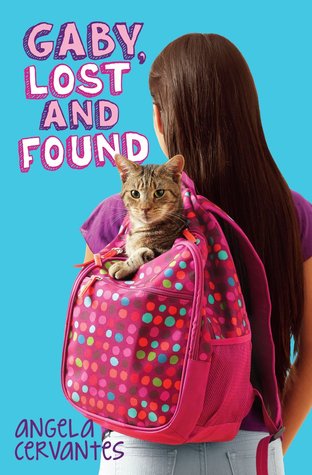
Today, we are thrilled to have a Q&A with author Angela Cervantes, who talks about her debut novel, Gaby, Lost and Found (Scholastic), her advice for pre-published writers, and a little about how she crafted a wonderful middle grade novel that’s both funny and heartbreaking. Angela is also super generous and is offering a signed book, a poster, and a T-shirt to one lucky winner. Click on the Rafflecopter link here or at the end of the post to enter!

Gaby Lost and FoundCR: Since this is your debut novel, can you tell us about your publishing journey. Were there any things you did in particular that, in hindsight, you think were particularly helpful as you pursued an agent and book deal? What advice would you give to pre-published writers?

AC: My middle grade novel, Gaby, Lost and Found has been out almost 10 months now, and I’m still learning things about myself and the publishing journey. In the beginning, when I was a simple wanna-be-Kid Lit author with a manuscript, the idea of facing the publishing industry was scary.If you had met me then, I would have told you that I’d rather pick up a hitchhiker with face tattoos than have to face the world of slush piles and soul-less rejection letters.

Eventually, I realized that if I loved my book enough, I had to be willing to take on rejection. After all, the worst things they can do to you is ignore you completely or reject your work. Tough, but big deal. Every writer in the history of the written world has received a rejection or been passed up at some point, right? If they rejected my work, I was in good company.

I could go on and on with advice for pre-published writers. Never pick up hitchhikers with face tattoos! Really, I’ve learned so much. First, I would start with the very basic: If you’re going to go the traditional publishing route, like I did, then you must finish that manuscript. You have to show the agent something fast when they ask for a partial or full manuscript. My second advice is to take that completed manuscript to a writing critique group. Feedback is crucial. I belong to a critique group called the Firehouse Five (although we are six now) and we meet monthly to provide critique to each other’s work. It’s priceless. My final advice, take your writing-group-critiqued and completed manuscript to a local writers’ conference and sign up for a pitch or first pages sessions with an agent. I met my agent through a writer’s conference. She liked my pitch, but made it very clear there was plenty of work to be done on my manuscript before she’d offer representation. I did the work and I was signed. With her guidance, I made more revisions and it was sent off for submission. Soon, the first rejection arrived. It didn’t kill me. A week or so later, I received an offer for my first novel. Yay!
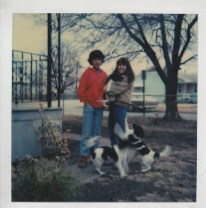
Angela C and brother

From her website: Angela, age 10, with her brother Enrique and their dogs, which were the inspiration for Spike in the novel.

CR: I love how you mixed Gaby’s story with the animals’ stories, how they were both in new situations and looking for new homes. How did you get the idea to address the subject of immigration for a MG audience, using homeless animals as a link to Gaby’s situation?

Thanks, I’m glad you enjoyed it. I really didn’t start with the idea to address the subject of immigration. I’m character-driven in my writing so I started with just Gaby, a funny, smart, and brave girl who is also a serious animal lover like her mom. I think if I had started out subject-driven with the intention to write a book on the issue of immigration, it would have been a much different novel. It would have come across as more lecturing and I don’t like to lecture or be on the receiving end of a lecture. No thank you. And kids don’t want to be lectured to either. At school visits, kids always ask me about deportation, but more in the context of why or how this happened to Gaby. They always tell me that they want Gaby and her mom to be together. They’re invested in Gaby’s happiness. It’s precious.

CR: Even though Gaby is dealing with the serious issue of her mother being away, she is also a “typical” MG girl, laughing and doing silly things with her male and female friends. Was this a conscious decision on your part, to show a range of emotions and not have it be an “issue” book or overly depressing?

AC: It’s funny that you ask that because my original drafts were even more depressing! I pulled a lot out during the revision process because the story was going in all sorts of directions. What got me back on track was again focusing on Gaby and who she was and not what she was going through. Gaby is an eleven year old girl. She loves animals. She loves glitter. She can climb trees and beat the boys at a water balloon fight. Would Gaby be defeated by bullying at school, the loss of her mom, the neglect of her father, and poverty? Or would this young girl rise up, even if she responds with some missteps, and show us what she’s made of? For me that was the only conscious decision on my part in writing this novel. I had to be true to Gaby and not define her by what she was going through, but show where she was going.

CR: Are you an animal lover? Did you have to do any particular research about animal shelters or spend time at one to capture what happens there?

AC: Besides my many years of experience as an animal lover and pet owner, I did visit several local animal shelters for information and inspiration. At the animal shelters, I asked tons of questions, held a lot of cats, wrote a lot of notes and pet a lot of dogs for this book. Why can’t all research be that much fun?

CR: What are you working on now? Can you share what’s next for you?

AC: Sure! I’ve completed my second middle-grade novel and I am now in the throes of revision. Fun stuff! Wish me luck.
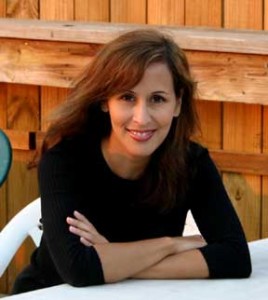
Angela Cervantes

Angela Cervantes was born and raised in Kansas, with most of her childhood spent in Topeka in the Mexican-American community of Oakland. Angela has a degree in English and an MBA, and she is the co-founder of Las Poetas, a Chicana poetry group that has developed into the Latino Writers Collective. In 2005, her short story, “Pork Chop Sandwiches,” was published in Chicken Soup for the Latino Soul. In  2007, she won third place for Creative Nonfiction in the Missouri Review’s audio competition for her story “House of Women” and Kansas City Voices’ Best of Prose Award for her short story, “Ten Hail Marys.” In 2008, she was recognized as one of Kansas City’s Emerging Writers by the Kansas City Star Magazine.

Gaby, Lost and Found is her first novel.

Click HERE to enter the giveaway. One winner will receive a signed copy of Gaby, Lost and Found, a poster, and a T-shirt. You can enter for free once each day. A winner will be chosen on Saturday, 5/24/14. Good luck!!

Book Review: Moony Luna: Luna, Lunita Lunera by Jorge Argueta

1294182By Sonia Alejandra Rodriguez

DESCRIPTION FROM THE BOOK JACKET: Five-year-old Luna isn’t at all sure she wants to go to school. For all she knows, there might be monsters there. But when her loving parents assure her that she’ll have a wonderful time playing and learning, she agrees to give school a try. An understanding teacher and a group of friendly kids make Luna very, very glad she made the right decision. But what about the monsters?

MY TWO CENTS: Five year old Luna Lunita Lunera fears that she will meet monsters on her first day of school. Her adoring parents remind her that she is a big girl now, bigger than the moon, and that there is nothing to fear. She finds the courage she needs to get to school but decides that maybe school is not such a good idea after all. Again, her parents encourage her to find her big girl strength and take her to school. While there, Luna is still not convinced that there are no monsters at her school and hides under a table. Her fellow classmates look for her and ask her to come out and play. Luna joins them in all the singing and coloring and decides that maybe school is not so bad. At pick up, she tells her parents that there were no monsters at school and that tomorrow she will be bigger and stronger than the moon!

Author Jorge Argueta and illustrator Elizabeth Gomez give life to the most adorable character in Latin@ children’s literature. Together they have created an encouraging and loving story about a child’s fears about her first day of school. One of the fascinating aspects of this book is the multiple ways that Luna’s story is told. Because it’s a bilingual book, something that is very common among Latin@ children’s books, the story is told is Spanish and English. Simultaneously, Gomez’s illustration present an additional storyline–the “monster’s” first day of school. Gomez’s illustrations suggest that there is indeed a monster at school and that it is also afraid of its first day of school.

Another significant factor in this text is the positive representation of the parents. Luna’s mom and dad are present throughout this pivotal moment in her life. Her mother reads her a bed time story at night and her father braids her hair in the morning. And both of them go to pick her up. Their presence is extremely important because it challenges negative and harmful stereotypes about Latino parents taking a back seat in their child’s education. Such stereotypes are further challenged by allowing the character of the mother to be there to read Luna a bed time story.

Lastly, the promotion of bilingual education, seen through the offering of the story in Spanish and English and through the depiction of Luna’s classroom as a bilingual classroom with a Latina teacher, is extremely powerful. Given national attacks on bilingual education and budget cuts on such programs, Argueta and Gomez present a wonderful opportunity to advocate for bilingual and multicultural education. Overall, this book is a must read and must have because it’s way brilliant.

FOR MORE INFORMATION about Moony Luna: Luna, Lunita Lunervisit your local library or bookstore. Also check out worldcat.org, indiebound.org, goodreads.com, amazon.com, barnesandnoble.com, and Children’s Book Press/Lee & Low Books.

headshotSonia Alejandra Rodríguez has been an avid reader since childhood. Her literary world was first transformed when she read Rudolfo Anaya’s Bless me, Última as a high school student and then again as a college freshman when she was given a copy of Sandra Cisneros’s The House on Mango Street. Sonia’s academic life and activism are committed to making diverse literature available to children and youth of color. Sonia received her B.A. in English from the University of Illinois at Urbana-Champaign. She is currently a PhD candidate at the University of California, Riverside, where she focuses her dissertation on healing processes in Latina/o Children’s and Young Adult Literature.

How an Adult White Guy Came to Write About a Latino Teen

By William Hazelgrove

17239293The first question I get is usually: “How could you write in the voice of a thirteen year old Latino boy?” I am about as far as you can get culturally from a young adult Latino just barely hanging on with his mother. But of course, if you are a writer, you are so many people that biographers will never get it straight. It is the same way I wrote in the voice of an old African American man in Tobacco Sticks and in Mica Highways.
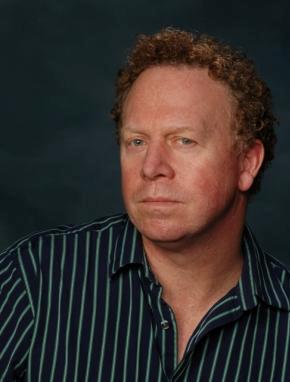
Voice is everything. Once you have the voice you have the novel. When I started The Pitcher, I wrote it in third person but quickly realized it would not work that way. It was boring and distant. So I started over and I knew it had to be first person, but who would tell the story? The old pitcher? The mother? No. The boy, Ricky would tell the story. And so I started to play around with his voice. Then I wrote one paragraph:

I never knew I had an arm until this guy calls out, “Hey, you want to try and get a ball in the hole, sonny?” I am only nine, but Mom says, “Come on, let’s play.” This carnival guy with no teeth and a fuming cigarette hands me five blue rubber balls and says I throw three in the hole, then we win a prize. He’s grinning, because he’s taken Mom’s five bucks and figures a sucker is born every minute. This really gets me , because we didn’t have any money after Fernando took off, and he only comes back to beat up Mom and steal our money. So I really wanted to get Mom back something, you know, for her five bucks.

And I had Ricky then. I had the novel. And where that voice came from is anyone’s guess. Maybe it is that kid who messed around in Baltimore City where I grew up. Maybe it was some of the Mexican guys I worked with in security. And the hard times Ricky and his mother go through are my own hard times. And the baseball is my son’s baseball and the coaches and parents are from nine years of being an assistant coach with my son. The immigration issues are from our time.

When I was thinking about writing The Pitcher, I was reading what was going on in Arizona at the time with immigration and the whole stop and ask people for their papers to deport them back to Mexico. When I wrote the mother character Maria I wanted her to have the same outrage that I felt reading about this practice of stopping people and demanding to see their papers. I wanted her to draw the conclusions that this was fundamentally un-American and I wanted her son Ricky to pick up on that especially since he was facing off with a Tea Party mom and her son.

I read a lot of accounts about Dream Kids in this country and how they had made their lives and then were in danger of being deported. That was really how I got the idea of making Ricky a Dream Kid. His mother did come over and make a life and now she was in danger of being deported.

Culturally, I knew Ricky because I know how it feels to be an outsider and to have all the odds stacked against you. Ricky’s dream of becoming an MLB pitcher is my own of becoming a novelist against immense odds.

Then again, maybe it was just Ricky flying around out there waiting to be born. But when The Latina Book Club made it their Monthly Selection or LatinoLA did a story on the immigration issues in the book or I stand up on a stage at the Latino Book Festival in Chicago and read my book that has to be translated to Spanish so the audience can understand what I am saying is…even I wonder how a I came to write a Latino novel.

 I guess I just did.


DSC_0020William Hazelgrove is the author of five novels, Ripples, Tobacco Sticks, which hit the National Bestseller List, Mica Highways, Rocket Man and The Pitcher. He was the Ernest Hemingway Writer in Residence where he wrote in the attic of Ernest Hemingway’s birthplace. He has written articles and reviews for USA Today and other publications. He has been the subject of interviews in NPR’s All Things Considered along with features in The New York Times, LA Times, Chicago Tribune, and the Chicago Sun Times, among others. His most recent novel, The Pitcher is a Junior Library Guild Selection. He runs a political cultural blog, The View From Hemingway’s Attic.


Book Review: América is Her Name by Luis J. Rodríguez

By Sonia Alejandra Rodríguez

696056DESCRIPTION FROM THE BOOK JACKET: Set in the Pilsen barrio of Chicago, this children’s picture book gives a heartwarming message of hope. The heroine, América, is a primary school student who is unhappy in school until a poet visits the class and inspires the students to express themselves creatively–in Spanish or English. América Is Her Name emphasizes the power of individual creativity in overcoming a difficult environment and establishing self-worth and identity through the young girl América’s desire and determination to be a writer. This story deals realistically with the problems in urban neighborhoods and has an upbeat theme: you can succeed in spite of the odds against you. Carlos Vázquez’s inspired four-color illustrations give a vivid sense of the barrio, as well as the beauty and strength of the young girl América.
MY TWO CENTS: Luis Rodríguez’s América is Her Name (1998) tells the story of América Soliz, an undocumented immigrant from Oaxaca, Mexico to Pilsen, Illinois—Chicago’s predominantly Mexican community—and her struggles to find her voice and an identity that captures the complexity of who she is. Throughout the text, América faces discrimination in the classroom, witnesses the violence in her community, and feels patriarchal oppression in her home. Through poetry, however, she gains a language and agency to challenge and transform her reality.

At the beginning of the story, the narrator makes clear that América is having a difficult time feeling like she belongs in her new home in the United States. Pilsen is not like her hometown in Oaxaca. She witnesses gun violence—a shooting between two youth groups—as she walks to school. Her white teachers marginalize her for not speaking English and she also overhears them calling her an “illegal.” While América is not sure what that means or how a person can be illegal,she understands they do not want her to belong. At home, América becomes aware of the discrimination her parents face as manual labor workers when her father loses his job and her mother comes home expressing her frustration at being called a “wetback.” The narrator also alludes to the fact that the uncle that lives with them is an alcoholic.

Despite the barrage of oppressions that América confronts on a daily basis, she is able to find a sense of self and a voice through poetry. Her classroom gets a visit from a Puerto Rican poet, Mr. Aponte, who encourages América to write her story in any form and any language that best represents her. América writes about her Mixteca indigenous culture in Oaxaca and encourages her mother and younger brother to do the same. The most beautiful scene in the book is a representation of América and her mother sitting at the kitchen table as they practice their writing.

Illustrator Carlos Vazquez depicts mother and daughter in vibrant colors as their words come alive. It is an empowering moment for América and for the reader. Poetry, and writing in general, is not reserved only for América, who has access to education and the possibility of belonging in the United States, but América also makes is available to her mother. By sharing this practice with her mother, América challenges understandings of who gets to belong, which is an extremely important theme in the book. Furthermore, by making poetry available to her family, América attempts to bridge the divide between (im)migrants and their children. América is Her Name is a heartfelt and empowering story that explores issues of what it means to belong in the United States.

AUTHORLuis J. Rodriguez is one of the leading Chicano writers in the country with fifteen published books in memoir, fiction, nonfiction, children’s literature, and poetry. Luis’ poetry has won a Poetry Center Book Award, a PEN Josephine Miles Literary Award, and a Paterson Poetry Book Prize, among others. His children’s books—America is Her Name and It Doesn’t Have to be This Way: A Barrio Story—have won a Patterson Young Adult Book Award, two Skipping Stones Honor Awards, and a Parent’s Choice Book Award. Luis Rodriguez is best known for the 1993 memoir of gang life, Always Running: La Vida Loca, Gang Days in L.A.

FOR MORE INFORMATION about América Is Her Name visit your local library or bookstore. Also check out worldcat.org, indiebound.org, goodreads.com, amazon.com, barnesandnoble.com, and Curbstone Press.

headshotSonia Alejandra Rodríguez has been an avid reader since childhood. Her literary world was first transformed when she read Rudolfo Anaya’s Bless me, Última as a high school student and then again as a college freshman when she was given a copy of Sandra Cisneros’s The House on Mango Street. Sonia’s academic life and activism are committed to making diverse literature available to children and youth of color. Sonia received her B.A. in English from the University of Illinois at Urbana-Champaign. She is currently a PhD candidate at the University of California, Riverside, where she focuses her dissertation on healing processes in Latina/o Children’s and Young Adult Literature.

Let’s All Make the #WeNeedDiverseBooks Campaign an Ongoing Movement

By Patrick Flores-Scott

#WeNeedDiverseBooks. The trending hashtag is a channel for conversation around the huge problem of a lack of diversity in children’s literature. The problem has been noted in many recent articles and so have the reasons we need more books by diverse authors and books with complex, real diverse characters.

For many years I was lucky to be a public school teacher in very diverse schools. At different points I was both a general education classroom teacher and a reading specialist. As a classroom teacher, I was able to seek and find the books I wanted my class to hear and read. More often than not, these books had main characters of color. I had the time, energy, resources, and relationships that helped me find great books that my students loved.

My students, however, especially my reluctant readers, were not going to work so hard to find a book that would reflect the cultural, racial, socio-economic realities of their community. They were going to pick the available book, the one closest to their hand when it was time to leave the library, or the trendy book that made them look like they were in the reading “know.”

Embedded image permalink

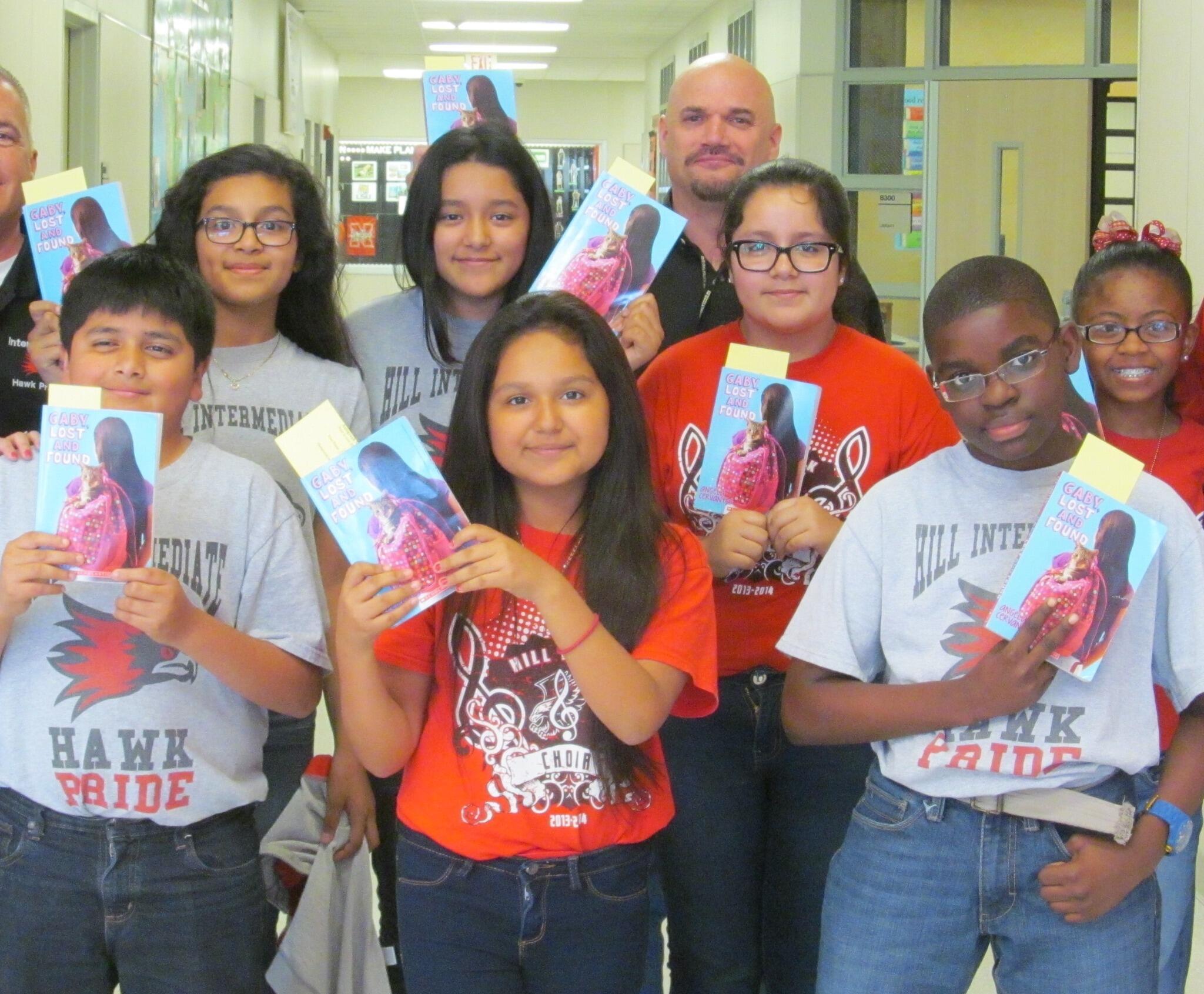
Author Angela Cervantes posted this picture on Twitter during the #WeNeedDiverseBooks Campaign.

Students need to be able to accidentally stumble their way into a great book that reflects their own background or one that opens their eyes to new characters and communities. They shouldn’t have to work for it. They shouldn’t have to fight for it. Kids have enough on their plate. Yes, some students are going to research authors, seek out new books and reading experiences, challenge their school librarian and make demands. Most fifth graders, however, are just struggling to make it through the day. They end up with the default book… and given the math of the situation, they’re going to walk out with another book by a white author with a white main character. Is this a tragedy? In the moment, no. That default book might be a great one. But this scene takes place over and over each day in most schools in the country and that great book–if the student is lucky–may just be another in a long line of books that reinforces the notion that great books are written by white authors and that white kids are the ones worthy of books written about them.  This notion is a toxic one, regardless of a student’s background.

Children’s books are a piece of a larger pie. A lack of diversity in film and television reinforces the notion that white stories are more relevant than non-white stories. The make-up the Senate (97 out 0f 100 are white) reinforces the notion that non-whites do not have a role in the highest levels of politics. Yes, there is the President, but his cabinet is made up of 70% white males. Kids see this. They see thousands of African American college athletes and they know that, in the vast majority of cases, these athletes are led to battle by white coaches. They know that the percentages of Black and Latino men in prison are crazily out of proportion with the population of Black and Latino men. Kids see all this. They take it in. The perceptions become realities for them.

My wife and I are the proud, exhausted parents of two rambunctious little boys. Their grandparents are Mexican-American on their mom’s side. My parents are white. My dad is from the U.S., my mom a Spanish-speaking Latina from South America. We will raise our boys to be proud of all that they are and proud of all the Latino, Caucasian, African-American, Asian and mixes of the aforementioned that make up their diverse extended family. While we will do our best to teach that the content of one’s character, not the color of one’s skin (one’s gender, sexual orientation, physical ability) is what is important, television, our political and judicial systems, sports…. And even the make-up of CHILDREN’S BOOKS, will send messages that complicate, skew, and even deem our parental message well-meaning, but just wrong.

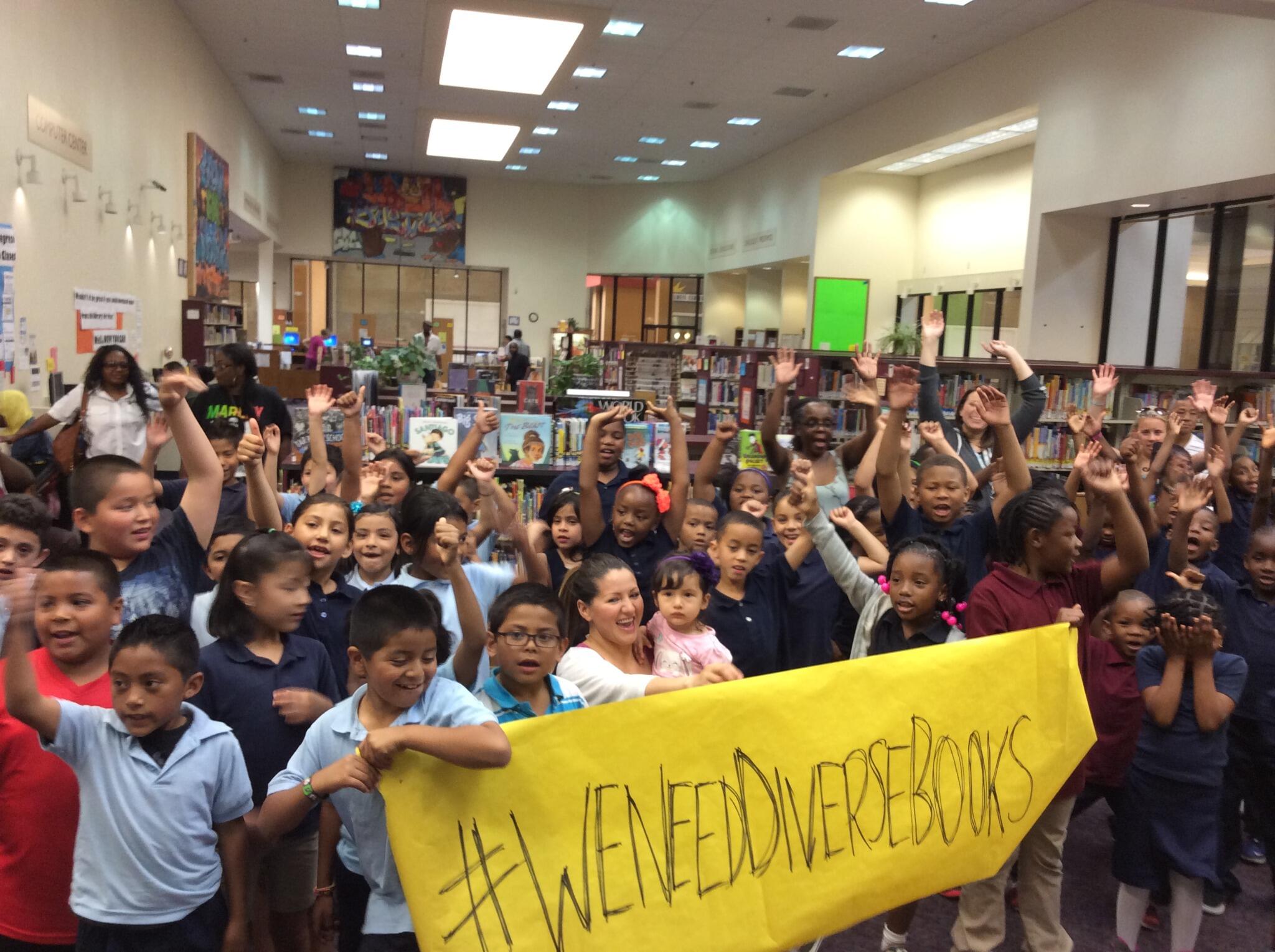
Embedded image permalink

The Oakland Public Library in California posted lots of great pictures like this one on Twitter during the #WeNeedDiverseBooks Campaign.

What do we do about it? The #WeNeedDiverseBooks Movement (Can it please be a movement? We need more movements around here.) is a potentially very important call for change in the children’s book world. Now, we need to push for intentionality. Gatekeepers need to have their feet held to the fire. The Movement (!) needs to push publishers to set goals that trend their books in a more realistically diverse direction. It needs to push the industry to hire editors from diverse backgrounds and to hire and support diverse interns and entry-level assistants who can have the power to move books off the pile and into editors’ hands. The Movement needs to hold publishers accountable.

Institutions which support writers and illustrators, like my beloved SCBWI, need to recruit underrepresented writers to their conferences. (And to check out the percentage of white male panelists and speakers compared to the percentage of white male attendees.) Groups like SCBWI need to be pushed to intentionally foster and mentor a more diverse writing community.

The movement needs to push us published authors of all colors and stripes, to mentor diverse up-and-comers, to include pro-bono school visits to underfunded schools, and to write real, complex, fallible diverse characters who live the entirety of the American experience.

Members of The Movement need to request diverse books at their bookstores and libraries. We need to post reviews on Amazon and Goodreads and library websites. Members of the Movement need to advise book bloggers and to follow and support blogs like this one. We need to give diverse books as birthday presents and to talk about our favorites on the bus, at work, in line at the bookstore…

Members of The Movement need to push our political leaders to support the health, education and welfare of our future readers and writers.

Publishers, agents, bookstore workers, librarians, teachers, authors… there are bunches these folks out there doing the positive stuff that will make change possible. The Movement needs to support them and it needs to push for intentionality in those who mean well, but have not yet made the move to change.

PatrickFS1Patrick Flores-Scott was, until recently, a long-time public school teacher in Seattle, Washington. He’s now a stay-at-home dad and early morning writer in Ann Arbor, Michigan. Patrick’s first novel, Jumped In, has been named to a YALSA 2014 Best Fiction for Young Adults book, an NCSS/CBC Notable Book for the Social Studies and a Bank Street College Best Book of 2014. He is currently working on his second book, American Road Trip.

Jumped In was featured in Libros Latin@s on Thursday. Click here to see the overview.


2014 Reading Challenge: April Update and We Need More Diverse Books Campaign

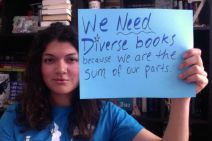
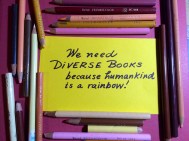
We love to post the monthly Reading Challenge update because it’s fun to see what people are reading, readers give us titles to add to our book lists, people are reading more Latin@ Kid Lit (yay), and look at all the beautiful artwork on those covers. We’re even more excited than usual about this month’s post because it comes as the We Need Diverse Books Campaign is underway. The hashtag #WeNeedDiverseBooks has been trending on Twitter since before the campaign official began.

Here are contributions from our own Zoraida Córdova, Lila Q. Weaver, and Cindy L. Rodriguez (well, her daughter):

weneeddiversebooks 2  photo (1)  photo (2)
Today, people are engaged in the second part of the campaign. A Twitter chat is scheduled for 2 p.m. (EST). Use the same hashtag and share your thoughts on the issues with diversity in literature and why diversity matters to you.

Tomorrow, is the third part of the campaign, called the Diversify Your Shelves initiative to encourage people to buy diverse books and take photos of them. Before you head out to buy books, take a look at what participants in our 2014 Latin@s In Kid Lit Challenge read in April.

We will say this and mean it every month: Thank you to everyone for participating in the challenge and purposely selecting books by/about/for Latin@s. Remember, you can join the challenge any time during the year, and you’re not required to review–only read and enjoy! If you do post a review somewhere, we will link it to the book covers below. If you choose not to review, we will link the covers to Goodreads.

                1229005  12159903  13126995  3308853  7789231  1294391  177457  11973377  8220585  349744  18148193  1016493  790468  17166339  353900  696056