
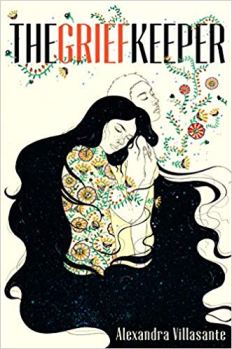
Reviewed by Cris Rhodes
DESCRIPTION OF THE BOOK:
Seventeen-year-old Marisol has always dreamed of being American, learning what Americans and the US are like from television and Mrs. Rosen, an elderly expat who had employed Marisol’s mother as a maid. When she pictured an American life for herself, she dreamed of a life like Aimee and Amber’s, the title characters of her favorite American TV show. She never pictured fleeing her home in El Salvador under threat of death and stealing across the US border as “an illegal”, but after her brother is murdered and her younger sister, Gabi’s, life is also placed in equal jeopardy, she has no choice, especially because she knows everything is her fault. If she had never fallen for the charms of a beautiful girl named Liliana, Pablo might still be alive, her mother wouldn’t be in hiding and she and Gabi wouldn’t have been caught crossing the border.
But they have been caught and their asylum request will most certainly be denied. With truly no options remaining, Marisol jumps at an unusual opportunity to stay in the United States. She’s asked to become a grief keeper, taking the grief of another into her own body to save a life. It’s a risky, experimental study, but if it means Marisol can keep her sister safe, she will risk anything. She just never imagined one of the risks would be falling in love, a love that may even be powerful enough to finally help her face her own crushing grief.
The Grief Keeper is a tender tale that explores the heartbreak and consequences of when both love and human beings are branded illegal.
MY TWO CENTS:
What first strikes me about Alexandra Villasante’s debut novel The Grief Keeper is its unique juxtaposition of science fiction, which we often don’t get to see in Latinx youth literature, and an undocumented border-crossing narrative, which is quite prevalent within the field. The combination creates a new experience for readers, one that I think we need more of. Given the predominance of immigration narratives, any innovation upon that common theme is a welcome addition. At the same time, The Grief Keeper is a difficult read. That Marisol, an undocumented asylum seeker, is abused as a test subject for a human trial no one else would volunteer for is horrifying. But, perhaps not so horrifying as the prospect that this book, though science fiction, feels very, very real insofar as it explores the dehumanization of Central American immigrants, many of them children.
Focusing on Marisol and her younger sister Gabi, who have fled their native El Salvador to escape gang violence, this book opens with Marisol’s meticulous preparations to plead her case for asylum, but there’s always the hint that Marisol is being less than truthful with the immigration officials. When Marisol’s concern that they don’t buy her story swells, she mounts her escape with Gabi, only to be picked up by the mysterious Indranie Patel, and taken to a medical facility with the offer that if Marisol participates in a clandestine medical trial, she and her family will be granted asylum. But Marisol’s participation in the trial—being implanted with a medical device that allows her to act as a surrogate for another human being’s grief—is turned on its head when she meets her counterpart: the grief-stricken Rey.
The medical trial seems an odd backdrop for what turns out to be rather moving, burgeoning romance between Marisol, whose queer identity is a point of contention in her past, and Rey. At times, I felt disconcerted by this tension. Is this a story of danger, violence, and corruption on both sides of the border? Or is this another excellent queer, Latinx love story? It’s somehow both. I’m torn about whether the levity offered through the love story undercuts the gravity of the immigration narrative. I haven’t resolved my feelings about this, to be honest. The more I think about it, I’m left feeling like the love story was out of place within a deeply serious and dark tale about homophobia, abuse, and immigration.
But, these retrospective feelings must also be seen through the lens of how much I genuinely enjoyed reading this book. It was a quick, pleasurable read. Villasante’s prose is immersive, pulling you out of your own head and putting you into Marisol’s. Further, the frank discussions of grief, depression, anxiety, and suicidal ideation are unvarnished, but honest. For readers who struggle with mental health, this book may offer a distinct sort of validation and hope. But, I do caution some readers who may be struggling that this text is tough to read in certain moments. As someone who intimately understands the debilitating depression Marisol experiences, I can at once see Villasante’s accurate representation and the potential triggers it may offer.
Nevertheless, the open discussion of mental health, particularly because it’s underemphasized (to put it lightly) in many Latinx communities, is refreshing. The queer romance is necessary. And the blend of themes and genre conventions is intriguing. If you’re looking for a new kind of read, I encourage you to pick up The Grief Keeper to see for yourself its unique blend.
TEACHING TIPS:
Marisol and Rey are deeply impacted by their favorite TV show, Cedar Hollow. It would prove an interesting discussion or written activity to have students reflect on television shows or other media that have similarly impacted their lives.
This book would also be an interesting addition to teach current topics, whether in a government class, social studies class, or literature class. It might also be good to read alongside discussions of other medical experimentation—I was struck, in particular, with the connections The Grief Keeper shares with experiments done on other minoritized populations, from Native Americans to Jewish peoples during the Holocaust. Reading this text in addition to discussing those events might add depth to conversations that are often difficult, at the same time as they seem historically removed from our contemporary moment.
 About the author: Alexandra Villasante holds a BFA in Painting and an MA in Combined Media. She was born in New Jersey to immigrant parents and now lives in Pennsylvania. Learn more about Alexandra’s work and appearances on her website. Her social media accounts may be found on Twitter and Instagram at @magpiewrites.
 About the reviewer: Cris Rhodes is a regular contributor to Latinxs in KId Lit. At Texas A&M, she recently completed a Ph.D. in English with an emphasis on Latinx children’s literature. Her research explores the intersections between childhood activism and Latinx identities. In the fall, she will begin an assistant professorship at Shippensburg University.
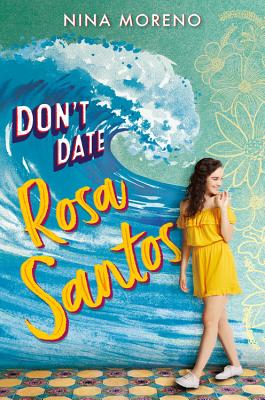 DESCRIPTION OF THE BOOK: Rosa Santos is cursed by the sea—at least, that’s what they say. Dating her is bad news, especially if you’re a boy with a boat.
 ABOUT THE AUTHOR:
  ABOUT THE REVIEWER: Mimi
 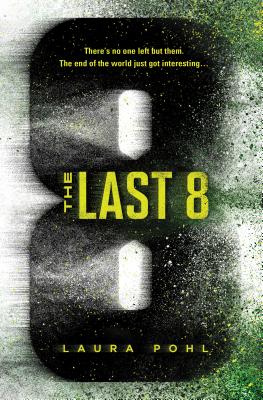 DESCRIPTION OF THE BOOK: Clover Martinez has always been a survivor, which is the only reason she isn’t among the dead when aliens invade and destroy Earth as she knows it. When Clover hears an inexplicable radio message, she’s shocked to learn there are other survivors—and that they’re all at the former Area 51. When she arrives, she’s greeted by a band of misfits who call themselves The Last Teenagers on Earth. Only they aren’t the ragtag group of heroes Clover was expecting. The group seems more interested in hiding than fighting back, and Clover starts to wonder if she was better off alone. But then she finds a hidden spaceship, and she doesn’t know what to believe…or who to trust.
 ABOUT THE AUTHOR (from Author’s Website):
 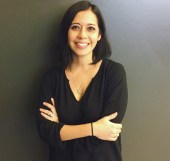 ABOUT THE REVIEWER: Katrina Ortega (M.L.I.S.) is the Young Adult Librarian at the Hamilton Grange Branch of the New York Public Library. Originally from El Paso, Texas, she has lived in New York City for six years. She is a strong advocate of continuing education (in all of its forms) and is very interested in learning new ways that public libraries can provide higher education to all. She is also very interested in working with non-traditional communities in the library, particularly incarcerated and homeless populations. While pursuing her own higher education, she received two Bachelors of Arts degrees (in English and in History), a Masters of Arts in English, and a Masters of Library and Information Sciences. Katrina loves reading most anything, but particularly loves literary fiction, YA novels, and any type of graphic novel or comic. She’s also an Anglophile when it comes to film and TV, and is a sucker for British period pieces. In her free time, if she’s not reading, Katrina loves to walk around New York, looking for good places to eat.
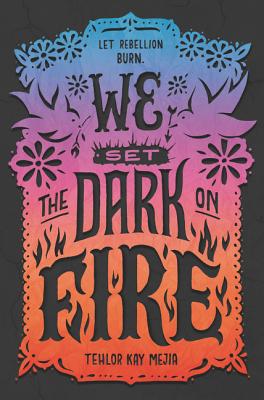 DESCRIPTION OF THE BOOK: At the Medio School for Girls, distinguished young women are trained for one of two roles in their polarized society. Depending on her specialization, a graduate will one day run a husband’s household or raise his children. Both paths promise a life of comfort and luxury, far from the frequent political uprisings of the lower class.
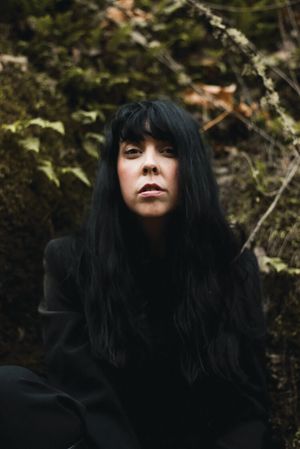 ABOUT THE AUTHOR: Tehlor Kay Mejia
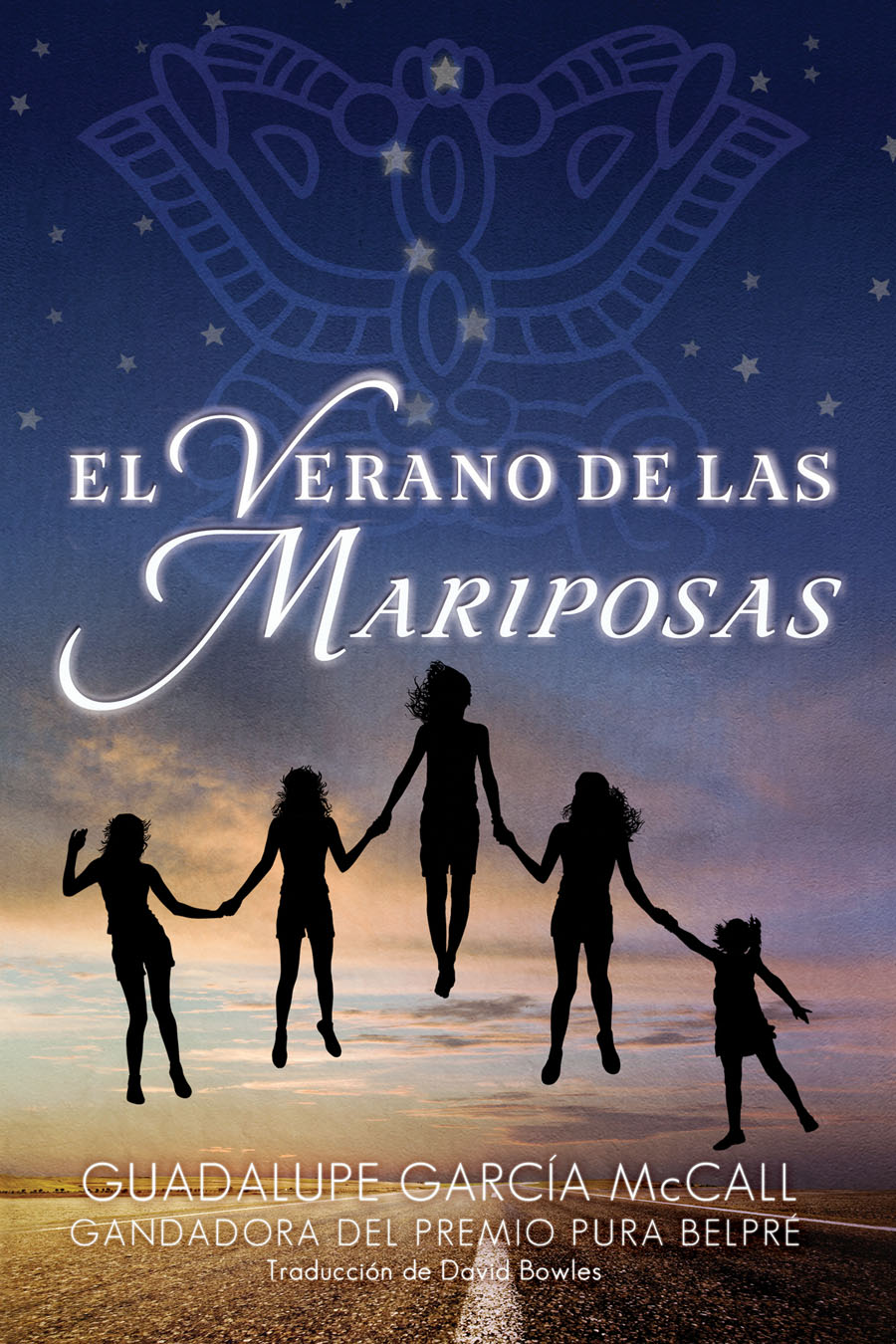 DESCRIPTION OF THE BOOK:
  ABOUT THE AUTHOR (from
  ABOUT THE TRANSLATOR: A Mexican-American author from deep South Texas, David Bowles is an assistant professor at the University of Texas Rio Grande Valley. Recipient of awards from the American Library Association, Texas Institute of Letters and Texas Associated Press, he has written a dozen or so books, including Flower, Song, Dance: Aztec and Mayan Poetry, the critically acclaimed Feathered Serpent, Dark Heart of Sky: Mexican Myths, and They Call Me Güero: A Border Kid’s Poems. In 2019, Penguin will publish The Chupacabras of the Rio Grande, co-written with Adam Gidwitz, and Tu Books will release his steampunk graphic novel Clockwork Curandera. His work has also appeared in multiple venues such as Journal of Children’s Literature, Rattle, Strange Horizons, Apex Magazine, Nightmare, Asymptote, Translation Review, Metamorphoses, Huizache, Eye to the Telescope, and Southwestern American Literature. In April 2017, David was inducted into the Texas Institute of Letters for his literary work.
 DESCRIPTION OF THE BOOK: It is 1957 in Marianao, a suburb on the outskirts of Havana. Adela Santiago is thirteen years old and lives in a small blue house with her mother, father, brother, and grandfather. And yet something is amiss. Her neighbors are disappearing. Not only that, but her parents’ marriage seems to be disintegrating and her cousin is involved with a bombing at the Hotel Nacional. Welcome to a world where the sight of police officers shooting citizens in broad daylight is a normalcy, where every day there is a higher body count than the day before, where in the cramped pews of churches, in the creaking wood of backwards Havana alleys, a revolution is brewing. Welcome to Cuba.
 ABOUT THE AUTHOR:
  ABOUT THE REVIEWER: Elena Foulis has a Ph.D. in Comparative Literature and Cultural Studies from the University of Arkansas. Her research and teaching interests include U.S. Latina/o literature, and Digital Oral History. Dr. Foulis is currently working on a digital oral history project about Latin@s in Ohio, which is being archived at the Center for Folklore Studies’ internet collection. Some of these narratives can be found in her iBook titled, Latin@ Stories Across Ohio.
 Latinxs in Kid Lit