Book Review: We Unleash the Merciless Storm by Tehlor Kay Mejia


Review by Cris Rhodes:
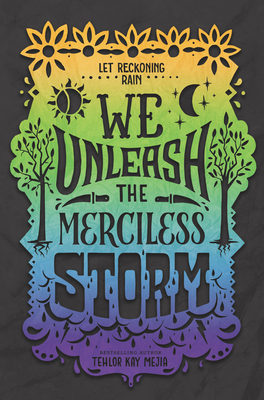
DESCRIPTION OF THE BOOK: Being a part of the resistance group La Voz is an act of devotion and desperation. On the other side of Medio’s border wall, the oppressed class fights for freedom and liberty, sacrificing what little they have to become defenders of the cause.

Carmen Santos is one of La Voz’s best soldiers. She spent years undercover, but now, with her identity exposed and the island on the brink of a civil war, Carmen returns to the only real home she’s ever known: La Voz’s headquarters.

There she must reckon with her beloved leader, who is under the influence of an aggressive new recruit, and with the devastating news that her true love might be the target of an assassination plot. Will Carmen break with her community and save the girl who stole her heart—or fully embrace the ruthless rebel she was always meant to be?

MY TWO CENTS: In this action-packed follow-up to her debut novel We Set the Dark on Fire, Tehlor Kay Mejia continues her revolutionary queer romance with a bang. Picking up moments after We Set the Dark on Fire ends, We Unleash the Merciless Storm shifts vantage points from Dani, the Primera wife whose secret identity as an undocumented immigrant from beyond Medio’s rigid borders complicates her life and causes her to tenatively join the resistance, to Carmen, who seemed to embody the social mores of Medio’s stratified and exclusive world, but is actually an undercover operative for the revolutionary group La Voz.

Readers will need to be familiar with We Set the Dark on Fire to fully grasp the extent of We Unleash the Merciless Storm. I found myself returning to the previous book to remember the intricacies of Medio’s social codes and to remind myself of character names and traits. This is not a stand alone book, and, I would wager, it’s a sequel best enjoyed immediately following reading (or rereading) the first novel.

The switch to Carmen as the main character proves an interesting counterpoint to Dani’s narrative in the first novel. Whereas Dani is largely unaware of the mounting resistance to Medio’s restrictive government, Carmen is deeply involved in the resistance. Carmen seems superficial and catty in the first novel, but We Unleash the Merciless Storm unravels that narrative, posing Carmen as an astute and powerful member of La Voz. But, her relationship with Dani was an unforeseen complication to her mission to unravel Medio from the inside.

It would be a typical narrative maneuver to have Carmen torn between her love for Dani and her loyalty to La Voz, but Mejia resists that stale plot. Rather, Carmen sees her loyalties to both Dani and La Voz as intertwined. Mejia’s explorations of Carmen’s motives seem authentic and they reflect the complex and competing emotions of resistance and love. Those who are looking for nonstop action may be frustrated with Carmen’s frequent reflections on her relationship with Dani, but these thoughts don’t seem out of place for someone like Carmen who was undercover for the majority of her formative years. Not only is Carmen contending with the loss of her love, but she’s also relearning how to be a part of La Voz after years away. Carmen’s wondering also reveals important questions about revolution. Is a political uprising necessarily violent? Can change be made without pain? As Carmen grapples with these questions, her loyalties to La Voz are questioned and she must prove herself while also remaining true to her values.

As with my feelings toward We Set the Dark on Fire, I found We Unleash the Merciless Storm to be the kind of novel that I longed for as a teenager (and, frankly, enjoyed immensely as an adult). The romance is there, of course, but it’s not the entire focus–and it shouldn’t be! I love a good romance, especially a queer romance, but the complexities of Medio’s government and La Voz’s revolutionary ideals give contemporary teens an important counterpoint to our own global politics.

 

Photo & Styling: Tia Reagan Photo  Editing: Adrian King

Photo & Styling: Tia Reagan Photo

ABOUT THE AUTHOR (from her website): Tehlor Kay Mejia is the author of the critically acclaimed young adult fantasy novel We Set the Dark on Fire and its sequel, We Unleash the Merciless Storm, and the forthcoming Miss Meteor (co-written with National Book Award nominee Anna-Marie McLemore). Her middle grade debut, Paola Santiago and the River of Tears, releases from Rick Riordan Presents in 2020.

Her debut novel received six starred reviews, and was chosen as an Indie’s Next Pick and a Junior Library Guild selection, as well as being an Indiebound bestseller in the Pacific Northwest region. It has been featured in Seventeen, Cosmopolitan, and O by Oprah Magazine’s best books of 2019 lists.

Tehlor lives in Oregon with her daughter, a dog that matches her hair, and several rescued houseplants. You can find her on Twitter and Instagram @tehlorkay.



Cris Rhodes is an assistant professor of English at Shippensburg University of Pennsylvania. She teaches courses of writing, culturally diverse literature, and ethnic literatures. In addition to teaching, Cris’s scholarship focuses on Latinx youth and their literature or related media. She also has a particular scholarly interest in activism and the ways that young Latinxs advocate for themselves and their communities.
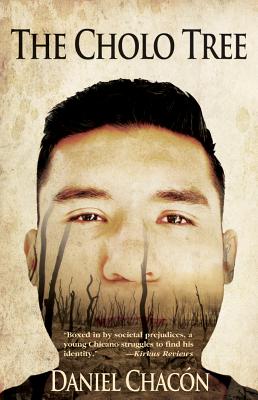
Book Review: The Cholo Tree by Daniel Chacón


Review by Elena Foulis

DESCRIPTION OF THE BOOK: “Do you know what a stereotype you are?” Jessica asks her son. “You’re the existential Chicano.” Fourteen-year-old Victor has just been released from the hospital; his chest is wrapped in bandages and his arm is in a sling. He has barely survived being shot, and his mother accuses him of being a cholo, something he denies.

She’s not the only adult who thinks he’s a gangbanger. His sociology teacher once sent him to a teach-in on gang violence. Victor’s philosophy is that everyone is racist. “They see a brown kid, they see a banger.” Even other kids think he’s in a gang, maybe because of the clothes he wears. The truth is, he loves death (metal, that is), reading books, drawing, the cartoonist Lalo Alcaraz, and the Showtime series Weeds. He likes school and cooking. He knows what a double negative is!

But he can’t convince his mom that he’s not in a gang. And even with a genius girlfriend and an art teacher who mentors and encourages him to apply to art schools, Victor can’t seem to overcome society’s expectations for him.

MY TWO CENTS: Daniel Chacón’s novel, The Cholo Tree, is a story that confronts stereotypes within one’s own community and family. Told from the perspective of a young Chicano protagonist, this story exposes not only obstacles a young teen in a impoverished neighborhood might face, but also what contributes to perpetuating a cycle of violence, gang-culture, and drugs when young, Latino men repeatedly hear assumptions about who they might be or what they are destined to become. The protagonist, Victor, navigates hearing these messages from people like his own mother or teachers who assume he is a gangbanger, although he is not. Chacón tells the story of a young Chicano teen who is navigating school, a single parent household, and his gift as an artist.

After his near-death experience, Victor navigates high school life, confronting stereotypes on a daily basis. One thing that catches the reader’s attention is the school administrators’ and teachers’ insistence that Victor must belong in a gang because he is Chicano, plus the clothes he wears and his attitude. However, this does not stop at school. Often, his own mother, who he calls Jessica, accuses him of being a gangbanger, a cholo. While Victor is no angel, the reader can come to understand the impact of placing labels on Latino youth, and how, in particular, young artists risk being boxed into stereotypes that see them as dangerous or a menace to society.

Victor is often a spectator, an observer of his environment and surroundings, which he realizes contributes to many of the negative labels society puts on young brown men like him. Indeed, through his interactions with a group of young men, who are involved in drug using and selling, he tries to rescue two sisters getting caught in this lifestyle. He uses his drawings to engage with them and possibly persuade them to see themselves as young women who deserve better lives, and he remembers what his friend Freddy once said to him when Victor became interested in Iliana, a genius girl he had met at a party and Victor’s love interest,  “Every Chicanita is my sister.”

One of the things that saves Victor is his relationship with an art teacher, Mr. García, who is possibly the only person who sees his gift as an artist and helps him see himself as something different than what society expects of him. Mr. García not only lets Victor use his own studio, he encourages Victor to apply to prestigious art schools, which he has not considered as a possibility for himself. Chacón uses imagery and fantasy and the complexity of family dynamics to make this a story worth reading.


ABOUT THE AUTHOR: Daniel Chacón is the author of Hotel Juárez: Stories, Rooms and Loops (Arte Público Press, 2013); Unending Rooms (Black Lawrence Press, 2008), winner of the Hudson Prize; and the shadows took him (Washington Square Press, 2005) and Chicano Chicanery (Arte Público Press, 2000). A professor at the University of Texas at El Paso, he is co-editor of The Last Supper of Chicano Heroes: The Selected Works of José Antonio Burciaga (University of Arizona Press, 2008).



headshot2016ABOUT THE REVIEWER: Elena Foulis has a Ph.D. in Comparative Literature and Cultural Studies from the University of Arkansas. Her research and teaching interests include U.S. Latina/o literature, and Digital Oral History. Dr. Foulis is currently working on a digital oral history project about Latin@s in Ohio, which is being archived at the Center for Folklore Studies’ internet collection. Some of these narratives can be found in her iBook titled, Latin@ Stories Across Ohio.
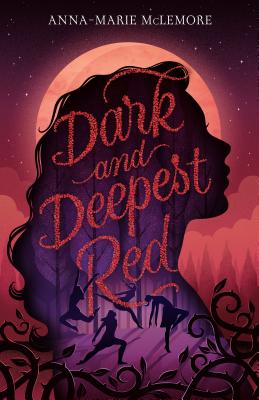
Book Review: Dark and Deepest Red by Anna-Marie McLemore


Review by Cris Rhodes

DESCRIPTION OF THE BOOK: Summer, 1518. A strange sickness sweeps through Strasbourg, France.  Women dance in the streets, some until they fall down dead. As rumors of witchcraft spread, suspicion turns toward Lavinia Blau and her family, and Lavinia may have to do the unimaginable to save herself and everyone she loves. 

Five centuries late:  A pair of red shoes seals to Rosella Oliva’s feet, making her dance uncontrollably. They draw her toward a boy who knows the dancing fever’s history better than anyone: Emil, whose family was blamed for the fever five hundred years ago. But there’s more to what happened in 1518 than even Emil knows, and discovering the truth may decide whether Rosella survives the red shoes.

MY TWO CENTS: As with any Anna-Marie McLemore book, Dark and Deepest Red is like watching a particularly colorful sunrise breach over a murky, ominous landscape. It’s illuminating, warming, but also bears with it a hint of darkness that makes the sunlight that much sweeter. Their distinctive prose, full of lush and elegant language, is immediately recognizable as is their attention to telling the stories of people history would try to forget. Dark and Deepest Red takes that task to a new level, pairing the historical narrative of Lala and Alifair in Strasbourg in 1518 with that of Rosella and Emil in a contemporary world. Their stories parallel, sharing common themes and motifs.

The Strasbourg narrative retells the dancing plague, in which roughly 400 people were struck by a shared affliction: dancing incessantly, sometimes to death. McLemore frames this historical moment as not just a time to examine socio-religious and early medicinal practices, but as a backdrop for xenophobic concerns about the Romani peoples. Lala, also called Lavinia to avoid being coded as Romani, flees her homeland to avoid persecution, but anti-Romani laws follow her. With the onset of the dancing plague also comes speculation that Lala or her aunt are the culprits. Her assumed involvement is further compounded by her relationship with the transgender Alifair. Lala is the focus character for the chapters recounting Strasbourg in 1518, making her a key character alongside Rosella and Emil.

Meanwhile, Rosella and Emil alternate chapters. Rosella’s told in the first person and Emil’s in the third. That we only get into Rosella’s mind is important, as she is afflicted with a similar plague: when she resews a pair of shoes originally made by her treasured grandparents and tries them on, she quickly learns that she cannot remove the shoes, and, to make matters worse, the shoes force Rosella to dance and, indeed, act independently of her body, often putting her in danger. The shoes also lead Rosella into Emil’s arms. Emil, who has rejected his own Romani heritage, must tap into his roots to help save Rosella.

The alternating chapters are a dance in and of themselves, leaping from Rosella to Strasbourg to Emil back to Strasbourg and resuming the sequence. This alternation, however, does possibly overemphasize the Strasbourg chapters, potentially at the risk of subordinating Rosella and Emil’s stories. When reading, I did find myself more invested in Lala and Alifair, rather than Rosella and Emil. (And, to be fair, this may just be a personal preference, but I do wonder if this is tied to the narrative structure, or my own personal interest in dance and the dancing plague…) While each story is deeply intertwined and McLemore does an artful job of drawing them together, the dual narratives may appear too divergent, at least initially. To be clear, they do come together. And they do so in the intricate, special, and supernatural ways typical of McLemore’s work.

Importantly, as well, for an audience invested in Latinx children’s literature, this text does not centralize Latinidad or problematize it. It’s incidental but nevertheless present. I find this so significant. Rosella’s ethnicity and racialized body are certainly something that inform the plot, but she is not the one who largely experiences xenophobia, Lala does. Regardless, Latinx readers will find mirrors in Lala’s experiences. That McLemore poses this shift in representation offers a wider appeal to this text. Rather than being seen as a “Latinx text,” or a “Romani text,” or a “queer text,” it’s all three. At these intersections we find a lovely, challenging, and poignant read.

TEACHING TIPS: The historical narrative of this text would lend it well to a paired text with a lesson on history. It may also be an interesting discussion tool to aid in explorations of the treatment of queer peoples in history. 

It would also pair well with discussions of Andersen’s “The Red Shoes,” as McLemore notes thus tale as a major influence on their writing of the novel. Students may read both and write about the similar themes. Students may also consider other Andersenesque stories and write their own retelling wise diverse casts. 


Anna-Marie McLemoreABOUT THE AUTHOR: Anna-Marie McLemore (they/them) is the queer, Latinx, non-binary author of THE WEIGHT OF FEATHERS, a 2016 William C. Morris YA Debut Award Finalist; 2017 Stonewall Honor Book WHEN THE MOON WAS OURS, which was longlisted for the National Book Award in Young People’s Literature; WILD BEAUTY, a Kirkus, School Library Journal, and Booklist Best Book of 2017; BLANCA & ROJA, a New York Times Book Review Editors’ Choice; DARK AND DEEPEST RED, a Winter 2020 Indie Next List title; and THE MIRROR SEASON, forthcoming in 2021. 


ABOUT THE REVIEWERCris Rhodes is an assistant professor of English at Shippensburg University of Pennsylvania. She teaches courses of writing, culturally diverse literature, and ethnic literatures. In addition to teaching, Cris’s scholarship focuses on Latinx youth and their literature or related media. She also has a particular scholarly interest in activism and the ways that young Latinxs advocate for themselves and their communities.

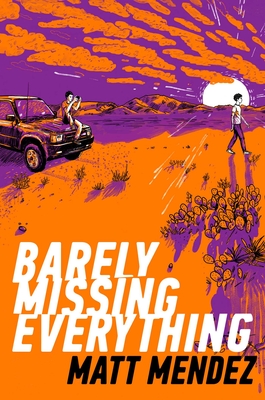
Book Review: Barely Missing Everything by Matt Mendez


Review by Katrina Ortega

DESCRIPTION OF THE BOOK (from Simon & Schuster): Juan has plans. He’s going to get out of El Paso, Texas, on a basketball scholarship and make something of himself—or at least find something better than his mom Fabi’s cruddy apartment, her string of loser boyfriends, and a dead dad. Basketball is going to be his ticket out, his ticket up. He just needs to make it happen.

His best friend JD has plans, too. He’s going to be a filmmaker one day, like Quinten Tarantino or Guillermo del Toro (NOT Steven Spielberg). He’s got a camera and he’s got passion—what else could he need?

Fabi doesn’t have a plan anymore. When you get pregnant at sixteen and have been stuck bartending to make ends meet for the past seventeen years, you realize plans don’t always pan out, and that there some things you just can’t plan for…

Like Juan’s run-in with the police, like a sprained ankle, and a tanking math grade that will likely ruin his chance at a scholarship. Like JD causing the implosion of his family. Like letters from a man named Mando on death row. Like finding out this man could be the father your mother said was dead.

Soon Juan and JD are embarking on a Thelma and Louise­–like road trip to visit Mando. Juan will finally meet his dad, JD has a perfect subject for his documentary, and Fabi is desperate to stop them. But, as we already know, there are some things you just can’t plan for…

MY TWO CENTS: This book felt so real to me for a number of different reasons. First, as a native El Pasoan, it’s hard to not immediately feel pulled to any novel which takes place there. Though likely not recognizable by the average reader, Mendez does an incredible job of capturing the city’s personality, and displays the city’s many characteristics through descriptions of the neighborhoods and characters.

I appreciated that Mendez wrote with such authenticity. He explains that the experiences in the book are similar to those that he went through as a youth in El Paso, which makes the authenticity reasonable, but it’s more than that. Mendez writes Juan’s and JD’s characters in an incredibly life-like manner. They have genuine teen personas and voices. They make realistic teen decisions: they’re emotional, impulsive, and reactionary, but the reader can also see the calculated thought processes that happen in their heads. The characters develop in nuanced and genuine ways, becoming deeper, more advanced versions of themselves as the plot advances and they confront new situations.

Like many youth who grow up in the city, Juan wants to leave as soon as possible to achieve lofty goals elsewhere; whether his goals are in any way realistic or attainable is a conversation that adults often have with teens (again, authenticity!). JD is coming from a household in the midst of tumult, and, as expected, his easygoing persona is his crutch. He tries to be the best person that he can be, even in the midst of cynicism and negativity from his family. But even though both JD and Juan struggle to keep their heads straight while their family lives become chaotic and challenging, their ability to pursue their dreams despite the chaos is so genuine and, to me, exemplifies exactly what teens everywhere struggle to do every day.

The icing on the cake of this book was Fabi’s character. It was so refreshing for a YA novel to portray an adult who was trying as best they could to help their family succeed, but who was very much struggling in the process. Fabi’s character was, to me, very unlikable initially. I assumed she was going to be the sort of parent who had checked out of their teenage child’s life and never looked back. As the book continues, though, the reader can see her hidden depths, much in the same way that we see Juan’s and JD’s multiple layers shine through as we get to know them. Mendez does a phenomenal job of creating characters that are complex, intricate, and very well-developed.

The plot of this book, particularly the ending, is a fast-paced, interesting, and very realistic portrayal of the lives and experiences of a couple of families living in an area of the country that is currently a political, social, and humanitarian hotbed.

TEACHING TIPS: The point of view: Mendez’s use of three narrators makes the storyline feel varied and interesting throughout the book. This novel offers a great opportunity to speak about how using these varied points of view make the story feel fuller and more complete, as well as helping to give further perspective about the characters themselves.

Representation: The book also offers an opportunity to speak on a number of issues involving representation. First, these characters come from low socioeconomic communities, and their experiences are contrasted a number of times with those of people in higher socioeconomic groups. Readers can see how belonging to the group that Juan, JD, and Fabi do often have to navigate around the world, how their class can affect the decisions that they make, and how they interact with people in other classes.

image20ABOUT THE AUTHOR (From Simon & Schuster): Like his characters, Matt Mendez grew up in central El Paso, Texas. He received an MFA from the University of Arizona and is the author of the short story collection Twitching Heart. He lives with his wife and two daughters in Tucson, Arizona. Barely Missing Everything is his debut young adult novel. You can visit him at MattMendez.com.


FullSizeRenderABOUT THE REVIEWER: Katrina Ortega (M.L.I.S.) is the manager of the New York Public Library’s College and Career Pathways program. Originally from El Paso, Texas, she has lived in New York City for six years. She is a strong advocate of continuing education (in all of its forms) and is very interested in learning new ways that public libraries can provide higher education to all. She is also very interested in working with non-traditional communities in the library, particularly incarcerated and homeless populations. While pursuing her own higher education, she received two Bachelors of Arts degrees (in English and in History), a Masters of Arts in English, and a Masters of Library and Information Sciences. Katrina loves reading most anything, but particularly loves literary fiction, YA novels, and any type of graphic novel or comic. In her free time, if she’s not reading, Katrina loves to walk around New York, looking for good places to eat.
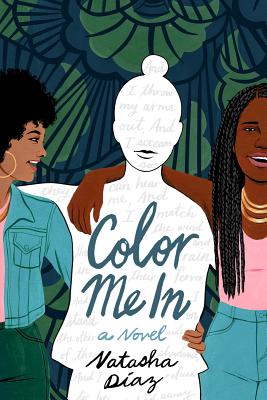
Review: Color Me In by Natasha Díaz


Review by Maria Ramos-Chertok

DESCRIPTION OF THE BOOK: Growing up in an affluent suburb of New York City, sixteen-year-old Nevaeh Levitz never thought much about her biracial roots. When her Black mom and Jewish dad split up, she relocates to her mom’s family home in Harlem and is forced to confront her identity for the first time.

Nevaeh wants to get to know her extended family, but because she inadvertently passes as white, her cousin thinks she’s too privileged, pampered, and selfish to relate to the injustices African Americans face on a daily basis. In the meantime, Nevaeh’s dad decides that she should have a belated bat mitzvah instead of a sweet sixteen, which guarantees social humiliation at her posh private school. But rather than take a stand, Nevaeh does what she’s always done when life gets complicated: she stays silent.

Only when Nevaeh stumbles upon a secret from her mom’s past, finds herself falling in love, and sees firsthand the prejudice her family faces that she begins to realize she has her own voice. And choices. Will she continue to let circumstances dictate her path? Or will she decide once for all who and where she is meant to be?

MY TWO CENTS: In Color Me In, Nevaeh Levitz shares her adolescent journey as a bi-racial girl trying to find herself in the races and cultures that make up her ancestry.  Daughter of a Jewish father and a Black mother, Nevaeh is caught between two worlds when her parents get divorced. I was very excited to read this book because I identified with many of the themes:  parents getting divorced, Jewish heritage, multicultural family, and trying to find myself in the two distinct cultures that make up my background. What I was reminded by reading this book is that despite the many levels on which I could relate to the themes, every journey is unique. This is particularly the case when dealing with the reality of what it means to have black skin in a country founded on racism and white supremacy.

The book exposes how skin color plays out not only in Nevaeh’s family, but when she’s out in her community trying to live life. It also exposes the implications of how the class divide operates to create different realities in education and access to material goods.

The book does a wonderful job of grappling with the challenges and gifts of a dual identity (and in some instances dueling identities). Nevaeh is looking to find herself in places that don’t have a blueprint for her existence. I wish this book had been available for me forty years ago.

One of my favorite parts of the book was the letter from the author at the end where she talks about what this book means to her and why she wrote it. That is where the entire book came together for me at a deeper level.

TEACHING TIPS: While the primary audience for this book is adolescents, I think anyone of any age with a bi-racial identity could relate to the themes.

Nevaeh’s grandmother is portrayed as overbearing, controlling, and unloving, so if this is a class’s first introduction or discussion of Jewish people, it might leave a negative impression, especially given that the Jewish father is a philanderer and not a very sympathetic character either. Nevaeh is able to find a foothold in Judaism despite them, but not because of their full support or acceptance. I’d encourage teachers to provide a larger context for understanding Jewish people.

The theme of bullying and racist language used against Nevaeh by her classmate and former friend Ally allows for an opportunity to discuss how words hurt and can be used as weapons. This could lead to an interesting discussion about hate speech, how the Supreme Court defines and classifies hate speech, and how the legal standard doesn’t necessarily help someone being bullied at school. Identifying strategies to respond to bullies and bystander intervention role plays could be fruitful.

There is an opportunity to discuss the role of ritual in developing and maintaining cultural identity. Students could be asked to examine the rituals in their life and how they offer (or don’t offer) them a way to deepen their understanding of who they are.

Given Nevaeh’s friendship with Stevie, I could imagine a meaningful discussion about what it means to be a good friend, how friendship makes a difference in one’s life, and what Nevaeh learned about friendship over the course of the story.

The topic of police brutality and misuse of power also stands out in two scenes where racial profiling occurs. Both of these situations help open Nevaeh’s eyes to the reality of racism and could lead to a discussion of how folks walk in the world with or without white skin privilege.


ABOUT THE AUTHOR: Natasha Díaz is a born and raised New Yorker, currently residing in Brooklyn, NY with her tall husband. She spends most of her days writing with no pants on and alternating between E.R. and Grey’s Anatomy binges. Natasha is both an author and screenwriter. Her scripts have placed as a quarterfinalist in the Austin Film Festival and a finalist for both the NALIP Diverse Women in Media Fellowship and the Sundance Episodic Story Lab. Her essays can be found in The Establishment and Huffington Post. Her first novel, Color Me In, was published by Delacorte Press/Random House August, 20 2019.


ABOUT THE REVIEWER: Maria Ramos-Chertok is a writer, workshop leader and coach who facilitates The Butterfly Series, a writing and creative arts workshop for women who want to explore what’s next in their life journey.  In December 2016, she won 1st place in the 2016 Intergenerational Story Contest for her piece, Family Recipes Should Never be Lost.  Her work has appeared in the Apogee Journal, Entropy Magazine, and A Quiet Courage.   Her piece Meet me by the River will be published in Deborah Santana’s forthcoming anthology All the Women in my Family Sing (Jan 2018) http://nothingbutthetruth.com/all-the-women-in-my-family-sing/. She is a trainer with Rockwood Leadership Institute www.rockwoodleadership.organd a member of the Bay Area chapter of Write on Mamas. For more information, visit her website at www.mariaramoschertok.com
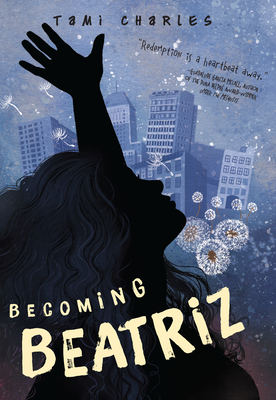
 

Spotlight on Middle Grade Authors Part 12: Tami Charles


By Cindy L. Rodriguez

This is the twelfth in an occasional series about middle grade Latinx authors. We decided to shine a spotlight on middle grade writers and their novels because, often, they are “stuck in the middle”–sandwiched between and overlooked for picture books and young adult novels. The middle grades are a crucial time in child development socially, emotionally, and academically. The books that speak to these young readers tend to have lots of heart and great voices that capture all that is awkward and brilliant about that time.

Today, we highlight Tami Charles.

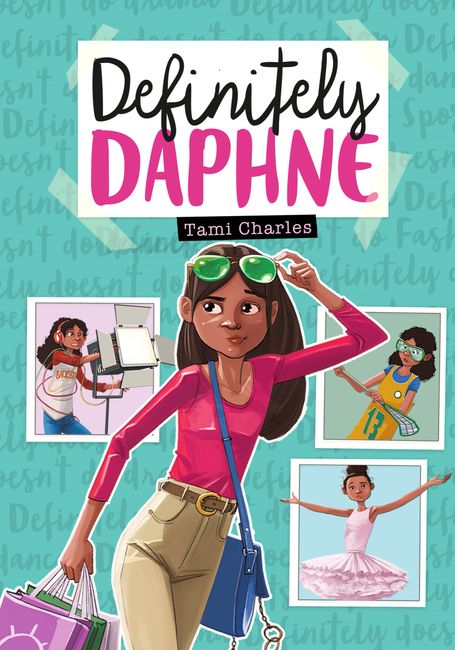
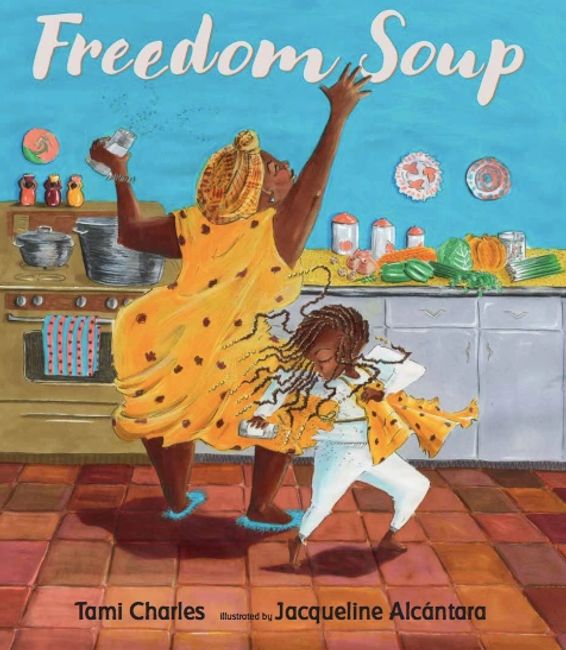
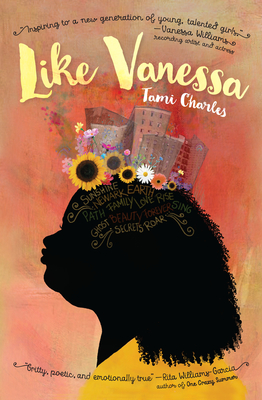
Former teacher. Wannabe chef. Tami Charles writes books for children and young adults. Her middle grade novel, Like Vanessa, earned Top 10 spots on the Indies Introduce and Spring Kids’ Next lists, three starred reviews, and a Junior Library Guild selection. Her recent titles include a humorous middle grade, Definitely Daphne, picture book, Freedom Soup, and YA novel, Becoming BeatrizWhen Tami isn’t writing, she can be found presenting at schools both stateside and abroad. (Or sneaking in a nap…because sleep is LIFE!)

Becoming Beatriz released September 17, 2019.


Here is the publisher’s description:

Beatriz dreams of a life spent dancing–until tragedy on the day of her quinceañera changes everything.

Up until her fifteenth birthday, the most important thing in the world to Beatriz Mendez was her dream of becoming a professional dancer and getting herself and her family far from the gang life that defined their days–that and meeting her dance idol Debbie Allen on the set of her favorite TV show, Fame. But after the latest battle in a constant turf war leaves her brother, Junito, dead and her mother grieving, Beatriz has a new set of priorities. How is she supposed to feel the rhythm when her brother’s gang needs running, when her mami can’t brush her own teeth, and when the last thing she can remember of her old self is dancing with her brother, followed by running and gunshots? When the class brainiac reminds Beatriz of her love of the dance floor, her banished dreams sneak back in. Now the only question is: will the gang let her go?

Set in New Jersey in 1984, Beatriz’s story is a timeless one of a teenager’s navigation of romance, her brother’s choices, and her own family’s difficult past. A companion novel to the much-lauded Like Vanessa.

Tami Charles

PictureQ. Who or what inspired you to become a writer?
First and foremost, my mother played a huge role in my love of reading. She was a teacher (and eventual principal) at my elementary school, so I didn’t really have a choice, ha! She introduced me to many of my favorite authors: Toni Morrison, Maya Angelou, Lois Lowry, Beverly Cleary, etc…When I became a teacher, I experienced the joy of reading more diverse books that I wasn’t exposed to as much while growing up. This really reignited my passion to become an author.

Q. Why did you decide to write a middle grade novel?

I clearly remember this period of my life when I was trying to figure out who I am and who I wanted to be. It only seemed right to get those feelings on the page. My debut, Like Vanessa, was born out of similar personal experiences I went through as a 13-year-old.

Q. What are some of your favorite middle grade novels?

For sure, the One Crazy Summer series by Rita Williams-Garcia. I also love Crossover by Kwame Alexander and Because of Winn Dixie by Kate DiCamillo.

Q. If you could give your middle-grade self some advice, what would it be?

Put your blinders on! Don’t worry about what other people are doing, how smart they are, how athletic they are, etc…Just follow your own path.

Q. Please finish this sentence: Middle grade novels are important because…..

they provide real connections for readers that will stay with them for years to come.

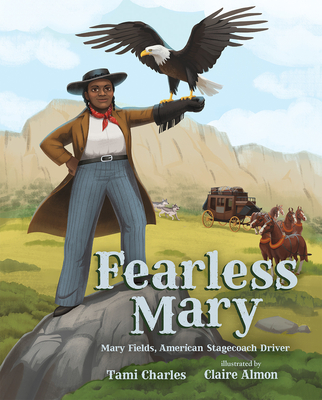
Books by Tami Charles:

    image2  image5


photo by Saryna A. JonesCindy L. Rodriguez was a newspaper reporter for The Hartford Courant and researcher at The Boston Globe before becoming a public school teacher. She is now a reading specialist at a Connecticut middle school. Cindy is a U.S.-born Latina of Puerto Rican and Brazilian descent. She has degrees from UConn and CCSU. Her debut contemporary YA novel, When Reason Breaks (Bloomsbury 2015). She also has an essay in Life Inside My Mind (Simon Pulse 2018). She can be found on FacebookTwitter, and Goodreads.