The Road to Publishing: Going on Submission

By Cindy L. Rodriguez

At this point, you have written a novel with the help of critique groups and beta readers and landed your agent of choice thanks to a killer query letter. Now what?

Before I answer that, I want to emphasize that each writer’s road to publication is different. The process so far–write book, write query letter, get an agent–can play out in myriad ways. Some writers craft a book quickly and wait a long time to connect with the right agent. Some complete several manuscripts before moving ahead in the process. Others choose not to have an agent at all. Please remember there is no one way or right way to get your work published. In general, however, if you plan to head down the traditional publishing path, then you will likely follow the basics outlined in our series so far: write book, craft the query letter, land an agent.

Now what? Your agent may ask you to further revise your novel before it’s ready to submit to editors. When the manuscript is ready, your agent will send it to certain editors based on her experience and knowledge of the editors and publishing houses.

And what do you do? You wait and worry and dream and go to your day job and clean the house until it’s sparkling and check your email a thousand times a day at least and then you try to calm down by reminding yourself it’s out of your hands and after a few deep breaths and zen-like moments, you start a new project and whenever you have a moment, you refresh your email again and again.

Or, maybe that was just me. Like I said, everyone is different. In general, though, many writers agree that the process includes angst-filled waiting because your manuscript is now in the hands of editors, the people who may fall in love with your novel, take it to internal meetings, and offer you a contract.

At this point, the process can take weeks, months, or years. Your friend could sell her novel at auction to a major publishing house with a six-figure advance. You may be rejected dozens of times before receiving a contract. You will both end up on bookshelves, no matter how you got there. Don’t compare yourself to other writers. You will, but you shouldn’t.

Back to the process…editors will read your novel and say yes, no, or maybe but we want you to revise and resubmit. If the novel doesn’t sell, you and your agent may discuss the patterns in the rejections. If certain aspects are routinely criticized, then your agent may ask you to revise further before you go out on another round of submissions. This is exactly what happened to me.

I began working with Laura Langlie in August 2010. I revised certain chapters based on her notes, and we went on submission a few months later. Some editors responded within weeks, while others took months. This is normal. After a series of rejections, an editor expressed interest but wanted some changes. I revised and resubmitted the first eight chapters. After a few months of waiting, we learned she had left the business completely. Sigh.

I revised the rest of the novel in the vein of chapters 1-8. Once done, Laura submitted it to another batch of editors. More rejections–some very flattering, some not so much–and more submissions. In June 2012, we received an enthusiastic response from Mary Kate Castellani from Bloomsbury/Walker. She asked me to revise and resubmit the first nine chapters. After reading those, she gave me the thumbs-up to keep going. I completed the revision, and Mary Kate shared the novel with her team. We had an offer in March 2013.

I have since done another major revision and am currently working on what should be the last round of writing before it moves along in the process. Right now, the novel is scheduled to be published in Winter 2015 by Bloomsbury.

This was my first novel ever. I expected to make lots of revisions, but the thing is, I agreed with the suggestions. I didn’t make changes along the way only because I wanted to get published. I revised each time because I knew my agent’s or editor’s suggestions would improve the story. This back-and-forth between the writer, agent, and editor could make or break the submission process. As a writer, I often asked myself:

What is the heart of the story? Can I cut this or add that and maintain the heart of the narrative? The answer was yes.

And what is the goal? The goal is to share this story, to take it from notes on napkins to hardcover.

Do I trust my agent and editor? Are they respectful, professional, and enthusiastic? The answer was always yes.

So I trusted them, revised, and I made it through a long submission process that required a lot of work. In the end, I knew without a doubt that my much-improved novel landed in the right place.

Best of luck to all of you on submission! Please share your experiences with us in the comments.
12 Days of Christmas Book Giveaway!!

¡Feliz Navidad! ¡Feliz Natal! Merry Christmas!

We are celebrating the holiday with a 12-book giveaway. Here’s how it works: enter by clicking on the “a Rafflecopter giveaway” link below the book images. From Christmas Day through Three Kings Day (January 6), one lucky winner will win one of these awesome books.

12 days = 12 books = 12 winners.

One of them could be you!

Remember, when you enter, you are putting your name into a pool for any of these books, not one in particular. To increase your chances, you can Tweet about the giveaway, follow us on Twitter, like our Facebook page, leave a comment, or share news of our giveaway on your blog or website. Good luck and thanks for entering and spreading the word about Latin@s in Kid Lit! Winners will be notified each day and arrangements will be made for shipping. We will ship only within the US and Canada.

After today, you will also find this information on a page in the menu area so that you can easily find it and enter over the next three weeks!

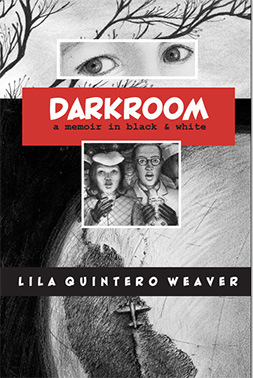
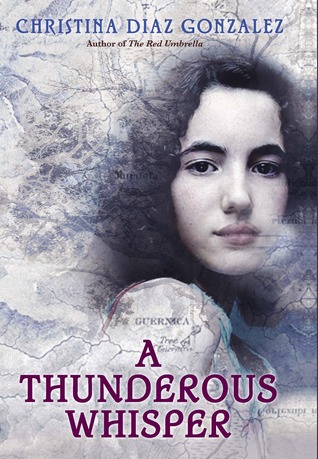
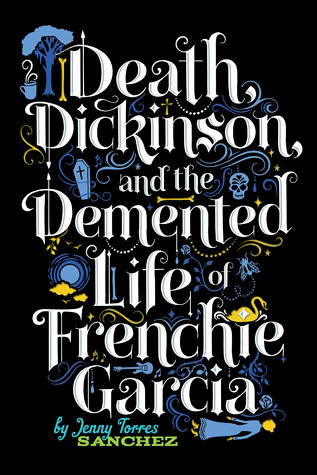
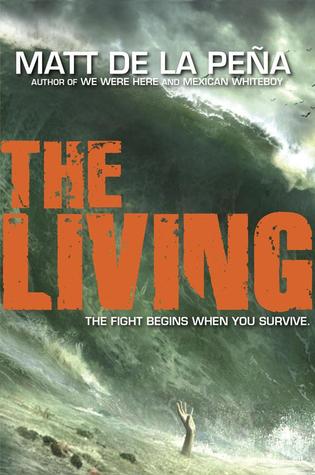
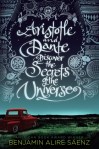
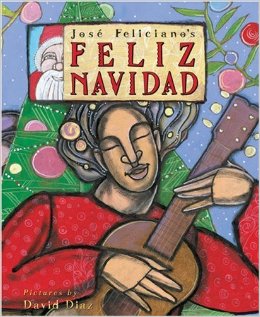
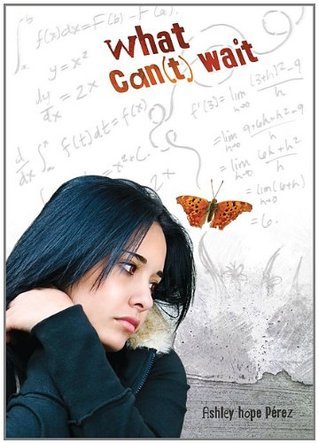
What Can't Wait    The Knife and the Butterfly    Torn    Billy the Kid     The Savage Blue      Darkroom: A Memoir in Black and White     Thunderous whisper     Frenchie     The Living     Aristotle    Feliz    Senor Pancho

a Rafflecopter giveaway

The Road to Publishing


Where do you find yourself along the road to publishing?

Check all that apply:

__Shopping for a vehicle

__Mapping a route

__Calling for roadside service

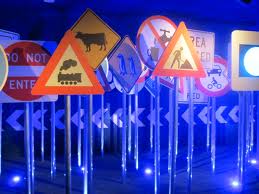
road signs

Image from Creative Commons

__Arriving at your destination

Let’s say this is your first publishing quest. How nice if you could enjoy the ride and worry less about breakdowns and wrong turns. We know how you feel. Over the coming weeks, our posts will provide tips for the rewarding, but arduous journey toward seeing your book in print.

To get things rolling, please enjoy a few insights from our experiences:

What made you realize THIS was the book you wanted to share with the world?

Zoraida: I had been working on some contemporary stories about a young Ecuadorian girl (we were very similar), but it just wasn’t going anywhere. Then one day after wanting to read a mermaid fantasy with action and cute boys, I decided to start writing the story myself. It is true what “they” say: you have to write the story you want to read.

Stephanie: I’ll apply this question to my upcoming series, Betting Blind and its sequel, Out of Aces, which will be pubbing in 2015. Both books were inspired by my youth in Las Vegas. I lived on my own at sixteen in a colorful, funny, sleazy, interesting city. It gave me a lot to write about.

Cindy: I am a visual person, so I “saw” the opening scene in my head long before I knew how the entire story would unfold. I was in the middle of a master’s program and had no real plans to be a novelist although writing a book was always in the back of my mind. I tried mentally to set aside this “daydream,” but it wouldn’t leave me alone. One night, although dead tired, I was compelled to write out the scene. After that, I had to keep going. The basics of the story–teens, teaching, depression, Emily Dickinson–are all familiar to me.

What’s on your recommended-reading list for all things publishing?

Ashley: Many things helped me on the journey to professionalization, but none was more crucial than agent and editor Noah Lukeman’s excellent little e-book, How to Write a Great Query Letter. Lukeman’s advice cuts straight to the heart, and once I revised my query letter (about 7 times!) according to his advice, I started getting requests for partial and complete manuscripts.

Zoraida: When I was in high school, Bird by Bird, by Anne Lamott was my writing bible. I haven’t read it in years, but I always think about it when I’m working on a novel. I recommend it to anyone who asks.

Stephanie: For more soul-feeding, encouraging material, especially for those who also teach writing, I recommend Wallace Stegner’s On Teaching and Writing Fiction. He writes with candor and clarity about the rejections, the wait time, and all the other thorns in the path to publication, but ultimately his message is really encouraging.

Lila: Mary Kole’s Writing Irresistible KidLit is a solid resource. The bulk is about craft, but you’ll also find advice on querying and approaching agents. I also tune into reliable blogs and newsletters. You can’t go wrong with the Society of Children’s Book Writers and Illustrators.  

Cindy: I searched online for most of my information. The places I found most helpful were: SCBWI, YALitChat, YA Highway, and Query Tracker. SCBWI and YALitChat introduced me to critique groups, regional and national conferences, and other people like me chasing the dream. YA Highway is a popular site with loads of information about the process provided by writers. Query Tracker is a free–FREE!–online database of agents and editors. This is what I used to find agents to query and to keep track of my process– when a query was sent, what was the response, etc. It was a great resource and led me to my wonderful agent, Laura Langlie.

On our Facebook page, Samantha Villarreal asked: “Is it best to have an agent? Are the major publishing companies actively searching for Latino children’s lit or is it better to try smaller companies that focus on Latino lit?”

Ashley: I would say yes to the agent question. Whether you aspire to ultimately publish with a larger publisher or with a smaller press like Cinco Puntos or Arte Público, an agent can help you manage the decision-making and handle the business side of things. Later, we’ll be sharing more on how we connected with our agents and publishers.

Lila: I can vouch for the fact that it’s possible to break in without an agent.  My book was published through an academic press. Within six months of its release, the exposure that the book brought me led to contact with an agent.

Cindy: To seek an agent or not, to aim for big or small publishers, or to self-publish are all personal decisions based on your strengths and needs. From the start, I knew I wanted an agent and would pursue traditional publishing. I had no experience or connections in the publishing world, and I had little confidence in my abilities to produce and promote my own novel as a self-publisher. For these reasons, I decided I would do the writing and rely on an experienced agent and editor to guide me through the rest of the process.

Have agents and editors preserved your artistic vision?

Zoraida: My agent, Adrienne Rosado, is very encouraging. Even though I’m sure she gets an ulcer every time I say, “I have an idea…” My editor at Sourcebooks Fire, Aubrey Poole, is great at looking at my fantasy world and asking the questions I don’t ask. And she pushes my hero in the right direction. We’re working on the last book in the trilogy and I’m excited for the final product.

Stephanie: My editor has been completely supportive of my artistic vision. She’s never asked me to make changes I disagreed with, and she has always left the final decision in my court. We’ve worked on three books–soon to be four–together, and I love the smooth partnership we’ve developed.

Cindy: As a first time writer, I can say the search for an agent and editor is like literary e-harmony. You put yourself out there and wait until you find the perfect match for you and your project. Both my agent and editor loved my story, which is why they both said, “yes.” That’s what you want and need–an agent and editor who fully support your choice of subject matter and your writing style. They need to love it because they will be wedded to it–and you–for a long time during the publishing process.

Suppose your efforts to capture an agent’s interest haven’t gone anywhere: what then?

Cindy: Analyze what may not be “right.” Is the writing as good as it can be? Is the query the best you could do? Are you aware of what the agents and editors are looking for when you are querying? Then I would say go to a conference, have a one-on-one, join a critique group…do something you’re not already doing.

Image from Creative Commons

Image from Creative Commons

So now we’re off on a roll. Join us in the coming weeks as we bring you more advice from agents, editors, and other authors traveling the road to publishing. AND, we would love to hear from you! What has your journey taught you?

Author Meg Medina Talks About Writing Villains


By Lila Quintero Weaver

Meg Medina knows how to connect. When she writes, her words crackle with strong storytelling and believable characters. When she stands at a microphone, her Cuban-American-inflected vitality will reduce you to tears—of laughter. You can imagine how much her young readers love her. So do we! And we’re delighted to present an interview with Meg about her latest book.

First, here’s an introduction to her earlier work. She’s the author of a picture book, Tía Isa Wants a Car, winner of the 2012 Ezra Jack Keats New Writers Award; a middle-grade novel, Milagros: Girl from Away; and a previous novel for young adults, The Girl Who Could Silence the Wind.

Tia Isa Wants a Car      Milagros: Girl from Away      The Girl Who Could Silence the Wind

Meg’s most recent contribution to YA bookshelves is the Kirkus starred Yaqui Delgado Wants to Kick Your Ass (Candlewick, 2013), a gripping story set in Queens, NY, where sophomore Piddy Sanchez lands after a crosstown move. Readers come to know Piddy at her best and worst, as she grapples with a new high school environment. Let’s just say that everything gets dicier when she enters a bully’s lair.

What can we learn from Meg’s gift for storytelling? For one thing, she writes with a keen eye toward characterization. Her eponymous villain, Yaqui Delgado, is a craft lesson on legs. Happily, Meg has agreed to unpack a bit of her villain-making magic for us.

Latin@s in Kid Lit: Meg, thank you for talking to us about craft. Your novel Yaqui Delgado Wants to Kick Your Ass puts the protagonist in a terrible bind. Before we discuss Yaqui, can you give us a better sense of who Piddy is and how she lands in this fix?

Meg: Unfortunately, Piddy is at a new school. Essentially, she’s the little gazelle that got separated from the herd. Never good. Up until that point, she’s an ordinary girl. She’s bright, engaged in school, but like lots of us at 16, she’s struggling with her mother and is starting to question the choices her parents have made. The fact that she gets targeted is purely random. A horrible fact of bullying is that it has very little to do with the victim. Kids can get bullied for virtually any reason…for being smart or for being slow; for being unattractive or for being too attractive; for being poor or for having too much money. The reason for the attack usually resides in what makes the bully nervous or insecure. Kids can easily forget that. It’s easy to internalize the message that they are in some way a loser.

Latin@s in Kid Lit: You give readers a wicked combination of physical and cyber-bullying. How did you become interested in girl bullies? Can you share tips about using hot-button issues in fiction?

Meg: To be honest, I don’t think about hot button issues to write about. They change too quickly! In this case, I had been invited to write a short story for an anthology about Latinas as a turning point in their lives. As I thought about turning points in my own life, I decided to base the story on a bullying incident I lived through long ago, mostly because it made such a lasting negative impact on how I saw myself and how I moved through the world. The anthology project died, but my editor at Candlewick asked me to turn the story into a novel. I layered in new characters and dimensions that hadn’t been part of the story, and I added in the details that are part of bullying today, such as YouTube and social media.

Yaqui Delgado Wants to Kick Your Ass

Latin@s in Kid Lit: Yaqui fits a certain type of inner-city bad girl that many of us know only from the movies, but by the end of the story, she’s achieved a dimensional status that satisfies and amazes. What was your process like for keeping Yaqui from collapsing into stereotype?

Meg: I really just concentrated on writing the truth about my own bully long ago. My feelings were a strange mix of hatred, dread, and admiration for all her power. The fact is, no one is all good or bad, and the gloriously bad character is often charismatic or fearless in a way that’s really interesting. Also, no one behaves so violently or poorly without a reason. We don’t have to excuse a character’s awful behavior, but it helps to understand it. I dabbed all of those things on Yaqui as a character to make her compelling, and to make her a worthy foe.

Latin@s in Kid Lit: Through much of the story, Yaqui remains aloof and doesn’t enter Piddy’s space until the right moment. Your portrayal of her evokes a wolf silhouetted against the moon. Chilling. Please share more about enhancing dread through this technique.

Meg: Well, dread is actually the perfect word. I worked on dread inside Piddy as character and inside the reader. For the reader, watching Yaqui circle closer is like watching the fin cut through the surface of the water behind a swimmer at the beach. Oh no! Something horrible is coming, but you can’t stop it. In this case, it’s not an ocean, but a school and neighborhood, places where we think we ought to be safe. In terms of building dread inside of Piddy, I tried to recreate the feelings we might have when we’re in a room or social situation with someone we really dislike. Think of how that goes: You avoid eye contact. You try your best to think of something else, to look calm, to avoid the spot where that person is standing. But all you can think of is that person and the awkwardness of being nearby. Their presence becomes oppressive.

Latin@s in Kid Lit: There’s a powerful scene where Piddy begins to adopt Yaqui’s look. She pulls her hair back into a severe bun and plucks her brows to a thin line. She puts on dark lipstick and steps back to admire her handiwork as “expressionless and strangely vicious.” It’s a horrifying turn of events. Can you talk about pushing your protagonist this close to the edge of villainy?

Meg: Pain can lead us to some terrible places. In Piddy’s case, she tries on the Yaqui costume, so to speak, as a way to explore and protect herself. If you’re scary and vicious, who will bother you? I took her to that edge because as a writer you always make sure the stakes are very high for your character. I was after a problem that threatened her very sense of who she was, a problem so tangled that an easy answer was hard for her – and for the reader – to solve.

Latin@s in Kid Lit: Piddy’s best friend, Mitzi, has moved, too. She’s blossoming in the paradise of the suburbs and is mostly unavailable to Piddy. She reminds us of what Piddy’s life used to be. What else does sweet Mitzi contribute? What do apprentice writers need to know about using secondary characters for the benefit of the story’s arc?

Meg: Yes, Mitzi definitely shows us the “old” Piddy. She wasn’t in my first draft except in that sentence that refers to Piddy’s friend moving away. But as I worked on the manuscript, I built up scenes to show the old Piddy and also to keep a path open for the way back. I also liked how she worked as yet another version of a normal Latina girl: brainy, scientific, sports-impaired, middle class.

Photo credit: Petite Shards Productions

Photo credit: Petite Shards Productions

Latin@s in Kid Lit: Meg, mil gracias! We celebrate your achievements in Latin@ kid lit and look forward to your next book!

To learn more about Meg’s work, the latest on her author appearances and much more of interest to readers and writers, please visit and follow her blog.

Las Calaveras Todas Blancas Son* Or What is the Day of the Dead?


By Zoraida Córdova

The Day of the Dead is a Mexican holiday that takes place on November 1st (All Soul’s Day) and November 2nd (All Saint’s Day), and celebrates, even plays with, the dead. Its roots are a mixture of Orthodox Catholicism and pre-Hispanic traditions of prayers and material offerings. Catholics all over the world celebrate these two days, but Mexico takes it to another level. Instead of just celebrating the saints and martyrs, entire altars are built for deceased family members. There’s food and drinks and sugar skulls and singing. It’s like a big family reunion, only your grandmother’s ghost is invited as well. It is colorful and loud; the opposite of what you think of when visiting cemeteries.**

So, what does the Day of the Dead have to do with you, Zoraida?

Now, I’m a third-party observer here. Although, in Ecuador, they do make a purple drink called “colada morada” (made of some sort of blackberry and purple maize) specifically for this time of year. My Ecuadorian family is Catholic, but I’ve always considered myself a practicing agnostic (it’s not a real thing, but sure). I suck at memorizing prayers, and yet every time I pass a cemetery I cross myself. I don’t associate with any religion, and yet, I’ve always been drawn to this particular celebration.

It could be that I’m not drawn to the religious aspects of this celebration, but to the dead themselves. It’s a little macabre, I know, but hang with me here. Ever since I was little I loved ghost stories. I thought La Llorona (the weeping woman/Latina banshee figure) was real the same way most kids think the Easter Bunny is real. I sang to old salsa songs about skeletons (see blog post title). I am fascinated by death, and you know what? So are a lot of people who are not Catholic or Mexican.

What do you mean?

Well, go to your nearest book store and browse. How many bestsellers do you see featuring vampires and ghosts and zombies? I know, it’s not the same as a religious celebration honoring your dead loved ones. But I do believe that we are drawn to death and the undead, and all of the mystery it holds.

Then, think about other religions that have ceremonies/feasts to celebrate their dead. In Chinese culture, the seventh month is called “ghost month,” when the dead come to walk among the living*** In Korea, Chuseok is a holiday when people return to their ancestral hometowns.**** It’s like a combination of Thanksgiving and the Day of the Dead. And these are the only ones I’ve heard about. I can only imagine the others.

And what does this have to do with kidlit?

Loads! Look at these titles.

9607766    13418252    865499

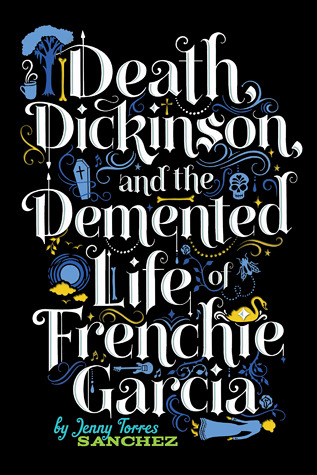
The Tequila Worm     Death, Dickinson, and the Demented Life of Frenchie Garcia     The House of Hades (The Heroes of Olympus, #4)

From twin sisters finding a way to contact each other post mortem, to a skeleton boy who makes friends with the living, to a young girl dealing with her grandfather’s death, to demigods conquering the physical manifestations of death, the Day of the Dead has made its way into our literature.

No matter what we believe in or where we come from, at the end of the day, we can all relate to loss. It’s sad and powerful and it connects us at a very basic level.

Do you celebrate the Day of the Dead? And if you don’t, do you have a similar tradition? Share it with us in the comments!

* http://www.youtube.com/watch?v=pezwkyaW51A Las Calaberas by Lisandro Meza

** The Skeleton at the Feast: The Day of the Dead in Mexico by Elizabeth Carmichael and Chloe Sayer

*** I first read this in House of Hades by Rick Riordan (it’s true).

**** http://www.allkpop.com/article/2013/09/a-detailed-explanation-of-chuseok-1#axzz2igWmLmCK

Future of Latino/a Lit Is Being Written Now

For our first set of posts, each of us will respond to the question: “Why Latin@ Kid Lit?” to address why we created a site dedicated to celebrating books by, for, or about Latin@s.

By Zoraida Córdova

Why Latin@ Kid Lit?

Well, why not?

Growing up in Hollis, Queens, I never thought of myself as a minority. Personally, I think that word is crap. Are we minor things? Less-than things? Not at all, but this is what they (the proverbial they) call it.

I had my friends, some fourth-generation Irish, some Filipino immigrants, some Guyanese, Jamaican, Mexican, Mexican-Haitian, and the list goes on and on. But this is NYC and diversity is not foreign to us.

This same diversity was not reflected in the television I watched or books I read. My favorite shows were Charmed, Buffy the Vampire Slayer, and Dawson’s Creek. My favorite books were by Sarah Dessen. I was a freshman in high school and I had encountered zero characters who look like me, as I recently noted over at Diversity in YA.

The House on Mango StreetI’d like to think that Latino Lit has come in waves. First, THE HOUSE ON MANGO STREET by Sandra Cisneros and HOW THE GARCIA GIRLS LOST THEIR ACCENTS by Julia Alvarez, and while those stories are still relevant, they might not pertain to the kids who have already assimilated. I moved to New York when I was six; this Fall I will be celebrating 20 years here. While I most definitely know where I come from, my identity very much belongs to New York.

I want to see myself in the books I read.

Junot Diaz says, “Every single immigrant we have, undocumented or documented, is a future American. That’s just the truth of it.” And he’s 100% right. The future of Latin@ Lit is being written right now. I believe that not every book with a Hispanic or Latin@ character has to be an “issue” book. Not all of us have issues with our heritage. We just are.

Some good examples of this are GOING BOVINE by Libbra Bray,  SEAN GRISWOLD’S HEAD by Lindsay Leavitt,  and YAQUI DELGADO WANTS TO KICK YOUR ASS by Meg Medina. Each of these novels has Latin@ characters, but the story is not centered on being Latin@.

Going BovineSean Griswold's HeadYaqui Delgado Wants to Kick Your Ass

In GOING BOVINE, Paul Ignacio “Gonzo” Gonzales is a video-game-playing hypochondriac who has an overbearing Mexican mother. He’s dealing with lots of issues, but being Latino doesn’t seem to be one of them. The MC in SEAN GRISWOLD’S HEAD, Payton Gritas, is half-Colombian. Hers is a story of family and first love. Along the way, her ethnicity is mentioned, but it’s not the center of the narrative. In Medina’s novel, the MC is a Cuban-American–the new girl in school who is bullied by another Latina. Of course, the story includes plenty of background and action that touches upon Latin@ culture, but the central issue is not about racial or ethnic discovery.

We need stories that are as diverse as the Latin@ community, stories about Latin@s like me who are as American as they are Latin@. This is one of the things I want to explore in this blog with wonderful writers and readers like yourself.

Happy reading,

Zoraida

(Zor-eye-duh)