A Note For Authors on Jumping Genres

By Stephanie Guerra

Writing in a new genre after successfully publishing a book (or books) can be intimidating; why change what works? Some agents and publishers actively discourage genre-hopping, while others are interested in quality rather than consistency or brand-building.
TORNI debuted in 2012 as a YA author of realistic fiction (Torn) and followed up in 2013 with a 90-degree turn to humorous, heavily-illustrated middle grade: Billy the Kid is Not Crazy. I have two more YA coming out next year and I’m finishing a picture book.

If you’re a writer drawn to similar genre shifts, I encourage you to follow your gut. The process can be both freeing and useful in developing range. You may have to rebuild your audience from scratch, which is intimidating. But you’ll end up with a broader audience, a reward in itself.
Billy the KidYou’ll also need to adjust your voice and mentality for your new audience. Transitioning from YA to MG, I had to get in touch with my booger-fart-joke side (it wasn’t that hard) and cut all edge out of my writing (a touch harder). Again, the work builds its own reward: increased range.

But I want to focus a spotlight on the positives, which I believe are the real essence of shifting genres. It’s a form of creative stretching, a way to access a different age or voice inside you, and a way to reengage with the “play” of writing. A YA author may discover a new sense of fun in MG or picture books. An MG author may find freedom in exploring the romance or more mature content possible in YA. A picture book author used to practicing economy with words may relish stretching out into a luxurious novel.

Consider one of the most beloved Latin@ authors of our times, Gary Soto. He’s produced excellent picture books, poetry, middle grade and YA novels, short stories, and adult works. Pam Muñoz Ryan, another Latin@ star, has ranged from picture books to award-winning YA. Jack Gantos, my personal hero, has created picture books, delightful middle-grade (Joey Pigza!), adult novels, and urban memoir.

Some other marvelous children’s authors who’ve changed genres: Madeleine L’Engle, Mark Twain, Roald Dahl, and Laurie Halse Anderson. Literary superheroes like E. B. White jumped from Charlotte’s Web to One Man’s Meat. Roald Dahl dabbled in memoir, adult short stories, suspense, erotica, and of course, children’s fiction. And C. S. Lewis wrote everything short of picture books. What better models could we have?

I like to view jumping genres, too, as an act of defiance to The Market. Conventional wisdom has it that it’s savvy to develop a brand and stick with it, to build an audience and churn out book-clones at the rate of one per year. Many authors do this very successfully, and there’s nothing wrong with it, if it’s fulfilling to the artist in question. But I’m unsettled by branding as a lens for the arts and as a concept imposed on authors by publishers. Branding seems to compete with the essence of what art is or should be. So I advocate stretching the brand. Or better yet, losing the term altogether.

I’d like to share a short (30 second) video of a really articulate 11-year-old reviewing my MG. Thank you, Garrison. Your review gives me confidence that jumping genres was the right choice.
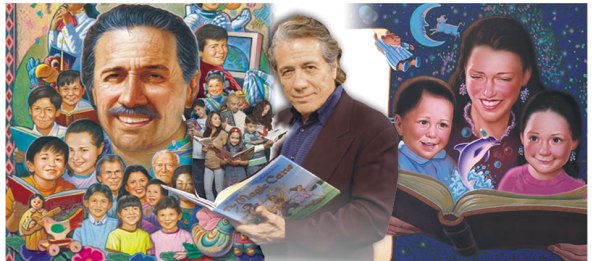
The 2014 International Latino Book Awards Finalists!

Below are the 2014 finalists for the 16th Annual International Latino Book Awards in the children’s, youth, and young adult categories. If you click on the images, you will be taken to Goodreads, Barnes and Noble, or Amazon for more information. The Awards are produced by Latino Literacy Now, an organization co-founded by Edward James Olmos and Kirk Whisler, and co-presented by Las Comadres para las Americas and Reforma, the National Association to Promote Library and Information Services to Latinos. The Awards themselves will be June 28 in Las Vegas as part of the ALA Conference. For the complete list, which includes adult fiction and nonfiction, check out the Latina Book Club site. Congratulations and good luck to all of the finalists!

Best Latino Focused Children’s Picture Book: English

18296043  15791044

Best Latino Focused Children’s Book: Spanish or Bilingual

17265250  19483940  An Honest Boy Un hombre sincero

Best Children’s Fiction Book: English

18492598  15842628  The Box of Holes  

Best Children’s Fiction Picture Book: Bilingual

17267265  17940785  15938471  16000381

Best Children’s Fiction Picture Book: Spanish

20948920  17802285  16457293  18406769  20454675

Best Children’s Nonfiction Picture Book

13610203  An Honest Boy Un hombre sincero  The Dog That Became a Lion

Best Educational Children’s Picture Book: English

17465058  18296043  15791044

Best Educational Children’s Picture Book: Spanish or Bilingual

  19483940  Hola! Gracias! Adios!  18126680  Embedded image permalink

Most inspirational Children’s Picture Book: English

18371476

Most inspirational Children’s Picture Book: Spanish or Bilingual

18198024  9542372  Embedded image permalink  Pink Firetrucks  18406693

Best Youth Latino Focused Chapter Book

10436183  16670129  Front Cover

Best Youth Chapter Fiction Book: English

16131067  17166339  16059385

Best Youth Chapter Fiction Book: Spanish or Bilingual

10162585    

Best Youth Chapter Nonfiction Book

Most inspirational Chapter Book

Front Cover  The Adventures of Chubby Cheeks: The Pro Quest

Best Young Adult Latino Focused Book: English

Insurgency: 1968 Aztec Walkout by Victor Gonzalez

17274543  15769992  Stars of the Savanna

Best Young Adult Latino Focused Book: Spanish or Bilingual

Los Pájaros No Tienen Fronteras by Edna Iturralde

18208087

Best Young Adult Fiction Book: English

17184137  12154323  15814459  15798660  A Girl Named Nina

Best Young Adult Fiction Book: Spanish or Bilingual

La Guarida de las Lechuzas by Antonio Ramos Revillas

Best Young Adult Nonfiction Book


Best Educational Young Adult Book

18462053  Stars of the Savanna  

Most Inspirational Young Adult Book

15769992  12352685  Stars of the Savanna

Best Book Written by a Youth: English

15020431  15874623

Best Book Written by a Youth: Spanish or Bilingual

  Serendipity, Poems About Love in High School

Best Children’s Picture Book Translation: Spanish to English

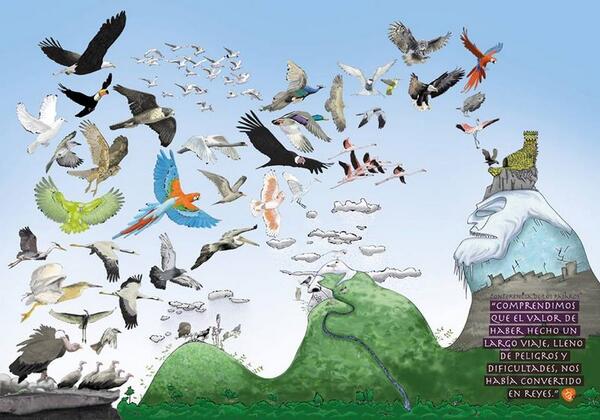
Avian Kingdom Feathered Tales: Birds Of A Feather  Avian Kingdom Feathered Tales: Pelican Sky  Avian Kingdom Feathered Tales: Two Hoots and a Holler  17465058

Best Children’s Picture Book Translation: English to Spanish

El Día Maravilloso de Hacer Tamales que Tuvo Sofia by Albert Monreal Quihuis; translator: Veronica Lamanes

Best Chapter/Young Adult Book Translation: English to Spanish

El Gusano de Tequila

Best First Book: Children’s and Youth

Stars of the Savanna  An Honest Boy Un hombre sincero  

Dear Hollywood: Please Consider Latinas for the “Matched” Movie

By Cindy L. Rodriguez

One of my seventh-grade Latina students, who never reads, had her nose buried in Ally Condie’s Matched the other day. She’s reading both The Giver by Lois Lowry and Matched as a companion novel for her Language Arts class. She stopped reading and looked at me as if something just occurred to her.

Student: Is Cassia Latina? Her name is Cassia Maria Reyes.

Me: I don’t know, but I’ll try to find out.

I searched online and thoughts ranged from definitely to definitely not. Some people seemed to think she had a Latin last name but was “probably white.” Hmmm. A person can be white and Latina, just as a person can be black and Latina. So, my search didn’t really answer my question.

I asked on Twitter and someone forwarded the question to Ally Condie (!) And she responded (!) She wrote: “She’s whatever you want/need her to be. But yes, I deliberately left that door open with middle/last names.”

Hmmm. Intriguing.

Condie did what I often do with my students when they ask me a question about what we’re reading, and they expect me to give them “the right answer.” Instead, I pull the ole switcheroo, as many teachers and therapists do, and ask them, “What do you think?” And then we discuss their thoughts and whether the text supports their ideas. Readers will never know an author’s every intention; the work is “out there,” open to interpretation. Well played, Ally Condie (a former teacher).

Since I couldn’t provide my student with a definite answer, here’s what I said:

Me: I don’t know. What do you think?

Student: I think she’s Latina.

Me: Okay, then. Keep reading and see if it comes up. Sometimes race and culture are important in a book, but sometimes those issues aren’t mentioned much.

I wish I could say more, but I am not an expert on minority representations in sci-fi and fantasy. I know from reading other blogs that this is a big issue, but I cannot speak to it with authority. Contact us if you can and would like to write a guest post. (Seriously!)

Then she asked:

Student: Is there a movie for this?

Me: There will be! And there’s going to be a movie for The Giver, too. How cool, you’ll have read both books before seeing the films!

She didn’t really share my enthusiasm about books before movies, but anywho….It got me thinking about the Matched movie, which is in development at Disney.

I’m all for fierce, smart, butt-kicking girls, but in the four most recent major movies based on young adult novels, the protagonists all look the same: long, brownish red hair and light skin. Here they are:


I know this has been discussed before, but my student made me wonder who Hollywood might cast as Cassia Maria Reyes. Online, the fan favorite is Nina Dobrev from the Vampire Diaries. Here she is:

Hmmm. I can see that, considering the cover of Matched looks like this:

But…since the author “left the door open” to the possibility that Cassia Maria Reyes is Latina, then I think it’s the perfect opportunity for Disney to do something different and make the Matched protagonist stand out from the others. I’m not saying they should hire a Latina “just because.” Choose the best actress to play the role, of course. What I am saying is the door is open; walk through it, Disney. At the very least, consider hiring a young, talented Latina actress who could totally pull off portraying a rebellious heroine on the big screen. Please take advantage of this opportunity. Do not limit your casting call to young women who “should be Caucasian,” which happened with The Hunger Games movie. Do not cause the internet to explode–yet again–as it did this week over the casting of Mara Rooney as Tiger Lily in the upcoming movie Pan.

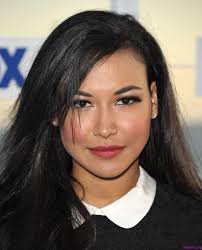
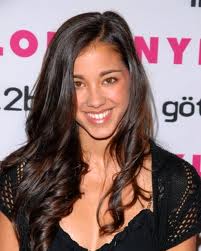
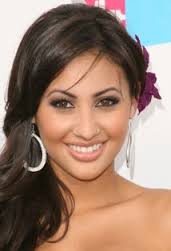
Broaden your scope, Disney. Seize the moment. Take a chance. Live a little. I’ll even offer some suggestions of Latina actresses who have proven their talent (see below). Your people should call their people. Have lunch. Talk. Why not? I know at least one seventh-grade girl who would look up at the big screen and say, “Cool.” And I have the hope that most other people would, too.

Naya Rivera     Seychelle Gabriel     Victoria Justice   Francia Rasia   Premiere Of Disneynature's "Oceans" - Arrivals

Left to Right: Naya Rivera, Seychelle Gabriel, Victoria Justice, Francia Raisa, Bella Thorne

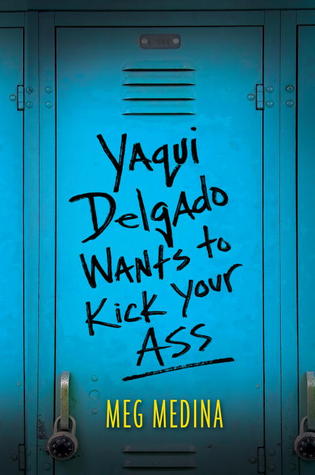
Book Review: Yaqui Delgado Wants to Kick Your Ass by Meg Medina

By Edith Campbell

YaquiMeg Medina is an accomplished author who has won awards for Tia Isa Wants a Car and The Girl Who Could Silence the Wind. Her latest book, Yaqui Dalgado Wants to Kick Your Ass is acquiring a growing list of recognition, including the Pura Belpré (a complete list of awards is at the bottom of this post). By the title, you might think that Yaqui is the main character in this realistic YA novel, but she’s not. This is Piadad “Piddy” Sanchez’s story. Just like with any bully, Yaqui seems to have taken things over.

When the novel begins, Piddy has just moved, leaving behind the school and neighborhood where she’s always felt at home. Medina quickly paints the picture of the new territory this young Latina must navigate, one where skin tone, country of origin, accent and ability to speak Spanish define where you sit as well as your place in the pecking order. Piddy shakes her hips in ways that unintentionally get too much attention and it’s on: Yaqui Delgado wants to kick her ass. Piddy’s mom can just look at Yaqui and know she’s up to no good. While Piddy’s mom may have no use for tough girls like Yaqui, Piddy cannot avoid them in her new school.

Piddy’s at that awkward age where she’s no longer a child, but not quite grown, either. She still cherishes the elephant necklace she got a few birthdays ago, but now even though she likes the idea, she knows she’s too old to celebrate her birthday like she did that time at the zoo. If she were still a little girl she could take her problems to her mom and could probably still do so if she were just a bit more mature. But Piddy doesn’t fully trust herself, and she’s also got this bully frightening her so much that—before long—she doesn’t even recognize herself.

When Piddy begins to have problems at school, she reaches out to her mother’s friend, Lila. Lila is like an aunt to Piddy. She’s the fun one who taught Piddy to dance and how to wear makeup, and she’s the one Piddy turns to when she wants to find out what really happened to her father.

Lila is part of the community in which Piddy’s story is grounded. Lila, her boyfriend Raul, the women at the beauty shop, and even the Ortegas provide spaces of comfort and familiarity for Piddy, and they nurture her as she struggles to find out who she is becoming. Piddy has two problems: she wants to know about her dad, and she can’t get Yaqui out of her head. For solutions, Piddy turns first to Lila and then to her old friend, Mitzi Ortega, who has recently moved to another area. These women are her touchstones as she moves from girl to woman. She wants to face Yaqui, but not even the support of Lila, Mitzi, and the others is enough to make that happen. We know that no one can give you this kind of strength; it comes from inside.

In her coming of age, Piddy finds Joey, a neighborhood boy who has had a very tough life. Medina writes their relationship as one that gives Piddy room to explore. While his character is not thoroughly developed, it is complete enough for the story, and their relationship helps us see a special tenderness in Piddy. Medina captures Piddy’s feelings and emotions in ways that will be immediately recognizable to anyone who has been the new kid or the kid who has been picked on. Piddy becomes a victim, losing any idea of who she is or for what she stands. Readers become part of the community that supports Piddy and wants her to stand up to Yaqui.

I’ve heard many shy away from this book, afraid of how rough it may be or turned off by the title. This is not a rough story! Despite the “ass” in the title, there’s no profanity, no drugs or alcohol, and only one scene of adolescent petting that is quite effective and touching. Piddy is a good student who wants to be a scientist and she comes from a thriving community. The novel illustrates that bullying can (and does) happen in any community, and in this book, the victim happens to be Piddy. Being a victim is rough, but Piddy is not a rough girl.

So, put the tape of the cover if you must, but put the book in your library. There are reasons for all the awards and recognition!

LEXILE: HL670

Edith Campbell

Edith Campbell is a mother, librarian, educator and quilter. She received her B.A. in Economics from the University of Cincinnati and MLS from Indiana University.  Her passion is promoting literacy in all its many forms to teens and she does this through her blog, CrazyQuiltEdi and in her work as an Education  Librarian at Indiana State University in Terre Haute, Indiana. Edith currently serves as the IN State Ambassador for the United States Board on Books for Young People and is a past member of YALSA’s Best Fiction for Young Adults selection committee.

From the Margins of Disaster

By Ashley Pérez

newlondonexplosionNIGHT

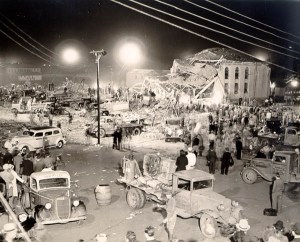
My third novel is about disasters. The disaster that catalyzes many of the events—a 1937 school explosion in New London, Texas—captured international media attention at the time. A more pervasive disaster—systemic racial inequality and unequal access to opportunity—didn’t raise an eyebrow.

Before the explosion, New London was seen as one of the luckiest towns in the country. A small farming village made suddenly prosperous by the discovery of oil, New London was spared the worst effects of the Great Depression. In fact, tax revenues from oil production were what made the building of the New London school possible. It was described in newspapers as “the richest rural school in the world.” At a time when schools in other communities could barely pay their teachers half wages, the New London school had chemistry laboratories, a home economics cottage with a suite of electric sewing machines, musical instruments and band uniforms for all the children, sports, foreign languages and fine arts, even college-credit courses. These opportunities were remarkable for the time and in that they were made available to the many children of the oilfield workers who flooded the area in search of work.

In the end, more than 200 of these children were killed. The estimate is 217, although it’s impossible to know for sure. Many of the bodies were not identifiable or intact after the explosion, meaning that identifications depended on the recovery of personal objects or body parts that had unique characteristics (scars, birthmarks, and the like). In addition, the oilfield workers in New London came and went at all times of the year, meaning that it was hard to know who was enrolled at the time of the explosion. Some families that lost children simply collected the bodies of their kids, packed up, and drove out of town, heading back toward West Texas or Oklahoma or wherever they called home. A systematic record of recovered bodies was not established until hours after the explosion, meaning that some dead children may not have been included in the final count.

As I learned more about the disaster, I found myself returning to a question: what might the New London explosion have meant for black Americans whose children were spared precisely because of their exclusion from the state-of-the-art white school? The oral histories and documentary materials on the explosion make no reference to African American experiences. This kind of exclusion was typical of the time; news in the black community—whether good or bad—rarely received coverage. In many ways, then, the novel narrates from a gap or a silence in the historical record, imagining possibilities based on other histories and on the dynamics between the characters I invent. (I talk about gaps in the historical record a bit more here.)

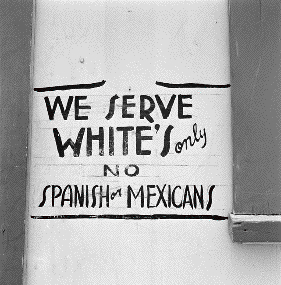
My research also led to the discovery that at least one Hispanic child was killed in the explosion, and I began to imagine the unique confluence of circumstances that could make it possible for a Mexican-American child to attend a white school in 1930s Texas. At that time, and for decades to follow, any place in Texas with a significant Hispanic population employed a tripartite segregation system: white schools, black schools, and even more inferior “Mexican” schools that systematically marginalized students and worked to force them out of the public school system altogether. (More on that process here.) Unlike cities like San Antonio or the rural towns of South Texas, New London did not have an established Mexican-American community. The oil boom—and the prospect of work—attracted people from all over the state and country. In Gather, the opportunity to attend the New London School is what brings the Mexican-American protagonist and her twin siblings to East Texas in the first place.

A shared history of school segregation is something that unites the protagonist and her eventual love interest, the handsome son of the principal of the London Colored School. But there are important differences to note, too, about their experiences in school. While African-Americans in 1930s faced gross inequalities when it came to educational resources, the pioneering efforts of many individuals to use education as a tool for advancement meant that finishing high school and possibly even attending an all-black college were at least possible. Not so for most Mexican-American students in Texas, where most kids were essentially forced out of public school by sixth grade.

WHITESonly

Enormously overcrowded classrooms in the “Mexican” schools made learning difficult, putting the students further behind their white peers with each year. On top of that, the school districts in Texas often divided each elementary grade into two years (for example, “lower first,” “upper first”) in “Mexican” schools. The result was that–by middle school—these students were often told they were “too old” for the grade they should have been able to join in the (white) middle school. Access to high school was extremely limited; in Houston in the 30s, for example, only a handful of Mexican-Americans (usually lighter skinned) graduated from high school at all despite a significant Hispanic population in the area. These students faced discrimination in white schools, and there was no “Mexican” public high school. Access to university-level study would have been limited to those students who could pass for white.

In addition, unlike African-Americans, whose teachers–also African-American–were usually committed to helping students use education to combat their circumstances, Mexican-American children were almost invariably taught by white teachers who often considered this an “undesirable” placement and were quick to underestimate the abilities of their students.

While these experiences of inequality wouldn’t seem to be central to the novel, in many ways they condition both the possibility of the story and the particulars of its unfolding. And they are the dark current that runs beneath and through the events of the school explosion and its aftermath in the story. For a taste of this novel, which is forthcoming in 2015 from Carolrhoda Lab, check out the excerpt recently published by The Texas Observer.


Images and credits:

The New London School during the all-night recovery effort, March 19, 1937 (Photo credit: Prints and Photographs Collection, Archives and Information Services Division, Texas State Library and Archives Commission. 1976/11-7.)

“No Spanish or Mexicans” sign (Photo by Russell Lee. 1949, Dimmitt, Texas. Archived at the Center for American History, University of Texas.)

2014 Reading Challenge: January

We are one month into our Latin@s in Kid Lit Reading Challenge, and our participants have completed an awesome array of books! Below are the covers, which link to any reviews written. Some people have chosen to read and not review (which is fine). In these cases, when you click on the cover, you will go to the book’s general Goodreads page. Have fun browsing the books below. Maybe you’ll even add a few to your own TBR list!

A note to participants: As you complete books, please send us the information, so we can share what you’re reading each month.

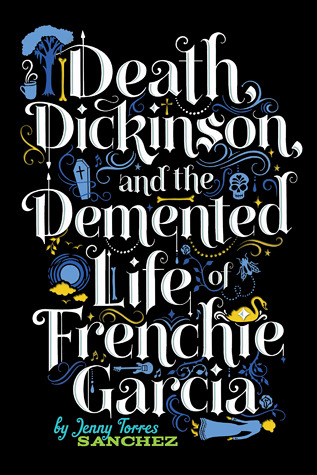
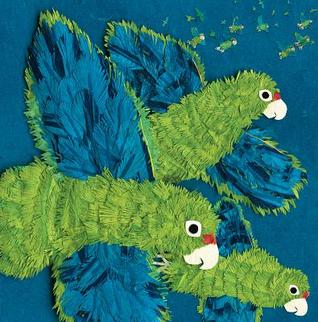
The Girl of Fire and Thorns (Fire and Thorns, #1)   Maximilian & the Mystery of the Guardian Angel: A Bilingual Lucha Libre Thriller  Death, Dickinson, and the Demented Life of Frenchie Garcia  The Knife and the Butterfly  The Wild Book  The Vicious Deep (The Vicious Deep #1)  Fat Angie   Marcelo in the Real World  The Girl Who Could Silence the Wind   Colibri   Yes! We Are Latinos!   Marisol McDonald Doesn't Match / Marisol McDonald no combina   My Abuelita   Dear Primo: A Letter to My Cousin   Moony Luna/Luna, lunita lunera   What Can You Do with a Rebozo?   Everybody Cooks Rice (Picture Books)   Parrots Over Puerto Rico   A Leaf Can Be . . . (Millbrook Picture Books)

Also, since February is Black History Month, we propose a challenge within a challenge. This month, try to read a book by/for/about Afro-Latin@s. Here are some suggestions:

Pele, King of Soccer/Pele, El rey del futbol     Celia Cruz, Queen of Salsa     Grandma's Gift     Grandma's Records     Me Llamo Celia/My Name Is Celia: La Vida de Celia Cruz/The Life Of Celia Cruz     The Poet Slave of Cuba: A Biography of Juan Francisco Manzano     Secret Saturdays     Marisol and Magdalena   Efrain's Secret