How an Adult White Guy Came to Write About a Latino Teen

By William Hazelgrove

17239293The first question I get is usually: “How could you write in the voice of a thirteen year old Latino boy?” I am about as far as you can get culturally from a young adult Latino just barely hanging on with his mother. But of course, if you are a writer, you are so many people that biographers will never get it straight. It is the same way I wrote in the voice of an old African American man in Tobacco Sticks and in Mica Highways.

Voice is everything. Once you have the voice you have the novel. When I started The Pitcher, I wrote it in third person but quickly realized it would not work that way. It was boring and distant. So I started over and I knew it had to be first person, but who would tell the story? The old pitcher? The mother? No. The boy, Ricky would tell the story. And so I started to play around with his voice. Then I wrote one paragraph:

I never knew I had an arm until this guy calls out, “Hey, you want to try and get a ball in the hole, sonny?” I am only nine, but Mom says, “Come on, let’s play.” This carnival guy with no teeth and a fuming cigarette hands me five blue rubber balls and says I throw three in the hole, then we win a prize. He’s grinning, because he’s taken Mom’s five bucks and figures a sucker is born every minute. This really gets me , because we didn’t have any money after Fernando took off, and he only comes back to beat up Mom and steal our money. So I really wanted to get Mom back something, you know, for her five bucks.

And I had Ricky then. I had the novel. And where that voice came from is anyone’s guess. Maybe it is that kid who messed around in Baltimore City where I grew up. Maybe it was some of the Mexican guys I worked with in security. And the hard times Ricky and his mother go through are my own hard times. And the baseball is my son’s baseball and the coaches and parents are from nine years of being an assistant coach with my son. The immigration issues are from our time.

When I was thinking about writing The Pitcher, I was reading what was going on in Arizona at the time with immigration and the whole stop and ask people for their papers to deport them back to Mexico. When I wrote the mother character Maria I wanted her to have the same outrage that I felt reading about this practice of stopping people and demanding to see their papers. I wanted her to draw the conclusions that this was fundamentally un-American and I wanted her son Ricky to pick up on that especially since he was facing off with a Tea Party mom and her son.

I read a lot of accounts about Dream Kids in this country and how they had made their lives and then were in danger of being deported. That was really how I got the idea of making Ricky a Dream Kid. His mother did come over and make a life and now she was in danger of being deported.

Culturally, I knew Ricky because I know how it feels to be an outsider and to have all the odds stacked against you. Ricky’s dream of becoming an MLB pitcher is my own of becoming a novelist against immense odds.

Then again, maybe it was just Ricky flying around out there waiting to be born. But when The Latina Book Club made it their Monthly Selection or LatinoLA did a story on the immigration issues in the book or I stand up on a stage at the Latino Book Festival in Chicago and read my book that has to be translated to Spanish so the audience can understand what I am saying is…even I wonder how a I came to write a Latino novel.

 I guess I just did.
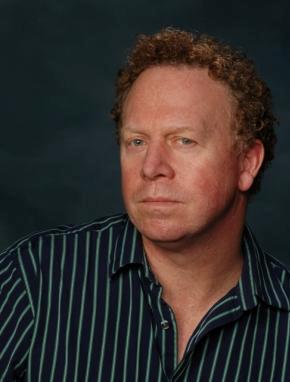
 

DSC_0020William Hazelgrove is the author of five novels, Ripples, Tobacco Sticks, which hit the National Bestseller List, Mica Highways, Rocket Man and The Pitcher. He was the Ernest Hemingway Writer in Residence where he wrote in the attic of Ernest Hemingway’s birthplace. He has written articles and reviews for USA Today and other publications. He has been the subject of interviews in NPR’s All Things Considered along with features in The New York Times, LA Times, Chicago Tribune, and the Chicago Sun Times, among others. His most recent novel, The Pitcher is a Junior Library Guild Selection. He runs a political cultural blog, The View From Hemingway’s Attic.


Let’s All Make the #WeNeedDiverseBooks Campaign an Ongoing Movement

By Patrick Flores-Scott

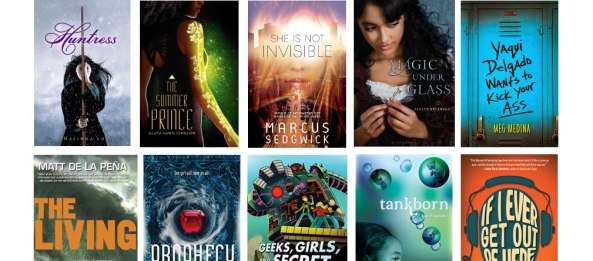
#WeNeedDiverseBooks. The trending hashtag is a channel for conversation around the huge problem of a lack of diversity in children’s literature. The problem has been noted in many recent articles and so have the reasons we need more books by diverse authors and books with complex, real diverse characters.

For many years I was lucky to be a public school teacher in very diverse schools. At different points I was both a general education classroom teacher and a reading specialist. As a classroom teacher, I was able to seek and find the books I wanted my class to hear and read. More often than not, these books had main characters of color. I had the time, energy, resources, and relationships that helped me find great books that my students loved.

My students, however, especially my reluctant readers, were not going to work so hard to find a book that would reflect the cultural, racial, socio-economic realities of their community. They were going to pick the available book, the one closest to their hand when it was time to leave the library, or the trendy book that made them look like they were in the reading “know.”

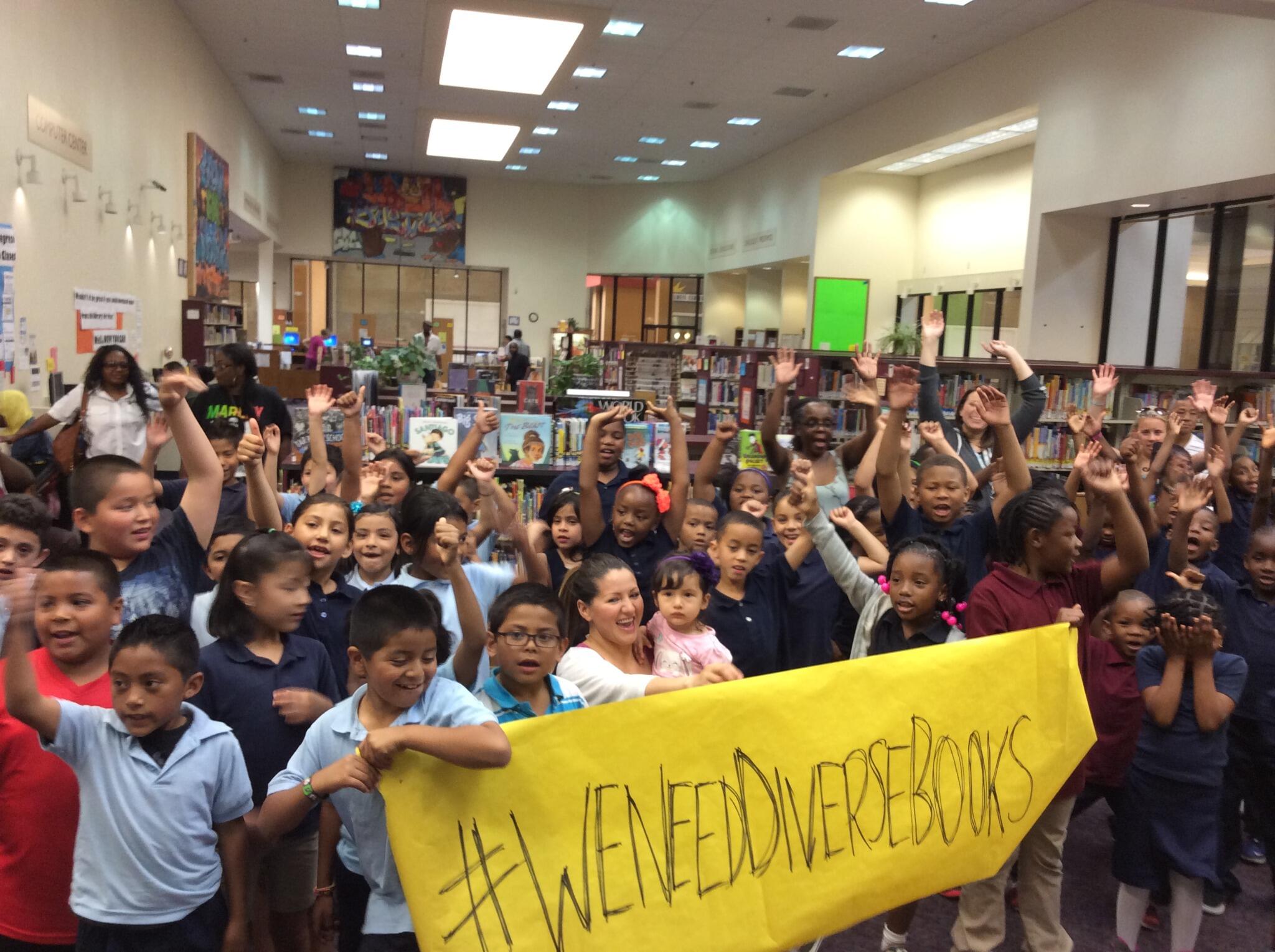
Embedded image permalink

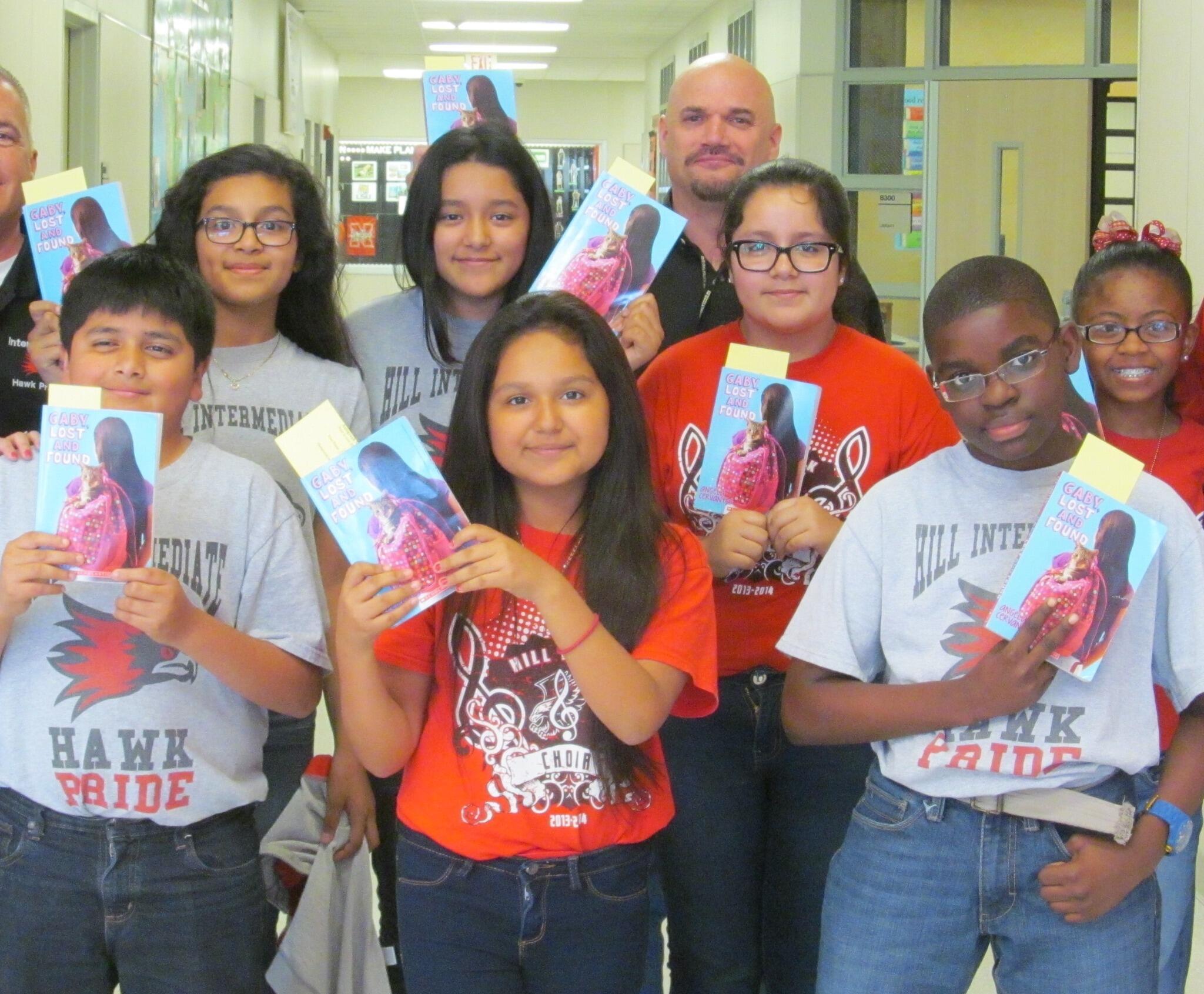
Author Angela Cervantes posted this picture on Twitter during the #WeNeedDiverseBooks Campaign.

Students need to be able to accidentally stumble their way into a great book that reflects their own background or one that opens their eyes to new characters and communities. They shouldn’t have to work for it. They shouldn’t have to fight for it. Kids have enough on their plate. Yes, some students are going to research authors, seek out new books and reading experiences, challenge their school librarian and make demands. Most fifth graders, however, are just struggling to make it through the day. They end up with the default book… and given the math of the situation, they’re going to walk out with another book by a white author with a white main character. Is this a tragedy? In the moment, no. That default book might be a great one. But this scene takes place over and over each day in most schools in the country and that great book–if the student is lucky–may just be another in a long line of books that reinforces the notion that great books are written by white authors and that white kids are the ones worthy of books written about them.  This notion is a toxic one, regardless of a student’s background.

Children’s books are a piece of a larger pie. A lack of diversity in film and television reinforces the notion that white stories are more relevant than non-white stories. The make-up the Senate (97 out 0f 100 are white) reinforces the notion that non-whites do not have a role in the highest levels of politics. Yes, there is the President, but his cabinet is made up of 70% white males. Kids see this. They see thousands of African American college athletes and they know that, in the vast majority of cases, these athletes are led to battle by white coaches. They know that the percentages of Black and Latino men in prison are crazily out of proportion with the population of Black and Latino men. Kids see all this. They take it in. The perceptions become realities for them.

My wife and I are the proud, exhausted parents of two rambunctious little boys. Their grandparents are Mexican-American on their mom’s side. My parents are white. My dad is from the U.S., my mom a Spanish-speaking Latina from South America. We will raise our boys to be proud of all that they are and proud of all the Latino, Caucasian, African-American, Asian and mixes of the aforementioned that make up their diverse extended family. While we will do our best to teach that the content of one’s character, not the color of one’s skin (one’s gender, sexual orientation, physical ability) is what is important, television, our political and judicial systems, sports…. And even the make-up of CHILDREN’S BOOKS, will send messages that complicate, skew, and even deem our parental message well-meaning, but just wrong.

Embedded image permalink

The Oakland Public Library in California posted lots of great pictures like this one on Twitter during the #WeNeedDiverseBooks Campaign.

What do we do about it? The #WeNeedDiverseBooks Movement (Can it please be a movement? We need more movements around here.) is a potentially very important call for change in the children’s book world. Now, we need to push for intentionality. Gatekeepers need to have their feet held to the fire. The Movement (!) needs to push publishers to set goals that trend their books in a more realistically diverse direction. It needs to push the industry to hire editors from diverse backgrounds and to hire and support diverse interns and entry-level assistants who can have the power to move books off the pile and into editors’ hands. The Movement needs to hold publishers accountable.

Institutions which support writers and illustrators, like my beloved SCBWI, need to recruit underrepresented writers to their conferences. (And to check out the percentage of white male panelists and speakers compared to the percentage of white male attendees.) Groups like SCBWI need to be pushed to intentionally foster and mentor a more diverse writing community.

The movement needs to push us published authors of all colors and stripes, to mentor diverse up-and-comers, to include pro-bono school visits to underfunded schools, and to write real, complex, fallible diverse characters who live the entirety of the American experience.

Members of The Movement need to request diverse books at their bookstores and libraries. We need to post reviews on Amazon and Goodreads and library websites. Members of the Movement need to advise book bloggers and to follow and support blogs like this one. We need to give diverse books as birthday presents and to talk about our favorites on the bus, at work, in line at the bookstore…

Members of The Movement need to push our political leaders to support the health, education and welfare of our future readers and writers.

Publishers, agents, bookstore workers, librarians, teachers, authors… there are bunches these folks out there doing the positive stuff that will make change possible. The Movement needs to support them and it needs to push for intentionality in those who mean well, but have not yet made the move to change.

PatrickFS1Patrick Flores-Scott was, until recently, a long-time public school teacher in Seattle, Washington. He’s now a stay-at-home dad and early morning writer in Ann Arbor, Michigan. Patrick’s first novel, Jumped In, has been named to a YALSA 2014 Best Fiction for Young Adults book, an NCSS/CBC Notable Book for the Social Studies and a Bank Street College Best Book of 2014. He is currently working on his second book, American Road Trip.

Jumped In was featured in Libros Latin@s on Thursday. Click here to see the overview.


Book Review: Jumped In by Patrick Flores-Scott

By Edith Campbell17343397

DESCRIPTION FROM THE BOOK JACKET: Sam has the rules of slackerhood down: Don’t be late to class. Don’t ever look the teacher in the eye. Develop your blank stare. Since his mom left, he has become an expert in the art of slacking, especially since no one at his new school gets his intense passion for the music of the Pacific Northwest—Nirvana, Hole, Sleater-Kinney. Then his English teacher begins a slam poetry unit and Sam gets paired up with the daunting, scarred, clearly-a-gang-member Luis, who happens to sit next to him in every one of his classes. Slacking is no longer an option—Luis will destroy him. Told in Sam’s raw voice and interspersed with vivid poems, Jumped In by Patrick Flores-Scott is a stunning debut novel about differences, friendship, loss, and the power of words.

MY TWO CENTS: Sam is a teen who once had much going for him but has decided to give up on everything after his mother dumps him with her parents and leaves. Sam now wants to also disappear by becoming a slacker. He’s got the slacker rules down pat and he follows them quite well until the new guy, Luis, is assigned to sit near him in every single class. Everyone assumes Luis is a gangster; after all, his brother is.

Flores-Scott writes to teach the power of words and the obliterating effect of silence. Sam finds comfort in the music of Nirvana. His sadness is echoed in the gray, wet landscape that surrounds him in Seattle. The humor and optimism of his grandparents emphasize what a jerk Sam is becoming. Luis appears in poetic form and he while he really isn’t much more than a thought, a poem in the story, his presence changes Sam. We never really know what’s going on in young people’s minds, do we? Flores-Scott captures their inconsistencies as he writes about so many characters who seem one way but act another. Rupe and Dave were Sam’s touch stones, but even they grew and changed in ways Sam wasn’t quite prepared for.

The writing will attract students who don’t often find themselves in books, those who try to disappear as well as those who are fascinated by the power of language. Some of the short chapters themselves look like poems. I wanted to slow down the story and clean up the ending. I wanted the parrot to go ahead and scream “goodbye Sam” and for Sam to be OK with that. I wanted to add “Trayvon” to the graffiti on the cover because that young man in the hooded green jacket reminds us all how our young boys in hoodies too often disappear.

Jumped In was listed on YALSA’s 2014 list of Best Fiction for Young Adults and as a Favorite Chapter Book by the International Reading Association.

AUTHOR: Patrick Flores-Scott was born and raised in the Snoqualmie Valley (just east of Seattle). He studied theatre at the University of Washington and ended up getting a teaching certificate as well. He spent years working as a reading specialist by day while writing and acting in plays in his free time. While teaching at a middle school in Des Moines, Washington, he was inspired to write a novel that reflected his students’ lives, something that his struggling readers would able to enjoy, something he might have enjoyed all the years he was a struggling reader. Jumped In is his debut novel. He lives in Seattle with his wife and two children.

FOR MORE INFORMATION about Jumped In, visit your local library or bookstore. Also, check out worldcat.org, indiebound.org, goodreads.com, amazon.com, barnesandnoble.com, and Henry Holt/Christy Ottaviano Books.


Edith CampbellEdith Campbell is a mother, librarian, educator and quilter. She received her B.A. in Economics from the University of Cincinnati and MLS from Indiana University.  Her passion is promoting literacy in all its many forms to teens and she does this through her blog, CrazyQuiltEdi and in her work as an Education  Librarian at Indiana State University in Terre Haute, Indiana. Edith currently serves as the IN State Ambassador for the United States Board on Books for Young People and is a past member of YALSA’s Best Fiction for Young Adults selection committee.


Guest Post: CAKE Literary on Writing Diversity, Finding Your Flavor

By Sona Charaipotra

Have you ever cried in class? I have. And no, I’m not talking about kindergarten. I’m in my 30s, and yes, I shed actual tears during a workshop during my writing for children creative writing MFA program at the New School two years ago.

No, it wasn’t a particularly harsh critique. I have to say, I have an incredibly thick skin. Most of the time.

But this particular workshop was a safe space. Taught by the stunningly smart and super-nurturing Andrea Davis Pinkney, this one focused on a topic too frequently neglected by both the academy and publishing: diversity. Specifically, we were talking about diversity in kidlit and YA, and addressing why it is important.

And though it’s been a long time since I was a kid or even a teenager, the wound was still fresh. Because we still haven’t gotten there.

Growing up as a little brown girl – one of the few, back then – in small-town, suburban central New Jersey, books were my escape. I caused a ruckus alongside little Anne in Avonlea; I mourned Beth along with her sisters in the harsh winter of Maine; I honed my grand ambitions like Kristy and her babysitters’ club; I even swooned alongside Elena over the brothers Salvatore when the Vampire Diaries was originally released. (Yes, I am that old.)

CAKE logo+2.7.12But if you’ll note: in all those books and the hundreds of others I devoured, I never really saw myself, or anyone remotely like me. The majority of characters in books for kids and teens in the ’80s and ’90s were white. And according to Christopher Myers in his recent New York Times piece, “The Apartheid of Children’s Literature,” the majority still are today, by quite a landslide.

Why is this worth discussing? Because it hurts. A lot. It’s a hit to a kid’s self-esteem to be told – silently, but oh so clearly – that their story is not worth telling, that their voice is not important.

As Myers notes in his piece, it leaves you with “a gap in the much-written-about sense of self-love that comes from recognizing oneself in a text, from the understanding that your life and lives of people like you are worthy of being told, thought about, discussed and even celebrated.”

Honestly, it’s a punch to the gut. It kills me that, 30 years later, kids are still feeling this way. That my daughter, all of four now and already shaping up to be a voracious reader, will still feel that pinch.

That’s why I cried that day in class. And that’s why, with my writing partner Dhonielle Clayton, whom I met on the first day of my MFA program, I co-founded CAKE Literary, a literary development company that focuses on high concept fiction with a strong commitment to diversity.

I know what you’re thinking: silly thing to bank a personal fortune (however small) on, right? We all know diversity doesn’t sell.

Well, Dhonielle and I would like to call bullshit on that. Done the right way, diversity can bring a richness and flavor to any manuscript. After all, so much about a great read is in the details – the scent and sizzle of freshly-fried samosas wafting up from her mama’s kitchen, the ferocious whip of the wind on an icy February morning, the ashy knees she keeps hidden under too-long skirts, the blush that climbs up her throat and to her cheeks when she flirts with her crush for the first time. The details give texture and color, a sense of time and place and, most importantly, character. The details define worldview and fill out voice.

But the main thing is the big picture – and what our company will do is focus on BIG pictures. Smart, sophisticated storytelling that’s full of flavor – books where the diversity is a major part of the character, but not the central focus of the character.

Case in point: our debut novel, Tiny Pretty Things, which is due next summer. Set in a cutthroat New York City ballet academy, the book centers on three characters, one white, one black, and one half-Korean. And while their backgrounds definitely inform the characters’ worldviews and experiences, the book is not about skin color. It has a plot – a juicy, riveting and ultimately relatable story that we’re hoping will leave readers wanting more.

That’s what we’ll do with each of our projects: tell a fun, delicious story that readers want to read, but incorporate real-life flavor – meaningful diversity – in a natural, relevant way. We’re all about keeping it real, so part of our mission will be to connect vibrant, authentic voices with the stories we’re crafting.

What exactly does CAKE do? We’re not an agency or publisher, but rather a book packager – a YA and middle grade think tank of sorts. We come up with sharp multimedia concepts that we then develop into a detailed outline. Once the idea is fleshed out, we hire a writer to work with us on several chapters or a complete manuscript, which we then package to take to publishers. Once the project sells, the writer stays on board to complete the project. Some book packagers get a bad rap for being notoriously stingy. But CAKE’s aim is to be very writer friendly, because, after all, we’re writers, too. So when we work with a writer on a project, they get paid a flat fee on signing, on delivery, and then, when the project sells, they get a cut of those proceeds as well. The other thing that sets CAKE apart is our commitment to diversity, which is an integral part of every CAKE project.

Dhonielle Clayton

Dhonielle Clayton

Sona Charaipotra

Sona Charaipotra

Interested in learning more? We’ll be looking to hire writers beginning this spring, so connect with us on CAKELiterary.com or via CakeLiterarySubmissions@gmail.com. You can also follow us on Twitter @CAKELiterary.


2014 Reading Challenge: March

We continue to be blown away by the number of books being read each month by participants of our 2014 Latin@s in Kid Lit Challenge. Thank you to everyone for participating in the challenge and purposely selecting books by/about/for Latin@s. Remember, you can join the challenge any time during the year, and you’re not required to review–only read and enjoy! If you do post a review somewhere, we will link it to the book covers below. If you choose not to review, we will link the covers to Goodreads. This month, we’d like to stand up and applaud Elisabeth Ellison and Cecelia Cackley for their vigorous reading (13 books total!) And since April is National Poetry Month, we suggest you try some novels in verse this month!

A note to participants: As you complete books, please send us the information, so we can share what you’re reading each month.

13515320  6603032  15814459  5982454  10564957  18079822  15798660  11431896  1294347  14342632  13501282  1816693511438326  1016493  18938127 18318638  6098251  255189  9373385  1372657  1807231  18651917  15937128  6673243  1065256  1076237  18318005  8220585  652180  7095181  15818046  1028659  18249428

Book Review: Silver People: Voices From the Panama Canal by Margarita Engle

By Zoraida Córdova

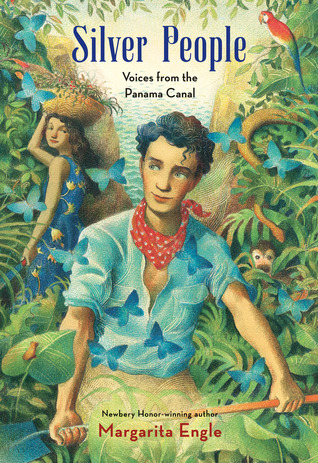
Silver People

DESCRIPTION FROM THE BOOK JACKET: One hundred years ago, the world celebrated the opening of the Panama Canal, which connected the world’s two largest oceans and signaled America’s emergence as a global superpower. It was a miracle, this path of water where a mountain had stood—and creating a miracle is no easy thing. Thousands lost their lives, and those who survived worked under the harshest conditions for only a few silver coins a day.

From the young “silver people” whose back-breaking labor built the Canal to the denizens of the endangered rain forest itself, this is the story of one of the largest and most difficult engineering projects ever undertaken, as only Newbery Honor-winning author Margarita Engle could tell it.

MY TWO CENTS: Silver People is a historical novel written in verse. Told in alternating perspectives over eight years, each poem is vibrant, unique, and many times heartbreaking. The story starts with Mateo, a fourteen year old boy from Cuba who lies about his ethnicity in order to get passage to and work in Panama. He’s mixed, and even though this takes place over 100 years ago, the feeling of not fully belonging to one part of yourself or culture is still relevant. His dark skin and green eyes allow him to “pass.” Like many of the men who flocked to Panama during this time, Mateo wants to work. But with a new world and new people come many challenges. First, there’s the hunger for food. Second, there’s a hunger for home. Third, there’s a fear of survival.

Through his careful observations, we are given a scope of surviving the working life on the canal. A structure of segregation is placed: “Americans, Frenchmen, and Dutch./ Spaniards, Greeks, Italians./ Jamaicans, Barbadians, Haitians” leaving Mateo wondering how any of them will be able to work together. Although all of the men are doing backbreaking and soul crushing work each day, the white men get paid in gold, the dark Europeans in silver, and the islanders in half the silver as other men. During the night, the monkeys howl and insects bite; Mateo ends up wondering “How can I miss the place/ I was so desperate to leave?” When I read that I thought to myself that even now, that’s the immigrant struggle. You long for a place that might give you a better life, a place that could be better, but also a place to belong to. At the end of the day, no matter where the working men came from, whether they wanted home, refuge, gold, silver, they were still joined in one thing: surviving the rain forest.

Although physical survival isn’t the only thing that bonds them. Henry, a Jamaican worker who watches as the medium-dark Spaniards get to sit for their meals while he has to stand, finds an unlikely friend in Mateo. They find commonality in sickness, mudslides, bitterness, pain, fighting, and a longing for home.

Other narratives include that of Anita “La Yerbera” who becomes a close ally of Mateo’s. Also an orphan, Anita was abandoned in the forest and taken in by an old Cuban woman. Her voice is unique and offers a different perspective to life in Panama. Unlike Mateo and other newcomers who are there to blow up the trees and remove entire landmasses, Anita feels she belongs to the forest itself. It’s her home, and we watch with her home is destroyed right before her eyes.

I love that in this story of the struggle of humans versus nature, Margarita Engle gives nature a voice. “The Forest” gets its own sections, detailing the point of views of the animals as they watch and howl at the intruders.

Okay, so I know this book is told in poems. Don’t let this shy you away. After all, it’s Poetry Month! What I love about this book is that each poem pulls you to the next. You can’t read just one poem; you have to read just one more. This blog post could be 10 pages long because each poem packs such a punch and makes you stop and think about what Mateo, Anita, and Henry are going through. It makes you wonder just how much is different today. I laughed out loud at one of Anita’s poems during Teddy Roosevelt’s visit to the canal, and the sludge of tourists that “…all they want/is hats–white hats like the American president’s,/ hats woven in Ecuador, hats that tourists/ insist on calling Panama hats. Don’t they/understand that Latin America/ has many countries?” It’s not a “laugh out loud” thing, but 100 years later, still relevant.

I wish Silver People had been around when I was in school. From our text books, all we learned about the Panama Canal was that “America built it.” I wish I’d known about the Silver People. But when you’re little, how do you go about describing the injustices of the world in a way that a child will understand? This is just the book for that. Margarita Engle weaves questions about identity, struggle, and discrimination, all through beautiful poetry.

The truth about most of these men is that they didn’t go home. Some didn’t make it out of the forest alive. But the white Americans, the Italians, the Jamaicans, the Cubans who “passed,” some of them stayed in Panama and became locals. Some spread out across the continent. This books reminded me that the history of the world should always be told through many perspectives, and that when pushed together we keep creating new cultures.

TEACHING TIPS: This book is a great read on it’s own, but would also be fun when learning about Panama, the Panama Canal, Teddy Roosevelt’s presidency, rain forest depletion, Latin@ studies, or because it’s National Poetry Month.

Margarita Engle has a section for teachers on her website! –> click.

AUTHOR: Margarita Engle is the Cuban-American winner of the first Newbery Honor ever awarded to a Latino. Her award winning young adult novels in verse include The Surrender TreeThe Poet Slave of CubaTropical Secrets, and The Firefly Letters.

Engle’s most recent books are The Lightning Dreamer and When You Wander.

Her new middle grade chapter book, Mountain Dog, was published in August 2013. Margarita’s latest book, Silver People, Voices From the Panama Canal is out now.

She lives in central California, where she enjoys helping her husband with his volunteer work for wilderness search and rescue dog training programs.