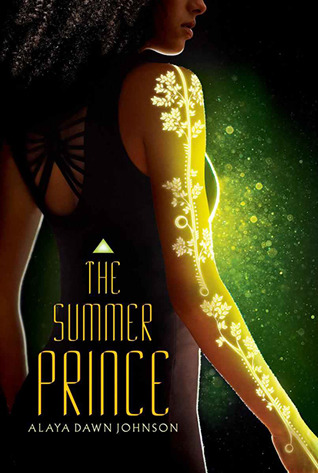
Book Review: The Summer Prince by Alaya Dawn Johnson

By Eileen Fontenot

13453104DESCRIPTION OF THE BOOK: The lush city of Palmares Três shimmers with tech and tradition, with screaming gossip casters and practiced politicians. In the midst of this vibrant metropolis, June Costa creates art that’s sure to make her legendary. But her dreams of fame become something more when she meets Enki, the bold new Summer King. The whole city falls in love with him (including June’s best friend, Gil). But June sees more to Enki than amber eyes and a lethal samba. She sees a fellow artist.

Together, they will stage explosive, dramatic projects that Palmares Três will never forget. They will add fuel to a growing rebellion against the government’s strict limits on new tech. And June will fall deeply, unfortunately in love with Enki. Because like all Summer Kings before him, Enki is destined to die.

Pulsing with the beat of futuristic Brazil, burning with passions of its characters, and overflowing with ideas, this fiery novel with leave you eager for more from Alaya Dawn Johnson.

MY TWO CENTS: As readers, we experience the yearlong events of The Summer Prince through the eyes of the protagonist, June Costa, a waka (under 30) artist who is growing up in a lush oasis in a post-apocalyptic Brazil. She and her closest friend, Gil, become enamored with the new Summer King, Enki, who is from the verde, the poverty-stricken part of the city. What begins as a rebellious lark – being a grafiteiro, making public art in support of Enki (who is a figurehead for the Aunties who really run the city and is destined to give his life in choosing a new Queen) – leads to a game of higher stakes for June. She grapples with many adult issues – being in a love triangle, struggling with self identity and parents’ expectations, grappling with unjust grandes (the society’s elders) and their traditions, and ultimately being a force that will decide the direction Palmares Três will take in the future. Will the youth rise up and overthrow the corrupt elders and begin a new era that balances humanity with technology?

This is not a pat, easy coming-of-age novel. June is not altogether sympathetic, but most of her actions are understandable. She is portrayed, especially early on in the book, as a somewhat self-centered youth, bent on fame and the coveted Queen’s Award, which is awarded to the best young artist in the city. She must decide just what is she willing to sacrifice to become famous, to create, to win. As she gets involved deeper and deeper with Enki, she must choose to be cowed by the Aunties’ pressure to conform or to help facilitate real change within the city.

Although the book discusses the effects of extreme technology and bio-modifications on humans’ bodies, it does so in a somewhat oblique way. Johnson chooses to focus more on June’s personal struggle with her mother and step-mother and the death of her father, the sacrifices she makes for her art and the love she has for both Enki as a lover and Gil as a friend, while accepting that both Enki and Gil also love each other. June comes to realize that even though you may lose the ones you love the most, they can still be with you in spirit – through what they have left behind in your beloved city, with its music, knowledge and history.

We’d also like to note that while Johnson’s novel received lots of praise when it released in 2013, it was also criticized by some for its portrayal of Brazil and its culture. For that view, please see this post by Ana Grilo, a Brazilian living in the UK and half of The Book Smugglers team.

TEACHING TIPS: This book would be wonderful for an older teen book talk, especially for those who create art or are interested in it. (I suggest older teens because there are some sex scenes, and the book’s themes are for more mature minds.) Wakas of Palmares Três love body art, so talk leaders could pair the book discussion with a make your own temporary tattoo craft. A type of LED sign features very prominently in the climax, so if you’re feeling particularly adventurous or techy, have the teens collaborate on their own sign, which then could be hung in your teen space.

Facilitators could take a few other tacks with their talk, one of which would be discussing the types of love that can be experienced – platonic, familial, romantic, even the respect you come to have for a frenemy – who is embodied in Bebel, June’s talented rival for the Queen’s Award. Teens may want to share their thoughts on romance – the types of conflict they’ve experienced or what things they have done in pursuit of love. If the members of your group want to share mistakes they’ve made, that may help their peers understand they are not alone. Teens who have lost a parent may also benefit from joining in a book talk of The Summer Prince. June loses her beloved father before most of the events of the novel, and it is a recurring theme throughout the book – her difficult acceptance of his death and her mother’s resulting remarriage to an Auntie. Teens in “step” households can share their struggles and successes with living in blended families.

If these ideas don’t grab you, facilitators may choose to ask the teens to discuss their thoughts on the future of technology and how or if they would choose to strike a harmonious balance between the two. Who in the group identifies as more “techy” and who identifies as more of an “analog” type person? Where do they foresee technology going in the future, when they are adults? What sort of restraints should be put on tech, if any? What sort of bio-mods would they want implanted in their bodies? What would they want these mods to do? Communicate with computers directly without a visible interface? Change their appearance? Give them an unusually long life?

AUTHOR (from her website): Alaya (rhymes with “papaya”) lives, writes, cooks, and (perhaps most importantly) eats in Mexico City. Her literary loves are all forms of speculative fiction, historical fiction, and the occasional highbrow novel. She plays the guitar badly and eats very well, particularly during canning season. She has published five novels for adults and young adults, including The Summer Prince, which was longlisted for the National Book Award in 2013.

FOR MORE INFORMATION ABOUT The Summer Prince, visit your local library or bookstore. You can also check out goodreads.com, indiebound.com, amazon.com or barnesandnoble.com.
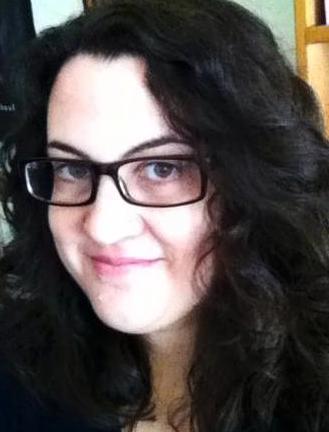
 

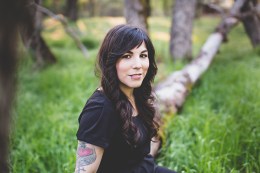
fontenot headshotEileen Fontenot is a recent graduate of Simmons College Graduate School of Library and Information Science in Boston. She works at a public library and is interested in community service and working toward social justice. A sci-fi/fantasy fan, Eileen was formerly a newspaper writer and editor.

Book Review: Gabi, A Girl in Pieces by Isabel Quintero

By Sonia Alejandra Rodriguez

20702546DESCRIPTION OF THE NOVEL:

July 24

My mother named me Gabriella, after my grandmother who, coincidentally, didn’t want to meet me when I was born because my mother was unmarried, and therefore living in sin. My mom has told me the story many, many, MANY, times of how, when she confessed to my grandmother that she was pregnant with me, her mother beat her. BEAT HER! She was twenty-five. That story is the basis of my sexual education and has reiterated why it’s important to wait until you’re married to give it up. So now, every time I go out with a guy, my mom says, “Ojos abiertos, piernas cerradas.” Eyes open, legs closed. That’s as far as the birds and the bees talk has gone. And I don’t mind it. I don’t necessarily agree with that whole wait until you’re married crap, though. I mean, this is America and the 21st century; not Mexico one hundred years ago. But, of course, I can’t tell my mom that because she will think I’m bad. Or worse: trying to be White.

Gabi Hernandez chronicles her last year in high school in her diary: Cindy’s pregnancy, Sebastian’s coming out, the cute boys, her father’s meth habit, and the food she craves. And best of all, the poetry that helps forge her identity.

MY TWO CENTS: Isabel Quintero’s 378 page debut YA novel, Gabi: A Girl in Pieces, is witty, exciting, and heart-felt. Through a diary entry narrative, the novel follows Gabi Hernandez through her senior year in high school. Gabi is a self-identified light-skinned, fat Mexican with an insatiable appetite for hot wings, tacos, sopes, and poetry. The novel opens with a fantastic obsession for hot wings and with Sebastian, Gabi’s best friend, coming out to her. In a small piece of paper Sebastian writes, “I’m gay,” which does not surprise Gabi. Instead, she is more concerned about his parents’ reaction. Cindy, Gabi’s other best friend, also confesses to Gabi that she had sex with German and might be pregnant. Gabi, who is still a virgin, is taken aback but comforts Cindy in her time of need and together they discover that Cindy is in fact pregnant. By the end of the novel, Gabi has had her first kiss, broken up with her first boyfriend, and has sex with her second boyfriend. To top it all off, the Hernandez family must also contend with the father’s meth addiction which ultimately kills him. Poetry and letter writing give Gabi an opportunity to process all of the difficulties that she and her friends endure throughout the year.

Gabi: A Girl in Pieces covers an array of themes, like sexuality, body image, addiction, coming out, writing, healing, and teen pregnancy, among others, that attempt to speak to the experiences of Latino youth in the United States. The opening lines of the novel reveal that Gabi’s mom had her out of wedlock and has since been shunned by the grandmother. The dichotomy of the “good girl/bad girl” is a burden that follows Gabi throughout the novel. Her naiveté about sex and relationships makes her susceptible to her mother’s and Tia Bertha’s religious banter about womanhood—good girls keep their legs closed and go to heaven. Gabi, however, is quick to question her mother’s indoctrination and to point out the contradictions in their own behavior and in what they expect from her brother. Gabi’s mother’s constant insistence to be a “good girl” is also tied to a rejection of American identity. In other words, Gabi’s mother suggests that having sex or going away to college, things “bad girls” do, is part of American culture and Gabi’s desire to participate in such behavior further distances her from their Mexican identity. The juxtaposition of how Latina women should behave in accordance to their culture and religion to how American women behave has been signaled as the key reason for why Latina teens are at a higher risk of attempting and committing suicide in the United States (see Luis Zayas). Research, national reports, and media coverage on the topic argue that there exists a generational tension between mothers and daughters of Latino descent in the US. This tension is said to lead to higher risk of depression, low self-esteem, and potential self-harm. While Gabi’s character does not follow that pattern, it is clear that the tension with her mother impacts the ways she sees herself.

There are many qualities that make Gabi stand out within the genre of Latina/o Children’s and Young Adult Literature. What I find specifically unique about this novel is the thorough engagement with drug addiction. Gabi’s entries capture the barrage of feelings of living with someone who is dependent on a drug. She explains that there are days, weeks, and even months, when they might not hear from her father because he’s on a high binge. They might also see him in the park getting high with the other drug addicts. As children, their dad took them along to pick up his meth. At the end, Gabi finds him overdosed and dead with a pipe on hand in the garage. The novel attempts to highlight how an entire family can be harmed by addiction. While the father’s backstory is never fully developed (because, obviously, he is not the focus of the story), the story suggests that drug addiction is a disease affecting many Latino communities and deserves further attention. That Quintero brings it up in her book provides an opportunity to discuss how children are impacted by a parents’ drug addiction.

Overall, Gabi: A Girl in Pieces is an extraordinary read with the potential to create various dialogues in and outside the classroom. Gabi struggles with body image because of her body type and light skin color, Cindy eventually reveals that she was raped by German, and Sebastian gets kicked out of his house for coming out. Gabi’s body image issues allow us to examine representations of Latino bodies in popular culture, cultural expectations on the body, and the centering of light skin bodies over darker skin ones in Latino culture. By the end of the novel, it is suggested that Cindy might seek counseling for what happened to her, but there is definite tension about whether her rape is an individual problem or one that should be addressed by a community. Without having anywhere else to go, Sebastian is forced to stay with his aunt, who believes religion will cure him of his queerness. And while Sebastian eventually joins the LGBTQ club in his school, there seems to be little support coming from his Latino community. Gabi is clever and sarcastic and extremely funny. It’s a book that details the inner thoughts and struggles of a young Latina on a journey to self-empowerment or a book about a young Latina’s long journey to Pepe’s House of Wings.

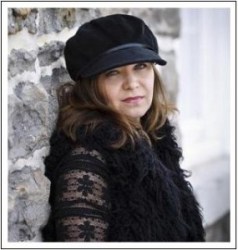
Reanna Marchman Photography

Isabel Quintero; Reanna Marchman Photography

TEACHING TIPS: The use of a diary style in Gabi presents a great opportunity to ask students to keep their own diary or journal while they read the novel. One way to approach this type of assignment would be to ask students to respond to each of Gabi’s entries. However, because so much of Gabi’s experience is concerned with sex education and sex, it’ll be important to establish conversation guidelines with the class. The opening diary entry reveals how sex ed. and sex is gendered. Gabi’s grandmother beats her daughter for getting pregnant, and, as a result, Gabi’s mom tries to impose those conservative and traditional views on Gabi. Students can respond to the opening entry by writing about the values that their families, communities, or the media have tried to impart on them regarding sex. When teaching Gabi, it is also important to be aware that many experiences with sex are closely tied to some sort of violence or trauma, as is the case with Cindy. When discussing and writing about Cindy’s rape, it’ll be extremely significant to steer away from conversations that blame the victim. A more productive approach would be to talk about ways to make communities accountable to issues of sexual assault and street harassment. A diary entry assignment will help students closely engage with the themes of the novel by allowing them to practice character analysis and by giving them a space to connect their personal experiences to what they read.

Another way to approach teaching a novel like Gabi is to talk about diary keeping as a genre. The use of the diary to tell a story has a very long literary tradition, so it will be important to talk with students about why this might be the case. In other words, consider why diaries have existed this long, what their purposes may have been (or if the purpose has changed), and why Quintero chose to write Gabi in this form. Discussing Facebook, Twitter, and other relevant social media might also create a fruitful discussion on diary keeping in the 21stcentury. An interesting digital media project might be to ask students what Gabi might be tweeting, posting, liking, etc., given what they know from her diary. A more literary approach would be to discuss other Latina/o children’s and young adult texts in this genre like Amada Irma Perez’s My Diary from Here to There. While My Diary is a children’s illustrated text, it nonetheless makes use of the diary form to capture a story of pain, struggle, and love.

Gabi also opens up a dialogue about addiction that can lead to many powerful discussions about substance abuse in communities of color. A few other Latina/o young adult texts that deal with issues of addiction include Benjamin Alire Saenz’s Last Night I Sang to the Monster, E.E. Charlon-Trujillo’s Fat Angie, and Gloria Velazquez’s Tyrone’s Betrayal. The young protagonists of these novels have some sort of relationship to addiction that influences their own understanding of drugs and alcohol and how they deal with pain and trauma. Conversations about addiction can be very difficult to have, so it will be important to discuss triggers and trigger warnings when broaching the subject. If students are not comfortable discussing the topic, then returning to the use of the diary form can provide a safe space for students to still engage the conversation. Students do not always have to provide a personal response but can instead think about Gabi’s actions and reactions to her father’s addiction. Gabi often expresses frustration at her mother for enabling or putting up with her husband’s addiction. Gabi’s younger brother feels unloved and eventually rebels because of the situation at home. Asking students what the family members’ different experiences reveal about addiction complicates popular understandings of what addiction looks like and how it can be cured.

AUTHOR (from the author’s website): Born and raised in Southern California to Mexican parents, Isabel Quintero always took home too many books from the library as a a child. Later, she married her husband Fernando in a library. In addition to writing young adult literature, poetry, and fiction,  she teaches English at a couple community colleges, freelance writes for the Arts Council of San Bernardino County, is a member of PoetrIE (a literary arts organization who’s working to bring literary arts to the communities of the IE), and an avid pizza and taco eater. You can read about why she writes in her first blog post, titled, “Why I Write.” Gabi: A Girl in Pieces has received starred reviews from Kirkus and Publisher’s Weekly.

FOR MORE INFORMATION ABOUT Gabi, A Girl in Pieces, visit your local library or bookstore. Also check out worldcat.orgindiebound.org, cincopuntos.comgoodreads.comamazon.com, and barnesandnoble.com.


headshotSonia Alejandra Rodríguez has been an avid reader since childhood. Her literary world was first transformed when she read Rudolfo Anaya’s Bless me, Última as a high school student and then again as a college freshman when she was given a copy of Sandra Cisneros’s The House on Mango Street. Sonia’s academic life and activism are committed to making diverse literature available to children and youth of color. Sonia received her B.A. in English from the University of Illinois at Urbana-Champaign. She is currently a PhD candidate at the University of California, Riverside, where she focuses her dissertation on healing processes in Latina/o Children’s and Young Adult Literature.

Pitch Fiesta Update: 15 Writers Matched with Mentors to Prepare for the Event

We’re excited to provide an update on Latin@s in Kid Lit’s first Pitch Fiesta. The deadline for submissions was October 3. We received 21 entries and reduced that number to 15 viable contenders representing middle grade and young adult–realistic, science fiction, fantasy, magical realism, LGBTQ, and Southern Gothic.

So, here’s the thing. We had no idea how many entries to expect. I (Cindy) thought we’d get maybe a half-dozen, which the LiKL crew could easily manage to review and prepare for pitching. So, when we ended up with 15!! viable entries, we flashed the bat signal at our kid lit writer friends. For those of you who don’t know, the kid lit community is awesome, and in no time, we had enough people ready to mentor our writers.

Here’s the process: Each mentor has been matched with a writer. The mentor will review the writer’s query and first pages with a critical eye. The mentor will email comments, thoughts, questions, concerns, suggestions, etc. to the writer. The two will work to make the query and first pages as clean and agent-ready as possible. Polished queries will be posted on our site on November 12-13 for the agents’ review. We hope “I’ve got to have it” type sparks will fly and matches will be made between writers and agents! These sparks of love over a manuscript will eventually lead to more books by and about Latin@s!

For now, though, there’s work to be done. Still, we wanted to publicly say, THANK YOU!!! to the authors who stepped up to help! Many are members of the Fearless Fifteeners, the Diversity League, and/or the We Need Diverse Books Team. They all support diversity in children’s literature and want to “pay forward” the help they received on the path to publishing. Below are all of the mentors. Names and titles match with photos going lef to right. If you click on the photos, you will be taken to the authors’ websites for more information.

Cindy L. Rodriguez: WHEN REASON BREAKS (Bloomsbury)

Ashley Hope Pérez: WHAT CAN’T WAIT and THE KNIFE AND THE BUTTERFLY (Carolrhoda Books)

Zoraida Córdova: THE VICIOUS DEEP trilogy (Sourcebooks Fire) and LUCK ON THE LINE (Diversion Books)

Heather Marie: THE GATEWAY THROUGH WHICH THEY CAME (Curiosity Quills Press)

Kelly Jones: UNUSUAL CHICKENS FOR THE EXCEPTIONAL POULTRY FARMER (Knopf Books for Young Readers)

Erin Entrada Kelly: BLACKBIRD FLY (Greenwillow Books)

A.L. Sonnichsen: RED BUTTERFLY (Simon and Schuster Books for Young Readers)

Anna-Marie McLemore: THE WEIGHT OF FEATHERS (Thomas Dunne)

Ronald L. Smith: HOODOO (Clarion)

Kerry O’Malley Cerra: JUST A DROP OF WATER (Sky Pony Press)

Dhonielle Clayton: TINY PRETTY THINGS (HarperTeen) and THE BELLES (Disney-Hyperion)

Holly Bodger: 5 TO 1 (Knopf Books for Young Readers)

Kristy Shen and Bryce Leung: LITTLE MISS EVIL (Spencer Hill Middle Grade)

Carrie Firestone: The title of Carrie’s debut novel hasn’t been finalized, but she will be published in 2016 by Little Brown & Co.

  2012AuthorPhoto500pixels  317988_632439229822_92623787_n

Heather-AuthorPhotos-3-WEBSIZE  Kelly Jones  Erin Entrada Kelly A.L. Sonnichsen Anna-Marie McLemoreRonald L. SmithKerry CerraDhonielle Clayton Holly Bodger Kristy and Bryce  profile photo


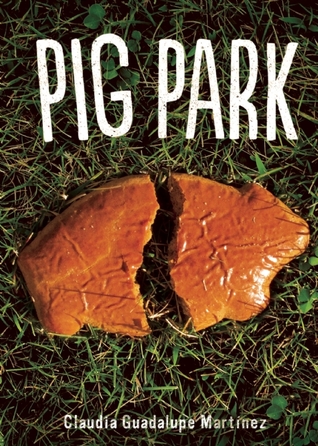
Pig Park and the Cosmic Race: Diversity and Identity in My New YA Novel

By Claudia Guadalupe Martinez

As a kid, I assumed everyone around me was Mexican. I lived less than a mile from the Texas-Mexico border, so we pretty much were Mexican. This neighborhood inspired my first novel, The Smell of Old Lady Perfume–a world vastly different from the one that surrounds my protagonist, Masi Burciaga, in my new novel Pig Park. Masi’s cast of neighbors runs the gamut from the Nowaks to the Wongs.

2236319Nevertheless, Mexican identity is something I thought very much about as I wrote. Two-thirds of the Latino population in the U.S. was of Mexican descent in the last Census, and I can’t help asking myself what it means to be Mexican these days. I didn’t grow up purposefully Mexi-centric. I was a product of my environment. I’d never had the opportunity to truly interact with non-Mexicans, non-Mexican Latinos, or Mexicans with experiences significantly different from mine until I moved to California for college.
Even then, the diversity I experienced was a somewhat artificial one created by a college admissions team. California was still the Southwest, and my new community and I still shared many experiences. But seriously, since I barely knew how to drive, I can hardly say I experienced L.A.

Chicago would be different. One day, I cashed in my airline miles and set off to visit a friend there. I walked into a coffee shop and stumbled onto a flier for an apartment rental. So began my long-term relationship with the city and neighborhood that would inspire Pig Park.

My new Chicago landlady occasionally referred to my neighborhood as Mexican, but my neighbors included Mexicans, African Americans, Filipinos, Puerto Ricans, and miscellaneous white folks. Everyone just mixed it up.

18528311Mexicans have formed communities in Chicago since the 1850’s. And, while a 2012 Census study from the Manhattan Institute for Policy Research named Chicago the most segregated city in America, Chicagoland’s Mexican population is massive enough at 1.4 million that some neighborhood overflow is to be expected. This is how diversity develops naturally. Scholar José Vasconcelos talked about Mexicans as “the cosmic race;” behind it was the idea that we actually have a little bit of everything in us, that we like to mix it up, eventually transcending racial and ethnic categories.
Life happened, as it is wont to do. I eventually got married, moved into a house in a new neighborhood, and became a mom. My husband is of the sort who wouldn’t be caught dead putting ketchup on a hot dog and gladly plays tour guide to visiting family and friends, introducing them to the many surprises of our city. He is a Chicagoan through and through. He is also of Guatemalan and Salvadoran descent. As such, I don’t know if my two-year daughter and my son (who will be born this October) will consider themselves Mexican or not. After all, identity is a fluid thing, partially assumed and partially assigned. My husband and I hope they consider themselves whatever they want, and are never made to feel that they can’t.

I wrote Pig Park recognizing that the world my children will be a part of isn’t exactly one thing, and that this is the type of world many kids are increasingly growing up in.

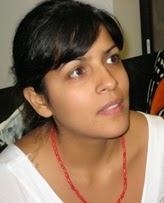
CGMTZ_photoby neus raffols_color_CROPPEDClaudia Guadalupe Martinez is the author of The Smell of Old Lady Perfume (Cinco Puntos, 2008) and Pig Park (Cinco Puntos, 2014). She grew up in sunny El Paso, Texas, where she learned that letters form words from reading the subtitles of old westerns with her father. She now lives and writes in Chicago.

2014 Reading Challenge: July & August Update

If you want to diversify your TBR pile, this is the perfect month to do it since it is National Hispanic Heritage Month. Our challenge is heading into its final months, but it’s never too late to join us. Here are the guidelines: read one book a month that is written by a Latin@ author (any subject) or a book written by anyone that has Latin@ characters, themes, settings, etc. You’re not required to review–only read and enjoy and let us know what you have read! If you do post a review somewhere, we will link it to the book covers below. If you choose not to review, we will link the covers to Goodreads. Explore our book lists or past book talks (Libros Latin@s) for suggestions.

Also, since this is National Banned Books Week, you can choose from the Latin@ titles that have been challenged, according to this list kept by the National Council of Teachers of English. Here they are:

Always Running Before We Were Free  Bless Me, Ultima  95127  9328  7133770  94064

And here are some of the titles read by our Reading Challenge participants:

106281  17928557  18405521  18651917  18166935  17643  1369609  17870787  288563  15893258  18654377  1274318  20702546  12000020  13436375  1258175  Moony Luna/Luna, lunita lunera  16670129  15791044  6098251  378653  2376261


Book Review: The Revolution of Evelyn Serrano by Sonia Manzano

Evelyn overBy Sonia Alejandra Rodriguez

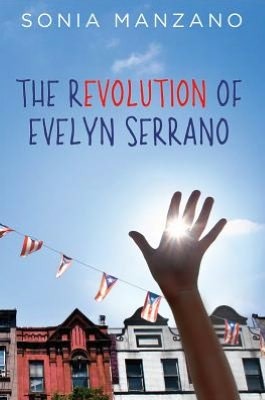
DESCRIPTION FROM THE BOOK JACKET: There are two secrets Evelyn Serrano is keeping from her Mami and Papo: her true feelings about growing up in her Spanish Harlem neighborhood, and her attitude about Abuela, her sassy grandmother who’s come from Puerto Rico to live with them. Then, like an urgent ticking clock, events erupt that change everything. The Young Lords, a Puerto Rican activist group, dump garbage in the street and set it on fire, igniting a powerful protest. When Abuela steps in to take charge, Evelyn is thrust into the action. Tempers flare, loyalties are tested. Through it all, Evelyn learns important truths about her Latino heritage and the history makers who shaped a nation. Infused with actual news accounts from the time period, Sonia Manzano has crafted a gripping work of fiction based on her own life growing up during a fiery, unforgettable time in America, when young Latinos took control of their destinies.

MY TWO CENTS: The Revolution of Evelyn Serrano (a Pura Belpré Author Honor Book) by Sonia Manzano  opens with a frustrated fourteen year old Evelyn getting ready for her summer job at the Five-and-Dime. Her desire to fit in to American society and distance herself from her Puerto Rican heritage is disrupted when her Abuela comes to stay with them. Abuela’s orange hair and bright clothes make her anything but the traditional grandmother Evelyn expected. Abuela taking over Evelyn’s bedroom with makeup, hair rollers, and flashy clothes is only the first of many changes that serves to transform Evelyn’s understanding of her own identity.

While Abuela’s presence creates tension in the Serrano household, a new youth group arrives to challenge discriminations against their neighborhood. The Sanitation Department eventually stops picking up the garbage, and as it continues to accumulate, so does the tension around the Young Lords’ intent to politicize El Barrio. The rise of the Young Lord’s movement gives Abuela and Evelyn an opportunity to discuss the relationship between what is presently happening in their community and the Ponce Massacre (1937) of which Abuela has kept newspaper clippings. The Young Lords organize El Barrio in a way that Evelyn has never experienced, and their demonstrations and marches provide El Barrio with a visibility they later utilize to demand social change. As the political situation intensifies in El Barrio, Evelyn and Abuela become more involved with the Young Lords. Their involvement creates a rift between them and Evelyn’s mother, but it is through all of this process that Evelyn recognizes the importance of her Puerto Rican heritage.

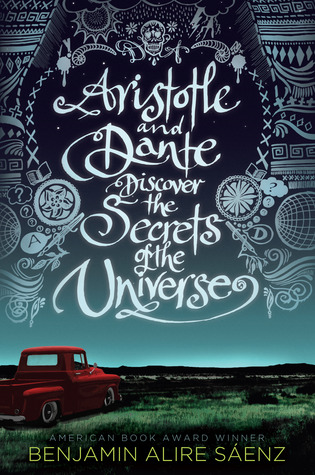
Among many things, Manzano’s The Revolution of Evelyn Serrano is a historical young adult novel. (Re)tellings and (re)imaginings of history are currently a popular strategy in Latina/o Children’s and Young Adult Literature. Like Juan Felipe Herrera’s Downtown Boy (2005) and Bejamin Alire Saenz’s Aristotle and Dante Discover the Secrets of the Universe (2012), Manzano asks that today’s young adult reader travel back to a time when their grandparents and/or parents were children and adolescents.

This literary move to focus on a historical event is brilliant for many reasons. First, it asks Latina/o readers to examine their own background as a way to understand their present identity. In The Revolution of Evelyn Serrano, it is extremely significant that there are moments of reflection that help Evelyn understand that her presence in El Barrio is not coincidence. In other words, Evelyn needed to learn her parents’ and grandparents’ journeys to understand her own identity and her relationship to El Barrio.

Secondly, novels like Manzano’s center stories that have remained marginalized in mainstream history books. Evelyn is such a wonderful character precisely because she sounds and behaves like a typical teenager. At the beginning of the novel, Evelyn wants nothing to do with her parents and their stories. She is embarrassed of them and her community—and this right here is a very honest and common feeling (that too often remains silent) among Latino children and teenagers of (im)migrant parents. Throughout the novel, Evelyn learns to center her Puerto Rican culture as a way to find empowerment rather than to feel embarrassed by it.

Lastly, Manzano’s novels, and others like hers, create intergenerational discussions around issues of discrimination and gender (to name a few themes present in Evelyn Serrano). In other words, novels like these emphasize that significant social change requires a community talking to one another. While the Young Lords were central in the mobilization of El Barrio, it was also with the support of their elders and younger members that they were able to stand strong against the discrimination the community faced.

The Revolution of Evelyn Serrano presents a genuine story of identity formation for a young Latina coming of age at a moment in U.S. history when Latinos are violently forced to assimilate into mainstream society or risk their lives by speaking up and challenging the discrimination they experience.

TEACHING TIPS: When teaching The Revolution of Evelyn Serrano, it will be helpful to provide a historical context for the novel from which to guide student discussion. Manzano provides a bit of this discussion in her afterward where she explains that the events in the novel are based on true events. The Young Lords: A Reader (2010) edited by Darrel Enck-Wanzer and Palante: Voices and Photographs of the Young Lords, 1969-1971 (2011) are excellent resources for educators to learn more about the group’s history, motivations, and outcomes. Pairing the novel with some of the essays in these sources for more advanced or older students can also provide a basis for discussing race, class, and gender both within the party and in the context of the US.

A thematic approach to teaching Manzano’s novel can be one way to broadly discuss the Civil Rights Movement and relating topics. Novels like Rita Williams-Garcia’s One Crazy Summer (2011) about three young African American sisters and their adventures with the Black Panthers and children’s books like Monica Brown’s Side by Side: The Story of Dolores Huerta and Cesar Chavez (2010) about the leaders of the farm workers’ movement can provide rich conversations about the array of issues impacting people of color at this time. Discussing children’s and YA books on the Civil Rights movement not only allows students to learn more about specific racial discrimination and community empowerment but also creates opportunities for students to discuss how those issues impact them now.

Another approach to teaching the novel is to discuss characters and character development. Evelyn’s relationship with her abuela is a complicated one because they have different personalities and because Abuela represents a cultural heritage Evelyn wishes to avoid. Their relationship, however, is central in the novel. Other YA novels like Claudia Guadalupe Martinez’s The Smell of Old Lady Perfume (2008) and Sandra Cisneros’s Caramelo (2003) present similar granddaughter/grandmother relationships wherein both characters engage and learn from one another. Asking students to interview their grandparents or a family elder could be a possible assignment for students of any age to participate in an exercise similar to the character development of the protagonists they read.

AUTHOR (from her website)Sonia Manzano has been a presence on Public Television since the 1970’s. Raised in the South Bronx, she attended the High School of Performing Arts. A scholarship took her to Carnegie Mellon University in Pittsburgh, and in her junior year, she came to New York to star in the original production of the off-Broadway show, Godspell. Within a year Sonia was cast as “Maria” on Sesame Street. After ten years as an actress, Sonia began writing scripts for the series and has fifteen Emmy Awards as part of the Sesame Street writing staff. Sonia also wrote for the Peabody Award winning children’s series, Little Bill, for Nickelodeon and for a short time wrote a parenting column for the Sesame Workshop web site called Talking Outloud. In addition to The Revolution of Evelyn Serrano, Manzano has written two picture books: No Dogs Allowed! and A Box Full of Kittens.

FOR MORE INFORMATION ABOUT The Revolution of Evelyn Serrano visit your local library or bookstore. Also check out worldcat.orgindiebound.orggoodreads.comamazon.com, and barnesandnoble.com.

headshotSonia Alejandra Rodríguez has been an avid reader since childhood. Her literary world was first transformed when she read Rudolfo Anaya’s Bless me, Última as a high school student and then again as a college freshman when she was given a copy of Sandra Cisneros’s The House on Mango Street. Sonia’s academic life and activism are committed to making diverse literature available to children and youth of color. Sonia received her B.A. in English from the University of Illinois at Urbana-Champaign. She is currently a PhD candidate at the University of California, Riverside, where she focuses her dissertation on healing processes in Latina/o Children’s and Young Adult Literature.