Book Review: Joyride by Anna Banks


22718685By Cindy L. Rodriguez

PUBLISHER’S DESCRIPTIONA popular guy and a shy girl with a secret become unlikely accomplices for midnight pranking, and are soon in over their heads—with the law and with each other—in this sparkling standalone from NYT-bestselling author Anna Banks.

It’s been years since Carly Vega’s parents were deported. She lives with her brother, studies hard, and works at a convenience store to contribute to getting her parents back from Mexico.

Arden Moss used to be the star quarterback at school. He dated popular blondes and had fun with his older sister, Amber. But now Amber’s dead, and Arden blames his father, the town sheriff who wouldn’t acknowledge Amber’s mental illness. Arden refuses to fulfill whatever his conservative father expects.

All Carly wants is to stay under the radar and do what her family expects. All Arden wants is to NOT do what his family expects. When their paths cross, they each realize they’ve been living according to others. Carly and Arden’s journey toward their true hearts—and one another—is funny, romantic, and sometimes harsh.

MY TWO CENTS: In Joyride, Anna Banks creates two easily likable, sympathetic characters who are struggling between wanting to have normal, fun teenage lives and dealing with serious family issues.

Carly Vega is a smart, hard working Mexican-American teen who juggles going to school and working, sometimes until the early morning hours at a convenient store, to help raise enough money to bring her deported, undocumented parents back to the U.S.

Arden is a popular former football star who battles with his violent father in the wake of his sister’s suicide, which has left his mother heavily medicated and despondent.

In the opening scene, Arden pretends to hold up his uncle, Mr. Shackelford, outside the convenient store in an attempt to get him to stop driving drunk. Carly, who is working when this happens, responds by pulling out the store owner’s shotgun and chasing the masked bandit (Arden) off. Arden knows then that Carly is the perfect candidate to be his pranking buddy, a position once held by his sister. Love blossoms as the two spend more time together doing funny, gross things around town that are risky because Arden’s father is the racist local sheriff responsible for deporting Carly’s parents.

Throughout the novel, Carly struggles with competing desires. She wants her family to be intact again and wants to do all she can to help raise the thousands of dollars needed to help them cross the border again. She also wants, however, to do what normal teen girls do, like hang out with her boyfriend and use her money to buy things like new clothes and a laptop computer.

Without giving too much away, I’ll say that this YA contemporary, which tackles serious issues and has heavy doses of romance and humor, also has a plot twist that adds a whole new exciting vibe to the story. Carly and Arden’s relationship is threatened and they end up in a dangerous situation involving law enforcement and the illegal smuggling operation that promises to bring her parents home.

Told in alternating points of view–Carly’s is first person and Arden’s is third–Anna Banks’s Joyride is a page-turner filled with interesting, complex characters who fall in love and find common ground despite economic, racial, and cultural differences.

TEACHING TIPS: Joyride could be an option when teaching about immigration. I’m sure students would have lots of questions about the issues brought up with this book around Carly’s family’s situation. Do people really pay someone to escort loved ones across the border? What are the risks? Is it really that expensive? What happens if they get caught again? How often are American born teens separated from parents who are deported? Reading this novel as a companion to non-fiction research on these issues could offer multiple perspectives and make Carly Vega seem even more “real,” in that her situation is a common one.

ABOUT THE AUTHOR (from her website): NYT Bestselling YA author of The Syrena Legacy series: OF POSEIDON (2012) OF TRITON (2013) OF NEPTUNE (2014). Repped by rockstar Lucy Carson of the Friedrich Agency. I live with my husband and daughter in the Florida Panhandle. I have a southern accent compared to New Yorkers, and I enjoy food cooked with real fat. I can’t walk in high heels, but I’m very good at holding still in them. If you put chocolate in front of me, you must not have wanted it in the first place.


FOR MORE INFORMATION ABOUT Joyride visit your local library or bookstore. Also, check out WorldCat.orgIndieBound.orgGoodreadsAmazon, and Barnes & Noble.

Also, check out the Q&A we did with Anna Banks earlier this week.


Q&A with NYTimes Bestselling Author Anna Banks About JOYRIDE


22718685By Cindy L. Rodriguez

The latest novel by Anna Banks, the New York Times Bestselling Author of the The Syrena Legacy series: OF POSEIDON (2012) OF TRITON (2013) OF NEPTUNE (2014), releases today. JOYRIDE, a contemporary with a Mexican-American main character, is a change for Banks, but you’ll see that she was ready to cleanse her fantasy palette and that the seeds for this particular story were planted years ago.

First, here is a description of the book:

A popular guy and a shy girl with a secret become unlikely accomplices for midnight pranking, and are soon in over their heads—with the law and with each other—in this sparkling standalone from NYT-bestselling author Anna Banks.

It’s been years since Carly Vega’s parents were deported. She lives with her brother, studies hard, and works at a convenience store to contribute to getting her parents back from Mexico.

Arden Moss used to be the star quarterback at school. He dated popular blondes and had fun with his older sister, Amber. But now Amber’s dead, and Arden blames his father, the town sheriff who wouldn’t acknowledge Amber’s mental illness. Arden refuses to fulfill whatever his conservative father expects.

All Carly wants is to stay under the radar and do what her family expects. All Arden wants is to NOT do what his family expects. When their paths cross, they each realize they’ve been living according to others. Carly and Arden’s journey toward their true hearts—and one another—is funny, romantic, and sometimes harsh.

CINDY: This is a genre shift for you after the very successful Syrena Legacy Trilogy. What sparked you to shift gears and write contemporary fiction?

ANNA: Before we begin, I just want to say it is my pleasure and an honor to be here today. Thank you so much for thinking of me. I enjoy your website and am very supportive of its goals and focuses.

JOYRIDE was sort of a palette cleanser between fantasy worlds. I was ready to write a standalone for once, and Carly’s story kept haunting me at night. To be honest, writing something in the real world was more of a challenge because I had stricter boundaries to abide by, and my characters had only their natural abilities to use to get them out of situations. But it was also a pleasure to have those boundaries, because writing characters who had to use their natural resources, to me, made them stronger and more realistic.

CINDY: And while we’re talking genre, JOYRIDE really is a mix of realistic, romance, and thriller. Was this intentional while you were plotting? Did you want to have some twists that are not always typical with a straight contemporary, or is that just where the story went as you were planning?

ANNA: While I was writing JOYRIDE, I didn’t realize I was writing so many twists in it. To me, it seemed like the natural way things would have to go. Of course, I’ve never written contemporary before (and if I’m being honest I don’t read much of it either), so I wasn’t aware there were sort of “rules” to writing a straight contemporary. Now I realize I’ve written this steroidal hybrid, and I hope contemporary readers can move past that and embrace it. Pretty please? :.)

CINDY: Let’s talk about craft for a bit next. You have a dual narrative, but you use a first-person point of view for Carly and a close third-person for Arden. As both a reader and writer, I’m always curious about these kinds of decisions. Why did you decide on this format instead of a dual first-person?

ANNA: This is me recognizing a weakness I have in writing. I can write a strong female heroine in first person, but for the hero, I need to take a step back and put some distance between myself and him, to distinguish my voice from his voice. I don’t want readers as familiar with my hero and his most inner feelings and thoughts in the way writing in first person would give them access to. In fact, I considered writing JOYRIDE from only Carly’s perspective, but Arden was just too funny to put behind stage.

CINDY: The topic of immigration and deportation are complex, often contentious, social and political issues. What made you want to write about the life of a Mexican-American girl whose parents were deported? What kind of research did you have to do? Was it difficult to write outside of your cultural experience?

ANNA: Living in the Florida panhandle, I live and work and play among many Mexican immigrants—both documented and undocumented. When I was a teenager in particular, I worked at a restaurant where there were some undocumented immigrants, and as we became friends, they told me their stories. They told me their anxiety about being deported, about missing their family, about the fear of being separated from the family they’ve established in the United States. It really left an impression on me. As a teen, I wondered what I would do if my parents were deported, if I was here all alone. I guess Carly was planted in my head all those years ago and I didn’t even know it.

I didn’t have much research to do, because I learned it first hand from my friends and coworkers. That you didn’t want to get pulled over because instead of a speeding ticket, you’d get deported. That you didn’t want to attract attention to yourself. That you sent money home as often as you could. That there were people they called coyotes who helped them cross the border and desert, who demanded large sums of money to help them get set up in the United States. That when you cross the border, you cross with what you can carry, and that’s it.

I’m white, and so writing outside my own cultural experience was terrifying. I wanted to do it respectfully and realistically, because I deeply respect the work ethic and the family values of immigrants, and I wanted to share their plight with the world. But sometimes in writing it, I did wonder if it was my place to do so. But I had a story to tell, and I felt it was an important one, so I kept going.

CINDY: Do you plan to write more contemporary YA? Any projects in the works that you can tell us about?

ANNA: Right now I’m working on an Egyptian based fantasy called NEMESIS and its sequel, ALLY. It’s about a princess who possesses the power to create energy who escapes her father, who wishes to weaponzie it, only to be captured by an enemy kingdom where she discovers her powers could be used to fight a terrible plague.

I write when I have a story to tell, and usually my muse takes me across a lot of different genres. As for writing contemporary again—sure, why not? But I have to have a story to tell. If I find myself wanting to add time travel or wormholes in the contemporary, I’d better just set it aside. :.)

Book Review: Marcelo in the Real World by Francisco X. Stork

Reviewed by Lila Quintero Weaver

marcelo_coverFROM THE PUBLISHER:

The term “cognitive disorder” implies there is something wrong with the way I think or the way I perceive reality. I perceive reality just fine. Sometimes I perceive more of reality than others.

Marcelo Sandoval hears music that nobody else can hear — part of an autism-like condition that no doctor has been able to identify. But his father has never fully believed in the music or Marcelo’s differences, and he challenges Marcelo to work in the mailroom of his law firm for the summer . . . to join “the real world.”

There Marcelo meets Jasmine, his beautiful and surprising coworker, and Wendell, the son of another partner in the firm. He learns about competition and jealousy, anger and desire. But it’s a picture he finds in a file — a picture of a girl with half a face — that truly connects him with the real world: its suffering, its injustice, and what he can do to fight.

Reminiscent of The Curious Incident of the Dog in the Night-Time in the intensity and purity of its voice, this extraordinary novel is a love story, a legal drama, and a celebration of the music each of us hears inside.

MY TWO CENTS: Certain quirks cause 17-year-old Marcelo Sandoval to stand out from the crowd. He fastens his shirt all the way to the top button, even when he’s not wearing a necktie. His speech can be overly formal, and he often refers to himself in the third person. Don’t ask him to catch the meaning of an eye roll or a smirk because his brain isn’t wired to interpret subtler forms of nonverbal language. Plus, he hears music that no one else can hear. Marcelo was born with a cognitive disorder resembling Asperger syndrome, a category of autism spectrum disorder often considered “high-functioning.” The syndrome’s most recognizable traits are difficulty with social interactions and the tendency to become preoccupied with special areas of interest. In Marcelo’s case, this is the study of religion.

Marcelo attends Paterson, a school for kids with disabilities. The summer before his senior year, he’s supposed to work at the school’s stables, helping with the therapeutic ponies, but his father, a lawyer, has a different plan. Arturo Sandoval thinks it’s time for his son to experience “the real world,” in the form of a summer job at the law firm. If Marcelo manages the job satisfactorily, he’ll be allowed to choose which school to attend in the fall—the safe and friendly Paterson he knows well, or Oak Ridge High, a regular school not structured around the needs of students with disabilities.

What Marcelo encounters on the job is far more complex and morally ambiguous than the simple mailroom duties he’s hired to carry out. The law firm’s other partner has a college-age son, Wendell, who is also working at the office over the summer. Arturo considers Wendell a good role model for Marcelo. Little does he know that Wendell is much more interested in checking out the female employees than in getting any work done, and Jasmine, Marcelo’s supervisor, is the main object of his lust. At first, Marcelo tries to ingratiate himself to Wendell, who holds considerable power in assessing Marcelo’s performance, but it becomes apparent that Wendell is a jerk who mocks Marcelo, objectifies women, and disregards Arturo as a “minority hire.”

Other workplace quandaries pop up. Marcelo discovers a photograph of a girl badly injured in a car crash, due to the failure of a windshield manufactured by one of the law firm’s most important clients. He begins to wonder about his father’s decision to protect wealthy corporations, instead of those who’ve been harmed by the corporation’s negligence and can’t afford legal help.

But this YA novel isn’t a legal thriller per se. It’s a variation on the coming of age story, one that visits romantic love and sexual intimacy, and repeatedly explores the idea of what is real. There’s the real music that everyone can hear and the internal music heard only by Marcelo. There’s the real world of the law firm and Oak Ridge High School, and the protected world of Paterson. And how about the distinction between a happy smile and a sarcastic smile, or the literal words that people use and the actual meanings behind them? Plus, who is the real Arturo: the father that Marcelo knows, or the lawyer who may have wandered into less than noble choices? Reality is tough to decode.

I am not qualified to comment in depth on Stork’s depiction of Marcelo’s cognitive disorder. As I read, I kept myself alert for any signals that the author had romanticized the character’s condition or imbued him with magical or savant abilities, as is often the case in cultural portrayals of people with autism spectrum disorders. I saw nothing approaching those errors. Luckily, Disability in Kidlit, a blog devoted to reviewing books about characters with disabilities, has also published a review of Marcelo in the Real World. Read S.E. Smith’s fine analysis here.

Stork presents the Sandovals as a cohesive, but realistic Latino family, with flaws intact. They stand apart from the most prevalent depictions of Latino families in fiction and film, where poverty, domestic violence, and trouble with immigration issues crop up frequently. Marcelo’s mother, Aurora, is a registered nurse. She and Arturo are educated, upper-middle class professionals of Mexican heritage who can afford to send their son to a specialized private school. Their other child, Yolanda, is enrolled at an Ivy League university. Judging by their achievements, the Sandovals are living the American Dream, but crass remarks by Wendell convincingly show the darker side of reaching the Dream, that even successful Latinos are subject to derisive questions about their legitimacy.

Francisco Stork is a brilliant writer. His characters breathe, his dialogue sings, and his depiction of Marcelo’s interior life sparkles with beautiful insights and revelations. In writing his main character as a Latino with a developmental disorder, he gives readers the rare opportunity to experience two seldom combined, yet richly portrayed worlds. In Stork’s hands, this intersection of culture and cognitive challenge becomes suffused with poetic tenderness, and the result is an unforgettable novel.

francisco_storkFrancisco X. Stork was born in Monterrey, Mexico, and moved to the United States at age nine. He studied at Spring Hill College, Harvard University and Columbia University, where he completed a law degree. Stork’s five published novels have received awards, honors and high praise from reviewers. Keep up with publishing news and events at his official author site.


TEACHING RESOURCES:

Autistic Self-Advocacy Network

Autism Society of America

The official site of the autistic professor, speaker and author Temple Grandin

Equine Therapy Programs

Navigating Love and Autism,” a profile in The New York Times

In this video clip, comedian DL Hughley shares a touching story about his adult son with Asperger syndrome.

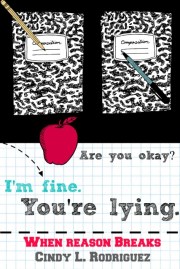
“I’m okay”: Resilience & Depression in Cindy L. Rodriguez’s When Reason Breaks

By Sonia Alejandra Rodriguez

I’m guilty of always saying “I’m okay,” even when I know I am not. Often times, it seems easier to lie than to explain the depths of what hurts. It also seems more appropriate to suck it up than to admit I’m not as strong as I appear. Saying “I’m okay” when I am not is also a way to mask the shame I feel for feeling depressed when I know others have it worse. As Cindy L. Rodriguez explains in her blog post, “Depression in YA and the Latin@ Community,” depression is often associated with trauma and feeling depressed because you’re simply depressed rarely seems like a good enough reason. While causes and effects of depression vary tremendously, I have found that the stereotypes about depression are consistent. The stigma alone associated with depression has made it difficult for folks to speak openly about the issue. Because of this I wasn’t surprised that depression, including suicide attempts and suicide, isn’t a topic that is directly addressed in Latina/o children’s literature.

Tommy Stands AloneThe first book I encountered where a Latino character attempted suicide was Gloria Velasquez’s Tommy Stands Alone (1995). Tommy struggles with coming out as gay because his family and friends are not supportive, and in a moment of desperation, he overdoses on pills and alcohol. At the same time that I came across Velasquez’s book, I was also reading media articles about Dr. Luis H. Zayas’s research on Latina teen suicide attempts which connected suicide attempts to difficulties assimilating to dominant American society. In their March 2010 issue, Latina Magazine published an article that presented Zayas’s findings and discussed the ways in which Latina teens have a more difficult time assimilating because of their immigrant parents’ traditional values. While at the time I found the article to be important and informative, I was very hesitant about placing the blame for suicide attempts on the parents. Zayas has made it clear that there are various reasons why Latina teens attempt suicide and that his specific research has shown that one of the reasons is the tension between the two cultures.

What I feel is missing from an understanding of Latina/o teen suicide attempts and suicide rates is a discussion of how racism and other histories of oppression have made it difficult for these young teens to stay alive. In other words, while parents and families can certainly be a factor in one’s depression, I am weary of saying that Latino youth are depressed and/or attempting suicide because of their families. In this light, depression becomes racialized and parents become a source of otherness. In reading Velasquez’s young adult novel and Zayas’s research, I became interested in the ways that depression is understood as an individual problem rather than addressed as a community issue. Understanding depression as a personal problem also questions one’s resilience; furthermore, one’s ability to overcome depression becomes a signifier for their value.

I was definitely excited to learn that Cindy L. Rodriguez’s debut young adult novel, When Reason Breaks, addresses issues of depression and suicide attempts. Rodriguez’s novel adds to a much needed discussion on depression and Latina/o children’s literature. There are certainly various aspects of the novel to love, but I found the ambiguity of which character attempts suicide to be the most intriguing. When Reason Breaks (2015) tells the story of the uncanny connection between two seemingly different teenage girls. Elizabeth Davis develops a gothic like edge after her parent’s separation. Her new attitude often puts her at odds with her mother, teachers, and peers. Emily Delgado hangs out with the popular crowd, her teachers like her, and her family is well off. Her anxiety, however, gets the best of her and she begins to retreat from those around her. Elizabeth and Emily are forced to engage one another when Ms. Diaz pairs them up for an English project on Emily Dickinson. As the novel develops, Ms. Diaz begins to receive letters from a student describing feelings of depression and uncertainty until she finally receives a suicide note.

Elizabeth’s and Emily’s characters are an opportunity to discuss stereotypes associated with depression. The assumption is that Elizabeth is the one that attempts suicide because she has something to be depressed about—her parent’s divorce. At first, this traumatic event makes those around her sympathetic to her situation. Over time, though, people begin to lose patience with her, which is apparent by how often her mother scolds her and how frequently she’s sent to visit the school counselor. Elizabeth is an excellent example of what I mean by a person’s ability to overcome depression can determine their value. Because it appears that Elizabeth is not getting any better with time, those around her begin to read her as “troubled” and more likely to be trouble. Her behavior is policed and what could be read as typical teenage behavior, such as challenging authority and talking back, are sources for dismissal and punishment. While it’s obvious that Ms. Diaz is a concerned teacher, she, nonetheless, polices Elizabeth’s behavior based on the assumptions that the school counselor has made about Elizabeth and her depression. These assumptions made it difficult to see that it was another student that was really the one in danger. In contrast, Emily gets overlooked because she does not publicly exhibit signs of depression nor does she have a valid enough reason to be depressed. No one questions Emily’s mental health when she begins to pull away from those around her or when she misses homework assignments. Instead, her friends make light of the pressure she feels from her father to perform a certain level of Latino conservatism to protect his political career. That pressure is not recognized as a valid enough reason to feel depressed, much less a reason to attempt suicide. It is Emily’s resilience, however, that allows her to hide her depression and go unnoticed.

You're Lying graphicI read Emily’s resilience as being motivated not necessarily by her desire to overcome depression but her desire to hide it. Her father’s political position is certainly a main reason why she needs to keep it together, but it is also her mother’s silence that makes it difficult for Emily to express her own feelings. Emily’s performance of resilience is a strategy that I believe many people dealing with depression employ—especially if what makes one depressed is not recognized as a worthy reason for being depressed in the first place. Resilience serves as a way for Emily to protect herself from being ostracized the way that Elizabeth is because of depression. Emily expresses concern that if she were to divulge that she struggles with depression that too many people will get involved and ask too many questions. Because of this it is easier to simply say “I’m okay.” This resilience, however, almost costs Emily her life.

When Reason Breaks further presents the opportunity to discuss the impact depression has on families and communities. Ms. Diaz reveals that she, too, struggled with a traumatic situation. At the end of the novel, even Elizabeth’s mom opens up about her feelings and is able to reconcile with her daughter. Furthermore, the novel reveals that it takes a community to support someone with depression on their journey toward healing. Addressing depression as a community breaks the silence on this issue and expands notions of what depression is, what it looks like, who gets it, and what can be done about it. Elizabeth and Emily’s struggle with depression also demonstrates that it is likely that there are others close to them that may also be dealing with depression. Even though Emily’s mother is not a major character in the novel, there are specific moments where her behavior and silences suggest that she also struggles with her emotions. Novels like When Reason Breaks demonstrate the importance of generating dialogues in our communities about depression and the various ways that depression affects us all.


headshotSonia Alejandra Rodríguez has been an avid reader since childhood. Her literary world was first transformed when she read Rudolfo Anaya’s Bless Me, Última as a high school student and then again as a college freshman when she was given a copy of Sandra Cisneros’s The House on Mango Street. Sonia’s academic life and activism are committed to making diverse literature available to children and youth of color. Sonia received her B.A. in English from the University of Illinois at Urbana-Champaign. She is currently a PhD candidate at the University of California, Riverside, where she focuses her dissertation on healing processes in Latina/o Children’s and Young Adult Literature.

Debut Celebration for The Girl at Midnight by Melissa Grey!

By Zoraida Córdova

I am super excited to have Melissa Grey with us at Latin@s in Kid Lit! I love fantasy, and I especially love when Latinas write fantasy. The Girl at Midnight has already received wonderful praise and starred reviews from Kirkus and Booklist! To celebrate tomorrow’s launch of The Girl at Midnight, we are going to get to know the magic behind Melissa.


“Grey’s energetic debut offers a strong protagonist…[and the] well-built world, vivid characters, and perfect blend of action and amour should have readers eagerly seeking the sequel.” — Kirkus Reviews, Starred


Zoraida: Tell me about The Girl at Midnight and your inspiration for it.

Melissa: In The Girl at Midnight, there’s a magical race of creatures that live beneath the streets of New York called the Avicen. They have feathers for hair and their existence is very much a secret, but they take in a human girl who goes by the name of Echo. Echo has run away from a bad home life and finds a new family in the Avicen, so when they’re threatened by a centuries-old war, she takes it upon herself to find the firebird, a mythical entity prophesied to end the conflict once and for a all.

The book really started with Echo and the firebird. I’m a huge fan of the ballet and the legend behind it, so my research into the folklore involving the firebird gave me a lot to think about when I was developing the plot. Echo was the first character to exist and she kind of predated the story. I came up with her first and eventually found a world for her to inhabit.

What is the best writing advice you’ve ever gotten?

It’s not specifically writing advice, but it can be applied to writing. When I was at art school, one of my professors told me not to be precious with my work. It was the first time I’d ever heard the saying “Kill your darlings” and it really stuck with me. I can be a perfectionist, so not treating my work as something delicate and inviolable was an eye-opening change of strategy. To me, it means not being afraid of scrapping drafts or whole chapters or even characters that aren’t working to the benefit of the work as a whole.

What was the hardest scene in your novel (if it’s not too spoilery)?

The last chapter was a struggle. I’m not a huge fan of cliffhangers, but as a writer, you do want to leave people wanting more, especially if you’re writing a series like I am, so I tried very hard to strike a balance between giving readers closure and enticing them to come back for the sequel.

How does your culture play a part in your fantasy (if at all)?

Well, I’m Puerto Rican and food is a huge part of that culture. I don’t include Spanish food specifically in the book, but Echo’s life pretty much revolves around food. It’s the foundation of a lot of her relationships, which is definitely something I can relate to.

Where would be your dream writing location?

A secluded little cabin in the Scottish Highlands.

Are there any lessons you learned while writing TGaM, and how is that helping you with book 2?

I learned that I have to trust my gut while not giving into my inner perfectionist. I also learned that I didn’t need to take every single criticism I received on the manuscript as gospel because sometimes my writing partners (and even my agent and editor) didn’t agree, so I had to trust my instincts.  

What books are you reading right now?

Right now, I’m reading The Archived by Victoria Schwab (it’s amazing), The Walls Around Us by Nova Ren Suma (also amazing), and Get in Trouble by Kelly Link (amazing as well).

What do you wish to see more in YA?

That’s tough because I can only comment on what I’ve read and I don’t want to make it sound like I think YA as a whole (which is a super broad categorization) is lacking, but I will say that I love seeing books like Laura Ruby’s Bone Gap and Renee Ahdieh’s The Wrath and the Dawn that deal with the gray areas of morality and are peopled by characters that aren’t necessarily likable but are still deeply compelling.

Who would attend your magical fantasy tea party?

Echo, naturally. And some of her friends from TGaM. If it’s a magical fantasy, I assume I can invite anyone, real or fictional, so I’ll say Hermione Granger (Harry and Ron can come, too), Door from Neverwhere, Kell and Lila from A Darker Shade of Magic (Rhys can come, too), Tana and Gavriel from The Coldest Girl in Coldtown, and Finn, Petey, Roza, and Sean from Bone Gap. Oh, and all of the Raven Boys.

What is your favorite line from your book? (Or a couple of favorite lines. I know it’s hard to choose.)

At one point, Echo is backed into a corner and she basically has to bullshit her way out of it so she says to herself, “When in doubt, bravado.” I feel like that idea has carried me through life pretty well.


The Girl at Midnight debuts tomorrowApril 28th, 2015!

ORDER A SIGNED COPY FROM BOOKS OF WONDER

Amazon * B&N * Kobo * IndieBound * Powells

Find Melissa on Goodreads.


Praise for THE GIRL AT MIDNIGHT:

“Grey’s energetic debut offers a strong protagonist…[and the] well-built world, vivid characters, and perfect blend of action and amour should have readers eagerly seeking the sequel.” — Kirkus Reviews, Starred

“Sparks fly…This first novel will please fans of Cassandra Clare and Game of Thrones watchers with its remarkable world building; richly developed characters…[and] a breathtaking climax that…cannot come soon enough!”—Booklist starred review

“Inventive, gorgeous, and epic—Grey dazzles in her debut.” — Danielle Paige, New York Times bestselling author of Dorothy Must Die

“A stunning debut. Equal parts atmosphere and adventure … positively divine.” – Victoria Schwab, author of A Darker Shade of Magic


About THE GIRL AT MIDNIGHT:

For readers of Cassandra Clare’s City of Bones and Leigh Bardugo’s Shadow and BoneThe Girl at Midnight is the story of a modern girl caught in an ancient war.

Beneath the streets of New York City live the Avicen, an ancient race of people with feathers for hair and magic running through their veins. Age-old enchantments keep them hidden from humans. All but one. Echo is a runaway pickpocket who survives by selling stolen treasures on the black market, and the Avicen are the only family she’s ever known.

Echo is clever and daring, and at times she can be brash, but above all else she’s fiercely loyal. So when a centuries-old war crests on the borders of her home, she decides it’s time to act.

Legend has it that there is a way to end the conflict once and for all: find the Firebird, a mythical entity believed to possess power the likes of which the world has never seen. It will be no easy task, but if life as a thief has taught Echo anything, it’s how to hunt down what she wants … and how to take it.

But some jobs aren’t as straightforward as they seem. And this one might just set the world on fire.


ABOUT THE AUTHOR:
Melissa Grey was born and raised in New York City. She wrote her first short story at the age of twelve and hasn’t stopped writing since. After earning a degree in fine arts at Yale University, she traveled the world, then returned to New York City where she currently works as a freelance journalist. To learn more about Melissa, visit melissa-grey.com and follow @meligrey on Twitter.

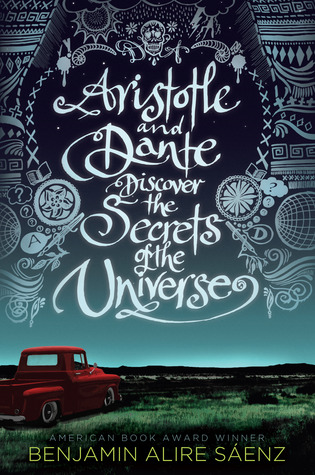
Book Review: Aristotle and Dante Discover the Secrets of the Universe by Benjamin Alire Sáenz

12000020By Eileen Fontenot

DESCRIPTION FROM THE PUBLISHER: Aristotle is an angry teen with a brother in prison. Dante is a know-it-all who has an unusual way of looking at the world. When the two meet at the swimming pool, they seem to have nothing in common. But as the loners start spending time together, they discover that they share a special friendship—the kind that changes lives and lasts a lifetime. And it is through this friendship that Ari and Dante will learn the most important truths about themselves and the kind of people they want to be.

MY TWO CENTS: This book is a four-time award winner–and well deserved! What a moving book. Even days after I finished it, I would still think of Ari and Dante and their friendship, which grows into deeper feelings–how much they influenced each other’s lives over the course of a year, with events tenderly captured by Sáenz. The romantic type of love is not the only one Sáenz touches upon; familial love is also an important topic in the book. Both Dante’s and Ari’s relationships with their families are as complicated as their relationship with each other.

The story is set in 1987 and told from the point of view of Ari–despite this, the reader gains a full picture of Dante. We learn of Dante’s sweet quirks (like his distaste of wearing shoes) and his passion for literature and art. When Dante and Ari meet, Ari is cut off from others. His parents won’t talk about the details of his older brother’s incarceration, and his father is still fighting his demons stemming from his time fighting in Vietnam. He has no real friends. Dante’s openness and delight in the simple pleasures in life helps Ari break out of his self-enforced wall, ostensibly to hide his confusing emotions.

Sáenz packs in so much emotion in such simple and spare dialogue that conveys so much. There are no superfluous words; Sáenz’s writing is lean and packs a powerful emotional punch.

TEACHING TIPS: I would recommend this book to anyone – whether teenager or adult – who ever felt different. And that it’s OK to be that way. This is a universal tale. But besides being just a beautiful love story, the book’s themes include dealing with the feelings that come with an incarcerated sibling, a parent with emotional scars from war, and the challenges that come with being gay, male, and Mexican American. This book is for anyone who feels as if there’s not enough compassion in the world.

If librarians and teachers want to try a writing exercise inspired by this book, I would ask teens who have read the book if they can attempt to reproduce Sáenz’s succinct writing style. You can tell them it’s kind of like writing dialogue on Twitter or that it’s very close to poetry. Ask them to communicate as much as they can with as few words as possible.

AUTHOR (DESCRIPTION FROM INDIEBOUND): Benjamin Alire Sáenz is an American Book Award–winning author of poetry and prose for adults and teens. Aristotle and Dante Discover the Secrets of the Universe was a Printz Honor Book, the Stonewall Award winner, the Pura Belpré Award winner, and won the Lambda Literary Award for Children’s/Young Adult Fiction. Everything Begins and Ends at the Kentucky Club won the PEN/Faulkner Award for Fiction. His first novel for teens, Sammy and Juliana in Hollywood, was an ALA Top Ten Book for Young Adults and a finalist for the Los Angeles Times Book Prize. His second book for teens, He Forgot to Say Goodbye, won the Tomás Rivera Mexican American Children’s Book Award, the Southwest Book Award, and was named a New York Public Library Book for the Teen Age. He teaches creative writing at the University of Texas, El Paso.

FOR MORE INFORMATION ABOUT Aristotle and Dante Discover the Secrets of the Universe visit your local library or bookstore. Also, check out WorldCat.orgIndieBound.orgGoodreadsAmazon, and Barnes & Noble.


Eileenfontenot headshot Fontenot is a recent graduate of Simmons College Graduate School of Library and Information Science in Boston. She works at a public library and is interested in community service and working toward social justice. A sci-fi/fantasy fan, Eileen was formerly a newspaper writer and editor.