Welcome to Cuba Week!


Cuba PearlCuba has been very much on our minds during this year of momentous change and emotional headlines. In a gesture of love and great hope for the Cuban people on both sides of the Straits of Florida, we invited beloved Cuban American children’s writers to speak from their hearts about anything relating to cubanismo. Lucky us: eight authors responded to our invitation with ¡claro que sí!

Guest posts begin tomorrow and continue through next Monday. To whet your appetite, here are some details. You will hear about immigration journeys, life across two cultures, racial identity, remembrances of the Cuba left behind, and the books that sprang from these experiences. Get ready for gorgeous prose from Enrique Flores Galbis; a fresh challenge to publishers from Nancy Osa; nostalgia mixed with humor and biting reality from Guinevere Thomas, Meg Medina, Laura Lacámara, and Christina Díaz González; as well as stirring insights from award-winning poets Alma Flor Ada and Margarita Engle. These authors’ books have enriched young people’s reading lives. For that, and for the perspectives they’ve shared with us, we want to say ¡gracias de todo corazón!

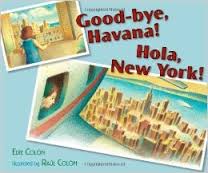
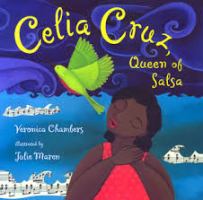
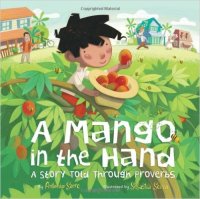
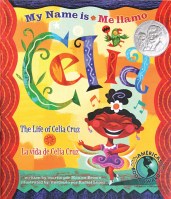
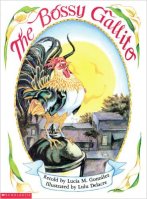
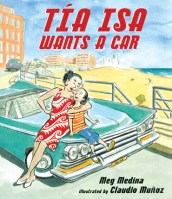
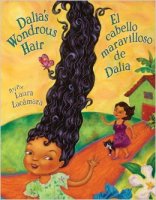
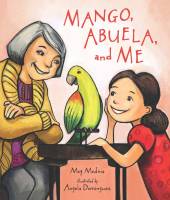
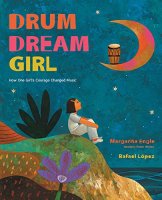
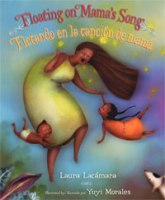
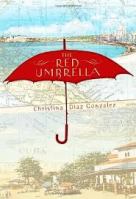
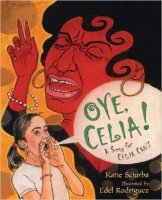
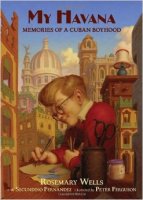
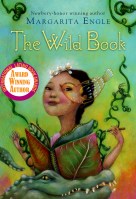
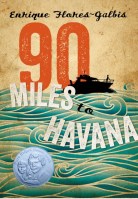
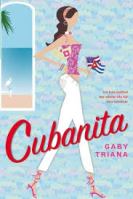
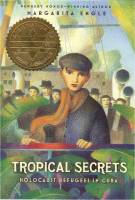
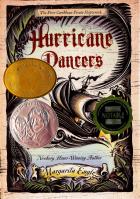
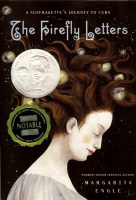
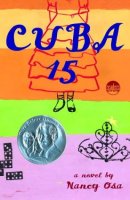
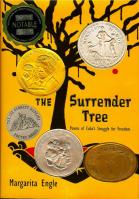
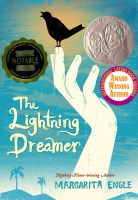
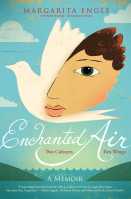
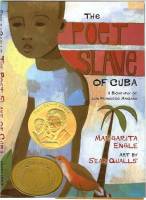
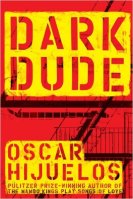
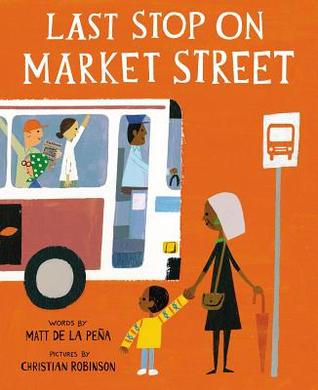
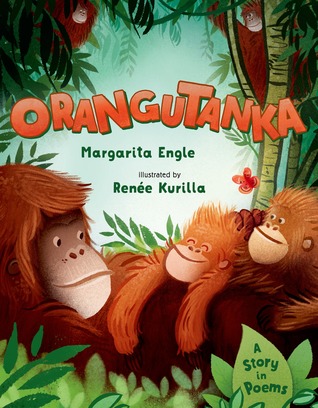
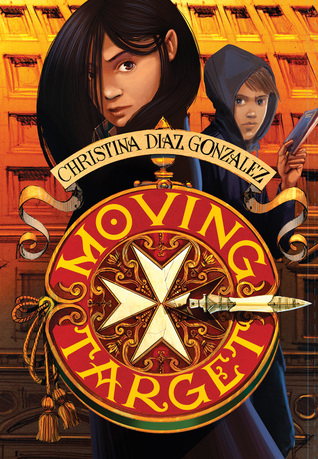
Before we get started on the guest posts, here’s a visual reminder of some glorious children’s books that star Cuban characters and/or settings. Space prevents us from featuring a comprehensive list, but we urge you to add your recommendations in the comments section. To learn more about individual books, click on their cover mages.

Picture Books    

Goodbye Havana Queen of Salsa Martina Mango in Hand

Celia Bossy Gallito Tia Isa  Dalia Cover MANGO_jacket_for_Meg drum dream girl cover floating

Middle-Grade

Island Treasures FINAL ART The Red Umbrella  Oye Celia  Moving Target  My Havana The Wild Book  MountainDog.highrescvr  paperback cover

Young Adult

Cubanita  Tropical Secret    Hurricane dancers notable  Firefly notable  Cuba 15  Down to the Bone   Letters to my mother   Significant Girls  ad6df-yaqui  Surrende Tree Notable  Lightning Dreamer notable  Enchanted Air Poet Slave Dark Dude


Book Review: Becoming Maria by Sonia Manzano

Acting Out Transformative Possibilities: A Review of Becoming Maria: Love and Chaos in the South Bronx

Becoming MariaBy Marilisa Jiménez García, Ph.D.

DESCRIPTION OF THE BOOK: This is the remarkable true story of a girl plunged into a world she never expected. It’s the story of dreams—some of them nightmares, others visions of romance and escape. It’s the tale of a family that is loving and troubled, and of the child who grew up to become a television star.

Set in the 1950’s in the Bronx, this is the beautifully wrought coming-of-age memoir of Emmy Award-winning actress and writer Sonia Manzano, who defined the role of Maria on the acclaimed children’s television series Sesame Street.

MY TWO CENTS: Sonia “Maria” Manzano held a prominent place in American culture for over 40 years, both as a writer and actor on Sesame Street. While many Latino/a readers have struggled to find characters reflecting their experiences in books, Manzano filled this void on one of the most beloved American television franchises in history. Manzano’s performances shaped the way viewers understood Latino/a culture by breaking stereotypes through an expansive repertoire: from friendly neighbor, to comical mime, to new mother, to glamorous leading lady a’ la Ginger Rogers. Indeed, when she announced her retirement this summer, the outpouring of public tributes and reflections on her legendary career underlined just how closely audiences over a generation identified with Manzano’s evolution into a television icon. Now, as a novelist, she continues to respond to the need for Latino/a protagonists. Her newest book, a memoir, highlights the transformative capacity of theatre and performance for young people.

Becoming Maria provides generations of readers with an opportunity to experience Manzano’s evolution from a young Latina, a puertorriqueña, in the Bronx into a promising performer. It is a journey Manzano also reveals as a struggle to reconcile the love and abuse she witnessed in her family life. Becoming Maria is truly the portrait of an artist, as an early passage in the text demonstrates how, even in moments of distress, a young Sonia developed a gift for observation and imagination:

I run to our fourth-floor window, looking for anything, when I see Uncle Eddie’s car pull up. Out spills his wife, Bon Bon; my uncle Frank; his wife, Iris; and my beautiful mother. She is dressed in a soft-colored yellow dress with pleats down the front that she made herself. My father enters my line of vision as he lunges for her. Her brothers restrain him, and I can tell even from the fourth floor that Ma would rip his face off if she could.

There is something beautiful in the picture they make jerking around in the streetlight. And when the Third Avenue El comes swishing through, right in front of our window so suddenly, I feel like I am in the center of the universe and I am happy that they have had this fight because it has introduced me to the wonderful window. And that’s where I go every day, all the time between assaults when there is nervous calm (Manzano 8-9).

Young Sonia’s ability to both observe and “see beyond,” to borrow a phrase from The Giver, her surroundings and circumstances allows her distance and a space to imagine other possibilities. Through this “window,” young Sonia is able reinvent moments in her life. As children’s literature scholar Rudine Sims Bishop has established, a “window” can also function as a metaphor for literature which gives audiences insight to other worlds and cultures.[1] In this moment, young Sonia’s decision to frame her circumstances also signals Manzano’s own expertise providing access into the literary and theatrical worlds she has created for years.

Becoming Maria adds to Manzano’s titles of works marketed for young people. The closest to this text’s breadth and maturity might be her recent young adult novel, The Revolution of Evelyn Serrano (2013), which also features a strong, Latina protagonist coming into her own as a young woman—though the major plot points and struggles emphasized in Evelyn Serrano concern the collective plight of Puerto Ricans in the late 1960s in East Harlem and the rise of the Young Lord’s Party. As in Evelyn Serrano, Becoming Maria includes moments where the young Sonia contemplates the conditions of Puerto Ricans in the New York community and the island, particularly the treatment of Puerto Rican woman by the men in the community. In particular, a young Sonia is frustrated with the realities of internal sexism in a patriarchal culture:

Down with Puerto Rico! Revenge on the island! Screw those people!” becomes my internal battle cry as I vow to shun and reject the place I’ve never been to, where kids drown in sewage, the place of dead mothers, of negligent fathers, of starvation and poverty, of macho men throwing coconuts at their wives’ heads for fun! I know all the horrors even beautiful songs written about the island can’t cover up and will not be fooled by it! (177)

Young Sonia’s struggle to reconcile her views about her home life as both nurturing and abusive parallels with her feelings about her native land. As a writer, Manzano carefully demonstrates how Latino/a authors can both affirm their respective cultures while still encouraging readers to think critically. In fact, the tone and style of Becoming Maria underlines a sense of maturity and confidence in Manzano’s own voice as a novelist.

Overall, Manzano’s work fits into a tradition of Puerto Rican writers including Pura Belpré, Nicholasa Mohr, Piri Thomas, Judith Ortiz-Cofer, and Eric Velasquez who have also written for younger audiences. These writers also demonstrate the power of the creative arts as transformative practices for young Latino/as. Manzano’s position in acting and screenwriting, however, highlights the importance of cultivating spaces in media and performance arts as part of narrating Latino/a histories and counter-narratives.

TEACHING TIPS:

  • Women’s Studies/History: Consider having students read Manzano’s Becoming Maria alongside Mohr’s Nilda (1973) which also emphasizes the evolution of a young female artist. In terms of Latina women’s history, have student compare the differences between the experiences Mohr describes to that of Manzano. Similarly, Becoming Maria might be read in comparison to Esmeralda Santiago’s When I Was Puerto Rican (1993) in which Santiago narrates her journey into performance and New York City’s High School for the Performing Arts, a school which Manzano also attends and describes in the book. How is the journey into performance different/similar in Manzano and Santiago versus the journey into visual arts in Mohr?
  • The Wonderful Window: Young Sonia’s fourth-floor window functions as a kind of retreat which underlines the importance of creating private spaces of reflection and observation for young people. Ask students to reflect on the spaces they retreat to as a means of gaining perspective.
  • Dramatic Arts/Reader’s Theatre: Becoming Maria greatly emphasizes the dramatic arts as a kind of transformative pedagogy for the young Sonia who finds a sense of voice through drama. Consider following up this novel with a play referenced in the book such as Shakespeare’s works and/or Godspell.

[1] Bishop, R. S. (1990). Mirrors, windows, and sliding glass doors. Perspectives: Choosing and Using Books for the Classroom, 6(3), ix–xi.

FOR MORE INFORMATION about Becoming Maria: Love and Chaos in the South Bronx, check your local public library, your local bookstore or IndieBound. Also, check out GoodreadsAmazon, and Barnes & Noble.


Marilisa_Jimenez-GarciaMarilisa Jiménez García is a research associate at the Center for Puerto Rican Studies, Hunter College, CUNY. She works at the intersections of Latino/a Studies and childhood and children’s literature studies. She attended a performing arts middle school for theater and is currently working on a book manuscript on the history of Latino/a children’s and young adult literature and an essay on the Latino/a “YA” tradition. One of the chapters in her manuscripts is about Sonia Manzano’s work. She is also conducting a survey of NYC teachers on teacher education and the use of diverse lit. in the classroom.

Book Review: Out of Darkness by Ashley Hope Pérez

25256386

DESCRIPTION OF THE BOOK: “This is East Texas, and there’s lines. Lines you cross, lines you don’t cross. That clear?”

New London, Texas. 1937. Naomi Smith and Wash Fullerton know about the lines in East Texas as well as anyone. They know the signs that mark them. They know the people who enforce them. But there are some forces even the most determined color lines cannot resist. And sometimes all it takes is an explosion.

Ashley Hope Pérez takes the facts of the 1937 New London school explosion—the worst school disaster in American history—as a backdrop for a riveting novel about segregation, love, family, and the forces that destroy people.

OUR TWO CENTS: 

Cindy L. Rodriguez: As soon as I finished Ashley’s novel, I wanted to reread it as a writer. I want to pull it apart and study it because it’s that good. One of the things I appreciate most was the slow burn of the narrative. The novel opens with the explosion, and then flashes back to show how the characters’ live intersect before the event. The fuse lit in that opening scene coils through the narrative, gaining in intensity as the story leads back to the explosion and then its aftermath. The tension in Naomi’s home, school, and community is palpable throughout the story and increases slowly as we’re led into the heartbreaking climax.

Ashley masterfully balances the big picture and the smallest details. Her writing made me think of a photographer who could both go wide and capture a panoramic view and then zoom in for a close up and not lose anything in this process. She also beautifully balances the swoony magic of falling deeply in love for the first time and the absolutely brutal realities faced by African-Americans and Mexicans at this time in history. BRAVA!!

Lila Quintero Weaver: Ashley’s command of narrative is impressive! In Out of Darkness, she tells a story set in the American past and makes it feel of the moment. It holds all the markers of a historical novel, starting with the cataclysmic explosion of 1937 that looms with ominous eventuality over the characters we come to care about. Threaded with lively detail, the historical richness comes through in social customs, daily activities, and the speech patterns and cultural attitudes typical of 1930s east Texas. No easy feat. I detect a massive amount of research behind it all.

This devotion to authenticity translates into contemporary meaning through the story’s characters and the complicated problems they face. Naomi’s most serious problem is a predatory stepfather whose capacity for evil keeps her in a constant state of vigilance. There is no escape. She has no money or resources and she feels deep loyalty toward her two tender stepsiblings. Because Naomi is Mexican-American and lives in a part of Texas where Mexicans aren’t numerous, she has no community to fall back on and is looked upon by some white classmates as dirty and worthless. When she falls hard for Wash, a young black man who offers her a chance at true happiness, Naomi steps into the arena of forbidden love—one she must keep hidden from society and the stepfather who follows her every move with lecherous eyes. What a story!

Others agree with us, too! Out of Darkness received starred reviews from School Library Journal and Kirkus Reviews. Here are some quotes and links with more information about and praise for the novel:

“The beauty of Perez’s prose and her surefooted navigation through the dangerous landscape of the East Texas oil field in the late 1930s redeem the fact that anyone who dares read this agonizing star-crossed love story will end up in about six billion numb and tiny pieces. Absolutely stunning.” —Elizabeth Wein, author of Code Name Verity and Michael L. Printz Award Honoree

Teen Library Toolbox (an SLJ blog): http://www.teenlibrariantoolbox.com/2015/09/book-review-out-of-darkness-by-ashley-hope-perez/

Detailed review from The Midnight Garden (YA for adults): http://www.themidnightgarden.net/2015/08/outofdarkness.html

Q&A on NBChttp://www.nbcnews.com/news/latino/out-darkness-latina-author-n419026

Diversity in YA post: http://www.diversityinya.com/2015/08/words-that-wake-us/

Q&A on our site earlier this weekhttps://latinosinkidlit.wordpress.com/2015/09/09/qa-with-ashley-hope-perez-about-out-of-darkness/

And this post by Forever Young Adult nails the “casting call” for novel if it were made into a movie. Their picks of Christian Serratos as Naomi and Titus Makin Jr. as Wash were spot on! Nicely done, Forever Young Adult!


TEACHING TIPS: Although the New London, Texas, school explosion was the worst school disaster in our nation’s history, it’s one many (most) students have probably never learned about but should, as it has interesting implications concerning race and class worth exploring. Out of Darkness asks readers to think beyond the black and white dynamics of U.S. race issues by adding Latin@ children to the segregated schools system and portraying the daily concerns and realities of Mexicans who could or could not “pass” as white. Also, the violent consequences of marginalized romantic relationships isn’t often explored in curricula, but might be/should be considering the U.S. Supreme Court’s decision on gay marriage. A book like Out of Darkness could help teen readers appreciate the long history of struggle and violence experienced by people who have wanted to live and love freely.

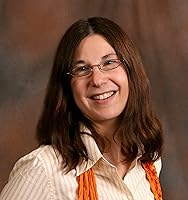
2012AuthorPhoto500pixelsABOUT THE AUTHORAshley Hope Pérez is a writer and teacher passionate about literature for readers of all ages—especially stories that speak to diverse Latino experiences. She is the author of three novels, What Can’t Wait (2011) and The Knife and the Butterfly (2012), and Out of Darkness (2015). A native of Texas, Ashley has since followed wherever writing and teaching lead her. She completed a PhD in comparative literature from Indiana University and enjoys teaching everything from Spanish language and Latin American literature to the occasional course on vampires in literature. She can also be found on Twitter and Facebook.

FOR MORE INFORMATION about Out of Darkness, check your local public library, your local bookstore or IndieBound. Also, check out GoodreadsAmazon, and Barnes & Noble.


Q&A with Ashley Hope Pérez about OUT OF DARKNESS

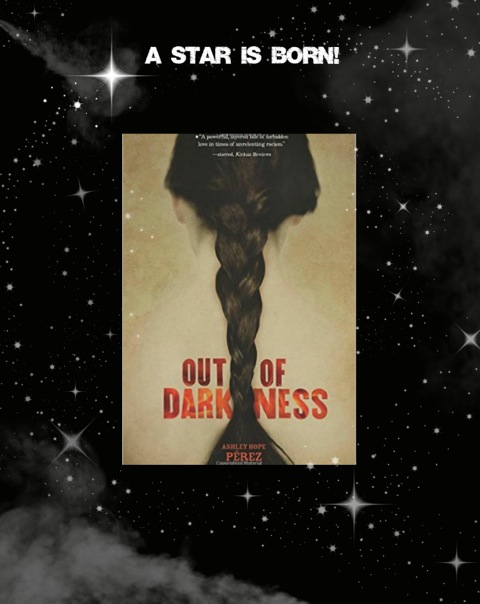
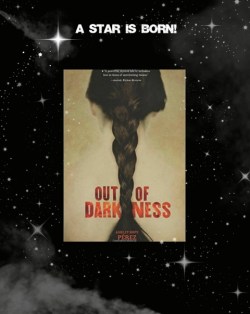
A Star is Born

We’re so thrilled to begin our third year online with a celebration of Out of Darkness by our amiga and co-blogger, Ashley Hope Pérez! Her third novel, which released September 1, is historical fiction, with a deadly school explosion in East Texas in 1937 as its central event. Using multiple points of view, Ashley develops a cast of complex characters who confront brutal racism and violence in addition to the beauty of first love. Amanda MacGregor of Teen Librarian Toolbox said, “Pérez’s story is nothing short of brilliant”, and we wholeheartedly agree! In fact, we think it’s one of the best 2015 releases! If it’s not on your to be read list, it should be. Click here to read Ashley’s post about her work on this novel, and for more insight, see our Q&A with her below.

Ashley, in the last two years, you finished your doctoral dissertation, changed jobs and geographical locations, and gave birth to a second child. How did you manage to write such an ambitious novel with so much else going on in your life?

When you put it like that, it does sound pretty outrageous! The short answer is that, when our first son was one, we moved to Paris for a year. I taught a ton of university English classes, ate yards and yards of bread, and worked on the first draft of the novel. I gave myself that year off from academic research. When we got back, I used the novel as a daily carrot to motivate my academic writing: if I got my words on the dissertation done, I got to take some time for the fiction.

You don’t shy away from controversial territory! This story contains sexual abuse, incest, brutal racism and frank sexuality. Talk about shaping these elements within the boundaries of young-adult fiction.

Wait–there are boundaries to young adult fiction? No one told me!! Really, though, I shouldn’t be glib. It’s just that Andrew Karre (my editor for Out of Darkness as well as for The Knife and the Butterfly and What Can’t Wait) has always seemed more interested in pushing or crossing boundaries than in upholding them. He’s probably one of very few YA editors who sends emails that say things like, “could the sexual details in this scene be a little more explicit, not so coy?” Speaking more broadly, I’ve found it useful to give myself permission to cross even my own boundaries if I felt like doing so would help me get a scene closer to where I wanted it to be. As Andrew puts it, it’s easier to go too far and then scale things back than to strike the right note by trying to tiptoe forward.

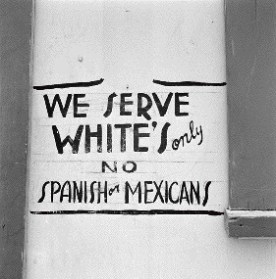
You can tell that the frank depictions of consensual sexual activity is where I feel myself most challenged, but the racism and abuse that are part of the story in Out of Darkness are probably what’s harder for readers to contend with. The reality of racism in the world of 1937 East Texas didn’t seem like something I could—or should—varnish in any way. And sexual predation, now as in the past, flourishes in response to the social and economic vulnerability of potential victims. My main character, Naomi, is extremely vulnerable in both of these areas because of her ethnicity and precarious situation in the household where she lives. Being beautiful only puts her at greater risk.
WHITESonlyWhat went into your decision to use multiple points of view?

I was thinking about angles on the story and contrasts from the time I began feeling my way into the historical material for Out of Darkness. Part of what attracted me to the story was my curiosity—almost entirely unsatisfied by historical sources—about how the African American community experienced the explosion of the (white) New London school. The tensions and interplay between characters’ visions of the world seemed integral to the telling of this particular story. This was especially true since I wanted to recenter the narrative on experiences and perspectives that have been, at best, marginal in mainstream history.

I think readers needed to see the world through a range of characters’ eyes in Out of Darkness to grasp how dramatically different our experiences can be even when we are living in the same community. This understanding is not just a source of interest vis-à-vis the past; it can help contemporary readers reckon with the reality of inequity now. For example, it makes possible reflection on dramatic contrasts in schooling experiences or interactions with police for people of different backgrounds.

The racial complexity in this story is fascinating. As a brown-skinned person, Naomi falls between racial identities and finds doors closing in both the white and black communities. Was New London a mostly white settlement in that era? Did your research turn up instances of Mexicans caught between, as Naomi was?

 Prior to the East Texas oil boom, New London was a small agrarian community with  deeply segregated black and white communities. The discovery of oil meant the influx of many outsiders, both those who were working in oil and those who were simply attracted to the possibilities of a more prosperous community. Even though African Americans were mostly excluded from oilfield work (digging ditches was an exception), newcomers also arrived in search of jobs as chauffeurs, maids, busboys, line cooks, and craftsmen. I could not confirm the presence of a Mexican American like Naomi. Although I strongly suspect that a little girl named Juanita Herron was Hispanic, it’s impossible to know for sure. Still, I was satisfied that it was at least plausible for light-skinned children like the twins to slip into the school in much the way that families in Texas with American Indian backgrounds did. For example, the Drinkwater family in New London probably had Cherokee heritage, and their children attended the white school.
newlondonexplosionNIGHT

What was it about this particular event in history that made you want to dive in and create this narrative?

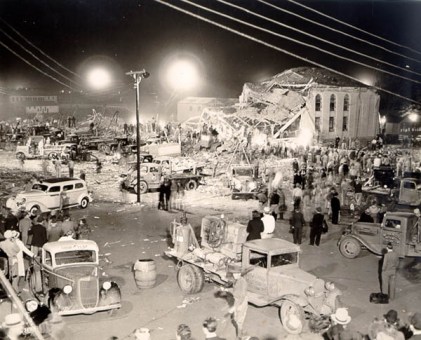
The New London explosion happened close to home (about 20 minutes from where I grew up), but I knew almost nothing about it and only rarely heard it mentioned. When I started, I didn’t know where the explosion would be in the timeline of the novel, but I knew that I wanted to incorporate it. The more I explored, the clearer it seemed to me that my way “into” the story would be different from the approach taken by historians, although historical detail is of course very important to the world of Out of Darkness. I wanted to think about what the explosion meant for the victims and their families, but I was even more interested in following its repercussions outward.

What becomes possible in a community that has been shattered in this way? What forms of brokenness in the community beforehand might have been overshadowed by the deaths of almost 300 children? For example, I wanted to explore the quieter, but no less terrible, effects of segregation. After all, black children were spared from the explosion precisely because they had been excluded from the opportunities at the white New London school, which was billed in newspapers as “the richest rural school in the country.”

And, as is usually the case, I began imagining particular characters. In the case of Out of Darkness, Wash and Naomi came first, then the twins, then their stepfather Henry. Once I had Wash and Naomi, I had to find a space for them to be together (a special tree in the woods), and that’s how the Sabine River and the East Texas landscape became important to the story. I loved writing about the natural spaces of my childhood. Sometimes describing that physical beauty was a bit of a reprieve from the harshness of my characters’ circumstances. And I think I even managed to fall a bit in love with Wash myself.
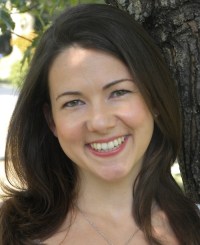
 

2012AuthorPhoto500pixelsAshley Hope Pérez is a writer and teacher passionate about literature for readers of all ages—especially stories that speak to diverse Latino experiences. She is the author of three novels, What Can’t Wait (2011) and The Knife and the Butterfly (2012), and Out of Darkness (2015). A native of Texas, Ashley has since followed wherever writing and teaching lead her. She completed a PhD in comparative literature from Indiana University and enjoys teaching everything from Spanish language and Latin American literature to the occasional course on vampires in literature. She can also be found on Twitter and Facebook.


Let’s Read Latin@: 73 titles released in 2015


We’re back!

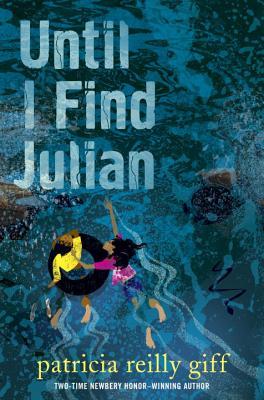
After a short summer break, the Latin@s in Kid Lit crew is back to begin our third year online, celebrating children’s literature by/about/for Latin@s. In December 2014, we had posted a preview of 24 middle grade and young adult releases in 2015. Well, as the year rolled on, we discovered many more! Below, we have posted the covers of 71 picture books, early readers, middle grade, and young adult novels by/for/or about Latin@s that have been or will be released in 2015. If we have missed any, please let us know in the comments.

If we have already highlighted a title on the site, you will be led to that post when you click on the cover. Otherwise, you will be taken to IndieBound.org, Amazon, or GoodReads for more information. We have not read all of these titles–so we cannot vouch for each one–but we plan to read and recommend many of these in addition to 2016 releases. So, go ahead and browse the titles, add them to your to-be-read lists, or buy copies for yourself, friends, and family. With schools opening and holidays around the corner, it’s the perfect time to buy books! If we want to continue to celebrate libros Latin@s, we need to read, buy, and support libros Latin@s! Happy reading!


Picture Books & Early Readers:

22521973   21469072   22750413   22929558      25066557   The Sock Thief   KNIT TOGETHER by Angela Dominguez (Dial) 2/15 -- Picture book   23467663   23467664   23467662   23467661      18528167   22749711   23379443            25779175      FINDING THE MUSIC / EN POS DE LA MUSICA by Jennifer Torres; illustrated by Renato Alarcão (Lee & Low) 5/15 -- Picture book  24753419


Middle Grade:

            24527773   22571259   23282198   24040566   23734473   22504701   22639675   22082059   18938092   23756784      22749539      23309533


Young Adult:

17566703         22718685   23899848   Orange Candy Slices: And Other Secret Tales   22918050   21529626   18625184   20734195   23309551   25317760   20345202   24202275   TAKING HOLD: FROM MIGRANT CHILDHOOD TO COLUMBIA UNIVERSITY by Francisco Jiménez (Houghton Mifflin Harcourt) 4/15 -- YA Memoir   23013839      25077874       22392926   22609306   22295304   25256386   23395349   The House of Hades (The Heroes of Olympus, #4)   WhenReasonBreaks_Comp   22550839   19542841   23202520   NAKED 1600x2400   23281665

Book Review: Surviving Santiago by Lyn Miller-Lachman


23013839By Cindy L. Rodriguez

DESCRIPTION OF THE BOOK: Returning to her homeland of Santiago, Chile, is the last thing that Tina Aguilar wants to do during the summer of her sixteenth birthday. It has taken eight years for her to feel comfort and security in America with her mother and her new husband. And it has been eight years since she has last seen her father.

Despite insisting on the visit, Tina’s father spends all his time focused on politics and alcohol rather than connecting with Tina, making his betrayal from the past continue into the present. Tina attracts the attention of a mysterious stranger, but the hairpin turns he takes her on may push her over the edge of truth and discovery.

The tense, final months of the Pinochet regime in 1989 provide the backdrop for author Lyn Miller-Lachmann’s suspenseful tale of the survival and redemption of the Aguilar family, first introduced in the critically acclaimed Gringolandia.

MY TWO CENTS: As part of her parents’ divorce agreement, Tina Aguilar must travel from Madison, Wisconsin to Santiago, Chile, to spend the summer with her father, Marcelo, a leader of the democracy movement who was previously imprisoned and tortured by the government. The experience left him with permanent physical disabilities. He is also suicidal and an alcoholic.

At first, Tina’s summer is uneventful. She stays mostly in the house with her aunt and father, who barely pays attention to her. She decides she wants to go home early, but then she meets Frankie, a motorcycle delivery boy who gives her plenty of swoony reasons to stay in Chile. Tina and Frankie fall in love, but later–without giving too much away–she discovers he can’t be trusted and that she and her father’s lives are in danger.

Lyn Miller-Lachman does a beautiful job with creating a multi-layered narrative. The romance, family drama, and political intrigue are woven together seamlessly and each of the characters are fully developed. Because of Miller-Lachman’s extensive research and personal travel experiences, the descriptions of Chile are vivid. She captures both the physical landscape and the tense emotional atmosphere during the last months of the Pinochet regime.

One thing I especially appreciated was that Miller-Lachman allows the story to unfold. In other words, I have read so many young adult novels that literally start with a bang, following the “drop the reader right into the action” formula, that reading a narrative that didn’t start this way was a relief. I got to know Tina at home in Wisconsin before she started her journey, which allowed me to connect and sympathize with her before her struggles began.
TEACHING TIPS: This novel would obviously work well in an English classroom if the focus is historical fiction, stories from Latin America, and/or themes about survival or relationships in times of political strife. Surviving Santiago would also work well in cross-curricular way, with students analyzing it as literature in English class and then discussing the historical and political aspects in history class. Teachers could also use it as an option during literature circles with a focus on multi-generational or bicultural experiences. Surviving Santiago could be one of several books offered to students in which the protagonist has to return to her homeland or a parent’s homeland, which allows the main character the opportunity to reconnect with their culture or experience it for the first time.

An image posted by the author.ABOUT THE AUTHOR (from her website): I grew up in Houston, Texas but left at age 18 to attend Princeton University, where I met my husband, Richard Lachmann. After living in Connecticut, Wisconsin, upstate New York, and Lisbon, Portugal, we recently settled in New York City. We have two children, Derrick and Maddy Lachmann.

I received my Masters in Library and Information Science from the University of Wisconsin, Madison and edited the journal MultiCultural Review for 16 years. In 2012, I received my Masters in Fine Arts in Writing for Children and Young Adults from Vermont College of Fine Arts.

I love teaching as much as writing and have taught both middle and high school English, social studies, and Jewish studies. Before moving to New York City, I taught American Jewish History to seventh graders at Congregation Gates of Heaven in Schenectady, New York and ran a playwriting elective for fourth to seventh graders.

I have lots of different hobbies because I love trying new things. In 2007, I became the assistant host of “Los Vientos del Pueblo” a bilingual program of Latin American and Spanish music, poetry, and history that currently airs on WRPI-FM, the radio station of Rensselaer Polytechnic Institute, on Sundays from 2-6 pm ET. I have also built a LEGO town, Little Brick Township, and create stories with my minifigures that I photograph and post on Instagram and my blog.

My husband and I enjoying traveling around the world. If I put a pin on a map for every place I’ve been, the map would have lots of pins. I’ve always wondered what it would be like to live in another place and time, and that’s one of the reasons I write historical fiction.

Lyn Miller-Lachman is also the author of Gringolandia and Rogue and the editor of Once Upon a Cuento, an anthology of short stories by contemporary Latin@ writers. She is also a team member for We Need Diverse Books.

FOR MORE INFORMATION about Surviving Santiago, check your local public library, your local bookstore or IndieBound. Also, check out GoodreadsAmazon, and Barnes & Noble.