Book Review: Kill the Boy Band by Goldy Moldavsky

First, a a few words from debut author Goldy Moldavsky:

Goldy M.

From Goldy’s Twitter account

New York is my hometown. It’s the place where I grew up, the place I love like a person. But the first time I set foot in New York, I didn’t know a word of English. My family immigrated to New York from Peru when I was five, leaving behind my grandparents, aunts, uncles, and cousins in Lima. I can’t imagine how hard it was for my parents to move to a new place, and obviously it was infinitely easier for a five year old to adapt, but still—the culture shock was no joke. I remember crying as a kindergartner because I could not understand anything that my teacher was saying. Luckily, there was a girl in my class who spoke Spanish and translated everything for me.

Eventually, I picked up the language quickly enough, and it was this new culture—and specifically pop culture—that taught me to speak English. When I showed up in Brooklyn, neighborhood kids were singing along to New Kids on the Block and everyone was quoting Steve Urkel. I soaked it up. I guess it’s only fitting that my debut novel, Kill the Boy Band, is infused with pop culture references. While my parents were out working hard, I was learning a new language watching episodes of Saved By the Bell and the Fresh Prince of Bel Air after school. Though, I would still watch telenovelas with my family after dinner. I was just as hooked on episodes of Full House as I was on the melodramatic struggles my favorite childhood actress Thalia had to face on Maria del Barrio.

As a Jewish Latina girl who has confounded Jewish people with my Latinaness and Latino people with my Jewishness, pop culture was my great equalizer. And now I have a book that will hopefully be a part of that pop culture, written in a language that I adopted. As corny as it may sound, for an immigrant like me, getting Kill the Boy Band published is my very own version of the American Dream.

Now, the review of Kill the Boy Band by Zoraida Córdova

DESCRIPTION FROM THE PUBLISHER: From debut author Goldy Moldavsky, the story of four superfan friends whose devotion to their favorite boy band has darkly comical and murderous results.

Okay, so just know from the start that it wasn’t supposed to go like this. All we wanted was to get near The Ruperts, our favorite boy band.

We didn’t mean to kidnap one of the guys. It kind of, sort of happened that way. But now he’s tied up in our hotel room. And the worst part of all, it’s Rupert P. All four members of The Ruperts might have the same first name, but they couldn’t be more different. And Rupert P. is the biggest flop out of the whole group.

We didn’t mean to hold hostage a member of The Ruperts, I swear. At least, I didn’t. We are fans. Okay, superfans who spend all of our free time tweeting about the boys and updating our fan tumblrs. But so what, that’s what you do when you love a group so much it hurts.

How did it get this far? Who knows. I mean midterms are coming up. I really do not have time to go to hell.

MY TWO CENTS: Fandom is a complicated culture. ~Goldy Moldavsky, Kill the Boy Band

I loved this book. It’s a refreshing feeling when you find a book that stands out the way Kill the Boy Band does. The book boasts it’s “The most shocking debut of the year,” and I think it might be right. This isn’t the YA novel we’re used to. It’s like a fangirl version of Scream Queens and Mean Girls. And it’s an unapologetic satire, which you need to keep in mind while reading it. It follows four fangirls who idolize a British mega pop band called The Ruperts. They are named so because each of the four boys is named Rupert. They end up kidnapping Rupert P, the least talented, “ugly” one. Every boy band has one. (Chris Kirkpatrick, anyone?) What was meant as an opportunity to get as close as possible to the Boys ends up with girls committing a felony. Things get out of hand. Like, way out of hand. Pause for suspension of disbelief, Weekend at Bernie’s style.

IMG_1839

Zoraida reading Kill the Boy Band on a beach in the Dominican Republic

The girls are at various stages of fandom. There’s Isabel: The Tough One. She’s Dominican and curses in Spanish when she’s mad. She runs a fansite dedicated to The Ruperts, online harasses people who hate The Ruperts, and blackmails her way into being the #1 source for The Ruperts. She’s seen them so often that she’s really at the end of her fandom and more in it for the hits she gets on her website. There’s Erin. She’s like Emma Roberts in every role she plays. She’s the Beautiful, Mean One. Her role is “The Mastermind” of the layers to this scheme. Her story arc and twist are compelling and shocking. There’s Apple. “The Simple One” by a long shot. She doesn’t seem to have a good grasp on reality, and her whims are totally dictated by The Ruperts. She’s Chinese and was adopted by an elderly wealthy couple who gives her everything she wants. They have funded her obsession with The Ruperts, including concerts and Apple’s own Latin nanny (who is an honorary Rupert’s fangirl at this point). Without Apple, the girls wouldn’t be able to secure the super expensive hotel room they need to carry out their plans. Trigger warning: Apple is the target of fat shaming from the other girls. This is where the “friendship” between these girls unravels. They’re friends, but not. This trial is what forces them to remain a unit, even if the only thing they truly have in common is The Ruperts. Once that tie is broken, what do they have left when it comes to friendship?

Finally, there’s our unreliable narrator. She goes by many names, usually plucked from popular 80s movies. The final and most prominent identity is Sloane from Ferris Bueler’s Day Off. “Sloane” is the “Innocent One.” She’s the voice of reason and law in this slice into crime and murder. The best part of this novel is the use of the unreliable narrator. Do we trust Sloane? We shouldn’t, but she frames the story to make herself come out as the “Good One.” Even she tells the reader, breaking the fourth wall constantly, that she very well could make herself as the “Innocent” when she should be or could be the “Crazy” one. There’s a very real moment when Sloane wonders what is the truth in her web of lies. She is a writer of fanfic, after all. What if this is just one more of her elaborate stories she makes up?

Another wonderful aspect of the narrative is the use of modern dialect and internet slang. Gosh, saying that makes me feel a tad old, but it’s true. Sloane speaks the way the internet does. She offers a reflection on fandoms, the mad frenzy of loving someone you only know through music or film, the rush that comes with knowing the intimate details through gossip websites, Twitter, and stolen photos. (I did learn a new term: Citizen Pap. No that kind of pap. It’s Citizen Paparazzi. Duh.) Sloane slowly comes out of her fangirl craze and sees other fangirls through the eyes of their critics. The entire time I think, Why is it that when girls love something, it is easily dismissed? There’s a pivotal moment that summarizes my takeaway from this book. It’s when Sloane is speaking to an adult male:

“You girls…”

Are never taken seriously.

“…should find a nice hobby.”

But we should be taken seriously. We can be amazing. And dangerous.

Kill the Boy Band by Goldy Moldavsky is a crazy, ultra modern ride into the world of fangirls everywhere. With ROTFL moments and girls who are as smart as they are mean, as cunning as they are unreliable, it is a must read.

*Bonus points for cleverly threading in boy band lyrics throughout the novel. #ItsTheHardestThingIllEverHaveToDo.


ABOUT THE AUTHOR:

From Goldy’s Tumblr

Goldy Moldavsky writes YA fiction from her hometown of Brooklyn. She studied journalism in college, where she got to interview some cool celebrities for her school paper. After a bit she realized it’d be more fun making up stories about celebrities, so that’s what she does in her writing. Some of her influences include Buffy the Vampire Slayer, the esteemed works of John Irving, and the Mexican telenovelas she grew up watching with her mother. Follow her on Twitter @GoldyWrites and visit her website.
Goodreads * Amazon * B&N 


Book Review: The Memory of Light by Francisco X. Stork

image

Reviewed by Lila Quintero Weaver

This book talk is based on an uncorrected advance copy.

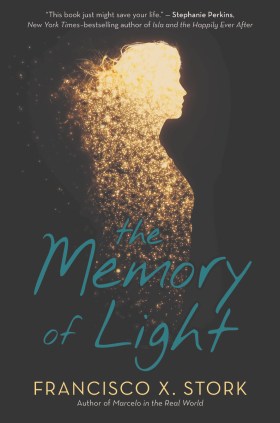
FROM THE PUBLISHER: School: failure. Romance: failure. Family: failure. Suicide: failure. There’s only one thing left to try: living.

When Vicky Cruz wakes up in the Lakeview Hospital psychiatric ward, she knows one thing: She can’t even commit suicide right. But there she meets Mona, the live wire; Gabriel, the saint; E.M., always angry; and Dr. Desai, a quiet force. With stories and honesty, kindness and hard work, they push her to reconsider her life before Lakeview, and offer her acceptance she’s never had.

Yet Vicky’s newfound peace is as fragile as the roses that grow around the hospital. And when a crisis forces the group to split up—sending her back to the life that drove her to suicide—Vicky must find her own courage and strength. She may not have any. She doesn’t know.

Inspired in part by the author’s own experiences with depression, The Memory of Light is the rare young adult novel that focuses not on the events leading up to a suicide attempt, but the recovery from one—about living when life doesn’t seem worth it, and how we go on anyway.

MY TWO CENTS: Another fifteen minutes and the pills would’ve done their work, extinguishing all the bright, unrealized promise of 16-year-old Vicky Cruz’s life. Luckily, someone finds her in time. When she wakes up in the psychiatric unit of Lakeview Hospital, in Austin, Texas, her stomach has been pumped, and the first voice she hears belongs to Dr. Desai, a therapist whose guidance and fierce advocacy serve to pull Vicky away from the brink.

At Lakeview, Dr. Desai oversees the treatment of teens hospitalized with serious mental-health issues. Vicky becomes intimately acquainted with three fellow patients, who play integral roles in her healing journey and offer compelling stories of their own:

E.M. came to Lakeview after one of his violent outbursts resulted in court-mandated treatment.

Mona wrestles with bipolar disorder, which was recently compounded by trauma at home. Child Protective Services removed her little sister from the custody of their mom and stepdad.

Gabriel is a young mystic who initially withholds the exact nature of his mental illness from the others in the group. In Vicky’s eyes, he’s a tender soul who moves in and out of functionality.

Lakeview is the primary setting for much of the novel, but some scenes unfold during off-site excursions, including a stay at Dr. Desai’s working ranch, where the patients perform minor farm chores, and go on a wild-river adventure that nearly leads to tragedy but ultimately opens new avenues for transformation. And there are more wild rides as two of the characters plunge into distressing setbacks. Despite her own shaky condition, Vicky responds to others with empathy, leading her to find greater definition in her own life’s purpose.

Vicky’s road to recovery is far from smooth. Shortly after surviving “the deed,” as she calls her suicide attempt, she’s hard pressed to pinpoint what’s so unbearable about her life. But she’s certain she’ll try to escape it again. Strong clues lie in the hollowness of her family relationships. Her mother died of cancer six years before, and less than one year later, her father remarried. Throughout her mother’s illness and even after her passing, Vicky’s father and her older sister, Becca, detached themselves from the trauma. By contrast, Vicky was the sensitive and attentive child who felt her mother’s absence keenly. Afterwards, it was Juanita, the family housekeeper, who served as Vicky’s truest human connection. Unfortunately, Juanita’s arthritis is too disabling for her to continue working and she plans to return to her native Mexico.

Once Vicky leaves the chilly environment of home and enters the warmer climate of the treatment unit, she begins to entertain the idea that life may be worth living. After consulting with an outside therapist, Vicky’s father and stepmother try to convince her to return home and resume normal activities, including school—the general idea being to jump back on the horse after a fall. Vicky’s instinct tells her this won’t work. For one thing, “our house is not a good place to figure things out,” she realizes. Bit by bit, through flashbacks and in conversations in Dr. Desai’s office and with her new friends, we see that Vicky’s family may be well off, but it isn’t well. For example, whether born obtuse or blinded by unresolved grief, Mr. Cruz uses words as bludgeons, and for Vicky, these words and the attitudes behind them strip her of the sense that she is lovable.

Francisco Stork brilliantly depicts the intangibles of interior life, an ability that he ably demonstrated in his 2009 YA novel, Marcelo in the Real World. In The Memory of Light, Stork summons these powers to communicate the nature of depression. Here’s how Vicky tries to explain its mysterious operations to herself: “I imagine a whole bunch of little minerlike elves who live and work inside the dark tunnels of my brain. They wear flashlight hats of different colors and push clanging carts full of words on steel rails from one corner of my mind to another.”

Vicky experiences small, but important epiphanies during her hospital stay. In a particularly shining scene, Dr. Desai shares approaches to unlocking the vicious circle of obsessive thoughts. One of the nuggets from this conversation is a fable from Dr. Desai’s native India that illuminates the self-defeating nature of holding on to such thoughts.

All of the teen characters and many of the adults in this novel are Latin@s, representing a full range of personalities, social and economic classes, and occupations. The Cruz family belongs to the wealthy sector of Austin. Vicky, who attends an exclusive private school, is markedly aware of her privileged status—and of the fact that it doesn’t shield her from mental illness. Her exposure to the less-privileged lives of her new friends alerts her to her father’s snobbish attitude toward working-class Latin@s. She sees the hypocrisy, too. His own grandfather arrived in the United States from Mexico without a penny.

The Memory of Light is a compelling view of teens in crisis. It points the way toward life beyond depression, yet steers clear of romanticizing serious mental illness. Although it’s primarily Vicky Cruz’s story of dealing with suicidal depression and the agony of living in a family broken by loss and dysfunction, the intertwining narratives of the other young characters charge the novel with extra vitality and shed light on the many faces of mental illness.

TEACHING RESOURCES: Don’t miss Cindy L. Rodriguez’s timely reflections on how depression is viewed in the Latino community. Her article includes a list of YA novels featuring Latin@ characters wrestling with mental illness.

On his website, Francisco Stork features two blog posts related to the topic of depression and the writing of The Memory of Light. See them here and here.

In this article, a school psychologist offers tips for teachers on classroom strategies to help depressed students.

francisco_storkABOUT THE AUTHOR: Francisco X. Stork is a Mexican-born author of six novels for young people. Among these is the multiple award-winner Marcelo in the Real World. A graduate of Harvard University and Columbia Law School, he spent much of his law career working in the field of affordable housing. Learn more about Francisco and his books at his official author site.


IMG_1291Lila Quintero Weaver is the author-illustrator of Darkroom: A Memoir in Black & White. She was born in Buenos Aires, Argentina. Darkroom recounts her family’s immigrant experience in small-town Alabama during the tumultuous 1960s. It is her first major publication. Lila is a graduate of the University of Alabama. She and her husband, Paul, are the parents of three grown children. She can also be found on her own websiteFacebookTwitter and Goodreads.

Author Anna-Marie McLemore on Love in the Time of Preconceptions


By Anna-Marie McLemore

TWOFcoverWhen I met my husband—who I usually refer to online as the Transboy—I was a teen who’d only recently come out. A few months before, I had, as my best friend describes it, been so deep in the closet I was in Narnia. And with that depth of denial came a lot of homophobic thoughts, some of which, I’m sad to say, became words. When I met the Transboy, I was still shaking out of that, the hangover of my own self-loathing. I now recognize the self-hating place my homophobia had come from, but the habit, the instinct to make jokes every time I remembered I was falling in love with a boy with a female body, trailed me.
Marginalization has the potential to bring people together. It allows us to understand each other, to have empathy for where someone else has come from, and to drive us to stand strong for ourselves and those around us.

But it also has a frightening potential to drive people apart. Marginalization can scare us into being small, or quiet, or mean. And for as often as I’d felt out of place as a Latina, I was even more likely to make these mistakes when I realized I was queer.

The Transboy found a way to love me despite that. He had the patience to call me on the things I said while knowing that they came from a part of me I was, slowly, casting off. As much as he handled his own marginalization with graciousness, he understood the fear behind some of the things I once thought and said.

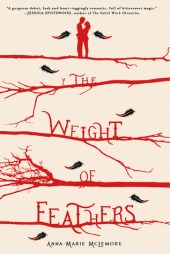
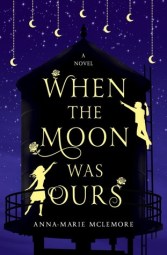
WTMWOcoverThe girls in the books I write make mistakes. Sometimes awful ones, informed by their own prejudices. In THE WEIGHT OF FEATHERS, Lace calls Cluck a racial slur she’s been taught growing up. In my fall 2016 book, WHEN THE MOON WAS OURS, one main character misunderstands the other’s process of coming to terms with his own gender identity. At the heart of what I write are not just characters of color, but characters who go through the very real process of being torn apart and brought together by their own experiences of marginalization.

C.S. Lewis called the beginning of friendship that moment of realizing, “What? You too? I thought I was the only one.” And I believe that. For friendship. For building communities. For falling in love. And for the magic of seeing not only yourself in someone else, but them in you.


Anna-Marie McLemore was born in the foothills of the San Gabriel Mountains, raised in the same town as the world’s largest wisteria vine, and taught by her family to hear la llorona in the Santa Ana winds. She is a Lambda Literary fellow, and her work has been featured by The Portland Review, Camera Obscura, and the Huntington-USC Institute on California and the West. THE WEIGHT OF FEATHERS, a finalist for the William C. Morris Debut Award, was released in 2015, and her second novel, WHEN THE MOON WAS OURS, is forthcoming from Thomas Dunne Books/St. Martin’s Press in fall 2016. You can find Anna-Marie at annamariemclemore.com or on Twitter @LaAnnaMarie.
Book Review: Burn Baby Burn by Meg Medina


25982606Review by Cecilia Cackley

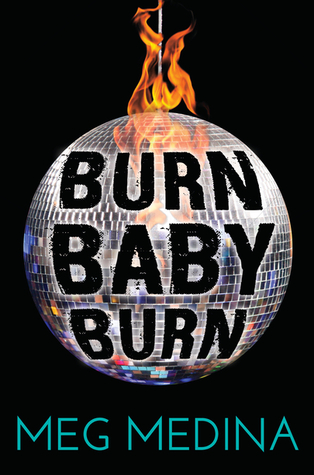
DESCRIPTION OF THE BOOK (from Goodreads): Nora Lopez is seventeen during the infamous New York summer of 1977, when the city is besieged by arson, a massive blackout, and a serial killer named Son of Sam who shoots young women on the streets. Nora’s family life isn’t going so well either: her bullying brother, Hector, is growing more threatening by the day, her mother is helpless and falling behind on the rent, and her father calls only on holidays. All Nora wants is to turn eighteen and be on her own. And while there is a cute new guy who started working with her at the deli, is dating even worth the risk when the killer likes picking off couples who stay out too late? Award-winning author Meg Medina transports us to a time when New York seemed balanced on a knife-edge, with tempers and temperatures running high, to share the story of a young woman who discovers that the greatest dangers are often closer than we like to admit — and the hardest to accept. Burn Baby Burn releases March 8 from Candlewick Press. It has been named a Junior Library Guild Selection and has received a starred review from Kirkus.

MY TWO CENTS: Meg Medina follows up her Pura Belpré winner Yaqui Delgado Wants to Kick Your Ass with another story of a girl in Queens just trying to survive high school and family drama. Burn Baby Burn takes place in the summer of 1977, and the larger struggles of New York City grappling with a serial killer, power outages, and arson parallel the way the protagonist Nora is trying to cope with a threatening older brother, an absent father, and a traditional mother who protects family and men at the cost of everything else.  Medina perfectly captures the stifling atmosphere that drives Nora to hide her struggles from her best friend and love interest. I just wanted to give Nora a hug and say please, tell someone about what’s going on at home, but I also understood how her pride and shame drove her decision making. Medina carefully builds the suspense, never taking the easy way out of resolving a conflict. You will be holding your breath by the end of the book, hoping desperately that Nora will triumph.

TEACHING TIPS: The historical setting makes this a good fit for a history or sociology class. Classes studying serial killers, cities in transition, or class and racial tension will find this a compelling read. Medina’s incorporation of the feminist movement and in particular her nod to how it left out women of color is a great place for a class to start a discussion.

photographer, Steve Casanova

photographer, Steve Casanova

ABOUT THE AUTHOR: Meg Medina is an award-winning Cuban American author who writes picture books, middle grade, and YA fiction. She is the 2014 recipient of the Pura Belpré medal and the 2013 CYBILS Fiction winner for her young adult novel, YAQUI DELGADO WANTS TO KICK YOUR ASS. She is also the 2012 Ezra Jack Keats New Writers medal winner for her picture book TIA ISA WANTS A CAR.

Her most recent picture book, MANGO, ABUELA AND ME, a Junior Library Guild Selection, has earned starred reviews in Booklist and Publishers Weekly, and  is included in the 2015 American Booksellers Association’s Best Books for Young Readers Catalog.

Meg’s other books are THE GIRL WHO COULD SILENCE THE WIND, a 2012 Bank Street Best Book and CBI Recommended Read in the UK; and MILAGROS: GIRL FROM AWAY.

Meg’s work examines how cultures intersect through the eyes of young people, and she brings to audiences stories that speak to both what is unique in Latino culture and to the qualities that are universal. Her favorite protagonists are strong girls. In March 2014, she was recognized as one of the CNN 10 Visionary Women in America. In November 2014, she was named one of Latino Stories Top Ten Latino Authors to Watch. 

When she is not writing, Meg works on community projects that support girls, Latino youth and/or literacy. She lives with her family in Richmond, Virginia.

FOR MORE INFORMATION about Burn Baby Burn, check your local public library, your local bookstore or IndieBound. Also, check out GoodreadsAmazon, and Barnes & Noble.

Here is the official book trailer for Burn Baby Burn:


Cackley_headshotCecilia Cackley is a performing artist and children’s bookseller based in Washington DC where she creates puppet theater for adults and teaches playwriting and creative drama to children. Her bilingual children’s plays have been produced by GALA Hispanic Theatre and her interests in bilingual education, literacy, and immigrant advocacy all tend to find their way into her theatrical work. You can find more of her work at www.witsendpuppets.com.

Author Marie Marquardt On Immigration, Research, & Writing Fiction From A Broken Heart


By Marie Marquardt

A few years ago, I made a rather unusual decision for a sociologist of religion. I decided to write a romance for young adults – one that is, in many ways, linked to my academic research. I’m going to be honest: it wasn’t exactly a decision. It was something I sat down before dawn one November morning and started doing, despite the constant nagging feeling that this was a huge waste of time and energy because the story would never, ever be finished — much less published.

23848212The words I wrote in those pre-dawn hours eventually became my debut YA novel, Dream Things True. It tells of one Mexican-American family’s journey through immigration, settlement, adaptation, detention, and deportation. It’s told from the perspective Alma Garcia, an ambitious Latina on the verge of adulthood, and Evan Roland, the privileged Southern boy who falls in love with Alma, and who tries with all his might to help Alma preserve her humanity, her extraordinary individuality, andher dreams.

When I began to write Alma and Evan’s story, I was a published author of two non-fiction books on Latin American immigration to the United States, a full-time college professor, and a mother pregnant with my fourth child.  So, clearly, the decision was not one that I made because I needed a new project! I had plenty of projects.

What was I thinking?

Looking back, I see two reasons that I needed to write this story. I work as a researcher, advocate, and service provider with undocumented immigrants in the U.S. South, and because of that work, I often get asked to speak to groups about the contentious topic of undocumented immigration. After several years of standing in front of crowds and sharing great quantities of data and information, I came to a realization: It’s important to know the facts, particularly when so much misinformation is floating around about the causes and consequences of undocumented immigration. But what people long for is the personal connection, the human story.

I have come to believe that, in our polarized, fragmented society, we do not need more information.  Our lives are saturated with information (and misinformation). What we need – what humans long for – is connection. I have been granted the privilege of building friendships with undocumented immigrants, of being a part of their lives, and of caring deeply for them. I have seen the struggles they face not through media sound bites and political rhetoric, but instead through the eyes of love. I wanted to give others, who may not have these opportunities, a chance to enter intimately into the experiences of undocumented immigrants and the people who love them.

I wanted to build connection.

That’s the first reason I wrote Dream Things True. The second reason was one I would only grasp in hindsight. I started writing this book during a very difficult time for undocumented immigrants in the South – when families I knew and loved were being torn apart by detention and deportation. I joined several friends and colleagues to develop a non-profit that works with immigrants in detention and their families. This work is, I believe, the most important work that I do, but it also breaks my heart wide open almost every day. Writing fictional stories about immigrants in crisis allows me to affirm and celebrate their resilience. It also helps me to process the emotion of accompanying these families through very hard times.

I write fiction from a broken heart.

Along the way, I have discovered some surprising similarities between writing fiction and writing academic non-fiction. Both are very hard work. Whether we want to do it or not, authors have to sit down and put words on a page. The professional practice of most good fiction authors I know is much like the practice of good academics: they are inquisitive and creative, and also structured and disciplined. They exist not in solitude, but in a community of people who share their passion and who support their efforts.

Another shared quality is the need for rigorous research. When I began writing Dream Things True, I already had more than a dozen years of experience researching undocumented immigration and working with undocumented immigrants. Nevertheless, I had a great deal of additional work to do, if I wanted to get the story right. Perhaps it’s a sign of how profoundly complex immigration law is, but I consulted with several immigration attorneys and paralegals to ensure that the details of Alma’s story were correct. The story is “true” – not in the sense of reflecting one person’s actual experience, but in the sense of accurately characterizing the journey that Alma’s family would make through the labyrinth that is the U.S. immigration system.

It’s not easy to write a scene at a lawyer’s office or in a courtroom that is both emotionally compelling and accurate, but I do my very best. One of the most amazing compliments I have received was from a colleague who worked for thirty years as the head of immigration legal services for a large non-profit in Atlanta. She told me that the story was, indeed, accurate (yay!) and that she wanted to make it required reading for every incoming attorney at her agency. She believed that reading the story would help them to remember the full, complicated, and profound humanity of each of their clients.

This is the power of fiction.

So I will continue my work as a scholar, advocate, and service provider with undocumented immigrants. And I also will keep writing love stories, because I firmly believe that love is more powerful than fear, and that thorny issues are best solved not from a place of fear but from a place of love.


Below are six short videos of Marie Marquardt talking about her debut novel Dream Things True and her work with undocumented immigrants.


Headshot-OfficialMarie Marquardt is a Scholar-in-Residence at Emory University’s Candler School of Theology and author of contemporary YA fiction.  She has written several articles and co-authored two non-fiction books about Latin American immigration to the U.S. South. DREAM THINGS TRUE (St. Martin’s Griffin/ September 2015) is her first work of fiction.  She lives in a very busy household in Decatur, Georgia with her spouse, four children, a dog, and a bearded dragon. When not writing, teaching, or chauffeuring her children, she can be found working with El Refugio, a non-profit that serves detained immigrants and their families.

Book Review: This Is Where It Ends by Marieke Nijkamp

24529123

Reviewed by Cindy L. Rodriguez

DESCRIPTION OF THE BOOK:

10:00 a.m.
The principal of Opportunity, Alabama’s high school finishes her speech, welcoming the entire student body to a new semester and encouraging them to excel and achieve.

10:02 a.m.
The students get up to leave the auditorium for their next class.

10:03
The auditorium doors won’t open.

10:05
Someone starts shooting.

Told over the span of 54 harrowing minutes from four different perspectives, terror reigns as one student’s calculated revenge turns into the ultimate game of survival.

MY TWO CENTS: As a parent and teacher, both at a middle school and community college, the possibility of an on-campus tragedy is my worst nightmare that proves to be a school’s horrific reality on a too-regular basis. Author Marieke Nijkamp’s debut novel chronicles a heart-wrenching 54 minutes of terror by dropout Tyler Browne, who returns to Opportunity High School the first day of a new semester to take revenge on the classmates he blames for his feelings of loss and abandonment. The story is told from four first-person perspectives: Claire, Tomás, Sylvia, and Autumn.

Claire, Tyler’s ex-girlfriend, is outside the school when the shooting begins. She’s a track star and JROTC member who runs for help with her best friend, Chris. Claire’s brother, Matt, is inside the auditorium. Claire agonizes over what she could have done to stop Tyler. Did she see any signs? Did she know this would happen? She also feels helpless being on the outside and wants to do something, anything, to help.

Tomás and Sylvia are fraternal twins and unspecified Latin@s. Tomás and his friend, Fareed, who is Afghan, is inside the school but not among those trapped in the auditorium. Before today, they were most known for pranks and picking on Tyler, but now they call for help and plan a way to free those inside the auditorium, all the while worried about loved ones inside and whether their efforts will help or cause more harm.

Autumn is a ballerina, Tyler’s sister, and Sylvia’s girlfriend. Autumn and Sylvia are locked inside the auditorium and targeted by Tyler. Autumn’s complex relationship with her brother and their abusive father in the wake of their mother’s death is revealed trough flashbacks. Tyler blames his loneliness on Autumn’s ambitious dance goals and her relationship with Sylvia.

The reader will get a fragmented picture of Tyler’s good and bad sides: protective brother, comforting boyfriend, rapist, killer. When something like this happens, we often ask why and hope to get answers, but the reasons are never enough. Nijkamp explains in our Q&A that she made the decision to have this story not be about the shooter, but about the victims, which is why we never get his first-person point of view.

For me, not really knowing Tyler added to the story’s intensity, leaving me feeling the kind of hurt, confusion, and uncertainty experienced by the fictional victims.

And since we’re a site dedicated to Latin@ Literature, let’s focus on Sylvia and Tomás for a moment. The two are loyal to friends, family, and each other, while having a typical sibling relationship that is sometimes loving, sometimes contentious. Sylvia is a Latin@ lesbian and a main character, which makes her one of the very few in the YA world. She is also accepted by her family when she comes out, as told in a flashback, which is refreshing because this counters the Latin@ families who reject a LGBTQIA+ member because of conservative religious or cultural beliefs. Coming out continues to be devastating for many LGBTQIA+ youth, unfortunately, but I appreciate that Nijkamp portrayed an accepting Latin@ family to show another possibility/reality.

This is Where it Ends, a gripping, heartbreaking thriller, released with Sourcebooks Fire on January 5, 2016. Click here for a discussion guide.

FOR MORE INFORMATION, check your local public library, your local bookstore or IndieBound. Also, check out GoodreadsAmazon, and Barnes & Noble.

Marieke landscapeABOUT THE AUTHORMarieke Nijkamp was born and raised in the Netherlands. A lifelong student of stories, language, and ideas, she is more or less proficient in about a dozen languages and holds degrees in philosophy, history, and medieval studies. She is a storyteller, dreamer, globe-trotter, geek. Her debut young adult novel This Is Where It Ends, a contemporary story that follows four teens over the course of the fifty-four minutes of a school shooting, will be published by Sourcebooks Fire in January 2016. She is the founder of DiversifYA and a senior VP of We Need Diverse Books. Find her on Twitter.


photo by Saryna A. Jones

Cindy L. Rodriguez is a former journalist turned public school teacher and fiction writer. She was born in Chicago; her father is from Puerto Rico and her mother is from Brazil. She has degrees from UConn and CCSU and has worked as a reporter at The Hartford Courant and researcher at The Boston Globe. She and her daughter live in Connecticut, where she teaches middle school reading and college-level composition. Her debut contemporary YA novel, When Reason Breaks, released with Bloomsbury Children’s Books on 2/10/2015. She can also be found on FacebookTwitter, and Goodreads.