Changes I’ve Seen, Changes I Hope to See


For our first set of posts, each of us will respond to the question: “Why Latin@ Kid Lit?” to address why we created a site dedicated to celebrating books by, for, or about Latin@s.
By Lila Quintero Weaver

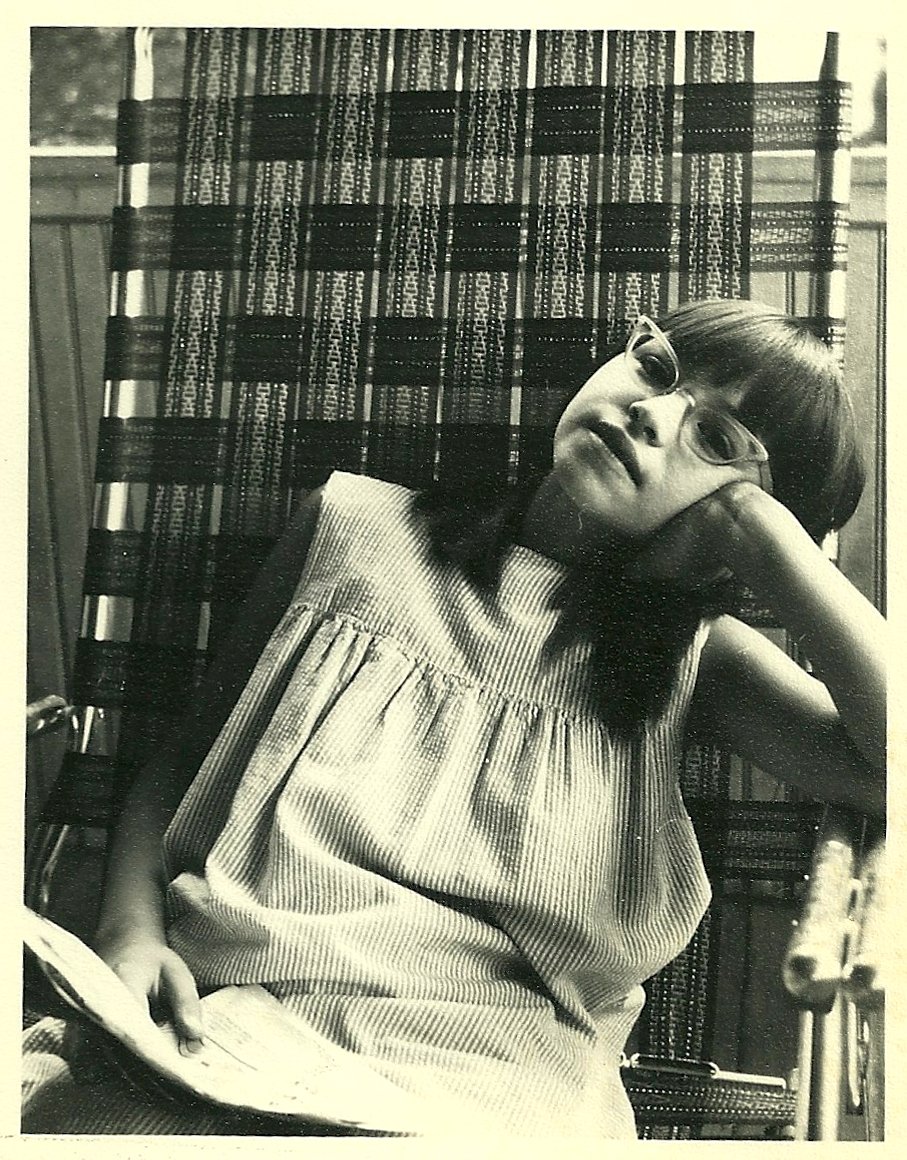
Lila, the bookworm, way back in the day.

Lila, the bookworm, way back in the day.

1963, Small Town, Alabama: I’m an immigrant kid in the second grade, well in command of English by now and eighty percent Americanized. Nobody brown or trigueño whose last name isn’t Quintero lives around here. Matter of fact, we’re one of the rare foreign families in the whole of Perry County—a bit of exotica, like strange but harmless birds that show up in the chicken yard one day.

With our nearest relatives in Argentina, seven thousand miles removed, my mother’s best friend is a war bride from Italy whose nostalgia for the old country goes hand in hand with Mama’s pining for Buenos Aires. Their conversations are peppered with overlapping terms from the Romance languages of their backgrounds. My father has his own ways of navigating the cultural void. He’s no communist, but he listens to Radio Habana Cuba on the shortwave radio. Fidel’s propaganda is something to ridicule, yet nothing else on the dial delivers Spanish. And he craves Spanish. That’s what your native tongue does—transports you back to the place you sprang from.

In 1963, nobody uses the terms Latino or Hispanic. Diversity may be in the dictionary, but if anyone’s applying it to ethnic groups, it hasn’t reached these backwaters of the American South. And as far as I know, the word multicultural hasn’t been invented; for that, we’ll have to wait another twenty years.

When I, the second-grade immigrant kid, drop by the Perry County Public Library, it’s to a creaky old clapboard house whose floors sag under the weight of books. The library at my elementary school is much the same, dusty and clogged with outdated materials. Luckily, my dad’s faculty status at a local college gives me library privileges. There, a small but gleaming collection of children’s books entices me up to the second floor.

I’m a bookworm. I devour everything published for kids. The books I love best entrance me through the power of story, not by how well their characters reflect me. Even so, I can’t help but notice that none of the characters has snapping brown eyes and olive skin. The girls in the books I read have names like Cathy and Susan. No one stumbles over these girls’ surnames and their parents don’t speak accented English. The closest thing to a Latino character I come across is Ferdinand, the Bull. ¡Olé!

Thirty-eight years later, when my youngest daughter is in fifth grade, we read aloud together almost daily. In Pam Muñoz Ryan’s Esperanza Rising, it’s wondrous to encounter a Latina character that feels like a real girl, not a shadow puppet with easy gestures that stand in for Hispanic. Fast forward to 2013, when Dora the Explorer is almost as well known as Mickey Mouse, and authors with names like Benjamin Alire Saenz and Guadalupe Garcia McCall show up in the stacks of the local public library with regularity. Compared to the Latin@ offerings of my childhood, this feels like an embarrassment of riches.
IMG_1291

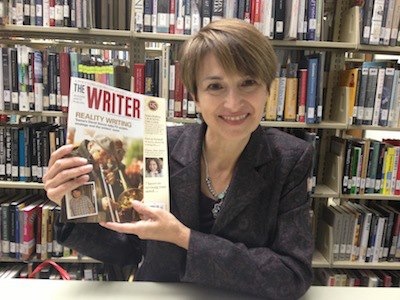
Lila, the bookworm and author, today.

In March 2012, just after publishing my coming-of-age graphic novel, Darkroom: A Memoir in Black and White, I find myself at the National Latino Children’s Literature Conference. There, my eyes are opened. I discover that the exploding population of young Latin@ American readers is still under served. On the whole, children’s publishing favors a model that reflects the Anglo world familiar to most editors, agents, and booksellers. The terms diversity and multiculturalism roll off the tongue easily now, but books about minority kids are still not rolling off the presses in sufficient numbers to match the need.

Through this blog, together with my younger collaborators— all of whom grew up in an era far more open to diverse cultures—I have the glorious opportunity to make a difference. I can celebrate the Latin@ characters that do exist in children’s books. I can help promote authors and illustrators who incline toward such stories or whose heritage broadcasts the message to Latin@ youth that they too can write and illustrate books. I can connect parents to new offerings in the biblioteca and hunt down librarians, scholars, and teachers eager to share their expertise with a non-academic audience. That’s what I’m here for—to dig out books, authors, and experts that affirm Latin@ identity and give them a friendly shove into the limelight.
 

Comadres y Compadres: A Guest Blogger Reports

By Yadhira Gonzalez-Taylor

An eclectic group of writers, editors, and publishers, most of Latino heritage, gathered at Las Comadres y Compadres 2nd Annual Writers Conference at Medgar Evers College in Brooklyn on Saturday, October 5, 2013.

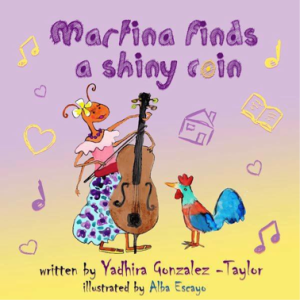
I am fairly new to creative writing, having just published an illustrated children’s book, Martina Finds a Shiny Coin. I networked, made new friends, and was impressed with the panels, which offered a wealth of information for writers at any stage of their writing careers. Panels ranged from self-publishing to presenting quality proposals for agents and major publishing houses. They had great craft shops on creating literature of all genres and for all ages.

The conference focused on the need for Latin@ literature and how Latin@s are underrepresented as an ethnic group in this industry. We live in the most diverse nation in the world, yet we are underrepresented in the stories we read to ourselves and our children and grandchildren. Even more alarming is the fact that, in the age of diversity and equal opportunity employment, we are underrepresented in the editing, publishing, and promotional arms of the literary industry.

At the conference, representatives from Random House, editors, and small press publishers all seemed to have the same message for the aspiring and published authors—there is an open invitation to produce quality material that suits the beautiful blend that is the Latino culture. Latin@ writers of all genres are invited to produce quality fiction, nonfiction, memoir, and children’s literature geared toward a population that is thriving and growing more each day in the United States.

As a writer and attorney working with at risk-youth in New York City, I see it as my Martina Shiny Coinresponsibility to produce this literature.

As a mother of three children, I have felt frustrated at not finding literature that reflects them or me. By pure coincidence, what began as an afternoon project with my five-year-old became a retelling of my very favorite Caribbean folktale, La Cucarachita Martina y el Raton Perez. One day, my husband asked me if there were any Puerto Rican folktales I could share with her, and immediately la cucarachita Martina came to mind. I heard it a thousand times growing up and even participated in my kindergarten class’s rendition of the fable/folktale.

I frequently told my daughter the original version, or at least what I remembered of it, that my grandmother recited to me when I was growing up in rural Caguas, Puerto Rico. When we traveled to my grandmother’s funeral in 2011, my daughter, then three, asked me if a tiny house nestled in the mountains was Martina’s. Of course, I told her it was, but explained that Martina was very busy and could not have visitors.

After telling the story many times, we sat and rewrote it, adding all sorts of ideas that popped into our heads. We made Martina a cellist because my daughter is a cellist. We made her an avid reader, and a dancer, and a singer of bomba y plena. We sent Martina on a journey of self-discovery after she found the shiny coin. We based Martina’s world in my world, the place where I lived for many years, Parcelas Viejas, in El Barrio Borinquen, Caguas, PR.

The book carries the folktale’s original message of self-acceptance no matter what. The story also sends the message to appreciate all gifts, not just the ones that make you look good. Of course, this is not just a message for Latin@ children but for all children!

In addition to writing Latin@ children’s literature, I am also compelled to seek out and promote contemporary authors who are producing similar literature.

It is a fact that communities thrive economically when residents invest in local business. There are many ways to do this, including visiting small bookstores like La Casa Azul in El Barrio NYC, which caters to our cultural needs. Other ways include supporting and attending Latin@ author readings and signings, or donating to, or volunteering for literary organizations like Las Comadres or any other non-for-profit organization that furthers the mission of promoting Latin@ literature.

We must commit to investing in Latin@ literature for our own sake and the literacy of our children.

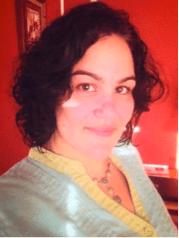
YadhiraYadhira Gonzalez-Taylor is a public service attorney working with at-risk youth in NYC. Before working with young people she worked as prosecutor for Bronx County.  Martina Finds a Shiny Coin is her first children’s book. It was illustrated by Alba Escayo, a Spanish Artist who has ancestral roots in Cuba. Yadhira lives with her family in New York.  Follow her on twitter at @ygonzaleztaylor or Martina the character on twitter at @martinascoin.
Give Kid Lit Readers a Broad Range with Real Characters


For our first set of posts, each of us will respond to the question: “Why Latin@ Kid Lit?” to address why we created a site dedicated to celebrating books by, for, or about Latin@s.

By Ashley Hope Pérez

Like Stephanie, my personal commitment to Latin@ lit comes from my work with teens. Much of my energy as a high school English teacher in Houston went to finding ways to make reading and writing an authentic, meaningful, and empowering part of my students’ lives.

I spent a lot of time scouring our school library and talking to my reluctant readers about what they wanted in a book. No big surprise: a lot of them wanted a book that reflected their experiences in a way that would ring true. We had plenty of successes, but there were a number of students for whom it seemed that the gateway book—that critical read that would persuade them of all that words can do—was missing.

“I want a book that shows how my life really is,” I heard over and over. “Not just somebody brown, but somebody real,” one student insisted. And, “please, I can’t stand it when they make it seem like if you just get into college, you’ve got it made.” That last bit came from one of my top-performing seniors, an impressive scholar by all accounts but also a young woman who had few illusions about the conflicting demands she would be facing in the coming years.

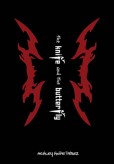
My students—aware of my aspirations to “one day” write a novel—began to recommend (okay, insist, pester, badger) that I write the book that they were looking for, and they were both my inspiration and the first readers of What Can’t Wait. Similarly, The Knife and the Butterfly began with writing exercises I was using to give a group of freshmen in a summer school English class a way of responding to the news coverage of a deadly gang fight a few miles away. In my third novel (watch for it in 2015 from Carolrhoda Lab), I take my concern with Latin@ experiences in a new direction by bringing them to the history of my native East Texas. I explore Hispanic experiences in the primarily black-and-white world of 1930s East Texas through the story of a school explosion, family secrets, an interracial romance between a Mexican American girl and a black boy, and the pressures created by Texas’s three-fold segregation system (black, white, and “Mexican” schools existed in many places). The third novel is going to be something different from my contemporary fiction, for sure, but it’s still written with my students in mind. I like to think that it’s the kind of book that would persuade my students to think about how past experiences scar the present—and what we do to mark loss and begin healing.

It matters quite a lot to me that Latin@ lit avoid the trap of making an “issue” of ethnicity, as Zoraida pointed out. Ethnicity was a non-issue for my students, not because they lived in such a multicultural world (Zoraida’s experience) but in fact because their world was relatively homogeneous; most of the kids in the Southeast Houston neighborhood where I taught were from working class families with roots in Mexico. Even my students who weren’t bilingual regularly heard Spanish and had strategies for managing the interconnections of Spanish and English in their community.

I don’t include glossaries in my novels, as I discuss here, because my books are first and foremost for my kids—and because I believe in the resourcefulness of other readers who come along. All of that to say: writing for my kids felt urgent back when I started What Can’t Wait, and it still does today. But Latin@s in Kid Lit has a broader mission than featuring Latin@ YA: we’re about highlighting awesomeness by, for, and about Latin@s for kids of all ages, including younger readers.

When I have the chance to talk with librarians or teachers about book selection, I often beg them first to make sure their collection goes well beyond the default “diversity” titles. Book selections for younger children should go beyond portrayals of special holidays, for example. I often caution teachers about resorting too quickly to the “minority celebrity” of the hour when attempting to diversify their reading lists.

By the time my (mostly Latin@) students reached my senior English class, most of them had read The House on Mango Street—in part or in whole—a half dozen times. That was because Cisneros’ (wonderful!) and widely discussed book had become synonymous with “Latino experience” in the minds of well-meaning teachers who had little additional knowledge of Latin@ lit, and they didn’t look beyond it when making choices for their classrooms.

The absence of a broad selection of diverse titles can reinforce students’ feelings of exclusion and general disengagement from the world of books. By contrast, offering students (whatever their background) a broad range of literature can generate a lot of excitement.

I, for one, am all for excitement! In future posts, I hope to contribute to the conversation by offering my two cents on what’s happening in the world of Latin@ YA and also by highlighting some of my Latin@ kidlit reading adventures with my son, Liam Miguel.

More from me soon!

Ashley

P.S. Since I talk a lot about how I came to focus on Latin@ experiences in my fiction, I’ve cribbed some of this post from a past feature I did at STACKED , another blog that YA fans and librarians should have on their radar.

Writing and Reading Latino/a Kid Lit is for Everyone, Not Just Latin@s


For our first set of posts, each of us will respond to the question: “Why Latin@ Kid Lit?” to address why we created a site dedicated to celebrating books by, for, or about Latin@s.

By Stephanie Guerra

I teach children’s literature at Seattle University, and each quarter, my students discuss issues of voice and agency in children’s literature. We take up questions such as: What constitutes authenticity in multicultural children’s literature? Who has the “right” to write from various cultural, racial, gender, or ethnic perspectives? It’s wonderful and fascinating to see the debates that arise. Some of my students argue that for literature to be “authentic,” authors should be insiders of the groups they’re portraying. Others feel that intermarriage or long-term residency within a given group is adequate. Still others believe that fiction should be judged on its own merits, apart from the qualifications or attributes of the author.

by Stephanie Guerra

by Stephanie Guerra

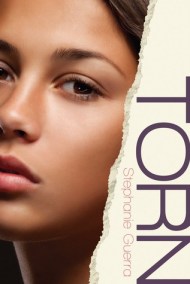
I’m in the “fiction should be judged on its own merits” category, and my first novel (TORN, 2012), is written from the perspective of a biracial Latina teen. I’m not Latina. I married into this last name, which migrated from Spain to Italy so many centuries ago that the Guerra family (my husband’s) identifies as Italian. I am of Italian, Irish, Croatian, and German descent. I chose to attempt a Latina character in honor of a dear friend who expressed to me some of the complexities of her biracial identity.

While each reader must be his or her own judge of whether I captured the biracial experience, the writing itself was a joy, and many teens have expressed that the book meant something to them. In crafting characters from other cultural, ethnic, and racial groups, I believe we’re called to expand our understanding and love of the people we’re trying to depict. It worked this way for me. So this is half of my answer to Why Latin@ Kid Lit?: because I believe writing it and reading it is for everyone, not just Latin@s.

The second reason I care to promote Latin@ Kid Lit is because of my work with incarcerated teens. My academic research is focused on building literacy with at-risk teens, and I’ve encountered study after study demonstrating that readers need the chance to “see themselves” in at least some of the books they read.

I teach creative writing at a juvenile correctional facility, and my students are largely black, white, and Latin@. They respond enthusiastically to fiction about Latin@ characters and culture, and I would love to find more of this material, especially books which are accessible, fast-paced, and of high literary quality. In particular, I’d like to see more Latin@ fiction that falls outside the street lit category. (Street lit, also called urban lit, gangsta lit, and hip-hop lit, is edgy fiction set in urban neighborhoods and featuring gritty topics like drug use, prostitution, gangs, etc.)

In this blog, I hope to provide resources for the many teachers and librarians serving Latin@ teens. I especially want to speak to non-Latin@ adults. I know how it feels to be a cultural outsider teaching cultural insiders. It’s easy to feel awkward or presumptuous discussing racial and cultural issues with students of color, but I don’t think it’s the best way to serve our students. We can and should connect with them on this issue, especially if they indicate a desire to do so. We should work to find literature that speaks to them, and we should find ways to talk about that literature—or to listen respectfully. Latin@ kid lit is a gift we can give children, teens, and ourselves.