Author Jenny Torres Sanchez & Her Characters Are Inspired by the Arts

By Jenny Torres Sanchez

When I was in school and I’d read a story in my English textbook, many times there was a photo or an art piece that went along with it. And there’d always be a question at the end of the story that would ask how the art piece and story go together. Some people hated that question.

I loved it.

I’ve always loved the idea of art going together. It makes sense to me, the way they connect. The way one piece of art can inspire another piece of art, or how you can see a story in a painting, or how a story can paint images in your head. I LOVE that. I guess that’s why I find a lot of inspiration in other forms of art. Not only do I enjoy them for what they are (a striking painting, a haunting photo, a song that you can’t get out of your head), but I also enjoy them because of the stories I see in them.
CharlieMusic? Listen to the lyrics; there’s a story there. Paintings? Full of story, either of the subject or the artist. Photography? Setting. People. Captured moments. It’s kind of like an artist is setting me up for a story, igniting that spark that helps me write. For me, all art is striving to make a connection, with the reader, with the listener, with the viewer. It’s striving to ask you to look inside yourself, or outside yourself, and really wonder and think and feel. And I think you really need to feel to write, so for me the two go hand in hand.

But I also think art can be more than inspiration.

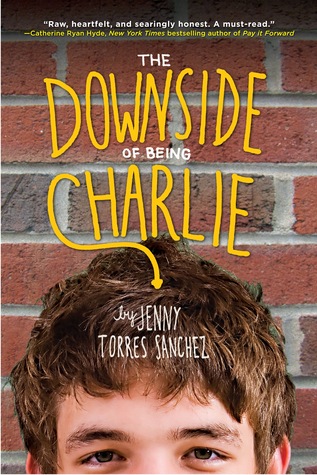
In my books, my characters often turn to art in some way while they’re going through a difficult time. In The Downside of Being Charlie, Charlie finds he can make better sense of the world through the lens of a camera. He is incredibly vulnerable and scared and unable to express himself or deal with his family issues. But in photography, he finds a way to do that. Actually, with Charlie, photography becomes this way of seeing things, exposing things no one else around him wants to see. So, photography also becomes this very powerful and empowering thing for him.
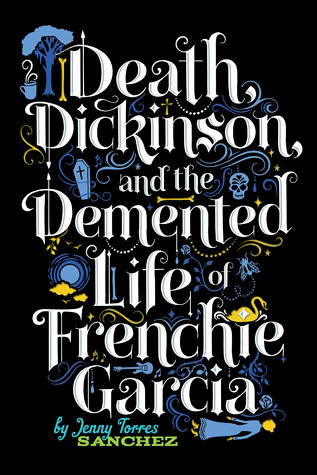
FrenchieIn Death, Dickinson, and the Demented Life of Frenchie Garcia, Frenchie is fascinated by Emily Dickinson’s poems, specifically those about death because she’s is in a dark place in her life. Her high school crush has just committed suicide after an amazing night of adventure with her. Dickinson’s poetry reflects Frenchie’s own feelings, and helps her to come to terms with something that just doesn’t make sense.

I don’t set out to make my characters artsy but they usually end up that way. I think it’s because I also see the arts as something that can save us (I hesitate to use the word save, I really do, because I think ultimately, we choose to save ourselves). But I truly believe music, art, writing, stories can offer us a safe haven and inspiration. A place to hang out for awhile, sometimes as an escape, sometimes as a place to make better sense of whatever it is we are going through. Sometimes it is conscious, and sometimes, not so much. Either way, the arts really can be a sort of salve for anyone who has gone through tough times. I like salve better than save. Add the L.

Overall though, art is pretty amazing in any medium. It asks us to feel. It offers us comfort and understanding. And that can’t be bad.
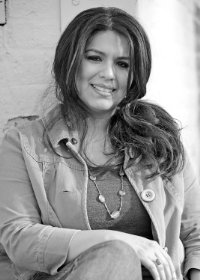
Jenny TorresFrom the Running Press site: Jenny Torres Sanchez lives in Florida with her husband and children where she currently writes full time. Before her debut novel The Downside of Being Charlie she taught high school for several years, where she credits her eclectic students for inspiring her to write young adult novels.

On Thursday, her second novel, Death, Dickinson, and the Demented Life of Frenchie Garcia will be featured on our Libros Latin@s post.

To Be Accurate in Writing, Recognize Truth While Reading

By Cindy L. Rodriguez

As a reading teacher, I often tell my students that the best way to become a better reader is to…wait for it…read. Seems obvious, right? And, of course, the best way to become a better writer is to write. After all, the more you write, the more you produce, the more you learn about writing and about yourself as a writer, and the more you improve.

During our “Road to Publishing” series, we focused on the writing process because, let’s face it, if the writing doesn’t get done, you’re not going to finish your book and become a published author. But, today we want to stress that to become a better writer, you also need to read. A lot.

This may seem obvious to many of us, since most writers I know buy more books than they could ever possibly read in a lifetime, but I’m thinking of my students and other young people who may become future novelists. I often hear students separate reading and writing, as in,”I like to read, but I hate to write” or “I love to write, but I hate to read.”

In response, I offer this quote from a text I use with my college composition students: “Reading and writing function much like breathing in & breathing out. They are inextricably linked” (McQuade/Atwan).

To be a better writer, you must read. Obviously, you read to do the necessary research, and you read within your genre to know what’s been done and what’s popular. But at some point, you’ll also start to read as a writer.

I was always an avid reader, but once I started to write a novel, I read books differently. Of course, at times, I just want to relax and escape and enjoy a good book. Oftentimes, though, I now read as a writer. I notice the structure of the work, vivid descriptions, great dialogue, and chapter endings that keep me reading. I underline beautifully crafted phrases and catch when someone is telling instead of showing. I also wonder if telling is fine in that moment or if my editor would have marked it with a note.

Reading and writing are linked, no question. And, since this is a place where we celebrate and highlight Latin@s in kid lit, I’ll further suggest that if you plan to write Latin@, then you should read Latin@, too. Every conference session I’ve attended or blog post I’ve read about diversity in children’s literature has emphasized the importance of being accurate and respectful when writers venture into territory outside their personal experiences. To be accurate and respectful in your writing, you have to recognize truth and respect while you read.

Part of our site’s mission is to promote literacy and the love of books within the Latin@ community and to encourage interest in Latin@ children’s, MG, and YA literature among non-Latin@ readers. In other words, we want everyone to read and write more Latin@ Lit. To support this, we are adding to our book lists, hosting a year-long reading challenge, and highlighting certain titles in our new weekly feature called “Libros Latin@s.”

Whether you’re reading for research, pleasure, or to become a better writer, we encourage you to add some Latin@ titles to your TBR list this year.

Here are some of the books we’re reading:

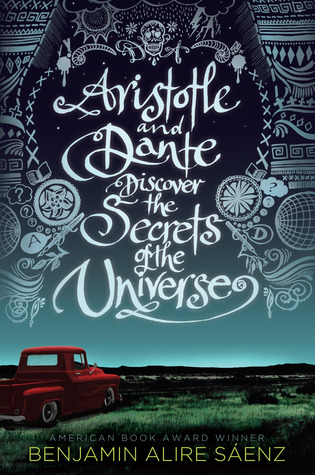
Mexican WhiteBoy     La Linea     Aristotle and Dante Discover the Secrets of the Universe

Secret Saturdays     Confetti Girl     Under the Mesquite

What are you reading?

A New Year = New Goals and Features

Happy New Year, Feliz Año Nuevo, Feliz Ano Novo from Latin@s in Kid Lit!

We’re excited to begin our first full year online. With this new year, we have added features and ambitious personal goals. First, though, let’s recap our last few months.

We launched on Sept. 16,2013,  to coincide with National Hispanic Heritage Month. Since then, we have published 20 posts, which included our “Road to Publishing” series, guest posts, and Q&As.

We gave away 12 awesome books during our 12 Days of Christmas Giveaway, and we’ve had more than 4,000 hits from visitors all over the world. Our top 10 countries are: U.S., Canada, Philippines,UK, Netherlands, Puerto Rico, Mexico, Uruguay, Spain, and Ireland. Our single best day was when we posted a Q&A with illustrator Juana Martinez-Neal, and our most popular post overall was about our 2014 Reading Challenge.

The Reading Challenge will be a year-long project. We’ll check-in on our participants and post links to reviews of books by/for/about Latin@s. So far, we have 22 official participants, although many others have spread the word and given us positive feedback. We’d love for more people to join us, which you can do any time during the year.

We were planning to craft a post about why it’s so important to support diversity in kid lit not only in general, but specifically through our purchasing and reading choices. But, then Kayla Whaley did it so well, we reblogged her post. If you haven’t read it, you should. She makes the point so well. We can SAY we support diversity in kid lit, but we should also DO something about it. What we all can do is be more conscious of what we buy, borrow from the library, read, and review/share.

To further celebrate Latin@ kid lit, we are adding a new feature on Thursdays called “Libros Latin@s.” These will be “book talks” of children’s, middle grade, and young adult books that are written by or feature Latin@s. The book talks will include: information about the book and author, teaching tips, Lexile level (if available), other books by the author, and links for more information.

Sujei Lugo, our newest member and a children’s book specialist, will handle the picture book “book talks.” She is also beefing up our Children’s Book Lists with English, Spanish, and bilingual titles. Because of her additions, we have split the category into two sections! We encourage authors, editors, and publishers to alert us about titles we should add to any of the lists.

In addition to working on the site, we each also have personal and professional goals. Here they are:

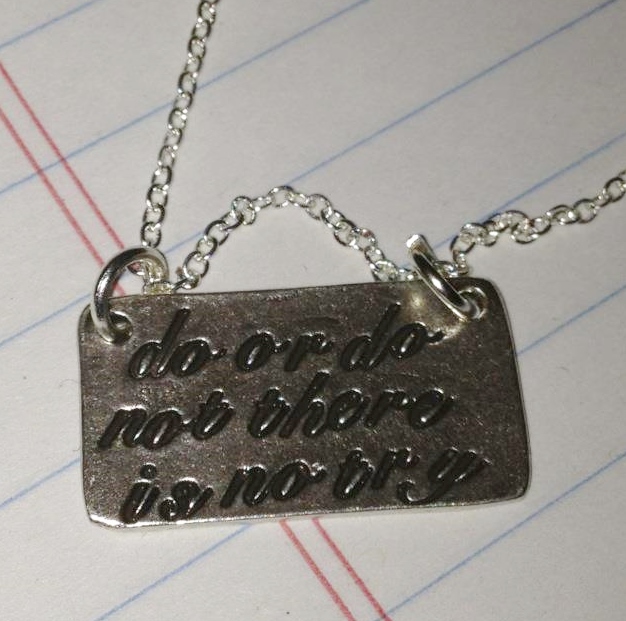
Yoda WisdomZoraida: In 2014 my motto is “Do or do not, there is no try.” It’s a reminder to myself to do my very best. Plus, wisdom from Yoda never hurt anyone. I’m going out with an adult contemporary romance proposal, as well as a YA urban fantasy that centers around a family of Brujas. If there is time (*has a Jesse Spano moment*) I want to revisit the first YA I ever wrote, about a rebellious Ecuadorian girl who turns her quinceañera upside down.

Then there’s the non-writing stuff: have a six pack (the ab kind, not the beer kind), go to the beach, visit Disney for my birthday, learn to play the ukulele (I already bought one), make more art (the painting kind), and you know, fall in love.

Also, Zoraida’s The Vast and Brutal Sea (The Vicious Deep 3) comes out July 1, 2014!

Stephanie: My resolution is to write a picture book for my daughter.

Ashley: Writing goal: take 15 minutes a day to plant and water seeds for novel #4. Personal goal: cook a wider variety of foods (using menus from “The Fresh 20”). Academic goal:  finish and defend my dissertation.

Cindy: Writing: I will do whatever’s needed to support my debut novel, which will be in production this year! I’ll also revise my second book and get it ready for submission. Reading: I’ll read 12 or more Latin@ kid lit books and as many debuts from the OneFour KidLit crew and ARCs from the Fearless Fifteeners. Personal: I’d like to lose 10-20 pounds, and as Zoraida said, you know, fall in love.

Lila: My resolutions are to finish the middle-grade novel I’m working on, to read 12 or more Latin@ kid lit books, and to lose ten pounds. Guess which will be toughest?

Quote for 2014

Best wishes to everyone this new year! May you reach all your goals and may all your dreams come true!

The Road to Publishing: One Take on Working with a (Rock Star) Editor

By Ashley Hope Pérez

In articles and blog posts about breaking into the world of publishing, the lion’s share of attention goes to the writing craft, getting an agent, and securing a book deal. But what happens after those hurdles have been jumped? What can writers expect from their editors once the deal is sealed? And what will editors expect from writers?

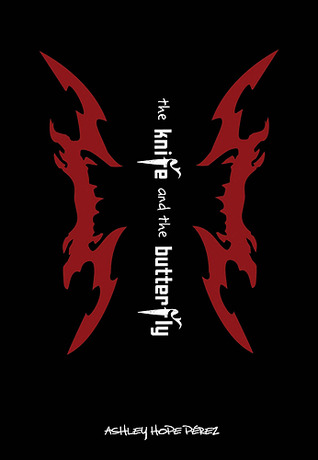
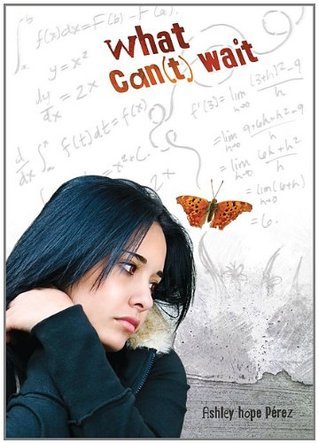
The Knife and the ButterflyBecause writer-editor relationships are endlessly varied, I don’t actually have the answers to these questions. In fact, as I started writing this post, I realized that the only thing I am really qualified to talk about are my experiences working with Andrew Karre, my editor at Carolrhoda Lab. Andrew bought my first two novels, What Can’t Wait and The Knife and the Butterfly, in a two-book deal back in 2009, and now I am in the beginning stages of working with Andrew on a third novel. I can’t say what it’s like for other writers, although you can find some descriptions of authors’ experiences with editors, my favorite being the five perspectives offered up hereWhat Can't Wait

For the editor’s perspective, check out this post from Scholastic imprint editor Cheryl Klein, who also has a book on editing YA. Andrew will stop by the blog on Thursday to toss in his two cents on editorial work; if you want to balance some of my gushing below with more objective reporting, you can read this feature on him in Publisher’s Weekly.

Enough preliminaries. Here’s the scoop I can offer on working with my editor.

What happens after you sign the contract with a publisher? Waiting. Waiting. Waiting. I remember expecting to hear from Andrew the day after the contract was signed, but often there’s a considerable lag (months, friends) between sealing the deal and getting the feedback that will guide the revision. Editors are working on dozens of projects—all in different stages—at any given point. The good ones are expert at juggling these demands and giving each project what it needs.

Isn’t it painful to be told how to revise? To start with, I have to say that Andrew is as close to my “ideal reader” as I expect ever to find. With all three novels, he has grasped the essential aspects of the projects as well as (or better than) I did myself. This fact secures my total confidence in his intuition and editorial recommendations; on top of that, I’ve benefitted from his ability to see subterranean connections that invited development as well as other missed opportunities. So even what might have been “pain” in the process invariably felt crucial to the mission of making the book what it was meant to be.

keep-calm-and-revise--718I should also say that the thought of revision is what gets me through the agony of drafting; revision is my happy zone, where things finally come together. I don’t mind cutting scenes or paragraphs or sentences that I love. I don’t mind writing new material. I don’t mind collapsing subplots, ditching characters, or even radically altering the point of view for 100,000 words of prose. I don’t mind because when Andrew tells me to do these things, I instantly see how much sense they make. For me, Andrew’s vision manages to expand the story’s possibilities while also clarifying what needs to be done to achieve those possibilities.

How, specifically, does the editing happen? I’ve often heard writer friends discuss the editorial letter, which I’m told is a fairly formal write-up of all the things that need to be done in revision for a manuscript to be acceptable to the editor. (More discussion of the editorial letter and an example here ) The editorial letter reflects the major first pass of editing and defines the focal areas for the main revision, after which (everyone hopes) it will be mostly scene- and sentence-level rewriting.

Unless I have suffered some serious memory loss—which is possible since I gave birth to my son during the early editorial process with What Can’t Wait—I don’t think I’ve ever gotten a formal editorial letter from Andrew. Instead, we tend to have several hour-longish phone calls where he tells me what his instincts are as far as what could or should change in the manuscript and why. Perhaps what is most important to me about how these things go is that the “why” is always intimately linked to the internal logic of the novel or its essential characteristics (as opposed, for example, to trends in the market or notions of what teens can “handle”). These conversations generally entail multiple epiphanies on my part and copious note-taking. The macro-level feedback from the phone calls comes along with scene-by-scene feedback via comments and edits in Word.

After responding to the major editorial feedback (over 2-5 months), I submit to Andrew my “final” manuscript. Once he reads and accepts it, I get the second half of the advance (the first half comes with signing the contract). There is still some back and forth and perhaps even some more substantive changes, but all the major pieces are in place. There will be at least one more full read-through with comments to address before the book goes to the next stage of copy-editing (line-by-line stuff and the standardization of things like “OK” for “okay” according to the publisher’s house style), which is done by wonderful people who work under Andrew.

2-14Book-MakingWhat’s next? Then the book goes into production, and a while later (3-6 months) I get an email with galleys that give an idea of what the manuscript will look like as a “real” book. There will also be drafts of jacket copy, which I’m glad I don’t have to write, and cover designs. With What Can’t Wait, I wasn’t in on anything until after the final cover was chosen; with The Knife and the Butterfly, I saw about a dozen preliminary designs and got to weigh in on their relative merits. From contract to the printing of advance reader copies, the process has taken between a year and two.

Any words of advice for those on the road to publishing? The truth is that—at least for your first book—you will have little say in who your editor is. Your agent will submit the book where she or he thinks it’s a good fit, and if an editor bites and makes a reasonable offer, your agent will advise you to accept. There is no room in this process for mailing editors personality tests to check for compatibility.

What you can do is embrace the editorial process as an opportunity to discover more about your novel and your work as a writer. I find that the writer-editor dynamic—inevitably centered on the book—creates an amazing triangle of insight inside of which all kinds of possibilities for the story come into focus. I hope that’s the case for many other writers, too.

JOIN OUR 2014 READING CHALLENGE!

2014 Reading Challenge

A year ago, The New York Times wrote about the lack of Latin@ literature in classrooms, which leaves the youngest members of the largest ethnic or racial minority in the U.S. with little chance to “see themselves in books.” The School Library Journal countered that the literature is there but needs to be promoted.

We believe both statements and would like to see more all around, meaning: more Latin@ children’s literature on bookshelves and in libraries and classrooms, more titles by and for Latin@s on year-end “Best of” lists and best-seller lists, more people buying, reading, and writing about Latin@ children’s literature.

We cannot control publishing and marketing, but we can read and write about Latin@s in children’s literature. So, as the new year approaches, we invite you to participate in our 2014 Reading Challenge. This would be a great way to diversify your reading lists and support already established and emerging writers who include Latin@s in their books. One of the best ways to express that diversity in kid lit is important is to buy, read, and write about these titles.

Here are the Guidelines:

  • This challenge will run from January 1, 2014-December 31, 2014.
  • Anyone can join! You don’t have to be a book blogger. WordPress doesn’t accept anything that uses JavaScript, so we can’t use a linky list. If you want to participate: post somewhere that you are joining the 2014 Latin@s in Kid Lit Reading Challenge, sign up in the comments, and include a direct link to your announcement. Copy and paste our reading challenge logo onto your site. If you don’t have a site, you can spread the word on Facebook, Twitter, or any other way.
  • The goal is one book per month. You may post reviews on GoodReads (use a shelf dedicated to 2014 Latin@s in Kid Lit Reading Challenge), Amazon, Barnes and Noble, Facebook, or wherever else you post your reviews. Again, link back to the challenge. Each month, we will check up on participants, but you can also send a direct link to our email at: latinosinkidlit@gmail.com whenever you read and review a book. We will have a monthly round-up post that lists all reviews available online.
  • Re-reads and crossovers from other challenges are fine.
  • You may select books as you go.
  • You can join at anytime during the year.  Any books you have read in 2014 can be added.
  • Prizes will be given to those who stick with it through the year!
  • Any format, level (children’s, MG, or YA), or  genre is welcome. The book, however, must be written by a Latin@ author and/or include Latin@ characters, settings, themes, etc.

“How will I find such books?” you ask.

“No problemo,” we say. Here are some suggestions:

Also, these titles were on “Best of” 2013 lists:

Yaqui Delgado Wants to Kick Your Ass by Meg Medina; SLJ, Kirkus

From Norvelt to Nowhere by Jack Gantos: PW

Enrique’s Journey by Sonia Nazario, Kirkus

Death, Dickinson, and the Demented Life of Frenchie Garcia by Jenny Torres Sanchez, Kirkus

Niño Wrestles the World written and illustrated by Yuyi Morales, Horn

The Summer Prince by Alaya Dawn Johnson, Kirkus

If you’re like us, then you will be reading anyway because you’re a person who loves books and children’s literature, in particular. Why not challenge yourself to add some Latin@ literature to your TBR pile? We hope you join us!

The Road to Publishing: Going on Submission

By Cindy L. Rodriguez

At this point, you have written a novel with the help of critique groups and beta readers and landed your agent of choice thanks to a killer query letter. Now what?

Before I answer that, I want to emphasize that each writer’s road to publication is different. The process so far–write book, write query letter, get an agent–can play out in myriad ways. Some writers craft a book quickly and wait a long time to connect with the right agent. Some complete several manuscripts before moving ahead in the process. Others choose not to have an agent at all. Please remember there is no one way or right way to get your work published. In general, however, if you plan to head down the traditional publishing path, then you will likely follow the basics outlined in our series so far: write book, craft the query letter, land an agent.

Now what? Your agent may ask you to further revise your novel before it’s ready to submit to editors. When the manuscript is ready, your agent will send it to certain editors based on her experience and knowledge of the editors and publishing houses.

And what do you do? You wait and worry and dream and go to your day job and clean the house until it’s sparkling and check your email a thousand times a day at least and then you try to calm down by reminding yourself it’s out of your hands and after a few deep breaths and zen-like moments, you start a new project and whenever you have a moment, you refresh your email again and again.

Or, maybe that was just me. Like I said, everyone is different. In general, though, many writers agree that the process includes angst-filled waiting because your manuscript is now in the hands of editors, the people who may fall in love with your novel, take it to internal meetings, and offer you a contract.

At this point, the process can take weeks, months, or years. Your friend could sell her novel at auction to a major publishing house with a six-figure advance. You may be rejected dozens of times before receiving a contract. You will both end up on bookshelves, no matter how you got there. Don’t compare yourself to other writers. You will, but you shouldn’t.

Back to the process…editors will read your novel and say yes, no, or maybe but we want you to revise and resubmit. If the novel doesn’t sell, you and your agent may discuss the patterns in the rejections. If certain aspects are routinely criticized, then your agent may ask you to revise further before you go out on another round of submissions. This is exactly what happened to me.

I began working with Laura Langlie in August 2010. I revised certain chapters based on her notes, and we went on submission a few months later. Some editors responded within weeks, while others took months. This is normal. After a series of rejections, an editor expressed interest but wanted some changes. I revised and resubmitted the first eight chapters. After a few months of waiting, we learned she had left the business completely. Sigh.

I revised the rest of the novel in the vein of chapters 1-8. Once done, Laura submitted it to another batch of editors. More rejections–some very flattering, some not so much–and more submissions. In June 2012, we received an enthusiastic response from Mary Kate Castellani from Bloomsbury/Walker. She asked me to revise and resubmit the first nine chapters. After reading those, she gave me the thumbs-up to keep going. I completed the revision, and Mary Kate shared the novel with her team. We had an offer in March 2013.

I have since done another major revision and am currently working on what should be the last round of writing before it moves along in the process. Right now, the novel is scheduled to be published in Winter 2015 by Bloomsbury.

This was my first novel ever. I expected to make lots of revisions, but the thing is, I agreed with the suggestions. I didn’t make changes along the way only because I wanted to get published. I revised each time because I knew my agent’s or editor’s suggestions would improve the story. This back-and-forth between the writer, agent, and editor could make or break the submission process. As a writer, I often asked myself:

What is the heart of the story? Can I cut this or add that and maintain the heart of the narrative? The answer was yes.

And what is the goal? The goal is to share this story, to take it from notes on napkins to hardcover.

Do I trust my agent and editor? Are they respectful, professional, and enthusiastic? The answer was always yes.

So I trusted them, revised, and I made it through a long submission process that required a lot of work. In the end, I knew without a doubt that my much-improved novel landed in the right place.

Best of luck to all of you on submission! Please share your experiences with us in the comments.