A Note For Authors on Jumping Genres

By Stephanie Guerra

Writing in a new genre after successfully publishing a book (or books) can be intimidating; why change what works? Some agents and publishers actively discourage genre-hopping, while others are interested in quality rather than consistency or brand-building.

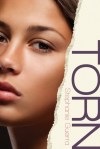
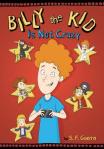
TORNI debuted in 2012 as a YA author of realistic fiction (Torn) and followed up in 2013 with a 90-degree turn to humorous, heavily-illustrated middle grade: Billy the Kid is Not Crazy. I have two more YA coming out next year and I’m finishing a picture book.

If you’re a writer drawn to similar genre shifts, I encourage you to follow your gut. The process can be both freeing and useful in developing range. You may have to rebuild your audience from scratch, which is intimidating. But you’ll end up with a broader audience, a reward in itself.

Billy the KidYou’ll also need to adjust your voice and mentality for your new audience. Transitioning from YA to MG, I had to get in touch with my booger-fart-joke side (it wasn’t that hard) and cut all edge out of my writing (a touch harder). Again, the work builds its own reward: increased range.

But I want to focus a spotlight on the positives, which I believe are the real essence of shifting genres. It’s a form of creative stretching, a way to access a different age or voice inside you, and a way to reengage with the “play” of writing. A YA author may discover a new sense of fun in MG or picture books. An MG author may find freedom in exploring the romance or more mature content possible in YA. A picture book author used to practicing economy with words may relish stretching out into a luxurious novel.

Consider one of the most beloved Latin@ authors of our times, Gary Soto. He’s produced excellent picture books, poetry, middle grade and YA novels, short stories, and adult works. Pam Muñoz Ryan, another Latin@ star, has ranged from picture books to award-winning YA. Jack Gantos, my personal hero, has created picture books, delightful middle-grade (Joey Pigza!), adult novels, and urban memoir.

Some other marvelous children’s authors who’ve changed genres: Madeleine L’Engle, Mark Twain, Roald Dahl, and Laurie Halse Anderson. Literary superheroes like E. B. White jumped from Charlotte’s Web to One Man’s Meat. Roald Dahl dabbled in memoir, adult short stories, suspense, erotica, and of course, children’s fiction. And C. S. Lewis wrote everything short of picture books. What better models could we have?

I like to view jumping genres, too, as an act of defiance to The Market. Conventional wisdom has it that it’s savvy to develop a brand and stick with it, to build an audience and churn out book-clones at the rate of one per year. Many authors do this very successfully, and there’s nothing wrong with it, if it’s fulfilling to the artist in question. But I’m unsettled by branding as a lens for the arts and as a concept imposed on authors by publishers. Branding seems to compete with the essence of what art is or should be. So I advocate stretching the brand. Or better yet, losing the term altogether.

I’d like to share a short (30 second) video of a really articulate 11-year-old reviewing my MG. Thank you, Garrison. Your review gives me confidence that jumping genres was the right choice.

Writing Tips and Diversity Points at the SCBWI Winter Conference

By Cindy L. Rodriguez

The Winter Conference of the Society of Children’s Book Writers and Illustrators in New York is kind of like a massive family reunion, with all 1,000+ people having a love of children’s literature in their blood. It’s very cool for me to break away from my full-time day job as a middle school teacher and attend this annual gathering of creative people who all want to be published or work in some capacity with kid lit. While this love of children’s literature is the common denominator at the conference, the attendants are diverse people with myriad interests. Because of this, my ears naturally perk up when speakers address diversity in publishing.

The SCBWI did not have a specific panel or break-out session dedicated to diversity in children’s publishing, but speakers included Raul Colón, Shadra Strickland, Jack Gantos, and Nikki Grimes. Also, the topic of diversity popped up throughout the conference as writers, illustrators, and editors offered great advice about craft.

During her Saturday session, Anica Rissi, an executive editor at Katherine Tegen Books, outlined seven essential things to remember about writing contemporary fiction.

  1. Just do it: write regularly. Make time for this in your life. Be fierce in protecting your writing time.
  2. Give the reader something to wonder about.
  3. Start with the story, not the back story. Throw us into the action.
  4. You need both external and internal tensions, a plot arc and an emotional arc. You need that emotional growth.
  5. Details should matter. Ask what is this book really about? Is every scene a part of that? When in doubt, take it out.
  6. You need to bring out relatable truths through your characters. Create timeless and timely essential relationships and show how the relationships change the character. During this part of her talk, she said, “Please don’t just write about white people and please don’t just write about straight people.” She added that diverse characters should not always be the “token best friend.” A writer should make every person in the novel “a real person,” she said.
  7. World building exists in contemporary fiction, too. Setting needs to be a character.

Later, Nancy Siscoe, a senior executive editor with Knopf Books for Young Readers, discussed seven essential things about writing the classic middle grade novel. They are:

  1. Audience: middle grade fiction is for readers 8-12 years old. It’s an age of independence, of becoming a person separate from your family. It’s an age of enthusiasm, optimism, and openness.
  2. Plot: Put your kid character in charge. Let them solve their own problems, keep them moving, keep the stakes high.
  3. Hope: You don’t need a happy ending, but you do have to have hope.
  4. Likeable characters: You want a main character your readers would want to be friends with, someone they will care about.
  5. Voice: Make it distinctive. It’s the quality that sets the tone and sets your book apart from others.
  6. Read it aloud: The writing should be smooth, clean, and clear. Middle grade books are often read aloud, so try it while writing.
  7. Heart: The quality that makes your own heart feel bigger and wiser and stronger for having taken the journey.
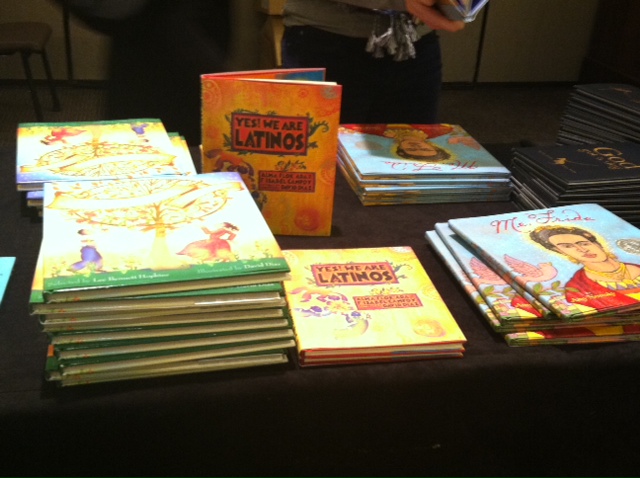
Some of the Latin@ titles at the book sale

Some of the Latin@ titles at the book sale

During her talk, Siscoe was asked about diversity. She responded by saying she is always on the lookout for diverse main characters. In fact, she said a “selling point” for the novel Unusual Chickens for the Exceptional Poultry Farmer, a middle grade debut by Kelly Jones set to release in 2015, was its Latina protagonist.

The final panel on Saturday was about book banning rather than craft. Susanna Reich, chair of the Children’s and Young Adult Book Committee for PEN American Center, floored me during this session. She said children’s and young adult books make up the vast majority of books on the ALA’s list of banned and challenged books. While I knew children’s books were often challenged, I didn’t realize that on the most recent list of the “Top 100 Banned/Challenged Books” from 2000-2009,” 72 of the top 100 are children’s and young adult books, with Harry Potter at the top of the list.

Reich also made the point that censorship isn’t only about removing books from shelves. Censorship also occurs when so few diverse titles make it onto the shelves. “It’s a form of censorship when the amount of multicultural kid lit published hasn’t increased in twenty years,” she said.

But what about those books that do make it onto the shelves? Well, it’s up to us to buy them. Reich quoted poet Alexis DeVeaux, who said, “Buying a book is a political act.” Reich challenged each of us to think about the books we choose to buy and read. Do we censor our book buying in any way? Do we make a conscious effort to read beyond our comfort zones? Do parents and teachers select books for their children and students that include diverse characters?

Multicultural books can speak to all kids, not only kids of color,” said Reich.

Hear, hear! More details from Reich’s talk can be found here on the SCBWI site.

At the end of an SCBWI conference, I am always exhausted in a good way, with a thousand things to consider as a reader, writer, parent, and teacher. This year, the speakers in the sessions I attended reinforced the idea that I can help to promote diversity in children’s literature in each of these roles. Not only can I broaden my own reading interests, but I can expand reading choices for my daughter and my students. By doing this, I will support diversity in kid lit and the members of my SCBWI familia who write, illustrate, edit, and publish books with diverse characters.

Diana López on Migas, Confetti, and Martha Stewart

By Diana López

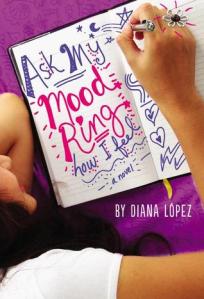
Ask My mood RingRecently, I was asked an excellent question. This came from a writing teacher who shared Ask My Mood Ring How I Feel with his class and wanted me to comment on the narrative techniques I used. His students noticed that I’d added a description of migas, a dish that Tejanos are very familiar with. So they were curious about how I handled cultural details in my fiction. In other words, when writing for readers who do not have the same cultural background as my characters, how do I decide what to explain and what to leave for the reader to figure out?

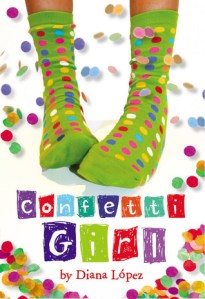
I love sharing the unique foods, words, and customs of my Tex-Mex world. That said, I don’t intentionally add cultural details. I don’t have to because they’re here, in my home and neighborhood. I don’t even recognize them as unique sometimes. For example, in the second chapter of Confetti Girl, we visit a home filled with cascarones and everything that is used to make them—eggshells, tissue paper, vinegar dyes, and confetti. I grew up with cascarones. Starting in January, my mother would save eggshells, and by the end of Lent, we’d have piles of egg cartons stacked on top of the fridge. She’d save old magazines and newspapers too, so we could make confetti with a hole-puncher. Then a few days before Easter, the family would gather around the table to dye the eggshells and fill them with confetti. This was my favorite part of cascarones—not cracking them on each other’s heads but making them.

Confetti GirlCascarones are an important tradition during San Antonio’s Fiesta, and people often sell them from empty parking lots or their front yards. After seeing so many confetti eggs around my neighborhood, I thought, what a great detail for my book. I had no idea they’d be so important in the final version.

When I first submitted the manuscript to New York publishers, they wrote back with questions about these mysterious cascarones. They wanted pictures and instructions. They were so fascinated by something I’d taken for granted. So now when you open a copy of Confetti Girl, you’ll see the confetti egg instructions on its opening pages. It’s wonderful to hear from readers who are making them for the first time. A young girl from Australia wrote to say that she and her mum made them, and when I visit schools, students often share some very creative cascarones, much too pretty to crack on anyone’s head.

Something similar happened with a cultural detail in my mood ring book. Making a promesa when someone gets ill is a common practice in South Texas, so naturally, when my character Erica learns her mother has breast cancer, she makes a promise to get five hundred people to sponsor her for a fundraiser. Like the cascarones, the promesa gained importance as I worked through the novel. Not only did it provide a goal for Erica, but it also worked thematically by giving her a chance to ask a lot of questions about faith and hope. I love when details come to life this way.

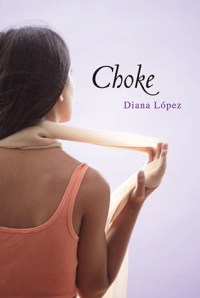
ChokeThere are smaller cultural details in my books, too. Erica sings “pio pio pio” to her mom. In Choke, my character eats barbacoa and drinks Big Red for breakfast. My books are full of “mijas” and “viejitos.” These details may not take on any symbolic significance, but they are just as important because they’re integral to the setting.

At a book festival last month, a participant asked me to name a pet peeve related to writing. I said, “I hate when people tell me I should add more cultural interest to my books.” In other words, I don’t like these details to be forced. They have to feel natural, and as long as I’m not consciously adding them, they will be. Sure, my characters eat migas, but they eat pizza, too.

So how do I decide which details to explain and which to leave alone? This is where a good editor comes in. We’ll get to this point in the revision process where she’ll highlight places with unfamiliar images and words. I remember the first time this happened. I wrote a book set in Corpus Christi, and I mentioned the T-heads, not realizing how unique that term was. The editor had no idea what I was talking about, so I added an appositive phrase for clarification. Ultimately, that’s what I have to determine. Are there enough context clues or should I be a little more explicit? The last thing I want is for a reader to stop because she’s confused. In that sense, I am very grateful to have an editor who is not from my world and who can point out these places—and the best editors are good about letting me decide what to do.

Now here’s something very interesting. Did you know that Martha Stewart featured cascarones on her show? Soon they’ll be as mainstream as piñatas and guacamole, so don’t be surprised when I take all the credit!

Photo credit: Todd Yates

Photo credit: Todd Yates

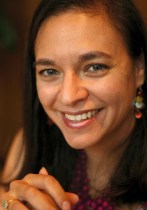
Diana López is the author of the middle grade novels Confetti Girl, Choke, and Ask My Mood Ring How I Feel. An adaptation of Choke will be featured on the Lifetime Movie Network this summer. Ms. Lopez teaches at the University of Houston-Victoria and works with CentroVictoria, an organization devoted to promoting Mexican American literature. She is also one of the editors of the literary magazine, Huizache.

A Conversation with René Colato Laínez

By Lila Quintero Weaver  portada-juguemos-futbol-football
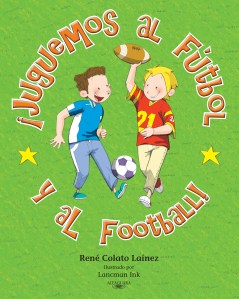
If you are not acquainted with the picture books of René Colato Laínez, get thee to a bookstore right away! A Salvadoran transplant who teaches kindergarten in California, René writes joyful, bilingual picture books that children everywhere adore. I am delighted to share a one-on-one conversation with René about his life and work.

Lila: René, on your website, you express that the goal of your writing is “to produce good multicultural children’s literature; stories where minority children are portrayed in a positive way, where they can see themselves as heroes, and where they can dream and have hopes for the future. I want to write authentic stories of Latin American children living in the United States.”

As a collaborator on Latin@s in Kid Lit, a blog that exists to promote those very goals, I say BRAVO! Now for a question: What led you to adopt these goals?

René: I came to the United States when I was 14 years old. In my country, I was a smart student. I had good grades and many dreams to accomplish. In the United States, I did not know the new language. I felt lost and many times I thought that I would never be able to accomplish my goals. The inspiration to write books with a positive message to minority children came from my own life experience. I worked hard and never gave up. Yes! I accomplished my dreams. I am a teacher and an author. I want to tell minority children that they can accomplish anything they want. With “ganas” you can conquer the highest mountain.
Senor Pancho

Lila: Let me brag on your latest book. Señor Pancho Had a Rancho has received glowing reviews. It was named a top picture book by Chicago Public Library and was included in the Cuatrogatos Foundation anthology, De Raices y Sueños. I could keep going, but let me pause to ask: What inspired you to create what’s essentially a Spanish version of “Old McDonald Had a Farm”?

René: One day my ESL (English as a Second Language) teacher told us that we could learn English through music. She played the song of a man named McDonald and he had many farm animals. When I listened to the song, I was confused when the dog barked woof woof instead of gua gua. My teacher told me that in English farm animals made English sounds. I said to myself, “If I bring my perro from El Salvador, he has to learn English too!” Later on, when I became a teacher, I played the song with my kindergarteners, but I always added the Spanish sounds. After having so much fun with my students, I decided to write a book about both English and Spanish farm animals, where they could have a great time speaking two languages.

Lila: Please share a bit about your childhood experiences of immigration from El Salvador.

René: I left the country with my father, due the civil war. Along with thousands of Salvadorans, my family was looking for a better place where we could be safe from the war. But I had a happy life as a child. I loved to go to school and read all the comics books from Mexico and Argentina, like El Chapulín Colorado and Mafalda. Since first grade, I wanted to become a teacher. My favorite books were Don Quijote and Las Telerañas de Carlota. I was so surprised to find my favorite book in English, here in the United States—Charlotte’s Web.

Lila: You teach kindergarten in a California school full of Latino children. How has this influenced your writing? Is teaching what led you to write picture books in the first place?

René: In high school and college, I wrote many drafts of novels. But when I came to the classroom, I discovered picture books and soon fell in love with them. I started to write my own books for my students and they called me “El Maestro lleno de Cuentos” (“The Teacher Full of Stories”). Later on, after receiving advice from many teachers and talented authors such us Alma Flor Ada, Isabel Campoy and Amada Irma Pérez, I decided to submit my work for publication.

Lila: Your books consistently offer bilingual texts. Why is this important to you?

René: I love bilingual books because you can share them with families who speak Spanish, English or both. They can also be great tools to speak and learn to read a second language. When I started to submit my manuscripts, I always envisioned them as bilingual books—books that I could share with my students, their parents, my family here in the United States, and all my relatives and friends in El Salvador.

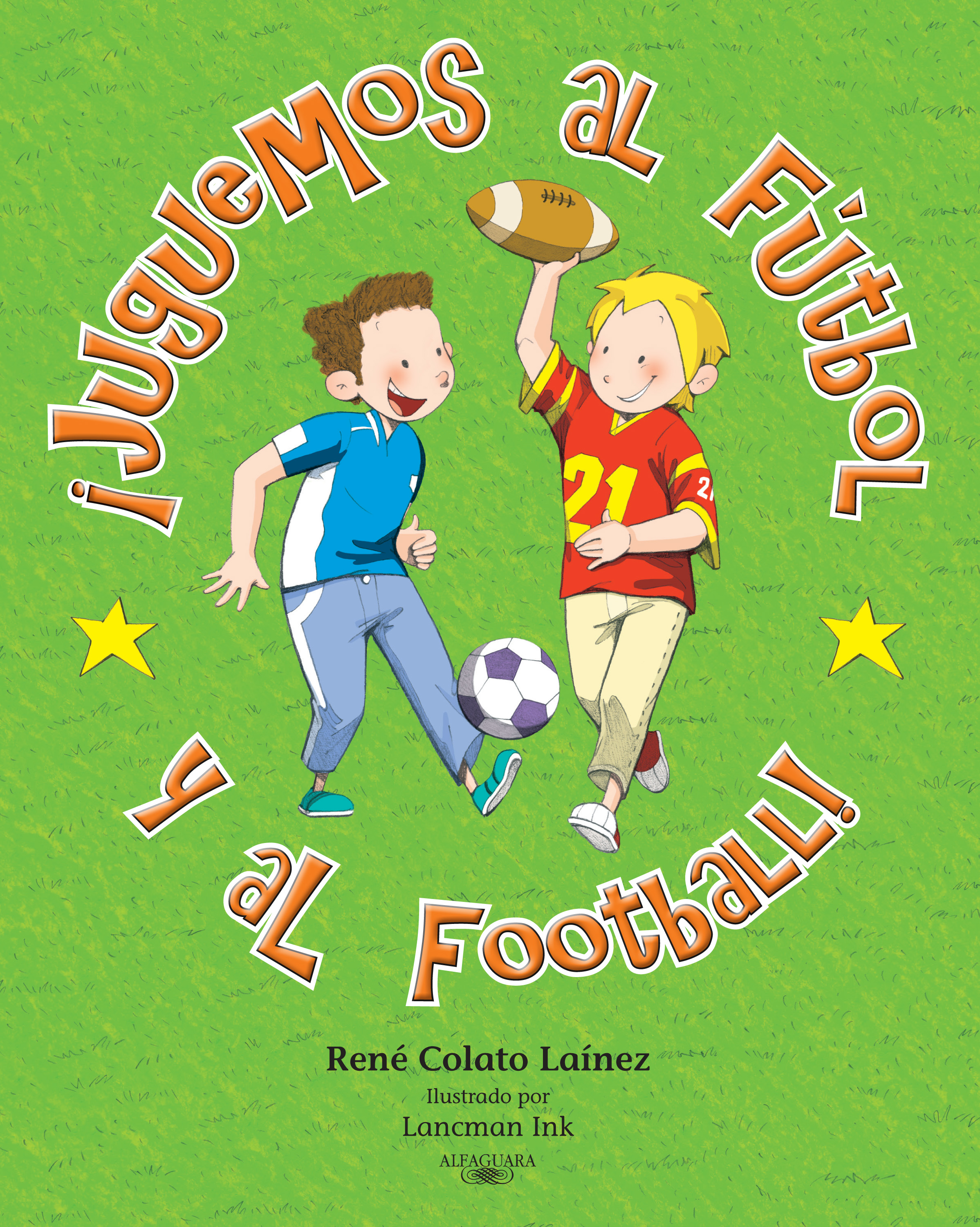
Lila: Your writings frequently celebrate the happy coexistence of Latino and non-Latino cultures. This occurs in The Tooth Fairy Meets El Ratón Pérez and in Juguemos al Fútbol/ Let’s Play Football (coming out this month in the bilingual hardcover edition), to name just two examples. What inspires your multicultural bent?

René: Latino children usually live in two worlds in the United States. They speak English and Spanish and celebrate holidays from the two cultures. Many times people fight to see which language or culture is most important. I love them both and in my books I want to tell children that instead of deciding which culture is better, we can celebrate both and have double the fun.

Lila: Writing a picture book looks easy only to those who have never tried it. What’s it like for you? Do you wait for inspiration to strike or do you have a disciplined routine?

René: Writing picture books is so much fun for me. It was not easy at first but I read tons of them until I was ready to write my own stories for publication. I usually start with the problem or idea for a story. Then I think it over, again and again, and begin to create the story in my mind. When I have something solid, I begin to write it. Many incidents in the classroom help me with ideas for new stories.

Lila: You graduated from the prestigious Vermont College of Writing for Children & Young Adults and have published at least nine books. That’s a lot of experience! Can you share some hints for aspiring writers?

René: Never give up, believe in yourself, and work hard for your dreams. Take creative writing classes and join critique groups. If you are writing children’s books, it is always a great idea to join SCBWI, Society of Children’s Book Writers and Illustrators. Submit your work and learn from rejection letters. Believe in your stories, because you are the only one who can tell and write them. 

renecolatolainezRené Colato Laínez is a native of El Salvador. He is the award-winning author of many picture books and the recipient of honors that include the Latino Book Award, the Paterson Prize for Books for Young People, the California Collection for Elementary Readers, the Tejas Star Book Award Selection, and the New Mexico Book Award. He is listed among “Top Ten New Latino Authors to Watch (and Read)” by the site Latinostories.com*. He received a degree from the Vermont College MFA program in Writing for Children and Young Adults. René’s full-time profession is teaching kindergarten in California. For more information, please visit his official author site

From the Margins of Disaster

By Ashley Pérez

newlondonexplosionNIGHT

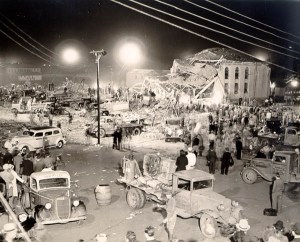
My third novel is about disasters. The disaster that catalyzes many of the events—a 1937 school explosion in New London, Texas—captured international media attention at the time. A more pervasive disaster—systemic racial inequality and unequal access to opportunity—didn’t raise an eyebrow.

Before the explosion, New London was seen as one of the luckiest towns in the country. A small farming village made suddenly prosperous by the discovery of oil, New London was spared the worst effects of the Great Depression. In fact, tax revenues from oil production were what made the building of the New London school possible. It was described in newspapers as “the richest rural school in the world.” At a time when schools in other communities could barely pay their teachers half wages, the New London school had chemistry laboratories, a home economics cottage with a suite of electric sewing machines, musical instruments and band uniforms for all the children, sports, foreign languages and fine arts, even college-credit courses. These opportunities were remarkable for the time and in that they were made available to the many children of the oilfield workers who flooded the area in search of work.

In the end, more than 200 of these children were killed. The estimate is 217, although it’s impossible to know for sure. Many of the bodies were not identifiable or intact after the explosion, meaning that identifications depended on the recovery of personal objects or body parts that had unique characteristics (scars, birthmarks, and the like). In addition, the oilfield workers in New London came and went at all times of the year, meaning that it was hard to know who was enrolled at the time of the explosion. Some families that lost children simply collected the bodies of their kids, packed up, and drove out of town, heading back toward West Texas or Oklahoma or wherever they called home. A systematic record of recovered bodies was not established until hours after the explosion, meaning that some dead children may not have been included in the final count.

As I learned more about the disaster, I found myself returning to a question: what might the New London explosion have meant for black Americans whose children were spared precisely because of their exclusion from the state-of-the-art white school? The oral histories and documentary materials on the explosion make no reference to African American experiences. This kind of exclusion was typical of the time; news in the black community—whether good or bad—rarely received coverage. In many ways, then, the novel narrates from a gap or a silence in the historical record, imagining possibilities based on other histories and on the dynamics between the characters I invent. (I talk about gaps in the historical record a bit more here.)

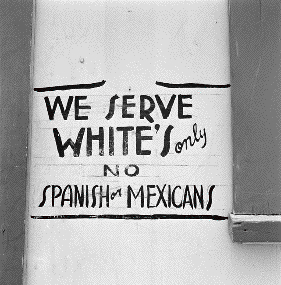
My research also led to the discovery that at least one Hispanic child was killed in the explosion, and I began to imagine the unique confluence of circumstances that could make it possible for a Mexican-American child to attend a white school in 1930s Texas. At that time, and for decades to follow, any place in Texas with a significant Hispanic population employed a tripartite segregation system: white schools, black schools, and even more inferior “Mexican” schools that systematically marginalized students and worked to force them out of the public school system altogether. (More on that process here.) Unlike cities like San Antonio or the rural towns of South Texas, New London did not have an established Mexican-American community. The oil boom—and the prospect of work—attracted people from all over the state and country. In Gather, the opportunity to attend the New London School is what brings the Mexican-American protagonist and her twin siblings to East Texas in the first place.

A shared history of school segregation is something that unites the protagonist and her eventual love interest, the handsome son of the principal of the London Colored School. But there are important differences to note, too, about their experiences in school. While African-Americans in 1930s faced gross inequalities when it came to educational resources, the pioneering efforts of many individuals to use education as a tool for advancement meant that finishing high school and possibly even attending an all-black college were at least possible. Not so for most Mexican-American students in Texas, where most kids were essentially forced out of public school by sixth grade.

WHITESonly

Enormously overcrowded classrooms in the “Mexican” schools made learning difficult, putting the students further behind their white peers with each year. On top of that, the school districts in Texas often divided each elementary grade into two years (for example, “lower first,” “upper first”) in “Mexican” schools. The result was that–by middle school—these students were often told they were “too old” for the grade they should have been able to join in the (white) middle school. Access to high school was extremely limited; in Houston in the 30s, for example, only a handful of Mexican-Americans (usually lighter skinned) graduated from high school at all despite a significant Hispanic population in the area. These students faced discrimination in white schools, and there was no “Mexican” public high school. Access to university-level study would have been limited to those students who could pass for white.

In addition, unlike African-Americans, whose teachers–also African-American–were usually committed to helping students use education to combat their circumstances, Mexican-American children were almost invariably taught by white teachers who often considered this an “undesirable” placement and were quick to underestimate the abilities of their students.

While these experiences of inequality wouldn’t seem to be central to the novel, in many ways they condition both the possibility of the story and the particulars of its unfolding. And they are the dark current that runs beneath and through the events of the school explosion and its aftermath in the story. For a taste of this novel, which is forthcoming in 2015 from Carolrhoda Lab, check out the excerpt recently published by The Texas Observer.


Images and credits:

The New London School during the all-night recovery effort, March 19, 1937 (Photo credit: Prints and Photographs Collection, Archives and Information Services Division, Texas State Library and Archives Commission. 1976/11-7.)

“No Spanish or Mexicans” sign (Photo by Russell Lee. 1949, Dimmitt, Texas. Archived at the Center for American History, University of Texas.)

The Road to Publishing: Giving Good Feedback to Fellow Writers

By Stephanie Guerra

Last month, I began a two-post series addressing the most productive ways to work with beta readers and critique groups. The first installment focused on receiving feedback; in this post, I’ll focus on how to offer good feedback.

Beta readers and critique groups are critical to the writing process, and many successful authors find a long-term writing partner with whom they work productively for years. How can you nurture critique relationships—notoriously sensitive—so that they grow and flourish?

Here’s a quick and dirty list of strategies:

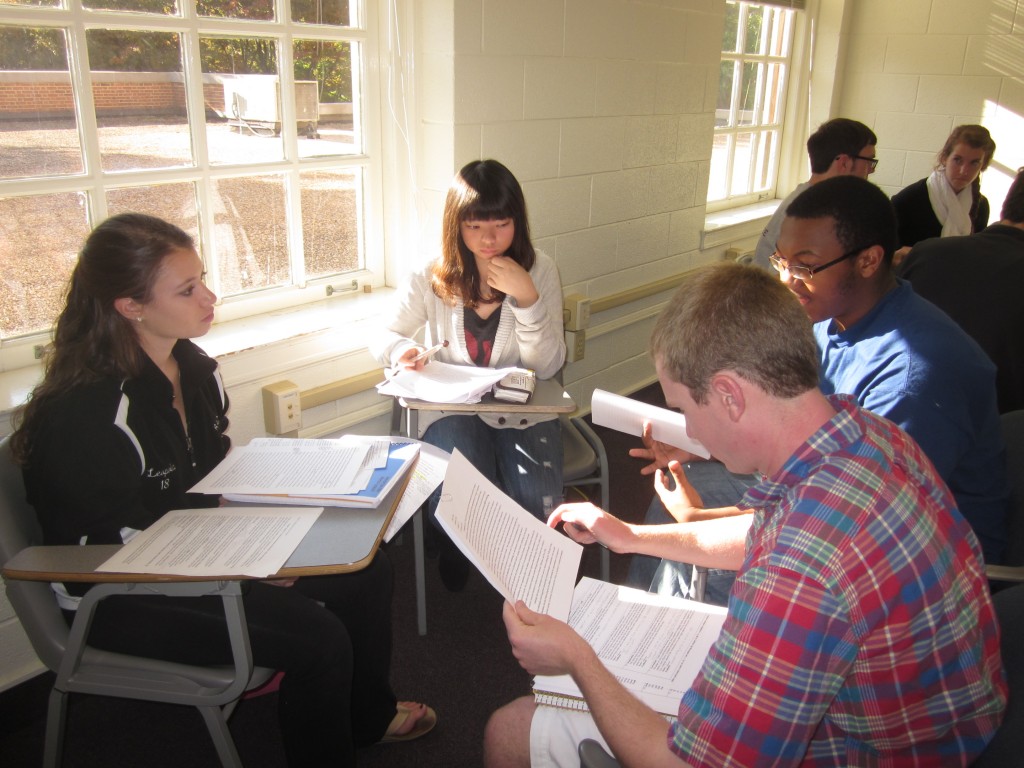
peer review1. Ask the type and level of feedback your partner is seeking. Type addresses the range of feedback your partner desires. Global? Character-focused? Plot-focused? Language-focused? Line-editing? Level addresses the thoroughness of your feedback. For a first draft, many writers want general, light feedback, including global impressions of plot and characters. If you pick apart the draft line by line, your partner may be overwhelmed. Be sure to clarify what he or she is looking for before diving in.

2. Offer an even trade. If someone has given you careful, in-depth feedback on one of your manuscripts, be sure to reciprocate in full. Do not read through his or her work quickly and toss off your thoughts as you hurry to get back to your own project. Your writing partner is relying on you and may make significant changes to their manuscript based on your advice. So give his or her work the time and respect it deserves.

3. Link up with writers who are roughly in your skill/professional range. Great disparities in talent can cause awkwardness, and trades may not be productive for the more advanced partner. That said, if you’re willing to consider a mentor relationship (no matter which end you’re on), go for it! Just don’t expect that trades will be “even”.

4. Find the positives. This seems obvious, but having been through an MFA, I know it needs to be said. Critique partners should be honest—but not brutally honest. Remember that no matter how elementary or flawed your partner’s work appears to you, it represents their effort and passion. Find at least three things to praise before you point out what’s not working.

5. Watch for cues. In the case of verbal feedback, watch and listen to the writer’s facial expressions, body language, and words as they receive feedback. If you sense distress, stop. Bring up the positives. Inspiration is a fragile thing and people have varying degrees of sensitivity about their work. You don’t want to be the Dream Crusher.

Editing16. Know when to back out. Sometimes (especially on first trades, but
occasionally with tried-and-true partners) you’ll run into a piece you simply can’t stomach. Maybe the writing is terrible. Maybe the message goes against everything you believe. Maybe the manuscript feels too commercial. Whatever the reason, if you can’t stand it, you won’t be able to offer a good or fair critique. Be diplomatic: “I’m having a hard time with this piece. I’m not experienced with this genre/topic/style. I’m afraid my political views are getting in the way of my ability to hear your story.” Whatever. Let the writer know you’re biased, and wiggle out gently.

7. Have boundaries. This is a good life rule, no? It definitely applies to writing. Critiques are so personal, and for many, so emotional, that they can unleash a storm of follow-up emails and phone calls. If you feel that someone is demanding more of your time and hand-holding than makes you comfortable, repeat (in as many different ways as you need to): “I really don’t have anything to add to what I’ve already said. But good luck.”

8. Don’t argue. Some writers can’t help themselves; they’re compelled to defend their work in the face of a critique. If you’re the partner giving feedback in this situation, don’t engage. Offer your counsel, and let the writer argue and justify if they need to. It’s all part of the process. Some people work things out verbally.

9. Don’t be the alpha critic. I borrowed this one from William Zinsser. Nobody likes the snide, superior critic who has scathing reviews of everything! ‘Nuf said.

10. Be open-minded. You’ll run into all kinds of manuscripts on the trade routes, not all of them your cup of tea. Remember, you’re not buying the book. Unless you have a visceral hatred of the work (see number 6), give it a fair shot. Try to separate your personal taste from your professional knowledge of character development, plot trajectory, etc. If personal taste is causing your review to slant negative or positive, rethink your approach.