Book Reviews: ¡Vamos! Let’s Go to the Market by Raúl the Third and Babymoon by Hayley Barrett, illus by Juana Martinez-Neal


Review by Dora M. Guzmán
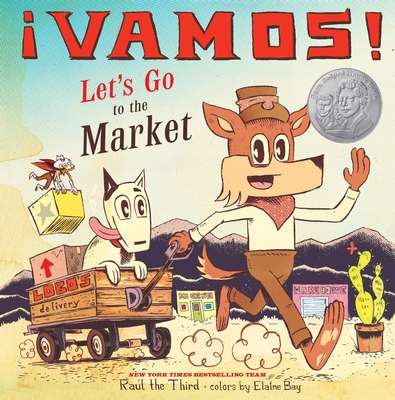
DESCRIPTION OF THE BOOK: Richard Scarry’s Busytown gets a Mexican-American makeover in the marketplace of a buzzing border town from Pura Belpré Medal-winning illustrator Raúl the Third.

Bilingual in a new way, this paper over board book teaches readers simple words in Spanish as they experience the bustling life of a border town. Follow Little Lobo and his dog Bernabe as they deliver supplies to a variety of vendors, selling everything from sweets to sombreros, portraits to piñatas, carved masks to comic books!

MY TWO CENTS: Where to begin?! Raúl the Third’s illustrations are unique and like no other. If you’ve read Lowriders in Space then you know what I am referring to. His attention to detail, and similar to a graphic novel format, adds another dimension of following Little Lobo to the market in a town in Mexico.

I learned so much about the daily ins-and-outs of this community through the text, but most of all, its illustrations. The number of illustrations and words reflect a life of the hustle and bustle of the town, while also showing the love of la comunidad. Overall, it’s a fun and rich graphic picture book addition to add to your library. I highly recommend this book as a read-aloud at school and home, and an interactive text to use for students to learn about communities and the different pieces and people that make it thrive!

TEACHING TIPS: Many of these teaching moments can be implemented in a grades K-5 setting.

  • Use as a writing mentor text
    • for describing a small moment in time (a day at the market, shopping with family) or
    • writing about what makes their community a community
    • How the placement and use of illustrations enhance an author’s writing and storytelling
  • Focus on cultural artifacts and items that represent their own culture or are similar to their culture

 

RaulThirdABOUT THE AUTHOR-ILLUSTRATOR: Raúl the Third was born in El Paso, Texas, and grew up going back and forth between El Paso and Ciudad Juárez, Mexico. He is the Pura Belpré Award-winning illustrator of Lowriders to the Center of the Earth. Raúl lives in Boston, Massachusetts, with his wife, artist Elaine Bay, and son, Raúl the Fourth. Learn more about his work here!


Review by Dora M. Guzmán
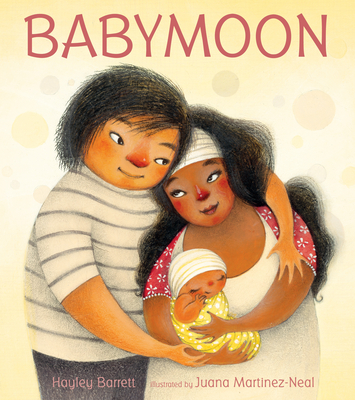
DESCRIPTION OF THE BOOK: In a perfect gift for new and expectant parents (and siblings), a gentle story pays tribute to the wonder and emotion of a family’s first quiet days with a newborn.

The house is hushed. The lights are low.
We’re basking in a newborn glow.

Inside the cozy house, a baby has arrived! The world is eager to meet the newcomer, but there will be time enough for that later. Right now, the family is on its babymoon: cocooning, connecting, learning, and muddling through each new concern. While the term “babymoon” is often used to refer to a parents’ getaway before the birth of a child, it was originally coined by midwives to describe days like these: at home with a newborn, with the world held at bay and the wonder of a new family constellation unfolding. Paired with warm and winsome illustrations by Juana Martinez-Neal, Hayley Barrett’s lyrical ode to these tender first days will resonate with new families everywhere.

MY TWO CENTS: A touching story to share with all about the blessing of a baby. The story begins from the outside where a sign is hanging on the door, “See you soon”. The ambiguous message leaves readers to wonder if they are expecting someone soon, if the family is out of town, or if it is a message for visitors. A great moment to stop and give readers an option to infer from the title and the message on the door. The next page reveals a full spread of a family surrounding their new family member–a newborn. Words are weaved in and out of this new world that consists of long embraces, collaborative games, and peaceful smiles.

Juana Martinez-Neal does it again! The way she utilizes her strokes and warm palette adds a softness to all the images that leave readers with a peaceful feeling–the feeling of home. Many readers describe this feeling of a “warm hug” as we journey with this family’s new life, and boy they are not wrong! The family’s pet is also part of this new life, as the reader notices facial expressions and adds a comical and realistic experience for all animal lovers who welcome new babies (we all know that “look”!).

Overall, this is an amazing addition to your school and home library that represents the love that is multiplied in the family. I highly recommend this book as gifts for families expecting babies and a read-aloud for students who are expecting new siblings!

TEACHING TIPS: Many of these teaching moments can be implemented in a grades K-5 setting, with a focus on the primary grades.

  • Teaching descriptive vocabulary words and phrases
  • Lesson on phonemic awareness such as focusing on rhyming words
  • Focus on the illustrator’s purpose of using certain colors or placement of illustrations to convey meaning and book themes
  • Great addition to any family unit in a reading curriculum
  • Mentor text for writing about family life, changes, or life moments.

ABOUT THE AUTHOR: Hayley Barrett is the author of three upcoming picture books, Babymoon (Candlewick 2019), What Miss Mitchell Saw (S&S/Beach Lane, 2019), and Girl Vs. Squirrel  (Margaret Ferguson Books/Holiday House, 2020). She lives outside of Boston with her husband John. Their two terrific kids have flown the coop.


Photo of author-illustrator Juana Martinez-NealABOUT THE ILLUSTRATOR: Juana Martinez-Neal is the recipient of the 2018 Pura Belpré Medal for Illustration for La Princesa and the Pea (Putnam/Penguin 2017). Alma and How She Got Her Name (Candlewick 2018), her debut picture book as author-illustrator, was awarded the 2019 Caldecott Honor.

She was named to the International Board on Books for Young People (IBBY) Honor list in 2014, and was awarded the SCBWI Portfolio Showcase Grand Prize in 2012. She was born in Lima, the capital of Peru, and now lives in Scottsdale, Arizona, with her husband and three children.
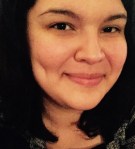


img_0160ABOUT THE REVIEWER: Dora M. Guzmán is a bilingual reading specialist for grades K-5 and also teaches undergraduate and graduate courses in Children’s Literature and Teaching Beginning Literacy. She is also a current doctoral student in NLU’s EDD Teaching and Learning Program with an emphasis on Reading, Language, and Literacy. When she is not sharing her love of reading with her students, you can find her in the nearest library, bookstore, or online, finding more great reads to add to her never-ending “to read” pile!
 

Mega Middle Grade Latinx Month Heritage Book Giveaway!

MEGA MIDDLE GRADE BOOK GIVEAWAY!

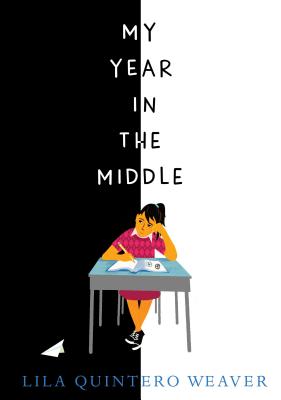
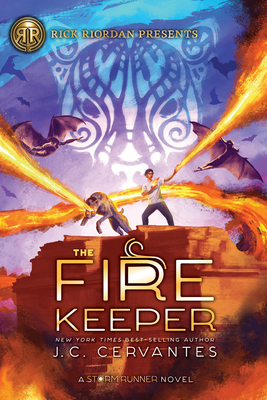
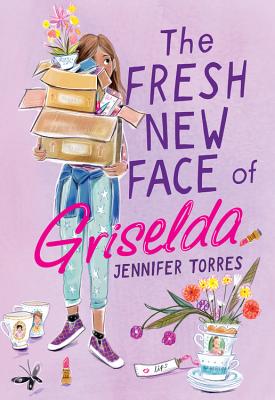
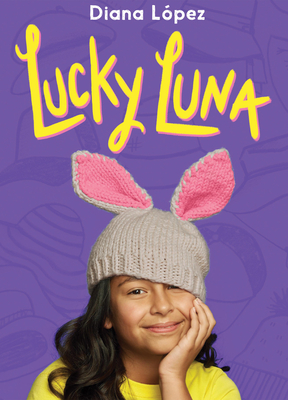
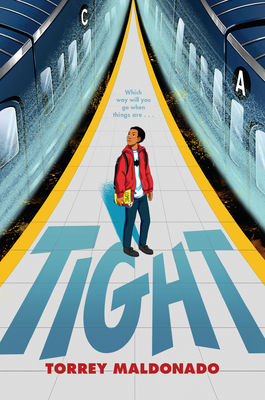
We are doing a series of giveaways to celebrate Latinx Heritage Month this year. Last week, we partnered with Disney Books for a Fire Keeper Giveaway. If you didn’t win, don’t worry, we have another copy of The Fire Keeper along with a stack of middle grade books we are giving away! See the list below. If you click on the image, you will be taken to the book’s Indiebound page for more information.

Lucky Luna, Tight, and My Year in the Middle are signed by the authors!!


   The Fire Keeper (A Storm Runner Novel, Book 2) Cover        


ENTER HERE FOR YOUR CHANCE TO WIN.

And because we love teachers and librarians, you will be entered x5 if you use an educator’s email (.edu or .org). Open to U.S. addresses only.

A winner will be selected on Friday, September 27.

You can enter once a day each day until the giveaway closes on Friday!


Book Review: Strange Birds: A Field Guide to Ruffling Feathers by Celia C. Pérez


Review by Cris Rhodes

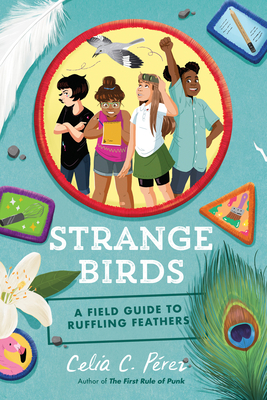
DESCRIPTION OF THE BOOK: When three very different girls find a mysterious invitation to a lavish mansion, the promise of adventure and mischief is too intriguing to pass up.
Ofelia Castillo (a budding journalist), Aster Douglas (a bookish foodie), and Cat Garcia (a rule-abiding birdwatcher) meet the kid behind the invite, Lane DiSanti, and it isn’t love at first sight. But they soon bond over a shared mission to get the Floras, their local Scouts, to ditch an outdated tradition. In their quest for justice, independence, and an unforgettable summer, the girls form their own troop and find something they didn’t know they needed: sisterhood.

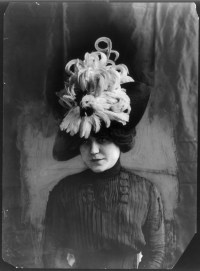
MY TWO CENTS: The stakes of activism are not the same for all who engage. Skin color, gender presentation, age—all of these are contributing factors to who is most at-risk when being a visible activist. But, as Celia C. Pérez’s sophomore novel, Strange Birds: A Field Guide to Ruffling Feathers, rightly notes, “’[s]ometimes the desire for change is bigger than anything else’” (270). For Ofelia, Aster, Cat, and Lane—the desire to change the outdated traditions of the scout troop, the Floras, is bigger than the risks they encounter. Spurred by Cat’s passion for birds, the girls decide to campaign to change the Floras’s most cherished symbol: the feathered hat worn by the winner of the Miss Floras contest. The hat, however, is a relic of a past that nearly caused the extinction of multiple bird species across the United States.

AudubonWhile the Migratory Bird Treaty Act of 1918 outlawed the practices that lead to the creation of hats like those worn by the winner of the Miss Floras contest, it didn’t outlaw the hats that already existed. The hat’s persistence in the lore of the Floras is problematic, but the hat represents different things for each girl. For Cat, the hat is the Floras’s suspension in the past; for Lane, the hat is an opportunity to rebel and make friends; for Ofelia, the hat is a chance to broaden her journalistic horizons; and for Aster, the hat parallels her desires to learn more about her own family history. Each girl’s storyline weaves together into a mission for change, even if the desired outcome (getting rid of the hat) stands in for something divergent for each.

When I first started reading, I struggled a bit with remembering the distinction between each character, but I settled into the text quickly and was soon immersed in the community of Sabal Palms, Florida. On an aesthetic level, the text is upbeat, funny, and conversational. It makes the reader feel like they’re right beside Lane, Cat, Ofelia, and Aster as they plan their various (and often ill-fated) maneuvers against the Floras. The book also contains paratextual material corresponding to each character—like recipes from Aster or journalism tips from Ofelia. Like many recent books for young readers, Strange Birds is a good introduction to activism for young people who want to become more engaged in their worlds.

Further, in these unique, young characters, Pérez has created an ensemble cast that will resonate with a wide array of readers. Each girl is quite different—in fact, when Pérez revealed the cover of the novel on Nerdy Book Club, she included a personality quiz that lets readers see which girl they are most like (I’m an Ofelia, for the record, por supuesto).

Nevertheless, with a cast of characters like this, of young women from such different backgrounds, there is always tension. That Pérez doesn’t shy away from these moments is significant. Rather than sugarcoat their friendships and smooth over any dissonance, Pérez reveals the ways each girl wrestles with what could easily become asymmetrical relationships. Lane, the granddaughter of Sabal Palm’s most affluent family, has a distinct privilege among the other characters, not just because of her wealth but also because of her race. Often posed against Aster—the granddaughter of the first Black professor at Sabal Palms University and whose ancestors worked for Lane’s—Lane’s privileges are thrown into sharp contrast. When she must confront these privileges, all of the characters, including the Latinas Cat and Ofelia, take a look at their positionality within their community. In confronting how their social statuses are stratified by race and class, the girls grow closer because they acknowledge their differences. Resultantly, I view this as a strong text to introduce readers to the concept of intersectional feminism, a term coined by Kimberlé Crenshaw to explain that “because of [women of color’s] intersectional identity as both women and of color within discourses that are shaped to respond to one or the other, women of color are marginalized within both” (from “Mapping the Margins: Intersectionality, Identity Politics, and Violence against Women of Color” published in Stanford Law Review).

Ultimately, this is not a novel of single experiences. This is a novel that celebrates diversity. As with her debut middle-grade novel The First Rule of Punk, Pérez has invited readers to experience childhood as a time of transformation and self-actualization, a time of difference and discovery. Importantly, Strange Birds allows space for and encourages those discoveries to unfold, spread their wings, and take flight.


image.pngABOUT THE AUTHOR: Celia C. Pérez is the daughter of a Mexican mother and a Cuban father.  Her debut book for young readers, The First Rule of Punk, was a 2018 Pura Belpré Award Honor Book, a 2018 Boston Globe-Horn Book Awards honor book, a winner of the 2018 Tomás Rivera Mexican American Children’s Book Award, a Junior Library Guild selection, and was included in several best of the year lists including the Amelia Bloomer List, NPR’s Best Books of 2017, the Chicago Public Library’s Best of the Best Books, the New York Public Library’s Best Books for Kids, School Library Journal’s Best of 2017, The Horn Book Magazine’s Fanfare, and ALSC’s Notable Children’s Books. Her second book for young readers, Strange Birds, will be published by Kokila, an imprint of Penguin Young Readers in September 2019.

She lives in Chicago with her family where, in addition to writing books about lovable weirdos and outsiders, she works as a librarian. She is originally from Miami, Florida, where roosters and peacocks really do wander the streets.


ABOUT THE REVIEWER: Cris Rhodes is an assistant professor of English at Shippensburg University of Pennsylvania. She teaches courses of writing, culturally diverse literature, and ethnic literatures. In addition to teaching, Cris’s scholarship focuses on Latinx youth and their literature or related media. She also has a particular scholarly interest in activism and the ways that young Latinxs advocate for themselves and their communities.

Spotlight on Middle Grade Authors Part 11: Rebecca Balcárcel


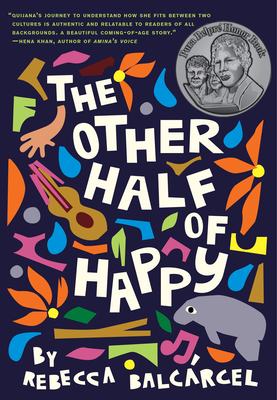
We are back from our summer break with lots of great, new interviews, book reviews, and events planned. We start today with a Q&A with middle grade author Rebecca Balcárcel, who is celebrating the recent release of her debut novel The Other Half of Happy.

By Cindy L. Rodriguez

This is the 11th in an occasional series about middle grade Latinx authors. We decided to shine a spotlight on middle grade writers and their novels because, often, they are “stuck in the middle”–sandwiched between and overlooked for picture books and young adult novels. The middle grades are a crucial time in child development socially, emotionally, and academically. The books that speak to these young readers tend to have lots of heart and great voices that capture all that is awkward and brilliant about that time.

Today, we highlight Rebecca Balcárcel.

Rebecca Balcárcel authored THE OTHER HALF OF HAPPY, a middle-grade novel from Chronicle Books . Rebecca took her MFA from Bennington Writing Seminars and received their Jane Kenyon Poetry Prize. Her work has appeared in journals such as Third Coast and North American Review. Pecan Grove Press of St. Mary’s University published her book of poems, Palabras in Each Fist. Find her on YouTube as the Sixminutescholar. She loves popcorn, her kitty, and teaching her students at Tarrant County College as Associate Professor of English.

The Other Half of Happy is her debut middle grade novel.

It was released August 20, 2019!


Here is the publisher’s description:

Quijana is a girl in pieces. One-half Guatemalan, one-half American: When Quijana’s Guatemalan cousins move to town, her dad seems ashamed that she doesn’t know more about her family’s heritage. One-half crush, one-half buddy: When Quijana meets Zuri and Jayden, she knows she’s found true friends. But she can’t help the growing feelings she has for Jayden. One-half kid, one-half grown-up: Quijana spends her nights Skyping with her ailing grandma and trying to figure out what’s going on with her increasingly hard-to-reach brother. In the course of this immersive and beautifully written novel, Quijana must figure out which parts of herself are most important, and which pieces come together to make her whole. This lyrical debut from Rebecca Balcárcel is a heartfelt poetic portrayal of a girl growing up, fitting in, and learning what it means to belong.


Rebecca Balcárcel

Q. Who or what inspired you to become a writer?
A. Storytellers, books, and teachers! My father is an entertaining storyteller, and I absorbed much from his natural sense of drama and comedic timing. He’ll also suddenly quote a poem with misty eyes and point out the beauty of Spanish sounds. All of this gave me a heightened awareness of language’s power. Books served as my dearest friends throughout childhood. From the magic of picture books before bedtime to full novels, I loved being transported to fictional worlds. I always dreamed of creating that experience for others. I still read to apprentice myself to great authors and learn their craft. And a shout out to my third grade teacher, Miss Valentine, who read Where the Red Fern Grows aloud to us chapter by chapter after lunch. I cried in school, but it was worth it! Later teachers encouraged me to write, and their confidence in me helped me take my writing seriously.

Q: Why did you decide to write a middle grade novel?

A: Can you believe that when I started writing, I didn’t know that this book was middle grade, nor that it was a novel?! Trained as a poet, I started writing prose poems in the voice of a bi-cultural twelve-year-old. She had a lot to say, and in one summer, I created about 40 little scenes. I wasn’t sure, though, if this was an adult looking back or a true MG project. It was my agent who said, “I think this would sing as a middle-grade novel.” I decided to go for it! It took two years of revision and rewriting to turn my stack of poems into a novel. It turns out, I love writing middle grade. That age is a time of deepening self-knowledge and broadening world-knowledge, the pivot point between child and adult. So much of who we are emerges in those years. It’s a psychologically rich moment to write about.

Q. What are some of your favorite middle grade novels?

A. So many! The classics, like Charlotte’s Web and Bridge to Terabithia, still make me cry. But I’m thrilled to be reading many new novels of worth. This year, I’ve especially enjoyed Caterpillar Summer by Gillian McDunn, which has a child with autism like my book does, and the just-released For Black Girls Like Me by Mariama Lockington, whose main character straddles two cultures, as mine does. I’ve sought out Latina writers, and have found an amazing community. Las Musas Books (https://www.lasmusasbooks.com/) is an entire collective of new YA and MG novelists! I’ve also loved Me, Frida, and the Secret of the Peacock Ring by Angela Cervantes and Stef Soto, Taco Queen by Jennifer Torres. And let’s not leave out this year’s Newbery winner, Merci Suarez Changes Gears by Meg Medina. Great books!

Q. If you could give your middle-grade self some advice, what would it be?

A. Don’t be embarrassed by what moves you! If a song or an idea touches your heart or blows your mind (in a good way), keep exploring in that direction. That’s the direction in which you will find kindred spirits, true friends, and your own growth. Ignore the people that pooh-pooh your music, your style, or whatever you geek out on. Fly that freak flag and own your joy!

Q. Finish this sentence: Middle grade novels are important because…

A.  . . . they inspire us to be our best selves!


photo by Saryna A. JonesCindy L. Rodriguez was a newspaper reporter for The Hartford Courant and researcher at The Boston Globe before becoming a public school teacher. She is now a reading specialist at a Connecticut middle school. Cindy is a U.S.-born Latina of Puerto Rican and Brazilian descent. She has degrees from UConn and CCSU. Her debut contemporary YA novel, When Reason Breaks (Bloomsbury 2015). She also has an essay in Life Inside My Mind (Simon Pulse 2018). She can be found on FacebookTwitter, and Goodreads.


We’re on Summer Break!


As of today, we are on summer vacation! When we return in September, we’ll celebrate more books by Latinx creators. Through the remaining summer weeks, we’ll keep in touch by tweeting past posts you may have missed, but shouldn’t!

You keep in touch, too. If you would like to contribute a blog post related to our mission, or request a review of a book, please contact us through the form on the blog or by emailing: latinosinkidlit@gmail.com. Note: We regrettably cannot guarantee a review for every book, as you’ll see in our reviewing policy.

So look for new posts in September, and don’t forget to follow us on Twitter or Facebook. Happy summer, everyone!

IMG_2938

Book Review: Charlie Hernández and the League of Shadows by Ryan Calejo


Reviewed by Jessica Walsh

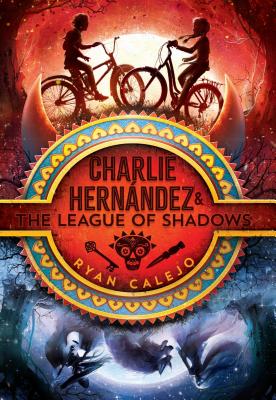
DESCRIPTION FROM THE PUBLISHERCharlie Hernández has always been proud of his Latin American heritage. He loves the culture, the art, and especially the myths. Thanks to his abuela’s stories, Charlie possesses an almost encyclopedic knowledge of the monsters and ghouls who have spent the last five hundred years haunting the imaginations of children all across the Iberian Peninsula, as well as Central and South America. And even though his grandmother sometimes hinted that the tales might be more than mere myth, Charlie’s always been a pragmatist. Even barely out of diapers, he knew the stories were just make-believe—nothing more than intricately woven fables meant to keep little kids from misbehaving.

But when Charlie begins to experience freaky bodily manifestations—ones all too similar to those described by his grandma in his favorite legend—he is suddenly swept up in a world where the mythical beings he’s spent his entire life hearing about seem to be walking straight out of the pages of Hispanic folklore and into his life. And even stranger, they seem to know more about him than he knows about himself.

Soon, Charlie finds himself in the middle of an ancient battle between La Liga, a secret society of legendary mythological beings sworn to protect the Land of the Living, and La Mano Negra (a.k.a. the Black Hand), a cabal of evil spirits determined to rule mankind. With only the help of his lifelong crush, Violet Rey, and his grandmother’s stories to guide him, Charlie must navigate a world where monsters and brujas rule and things he couldn’t possibly imagine go bump in the night. That is, if he has any hope of discovering what’s happening to him and saving his missing parents (oh, and maybe even the world).

No pressure, muchacho.

MY TWO CENTS“Myths, my abuela used to say, are truths long forgotten by the world.”

Mythological figures are as real as anything in Charlie Hernández and the League of Shadows. This debut middle grade from Ryan Calejo takes readers both familiar and unfamiliar with Latin American mythology (and everywhere in between) on a crash course of myths from all over the Spanish-speaking world.

Charlie is in middle school, where standing out for any reason can make you a target. When Charlie suddenly sprouts horns (which go away) and feathers (which keep growing back) soon after his parents disappear, Charlie knows he has to try to stay under the radar. One school bully targets Charlie for being born in Puebla, Mexico. That same bully jokes about Charlie’s parents being deported because news has spread that they have been missing for two months. Surprising everyone, including Charlie, popular girl Violet Rey stands up to the bully in defense of Charlie when the bully tries to steal a locket left behind by his mother. “No sweat. I can’t stand racists or bullies — and especially not racist bullies.” With Violet’s help, Charlie discovers a map inside the locket that matches the layout of an old cemetery in town.

While investigating the cemetery with hopes of finding clues to his parents’ whereabouts, Charlie and Violet encounter the first of many mythical figures — a mysterious groundskeeper who is actually a calaca, a walking, talking skeleton who tries to kill them! But Charlie uses knowledge his abuela gave him about Juancho Ramirez, who had cheated Death, a calaca in the fable. Juancho knew calacas were traders by nature and loved trinkets, in particular, which could be bartered to save your life. The calaca/groundskeeper wants to trade Charlie for his map, and on closer inspection, tells Charlie it is an ancient map handsketched by la Calavera Catrina. The map shows the way to the world between worlds. The calaca/groundskeeper confirms that all Hispanic myths are real. The calaca’s explanation is that “the landmasses currently known as Central America, South America, and the Iberian Peninsula are closer in metaphysical proximity to the spirit realm than anywhere else on the planet.”

And so begins a journey to find out where Charlie’s parents are. Charlie must use all of the knowledge his abuela shared with him to stay alive even when enemies of La Liga de Sombras try to kill him. One after another, famous mythological figures show up to either help or harm, believing Charlie to be the Morphling, a hero who defeats the world’s most powerful witch. All in all, over twenty mythological figures from all over the Spanish-speaking world make appearances, along with brief explanations, usually from Charlie himself.

The conclusion is satisfying, yet clearly leads the reader to believe that more is to come for Charlie. The sequel, Charlie Hernández and the Castle of Bones releases October 22, 2019.

Spanish is used throughout the story, often with English translations, though readers will notice that italics are only used to show emphasis, whether Spanish or English. A glossary provides more information about each mythological figure that appears in the book.

Charlie Hernández and the League of Shadows is fast-paced and funny — just right for readers who are looking for adventure!

Image result for ryan calejoABOUT THE AUTHORRyan Calejo was born and raised in south Florida. He graduated from the University of Miami with a BA. He’s been invited to join both the National Society of Collegiate Scholars and the Golden Key International Honour Society. He teaches swimming to elementary school students, chess to middle school students, and writing to high school students. Having been born into a family of immigrants and growing up in the so-called “Capital of Latin America,” Ryan knows the importance of diversity in our communities and is passionate about writing books that children of all ethnicities can relate to. Charlie Hernández & the League of Shadows is his first novel.


ABOUT THE REVIEWER: Jessica Walsh is a K-12 ELA Instructional Specialist from suburban Chicago. She has been a middle school teacher for twelve years. She holds degrees in Secondary English Education and Reading Instruction. She is a mom, an avid reader, and a strong advocate for equity in education. You can find her on Twitter at @storiestoldinsf.