Author Meg Medina Talks About Writing Villains


By Lila Quintero Weaver

Meg Medina knows how to connect. When she writes, her words crackle with strong storytelling and believable characters. When she stands at a microphone, her Cuban-American-inflected vitality will reduce you to tears—of laughter. You can imagine how much her young readers love her. So do we! And we’re delighted to present an interview with Meg about her latest book.

First, here’s an introduction to her earlier work. She’s the author of a picture book, Tía Isa Wants a Car, winner of the 2012 Ezra Jack Keats New Writers Award; a middle-grade novel, Milagros: Girl from Away; and a previous novel for young adults, The Girl Who Could Silence the Wind.

Tia Isa Wants a Car      Milagros: Girl from Away      The Girl Who Could Silence the Wind

Meg’s most recent contribution to YA bookshelves is the Kirkus starred Yaqui Delgado Wants to Kick Your Ass (Candlewick, 2013), a gripping story set in Queens, NY, where sophomore Piddy Sanchez lands after a crosstown move. Readers come to know Piddy at her best and worst, as she grapples with a new high school environment. Let’s just say that everything gets dicier when she enters a bully’s lair.

What can we learn from Meg’s gift for storytelling? For one thing, she writes with a keen eye toward characterization. Her eponymous villain, Yaqui Delgado, is a craft lesson on legs. Happily, Meg has agreed to unpack a bit of her villain-making magic for us.

Latin@s in Kid Lit: Meg, thank you for talking to us about craft. Your novel Yaqui Delgado Wants to Kick Your Ass puts the protagonist in a terrible bind. Before we discuss Yaqui, can you give us a better sense of who Piddy is and how she lands in this fix?

Meg: Unfortunately, Piddy is at a new school. Essentially, she’s the little gazelle that got separated from the herd. Never good. Up until that point, she’s an ordinary girl. She’s bright, engaged in school, but like lots of us at 16, she’s struggling with her mother and is starting to question the choices her parents have made. The fact that she gets targeted is purely random. A horrible fact of bullying is that it has very little to do with the victim. Kids can get bullied for virtually any reason…for being smart or for being slow; for being unattractive or for being too attractive; for being poor or for having too much money. The reason for the attack usually resides in what makes the bully nervous or insecure. Kids can easily forget that. It’s easy to internalize the message that they are in some way a loser.

Latin@s in Kid Lit: You give readers a wicked combination of physical and cyber-bullying. How did you become interested in girl bullies? Can you share tips about using hot-button issues in fiction?

Meg: To be honest, I don’t think about hot button issues to write about. They change too quickly! In this case, I had been invited to write a short story for an anthology about Latinas as a turning point in their lives. As I thought about turning points in my own life, I decided to base the story on a bullying incident I lived through long ago, mostly because it made such a lasting negative impact on how I saw myself and how I moved through the world. The anthology project died, but my editor at Candlewick asked me to turn the story into a novel. I layered in new characters and dimensions that hadn’t been part of the story, and I added in the details that are part of bullying today, such as YouTube and social media.

Yaqui Delgado Wants to Kick Your Ass

Latin@s in Kid Lit: Yaqui fits a certain type of inner-city bad girl that many of us know only from the movies, but by the end of the story, she’s achieved a dimensional status that satisfies and amazes. What was your process like for keeping Yaqui from collapsing into stereotype?

Meg: I really just concentrated on writing the truth about my own bully long ago. My feelings were a strange mix of hatred, dread, and admiration for all her power. The fact is, no one is all good or bad, and the gloriously bad character is often charismatic or fearless in a way that’s really interesting. Also, no one behaves so violently or poorly without a reason. We don’t have to excuse a character’s awful behavior, but it helps to understand it. I dabbed all of those things on Yaqui as a character to make her compelling, and to make her a worthy foe.

Latin@s in Kid Lit: Through much of the story, Yaqui remains aloof and doesn’t enter Piddy’s space until the right moment. Your portrayal of her evokes a wolf silhouetted against the moon. Chilling. Please share more about enhancing dread through this technique.

Meg: Well, dread is actually the perfect word. I worked on dread inside Piddy as character and inside the reader. For the reader, watching Yaqui circle closer is like watching the fin cut through the surface of the water behind a swimmer at the beach. Oh no! Something horrible is coming, but you can’t stop it. In this case, it’s not an ocean, but a school and neighborhood, places where we think we ought to be safe. In terms of building dread inside of Piddy, I tried to recreate the feelings we might have when we’re in a room or social situation with someone we really dislike. Think of how that goes: You avoid eye contact. You try your best to think of something else, to look calm, to avoid the spot where that person is standing. But all you can think of is that person and the awkwardness of being nearby. Their presence becomes oppressive.

Latin@s in Kid Lit: There’s a powerful scene where Piddy begins to adopt Yaqui’s look. She pulls her hair back into a severe bun and plucks her brows to a thin line. She puts on dark lipstick and steps back to admire her handiwork as “expressionless and strangely vicious.” It’s a horrifying turn of events. Can you talk about pushing your protagonist this close to the edge of villainy?

Meg: Pain can lead us to some terrible places. In Piddy’s case, she tries on the Yaqui costume, so to speak, as a way to explore and protect herself. If you’re scary and vicious, who will bother you? I took her to that edge because as a writer you always make sure the stakes are very high for your character. I was after a problem that threatened her very sense of who she was, a problem so tangled that an easy answer was hard for her – and for the reader – to solve.

Latin@s in Kid Lit: Piddy’s best friend, Mitzi, has moved, too. She’s blossoming in the paradise of the suburbs and is mostly unavailable to Piddy. She reminds us of what Piddy’s life used to be. What else does sweet Mitzi contribute? What do apprentice writers need to know about using secondary characters for the benefit of the story’s arc?

Meg: Yes, Mitzi definitely shows us the “old” Piddy. She wasn’t in my first draft except in that sentence that refers to Piddy’s friend moving away. But as I worked on the manuscript, I built up scenes to show the old Piddy and also to keep a path open for the way back. I also liked how she worked as yet another version of a normal Latina girl: brainy, scientific, sports-impaired, middle class.

Photo credit: Petite Shards Productions

Photo credit: Petite Shards Productions

Latin@s in Kid Lit: Meg, mil gracias! We celebrate your achievements in Latin@ kid lit and look forward to your next book!

To learn more about Meg’s work, the latest on her author appearances and much more of interest to readers and writers, please visit and follow her blog.

Las Calaveras Todas Blancas Son* Or What is the Day of the Dead?


By Zoraida Córdova

The Day of the Dead is a Mexican holiday that takes place on November 1st (All Soul’s Day) and November 2nd (All Saint’s Day), and celebrates, even plays with, the dead. Its roots are a mixture of Orthodox Catholicism and pre-Hispanic traditions of prayers and material offerings. Catholics all over the world celebrate these two days, but Mexico takes it to another level. Instead of just celebrating the saints and martyrs, entire altars are built for deceased family members. There’s food and drinks and sugar skulls and singing. It’s like a big family reunion, only your grandmother’s ghost is invited as well. It is colorful and loud; the opposite of what you think of when visiting cemeteries.**

So, what does the Day of the Dead have to do with you, Zoraida?

Now, I’m a third-party observer here. Although, in Ecuador, they do make a purple drink called “colada morada” (made of some sort of blackberry and purple maize) specifically for this time of year. My Ecuadorian family is Catholic, but I’ve always considered myself a practicing agnostic (it’s not a real thing, but sure). I suck at memorizing prayers, and yet every time I pass a cemetery I cross myself. I don’t associate with any religion, and yet, I’ve always been drawn to this particular celebration.

It could be that I’m not drawn to the religious aspects of this celebration, but to the dead themselves. It’s a little macabre, I know, but hang with me here. Ever since I was little I loved ghost stories. I thought La Llorona (the weeping woman/Latina banshee figure) was real the same way most kids think the Easter Bunny is real. I sang to old salsa songs about skeletons (see blog post title). I am fascinated by death, and you know what? So are a lot of people who are not Catholic or Mexican.

What do you mean?

Well, go to your nearest book store and browse. How many bestsellers do you see featuring vampires and ghosts and zombies? I know, it’s not the same as a religious celebration honoring your dead loved ones. But I do believe that we are drawn to death and the undead, and all of the mystery it holds.

Then, think about other religions that have ceremonies/feasts to celebrate their dead. In Chinese culture, the seventh month is called “ghost month,” when the dead come to walk among the living*** In Korea, Chuseok is a holiday when people return to their ancestral hometowns.**** It’s like a combination of Thanksgiving and the Day of the Dead. And these are the only ones I’ve heard about. I can only imagine the others.

And what does this have to do with kidlit?

Loads! Look at these titles.

9607766    13418252    865499

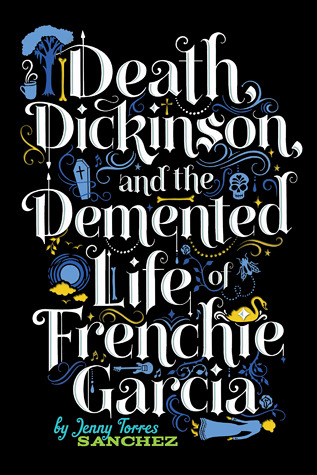
The Tequila Worm     Death, Dickinson, and the Demented Life of Frenchie Garcia     The House of Hades (The Heroes of Olympus, #4)

From twin sisters finding a way to contact each other post mortem, to a skeleton boy who makes friends with the living, to a young girl dealing with her grandfather’s death, to demigods conquering the physical manifestations of death, the Day of the Dead has made its way into our literature.

No matter what we believe in or where we come from, at the end of the day, we can all relate to loss. It’s sad and powerful and it connects us at a very basic level.

Do you celebrate the Day of the Dead? And if you don’t, do you have a similar tradition? Share it with us in the comments!

* http://www.youtube.com/watch?v=pezwkyaW51A Las Calaberas by Lisandro Meza

** The Skeleton at the Feast: The Day of the Dead in Mexico by Elizabeth Carmichael and Chloe Sayer

*** I first read this in House of Hades by Rick Riordan (it’s true).

**** http://www.allkpop.com/article/2013/09/a-detailed-explanation-of-chuseok-1#axzz2igWmLmCK

Changes I’ve Seen, Changes I Hope to See


For our first set of posts, each of us will respond to the question: “Why Latin@ Kid Lit?” to address why we created a site dedicated to celebrating books by, for, or about Latin@s.

By Lila Quintero Weaver

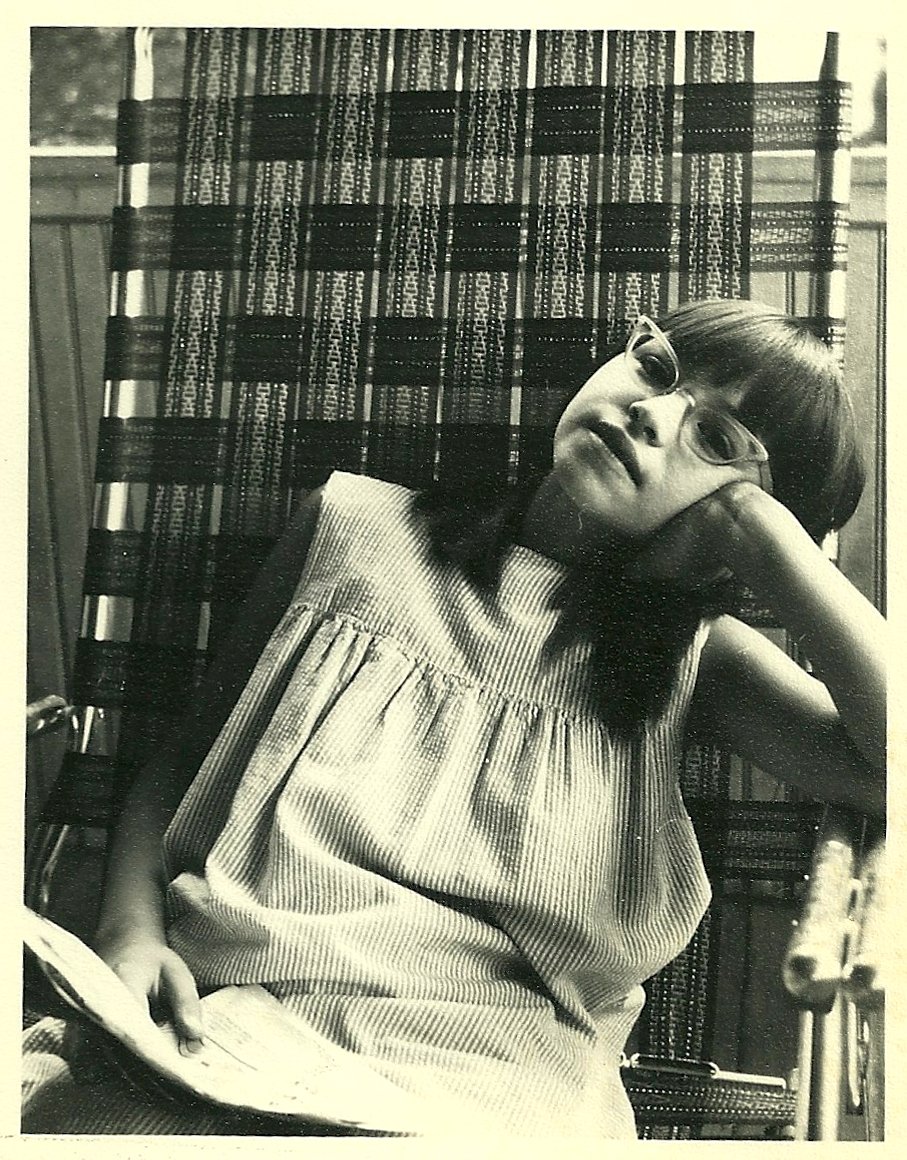
Lila, the bookworm, way back in the day.

Lila, the bookworm, way back in the day.

1963, Small Town, Alabama: I’m an immigrant kid in the second grade, well in command of English by now and eighty percent Americanized. Nobody brown or trigueño whose last name isn’t Quintero lives around here. Matter of fact, we’re one of the rare foreign families in the whole of Perry County—a bit of exotica, like strange but harmless birds that show up in the chicken yard one day.

With our nearest relatives in Argentina, seven thousand miles removed, my mother’s best friend is a war bride from Italy whose nostalgia for the old country goes hand in hand with Mama’s pining for Buenos Aires. Their conversations are peppered with overlapping terms from the Romance languages of their backgrounds. My father has his own ways of navigating the cultural void. He’s no communist, but he listens to Radio Habana Cuba on the shortwave radio. Fidel’s propaganda is something to ridicule, yet nothing else on the dial delivers Spanish. And he craves Spanish. That’s what your native tongue does—transports you back to the place you sprang from.

In 1963, nobody uses the terms Latino or Hispanic. Diversity may be in the dictionary, but if anyone’s applying it to ethnic groups, it hasn’t reached these backwaters of the American South. And as far as I know, the word multicultural hasn’t been invented; for that, we’ll have to wait another twenty years.

When I, the second-grade immigrant kid, drop by the Perry County Public Library, it’s to a creaky old clapboard house whose floors sag under the weight of books. The library at my elementary school is much the same, dusty and clogged with outdated materials. Luckily, my dad’s faculty status at a local college gives me library privileges. There, a small but gleaming collection of children’s books entices me up to the second floor.

I’m a bookworm. I devour everything published for kids. The books I love best entrance me through the power of story, not by how well their characters reflect me. Even so, I can’t help but notice that none of the characters has snapping brown eyes and olive skin. The girls in the books I read have names like Cathy and Susan. No one stumbles over these girls’ surnames and their parents don’t speak accented English. The closest thing to a Latino character I come across is Ferdinand, the Bull. ¡Olé!

Thirty-eight years later, when my youngest daughter is in fifth grade, we read aloud together almost daily. In Pam Muñoz Ryan’s Esperanza Rising, it’s wondrous to encounter a Latina character that feels like a real girl, not a shadow puppet with easy gestures that stand in for Hispanic. Fast forward to 2013, when Dora the Explorer is almost as well known as Mickey Mouse, and authors with names like Benjamin Alire Saenz and Guadalupe Garcia McCall show up in the stacks of the local public library with regularity. Compared to the Latin@ offerings of my childhood, this feels like an embarrassment of riches.

IMG_1291

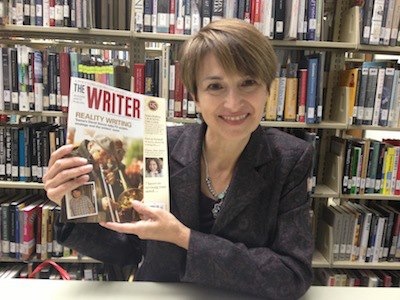
Lila, the bookworm and author, today.

In March 2012, just after publishing my coming-of-age graphic novel, Darkroom: A Memoir in Black and White, I find myself at the National Latino Children’s Literature Conference. There, my eyes are opened. I discover that the exploding population of young Latin@ American readers is still under served. On the whole, children’s publishing favors a model that reflects the Anglo world familiar to most editors, agents, and booksellers. The terms diversity and multiculturalism roll off the tongue easily now, but books about minority kids are still not rolling off the presses in sufficient numbers to match the need.

Through this blog, together with my younger collaborators— all of whom grew up in an era far more open to diverse cultures—I have the glorious opportunity to make a difference. I can celebrate the Latin@ characters that do exist in children’s books. I can help promote authors and illustrators who incline toward such stories or whose heritage broadcasts the message to Latin@ youth that they too can write and illustrate books. I can connect parents to new offerings in the biblioteca and hunt down librarians, scholars, and teachers eager to share their expertise with a non-academic audience. That’s what I’m here for—to dig out books, authors, and experts that affirm Latin@ identity and give them a friendly shove into the limelight.


Comadres y Compadres: A Guest Blogger Reports

By Yadhira Gonzalez-Taylor

An eclectic group of writers, editors, and publishers, most of Latino heritage, gathered at Las Comadres y Compadres 2nd Annual Writers Conference at Medgar Evers College in Brooklyn on Saturday, October 5, 2013.

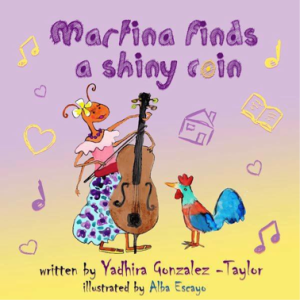
I am fairly new to creative writing, having just published an illustrated children’s book, Martina Finds a Shiny Coin. I networked, made new friends, and was impressed with the panels, which offered a wealth of information for writers at any stage of their writing careers. Panels ranged from self-publishing to presenting quality proposals for agents and major publishing houses. They had great craft shops on creating literature of all genres and for all ages.

The conference focused on the need for Latin@ literature and how Latin@s are underrepresented as an ethnic group in this industry. We live in the most diverse nation in the world, yet we are underrepresented in the stories we read to ourselves and our children and grandchildren. Even more alarming is the fact that, in the age of diversity and equal opportunity employment, we are underrepresented in the editing, publishing, and promotional arms of the literary industry.

At the conference, representatives from Random House, editors, and small press publishers all seemed to have the same message for the aspiring and published authors—there is an open invitation to produce quality material that suits the beautiful blend that is the Latino culture. Latin@ writers of all genres are invited to produce quality fiction, nonfiction, memoir, and children’s literature geared toward a population that is thriving and growing more each day in the United States.

As a writer and attorney working with at risk-youth in New York City, I see it as my Martina Shiny Coinresponsibility to produce this literature.

As a mother of three children, I have felt frustrated at not finding literature that reflects them or me. By pure coincidence, what began as an afternoon project with my five-year-old became a retelling of my very favorite Caribbean folktale, La Cucarachita Martina y el Raton Perez. One day, my husband asked me if there were any Puerto Rican folktales I could share with her, and immediately la cucarachita Martina came to mind. I heard it a thousand times growing up and even participated in my kindergarten class’s rendition of the fable/folktale.

I frequently told my daughter the original version, or at least what I remembered of it, that my grandmother recited to me when I was growing up in rural Caguas, Puerto Rico. When we traveled to my grandmother’s funeral in 2011, my daughter, then three, asked me if a tiny house nestled in the mountains was Martina’s. Of course, I told her it was, but explained that Martina was very busy and could not have visitors.

After telling the story many times, we sat and rewrote it, adding all sorts of ideas that popped into our heads. We made Martina a cellist because my daughter is a cellist. We made her an avid reader, and a dancer, and a singer of bomba y plena. We sent Martina on a journey of self-discovery after she found the shiny coin. We based Martina’s world in my world, the place where I lived for many years, Parcelas Viejas, in El Barrio Borinquen, Caguas, PR.

The book carries the folktale’s original message of self-acceptance no matter what. The story also sends the message to appreciate all gifts, not just the ones that make you look good. Of course, this is not just a message for Latin@ children but for all children!

In addition to writing Latin@ children’s literature, I am also compelled to seek out and promote contemporary authors who are producing similar literature.

It is a fact that communities thrive economically when residents invest in local business. There are many ways to do this, including visiting small bookstores like La Casa Azul in El Barrio NYC, which caters to our cultural needs. Other ways include supporting and attending Latin@ author readings and signings, or donating to, or volunteering for literary organizations like Las Comadres or any other non-for-profit organization that furthers the mission of promoting Latin@ literature.

We must commit to investing in Latin@ literature for our own sake and the literacy of our children.

YadhiraYadhira Gonzalez-Taylor is a public service attorney working with at-risk youth in NYC. Before working with young people she worked as prosecutor for Bronx County.  Martina Finds a Shiny Coin is her first children’s book. It was illustrated by Alba Escayo, a Spanish Artist who has ancestral roots in Cuba. Yadhira lives with her family in New York.  Follow her on twitter at @ygonzaleztaylor or Martina the character on twitter at @martinascoin.

Through Reading, Anything Is Possible

For our first set of posts, each of us will respond to the question: “Why Latin@ Kid Lit?” to address why we created a site dedicated to celebrating books by, for, or about Latin@s.

By Cindy L. Rodriguez

Our house was an oasis in the Chicago neighborhood crumbling around us. The house on the left was torn down after Old Man Louie died. The building on the right was bulldozed after some kids set it on fire. Inside our little haven, my parents encouraged me to read. Through books, I left that neighborhood to meet interesting characters in beautiful places who were struggling with life, love, and purpose, and who were trying to become free mentally, physically, or spiritually.

My parents moved us into better neighborhoods. Books moved me into a broader world of ideas and possibilities. A love for literature has made all the difference in my life. Now, I teach and write because I want children from all kinds of backgrounds to realize that, through literacy, anything is possible.

This may sound naïve, simplistic, or overly optimistic, but I honestly believe it.

I understand the challenges young people face because I’ve worked with middle and high school students for thirteen years. I’ve met the tattooed freshman girl whose education was interrupted because her mom had to move from place to place. At age fourteen, she had the reading level of a sixth grader. But guess what? She earned all As and Bs, joined a sport, and quickly became a leader in our school.

I’ve met the sixteen-year-old freshman boy who earned an in-school suspension for verbally and physically confronting a female teacher during the first week of school. He continued to struggle, earning Ds and Fs in his classes. But guess what? He read a book independently for the first time ever. He said he knew the teachers cared about him, and once he came to talk to me, tears streaming down his face after his girlfriend broke up with him via text message. He had made a collage with movie tickets and other mementos for their one-year anniversary that would never happen.

I’ve also met the jaded seventh-grade boy who asked me straight-out one day, “Why are you the only minority teacher in our school?”

All of these students are young Latin@s. They need safe places, trusted people to talk to, and answers to their questions. As a teacher who sees them for forty-five minutes a day, I do my best, and one of the most significant things I can do is encourage them to read. I can’t solve their problems at home or with their friends, but I can pass along my belief—given to me by my parents—that literacy is important and life-changing.

I want my students to develop the skills needed for academic and professional success. I also want them to enjoy a lifetime of beautiful places and interesting characters. I want them to have access to lots and lots of books with characters who look, speak, and act like them. Previous posts have outlined why it’s crucial for readers to “see themselves” in literature. But I also want them to see beyond their current selves. I want them to see realistic and fantastical futures.  I want them to realize anything is possible.

Yes, you can be a U.S. Supreme Court Justice. Here, read a picture book about Sonia Sotomayor.

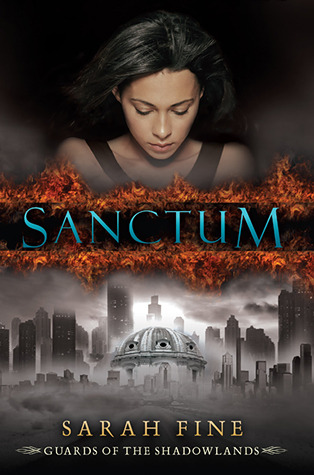
Yes, you can “escape” for a while and travel through the depths of the afterlife to save your best friend’s soul. Here, read Sanctum by Sarah Fine.

Yes, you can be a civil rights activist. Here, read biographies about César Chávez and Delores Huerta.

In the very distant future, if you discover you are a clone created to keep someone else alive, remember this: you will still have an identity and choices. For now, though, question whether science fiction will someday become nonfiction. Here, read The House of the Scorpion by Nancy Farmer.

Yes, you will survive your teen years. More than that, you will thrive. You’ll learn about love and family and friendship and acceptance and perseverance and integrity. Here, read Margarita Engle, Alex Sanchez, René Saldaña, Jr., Gary Soto, and Guadalupe Garcia McCall.

I’m involved with Latin@s In Kid Lit because I believe all children should have books in their hands, even when they’re too young to turn the pages, and they should all be told again and again, “Oh, the places you’ll go.”

Sonia Sotomayor: Supreme Court Justice    Dolores Huerta: A Hero to Migrant Workers    The House of the Scorpion (Matteo Alacran, #1)    Sanctum (Guards of the Shadowlands, #1)    Buried Onions   Bait