Guest Post: CAKE Literary on Writing Diversity, Finding Your Flavor

By Sona Charaipotra

Have you ever cried in class? I have. And no, I’m not talking about kindergarten. I’m in my 30s, and yes, I shed actual tears during a workshop during my writing for children creative writing MFA program at the New School two years ago.

No, it wasn’t a particularly harsh critique. I have to say, I have an incredibly thick skin. Most of the time.

But this particular workshop was a safe space. Taught by the stunningly smart and super-nurturing Andrea Davis Pinkney, this one focused on a topic too frequently neglected by both the academy and publishing: diversity. Specifically, we were talking about diversity in kidlit and YA, and addressing why it is important.

And though it’s been a long time since I was a kid or even a teenager, the wound was still fresh. Because we still haven’t gotten there.

Growing up as a little brown girl – one of the few, back then – in small-town, suburban central New Jersey, books were my escape. I caused a ruckus alongside little Anne in Avonlea; I mourned Beth along with her sisters in the harsh winter of Maine; I honed my grand ambitions like Kristy and her babysitters’ club; I even swooned alongside Elena over the brothers Salvatore when the Vampire Diaries was originally released. (Yes, I am that old.)

CAKE logo+2.7.12But if you’ll note: in all those books and the hundreds of others I devoured, I never really saw myself, or anyone remotely like me. The majority of characters in books for kids and teens in the ’80s and ’90s were white. And according to Christopher Myers in his recent New York Times piece, “The Apartheid of Children’s Literature,” the majority still are today, by quite a landslide.

Why is this worth discussing? Because it hurts. A lot. It’s a hit to a kid’s self-esteem to be told – silently, but oh so clearly – that their story is not worth telling, that their voice is not important.

As Myers notes in his piece, it leaves you with “a gap in the much-written-about sense of self-love that comes from recognizing oneself in a text, from the understanding that your life and lives of people like you are worthy of being told, thought about, discussed and even celebrated.”

Honestly, it’s a punch to the gut. It kills me that, 30 years later, kids are still feeling this way. That my daughter, all of four now and already shaping up to be a voracious reader, will still feel that pinch.

That’s why I cried that day in class. And that’s why, with my writing partner Dhonielle Clayton, whom I met on the first day of my MFA program, I co-founded CAKE Literary, a literary development company that focuses on high concept fiction with a strong commitment to diversity.

I know what you’re thinking: silly thing to bank a personal fortune (however small) on, right? We all know diversity doesn’t sell.

Well, Dhonielle and I would like to call bullshit on that. Done the right way, diversity can bring a richness and flavor to any manuscript. After all, so much about a great read is in the details – the scent and sizzle of freshly-fried samosas wafting up from her mama’s kitchen, the ferocious whip of the wind on an icy February morning, the ashy knees she keeps hidden under too-long skirts, the blush that climbs up her throat and to her cheeks when she flirts with her crush for the first time. The details give texture and color, a sense of time and place and, most importantly, character. The details define worldview and fill out voice.

But the main thing is the big picture – and what our company will do is focus on BIG pictures. Smart, sophisticated storytelling that’s full of flavor – books where the diversity is a major part of the character, but not the central focus of the character.

Case in point: our debut novel, Tiny Pretty Things, which is due next summer. Set in a cutthroat New York City ballet academy, the book centers on three characters, one white, one black, and one half-Korean. And while their backgrounds definitely inform the characters’ worldviews and experiences, the book is not about skin color. It has a plot – a juicy, riveting and ultimately relatable story that we’re hoping will leave readers wanting more.

That’s what we’ll do with each of our projects: tell a fun, delicious story that readers want to read, but incorporate real-life flavor – meaningful diversity – in a natural, relevant way. We’re all about keeping it real, so part of our mission will be to connect vibrant, authentic voices with the stories we’re crafting.

What exactly does CAKE do? We’re not an agency or publisher, but rather a book packager – a YA and middle grade think tank of sorts. We come up with sharp multimedia concepts that we then develop into a detailed outline. Once the idea is fleshed out, we hire a writer to work with us on several chapters or a complete manuscript, which we then package to take to publishers. Once the project sells, the writer stays on board to complete the project. Some book packagers get a bad rap for being notoriously stingy. But CAKE’s aim is to be very writer friendly, because, after all, we’re writers, too. So when we work with a writer on a project, they get paid a flat fee on signing, on delivery, and then, when the project sells, they get a cut of those proceeds as well. The other thing that sets CAKE apart is our commitment to diversity, which is an integral part of every CAKE project.

Dhonielle Clayton

Dhonielle Clayton

Sona Charaipotra

Sona Charaipotra

Interested in learning more? We’ll be looking to hire writers beginning this spring, so connect with us on CAKELiterary.com or via CakeLiterarySubmissions@gmail.com. You can also follow us on Twitter @CAKELiterary.
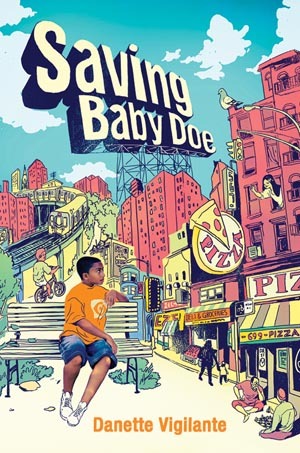


Book Review: Saving Baby Doe by Danette Vigilante

Saving Baby DoeBy Cindy L. Rodriguez

On Monday, author Danette Vigilante wrote about dream seeds and how she turned a teacher’s comment into a challgenge to become a better reader. Today, we celebrate her latest novel Saving Baby Doe.

DESCRIPTION FROM THE BOOK JACKET: Lionel and Anisa are the best of friends and have seen each other through some pretty tough times–Anisa’s dad died and Lionel’s dad left, which is like a death for Lionel. They stick together no matter what. So when Lionel suggests a detour through a local construction site on their way home one day, Anisa doesn’t say no. And that’s where Lionel and Anisa make a startling discovery–a baby abandoned in a Porta-Potti. Anisa and Lionel spring into action. And in Saving Baby Doe, they end up saving so much more.

MY TWO CENTS: Danette Vigilante pulls the reader right into this novel from the opening scene of a scared young woman is giving birth to her child in a Porta-Potti on a construction site. Soon after, Lionel and Anisa discover the baby, after playing in the closed-off site, and they decide to save “Baby Doe.” This is a middle grade novel that addresses some tough issues. In addition to the abandoned baby, the author explores the effects on children of absentee fathers and drug dealing. At the heart of it all is Lionel, who tries to do the right thing in the worst of situations.

While the issues are serious, Lionel responds to them as only a middle-schooler would. The real possibility of severe consequences doesn’t prevent him from launching into an ill-conceived plan to retrieve the baby from the hospital so that she doesn’t end up in foster care. While reading, I caught myself thinking, “Lionel, what are you doing? This is a bad idea!” Of course, he knows this, too, but he goes ahead anyway. In this way, Vigilante perfectly captures the middle school mind and creates tension through the narrative.

Then, there’s the end of Chapter 10, which I totally did not see coming. I probably should have, but I was wrapped up in Lionel’s plan to steal the baby and sell drugs to support her and then…chapter 10! Whoa! Well played! I’m not going to spoil it, but the story takes an important turn. That’s all I’ll say about that.

One of the many things I loved about this novel was the diversity within Lionel’s community. They all struggle financially, but they’re all individually-drawn people. Some work hard at “regular” jobs, while others choose quick money. Some are ultra-religious, while others are not. Some of the kids go to public school, while others go to the “genius” private school. Characters vary in terms of age, race, ethnicity, and experience, all of which creates a rich, real setting for Lionel and Anisa story to unfold.

TEACHING TIPS: In addition to all of the expected language arts lessons, this novel would work well in a health class since it deals with sex education (a lecture given by Lionel’s mom), child birth, the possible results of not seeking medical care, and the Safe Haven laws. Fiction is often reserved for language arts classes, but this type of realistic novel is ideal for blending fiction and nonfiction in health, where teachers and students tackle these serious issues.

LEXILE: N/A

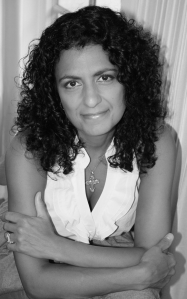
Danette_Vigilante_head_shot_high_resAUTHORDanette Vigilante grew up in the Red Hook Houses in Brooklyn, New York. She now resides in Staten Island with her husband, two daughters, two puppies and a cat with a bad attitude. Danette is the author of THE TROUBLE WITH HALF A MOON, a 2012-2013 Sunshine State Young Readers award nominee, and SAVING BABY DOE.

FOR MORE INFORMATION about Saving Baby Doevisit your local library or book store. Also, check out IndieBound.org,  GoodreadsAmazon.com, and Barnes and Noble.com.


Guest Post: Author Danette Vigilante on the Importance of Dream Seeds

By Danette Vigilante

When a dream seed is planted and watered everyday, it has no choice but to grow and blossom. You might be wondering what in the world a ‘dream seed’ is, so I’ll tell you.

A dream seed is usually planted deep inside you when you’re a child. It could come from the smallest of compliments such as, “You’re really good at (fill in the blank)” or “I really like (fill in the blank) about you.”

In my case, my dream seed came from the pen of my fifth grade teacher. This realization didn’t hit me until I was well into adulthood. Like, WELL into it. As a matter of fact, I went years being somewhat envious of people who spoke of a special teacher who had planted their dream seed early on in their lives.

We’ve all seen talk shows where a beloved teacher is surprised by an old student who grew up into an awesome adult doing awesome things all because of this teacher. Yes, I felt happy for these people, and even shed a tear because their meeting was so touching. Plus, I absolutely love when people achieve their goals in life. But I also held a question quietly inside. It’s a question I’m not too proud to admit I had. I wanted to know where my dream-seed-planting-teacher was when I was growing up. Wasn’t I good enough? Worthy enough? Wasn’t there a teacher somewhere in my young life who cared?

Getting back to my fifth grade teacher and what she wrote with her magic pen. It was one simple sentence on the back of my report card: “Danette needs help in reading.” Those five words ignited a fire in me, and I ran to the library in order to put it out. And by ‘put it out,’ I mean I began reading as if my life depended on it. To be honest, part of that was because I wanted to prove my teacher wrong. I needed help with reading? My attitude was, “Humph, I’ll show you.” Did I mention I was in fifth grade?

I’d spend whole days in my bedroom reading, and when it was time for bed, I read beneath the covers using a dollhouse lamp until I could no longer keep my eyes open.

I loved the smell of the library, the small creaking sound the books made when you first opened them. I loved peeking underneath the plastic covers to see what the “real” cover looked like. I especially loved how the library made me feel: independent and strong.

I’d look at all those shelves filled with books, catch my breath, and wonder which ones I would choose that day. Once decided, I’d pile them up and excitedly carry them home.

My dream seed began to take root in the form of a teeny, tiny thought— maybe one day I could write a book. The thought was almost silent, but it had always stayed by my side, patiently waiting.

You can imagine how overjoyed I was to finally recognize that I, too, had a teacher who had gifted me a dream seed. It doesn’t matter why I had “watered” it, the most important thing was that I did.

Danette_Vigilante_head_shot_high_resDanette Vigilante grew up in the Red Hook Houses in Brooklyn, New York. She now resides in Staten Island with her husband, two daughters, two puppies, and a cat with a bad attitude. Danette is the author of THE TROUBLE WITH HALF A MOON, a 2012-2013 Sunshine State Young Readers award nominee, and SAVING BABY DOE.

Debut Author Skila Brown’s Novel in Verse Centers on Guatemalan Civil War

By Cindy L. Rodriguez

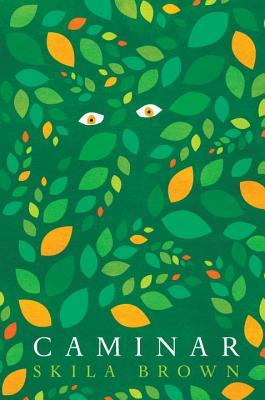
CaminarI recently interviewed debut author Skila Brown for the Fearless Fifteeners site, which helps to highlight our debut author friends in the OneFour KidLit group. Most of the interview is reprinted here, but I added the final question in particular because of our audience and our mission. Skila is not Guatemalan, yet she wrote a moving narrative about a young Guatemalan boy in 1981 caught in civil war. The last question addresses the concern about writing with authenticity outside of one’s own ethnic/racial experiences.

First, a little about her novel, Caminar, which was released March 26.

Carlos knows that when the soldiers arrive with warnings about the Communist rebels, it is time to be a man and defend the village, keep everyone safe. But Mama tells him not yet—he’s still her quiet moonfaced boy. The soldiers laugh at the villagers, and before they move on, a neighbor is found dangling from a tree, a sign on his neck: Communist.

Mama tells Carlos to run and hide, then try to find her. . . . Numb and alone, he must join a band of guerillas as they trek to the top of the mountain where Carlos’s abuela lives. Will he be in time, and brave enough, to warn them about the soldiers? What will he do then? A novel in verse inspired by actual events during Guatemala’s civil war, Caminar is the moving story of a boy who loses nearly everything before discovering who he really is.

“Exquisitely crafted poems are the basis of an unusually fine verse novel…”

–Horn Book, starred review

“…a much-needed addition to Latin American-themed middle grade fiction.”

–School Library Journal, starred review

Me: Your bio says you lived in Guatemala for a bit. Did your experience there spark interest in this topic? Did anything else inspire you to write this particular story?

Skila: We moved to Guatemala after I’d finished the novel, though I revised it some while we were there. This novel actually came out, reluctantly and painfully, after I’d spent about a decade reading about Guatemala’s history, especially the history of the violence there that peaked in the early 80s. I had no intention of writing about it, but that’s what ended up happening. I certainly felt inspired by accounts of survival that I read, but also felt a real desire to make sure other people knew about what had happened there.

Me: How extensive was your research? Did you run into any roadblocks when seeking information?

Skila: My research started out very organically—I was reading for pleasure and interest, not with the intention of gathering facts to write a story. When the story began, I had some pointed research to do, specific questions about language and geography and other details that I hadn’t already absorbed. It was hard to track down first person accounts of rural Guatemala during this time.

Right away I faced a tough decision about language. Although Carlos would have spoken Spanish in school, it wouldn’t have been his first language; it’s not what he would have spoken at home with his mother. In an earlier draft I envisioned using an indigenous language in the text, as well as Spanish—which would have likely been the way that Carlos could have spoken to someone like Paco, for example—but I was worried about being able to maintain accuracy and authenticity if I wrote the story that culturally specific. I also felt that an English speaking reader might struggle with the mixture of over four different languages in the same story. Definitely trying to balance authenticity with a reader’s connection was a constant struggle.

Me: Is your protagonist Carlos linked to anyone you came across during your research or does he represent the young men who survived that time?

Skila: Carlos isn’t based on any one person. In fact, I had the story down before I had a character at all, but I knew early on the main character was a child, that this was really, at its core, a coming of age story. In violent conflicts all over the world, it’s not uncommon for a handful of people to survive an attack on a village such as this, having scattered away during the chaos. I’d read about children who survived and felt really drawn to that story—how scary it must for a child to be on his or her own, how resourceful that child would have to be.

Me: The physical layout of the poems adds to the narrative. I’m glad I read this one on paper instead of listening to it on audio. The visual really complements the content. Is that something you consider in the writing phase or is that developed in editing?

Skila: This was something I worked a lot on in revision. I wrote this story while I was a grad student and while I was working with poets Julie Larios and Sharon Darrow. Sharon, in particular, encouraged me to play around with shape and the placement of lines on a page. White space is a poet’s tool, and I liked thinking about how I could use it. Typically I draft a poem by hand and it has no shape or form in the beginning, I’m just thinking about the content and the words themselves. But as I revise that poem and before I’m ready to put it into the computer, I try to think about what shape would serve it best. It’s easy to play around with form and shape; it’s harder to use those both deliberately.

Me: Tell us about your publication journey. Some people get deals while still in grad school, while others query for years. What’s your story?

Skila: While I was in grad school, Candlewick was kind enough to offer me a scholarship award for a picture book text I wrote called Slickety Quick. It’s a non-fiction/poetry blend about sharks and it’s scheduled to be out with them in 2016. This really opened a door for me with them, as they also asked to see my novel. I think the key for writers is to submit away—but then put it out of your mind and dive into the next project. Good news comes faster when you’re looking the other way.

Me: Did you have any additional considerations while writing about something outside your racial/ethnic experience? Did you do anything in particular to “get it right” or did you approach it the same way you’d approach any other book project?

Skila: I was very concerned about this, Cindy. This concern kept the story in my head for two years, before I felt brave enough to put it on paper. This concern kept the finished manuscript on my computer for some time before I was ready to send it out to query. It’s something I’m concerned about still. Writing outside our cultures is a very risky thing for writers to do because it’s so easy to get it wrong.

However. Everyone this month is talking about The Study. And if only 6% of books published for kids in 2013 starred a character of color, then it’s past time for us to think about how to remedy that. If writers are going to play our part in addressing this problem, we need to look hard at how we can do this responsibly.

I approached this with a lot of research, a goal of authenticity, and a strong dose of humility. I had multiple people vet my story and offer suggestions. I thought hard about stereotypes and language and how best to portray the story with the most respect I could give it. I also tried to balance the “otherness” of Carlos with what will connect him to a reader today, what makes him the same as a twelve year old boy, reading this story in Chicago, for example. As adults we tend to notice the differences in characters and cultures, but kids are great about finding what’s the same and really connecting to the character. I hope they are able to do that with Carlos.

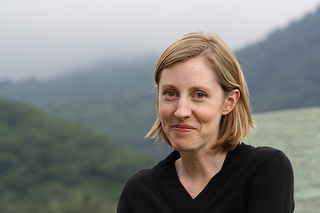
skilaSkila Brown holds an MFA from Vermont College of Fine Arts. She grew up in Kentucky and Tennessee, lived for a bit in Guatemala, and now resides with her family in Indiana.

Come back on Thursday, when we will spotlight Caminar in our Libros Latin@s section!

We are giving away two copies of Caminar!! Go to a Rafflecopter giveaway to enter for free. You can enter once per day through this week. Two winners will be selected Saturday morning.

Celebrate National Poetry Month with Animals and Latin American Art

By Concetta Gleason
editorial assistant/admin coordinator for Scholastic’s Club Leo en Español

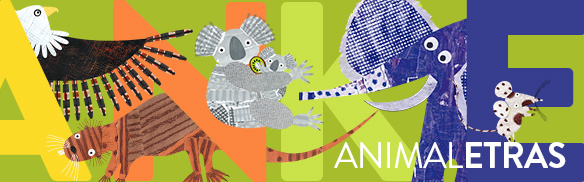
Animaletras by Chilean author Francisca Palacios is the ideal book to read during National Poetry Month. Animaletras is an alphabet book that teaches young learners about the animal kingdom, describing each animal in beautiful verse that includes useful facts about habits and habitats. The vibrant illustrations beautifully encapsulate the playfulness and vitality so common in Latin American art. One of our favorite letter-and-animal pairs is A for Águila (Eagle):

 A a 

Con el águila en el cielo
bien montada en cada ala
la a vuela, aventurera,
por los vientos inflamada.

With the eagle in the sky
saddled closely to each wing
the a takes flight, adventurous,
enflamed by the winds.

For bilingual classrooms, Animaletras opens up a world of fun creative writing exercises in Spanish and English. One great writing exercise is the acrostic, where you spell out a word vertically and use each letter as the first letter of a new word that relates to the original word. Below are acrostic poems in Spanish and English foráguila and eagle.

Águila

Ágil

Glorioso

Único

Increíble

Líder

Aplomo

Eagle

Enormous

Agile

Grand

Lovely

Elegant

What words and rhymes can you create in English and Spanish for National Poetry Month?

Author’s Note: Club Leo en Español supports your classroom with fun and affordable books that connect children’s home language and learning. Our books include amazing series, original titles, and winners of the Pura Belpré Award, which celebrates the remarkable contributions of artists who give voice to the Latino community through children’s literature.

Club Leo en Español apoya tu salón de clases con libros divertidos y asequibles que conectan la lengua materna y el aprendizaje de los niños. Nuestra colección incluye increíbles series, títulos originales y ganadores del Premio Pura Belpré, que celebra los extraordinarios aportes de artistas que dan voz a la comunidad latina a través de la literatura infantil.

The 2014 International Latino Book Awards Finalists!

Below are the 2014 finalists for the 16th Annual International Latino Book Awards in the children’s, youth, and young adult categories. If you click on the images, you will be taken to Goodreads, Barnes and Noble, or Amazon for more information. The Awards are produced by Latino Literacy Now, an organization co-founded by Edward James Olmos and Kirk Whisler, and co-presented by Las Comadres para las Americas and Reforma, the National Association to Promote Library and Information Services to Latinos. The Awards themselves will be June 28 in Las Vegas as part of the ALA Conference. For the complete list, which includes adult fiction and nonfiction, check out the Latina Book Club site. Congratulations and good luck to all of the finalists!

Best Latino Focused Children’s Picture Book: English

18296043  15791044

Best Latino Focused Children’s Book: Spanish or Bilingual

17265250  19483940  An Honest Boy Un hombre sincero

Best Children’s Fiction Book: English

18492598  15842628  The Box of Holes  

Best Children’s Fiction Picture Book: Bilingual

17267265  17940785  15938471  16000381

Best Children’s Fiction Picture Book: Spanish

20948920  17802285  16457293  18406769  20454675

Best Children’s Nonfiction Picture Book

13610203  An Honest Boy Un hombre sincero  The Dog That Became a Lion

Best Educational Children’s Picture Book: English

17465058  18296043  15791044

Best Educational Children’s Picture Book: Spanish or Bilingual

  19483940  Hola! Gracias! Adios!  18126680  Embedded image permalink

Most inspirational Children’s Picture Book: English

18371476

Most inspirational Children’s Picture Book: Spanish or Bilingual

18198024  9542372  Embedded image permalink  Pink Firetrucks  18406693

Best Youth Latino Focused Chapter Book

10436183  16670129  Front Cover

Best Youth Chapter Fiction Book: English

16131067  17166339  16059385

Best Youth Chapter Fiction Book: Spanish or Bilingual

10162585    

Best Youth Chapter Nonfiction Book

Most inspirational Chapter Book

Front Cover  The Adventures of Chubby Cheeks: The Pro Quest

Best Young Adult Latino Focused Book: English

Insurgency: 1968 Aztec Walkout by Victor Gonzalez

17274543  15769992  Stars of the Savanna

Best Young Adult Latino Focused Book: Spanish or Bilingual

Los Pájaros No Tienen Fronteras by Edna Iturralde

18208087

Best Young Adult Fiction Book: English

17184137  12154323  15814459  15798660  A Girl Named Nina

Best Young Adult Fiction Book: Spanish or Bilingual

La Guarida de las Lechuzas by Antonio Ramos Revillas

Best Young Adult Nonfiction Book


Best Educational Young Adult Book

18462053  Stars of the Savanna  

Most Inspirational Young Adult Book

15769992  12352685  Stars of the Savanna

Best Book Written by a Youth: English

15020431  15874623

Best Book Written by a Youth: Spanish or Bilingual

  Serendipity, Poems About Love in High School

Best Children’s Picture Book Translation: Spanish to English

Avian Kingdom Feathered Tales: Birds Of A Feather  Avian Kingdom Feathered Tales: Pelican Sky  Avian Kingdom Feathered Tales: Two Hoots and a Holler  17465058

Best Children’s Picture Book Translation: English to Spanish

El Día Maravilloso de Hacer Tamales que Tuvo Sofia by Albert Monreal Quihuis; translator: Veronica Lamanes

Best Chapter/Young Adult Book Translation: English to Spanish

El Gusano de Tequila

Best First Book: Children’s and Youth

Stars of the Savanna  An Honest Boy Un hombre sincero