Good Men & Bad Men: On Latino Masculinities in Joe Jiménez’s Bloodline


By Sonia Alejandra Rodríguez, PhD

Throughout this presidential campaign, Donald Trump has referred to Latino men, generally speaking, as “criminals,” “rapists,” and “bad hombres.” Unfortunately, the image of Latino men in popular culture as hyper-masculine, violent, and dangerous is not new. Trump tapped into, and exploited, a long standing, racist, xenophobic fear of black and brown men in this country. After many of his comments, I saw many folks challenge these stereotypes by posting pictures of themselves in their graduation gowns or with their diplomas. In doing so, the message was to state that not all Latino immigrants or Latinos of immigrant descent are criminals. The images of young Latinos in their graduation gowns were indeed powerful and much needed, in their own right. However, in saying “we are not criminals, we are college educated,” or whatever, we have further distanced ourselves from the Latinos that are “criminals” and are criminalized. In other words, the pictures of us in our graduation gowns don’t remove the stereotypes of Latino men as criminals, but instead, reinforces a dichotomy between the “good” type of Latino men, the college students as productive citizens, and the “bad hombres,” the criminals exhausting our resources. Clearly there’s a problem when we limit our understanding of Latino masculinities as “good men” and the “bad” ones. These polarizing possibilities of what it means to be a Latino man are harmful and we need more complex images of Latino men and Latino masculinities that give us a broad spectrum.
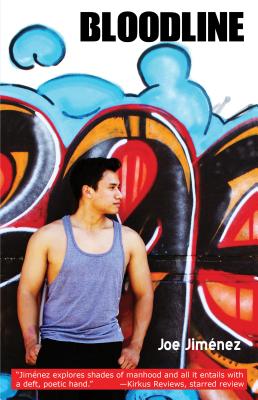
Bloodline CoverBloodline by Joe Jiménez is an excellent example of the impact these polarizing views of Latino masculinity can have in the lives of Latino boys and young adults. At the center of the novella is Abram’s struggle to define his manhood. The women in his life have made it clear that they want him to be a “good man,” but he doesn’t know what that means. His grandmother brings in his Uncle Claudio to serve as a father figure and guide Abram. But Abram also doesn’t understand why Claudio “with his slick ways and his fat police sheet, his visits that usually end in conflict” (p. 10) is called upon to teach him how to be a man.

Throughout the story, Abram is burdened by the absence of his father because it means he needs to determine, on his own, what kind of man he wants to be. At the heart of his search is the question of whether he is innately bad or not. Abram narrates: “You wonder if there is anything in the world you can do, or if it’s true that some people are really just born bad, born to enact badness, born to punch and kick and scream and fight and destroy shit, because the genes in your body have selected you for it” (p. 11). Abram is convinced he is “bad” because he knows, based on what his grandmother and Becky have said, that his father and his uncle are bad men. So, then, if his father and his uncle are bad then doesn’t that make him bad too? In regards to Uncle Claudio he says, “You hate that your blood is his, the sameness coursing through you like pinpricks of words entering the ear, becoming the air, the sigh, the wickedness of rage and ire and disgust for all the shit he’s done poised to become the whole body. His blood, your blood” (p. 22). The badness that he feels coursing through his veins is what he struggles with until it’s too late.

“Torcido,” twisted, is the word Abram hears in reference to his father from his aunts and his grandmother. He says, “Not a good man, you have figured that much out. You know that he died and that no one mentions his name. You know you are not supposed to be like him” (p. 9). Later in the story, it is revealed that his father was shot by a drug dealer but what the family doesn’t know is that Claudio set him up. In this way, the silence around Abram’s father has a lot to do with the way he died. It is also because his involvement with drugs that the women in the family insist that Abram not turn out like him. Abram’s father is devalued because of the way he died—at the hands of a heroin dealer—which further marks him as a criminal. The family does not read Abram’s father as a productive citizen because he died in a situation that was already criminalized by such tactics as “the war on drugs.” In other words, Abram’s father is a “bad” man because he was supposedly participating in what was already considered criminal behavior by society. His inability to prove himself a productive citizen, or because he did not leave a legacy to prove that he was a productive citizen, he instead serves as a warning story.

In an article about her cousin’s death due to drunk driving, scholar Lisa Cacho states, “This is why we could not talk about Brandon as valuable; he was not only marked as ‘deviant’ by his race, but he also did not perform masculinity in ways to redeem, reform, or counter his (racialized) ‘deviancy.’ He did not leave us with any evidence to narrate him as a productive, worthy, and responsible citizen, who had been ‘unfairly’ treated. ‘unjustly’ targeted, and ‘wrongfully’ accused” (p. 184).  In other words, Brandon’s race marked him as “deviant,’ or bad, or torcido, which means that to have been considered valuable in our society he would have had to prove he was a productive citizen by potentially being a good student, having a job, saving money, etc. Cacho further explains that this was not the case for Brandon. He wasn’t at the top of his class, and he spent his money on recreational activities that were considered “bad.” She concludes that his life became a narrative for what not to do. Similarly, Abram’s father is demonized as a “bad man” because he was not considered productive and therefore not valuable. Abram experiences this same devaluation when he is suspended from school for fighting and when his grandmother scolds him for the same reason.

Abram’s inner turmoil demonstrates how the intersectionality of race and gender affect boys and men of color. Abram is marked as bad, deviant, or torcido based solely on the color of his skin. Getting in trouble for fighting only reinforces the negative conceptions his academic institution, and society in general, already had of him. What is painful to read in this story is that the women in his family are the ones reinforcing the gender expectations by continuing to read the men in his life through the harmful lens of “good men” vs “bad men.” Grandma is afraid that Abram’s fighting will lead to bigger problems later on in life and it is therefore important that Abram learn to be a good man before it’s too late. What grandma wants is for Abram to be a productive citizen because she wants to keep him safe. In this way, we want to understand that being a productive citizen or a “good man” will mean that our boys will have access to certain rights and benefit from protection. However, we have too many examples of how this is not always the case.

Abram is not a bad man, even if he does get into fights. His family doesn’t think so either, but they are afraid he will turn into one and that fear also needs to be challenged and discussed. Jiménez does a phenomenal job at representing the construction of Latino masculinity as a complex process. Abram is complicated and beautiful and loves deeply. Jiménez’s poetic voice presents Abram as vulnerable, hurt, protective, and loving. Jiménez gives us a protagonist that could easily be any of our boys or young men. It is probably for this reason that the ending hurts so much. Abram reminds me of other male protagonist in Latinx kid lit that complicate Latino masculinity: Juanito from Downtown Boy by Juan Felipe Herrera, Zach from Last Night I Sang to the Monster and Aristotle from Aristotle and Dante Discover the Secrets of the Universe by Benjamin Alire Saenz, Marcus from Suckerpunch by David Hernandez, and Sean from Secret Saturdays by Torrey Maldonado. Having multiple representations of what it means to be a Latino man is important because it expands our conversations beyond “good men” and “bad men.”  In an article about Chicano children’s literature and representation of masculinity, Phillip Serrato says, “Perhaps above all else, this literature invites boy readers in particular to think about the examples of masculinity surrounding them, to reflect upon the pressures that they themselves have faced or will face as they grow up, and to figure out what kinds of men they want to become” (p. 154-5). Again, we need texts like Jimenez’s that complicate Latino masculinity because at the end of the day so many of their lives depend on it.

Also check out this recent post by the author: Things Boys Have Asked Me: A Guest Post by Joe Jiménez

Works Cited

Cacho, Lisa Maria. (2007). “‘You Just Don’t Know How Much He Meant’: Deviancy, Death,

and Devaluation.” Latino Studies 5.2 (2007): 182-208.

Jimenez, Joe. (2016). Bloodline. Texas: Arte Publico Press.

Serrato, Phillip. (2012) “Transforming Boys, Transforming Masculinity, Transforming Culture:

Masculinity Anew in Chicano Children’s Literature.” Invisible No More: Understanding the Disenfranchisement of Chicano Men and Boys. Eds. Pedro Noguera, Aída Hurtado, & Edward Fergus. New York: Routledge.

We’ll See You All in the Fall! Meanwhile, Read Latinx Books!

We are officially on summer vacation and will return after Labor Day.

Until then, we will be reading, writing, resting, and scheduling Tweets of previous posts to encourage you to read and support Latinx books!

And…

GRACIAS

OBRIGADO

to everyone who contributed to our site this past year!


Enjoy the rest of the summer! See you in September!


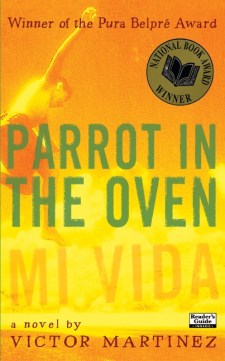
Celebrating Pura Belpré Winners: Spotlight on Parrot in the Oven by Victor Martinez

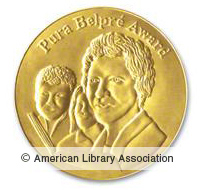
PuraBelpreAward

The Pura Belpré Awards turns 20 this year! The milestone will be marked on Sunday, June 26, from 1:00-3:00 p.m. during the 2016 ALA Annual Conference in Orlando, FL. According to the award’s site, the celebration will feature speeches by the 2016 Pura Belpré award-winning authors and illustrators, book signings, light snacks, and entertainment. The event will also feature a silent auction of original artwork by Belpré award-winning illustrators, sales of the new commemorative book The Pura Belpré Award: Twenty Years of Outstanding Latino Children’s Literature, and a presentation by keynote speaker Carmen Agra Deedy.

Leading up to the event, we will be highlighting the winners of the narrative and illustration awards. Today’s spotlight is on Victor Martinez’s Parrot in the Oven: Mi Vida, winner in the narrative category in 1998.


Review by Cecilia Cackley

Parrot in the OvenDESCRIPTION (from GoodReads): Dad believed people were like money. You could be a thousand-dollar person or a hundred-dollar person even a ten-, five-, or one-dollar person. Below that, everybody was just nickels and dimes. To my dad, we were pennies.
 Fourteen-year old Manny Hernandez wants to be more than just a penny. He wants to be a vato firme, the kind of guy people respect. But that’s not easy when your father is abusive, your brother can’t hold a job, and your mother scrubs the house as if she can wash her troubles away.

In Manny’s neighborhood, the way to get respect is to be in a gang. But Manny’s not sure that joining a gang is the solution. Because, after all, it’s his life – and he wants to be the one to decide what happens to it.

MY TWO CENTS: The subtitle of this book translates as ‘my life’ and that’s exactly what it is. Narrator Manny Hernandez tells the reader the details of his life without leaving out any of the tough, ugly parts—and it’s the truth in everything that gives the book its poetry. Manny is an honest character, confessing his struggles and fears to us and not apologizing for anything. Manny guides the reader through his family, neighborhood, and school, detailing everyone’s struggles, disappointments and moments of peace. This is not a book where there are always clear sides of good and evil, or winners and losers. Manny joins a gang and goes through a violent initiation, but almost immediately afterward, when he sees a fellow gang member rob someone, he realizes that he is not a person who hurts others like that and returns home to his family. Like most teenagers, Manny is just trying to survive and figure out his life and the truth of that is what makes his story so compelling.

Parrot in the Oven was published in 1996 (It won the Pura Belpré Medal in 1998 and the National Book Award in 1996). Although several of the Newbery honor titles that year touched on difficult subjects such as abuse, drugs and historical violence, it would be four more years before the Michael L. Printz award was established to specifically honor literature for teens. Since then, YA literature has received a lot more recognition and the debate about what is appropriate for teens to read and what we should be honoring with awards has become much more heated. Victor Martinez knew what was important: for teens to have books that told them the truth and let them know that whatever they were struggling with in their lives, they would figure it out and they were not alone. Parrot in the Oven is one of those books and we are lucky to be able to share it with readers today.

TEACHING TIPS: Parrot in the Oven provides lots of opportunity for discussion, making it an ideal book to read as a class. Because the book is organized into chapters that each tell about a different place, person, or experience, it serves as a good example text for students doing writing projects. Just as Manny writes about his grandmother’s garden, a boxing match, his sister’s miscarriage, you can encourage students to pick a place or experience of their own and try to describe it in detail, the way Manny does his own life.

Relationships are also central to Manny. Students could work in small groups to discuss Manny’s relationship with his different family members, teachers, and people in the neighborhood, and search the text to find evidence for how he feels about these people and interacts with them.

The ending of Parrot in the Oven is satisfying but not entirely definitive. Manny has seemingly made a choice about his future, but we don’t see any results of that choice. This provides an opportunity for students to imagine what Manny might be doing in a year or three years, and write a short piece showing how his choices have changed or not changed his life.

*****

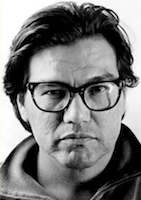
Victor MartinezVictor Martinez was born and raised in Fresno, California, the fourth in a family of twelve children. He attended California State University at Fresno and Stanford University, and has worked as a field laborer, welder, truck driver, firefighter, teacher, and office clerk. His poems, short stories, and essays have appeared in journals and anthologies. Mr. Martinez was awarded the 1996 National Book Award for Young People’s Literature for Parrot in the Oven, his first novel. Mr. Martinez lived in San Francisco, California, where he helped to found the poetry collective Humanizarte. He passed away in 2011.

 

ADDITIONAL RESOURCES:

Click here for a review from Teaching Latin America Through Literature.

Here’s a printable lesson plan from HarperCollins.

For book guides and lesson plans from Teaching Books, click here.


Cackley_headshotCecilia Cackley is a performing artist and children’s bookseller based in Washington DC where she creates puppet theater for adults and teaches playwriting and creative drama to children. Her bilingual children’s plays have been produced by GALA Hispanic Theatre and her interests in bilingual education, literacy, and immigrant advocacy all tend to find their way into her theatrical work. You can find more of her work at www.witsendpuppets.com.
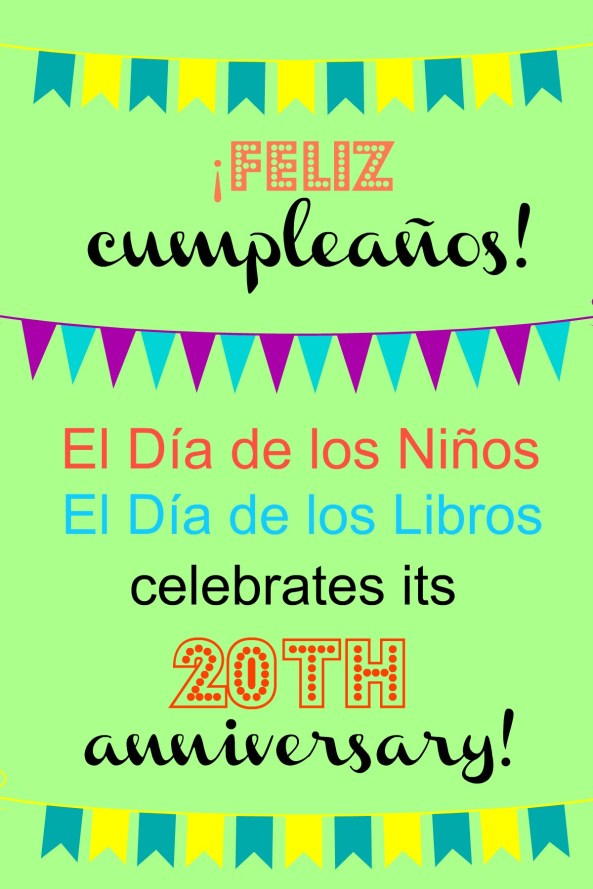
Hip, Hip Hooray, it’s Día’s Birthday!

Feliz Cumple DIA

Look for an upcoming post about the joys of El Día de los Niños/El Día de los Libros. For more information about celebrating Día, visit the American Library Association.

Celebrating Pura Belpré Award Winners: Spotlight on Julia Alvarez


PuraBelpreAwardThe Pura Belpré Awards turns 20 this year! The milestone will be marked on Sunday, June 26, from 1:00-3:00 p.m. during the 2016 ALA Annual Conference in Orlando, FL. According to the award’s site, the celebration will feature speeches by the 2016 Pura Belpré award-winning authors and illustrators, book signings, light snacks, and entertainment. The event will also feature a silent auction of original artwork by Belpré award-winning illustrators, sales of the new commemorative book The Pura Belpré Award: Twenty Years of Outstanding Latino Children’s Literature, and a presentation by keynote speaker Carmen Agra Deedy

Leading up to the event, we will be highlighting the winners of the narrative and illustration awards. Today’s spotlight is on Julia Alvarez, the winner of the 2004 Pura Belpré Narrative Award for Before We Were Free and the 2010 Narrative Award for Return to Sender.

Reviews by Cindy L. Rodriguez

BEFORE WE WERE FREE

DESCRIPTION FROM THE PUBLISHER: Anita de la Torre never questioned her freedom living in the Dominican Republic. But by her 12th birthday in 1960, most of her relatives have emigrated to the United States, her Tío Toni has disappeared without a trace, and the government’s secret police terrorize her remaining family because of their suspected opposition of el Trujillo’s dictatorship.

Using the strength and courage of her family, Anita must overcome her fears and fly to freedom, leaving all that she once knew behind.

From renowned author Julia Alvarez comes an unforgettable story about adolescence, perseverance, and one girl’s struggle to be free.

MY TWO CENTS: Anyone who has read Julia Alvarez’s adult novels will enjoy the connections made in Before We Were Free to How the Garcia Girls Lost Their Accents and In the Time of the Butterflies. In Before We Were Free, Alvarez explores the Trujillo dictatorship in the Dominican Republic through the eyes of Anita de la Torre, a 12-year-old girl in 1960 whose family slowly reduces in number during the novel. Some, like her cousins, the Garcias, flee the country, while others go missing or are arrested. In the beginning, Anita has little knowledge of politics and the underground movement to assassinate Trujillo. In fact, at the start of the novel, Anita looks to El Jefe’s picture at times when she needs strength. She slowly becomes more aware that life under Trujillo has become increasingly dangerous for many, including her own family members who are a part of the movement to kill the dictator.

One moment of shocking clarity comes when Trujillo attends a party and becomes attracted to her fifteen-year-old sister. The family goes into emergency mode and manages to get her sister out of the country before Trujillo can take her in every sense of the word. Anita’s increased understanding leaves her confused and literally shocked into silence. The once-talkative girl slips into silence, at times even forgetting words that were once simple and familiar. When Anita and her mother go into hiding after Trujillo’s assassination, she writes in her diary, but then erases the pages in case the secret police raid the home. She literally cannot say or write anything because of fear. At some point, Anita decides to write and not erase–or be erased. She wants someone to know she existed if she were ever taken away by the police.

Throughout the novel, Alvarez often refers to wings, birds, and flying in connection with the Mirabal sisters, the “Butterflies” who were murdered, and the fight for freedom that continued through Anita’s family and others. Anita not only takes flight from her home, but has to learn how to free herself internally, to spread her wings and fly despite her grief of losing family and everything she considered home.

A masterful storyteller, Alvarez makes a complex political situation accessible to younger readers through Anita, who faces political drama alongside normal 12-year-old milestones, like getting her period and having a first crush. Alvarez also sprinkles the narrative with other issues that she does not delve into deeper, but could be discussion starters for book clubs and students. For example, Anita’s family employs a black, superstitious Haitian maid. While she is loved like family, this dynamic should spark conversation about race and class issues within Latin American countries. Another example is when Anita begins school in New York City. She is placed in the second grade, despite her age, and her teacher calls her “Annie Torres.” This scene is like a one-two punch to the gut and should be examined further. Mental health is another issue touched upon that warrants further discussion. Anita talks about feeling empty and numb, and her mother takes tranquilizers to calm her nerves. The reader gets the idea that living under such conditions and surviving when family members did not will require years of emotional and psychological recovery.

TEACHING TIPS: Before We Were Free is a great option to include in a historical fiction unit in Language Arts or as a fictional option in a Social Studies class learning about different types of governments, Latin America, or under a theme such as “the fight for freedom.” Students often learn about the colonists’ fight against the British, but rarely learn about more recent struggles for democracy in other countries. The relationship between Haiti and the Dominican Republic could be explored, as well as the ideas mentioned above. Anita’s character development should be traced and analyzed, paying close attention to what triggers each of her changes and what finally prompts her to have the courage to embrace her new life.

RESOURCES:

Review from Vamos a Leer

Educator Guide from Vamos a Leer

Reader’s Guide from Penguin Random House


RETURN TO SENDER:

DESCRIPTION FROM THE PUBLISHER: After Tyler’s father is injured in a tractor accident, his family is forced to hire migrant Mexican workers to help save their Vermont farm from foreclosure. Tyler isn’t sure what to make of these workers. Are they undocumented? And what about the three daughters, particularly Mari, the oldest, who is proud of her Mexican heritage but also increasingly connected to her American life. Her family lives in constant fear of being discovered by the authorities and sent back to the poverty they left behind in Mexico. Can Tyler and Mari find a way to be friends despite their differences?

In a novel full of hope, but with no easy answers, Julia Alvarez weaves a beautiful and timely story that will stay with readers long after they finish it.

MY TWO CENTS: Although Before We Were Free and Return to Sender are set in different countries, they have similarities. In Return to Sender, Mari and her family are migrant workers on a Vermont dairy farm. She encounters a mix of acceptance and scorn from her classmates, the townspeople, and even Tyler, at first. The chapters are shared between Mari (first person, often written in letters) and Tyler (third person), who reveals that he is confused about being a proud, patriotic American and knowing that his father is breaking the law by hiring undocumented workers. In addition to dealing with the varied reactions of the locals, Mari’s family worries about the whereabouts of her mother, who returned to Mexico but is supposed to be on her way back via a coyote. She has been unreachable, however, for several months. The family is also under constant threat of deportation. Complicating matters, Mari was born in Mexico, while her two younger sisters were born in the United States, which splits their feelings about where is home and how they would feel if they needed to return to Mexico.

Like Anita in Before We Were Free, Mari ends up in hiding and writing in a diary, after a raid by the U.S. Immigration and Customs Enforcement ends with her parents being arrested. Also like Anita, Mari needs to find her voice and, in her case, she has to find the courage to speak on behalf of her family to government officials. Read together, students could explore the different reasons for immigration, as the families in the two novels come to the United States for different reasons–political asylum versus employment–yet the underlying reason is always the same–more opportunities for their children.

Things that struck me as odd were Mari’s heavy accent (I listened to the audio book), her lack of understanding of English “sayings,” and her fond memories of Mexico, considering she moved to the U.S. when she was 4 and has attended American schools. Based on my experience with ELL students, these details would have made more sense if Mari had been in the U.S. for only a few years, not the majority of her life.

Still, Return to Sender does a great job of offering various viewpoints on immigration and migrant workers on struggling American farms, and I like that Alvarez places her migrant workers in Vermont, where the author lives, as we most often read and hear about migrant workers in border states.

TEACHING TIPS: As mentioned above, students could read both novels and compare/contrast the characters and their experiences, as both face personal, familial, and political challenges. Return to Sender also allows students to learn more about immigration and migrant workers, particularly in New England. The title was taken from a real government operation to find and deport migrant workers, so students can research that particular policy while reading this fictional account. Both books also lend themselves to deep questions about freedom, rights, and who has access to these.

RESOURCES:

Educators guide from Random House

TeachingBooks.net has interviews and several links with more information about Alvarez and her work.


Jilia Avaraz receiving a medal from Barack ObamaABOUT THE AUTHOR: Julia Alvarez is an award-winning writer of poetry, essays, and novels and short stories for children and adults. Alvarez was born in New York City, but her family returned to the Dominican Republic when she was three months old. Her family became involved with the underground movement against dictator Rafael Trujillo. They left the country and returned to New York City in 1960. She graduated with a bachelor’s degree from Middlebury College and earned her master’s in creative writing from Syracuse University. She is currently the writer in residence at Middle College and runs a sustainable coffee farm/literacy center in the Dominican Republic.

Her novels for adults include How the Garcia Girls Lost Their Accent, In the Time of Butterflies, iYo!In the Name of Salomé, and Saving the World. Her books for children include How Tía Lola Came to Visit/Stay, Before We Were Free, Finding Miracles, and Return to Sender. Alvarez has won numerous awards for her work, including the Pura Belpré and Américas Awards for her books for young readers, the Hispanic Heritage Award in Literature, and the F. Scott Fitzgerald Award for Outstanding Achievement in American Literature. In this picture, she is receiving the National Medal of the Arts from the National Endowment of the Arts, presented by President Barack Obama.

Author Ava Jae on Not Writing Latinx Characters


By Ava Jae

With both of my maternal grandparents born in Cuba, and both of my paternal grandparents born in Mexico, I am, indisputably, a third generation Latina. I learned Spanish before I learned English, celebrated Three Kings Day for the first decade of my life, and looked forward to my Cuban grandma’s incredible Christmas dinners—carne asada, frijoles negros con arroz, platanos maduros, y flan. I listened to my grandma’s stories in Spanish about growing up as the eldest of thirteen in Cuba, saw pictures of relatives I would probably never meet because they lived in a country Americans weren’t permitted to go to, and relished the warm, aromatic smell of café con leche in the morning.

And yet, by the time I’d finished my tenth manuscript—the one that would become my debut, Beyond the RedI still hadn’t written about a single Latinx character.

Looking back, there were a lot of reasons why that happened.

Firstly, I don’t fit the mold the media insists Latinx people fit into. I’m short—painfully so—and have dark eyes, sure, but that’s where the similarities end. Though I tan well when I spend time in the sun, I’m pale 99.9% of the time. My hair is brown, not black. I’m thin, not curvy. Though my pronunciation is native and I can understand it well enough, I’ve forgotten most of my Spanish. I’m not a flirty, exotic beauty who moves her hips like she was born dancing; I’m a tomboy, and awkward, and an introvert. My legal last name isn’t one of the common Mexican last names that’s easily recognizable as Latinx. When people look at me, they don’t see a Latinx person; they see a white kid.

And for a long time while I was writing, I started to see myself as a white kid, too.

I guess, in a sense, it was inevitable—no one in my immediate family looks like a stereotypical Latinx person; we are light-skinned (yes, even the Mexican side of the family), and my grandma is the one of the few of her many siblings who doesn’t have green or blue eyes (hers are hazel). My biological father doesn’t fit any of the Mexican stereotypes I’d learned; he burns instead of tans, he doesn’t like spicy food, and while he’s not super tall, he’s not exactly noticeably short, either.

I looked at my family, I looked at myself, and I internalized the shocked expressions I got every time I revealed I was, in fact, of the Latinx community. I learned it wasn’t in my favor to reveal my ethnicity when applying for a job, I was reminded time and time again with Mexican jokes, with talk about those illegals, with the stereotype of the working class Latinx person stuck doing the dishes, or cleaning homes, or taking the jobs that no one else wanted, that there were really no advantages to saying, “Yes, I’m Latina.”

So I stopped saying it. I justified it a day at a time, with “I can’t even speak Spanish,” with “I don’t even look Latina,” with “I wasn’t raised in a vibrant, Latinx community.” I hesitated on surveys that asked me to check “Caucasian” or “Hispanic.” I started believing I didn’t count.

So maybe it’s not a surprise that I wrote ten manuscripts without once considering writing a Latinx character. Maybe it’s inevitable that I didn’t feel it was my place to write a Latinx character. Maybe the fact that I never saw a character like me—Latinx, but light-skinned and unable to speak fluent Spanish—only reinforced this belief that I didn’t count. That I didn’t belong.

But slowly, things are starting to change. Adam Silvera wrote More Happy Than Not, and, for the first time, I read about a Latino boy who couldn’t speak Spanish. My friends online have spoken about being white-passing, about why this privilege so often hurts, about how people like me who feel stuck between two cultures without fitting completely into either exist. Slowly, I’ve begun reclaiming my identity. I’ve given myself permission to write characters like me.

And after I finished Beyond the Red and realized some of my experience had seeped through—in my male protagonist caught between two cultures, and in some of the pronunciation of the language my female protagonist speaks—I couldn’t help but smile.

Because even when I didn’t see it, being Latinx is, and has always been, a part of me. And I’m not going to hide it anymore.


Ava Author Photo_smallJPGAva Jae is a writer, an Assistant Editor at Entangled Publishing, and is represented by Louise Fury of The Bent Agency. Her YA Sci-Fi debut, BEYOND THE RED, released March 1, 2016 from Sky Pony Press. When she’s not writing about kissing, superpowers, explosions, and aliens, you can find her with her nose buried in a book, nerding out over the latest X-Men news, or hanging out on her blogTwitterFacebooktumblr, Goodreads, Instagram, or YouTube channel.