The Road to Publishing: Giving Good Feedback to Fellow Writers

By Stephanie Guerra

Last month, I began a two-post series addressing the most productive ways to work with beta readers and critique groups. The first installment focused on receiving feedback; in this post, I’ll focus on how to offer good feedback.

Beta readers and critique groups are critical to the writing process, and many successful authors find a long-term writing partner with whom they work productively for years. How can you nurture critique relationships—notoriously sensitive—so that they grow and flourish?

Here’s a quick and dirty list of strategies:
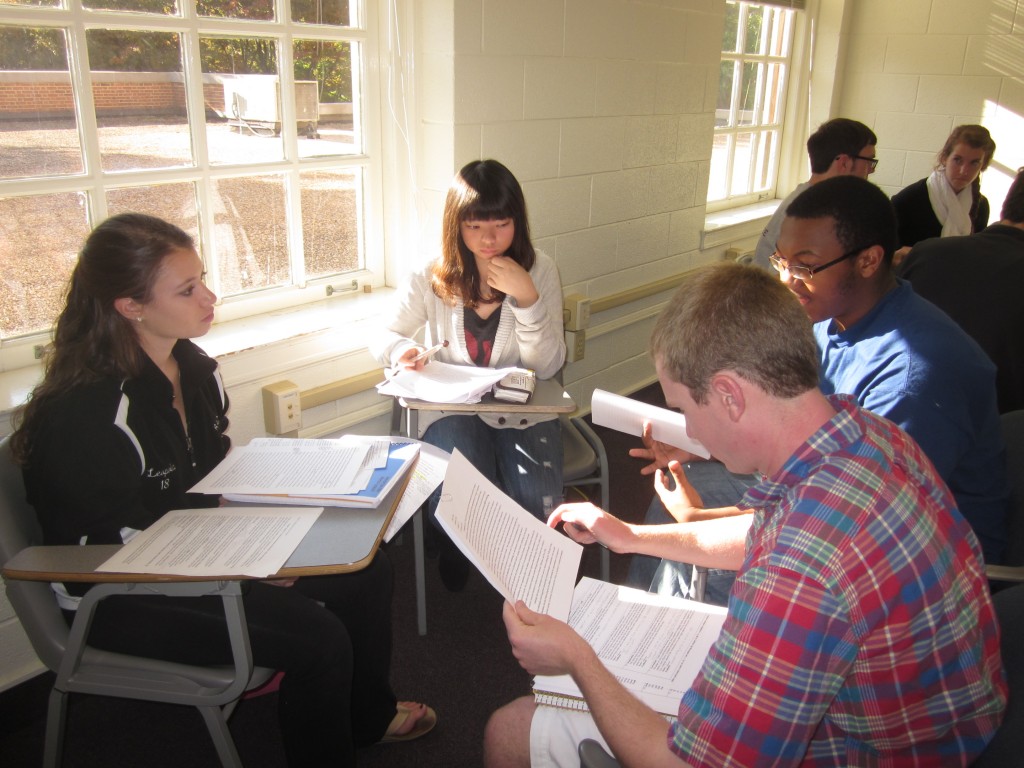
peer review1. Ask the type and level of feedback your partner is seeking. Type addresses the range of feedback your partner desires. Global? Character-focused? Plot-focused? Language-focused? Line-editing? Level addresses the thoroughness of your feedback. For a first draft, many writers want general, light feedback, including global impressions of plot and characters. If you pick apart the draft line by line, your partner may be overwhelmed. Be sure to clarify what he or she is looking for before diving in.

2. Offer an even trade. If someone has given you careful, in-depth feedback on one of your manuscripts, be sure to reciprocate in full. Do not read through his or her work quickly and toss off your thoughts as you hurry to get back to your own project. Your writing partner is relying on you and may make significant changes to their manuscript based on your advice. So give his or her work the time and respect it deserves.

3. Link up with writers who are roughly in your skill/professional range. Great disparities in talent can cause awkwardness, and trades may not be productive for the more advanced partner. That said, if you’re willing to consider a mentor relationship (no matter which end you’re on), go for it! Just don’t expect that trades will be “even”.

4. Find the positives. This seems obvious, but having been through an MFA, I know it needs to be said. Critique partners should be honest—but not brutally honest. Remember that no matter how elementary or flawed your partner’s work appears to you, it represents their effort and passion. Find at least three things to praise before you point out what’s not working.

5. Watch for cues. In the case of verbal feedback, watch and listen to the writer’s facial expressions, body language, and words as they receive feedback. If you sense distress, stop. Bring up the positives. Inspiration is a fragile thing and people have varying degrees of sensitivity about their work. You don’t want to be the Dream Crusher.

Editing16. Know when to back out. Sometimes (especially on first trades, but
occasionally with tried-and-true partners) you’ll run into a piece you simply can’t stomach. Maybe the writing is terrible. Maybe the message goes against everything you believe. Maybe the manuscript feels too commercial. Whatever the reason, if you can’t stand it, you won’t be able to offer a good or fair critique. Be diplomatic: “I’m having a hard time with this piece. I’m not experienced with this genre/topic/style. I’m afraid my political views are getting in the way of my ability to hear your story.” Whatever. Let the writer know you’re biased, and wiggle out gently.

7. Have boundaries. This is a good life rule, no? It definitely applies to writing. Critiques are so personal, and for many, so emotional, that they can unleash a storm of follow-up emails and phone calls. If you feel that someone is demanding more of your time and hand-holding than makes you comfortable, repeat (in as many different ways as you need to): “I really don’t have anything to add to what I’ve already said. But good luck.”

8. Don’t argue. Some writers can’t help themselves; they’re compelled to defend their work in the face of a critique. If you’re the partner giving feedback in this situation, don’t engage. Offer your counsel, and let the writer argue and justify if they need to. It’s all part of the process. Some people work things out verbally.

9. Don’t be the alpha critic. I borrowed this one from William Zinsser. Nobody likes the snide, superior critic who has scathing reviews of everything! ‘Nuf said.

10. Be open-minded. You’ll run into all kinds of manuscripts on the trade routes, not all of them your cup of tea. Remember, you’re not buying the book. Unless you have a visceral hatred of the work (see number 6), give it a fair shot. Try to separate your personal taste from your professional knowledge of character development, plot trajectory, etc. If personal taste is causing your review to slant negative or positive, rethink your approach.
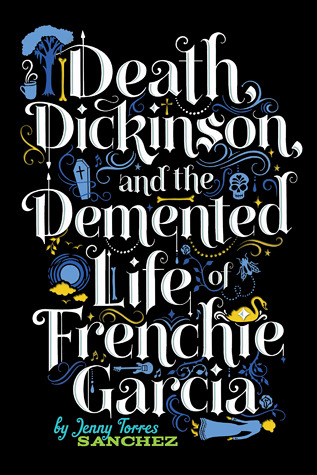
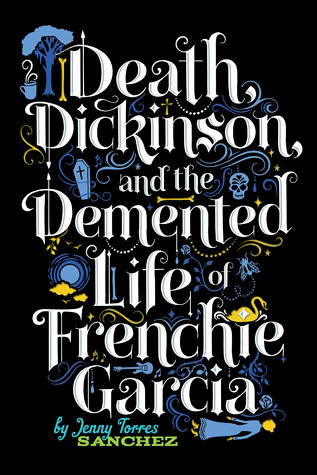
Book Review: Death, Dickinson, and the Demented Life of Frenchie Garcia by Jenny Torres Sanchez

Death, Dickinson, and the Demented Life of Frenchie GarciaBy Cindy L. Rodriguez

DESCRIPTION FROM THE BOOK JACKET: How do you know someone after they’re gone? Frenchie Garcia didn’t know she would be the last person to see Andy Cooper alive. She barely knew him. So why did he choose to be with he before he committed suicide? Her imaginary pal Em (a.k.a Emily Dickinson), who Frenchie visits regularly at her favorite place–the cemetery–is the only one who knows about her last hours with Andy. With guilt and confusion mounting, can Frenchie pull off the one thing that could give her closure?

MY TWO CENTS: Frenchie goes on a road trip with a super-cute new “friend” Colin to make sense of what happened the one and only night she hung out with Andy Cooper, the boy she loved from afar through high school. Frenchie is haunted by the usual questions when grieving: Why? Why him? What could I have done to help him? Could I have stopped him? The last two questions are most painful because she was the last person to see Andy before he died, and, therefore, feels responsible. Sanchez easily blends heart-wrenching grief with regular teen angst, serious moments of conversation with quips like, “Get up, Loser!”from Robyn, Frenchie’s friend who knows something is wrong, but isn’t sure what. Also, Frenchie Garcia is a Latina protagonist in a book that isn’t about being Latina. Frenchie is an artist who likes punk rock and Emily Dickinson; she’s a young Latina who doesn’t speak a single word of Spanish in the novel. Some readers/writers/bloggers have asked for more books with diverse characters who are not dealing with issues of ethnicity, culture, race, etc. This is a good example.

TEACHING TIPS: What student wouldn’t fill an entire notebook about a day they’d like to do-over? This is a perfect before-reading activity that could be revisited and added to as the novel continues. As Frenchie leads Colin through her last night with Andy, students could write about their chosen “do-over” night, what they’d do differently, and what they’d discover. By the end, students have read a cool book and written a personal narrative!

Emily Dickinson’s poetry is made for close reading, which is all the rage with the new Common Core State Standards. Students could read and re-read any of Dickinson’s poems featured in the novel. Close, multiple readings allow students to analyze work down to the word level to gain deeper meaning. In this case, students would gain a deeper understanding of Dickinson and Sanchez’s novel, as they could discuss how the poems fit with the novel.

LEXILE: N/A

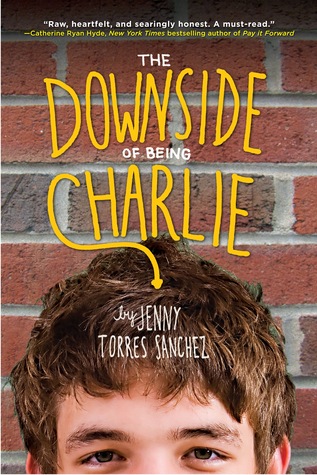
AUTHOR: Jenny Torres Sanchez lives in Orlando, Florida with her husband and children. Before writing her debut novel, The Downside of Being Charlie, she taught high school for several years. She credits her eclectic students for inspiring her to write young adult novels.

Her other YA novel is:

The Downside of Being Charlie

FOR MORE INFORMATION about Death, Dickinson, and the Demented Life of Frenchie Garcia, visit your local library or book store. Also, check out Running Press BooksIndieBound.org,  GoodreadsAmazon.com, and Barnes and Noble.com.

Author Jenny Torres Sanchez & Her Characters Are Inspired by the Arts

By Jenny Torres Sanchez

When I was in school and I’d read a story in my English textbook, many times there was a photo or an art piece that went along with it. And there’d always be a question at the end of the story that would ask how the art piece and story go together. Some people hated that question.

I loved it.

I’ve always loved the idea of art going together. It makes sense to me, the way they connect. The way one piece of art can inspire another piece of art, or how you can see a story in a painting, or how a story can paint images in your head. I LOVE that. I guess that’s why I find a lot of inspiration in other forms of art. Not only do I enjoy them for what they are (a striking painting, a haunting photo, a song that you can’t get out of your head), but I also enjoy them because of the stories I see in them.

CharlieMusic? Listen to the lyrics; there’s a story there. Paintings? Full of story, either of the subject or the artist. Photography? Setting. People. Captured moments. It’s kind of like an artist is setting me up for a story, igniting that spark that helps me write. For me, all art is striving to make a connection, with the reader, with the listener, with the viewer. It’s striving to ask you to look inside yourself, or outside yourself, and really wonder and think and feel. And I think you really need to feel to write, so for me the two go hand in hand.

But I also think art can be more than inspiration.

In my books, my characters often turn to art in some way while they’re going through a difficult time. In The Downside of Being Charlie, Charlie finds he can make better sense of the world through the lens of a camera. He is incredibly vulnerable and scared and unable to express himself or deal with his family issues. But in photography, he finds a way to do that. Actually, with Charlie, photography becomes this way of seeing things, exposing things no one else around him wants to see. So, photography also becomes this very powerful and empowering thing for him.

FrenchieIn Death, Dickinson, and the Demented Life of Frenchie Garcia, Frenchie is fascinated by Emily Dickinson’s poems, specifically those about death because she’s is in a dark place in her life. Her high school crush has just committed suicide after an amazing night of adventure with her. Dickinson’s poetry reflects Frenchie’s own feelings, and helps her to come to terms with something that just doesn’t make sense.

I don’t set out to make my characters artsy but they usually end up that way. I think it’s because I also see the arts as something that can save us (I hesitate to use the word save, I really do, because I think ultimately, we choose to save ourselves). But I truly believe music, art, writing, stories can offer us a safe haven and inspiration. A place to hang out for awhile, sometimes as an escape, sometimes as a place to make better sense of whatever it is we are going through. Sometimes it is conscious, and sometimes, not so much. Either way, the arts really can be a sort of salve for anyone who has gone through tough times. I like salve better than save. Add the L.

Overall though, art is pretty amazing in any medium. It asks us to feel. It offers us comfort and understanding. And that can’t be bad.

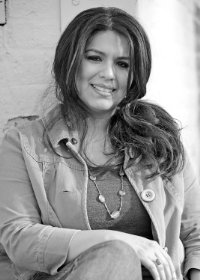
Jenny TorresFrom the Running Press site: Jenny Torres Sanchez lives in Florida with her husband and children where she currently writes full time. Before her debut novel The Downside of Being Charlie she taught high school for several years, where she credits her eclectic students for inspiring her to write young adult novels.

On Thursday, her second novel, Death, Dickinson, and the Demented Life of Frenchie Garcia will be featured on our Libros Latin@s post.

To Be Accurate in Writing, Recognize Truth While Reading

By Cindy L. Rodriguez

As a reading teacher, I often tell my students that the best way to become a better reader is to…wait for it…read. Seems obvious, right? And, of course, the best way to become a better writer is to write. After all, the more you write, the more you produce, the more you learn about writing and about yourself as a writer, and the more you improve.

During our “Road to Publishing” series, we focused on the writing process because, let’s face it, if the writing doesn’t get done, you’re not going to finish your book and become a published author. But, today we want to stress that to become a better writer, you also need to read. A lot.

This may seem obvious to many of us, since most writers I know buy more books than they could ever possibly read in a lifetime, but I’m thinking of my students and other young people who may become future novelists. I often hear students separate reading and writing, as in,”I like to read, but I hate to write” or “I love to write, but I hate to read.”

In response, I offer this quote from a text I use with my college composition students: “Reading and writing function much like breathing in & breathing out. They are inextricably linked” (McQuade/Atwan).

To be a better writer, you must read. Obviously, you read to do the necessary research, and you read within your genre to know what’s been done and what’s popular. But at some point, you’ll also start to read as a writer.

I was always an avid reader, but once I started to write a novel, I read books differently. Of course, at times, I just want to relax and escape and enjoy a good book. Oftentimes, though, I now read as a writer. I notice the structure of the work, vivid descriptions, great dialogue, and chapter endings that keep me reading. I underline beautifully crafted phrases and catch when someone is telling instead of showing. I also wonder if telling is fine in that moment or if my editor would have marked it with a note.

Reading and writing are linked, no question. And, since this is a place where we celebrate and highlight Latin@s in kid lit, I’ll further suggest that if you plan to write Latin@, then you should read Latin@, too. Every conference session I’ve attended or blog post I’ve read about diversity in children’s literature has emphasized the importance of being accurate and respectful when writers venture into territory outside their personal experiences. To be accurate and respectful in your writing, you have to recognize truth and respect while you read.

Part of our site’s mission is to promote literacy and the love of books within the Latin@ community and to encourage interest in Latin@ children’s, MG, and YA literature among non-Latin@ readers. In other words, we want everyone to read and write more Latin@ Lit. To support this, we are adding to our book lists, hosting a year-long reading challenge, and highlighting certain titles in our new weekly feature called “Libros Latin@s.”

Whether you’re reading for research, pleasure, or to become a better writer, we encourage you to add some Latin@ titles to your TBR list this year.

Here are some of the books we’re reading:

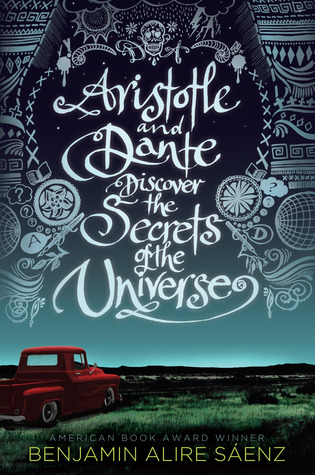
Mexican WhiteBoy     La Linea     Aristotle and Dante Discover the Secrets of the Universe

Secret Saturdays     Confetti Girl     Under the Mesquite

What are you reading?

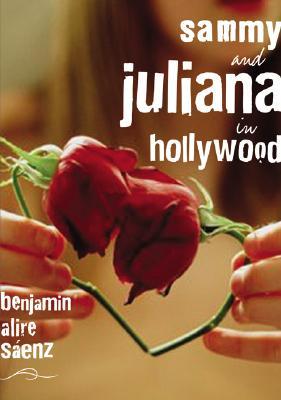
Book Review: Sammy and Juliana in Hollywood by Benjamin Alire Sáenz

SammyBy Cindy L. Rodriguez

DESCRIPTION FROM THE BOOK JACKET: A young adult novel Latino-style–the year is 1969. America is at war, Hollywood is a dirt-poor Chicano barrio in small town America, and Sammy and Juliana, about to head into their senior year, are in love.

MY TWO CENTS: Sáenz creates strong main and supporting characters long remembered after finishing the novel. Sammy’s voice was spot-on as a teen boy who grapples with the personal issues all teens do–friends, love, fears and hopes for the future–while also dealing with poverty, racism, and the Vietnam War era. Sáenz brilliantly mixes Spanish and English, local “neighborhood” issues with larger social issues like drug addiction and homophobia. While Sammy and Juliana are in love, as the book blurb states, this is not a traditional love story. Something tragic happens shortly into the novel that ends the love affair. I won’t spoil it, but the relationship was short-lived, and Sammy spends the rest of the novel dealing with this loss and many others. If you’re looking for something light-hearted with a happy ending, this one’s not for you. Sáenz left me feeling what it’s like to get pounded by life, as Sammy was and as many people are.

TEACHING TIPS: This book has many issues worth pursuing in the classroom: immigration, poverty, grief, drug-use, discrimination based on race and sexual preference. Parts of this novel could easily be used by teachers in different ways. I say parts because I don’t believe every novel used in class needs to be read cover-to-cover. A history teacher, for example, may want to zero in on certain aspects of a novel, but may not want to handle elements typically taught by an English teacher, like character development or symbolism.

The thread about the Vietnam War could be pulled from the novel and used to complement nonfiction pieces in high school history classes. The character Pifas is drafted and students protest the war by wearing black arm bands and staging a sit-in in the school cafeteria. These were among the most memorable moments in the novel. The conversation between Sammy and Pifas about being drafted is emotionally gut-wrenching, and my heart sank when Gigi gets out of the car and falls to her knees in reaction to news about Pifas.

English teachers could use nonfiction pieces about any of the novel’s issues to attack author’s craft, investigating the differences between an objective, factual version of events versus a fictionalized one. Students could then choose an issue from the novel that is still relevant today (hint: all of them) and write two short versions of an event, one as a nonfiction writer would and the other as a fiction writer would.

LEXILE: 390

AUTHOR: (information comes directly from Cinco Puntos Press and University of Texas at El Paso)

Benjamin Alire Sáenz was born in 1954 in Old Picacho, a small farming village outside of Las Cruces, New Mexico. After graduating from high school in 1972, he entered the seminary. He was later ordained a Catholic priest, but left the priesthood three and a half years later. At the age of 30, he entered the University of Texas at El Paso. He later received a fellowship at the University of Iowa. In 1988, he received a Wallace E. Stegner Fellowship in poetry from Stanford University. In 1993, he returned to the border to teach in the bilingual MFA program at UTEP.

Sáenz is an award-winning poet and author of books for children and young adults. His first YA novel, Sammy & Juliana in Hollywood was a finalist for the Los Angeles Times Book Prize and won the Americas Book Award, The Paterson Prize, and the JHunt Award. It was named one of the top ten Young Adult novels by the American Library Association and one of the top books of the year by the Center for Children’s Books, The New York Public Library, and the Miami Herald.

His other YA novels are:

He Forgot to Say Goodbye   Last Night I Sang to the Monster   Aristotle and Dante Discover the Secrets of the Universe

FOR MORE INFORMATION about Sammy & Juliana in Hollywoodvisit your local library or book store. Also, check out Cinco Puntos Press, IndieBound.org,  GoodreadsAmazon.com, and Barnes and Noble.com.

A New Year = New Goals and Features

Happy New Year, Feliz Año Nuevo, Feliz Ano Novo from Latin@s in Kid Lit!

We’re excited to begin our first full year online. With this new year, we have added features and ambitious personal goals. First, though, let’s recap our last few months.

We launched on Sept. 16,2013,  to coincide with National Hispanic Heritage Month. Since then, we have published 20 posts, which included our “Road to Publishing” series, guest posts, and Q&As.

We gave away 12 awesome books during our 12 Days of Christmas Giveaway, and we’ve had more than 4,000 hits from visitors all over the world. Our top 10 countries are: U.S., Canada, Philippines,UK, Netherlands, Puerto Rico, Mexico, Uruguay, Spain, and Ireland. Our single best day was when we posted a Q&A with illustrator Juana Martinez-Neal, and our most popular post overall was about our 2014 Reading Challenge.

The Reading Challenge will be a year-long project. We’ll check-in on our participants and post links to reviews of books by/for/about Latin@s. So far, we have 22 official participants, although many others have spread the word and given us positive feedback. We’d love for more people to join us, which you can do any time during the year.

We were planning to craft a post about why it’s so important to support diversity in kid lit not only in general, but specifically through our purchasing and reading choices. But, then Kayla Whaley did it so well, we reblogged her post. If you haven’t read it, you should. She makes the point so well. We can SAY we support diversity in kid lit, but we should also DO something about it. What we all can do is be more conscious of what we buy, borrow from the library, read, and review/share.

To further celebrate Latin@ kid lit, we are adding a new feature on Thursdays called “Libros Latin@s.” These will be “book talks” of children’s, middle grade, and young adult books that are written by or feature Latin@s. The book talks will include: information about the book and author, teaching tips, Lexile level (if available), other books by the author, and links for more information.

Sujei Lugo, our newest member and a children’s book specialist, will handle the picture book “book talks.” She is also beefing up our Children’s Book Lists with English, Spanish, and bilingual titles. Because of her additions, we have split the category into two sections! We encourage authors, editors, and publishers to alert us about titles we should add to any of the lists.

In addition to working on the site, we each also have personal and professional goals. Here they are:

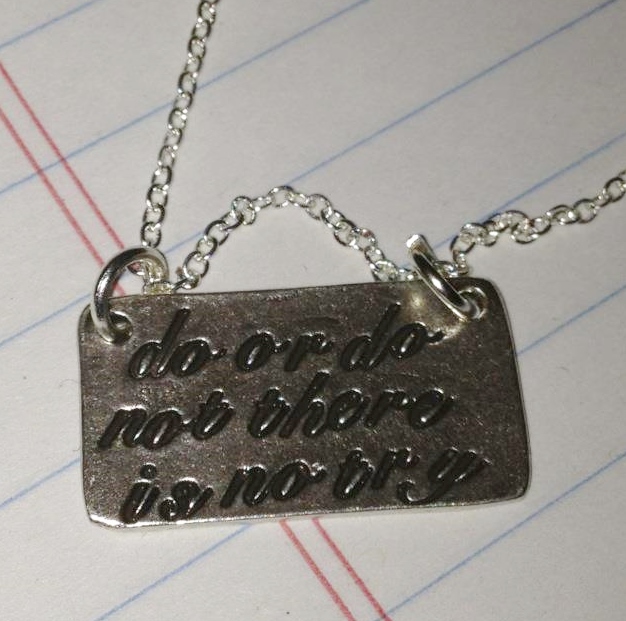
Yoda WisdomZoraida: In 2014 my motto is “Do or do not, there is no try.” It’s a reminder to myself to do my very best. Plus, wisdom from Yoda never hurt anyone. I’m going out with an adult contemporary romance proposal, as well as a YA urban fantasy that centers around a family of Brujas. If there is time (*has a Jesse Spano moment*) I want to revisit the first YA I ever wrote, about a rebellious Ecuadorian girl who turns her quinceañera upside down.

Then there’s the non-writing stuff: have a six pack (the ab kind, not the beer kind), go to the beach, visit Disney for my birthday, learn to play the ukulele (I already bought one), make more art (the painting kind), and you know, fall in love.

Also, Zoraida’s The Vast and Brutal Sea (The Vicious Deep 3) comes out July 1, 2014!

Stephanie: My resolution is to write a picture book for my daughter.

Ashley: Writing goal: take 15 minutes a day to plant and water seeds for novel #4. Personal goal: cook a wider variety of foods (using menus from “The Fresh 20”). Academic goal:  finish and defend my dissertation.

Cindy: Writing: I will do whatever’s needed to support my debut novel, which will be in production this year! I’ll also revise my second book and get it ready for submission. Reading: I’ll read 12 or more Latin@ kid lit books and as many debuts from the OneFour KidLit crew and ARCs from the Fearless Fifteeners. Personal: I’d like to lose 10-20 pounds, and as Zoraida said, you know, fall in love.

Lila: My resolutions are to finish the middle-grade novel I’m working on, to read 12 or more Latin@ kid lit books, and to lose ten pounds. Guess which will be toughest?

Quote for 2014

Best wishes to everyone this new year! May you reach all your goals and may all your dreams come true!