2014 Reading Challenge: March

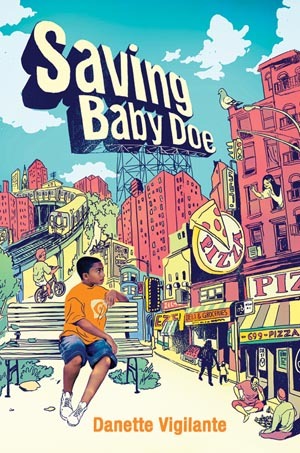
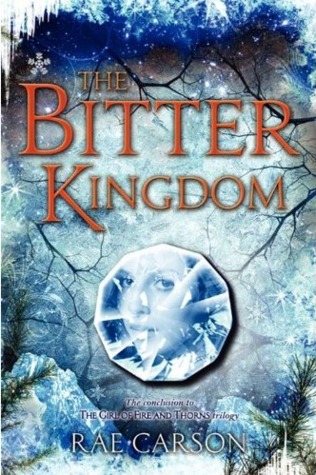
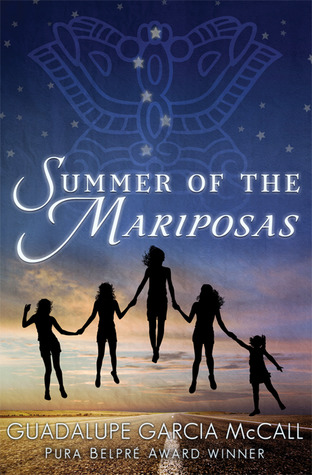
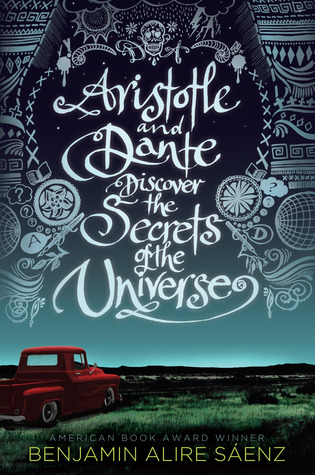
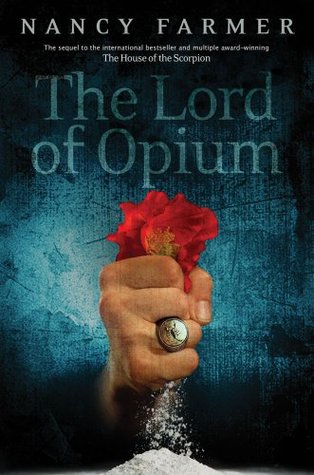
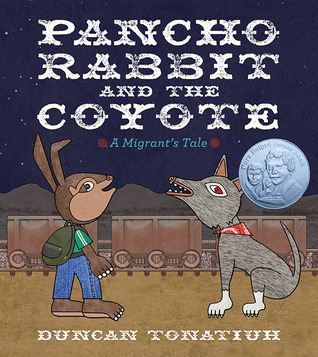
We continue to be blown away by the number of books being read each month by participants of our 2014 Latin@s in Kid Lit Challenge. Thank you to everyone for participating in the challenge and purposely selecting books by/about/for Latin@s. Remember, you can join the challenge any time during the year, and you’re not required to review–only read and enjoy! If you do post a review somewhere, we will link it to the book covers below. If you choose not to review, we will link the covers to Goodreads. This month, we’d like to stand up and applaud Elisabeth Ellison and Cecelia Cackley for their vigorous reading (13 books total!) And since April is National Poetry Month, we suggest you try some novels in verse this month!

A note to participants: As you complete books, please send us the information, so we can share what you’re reading each month.

13515320  6603032  15814459  5982454  10564957  18079822  15798660  11431896  1294347  14342632  13501282  1816693511438326  1016493  18938127 18318638  6098251  255189  9373385  1372657  1807231  18651917  15937128  6673243  1065256  1076237  18318005  8220585  652180  7095181  15818046  1028659  18249428

What We Talk About When We Talk About Diversity in YA

Or, what does that even mean?


By Zoraida Córdova

Brace yourselves. Here’s another blog post on the lack of diversity in YA. When we bring up these topics the common words I see are FEAR, UNCOMFORTABLE, GUILT.  If a white person brings up the subject then, “who are they to talk about it?” If a POC does it, we’ll be seen as a bunch of angry people. So, Catch 22. I get it. Writing these posts is HARD, but they should be written. Recently one of my favorite authors ever, Jenny Han, tweeted about diversity in YA. The thing is, we need to feel uncomfortable, and like Jenny said, “that’s the risk.”

Screenshot 2014-03-26 16.39.47

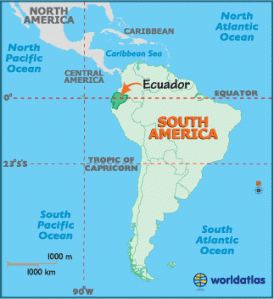
ecsaHere’s what you need to know about me. I was born in Ecuador. I moved to Queens, NY when I was 6. Being in America for 20 years makes me American. My public school experience is American. Yet, when people look at me and hear me speak, they are perplexed. Why? You got me.  The “Your English is so good!” “What are you?” “My friend is from Ecuador, do you know LUIS PABLO ESTEBAN SANTIAGO?” Spoiler alert: I don’t.

This difference wasn’t apparent to me from the beginning. Between grades 1-4, I was in bilingual classes. (My Little Mermaid Spanish didn’t get me to the top of the class right away.) All of my classmates had either emigrated from a Latin American country or had Latin American parents. Salvadorian, Peruvian, Puerto Rican, you name it. Guess what, we spoke English. We listened to the Spice Girls. We cut up our bangs like Lindsay Lohan in The Parent Trap. We watched TRL and taped the music videos. We learned the awesome moves to Christina Aguilera’s Genie in a Bottle (She’s half Ecuadorian, BTW). At home, sometimes I’d eat Chef Boyardi ravioli, sometimes I’d have rice and steak and beans.

So when I got to 5th grade, I was placed into the “regular” kids class. English only. Suddenly my friends also included Guyanese, Jamaican, African-American. Guess what, we still listened to shitty New photo 4 (1)Millennium pop and idolized Harriet the Spy.

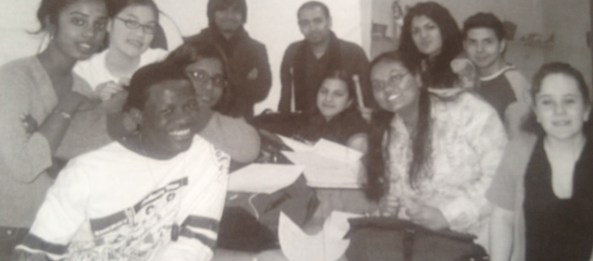
Junior high school and high school were also the same thing. Look at all the shades of brownness! Here are some pictures from my high school yearbook. Spoiler alert: I am still a nerd.

My experience growing up in neighborhoods that are already diverse gives me a different perspective. Could I have used more diverse characters in my current books? Yes. My trilogy centers around a white merman from Brooklyn. His love interest is mixed. His friends are mixed. Merpeople in my world come in all shades. But the answer is still yes. You can always add diverse characters into your books.
photo 3 (1)When people say they’re “afraid” they’re not going to give their “Other” character justice by writing from an experience other than an Anglo-American experience, I call bull. It is scary writing about an experience other than yours. However, unless your character has just moved to Kentucky from a remote town in Panama, then why are you afraid to write the experience of an otherwise straightforward character? Your character can still be named Danilo Cordova and the only research you have to do is “What does a teenage boy like?”

If your character is Nuyorican, then you’d have to do more research. Stereotypes need not apply. Because, here’s a little known secret, not all Latin experiences are the same. No matter where we were born, when we immigrated, where we were raised, we can’t be lumped into the same experience. This is not to say that every YA author should write a novel about how hard it is to grow up being brown, because I did it and my adolescence was pretty “average.”

If you’re writing a fantasy/sci-fi novel and there is not a single non-white person to be found, then my only question is “how come?” Here you have a chance to create a whole new world, where our carefully constructed American ideal of white-only beauty need not apply. When I read YA fantasy novels and the only time race is mentioned is when a new character comes in and has “chocolate” or “earth colored” skin, I just cringe. This mean everyone else I’ve been reading about is white. Not only is that lazy writing, it’s a limited way of thinking about a world that is supposed to be fantastical.

Screenshot 2014-03-26 17.01.57

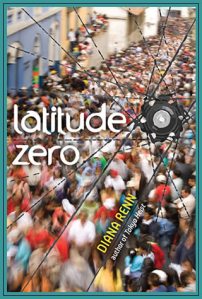
So how do we fix this? Well, lets talk about it. Let’s be friends. Reach out to someone who has a different experience as you. READ. I  to this date have yet to read a YA about a teenage Ecuadorian girl. Not even a slice of life story about a girl who falls in love and there’s a nice cover of them at the beach, or lying down on a lawn. I am, however, excited about Diana Renn’s upcoming YA thriller Latitude ZeroThe book takes place in Boston and in Ecuador. Diana is not Ecuadorian, but she wrote an exciting novel with diverse characters. She reached out and did her research. latitudecover
Here we go back to this FEAR concept. If you throw in a character named Chiquita Bonita in the middle of the scene, and she has hoop earrings and says “Ay, mami,” then you should be afraid because you’re propagating a stereotype. If you describe your Latina girl as “exotic,” “curvaceous,” “spicy,” or “saucy” then you are propagating a stereotype, or making gumbo IDK. If you’re like Britney Spears and equate a Latin male with “the bad boy type,” then you should be afraid because you’re propagating a stereotype. If you as an author can go on Google and research “how to kill someone and get away with it” because “your protagonist needs to know” then you can also try Googling about other American communities that are not your own.

There is a difference between being afraid to write about a culture that is not your own, and consciously creating a two dimensional stereotypical character.
Romeo and Juliet0001

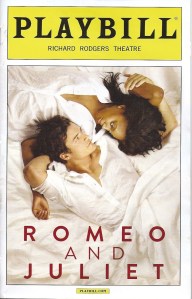
One of my favorite retellings of Romeo & Juliet is the most recent one on Broadway, partially because Orlando Bloom is shirtless but also because Juliet is black. They aren’t divided because of their skin color. This isn’t West Side Story. It’s not that one is brown and from the wrong side of the tracks, and the other one is nice and white, so they can’t be together. This is a story of feuding families that have been feuding so long they can’t even remember why or how it started. It’s that simple.

If you’re worried you’re still propagating a stereotype, then reach out. You’ll make a friend. You’ll learn something new. I am extremely lucky to have had diverse friends. I know that’s not the case for everyone and I know that if you’re not in a big city, chances are the POC in you neighborhood are marginalized. I’m not in Arizona where they’re trying to wipe out Mexican studies. I’m not in a tiny town in Ohio where there is one black kid in the class. I’m in NYC, which isn’t perfect and has a history of putting away their low income minorities to make room for gentrification. But my eyes are extremely open (and I got new glasses today) as to the future we need to create for Young Adult literature. It’s a team effort.

Maybe if we keep making it a point, when we talk about diverse characters in the coming years, it will be more than just a trend; it’ll be the new norm.


Edited: 3/31/14

*** Representation of Latin@s in media has been a personal focus for me.  This is not to say that “diversity” to me means only adding Latin@s to literature. The conversation extends to all marginalized people. Like I said, lets talk about it.

Book Review: My Little Car by Gary Soto

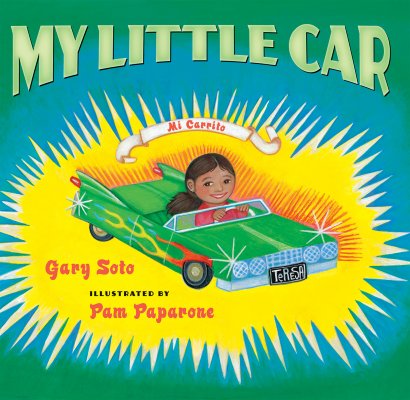
MyLittleCarCoverBy Sujei Lugo

DESCRIPTION FROM THE BOOK JACKET: Teresa’s grandfather—her abuelo—gives her a fantastic little car for her birthday and she can’t wait to show it off to everybody. The car is so cool that the other bikes on the sidewalk part for her and even grown-ups turn their heads as she goes by. Teresa promises she’ll always take care of her beautiful carrito, but some promises are hard to keep. When Teresa’s abuelo comes to visit, will he even recognize his beautiful present?

MY TWO CENTS: Through a shiny book cover of a girl riding a little car with a big smile, Gary Soto and Pam Paparone introduce us to a Chicana first-grader named Teresa. Her confidence and pride are enhanced when she receives a toy lowrider for her birthday, a customized car originated by Chicanos in California. Paparone’s bright acrylic illustrations strongly complement Soto’s words to project the subculture surrounding lowriders and other features distinctive of some Chicano and Latino neighborhoods and their communities.

When we first meet Teresa she is feeling embarrassed by her tricycle, thinking that it was a toy for “little kids.” For her birthday, she receives a beautiful lowrider with a personalized plate from her abuelito, giving her an immediate sense of independence and the confidence of being recognized as a big girl. Through this gift and Teresa’s relationship to it, Soto presents us with two important themes: the obvious one is the importance of taking responsibility and care of your belongings and the second one is presented in a more nuanced way, and perhaps silently aimed to parents: how easy it is to break the “gendering” of toys and roles.

Once Teresa receives her carrito, she pedals non-stop down the sidewalk, around her neighborhood, and she even takes it to the playground car show, where she wins first place. But as the days pass, she becomes careless with her carrito: she leaves it out in the rain, it gets pooped on by birds, it’s crushed by her dad’s truck, and it even gets sticky from spilled soda. Her mother and grandfather get preachy and stern while teaching Teresa the importance of taking responsibility of her belongings and the preaching works: in the end she learns her lesson.

Interestingly, the book never gets preachy when dealing with the gender stereotyping of toys. We live in a society where we are constantly presented with gender-stereotyped toys in books, movies, TV shows, commercials, and stores. In this book we have a Chicana girl who disrupts the gender norms around cars as toys solely for boys, and who challenges the machismo present in Latino communities. Gary Soto shows formidable restraint by not including a single line in the book that says that girls should or shouldn’t do certain things. He just provides us with a story that normalizes girls liking toy cars by showing Teresa being happy with her gift and using it without any limits. Surely this portrayal is one that car-loving kids from any gender will identify with.

TEACHING TIPS: This picture book works well as a read aloud for parents, guardians, and librarians. It can be used to teach about responsibility and ownership, while at the same time, children can learn some words in Spanish. The book includes a glossary of the few words in Spanish incorporated throughout the story.

Spanish and Language Arts teachers (Pre-K-2nd grade) can use the text to not only teach Spanish words, but also to develop classroom activities, such as sequence of events, vocabulary, and alternate endings to the story. It is also useful to incorporate Mexican-American Studies to elementary school classrooms.

LEXILE: N/A

AUTHOR: Gary Soto is a Mexican-American author, who has written picture books, chapter books, poetry collections, young adult books, plays and novels. Soto, raised in Fresno, California, has a B.A. in English from Cal State and a M.F.A. from the University of California, Irvine. He has received several awards, including the 1977 Bess Hokin Prize, the Levinson Award, the Literature Award from the Hispanic Heritage Foundation, the American Book Award from the Before Columbus Foundation, the Andrew Carnegie Medal from the American Library Association and the Beatty Award for his book, Baseball in April. He is also the recipient of fellowships from the California Arts Council, the Guggenheim Foundation and the National Endowment for the Arts. In addition to his work as a writer, Gary Soto has taught English to Spanish-speakers as a volunteer. He divides his time between Berkeley, California and his hometown of Fresno.

Some of his selected books are: The Skirt, Pacific Crossing, Chato and the Party Animals, Baseball in April and Other Stories, Neighborhood Odes, Too Many Tamales, Chato’s Kitchen, Taking Sides, Off and Running, Cat’s Meow and Chato Goes Cruisin’.

ILLUSTRATOR: Pam Paparone is an illustrator of many books for children, such as: Raindrop Plop by Wendy Cheyette Lewison, I Like Cats by Patricia Hubbell, Flip, Float, Fly: Seeds on the Move by JoAnn Early Macken, The Tattletale by Lynn Downey and Of Number and Stars: The Story of Hypatia by D. Anne Love. She is also the author and illustrator of Cinco Patitos/Five Little Ducks and Who Built the Ark?  Her paintings have appeared on the cover of The New Yorker. Pam Paparone lives in Philadelphia, Pennsylvania.

My Little Car was one of commended titles of the 2007 Américas Award for Children’s and Young Adult Literature. For more information about My Little Car visit your local library or bookstore. Also check out WorldCat.org, Indiebound.org, Goodreads, Amazon and Barnes and Noble.

Writing Tips and Diversity Points at the SCBWI Winter Conference

By Cindy L. Rodriguez

The Winter Conference of the Society of Children’s Book Writers and Illustrators in New York is kind of like a massive family reunion, with all 1,000+ people having a love of children’s literature in their blood. It’s very cool for me to break away from my full-time day job as a middle school teacher and attend this annual gathering of creative people who all want to be published or work in some capacity with kid lit. While this love of children’s literature is the common denominator at the conference, the attendants are diverse people with myriad interests. Because of this, my ears naturally perk up when speakers address diversity in publishing.

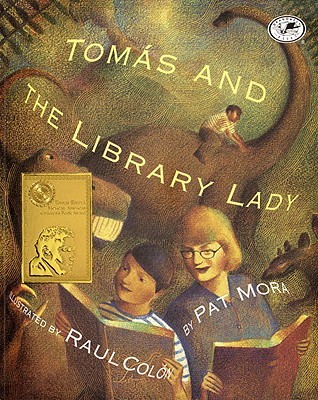
The SCBWI did not have a specific panel or break-out session dedicated to diversity in children’s publishing, but speakers included Raul Colón, Shadra Strickland, Jack Gantos, and Nikki Grimes. Also, the topic of diversity popped up throughout the conference as writers, illustrators, and editors offered great advice about craft.

During her Saturday session, Anica Rissi, an executive editor at Katherine Tegen Books, outlined seven essential things to remember about writing contemporary fiction.
  1. Just do it: write regularly. Make time for this in your life. Be fierce in protecting your writing time.
  2. Give the reader something to wonder about.
  3. Start with the story, not the back story. Throw us into the action.
  4. You need both external and internal tensions, a plot arc and an emotional arc. You need that emotional growth.
  5. Details should matter. Ask what is this book really about? Is every scene a part of that? When in doubt, take it out.
  6. You need to bring out relatable truths through your characters. Create timeless and timely essential relationships and show how the relationships change the character. During this part of her talk, she said, “Please don’t just write about white people and please don’t just write about straight people.” She added that diverse characters should not always be the “token best friend.” A writer should make every person in the novel “a real person,” she said.
  7. World building exists in contemporary fiction, too. Setting needs to be a character.

Later, Nancy Siscoe, a senior executive editor with Knopf Books for Young Readers, discussed seven essential things about writing the classic middle grade novel. They are:

  1. Audience: middle grade fiction is for readers 8-12 years old. It’s an age of independence, of becoming a person separate from your family. It’s an age of enthusiasm, optimism, and openness.
  2. Plot: Put your kid character in charge. Let them solve their own problems, keep them moving, keep the stakes high.
  3. Hope: You don’t need a happy ending, but you do have to have hope.
  4. Likeable characters: You want a main character your readers would want to be friends with, someone they will care about.
  5. Voice: Make it distinctive. It’s the quality that sets the tone and sets your book apart from others.
  6. Read it aloud: The writing should be smooth, clean, and clear. Middle grade books are often read aloud, so try it while writing.
  7. Heart: The quality that makes your own heart feel bigger and wiser and stronger for having taken the journey.
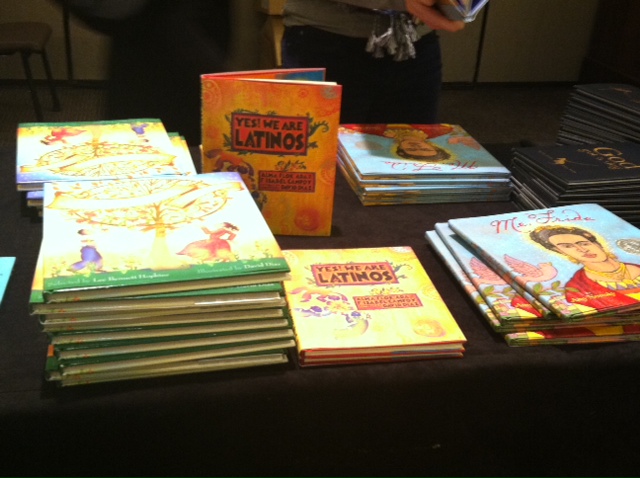
Some of the Latin@ titles at the book sale

Some of the Latin@ titles at the book sale

During her talk, Siscoe was asked about diversity. She responded by saying she is always on the lookout for diverse main characters. In fact, she said a “selling point” for the novel Unusual Chickens for the Exceptional Poultry Farmer, a middle grade debut by Kelly Jones set to release in 2015, was its Latina protagonist.

The final panel on Saturday was about book banning rather than craft. Susanna Reich, chair of the Children’s and Young Adult Book Committee for PEN American Center, floored me during this session. She said children’s and young adult books make up the vast majority of books on the ALA’s list of banned and challenged books. While I knew children’s books were often challenged, I didn’t realize that on the most recent list of the “Top 100 Banned/Challenged Books” from 2000-2009,” 72 of the top 100 are children’s and young adult books, with Harry Potter at the top of the list.

Reich also made the point that censorship isn’t only about removing books from shelves. Censorship also occurs when so few diverse titles make it onto the shelves. “It’s a form of censorship when the amount of multicultural kid lit published hasn’t increased in twenty years,” she said.

But what about those books that do make it onto the shelves? Well, it’s up to us to buy them. Reich quoted poet Alexis DeVeaux, who said, “Buying a book is a political act.” Reich challenged each of us to think about the books we choose to buy and read. Do we censor our book buying in any way? Do we make a conscious effort to read beyond our comfort zones? Do parents and teachers select books for their children and students that include diverse characters?

Multicultural books can speak to all kids, not only kids of color,” said Reich.

Hear, hear! More details from Reich’s talk can be found here on the SCBWI site.

At the end of an SCBWI conference, I am always exhausted in a good way, with a thousand things to consider as a reader, writer, parent, and teacher. This year, the speakers in the sessions I attended reinforced the idea that I can help to promote diversity in children’s literature in each of these roles. Not only can I broaden my own reading interests, but I can expand reading choices for my daughter and my students. By doing this, I will support diversity in kid lit and the members of my SCBWI familia who write, illustrate, edit, and publish books with diverse characters.

2014 Reading Challenge: February

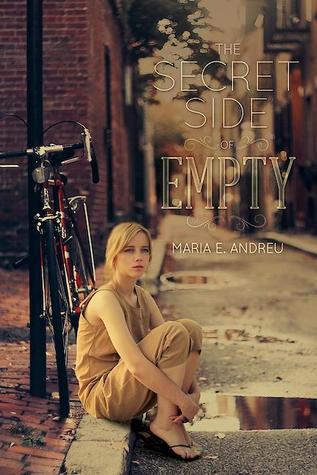
February was a great month for our 2014 Reading Challenge. What a great mix of titles from award winners to debut novels, such as Bird by Crystal Chan and The Secret Side of Empty by Maria E. Andreu. Thank you to everyone for participating in the challenge and purposely selecting books by/about/for Latin@s. We even had a few newcomers this month, which is awesome! It’s never to late to join this fiesta! Also, remember that you’re not required to review the books you read. If you do post a review somewhere, we will link it to the book covers below. If you choose not to review, we will link the covers to Goodreads. This month, we have to give a special shout-out to Crystal Brunelle, who is a co-blogger at Rich in Color. She has already read 15 titles! WOW! We can’t wait to see what everyone reads next!

A note to participants: As you complete books, please send us the information, so we can share what you’re reading each month.

Aristotle and Dante Discover the Secrets of the Universe  13260749  13515320  13740845  17063696  18079822  18079898  1370646  754858  13418252  2880444  1660305  15937128  6098251  15842628  15953630  8220585  8553037  13591731  1372657  1292086  marisol mcdonald  17398961  9697245  16290039  1161994  2697445  3058372

2014 Reading Challenge: January

We are one month into our Latin@s in Kid Lit Reading Challenge, and our participants have completed an awesome array of books! Below are the covers, which link to any reviews written. Some people have chosen to read and not review (which is fine). In these cases, when you click on the cover, you will go to the book’s general Goodreads page. Have fun browsing the books below. Maybe you’ll even add a few to your own TBR list!

A note to participants: As you complete books, please send us the information, so we can share what you’re reading each month.

The Girl of Fire and Thorns (Fire and Thorns, #1)   Maximilian & the Mystery of the Guardian Angel: A Bilingual Lucha Libre Thriller  Death, Dickinson, and the Demented Life of Frenchie Garcia  The Knife and the Butterfly  The Wild Book  The Vicious Deep (The Vicious Deep #1)  Fat Angie   Marcelo in the Real World  The Girl Who Could Silence the Wind   Colibri   Yes! We Are Latinos!   Marisol McDonald Doesn't Match / Marisol McDonald no combina   My Abuelita   Dear Primo: A Letter to My Cousin   Moony Luna/Luna, lunita lunera   What Can You Do with a Rebozo?   Everybody Cooks Rice (Picture Books)   Parrots Over Puerto Rico   A Leaf Can Be . . . (Millbrook Picture Books)

Also, since February is Black History Month, we propose a challenge within a challenge. This month, try to read a book by/for/about Afro-Latin@s. Here are some suggestions:

Pele, King of Soccer/Pele, El rey del futbol     Celia Cruz, Queen of Salsa     Grandma's Gift     Grandma's Records     Me Llamo Celia/My Name Is Celia: La Vida de Celia Cruz/The Life Of Celia Cruz     The Poet Slave of Cuba: A Biography of Juan Francisco Manzano     Secret Saturdays     Marisol and Magdalena   Efrain's Secret