Praise for Books Deemed Perfect for Reluctant Readers

By Cindy L. Rodriguez

Recently, a few 2015 debut author friends have had their books reviewed as being “good for reluctant readers,” and the question was, “Is this a good thing?” I jumped into that online conversation because I work all day, every day with reluctant readers at my full-time day job as a reading specialist in a large suburban middle school in Connecticut.

First, what is a reluctant reader? It’s a student who can read but chooses not to. They are not illiterate. They are aliterate. When it’s designated silent reading time, they fake read. If a movie has been made, they watch it first. They can get by on quizzes and tests by listening to the teacher and peers talk about the book. Reluctant readers are not unintelligent. Some make it through high school successfully, with good grades, without ever reading a book cover to cover.

For some students, however, a lack of reading for years can affect their fluency, vocabulary, and comprehension skills. A reluctant reader turns into a struggling reader. The achievement gap between struggling readers and their peers grows as the work becomes more rigorous and academic expectations increase. Across the nation, the students who represent the achievement gap are largely minority students from urban areas.

My school has about 900 students in grades 6-8. The vast majority of students read well above their grade level, so reluctant and/or struggling readers land in my class. Most of my students are Hispanic and almost all of them are either English Language Learners or students who have transferred to our district from nearby cities. The goal is for them not to need reading support. Getting them there can be a challenge because reading is something they do not enjoy.

The school year usually starts like this:

Me: Welcome to class!

Student: I don’t want to be in this class.

Me: How do you know? We haven’t even started yet.

Student: I hate reading.

Me: I know. That’s why you’re here. Everyone here hates to read, except for me, of course. It’ll be fun, I promise.

Student: How can it be fun if all we’re going to do is read?

Me: Well, that’s not all we’re going to do. We might take a break from reading to chit-chat like we are now, but yeah, we’re going to spend a lot of time reading.

Student: And you consider that fun?

Me: I do, and I think you will, too.

Student: Yeah, right. Good luck with that.

I’ve even had a few students cry on the first day of class and tell me they don’t want to be seen in the “stupid” class. I try to convince them it’s the best class in the building, but their discomfort is real and has been with them since they first started learning how to read and didn’t like it or were separated from their peers for extra help. The older they get, the more embarrassing this is. I do validate their feelings and their frustrations, and I equate it with my ongoing struggle with exercise.

I know it’s important, but I don’t like to do it. The longer I don’t do it, the more out of shape I get. If I decide it’s time to change my habits, it might be uncomfortable, even painful, but it will get easier with time. Eventually, I’ll be stronger and healthier. I may never love exercise, but I’ll do it because it’s good for me.

Some of my students are athletes or musicians or are engaged in some activity that requires an ongoing commitment, so they get my analogy. They understand that they may never love to read, but it’s important for their futures.

So, how to start? Me, I’ll start by walking my dog more now that winter is finally over. My students start by picking books they want to read, not books handed to them by a teacher. Some of them don’t even know where to begin. These are not the students who already have a favorite genre or author. Some of them don’t even know how to find a book in the library. All they’ve had is a longstanding feeling that reading is boring.

Enter books perfect for reluctant readers and teachers, booksellers, and librarians–the people who talk up books and place books in students’ hands.

For its annual Quick Picks for Reluctant Young Adult Readers list, YALSA considers a book’s physical appearance, style, and content. The criteria are meant as suggestions, and they clearly state not all criteria may fit all books. Here are the things they consider when evaluating a book for reluctant readers.

1.  Physical Appearance

  • Cover – catchy, action-oriented, attractive, appealing, good “blurb”
  • Print style – sufficiently large for enjoyable reading
  • Format – appropriate and appealing balance of test and white space
  • Artwork/illustrations – enticing, realistic, demonstrated diversity

2.  Style

  • Clear writing that easily communicates without long convoluted sentences of sophisticated vocabulary
  • Acceptable literary quality and effectiveness of presentation
  • Simple vocabulary but not noticeably controlled

3.  Fiction

  • High interest “hook” in first 10 pages
  • Well-defined characters
  • Sufficient plot to sustain interest
  • Plot lines developed through dialog and action
  •  Familiar themes with emotional appeal for teenagers
  • Believable treatment
  • Single point of view
  • Touches of humor when appropriate
  • Chronological order

4.  Informational Books

  • Technical language acceptable if defined in context
  •  Accuracy
  • Objectivity

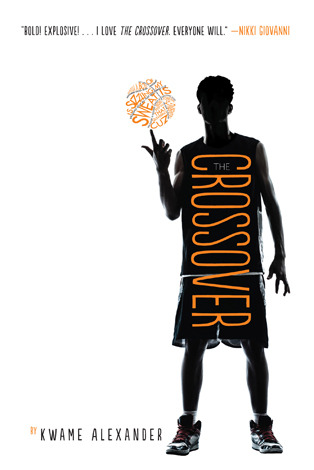
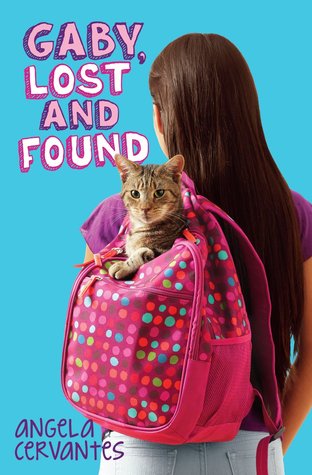
18263725In short, books perfect for reluctant readers have an attractive design, hook the reader early, are relatively easy to read, and are written in a way that keeps them reading. So, to the question, Is it a good thing to have my book called “perfect for reluctant readers”? I say, YES! Some of the titles on this year’s list include the Newbery winner The Crossover by Kwame Alexander and the Morris Award winner, Gabi, A Girl in Pieces by Isabel Quintero. That two of this year’s top prize winners are also good books for reluctant readers should settle any question about whether books for reluctant readers are somehow “less than” in the literary world.

If anything, I’d argue they achieve something special because book lovers will read just about anything or push through a novel, even if they’re not enjoying it entirely. Reluctant readers, though, are an author’s toughest critic. They will put a book down in a heartbeat if it doesn’t keep their interest. If you can capture a reluctant reader’s interest, that’s saying something. And if that reluctant reader goes on to read another book and then another, well, then I cry teacher tears of joy.

Getting these books into students’ hands is a crucial piece of the puzzle. During one-on-one conferences recently, I asked my students about what they were reading and why they chose it. ALL OF THEM said they chose the book because a teacher or librarian recommended it.

Wow, reality check time.

If I say, “This is a great book,” students will want to read it. Seems obvious, right? But, for those of us in this position, please realize the influence we have. We read lots of books as part of our jobs. We stand up in front of students, and we present a handful of books to them through book talks or when they ask for help to find a book. When we do this, they want to read them. The suggestions we make can turn non-readers into readers. This is serious.

So, which books are we recommending? Are we recommending the same books all the time? How diverse are our choices year to year in terms of genre, author, characters, content? Do we think there are girl books and boy books? Do we think there are books for students of color and books for all other students? These are important questions we should be asking ourselves because our answers will determine the books we champion. And the books we champion can become the books students, especially reluctant readers, choose to read.

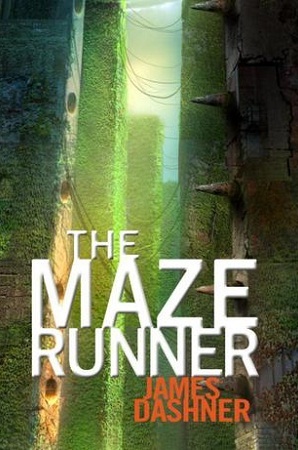
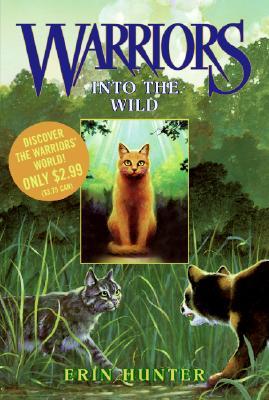
For the record, here are some of the books my reluctant readers are currently reading and loving:
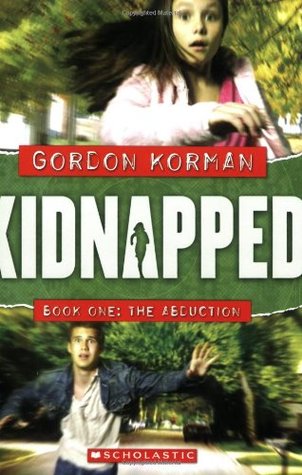
24048  12987986  17166339  6186357  18225810  Into the Wild (Warriors, #1)  After Tupac and D Foster

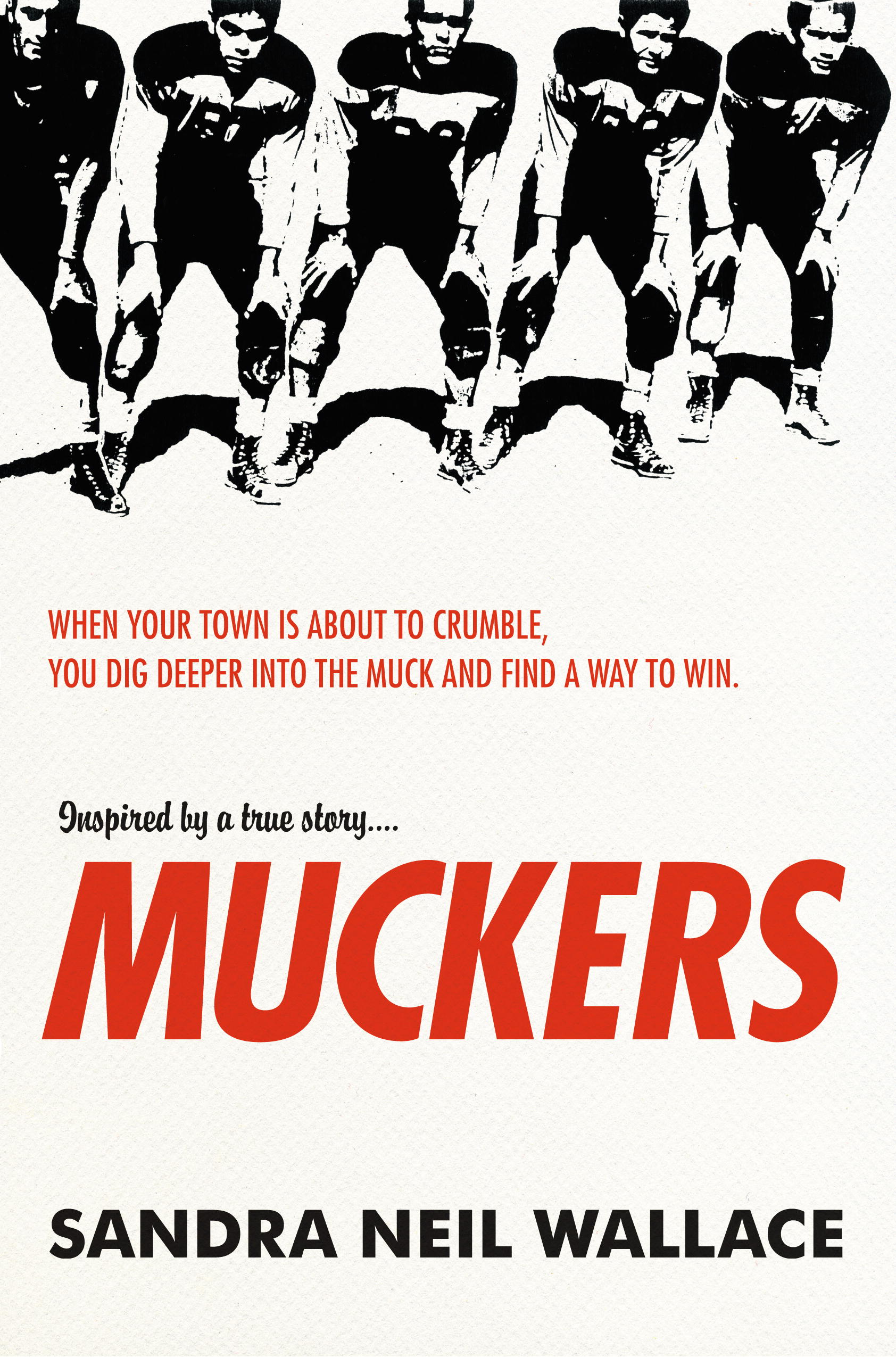
Book Review: Muckers by Sandra Neil Wallace

by Zoraida Córdova 

DESCRIPTION OF THE BOOKmuckerscover

Former ESPN sportscaster Sandra Neil Wallace makes her young adult debut with a historical fiction novel that School Library Journal recommends to fans of Friday Night Lights in a starred review.

Felix “Red” O’Sullivan’s world is crumbling around him: the mine that employs most of town is on the brink of closing, threatening to shutter the entire town and his high school with it. But Red’s got his own burdens to bear: his older brother, Bobby, died in the war, and he’s been struggling to follow in his footsteps ever since. That means assuming Bobby’s old position as quarterback and leading the last-ever Muckers team to the championship.

But the only way for the hardscrabble Muckers to win State is to go undefeated and tackle their biggest rival, Phoenix United, which would be something of a miracle. Luckily, miracles can happen all the time on the field.

MY TWO CENTS:

I admit I started reading this book because I had a little bit of Superbowl fever (Can we talk about that last call? No? Ok…)

Muckers took me incredibly by surprise for one reason: I’m reading a book set during World War II, and somehow I still felt like the social climate hasn’t changed that much sixty plus years later.

The novel is based on a true story of the Jerome Muckers. The Muckers in this novel are fictional, but they felt entirely real. We follow “Red” O’Sullivan (Anglo Irish), Rabbit (Italian American), and Cruz (Mexican) as they take up their places in the last football season their town of Hatley will ever have. Theirs is a mining town, which has run dry. The people of the town still cling to shreds of hope, and that hope is football. Football becomes this magnanimous thing, greater even than the power of the lonesome church, and the townspeople put their belief in those kids.

There are some, like Cruz, who keep believing that everything is going to be okay. That Mr. Ruffner (the owner of pretty much the town) will change his mind about closing down the mine, and that they’ll be able to keep going. There are others, like Red’s father, who are broken from such a hard life, that they resolve to drinking and (barely) basic human functioning. Hatley itself is this living, breathing thing that is holding on just barely, it seems, to see the team become champions. And I loved learning about the town as much as I learned about it’s inhabitants, each of them adding layers to the story and to Red’s life. A part of me wanted so very much for a Disney type of resolution, with one of the kids finding an open vein of ore during football practice. But as much as the town is built around the mine, and the mine plays a role in the life or death of the town, the hope of the town lies in a group of scrawny boys whose field is made out of slag.

The training of new and old Muckers is in this paragraph:

“The knees of the wobbly freshman are dripping blood onto the slag and I don’t think he’ll make it. I want to tell him to keep going, that if you on’t you’re sunk. But he’ll have to learn for himself. We’re hanging off the side of a mountain exposed to the desert’s blazing sun with the heart of out town ripped open, churned up, and processes into copper. We play football on the discarded part–the gunk that gets delivered back to us from Cottonville…”

While the adult workers fight their own struggles, the Hatley young Muckers have their enemies in the form of rival teams with new uniforms, equipment, and a field that isn’t called “Hell’s Corner.” The Cottonville Wolves are the worst, and I actually found myself hating this fictional town that never did anything to me. The more the Muckers keep winning, the more I want them to be okay. I want to pull them out of the story and tell them that history is wrong. That segregation is wrong. That miners shouldn’t have to live off dirt wages. That Rabbit doesn’t have to enlist in the war. That Red’s mother is going to get better. The ugly parts of the novel (and I mean ugly in the sense that history can be a cruel thing to read about) is the discrimination that is underlined in the novel.

Red says it best when he’s in the middle of English class and his teacher is putting the fear of Commies into the hearts of his students.

“It’s a funny thing about our town. …everyone’s got the spirit of good ol’ Hatley High. They rally on the sidelines of our football games, but if you want to go for a swim, or say, get married, it better be ‘with’ or ‘to’ your own kind. We come together during the day, but we all head home to our places on the hill. If you climb up from Main to Company Ridge–Gringo Ridge, Cruz likes to remind me–you’re right and her run the mine your house overlooks.

If you stay on Main and follow it to the city limits…you could be Rabbit’s dad…in the middle of Little Italy. If you walk down the hill in the direction from the pool hall that fits your nationality, chances are you work in the mine.

If it’s the Copper star and your legs are draped over a burro…you’re Mexican, maybe Santiago, Cruz’s father, working your way down the switchbacks to the bottom of the Gulch and a little wooden shanty in the Barrio.”

Yeah, that’s pretty emotional to read considering Arizona was still in the headlines in 2014 on account of banning Mexican American studies from public school and not being disability friendly.  And when they passed a bill that made it okay for businesses to discriminate against gays.

So as I’m reading about a town with a football team made up of mostly Mexicans, led by a ginger named Red O’Sullivan, during a time of the Red Scare, I found myself wondering about the kind of progress (or regress) we’re making as a society in 2014. One of the most heartbreaking parts of the story (there are many) is when Red falls for Cruz’s sister, Angie, who has permanent discoloration on her hands because she works at the pool and has to bleach it every time “Mexican hours” are over. Angie who hopes for a little while that they might be together, but realizes she’ll never be able to come to terms with an interracial romance because “they” would always make her feel like she’s doing something wrong. Don’t worry, there is hope.

At the end of it all, there is hope, and it comes in the form of young and bloody football players with big dreams. Even as the town deteriorates around them, they have this one thing that no one in the world can take from them.

In the Author’s Note, Wallace remarks on how incredible the nature of this story is, but it never made any sort of headlines in it’s day, which is very sad indeed. I’m just glad she was able to tell a version of it that is filled with just as much heart.

About the author (from Goodreads): A former news anchor and ESPN sportscaster, Sandra Neil Wallace may have snagged her best lead yet in uncovering the inspirational achievements of the Jerome Muckers football team. She discovered the story while sifting through a box of letters and other memorabilia. The trail of letters led her to write Muckers.

Sandra was named an outstanding newcomer to the children’s literature scene by the Horn Book following the publication of her first novel, Little Joe. She lives in New Hampshire with her husband, author Rich Wallace, and travels to Jerome, Arizona, to visit the surviving Muckers players.

Visit her at www.sandraneilwallace.com

Add Muckers to your Goodreads!

Black Girl with a Spanish Name


By Libertad Araceli Thomas

“Do you know what your name means?”

This was a question that made me hate name tags since the second grade. “Libertad? You know it means ‘Freedom’ in Spanish, right?” Of course, I knew what my name meant. I knew what it meant when I was old enough to talk, I knew what it meant before I ever entered school, and I knew what it meant at 18 years old when I took my first job as a barista at a local coffee shop and was again subjected to wearing the name tags I so dreaded as a kid. At home, I was Libertad, but to the world I was a Black girl with a Spanish name.

From first glance, loads of people tell me I don’t “look” Latina. And what’s devastating is that for a while, I believed them. You see, a darker skinned girl with kinky hair like me never made it to my TV screen when “La Familia” parked our butts down to watch Spanish language programs.

Afro-Latinas like me rarely, if ever, showed up in any history lessons. In fact, I hadn’t even known that any Black Latinas made contributions to Latin American societies until I was well out of college and half way into my 20’s. But the thing that hurt the most for a kid who liked to lose herself in books was that a girl like me, Black and Cuban with an unusual name that almost no one can say, was never in any works of fiction.

I tell people all the time being a Black Latina has to be the equivalent to seeing a unicorn in real life. No matter how real you appear to be, standing there in front of them, they have to question your existence and blink a million times at the mere sight of you. I’ve always felt too black to be Latina and too foreign to feel completely African-American. Worst of all, I felt invisible. I can’t help thinking maybe it would have been different if more Afro-Latin@s were in books.

The thing that’s missing here is a little thing called representation. We don’t only need Latin@ characters; we need intersectionality.

In a bright future, I want to pick up a book that goes above and beyond to highlight just how diverse and multifaceted Latino culture can be. I want to read about Latin@s of Asian ancestry like the ones I knew growing up in Miami. Queer Latin@s who are brown, black, mixed, and indigenous. Latin@s who speak Portuguese instead of Spanish, because far too often Brazilians get left out of the conversation, and most of all I’d love to see more Black Latin@s as lead protagonists.

It took me 20+ years to stop feeling like just a Black girl with a Spanish name. Girls after me deserve different. Most of all, they deserve better.

About the Blogger/Aspiring writer:

Libertad ThomasLibertad Araceli Thomas is part one of the Twinjas of Diversity @ Twinja Book Reviews. When she’s not reading stories featuring multicultural lead protagonists, she’s busy improving her no hand aerials and working on getting her Blue Belt in Tang Soo Do and Purple in Shaolin Kempo. She writes under the pen name “GL Tomas.”

During my blog’s Black Speculative Fiction Month I dedicated a Top Ten list of Afro Latinos in Speculative Fiction because I just looove Spec Fic, Please check it out and comment with any additions I could add to the list!


Book Blog

Twitter 

Writing Blog

Tumblr 

Facebook

Facebook

Book Review: Otherbound by Corinne Duyvis

By Zoraida Córdova

This month, we are taking a look at Latin@s in science fiction and fantasy. Today, we’re highlighting OTHERBOUND, a debut novel by Corinne Duyvis, which has received excellent reviews, including starred reviews from Kirkus, Publisher’s Weekly, School Library Journal, and The Bulletin of The Center for Children’s Books.

DESCRIPTION FROM THE BOOK JACKETAmara is never alone. Not when she’s protecting the cursed princess she unwillingly serves. Not when they’re fleeing across dunes and islands and seas to stay alive. Not when she’s punished, ordered around, or neglected.

She can’t be alone, because a boy from another world experiences all that alongside her, looking through her eyes.

Nolan longs for a life uninterrupted. Every time he blinks, he’s yanked from his Arizona town into Amara’s mind, a world away, which makes even simple things like hobbies and homework impossible. He’s spent years as a powerless observer of Amara’s life. Amara has no idea . . . until he learns to control her, and they communicate for the first time. Amara is terrified. Then, she’s furious.

All Amara and Nolan want is to be free of each other. But Nolan’s breakthrough has dangerous consequences. Now, they’ll have to work together to survive–and discover the truth about their connection.

MY TWO CENTS: Otherbound by Corinne Duyvis is an ambitious novel that breaks the norm of YA fantasy.

Nolan is a seventeen-year-old boy with a prosthetic leg who has seizures, at least, what the grownups think are seizures. In actuality, he has a vivid connection with a girl named Amara who lives in the Dunelands—definitely not Arizona where Nolan and his family live.

The dual perspective—even the dual reality of it all–is interesting. I thought it might get distracting to have breaks where Amara’s world cuts into Nolan’s perspective in bold. But if Nolan can handle the after effects that come with what is pretty much a psychic invasion and still try to have a life, then I can handle it as a reader.

From the very beginning, we’re set up to understand the following things: Nolan leads a pretty average life. As average as it gets for a low income Latino family in Arizona. He has parents who work three jobs to pay for his meds. He has a younger sister who is 15 and has an attitude. Their Latin-ness isn’t brought up except for mentions of Grandmother Perez’s food and how Nolan’s parents go back and forth between speaking Spanish. The Spanish is always typed out in English, but since I speak Spanish I translated it in my head as I read along. And even though this is a fantasy novel, Duyvis makes a note of Nolan’s father writing angry letters to his school about banned books. It’s Arizona, you have to! So props.

After experiencing Nolan’s day-to-day, we’re then thrown into a completely different world with its own rules to understand. Amara is a servant. By nature of her birth she can’t read, write, or speak (literally, servants have their tongues cut off and are branded by palace). I love how the author didn’t shy away from the brutal life that this young girl has to endure. At the end of the day, Amara is a girl who is kidnapped and held against her will. She’s a slave, whose sole purpose in life is to protect a cursed princess through Amara’s ability to heal herself. Should princess Cilla’s blood spill, the curse will be unleashed. The Dunelands come with their own royalty system, magic, political intrigue, and adventure, which keeps the pace moving.

Nolan and Amara live in separate dimensions/planets but are both faced with disabilities that impede them from an autonomy that others take for granted. Amara’s ability to speak has been stolen from her. Never the less, she tries to over come this by learning how to read, despite the terrible punishment that awaits her if caught. While she does fear and question the people around her, she isn’t exactly a wallflower. She’s brave, loving, and loyal, traits that a physical disability can’t change.

As for Nolan, he lost a leg at a young age from a freak accident (brought on by the vision-seizures). While he can still be active, swim, go to school, and move around on his own, when you add painful “seizures” to that, the results are not good. It’s not a mental disability in the way that we treat depression or being bipolar, but it is in his head. On his part, he tries not to feel like a burden in his household. He’s constantly trying to give people the “right” kind of smile, and often lies about how he feels to get the grown-ups off his back about whether or not he’s “okay.” I think there’s a big pressure put on kids to “be okay” and it’s more for the adults than for the kids. Still, as he realizes the sacrifices his parents make for him, he takes to even the smallest chores–dishes, laundry, helping his sister rehearse for a play–to show that he can be present in his world, that he can be helpful.

Then the unexpected happens—through some circumstance of their connection (and the new meds), Nolan’s role goes from simply watching to doing. He can make Amara move. He can run through her, and it’s great to watch Nolan find the ability to move through Amara’s magical world. The levels of magic are complicated, and when Nolan and Amara discover each other, they become reliant on one another for survival. I mean, I’d be pissed off if some guy who was watching me for years and years, suddenly shows up and can control my body. Amara’s first reaction is to be mad, but Nola isn’t a creeper. He’s been part of her life for years and he truly cares about what happens to her. True, Amara would like to kiss the person she likes without Nolan snooping, but without Nolan, Amara’s ability to heal would not manifest. She needs him there for her to pass as a “healing mage.”

As he gets more and more involved in the political schemes of Amara’s world, Nolan is determined to make sure Amara survives, even if it means he feels pain. The way I read it is that he would much rather feel that physical pain than deal with the pressures of his reality. With everything that goes on in his real life–the meds, school, pressure, parents who constantly hover–Nolan gets a taste of being a hero without the Earthly limitations. As for Amara, her payoff is that Nolan gave her the ability to heal. There were so many times when she was tortured because her captor knew she would heal soon enough. Without Nolan, she would have probably died sooner. I can’t spoil the end, but Nolan’s connection came super in handy at the end. Even though their connection had to end sometime, it was great to see a relationship between a boy and a girl that wasn’t sexual, but bonded through adversity.

When I say that I’ve never read anything like this, I mean it. While I do feel like I know more about the characters than the actual fantasy world, I think I’m okay with that. There’s a young Mexican-American boy with a prosthetic leg who can see into another dimension and inhabit the body of an alien servant girl. This servant girl is bisexual and used as a ploy to a political regime way beyond her control. Definitely not your average YA.

AUTHOR: Corinne Duyvis is a lifelong Amsterdammer and former portrait artist now in the business of writing about superpowered teenagers. In her free time, she finds creative ways of hurting people via brutal martial arts, gets her geek on whenever possible, and sleeps an inordinate amount. Visit her at www.corinneduyvis.com or say HI on Twitter!
FOR MORE INFORMATION ABOUT Otherbound, visit your local library or bookstore. Also check out worldcat.orgindiebound.orggoodreads.comamazon.com, and barnesandnoble.com.

Guest Post: Author Danette Vigilante on the Importance of Dream Seeds

By Danette Vigilante

When a dream seed is planted and watered everyday, it has no choice but to grow and blossom. You might be wondering what in the world a ‘dream seed’ is, so I’ll tell you.

A dream seed is usually planted deep inside you when you’re a child. It could come from the smallest of compliments such as, “You’re really good at (fill in the blank)” or “I really like (fill in the blank) about you.”

In my case, my dream seed came from the pen of my fifth grade teacher. This realization didn’t hit me until I was well into adulthood. Like, WELL into it. As a matter of fact, I went years being somewhat envious of people who spoke of a special teacher who had planted their dream seed early on in their lives.

We’ve all seen talk shows where a beloved teacher is surprised by an old student who grew up into an awesome adult doing awesome things all because of this teacher. Yes, I felt happy for these people, and even shed a tear because their meeting was so touching. Plus, I absolutely love when people achieve their goals in life. But I also held a question quietly inside. It’s a question I’m not too proud to admit I had. I wanted to know where my dream-seed-planting-teacher was when I was growing up. Wasn’t I good enough? Worthy enough? Wasn’t there a teacher somewhere in my young life who cared?

Getting back to my fifth grade teacher and what she wrote with her magic pen. It was one simple sentence on the back of my report card: “Danette needs help in reading.” Those five words ignited a fire in me, and I ran to the library in order to put it out. And by ‘put it out,’ I mean I began reading as if my life depended on it. To be honest, part of that was because I wanted to prove my teacher wrong. I needed help with reading? My attitude was, “Humph, I’ll show you.” Did I mention I was in fifth grade?

I’d spend whole days in my bedroom reading, and when it was time for bed, I read beneath the covers using a dollhouse lamp until I could no longer keep my eyes open.

I loved the smell of the library, the small creaking sound the books made when you first opened them. I loved peeking underneath the plastic covers to see what the “real” cover looked like. I especially loved how the library made me feel: independent and strong.

I’d look at all those shelves filled with books, catch my breath, and wonder which ones I would choose that day. Once decided, I’d pile them up and excitedly carry them home.

My dream seed began to take root in the form of a teeny, tiny thought— maybe one day I could write a book. The thought was almost silent, but it had always stayed by my side, patiently waiting.

You can imagine how overjoyed I was to finally recognize that I, too, had a teacher who had gifted me a dream seed. It doesn’t matter why I had “watered” it, the most important thing was that I did.

Danette_Vigilante_head_shot_high_resDanette Vigilante grew up in the Red Hook Houses in Brooklyn, New York. She now resides in Staten Island with her husband, two daughters, two puppies, and a cat with a bad attitude. Danette is the author of THE TROUBLE WITH HALF A MOON, a 2012-2013 Sunshine State Young Readers award nominee, and SAVING BABY DOE.

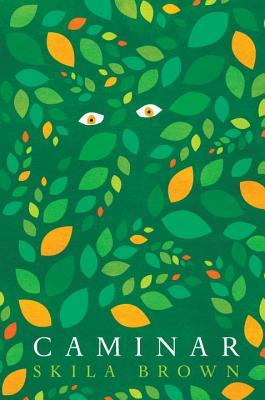
Debut Author Skila Brown’s Novel in Verse Centers on Guatemalan Civil War

By Cindy L. Rodriguez

CaminarI recently interviewed debut author Skila Brown for the Fearless Fifteeners site, which helps to highlight our debut author friends in the OneFour KidLit group. Most of the interview is reprinted here, but I added the final question in particular because of our audience and our mission. Skila is not Guatemalan, yet she wrote a moving narrative about a young Guatemalan boy in 1981 caught in civil war. The last question addresses the concern about writing with authenticity outside of one’s own ethnic/racial experiences.

First, a little about her novel, Caminar, which was released March 26.

Carlos knows that when the soldiers arrive with warnings about the Communist rebels, it is time to be a man and defend the village, keep everyone safe. But Mama tells him not yet—he’s still her quiet moonfaced boy. The soldiers laugh at the villagers, and before they move on, a neighbor is found dangling from a tree, a sign on his neck: Communist.

Mama tells Carlos to run and hide, then try to find her. . . . Numb and alone, he must join a band of guerillas as they trek to the top of the mountain where Carlos’s abuela lives. Will he be in time, and brave enough, to warn them about the soldiers? What will he do then? A novel in verse inspired by actual events during Guatemala’s civil war, Caminar is the moving story of a boy who loses nearly everything before discovering who he really is.

“Exquisitely crafted poems are the basis of an unusually fine verse novel…”

–Horn Book, starred review

“…a much-needed addition to Latin American-themed middle grade fiction.”

–School Library Journal, starred review

Me: Your bio says you lived in Guatemala for a bit. Did your experience there spark interest in this topic? Did anything else inspire you to write this particular story?

Skila: We moved to Guatemala after I’d finished the novel, though I revised it some while we were there. This novel actually came out, reluctantly and painfully, after I’d spent about a decade reading about Guatemala’s history, especially the history of the violence there that peaked in the early 80s. I had no intention of writing about it, but that’s what ended up happening. I certainly felt inspired by accounts of survival that I read, but also felt a real desire to make sure other people knew about what had happened there.

Me: How extensive was your research? Did you run into any roadblocks when seeking information?

Skila: My research started out very organically—I was reading for pleasure and interest, not with the intention of gathering facts to write a story. When the story began, I had some pointed research to do, specific questions about language and geography and other details that I hadn’t already absorbed. It was hard to track down first person accounts of rural Guatemala during this time.

Right away I faced a tough decision about language. Although Carlos would have spoken Spanish in school, it wouldn’t have been his first language; it’s not what he would have spoken at home with his mother. In an earlier draft I envisioned using an indigenous language in the text, as well as Spanish—which would have likely been the way that Carlos could have spoken to someone like Paco, for example—but I was worried about being able to maintain accuracy and authenticity if I wrote the story that culturally specific. I also felt that an English speaking reader might struggle with the mixture of over four different languages in the same story. Definitely trying to balance authenticity with a reader’s connection was a constant struggle.

Me: Is your protagonist Carlos linked to anyone you came across during your research or does he represent the young men who survived that time?

Skila: Carlos isn’t based on any one person. In fact, I had the story down before I had a character at all, but I knew early on the main character was a child, that this was really, at its core, a coming of age story. In violent conflicts all over the world, it’s not uncommon for a handful of people to survive an attack on a village such as this, having scattered away during the chaos. I’d read about children who survived and felt really drawn to that story—how scary it must for a child to be on his or her own, how resourceful that child would have to be.

Me: The physical layout of the poems adds to the narrative. I’m glad I read this one on paper instead of listening to it on audio. The visual really complements the content. Is that something you consider in the writing phase or is that developed in editing?

Skila: This was something I worked a lot on in revision. I wrote this story while I was a grad student and while I was working with poets Julie Larios and Sharon Darrow. Sharon, in particular, encouraged me to play around with shape and the placement of lines on a page. White space is a poet’s tool, and I liked thinking about how I could use it. Typically I draft a poem by hand and it has no shape or form in the beginning, I’m just thinking about the content and the words themselves. But as I revise that poem and before I’m ready to put it into the computer, I try to think about what shape would serve it best. It’s easy to play around with form and shape; it’s harder to use those both deliberately.

Me: Tell us about your publication journey. Some people get deals while still in grad school, while others query for years. What’s your story?

Skila: While I was in grad school, Candlewick was kind enough to offer me a scholarship award for a picture book text I wrote called Slickety Quick. It’s a non-fiction/poetry blend about sharks and it’s scheduled to be out with them in 2016. This really opened a door for me with them, as they also asked to see my novel. I think the key for writers is to submit away—but then put it out of your mind and dive into the next project. Good news comes faster when you’re looking the other way.

Me: Did you have any additional considerations while writing about something outside your racial/ethnic experience? Did you do anything in particular to “get it right” or did you approach it the same way you’d approach any other book project?

Skila: I was very concerned about this, Cindy. This concern kept the story in my head for two years, before I felt brave enough to put it on paper. This concern kept the finished manuscript on my computer for some time before I was ready to send it out to query. It’s something I’m concerned about still. Writing outside our cultures is a very risky thing for writers to do because it’s so easy to get it wrong.

However. Everyone this month is talking about The Study. And if only 6% of books published for kids in 2013 starred a character of color, then it’s past time for us to think about how to remedy that. If writers are going to play our part in addressing this problem, we need to look hard at how we can do this responsibly.

I approached this with a lot of research, a goal of authenticity, and a strong dose of humility. I had multiple people vet my story and offer suggestions. I thought hard about stereotypes and language and how best to portray the story with the most respect I could give it. I also tried to balance the “otherness” of Carlos with what will connect him to a reader today, what makes him the same as a twelve year old boy, reading this story in Chicago, for example. As adults we tend to notice the differences in characters and cultures, but kids are great about finding what’s the same and really connecting to the character. I hope they are able to do that with Carlos.

skilaSkila Brown holds an MFA from Vermont College of Fine Arts. She grew up in Kentucky and Tennessee, lived for a bit in Guatemala, and now resides with her family in Indiana.

Come back on Thursday, when we will spotlight Caminar in our Libros Latin@s section!

We are giving away two copies of Caminar!! Go to a Rafflecopter giveaway to enter for free. You can enter once per day through this week. Two winners will be selected Saturday morning.