
by Zoraida Córdova
Happy Hanukkah!

Stockphoto.com
Hanukkah is the eight-day festival of light celebrated during the beginning in the Jewish month of Kislev.
Let’s get serious for a minute. I wanted to do some research about the intersection between Latino and Jewish people.
Latinos and Jewish histories have been intertwined for a long time, and most of it is full of wrong-doing by part of the Spanish. There’s the horrific moment in Spanish history when in 1492 the king of Spain ordered Jewish people to convert or to leave or be put to death. (Why don’t we learn from history?) Because of this, many Jews did convert to Catholicism to stay in their homes. In 2008, a study showed that 20 percent of men in Spain have Sephardic ancestry. In the Latin Americas, those who did go over to the New World kept their faith hidden. More recently, there was the immigration, asylum, refuge, and forced displacement of Jewish people during and after World War II. Thousands of refugees and Nazi camp survivors were able to find homes in South American countries though others barred their entry due to anti-Semitism.
During a visit to Ecuador in my teens, I remember driving past a Jewish home. How could I possibly know that they are Jewish? They had a beautiful Star of David in a mosaic on the outside gate. I say gate, but I mean a wall. Homes are mostly made of cement in Ecuador because of the humidity. Anyway, the neighbors largely mysticized them because they mainly kept to themselves. We have this perception of Jewish people as being separate. But when we spend the entire history of the WORLD marginalizing and trying to convert a group of people, and taking away their lives and rights, how can we even begin to call ourselves neighbors and allies? Today there is still a lack of intersectionality between minority groups and Jewish people.
Meanwhile, I keep thinking about how Jewish culture has enriched Latin culture. As a kid, I listened to lots of salsa music because of my mom and grandma. They listened to the Fania All Stars religiously. There was this guy nicknamed “El Judio Maravilloso” which translates to “The Marvelous Jew.” His name was Larry Harlow and his love and study of Afro-Cuban music spawned some of the best salsa we have. If you love Celia Cruz, she sang a beautiful version of Hava Nagila. For more on the Latino-Jewish music connection, listen to this NPR podcast: Bagels and Bongos. Music has a way of bringing people together.
This brings me to books. As we mix cultures and religions, where is the representation of the growing Latino-Jewish community? I have Ecuadorian-Jewish cousins. My friend (Jewish) and his wife (Bolivian) are celebrating their daughter’s first Hanukkah. They need books that show her different identities. When we talk about representation and diversity, we have to mean it. Latino-Jewish history is steeped in a painful past, but our present has wrought some excellent music and literature. And we need more. Here are eight books, by or about Jewish-Latinos, to get your started.
 “My name is Marisol McDonald, and I don’t match. At least, that’s what everyone tells me.”
Marisol McDonald has flaming red hair and nut-brown skin. Polka dots and stripes are her favorite combination. She prefers peanut butter and jelly burritos in her lunch box. And don’t even think of asking her to choose one or the other activity at recess–she’ll just be a soccer playing pirate princess, thank you very much. To Marisol McDonald, these seemingly mismatched things make perfect sense together.
Unfortunately, they don’t always make sense to everyone else. Other people wrinkle their nose in confusion at Marisol–can’t she just be one or the other? Try as she might, in a world where everyone tries to put this biracial, Peruvian-Scottish-American girl into a box, Marisol McDonald doesn’t match. And that’s just fine with her.
A mestiza Peruvian American of European, Jewish, and Amerindian heritage, renowned author Monica Brown wrote this lively story to bring her own experience of being mismatched to life.
 When Isobel is invited to Aunt Luisa’s for Hanukkah, she’s not sure what to expect. Aunt Luisa has recently arrived from Mexico. “At Aunt Luisa’s you’ll get to celebrate the Hanukkah Moon,” Isobel’s father promises. Isobel’s days at Aunt Luisa’s are filled with fun and surprises — a new camera, a dreidel pinata filled with sweets, and a mysterious late night visit to welcome the luna nueva, the new moon that appears on Hanukkah. An unusual Hanukkah story with a multi-cultural focus, this title celebrates a little-known custom of the Latin-Jewish community.
 Jalapeno bagels are the delicious coming together of two cultures as the son of a Jewish baker and his Mexican wife decides what to bring to school for International Day. This warm story, illustrated by rich watercolors, comes complete with recipes for all the items that Pablo helps his parents make. Full color.
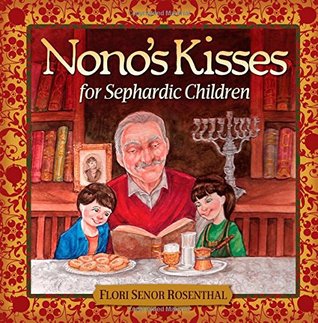 “Nono’s Kisses for Sephardic Children” is Flori Senor Rosenthal’s first of the Legacy and Literacy Scholastics Series. The book contains beautiful illustrations representing Ladino phrases. It was written to teach and encourage the usage of the Ladino language to children between the ages of 4 and 9. However, all ages will enjoy it and find it useful. Ladino or Judeo-Spanish is the language of Sephardic Jews. According to the United Nations, it is an endangered language. With each Ladino phrase found in the book, there is a question relating to its picture. This question, engages the parent and child into conversation. Ladino vocabulary words, pronunciations and English translations are provided to be used in these and other conversations and games between parents and their children. To make the learning experience even more fun, there is a hidden butterfly, in every illustration, to be found by the child. Ms. Senor Rosenthal’s father inspired her to write “Nono’s Kisses for Sephardic Children”. She wrote it to honor a tradition known specifically to Sephardic Jews. The book is an extraordinary teaching and learning tool for Ladino, and the Sephardic culture. However, those interested in the Spanish language and its history will also find this book interesting. Ms. Senor Rosenthal believes that her series will spark renewed interest in the Ladino language with the goal of having it removed from the endangered language list.
 Lola Levine likes writing in her diario, sipping her mom’s cafe con leche, eating her dad’s matzo ball soup, and playing soccer with her team, the Orange Smoothies. So what if she doesn’t always fit in?
Lola is fierce on the field, but when a soccer game during recess gets too competitive, she accidentally hurts her classmate Juan Gomez. Now everyone is calling her Mean Lola Levine! Lola feels terrible, but with the help of her family, her super best friend, Josh Blot, and a little “pencil power,” she just might be able to turn it all around.
 An eleven-year-old’s world is upended by political turmoil in this “lyrically ambitious tale of exile and reunification” (Kirkus Reviews) from an award-winning poet, based on true events in Chile.
Celeste Marconi is a dreamer. She lives peacefully among friends and neighbors and family in the idyllic town of Valparaiso, Chile—until one day when warships are spotted in the harbor and schoolmates start disappearing from class without a word. Celeste doesn’t quite know what is happening, but one thing is clear: no one is safe, not anymore.
The country has been taken over by a government that declares artists, protestors, and anyone who helps the needy to be considered “subversive” and dangerous to Chile’s future. So Celeste’s parents—her educated, generous, kind parents—must go into hiding before they, too, “disappear.” Before they do, however, they send Celeste to America to protect her.
As Celeste adapts to her new life in Maine, she never stops dreaming of Chile. But even after democracy is restored to her home country, questions remain: Will her parents reemerge from hiding? Will she ever be truly safe again?
Accented with interior artwork, steeped in the history of Pinochet’s catastrophic takeover of Chile, and based on many true events, this multicultural ode to the power of revolution, words, and love is both indelibly brave and heartwrenchingly graceful.
 Emily is a Jewish girl from the suburbs of New York. Her mother has family in Puerto Rico, but Emily has never had contact with them- ever. Then Emily’s grandmother dies and Emily is forced to go to the Caribbean for her funeral. Buttoned-up Emily wants nothing to do with her big, noisy Puerto Rican family, until a special person shows her that one dance can change the beat of your heart.
 Shirin is an Iranian princess; Ingrid, a German-Canadian eccentric; and Vivien, a Cuban-Jewish New Yorker culinary phenom. The three are roommates at a Swiss boarding school, where they spend their summers learning more than French and European culture. As the girls’ paths cross and merge—summers together, school years separate—they navigate social and cultural differences and learn the confusing and conflicting legacies of their families’ pasts. In the spirit of The Sisterhood of the Traveling Pants, Shirin, Ingrid, and Vivien grow together even when they are apart, forming unbreakable bonds along the way.
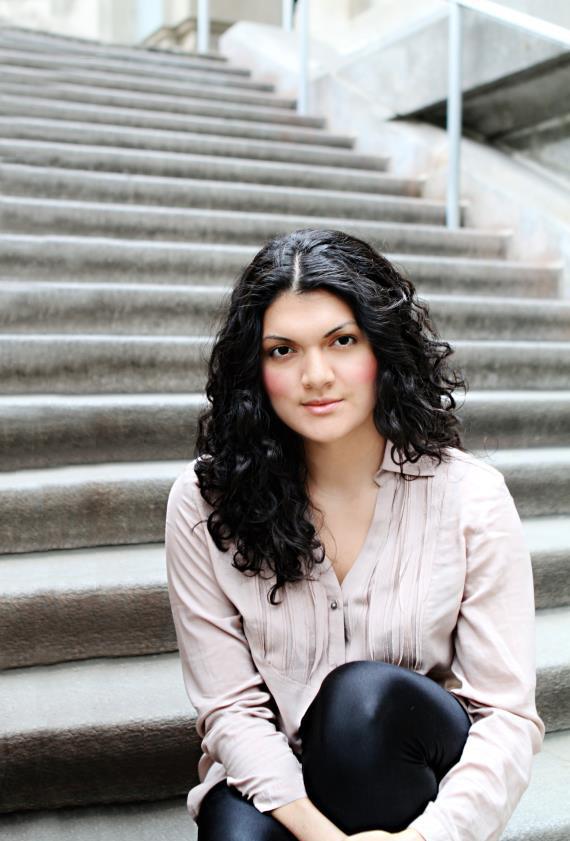 Zoraida Córdova was born in Guayaquil, Ecuador, where she learned to speak English by watching Disney’s The Little Mermaid and Michael Jackson’s Moonwalker on repeat. Her favorite things are sparkly like merdudes, Christmas, and New York City at night. She is the author ofThe Vicious Deep, The Savage Blue, The Vast and Brutal Sea, Luck on the Line, Love on the Ledge, and Life on the Level.
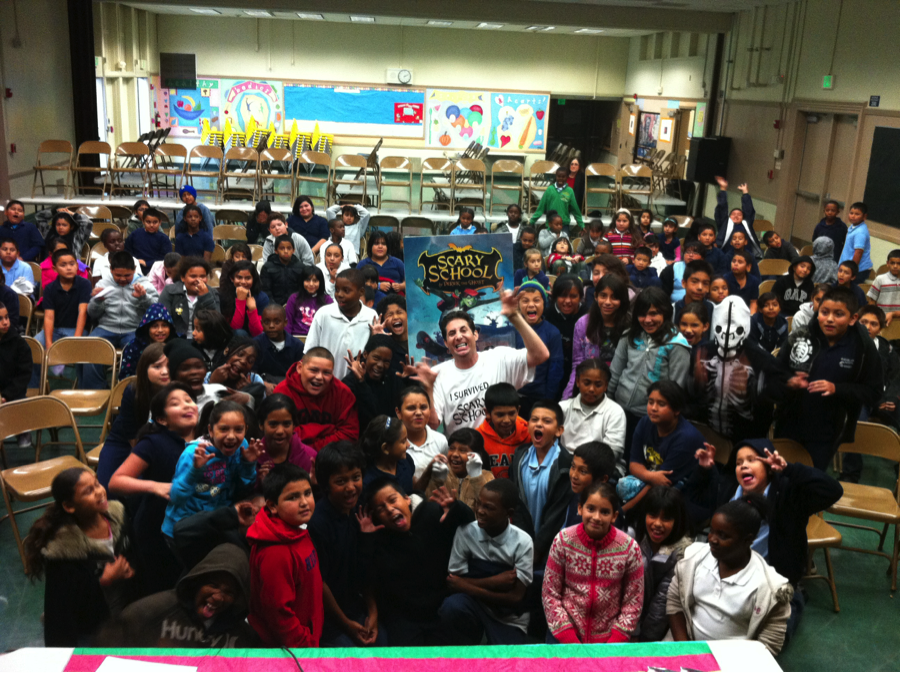

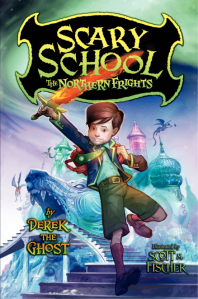
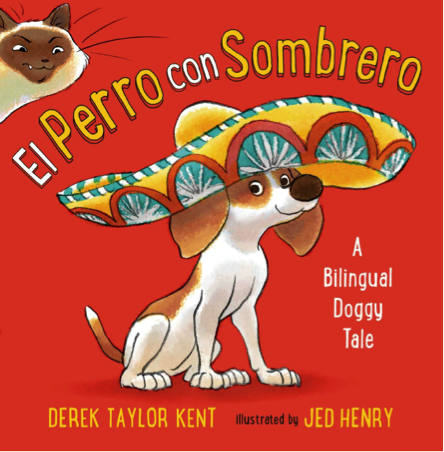
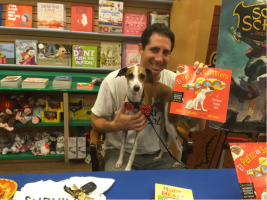 Derek Taylor Kent is also known as Derek the Ghost. He is the author of the middle-grade book series Scary School. His bilingual picture book El Perro Con Sombrero is new this year. It’s about a street dog named Pepe who happens upon a lucky sombrero that turns his life around. For more information about Derek’s books and projects, please visit



 It’s ironic because if you would have asked me what I would be doing when I got out of college, I would have never imagined I would be a teacher, let alone a children’s writer. As an undergrad, I studied Speech Communications and always had a passion for all areas of the arts. I loved writing poetry, drawing, painting, singing, and acting. My dream, however, was to become a famous singer and later an actress! But I thought it would be more realistic to get a career in public relations relating to entertainment. Then, while I was doing an internship at a small entertainment company, I came across a woman who mentioned teaching and that idea sewed a seed that led me to pursue a pre-kindergarten to third grade teaching certification. From there, I began teaching and decided to earn a master’s degree in
  early childhood education. While teaching, I was always reading to my students and at times was lacking the literary resources that not only hit the topic I wanted to teach but also relevancy to increase connection and overall understanding for my students. So one day, I decided to write a silly story about shapes. I wrote the story and then just left it there until one day, I read it to a friend. She really enjoyed the story and encouraged me to keep writing. I never really considered myself a writer, but that night I went home and the words began to pour out of me! I started analyzing the children in my classroom, the books they enjoyed along with the standards required for preschoolers to learn. And that is how DLee’s World came to be.
 From the use of my childhood nickname (given to me by my mother), to the use of my childhood image along with images of those who have impacted in my life, DLee’s World is very much a part of me. I have dedicated much time and effort to perfect DLee’s World books so that they are not only educational and fun for children but also useful for parents and educators. Subsequently, I have devised lesson plans that coincide with each learning book, available for free download on my website.
 The El Paso, Texas publisher, Cinco Puntos Press, has been on my radar ever since my mother-in-law—who lives in Las Cruces, New Mexico, an hour away from the Cinco Puntos Press offices—handed me a copy of



 Latinxs in Kid Lit