Diversity in Kid Lit was ‘On Fire’ at National Latino Children’s Literature Conference

My signed conference poster! The gorgeous artwork comes from Laura Lacamara's new book, Dalia's Wondrous Hair.

My signed conference poster! The gorgeous artwork comes from Laura Lacamara’s new book, Dalia’s Wondrous Hair.

By Lila Quintero Weaver

Let me float down to earth, grab a keyboard and pound out a report about the National Latino Children’s Literature Conference. That was my self-talk on March 15. The two-day conference, held at the University of Alabama and headed by mover-and-shaker Dr. Jamie Naidoo, had wrapped up at 4 pm the previous day.

Sixteen hours later, my whole being still felt tingly with the residual vibrations of what we’d experienced: great dialogue, stimulating talks, and warm connections with people passionate about the same thing, increasing diversity in children’s books. And it’s amazing how many presentations referenced last year’s incendiary New York Times article on minority characters in kid lit. The conference stirred my juices, but before I could touch my keyboard to write about it, Marianne Snow posted a great recap on her blog. There’s no way that I could improve on her account. 

That’s not the end of the story. Over the same weekend, The New York Times published a pair of essays from prize-winning YA author Walter Dean Myers and his son Christopher, an author-illustrator of note, on the scarcity of characters of color in children’s books. Spine tingling, timely, and powerful. Clearly, diversity in children’s books is a topic on fire!

And now, back to the conference. Since Marianne’s recap covers only the second day, here are select quotes and highlights from the first day:
NLCLC LogoLiterary agent Adriana Dominguez outlined some of the challenges facing Latin@ children’s literature: “Many editors think about Latino books as niche or institutional.” Neither of these spells the huge sales figures that the industry has become hungry for. She pointed to the Harry Potter phenomenon as a watershed moment in children’s publishing. Previously, marketing departments targeted libraries and schools, but the commercial success of Harry Potter and other blockbusters has shifted the dynamics.

Members of the audience asked how to best advocate for Latin@ children’s literature. Librarians can push these books, Dominguez said. She cited the late Rose Treviño as a personal mentor and a role model in the field of library services to children. Ms. Treviño was a beloved Houston public librarian who served the local Latin@ community and brought Latin@ books to the attention of a wider audience. Her passionate advocacy was captured in this extensive interview by Cynthia Leitich Smith.

Someone else asked, would more Latinos on the “inside” of publishing help to balance the equation? Yes, Dominguez said, because “you’re a stronger advocate for something you truly believe in.” She pointed out that graduate programs in publishing are recruiting zones for the “big five.”

In her keynote, recent Pura Belpré winner Meg Medina raised the topic of universal themes, those that address the experiences of all children, regardless of demographic labels. She reminded us that “Latino” is a uniquely American concept. Many Latin@ children grapple with the additional challenges of biculturalism. She shared that in her work, she strives to present a range of Latin@ characters, a “whole tapestry,” not merely those that the public has come to expect. (In her Monday post, Meg offered a terrific conference recap of her own.)

7789203Author-illustrator Laura Lacámara gave the day’s final keynote. Her journey into publishing has taken some interesting turns. She was first an illustrator of children’s books. Then came her debut as a writer, Floating on Mama’s Song, a story inspired by her mother’s devotion to opera. But Laura didn’t illustrate it; Yuyi Morales did. Now, hot off the presses is Laura’s newest book, her first to write and illustrate, the delightful Dalia’s Wondrous Hair (see the conference poster image, above). Count on a book talk in the near future!

The variety of breakout sessions boggled the mind. Thursday, I sat in on Lettycia Terrones’s illuminating talk on image-making in Latin@ children’s literature, followed by Araceli Esparza’s “Roots of Race in Chicano/Latino Picture Books,” another enriching experience. The next day, I heard an expert presentation by Catalina Lara on the Latin@ child and language.

Social media is an excellent tool, but let’s not forget the value of face-to-face meetings. They spark connections like nothing else. Next time you hear about a conference that addresses diversity or Latin@ children’s books, consider attending.
Writing Tips and Diversity Points at the SCBWI Winter Conference

By Cindy L. Rodriguez

The Winter Conference of the Society of Children’s Book Writers and Illustrators in New York is kind of like a massive family reunion, with all 1,000+ people having a love of children’s literature in their blood. It’s very cool for me to break away from my full-time day job as a middle school teacher and attend this annual gathering of creative people who all want to be published or work in some capacity with kid lit. While this love of children’s literature is the common denominator at the conference, the attendants are diverse people with myriad interests. Because of this, my ears naturally perk up when speakers address diversity in publishing.

The SCBWI did not have a specific panel or break-out session dedicated to diversity in children’s publishing, but speakers included Raul Colón, Shadra Strickland, Jack Gantos, and Nikki Grimes. Also, the topic of diversity popped up throughout the conference as writers, illustrators, and editors offered great advice about craft.

During her Saturday session, Anica Rissi, an executive editor at Katherine Tegen Books, outlined seven essential things to remember about writing contemporary fiction.

  1. Just do it: write regularly. Make time for this in your life. Be fierce in protecting your writing time.
  2. Give the reader something to wonder about.
  3. Start with the story, not the back story. Throw us into the action.
  4. You need both external and internal tensions, a plot arc and an emotional arc. You need that emotional growth.
  5. Details should matter. Ask what is this book really about? Is every scene a part of that? When in doubt, take it out.
  6. You need to bring out relatable truths through your characters. Create timeless and timely essential relationships and show how the relationships change the character. During this part of her talk, she said, “Please don’t just write about white people and please don’t just write about straight people.” She added that diverse characters should not always be the “token best friend.” A writer should make every person in the novel “a real person,” she said.
  7. World building exists in contemporary fiction, too. Setting needs to be a character.

Later, Nancy Siscoe, a senior executive editor with Knopf Books for Young Readers, discussed seven essential things about writing the classic middle grade novel. They are:

  1. Audience: middle grade fiction is for readers 8-12 years old. It’s an age of independence, of becoming a person separate from your family. It’s an age of enthusiasm, optimism, and openness.
  2. Plot: Put your kid character in charge. Let them solve their own problems, keep them moving, keep the stakes high.
  3. Hope: You don’t need a happy ending, but you do have to have hope.
  4. Likeable characters: You want a main character your readers would want to be friends with, someone they will care about.
  5. Voice: Make it distinctive. It’s the quality that sets the tone and sets your book apart from others.
  6. Read it aloud: The writing should be smooth, clean, and clear. Middle grade books are often read aloud, so try it while writing.
  7. Heart: The quality that makes your own heart feel bigger and wiser and stronger for having taken the journey.
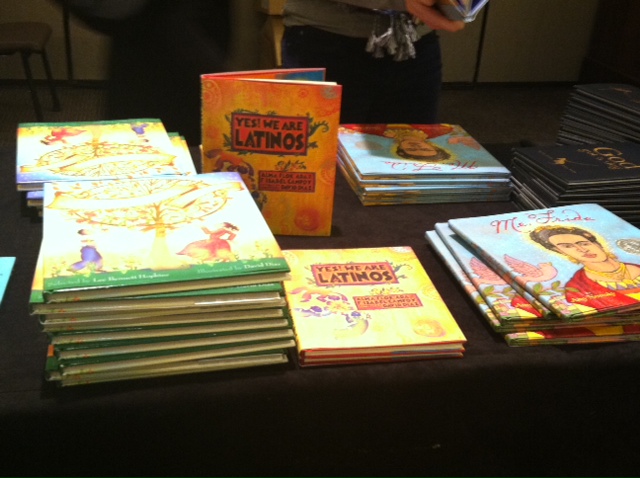
Some of the Latin@ titles at the book sale

Some of the Latin@ titles at the book sale

During her talk, Siscoe was asked about diversity. She responded by saying she is always on the lookout for diverse main characters. In fact, she said a “selling point” for the novel Unusual Chickens for the Exceptional Poultry Farmer, a middle grade debut by Kelly Jones set to release in 2015, was its Latina protagonist.

The final panel on Saturday was about book banning rather than craft. Susanna Reich, chair of the Children’s and Young Adult Book Committee for PEN American Center, floored me during this session. She said children’s and young adult books make up the vast majority of books on the ALA’s list of banned and challenged books. While I knew children’s books were often challenged, I didn’t realize that on the most recent list of the “Top 100 Banned/Challenged Books” from 2000-2009,” 72 of the top 100 are children’s and young adult books, with Harry Potter at the top of the list.

Reich also made the point that censorship isn’t only about removing books from shelves. Censorship also occurs when so few diverse titles make it onto the shelves. “It’s a form of censorship when the amount of multicultural kid lit published hasn’t increased in twenty years,” she said.

But what about those books that do make it onto the shelves? Well, it’s up to us to buy them. Reich quoted poet Alexis DeVeaux, who said, “Buying a book is a political act.” Reich challenged each of us to think about the books we choose to buy and read. Do we censor our book buying in any way? Do we make a conscious effort to read beyond our comfort zones? Do parents and teachers select books for their children and students that include diverse characters?

Multicultural books can speak to all kids, not only kids of color,” said Reich.

Hear, hear! More details from Reich’s talk can be found here on the SCBWI site.

At the end of an SCBWI conference, I am always exhausted in a good way, with a thousand things to consider as a reader, writer, parent, and teacher. This year, the speakers in the sessions I attended reinforced the idea that I can help to promote diversity in children’s literature in each of these roles. Not only can I broaden my own reading interests, but I can expand reading choices for my daughter and my students. By doing this, I will support diversity in kid lit and the members of my SCBWI familia who write, illustrate, edit, and publish books with diverse characters.

The Kid Lit World Needs Gary Soto and Others Like Him

By Cindy L. Rodriguez

When Gary Soto’s book, the one attached to the Marisol Luna American Girl doll, was released in 2005, I was in my fourth year of teaching middle school and attending graduate courses. In other words, I was buried in essays–correcting them and writing them–and was clueless that Soto’s book about a 10-year-old Chicago girl had sparked negative national media attention, protests, and harassing phone calls to the author’s home. For more information on the original story, click here.

The 2005 book-and-doll release is old news, but only a few months ago, eight years later, Soto wrote this piece in the Huffington Post, explaining why he has has stopped writing children’s literature.

I’m not going to rehash the Pilsen vs. Des Plaines debate, and I’m not going to say it was right or wrong for Soto’s fictional family to decide they wanted to move because the neighborhood was too dangerous. Those debates were had in 2005.

This post is about Gary Soto, an award-winning, prolific Mexican-American writer, leaving a business that needs him and many others like him. Gary Soto has written picture books, chapter books, poetry, and novels for middle school, high school, and adults. In the often-referenced New York Times article about the lack of Latin@ books in classrooms, Gary Soto is listed as one of the exceptions.

“While there are exceptions, including books by Julia Alvarez, Pam Muñoz Ryan, Alma Flor Ada and Gary Soto, what is available is ‘not finding its way into classrooms,’” said Patricia Enciso, an associate professor at Ohio State University.

Do we need more Latin@ books, written by a variety of authors, in classrooms? Yes. But, Soto and the others are already there, on the shelves, in students’ hands. I’ve read his short stories with my students, and a colleague recently read Buried Onions with her eighth graders based on my recommendation. He is in anthologies and on school book lists. Soto, along with a handful of other Latin@ authors have paved the way, and now he has vowed not to write any more children’s literature.

This comes at a time when 53 million Hispanics live in the U.S., according to the 2012 census. Hispanics are the second largest race or ethnic group (behind non-Hispanic whites), representing about 17 percent of the total population. Meanwhile, a study by the Cooperative Children’s Book Center reported the number of children’s books with multicultural content has not increased in 18 years.

Soto’s retirement from the kid lit world saddens me, as a reader, writer, and supporter of Latin@s in kid lit. We have lost a giant in the business, and I worry that what happened to Soto could discourage writers from including Latin@ characters in their manuscripts. Writers have legitimate fears about “getting it right” and not offending readers, especially if they are crossing into territory–gender, race, religion, ethnicity, culture, sexuality–that they do not understand first-hand. Think about it, Soto, a member of the Latin@ community, was at odds with members of the Latin@ community, over a Latina doll and her story. What does this mean for other writers, especially non-Latin@s who want to write Latin@ characters? Should they not bother? Should they use made-up locations to avoid referencing a specific community? Are the subjects of poverty and crime off limits?

I hope writers aren’t scared away from including Latin@ characters, and I hope Gary Soto reconsiders his retirement from kid lit. Also, wherever we each stand on the Pilsen-Mattel issue, I hope we all can at least tip our hat to Soto for his contribution to Latin@ literature.

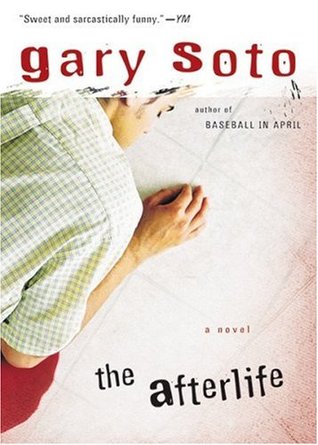
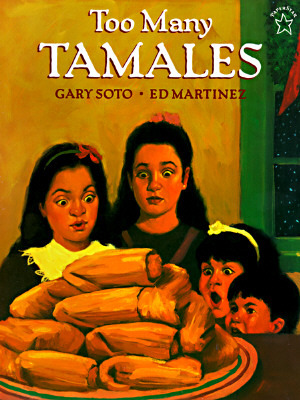
Too Many Tamales   Chato Goes Cruisin'   Baseball in April and Other Stories   Buried Onions   The Afterlife

The Road to Publishing: Giving Good Feedback to Fellow Writers

By Stephanie Guerra

Last month, I began a two-post series addressing the most productive ways to work with beta readers and critique groups. The first installment focused on receiving feedback; in this post, I’ll focus on how to offer good feedback.

Beta readers and critique groups are critical to the writing process, and many successful authors find a long-term writing partner with whom they work productively for years. How can you nurture critique relationships—notoriously sensitive—so that they grow and flourish?

Here’s a quick and dirty list of strategies:

peer review1. Ask the type and level of feedback your partner is seeking. Type addresses the range of feedback your partner desires. Global? Character-focused? Plot-focused? Language-focused? Line-editing? Level addresses the thoroughness of your feedback. For a first draft, many writers want general, light feedback, including global impressions of plot and characters. If you pick apart the draft line by line, your partner may be overwhelmed. Be sure to clarify what he or she is looking for before diving in.

2. Offer an even trade. If someone has given you careful, in-depth feedback on one of your manuscripts, be sure to reciprocate in full. Do not read through his or her work quickly and toss off your thoughts as you hurry to get back to your own project. Your writing partner is relying on you and may make significant changes to their manuscript based on your advice. So give his or her work the time and respect it deserves.

3. Link up with writers who are roughly in your skill/professional range. Great disparities in talent can cause awkwardness, and trades may not be productive for the more advanced partner. That said, if you’re willing to consider a mentor relationship (no matter which end you’re on), go for it! Just don’t expect that trades will be “even”.

4. Find the positives. This seems obvious, but having been through an MFA, I know it needs to be said. Critique partners should be honest—but not brutally honest. Remember that no matter how elementary or flawed your partner’s work appears to you, it represents their effort and passion. Find at least three things to praise before you point out what’s not working.

5. Watch for cues. In the case of verbal feedback, watch and listen to the writer’s facial expressions, body language, and words as they receive feedback. If you sense distress, stop. Bring up the positives. Inspiration is a fragile thing and people have varying degrees of sensitivity about their work. You don’t want to be the Dream Crusher.

Editing16. Know when to back out. Sometimes (especially on first trades, but
occasionally with tried-and-true partners) you’ll run into a piece you simply can’t stomach. Maybe the writing is terrible. Maybe the message goes against everything you believe. Maybe the manuscript feels too commercial. Whatever the reason, if you can’t stand it, you won’t be able to offer a good or fair critique. Be diplomatic: “I’m having a hard time with this piece. I’m not experienced with this genre/topic/style. I’m afraid my political views are getting in the way of my ability to hear your story.” Whatever. Let the writer know you’re biased, and wiggle out gently.

7. Have boundaries. This is a good life rule, no? It definitely applies to writing. Critiques are so personal, and for many, so emotional, that they can unleash a storm of follow-up emails and phone calls. If you feel that someone is demanding more of your time and hand-holding than makes you comfortable, repeat (in as many different ways as you need to): “I really don’t have anything to add to what I’ve already said. But good luck.”

8. Don’t argue. Some writers can’t help themselves; they’re compelled to defend their work in the face of a critique. If you’re the partner giving feedback in this situation, don’t engage. Offer your counsel, and let the writer argue and justify if they need to. It’s all part of the process. Some people work things out verbally.

9. Don’t be the alpha critic. I borrowed this one from William Zinsser. Nobody likes the snide, superior critic who has scathing reviews of everything! ‘Nuf said.

10. Be open-minded. You’ll run into all kinds of manuscripts on the trade routes, not all of them your cup of tea. Remember, you’re not buying the book. Unless you have a visceral hatred of the work (see number 6), give it a fair shot. Try to separate your personal taste from your professional knowledge of character development, plot trajectory, etc. If personal taste is causing your review to slant negative or positive, rethink your approach.

Agent Chat with Adrienne Rosado of Nancy Yost Literary

By Zoraida Córdova

I’d like to welcome Adrienne Rosado of Nancy Yost Literary. Eight years ago, I was one of Adrienne’s minions slush pile interns. Three books later, I’m proud to call her my agent and BFF.

Tell us a little about yourself.

Adrienne: I’m a second generation native New Yorker and have worked in publishing for just over 8 years. I represent a very eclectic group of authors and somehow was lucky enough to have stumbled into the “when I grow up” perfect job.

Me: What were some of your favorite books growing up?

29380_10152263632420414_1819881365_nAdrienne: I always read older than my age group because there wasn’t the wide range of YA and MG books in the way that we know now. When I was a kid (because apparently I’m about 500 yrs old now), you were either an R.L. Stein/Christopher Pike, or Babysitter’s Club/Sweet Valley High reader. I was all about Fear Street. There was a really clear divide in what types of books were offered to children based on gender. I remember being made to read the Lurlene McDaniel books because they were “girl books.” I remember one really bitter summer when the assigned book for girls was The Secret Garden while the boys read Indian in the Cupboard.

So, I ended up reading a lot of Stephen King and Michael Crichton instead.

Me: So when you were in school, were Latin@ books ever highlighted/incorporated into the curriculum? I did grades 1-12 in NYC public schools, and the only Latin@ book I read in high school was House on Mango Street by Sandra Cisneros.

Adrienne: I would completely agree with you. We didn’t cover very many books with multicultural characters. I definitely read HoMS and Dreaming in Cuban by Cristina Garcia. Basically, we did classics by lots of dead authors, unless we were celebrating some kind of heritage month, which in hindsight is really sad.

Me: I agree. We shouldn’t wait for Latino or Black history months to enjoy these stories. Now, for some businessy questions: as an agent, what do you look for in submissions?

Adrienne: It boils down to quality writing. I want a well-defined protagonist, multilayered secondary characters, and a really fantastic voice. I want this regardless of the character’s race or magical species, I’m looking at you, Z.

Me: *Holds out hand for a gold star* What is the biggest mistake new authors have made when contacting you (other than addressing you as MR. Rosado)?

Adrienne: Sending me submissions before they’re ready. I see so many subs that still need another round or two of revisions and you always want to put your best foot forward.

Me: How can an author show their professionalism?

Adrienne: The most successful authors that I know have always acted as professionals before they were published. They did their research in their genres. They avoided trend chasing. They strove to make their manuscripts as pristine as possible before sending them out.

Sometimes, it’s even as simple as having a dedicated professional email address with your name as opposed to babygirl23XOXO@aol.com
It’s demonstrating a familiarity with what being a modern author entails, having a Twitter account, a blog, etc.

Deadlines are also huge. One of my biggest pet peeves is when I request a manuscript and then am told that the author needs another couple of months to polish it. That’s unprofessional.

Me: How many clients do you represent? Are you still looking?

Adrienne: I try to keep a smaller and diverse list, so I can give my authors personal attention. I’m always on the look out for fresh voices and new talent.

Me: How do you decide where to pitch a manuscript?

Adrienne: It’s not dissimilar from how an author looks for an agent. The sign of a good agent is someone who maintains a good network of editorial contacts. They know who is looking for what kind of material. You wouldn’t go to an imprint that does non-fiction with supernatural YA. Everyone’s taste is different, even within houses and imprints. Your agent should stay up-to-date with what editors are looking for.

Me: How do you work with your authors? How deep are your edits?

Adrienne: It’s different with every author and the level they’re at with their careers. Some agents don’t do any editorial work at all. I happen to do some editorial work with my clients.

With debut authors I tend to do more polishing edits, and even some developmental, before going out on submission in order to put our best foot forward in the publishing marketplace.

There has to be a level of trust in the editorial process and open communication.  I would never want to make suggestions that an author felt were inauthentic to their material.

Me: What are you looking to represent now?

Adrienne: This is going to sound like a cop out, but I’m looking for strong writing, an exciting voice, something that’s going to put me in the character’s life and make me feel like part of that story that has the potential to make me miss my stop on the subway.

I accept anything from MG to Adult. I do have a soft spot for thrillers, anything dark and edgy, Southern Gothics, and things that make me laugh or cry really hard.

Me: What do you think we can do as a writing community to promote or have more books with diverse characters?

Adrienne: I think that diversity should be a facet of a character and not a defining characteristic of the story. Your work for example. You happen to be an Ecuadorian immigrant who wrote a book, which includes a diverse cast of characters, but that’s not why I represent you. I represent and read your books because I love the stories and world that you’ve created.

Me: It also represents my upbringing. My friends have always been first or second generation immigrants from all over the place. But it’s still hard to see ourselves in a lot of media without stereotypes.

Adrienne: I feel that the issues in multicultural literature are different now than they were 15-20 years ago. The stories we’re reading now are going to a generation that is used to having diversity in their daily lives. It’s less about assimilating into a new culture/community and more about individual identity. For instance, when I was a teen, if someone asked me where I was from, I would say I’m a New Yorker. That wouldn’t have been the case for my parent’s generation. Now, it’s assumed that people have a diverse background. It’s not uncommon in this city.

Me: It might be different for kids who live in less diverse communities and states.

Adrienne: Agreed. But that doesn’t mean that children and teens from a less diverse community are not going to be able to relate to another teen’s story just because it comes from a protagonist of a different race, religion, etc. People read to learn about something different, a new world, a new character, whether it’s a coming of age story or an epic fantasy. A good story is a good story. It should be how a story is told that defines the book.

Me: Totally. Though I think authors shouldn’t be afraid to write more diverse characters and make it a non-issue. In writing classes people like to throw around the phrase “write what you know,” but I think we should “write what you don’t know.”

Adrienne: I agree. Added to that, though, is that growing up happens to the best of us, so we all happen to face really similar challenges as we “come of age.” For example, isn’t it Jane Austen that said, “It is a truth universally acknowledged, that a single teen in possession of a good prom dress, must be in want of a date.”  Or something like that anyway?

Me: LOL. Something like that. Maybe the problem is that people keep making it a problem.

Adrienne: I completely agree with that. There should be more diversity in books. I think the issue is that many authors fear that they will get pigeonholed as “multicultural” when that is only a sliver of the story.

Me: Agreed. Sometimes our politically correctness gets in the way.

Adrienne: At the end of the day, write a good story. Don’t be afraid to let your characters be who they are…

Me: Well thanks for taking the time to chat with me. Now, I’m going to go write a quasi-biographical YA based on my early years.

Adrienne: *groans*

Me: Kidding. Thanks for being with us. If you’d like submit to Adrienne Rosado, please read the NYLA guidelines.

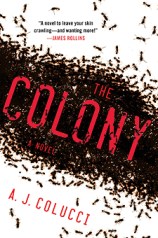
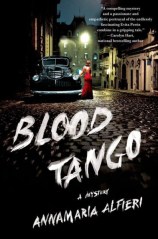
Here are some of Adrienne’s clients:

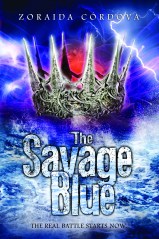
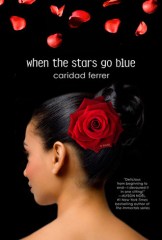
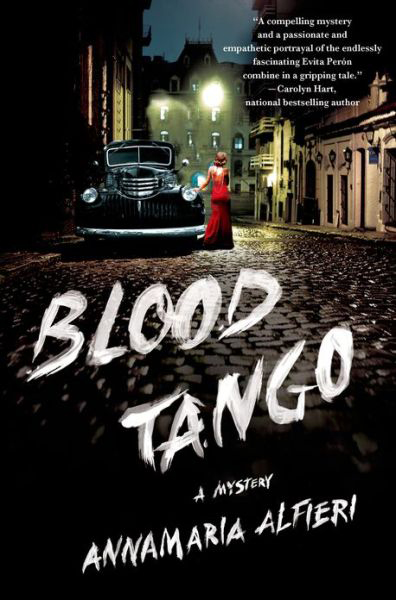
PLAY ME BACKWARDS FRONT copy   colony-225-1   Blood_Tango   9781402265136-300   7990393-1


A New Year = New Goals and Features

Happy New Year, Feliz Año Nuevo, Feliz Ano Novo from Latin@s in Kid Lit!

We’re excited to begin our first full year online. With this new year, we have added features and ambitious personal goals. First, though, let’s recap our last few months.

We launched on Sept. 16,2013,  to coincide with National Hispanic Heritage Month. Since then, we have published 20 posts, which included our “Road to Publishing” series, guest posts, and Q&As.

We gave away 12 awesome books during our 12 Days of Christmas Giveaway, and we’ve had more than 4,000 hits from visitors all over the world. Our top 10 countries are: U.S., Canada, Philippines,UK, Netherlands, Puerto Rico, Mexico, Uruguay, Spain, and Ireland. Our single best day was when we posted a Q&A with illustrator Juana Martinez-Neal, and our most popular post overall was about our 2014 Reading Challenge.

The Reading Challenge will be a year-long project. We’ll check-in on our participants and post links to reviews of books by/for/about Latin@s. So far, we have 22 official participants, although many others have spread the word and given us positive feedback. We’d love for more people to join us, which you can do any time during the year.

We were planning to craft a post about why it’s so important to support diversity in kid lit not only in general, but specifically through our purchasing and reading choices. But, then Kayla Whaley did it so well, we reblogged her post. If you haven’t read it, you should. She makes the point so well. We can SAY we support diversity in kid lit, but we should also DO something about it. What we all can do is be more conscious of what we buy, borrow from the library, read, and review/share.

To further celebrate Latin@ kid lit, we are adding a new feature on Thursdays called “Libros Latin@s.” These will be “book talks” of children’s, middle grade, and young adult books that are written by or feature Latin@s. The book talks will include: information about the book and author, teaching tips, Lexile level (if available), other books by the author, and links for more information.

Sujei Lugo, our newest member and a children’s book specialist, will handle the picture book “book talks.” She is also beefing up our Children’s Book Lists with English, Spanish, and bilingual titles. Because of her additions, we have split the category into two sections! We encourage authors, editors, and publishers to alert us about titles we should add to any of the lists.

In addition to working on the site, we each also have personal and professional goals. Here they are:

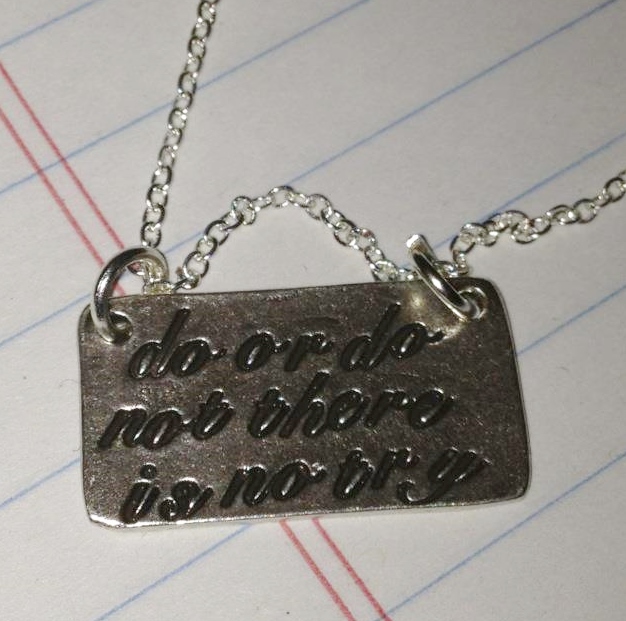
Yoda WisdomZoraida: In 2014 my motto is “Do or do not, there is no try.” It’s a reminder to myself to do my very best. Plus, wisdom from Yoda never hurt anyone. I’m going out with an adult contemporary romance proposal, as well as a YA urban fantasy that centers around a family of Brujas. If there is time (*has a Jesse Spano moment*) I want to revisit the first YA I ever wrote, about a rebellious Ecuadorian girl who turns her quinceañera upside down.

Then there’s the non-writing stuff: have a six pack (the ab kind, not the beer kind), go to the beach, visit Disney for my birthday, learn to play the ukulele (I already bought one), make more art (the painting kind), and you know, fall in love.

Also, Zoraida’s The Vast and Brutal Sea (The Vicious Deep 3) comes out July 1, 2014!

Stephanie: My resolution is to write a picture book for my daughter.

Ashley: Writing goal: take 15 minutes a day to plant and water seeds for novel #4. Personal goal: cook a wider variety of foods (using menus from “The Fresh 20”). Academic goal:  finish and defend my dissertation.

Cindy: Writing: I will do whatever’s needed to support my debut novel, which will be in production this year! I’ll also revise my second book and get it ready for submission. Reading: I’ll read 12 or more Latin@ kid lit books and as many debuts from the OneFour KidLit crew and ARCs from the Fearless Fifteeners. Personal: I’d like to lose 10-20 pounds, and as Zoraida said, you know, fall in love.

Lila: My resolutions are to finish the middle-grade novel I’m working on, to read 12 or more Latin@ kid lit books, and to lose ten pounds. Guess which will be toughest?

Quote for 2014

Best wishes to everyone this new year! May you reach all your goals and may all your dreams come true!