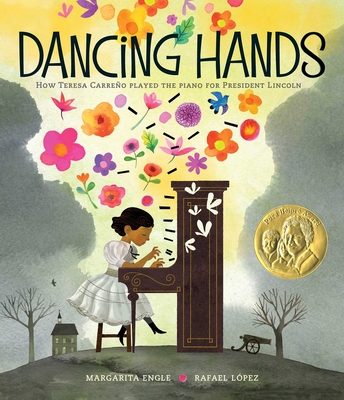
Book Review: Dancing Hands: How Teresa Carreño Played the Piano for President Lincoln by Margarita Engle, illus. by Rafeal López

.

Review by Dora M. Guzmán

DESCRIPTION OF THE BOOK: As a little girl, Teresa Carreño loved to let her hands dance across the beautiful keys of the piano. If she felt sad, music cheered her, and when she was happy, the piano helped her share that joy. Soon she was writing her own songs and performing in grand cathedrals.

Then a revolution in Venezuela drove her family to flee to the United States. Teresa felt lonely in this unfamiliar place, where few of the people she met spoke Spanish. Worst of all, there was fighting in her new home, too- a Civil War.

Still, Teresa kept playing, and soon she grew famous as the talented Piano Girl who could play anything from a folk song to a sonata. So famous, in fact, that President Abraham Lincoln wanted her to play at the White House! Yet with the country torn apart by war, could Teresa’s music bring comfort to those who needed it the most?

MY TWO CENTS: Dancing Hands is a biographical picture book about María Teresa Carreño Garcia de Sena that embraces creativity, family, and music during turmoil in Venezuela and the United States. Teresa, also known as Piano Girl, learns early on that music is an art for others to enjoy in the moment and in their hearts. Despite inevitable conflict in both her home country, Venezuela, and her new home, the United States, music becomes her refuge. Playing the piano calms the storms, brings together her family, and inspires other artists, and even the president in office, Abraham Lincoln.

While the text is in English only, the language used to describe Teresa’s talent is filled with poetic and descriptive language. It moves the reader through a narrative timeline of events and emotions. The illustrations are phenomenal and invoke more emotions as the reader learns about Teresa’s life changes. The use of acrylic paint and its textured shades contrast against the sharp lines and fierce colors that spread across each page. Each page has strategically placed colors and imagery placement to convey the story’s mood. Still, Teresa’s life experiences and talents remain front and center, with her connection to her music and cultures highlighted. My favorite moment in her story is when, as a young child, Teresa inspired other musicians to come and create music. It shows how far and wide her inspiration reached even at a young age!

TEACHING TIPS: Many of these teaching moments can be implemented in a K-5 setting, with a focus on the grades 3 and up.

  • Writing Mentor Text
    • Descriptive language: The author provides a plethora of metaphors and descriptive language that can serve as models for student writing when used to describe objects, moments, and feelings.
    • Mini lesson on adjectives and verbs
  • Addition to a biography unit or music unit
    • The historical note at the end of the book can serve as a catalyst for further research into the life of María Teresa Carreño Garcia de Sena. Student researchers can also find out more about her music and how it added to the arts during and after her time.
    • In music class, students can learn more about her compositions, as well as listen to her music compositions to add to their study.
  • Author and illustrator study
    • Pair this text with other picture books written by Margarita Engle and compare her writing style as well as the characters.
    • Pair this text with other picture books illustrated by Rafael López and compare his artistic style.

Listen to María Teresa Carreño Garcia de Sena’s composition called La Falsa Nota played by another pianist.

.

.

This image has an empty alt attribute; its file name is margarita.jpg

ABOUT THE AUTHOR: Margarita Engle is the Cuban-American author of many acclaimed books, including two other collaborations with Rafael López, Bravo! and Drum Dream Girl, as well as The Flying Girl; All the Way to Havana; Miguel’s Brave Knight; The Surrender Tree, a Newbery Honor book; Jazz Owls; The Poet Slave of Cuba; and her memoirs Enchanted Air and Soaring Earth. She lives in central California. Visit her at margaritaengle.com Follow her on Twitter: @margaritapoet

.

.

This image has an empty alt attribute; its file name is rafael_lopez_artist_and_illustrator.jpg

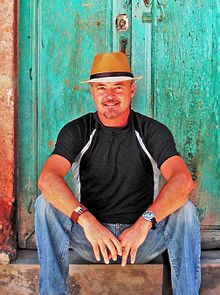
ABOUT THE ILLUSTRATOR: Rafael López was born and raised in Mexico, a place that has always influenced the vivid colors and shapes in his artwork. He now creates community-based mural projects around the world and illustrates acclaimed children’s books, including The Day You Begin, Bravo!, Drum Dream Girl, We’ve Got the Whole World in Our Hands, and Book Fiesta! Rafael divides his time between Mexico and California. Visit him at  https://rafaellopez.com/

.

.

.

.

ABOUT THE REVIEWER: Dora M. Guzmán is a bilingual reading specialist for grades K-5 and also teaches undergraduate and graduate courses in Children’s Literature and Teaching Beginning Literacy. She is also a current doctoral student in NLU’s  EdD Teaching and Learning Program with an emphasis on Reading, Language, and Literacy.  When she is not sharing her love of reading with her students, you can find her in the nearest library, bookstore, or online, finding more great reads to add to her never-ending “to read” pile!

Book Review: Dear Abuelo by Grecia Huesca Dominguez, illus. by Teresa Martinez

.

Review by Sonia Alejandra Rodriguez, PhD & Ingrid Campos 

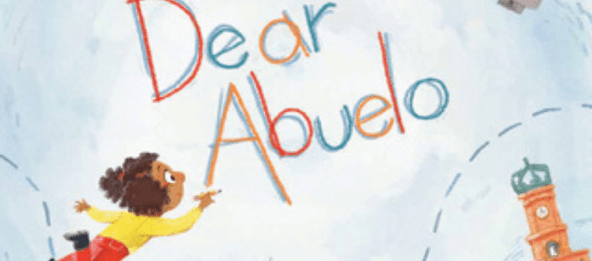
DESCRIPTION OF THE BOOK: There is much Juana is going to miss as she moves from Mexico to New York, but nothing more than her abuelo. Through letters to her grandfather, Juana details her flight, he new apartment, and her first days of school, where everyone speaks a language she barely understands. When Juana makes her first friend, though, things begin to change.

OUR TWO CENTS: In Grecia Huesca Dominguez’s Dear Abuelo (2019) Juana and her mother immigrate from Mexico to New York. Through letters written to Abuelo, who is back in Mexico, she details her feelings about  new and anxious experiences, like traveling on a plane for the first time, settling in her new apartment, and her first day of school. On the bus ride, Juana notices everyone speaking in English, she has trouble understanding and speaking despite having practiced. In school, Juana’s teacher does not pronounce her name correctly; this incident makes her feel discouraged. In the following letters, Juana tells Abuelo that she’s  met a new friend, Elizabeth, who is also from Mexico. Elizabeth speaks both English and Spanish and explains to the teacher how to say Juana’s name correctly. Juana finds the library and meets the librarian. The librarian shows Juana books written in Spanish, and this inspires Juana to write stories in English and Spanish. 

Teresa Martinez’s illustrations center a young, brown girl with bright rosy cheeks and short curly  hair. Martinez’s vibrant illustrations of  Juana’s experiences align brilliantly with her feelings, such as  depicting the feeling of anxiety or nervousness with her use of  grey and darker backgrounds and using splashes of bright greens, oranges, and yellows to capture Juana’s  feelings of zen and excitement. Mexico is represented with the use of bright flower garlands across the pages and those flowers are lost when Juana lands in New York in the middle of winter. At first, there aren’t any flowers at school because Juana has a difficult time fitting in. Once she meets Elizabeth, after the teacher pronounces her name correctly, and after finding books in Spanish, the flower garlands around the frame of the pages return. Not only are the flowers a connection to Mexico, but they also represent growth and opportunity. 

A significant aspect in Dear Abuelo is the use of the letter format to tell the story. The story ends with Juana maybe one day writing her own stories, but the entire book is an example of just that. The letters are a powerful device that allows Juana to process her emotions that come with leaving one’s homeland behind and needing to start anew. The letters are also a wonderful way to strengthen long distance family relationships, which helps Juana feel less lonely.  The letters also suggest that Juana is taking control of her own narrative; she is in control of the story she tells. 

Another significant aspect of Dear Abuelo is the importance of  embracing the uniqueness in names and the importance of connecting with family history through naming. The mispronunciation of (im)migrant student names in the American classroom is a far too common experience. Continual mispronunciation or mockery of a student’s name because they don’t sound or look “American” is an imperialist and white supremacist practice to try to other, marginalize, and erase people’s history, culture, and future. We appreciate that it was Elizabeth, also a child, who had the courage to disrupt assumed power relations and correct, and teach, the teacher how to say Juana’s names. It is also important that the teacher was open to learning something new. 

Dear Abuelo focuses on the Mexican immigrant experience that many children coming to the U.S at a young age might relate to. This picture book illustrates common hardships, including having a language barrier, the trouble of meeting new people, or finding interest in activities like the ones Juana participates in the book, such as playing in gym class or riding the bus. Other picture books that center a similar experience and conversation include Juan Felipe Herrera’s The Upside Down Boy  (2006) and Amada Irma Perez’s My Diary From Here to There (2009). 

Grecia Huesca Dominguez and Teresa Martinez do an excellent job at balancing the struggles young immigrants experience with the joys of still being a child. We wholeheartedly recommend this book to children and parents to read together and discuss the similarities and differences between Juana’s experiences and those of the readers. 

TEACHING TIPS:

  • Ask students to write letters to one another, to the teacher, to someone in their family.
  • Encourage students to also include an illustration or a flower garland border (or a different symbol that represents something about themselves).
  • Ask students to write about the origin and/or history of their names, about being the “new kid” at school, or about making friends.
  • More advanced students can probably write about the more difficult themes around immigration and belonging.

.

Photo: Tracy Lane/Benchmark Education Company

ABOUT THE AUTHOR: Grecia Huesca Dominguez moved from Veracruz, Mexico, to New York when she was ten years old. She started writing poetry while pursuing her BA in English and Creative Writing at CUNY Lehman College. She initially used poetry as a coping mechanism and soon began to use it as a way to chronicle her life as a single mother and undocumented immigrant, and her Latinx identity. Her first poem, “Marilín,” was published in 2015. Since then, she has published more poems and written three books.

.

.

.

.

ABOUT THE ILLUSTRATOR: Teresa Martinez grew up in Mexico loving to draw and decided to study graphic design. She spent many afternoons reading books on art in the university’s library. She also took many painting courses and even went to Italy for a short course at the Leonardo da Vinci School (Florence). Eventually she started working as a children’s book illustrator and has been doing that ever since. Now Teresa lives in Puerto Vallarta, Mexico.

.

.

.

.

.

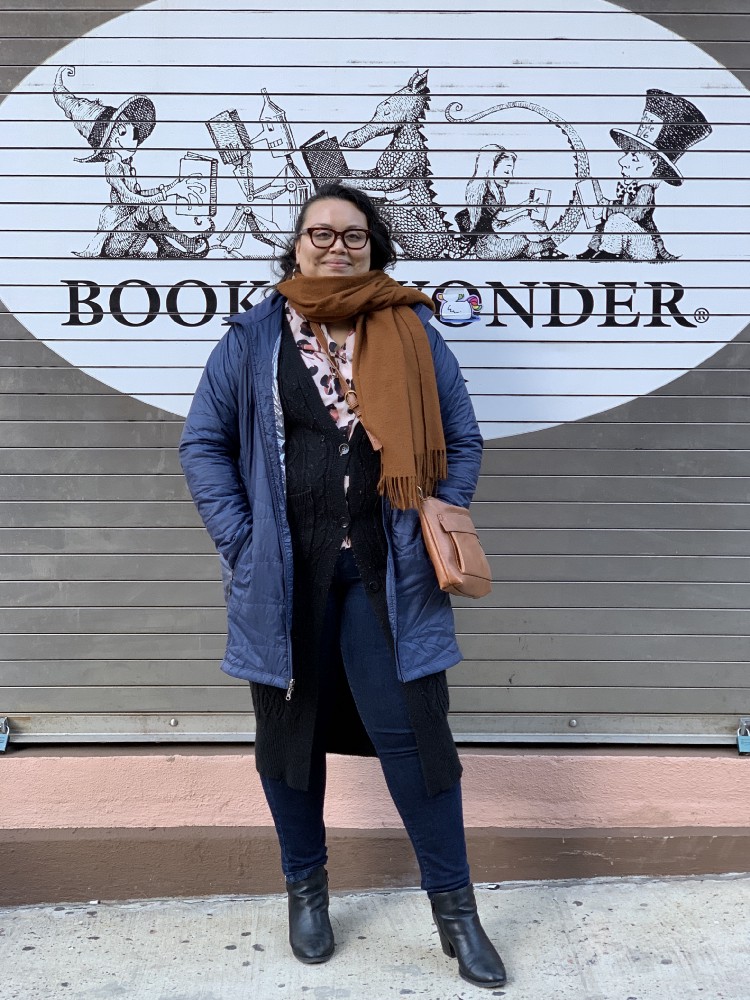
ABOUT THE REVIEWERS: Sonia Alejandra Rodriguez, PhD is an Associate Professor of English at LaGuardia Community College (CUNY) where she teaches composition, literature, and creative writing. Her academic research focuses on decolonial healing in Latinx children’s and young adult literature. Sonia is a Mellon Emerging Faculty Leader.

.

Ingrid Campos is a 19-year-old college student interested in Latinx Literature. After graduating from LaGuardia Community College (CUNY) this year with an associates in Writing and Literature, she will continue her studies at Queens College to earn her Bachelors in English Education 7-12 . Ingrid was born and raised in Queens, New York. As a Mexican-American living in Queens and graduating from the public school system, Ingrid is inspired to become a high school teacher. One of her main goals is to center academic curriculums around more diversity and inclusivity towards Black and Brown students.

Cover Reveal for Your Mama by NoNieqa Ramos, illus. by Jacqueline Alcántara

.

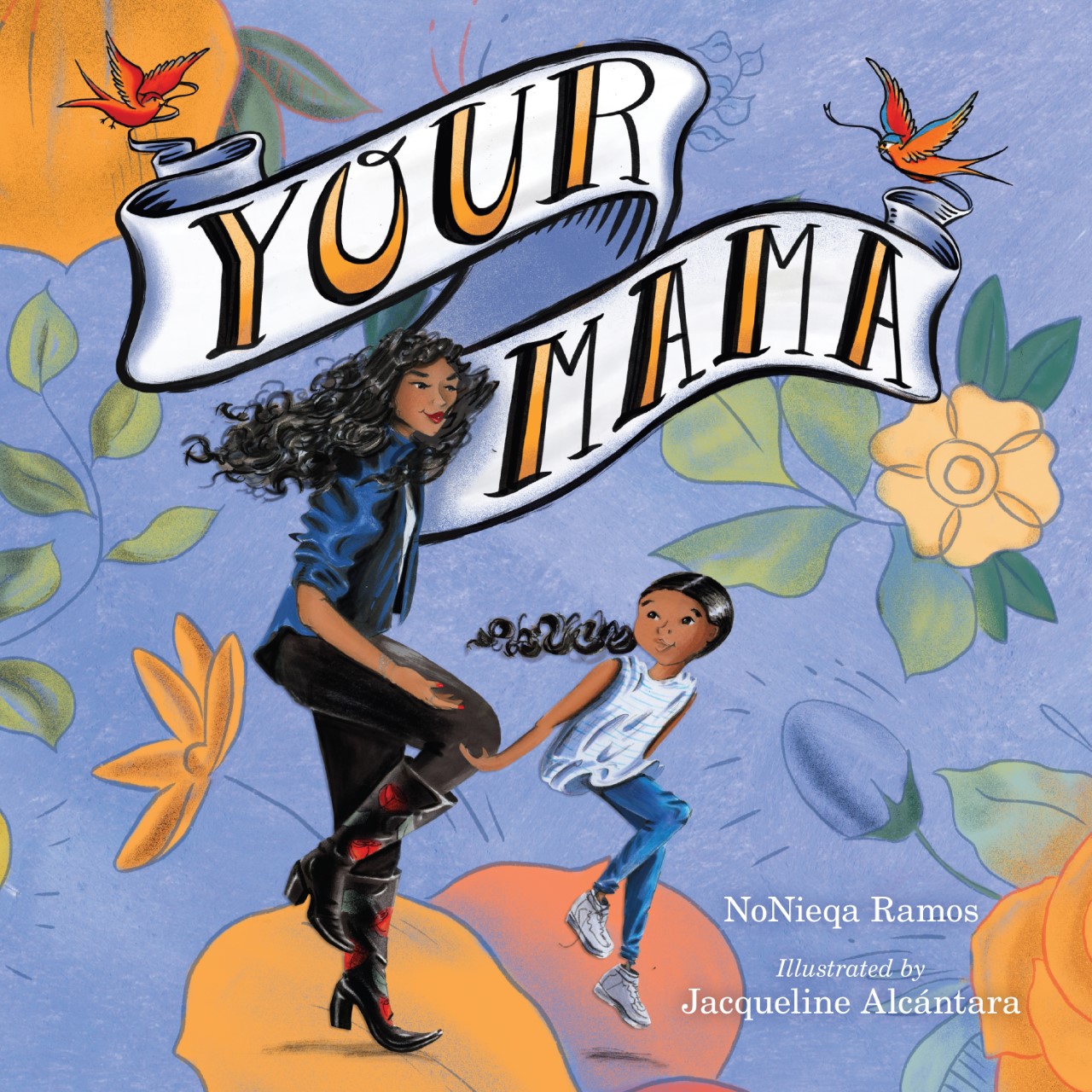
We are delighted to host the cover reveal for NoNieqa Ramos’s debut picture book, Your Mama, which will be published by Versify on April 6, 2021!

A sweet twist on the age-old “yo mama” joke, celebrating fierce moms everywhere with playful lyricism and gorgeous illustrations. Perfect for Mother’s Day.

Yo’ mama so sweet, she could be a bakery. She dresses so fine, that she could have her clothing line. And, even when you mess up, she’s so forgiving that she lets you keep on living. Heartwarming and richly imagined, YOUR MAMA twists an old joke into a point of pride that honors the love, hard work, and dedication of mamas everywhere.


First, here is some information about the creators:


richards-noni-0011-3_3NoNieqa Ramos wrote The Disturbed Girl’s Dictionary, a 2018 New York Public Library Best Book for Teens, a 2019 YALSA Best Fiction for Young Adults Selection, and a 2019 In the Margins Award Top Ten pick. Hip Latina named The Truth Is “10 of the Best Latinx Young Adult Books of 2019.”  Remezcla included The Truth Is in the “15 Best Books by Latino and Latin American Authors of 2019.”

Versify will publish her debut picture book Beauty Woke and Your Mama in 2021. Lerner will publish Hair Story in 2021. For more information about NoNieqa, check out Las Musas and the Soaring 20s. She is also on Twitter and Instagram.


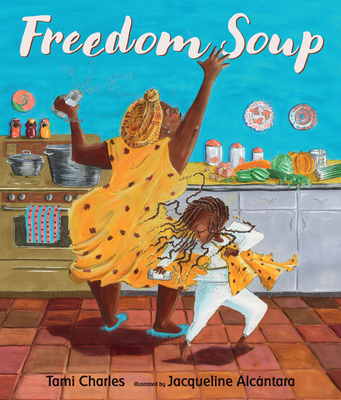
JACQUELINE HEADSHOTJacqueline Alcántara is a freelance illustrator and artist who spends her days drawing, writing and globe-trotting with her dog Possum. She is particularly excited about promoting inclusiveness and diversity in children’s literature and the illustration field in general. Her debut picture book, The Field, written by Baptiste Paul,was named a Best Book of 2018 by School Library JournalHorn BookKirkus Reviews, and Shelf AwarenessFreedom Soup, written by Tami Charles, has been named a Kids IndieNext Pick, a Kirkus Best Book of 2019, and has received four starred reviews! Jacqueline lives in Chicago, Illinois.


Now, some insight about the book from NoNieqa and Jacqueline:

Picture books and poetry are my first literary loves. The publication of my debut book YOUR MAMA has been a montage of dreams-come-true. I have been able to work with poet, educator, New York Times Bestselling and Newbery Award winner Kwame Alexander on his new imprint Versify! I’ve witnessed the life-changing effect of his work with my middle grade students, so it’s an immense honor to be part of his artistic mission to “change the world one word at a time.” And with work like Kip Wilson’s WHITE ROSE and creations by Raúl the Third, they are doing it!

My new editor Erika Turner has written about books, race, romance, and sexuality for Bustle, BuzzFeed, Black Girl Dangerous, and other pubs. She has been absolutely integral to getting my manuscripts to the next level and honoring the Latinidad and queerness of my work. FYI: She’s also an editor-for-hire and a photographer. Check out her website https://www.magicmultiverses.com/faq!

I jumped up and down when I found out the illustrator for YOUR MAMA would be Jacqueline Alcántara! I still remember standing in awe in a children’s bookstore and gazing at her dynamic work in THE FIELD, written by Baptiste Paul. Her second book FREEDOM SOUP, written by goddess Tami Charles,  is displayed front and center in my Latinx kitchen library. Jackie’s illustrations for YOUR MAMA took my breath away.  Her work amplified the spirit, the verve, the essence, and the fire of my words. I am so proud of this cover and fully intend on blowing it up to gigantic proportions and framing it–and trying to find me a pair of rose-covered black boots!

And from Reina Jacqueline Alcántara herself: “I had only read through the first few stanzas of NoNieqa’s manuscript when I got pings of excitement and started to imagine the characters’ overall style, relationship, and adventures together! The words are filled with spirit, energy and love—there was so much I wanted to pour into this world. For the cover, I chose a moment when they are dancing, and this super cool, confident, beautiful mama and her child are filled with energy, reading each other’s next move. I chose to illustrate the moment juuuussttt before they touch hands (I often try to find great decisive moments to illustrate), because it is filled with so much anticipation and excitement, and it encourages readers to imagine what might happen next.  It feels like the perfect place for this story to begin!”

Shout out to designer Andrea Miller who is fusing both our work into a beautiful final product. We can’t wait to share YOUR MAMA with the world April 6, 2021!


Finally, here is the cover of Your Mama:

Start scrolling…

*

*

*

*

*

*

Keep scrolling…

*

*

*

*

*

*

Almost there…

*

*

*

*

*

*

Ta-da!

.

CorrectedcoverfilefromJackie

GORGEOUS! Can’t wait to read it!

Your Mama is available now for pre-order!


12 Afro-Latinx Kid Lit Creators You Can Support Right Now


Today, we would like to spotlight 12 Afro-Latinx creators in Kid Lit because:

  • the Kid Lit publishing world is overwhelmingly white,
  • the Latinx creators who do get published are largely white or white-passing,
  • racism, anti-blackness, and colorism are systemic plagues in Latinx communities, in addition to our communities at large,
  • and, as a result of all of the above, Afro-Latinx creators do not get the regular attention and respect they deserve.

We stand with the Black community and will use our blog to amplify the voices and work of Black creators more often. Many of us are also educators who are working within the K-12, higher education, and library systems to combat racism, shrink the achievement gap, and best serve our Black students and other students of color. We will continue to do this work.

Below, you will find information about the creators, links to their websites, and links to any past posts from our site. If you click on the book covers, you will go to IndieBound.org, where you can put money behind your support by buying books!

.

Elizabeth Acevedo

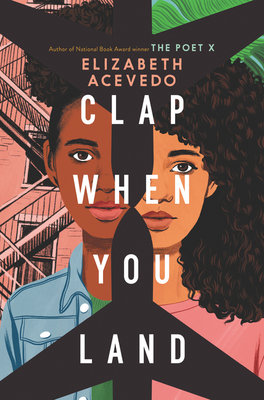
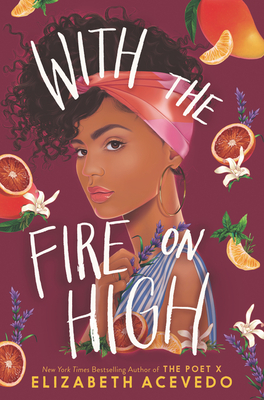
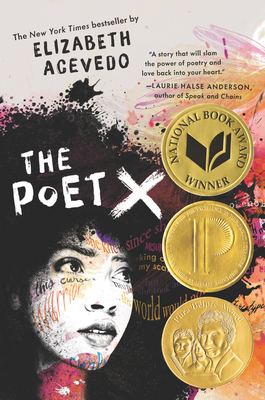
From her website: Elizabeth Acevedo is a New York Times bestselling author of The Poet X and With the Fire on High. Her critically-acclaimed debut novel, The Poet X, won the 2018 National Book Award for Young People’s Literature. She is also the recipient of the Printz Award for Excellence in Young Adult Fiction, the CILIP Carnegie Medal, and the Boston Globe-Hornbook Award. Additionally, she was honored with the 2019 Pure Belpré Author Award for celebrating, affirming, and portraying Latinx culture and experience.

Our review of THE POET X: https://latinosinkidlit.wordpress.com/2018/03/08/book-review-the-poet-x-by-elizabeth-acevedo/


.

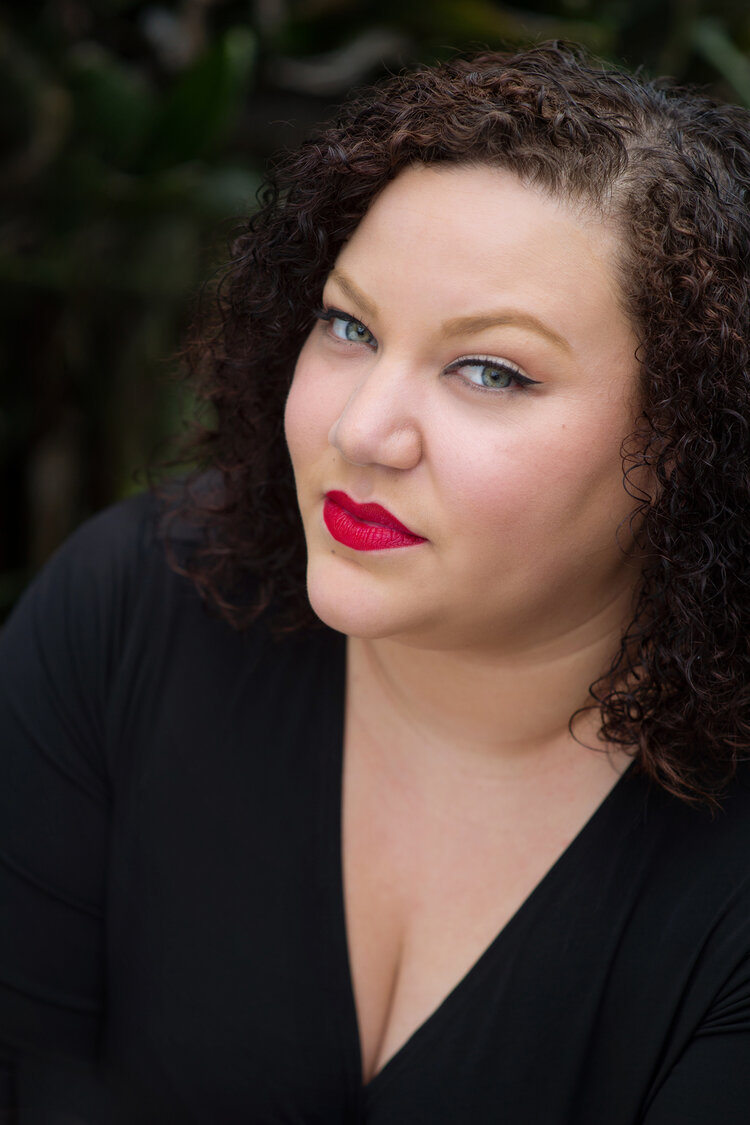
Lily Anderson  Headshot - credit Chris Duffey.jpgLily Anderson:

From her website: I’m Lily, the curly haired gal in the pictures. I’m a writer from the slice of suburbs between Sacramento and San Francisco that could never get it together enough to be the Bay Area. After spending my childhood searching for books about mixed race kids who talk too fast and care too much, I decided to start writing my own.

My books are about snarky girls and emotional intelligence and sometimes monsters. As a woman of Afro-Puerto Rican decent, representing a diverse world isn’t a trend for me—it’s my greatest joy.

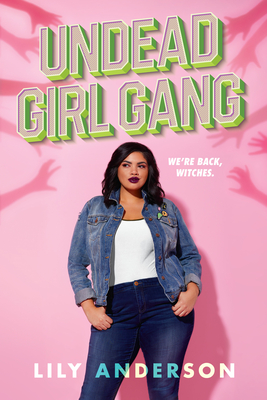
Our review of UNDEAD GIRL GANG: https://latinosinkidlit.wordpress.com/2018/11/19/book-review-undead-girl-gang-by-lily-anderson/


.

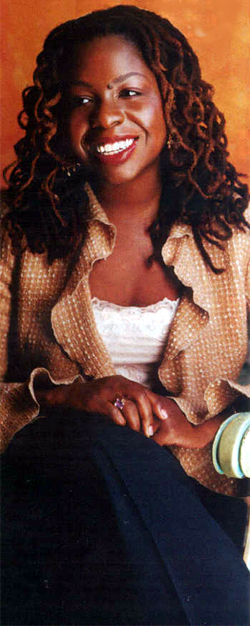
TransientVeronica Chambers

From her website: Veronica Chambers is a prolific author, best known for her critically acclaimed memoir, Mama’s Girl which has been course adopted by hundreds of high schools and colleges throughout the country. The New Yorker called Mama’s Girl, “a troubling testament to grit and mother love… one of the finest and most evenhanded in the genre in recent years.” Born in Panama and raised in Brooklyn, her work often reflects her Afro-Latina heritage.

She coauthored the award-winning memoir Yes Chef with chef Marcus Samuelsson as well as Samuelsson’s young adult memoir Make It Messy, and has collaborated on four New York Times bestsellers, most recently 32 Yolks, which she cowrote with chef Eric Ripert. She has been a senior editor at the New York Times MagazineNewsweek, and Glamour. Born in Panama and raised in Brooklyn, she writes often about her Afro-Latina heritage. She speaks, reads, and writes Spanish, but she is truly fluent in Spanglish. She is currently a JSK Knight fellow at Stanford University.

Our review of THE GO-BETWEEN: https://latinosinkidlit.wordpress.com/2018/02/08/book-review-the-go-between-by-veronica-chambers/


.

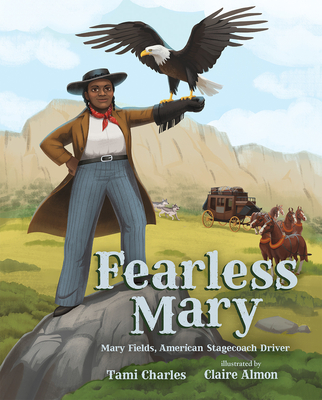
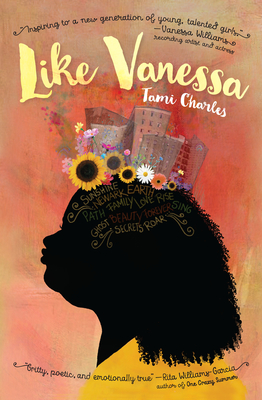
PictureTami Charles

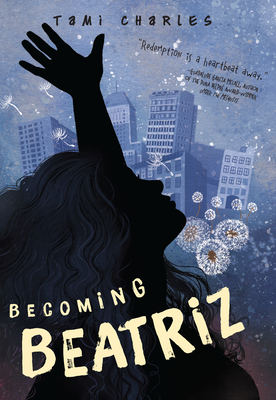
From her website: Former teacher. Wannabe chef. Tami Charles writes books for children and young adults. Her middle grade novel, Like Vanessa, earned Top 10 spots on the Indies Introduce and Spring Kids’ Next lists, three starred reviews, and a Junior Library Guild selection. Here recent titles include a humorous middle grade, Definitely Daphne, picture book, Freedom Soup, and YA novel, Becoming Beatriz. When Tami isn’t writing, she can be found presenting at schools both statewide and abroad. (Or sneaking in a nap…because sleep is LIFE!)

Our Q&A with Tami Charles: https://latinosinkidlit.wordpress.com/2019/10/03/spotlight-on-middle-grade-authors-part-12-tami-charles/


.

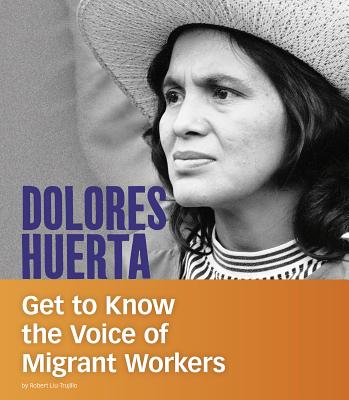
Robert Liu-Trujillo

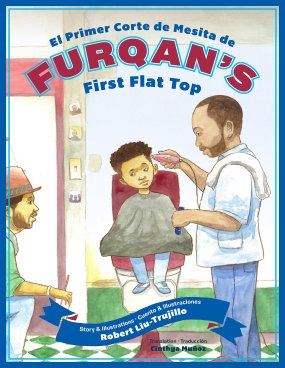
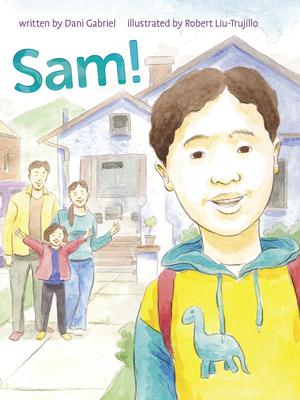
From his website: Robert Liu-Trujillo is a life long Bay Area resident. Born in Oakland California, he’s the child of student activists who watched lots of science fiction and took him to many demonstrations. Always drawing, Rob grew up to be an artist falling in love with graffiti, fine art, illustration, murals, and children’s books. In that order, sort of. Through storytelling he’s been able to scratch the surface of so many untold stories. Rob is the author and illustrator of Furqan’s First Flat Top. He’s a dad of a teenage boy and a brand new baby girl. He loves ice cream and his wife who laughs big and corrects his grammar every chance she gets. Down with the system and soggy french fries!

Rob is a co-founder of The Trust Your Struggle Collective, a contributor to The Social Justice Childrens Bk Holiday Fair, The Bull Horn BlogRad Dad,  Muphoric Sounds, and the founder of Come Bien Books.

Our review of FURQAN’S FIRST FLAT TOP: https://latinosinkidlit.wordpress.com/2016/12/15/libros-latinxs-furqans-first-flat-topel-primer-corte-de-mesita-de-furqan/

Our review of ONE OF A KIND LIKE ME: https://latinosinkidlit.wordpress.com/2017/05/04/book-review-one-of-a-kind-like-meunico-como-yo-written-by-laurin-mayeno-illustrated-by-robert-liu-trujillo/

furqan  Unico_00-Rob Liu-Trujillo_72 dpi       

.

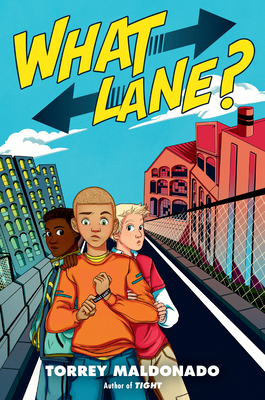
IMG_5888Torrey Maldonado

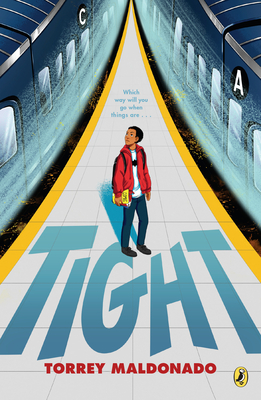
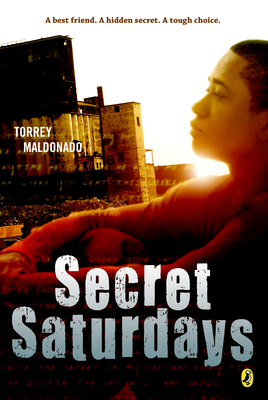
From his website: What do you get from teaching nearly 20 years in a middle school in the Brooklyn community that you’re from & you’re an author? Gripping relatable novels and real-life inspiration. Voted a “Top 10 Latino Author” & best Middle Grade & Young Adult novelist for African Americans, Torrey Maldonado was spotlighted as a top teacher by NYC’s former Chancellor. Maldonado is the author of the ALA “Quick Pick”, Secret Saturdays, that is praised for its current-feel & timeless themes. His newest MG novel, Tight, is a coming of age tale about choosing your own path. Learn more at torreymaldonado.com

Our review of TIGHT: https://latinosinkidlit.wordpress.com/2018/09/06/book-review-tight-by-torrey-maldonado/

Our Q&A with the Torrey Maldonado: https://latinosinkidlit.wordpress.com/2018/09/04/spotlight-on-middle-grade-authors-part-6-torrey-maldonado/


.

☆ Poet, Author, Editor, Lecturer, Scholar, ActivistTony Medina

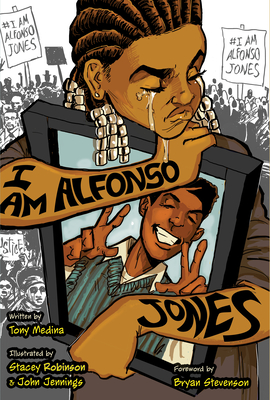
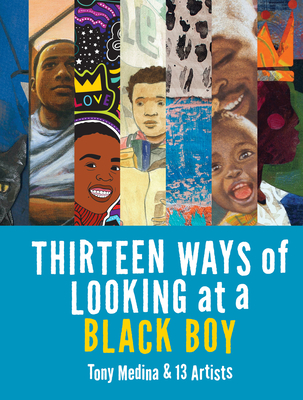
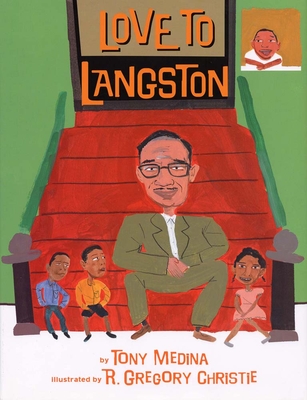
From his website: Tony Medina is the author/editor of seventeen books for adults and young readers. Medina has taught English at Long Island University’s Brooklyn campus and Borough of Manhattan Community College, CUNY and has earned an MA and PhD in English from Binghamton University, SUNY. The first Professor of Creative Writing at Howard University in Washington, DC, Medina’s latest books are I and I, Bob Marley (Lee & Low Books, 2009), My Old Man Was Always on the Lam (NYQ Books, 2010), finalist for The Paterson Poetry Prize, Broke on Ice (Willow Books/Aquarius Press, 2011), An Onion of Wars (Third World Press, 2012), The President Looks Like Me (Just Us Books, 2013) and Broke Baroque (2Leaf Press, 2013).


.

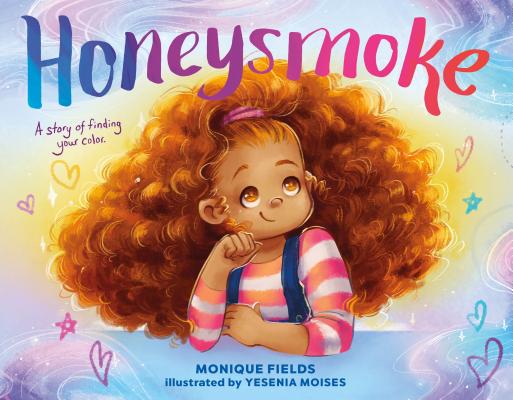
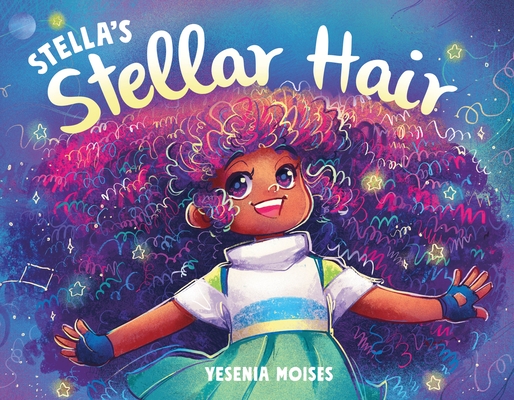
Yesenia_HeadShotYesenia Moises

From her website: Bronx native, Afro-Latina, and illustrator on Monique Fields’ debut picture book Honeysmoke: A Story About Finding Your Color, Yesenia is a freelance toy designer and illustrator. Her work has been featured on various media outlets such as SyFy and NBC News. On the toy side of things, she worked with Mattel and Spin Master and has even dabbled in comics here and there with Action Lab and Image. She enjoys creating colorful and whimsical illustrations that depict people of marginalized backgrounds in worlds where even ordinary life can be vibrant and full of wonder. In a time where the world can be a scary place, she wants it to be filled with big hair, bright colors, and lots of sazón from the heart!

Her author-illustrator debut, Stella’s Stellar Hair, is set to release in January 2021.

Our Q&A with Yesenia Moises: https://latinosinkidlit.wordpress.com/2018/12/06/spotlight-on-latina-illustrators-lulu-delacre-cecilia-ruiz-yesenia-moises/


.

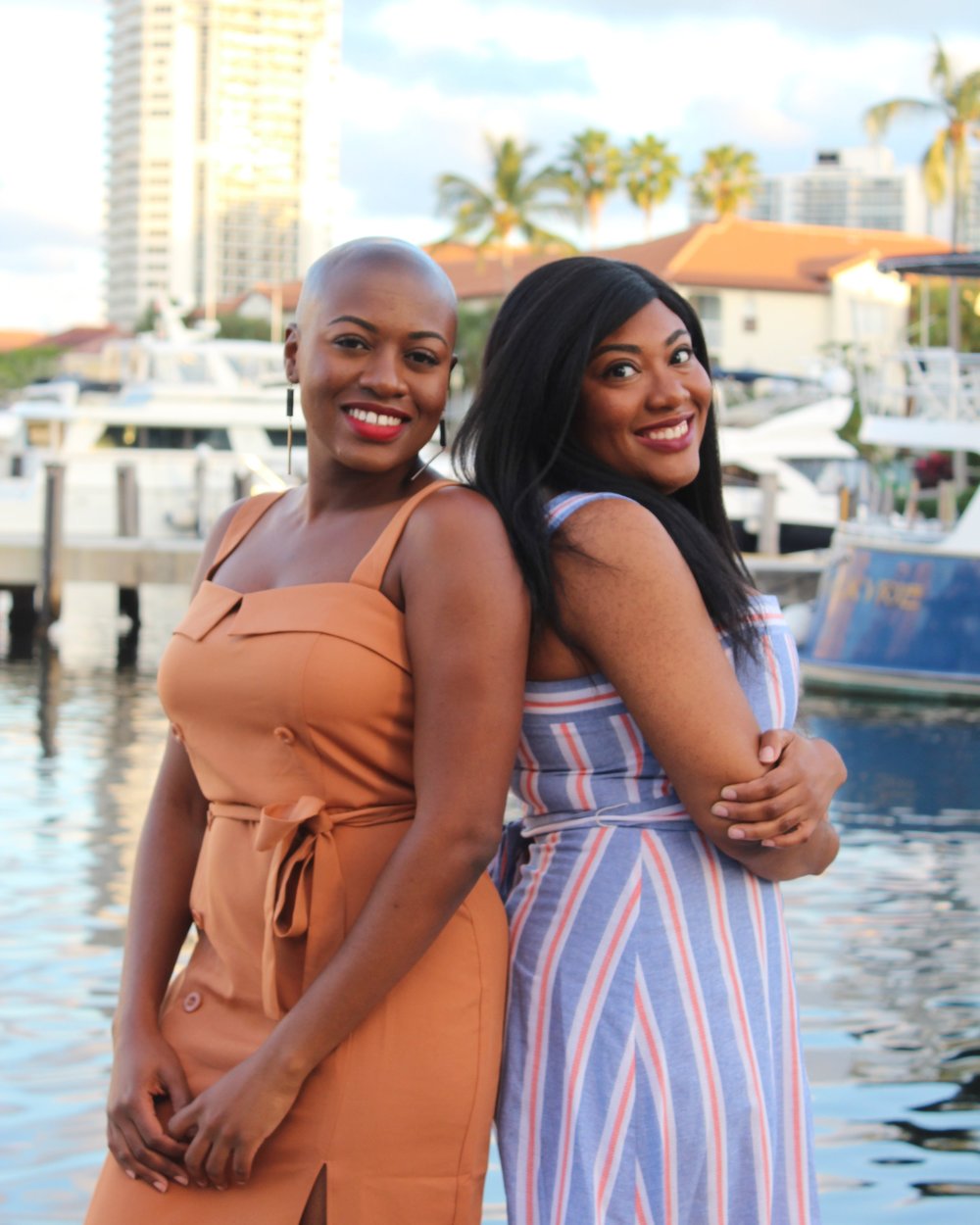
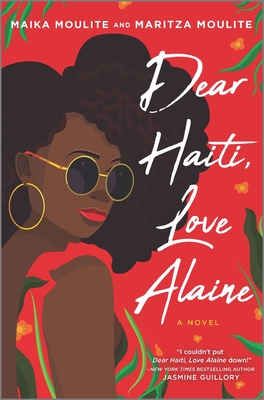
MaikaMouliteandMaritzaMouliteMaika Moulite and Maritza Moulite

From their website: Maika Moulite is a Miami native and daughter of Haitian immigrants. She earned a bachelor’s in marketing from Florida State University and an MBA from the University of Miami. When she’s not using her digital prowess to help nonprofits and major organizations tell their stories online, she’s writing stories of her own. She also blogs at Daily Ellement, a lifestyle website featuring everything from diverse inspirational women to career guidance. She’s the oldest of four sisters and loves Young Adult fantasy, fierce female leads, and laughing.

Maritza Moulite graduated from the University of Florida with a bachelor’s in women’s studies and the University of Southern California with a master’s in journalism. She’s worked in various capacities for NBC News, CNN, and USA TODAY. An admirer of Michelle Obama, Maritza is a perpetual student and blogs at Daily Ellement as well. Her favorite song is “September” by Earth, Wind & Fire.

.

Sofia Quintero

Sofia Quintero is a writer, activist, educator, speaker, and comedienne. She is also the author of Show and Prove, Efrain’s Secret, and has written several hip-hop novels under the pen name Black Artemis. This self-proclaimed “Ivy League homegirl” graduated from Columbia and lives in the Bronx.

Our review of SHOW AND PROVE: https://latinosinkidlit.wordpress.com/2015/06/18/libros-latins-show-and-prove/


.

Eric VelasquezEric Velasquez

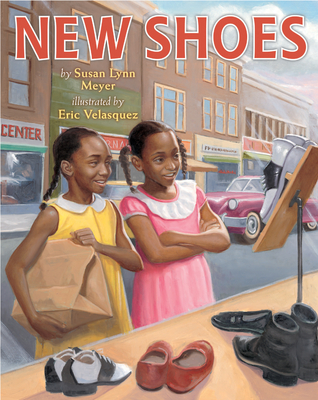
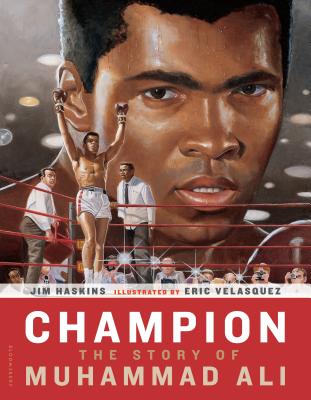
Eric Velasquez is an Afro-Puerto Rican illustrator born in Spanish Harlem. He attended the High School of Art and Design, the School of Visual Arts, and the famous Art Students League in New York City. As a children’s book illustrator, Velasquez has collaborated with many writers, receiving a nomination for the 1999 NAACP Image Award in Children’s Literature and the 1999 Coretta Scott King/John Steptoe Award for New Talent for The Piano Man. For more information, and to view a gallery of his beautiful book covers, visit his official website.

He is the illustrator of thirty books. Click here for a list of his work on his website.

Our review of GRANDMA’S GIFT: https://latinosinkidlit.wordpress.com/2016/06/02/celebrating-pura-belpre-winners-spotlight-on-grandmas-gift-by-eric-velasquez/

Our review of GRANDMA’S RECORDS: https://latinosinkidlit.wordpress.com/2014/02/13/libros-latinos-grandmas-records/


.

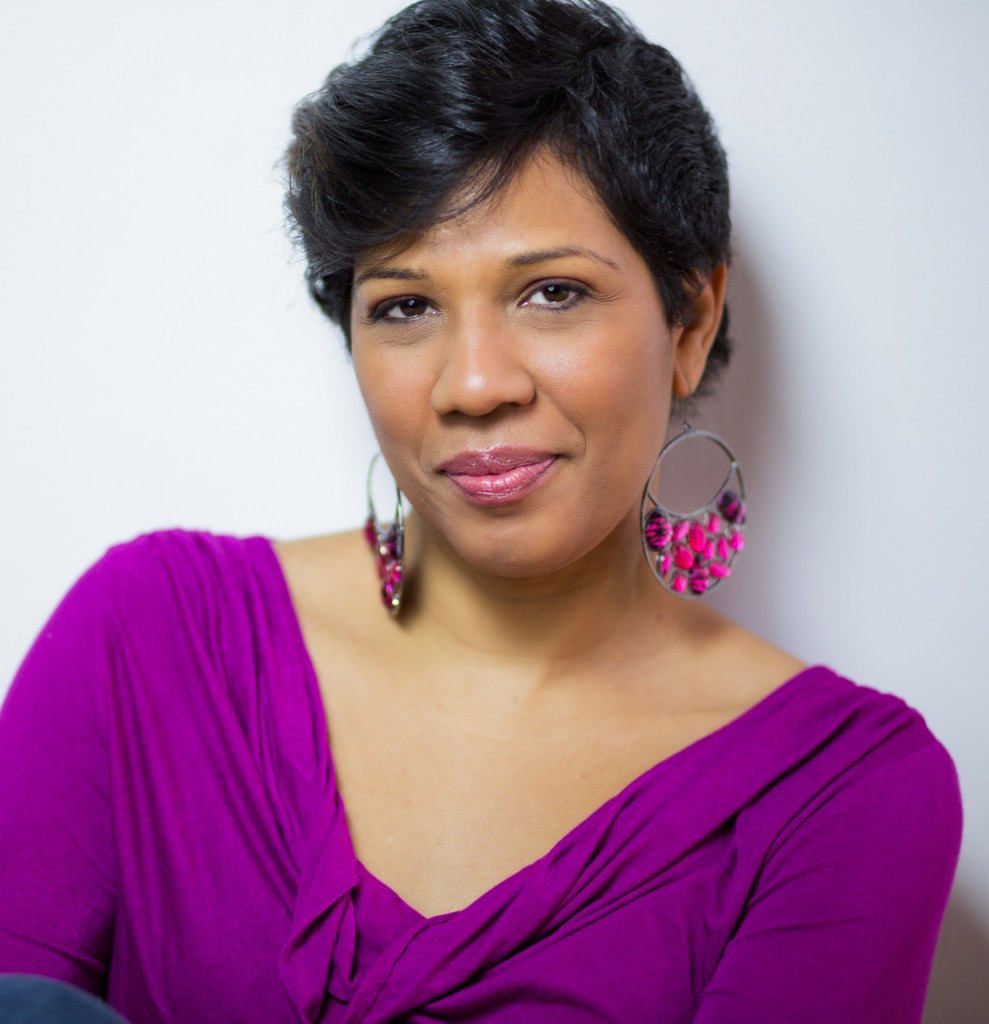
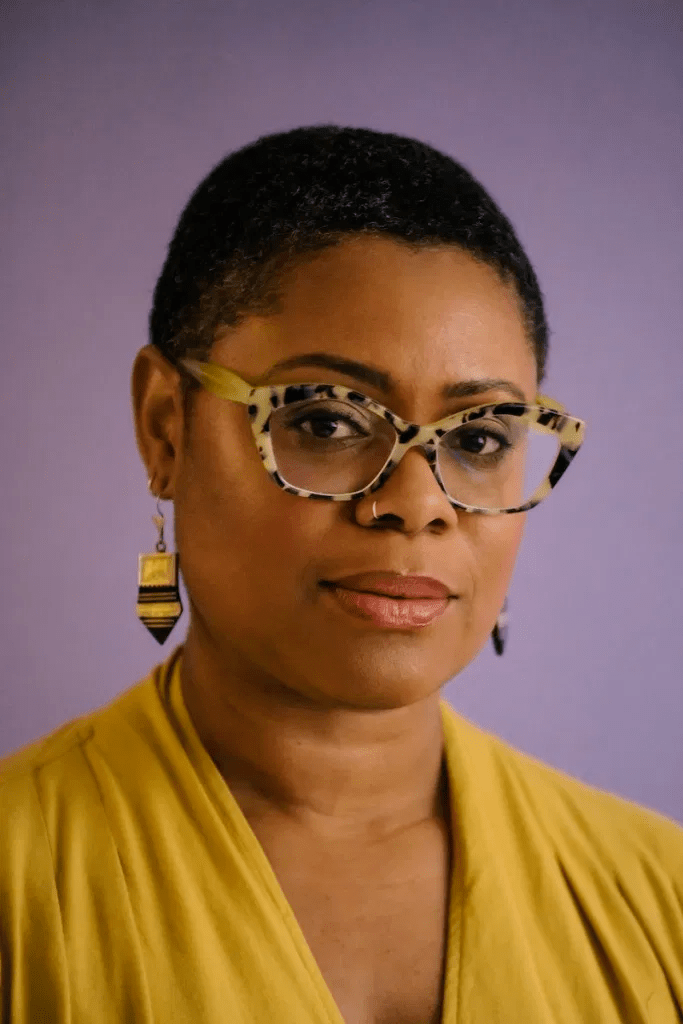
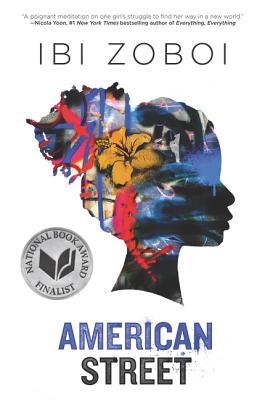
Ibi Zoboi

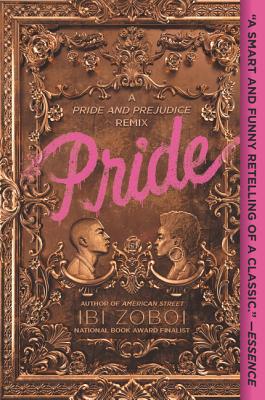
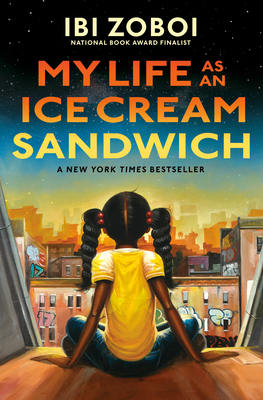
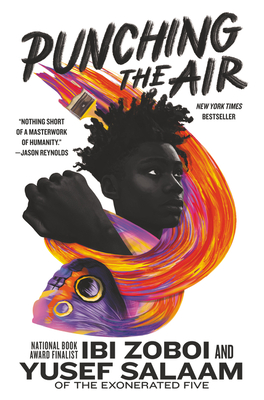
From her website: Ibi Zoboi was born in Port-au-Prince, Haiti, and holds an MFA in writing for children and young adults from Vermont College of Fine Arts. Her novel American Street was a National Book Award finalist and a New York Times Notable Book. She is also the author of Pride and My Life as an Ice Cream Sandwich, a New York Times bestseller, and Punching the Air with co-author and Exonerated Five member, Yusef Salaam. She is the editor of the anthology Black Enough: Stories of Being Young & Black in America. Raised in New York City, she now lives in New Jersey with her husband and their three children.


Review: The Adventures of Chupacabra Charlie by Frederick Luis Aldama, illus. by Chris Escobar

Reviewed by Elena Foulis

SUMMARY FROM OHIO STATE PRESS: In their debut picture book, Frederick Luis Aldama and Chris Escobar invite young readers along on the adventures of Chupacabra Charlie, a polite, handsome, and unusually tall ten-year-old chupacabra yearning for adventure beyond the edge of los Estados Unidos. Little does Charlie know when he befriends a young human, Lupe, that together, with only some leftover bacon quesadillas and a few cans of Jumex, they might just encounter more adventure than they can handle. Along the way, they meet strange people and terrifying danger, and their bravery will be put to the test. Thankfully, Charlie is a reassuring and winsome companion who never doubts that he and Lupe will return safely home.

With magical realism, allegory, and gentle humor, Aldama and Escobar have created a story that will resonate with young and old readers alike as it incorporates folklore into its subtle take on the current humanitarian crisis at the border.

MY TWO CENTS: Based on real and imagined tales, The Adventures of Chupacabra Charlie, tells the story of a young Chupacabra whose life at the border is full of adventure, if you dare to follow. Charlie lives in the attic of a Bordertown in Mexico. He tells the reader about how, although considered a monster and sometimes feared, he is a kid who is looking for adventures. He tells us about his family life, and we see and read about the importance of family, education, and creativity. For example, the author and illustrator provide a wonderful scene of Charlie’s family dinner, the long tradition of family storytelling and the importance of listening to and learning from these stories. The story provides a great, balanced view of the value of learning in formal and informal settings and of using our imaginations to solve problems. The storyline always warns us about forgetting those family values and how that sometimes leads into negative stereotypes that can affect an entire community. While this is a children’s story, the writing and illustrations help young readers see how the poor choices of a few bad apples can impact the welfare of others.

Despite some of the obstacles and negative perceptions that Charlie faces, this story is about a voyage of bravery, and the meaning of friendship, even with people who do not look like you. We can choose to share life together. Charlie’s new friend, Lupe, becomes Charlie’s partner in an adventure that provides more than a thrill for them; indeed, their mission becomes to free children al otro lado of The Wall, who have been kept in cages. This young readers’ book is refreshing in the way it incorporates life at the border, through bilingualism and storytelling rooted in Latin American traditions such as Realismo Mágico.

One thing that catches our attention is the use of Spanish. While it only incorporates a few words and phrases, it only writes them in italics once, and if the word or phrase is used again, it uses the same font as the rest of the story. This is significant, in my view, because it allows the reader—who may or may not be bilingual—to pause, but then it expects them to learn and normalize bilingualism. Indeed, much of what this book presents are topics that are often complex or controversial and frequently void of the human perspective. More specifically, in the thinking about The Wall that separates the U.S. and Mexico, accepting people’s use of Spanish as part of who they are, and the reality of family separation at the border, which includes putting young kids in detention centers that are cage-like, often times, we forget to broadly think about how real people are deeply affected by all of this. The book tackles those topics in a way that is natural and promotes acceptance and heroism, as we dare to imagine that we can all do something to make someone else’s life a little or a lot easier.

Lastly, the illustrations are detailed and complement the storyline beautifully. I like how the images pay attention to details of city and rural life, highlighting cultural and geographical markers with care, such as el paletero, los nopales, the Wall, and even the flying car and the jar of pickles.


ABOUT THE AUTHOR: Frederick Luis Aldama is Irish-Guatemalan and Mexican Latinx. His mamá was a bilingual elementary school teacher in California. As a kid, he couldn’t get enough of his abuelita’s stories of El Chupacabra, La Llorona, and El Cucuy. Today he is a Distinguished University Professor at The Ohio State University. He is the author, coauthor, editor, and coeditor of 36 books.


ABOUT THE ILLUSTRATOR: Chris Escobar is a printmaker and cartoonist currently living in Savannah, Georgia. He has an MFA in Sequential Art from the Savannah College of Art and Design. Chris has created illustrations for the comic anthology Floating Head and editorial illustrations for Dirt Rag magazine, among other publications.


ABOUT THE REVIEWER: Elena Foulis has a Ph.D. in Comparative Literature and Cultural Studies from the University of Arkansas. Her research and teaching interests include U.S. Latina/o literature, and Digital Oral History. Dr. Foulis is currently working on a digital oral history project about Latin@s in Ohio, which is being archived at the Center for Folklore Studies’ internet collection. Some of these narratives can be found in her iBook titled, Latin@ Stories Across Ohio. She is also producer and host of Ohio Habla.


Our Stories Are the Remedios We Need Right Now

by Tracey T. Flores

I think about my city and all the changes that it’s been through. And all the changes that will come. But I know that here in our little house, there are things that will always be the same.  ~from My Papi has a Motorcycle by Isabel Quintero
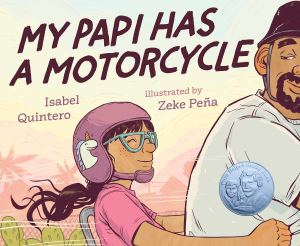
My Papi Has a Motorcycle, written by Isabel Quintero and illustrated by Zeke Peña, tells the story of young Daisy Ramona, a girl who eagerly awaits her Papi’s return home after a long day at work. When he arrives, Daisy Ramona and her Papi will take a ride through their city on the back of his motorcycle. Their ride takes us on a journey through their changing neighborhood, where we get a glimpse into the places and people that make her community so special. On their ride, Daisy and her Papi pass the local panadería where they buy conchas on Sunday mornings, the post office, and their abuelito’s yellow house (where the food always tastes better). They greet each person they meet with a nod of the head or a wave, letting readers see the closeness of this comunidad. Daisy’s ride with her Papi reminds us that although the world outside their home is changing, the love inside will always stay the same.

I love this cuento. I have shared it with my 4-year old daughter, Milagros, my graduate students in our family-and-community literacies course, and the mamas that I work alongside and learn from at our partner school. Recently, I revisited this cuento and found healing and comfort in it, like a warm bowl of sopa de fideo.

Currently, when I watch the news, it is easy to feel scared and helpless. The impact of this moment on our familias and comunidades is real and heartbreaking. At times, I have found it difficult to imagine our world after this moment. Will my parents be okay? How will my daughter remember this time? What will our comunidades look like after this moment?

In these questioning moments, these moments of uncertainty, I am finding healing, comfort and strength in the lessons and wisdom of our collective Latinx stories.

In our stories, I feel the deep, unconditional love that is the foundation of our familias.

In our stories, I remember every day moments with my loved ones.

In our stories, I bear witness to the fight of our Nanas and Tatas and the obstacles they have overcome in their lives so that we can thrive.

In our stories, I am gifted our history and the wisdom and lessons of our ancestors we carry with us as tools of resistance, hope and survival.

It is in the telling and retelling of our stories that I remember good times, where I am reminded that although the world outside our homes is changing, there are things like our familial love, the strength of our comunidades, and the fight of our gente that will always stay the same.

I offer more cuentos for you to turn to in this moment. From these cuentos, our cuentos, I hope you find peace, comfort and healing. In addition, I invite you to reflect on and remember the cuentos from your own life, those gifted to you by your elders, and those you share with the younger generations—write them down, record them, create art around them—and never forget them, for they are your strengths.

Abuelita Full of Life/Llena de vida

Written by Amy Costales & Illustrated by Martha Aviles

When José goes to the park with Abuelita, they have a walk. At first he misses his bike. But, he likes when Abuelita holds his hand and he can feel the strength that flows beneath her wrinkly skin. She teaches him the names of the trees and the flowers they see on the way. José is amazed by how much he used to miss by rushing by on his bike.

These words capture the loving relationship that José develops with his abuelita when she comes to live with the family. Abuelita brings life, love and pride into their home. In her company, he learns healing remedies, the beauty of English and Spanish, and the deep love of his abuelita. This book reminds me of the wisdom and love that is deeply rooted and embodied in the stories, histories and ways of knowing and being of our Nanas, Tatas, and Abuelitos, and the healing that comes from their presence in our lives.


Tía Isa Wants a Car

Written by Meg Medina & Illustrated By Claudio Muñoz

But Tía Isa is already touching the front seat, big enough for three. She nods when I show her there’s room in the back for more of us, who’ll come soon.

“You’re right mi hija,” she says. “This one will take us all where we want to go.”

 Tía Isa shares with the family that she wants to buy a car. Her declaration is met with resistance and ridicule from everyone except her young niece, who imagines all the places this car will take them. Together, Tía Isa and her niece save money to buy a car, one big enough for the entire family to travel to the sea. This cuento truly touches my heart, as I see the faces of all the women in my familia represented in Tía Isa. In this cuento, I remember the strength, determination and creativity of my own mama, nana and tias, and I think about the ways they always speak and manifest their dreams and goals into reality for our entire family. It also reminds me of the strong bond of our familias and the importance of always sticking together.
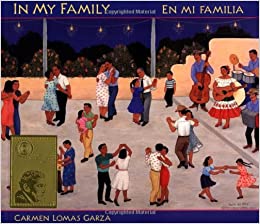
In My Family/En mi familia

Written & Illustrated By Carmen Lomas Garza

My grandmother is holding a baby. She was holding the babies. And, feeding them, and putting them to sleep.

Through detailed illustrations and short vignettes, artist Carmen Lomas Garza captures the essence of the love for her familia and comunidad that are central to her childhood memories of growing up in Kingsville, Texas. Each illustration features special moments spent with her familia as they gathered for birthday parties, to cook tamales, to make cascarons and dance en el jardín. This book reminds me of the beauty and remedios of our family memories and the joy that is present in our daily lives.
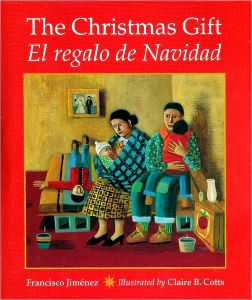
The Christmas Gift/El regalo de la navidad

Written by Francisco Jiménez and Illustrated by Claire B. Cotts

Most of us have a favorite Christmas story to tell…Like all of my short stories, it is based on an experience I had as a child…It took place in a farm labor tent camp in Corcoran, California.

Author and storyteller Francisco Jiménez (Panchito) shares a Christmas story from his childhood. A few days before Christmas, the family had just moved again to a new camp to find work, money and food was scarce. For Christmas, Panchito was hoping to receive a red ball. When he awoke on Christmas day to find that he did not receive a ball, but a bag of candy, he was disappointed, until he saw the thoughtful gift that his father gave to his mother. I love all books written by Francisco Jiménez, and this book is one of my favorite stories to share with others. In his story, I am reminded of my own family, especially my mother and father, and all the sacrifices they have made and continue to make for our family. It makes me remember the important things in life – our health, our bond as a family and the gift of being together.
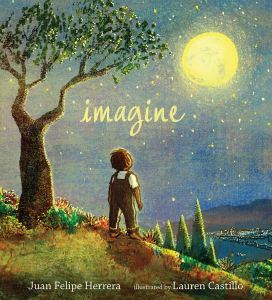
Imagine

Written By Juan Felipe Herrera & Illustrated by Lauren Castillo

If I jumped up high into my papi’s army truck and left our village of farmworkers and waved adios to my amiguitos. Imagine.

 Poet Juan Felipe Herrera journeys us through his life recounting moments of both triumph and struggle as he continued imagining the future. His words take us from the village where he lived as a small child, to his first day of school in a new country, all the way to the steps of the Library of Congress where he reads his poetry and signs his books with “Poet Laureate of the United States.” The poetry of his experiences that he shares can teach us to always imagine endless possibilities for our lives and our worlds. In his words, I am reminded to always have hope and to never stop being a learner.
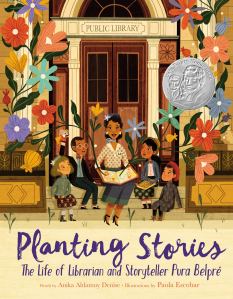
 

Planting Stories: The Life of Librarian and Storyteller Pura Belpré

Written by Anika Aldamuy Denise & Illustrated by Paola Escobar

Now a published author, puppeteer, and storyteller, Pura travels from branch to branch, classroom to classroom, to churches and community centers…planting her story seeds in the hearts and minds of children new to this island who wish to remember la lengua y los colores of home.

 This book stories the life of librarian, author, puppeteer, and storyteller Pura Belpré. As the first children’s librarian from Puerto Rico, Pura Belpré planted seeds of cuentos from her homeland, retelling traditional stories, in English and Spanish, to bilingual children and families in New York. Noticing a lack of Spanish books in the library, Pura Belpré wrote and published the traditional stories she orally shared and opened space in the library for the Spanish-speaking comunidad to feel included and at home. This book reminds me of the power of our stories and the necessity of sharing them with others. Also, the importance of writing and recording them for future generations.
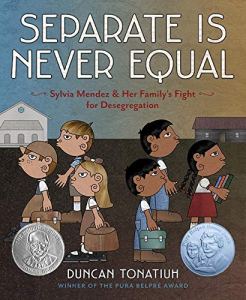
Separate is Never Equal: Sylvia Mendez and Her Family’s Fight for Desegregation

Written and Illustrated by Duncan Tonatiuh

The Mendez family did not give up. Time and time again, Sylvia hear her father talk with coworkers, friends, and other parents. “It’s not fair that our kids have to go to an inferior school,” he said. “It’s not only the building that’s a problem—the teachers at school don’t care about our children’s education. They expect them to drop out by the eighth grade. How will our children succeed and become doctors, lawyers and teachers?”

 This book tells the true story of Sylvia Mendez and her parents’ fight to end school segregation in California in the historic Mendez v. Westminster decision. The Mendez decision was reached seven years prior to the Brown V. Board of Education case which dismantled the “separate but equal” doctrine in public education. From this story, we learn about the key role that our familias and comunidades had in the desegregation of our schools, which is often absent from the history we learn in school. In this book, I witness the courage and advocacy of the Mendez family and I am reminded of our proud history and our collective power when we come together.

Tracey T. Flores is an assistant professor of language and literacy in the Department of Curriculum and Instruction at the University of Texas at Austin. She is a former English Language Development (ELD) and English language arts teacher, working for eight years in K-8 schools throughout Glendale and Phoenix, Arizona. Tracey is the founder of Somos Escritoras/We Are Writers (www.somosescritoras.com), a creative space for Latina girls (grades 6-8) that invites them to write, share and perform stories from their lived experiences using art, theater and writing as a tool for reflection and examination of the worlds. She can be contacted at: tflores@austin.utexas.edu and on Twitter @traceyhabla.

Don’t miss Tracey’s write-up for Latinxs in Kid Lit about her work with Somos Escritoras!