Scholastic Asks Three Questions to Three Latina Illustrators

By Concetta Gleason
Editorial Manager of Club Leo en Español

To mark the end of Hispanic Heritage Month this week, Club Leo en Español is proud to share exclusive art and interviews with three fantastic and dynamic Latina illustrators: Yuyi Morales (author/illustrator of Niño Wrestles the World), Angela Dominguez (author/illustrator of Maria Had a Little Llama /María tenía una llamita), and Alejandra Oviedo (illustrator of Animaletras).

We asked each artist to answer three questions in words and art:

1. What inspires your work?
2. If you could have a superpower, what would it be?
3. What are your words to live by?

Each woman provided wildly imaginative, unique, and different examples of her artistic persona and motivations. Let’s explore!

Yuyi Morales won the 2014 Pura Belpré Illustration Award for Niño Wrestles the World. Not to brag but Yuyi briefly made us Internet-famous (by association) when she shared a sneak peek of her exclusive art on her resplendent Instagram account.

Yuyi answered the questions in a comic-book style and as a new person: she awoke one morning—transformed and “more beautiful than ever”—as “Tzitzimitl,” an ancient Aztec deity who shares a deep connection with the stars and astrology. Ha! Eat dust, Kafka.

For the record, Tzitzimitl > cockroach. Any day of the week. Thanks, Yuyi!


Alejandra Oviedo, the illustrator of Animaletras, sent us sweet and imaginative illustrations that capture the beauty and freedom of childhood. Her illustrations are made from intricate and delicate paper cuts, and she is inspired by looking at the world through the eyes of a child.

1. What inspired your work for Animaletras?

My inspiration for the illustrations came from kids’ drawings. I find them beautiful, and they portray the most important elements of each animal. I also paid attention to animal pictures, and I visited the zoo many times to capture not only the animals’ shapes but also their attitudes and personalities.

2. If you had a superpower, what would it be?

I would love to fly like a bird.

3. Words to live by?

Always put love in what you do; believe in your dreams and do not leave them behind.

What inspiring answers! Thanks, Alejandra!


Angela Dominguez, author and illustrator of the Pura Belpré Illustration Honor book Maria Had a Little Llama /Maria tenía una llamita, sent us fun and playful photographs of Peruvian children and llamas that she used to as models and inspiration for her book.

1. What inspired your work for Maria Had a Little Llama/María tenía una llamita?

The inspiration for the project came from an illustrator’s assignment at a Society of Children’s Book Writers and Illustrators conference. I was given the task of doing my own version of “Mary Had a Little Lamb.” I was excited about the assignment, but I found it really difficult at first to find inspiration to reinterpret the classic story. My first doodles felt a little quiet, soft, and too familiar. I wanted my Mary to have personality with rich colors!

Whenever I’m stuck, I go to the library. There, I began researching sheep and farm life. It was in a book that I discovered a picture of a little girl with a llama. The idea of including llamas with the sheep led me to set the story in Peru. Finally I knew how I could personalize Mary, and that’s when Mary turned into Maria. The more I looked at books, the more I was inspired by the beautiful faces of the Peruvian children, the rich textiles, and the lush landscapes. I’ve never been to Peru, and I think my desire to visit the country pushed me to create landscapes of this idealized world I have in my head.

2. If you could have a superpower, what would it be?

I would teleport. I love traveling, but I don’t particularly enjoy flying or how long it takes to get somewhere. Plus I would love to be able to give a family member or a friend a hug really quickly and then get back to work.

3. Do you have a life motto or favorite phrase? 

I have a few. First, I’m not sure where I read it, but “persistence plus passion equals success” is my favorite motto. I also love so many quotes from Winston Churchill and Henry Ford. This one quote, in particular, from Henry Ford is just so motivating. He said, “Enthusiasm is the yeast that makes your hopes shine to the stars. Enthusiasm is the sparkle in your eyes, the swing in your gait. The grip of your hand, the irresistible surge of will and energy to execute your ideas.” It’s just so beautiful.

Thanks, Angela! We’d be happy to travel to Peru with you!

It’s wonderful to see Latina illustrators have prominence in children’s literature, and that as visual storytellers they have broken new ground—from Mexican myths to remaking classic fairy tales.

We thank and celebrate Yuyi Morales, Alejandra Oviedo, and Angela Dominguez for opening the worldview of children everywhere.

Club Leo en Español supports your classroom with fun and affordable books that connect children’s home language and learning. Our books include amazing series, original titles, and winners of the Pura Belpré Award, which celebrates the remarkable contributions of artists who give voice to the Latino community through children’s literature.

Club Leo en Español apoya tu salón de clases con libros divertidos y asequibles que conectan la lengua materna y el aprendizaje de los niños. Nuestra colección incluye increíbles series, títulos originales y ganadores del Premio Pura Belpré, que celebra los extraordinarios aportes de artistas que dan voz a la comunidad latina a través de la literatura infantil.

Book Review: Violet by Alidis Vicente

By Sujei Lugo

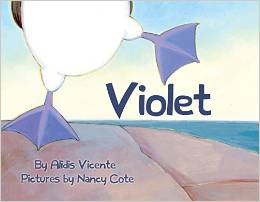
VioletDESCRIPTION: “Violet is a bright and colorful story set in the Galápagos Islands. Told entirely from the point of view of the animals that live there, this is the tale of a unique baby bird named Violet. Violet’s mother is a Red-Footed Booby, and Violet’s father is a Blue-Footed Booby. Their baby, Violet, is the first one of her kind, a Purple-Footed Booby, and she displays characteristics of both species. Violet’s red footed and blue footed relatives, however, don’t notice her similarities at first, just her differences, and they don’t see how she will ever fit in. Through the kindly intervention of a wise old Galápagos Tortoise, the birds all learn an important lesson about acceptance, and Violet shows off a new dance that is the best of all of them”

MY TWO CENTS: Through the voices of talking animals, Alidis Vicente brings us a rhyming children’s book about prejudice and acceptance. Nancy Cote’s illustrations, founded on acrylic paintings and a pastel colors palette, supports the sympathetic approach of the story. This is the second collaboration between Vicente and Cote, and is one of those children’s books that uses animals to provide a voice of justice and a moral tale at the end.

The story is set in the Galápagos Islands and is told from the perspective of those who have heard the tale about this place “where nature is untouched” and where two group of birds were “forced to pick a side.” Readers are immediately introduced to the biodiversity of the Galápagos Islands and how animals “ruled the land.” Violet was like no other animal that lived on those islands. She was a purple-footed booby, the offspring a blue-footed booby (father) and red-footed booby (mother), who grew up mingling with their own. Her parents defied their social roles and barriers and decided to start a family, thus a baby seabird named Violet was born. The new family returned to their hometown, where the news of a “mixed seabird” was taken as “horrific,” a disgrace, and a baby whose feet “shouldn’t be on land.” In the midst of this outrage, an old, wise tortoise interferes to bring sense to chaos and acknowledge that Violet is different, a descendant of a red-footed and blue-footed booby. Violet proceeds to show her skills, changing the mood and reception of fellow animals, providing actions for the tortoise’s final statement: “THIS makes the Galápagos complete.”

Alidis Vicente uses the opportunity to talk about prejudice and differences and successfully moves beyond the tired “we are all the same” trope. Through a simple story, she challenges colorblindness and provides the characters of this narrative (and readers) the lens to acknowledge differences among their habitats (communities). It is then that communities should work to challenge, minimize and, finally, eradicate prejudice and oppression due to our differences. Although books with talking animals may hinder children in the understanding of social issues, adults can play a role in guiding children to situate what was discussed to their own lives and their surroundings.

TEACHING TIPS: Violet is a great picture book for K-3 grade students and it successfully intersects Language Arts, Science, and Art. Language Arts teachers can incorporate this book in their classrooms and provide students the opportunity to learn new words, while enriching their vocabulary regarding fauna terms, verbs, and adjectives. The book includes a glossary with definitions and pronunciations of some words used in the story. Teachers can also give meaning to those new words and the story’s plot by encouraging a discussion around prejudice and differences.

Science teachers can use the book to teach students about different species, habitats, and biodiversity. The book incorporates several illustrations of different animals with their specific physical attributes. In collaboration with Art class, students can draw and paint images of sea lions, iguanas, seabirds, and whales, while learning about their distinctive features, habitats, and endangered species.

AUTHOR & ILLUSTRATOR: Alidis Vicente is a stay-at-home mom from New Jersey who began writing children’s books once her son was born. She graduated from Rutgers University and worked for New Jersey’s Division of Youth and Family Services before focusing on her career as a writer. Vicente is the author of The Coquí and the Iguana (2011), The Missing Chancleta and Other Top Secret Cases (2013). The Missing Chancleta won first place in the Best Youth Chapter Fiction Book (Spanish/Bilingual Category) in the 2014 International Latino Book Awards. You can also read her guest post on Latin@s in Kid Lit.

Nancy Cote is a children’s books author and illustrator from Massachusetts who earned her B.F.A. in Painting from the University of Massachusetts-Dartmouth. Her books have won several awards including the Oppenheim Toy Portfolio Gold Seal Award, 1996 Notable Children’s Trade Book from The Children’s Book Council and the National Council for Social Studies, Florida Reading Association Children’s Book Award, SSLI 1999 Honor Book,  She has illustrated various picture books, such as Flip-Flops (1998), I Like Your Buttons! (1999), Hamster Camp: How Harry Got Fit (2004),  Mrs. Fickle’s Pickles (2006), Ella and the All-Stars (2013) and Watch the Cookie! (2014).

For more information about Violet, visit your local library or bookstore. It’s also available in amazon.com

me2

Alidis Vicente

Nancy Cote


Scholastic Celebrates Hispanic Heritage Month With Some Favorite Books

By Roany Molina

Hispanic Heritage Month officially kicked off Monday – September 15th – and lasts until October 15th. To celebrate, we compiled some of our favorite characters and stories from all over Latin America in a Colección Herencia Hispana / Hispanic Heritage Collection. Each book is rich with beautiful language, stories, myths, art, and foods.


Award winning author and illustrator Yuyi Morales does it again with her captivating children’s book, Niño Wrestles the World. Niño, the unstoppable masked child wrestler, contends against a series of abnormal opponents. Niño defeats them all with ease, but it isn’t until the clock chimes that he is faced with his most difficult challenge, Las Hermanitas (the little sisters). Morales is able to incorporate traditional Mexican beliefs and relate them to the country’s famous form of wrestling, commonly known as Lucha Libre, which requires wrestlers to mask their face to protect their identity. Her vibrant illustrations keep true to the classic pop-art style associated with Lucha Libre on posters and trading cards.  Mixed with the engrossing text, the combination of both storyline and artwork engages any reader. The tale is exciting and uses basic vocabulary for its young readers to follow along. From the uncommon opponents to the energetic fearlessness of Niño, Niño Wrestles the World depicts the story of an intelligent entertaining little boy who is able to teach its readers common Spanish words and phrases. Winning the Pura Belpré Award (2014), Yuyi Morales taps into both her creative power as an author and illustrator to create this delightful story.


Sabores De América is a new way to learn and look at the foods we eat. Written by Ana María Pavez and Constanza Recart, Sabores , originally published in Chile, has been distributed all over the world and is the winner of the Skipping Stone Award and the White Ravens Award (2010). The text is appealing to reader’s grades 4 and up but the book is an amazingly useful as a reference for readers of all ages. The book’s sophisticated water color art work, designed by Isabel Hojas, makes it friendly and relatable to a younger audience. This non-fiction book can also be used as an excellent classroom resource for any teacher looking to inspire cultural curiosity in the classroom. Students will learn about Latin America’s contribution to the world through the use of intriguing historical facts and recipes. A glossary about Mesoamerican culture and a map of the region are included.


The Cazuela That the Farm Maiden Stirred makes vocabulary building fun with its tribute to the nursery rhyme, “The House That Jack Built.” Written by Samantha R. Vamos and illustrated by Rafael López, each page engages the audience into wanting to help the farm maiden stir the cazuela (stewpot). Once she begins the task, all the farm animals desire to contribute in some way. Whether, it’s the cow that produces the milk or the donkey that give the duck a ride to the market to buy sugar, each animal participates in creating the final tasty dish. The cooking process becomes a festive event when everyone begins to sing and dance. Distracted by the joy of the party, the animals and the farm maiden forget to keep an eye on the cazuela and it begins to bubble over. Who will be the one to notice? Vamos and López’s combined efforts creates a delicious educational cultural celebration. An added bonus is the Arroz Con Leche recipe, better known as Rice Pudding, towards the final pages of the book. The Cazuela That the Farm Maiden Stirred, is an enjoyable read that can get any tummy rumbling.


La difunta familia Diaz by P.J. Bracegirdle and illustrated by Polly Bernatene is a playful and humorous tale that explores the two side of Día de los Muertos – the living and the dead. The story revolves around Angelito, a sweet little boy – a dead little boy— living happily with his dead family. They have a well-kept home strewn with family portraits, a skeleton dog, and their whole neighborhood is “dead” – the birds, butterflies, the flowers on the dining room table, and the moon in the sky. In short, the afterlife is good. However, Angelito is anxious about Día de los Muertos and all the horrors of the living! However, an unexpected friendship will soon alter his point of view.  La difunta familia Diaz’s is a fantastic book that lightheartedly introduce children to this famous holiday.


In celebration of Hispanic Heritage Month, finish the following sentence and you could win a FREE Hispanic Heritage Poster and 25 Spanish and bilingual books.  “In Latin America, I would like to travel to ____ and taste ____.”  Click HERE and then post your answer in the comments. You have until Sunday, September 21, 2014 at 11:59pm EST to post your answer. Remember, your answer must include the answer to the question “In Latin America, I would like to travel to ____ and taste ____.”  For the official rules, click here.

Stay tuned for more exciting Hispanic Heritage Special Features from Club Leo en Español throughout the next 30 days!

Club Leo en Español supports your classroom with fun and affordable books that connect children’s home language and learning. Our books include amazing series, original titles, and winners of the Pura Belpré Award, which celebrates the remarkable contributions of artists who give voice to the Latino community through children’s literature.

Club Leo en Español apoya tu salón de clases con libros divertidos y asequibles que conectan la lengua materna y el aprendizaje de los niños. Nuestra colección incluye increíbles series, títulos originales y ganadores del Premio Pura Belpré, que celebra los extraordinarios aportes de artistas que dan voz a la comunidad latina a través de la literatura infantil.

The 2014 International Latino Book Awards Winners!!

Below are the first place winners of the 16th Annual International Latino Book Awards in the children’s, youth, and young adult categories. If you click on the images, you will be taken to Goodreads, Barnes and Noble, or Amazon for more information. The Awards are produced by Latino Literacy Now, an organization co-founded by Edward James Olmos and Kirk Whisler, and co-presented by Las Comadres para las Americas and Reforma, the National Association to Promote Library and Information Services to Latinos. The Awards were announced this past weekend, on June 28, in Las Vegas as part of the ALA Conference. For the complete list, which includes adult fiction, nonfiction, and second place and honorable mention winners, click hereCONGRATULATIONS TO ALL OF THE WINNERS!!

Best Latino Focused Children’s Picture Book: English

18296043

Best Latino Focused Children’s Book: Spanish or Bilingual

17265250  19483940

Best Children’s Fiction Book: English

Best Children’s Fiction Picture Book: Bilingual

17940785

Best Children’s Fiction Picture Book: Spanish

17802285

Best Children’s Nonfiction Picture Book

13610203

Best Educational Children’s Picture Book: English

15791044

Best Educational Children’s Picture Book: Spanish or Bilingual

Hola! Gracias! Adios!

Most Inspirational Children’s Picture Book: English

18371476

Most Inspirational Children’s Picture Book: Spanish or Bilingual

Pink Firetrucks

Best Youth Latino Focused Chapter Book

10436183  16670129

Best Youth Chapter Fiction Book: English

17166339

Best Youth Chapter Fiction Book: Spanish or Bilingual

Best Youth Chapter Nonfiction Book

Most Inspirational Chapter Book

The Adventures of Chubby Cheeks: The Pro Quest

Best Young Adult Latino Focused Book: English

15769992

Best Young Adult Latino Focused Book: Spanish or Bilingual

Los Pájaros No Tienen Fronteras by Edna Iturralde

Best Young Adult Fiction Book: English

15798660

Best Young Adult Fiction Book: Spanish or Bilingual

La Guarida de las Lechuzas by Antonio Ramos Revillas

Best Young Adult Nonfiction Book

Best Educational Young Adult Book

Most Inspirational Young Adult Book

15769992

Best Book Written by a Youth: English

15020431

Best Book Written by a Youth: Spanish or Bilingual

  Serendipity, Poems About Love in High School

Best Children’s Picture Book Translation: Spanish to English

17465058

Best Children’s Picture Book Translation: English to Spanish

Best Chapter/Young Adult Book Translation: English to Spanish

El Gusano de Tequila

Best First Book: Children’s and Youth


Book Review: Dale, Dale, Dale: Una fiesta de números/Hit it, Hit it, Hit it: A fiesta of numbers by René Saldaña, Jr.

By Sujei Lugo

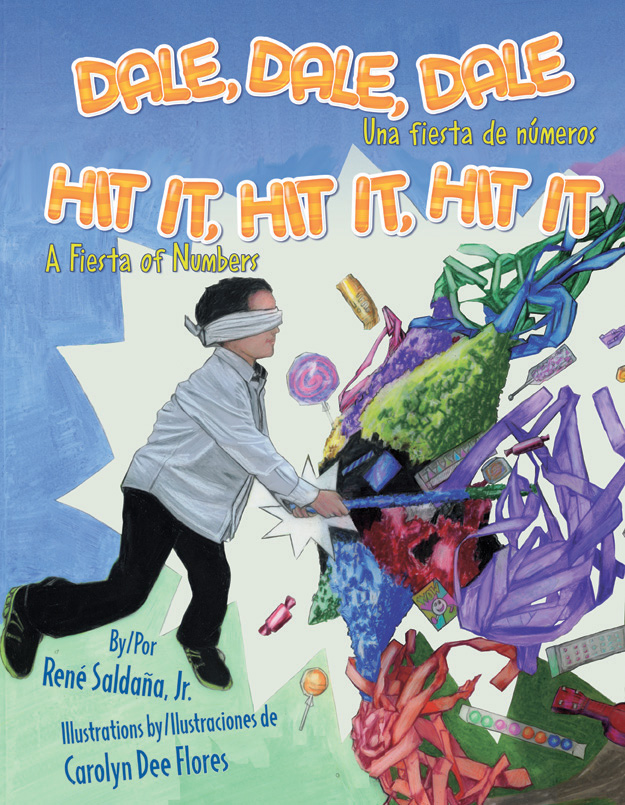
DaleDaleDaleCoverDESCRIPTION FROM THE BOOK (provided by publisher): In this bilingual counting picture book, a young boy counts to twelve in anticipation of his birthday party: one piñata filled with candy; two hours until the party; three tables set for all the guests, etc.

MY TWO CENTS: Using simple text interwoven with a birthday party theme, René Saldaña, Jr. creates a fun bilingual counting book that makes us want to join the party. Carolyn Dee Flores’s illustrations are filled with photorealism and vibrant colors, supporting Saldaña’s words, and they successfully capture the excitement of children’s birthday parties. In what is definitely a welcomed surprise, Dale, Dale, Dale/ Hit it, Hit it, Hit it not only illustrates an adequate counting story, but decides to tell a good tale about sharing and enjoying a special day with your loved ones.

Our young protagonist is Mateo, a boy who anxiously awaits his birthday party and who uses this opportunity to practice counting throughout his special day. From “one piñata filled with candy” to “twelve children ready to swing at the piñata,” readers can count along with Mateo in Spanish and English. The items that the boy chooses to count include party supplies, colorful toys, lucha libre masks, musical instruments, and his own cousins. The picture book doesn’t limit readers to count only Mateo’s choices, but places other elements that can be counted throughout each page.

This bilingual book provides simple sentences in Spanish and English, which early readers, whether in one language or both, can easily follow. Although the translation of some words is problematic for language learners, for example, niños/guests, it isn’t a limitation to learn and practice words in two different languages.

As a picture book, the photorealistic illustrations can be seen by some as a weakness at the moment to capture children’s attention. But Flores plays well with vibrant colors to encourage young readers to focus on the story and stimulate them, not only to count, but also to identify different colors displayed on every page. The educational content of the book will inspire children to count everything around them and will motivate them to be even more excited to have their own birthday party.

TEACHING TIPS: As early readers or as a read aloud, this bilingual picture book works well for children ages 4-6. Parents, caregivers, and librarians can read in Spanish, English, or both, while encouraging young ones to practice their counting skills and color identification. Children can also point out what they like about birthday parties and collaborate to plan their next one. A song is included in the story, which can be useful if you include a piñata in your party.

Teachers can plan learning activities to combine math and language arts. Students can learn new vocabulary words, numbers, colors, and Spanish-English language meaning. Activities that develop memory and concentration can be done with second graders, including sequence of events and pairing numbers with items mentioned in the book.

AUTHOR & ILLUSTRATOR: René Saldaña, Jr. is a Latino young adult and children’s books writer and Language and Literacy professor at Texas Tech University. He holds a B.A. from Bob Jones University, a M.A. from Clemson University, and a Ph.D. in English and Creative Writing from Georgia State University.

He is the author of several books, including his semi-autobiographical novel The Jumping Tree (2001), Finding Our Way: Stories (2003), the Junior Library Guild selection The Whole Sky Full of Stars (2007),  A Good Long Way (2010), the collection of short stories Dancing with the Devil and Other Tales from Beyond/Bailando con el Diablo y otros cuentos del más allá (2012), and the bilingual Mickey Rangel mystery series.

Carolyn Dee Flores, a former computer analyst, is a writer, illustrator, musician, and composer. She attended the International School of Bangkok, Thailand and Naha, Okinawa, Japan, and Trinity University, where she studied Engineering, Philosophy and Art. Flores began her painting career as a muralist and oil painter, before switching over to children’s books illustration.

She has illustrated several other children’s books, including Canta, Rana, Canta/Sing, Froggie, Sing (2013), Peggy Caravantes’s Daughter of Two Nations (2013).

For more information about Dale, Dale, Dale: Una fiesta de números/Hit it, Hit it, Hit it: A fiesta of numbers (2014), visit your local library or bookstore. Also check out worldcat.org, goodreads.com, indiebound.org, and Arte Público Press.


Book Review: Dalia’s Wondrous Hair/El Cabello Maravilloso de Dalia by Laura Lacámara

By Sujei Lugo

18654384DESCRIPTION FROM THE BOOK: A Cuban girl transforms her long and unruly hair into a garden.

MY TWO CENTS: In this bilingual picture book, with a Spanish translation by Gabriela Baeza Ventura, Laura Lacámara brings us a whimsical Caribbean tale of a young Cuban girl and her luxuriant hair. Lacámara’s colorful illustrations express the joyful spirit of the main character and transport us to the sunny, tropical Caribbean.

The story introduces us to Dalia, a young girl who one day wakes up and finds out that her hair has grown straight up and as tall as a Cuban royal palm tree. Many children would panic with such news, but Dalia can’t hold the excitement of her new wondrous hair. She then embarks on a journey to add to her hair different natural elements of a Caribbean tropical island, such as wild tamarind, coontie plant, and violet leaves. Her purpose is to show her mother the different types of “trees” she can recreate using her hair, ending with a beautiful and unique one.

What stands out in this picture book is Lacámara’s ability to portray through her paintings the endearing relationship between Dalia and her mother and their lives in harmony with nature. The expressions on their faces capture the happiness and warmth of a loving mother and daughter bond. Other characters in the book, Señora Dominguez, Señora Soledad and Soledad’s daughters, all play supporting roles to Dalia’s “hairy” journey and to their connection to the natural world. Through this all-women set of characters, we see a growing sense of community and a sympathetic portrayal of peculiar characters we can encounter in a rural neighborhood.

By situating their home in rural Cuba, the author incorporates the Caribbean’s particular flora and fauna into the story. Through beautiful landscapes that fill the book with a graphical sense of the fresh air and natural environment of this tropical island, the book introduces young readers to different components of the natural world: royal palms, sugar cane fields, wild tamarinds, moonflowers, coontie plants, wild violets, caterpillars, birds, fireflies, ponds, and the ocean. Even the characters’ clothing are filled with flowers and leaf patterns, giving us powerful images that convey a reverence to the natural world.

According to a statement on the first page, the publication of Dalia’s Wondrous Hair/El Cabello Maravilloso de Dalia was funded by a grant from the city of Houston through the Houston Arts Alliance and published by Piñata Books, the children’s literature imprint of Arte Público Press. We should acknowledge their efforts, along with other great publishers,  to continuously provide a space for the publication of Latino/a authors and illustrators.

TEACHING TIPS: This bilingual picture book is recommended for children ages 4-7. It works well as a read aloud and for early readers. At home or at the library, librarians, parents, grandparents, family members or guardians can read with their young ones in English, Spanish or both, while teaching new words and identifying different colors, animals, and plants. The author provides a guide to create your own butterfly garden at home, a fun activity for everyone to enjoy.

Language Arts, Science, and Art teachers can create different activities where students can learn new words, identify adjectives mentioned throughout the story, and learn about different types of plants, trees, and animals. The book includes notes of Cuban natural world references (in English and Spanish) that are part of their stories, with a description. Art teachers can use this book to incorporate science to their classrooms. Students can draw, paint, or use different materials to create their own version of Dalia’s hair, using as reference words learned and natural elements of the story. 

AUTHOR: Laura Lacámara is a Cuban-born children’s books author and illustrator. Lacámara holds a Bachelor of Fine Arts in Drawing and Painting from California State University, Long Beach and studied printmaking at Self Help Graphics in East Los Angeles. Her love for writing and illustrating children’s books grew when she signed up for a children’s book illustration class at Otis College of Art and Design in Los Angeles, California.

She is the author of Floating on Mama’s Song/Flotando en la Canción de Mamá (Junior Library Guild Selection, Fall 2010 & Tejas Star Book Award finalist 2011-12) and illustrator of The Runaway Piggy/El Cochinito Fugitivo (winner of 2012 Tejas Star Book Award) and Alicia’s Fruity Drinks/Las Aguas Frescas de Alicia.

Laura Lacámara is an active member of the Society of Children’s Book Writers and Illustrators (SCBWI) and frequently serves as a presenter at conferences, book festivals, and schools. She currently lives in Southern California.

FOR MORE INFORMATION ABOUT Dalia’s Wondrous Hair/El Cabello Maravilloso de Dalia, visit your local library or bookstore. Also check out worldcat.org, indiebound.orggoodreads.comamazon.com, and barnesandnoble.com.