A Rich Year for Art-Related Kid Lit with Latino Flair

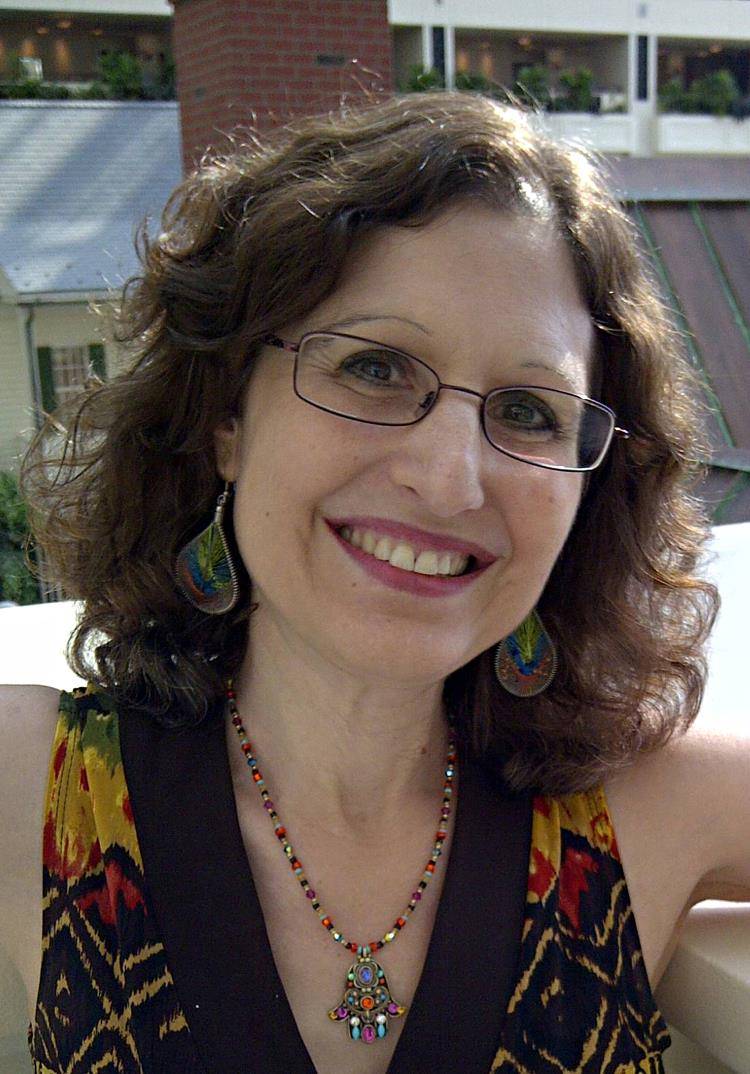
By Sujei Lugo and Lila Quintero Weaver

The year 2014 brought us three outstanding Latino children’s books celebrating art. Each book represents a distinct format: Draw! by Raúl Colón, is a wordless picture book; Viva Frida, by Yuyi Morales, is a poetic tribute to a beloved artist of worldwide importance; and Frida & Diego: Art, Love, Life, by Catherine Reef, is a work of non-fiction geared toward upper-level grades. These releases came in a year already brimming with strong Latino titles in children’s publishing, along with the We Need Diverse Books campaign, which challenges publishers and others in the book industry to question their views and roles regarding literature by and about people of color.

And guess what? Latin@s create art, too, so why shouldn’t they be celebrated in art-related books?

Children’s books that extol visual art serve to influence readers in significant ways. Through them, children can learn to appreciate art’s life-enriching power. They can also begin to see themselves as potential creators of art. Up to a certain age, most children freely produce drawings, collages, finger paintings, and other forms of artistic expression. But as kids reach the middle elementary years, inhibition seems to set in. Often, these kids stop making art because they have begun to see themselves as incapable. In fact, many great artists owe their success to a rediscovery of childlike abandon, to a time when the internal critic wasn’t peering over their shoulder. Also, Latin@ children are exposed to fewer artistic role models from within the community. What if good art books transmitted the opposite message–that anyone, from any culture, can create art? Great Latin@ artists already exist and kids need to become familiar with them. The following books make an ideal way to start delivering that message.
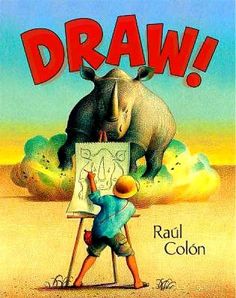
Draw!Draw! by Raúl Colón

In this lovely picture book based on Colón’s childhood, readers are transported through a flight of fancy to golden views of the African savanna, where an adventurous drawing session takes place. Initially, we see a boy drawing in his bedroom. His focus is on animals of the African grasslands. Three pages later, the boy is on the ground, somewhere on the African continent, among his subjects, observing them at close range, and capturing their likenesses with deft pencil strokes. Colón achieves this flight of imagination without the aid of words. The paintings in this book display a tender vintage feel in keeping with much of Colón’s acclaimed work in illustration. In every sense, Colón demonstrates a masterful command. His compositions are striking. He nails the anatomy of both human and wild animal subjects, as well as a wide array of studio techniques. These include the use of expressive, swirling textures and a tawny palette of hues, fitting for the story’s era and setting. This gem of a book landed on quite a few “best of” lists for 2014, including:

New York Times Best Illustrated Books of 2014

NPR Best Books of 2014: Children’s Books

Publishers Weekly Best Children’s Books of 2014: Picture Books

School Library Journal Best Books of 2014: Picture Books

School Library Journal’s Top 10 Latino Books of 2014

For extensive views of interior pages, see this article in SLJ.
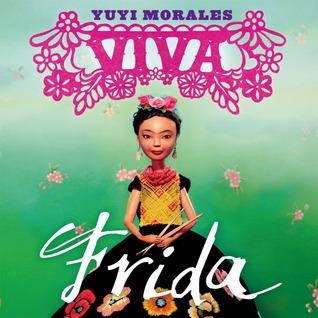
Viva FridaViva Frida, by Yuyi Morales

Viva Frida is Yuyi Morales’s love letter to Frida Kahlo. The depth of Morales’s admiration for the groundbreaking Mexican surrealist painter comes through in every expertly prepared page spread. Morales incorporates acrylic painting, stop-motion puppetry and other three-dimensional elements into a series of dioramas, photographed by her collaborator, Tim O’Meara. The result is eye-popping. Each spread bursts with jewel-like colors and captivating details, including Mexican textiles, bits of jewelry and animal fur. Clay figures representing Frida, her husband, Diego, and their animal friends are central to each diorama. Readers familiar with Kahlo’s work will recognize iconic elements in the injured fawn, the monkey, Frida’s famous eyebrows, her hand-shaped earrings and much more. A simple and brief poetic text in Spanish and English complements each page’s visual design. Viva Frida is a stunner that understandably caught the attention of important list-makers.

NPR Best Books of 2014: Children’s Books

Publishers Weekly Best Children’s Books of 2014: Picture Books

School Library Journal Best Books of 2014: Picture Books

 School Library Journal’s Top 10 Latino Books of 2014

Center for the Study of Multicultural Children’s Literature: Best Multicultural Books of 2014

For interior views, see the book’s official page.
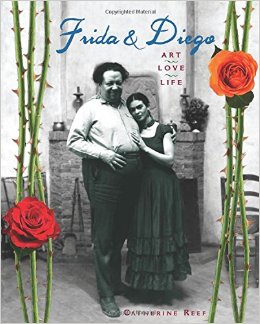
Frida and DiegoFrida & Diego: Art, Love, Life, by Catherine Reef

Frida & Diego: Art, Love, Life, by Catherine Reef, is a complex and satisfying portrayal of two giants of twentieth-century art and the development of their storied careers. The book relies on primary sources and seldom-seen photographs to describe the individual lives and work of each artist, as well as their combined lives. Reef weaves into this dual biography fascinating views of the political and social history of Mexico. Readers learn about Frida Kahlo’s medical odyssey. A childhood diagnosis of polio left her with an atrophied leg. As a young woman, she also suffered a debilitating accident that resulted in many surgeries and long periods of painful convalescence. Reef includes details of the couple’s complicated and often troubled marital life. These are not gratuitous digressions, however, since Frida’s body of work is in many ways a reflection of her physical and emotional suffering. Diego Rivera’s work as a muralist captures the era of upheaval that he lived in and reveals much about his devotion to socialist causes. The book includes behind-the-scenes stories of murals he painted in U.S. cities, which often became entangled in political controversy and resulted in conflict between Rivera and his patrons.

School Library Journal’s Top 10 Latino Books of 2014

Center for the Study of Multicultural Children’s Literature: Best Multicultural Books of 2014

These three books come from different perspectives, but their approaches overlap as they magnify works of art and what it takes to produce them. In his picture book, Raúl Colón uses imagination to portray the skills of a budding artist. Yuyi Morales’s tribute to Kahlo reflects the inner world of a powerfully emotional artist. Catherine Reef’s biography informs the reader of the complexity and suffering that composed Khalo’s internal make-up and that of her marital partner.

TEACHING TIPS

Draw! by Raúl Colón

Picture book, K-4

This picture book can be integrated into art and language-arts curricula. Teachers and librarians can use this book to encourage children to compose or tell their own illustrated stories. Art teachers will find a useful example of sound artistic practice in how Colón closely observes his subjects.

Viva Frida by Yuyi Morales

Picture book, K-3

Bilingual and ESL instructors can incorporate this book into their classroom to teach new vocabulary in English and Spanish. The text is brief and focuses on verbs. Teachers of language arts can employ the book’s model of short poetic sentences to suggest a story. In the art classroom, Viva Frida can inspire the creation of dioramas, costumed puppets and other three-dimensional works.

Frida & Diego: Art, Love, Life by Catherine Reef

Non-fiction, grades 9-12

This book holds rich possibilities as a classroom text for Mexican American studies, art history, and social studies. One of the key lessons is the importance in an artist’s life of historical context. Students of social studies can create a timeline of historical events, paralleled by notable developments in Frida’s and Diego’s life. The book includes a brief selection of reproductions for each artist and a list of resources for further study, which teachers can use as a basis for assignments. Art history classes may want to explore the work of other muralists and female painters of the twentieth century or of Mexican artists throughout the ages.

For further information on the creators, see the following:

An interview with Raul Colon at Illustration Friday

An interview with Catherine Reef at Teenreads

And please don’t miss this spectacular video featuring Yuyi Morales demonstrating the creation of Viva Frida!

In the Studio with Illustrator John Parra

by Lila Quintero Weaver

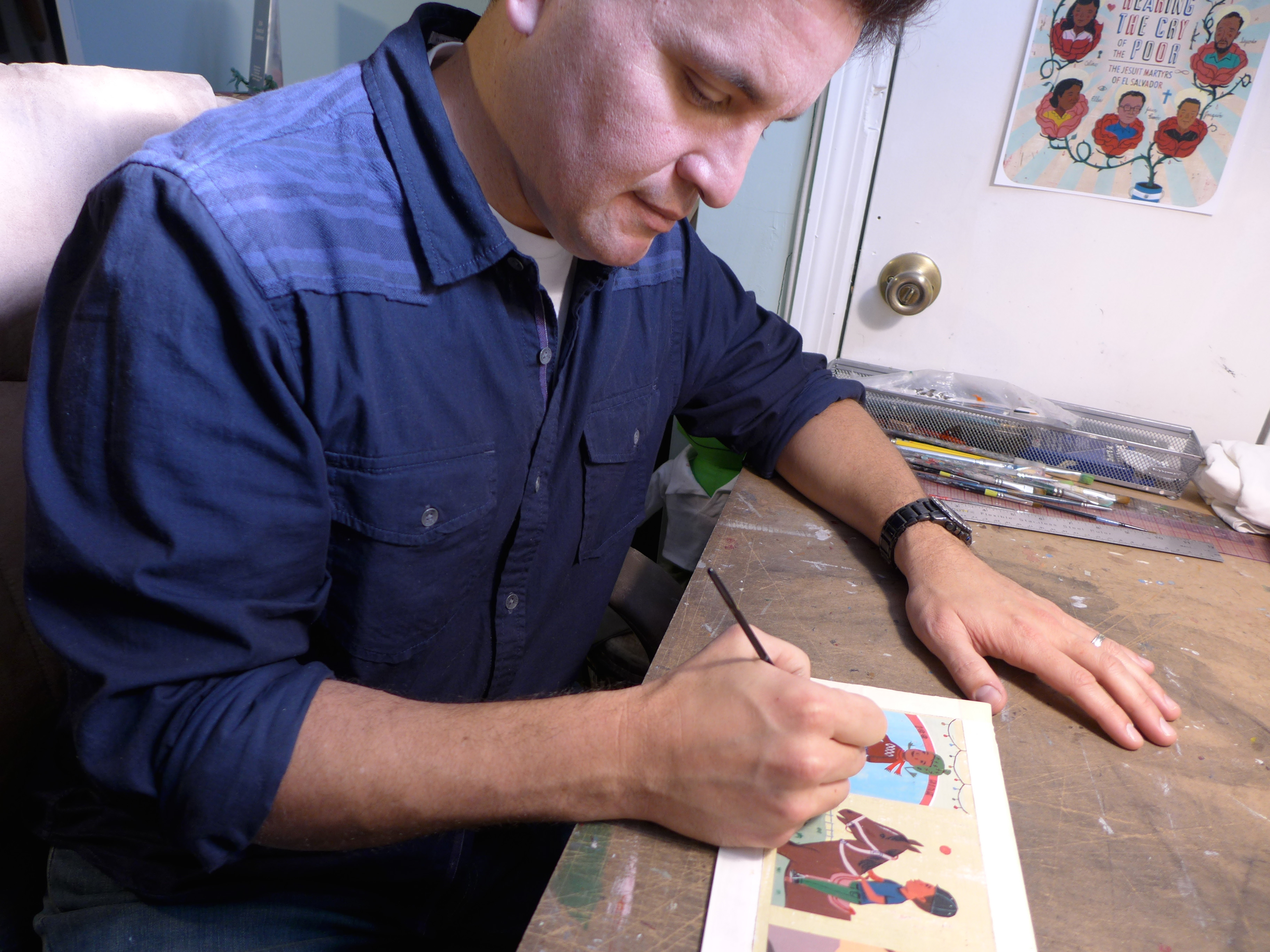
Parra in the studio

John Parra in his studio in Queens, NY. All photos by Caitlin C. Weaver

8-1/2"x11" jacket mech.  Green is a Chile Pepper.Cover

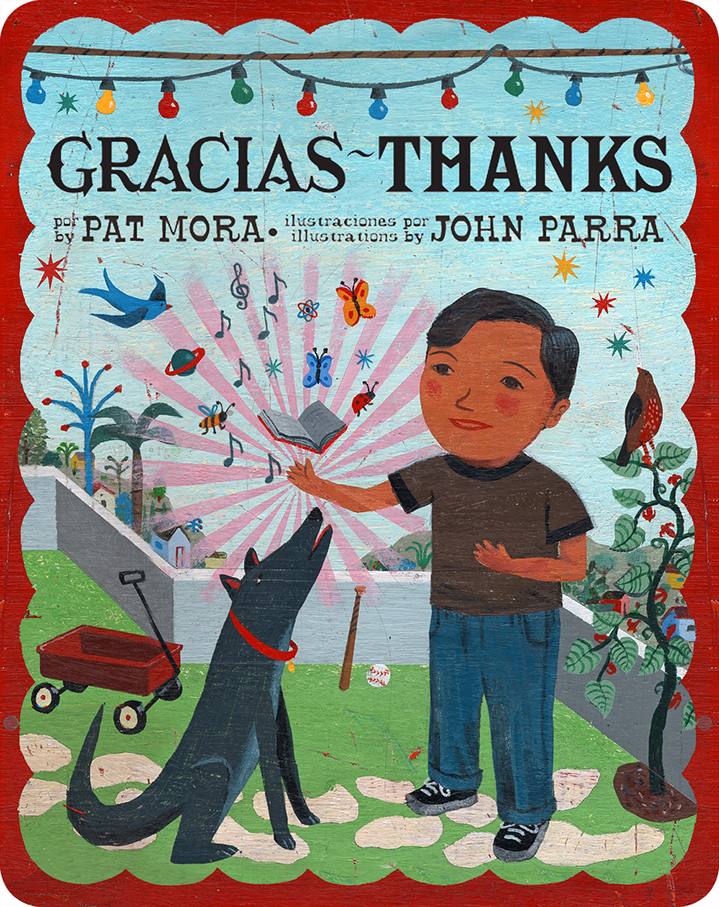
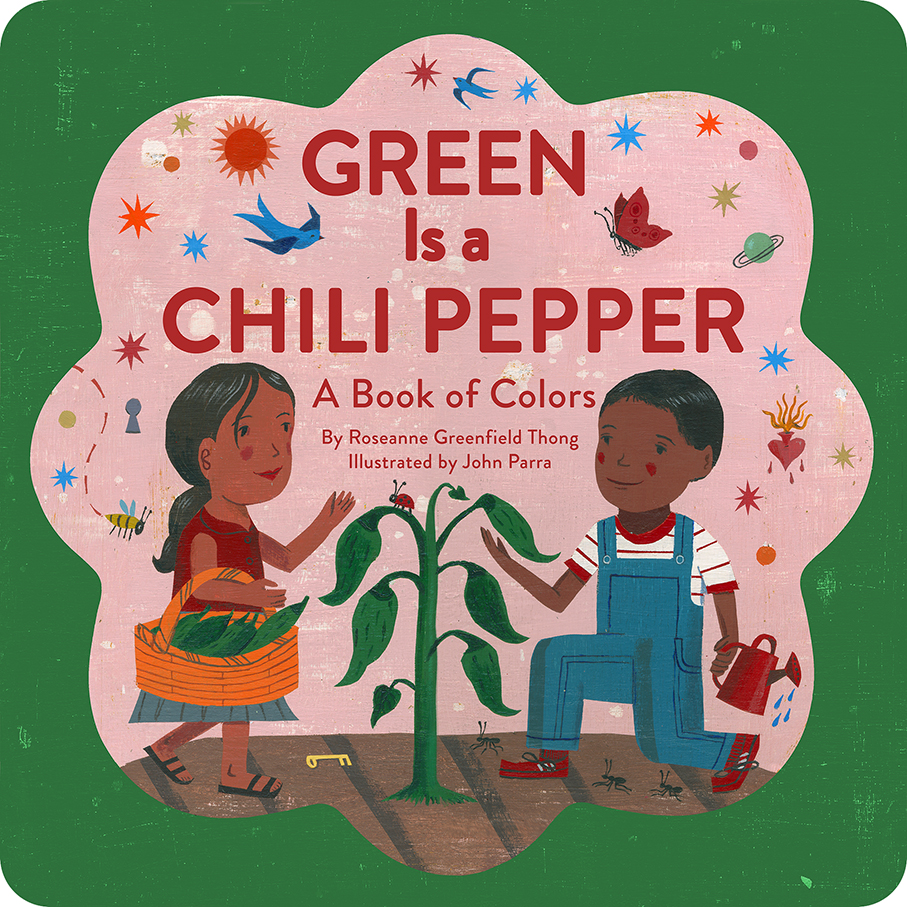
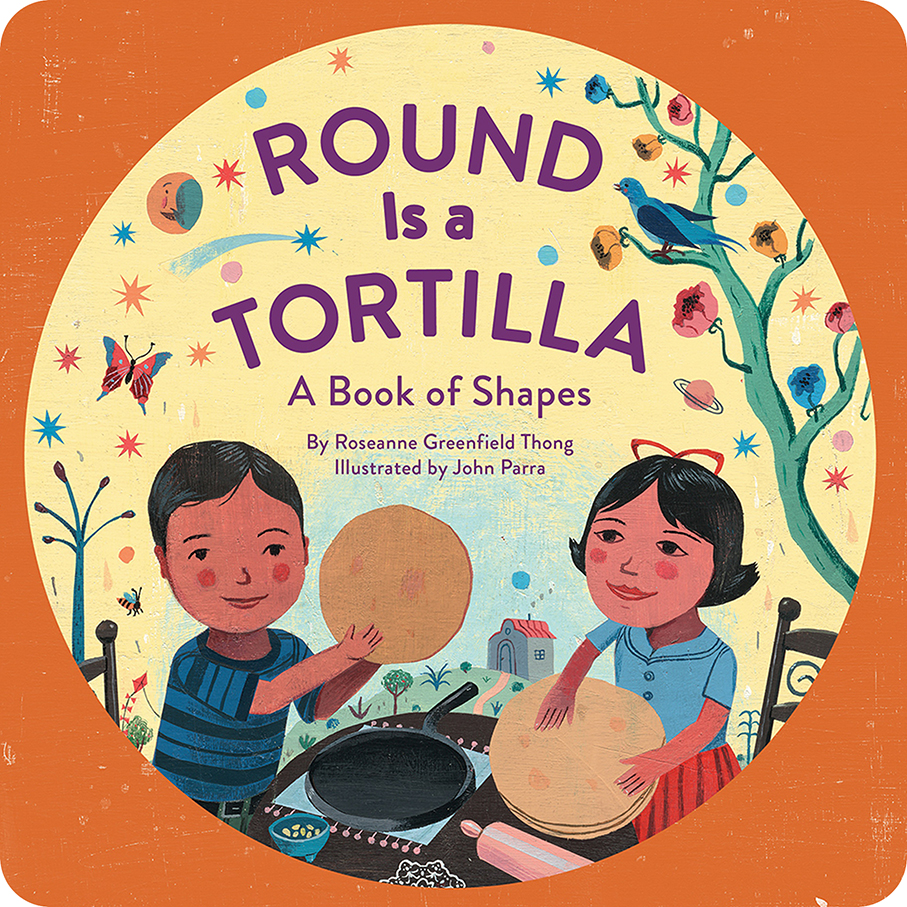
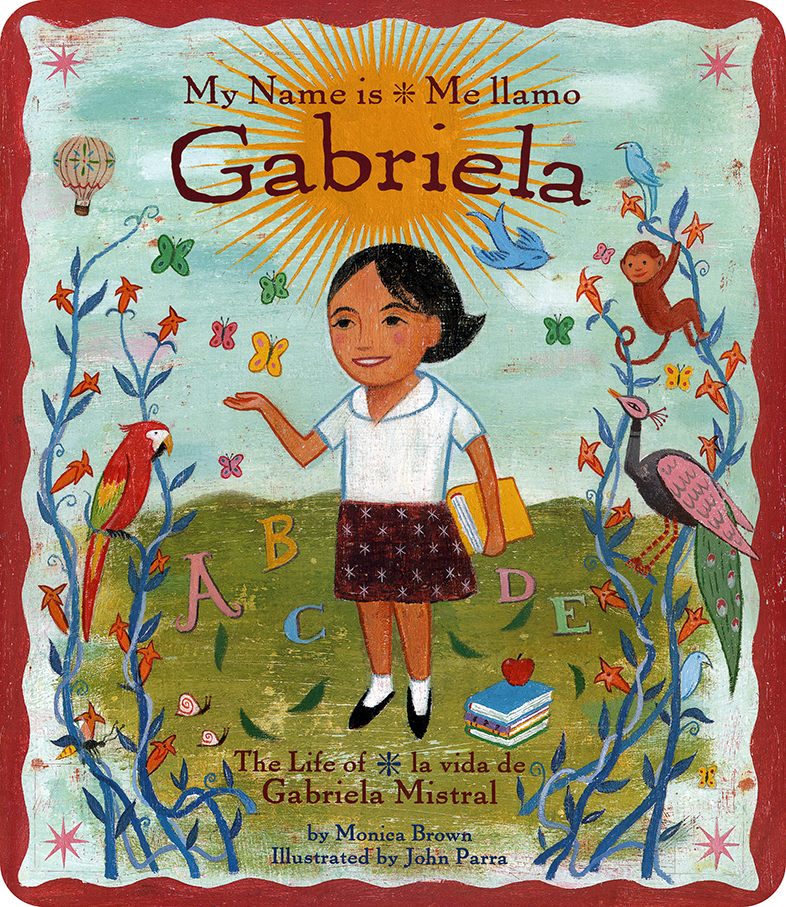
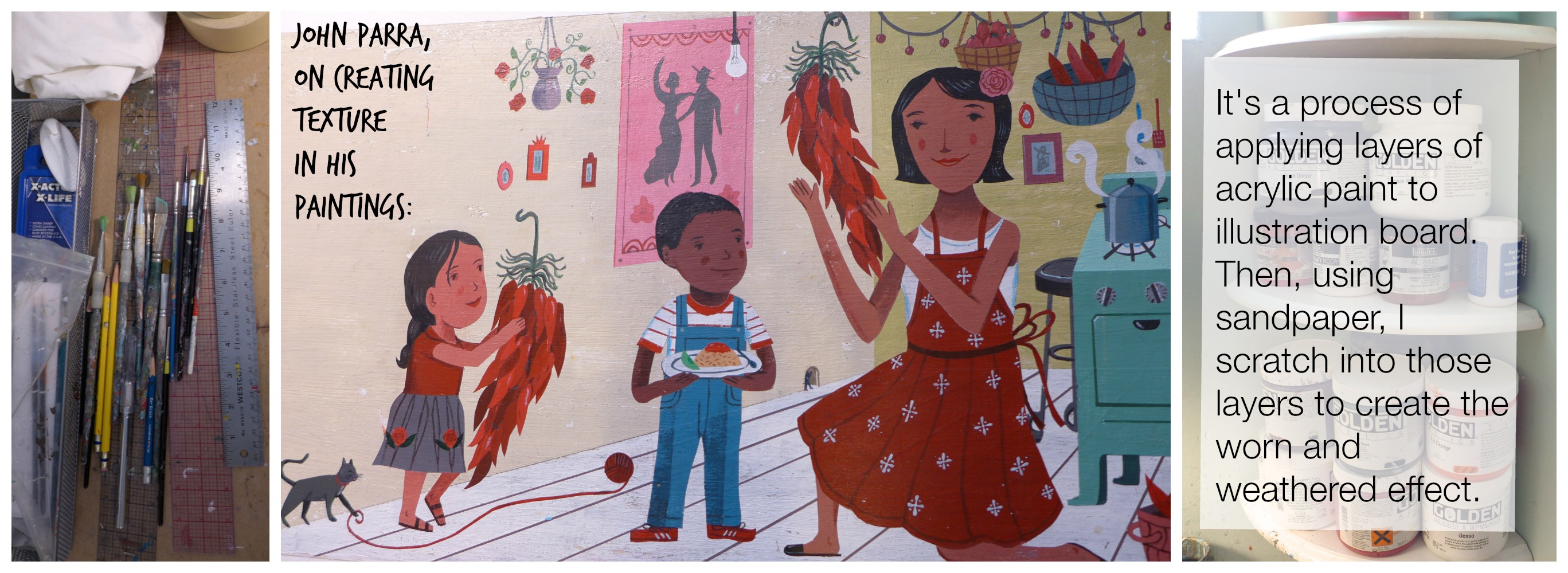
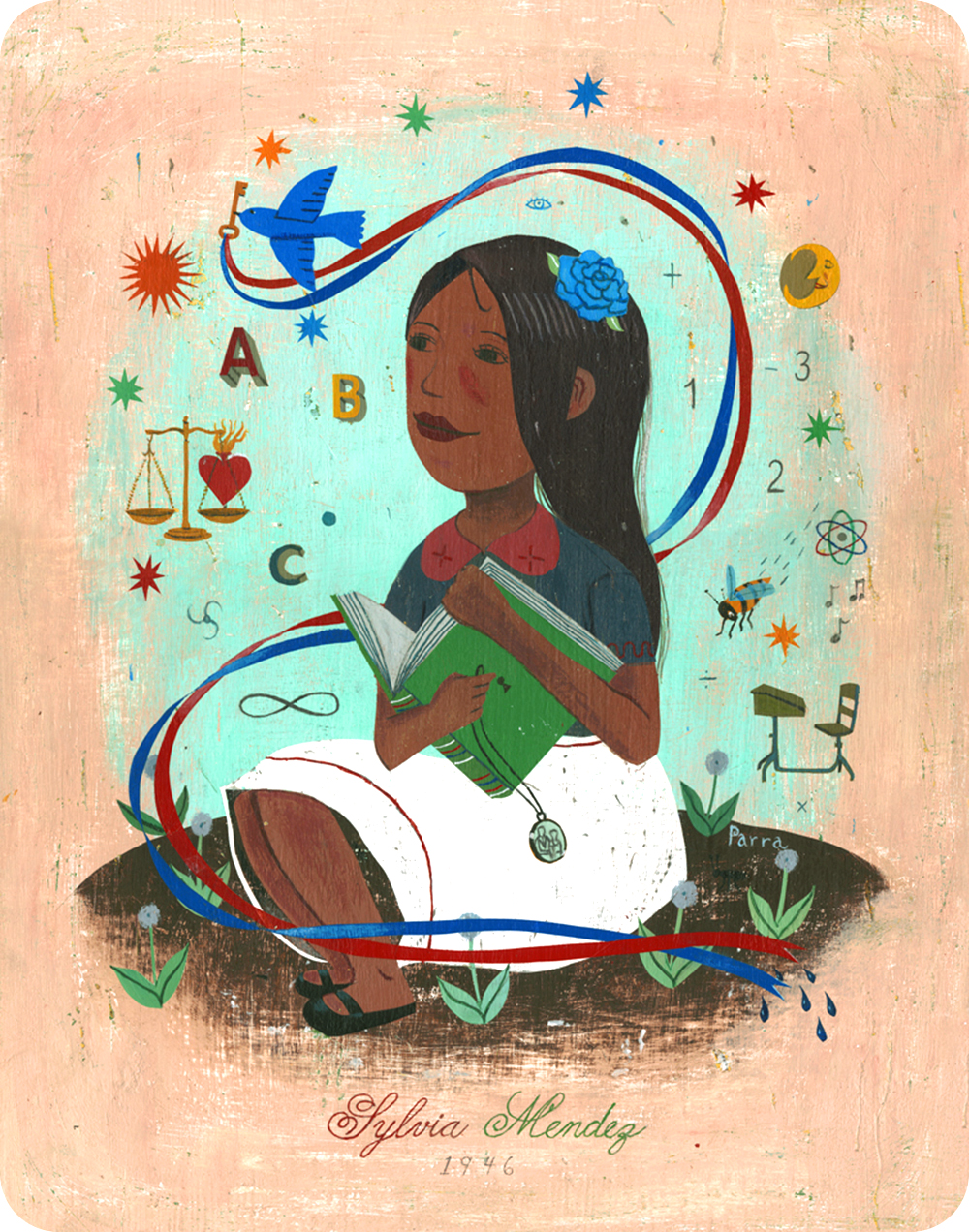
Magic flows from the paintbrushes of John Parra, the award-winning illustrator of a growing number of Latino-themed picture books and other illustration work. Here at Latin@s in Kid Lit, we’re ardent fans of John’s art, drenched as it is in color and rich detail, and affirming in its depiction of positive community and family life within Latino settings. Plus, it’s gorgeous—plain and simple—and we can’t resist wondering what’s behind the magic. John invited us into his studio and we had questions.

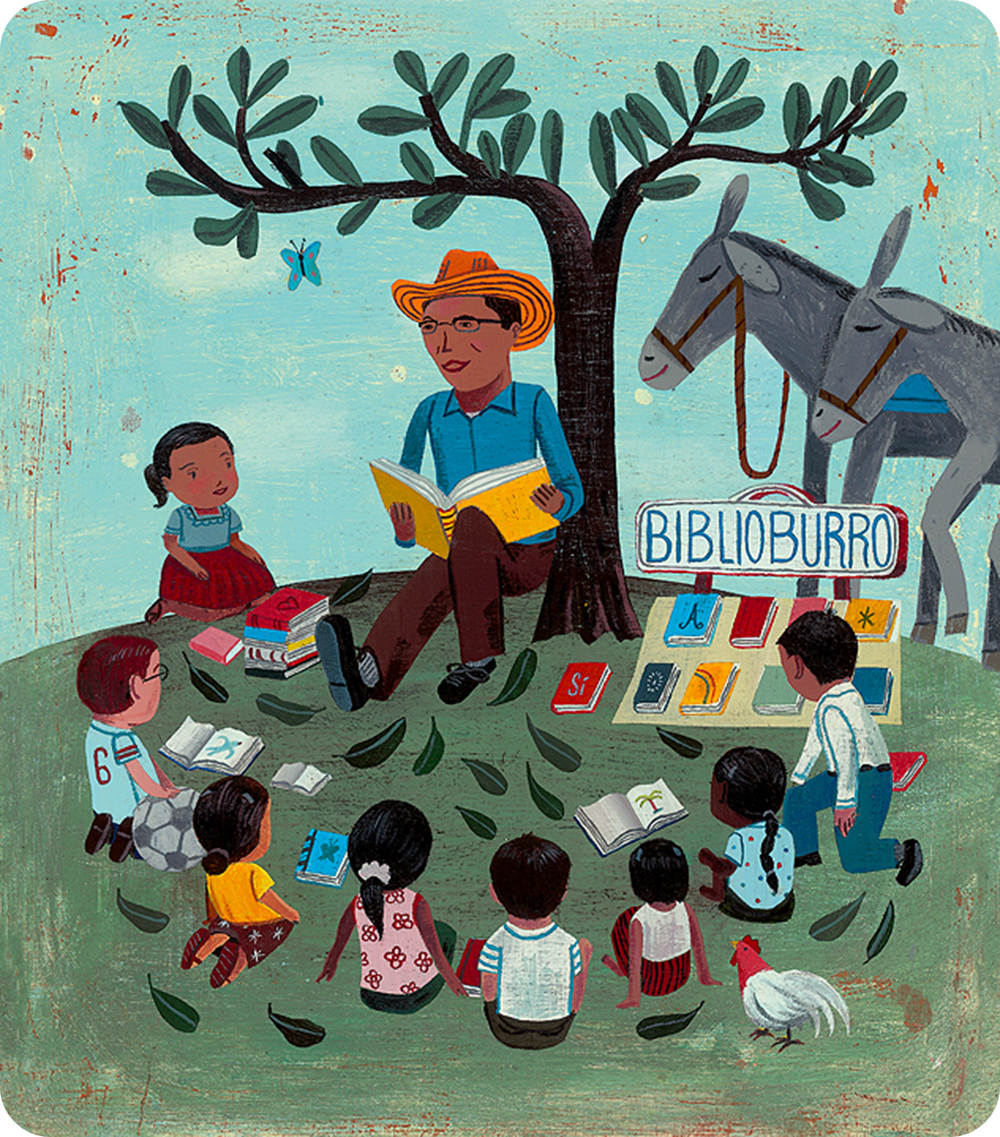
Waiting for the Biblioburro.Cover

Lila: Every children’s book you’ve illustrated bears your unmistakable stamp. Developing a personal style doesn’t happen overnight. What’s the story behind yours? 

John: My art style really came together in my final year of attending art school. I was fortunate early in my art training to have some amazing teachers and mentors who taught me the traditional fine art techniques of realism, perspective, color theory, and composition. During my mid-college years, I began experimenting more with techniques, such as mixed media, collage, and printmaking. These techniques enabled me to open up and develop a more unique and distinctive visual palette and approach in my work. I also began studying different styles of art genres. I fell in love with folk and outsider art. However, I still felt something was missing as far as an emotional connection to the work I was creating. That changed after a conversation I had with a visiting artist to our school named Salomón Huerta. He was a graduate of our school whose work reflected his Hispanic background and culture. Immediately I felt a connection and a light bulb went off in my head that I, too, could infuse my background, culture, and personality into my work. The first project I did was a series of paintings based on El Dia de los Muertos. I was so excited about the project that I just never stopped. As years have gone by, my work has gradually been updated but still holds on to those inspirational roots from that earlier period.

Round is a Tortilla.Cover    My Name is Gabriela.Cover

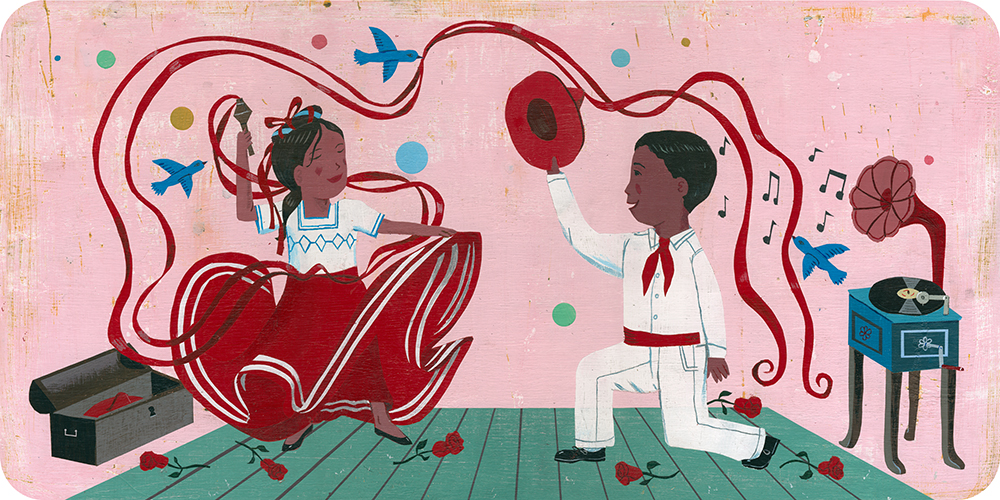
Lila: It must take scads of research to achieve the “rings true” effect of your illustrations. For example, in P is for Piñata, the illustrations cover a wide range of subject matter, from Aztec deities to cacao pods to folkloric dance. What is your research process like? 

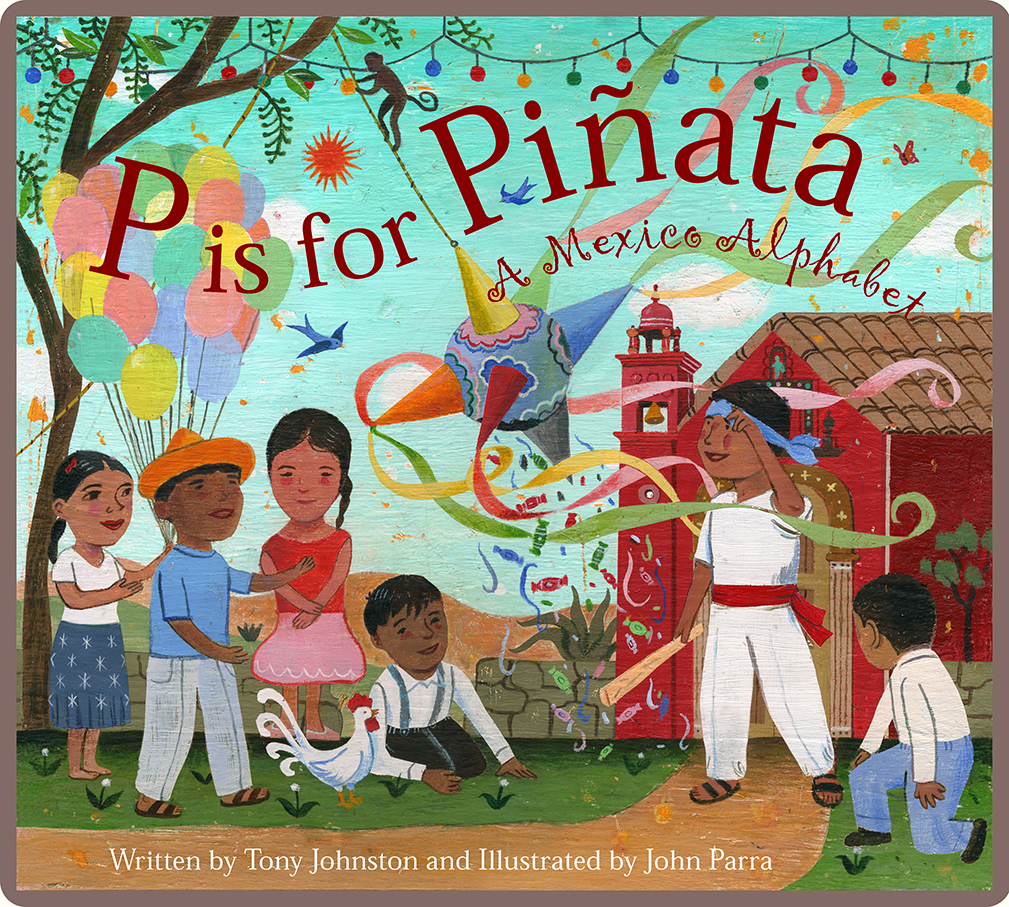
P is for Pinata.CoverJohn: The first step I do when beginning a project is researching for visual photo references, first through the web, then in books in my library. I tend to look for images not just about the main subject but also in its regional geography, architecture, plants, animals, and anything else that could be related and connected to the issue. I then may delve in and read historical and background info through articles and books. Sometimes there is a good documentary on the topic to gain some insight as well. If possible, speaking to someone with firsthand knowledge of the subject can also bring a wealth of ideas. To me it is very important to be true to the source material when working on a project. I feel blessed to be creating this art, but it is a responsibility to accurately portray the content, otherwise you might fall into stereotypes or misleading subject matters.

Folklorico Dance

Lila: The characters in your scenes include a wide range of skin tones, an important acknowledgment of ethnic diversity within Latino populations–kudos to you for that!  

John:. Growing up, I always had a diverse group of family and friends. To me, it seems pretty normal to extend that into my work. I also just enjoy seeing diversity. I think it’s important that all people are represented and as we say, invited to the party.

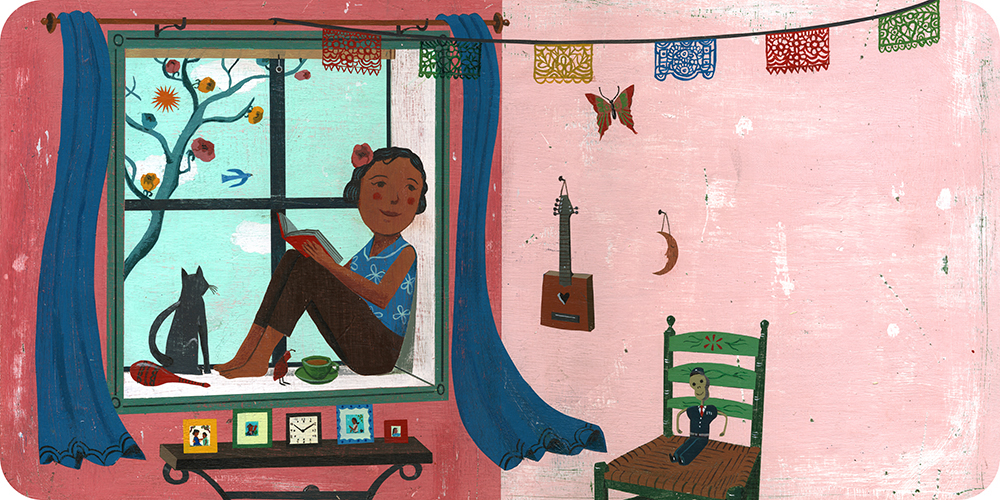
pg5.Ventanas

Lila: One fascinating component to your book illustration is the practice of hiding  “Easter eggs.” Please elaborate! 

John: I often add funny or inside references in my work for my family and friends to find. One example of this is that I always include a self-portrait character, representing myself as a child, in all my books. I will not give away which character it is, it will be up to the viewer now to find and guess.

Skeleton Dance

Lila: The world of publishing needs more highly skilled Latin@ creators. Based on your experience, what advice would you give to a young person considering illustration as a career? 

John: You could probably devote a series of articles to just this one question. Starting out as a new artist can be challenging, with many artistic directions and choices to make. Based on my experience working in the field of freelance illustration, I recommend developing the following four areas.

1. Focus on your artwork and make it as exceptional as possible. It should be a reflection of what you like and have interest in. Create your own voice and style that connects the work to you.

2. Use print promotion and social media to display your work. It is very important to get your art out there in the public. Your artwork should be easily accessible to view online. Blogs, Facebook, and illustration annual competitions can be very helpful for ideas, as well as for showcasing your work. Be consistent, announce successes, and bring awareness to your projects.

3. Include a group of artist friends and colleagues to meet with regularly.  This way, you can discuss ideas and potential projects to work on, perhaps even collaborative ones.

4. The business side: Learn as much as possible about contracts and billing. Whether or not you have someone to represent you, it is always important to read as best you can about what you are getting into.

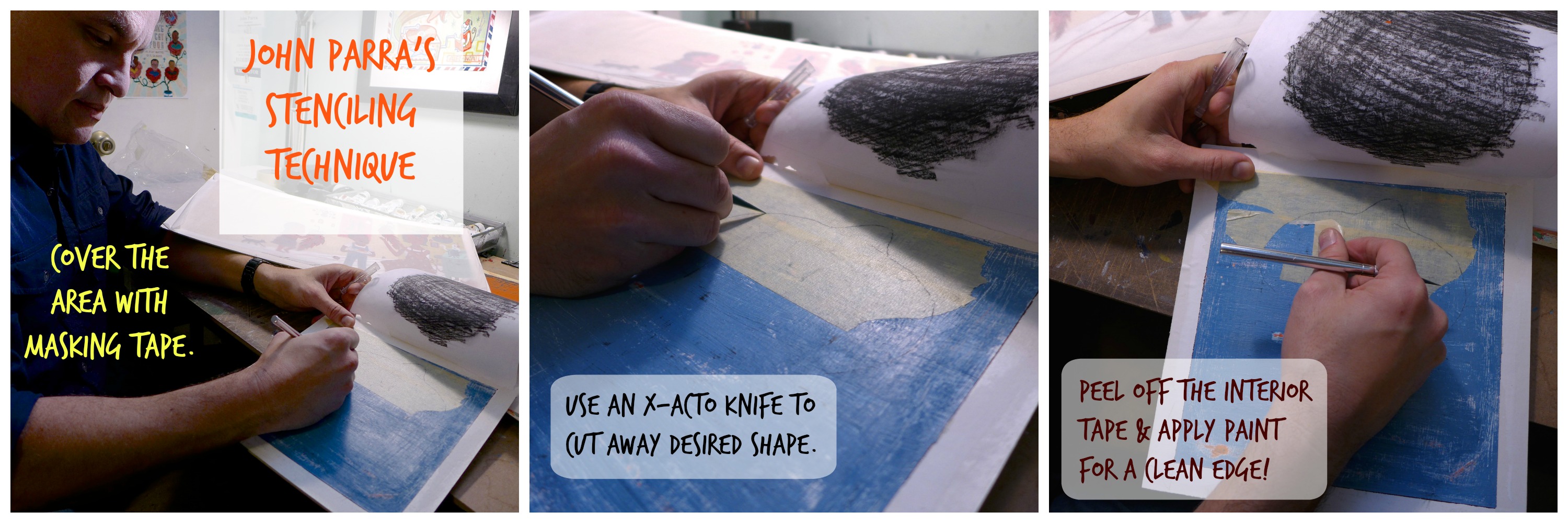
Parra Stenciling Technique


Weathered effect CollageLila: If you could sit down for a long session of shoptalk with one or more illustrators, living or dead, who would they be, and what would you ask?

John: I am a fan of other illustrators as well as anyone else who loves the genre. One of the perks of my job is that I have been able to meet so many other artists whose work I have admired for many years. There are, however, two artists who have passed on whom I would have loved to have sat down and talked shop with. They are Virginia Lee Burton and Maurice Sendak. Both had such an impact on me at an early age, since their books were part of the first illustrations introduced to me. I would love to ask their ideas and intentions when they were working on their most famous stories, plus to see their studio space and how they worked would be wonderfully inspirational.

SylviaMendezVer.2  BiblioBurro.Reading2Kids

Lila: As you know, the diversity movement in children’s publishing picked up significant steam in 2014. What were opportunities like for Latin@ illustrators when you started your career? Have you seen changes? 

John: I believe the We Need Diverse Books initiative and Walter Dean Myers’ essay in the The New York Times came at a turning point in bringing awareness to examining and appreciating the beauty and diversity in multicultural books. When I began as an illustrator eighteen years ago, there did not seem to be as many projects geared to a diverse population. Over the last few years I have seen progress and greater opportunities for artists with varied voices and backgrounds to shine. I look forward to seeing even more done as we continue to expand and celebrate these wonderful talents.

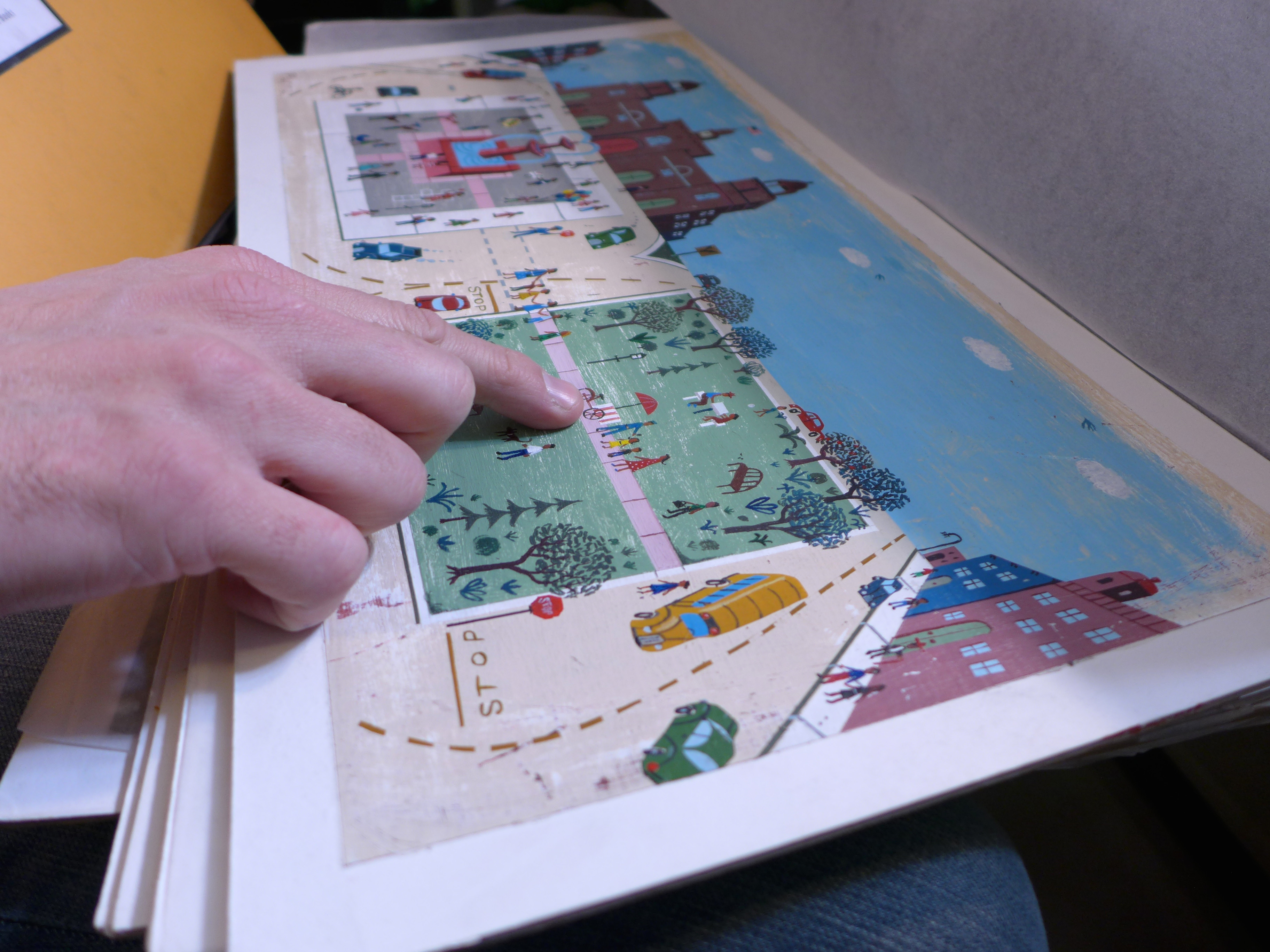
Parra page layout

Printer markings indicate page borders. John often uses a limited palette of hues, individually selected for each book.

Lila: Not long ago, I came upon a museum exhibit of Mexican retablos and ex-votos. Is it my imagination, or does your art contain echoes of this beautiful sub-genre of naive art? 

Yes! I am a big fan of retablos and ex-votos art. These paintings have that wonderful folk-art tradition of weaving in harrowing stories and miraculous tales.  Many of them actually weave text right into the works themselves. A favorite of mine is Mexican retablo artist Alfredo Vilchis. You can find many of his pieces in a great little book entitled: Infinitas Gracias: Contemporary Mexican Votive Painting.

Lila: We’re looking forward to the next John Parra book! What’s in the pipeline? 

Parra sketches

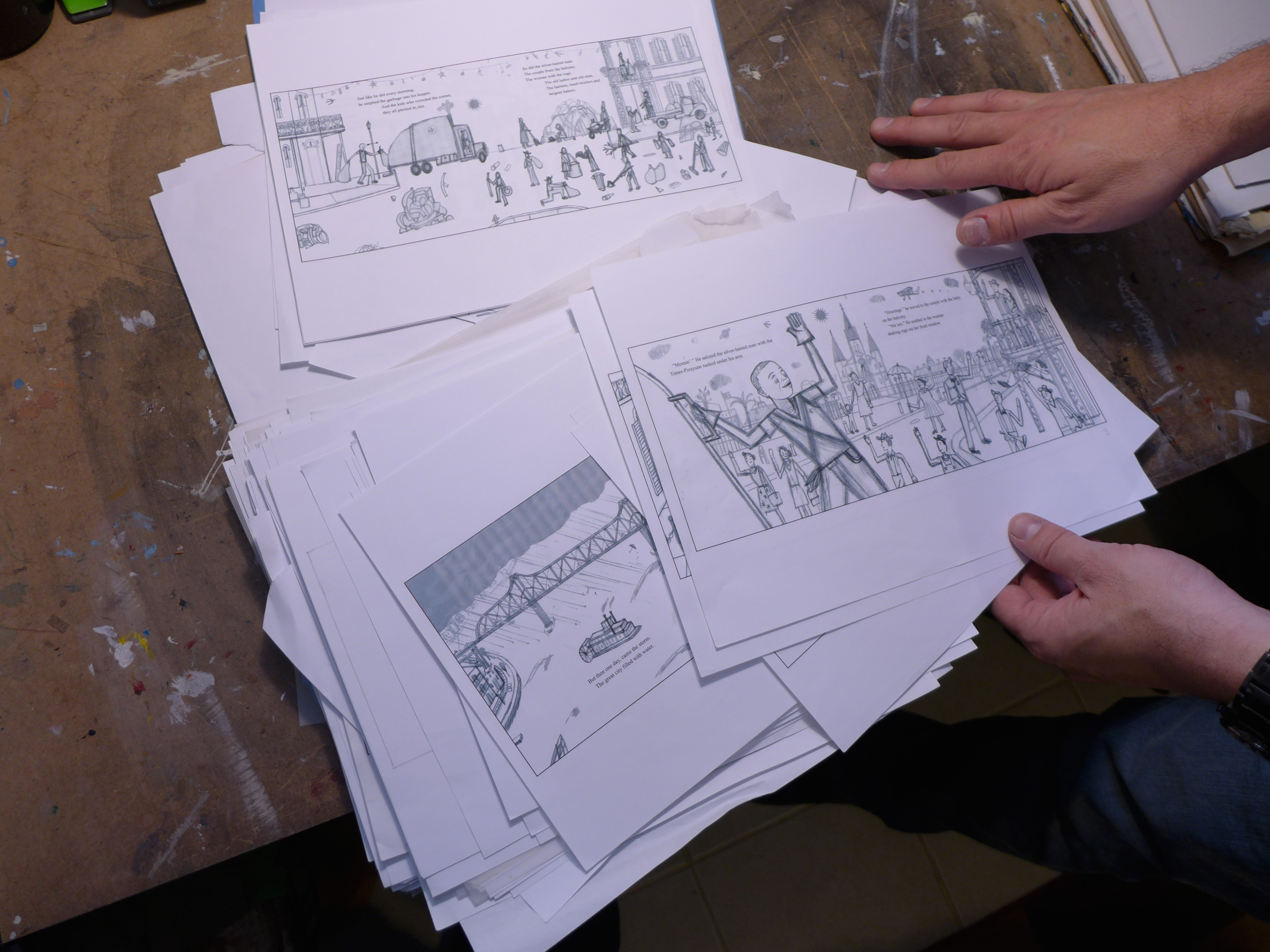
Sketches from John’s newest project., Marvelous Cornelius.

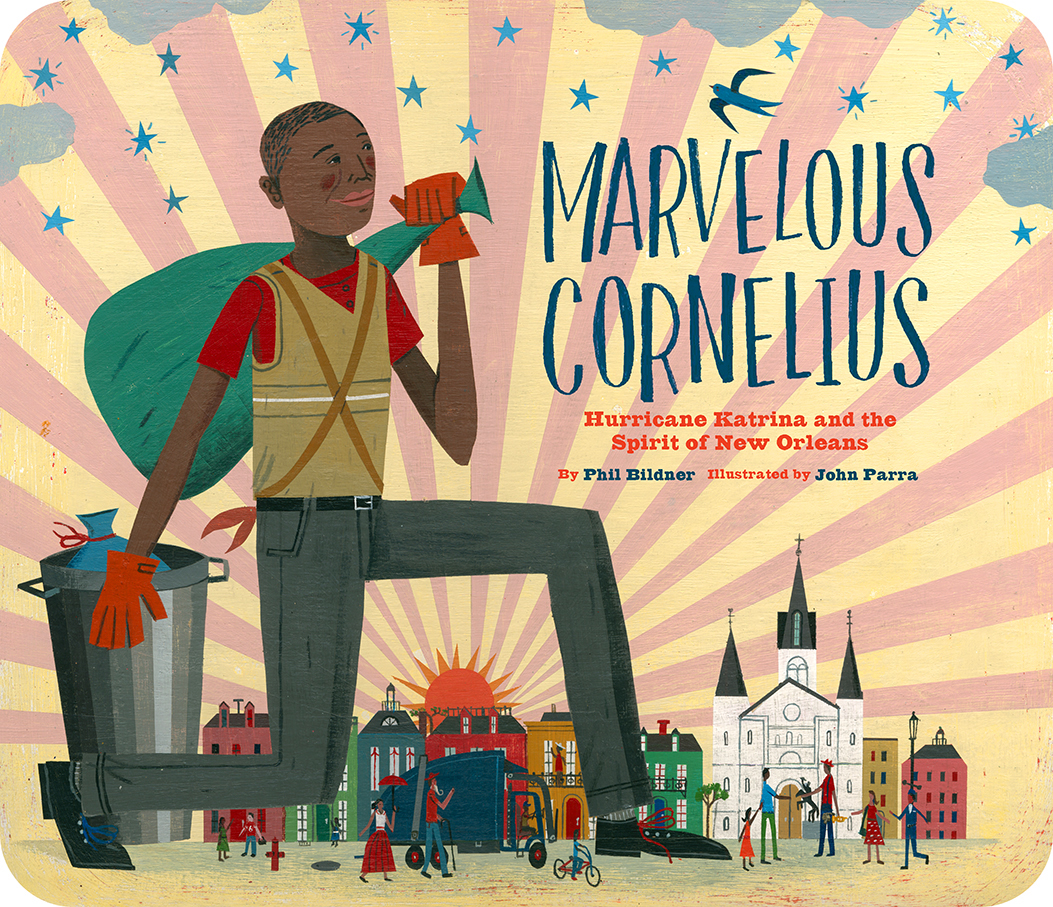
John: I do have a new children’s book that I finished recently coming out this summer (2015) with Chronicle Books. It is titled: Marvelous Cornelius: Hurricane Katrina and the Spirit of New Orleans, written by Phil Bildner. The story is about a real-life gentleman named Cornelius Washington, a sanitation worker in New Orleans. He was considered a local folk hero and known in the neighborhood and the French Quarter by his positive and charismatic personality. As the book develops, the story goes into the events of Hurricane Katrina. We then see the effects on Cornelius and his neighborhood, as he reacts and resolves what to do after the storm.

Marvelous Cornelius 1.Cover[Note: Catch more views from Marvelous Cornelius on the Latin@s in Kid Lit Pinterest boards!]

John: Another exciting event will be an artist presentation scheduled this coming year in June. It will be an artist lecture, workshop, and book signing at The Metropolitan Museum of Art here in New York City. I am really looking forward to it. It is a dream to be a part of such an amazing and historic institution.

As for new work, I am also starting a big new illustration project with details that I hope to share soon.

Parra paintbrushJohn Parra is an acclaimed illustrator, fine artist, designer and educator. His children’s book illustrations have  received many awards, among them, The Golden Kite Award from The Society of Children’s Book Writers and Illustrators; The Pura Belpré Honor Award; The Américas Book Award; Commended Title from CLASP, The International Latino Book Award; The Christopher Award. John grew up in Santa Barbara, California, where his artistic life began. He now resides in Queens, NY, with his wife, Maria. Keep up with John’s work through his website.

Studio views

Views of the studio reveal original pieces, as well as John’s guitars from a band he played with in California. Although he holds on to a few illustrations that he feels especially attached to, many are sold in galleries or through his website. A recent exhibit of originals in Brazil sold out!


A Holiday Sampler of Treasured Memories

By Lila Quintero Weaver

Come in from the cold! Childhood memories bring warmth to almost everything we do during the holidays, no matter how we choose to celebrate. As adults, we’re often in charge of enlivening the season for the children we love, as well as the child still within us. For extra inspiration, we’ve called on some favorite people with connections to Latin@ kid lit.  Here’s the question we posed to Jacqueline Jules, Margarita Engle, Danette Vigilante, Angela Cervantes, and Tracy López:

The holiday season often reflects the wide diversity within the Latin@ community. Would you share a childhood memory of your Hanukkah or Christmas past, or simply a special winter memory?

And here’s how they answered:

JACQUELINE JULES 

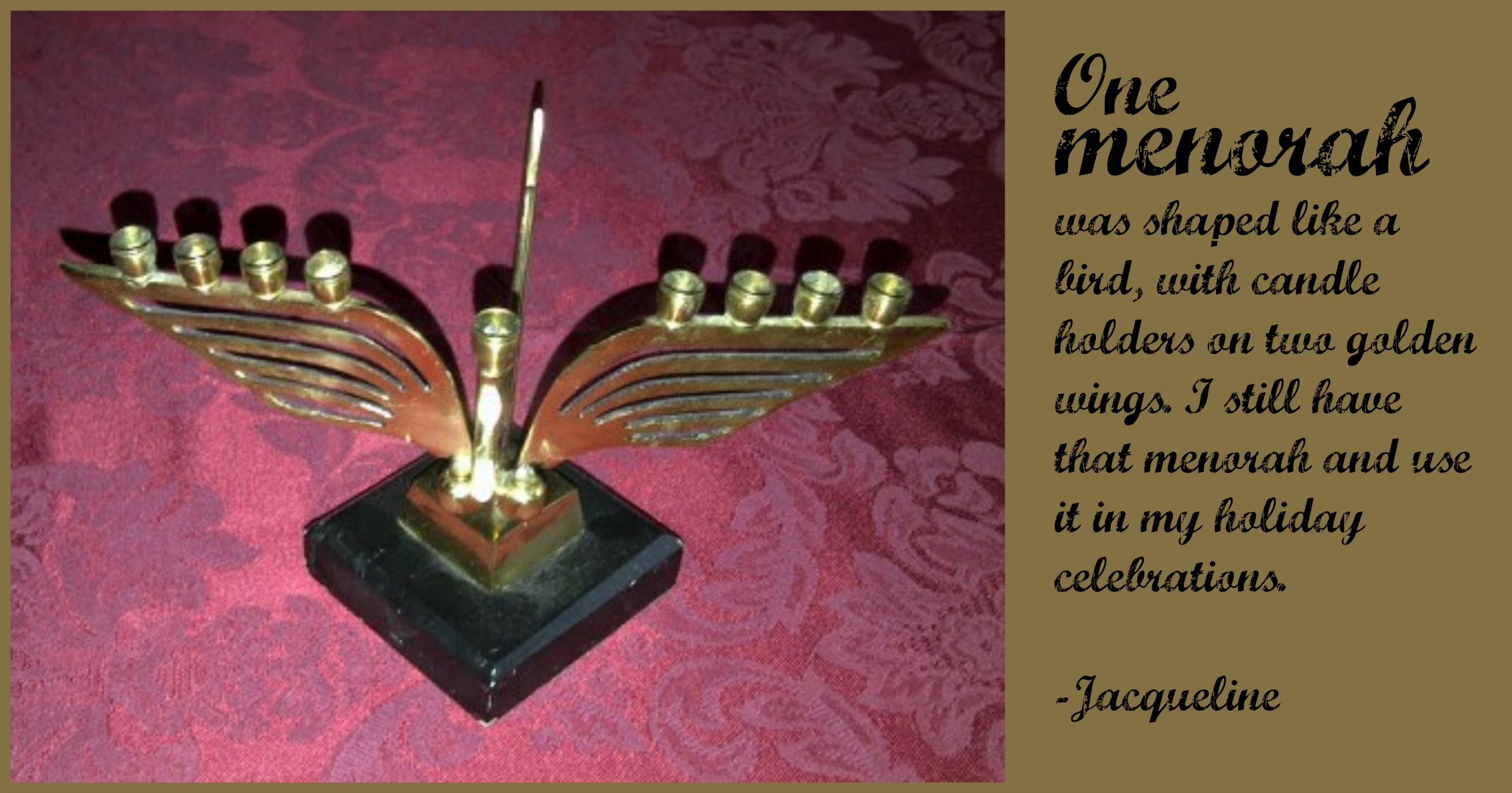
Menorah collage

Hanukkah, like all Jewish holidays, follows a lunar calendar. It generally occurs at least a week (if not two or three) before Christmas. As a child, not having to wait till December 25th  was a great bonus for me. I loved getting presents before everyone else at school. The year I remember most is when I received a mezuzah necklace. A mezuzah contains a parchment with the Sh’ma prayer, the central tenant of the Jewish faith. My parents gave me a small cylindrical pendant on a sterling silver chain. It was a requested gift and my first real piece of jewelry.

Growing up in a small southern town, my religion made me an outsider. But wearing a symbol of my faith was still important to me. It is an integral part of who I am. My parents raised me to treasure my own celebrations. Hanukkah is a minor holiday of far less importance than the Jewish high holidays in the fall or Passover in the spring. We gave gifts in our nuclear family, but we never tried to make it a Jewish equivalent of Christmas. After a first night with a special present, the other nights were less about gifts and more about the candle-lighting ceremony. My parents owned several Hanukkah menorahs and we would light them all, creating a beautiful row of glowing candles on our dining room table. One menorah was shaped like a bird with candle holders on two golden wings. I still have that menorah and use it in my holiday celebrations.

JJulesWebPic

Jacqueline Jules is the award-winning author of more than twenty children’s books, includes the fabulous Zapato Power series. Great news: she’s busy creating even more fun books for kids! At the bottom of this post, check out her Hanukkah-inspired titles.


MARGARITA ENGLE

Pretending w Text

Hermanas

Family time is the greatest gift offered by any holiday, no matter which religion or season is being celebrated. One of my fondest December memories is the way my sister and I always surprised each other with identical gifts, even though our mother took us shopping separately. Adventure stories, animal tales, and nonfiction natural history books were our inevitable choices. One year, we gave each other the same dinosaur identification chart. We saw ourselves as explorers-in-training, our shared interests a preview of lifelong curiosity about the world. Those shared interests became an even more lasting memory than baking cookies, or admiring the colorful cheer of holiday lights.

MargaritaMargarita Engle is the author of many acclaimed young adult and children’s novels, including The Surrender Tree, which received a Newbery Honor. Her newest picture book is Tiny Rabbit’s Big Wish, and more publications are in the works, including a memoir we can’t wait to read! Here’s her latest guest post for this blog.


DANETTE VIGILANTE

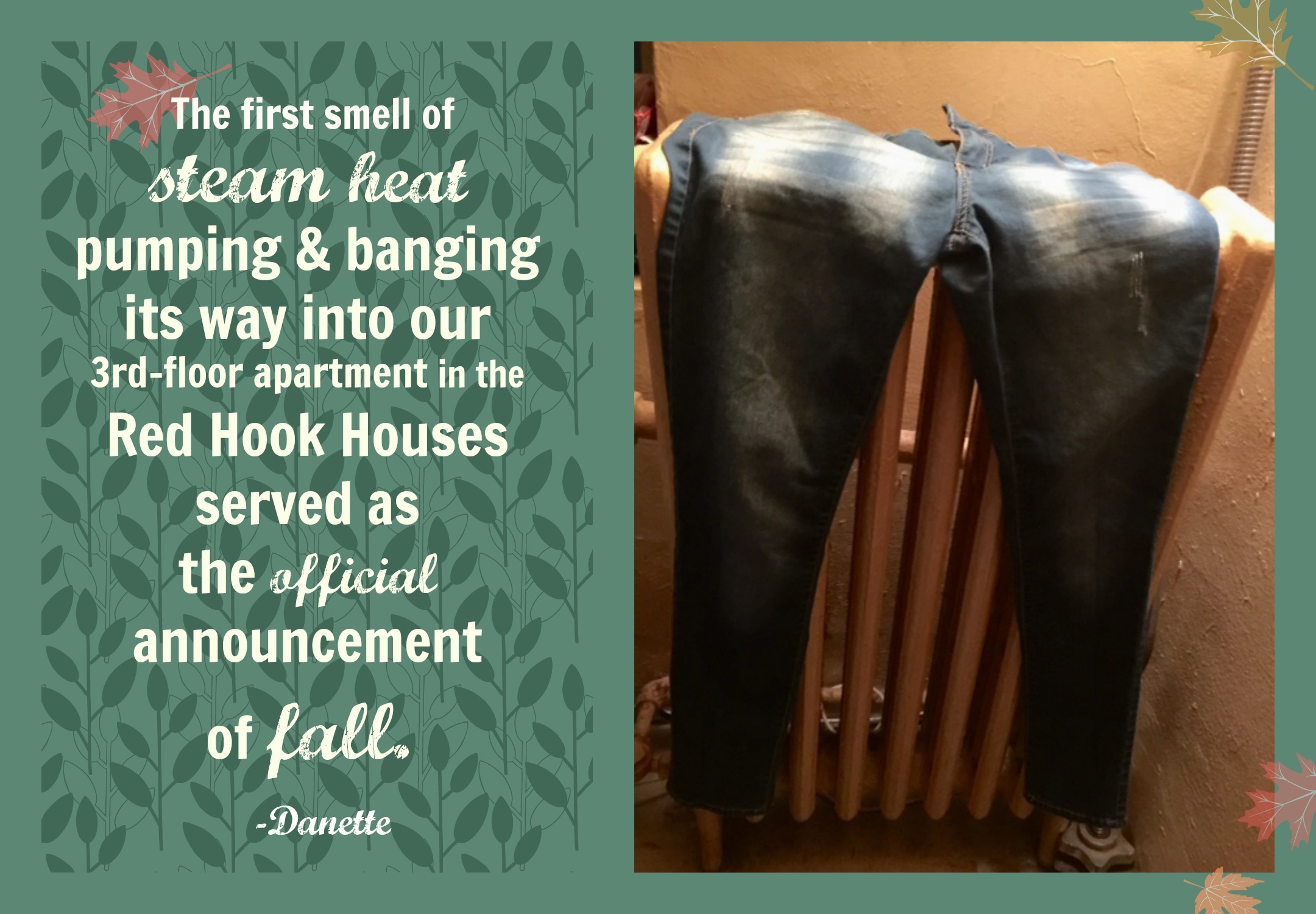
Danette CollageThe first smell of steam heat pumping and banging its way into our third-floor apartment in the Red Hook Houses served as the official announcement of fall.

The radiators in our apartment were used for more than just keeping us warm, though. Mom placed orange skins on top of their steel bones, giving the air a sweet citrus scent. When we needed to dry our winter gear after playing in the snow, to the radiator it all went. When I absolutely had to wear a certain pair of jeans soon after they had been washed, the radiator served as a quick dry cycle. They came off a bit stiff and practically able to stand on their own, but that was a small price to pay. Besides, after a few deep knee bends, all was well. My little sister had her own important use for the radiators— heating up squares of Now and Later candies until they were soft and gooey.

Every year, after the Thanksgiving dishes had been washed and dried, my best friend’s mom did something that excited the kids living in nearby buildings; she’d officially welcome Christmas by decorating her second floor windows in twinkling multicolored lights–a Christmas tree dressed in its best, standing proudly in the center of it all.

A door had been swung open, and one by one, every window from the first through sixth floors, had followed suit. Our drab brick buildings had finally come alive! The magic of the winter season, with its good cheer and best wishes, had entered our hearts, filling us with hope, gratitude and joy.

Danette_Vigilante_head_shot_high_resDanette Vigilante is the award-winning author of two children’s books, The Trouble with Half a Moon and Saving Baby Doe. She lives in New York with her husband, two daughters, two puppies and a cat with an attitude! Don’t miss her inspiring guest post, “Danette Vigilante on the Importance of Dream Seeds.


ANGELA CERVANTES

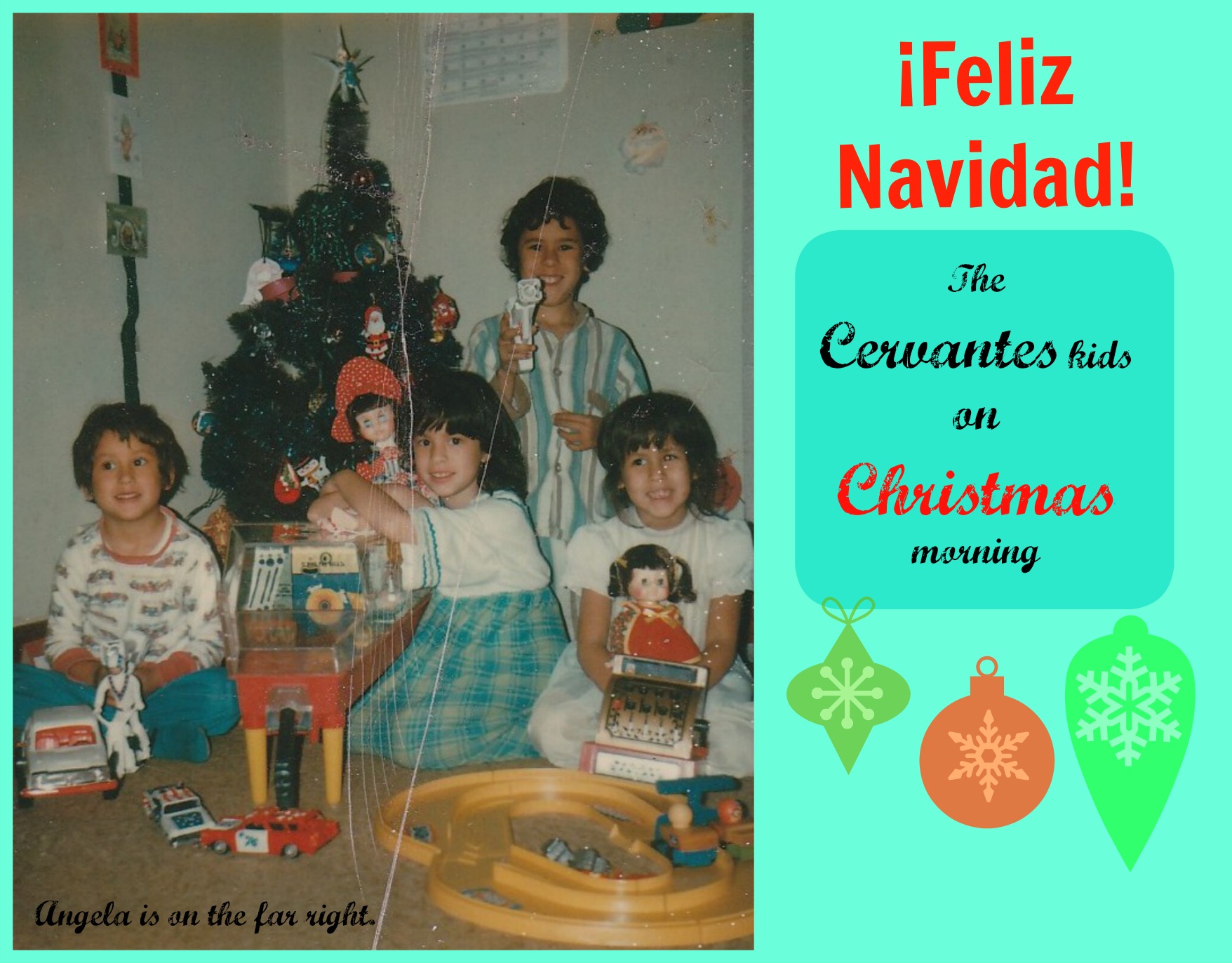
Feliz NavidadOne Christmas, my family was visiting my brother at the army base in Fort Sill. On Christmas Eve, some soldiers were making their way through the neighborhood, house-by-house, Christmas caroling. They came to our doorstep and sang a lively version of Jingle bells and then went on their merry way to the next house. A few minutes later, my sister, Rio, asked me to go out to the car with her to help bring in the rest of the gifts. As we headed to her car, parked curbside, the soldiers were standing in the middle of the street seeming unsure of where to go next. My sister and I grabbed the gifts out of the trunk and when we turned around, the soldiers were standing in front of us. They started singing “Joy to the World.” We couldn’t believe it.

 It was a real serenata!
When they finished, Rio gave me this look and I knew what we had to do. We put our gifts down. At Rio’s count of three we belted out, “Feliz Navidad” with as much glorious Jose Feliciano-ness we could muster. Rio snapped her fingers and shook her hips. I pretended that I had maracas and shimmied around. The soldiers sang along and bopped their heads. “I want to wish you a Merry Christmas from the bottom of my heart.” When we finished, one of the soldiers said, “That was cool. No one has sung back to us the entire night.”

What can I say? Leave it to the Cervantes girls to keep it real on Christmas Eve!

Angela CervantesAngela Cervantes is an award-winning author whose debut novel, Gaby, Lost and Found, has been named Best Youth Chapter book by the International Latino Book Awards and a Bank Street College of Education’s Best Books of 2014. Angela’s second novel, a spin-off of Gaby, Lost and Found, will be released by Scholastic Press in 2016.  Read about what inspired Angela to write Gaby in this Latin@s in Kid Lit interview.  


TRACY LÓPEZ

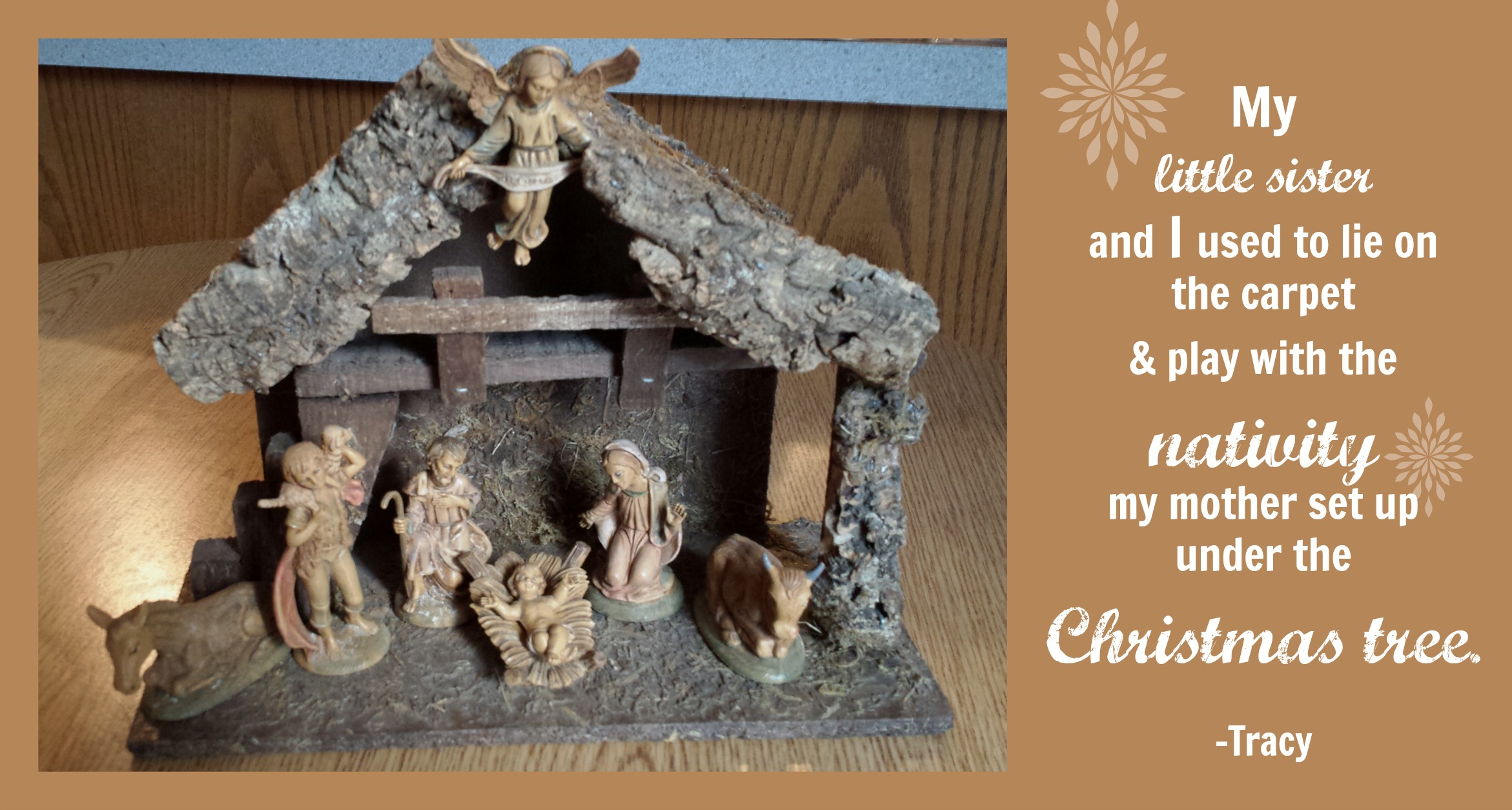
Tracy's NativityOne of my favorite childhood memories is when my little sister and I used to lie on the carpet and play with the nativity my mother set up under the Christmas tree. It was a typical, simple nativity with a moss-covered manger made of wood and plastic figures representing Joseph, Mary, baby Jesus, the angel, a shepherd with a lamb hefted onto his shoulders, and a few barnyard animals. The nativity scene was actually a gift to my mother from my father, who grew up in a Jewish home; my parents say he won it on a radio show when I was really little. That same nativity is still put on display each Christmas at my parents’ house. Although I’m an adult with two teenage sons, I’m always tempted to play with the little figures when I see it set up, which horrifies my husband, Carlos. He’s Salvadoran and in El Salvador the nativity (or “nacimiento”) is much more spectacular than my mother’s humble display. A Salvadoran nativity can take up an entire room and features entire villages of people, but kids are definitely not allowed to play with it!

Tracy LopezTracy López is a freelance writer, blogger and novelist. Her work has appeared in Fox News Latino, Mamiverse, SpanglishBaby and many other print and online publications. She is Owner/Editor-in-Chief of the influential blog Latinaish.com, and is a member of the team of We Need Diverse Books.


HOLIDAY BOOKSHELVES

We wouldn’t be doing our cheerful duty if we didn’t top off this glorious stroll down memory lane with book recommendations related to the season. Here’s a round-up of titles we think you and your young readers will relish this winter holiday.

Happy Hanukkah Lights    Christmas Makes me Think

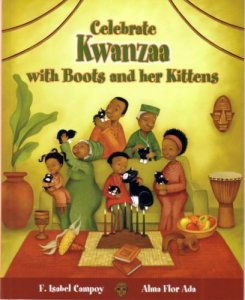
HanukkahZiz    Kwanzaa with Boots

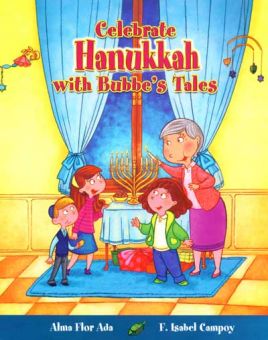
Celebrate Hanukkah    Twas Nochebuena

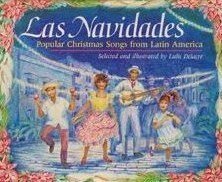
Piñata in a Pine tree    Las Navidades

Seven Candles for Kwanzaa    Green Christmas

And for older readers:

Las Christmas


HAPPY HOLIDAYS TO ALL! WE’LL SEE YOU IN 2015!


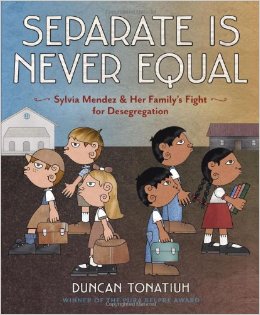
Book Review: Separate is Never Equal: Sylvia Mendez and Her Family’s Fight for Desegregation by Duncan Tonatiuh

Reviewed by Lila Quintero Weaver

Separate is Never Equal 2

DESCRIPTION OF THE BOOK: When her family moved to the town of Westminster, California, young Sylvia Mendez was excited about enrolling in her neighborhood school. But she and her brothers were turned away and told they had to attend the Mexican school instead. Sylvia could not understand why—she was an American citizen who spoke perfect English. Why were the children of Mexican families forced to attend a separate school? Unable to get a satisfactory answer from the school board, the Mendez family decided to take matters into their own hands and organize a lawsuit.

In the end, the Mendez family’s efforts helped bring an end to segregated schooling in California in 1947, seven years before the landmark Supreme Court ruling in Brown v. Board of Education ended segregation in schools across America.

Using his signature illustration style and incorporating his interviews with Sylvia Mendez, as well as information from court files and news accounts, Duncan Tonatiuh tells the inspiring story of the Mendez family’s fight for justice and equality.

MY TWO CENTS: Kudos to Duncan Tonatiuh for shining a bright spotlight on a consequential, but often overlooked chapter of American civil rights, and bringing this true story of Latinos fighting for racial justice to young readers. The book features Tonatiuh’s trademark, award-winning illustration and his retelling of the facts.

In the mid-1940s, when the action takes place, Sylvia Mendez is nine years old. She’s the daughter of Gonzalo Mendez, a Mexican-born, naturalized citizen of the United States, and his wife, Felicitas, from Puerto Rico. When the Mendez family moves from Santa Ana, California, to a farming community in Orange County, Sylvia and her brothers are not permitted to enroll in the neighborhood school and are instead sent to a school designated for Mexicans, which is farther from home. Unlike the white children’s school, it’s dirty, crowded and lacks a playground. The students eat lunch outdoors next to a fly-infested cow pasture. To top it off, the teachers seem indifferent, as if Mexican children weren’t worth the bother.

The Mendez family launches a campaign to demand equal education for their children. Sylvia’s father first pursues answers from officials all the way up the line to the board of education, but no one offers a credible explanation. The common refrain is “that is how it is done.” Mr. Mendez organizes members of the Mexican community and hires a lawyer to challenge the discriminatory practices in court. Young Sylvia is in the courtroom during the proceedings, where she hears statements by a school official about the supposedly lice-ridden, inferior nature of Mexicans. It takes two court cases to settle the outcome. The judge’s final ruling states that “public education must be open to all children by unified school association regardless of lineage.”

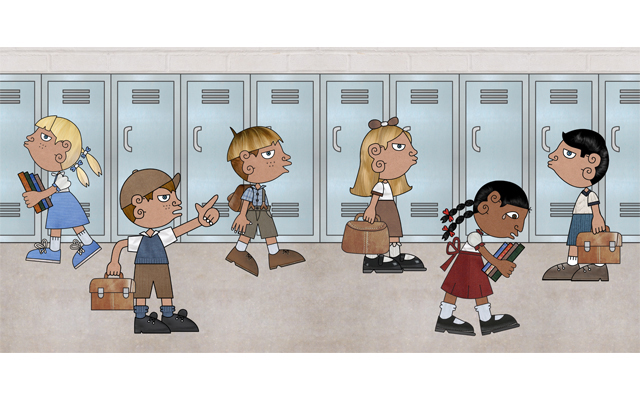
After Sylvia’s parents successfully face down California’s version of Jim Crow laws, she enrolls in the neighborhood school, shattering longstanding color barriers. In the corresponding page spread, a white boy tells Sylvia, “You don’t belong here,” and Sylvia is shown with a bowed head and a tear sliding down her cheek. Reminded by her mother of the long fight they undertook to win her right to equal schooling, Sylvia perseveres, proving herself as steely as her parents. In the closing pages, she and other brown-skinned children are shown side-by-side with white classmates in the school playground.

Separate is Never Equal spread

Tonatiuh’s account highlights the exemplary character of Mr. and Mrs. Mendez. Every movement for justice has its heroes and pioneers, and the Mendez family richly deserves that level of recognition. Taking up the fight involved considerable personal risk. They used their life savings to kickstart the legal fund. Eventually, they received wider support. Leading the charge took Mr. Mendez away from the farm for long stretches, leaving Mrs. Mendez to perform farming tasks that her husband normally would have handled. As the story shows, many Mexican families in the community declined to join the lawsuit, for fear of economic retribution. “No queremos problemas,” they said.

The California campaign for educational equality, spearheaded by the Mendez case, ultimately led to the 1954 ruling on Brown v. Board of Education. The victory illuminated by Separate is Never Equal belongs in a clear line of prominent milestones of American civil rights. How fortunate that someone with Tonatiuh’s skill has brought it out of the shadows.

TEACHING RESOURCES: Beyond the importance of the story, Tonatiuh’s groundbreaking illustrations deserve readers’ attention. His drawings marry childlike innocence with characteristics of ancient Mixtec art. (See my review of Pancho Rabbit and the Coyote: A Migrant’s Tale for a fuller discussion of his style.) In Separate is Never Equal, the illustrations take on the added dimension of historical details from the 20th century. Teachers may want to provide students with photographs from the era to demonstrate how carefully Tonatiuh researched and reproduced clothing, hairstyles, automobile models, and other authenticating markers of the 1940s.

As is generally the case with nonfiction picture books, younger readers will likely need adult guidance to understand sections of the story that deal with legal proceedings and other points of the Mendez’s battle.

This book presents powerful opportunities for teaching empathy and strengthening awareness of the pain that racism inflicts. One scene shows a public swimming pool with a sign stating, “No Dogs or Mexicans Allowed.” Mexican children look longingly through the fence at the white children frolicking in the pool. Teachers can pose discussion questions such as, “Imagine yourself on both sides of the fence. How would you feel in either situation?” Consider comparing Sylvia Mendez’s experiences with those of Ruby Bridges, the young African American girl who integrated New Orleans schools in 1960.

A section in the back of the book includes an author’s note, a glossary, a bibliography and explanatory details about methodology. Much of Tonatiuh’s research came from court documents and extensive interviews with Sylvia Mendez. Glossary entries include a handful of Spanish phrases used in the book and historical terms that round out the context. One example is the origin of “separate but equal,” a phrase plucked from the 1896 ruling by the U.S. Supreme Court in the Plessy v. Ferguson case, which laid the foundation for decades of Jim Crow laws.

In 2010, Sylvia Mendez received the Presidential Medal of Freedom. She is interviewed on this video, which highlights points of the story told in the book and shows photographs of her as a child and of the schools in question.

Duncan Tonatiuh

Duncan Tonatiuh  was born and raised in Mexico. He studied art in the United States. His picture book Pancho Rabbit and The Coyote: A Migrant’s Tale won the 2014 Tomás Rivera Mexican American children’s book award, and two honors for text and illustration from the Pura Belpré Award. Read more about Duncan on his official website.

Guest Post: ¡Qué Vivan los Niños Luchadores!

Todos

All images from Niño Wrestles the World come courtesy of Macmillan Children’s Publishing Group.

By Lettycia Terrones

On a bright, 108º F. Las Vegas afternoon, inside the cavernous decadence of Caesars Palace, audience members attending the 2014 Pura Belpré Award Celebración were treated to a gem of a speech by this year’s Pura Belpré Illustrator Award winner, Yuyi Morales. Recognized for her outstanding book, Niño Wrestles the World, Yuyi’s acceptance speech affirmed the resilient strength of children and their power of imagination. Her words served as a reminder to all educators of the important charge we have to provide our children with stories that accurately portray their worlds and strengths.

Since 1996, the Pura Belpré Award has annually recognized Latin@ writers and illustrators for excellence in children’s literature that “best portrays, affirms, and celebrates the Latino cultural experience.” This year’s winner for illustration, Niño Wrestles the World, does just this by capturing –through story, rhythm, and images— the intangible ingredients that come together to form a uniquely Chicano-Latino flavor that any child growing up in East Los Angeles or El Paso will immediately recognize.

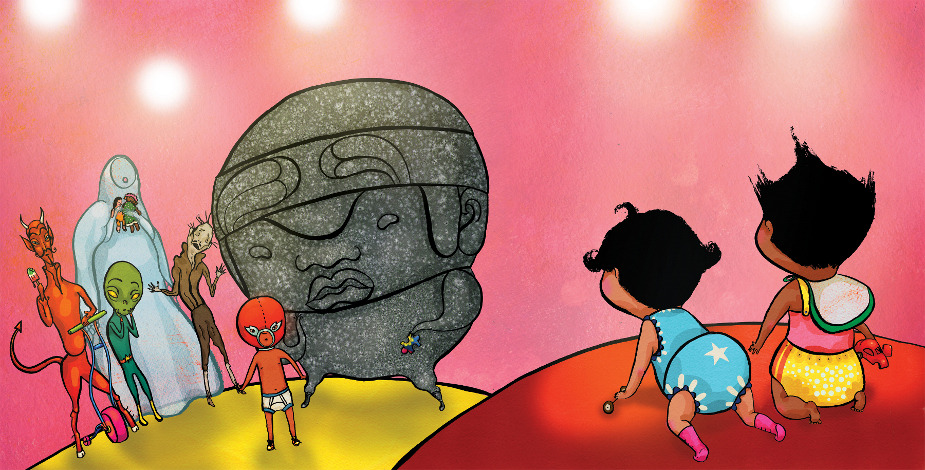
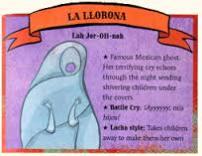
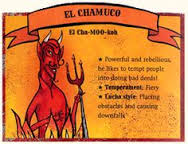
LloronaCardChamucoCardWhat are these ingredients? La Llorna. El Chamuco. El Extraterrestre. La Cabeza Olmeca. Las Momias. These are the protagonists that star in countless cuentos told and re-told in Mexican and Chicano families. Yuyi presents a dynamic cuento of a boy-hero in a wrestling mask, un niño luchador, who through wit, humor, ganas, and family teamwork, outsmarts these terrifying figures of Mexican and Chicano cultural mythology. As Yuyi reminded us in her acceptance speech, children’s imaginative capacity is an empowering tool that enables them to confront life situations with positive resilience. In addition to her prepared remarks, Yuyi described her own imaginative process as a child, where she was able to transform the often scary and mysterious cultural myths of La Llorona and El Chamuco into figures she could contend with and, perhaps most importantly, learn to play with.
This transformative power demonstrates the enormous agency children have to make meaning in the world. It depicts what Dr. Tara Yosso points to in her seminal work on cultural wealth and social capital, which she calls Community Cultural Wealth. Community Cultural Wealth lists specific assets practiced and nurtured in communities of color, which serve as forms of resistance to the myriad social oppressions marginalized people contended with daily. Emerging from the cultural knowledge passed down in families and communities, these assets include “aspirational, navigational, social, linguistic, familial and resistant capital.”

NinoVChamuco
Yuyi’s book exemplifies Community Cultural Wealth at work. Its text and illustration display the wealth of linguistic storytelling traditions of cuentos handed down in our families. It also serves as a meta-narrative of resistance through its prominent use of Mexican and Chicano cultural images. Yuyi’s narrative and illustration authentically capture how, for instance, the myth of La Llorona is in continuous transformation as she is imagined by our children today. Instead of becoming clichéd tropes of Mexican and Chicano culture, El Chamuco, El Extraterrestre, La Cabeza Olmeca, and Las Momias, are represented authentically as living and changing stories. This truly is a marker of Yuyi’s outstanding mastery of the picture book. She brings to the world of children’s literature works that defy cultural stereotypes, and that champion children as creative, imaginative meaning-makers.

Photo by Lettycia Terrones, 2014

Photo by Lettycia Terrones, 2014

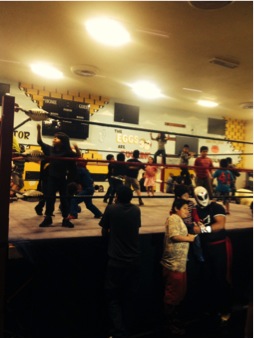
I thought a lot about the impact of Yuyi’s Niño Wrestles the World when I attended a Lucha Libre Night at the East Los Angeles Community Youth Center last spring. The family-run event brought in masked luchadores from Tijuana and Los Angeles to battle it out in the recreation center’s well-worn boxing ring. At the halftime marker, the ring became open for the many kids in attendance to frolic with abandon and take photos with the night’s Lucha Libre heroes. I thought about how for many children living in underserved communities, Yuyi’s story of the boy-hero, the niño luchador, is an actual and accurate depiction of their lives. I wondered how many of the kids in attendance that night had been exposed to Niño Wrestles the World in their classroom or public library. I wondered how this exposure would strengthen their sense of belonging and reflect back to them their self-efficacy.

Educators should remember the characters brought to life in Yuyi’s picture book are still very much alive today in the imaginations of Latino children. They are stories that form an essential cultural fabric of what it means to be Mexican and/or Chicano. Whether we call our people first-generation, second-generation, or if we are from generations that preceded the Treaty of Guadalupe, or are present-day refugee generations embarking on perilous journeys, climbing atop trains and traversing deserts, to seek our families and a promise of a better future in the United States. These stories are ours. They form an American story.

References

Pura Belpré Award

http://www.ala.org/alsc/awardsgrants/bookmedia/belpremedal

Yosso*, T. J. (2005). Whose culture has capital? A critical race theory discussion of community cultural wealth. Race Ethnicity and Education, 8(1), 69-91.

Yuyi Morales, Illustrator Award Acceptance Speech, page 4 http://www.ala.org/alsc/sites/ala.org.alsc/files/content/awardsgrants/bookmedia/belpre-14.pdf

let2

Lettycia Terrones, M.L.I.S., serves as the Education Librarian at the Pollak Library at California State University, Fullerton. Her research interests are in Chicana/o children’s literature and critical literacy. Lettycia is an American Library Association Spectrum Scholar and a member of REFORMA: The National Association to Promote Library & Information Services to Latinos and the Spanish Speaking.

Robert Trujillo’s Successful Kickstarter Campaign for Furqan’s First Flat Top

By Robert Trujillo

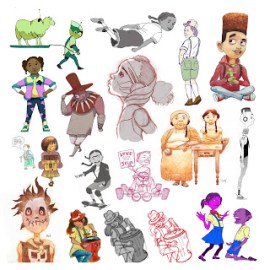
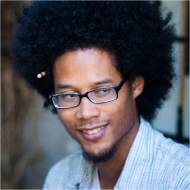
Spot paintingPeace Latin@s in Kid Lit readers! My name is Robert Trujillo and I’m an illustrator/author from Oakland, California. I am a part of a growing movement of independent children’s book creators here in the Bay Area, and it is an honor to be a contributor to this blog (I am a reader as well!). In this post, I am going to talk about my experience crowd funding my first children’s book and why creating the story is so important to me.
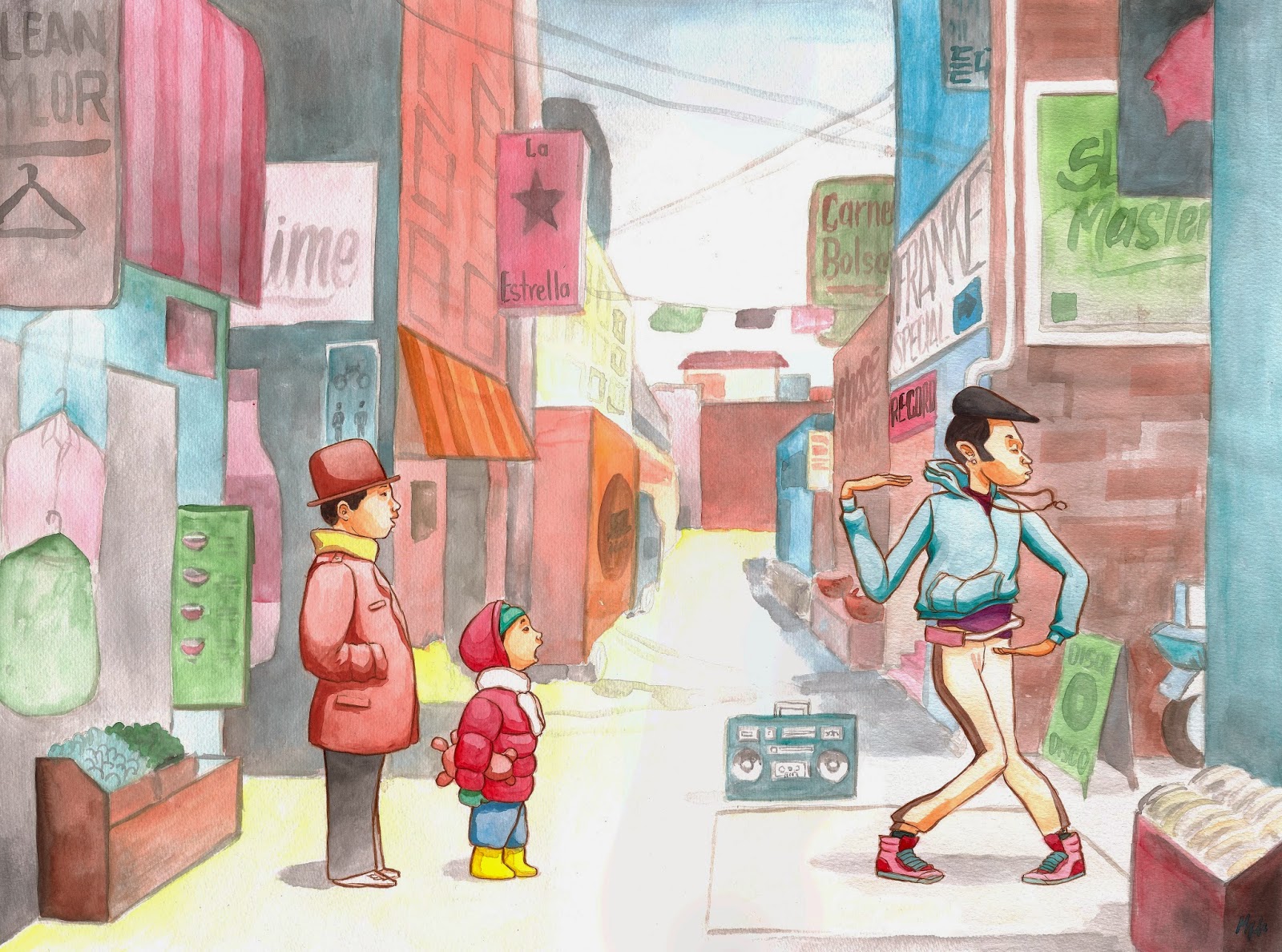
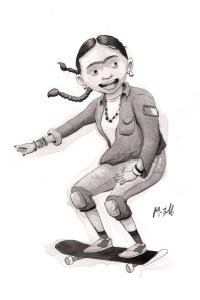
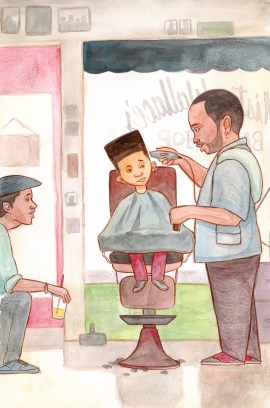
I’m a dad. My kid is 10 years old this year! When my son was first born, I decided that I wanted to read to him a lot and that I would look for cool books for and about him. As I got reacquainted with children’s literature, I found a few great stories that I enjoyed. I’ve always wanted to use my art to communicate a positive or progressive message, and while reading, I became inspired to tell my own stories–about children who are mixed racially, teen parents, kids who are raised bilingual or trilingual, alternative parenting, hip hop culture, social justice, freedom fighters, and more. But to be honest with you, when I sought out books in big stores like this, there weren’t any that reflected my son or these thoughts. In fact, I felt like these stories were almost invisible. So I decided I would make them. I did not know how to do it, so I decided to study. I’m still learning and will be a lifelong student of the craft.

After a three-year break, I decided to go back to college, finish my degree, and study storytelling in various ways. I immersed myself in comics, graphic novels, young adult novels, anime, film, and children’s books. I met a lot of very talented people who were also interested in telling their stories. I started to go to bookstores, blogs, events, etc. to learn. I sent out tons of art samples and contacted tons of editors, art directors, and publishers. I knew that it would be hard work and that it was normal to get a small response when you are just starting out, but I didn’t know until much later just how unrepresented stories that I want to tell were in the mainstream industry.

I reached out to other artists and writers in the field, who were gracious and generous–mostly. I understood that no one–NO ONE–was going to tell my story. Not only that, I could not wait any longer for people in power through the typical “submission” process to see it, understand it, or give me permission to tell it. I would have to do it on my own and take no shit from anyone. So I practiced, failed, tried out many styles, cultivated relationships, asked dumb questions, failed some more, shared my work all the time with family and friends, and slowly began to feel and be seen as a storyteller! I began to develop stories that spoke to me, without worrying if they were sellable to companies or gatekeepers in the industry. And one of those stories was Furqan’s First Flat Top.

It is partly based on my experience as I got my first flat top around the age of Furqan Moreno, the main character in the book. And it is partly a mixture of various influences, all thrown in the pot to make something that tastes right when I tell people about it, or draw. And that is why it is so important to me. But, how did I go from having an idea to getting it successfully funded? Well, here are some pointers.

Short story 21

Campaign Strategy

So for me doing a Kickstarter about my story was about figuring out the best way to approach it and building a team of trusted riders (friends) to roll with me. I could not have done this book without my family, friends, colleagues, and fellow book creators. When I started, I knew that I wanted to hit the people I know with an image that they could relate to and share easily. I knew that I wanted to connect the many circles I subscribe to or participate in. And I knew that I should do it when it felt right.

Authentic connections

What this means basically is to do what you love and seek out others who have very similar feelings at heart. People of all races, religions, political views, and beliefs can spot a phony a mile away. I am learning to take the time to not only create my story, but to invest in the children’s book community in some shape or form. For me, it means doing my homework, studying the art, etc. And when I do this, I often meet like-minded folks doing the same thing. After seven plus years, I’ve built some small connections with people. I’m still studying it, and I have a long way to go to be able to tell stories that touch people.

RTrujillo_FridaSkate copyAn art to it/outlet

Art has so many different connotations. I love to do many different types of art. I have a hard time sticking to one particular message or style because I like to explore. Exploring to me, means learning and growing. If I just paint a picture the same way over and over again because it works, it will be a style that is recognizable. But I want to transcend style. I want to just keep trying new things. So when I began working on a series of short stories using illustration and creative writing, it was a creative outlet. It was uninhibited and fun, and I think different folks connected with the stories for that reason. So, I would say “have fun” with your chosen medium first.

Social Media

This is a tough one for some folks. On the one hand, I try to detach sometimes. Not so much when I first started to explore with sites like Myspace, but now, I have more than 10 different platforms where I not only engage with people who have similar interests, but I share content. The majority of the time I’m sharing things that I have created, but very often I share things that others have written, drawn, or said because it inspires me. Social media to me isn’t so much about talking and having everyone listen to you. It is about having an ongoing conversation about what drives you. When you do that, you naturally connect with people from Ireland to Idaho and everywhere in between. And of course you want to check in with your friends and family, because they are the folks that will give you your first shot. Then they share it with other people, who in turn may also listen.

Characters collageCommunication

While the campaign was going, before, and even now as I type this, I try to be open to receive and give. Open communication is key. Of course, I have my privacy, but I do like to see what my favorite musician, journalist, or sculptor is doing lately. And so I share my work and talk about it. Sometimes it feels like no one is listening, and then there are these amazing bursts of conversation where I connect with people one on one about storytelling; and I had no idea they were even into it. It helps to be accessible. You can turn it on or off when necessary but get out there and talk to folks, online or in person.

Planning

Right now I’m looking at my storyboards, sketches, and manuscript for the book. It is very challenging to create a picture book, but this one is fun because it’s a chance to just do my thing. No art directors, no editors (even though they are definitely helpful at times), nada. It’s just me and a team of folks I rely on to say “yeah” or “nope” when the time is right and I can’t decide. Before the campaign, I planned to create a short story, develop it, test it, get feedback, and expand it. I planned to talk to blogs, and various activists in the field of diversity, and I came across a bunch of obstacles that I was not expecting.

Follow through and Community

As I mentioned, I get help from people. Seek out people, build a phone tree, an email group, a regular group. Whatever, just build a community of people who can support you and whom you can support. And set small goals and knock them out. Start small so you can follow through and finish them. This way, you build momentum and feel like you are achieving something, moving forward, or progressing.

Good luck to all of you creators out there!

photo1Born and raised in the Bay Area, Robert Trujillo is a visual artist and father who employs the use of illustration, storytelling, and public art to tell tales. These tales manifest in a variety of forms and they reflect the artist’s cultural background, dreams, and political / personal beliefs. He can be found online http://work.robdontstop.com/ and on Twitter at @RobertTres.