Summer Reading Picks for You!


Summer Reads

Summer’s upon us, and we’re here to help you choose the right Latin@ kid-lit for your young readers. Putting together a fun and useful list was a matter of posing six questions to our contributing book specialists, Lettycia Terrones, Cecilia Cackley, Marianne Snow and Sujei Lugo. We love the variety and originality of their answers and bet you will too. Take this list to your local library or bookstore and stock up!

1. Is there a brand-new release you can’t wait to get your hands on?
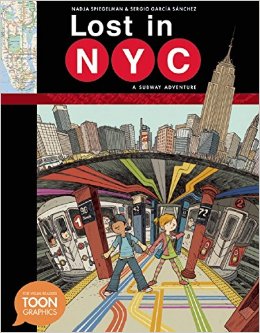
Lost in NYC

Lettycia: Lost in NYC: A Subway Adventure, a TOON Graphic release written by Nadja Spiegelman and illustrated by Sergio Garcia Sanchez. It tells the story of a group of kids on a New York City field trip. Things go haywire when Pablo gets separated from the rest. This title will also be released in Spanish. At TOON Books, get a glimpse of the stunning illustrations. Cesar_Chavez_Cover
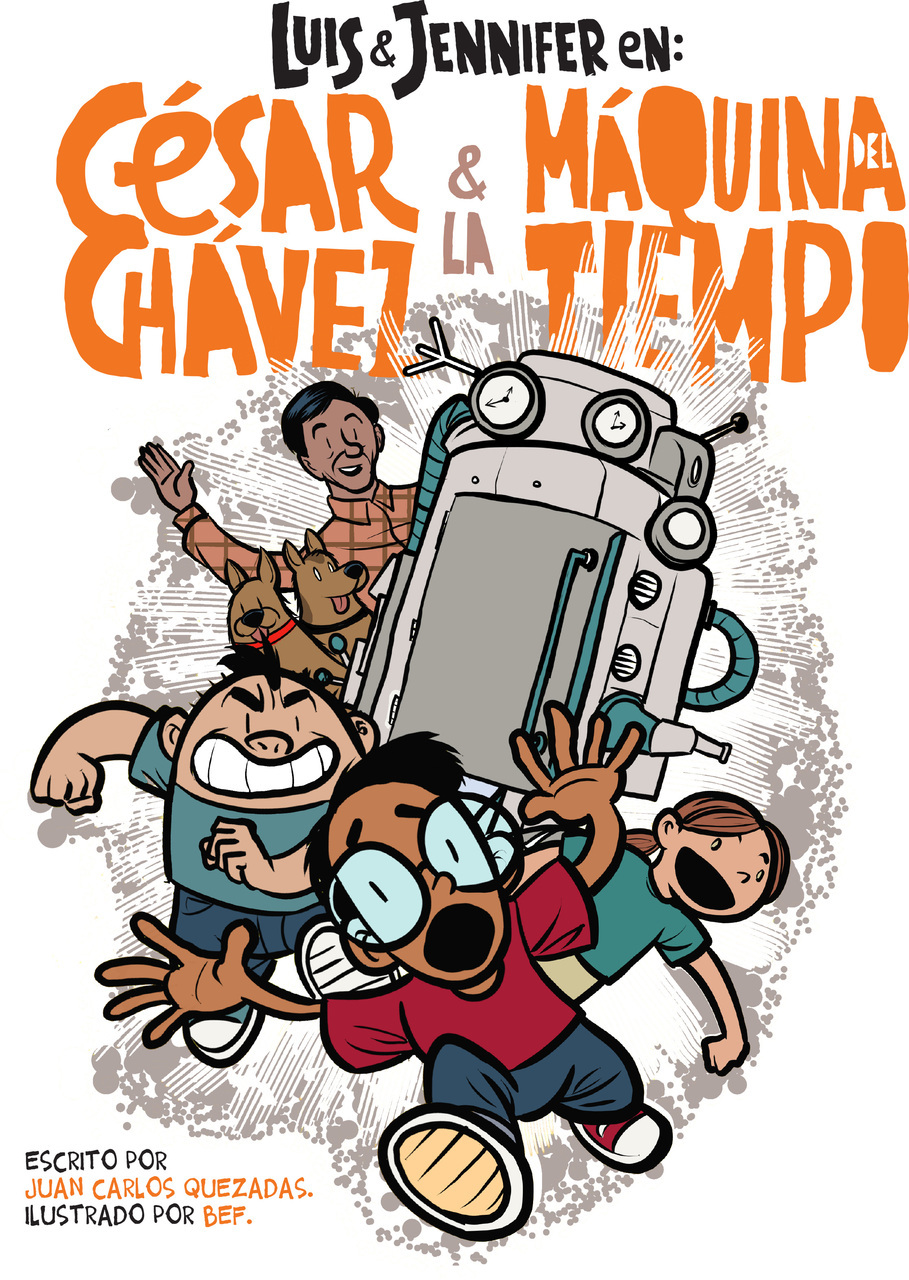
Lettycia: Luis y Jennifer en: César Chavez & la máquina de tiempo, by Juan Carlos Quezadas and Bernardo Fernández. Written in Spanish, this book follows time travelers to 1966, where they encounter adventures in the vineyards of California during the height of César Chavez’s campaign. For purchasing information, go to LA Librería.
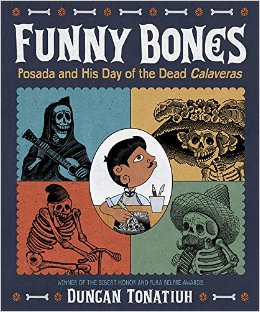
Funny Bones

Sujei: Funny Bones: Posada and His Day of the Dead Calaveras, by author-illustrator Duncan Tonatiuh. Here, Tonatiuh lends his artistic power to the amazing story of the 19th-century Mexican artist José Guadalupe Posada, whose calavera drawings have become synonymous with El Día de los Muertos. For more information, see Abrams Books.

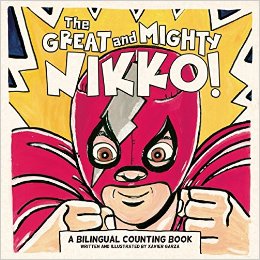
Sujei: The Great and Mighty Nikko! A Bilingual Counting Great and Mighty NikkoBook, written and illustrated by Xavier Garza. It’s bedtime, but Nikko must first wrestle masked luchadores! How many of them are there? Uno, dos, tres…Learn more at Cinco Puntos Press.
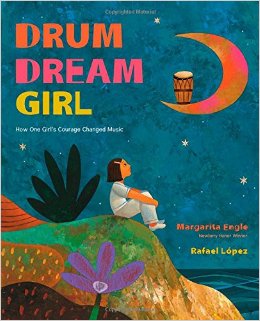
Drum Dream GirlThree of our contributors chose Drum Dream Girl: How One Girl’s Courage Changed Music, written by Margarita Engle and illustrated by Rafael López. It’s based on the true story of Millo Castro Zaldarriaga, a young Cuban in the 1930s who defied the social stigma against female drummers. Marianne says, “I’ll read anything that Margarita Engle writes and Rafael López’ illustrations are sumptuous.” Cecilia and Sujei feel much same, and apparently, so does Kirkus!


2. Oldies, but goldies! Which classic book do you wish every kid would read?

taste_of_the_mexican_market_sml

Marianne: El gusto del mercado mexicano/ A Taste of the Mexican Market, by Nancy María Grande Tabor. Marianne: “This book beautifully weaves together math, science, and culture as the author takes readers on a tour of a traditional Mexican market.” For a peek at the gorgeous interior of this award-winning book, go to the official Charlesbridge page.

Cuba 15Cecilia: Cuba 15, by Nancy Osa. Nudged by her grandmother, a Cuban-American girl reluctantly dives into preparations for her quinceañera. Click here for more information on this multiple award-winner.
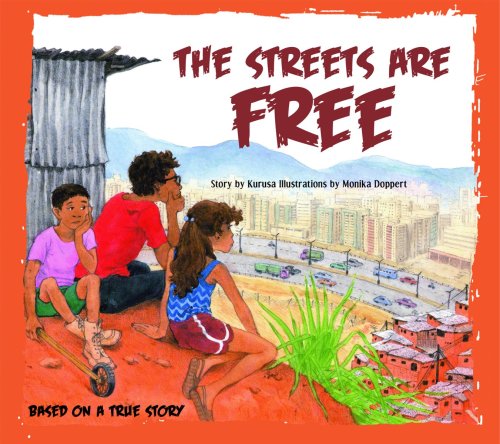
Streets are freeSujei: The Streets are Free, by Kurusa. Kids in a Venezuelan barrio realize that if they’re ever going to get a playground, they’ll have to build it themselves. This inspiring book is based on a true story. Learn more at Scholastic.


3. Is there an adorable picture book you’d like to remind readers about? 

Counting with FridaSujei: Counting with Frida/Contando con Frida, by Patty Rodriguez and Ariana Stein. It’s a bilingual board book from Lil’ Libros that employs images inspired by the Mexican painter Frida Kahlo to teach counting. Looks irresistible!
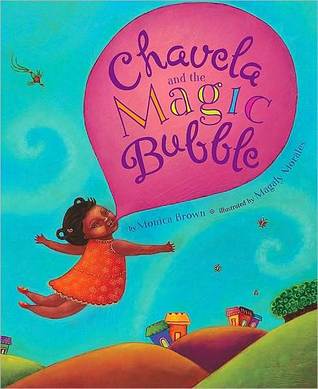
ChavelaMarianne: Chavela and the Magic Bubble, written by Monica Brown and illustrated by Magaly Morales. This book takes readers on a magical ride to the sapodilla tree, the source of chicle, essential to the manufacture of chewing gum. “You can’t go wrong with colorful illustrations, magic realism, a sweet family story, and bubble gum,” Marianne explains. Check out this review on La Bloga.
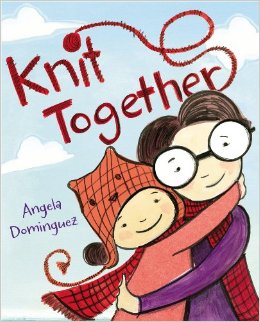
Knit TogetherCecilia: Knit Together, by Angela Dominguez. It’s the story of a collaboration between a knitting mom and a daughter who draws. The adorable illustrations pay tribute to the textures and colors of yarn. See more on Angela’s website!


4. Everybody has at least one fabulous book on their must-read list. What’s yours? 
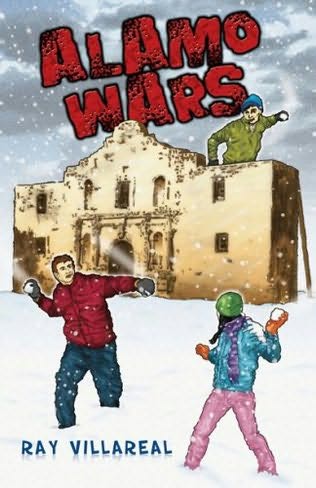
Alamo WarsMarianne: Alamo Wars, by Ray Villarreal. “I’m immensely interested in Texan history and multiple perspectives (Tejano, Mexican, Anglo) about historical events, and this middle-grade book tackles those topics by exploring how a school struggles to address controversial representations of the past when they put on a play about the Battle of the Alamo. Should be fascinating!” Here’s the book’s page on Amazon.
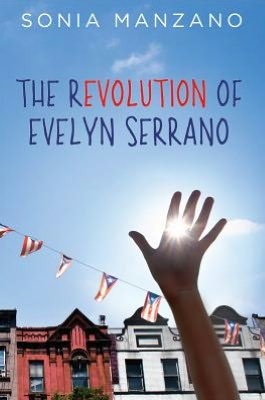
Evelyn overSujei: The Revolution of Evelyn Serrano, by Sonia Manzano, of Sesame Street fame. Evelyn is a Puerto Rican girl living in New York City’s Spanish Harlem, and coming of age just as the activist group known as the Young Lords is creating literal and political heat in the barrio. Read the Latin@s in Kid Lit review here.

5. Which book have you found impossible to put down? In fact, you’re sure somebody should make a movie of it!

Smell of old lady perfumeMarianne: The Smell of Old Lady Perfume, by Claudia Guadalupe Martinez. She says, “Martinez’ novel addresses subjects like family, loss, and friendship with grace, warmth, and understanding, and reading it felt like coming home.” This novel garnered a long list of honors for its portrayal of a young girl whose life in a Texas border town undergoes upheaval when her father suffers a stroke. Read more on the Cinco Puntos site.
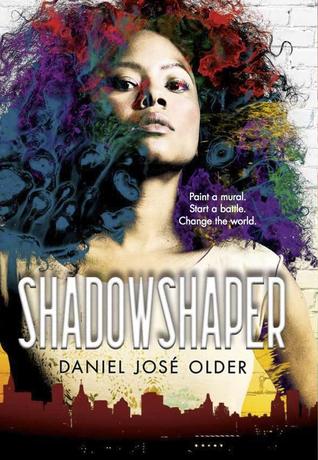
ShadowshaperCecilia and Sujei both got hooked by Daniel José Older’s debut YA novel, Shadowshaper– a mystical fantasy thriller starring Sierra Santiago, a 15-year-old Brooklyn girl of Afro-Caribbean heritage with supernatural connections. Publishers Weekly gave it a solid thumbs up.
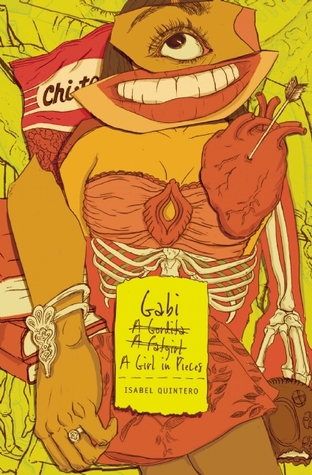
Gabi A GirlSujei: Gabi, a Girl in Pieces, by Isabel Quintero. The author took the book world by storm in 2014, crafting her main character through strongly voiced and often humorous diary entries. Gabi is a Mexican American high school girl whose friendships, romantic crushes and family troubles create a dramatic mix. Here’s our book talk.
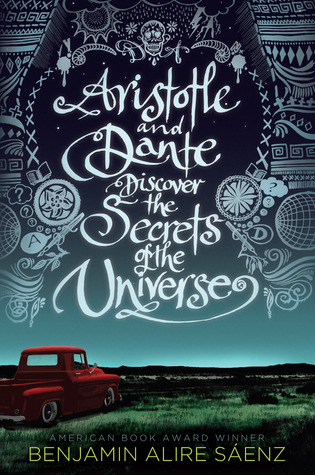
AristotleFor this category, Lettycia seconded the nomination of Gabi and also chose Pura Belpré winner Aristotle and Dante Discover the Secrets of the Universe, by Benjamin Alire Saenz. It’s the moving story of the tight friendship and blossoming romance between two Latino boys. Here’s our review.

6. And now for the “wild card”– a category of your making. 
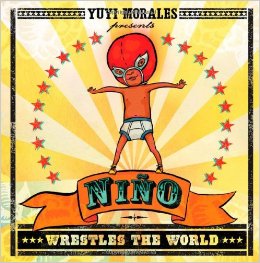
Niño wrestles the worldCecilia is ready to turn two recent books into plays–Niño Wrestles the World, by Yuyi Morales, and Drum Dream Girl, discussed above. Niño Wrestles the World is one of the most celebrated picture books in Latin@ children’s literature. Click here to read Sujei’s review and here, for Lettycia’s examination of the story’s fable elements.
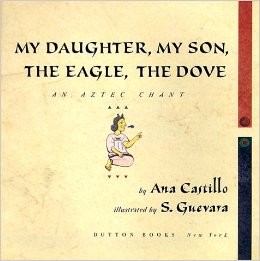
My daughter my sonLettycia described her “wild card” choice as the “best book for parents to read with their kids.” It’s My Daughter, My Son, The Eagle, The Dove, written by Chicana poet Ana Castillo and illustrated by Susan Guevara. The book celebrates milestones in a child’s and family’s life. It’s an homage to traditional Aztec chants and includes art inspired by Aztec culture. See it at Barnes and Noble.
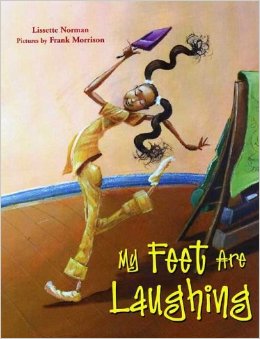
My feet are laughingThe final wild-card suggestion is in the category of poetry. In Sujei’s words, My Feet Are Laughing, by Lissette Norman, is “a poetry book that celebrates family and life in the city.” Sadie, the main character, calls New York City home. The poems highlight Dominican American life in the neighborhoods of Harlem. Here’s a review from Rhythm, the Library Dog!


For additional suggestions, check out this reading list from Edi Campbell and friends. It’s built around diverse books of all types, not just Latino reads. And at Latinas 4 Latino Lit, take advantage of a summer reading program designed especially for Latino families.

Meet our contributors:

Cecilia Cackley is a performing artist and children’s bookseller based in Washington DC, where she creates puppet theater for adults and teaches playwriting and creative drama to children. Cecilia’s interests include literacy, immigrant advocacy and bilingual theater.

Sujei Lugo has studied and worked in children’s library services in Puerto Rico and Massachusetts, where she is currently working toward her Ph.D. in Library and Information Science from Simmons College.

Marianne Snow is a doctoral student at the University of Georgia, where she researches Latin@ picture books, representations of Latin@ people in nonfiction children’s texts, and library services for Spanish-speaking children and families.

Lettycia Terrones serves as the Education Librarian at the Pollak Library at California State University, Fullerton. Her research interests are in Chicana/o children’s literature and critical literacy.


Guest Post: How My Life With a Guatemelan Street Dog Became a Children’s Book

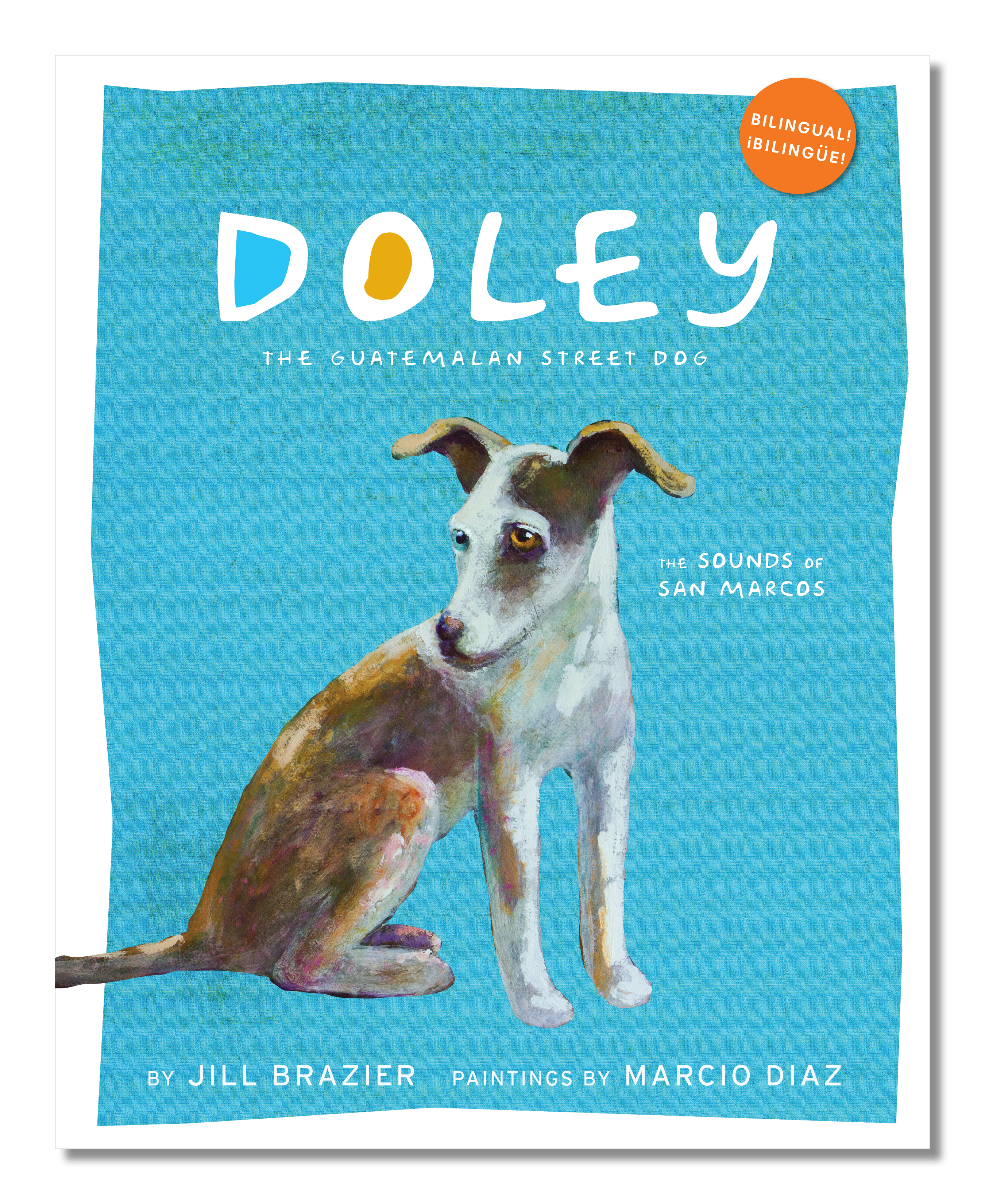
DOLEY Cover PRINTBy Jill Brazier

Use your senses and pay attention to what’s around you. You never know where inspiration might strike! These are two of the lessons that I focus on when presenting my bilingual children’s book, Doley the Guatemalan Street Dog: The Sounds of San Marcos, to students. I never would have imagined that my time living in a treehouse above Lake Atitlan in Guatemala, and my special friendship with a starving little street dog, would direct the course of my life for years to come.

At 20 years old, I traveled by land from Seattle to Guatemala. The trip took over a year, with stops along the way to find work when the money ran out. Guatemala was never on my list, but I loved my time in Mexico and wanted to continue south. I joined up with a traveling companion for a long, bumpy, chicken-bus ride from Chiapas, Mexico, to Panajachel, Guatemala. An immediate and special feeling for this country struck me. I was determined to find a way to stay in this beautiful land.

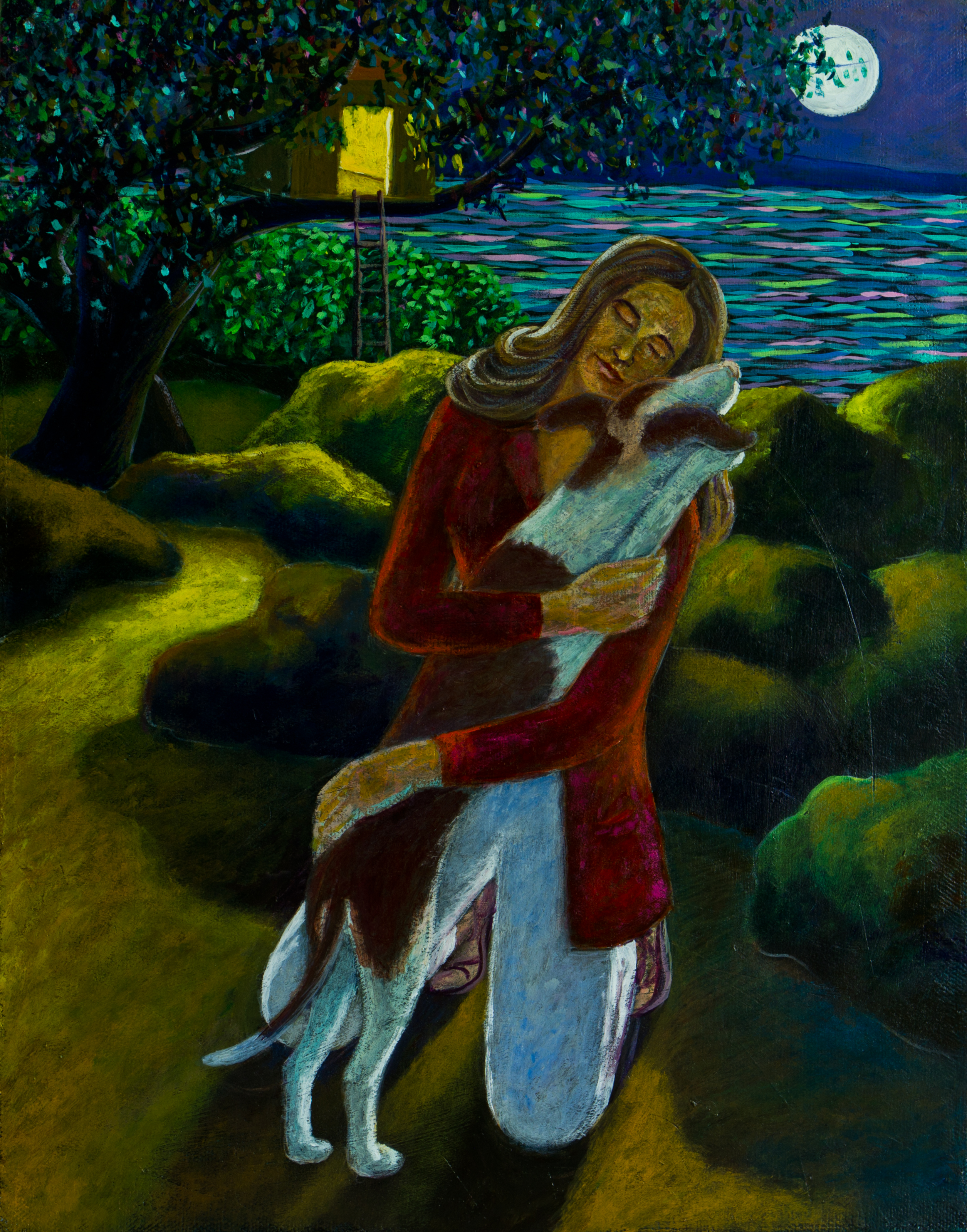
I found a work/trade in a meditation center in the little village of San Marcos La Laguna, one of twelve villages around Lake Atitlan. There was no electricity there at the time. We lit our way with candles, stars and moonlight. My home was a simple bamboo treehouse with one room, a doorway, two windows, and gauze curtains for privacy. At night, I would sit in my treehouse and listen to the many sounds of San Marcos. The breeze blew in, offering constant connection with the lush natural environment.

One day, I was preparing a meal in the community kitchen when a tiny, frantic puppy ran in and looked at me with desperation. She had one bright blue eye and one brown eye. After I instinctively gave her a tiny piece of bread, this little puppy visited me daily. She had mange, a belly full of worms, layers of ticks in her ears, and malformed legs which made it difficult for her to walk. I took care of all of these problems, one by one. I wrapped half an ace bandage around each of her legs so that she could walk without her legs buckling, and fed her eggshells to strengthen her bones. Over time, she healed and followed me everywhere I went. Soon, this Guatemalan street dog had a name: Doley. This was the beginning of our fourteen-year friendship as best friends and travel companions.TenderHowling

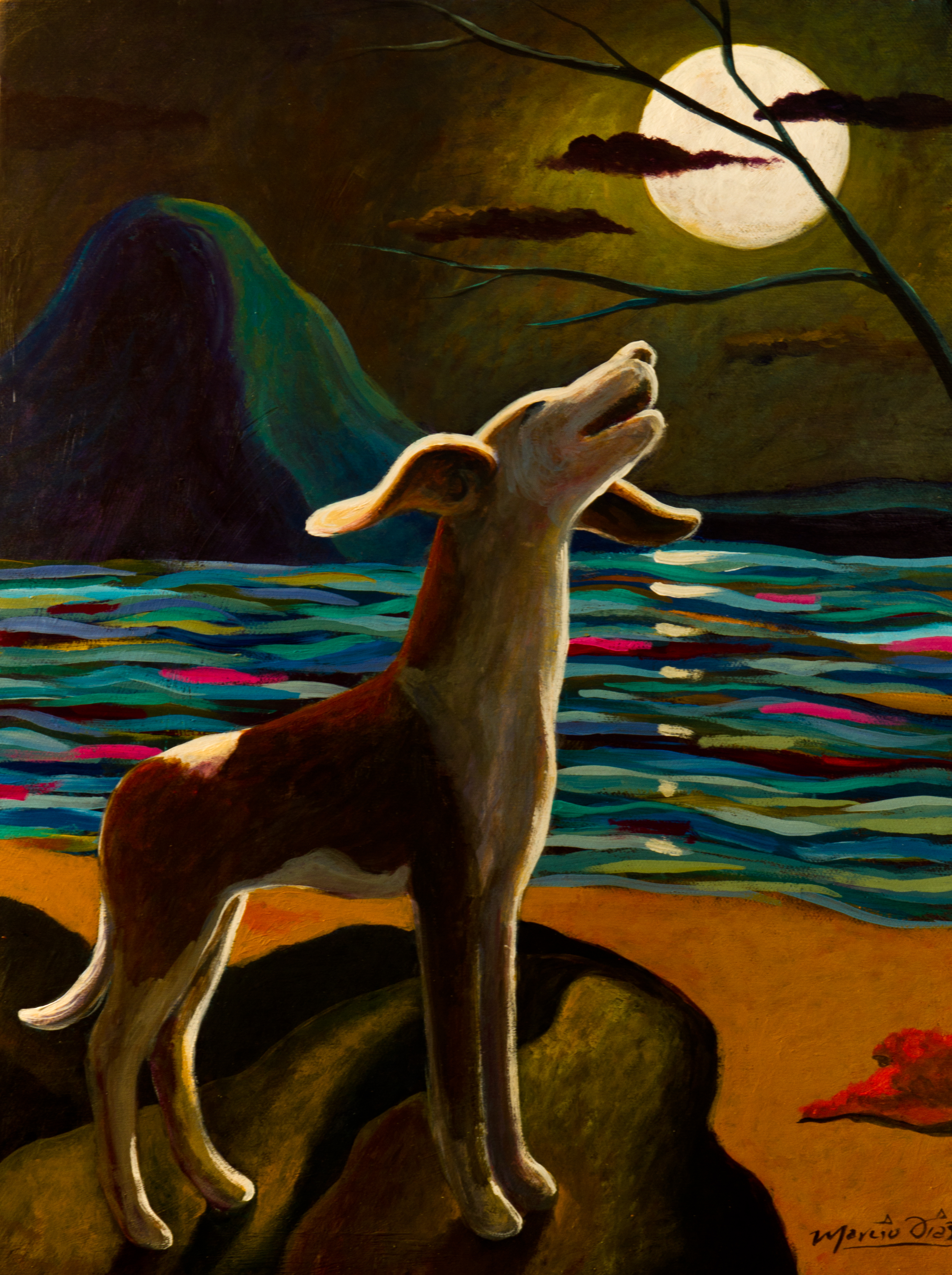
Doley would sleep in the treehouse with me at night, cuddling right into the crook of my stomach. Often, she would wake up to the sound of other street dogs howling and barking, and insist on being taken down from the treehouse, to run and howl with the other dogs. All of these real life experiences, which Doley and I shared during our time together in Guatemala, appear in the book.

The Sounds of San Marcos, was released independently in 2012. The theme of sounds emerged as I wrote the story and reflected on Doley’s acute sensory awareness of everything around her as a street dog, and our rich, sensory experience of living a treehouse in Guatemala. Readers learn the importance of listening – a vital lesson for students and young people! I further developed the idea to make Doley a series based on the five senses.

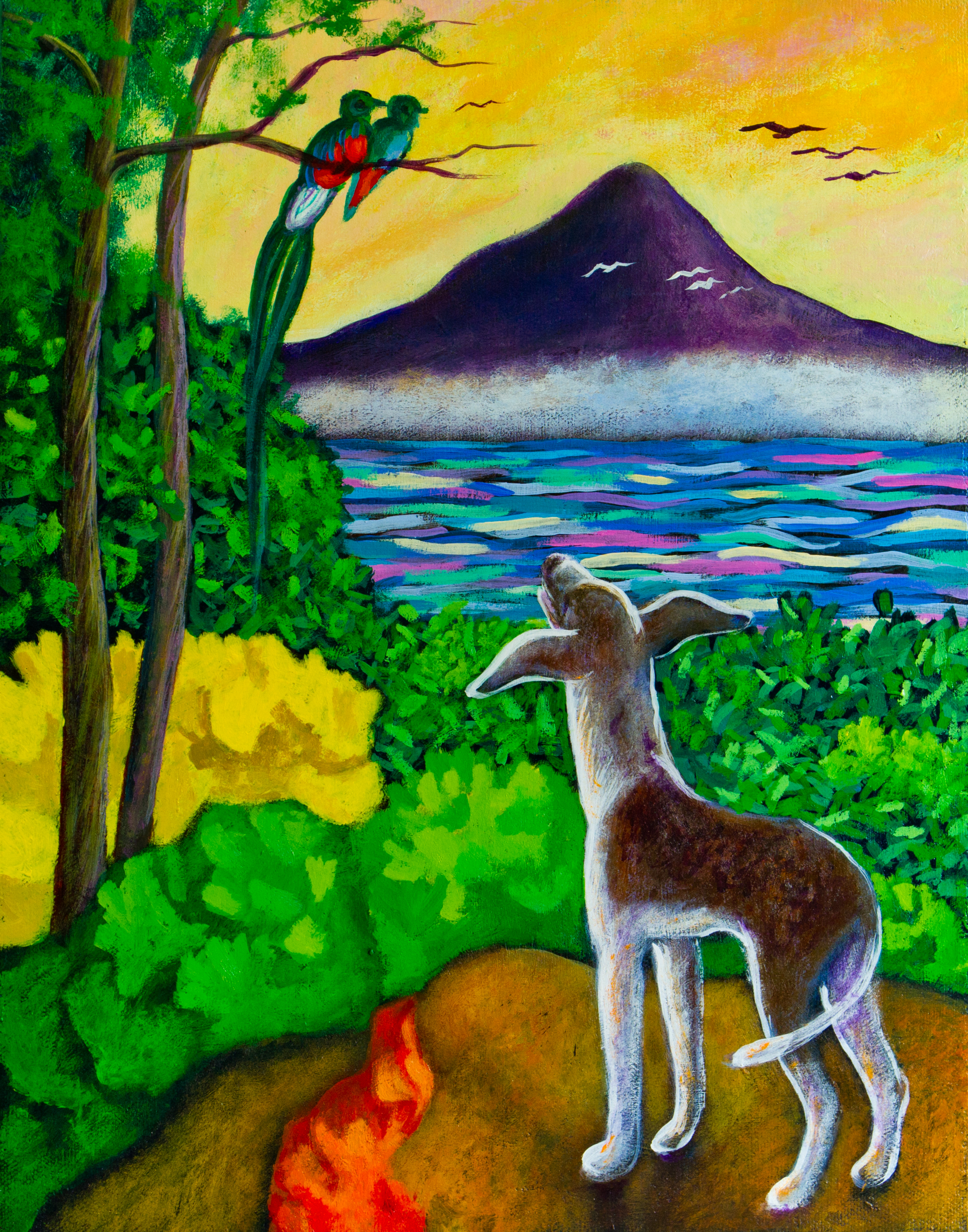
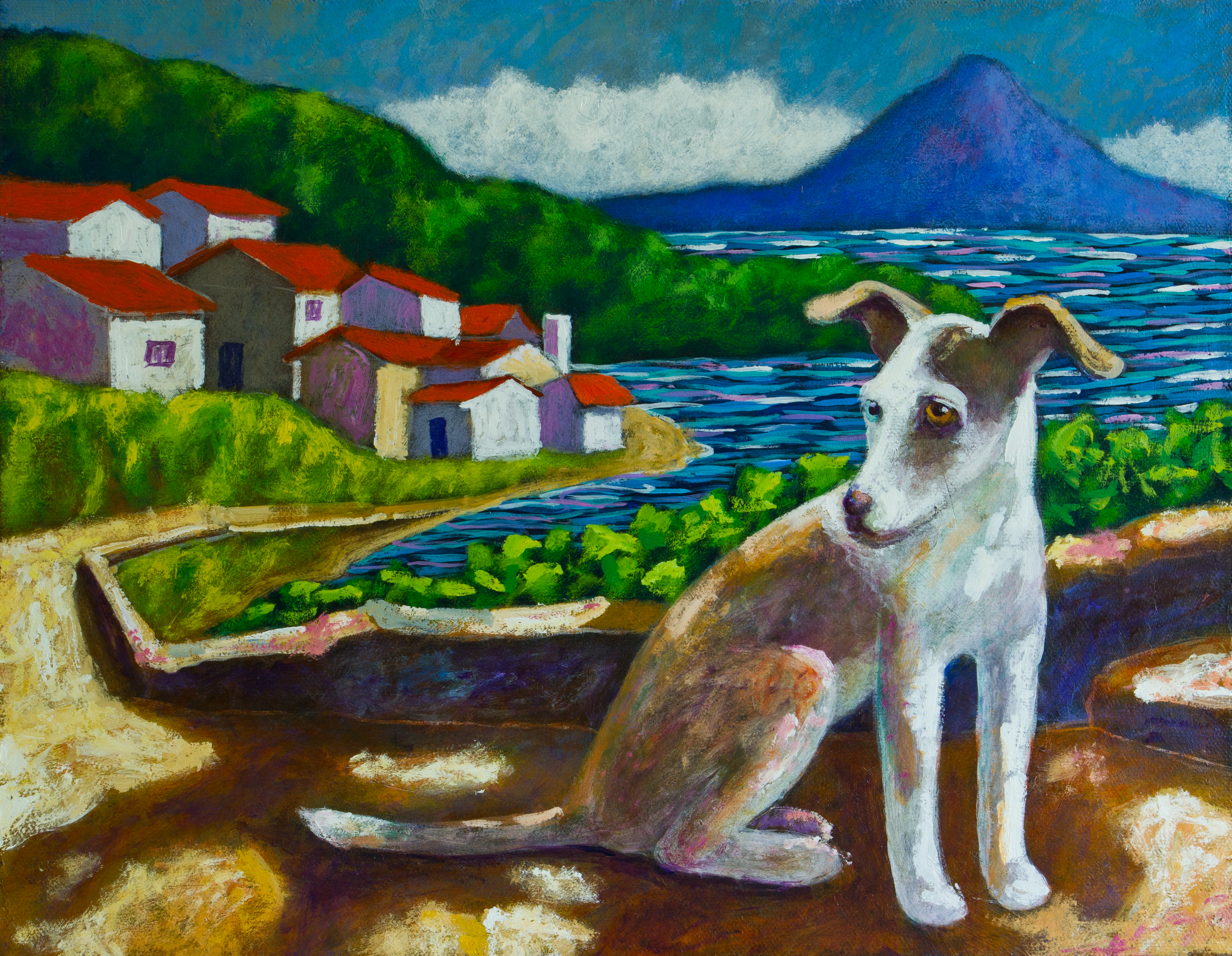
With beautiful artwork by Nicaraguan artist Marcio Diaz, the story comes to life in the vivid color of Guatemalan and Latin American culture. After looking for the right artist for many years, I finally discovered Marcio, whose ability to express profound feeling with bold color evokes the look and feel that I wanted. Marcio says, “In the brushstrokes of a painter, lays the history of his people.”

I want to FlyIt can feel like a daunting task to create something new and find a place for it in the world! There are many ways to share our stories and creative visions. For this project, I chose to publish independently in order to create the books in exactly the look and feel that I wanted. There are many ways to publish these days, and advantages and disadvantages to each. Artists and authors can choose which path to take according to the particular project, goals, intentions, budget, and timeline.

Publishing independently was the right place to start for Doley, and I am thrilled with the result. Everything about it is true to my vision and meets my standards of excellence. Moving forward, I will find a strategic partner to maximize the potential of the Doley series and accompanying reading guides.

Brown and BlueThe Read with Doley Reading Guide, developed according to the National Common Core Standards (K-2 Literature), consists of 134 bilingual questions and answers, designed to engage students in language learning and encourage them to think beyond the text, and is available to download for free on my website. Doley believes in education!

The next book in the series, Doley the Guatemalan Street Dog: The Caravan of Colors, will be released in September 2015 and also features the remarkable artwork of Marcio Diaz, along with its own reading guide. The story is inspired by some traveling performers I met in Guatemala and my own love of trapeze. The Caravan of Colors gives Doley the chance to explore the world around her through the sense of sight, and provides lessons about perseverance and friendship along the way.

It is always a joy to share Doley and the inspiration for the book with students – and to remind them to listen carefully and pay attention. You never know where inspiration will strike or where it may lead you! I am so grateful for where inspiration has taken me.

For purchasing options, and additional information, please visit Jill’s website,

JillWhen Jill Brazier isn’t writing about Doley, she works at a charming Italian restaurant in Seattle. She is a traveler, fitness enthusiast, yoga practitioner, and amateur trapeze artist. After Doley, Jill’s heart belonged to a 12-year old abandoned Husky. They spent three happy years together until she passed away at the age of 15. Jill remains without a dog for now, until the next one chooses her.


Teacher-Author Diana Lee Santamaria On Promoting Literacy & Self-Publishing

Childrens book, school, teach, kids, learning, DLee's World, DLee, Diana Santamaria Childrens book, buy now, learn colors, teach, DLee's World, DLee, by Diana Santamaria Childrens book, teach counting, lesson plans, DLee's World, DLee, by Diana Santamaria Childrens book, teach counting, lesson plans, DLee's World, DLee, by Diana Santamaria

By Diana Lee Santamaria

Hi, everyone! I am so honored to be a guest writer on Latin@s in Kid Lit. My name is Diana Lee Santamaria and I am a newly self-published children’s author of DLee’s World Books. DLee’s World is a series of learning books that I created for children ages three to five. Since I struggled with issues of illiteracy growing up, I designed my books with bright colors, playful rhyme schemes, and diverse characters to promote literacy, diversity, and most importantly, fun.

Literacy is extremely important to me considering that more and more children
seem to display a lack of interest in literacy education. As a result, according to the most recent statistics
on literacy provided by the National Center of Educational Statistics, about 50% of adults in the United States read at or below basic proficiency level. Therefore, issues of literacy are still a huge factor in our society today. Who knows where I would have been, had my father not taught me? If he never realized my problem and wasn’t so determined for me not to follow in his educational struggles, I may not have graduated from college, become a teacher, or even a children’s writer.  Therefore, I created my books with the intent to help increase children’s interest in literacy at an early age. Literacy is all around us, from reading a sign while driving to ordering take-out. We are constantly put in positions where we have to read and show that we comprehend what we read. It is vital, therefore, that we promote reading and learning in children while they are young to aid in chances of future success.

The first four DLee’s World books are entitled DLee’s Color Hunt, DLee’s Outdoor Countdown, DLee’s First Day of School, and DLee’s Nighttime Scare. These books touch upon learning objectives, such as primary and secondary colors, counting and numeral recognition, dealing with new experiences, and fears of the dark. As an educator for seven years with a Master’s Degree in Early Childhood Education, I used my professional experiences, educational background, along with my own childhood experiences to bring each and every story to life. Currently I have written eleven other DLee stories, which I will hopefully be publishing within the next few years. In my mind the story possibilities with DLee’s World are endless. Since I have taught preschool for many years now, I know first-hand what objectives and relevant topics are typical and important to learn for that age group. As a result, I have a journal dedicated to those ideas, which I am consistently referring back to.

I officially self-published and began marketing in August of 2014. I chose to self-publish after doing lots of research and speaking to fellow educators and professionals who had also published literary works of art. The articles that I was finding shared a lot of negative aspects on attempting to publish through a large publishing company. I kept reading about the difficulty in getting a company to publish children’s literature even if your book is worthwhile. But that was not the only downside. From what I read and found to be true through my own research, most publishing houses do not accept unsolicited manuscripts; therefore I would have had to find an agent. Now although I found a list of agents through the Society of Children’s Book Writers (SCWBI), which I became a member of, everything takes time and everything costs money. I wasn’t sure if I wanted to wait for a response considering that I may never get one or be waiting months on months. Additionally, I read about publishing through a larger company and the issue of not having full rights to your work. So I definitely considered the option of publishing the traditional route. But after all things considered, I decided to self-publish. My thoughts were that I would self-publish and market myself enough to build a following of parents and children that would eventually lead me to traditional publishing routes. My thinking was and still is that if I build enough of a fan base maybe a publishing company will come find me. Who knows how far fetched that is, but I figure I have nothing to lose. Hence, why I decided to give self-publishing a shot. Even still, I did send my work out to some publishing companies in hopes of a response. I have yet to receive one, but I remain positive!

latina, author, teacher, latina, authorIt’s ironic because if you would have asked me what I would be doing when I got out of college, I would have never imagined I would be a teacher, let alone a children’s writer. As an undergrad, I studied Speech Communications and always had a passion for all areas of the arts. I loved writing poetry, drawing, painting, singing, and acting. My dream, however, was to become a famous singer and later an actress! But I thought it would be more realistic to get a career in public relations relating to entertainment. Then, while I was doing an internship at a small entertainment company, I came across a woman who mentioned teaching and that idea sewed a seed that led me to pursue a pre-kindergarten to third grade teaching certification. From there, I began teaching and decided to earn a master’s degree in children's book series, latina, authorearly childhood education. While teaching, I was always reading to my students and at times was lacking the literary resources that not only hit the topic I wanted to teach but also relevancy to increase connection and overall understanding for my students. So one day, I decided to write a silly story about shapes. I wrote the story and then just left it there until one day, I read it to a friend. She really enjoyed the story and encouraged me to keep writing. I never really considered myself a writer, but that night I went home and the words began to pour out of me! I started analyzing the children in my classroom, the books they enjoyed along with the standards required for preschoolers to learn. And that is how DLee’s World came to be.

teacher, latina, author, From the use of my childhood nickname (given to me by my mother), to the use of my childhood image along with images of those who have impacted in my life, DLee’s World is very much a part of me. I have dedicated much time and effort to perfect DLee’s World books so that they are not only educational and fun for children but also useful for parents and educators. Subsequently, I have devised lesson plans that coincide with each learning book, available for free download on my website.

Recently, I have been doing free readings at libraries, schools, and bookstores throughout the New York, New Jersey, and Pennsylvania areas. It’s been such a fun experience, and I’ve been receiving many positive reviews from both parents and kids! I absolutely love what I am doing and hope to continue to share my efforts with children, parents, and teachers worldwide. My books can be found on www.dleesworld.com and Amazon.

Book Review: Salsa: Un poema para cocinar / Salsa: A Cooking Poem by Jorge Argueta


By Marianne Snow

DESCRIPTION (from Goodreads): In this new cooking poem, Jorge Argueta brings us a fun and easy recipe for a yummy salsa. A young boy and his sister gather the ingredients and grind them up in a molcajete, just like their ancestors used to do, singing and dancing all the while. The children imagine that their ingredients are different parts of an orchestra — the tomatoes are bongos and kettledrums, the onion, a maraca, the cloves of garlic, trumpets, and the cilantro, the conductor. They chop and then grind these ingredients in the molcajete, along with red chili peppers for the “hotness” that is so delicious, finally adding a squeeze of lime and a sprinkle of salt. When they are finished, their mother warms tortillas and their father lays out plates, as the whole family, including the cat and dog, dance salsa in mouth-watering anticipation.

Winner of the International Latino Book Award for Guacamole, Jorge Argueta‘s text is complemented by the rich, earthy illustrations of Duncan Tonatiuh, winner of the Pura Belpré Award. His interest in honoring the art of the past in contemporary contexts is evident in these wonderful illustrations, which evoke the pre-Columbian Mixtec codex.

MY TWO CENTS: Here’s another Jorge Argueta picture book that’ll make you hungry! Argueta has created several bilingual poetry books that celebrate traditional Latin American dishes – including Guacamole, Sopa de frijoles / Bean Soup, and Arroz con leche / Rice Pudding – and Salsa is just as mouth-watering. I love how he uses beautiful language to stir the senses, appealing to readers’ taste and smell with scrumptious descriptions of vegetables and herbs; sound by drawing comparisons between ingredients and musical instruments; and touch by weaving together the acts of cooking and dancing.

As a lover of spicy food, I particularly enjoy Argueta’s ode to hot chiles, complete with imagery that clearly evokes the crackly, wrinkled skin and the tingly burn of the peppers. Here’s a little taste:

Hay chiles con cara de abuelo

y chiles con cara de abuela.

Hay chiles rojos

como llamitas.

Al morderlos nos calientan la lengua

como si tuviéramos en la boca una lucecita.


There are chilies with faces like a grandfather

and chilies with faces like a grandmother.

There are red chilies

like little flames.

When we bite one our tongue gets hot,

as if we had a tiny light on in our mouth.


I really wish I had some salsa right now.

Meanwhile, Duncan Tonatiuh’s signature illustration style, which hearkens back to pre-Columbian Mixtec art, captures readers’ sense of sight and beautifully reminds us of Mexico and Central America’s past while celebrating a contemporary family coming together to prepare a meal. Inviting Tonatiuh to illustrate this book is a perfect choice, since his historically inspired images reflect Argueta’s description of the history of the molcajete, the mortar and pestle crafted from volcanic rock that people have long used to grind vegetables and spices. This connection of the past and present through both words and illustrations makes Salsa an especially delicious dish for me.

(My much loved molcajete.)

TEACHING TIPS: This book is an invitation for several meaningful hands-on learning activities. Students and teachers can write up bilingual recipes for salsa using the ingredients Argueta presents in the poem and then make a tasty, healthy snack to eat and share with others at school. If children have family members or friends who have experience using a molcajete to make salsa, teachers can invite these special guests to demonstrate their techniques – a perfect opportunity to welcome students’ home lives and funds of knowledge into the classroom. Afterwards, everyone can write their own food poems utilizing some of the various literary devices – similes, metaphors, rich imagery, synesthesia – that Argueta employs.

Additionally, Salsa is an excellent springboard for a science lesson about composting and plant growth. When the family in the poem finishes making their salsa, the son takes leftover lime seeds and vegetable peels outside and buries them in a hole in the ground:

Las entierro para que se conviertan en abono,

Children can do the same when they finish their own salsa, making hypotheses about what will happen to the seeds and foods scraps and then observing the changes that occur as weeks pass. Will the vegetable matter decompose and turn into soil? Will new plants emerge from the seeds? You’ll have to try it and see!

ABOUT THE AUTHOR (from Salsa’s book jacket): Jorge Argueta is an award-winning author of picture books and poetry for young children. He has won the International Latino Book Award, the Américas Book Award, the NAPPA Gold Award, and the Independent Publisher Book Award for Multicultural Fiction for Juveniles. His books have also been named Américas Award Commended Titles, USBBY Outstanding International Books, Kirkus Reviews Best Children’s Books, and Cooperative Children’s Book Center Choices. A native Salvadoran and Pipil Nahua Indian, Jorge spent much of his life in rural El Salvador. He now lives in San Francisco.

LINKS / OTHER INFO: Here are a couple of fascinating videos that teachers can use to supplement the book:


FOR MORE INFORMATION ABOUT Salsa visit your local library or bookstore. Also, check out WorldCat.orgIndieBound.orgGoodreadsAmazon, and Barnes & Noble.


MarianneMarianne Snow is a doctoral student at the University of Georgia, where she researches Latin@ picture books, representations of Latin@ people in nonfiction children’s texts, and library services for Spanish-speaking children and families. Before moving to Georgia, she taught Pre-K and Kindergarten in her home state of Texas and got her master’s degree in Teaching English to Speakers of Other Languages (TESOL) at Texas A&M University. In her spare time, she enjoys obnoxiously pining for Texas, exploring Georgia, re-learning Spanish, and blogging at Critical Children’s Lit.

Latin@ Heroes of the Planet

by Lila Quintero Weaver

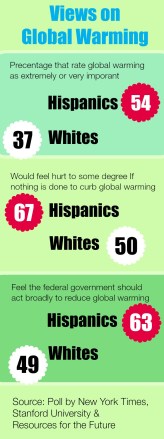
Views on Global WarmingFacts to contemplate and amaze: 1. A high percentage of Latin@s are persuaded that a connection exists between global warming and human activity. 2. A majority of Latin@s feel global warming carries an extreme or very serious potential to affect their lives.
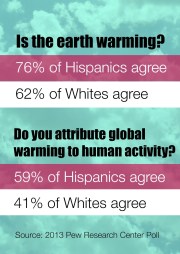
According to the findings of a new poll conducted by The New York Times, in conjunction with Stanford University and Resources for the Future, an environmental research group, “Hispanics are more likely than non-Hispanic whites to view global warming as a problem that affects them personally. It also found that they are more likely to support policies, such as taxes and regulations on greenhouse gas pollution, aimed at curbing it.”

Pew Research PollThe article in the New York Times acknowledges that these findings challenge stereotypes about Latin@s, as well as common assumptions that saving the environment is of concern mostly to white liberals.
So where are the books for kids that highlight this vigorous interest among Latin@s in saving the environment? My answer: they’re not easy to find and it sometimes means digging within tables of contents to discover a chapter or two featuring Latin@s.

Here are a handful of kids’ books sure to inspire a new generation of Latin@ planet saviors. Consider adding them to your Earth Day observations (April 22).

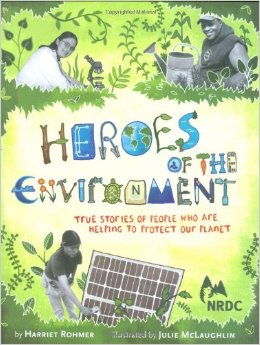
HEROES OF THE ENVIRONMENT: TRUE STORIES OF PEOPLE WHO ARE HELPING TO PROTECT OUR PLANET, by Harriet Heroes of the EnvironmentRohmer

This nonfiction book for grades 4 and up celebrates the environmental triumphs achieved by a dozen unsung heroes of all ages located in various parts of the United States and Mexico. I’m giving it star billing because I feel it deserves wider attention. The environmental challenges the activists take on—from urban gardens to saving caribou—are as diverse as the heroes themselves. Of the twelve, three heroes are Latin@, two are Native American, two are African American, one is Asian American and the remaining four are white. Rohmer relates the story of each person’s activism in a short chapter illustrated with photos and art by Julie McLaughlin.

The determination, innovation and enterprising spirit shown by all twelve heroes is truly inspiring. Here is a brief recounting of one of their stories. Erica Fernandez is a young immigrant from Mexico who learns of plans by an Australian company to build a large processing station for liquefied natural gas near her new hometown in California. If the company’s plans go through, a large, potentially lethal gas line would run directly beneath her community. Using Spanish and broken English, Erica sets out to inform neighbors and elected officials about the grave risks. The outcry of the community eventually reaches the ears of the governor, who nixes plans for the gas line.

In addition to the stories already alluded to, you will also find:

  • A Hopi girl installing solar panels on her reservation
  • A teacher turning the protection of wetlands into a classroom project
  • A man designing a unique bio-digestive sewage-treatment system
  • A boy organizing the safe disposal of old electronics
  • A lucha libre warrior fighting to protect coastlines and waterways
  • A woman taking on the coal company responsible for destructive mountaintop removal in her West Virginia location
  • A Bronx resident turning the problem of construction-site trash into a cooperative business
  • A young woman inventing a device for purifying polluted water
  • A Louisiana woman pressuring an oil company to relocate an entire community victimized by toxic disposal

The quieter message of this book is thrilling to me: that anyone can make a difference to the health of our planet—people of all ages, ethnic backgrounds and economic or educational levels.

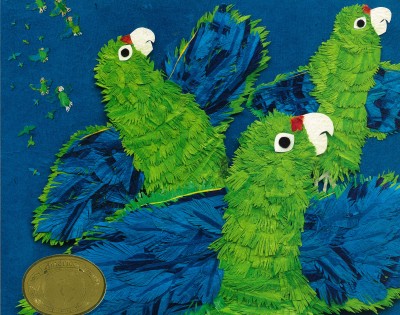
Parrots PRPARROTS OVER PUERTO RICO, by Susan L. Roth and Cindy Trumbore

This ingeniously illustrated picture book about a parrot species brought to the brink of extinction and the valiant efforts underway to rescue it, has received well-deserved acclaim. The story of Puerto Rico’s iguaca parrots demonstrates the vulnerability of all biological species, especially to the encroachment of human activity. Over the course of centuries, natural enemies preyed on the iguaca’s nests and hurricanes damaged their forest habitats, but it was humans who posed the biggest threat, primarily by trapping the birds and destroying their nesting sites. In 1968, when the iguaca population stood at less than thirty, Puerto Ricans jumped into action to save the birds. Thanks to their efforts, iguaca parrots’ numbers are on the rise again. An afterword provides further details on the Parrot Recovery Program.

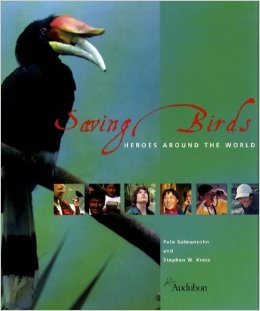
SAVING BIRDS: HEROES AROUND THE WORLD, by Peter Salmansohn and Peter W. KressSaving Birds

This book teaches young readers about preservation efforts on behalf of endangered birds in six locations around the world. One chapter focuses on a Latin American bird of legend, the quetzal. Like many animals of exceptional beauty, the quetzal has been exploited and poached. Furthermore, its habitat in Central America’s cloud forests is under threat by human activity, including deforestation and fires. Two men employed by a natural reserve in Chiapas, Mexico, called El Triunfo, set out to address the educational gaps surrounding the quetzal. Using puppet shows and books, they have recruited the support of children in villages throughout the region, teaching them to prize the quetzal and its forest home.

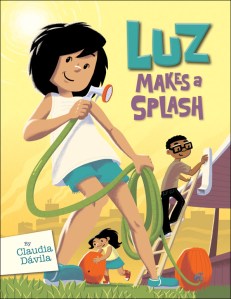
LUZ MAKES A SPLASH, by Claudia Dávila

Luz Makes a SplashHow can young readers learn about something as abstract as water conservation? This graphic novel for elementary grades introduces wise water-usage in a kid-friendly package. It’s part of a two-book series called The Future According to Luz. The companion book is entitled Luz Sees the Light. Luz Makes a Splash is built around an eponymous character and a community of friends and family whose lives are affected in multiple ways by scorching temperatures and drought conditions. Gardens are drying up. So is a city park and Luz’s favorite spring-fed pond. It turns out that a nearby soft-drink company is tapping groundwater to manufacture its cola products, and this contributes to the pond’s receding water level. A group of citizens mobilizes to address the problem. Meanwhile, Luz learns about rain barrels and a natural system for filtering household water used for cooking and washing (gray water). One of the story’s characters converts his sod lawn into a rock garden built around indigenous plants capable of thriving in drought conditions.
The author-illustrator of Luz Makes a Splash is Chilean-Canadian. She has made her energetic, intelligent and community-minded main character a Latina. Ethnic identity doesn’t figure into the story, but what a nice way to counteract stereotypes of Latin@s.

This is a book with a message. Some readers will find fault with its didactic approach and the fact that the characters are not given a broader story, but taken as a teaching tool, it delivers solid information that can be used to launch explorations into drought, government-enforced water restrictions, and smart solutions for reducing water waste and keeping gardens green during low-water conditions.

*****

The focus of this post is Latin@ activism for earth-friendly causes, but a growing number of works on the Latin@ kid lit bookshelf celebrate the planet.

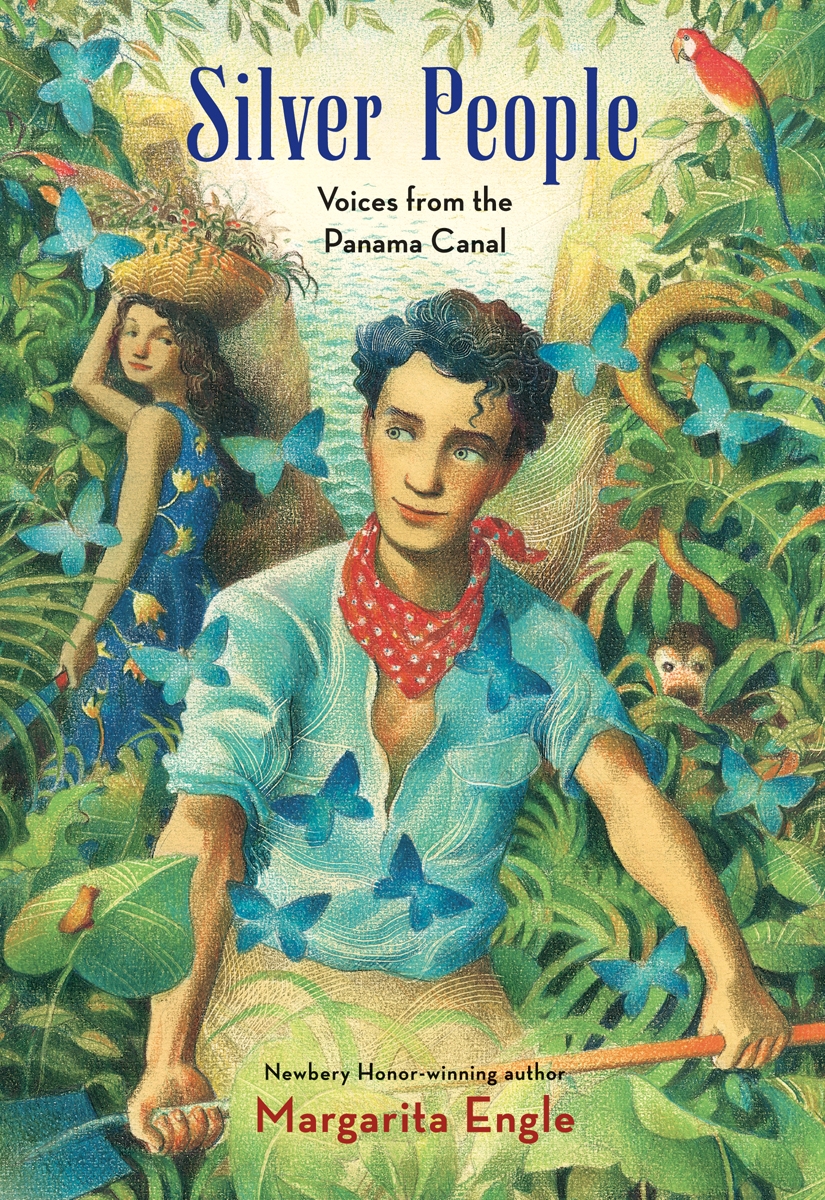
final Silver People cover-1Margarita Engle can be counted on to inject nature, naturalists, biodiversity, and environmental conservation in nearly all her books and has received recognition for her stand on these issues. Recently, Green Earth Book Awards shortlisted Silver People for its 2015 honors. Congratulations, Margarita!


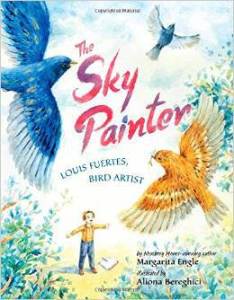
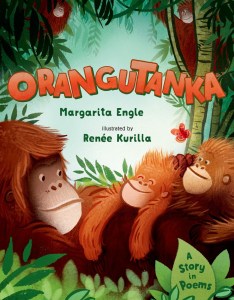
Two of Margarita’s 2015 releases embrace the wonders of nature.

Orangutanka   Sky Painter

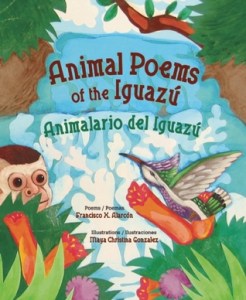
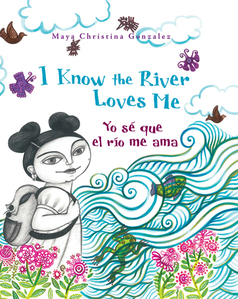
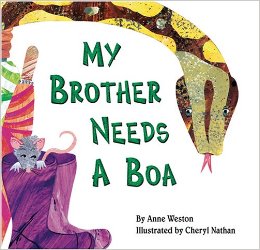
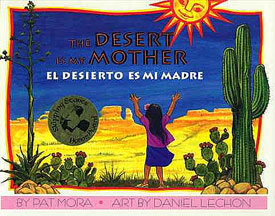
For more Earth Day-friendly books with Latin@ connections, check out these additional selections:

Animals Iguazy   River Loves Me      My Brother Needs a Boa   desert-is-my-mother

Need classroom resources related to the field of environmental activism?

Click here for information on The Américas Latino Eco Festival. Don’t overlook Mujeres de la Tierra, an inspiring group of activists located in California. 

Read about the amazing Xiuhtezcatl Martínez, a 14-year old champion of the planet!

For additional insights on the environmental heroes and projects featured in this post, check out these resources:

Omar Freilla is a New Yorker who appears in Heroes of the Environment. Here’s an article about his work.

Erica Fernanadez is another of the true-life characters in Heroes of the Environment. Here’s a video about her campaign for a cleaner environment:

As a follow up on Saving Birds, don’t miss this spectacular video of quetzals caring for their young.

And for young children, don’t forget Dora the Explorer’s cousin Diego, a passionate advocate for the environment!

Book Review: Super Cilantro Girl by Juan Felipe Herrera


1016493By Sonia Alejandra Rodriguez

DESCRIPTION FROM THE BOOK JACKET: What happens when a small girl suddenly starts turning green, as green as a cilantro leaf, and grows to be fifty feet tall? She becomes Super Cilantro Girl, and can overcome all obstacles, that’s what! Esmeralda Sinfronteras is the winning super-hero in this effervescent tale about a child who flies huge distances and scales tall walls in order to rescue her mom. Award-winning writer Juan Felipe Herrera taps into the wellsprings of his imagination to address and transform the concerns many first-generation children have about national borders and immigrant status. Honorio Robledo Tapia has created brilliant images and landscapes that will delight all children.

MY TWO CENTS: Upon learning that her mother has been detained at the border, Esmeralda Sinfronteras transforms into a superhero to rescue her mother from ICE. She uses the power of cilantro to grow taller than a house, with hair longer than a bus, and skin so green it could have only come from cilantro. Super Cilantro Girl flies to the border, climbs the dark and dreary detention center to her mother’s window, and simply picks her up and puts her in her pocket and they fly home.  The ICE agents are so mesmerized by the power of cilantro that they do not notice or prevent Super Cilantro Girl from rescuing her mother.  The next morning, Esmeralda makes a huge discovery about her and her mother.

Author Juan Felipe Herrera and illustrator Honorario Robledo Tapia have created a magnificent children’s book about the transformative power of imagination. Esmeralda is emblematic of the many children who have been separated from their families due to unjust and xenophobic immigration laws. Herrera and Tapia go beyond common debates about immigration to give a face and a voice to the children impacted. Esmeralda gains the power and courage she needs to confront ICE from the environment around her. Her grandmother and the land serve as vessels for alternative knowledge that guide Esmeralda through her journey. Furthermore, Herrera’s and Tapia’s reclamation of the color green juxtaposes Esmeralda’s power with the cultural and social power of the “green card.”  In Esmeralda’s imagination, her power is much stronger than anything ICE or a green card could ever have.

There are several ways to read race, gender, and class into this story in order to come up with a thorough analysis of how immigration impacts Latina/o children and their families. What I appreciate most about Herrera’s children’s book is that hope and empowerment are central to the narrative. Giving Esmeralda superpowers reveals the possibility for change that manifests from a child’s imagination. Super Cilantro Girl encourages children to dream, hope, and fight for their rights even if it means going against an entire state apparatus like ICE.

TEACHING TIPS: Super Cilantro Girl can be taught thematically by focusing on issues of (im)migration.  The story’s emphasis on alternative healing methods is resonant of Gloria Anzaldua’s Prietita and the Ghost Woman and Friends from the Other Side. All three texts pay particular attention to holistic healing methods that include using nature as a resource. This is especially important because it allows the children protagonists to gain empowerment from their environments—much in the same way that Esmeralda finds power in cilantro.

Focusing on the superhero theme presents an opportunity to connect art activities with reading. Yuyi Morales’s Niño Wrestles the World prompted the creation of Niño masks to accompany the story—something similar can be done with Herrera’s Super Cilantro Girl.  The relationship between social justice and superheroes in this story can be addressed by asking students to draw and imagine their own superhero. Students can imagine what a superhero in or from their community might look like or students can find inspiration from their community to create a superhero. Xavier Garza’s Charro Claus and the Tejas Kid is another excellent example of a child protagonist using his culture and community to be heroic.

There are several Latino kid’s books that focus on lucha libre that will pair wonderfully with Super Cilantro Girl. Lucha libre connects superhero-like characters with fantasy and reality and that can generate a powerful conversation about superheroes in our communities and culture as well as how children and youth can be their own heroes. Morales’s Niño Wrestles the World and Xavier Garza’s Lucha Libre: The Man in the Silver Mask are a few examples that tell stories about children and luchadores.

FOR MORE INFORMATION about Super Cilantro Girl,  visit your local library or bookstore. Also check out worldcat.orgindiebound.orggoodreads.comamazon.com, and barnesandnoble.com.


headshotSonia Alejandra Rodríguez has been an avid reader since childhood. Her literary world was first transformed when she read Rudolfo Anaya’s Bless Me, Última as a high school student and then again as a college freshman when she was given a copy of Sandra Cisneros’s The House on Mango Street. Sonia’s academic life and activism are committed to making diverse literature available to children and youth of color. Sonia received her B.A. in English from the University of Illinois at Urbana-Champaign. She is currently a PhD candidate at the University of California, Riverside, where she focuses her dissertation on healing processes in Latina/o Children’s and Young Adult Literature.