Book Review: Rotten! Vultures, Beetles, Slime, and Nature’s Other Decomposers by Anita Sanchez, illus by Gilbert Ford


Review by Emily Aguiló-Pérez
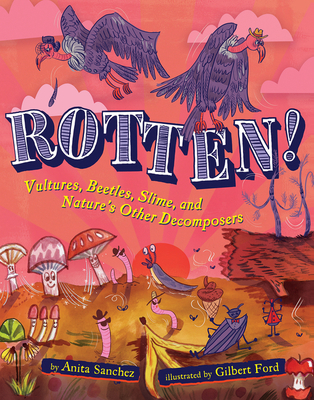
DESCRIPTION OF THE BOOK: What’s that terrible smell? Plug your nose! Run! Something smells…rotten! But rotten isn’t always bad. If nothing ever rotted, nothing could live. Decomposition seems like the last stop on the food chain, but it’s just the beginning. When dead things rot, they give life to a host of other creatures. So who are these decomposers? Sharks and vultures feast on animal carcasses. Worms, maggots, and dung beetles devour decaying plant and animal matter. Decomposition is happening everywhere: oceans, forests, in your backyard—even between your teeth! It’s nature’s way of creating energy for all living things. So unplug your nose! Open this book to uncover the dirty rotten truth about one of nature’s most fascinating processes.

MY TWO CENTS: Who knew learning about dung beetles, worms, vultures, mummies, and numerous other “rotten” things could be so much fun?! In this informative book, Anita Sanchez provides so many facts about decomposition. I learned, for instance, about the different kinds of dung beetles and how they create their homes out of dung. It’s fascinating! I also learned about the decomposition process of a tree log and why it doesn’t smell terrible (even though one would think anything rotten would smell badly). The book also touches on items that do not decompose and the dangers they pose for nature. Speaking about plastic, it explains that “landfills are overflowing with plastic that’s sitting there, not decomposing. But even worse is the plastic that doesn’t make it into a landfill” (65).

Eighty-three pages of information can seem like a lot for a young reader, but Sanchez’s writing paired with the engaging and colorful illustrations by Gilbert Ford truly provide a fun learning experience. The book is divided into eight chapters, each one focusing on a different decomposer. Each chapter has a variety of sections that provide focused information on the specific topic, using stories, humorous snapshots, and creative illustrations. Some of my favorite recurring sections were “Decomposer Selfie,” which provides short bits of information about an animal or organism, and “Rot It Yourself,” which offers brief experiment directions. There is much to enjoy in this book! It would make a great addition to any library.

TEACHING TIPS: The book naturally lends itself to a science classroom (especially upper elementary and middle grades). There are experiments students can perform and which do not require too many materials. In addition, students can use the bibliography that is included at the end of the book to perform further research on a specific topic, animal, organism, etc. presented in the book.

In addition, this book is a wonderful model for various approaches to informational or non-fiction writing. Because it uses narratives, short blurbs, longer texts, descriptions, comparisons, process analysis, and images, among others, students can learn about and develop their own skills for writing non-fiction.


Anita Sanchez--author photoABOUT THE AUTHOR: (from the dust jacket) Anita Sanchez loves to explore nature, even the stinky, slimy parts of it. She dug into the world of rot by creating a compost pile, viewing vultures, watching worms, and even swimming with (very small) sharks. Check out her blog about unloved plants and animals at anitasanchez.com.


ABOUT THE ILLUSTRATOR: (from the dust jacket) Gilbert Ford feels spoiled rotten for getting to spend all his time drawing. He is the author and illustrator of The Marvelous Thing That Came from a Spring and How the Cookie Crumbled. He has also illustrated the award-winning Mr. Ferris and His Wheel, Soldier Song, Itch!, and many middle grade novels. He lives and works in Brooklyn, New York. Learn more about his work at gilbertford.com.


headshotABOUT THE REVIEWER: Emily R. Aguiló-Pérez is an Assistant Professor of English (Children’s Literature) at West Chester University of Pennsylvania.  Her teaching and research are in the areas of children’s literature (particularly Latinx literature), girlhood studies, and children’s cultures. Her published work has focused on girlhood as represented in literature and Puerto Rican girls’ identity formation with Barbie dolls. She has presented research on Latinx children’s books at various conferences and has served on children’s book award committees such as the 2017 Lee Bennett Hopkins Poetry Award and the 2018 Pura Belpré Award. Currently, she is part of the Pennsylvania Center for the Book’s “A Baker’s Dozen” committee.

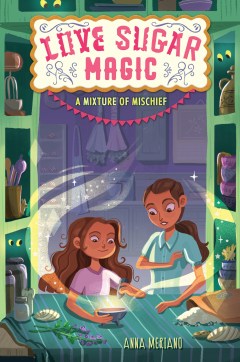
Celebrating the Release of the Final Book in the Love, Sugar, Magic Series by Anna Meriano + A GIVEAWAY!


Today is the book birthday for the final installment of the Love, Sugar, Magic series by Anna Meriano.

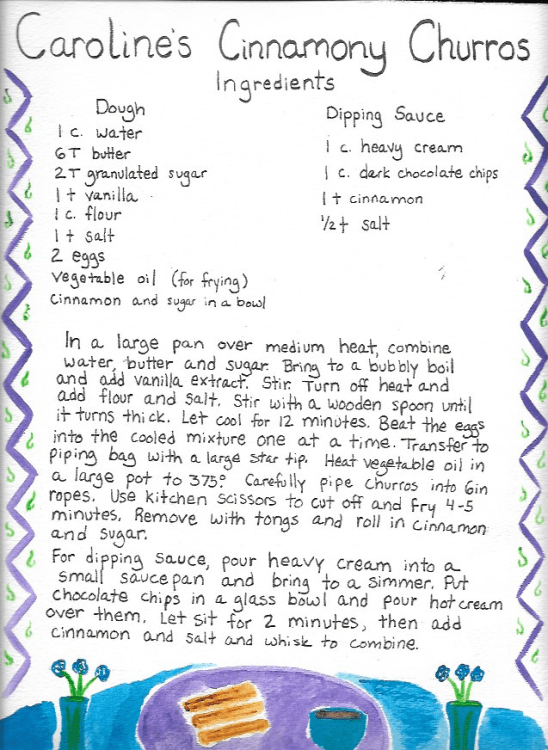
To celebrate, our own Cecilia Cackley has created two pieces of artwork to go along with two of the recipes from the series.

.

First, here’s information about the newest book in the series: LOVE, SUGAR, MAGIC: A Mixture of Mischief

LoveSugar3_snap

It’s spring break in Rose Hill, Texas, but Leo Logroño has a lot of work to do if she’s going to become a full-fledged bruja like the rest of her family.

She still hasn’t discovered the true nature of her magical abilities, and that isn’t the only bit of trouble in her life: Her family’s baking heirlooms have begun to go missing, and a new bakery called Honeybees has opened across town, threatening to run Amor y Azúcar right out of business.

What’s more, everyone around her seems to have secrets, and none of them want to tell Leo what’s going on.

But the biggest secret of all comes when Leo is paid a very surprising visit—by her long-lost Abuelo Logroño. Abuelo promises answers to her most pressing questions and tells Leo he can teach her about her power, about what it takes to survive in a world where threats lurk in the shadows. But can she trust him?

.

Next, we have links to cool stuff:

If you CLICK HERE, you will see our post celebrating the release of Book #2, complete with a Q&A with the author and original character collages.

If you CLICK HERE, you will see our review of the first book.

And if you click on the blue link, you will access the educators’ guide for all three books, thanks to the publisher. LOVE SUGAR MAGIC TEACHERS GUIDE

.

Now, we have information on the author, Anna Meriano 

MerianoAnna ap1 cAnna Meriano is the author of the books in the Love Sugar Magic series, A Dash of TroubleA Sprinkle of Spirits and A Mixture of Mischief. She grew up in Houston, Texas, and earned her MFA in creative writing with an emphasis in writing for children from the New School in New York. She has taught creative writing and high school English, and she works as a writing tutor. Anna likes reading, knitting, playing full-contact quidditch, and singing along to songs in English, Spanish, and ASL. Her favorite baked goods are the kind that open hearts. You can visit her online at www.annameriano.com.

.

Now, get ready to be amazed by the talents of Cecilia Cackley, and get ready to bake because these are real recipes!


Recipe1

Recipe2

AND THANKS TO WALDEN POND PRESS, WE HAVE ONE COPY OF BOOK 3 TO GIVE AWAY. ENTER TO WIN HERE:

http://www.rafflecopter.com/rafl/display/e39d5a2720/?


cecilia-02-originalCecilia Cackley is a Mexican-American playwright and puppeteer based in Washington, DC. A longtime bookseller, she is currently the Children’s/YA buyer and event coordinator for East City Bookshop on Capitol Hill. Find out more about her art at www.ceciliacackley.com or follow her on Twitter @citymousedc
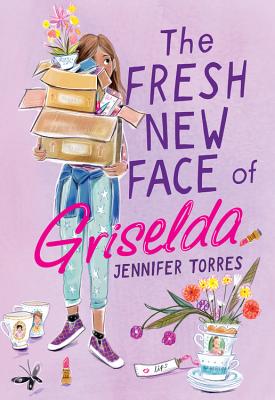
 

Book Review: The Fresh New Face of Griselda by Jennifer Torres


Review by Clarissa Hadge

DESCRIPTION OF THE BOOK: Griselda “Geez” Zaragoza has a love for beautiful things, like her collection of vintage teacups and the flower garden she and her dad planted in the front yard. But when his business fails, Griselda loses not just her home, but also her confidence and her trust in her unflappable parents.
Tagging along with big sister Maribel, who postponed college for a job selling Alma Cosmetics, Geez dreams up a way to reclaim the life she thinks she lost. If she can sell enough tubes of glistening, glittery Alma lip gloss, she’ll win a cash prize that could help jump start her dad’s business.

With ups and downs along the way, Geez will discover that beauty isn’t just lost or found, but made and re-made.

MY TWO CENTS: Griselda “Geez” Zaragoza and her family have fallen on hard times. Her dad has lost his landscaping business, forcing the family to move from their home to Griselda’s Nana’s house. Her mom, a former TV reporter from before Griselda was born, picks up hours as an assistant at Griselda’s Tia Carla’s salon. Griselda’s big sister Maribel has postponed going off to college to stay home and help the family by selling cosmetics door-to-door as a saleswoman for Alma Cosmetics. Griselda spends the summer before starting sixth grade following Maribel through her rounds.

After one of these sales calls, Griselda sees an ad in her sister’s cosmetic brochure that reads, “Are you between the ages of 12 and 19? Join Alma Cosmetics as a Junior Associate.” The ad promises Junior Associates who sell 500 tubes of Alma’s new Fairytale Collection lip gloss a chance to win $5,000, and the opportunity to be the “Fresh New Face” of the cosmetics line.

In the moment, Griselda tosses the brochure away, her mind heavy with thoughts about her family’s finances. The only thing that seems to bring her happiness anymore are her collection of First Lady teacups, found at various yard sales through the years, searching long and hard with her Nana. Maribel gives Griselda a lip gloss, for helping with their last sale.

A fashion forward classmate notices Griselda holding the lip gloss at lunch on the first day of school, and realizes that it’s a color that is from a new line. Griselda initially offers to give it away, but then she realizes that she could instead sell it to the classmate. The classmate eagerly buys the new gloss, and other girls notice, asking Griselda if she has other colors. An idea starts formulating in Griselda’s mind – that she could maybe become a Junior Associate with Alma Cosmetics, and potentially win the $5,000 prize. Griselda knows that $5,000 isn’t going to get her house back, or her dad’s job, but she knows that it can help her family in some way. After a starting boost from Maribel, she gains traction in her cosmetic sales. With more and more classmates excited about the new colors and styles, and their eager willingness to pay, Griselda’s popularity grows.

But though she is on her way to winning the cash prize, and maybe becoming the “Fresh New Face” of Alma, Griselda’s rise is not without its obstacles. She might be able to sell lip gloss and nail polish, but at what expense? Her friends? Her relationship with her family? Though her intentions are honorable, Griselda will learn a valuable lesson in what it takes to be at the top.

Jennifer Torres’s middle grade novel is a sweet tale of one girl trying to help her family. I appreciated the way that the novel dealt with class differences, Griselda’s introspection about her family’s situation, and what she could do to make things easier for all of them. Though the Zaragozas are not without a physical roof over their heads, and have the privilege of never going without food, Torres captures the turmoil a tween might undergo, of wanting to help, but not being quite old enough to make a significant difference. Griselda’s relationship with her Nana was one of my favorite parts of the novel, and with seamless Latinx references throughout the text – Griselda eating pan dulce with her Nana before school in the morning, the breezy inflections of her Nana calling her mija – I was reminded of my own childhood moments with my Granny.

The secondary character of Griselda’s best friend Sophia was fleshed out without being stereotypical. My heart broke as Griselda has less and less time with Sophia and have an inevitable falling out at the mall. The scene is supposed to be celebratory, as they are there to spend their birthdays together, but it ends in disaster. Griselda’s worry over money comes to a head when she internalizes all of her anger and sadness as she sees Sophia spending money, without having to care about how much everything costs, as Griselda does. The scene is poignant, both girls angry at each other for all the wrong reasons, but not realizing no one is really to blame in the moment.

I especially loved the details about Griselda’s First Lady tea cups, with each chapter starting with a quote from a First Lady. This characteristic of Griselda felt unique. I have to admit I searched online to see if these existed, and while it doesn’t appear as though a matching set exists in our world, I’d like to think that Griselda eventually finds all of the cups to make a full set.


jtorresABOUT THE AUTHOR: Jennifer Torres is the author of Flor and Miranda Steal the Show, Stef Soto, Taco Queen, and Finding the Music/En Pos de la Música. A graduate of Northwestern University and the University of Westminster, London, her background is in journalism. She has worked for The Record newspaper in Stockton and now lives with her husband and two little girls in Southern California.


CH headshotABOUT THE REVIEWER: Clarissa Hadge is a Chicanx transplant from sunny Southern California who now lives in the less-than-sunny Northeast. A graduate of Simmons University, her background is in writing for children. An advocate for more inclusive literature for children and young adults, she is the bookstore manager and children’s book buyer at an independent bookstore in Boston and the current co-chair of the New England Children’s Booksellers Advisory Council (NECBA).
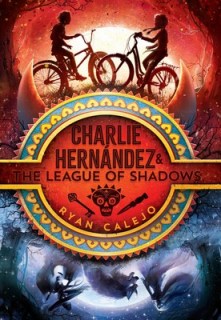
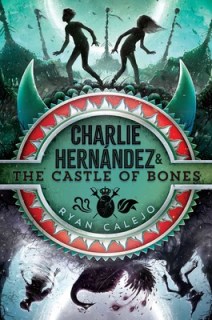
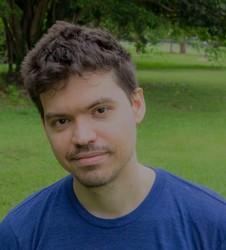
Of Myths and Monsters: A Conversation with Author Ryan Calejo


In 2018, Aladdin Books published Ryan Calejo’s Charlie Hernández and The League of Shadows. Fantastical and adventure-packed, this middle-grade novel introduces us to Charlie, a regular kid with some highly irregular experiences, plus a large cast of mythical figures from across Latin American and Spanish folklore.

(Learn more from our review by Jessica Walsh.)

Just released, Charlie Hernández and The Castle of Bones promises yet another heart-pounding ride with Charlie and his sidekick, Violet Rey, as they navigate an underworld teeming with witches, monsters, humanoids, and other wild and woolly creatures!

We are brimming with questions, and Ryan Calejo warmly accepted our invitation to field a few.

LiKL: Ryan, welcome to Latinxs in Kid Lit. We’re always excited to come across superbly crafted, high-adventure fiction starring Latinx characters. As you know, this combination is still too rare, leaving young Latinx readers hungry for compelling stories that mirror their experiences. As a kid, did you feel a similar disconnection?  In the Charlie Hernández series, were you consciously thinking of filling that void?

Ryan: I’ll admit, growing up, I did feel a similar disconnect. I fell in love with reading at a very early age, but back then there just wasn’t a whole lot of MG fiction featuring Latinx protagonists. I remember wondering why none of the characters in any of the books I read ever spoke Spanish, or even a little Spanglish, which, by the way, is the official language down here in South Florida—just kidding . . . sort of.
But, yes, it was definitely a goal of mine to fill that void. I believe that it’s incredibly important for kids to be able to read about characters that look and sound like them and have similar backgrounds. Every child should be able to see themselves in the books they read. Every child should be afforded the opportunity to see their inner hero. Also, with the changing demographics in our country, by not producing enough fiction featuring Latinx characters we run the risk of alienating a huge portion of our young readers and depriving them not only of the joys of reading but also of all its many benefits—which would be quite a shame, not to mention extremely unfair to those children. With so much technology out there to distract today’s youth, we need to be focusing on ways to get them excited about books and one of the easiest ways to accomplish that is by writing characters they can identify with. But thanks to wonderful organizations like Latinxs in Kid Lit I believe we are going to see a lot more diverse fiction in the years to come. And that’s a wonderful thing indeed!

LiKL: Your Charlie Hernández novels feature mythical figures drawn from the ancient folk tales of South and Central America, as well as Spain. Please share more about finding inspiration in myth and how you decided to build your stories around these tales.

Ryan: Myths have always fascinated me. Growing up I wasn’t exactly the best-behaved kid on the planet, so to keep me from running amok my abuelitas would entertain me by telling me stories—all the wonderful myths and legends they’d heard as children. Some were heartwarming, others funny, and quite a few were actually pretty terrifying! For some reason I remember the scary ones the most. Probably because my grandmothers used those to try to frighten me into behaving! I can’t tell you how many times I heard: “¡Comete toda la comida, si no La Cuca se enoja!” Or, “¡No te levante del sofa que La Mano Peluda te va a cojer!” (A line which my grandmothers loved to tell me right before lunchtime, when one of my favorite moves was to wait for them to become distracted, then jailbreak my little cousins from their high chairs!)

But the truth is, every single one of those stories, from the terrifying to the hilarious, became ingrained in me. They became a huge part of my everyday life, and as a result it was easy to imagine them existing in the real world because, in my young imagination, that was where they’d always existed. As a little kid listening to those stories and growing up in such an ecologically diverse place like South Florida, I always felt as if the supernatural was lurking just around the corner, hiding under my bed or somewhere deep in the Everglades, so building a novel around these myths felt quite natural, almost like an extension of my childhood. Honestly, I’ve had a lot of fun writing the books. But it’s also been a deeply personal experience because my goal was to pass these myths and legends down to the next generation just like my grandmothers passed them down to me. As funny and entertaining as most of them are, these tales are actually cultural time capsules wrapped up in story; they give us incredible insight into what our ancestors believed, what concerns they had, what knowledge they felt was vital to pass on to their children. And it’s this richness of culture that has always inspired me to dig deeper into these myths—and even write stories about them!

LiKL: We’d love to hear about your path to publication, as well as your writing practices.

Ryan: Writing became a thing for me in elementary school. And that’s thanks to my wonderful fifth grade teacher—Hi, Mrs. Homans! She assigned us a writing project with the only requirement being the length: One page, front and back. I remember coming home and brainstorming ideas with my mom. It was a blast! And I’ve been scribbling down stories ever since! As far as writing practices, I do try to hit a daily word count—about twelve hundred words—but I don’t make it a huge deal. For me, writing has always been fun and that’s exactly how I want to keep it. My advice for aspiring writers would be just that: have fun! Don’t make writing a stressful process. Write because you love to write. And remember: even the unruliest of chapters can be tamed with the mighty backspace button!

LiKL: So what is Ryan Calejo working on next?

RyanI’m currently working on the third book in the series, which I’m super excited about. A slew of new myths will be joining the cast and, of course, there will be plenty of laughs and adventure! I think readers are really going to enjoy it—fingers crossed! For sneak peeks and cover reveals, follow me on Twitter @thebookglutton and on Instagram @ryancalejo!

ABOUT THE AUTHOR: Ryan Calejo was born and raised in south Florida. He graduated from the University of Miami with a BA. He teaches swimming to elementary school students, chess to middle school students, and writing to high school students. Having been born into a family of immigrants and growing up in the so-called “Capital of Latin America,” Ryan knows the importance of diversity in our communities and is passionate about writing books that children of all ethnicities can relate to.


Finding a Home in Stories: A Guest Post by Middle-Grade Author Adrianna Cuevas

By Adrianna Cuevas

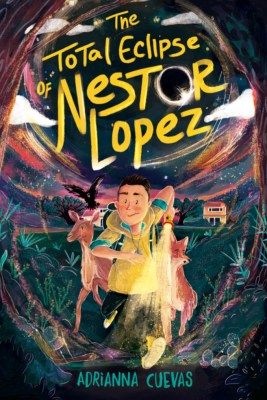
In my debut middle grade novel, The Total Eclipse of Nestor Lopez (Publication date: 5/12/20, FSG/Macmillan), military kid Nestor Lopez moves houses so much, he loses his sense of place. He finds a home trading books with his deployed dad, father and son writing notes and questions in the page margins while artistic Nestor adds illustrations. Stories connect him to his dad stationed thousands of miles away.

When Nestor reads a book with his father, he’s able to explore his dad’s military experiences in a new way and the book enables conversations service members are often reluctant to engage in. As Nestor explains:

“I flip through the pages of this book, Sunrise Over Fallujah by Walter Dean Myers, and stop the first time I see Dad’s handwriting. I press my fingers over his words, closing my eyes and imagining him sitting in his rack, reading. I flip through each page, looking for his handwriting, scanning for evidence of the life he lives when he’s away from us.”

Stories connect Nestor to those around him and deepen his relationships—particularly important for a boy who feels that home is something impermanent and unreliable.

Not all young readers will relate to Nestor’s constant moves. Not all will connect with the concept of a parent who is far away. But regardless of their current situation, readers can see books as a home. A place to retreat. A place to feel seen and accepted.

Growing up, that’s what books were to me.

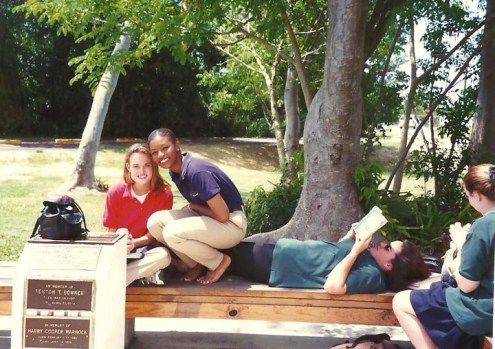
My teenage social life summed up in one photo

As a child, I devoured any story I could get my hands on. With parents and a sister who were all avid readers, trips to the library to fill up bags of books and evenings spent browsing bookstore shelves were as expected as pastelitos for Nochebuena and Celia Cruz on the radio. I knew the bookstore and library at the University of Miami, where my dad was a professor, as well as my own house.

The books of my childhood transported me to places I’d never been. As a Florida girl, I was obsessed with the snowy wilderness in Jack London short stories. A solitary introvert, I marveled at the friendships in the Babysitters Club series. My early thirst for the gruesome and grim was satisfied by an illustrated edition of Edgar Allan Poe’s short stories and poems. I didn’t think I needed books with Cuban-American main characters because my culture was all around me in Miami—in the food, the language, the music.

It wasn’t until I moved to the Midwest for college that I realized what a haven books can be for readers. I’d never lived anywhere so homogenous, both culturally and ideologically. In Miami, I was allowed to be a book-obsessed hockey fan who was bad at sports and loved to travel. In my new surroundings, I was Latina, nothing more and always less. I was complimented on my mastery of the English language, even though I didn’t speak Spanish fluently until I was in my twenties. Despite receiving an academic college scholarship, I was required to attend seminars about how not to get pregnant and drop out, the expectation for minority students. I was met with confused stares when I confessed that I didn’t like spicy foods because don’t all Mexicans like that? No longer able to see my culture or myself in my environment, I turned once again to my reliable home—books.

I shielded myself from ignorance and microaggressions I had never before experienced by diving into books by Sandra Cisneros, Julia Alvarez, Margarita Engle, and Isabel Allende. Their words were familiar, a hand on my shoulder telling me I wasn’t alone. In their stories, I saw loud, boisterous families that mirrored my own. I read mouthwatering descriptions of the food I missed, whose ingredients weren’t even available to me anymore. My language was presented as something beautiful and poetic, not something to be overcome and unlearned. I had never understood the importance of seeing yourself represented in stories until I wasn’t represented in the society around me.

In Total Eclipse, Nestor moves from a place where he is seen and accepted to a place where he is misunderstood and othered. For the first time in his life, he lives off-post and experiences what it’s like to live away from a military base.

“Fort Hood had a Whataburger, a video arcade, and a comic book shop… Most kids at school had parents in the military, so everyone understood if you didn’t want to talk in the middle of science because your dad had flown across an ocean the night before. Now Mom’s moved me to a town where I’m a circus freak. An alien from a distant planet. My only comfort is knowing I might not be here long.”

Unfortunately, Nestor doesn’t have the option like I did to dive into stories and see himself in books, as military family representation, especially Latinx families, is incredibly small in children’s literature. How much would it have meant to him to have books like Pablo Cartaya’s Each Tiny Spark to help him while his father is deployed?

Similarly, my choices when I moved to the Midwest were limited and it was difficult to find books that reflected my Cuban-American experience. Twenty years ago, the catalog of stories featuring characters like me was microscopic. How much more at home would I have felt with Nina Moreno’s Don’t Date Rosa Santos or Laura Taylor Namey’s The Library of Lost Things at my disposal when I was an awkward freshman? I would have taken Celia Perez’s The First Rule of Punk and Strange Birds, as well as Carlos Hernandez’s Sal and Gabi Break the Universe to college with me, turning to them when I felt othered and isolated.

Children deserve to see themselves in stories, not just as caricatures of their culture, but as representatives of the diversity that exists within a culture and as humans with all their quirks and flaws. Nestor Lopez isn’t just a Cuban-American kid who scarfs down his abuela’s croquetas de jamón and plays dominos with his abuelo. He loves dart gun battles, Pokémon cards, and random animal trivia. He’s quick with a snarky remark and his fingers are constantly smudged with pencil lead from sketching. It is my hope that in Nestor, young readers will find a friend they can relate to who shares their eccentricities and hopes.

In a world increasingly antagonistic toward Latinx people, our words as authors have the opportunity to whisper to children, “You are not alone.” Our books can serve as a blanket that warms them when they’re surrounded by the coldness of indifference and ignorance. Our characters can show them they can be heroes.

Our stories can welcome them home.


Adrianna Cuevas is a first-generation Cuban-American originally from Miami, Florida. After teaching Spanish and ESOL for sixteen years, she decided to pursue her passion for storytelling. Adriana currently resides outside of Austin, Texas, with her husband and son, where they enjoy hiking, traveling, and cooking lots of Cuban food. Learn more about Adrianna on her website. And be sure to follow her on Twitter!
 

Spotlight on Middle Grade Authors Part 12: Tami Charles


By Cindy L. Rodriguez

This is the twelfth in an occasional series about middle grade Latinx authors. We decided to shine a spotlight on middle grade writers and their novels because, often, they are “stuck in the middle”–sandwiched between and overlooked for picture books and young adult novels. The middle grades are a crucial time in child development socially, emotionally, and academically. The books that speak to these young readers tend to have lots of heart and great voices that capture all that is awkward and brilliant about that time.

Today, we highlight Tami Charles.

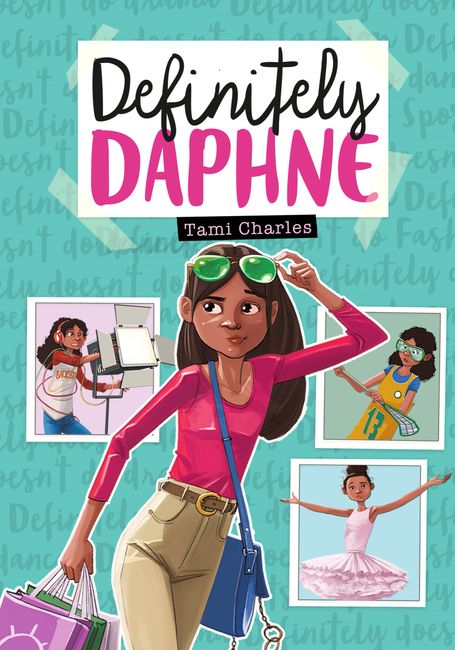
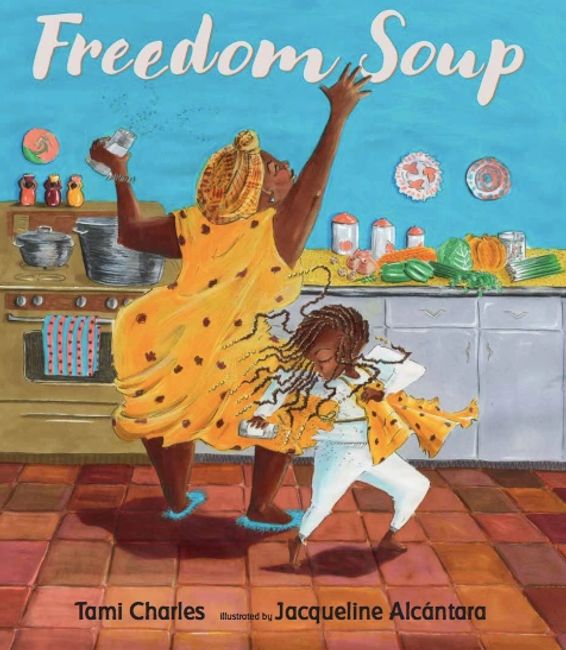
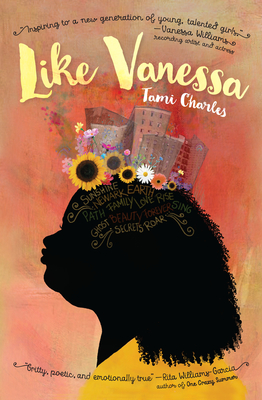
Former teacher. Wannabe chef. Tami Charles writes books for children and young adults. Her middle grade novel, Like Vanessa, earned Top 10 spots on the Indies Introduce and Spring Kids’ Next lists, three starred reviews, and a Junior Library Guild selection. Her recent titles include a humorous middle grade, Definitely Daphne, picture book, Freedom Soup, and YA novel, Becoming BeatrizWhen Tami isn’t writing, she can be found presenting at schools both stateside and abroad. (Or sneaking in a nap…because sleep is LIFE!)

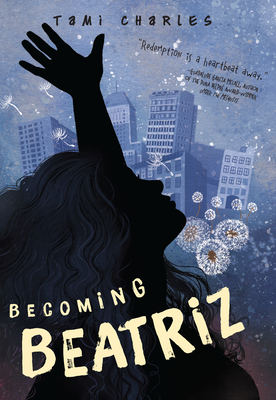
Becoming Beatriz released September 17, 2019.


Here is the publisher’s description:

Beatriz dreams of a life spent dancing–until tragedy on the day of her quinceañera changes everything.

Up until her fifteenth birthday, the most important thing in the world to Beatriz Mendez was her dream of becoming a professional dancer and getting herself and her family far from the gang life that defined their days–that and meeting her dance idol Debbie Allen on the set of her favorite TV show, Fame. But after the latest battle in a constant turf war leaves her brother, Junito, dead and her mother grieving, Beatriz has a new set of priorities. How is she supposed to feel the rhythm when her brother’s gang needs running, when her mami can’t brush her own teeth, and when the last thing she can remember of her old self is dancing with her brother, followed by running and gunshots? When the class brainiac reminds Beatriz of her love of the dance floor, her banished dreams sneak back in. Now the only question is: will the gang let her go?

Set in New Jersey in 1984, Beatriz’s story is a timeless one of a teenager’s navigation of romance, her brother’s choices, and her own family’s difficult past. A companion novel to the much-lauded Like Vanessa.

Tami Charles

PictureQ. Who or what inspired you to become a writer?
First and foremost, my mother played a huge role in my love of reading. She was a teacher (and eventual principal) at my elementary school, so I didn’t really have a choice, ha! She introduced me to many of my favorite authors: Toni Morrison, Maya Angelou, Lois Lowry, Beverly Cleary, etc…When I became a teacher, I experienced the joy of reading more diverse books that I wasn’t exposed to as much while growing up. This really reignited my passion to become an author.

Q. Why did you decide to write a middle grade novel?

I clearly remember this period of my life when I was trying to figure out who I am and who I wanted to be. It only seemed right to get those feelings on the page. My debut, Like Vanessa, was born out of similar personal experiences I went through as a 13-year-old.

Q. What are some of your favorite middle grade novels?

For sure, the One Crazy Summer series by Rita Williams-Garcia. I also love Crossover by Kwame Alexander and Because of Winn Dixie by Kate DiCamillo.

Q. If you could give your middle-grade self some advice, what would it be?

Put your blinders on! Don’t worry about what other people are doing, how smart they are, how athletic they are, etc…Just follow your own path.

Q. Please finish this sentence: Middle grade novels are important because…..

they provide real connections for readers that will stay with them for years to come.

Books by Tami Charles:

    image2  image5


photo by Saryna A. JonesCindy L. Rodriguez was a newspaper reporter for The Hartford Courant and researcher at The Boston Globe before becoming a public school teacher. She is now a reading specialist at a Connecticut middle school. Cindy is a U.S.-born Latina of Puerto Rican and Brazilian descent. She has degrees from UConn and CCSU. Her debut contemporary YA novel, When Reason Breaks (Bloomsbury 2015). She also has an essay in Life Inside My Mind (Simon Pulse 2018). She can be found on FacebookTwitter, and Goodreads.