The 2014 International Latino Book Awards Finalists!

Below are the 2014 finalists for the 16th Annual International Latino Book Awards in the children’s, youth, and young adult categories. If you click on the images, you will be taken to Goodreads, Barnes and Noble, or Amazon for more information. The Awards are produced by Latino Literacy Now, an organization co-founded by Edward James Olmos and Kirk Whisler, and co-presented by Las Comadres para las Americas and Reforma, the National Association to Promote Library and Information Services to Latinos. The Awards themselves will be June 28 in Las Vegas as part of the ALA Conference. For the complete list, which includes adult fiction and nonfiction, check out the Latina Book Club site. Congratulations and good luck to all of the finalists!

Best Latino Focused Children’s Picture Book: English

18296043  15791044

Best Latino Focused Children’s Book: Spanish or Bilingual

17265250  19483940  An Honest Boy Un hombre sincero

Best Children’s Fiction Book: English

18492598  15842628  The Box of Holes  

Best Children’s Fiction Picture Book: Bilingual

17267265  17940785  15938471  16000381

Best Children’s Fiction Picture Book: Spanish

20948920  17802285  16457293  18406769  20454675

Best Children’s Nonfiction Picture Book

13610203  An Honest Boy Un hombre sincero  The Dog That Became a Lion

Best Educational Children’s Picture Book: English

17465058  18296043  15791044

Best Educational Children’s Picture Book: Spanish or Bilingual

  19483940  Hola! Gracias! Adios!  18126680  Embedded image permalink

Most inspirational Children’s Picture Book: English

18371476

Most inspirational Children’s Picture Book: Spanish or Bilingual

18198024  9542372  Embedded image permalink  Pink Firetrucks  18406693

Best Youth Latino Focused Chapter Book

10436183  16670129  Front Cover

Best Youth Chapter Fiction Book: English

16131067  17166339  16059385

Best Youth Chapter Fiction Book: Spanish or Bilingual

10162585    

Best Youth Chapter Nonfiction Book

Most inspirational Chapter Book

Front Cover  The Adventures of Chubby Cheeks: The Pro Quest

Best Young Adult Latino Focused Book: English

Insurgency: 1968 Aztec Walkout by Victor Gonzalez

17274543  15769992  Stars of the Savanna

Best Young Adult Latino Focused Book: Spanish or Bilingual

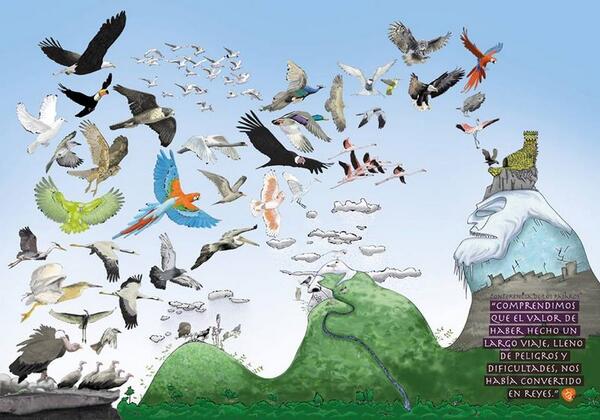
Los Pájaros No Tienen Fronteras by Edna Iturralde

18208087

Best Young Adult Fiction Book: English

17184137  12154323  15814459  15798660  A Girl Named Nina

Best Young Adult Fiction Book: Spanish or Bilingual

La Guarida de las Lechuzas by Antonio Ramos Revillas

Best Young Adult Nonfiction Book


Best Educational Young Adult Book

18462053  Stars of the Savanna  

Most Inspirational Young Adult Book

15769992  12352685  Stars of the Savanna

Best Book Written by a Youth: English

15020431  15874623

Best Book Written by a Youth: Spanish or Bilingual

  Serendipity, Poems About Love in High School

Best Children’s Picture Book Translation: Spanish to English

Avian Kingdom Feathered Tales: Birds Of A Feather  Avian Kingdom Feathered Tales: Pelican Sky  Avian Kingdom Feathered Tales: Two Hoots and a Holler  17465058

Best Children’s Picture Book Translation: English to Spanish

El Día Maravilloso de Hacer Tamales que Tuvo Sofia by Albert Monreal Quihuis; translator: Veronica Lamanes

Best Chapter/Young Adult Book Translation: English to Spanish

El Gusano de Tequila

Best First Book: Children’s and Youth

Stars of the Savanna  An Honest Boy Un hombre sincero  

Book Review: Confetti Girl by Diana López

By Cindy L. Rodriguez

Confetti GirlDESCRIPTION FROM THE BOOK JACKET: Apolonia “Lina” Flores is a sock enthusiast, a volleyball player, a science lover, and a girl who is looking for answers. Even though her house is crammed full of her dad’s books, she’s having trouble figuring out some big questions, like why her father keeps retreating into his reading, why her best friend is changing their old rules, and, most of all, why her mother had to die last year. Like colors in cascarones, Lina’s life is a rainbow of people, interests, and unexpected changes.

MY TWO CENTS: In Confetti Girl, López masterfully blends serious middle school issues, like friendships and first kisses, with the even more serious issues middle schoolers face, such as the death of one parent and the paralyzing grief of the other. Apolonia “Lina” Flores is an easily lovable character with her crazy socks and desire to do well on the volleyball court and in the classroom. But everything starts to unravel as Lina’s dad gets lost in books and her best friend, Vanessa, gets lost in Carlos’s dreamy eyes. With her relationships already strained, Lina’s situation gets worse when she’s benched for failing grades.

What makes Confetti Girl not only an awesome middle grade read but also a great novel about Latin@s is how López seamlessly weaves in cultural details. She talks about how she decided to include certain details here. By using such things as cascarones and dichos throughout the novel, López introduces cultural specifics to readers without being preachy or teacher-like. In other words, I could see young readers responding with, “Cool, let’s make those,” or “Yup, my mom says things like that all the time,” instead of “Oh, that’s a Latin thing” (closes book). The Kirkus review of this novel put it this way: “An appealing coming-of-age novel set in a traditional Mexican-American town, in which Hispanic teachers, students and parents celebrate traditional American holidays such as Thanksgiving alongside such traditional Mexican observances as el Día de los Muertos and a Quinceañera.” Click here for the full review.

Confetti Girl, López’s first middle grade novel, was a winner of the William Allen White Award and named to New York Library’s “100 Titles for Reading and Sharing.” It was a commended title for the 2010 Américas Award for Children’s and Young Adult Literature, and Latinidad’s “Top Latino Book of the Year” for Middle Grade Category. It was also a Scholastic Book Club and Book Fair Selection.

TEACHING TIPS: Lots of great teaching tips, including discussion questions and activities, can be found on the author’s website. Click here for her “Teacher Resource” page and here for a PDF of a Teacher’s Guide for Confetti Girl.

Also, to align with the Common Core State Standards, teachers could easily mix this fictional novel with nonfiction articles that range from cascarones to the grieving process. Teachers could also bring in Watership Down by Richard Adams since it plays a significant role in Confetti Girl. Students could read Watership Down first and then read Confetti Girl to truly understand how the classic novel helps Lina to make sense of her own life.

LEXILE: 660

AUTHORDiana López is the author of the adult novella, Sofia’s Saints and the middle grade novels, Confetti Girl, Choke, and the recently released Ask My Mood Ring How I Feel. She is also featured in the anthologies Hecho en Tejas and You Don’t Have a Clue. She has been a guest on NPR’s Latino USA and is the winner of the 2004 Alfredo Cisneros del Moral Award. Diana teaches English and works with the organization, CentroVictoria, at the University of Houston Victoria.

For more information about Confetti Girl visit your local library or bookstore. Also check out GoodreadsIndieBound.orgWorldCat.orgLittle Brown Books for Young ReadersScholasticAmazon, and Barnes and Noble.

You can also click here for a book trailer of Confetti Girl featuring the author!

Diana can also be found on the site Read to Write Stories, where she blogs about how to create conflict with subtext.

Diana López on Migas, Confetti, and Martha Stewart

By Diana López

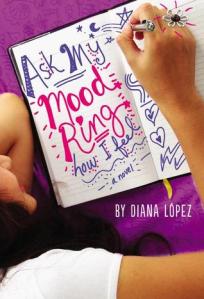
Ask My mood RingRecently, I was asked an excellent question. This came from a writing teacher who shared Ask My Mood Ring How I Feel with his class and wanted me to comment on the narrative techniques I used. His students noticed that I’d added a description of migas, a dish that Tejanos are very familiar with. So they were curious about how I handled cultural details in my fiction. In other words, when writing for readers who do not have the same cultural background as my characters, how do I decide what to explain and what to leave for the reader to figure out?

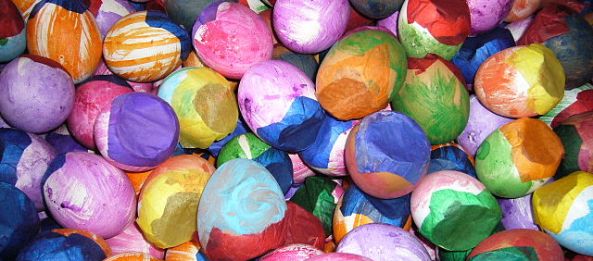
I love sharing the unique foods, words, and customs of my Tex-Mex world. That said, I don’t intentionally add cultural details. I don’t have to because they’re here, in my home and neighborhood. I don’t even recognize them as unique sometimes. For example, in the second chapter of Confetti Girl, we visit a home filled with cascarones and everything that is used to make them—eggshells, tissue paper, vinegar dyes, and confetti. I grew up with cascarones. Starting in January, my mother would save eggshells, and by the end of Lent, we’d have piles of egg cartons stacked on top of the fridge. She’d save old magazines and newspapers too, so we could make confetti with a hole-puncher. Then a few days before Easter, the family would gather around the table to dye the eggshells and fill them with confetti. This was my favorite part of cascarones—not cracking them on each other’s heads but making them.
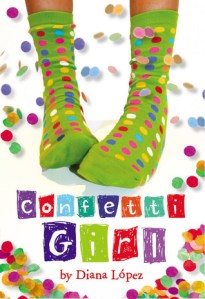
Confetti GirlCascarones are an important tradition during San Antonio’s Fiesta, and people often sell them from empty parking lots or their front yards. After seeing so many confetti eggs around my neighborhood, I thought, what a great detail for my book. I had no idea they’d be so important in the final version.

When I first submitted the manuscript to New York publishers, they wrote back with questions about these mysterious cascarones. They wanted pictures and instructions. They were so fascinated by something I’d taken for granted. So now when you open a copy of Confetti Girl, you’ll see the confetti egg instructions on its opening pages. It’s wonderful to hear from readers who are making them for the first time. A young girl from Australia wrote to say that she and her mum made them, and when I visit schools, students often share some very creative cascarones, much too pretty to crack on anyone’s head.

Something similar happened with a cultural detail in my mood ring book. Making a promesa when someone gets ill is a common practice in South Texas, so naturally, when my character Erica learns her mother has breast cancer, she makes a promise to get five hundred people to sponsor her for a fundraiser. Like the cascarones, the promesa gained importance as I worked through the novel. Not only did it provide a goal for Erica, but it also worked thematically by giving her a chance to ask a lot of questions about faith and hope. I love when details come to life this way.
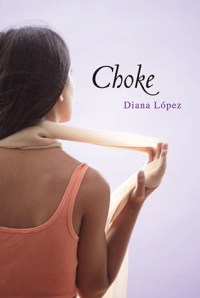
ChokeThere are smaller cultural details in my books, too. Erica sings “pio pio pio” to her mom. In Choke, my character eats barbacoa and drinks Big Red for breakfast. My books are full of “mijas” and “viejitos.” These details may not take on any symbolic significance, but they are just as important because they’re integral to the setting.

At a book festival last month, a participant asked me to name a pet peeve related to writing. I said, “I hate when people tell me I should add more cultural interest to my books.” In other words, I don’t like these details to be forced. They have to feel natural, and as long as I’m not consciously adding them, they will be. Sure, my characters eat migas, but they eat pizza, too.

So how do I decide which details to explain and which to leave alone? This is where a good editor comes in. We’ll get to this point in the revision process where she’ll highlight places with unfamiliar images and words. I remember the first time this happened. I wrote a book set in Corpus Christi, and I mentioned the T-heads, not realizing how unique that term was. The editor had no idea what I was talking about, so I added an appositive phrase for clarification. Ultimately, that’s what I have to determine. Are there enough context clues or should I be a little more explicit? The last thing I want is for a reader to stop because she’s confused. In that sense, I am very grateful to have an editor who is not from my world and who can point out these places—and the best editors are good about letting me decide what to do.

Now here’s something very interesting. Did you know that Martha Stewart featured cascarones on her show? Soon they’ll be as mainstream as piñatas and guacamole, so don’t be surprised when I take all the credit!

Photo credit: Todd Yates

Photo credit: Todd Yates

Diana López is the author of the middle grade novels Confetti Girl, Choke, and Ask My Mood Ring How I Feel. An adaptation of Choke will be featured on the Lifetime Movie Network this summer. Ms. Lopez teaches at the University of Houston-Victoria and works with CentroVictoria, an organization devoted to promoting Mexican American literature. She is also one of the editors of the literary magazine, Huizache.

2014 Reading Challenge: January

We are one month into our Latin@s in Kid Lit Reading Challenge, and our participants have completed an awesome array of books! Below are the covers, which link to any reviews written. Some people have chosen to read and not review (which is fine). In these cases, when you click on the cover, you will go to the book’s general Goodreads page. Have fun browsing the books below. Maybe you’ll even add a few to your own TBR list!

A note to participants: As you complete books, please send us the information, so we can share what you’re reading each month.

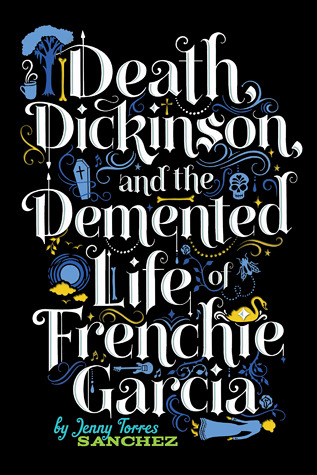
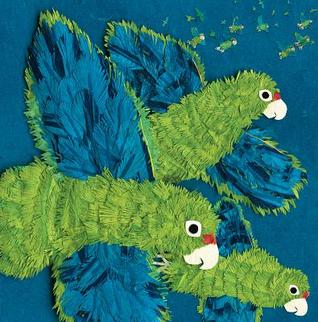
The Girl of Fire and Thorns (Fire and Thorns, #1)   Maximilian & the Mystery of the Guardian Angel: A Bilingual Lucha Libre Thriller  Death, Dickinson, and the Demented Life of Frenchie Garcia  The Knife and the Butterfly  The Wild Book  The Vicious Deep (The Vicious Deep #1)  Fat Angie   Marcelo in the Real World  The Girl Who Could Silence the Wind   Colibri   Yes! We Are Latinos!   Marisol McDonald Doesn't Match / Marisol McDonald no combina   My Abuelita   Dear Primo: A Letter to My Cousin   Moony Luna/Luna, lunita lunera   What Can You Do with a Rebozo?   Everybody Cooks Rice (Picture Books)   Parrots Over Puerto Rico   A Leaf Can Be . . . (Millbrook Picture Books)

Also, since February is Black History Month, we propose a challenge within a challenge. This month, try to read a book by/for/about Afro-Latin@s. Here are some suggestions:

Pele, King of Soccer/Pele, El rey del futbol     Celia Cruz, Queen of Salsa     Grandma's Gift     Grandma's Records     Me Llamo Celia/My Name Is Celia: La Vida de Celia Cruz/The Life Of Celia Cruz     The Poet Slave of Cuba: A Biography of Juan Francisco Manzano     Secret Saturdays     Marisol and Magdalena   Efrain's Secret

On Privilege and (a Lack of) Diversity on My Bookshelves

This is an excellent post from Kayla Whaley who has joined our 2014 Reading Challenge. She makes a great point about supporting diversity by choosing to diversify her bookshelves. Saying you support diversity in kid lit is great. Doing something, like reading more books by and about POC, is even better! Thanks for joining us, Kayla!

The Road to Publishing: a Q & A with Andrew Karre of Carolrhoda Books

On Tuesday, Ashley Hope Pérez laid out what it’s like to work with rock star editor Andrew Karre , editorial director of Carolrhoda Books, Carolrhoda Lab & Darby Creek. Today, we have a bonus post, a Q&A between Ashley and Andrew, the last piece in our “Road to Publishing” series. We hope it’s been helpful! All of the posts can now be found if you click on the “The Road to Publishing Series” tab on the menu.

Ashley: What are the rookie mistakes you see first-time authors make during the editorial process?

Andrew: Rushing revisions. There are no points for speed. Although I hope I’ve learned enough to anticipate this and prevent it.

Ashley: What qualities make you look forward to working with an author again on a future project? Any deal-breakers?

OLYMPUS DIGITAL CAMERA

Andrew: A spirit of adventure. The authors I most enjoy working with are excited about the process. They like to use me as a sounding board, as a stress-test for their work. They want to hear my questions and suggestions, but they’re quite capable of going an entirely different direction. I’m not interested in authors who unquestioningly adopt my view of YA fiction. I’m interested in authors who will engage with it and articulate their own. In many cases, editing is a bit of a friendly struggle between the author and me wherein my goal is to lose in an interesting way that highlights the author’s strengths.

Ashley: In what way(s) does your approach to the editing process differ from other editors you know or have worked with?

Andrew: It’s hard to say. I only have second-hand information about how others edit. I tend not to write editorial letters. I prefer to write voluminous marginal notes and have lots of phone conversations (or lunches, whenever possible). Maybe that’s unusual? My goal in a markup is to highlight the places where an author is at the height of her powers and then challenge her to meet that standard throughout.

Ashley: Boundary-pushing is arguably your editorial signature. How does that priority influence the guidance you offer authors during the editing process?

Andrew: I don’t really think about that when we’re editing. Editing is about realizing and reconciling a manuscript’s potential and its author’s vision. It’s about pleasing the two of us, first and foremost. Insofar as we worry only about the limitations inherent in the manuscript, I guess the desire to be unbound is present.

Ashley: Beyond writing (and revising) a novel into its best possible form, what should authors be doing from the time they sign their contract to the time of the book’s release?

Social-media-for-public-relations1Andrew: There are a few practicalities every author should take care of–at least by that point if not sooner. Acquire all your digital real- estate. By that I mean, register a useful domain name, grab a good Twitter handle, etc.  Even if you can’t see how you’ll use them, at least you’ll have them. The only one of these that costs anything is the domain, and that’s cheap. Then, read your contemporaries. And if you can, interact with them as a colleague and fellow traveler. Join the conversations online in much the way you’d join a dinner party conversation: wait for your opening, and take it graciously when it comes. Be interesting, first and foremost. It’s not about selling.

Ashley: I distinctly remember a come-to-Jesus talk we had about social media some time between revisions for What Can’t Wait and the book’s launch day. I remember feeling very overwhelmed. Now, four years down the line, I can see lots of benefits from the relationships that I’ve established by existing online and at least intermittently being present in Twitter and other spaces.

At Latin@s in Kid Lit, we’re working to draw more attention to great books for younger kids as well as teens. What are some of your favorite books to read to or with your boys?  Do their preferences ever surprise you?

Andrew: Henry (5) loves nonfiction at the moment. He loves processes and technical details so we read a lot of things in that vein. I really loved Building Our House by Jonathan Bean. In the coverage of the death of Charlotte Zolotow, we discovered her Over and Over, and that’s been fun.  I still enjoy reading Goodnight Moon to Edmund (18 months).

Ashley: What’s one book that you hope to find in your stocking this holiday season?

Andrew: I still haven’t read NW by Zadie Smith and I generally enjoy her work.

Ashley: Any thoughts on the current state of publishing with regard to the percentages of works by/for/about Latin@s?

Andrew: It seems to me that the level of awareness of the need among publishers is high, as is the desire to find and break out new voices. High enough? I don’t know if it’s possible to say. I know I’m encouraged.