Q&A with Author Estela Bernal About “Can You See Me Now?”

can you see me nowBy Edith Campbell

This Q&A was originally published on Edi Campbell’s site.

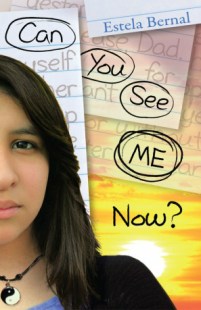
Estela Bernal made her debut as an author this past May with Can You See Me Now? (Pinata/Arte Publico). As you get to know her today and find out a little more about Can You See Me Now? you’ll be impressed, but you’ll be even more impressed to know that she’s donating 100% of her proceeds to education and animal rights.

Just a little about the book. Kirkus says:

Tragedy strikes on Mandy’s 13th birthday when her father is struck by a drunk driver and killed. Now grief—both her own and her mother’s—complicates the already confusing landscape of early adolescence.

With her mother working more and more hours in the wake of her father’s death, Mandy begins spending most of her time living with her grandmother. Often the target of bullies, loner Mandy approaches Paloma to be her partner for a school project. Paloma is also a misfit, but she carries herself with a self-assured grace that Mandy finds compelling. As she becomes closer to Paloma, she learns about the practices of yoga and meditation, which are foundational in Paloma’s family. An overweight boy in class, Rogelio, is also touched by tragedy when his family’s home burns down, and Paloma invites him to join their yoga crew. As the three continue practicing together, they each begin to cultivate their own peace amid the chaos in their lives. Though each faces personal challenges, they find friendship and support in one another. Bernal has succeeded in crafting a story that acknowledges tragedy without wallowing in it, placing her emphasis on resilience and personal growth. The quick pace and distinctive characters make for a smooth, well-crafted read.

Middle-grade readers should respond to this tender story of learning to connect with others through open eyes and an open heart. (Fiction. 10-13)

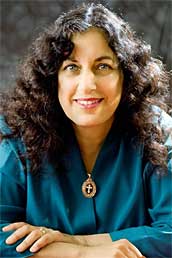
estelaAnd here’s Estela’s interview:

Edi: Where did you grow up?

Estela: I grew up in South Texas (the Rio Grande Valley).

Edi: Do you have any pets?

Estela: I love animals and have had many pets through the years. I currently have two cats.

Edi: What were some of the first books you found as a child that turned you into a reader?

Estela: I grew up in a home where we had no books. There were no public libraries in my hometown either. Despite the lack of age-appropriate reading material, I fell in love with books as soon as I learned to read. I remember reading the Weekly Reader and whatever else I could get my hands on at school. Although I don’t remember where I got it, Pearl Buck’s The Good Earth was one book I read and re-read. I’ve always been a dreamer and this book opened up an exotic, new, and very fascinating world to me.

Edi: Meat or vegetables?

Estela: Vegetables, absolutely! As an animal lover, I volunteered with many animal welfare organizations until I was able to form my own. Through it, I do community education and help provide low-cost spay/neuter services to residents’ pets in underserved communities. It would be hard to justify rescuing some animals while eating others. Besides, I find that when I eat a healthy diet, I feel so much better.

Edi: Which famous person would you most like to have write a review for your book?

Estela: So many famous and not-so-famous people come to mind. It always makes me happy to hear about celebrities and other public figures who are also great philanthropists and who help raise awareness about some very important issues facing society today. But there are also many unsung heroes quietly working to help make their communities better places to live. I sincerely believe we all have the potential to do good and that, after all, is what really matters. Two of my own favorite causes are education and animal welfare so my choice would have to be someone with similar ideals.

Edi: What three things would you like to add to a list of national treasures?

Estela: Although man-made treasures are priceless, I believe that natural treasures are absolutely essential. I’d love to see all public waterways, land (public, private, agricultural), and all living beings protected and preserved for our well-being and that of future.

Edi: Why would you be up at 3 am?

Estela: Usually, I’m only up at that time if I’m traveling and have to catch an early flight.

Edi: What book(s) are you currently in the middle of reading?

Estela: I’m currently making my way through a 100 Greatest Books for Kids list and just started Pam Muñoz Ryan’s Becoming Naomi León. I’m also reading my latest copy of Glimmer Train.

Edi: What made you decide to write about a teen who discovers yoga?

Estela: One of my nephews died accidentally a few years ago. The accident happened in front of his wife and children and I began to wonder how such a tragic event would affect any family who witnessed it. That also got me thinking about how a child, already weighed down by grief, would cope with the additional burden of parental abandonment and being bullied on top of everything else. Adolescence is tough enough as it is, and adding all this other stress can lead to such despair that anyone could easily be overwhelmed. I wanted to introduce the idea that there are alternatives to violence, that there is help even when we think there is no safe way out of certain situations, and most importantly, that there are ways to access inner peace.

When I first discovered yoga, I was going through a stressful period in my life and still remember the feeling of calm and well-being that I experienced when I was able to slow down the thoughts racing through my mind long enough to catch my breath and try to put things in perspective. The character Paloma seemed the perfect vehicle through which to introduce the topic and Mandy, of course, was the ideal student.

Edi: I’m sorry to hear your family experienced such a tragedy. I can definitely see how that experience could inspire your writing.

I haven’t had the opportunity to read Can You See Me Now?, but I do know it’s about a thirteen-year-old girl whose father dies in a car accident and her mother blames her for it. At 13 (or there about) to which adult were you the closest?

Estela: I was a very shy child and at thirteen I was closest to my mother. Because I was the youngest child in my family and my parents were old enough to be my grandparents, the fear of losing them seemed to always be in the back of my mind. If my mother wasn’t there when I got home from school or from playing with my friends, I panicked.

Edi: Who is your favorite author and what is it that really strikes you about their work?

Estela: Again, this is a hard question to answer because there are so many authors I admire, but I’d have to say Harper Lee ranks pretty high on my list along with Sandra Cisneros. Although their work is very different, I find the characters so easy to relate to and the stories so hard to forget.

Edi: What’s the trick to writing humor?

Estela: I’m sure there is a trick to it and I suppose part of it is to be naturally funny. I don’t set out to write humor, but because I do write about serious issues which can be hard to address when writing for a younger audience, I try to ease the tension by including bits of humor here and there as I weave the story. The humor I use is based on things that tickle my own funny bone.

Edi: What does diversity mean to you?

Estela: Diversity to me is inclusivity. I try to write about things that all readers can relate to regardless of their racial or social background because, no matter what other commonalities we may or may not share, there are certain things that we all have to experience at some point in life.

Speaking of diversity, I’m glad to see that the need for diversity in children’s literature is finally starting to get the attention it deserves. Although the need has always been there, it’s great that diversity among the writing population is also changing, however gradually.

Edi: Thanks, Estela! It’s a pleasure getting to know you!

Visit Estela’s website.
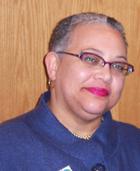
Edith CampbellEdith Campbell is a mother, librarian, educator and quilter. She received her B.A. in Economics from the University of Cincinnati and MLS from Indiana University.  Her passion is promoting literacy in all its many forms to teens and she does this through her blog, CrazyQuiltEdi and in her work as an Education  Librarian at Indiana State University in Terre Haute, Indiana. Edith currently serves as the IN State Ambassador for the United States Board on Books for Young People and is a past member of YALSA’s Best Fiction for Young Adults selection committee.

Book Review: I Lived on Butterfly Hill by Marjorie Agosin

By Sarah Hannah Gómez

18048909DESCRIPTION FROM THE BOOK JACKET: Celeste Marconi is a dreamer. She lives peacefully among friends and neighbors and family in the idyllic town of Valparaiso, Chile–until the time comes when even Celeste, with her head in the clouds, can’t deny the political unrest that is sweeping through the country. Warships are spotted in the harbor and schoolmates disappear from class without a word. Celeste doesn’t quite know what is happening, but one thing is clear: no one is safe, not anymore.

The country has been taken over by a government that declares artists, protestors, and anyone who helps the needy to be considered “subversive” and dangerous to Chile’s future. So Celeste’s parents–her educated, generous, kind parents–must go into hiding before they, too, “disappear.” To protect their daughter, they send her to America.

As Celeste adapts to her new life in Maine, she never stops dreaming of Chile. But even after democracy is restored to her home country, questions remain: Will her parents reemerge from hiding? Will she ever be truly safe again?

Accented with interior artwork, steeped in the history of Pinochet’s catastrophic takeover of Chile, and based on many true events, this multicultural ode to the power of revolution, words, and love is both indelibly brave and heartwrenchingly graceful.

MY TWO CENTS: This reads like a pretty classic middle grade novel in the tradition of Sharon Creech or Patricia Reilly Giff. Celeste has a very sweet and thoughtful way about her, and she narrates the day-to-day of her life with the eye of a girl who is young but observant. There is some beautiful scene setting in her house, where her grandmother, nanny, mother, and father dote on her; and at school, where she has a great teacher and the usual smattering of fun, doofy, and snobbish classmates. She has an idyllic life and loves it—until the president is assassinated and the dictator takes over.

Agosín does a good job of showing how this type of takeover happens gradually and all at once, and Celeste observes different things happening – like some classmates not showing up for school or the adults in her life all of a sudden being worried about her safety – and only slowly begins to put them together as being related to the same thing. When she moves to Maine, Celeste remains very observant and thoughtful about everything. Her descriptions are just beautiful.

But that’s also a weakness in the book – Celeste is so thoughtful that it doesn’t always feel like she has any emotion. Her parents have to go into hiding and she says she’s sad, but you don’t necessarily see it – the quality and style of her narration and her observations don’t change much depending on her mood. And it doesn’t help that the last quarter of the book goes from lyrical and fairly realistic to a totally Disney TV movie ending.

That said, there is plenty of good in this book. Latin@s? Check. And, unlike any books I remember reading from my childhood or much during my adulthood, Celeste’s family is also Jewish – her grandmother speaks to her in German and reminisces about escaping the Holocaust by coming to Chile. That parallel is what really gives the book its emotional impact. Celeste is very attached to her grandmother, and knowing that the grandmother is watching a country unravel for the second time is poignant. Acknowledging that part of Latin American history and giving Jewish-Latinas a heroine to root for is a great strength of this book, especially since it manages to use Spanish, Chilean cultural traditions, and Jewish traditions in a way that neither over explains to those of us who know it already nor under explains to those who are unfamiliar.

I would hand this book to any little girl who is already a fan of classic middle grade characters who love to write, like Betsy Ray or Harriet M. Welsch, or to fans of books by Julia Alvarez or Jeanne Birdsall.

AUTHOR: Marjorie Agosín was born in Maryland and raised in Chile. She and her parents, Moises and Frida Agosín, moved to the United States due to the overthrow of the Chilean government by General Pinochet’s military coup. Coming from a South American country and being Jewish, Agosín’s writings demonstrate a unique blending of these cultures. Agosín is well known as a poet, critic, and human activist. She is also a well-known spokesperson for the plight and priorities of women in Third World countries. Her deep social concerns and accomplishments have earned her many awards and recognitions, and she has gained an international reputation among contemporary women of color.

FOR MORE INFORMATION ABOUT I Lived on Butterfly Hill, visit your local library or bookstore. Also check out worldcat.org, indiebound.org, goodreads.com, amazon.com, and barnesandnoble.com.


HannahSarah Hannah Gómez is a school librarian in Northern California with a passion for promoting diverse literature to tweens and teens of all colors. She has an MA from the Center for the Study of Children’s Literature and an MS in library and information science from Simmons College. She blogs at her own website and at YALSA’s The Hub. She is working on a novel and a screenplay.

Book Review: The Lightning Dreamer by Margarita Engle

By Lila Quintero WeaverLightning Dreamer notable

DESCRIPTION FROM THE BOOK JACKET: Tula is a girl who yearns for words, who falls in love with stories, but in Cuba, girls are not allowed an education. No, Tula is expected to marry well—even though she’s filled with guilt at the thought of the slaves Mamá will buy with the money gained by marrying Tula to the highest bidder.

Then one day, hidden in the dusty corner of a convent library, Tula discovers the banned books of a rebel poet. The poems speak to the deepest part of her soul, giving her a language with which to write of the injustice around her. In a country that isn’t free, the most daring abolitionists are poets who can veil their work with metaphors, and Tula becomes just that.

In powerful, haunting verses of her own, Margarita Engle evokes the voice of Gertrudis Gómez de Avellaneda, known as Tula, a young woman who was brave enough to speak up for those who could not.

MY TWO CENTS: The novel begins in 1827. Tula’s mother, who twice made the mistake of marrying for love, is desperate to prevent her thirteen-year-old daughter from taking a similar path. Mamá’s motivations are clear-cut. A wealthy connection through Tula is the family’s only hope for propping up their shaky economic status. In 19th-century colonial Cuba, arranged marriages are the social norm, but Tula’s mother worries that a girl who buries her nose in books will not attract the right kind of husband–a rich one.

Who is Tula? Margarita Engle is acclaimed for novels in verse that bring to life history’s outliers, young men and women from previous centuries who thought and acted in surprisingly modern ways, and Tula stands tall among them. She’s based on Gertrudis Gómez de Avellaneda, a Cuban poet who championed liberty for all humans and wrote Sab, an abolitionist novel, the first of its kind in Spanish. Sab predated Uncle Tom’s Cabin, the Harriet Beecher Stowe classic, by eleven years. Avellaneda’s importance as an abolitionist and feminist writer is not widely known in English-speaking America. The Lightning Dreamer corrects this oversight and imagines Avellaneda’s formative years, just as she began to discover the life-changing force of poetry.

Marriageability is not the only issue that arises from Tula’s penchant for reading. She happens upon the forbidden poetry of José María Heredia, whose sharp observations awaken Tula’s passion for justice. In colonial Cuba, injustice is everywhere. Her eyes take in the plight of African slaves, biracial babies abandoned to the convent, lovers kept apart by miscegenation taboos, and girls like herself, doomed to business arrangements thinly masquerading as marriages. Tula expresses her ardor for justice through poetry, which she burns to keep her mother from discovering.

When Tula refuses the marriage that her grandfather arranges, she must rise to meet a string of new challenges. The inheritance is lost and her family is condemned to relative poverty. For a while, Tula finds refuge in a storyteller’s community, where she becomes entangled in an unrequited love. She moves away from the countryside to Havana, where she supports herself through tutoring. In 1836, her brother, Manuel, warns her that their mother is cooking up another arranged match. Tula flees for Spain, expecting to find greater social and creative freedom there.

The Lightning Dreamer is written in free verse and is voiced through multiple characters. Tula is the most frequent speaker. Short segments provide other characters’ point of view. A partial list includes Tula’s mother; Manuel; Caridad, the freed slave who works for the family; the nuns who offer Tula space to read and write in peace; and Sab. Each character speaks in first person. I imagine them as a series of stage players delivering brief and sometimes prejudicial monologues reflecting on Tula’s choices. This approach perfectly suits the fictionalized treatment of a young poet. The language is spare and often stunning, capturing vivid images and profound interiority, as in this excerpt:

When we visit my grandfather

on his sugar plantation,

I see how luxurious

my mother’s childhood

must have been,

surrounded by beautiful

emerald green sugar fields

harvested

by row after row

of sweating slaves.

How can one place

be so lovely

and so sorrowful

all at the same time?

READING LEVEL: 12 and up

TEACHING TIPSThe Lightning Dreamer is an ideal jumping off point for exploring a wide array of subjects suggested in the novel. These range from colonialism, to New World slavery and racism, to patriarchal societies and the history of women’s political movements. At the back of the book, extensive notes provide comparisons between the historical Avellaneda and Tula, her fictionalized counterpart. This section also includes Spanish and translated excerpts of Avellaneda’s poetry and a bibliography of related sources.

Margarita contributed a guest post to Latin@s in Kid Lit that illuminates her love of biographical writing.

Henry Louis Gates’ PBS series, Black in Latin America, may be of interest for classroom use, in conjunction with the reading of The Lightning Dreamer. The episode “Cuba: The Next Revolution” focuses on the ongoing struggle by Afro Cubans to overcome centuries of racism. There’s no mention of Avellaneda in this one-hour documentary film; nevertheless, interviews and scenery enriched my reading. The film is particularly effective in its treatment of Cuba’s history of slavery and the role of freed slaves in the protracted battle for independence from Spain. The ruins of sugar plantations dating back to the book’s era starkly reminded me of Tula’s world.

RECOGNITION FOR THE LIGHTNING DREAMER: Awards and honors continue to flood in. They include:

2014 Pura Belpré Honor Book

School Library Journal’s Top Ten Latino-themed Books for 2013

YALSA 2014 Best Fiction for Young Adults

For a full list of awards and more information, please visit Margarita’s author website. I also recommend following her on Facebook, where she frequently posts updates on appearances, interviews and release dates for new books.

MargaritaTHE AUTHOR: Margarita Engle is a native of California and the author of many children’s and young adult books. She is the daughter of an American father and a Cuban mother. Childhood visits to her extended family in Cuba influenced her interest in tropical nature, leading to her formal study of agronomy and botany. She is the winner of the first Newbery Honor ever awarded to a Latino/a. Her award winning young adult novels in verse include The Surrender Tree, The Poet Slave of Cuba, Tropical Secrets, and The Firefly Letters.

FOR MORE INFORMATION ABOUT The Lightning Dreamer, visit your local library or bookstore. Also check out worldcat.org, indiebound.org, goodreads.com, amazon.com, barnesandnoble.com, and Houghton Mifflin/Harcourt.


Book Review: Gaby, Lost and Found by Angela Cervantes

By Cindy L. Rodriguez

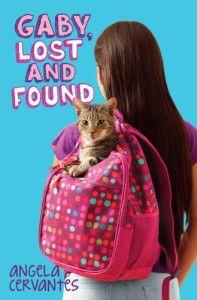
Gaby Lost and FoundDESCRIPTION FROM THE BOOK JACKET: When Gaby Ramirez Howard starts volunteering at the local animal shelter, she takes special pride in writing adoption advertisements. Her flyers help the dogs and cats there find their forever homes: places where they’ll be loved and cared for, no matter what.

Gaby is in need of a forever home herself. Her mother has recently been deported to Honduras and Gaby doesn’t know where to turn. Meanwhile, Gaby’s favorite shelter cat, Feather, needs a new place to live. Gaby would love to adopt her–but if Gaby doesn’t have a place that feels like home to her, how can she help Feather?

MY TWO CENTS: I’m a sucker for stray animals and have more than once scooped up a roaming dog and delivered him to a non-kill animal shelter. So, Angela Cervantes had me from Chapter 1, which places the protagonist Gaby up a tree trying to rescue a cat. From this point on, Cervantes presents Gaby’s story with a great mix of heart-wrenching moments and humor. Some parts of the book are light and soooo middle school–I know; I teach in one–while other parts deal with the more serious issue of deportation and the effects on children when a parent is gone.

Since her mother has been deported to Honduras, Gaby must live with her father, who is ill-equipped to raise a sixth-grade girl. Gaby would much rather live with her best friend Alma and her family. Better yet would be if her mom were able to come back home, but this trip is expensive and dangerous.

Cervantes parallels Gaby’s situation with the sixth-grade class community project at the Furry Friends Animal Shelter. Both the animals and Gaby have less than ideal living arrangements are in need of new permanent homes. During the community service project, Gaby has the special job of writing descriptions of the animals on fliers that will be displayed around town and on the shelter’s website.

Eventually, Gaby writes a flier for herself. In part it reads:

Gaby Ramirez Howard: …Three months ago, my mom was deported, and now I live with my father, who looks at me like I’m just another job he wants to quit. I’m seeking a home where I can invite my best friend over and have a warm breakfast a couple times a week. Waffles and scrambled eggs are my favorite!

GAH! My heart, Angela Cervantes!!

In between the chapters that caused me to clutch my heart and give my daughter random hugs, I literally laughed out loud. Scenes with the four friends–Gaby, Alma, Enrique, and Marcos–are hysterical. In one, Alma, who is trying to train a spirited shelter dog named Spike, tests the commands on the boys. “Back! Down! Sit and stay!” In another scene, three firefighters arrive at the shelter to adopt a dog for the firehouse. Alma says to the other girls, “Let’s go see what’s smoking,” and then the girls nickname each of the cute firefighters: Hottie, Smokey, and Sizzler. Very funny.

If you are a middle school teacher, librarian, or parent, you should have a copy of this book on your shelf. To make it easy for you, Angela Cervantes is giving away a signed copy of Gaby, Lost and Found, along with a poster and T-shirt. Click on the Rafflecopter link here to enter.

TEACHING TIPS: Gaby, Lost and Found could be used in a Language Arts or social studies classroom. In Language Arts, students could track the plot and make predictions along the way about how Gaby’s situation will be resolved. Students could also be creative and write “fliers” for any number of people or things: their siblings, pets, themselves. A social studies could easily use the novel in a unit about the history of immigration in the United States. Ideally, after reading non-fiction texts, students could read a novel-length book–either fiction or narrative nonfiction–that centers on immigration. In addition to Gaby, Lost and Found, teachers could offer books about people from other countries so that students could compare/contrast immigrant experiences.


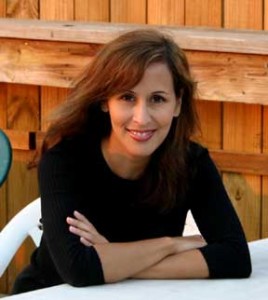
Angela Cervantes

AUTHORAngela Cervantes was born and raised in Kansas, with most of her childhood spent in Topeka in the Mexican-American community of Oakland. Angela has a degree in English and an MBA, and she is the co-founder of Las Poetas, a Chicana poetry group that has developed into the Latino Writers Collective. In 2005, her short story, “Pork Chop Sandwiches,” was published in Chicken Soup for the Latino Soul. In  2007, she won third place for Creative Nonfiction in the Missouri Review’s audio competition for her story “House of Women” and Kansas City Voices’ Best of Prose Award for her short story, “Ten Hail Marys.” In 2008, she was recognized as one of Kansas City’s Emerging Writers by the Kansas City Star Magazine.

Gaby, Lost and Found is her first novel.

FOR MORE INFORMATION ABOUT Gaby, Lost and Found visit your local library or bookstore. Also check out worldcat.org, indiebound.org, goodreads.com, amazon.com, barnesandnoble.com, and Scholastic.

Author Angela Cervantes On Publishing & Her Animal-Loving Latina Protagonist

By Cindy L. Rodriguez

Today, we are thrilled to have a Q&A with author Angela Cervantes, who talks about her debut novel, Gaby, Lost and Found (Scholastic), her advice for pre-published writers, and a little about how she crafted a wonderful middle grade novel that’s both funny and heartbreaking. Angela is also super generous and is offering a signed book, a poster, and a T-shirt to one lucky winner. Click on the Rafflecopter link here or at the end of the post to enter!

Gaby Lost and FoundCR: Since this is your debut novel, can you tell us about your publishing journey. Were there any things you did in particular that, in hindsight, you think were particularly helpful as you pursued an agent and book deal? What advice would you give to pre-published writers?

AC: My middle grade novel, Gaby, Lost and Found has been out almost 10 months now, and I’m still learning things about myself and the publishing journey. In the beginning, when I was a simple wanna-be-Kid Lit author with a manuscript, the idea of facing the publishing industry was scary.If you had met me then, I would have told you that I’d rather pick up a hitchhiker with face tattoos than have to face the world of slush piles and soul-less rejection letters.

Eventually, I realized that if I loved my book enough, I had to be willing to take on rejection. After all, the worst things they can do to you is ignore you completely or reject your work. Tough, but big deal. Every writer in the history of the written world has received a rejection or been passed up at some point, right? If they rejected my work, I was in good company.

I could go on and on with advice for pre-published writers. Never pick up hitchhikers with face tattoos! Really, I’ve learned so much. First, I would start with the very basic: If you’re going to go the traditional publishing route, like I did, then you must finish that manuscript. You have to show the agent something fast when they ask for a partial or full manuscript. My second advice is to take that completed manuscript to a writing critique group. Feedback is crucial. I belong to a critique group called the Firehouse Five (although we are six now) and we meet monthly to provide critique to each other’s work. It’s priceless. My final advice, take your writing-group-critiqued and completed manuscript to a local writers’ conference and sign up for a pitch or first pages sessions with an agent. I met my agent through a writer’s conference. She liked my pitch, but made it very clear there was plenty of work to be done on my manuscript before she’d offer representation. I did the work and I was signed. With her guidance, I made more revisions and it was sent off for submission. Soon, the first rejection arrived. It didn’t kill me. A week or so later, I received an offer for my first novel. Yay!

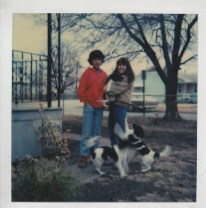
Angela C and brother

From her website: Angela, age 10, with her brother Enrique and their dogs, which were the inspiration for Spike in the novel.

CR: I love how you mixed Gaby’s story with the animals’ stories, how they were both in new situations and looking for new homes. How did you get the idea to address the subject of immigration for a MG audience, using homeless animals as a link to Gaby’s situation?

Thanks, I’m glad you enjoyed it. I really didn’t start with the idea to address the subject of immigration. I’m character-driven in my writing so I started with just Gaby, a funny, smart, and brave girl who is also a serious animal lover like her mom. I think if I had started out subject-driven with the intention to write a book on the issue of immigration, it would have been a much different novel. It would have come across as more lecturing and I don’t like to lecture or be on the receiving end of a lecture. No thank you. And kids don’t want to be lectured to either. At school visits, kids always ask me about deportation, but more in the context of why or how this happened to Gaby. They always tell me that they want Gaby and her mom to be together. They’re invested in Gaby’s happiness. It’s precious.

CR: Even though Gaby is dealing with the serious issue of her mother being away, she is also a “typical” MG girl, laughing and doing silly things with her male and female friends. Was this a conscious decision on your part, to show a range of emotions and not have it be an “issue” book or overly depressing?

AC: It’s funny that you ask that because my original drafts were even more depressing! I pulled a lot out during the revision process because the story was going in all sorts of directions. What got me back on track was again focusing on Gaby and who she was and not what she was going through. Gaby is an eleven year old girl. She loves animals. She loves glitter. She can climb trees and beat the boys at a water balloon fight. Would Gaby be defeated by bullying at school, the loss of her mom, the neglect of her father, and poverty? Or would this young girl rise up, even if she responds with some missteps, and show us what she’s made of? For me that was the only conscious decision on my part in writing this novel. I had to be true to Gaby and not define her by what she was going through, but show where she was going.

CR: Are you an animal lover? Did you have to do any particular research about animal shelters or spend time at one to capture what happens there?

AC: Besides my many years of experience as an animal lover and pet owner, I did visit several local animal shelters for information and inspiration. At the animal shelters, I asked tons of questions, held a lot of cats, wrote a lot of notes and pet a lot of dogs for this book. Why can’t all research be that much fun?

CR: What are you working on now? Can you share what’s next for you?

AC: Sure! I’ve completed my second middle-grade novel and I am now in the throes of revision. Fun stuff! Wish me luck.

Angela Cervantes

Angela Cervantes was born and raised in Kansas, with most of her childhood spent in Topeka in the Mexican-American community of Oakland. Angela has a degree in English and an MBA, and she is the co-founder of Las Poetas, a Chicana poetry group that has developed into the Latino Writers Collective. In 2005, her short story, “Pork Chop Sandwiches,” was published in Chicken Soup for the Latino Soul. In  2007, she won third place for Creative Nonfiction in the Missouri Review’s audio competition for her story “House of Women” and Kansas City Voices’ Best of Prose Award for her short story, “Ten Hail Marys.” In 2008, she was recognized as one of Kansas City’s Emerging Writers by the Kansas City Star Magazine.

Gaby, Lost and Found is her first novel.

Click HERE to enter the giveaway. One winner will receive a signed copy of Gaby, Lost and Found, a poster, and a T-shirt. You can enter for free once each day. A winner will be chosen on Saturday, 5/24/14. Good luck!!

Let’s All Make the #WeNeedDiverseBooks Campaign an Ongoing Movement

By Patrick Flores-Scott

#WeNeedDiverseBooks. The trending hashtag is a channel for conversation around the huge problem of a lack of diversity in children’s literature. The problem has been noted in many recent articles and so have the reasons we need more books by diverse authors and books with complex, real diverse characters.

For many years I was lucky to be a public school teacher in very diverse schools. At different points I was both a general education classroom teacher and a reading specialist. As a classroom teacher, I was able to seek and find the books I wanted my class to hear and read. More often than not, these books had main characters of color. I had the time, energy, resources, and relationships that helped me find great books that my students loved.

My students, however, especially my reluctant readers, were not going to work so hard to find a book that would reflect the cultural, racial, socio-economic realities of their community. They were going to pick the available book, the one closest to their hand when it was time to leave the library, or the trendy book that made them look like they were in the reading “know.”

Embedded image permalink

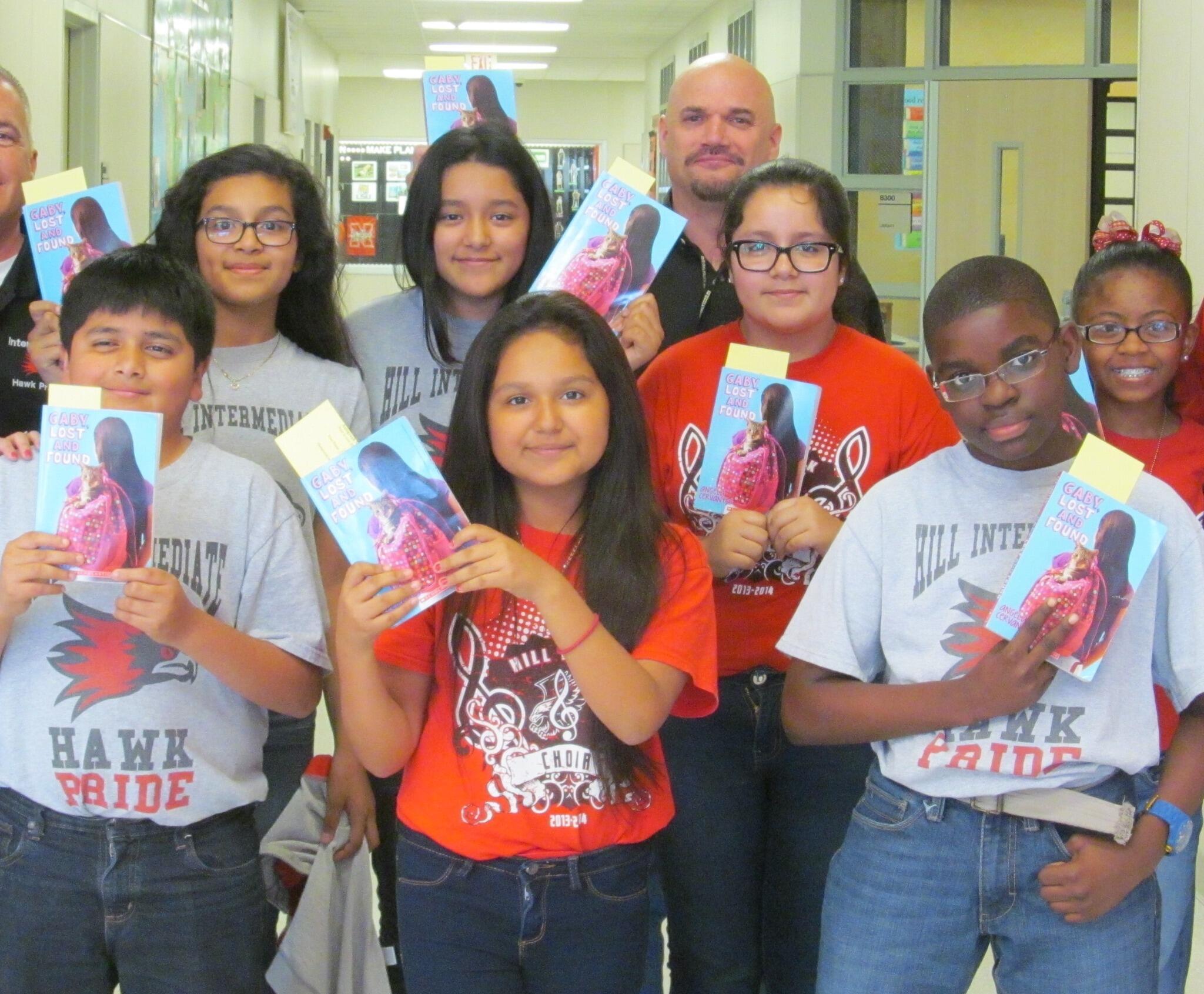
Author Angela Cervantes posted this picture on Twitter during the #WeNeedDiverseBooks Campaign.

Students need to be able to accidentally stumble their way into a great book that reflects their own background or one that opens their eyes to new characters and communities. They shouldn’t have to work for it. They shouldn’t have to fight for it. Kids have enough on their plate. Yes, some students are going to research authors, seek out new books and reading experiences, challenge their school librarian and make demands. Most fifth graders, however, are just struggling to make it through the day. They end up with the default book… and given the math of the situation, they’re going to walk out with another book by a white author with a white main character. Is this a tragedy? In the moment, no. That default book might be a great one. But this scene takes place over and over each day in most schools in the country and that great book–if the student is lucky–may just be another in a long line of books that reinforces the notion that great books are written by white authors and that white kids are the ones worthy of books written about them.  This notion is a toxic one, regardless of a student’s background.

Children’s books are a piece of a larger pie. A lack of diversity in film and television reinforces the notion that white stories are more relevant than non-white stories. The make-up the Senate (97 out 0f 100 are white) reinforces the notion that non-whites do not have a role in the highest levels of politics. Yes, there is the President, but his cabinet is made up of 70% white males. Kids see this. They see thousands of African American college athletes and they know that, in the vast majority of cases, these athletes are led to battle by white coaches. They know that the percentages of Black and Latino men in prison are crazily out of proportion with the population of Black and Latino men. Kids see all this. They take it in. The perceptions become realities for them.

My wife and I are the proud, exhausted parents of two rambunctious little boys. Their grandparents are Mexican-American on their mom’s side. My parents are white. My dad is from the U.S., my mom a Spanish-speaking Latina from South America. We will raise our boys to be proud of all that they are and proud of all the Latino, Caucasian, African-American, Asian and mixes of the aforementioned that make up their diverse extended family. While we will do our best to teach that the content of one’s character, not the color of one’s skin (one’s gender, sexual orientation, physical ability) is what is important, television, our political and judicial systems, sports…. And even the make-up of CHILDREN’S BOOKS, will send messages that complicate, skew, and even deem our parental message well-meaning, but just wrong.

Embedded image permalink

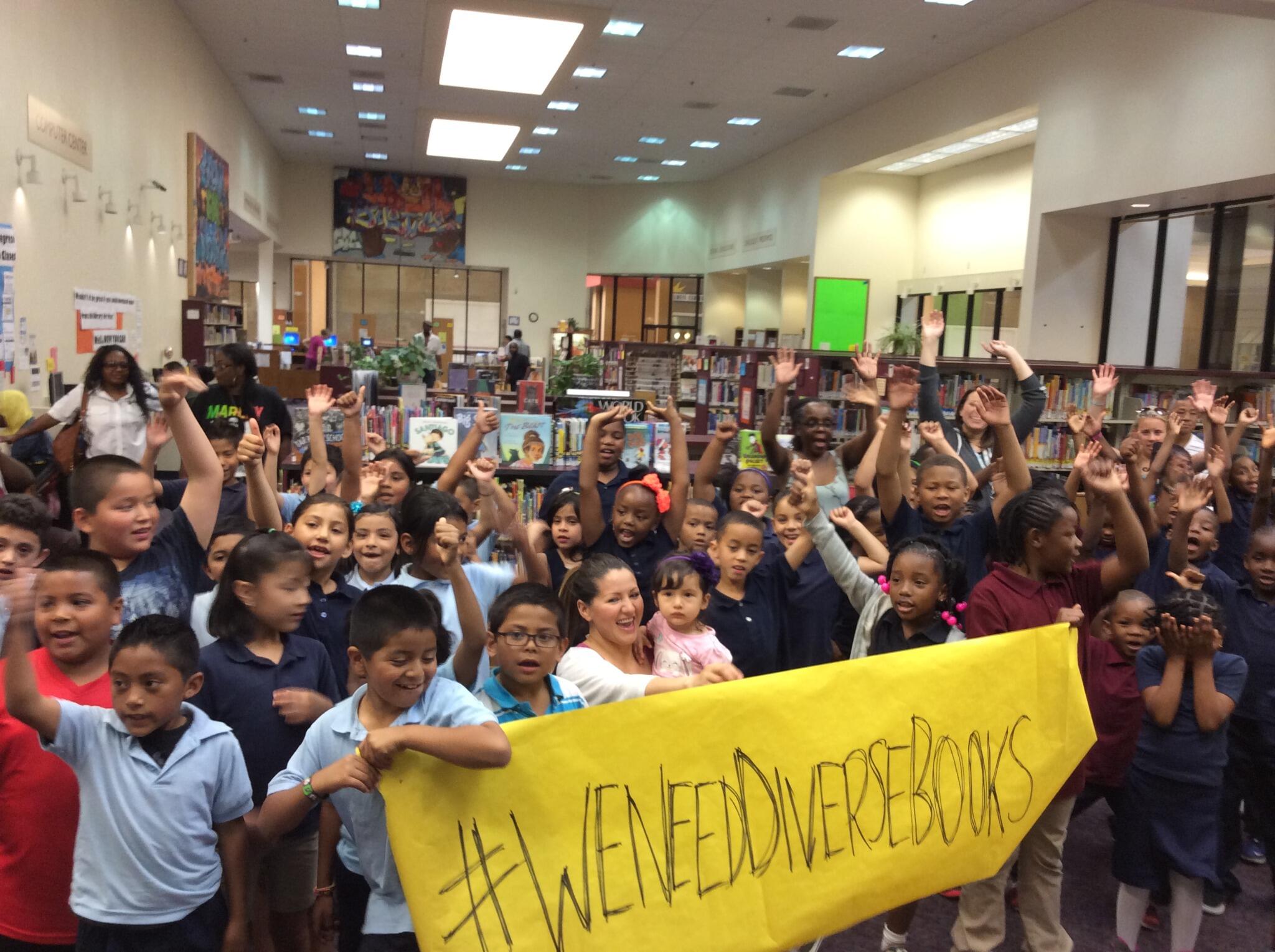
The Oakland Public Library in California posted lots of great pictures like this one on Twitter during the #WeNeedDiverseBooks Campaign.

What do we do about it? The #WeNeedDiverseBooks Movement (Can it please be a movement? We need more movements around here.) is a potentially very important call for change in the children’s book world. Now, we need to push for intentionality. Gatekeepers need to have their feet held to the fire. The Movement (!) needs to push publishers to set goals that trend their books in a more realistically diverse direction. It needs to push the industry to hire editors from diverse backgrounds and to hire and support diverse interns and entry-level assistants who can have the power to move books off the pile and into editors’ hands. The Movement needs to hold publishers accountable.

Institutions which support writers and illustrators, like my beloved SCBWI, need to recruit underrepresented writers to their conferences. (And to check out the percentage of white male panelists and speakers compared to the percentage of white male attendees.) Groups like SCBWI need to be pushed to intentionally foster and mentor a more diverse writing community.

The movement needs to push us published authors of all colors and stripes, to mentor diverse up-and-comers, to include pro-bono school visits to underfunded schools, and to write real, complex, fallible diverse characters who live the entirety of the American experience.

Members of The Movement need to request diverse books at their bookstores and libraries. We need to post reviews on Amazon and Goodreads and library websites. Members of the Movement need to advise book bloggers and to follow and support blogs like this one. We need to give diverse books as birthday presents and to talk about our favorites on the bus, at work, in line at the bookstore…

Members of The Movement need to push our political leaders to support the health, education and welfare of our future readers and writers.

Publishers, agents, bookstore workers, librarians, teachers, authors… there are bunches these folks out there doing the positive stuff that will make change possible. The Movement needs to support them and it needs to push for intentionality in those who mean well, but have not yet made the move to change.

PatrickFS1Patrick Flores-Scott was, until recently, a long-time public school teacher in Seattle, Washington. He’s now a stay-at-home dad and early morning writer in Ann Arbor, Michigan. Patrick’s first novel, Jumped In, has been named to a YALSA 2014 Best Fiction for Young Adults book, an NCSS/CBC Notable Book for the Social Studies and a Bank Street College Best Book of 2014. He is currently working on his second book, American Road Trip.

Jumped In was featured in Libros Latin@s on Thursday. Click here to see the overview.